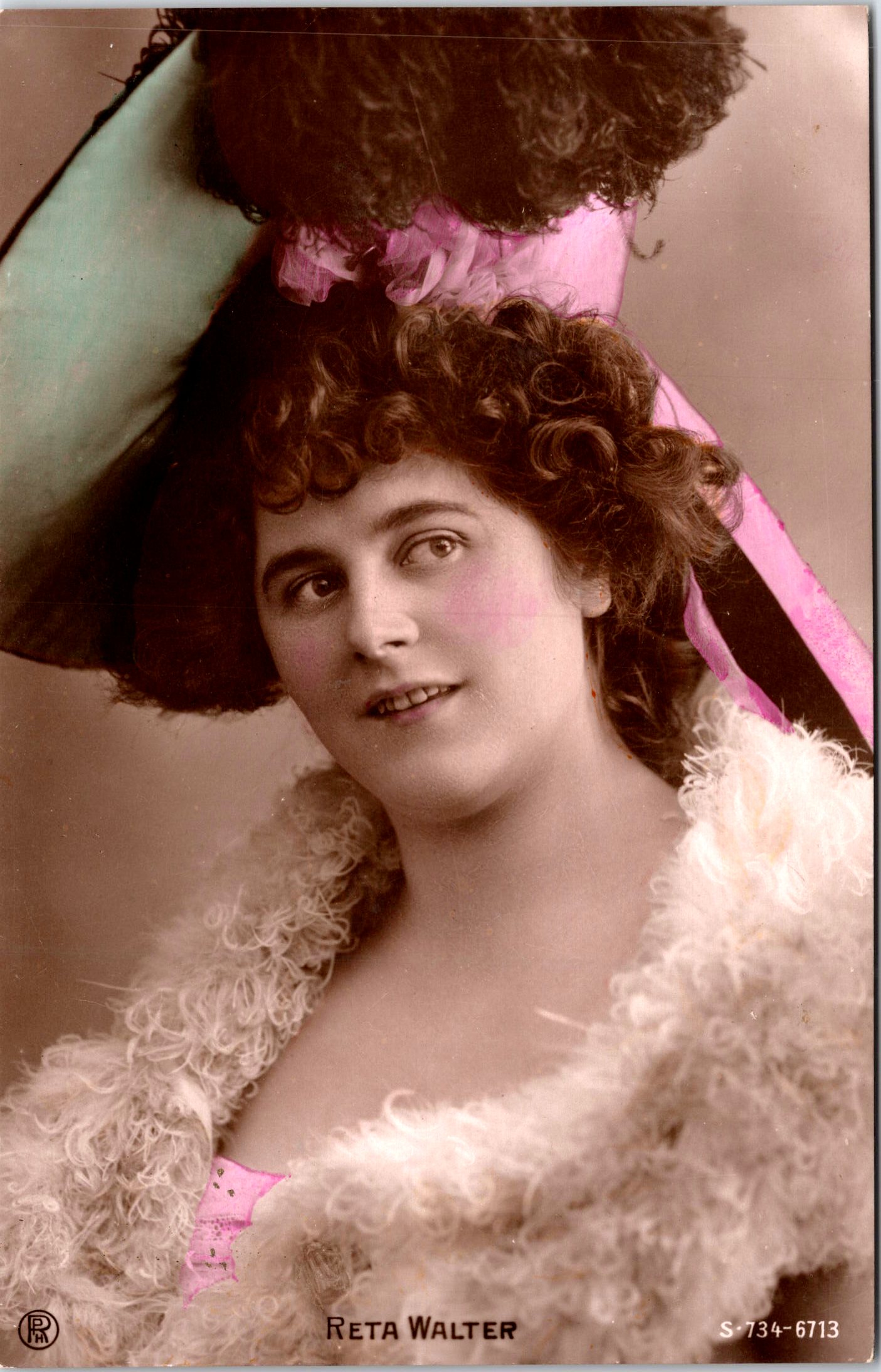
This hand tinted vintage real photo postcard features a famous German opera singer who met a tragic end. In 1906, hours before she was to go on stage as Carmen, at the Opera Comique, Walter was murdered in her own home. She was killed by her ex boyfriend, Karl August Hesse, who suspected that Walter was planning on becoming engaged to Juan Raventos, a Spanish Tenor. Hesse committed suicide after killing the 21 year-old Miss Walter. Hesse was a frustrated opera singer who could not find success. He had a history of being jealous of other men. He also had a history of physically abusing Walter in his jealous tantrums. Walter had tried to end the relationship with Hesse but he would not comply. The police found letters from Raventos in Hesse’s apartment. Raventos had written to Hesse telling him that he would not end his relationship with Walter. This postcard was published by Rotophot and is part of a series (S734-6713). Rotophot was a German company that eventually morphed into Ross Verlag. SOLD
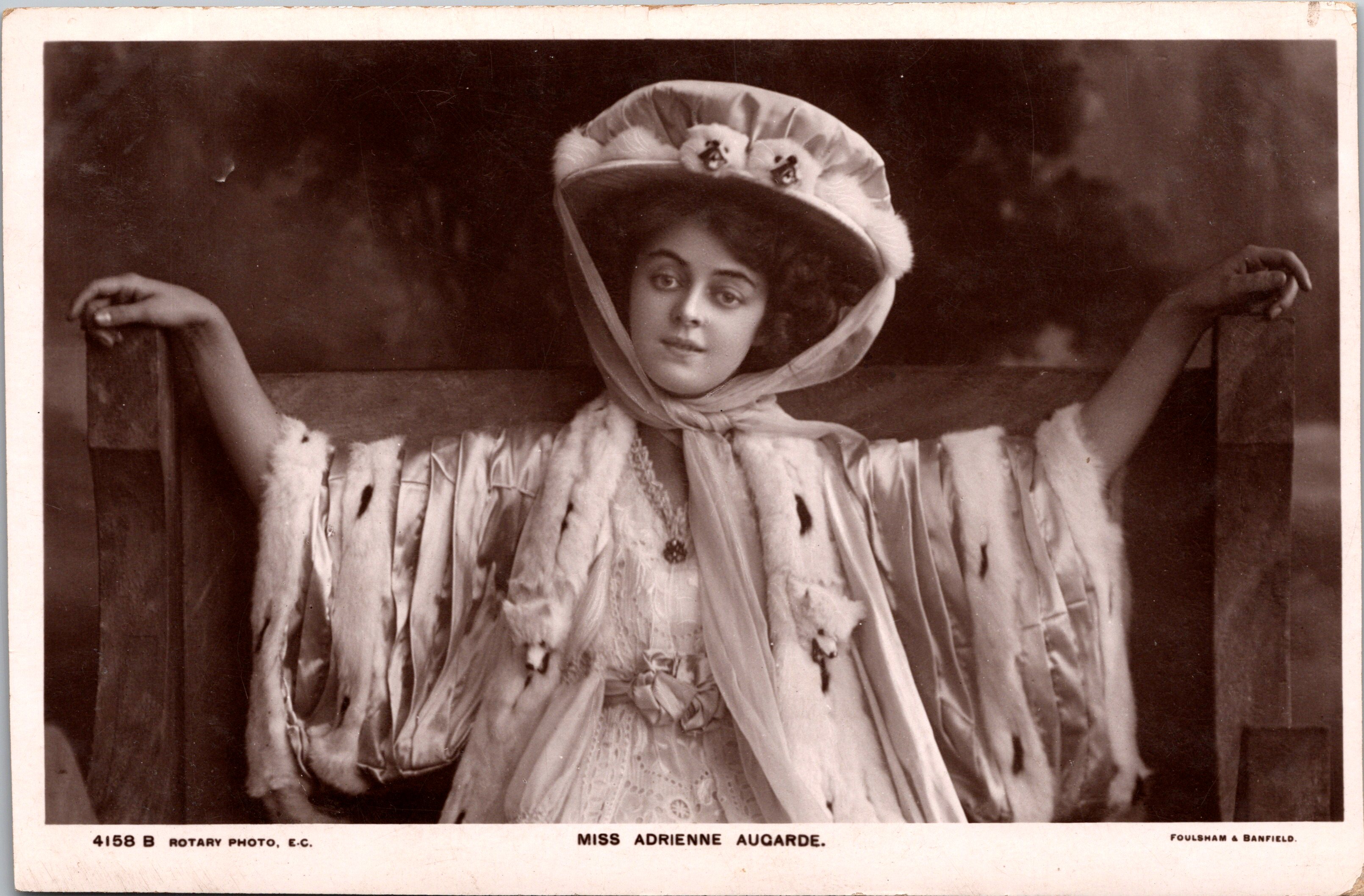
Postcard 1 features English actress and singer, Adrienne Augarde (1882-1913). She was born in London. Her father was a violinist and her mother was a Belgian singer. Augarde had several other members of her extended family who were successful theatrical or music performers. Her popularity transcended beyond Great Britain to include the United States. In fact, she appeared in four Broadway plays between 1905 and 1912. These plays included “The Dollar Princess” (1909) which ran for 250 performances. She was most known for her roles in Edwardian musical comedy. Augarde started her career at age sixteen. She did pantomine and appeared in small roles in musical comedy and opera. Her popularity began with her playing leading roles in the musicals of George Edwardes. She then starred in a number of long running productions in both London and New York (1903-1912). While on a Vaudeville tour in the US, she became ill and died after an unsuccessful appendectomy. She was thirty years of age at the time of her death. She died in Chicago. Her ashes were put in an urn designed to look like a make-up box. Her cremains were sent to her mother in England. This card was published by Rotary Photo as part of a series (No.4158B). The photograph was taken by the Foulsham & Banfield studio. The postcard has a 1906 postmark. (SOLD)
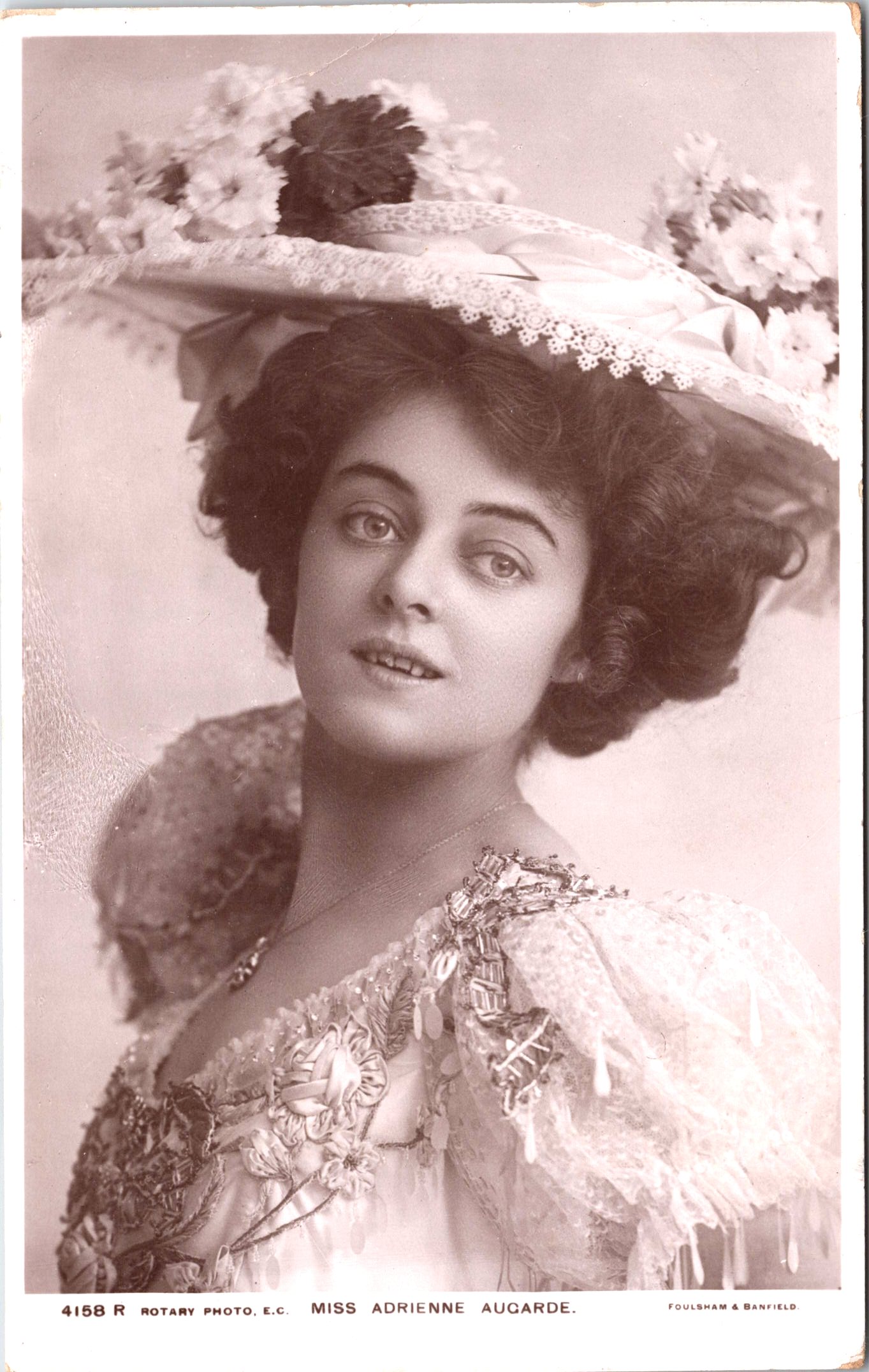
In Postcard 2, Miss Augarde looks quite pretty in this postcard. She is captured displaying a terrific smile. This card was published by Rotary Photo as part of a series (No.4158R). The photograph was taken by the Foulsham and Banfield Studio. SOLD
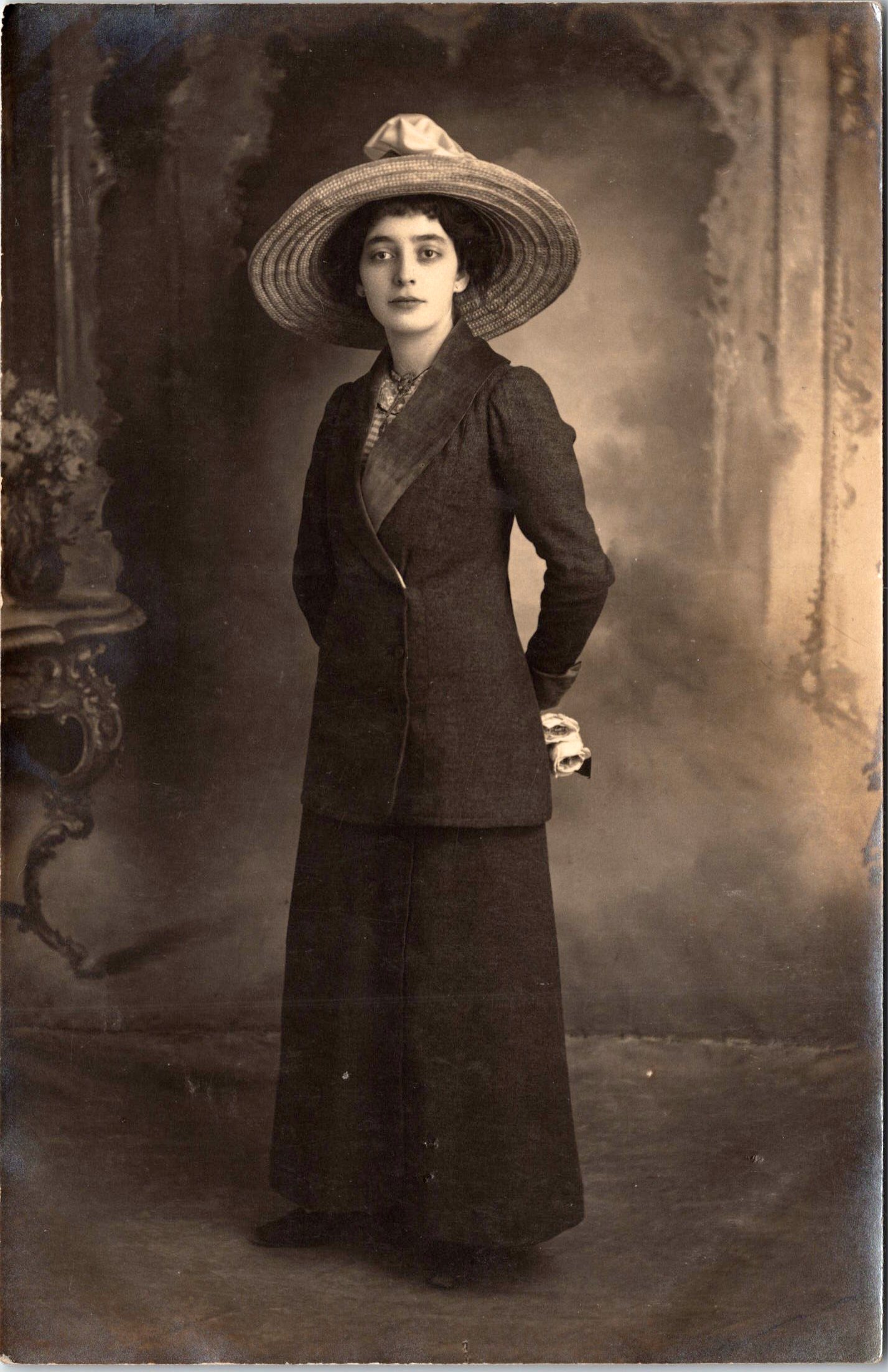
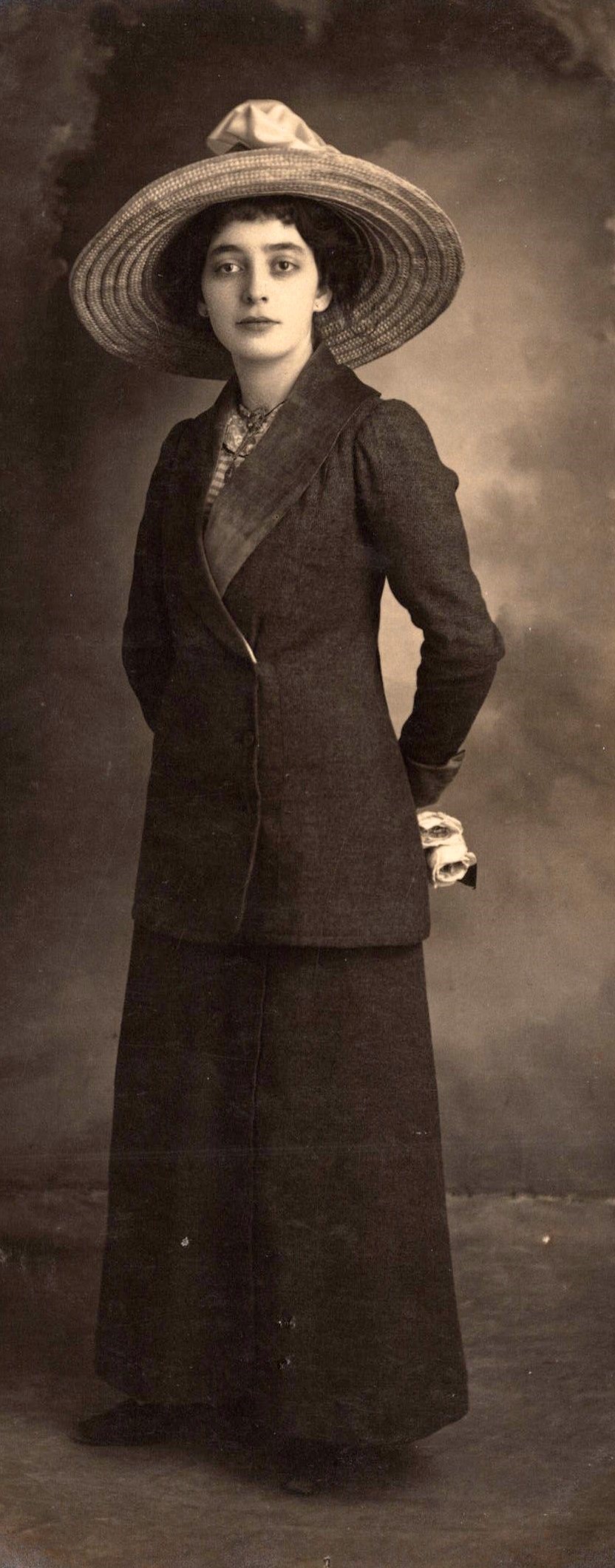
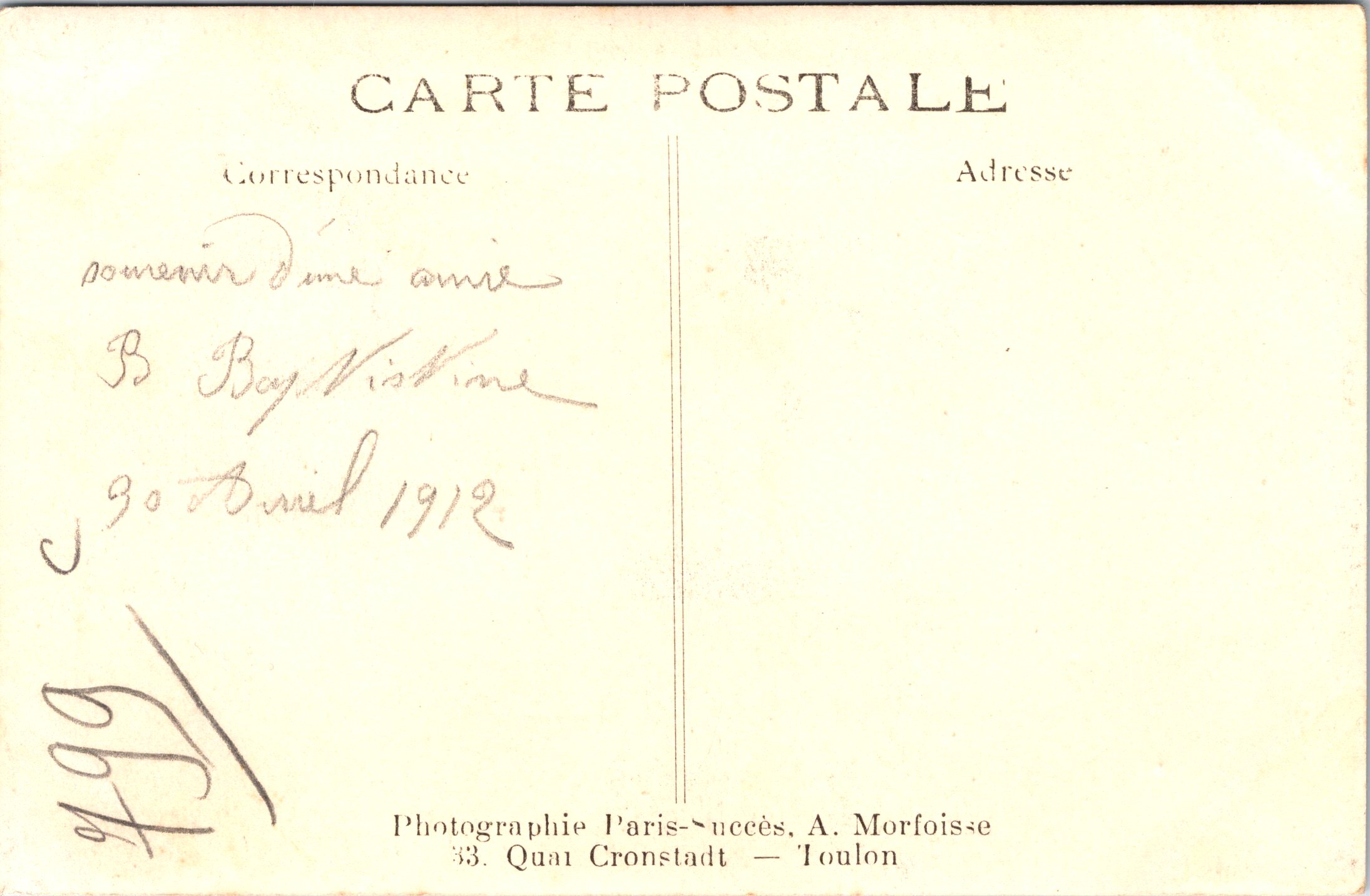
This vintage real photo postcard features a pretty young French woman posing for a studio photographer. She is beautifully dressed; quite the fashionista. She has large hat that appears to be made of straw. She is holding flowers behind her back in an unusual pose. The photographer was creative with his use of lighting and there is an interesting backdrop. The photographer was Abel Morfoisse and his studio was in Toulon, France. Writing on the reverse of the card indicates that it was written in 1912. SOLD
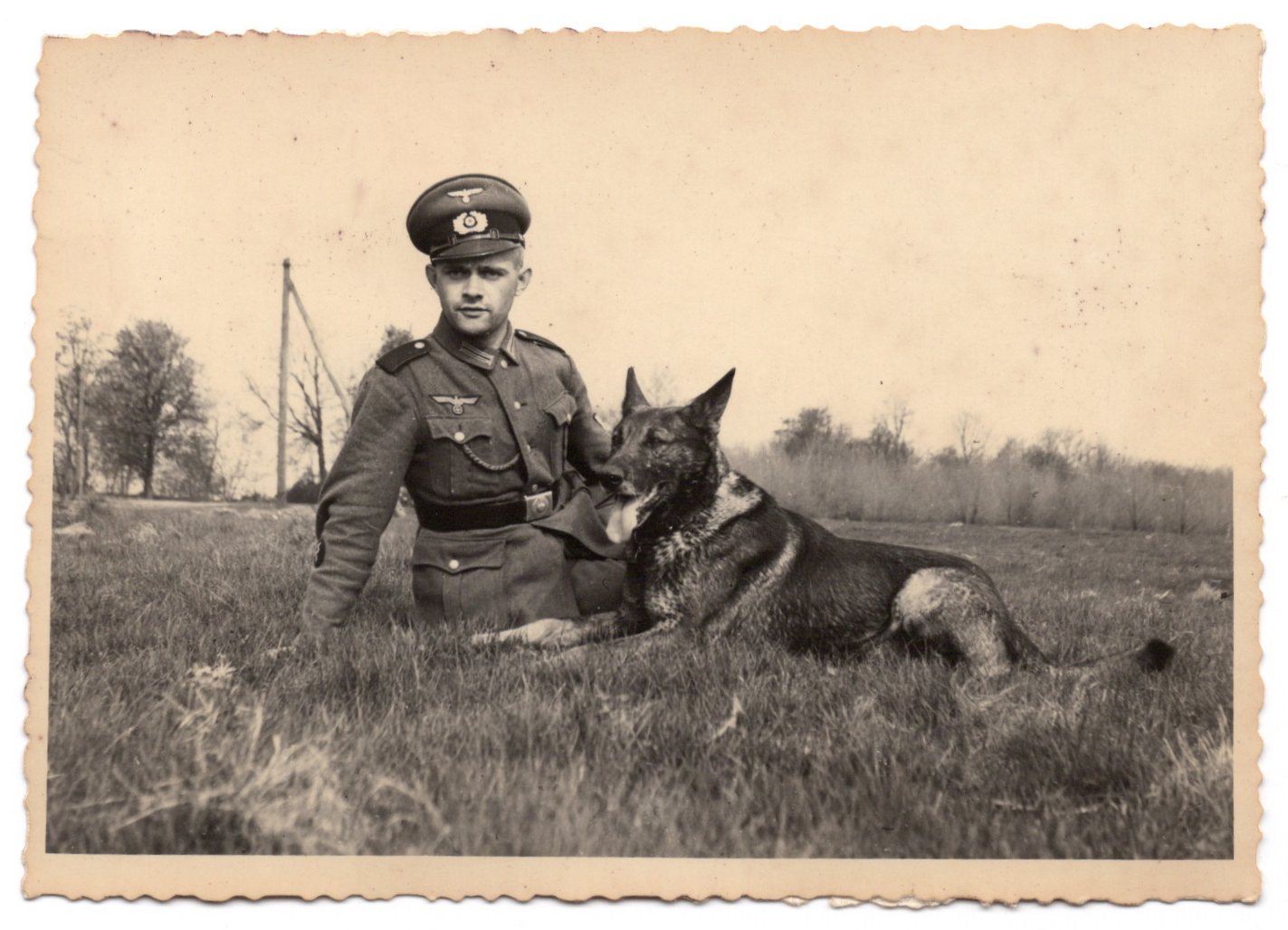
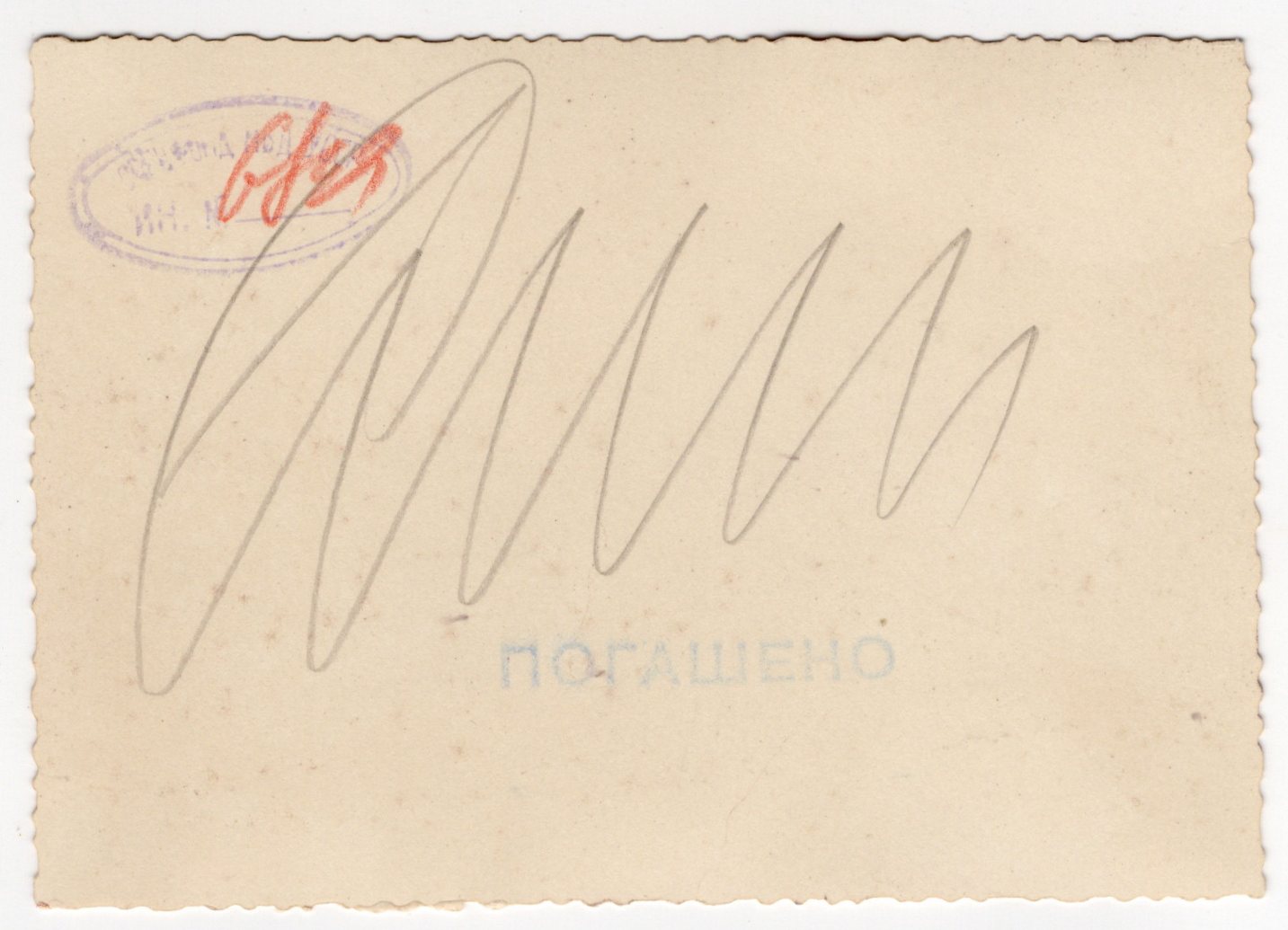
This striking original-looking WWII-era photograph, dating from approximately 1939–1945, depicts a German Wehrmacht (Heer) soldier seated in a grassy field alongside a magnificent German shepherd, identified on the reverse as a military dog handler (maître-chien). The soldier wears a German Army field-gray tunic bearing the national eagle, collar insignia, shoulder boards and a peaked military cap, although his precise rank and regiment cannot be established from the photograph. The wonderfully composed outdoor portrait captures an unusually relaxed moment, with the soldier looking directly at the camera while his large German shepherd lies comfortably beside him against a rural background of trees and open countryside. Particularly interesting are the markings on the reverse, including a faded oval Cyrillic stamp and the Russian word ПОГАШЕНО, meaning “cancelled,” which indicates previous Soviet administrative possession. SOLD
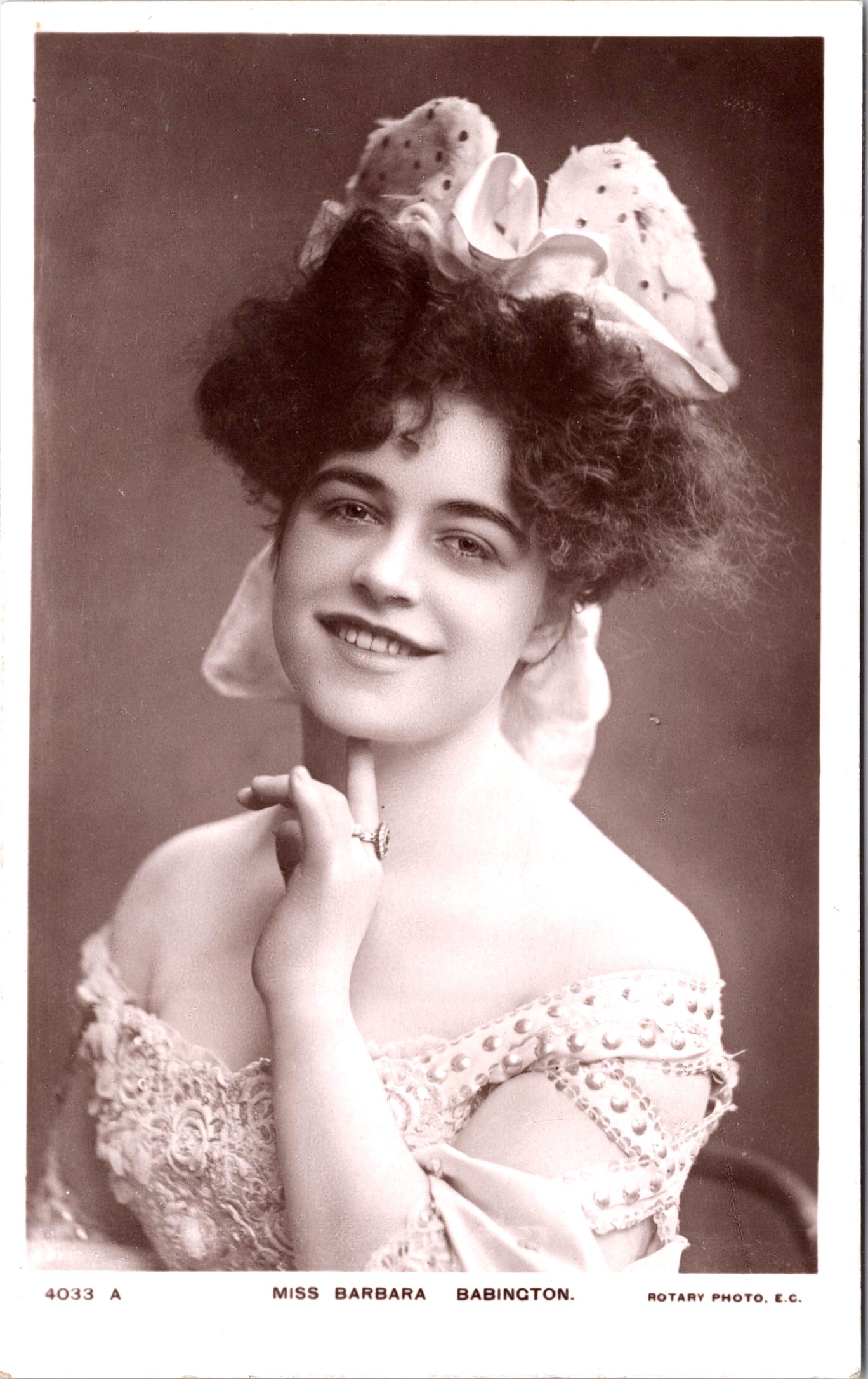
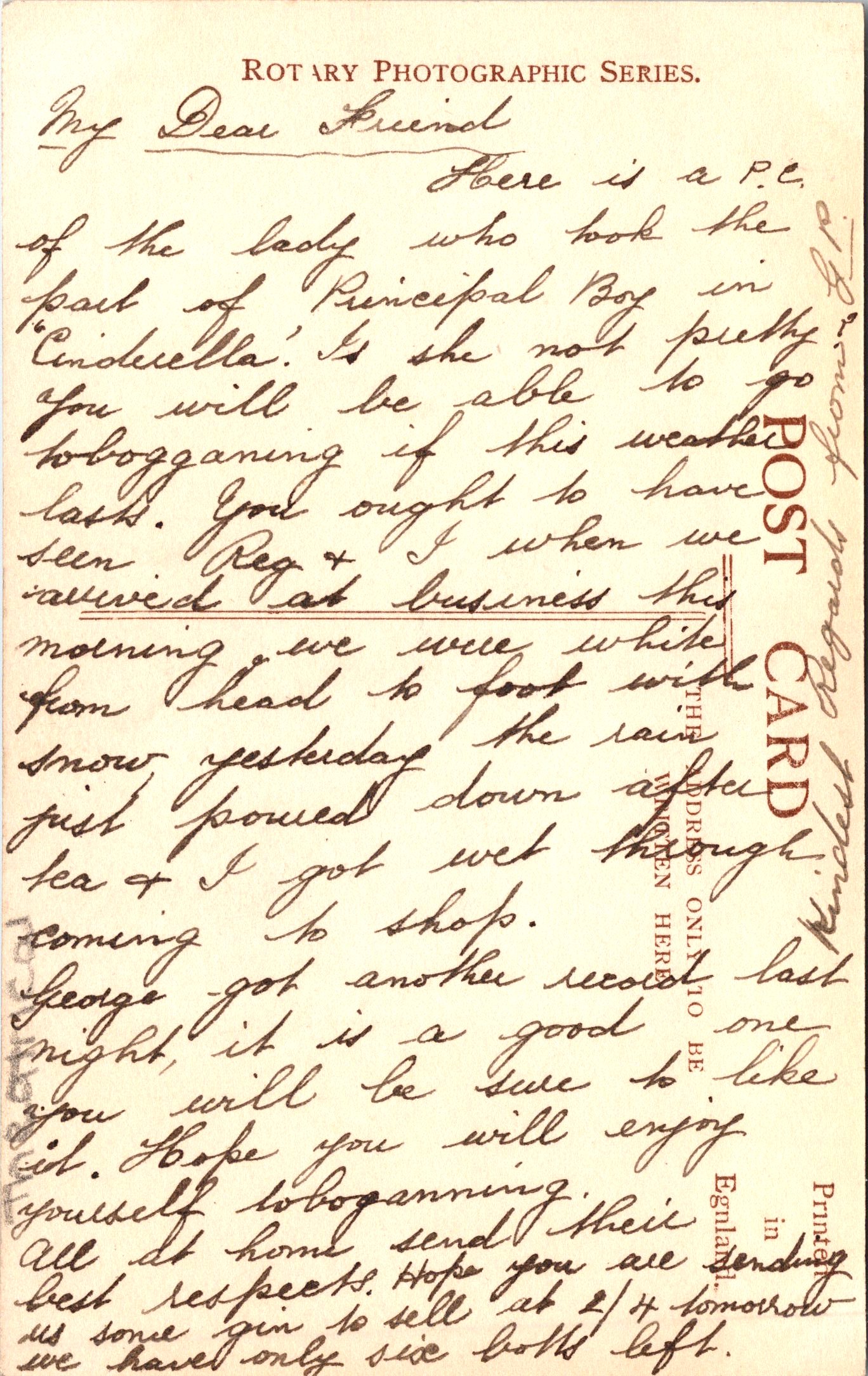
This uncommon vintage real photo postcard features Miss Barbara Babington, an Edwardian-era actress, singer, and comedienne, shown in a glamorous theatrical portrait by Rotary Photo (no. 4033A). Babington is posed with a bright, engaging smile, dark curly hair, an elaborate feathered stage hat, and a richly decorated off-the-shoulder costume with beadwork and lace. The message on this card identifies her as “the lady who took the part of Principal Boy in ‘Cinderella,’” which is a wonderful period detail. In British pantomime, the “principal boy” was the young male hero of the story and was traditionally played by a young woman, especially in the Victorian and Edwardian stage tradition. Barbara Babington was a working British music-hall and musical-comedy performer and not a major star. Professionally, however, she is traceable across several decades: she was active by 1907, when she was noted as singing on the variety circuit at the Tivoli, London, and Hippodrome, Wakefield; in 1916 she was touring with Horace Goldin’s illusion show and was billed as a comedienne; and later she appeared in London productions including “Worm’s Eye View” and the original West End production of “Annie Get Your Gun”. This postcard was published by Rotary Photo, part of the Rotary Photographic Series. The company was a prolific London publisher of photographic postcards, especially theatrical and beauty subjects. The firm began publishing postcards as early as 1901; one postcard-reference directory notes that Rotary was producing platino-bromide postcards as early as 1901. This particular postcard is especially appealing because the reverse is completely filled with a lively handwritten message mentioning snow, tobogganing, shop/business life, records, and even a request for more gin to sell. SOLD
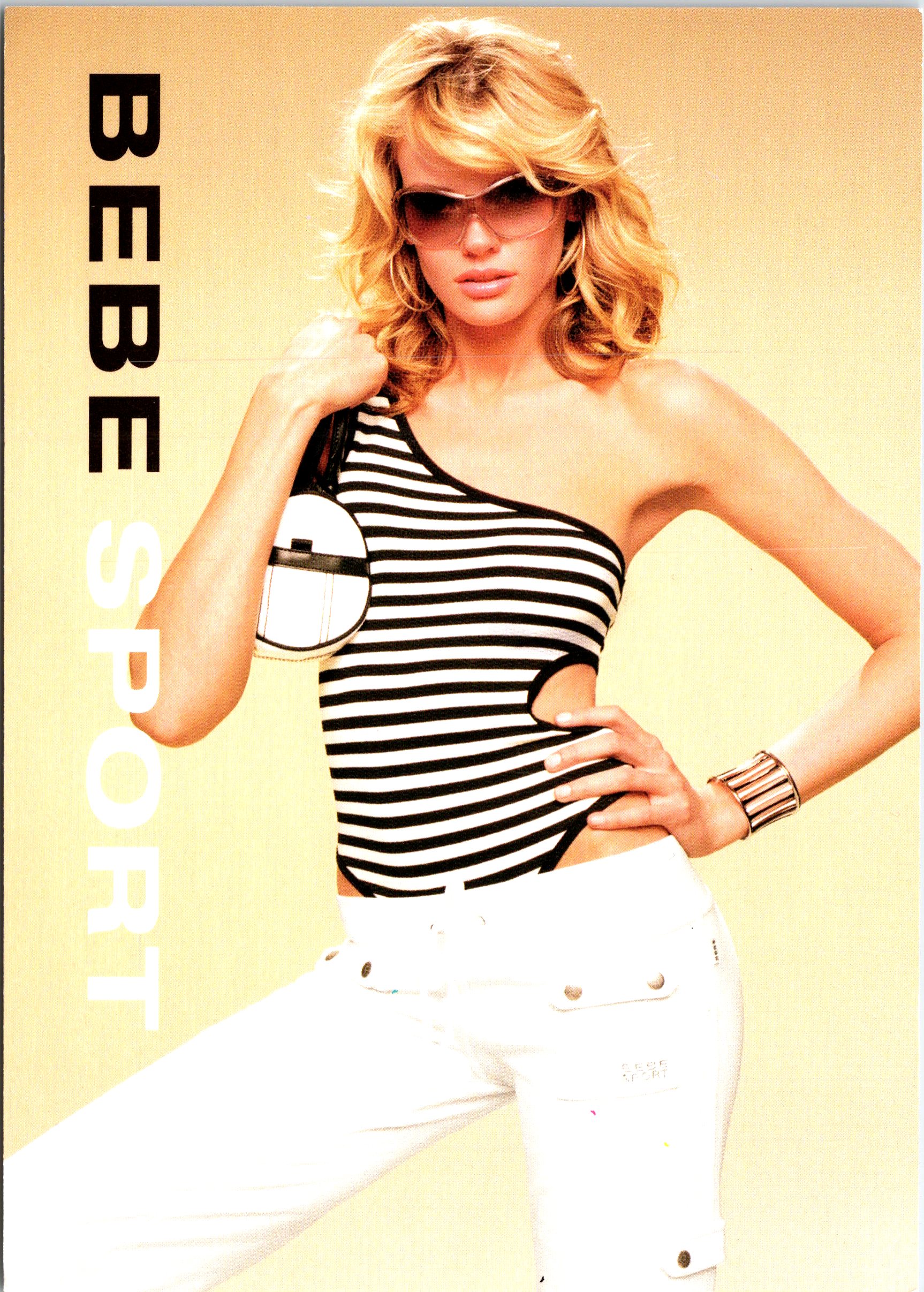
This vintage advertising fashion postcard promotes BeBe Sport, a brand known for its stylish and functional athletic wear. Measuring approximately 4.25 x 6 inches, the postcard features a striking image of a female model showcasing BB Sport’s apparel, embodying the brand’s commitment to combining fashion with athletic performance. On the reverse side, the postcard highlights BeBe Sport’s latest collection, emphasizing its innovative designs and high-quality materials tailored for active lifestyles. The promotional text underscores the brand’s dedication to empowering individuals through fashionable sportswear that doesn’t compromise on comfort or functionality. While the model’s identity isn’t specified on the postcard, her confident pose and athletic physique exemplify the brand’s target audience—modern, active individuals who value both style and performance in their sportswear. This specific postcard was to be used to celebrate the opening of the BeBe sport store in Barton Creek (Austin), Texas.(SOLD)
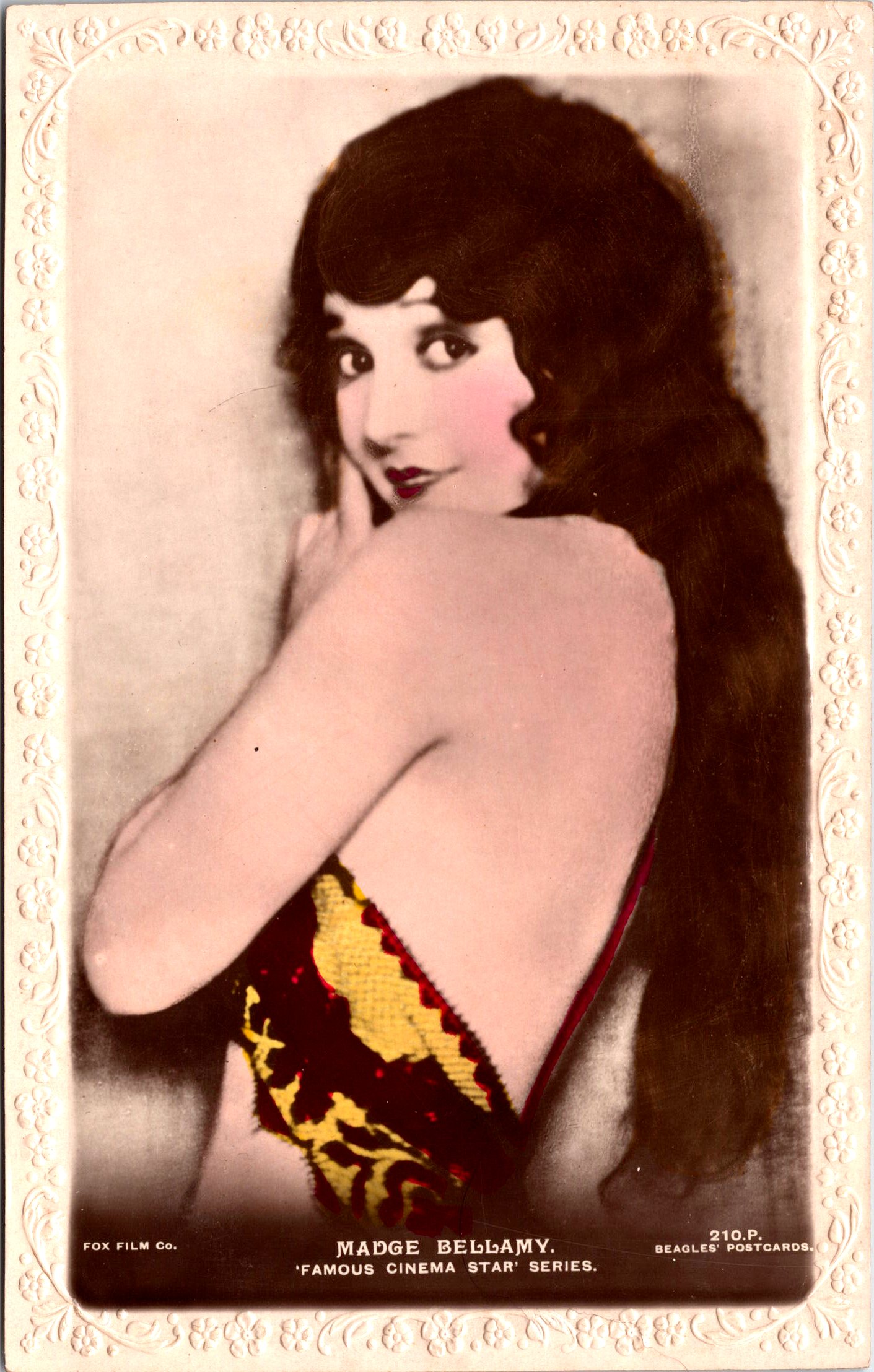
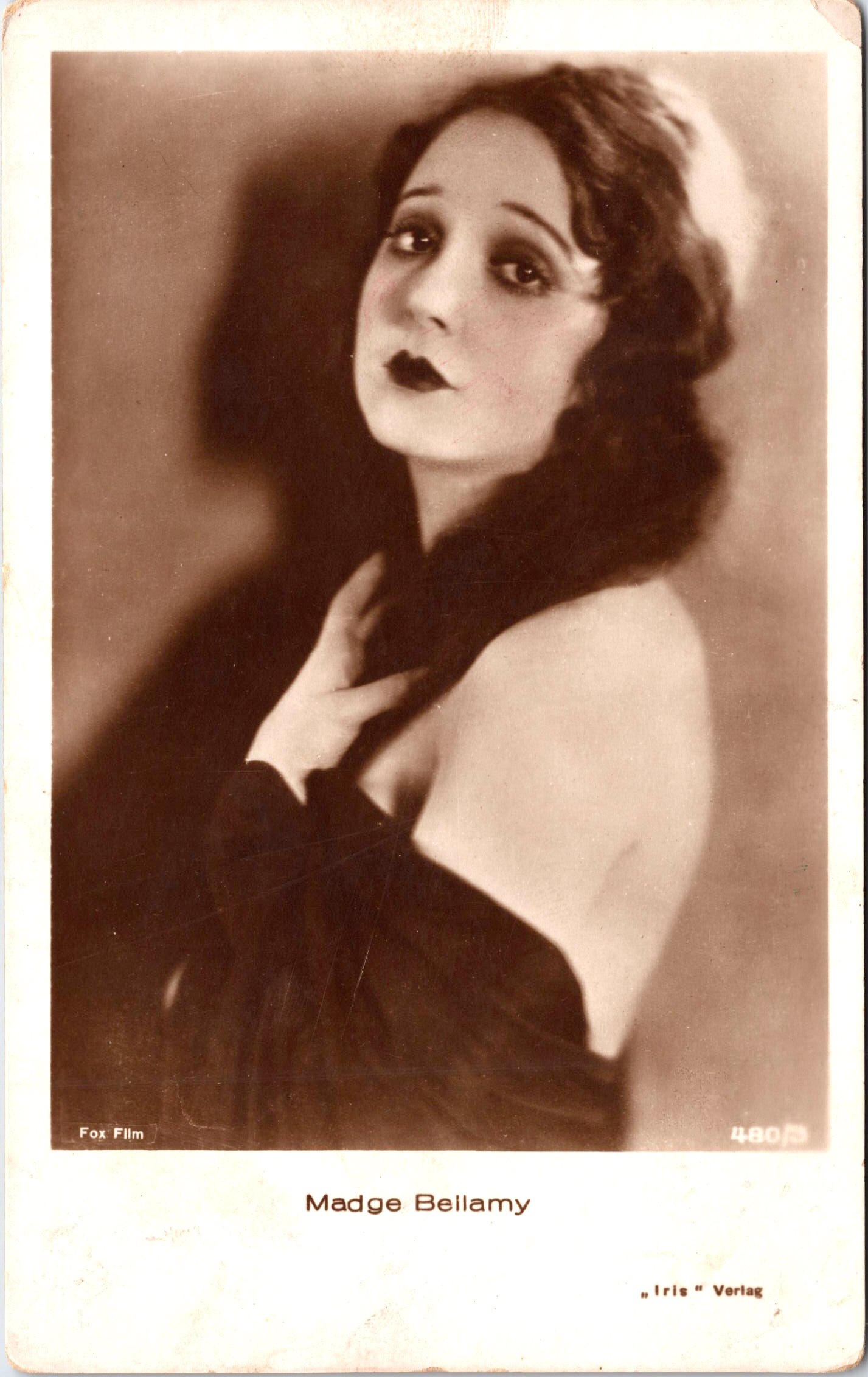
Postcard 1 is a hand tinted vintage real photo postcard that features Madge Bellamy (1899-1990), an American stage and film actress. She was a popular leading lady in films of the 1920’s and 1930’s. The sound era put the brakes on her career and a romantic scandal in the 1940’s brought it to a total stop. Madge was a Texan. She was born in Hillsboro and was raised in San Antonio and Brownwood. Her father was an English professor at Texas A&M University. As a young child she took dancing lessons but soon, she was interested in becoming an actress. At age 9, she made her stage debut in “Aida”. She and her family moved to Denver, Colorado. She met Carlos Bellamy there and the two married. When Madge decided to leave the state to pursue acting, her marriage ended. Madge went to New York City and worked on Broadway as a dancer. In 1919, she replaced Helen Hayes in Broadway’s “Dear Brutus”, opposite actor, William Gillette. Her career took off thereafter. In 1920, Madge appeared in her first film as a supporting actress to Geraldine Farrar. She then signed a contract with the Triangle Film Corporation. Her “breakout role” was as the title character in Lorna Doone (1922). In 1924 she signed a film contract with Fox Film Corporation. She stayed there five years and during that time she appeared in two films for film director, John Ford. In 1925, she began to have difficulties with fox executives. In 1928, she appeared in Fox’s first talking film, “Mother Knows Best”. In 1928, she married for a second time. The marriage lasted 3 days before she and her husband separated. By 1929, Bellamy’s career entered a tail-spin. She had made poor choices out of her unbridled anger. Fan magazines gave her the nickname of “Miss Firecracker” due to her temperament. In 1929, she also quit her contract with Fox, right after they bought the rights to make a film out of Broadway play. The vehicle was bought with a plan to have Madge be it’s star. Bellamy later admitted she quit over money and added “I got too big for my britches”. She didn’t work again until 1932. She accepted roles in “Poverty Row” (B-movies) films. One of these films was “White Zombie” (1932) in which she appeared opposite Bela Lugosi. Her performance received many poor reviews from film critics. By 1940, Madge basically had no film career. However, she wasn’t done with drama. She was arrested after firing three shots from a .32 caliber revolver at her former lover of five years. The incident was premeditated. She was angry at her intended victim because he married a model shortly after ending their affair. Fortunately, her aim was poor and she missed. The only casualty was her ex boyfriend’s car which took a couple of shots into it’s body. Bellamy pleaded guilty to a lesser charge (violating gun laws), and received a suspended six month sentence and probation. Madge Bellamy’s IMDb filmography reports 61 credits between 1920 and 1945. This vintage postcard is provocative. This postcard is risque for it’s era. She is showing a lot of bare skin. The postcard was published while Madge was under contract with Fox. Therefore, the postcard is from before 1929. The card was published by J. Beagles and is part of the “Famous Cinema Star Series” (No.210P). (SOLD)
Postcard 2 offers another risque view of Madge Bellamy. Her alluring pose and short skirt qualifies this postcard to be considered provocative. This card was produced while Madge was under contract with Fox Films, sometime before 1929. This postcard was published by Ross Verlag as part of a series (No.3907/2). The postcard is in very good condition (see scans).
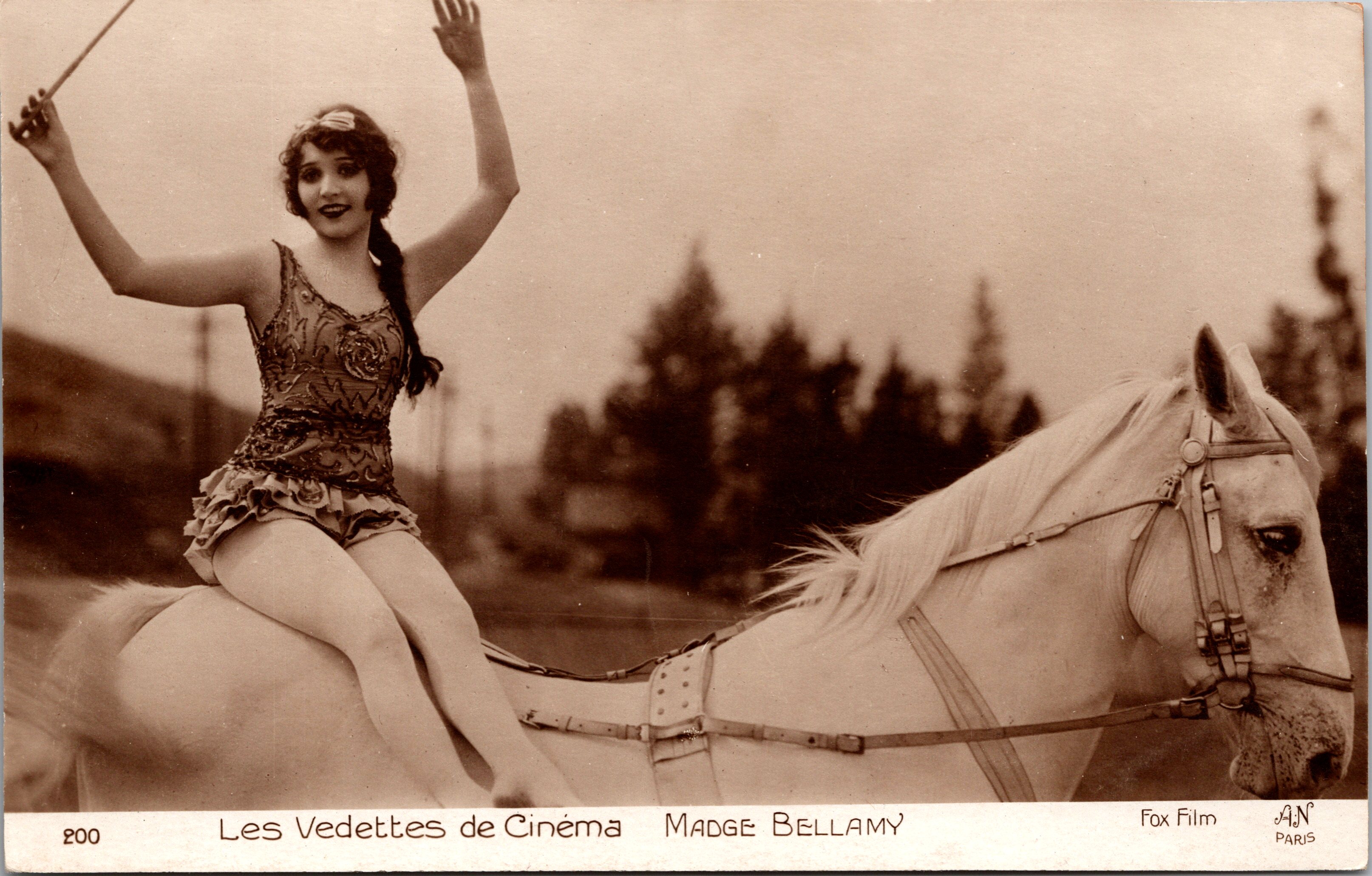
Postcard 3 is quite provocative. There are shades of Lady Godiva in this photograph. Miss Bellamy is pretty and scantily dressed. This postcard is risque for it’s era. The postcard was published while Madge was under contract with Fox. Therefore, the postcard is from before 1929. The card was published by Alfred Noyer and is part of the “Les Vedettes de Cinema” (The Stars of Film) series (No.200). This postcard is uncommon. (SOLD)
Postcard 4 is uncommon and provocative. Miss Bellamy is pretty and bare shouldered. Her alluring pose makes this postcard risque for it’s era. The postcard was published while Madge was under contract with Fox (note the logo in bottom right hand corner of the image). Therefore, the postcard is from before 1929. The card was published by Iris Verlag and is part of a series (No.480/2). SOLD
Postcard 5 showcases the beauty of Miss Bellamy. The postcard was published while Madge was under contract with Fox (note the logo in bottom left corner of the image). Therefore, the postcard is from before 1929. The card was published by Iris Verlag and is part of a series (No.480/3). SOLD
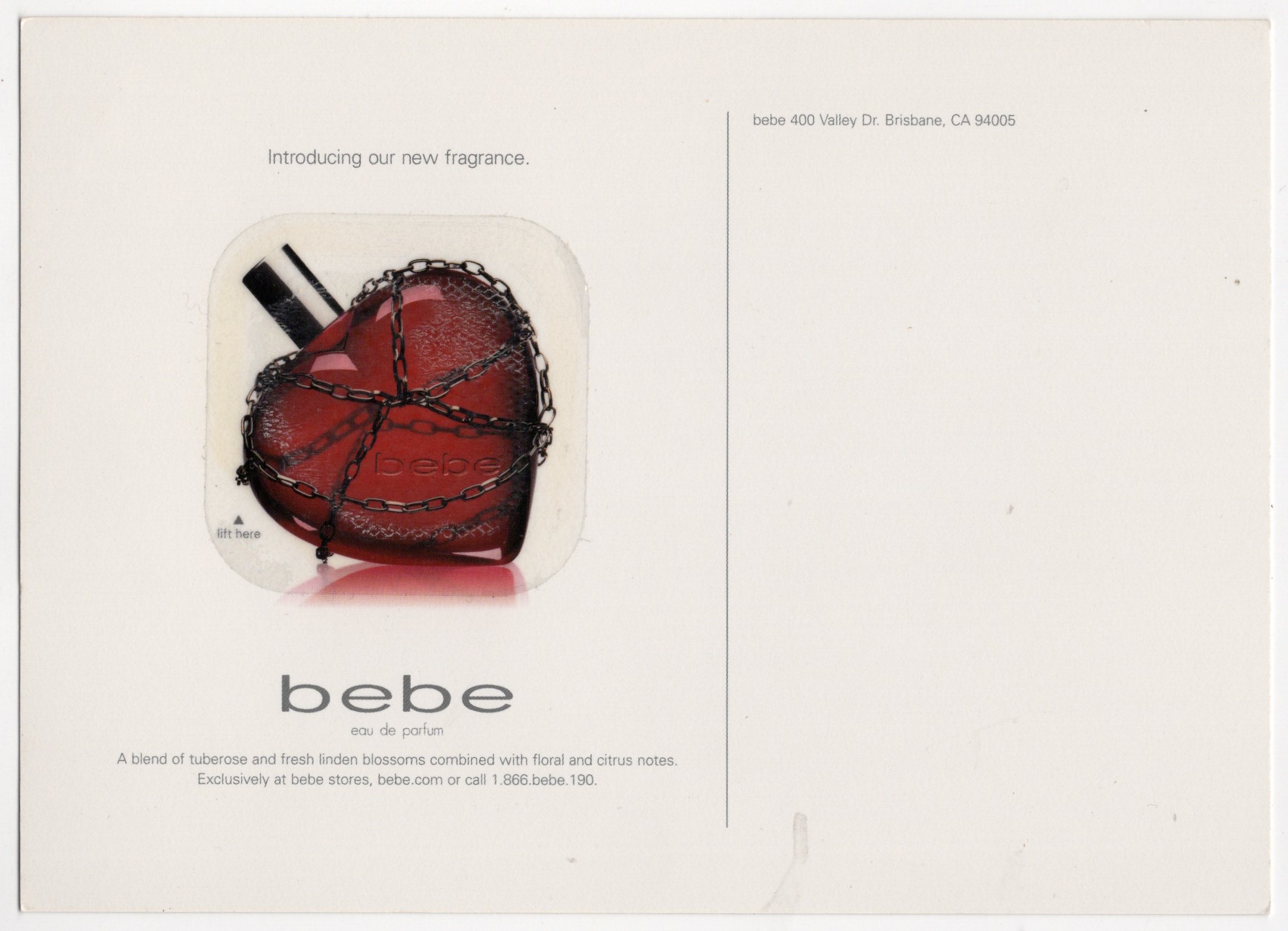
Striking oversized 5 x 7-inch Bebe fashion and fragrance advertising postcard featuring model and actress Olga Kurylenko before her international film fame. The card promotes Bebe Eau de Parfum and shows Kurylenko holding the distinctive red heart-shaped perfume bottle in a dramatic fashion portrait. Kurylenko began as an international model and later became widely known for playing Camille Montes opposite Daniel Craig in the 2008 James Bond film Quantum of Solace. Dating to approximately 2002–2003, the card reflects her early Bebe modeling work. SOLD
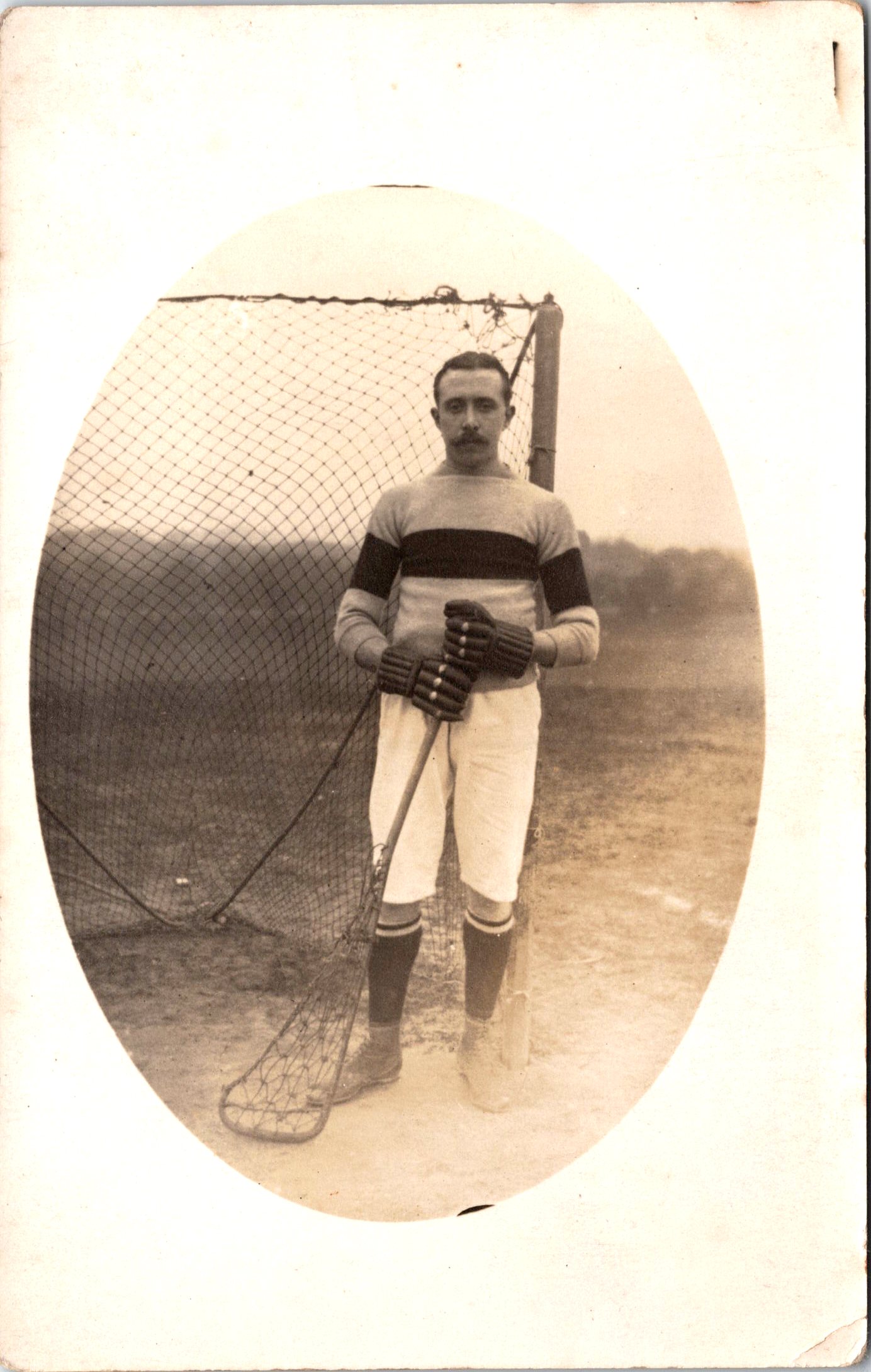
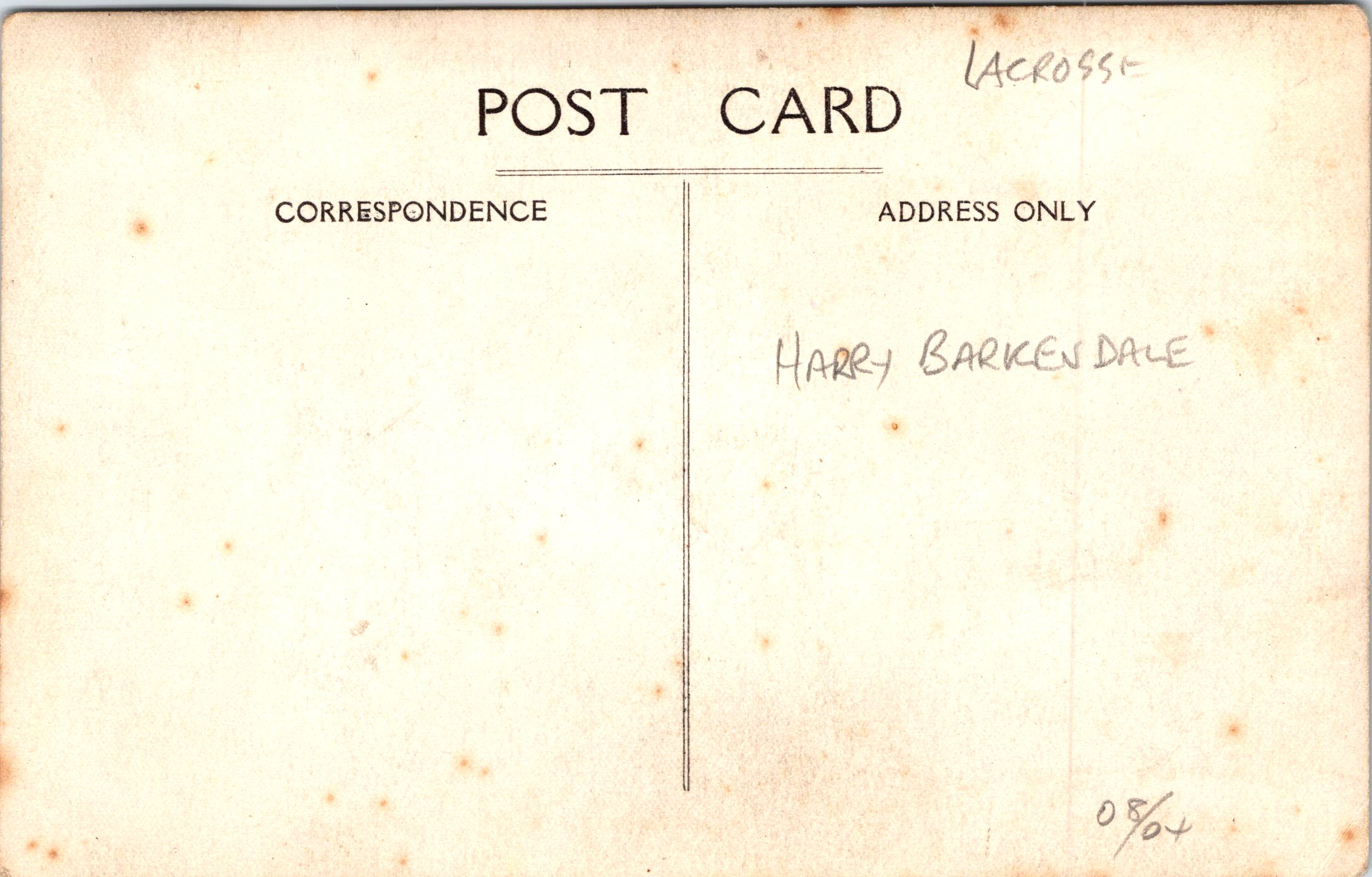
This wonderful uncommon antique real photo postcard, dating to approximately 1905–1915, features a mustachioed lacrosse goalkeeper posing in front of a net with his traditional wooden lacrosse stick. The athlete wears a distinctive striped wool jersey, white knee-length trousers, dark stockings, and heavily padded gloves, providing a fascinating glimpse of lacrosse equipment and sporting attire from the early twentieth century. The beautifully composed oval portrait captures the early days of organized lacrosse, a sport with origins among the Indigenous peoples of North America that became increasingly popular in Britain, Canada, and the United States during the nineteenth century. The divided reverse is unused and bears a penciled identification that appears to read “Harry Barkendale,” along with the word “Lacrosse,” although the player’s identity has not been independently verified. SOLD
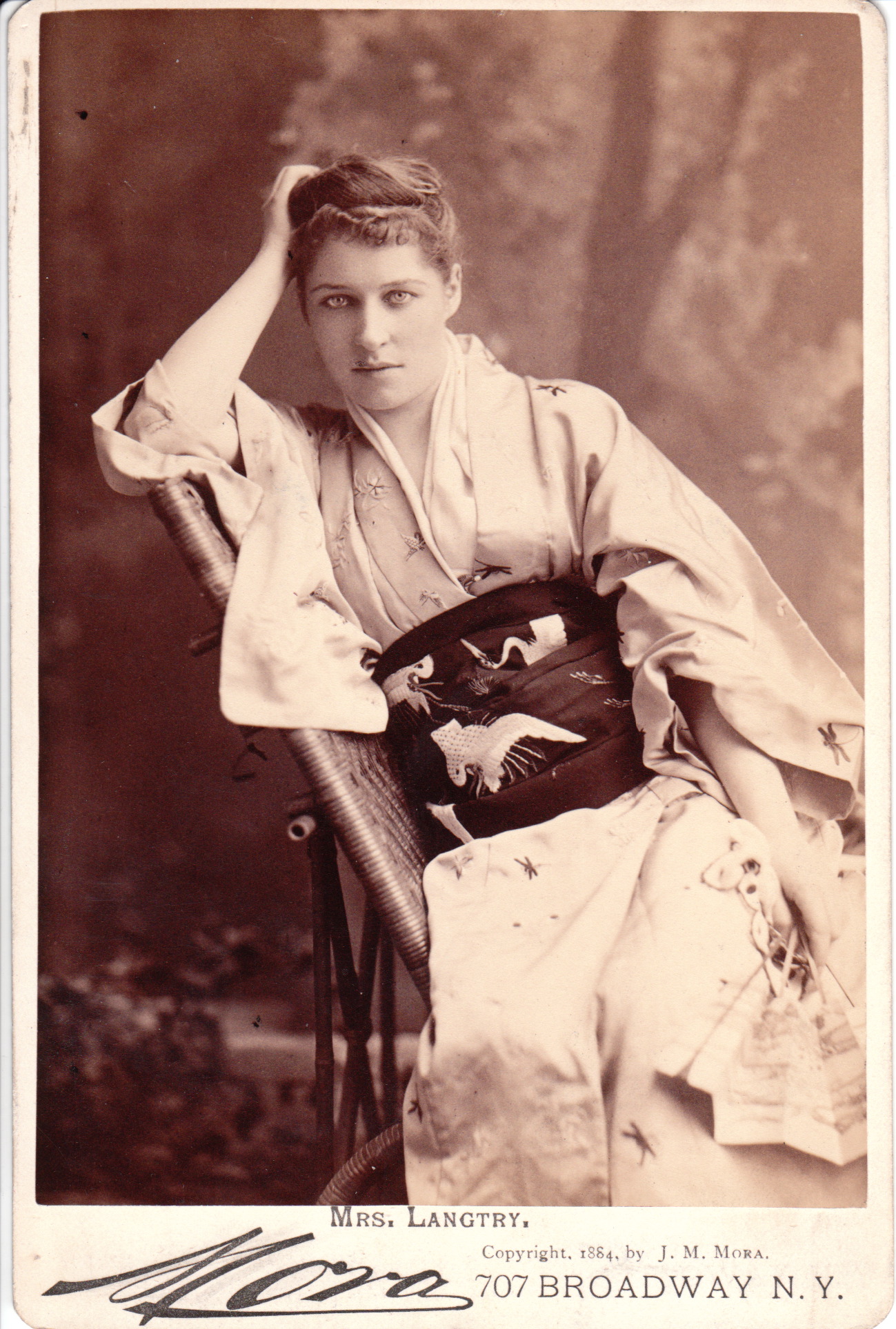
Image 1 (Cabinet Card) features British actress, Lillie Langtry (1853-1929). She was born on the island of Jersey, was known as the “Jersey Lily”, and was known for her beauty. She had many prominent lovers including the future King of England, Edward VII. At 20 years of age she married a wealthy Irish landowner, Edward Langtry and quickly became part of London’s high society. Due to her great beauty, she became a sought after model for a number of well known portrait painters. Beginning 1877, she had a three year affair with the Prince of Wales, Albert Edward. At the suggestion of close friend, Oscar Wilde, she began a stage career. She made her debut in “She Stoops to Conquer” (1881) at the Haymarket Theatre in London. She then embarked on the first of many United States theatre tours where she was a resounding success. She continued to have a number of affairs including a relationship with New York City millionaire, Frederic Gebhard with whom she became very involved in the sport of thoroughbred horse racing. In 1897 she became an American citizen. She is known as one of the early celebrities to make money endorsing commercial products. Among the products she advertised were cosmetics and soap. The photographer of this cabinet card is famed celebrity photographer, Mora, of New York City. The image was copyrighted in 1884. To see other images by Mora, click on this site’s category of “Photographer: Mora”. SOLD
Image 2 is a charming and scarce “Midget Post Card” features a portrait of the famous actress Lily Langtry, one of the most celebrated stage actresses and social figures of the late 19th and early 20th centuries. The front of the card shows Langtry in an elegant studio portrait wearing a large decorative hat adorned with ribbon and feather, dressed in elaborate period costume typical of her theatrical roles and society portraits. The postcard was published by Rotary Photographic Series. Rotary was a major British postcard publisher active in the early 1900s and is well known for producing high-quality photographic postcards of actresses, actors, and notable public figures. The card is marked “Midget Post Card,” a smaller novelty postcard format that was popular in the early 20th century. SOLD