CARMEL MYERS : JEWISH AMERICAN FILM ACTRESS : BEN HUR : RPPC

IMAGE 1 (SOLD)

IMAGE 2 (SOLD)

IMAGE 3

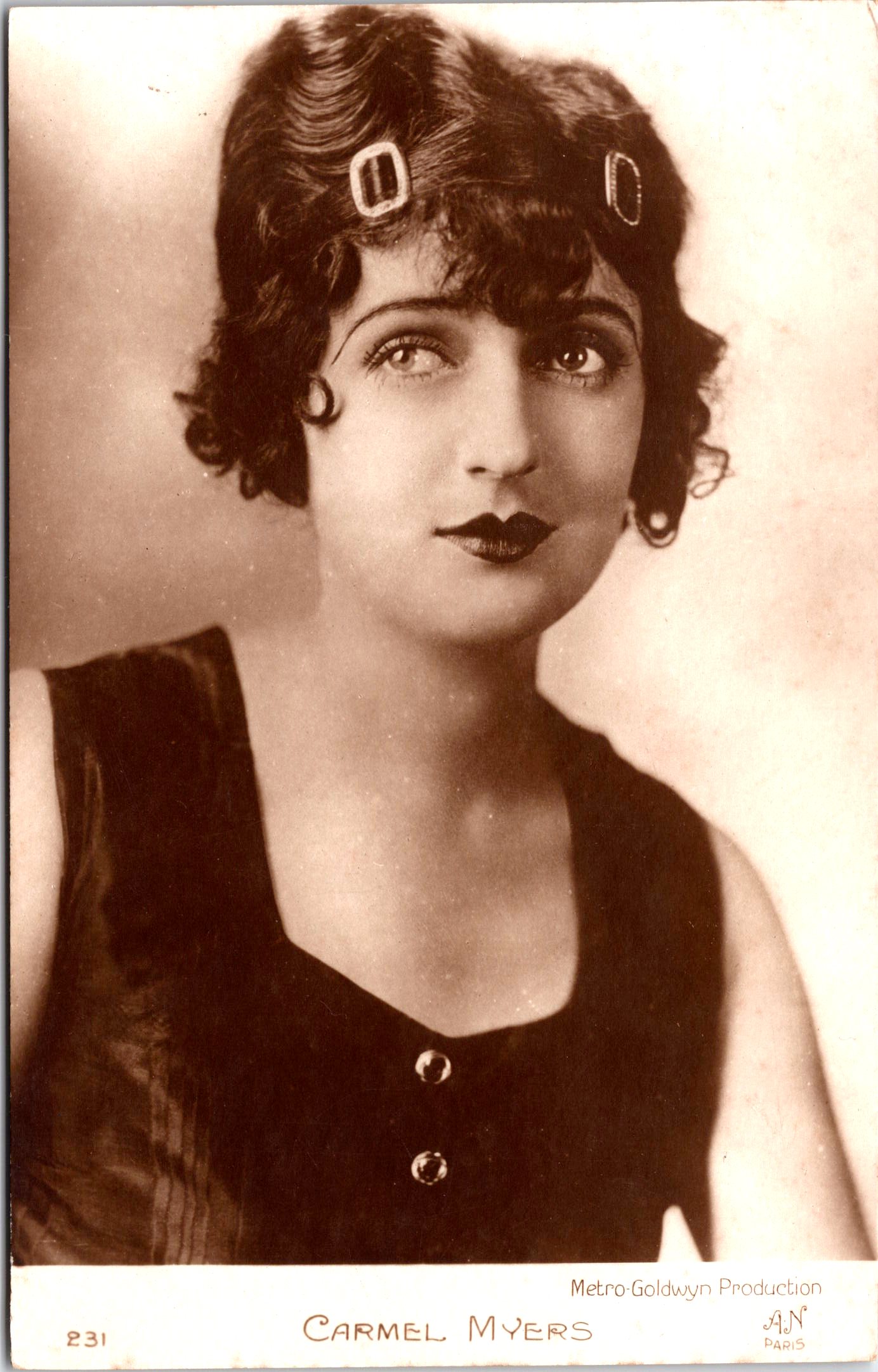
These images feature American silent and sound film actress, Carmel Myers (1899-1980). Carmel Myers was an extraordinary actress who captivated audiences during the early years of Hollywood. She had striking beauty, magnetic screen presence, and versatile talent. Myers was born in San Francisco to Jewish immigrants. Her father was a Rabbi from Russian and her mother was from Austria-Hungary. She grew up in a theatrical household and was exposed to the performing arts from a young age. She participated in both school plays and local theater productions. At the age of 16, Carmel Myers made her professional debut on stage, impressing both critics and audiences with her natural talent. It wasn’t long before she gained the attention of film producers. In 1916 she made her screen debut in the silent film “The House of Mystery”. This was the start of a more than twenty year career in the film business. During the silent film era, Carmel Myers became one of the most sought-after actresses in Hollywood. Known for her expressive eyes, graceful movements, and remarkable versatility, she effortlessly transitioned between comedic and dramatic roles. Her notable films during this period include “Ben-Hur” (1925), where she portrayed the seductive courtesan Iras. Many of her early roles were playing a “vamp”. Carmel Myers was also an early advocate for actors’ rights and was instrumental in establishing the Motion Picture Artists Association. She fought for fair wages, better working conditions, and creative control for performers, contributing to the formation of movie industry unions. With the advent of sound in films, Carmel Myers smoothly made the transition from silent movies to “talkies.” Her resonant voice and impeccable timing added another dimension to her performances. She starred in a range of films throughout the 1930s, including comedies, dramas, and musicals, collaborating with renowned directors and actors of the time. her most popular sound films were “Svengali” (1931) and “The Mad Genius” (1931). Her final film appearance was in the 1945 production of “Blonde Ransom,” marking the end of her illustrious acting career. However, Myers remained involved with both radio and television. Carmel Myers lived a private life outside of the spotlight, rarely divulging details about her personal affairs. She was married three times, first to an attorney and song writer in 1919, in 1929, she married a second attorney, and thirdly, she married a Paramount Pictures executive in 1951. Her first two marriages ended in divorce, and her third marriage ended with her husband’s death. After her husband’s death, she wrote a book about handling grief effectively. After retiring from acting, Carmel Myers devoted herself to philanthropy and community work. She supported various charitable organizations and advocated for social causes.

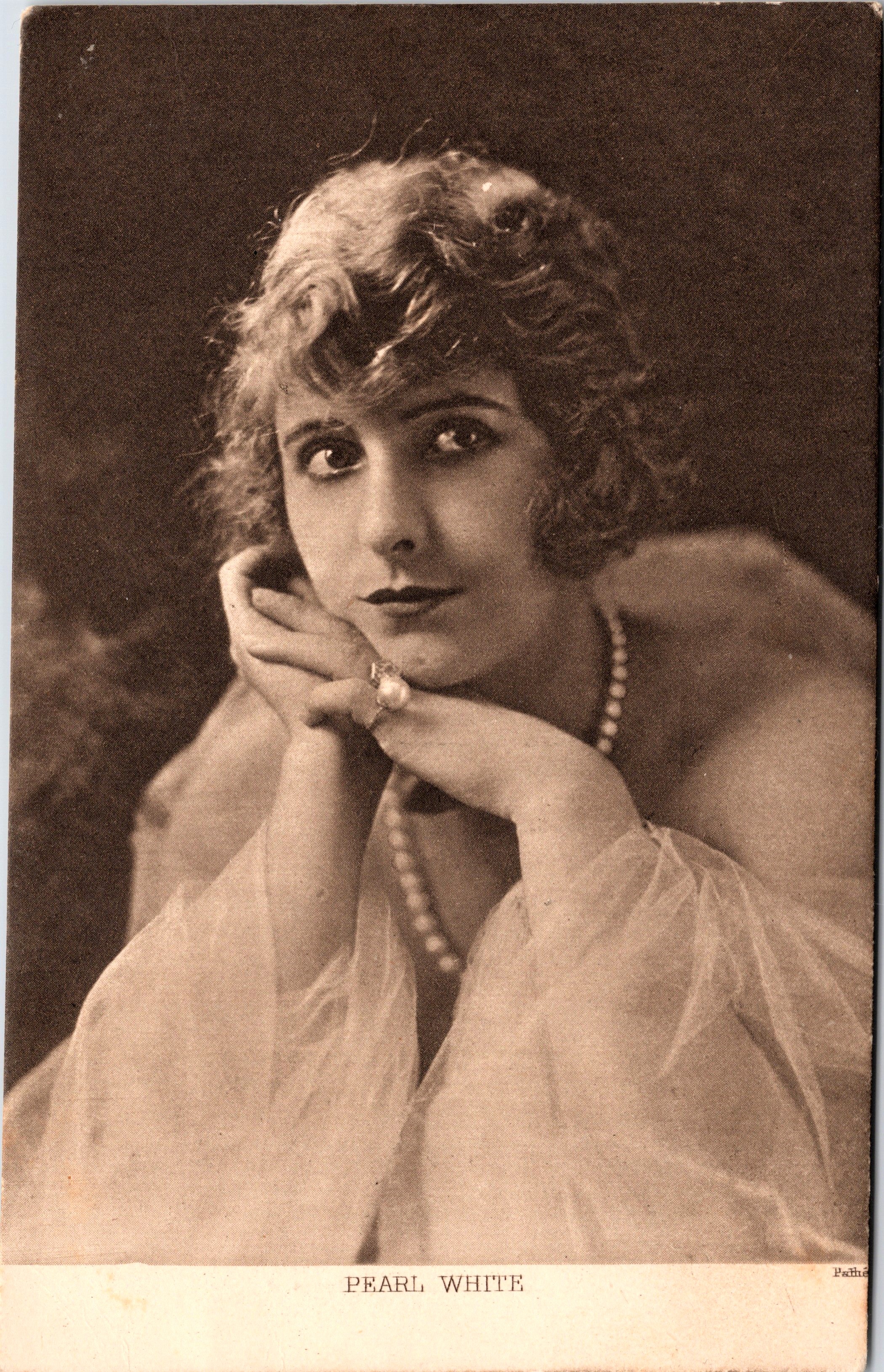
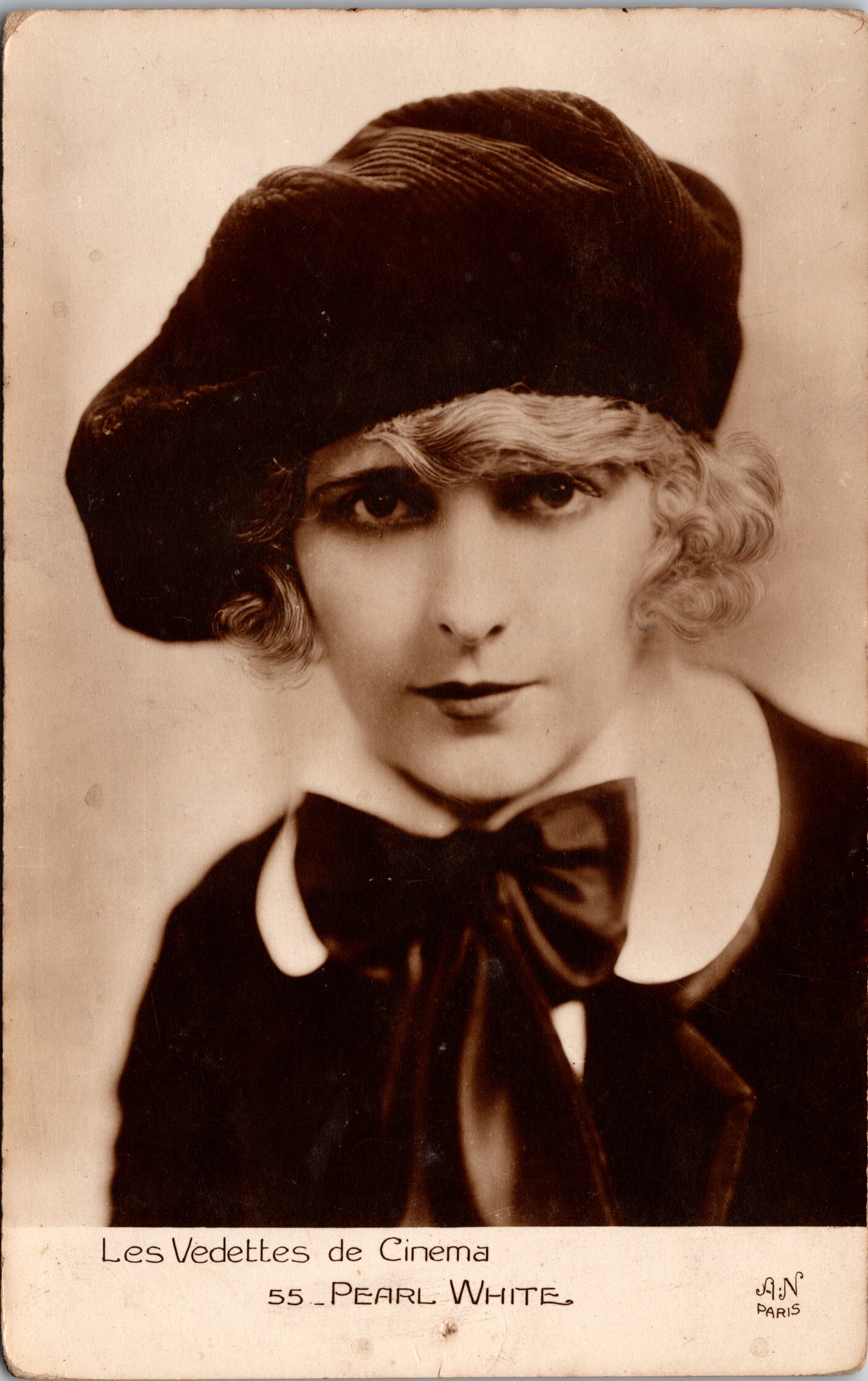
Image 1 was published by A. Noyer and is of French origin. The card has the MGM logo on it’s front. (SOLD)

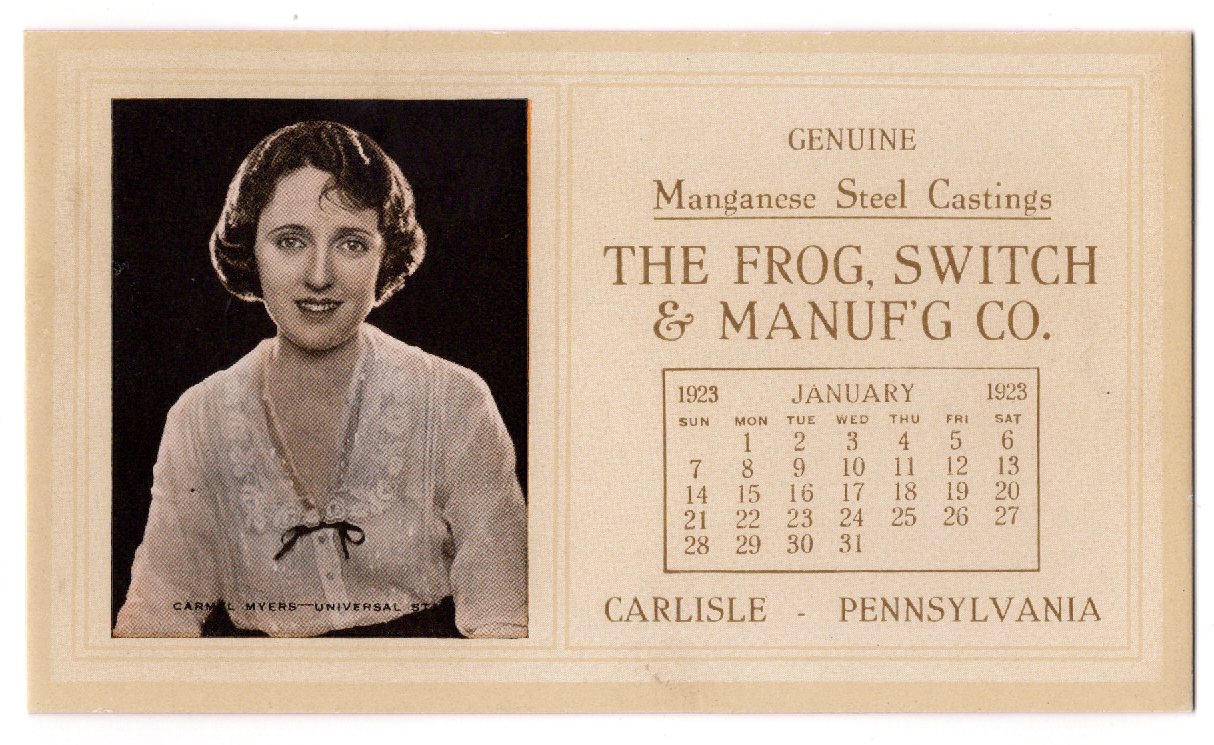
Image 2 is a vintage ink blotter that advertises the Frog Switch & Manufacturing Company, located in Carlisle, Pennsylvania. The blotter has a calendar for January, 1923. The blotter also features a photograph (litho) of Carmel Myers. (SOLD)

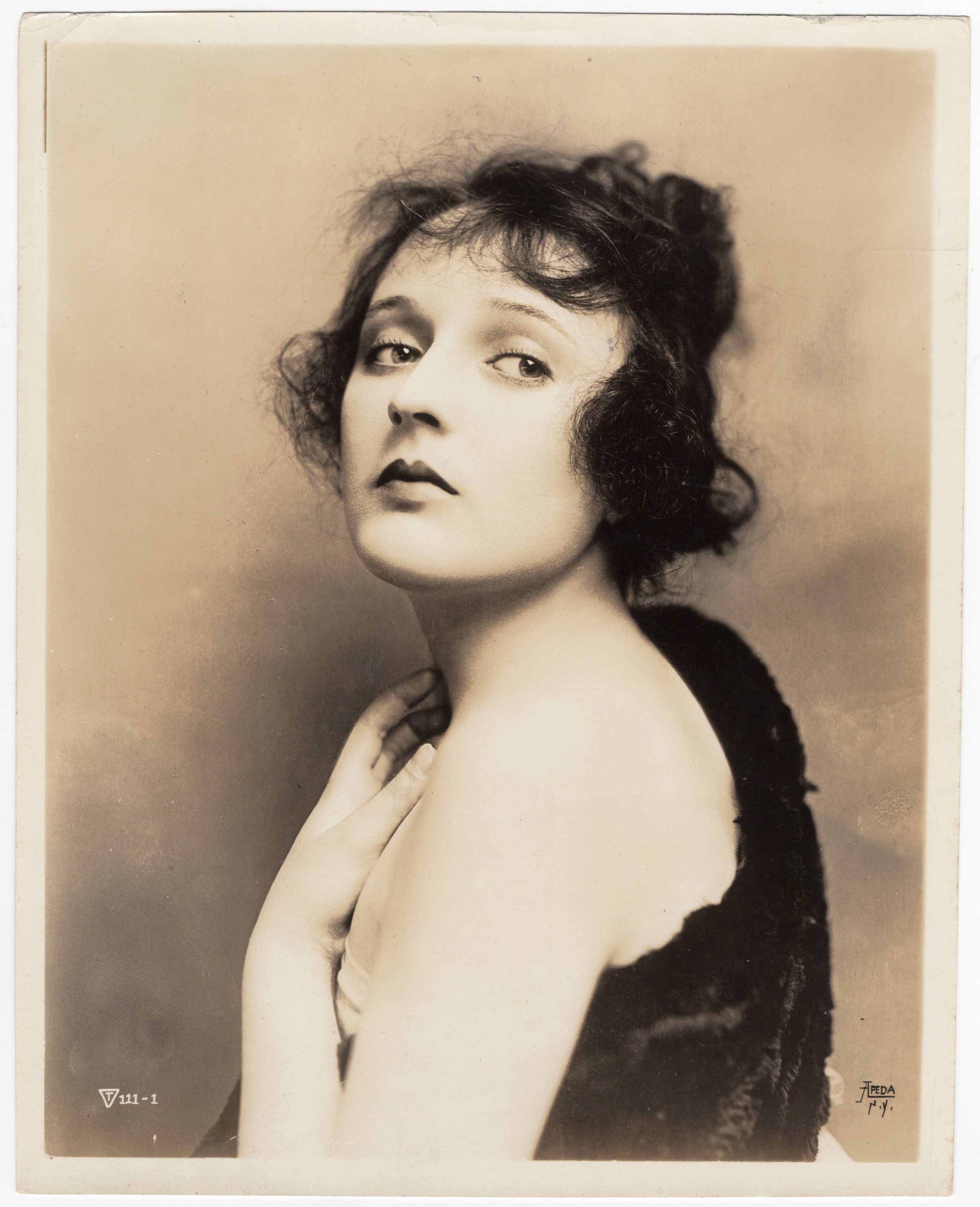
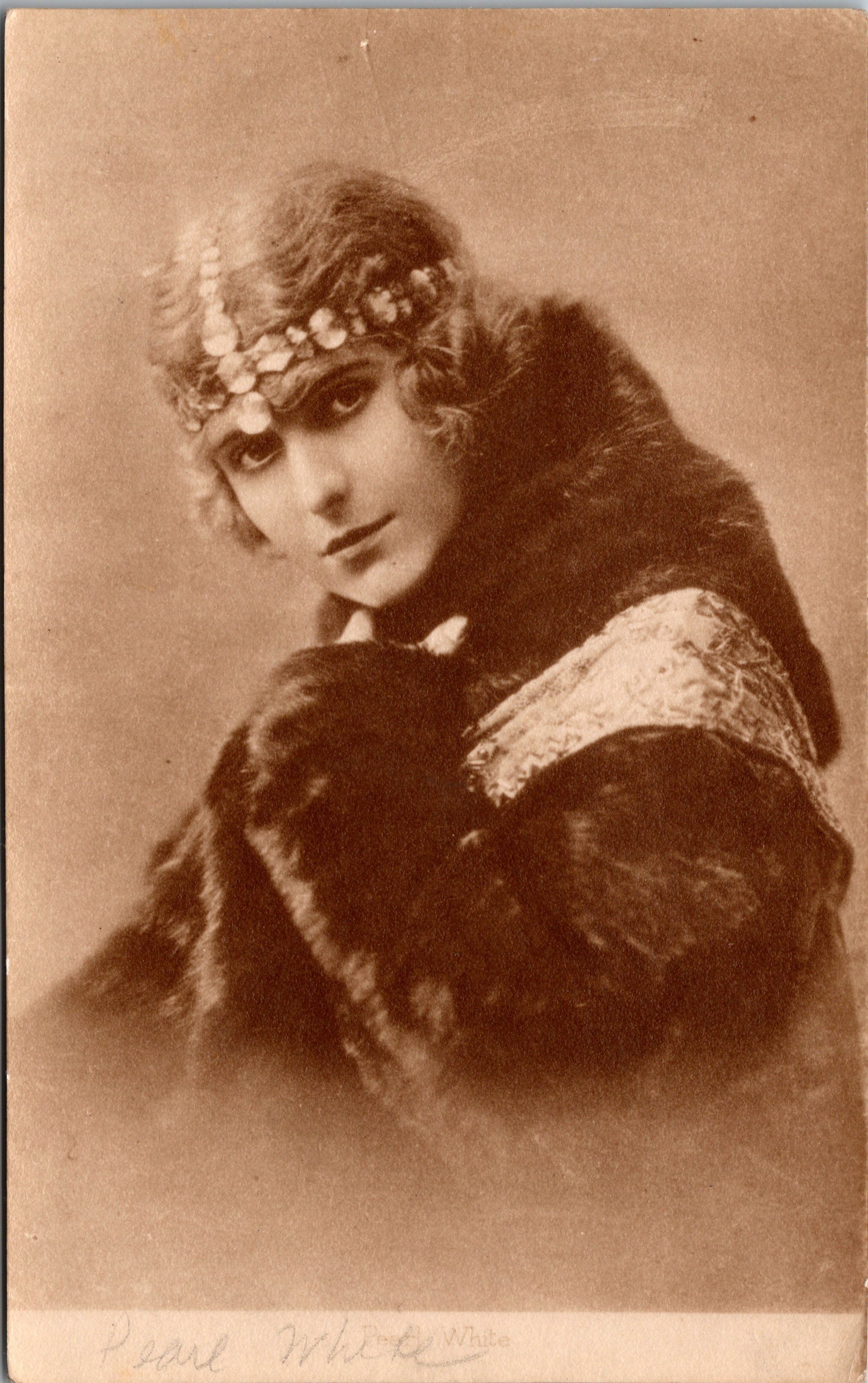
Image 3 This press photo shows Myers in a classic glamour pose, her head turned slightly with a dramatic upward gaze that conveys both elegance and intensity. Her dark hair is softly styled with curls around her face, and she is draped in a fur wrap that slips over her shoulder, adding to the sense of sophistication and allure. In the lower left corner appears the photo’s numbering “V111-1”, while the lower right bears the imprint AFEDA, N.Y., the New York studio known for high-quality publicity portraits of stage and film stars of the era. Apeda was a photography studio in New York City. It was founded in 1906 by Alexander W. Dreyfoos, Sr. (1876–1951) and Henry Obstfield.  The studio was known for pursuing two business strategies: shooting original portraiture and reproducing uncopyrighted images by other photographers of newsworthy scenes or celebrities under its own trade name. The second strategy resulted in them being brought to court for copyright infringement. They won the case. Dreyfoos was the head photographer and his focus was on sports, theatre and celebrity portraiture.  (SOLD)

IMAGE 1

IMAGE 2

IMAGE 3

RISQUE BATHING BEAUTY : FRENCH POSTCARD BY NOYER : SEASIDE GLAMOUR : VINTAGE RPPC

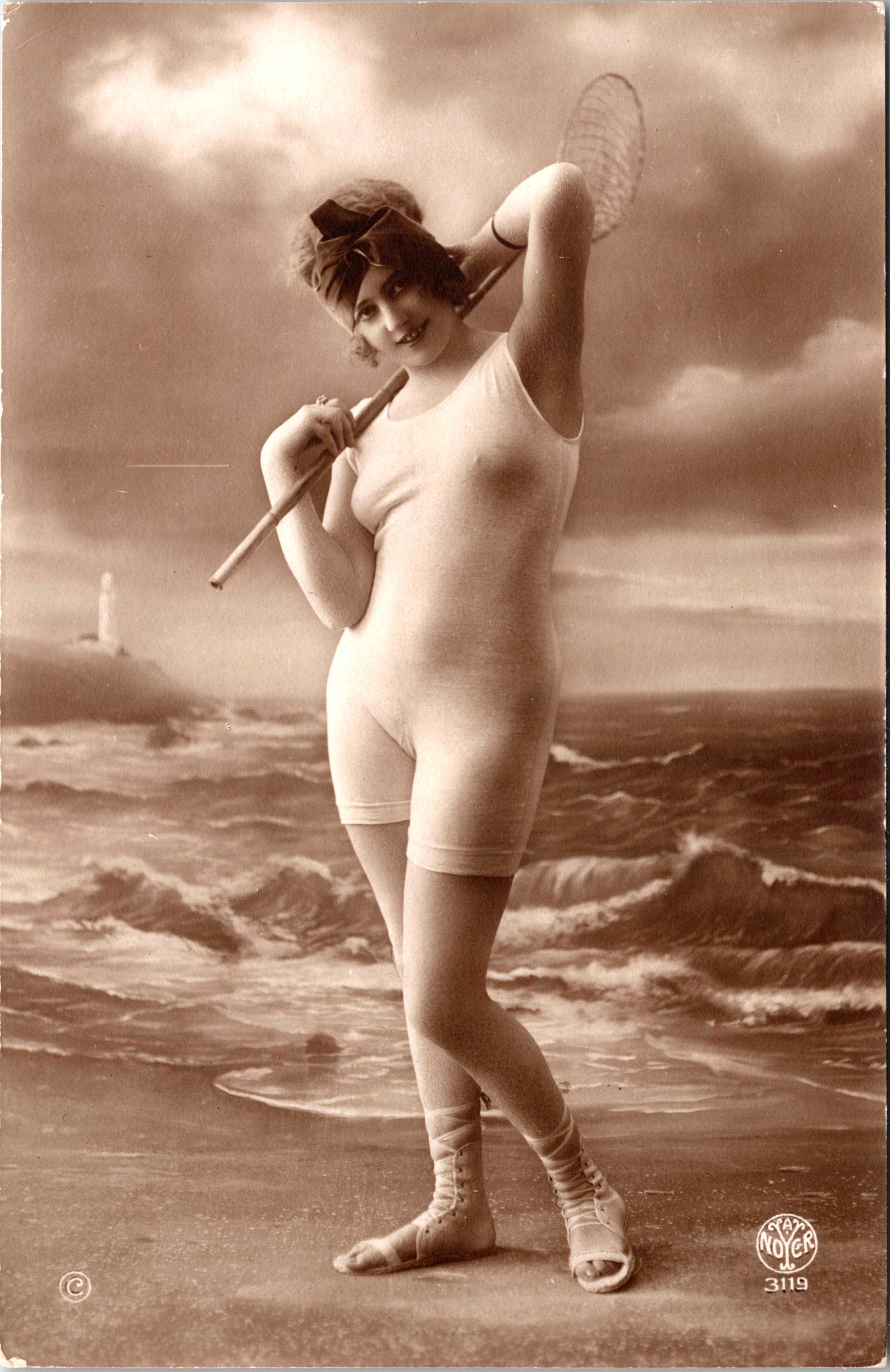
This vintage French real photo postcard features a charming seaside scene of a “bathing beauty,” a popular motif of early 20th-century glamour photography. The young woman poses confidently on a simulated beach with a painted backdrop of choppy waves and a distant lighthouse. She wears a form-fitting, one-piece knitted bathing outfit that clings to her figure—a risqué choice for the era—along with ballet-style laced sandals and sheer stockings. A bold, dark ribbon or turban is wrapped around her head, adding a dramatic flourish to her beach attire. She holds a racket over her shoulders, likely meant to suggest leisure and playfulness, possibly referencing beach paddle games or tennis, though this is clearly a studio creation rather than a candid beach photograph. Her smile is coy and knowing, with a relaxed, flirtatious pose and bright expression that captures the coquettish spirit of Belle Époque and Edwardian postcard art. This card was published by Noyer of Paris, a noted French postcard publisher known for glamorous and mildly provocative photographic portraits. The card bears the serial number 3119 and the “Fabrication Française” mark on the reverse. This is a classic example of a risqué seaside glamour postcard. SOLD

Published in: on June 6, 2025 at 12:00 pm  Leave a Comment  
Tags: , , ,

MOST BEAUTIFUL WOMEN OF FRANCE : LA BRETONNE PROVINCE : PHOTO BY GIFFARD

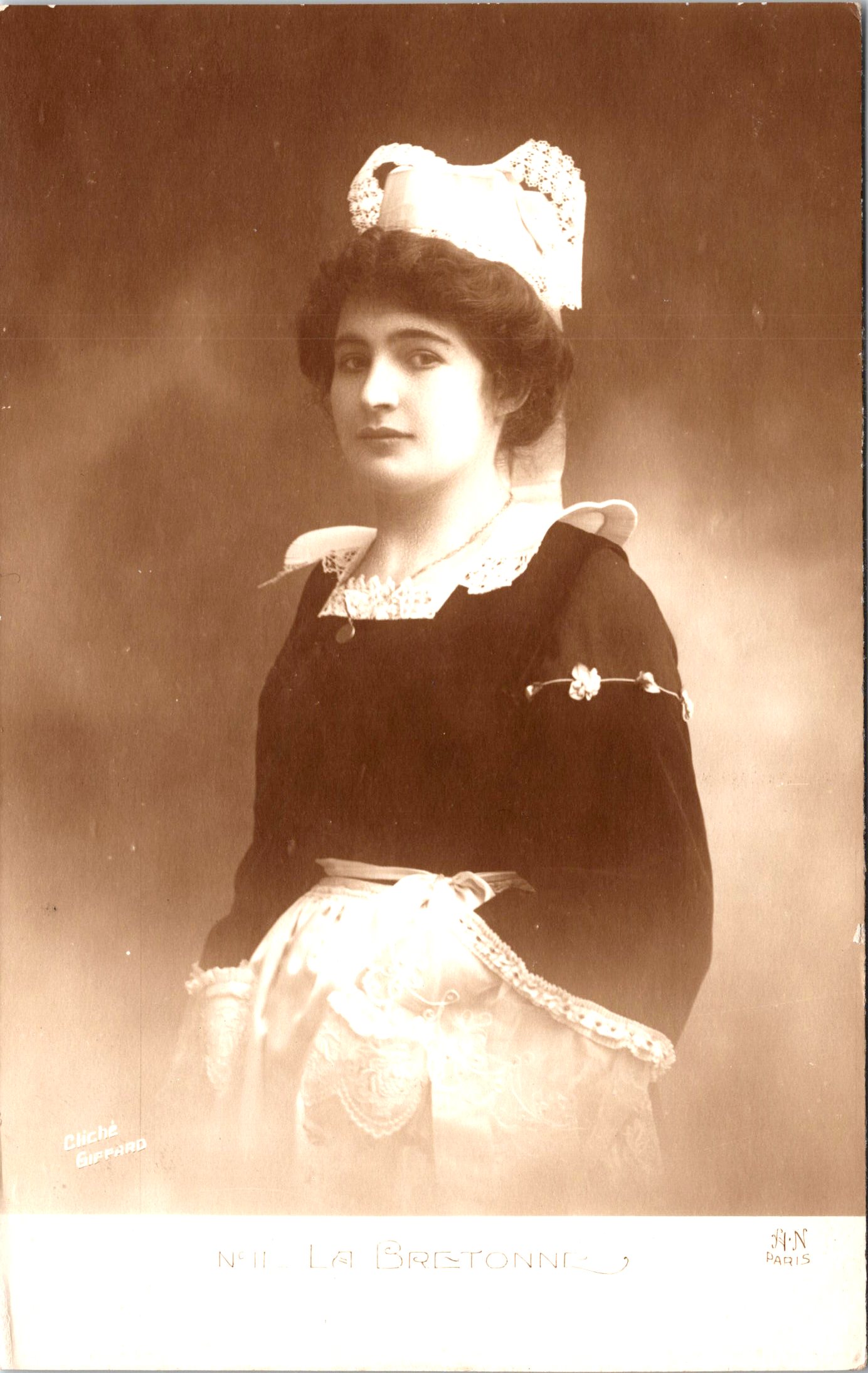
This vintage real photo postcard is part of a series named “Les Plus Belles Femmes de France” (The Most Beautiful Women of France). This series is about the Provinces of France, and the model for this image represents La Brettone.  Note that the woman in this photograph is wearing a half smile. This postcard is no.11 in the series. There were a number of different series published. The Province series was one of the more popular series. The models in this series represent different French Provinces and wear traditional clothing from that particular area of the country. This postcard was published by well known photographer Alfred Noyer. The photographer of this image was the Giffard studio.  SOLD

PEGGY VERE : MUSIC HALL PERFORMER, STAGE STAR, AND FILM ACTRESS : A NOYER : RPPC

This vintage real photo postcard features pretty British music-hall performer, dancer, singer, and stage and screen actress, Peggy Vere. She performed in French music halls. Her debut was in Paris at both the Concert Mayol and at the Theatre des Varietes. In 1920 she performed at the Ambassadeurs and at the Casino de Paris. Between the years 1920 and 1940 she performed predominately at the Concert Mayol. Vere helped popularize “The Lambeth Walk”, a song from the musical “Me and My Girl” (1937). In 1919 he made her screen debut in a propaganda drama. The IMDb reports that Vere appeared in five films between 1919 and 1933. This postcard was published by Alfred Noyer (Paris, France) as part of a series (No.14). (SOLD)

MOST BEAUTIFUL WOMEN OF FRANCE : LA MALOUINE : PHOTO BY JEAN AGELOU

This vintage real photo postcard is part of a series devoted to the provinces and possessions of France.. This card represents “La Malouine” (The Falkland Islands). Note that the woman in this photograph is wearing an interesting hat and a pretty smile. This postcard is no.8 in the series. There were a number of different series published by this publisher. The Noyer Studio operated from 1910 until the 1940’s in Paris, France.  Many of the postcards he produced of women were nudes or risque images. The photographer of this postcard portrait is Jean Agelou (1878-1921). Agelou was a French photographer of the 1910’s and 1920’s who is best known for his erotic and nude photographs. He was born in Egypt and not much is known about his private life. Agelou generally used models between the age of 20 and 24 years-old. He had a favorite model. Her name was “Fernande” and in addition to modeling, she was Agelou’s lover. Although the 1900’s was the “golden age” of erotic photograph, photographers who took such risque photos had to use discretion. As a result, Agelou signed his work “JA”. In 1908, nudity in photographs was banned in France and photographers had to cover nude women images with strategically placed undergarments or other materials. Nude images had to circulate on the down low. They were sent in the mail inside of envelopes. Jean Agelou died in 1921; the result of a car accident. His brother George, who managed Jean’s business, also was killed in the crash. SOLD

Published in: on April 14, 2025 at 12:00 pm  Leave a Comment  
Tags: , , ,

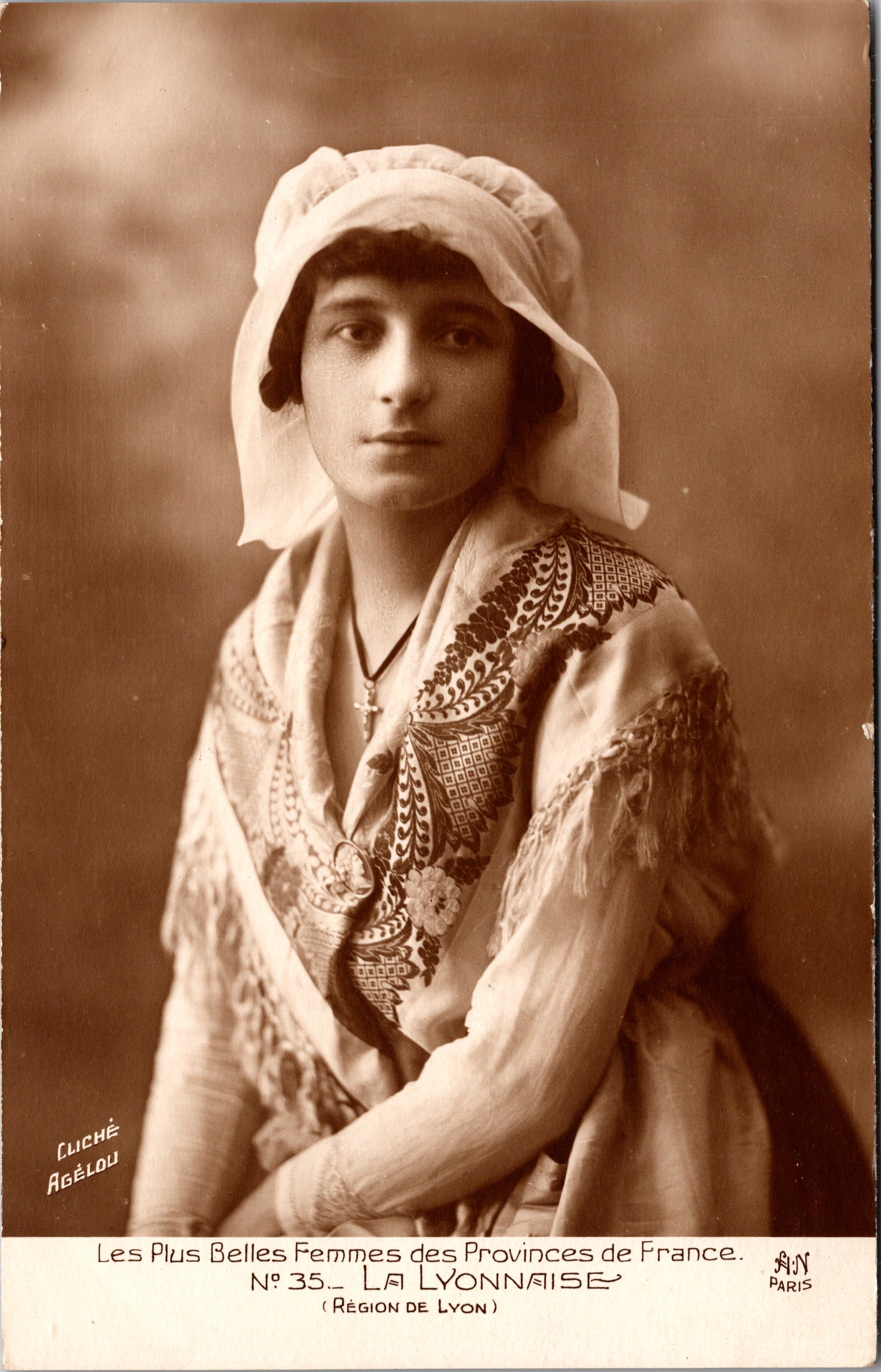
MOST BEAUTIFUL WOMEN OF FRANCE : LA LYONNAISE PROVINCE : PHOTO BY JEAN AGELOU

This vintage real photo postcard is part of a series named “Les Plus Belles Femmes de France” (The Most Beautiful Women of France). This series is about the Provinces of France, and the model for this image represents Lyonnaise. Note that the woman in this photograph is wearing a pretty smile. This postcard is no.35 in the series. There were a number of different series published. The Province series was one of the more popular series. The models in this series represent different French Provinces and wear traditional clothing from that particular area of the country. This postcard was published by well known photographer Alfred Noyer. The celebrated photographer supervised a large photo studio in Paris. The Noyer Studio operated from 1910 until the 1940’s.  Many of the postcards he produced of women were nudes or risque images.The photographer of this postcard portrait is Jean Agelou (1878-1921). Agelou was a French photographer of the 1910’s and 1920’s who is best known for his erotic and nude photographs. He was born in Egypt and not much is known about his private life. Agelou generally used models between the age of 20 and 24 years-old. He had a favorite model. Her name was “Fernande” and in addition to modeling, she was Agelou’s lover. Although the 1900’s was the “golden age” of erotic photograph, photographers who took such risque photos had to use discretion. As a result, Agelou signed his work “JA”. In 1908, nudity in photographs was banned in France and photographers had to cover nude women images with strategically placed undergarments or other materials. Nude images had to circulate on the down low. They were sent in the mail inside of envelopes. Fernande remained popular and her erotic photographs were enjoyed by soldiers on both sides during World War I. Jean Agelou died in 1921; the result of a car accident. His brother George, who managed Jean’s business, also was killed in the crash. SOLD

Published in: on April 10, 2025 at 12:00 pm  Leave a Comment  
Tags: , ,

HUGUETTE DUFLOS : PRETTY FRENCH FILM AND STAGE ACTRESS : QUIT COMEDIE FRANCAISE

This vintage real photo postcard features French stage and film actress, Huguette Duflos (1887-1982). She was married to actor Raphael Duflose from 1910 through 1928. Her early career was with the Comedie Francaise and she later pursued a film career. In 1931 she was the victim of an assault by a Frenchwoman. Her injuries were treated by noted psychoanalyst Jacques Lacan. The IMDb credits Duflos with 43 film appearances between 1914 and 1962. A 1926 article in the New York Times describes how Duflos, “the sweetest girl on the French stage”,  unexpectedly resigned from the Comedie Francaise and pursued other venues. This action violated her contract and she faced the threat of financial punishment for the rest of her career. The article asserts that Duflos was the most popular beauty on France’s stages and in addition, she was also admired by American audiences. This photo of Miss Duflos was taken by the noted photographic Reutlinger studio. This postcard was published by Alfred Noyer and is part of the “Les Vedettes de Cinema” (The Stars of Film) series (No.16). SOLD

MOST BEAUTIFUL WOMEN OF FRANCE : LA BASQUE PROVINCE : PHOTO BY JEAN AGELOU

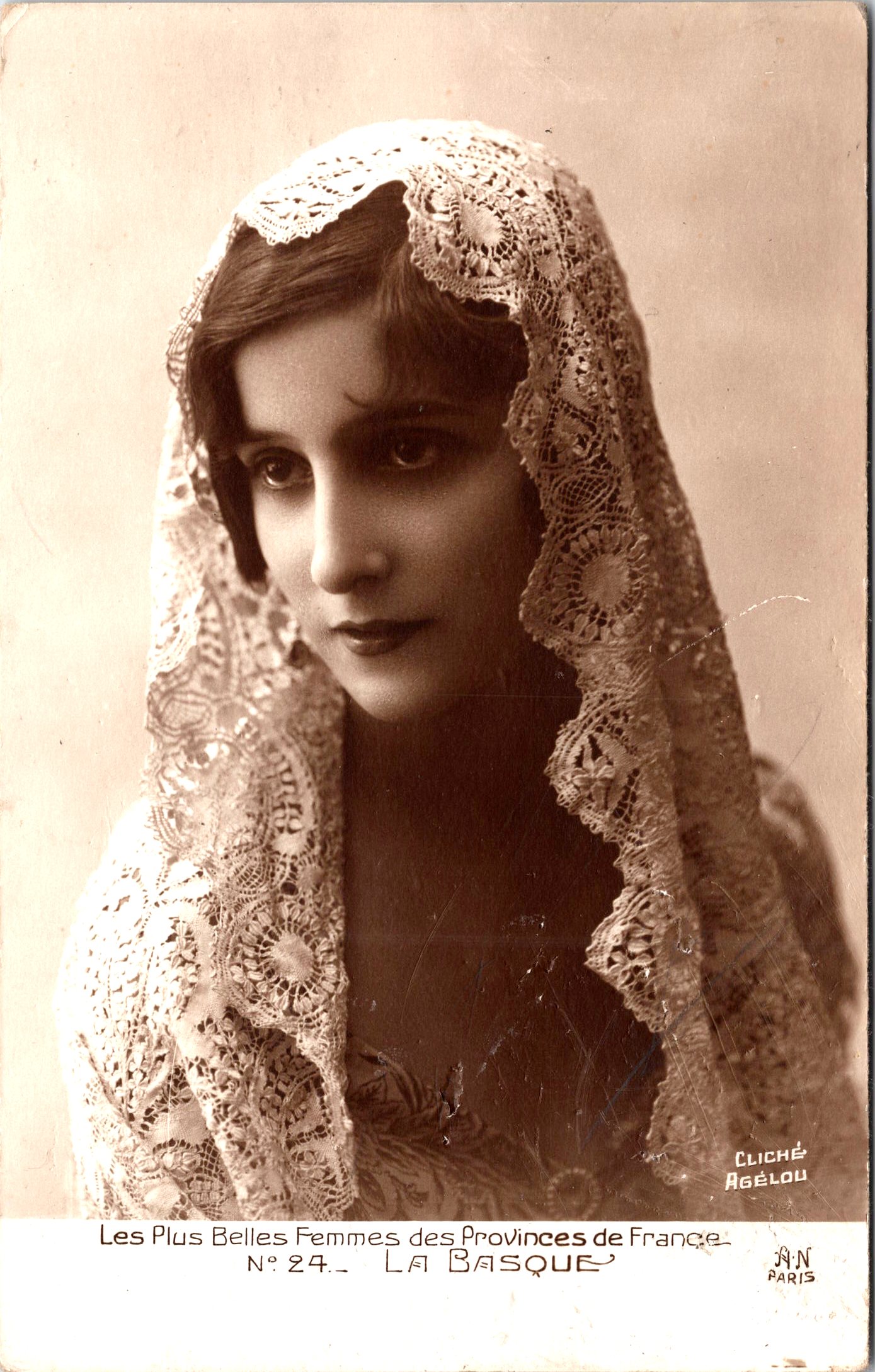
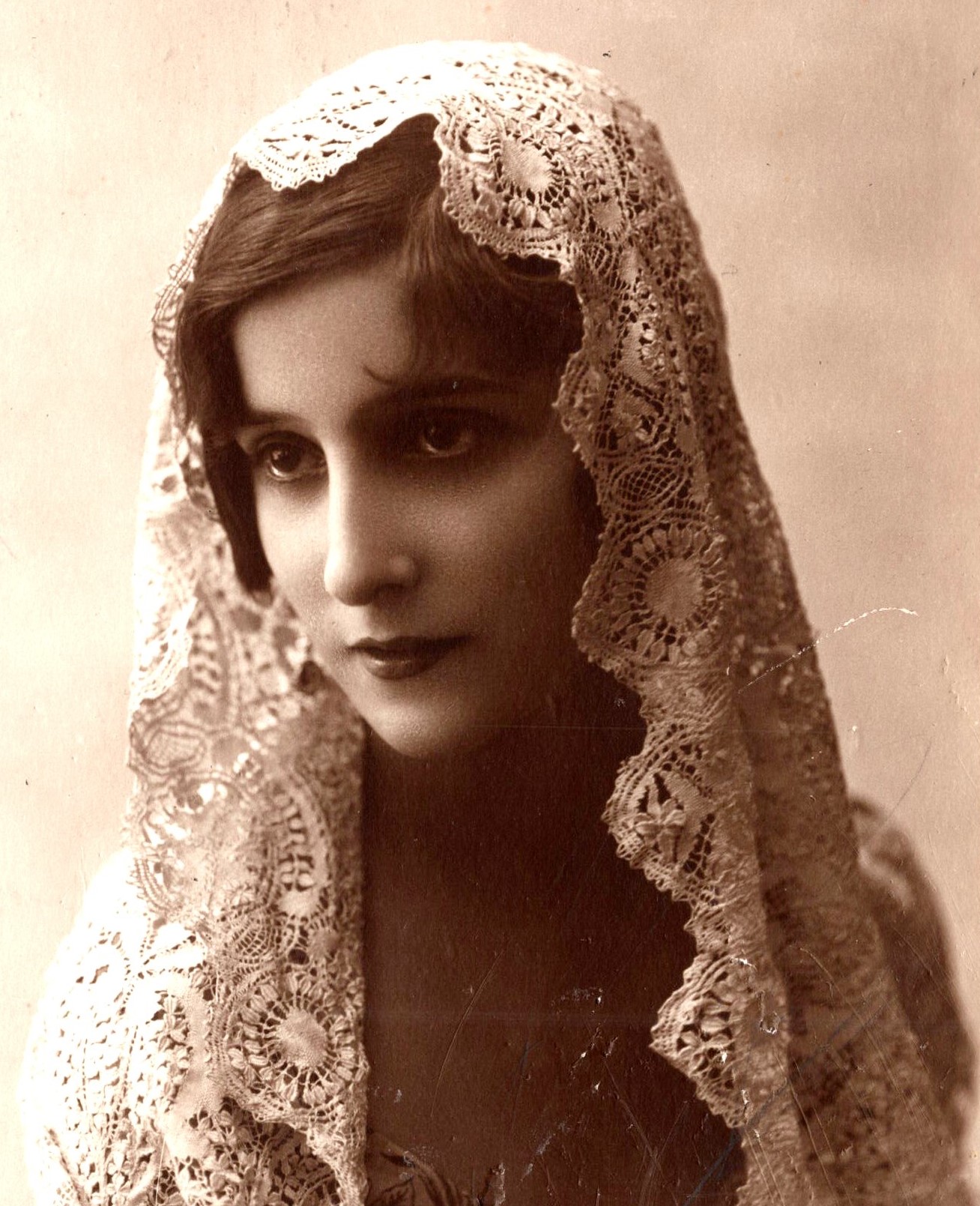
This vintage real photo postcard is part of a series named “Les Plus Belles Femmes de France” (The Most Beautiful Women of France). This series is about the Provinces of France, and the model for this image represents La Basque.  Note that the woman in this photograph is wearing a subtle smile. This postcard is no.24 in the series. There were a number of different series published. The Province series was one of the more popular series. The models in this series represent different French Provinces and wear traditional clothing from that particular area of the country. This postcard was published by well known photographer Alfred Noyer. The celebrated photographer supervised a large photo studio in Paris. The Noyer Studio operated from 1910 until the 1940’s.  Many of the postcards he produced of women were nudes or risque images. The photographer of this postcard portrait is Jean Agelou (1878-1921). Agelou was a French photographer of the 1910’s and 1920’s who is best known for his erotic and nude photographs. He was born in Egypt and not much is known about his private life. Agelou generally used models between the age of 20 and 24 years-old. He had a favorite model. Her name was “Fernande” and in addition to modeling, she was Agelou’s lover. Although the 1900’s was the “golden age” of erotic photograph, photographers who took such risque photos had to use discretion. As a result, Agelou signed his work “JA”. In 1908, nudity in photographs was banned in France and photographers had to cover nude women images with strategically placed undergarments or other materials. Nude images had to circulate on the down low. They were sent in the mail inside of envelopes. Fernande remained popular and her erotic photographs were enjoyed by soldiers on both sides during World War I. Jean Agelou died in 1921; the result of a car accident. His brother George, who managed Jean’s business, also was killed in the crash.  SOLD

PRETTY WOMAN WEARING A NEGLIGEE : RISQUE : J. MANDEL : PC PARIS : RPPC

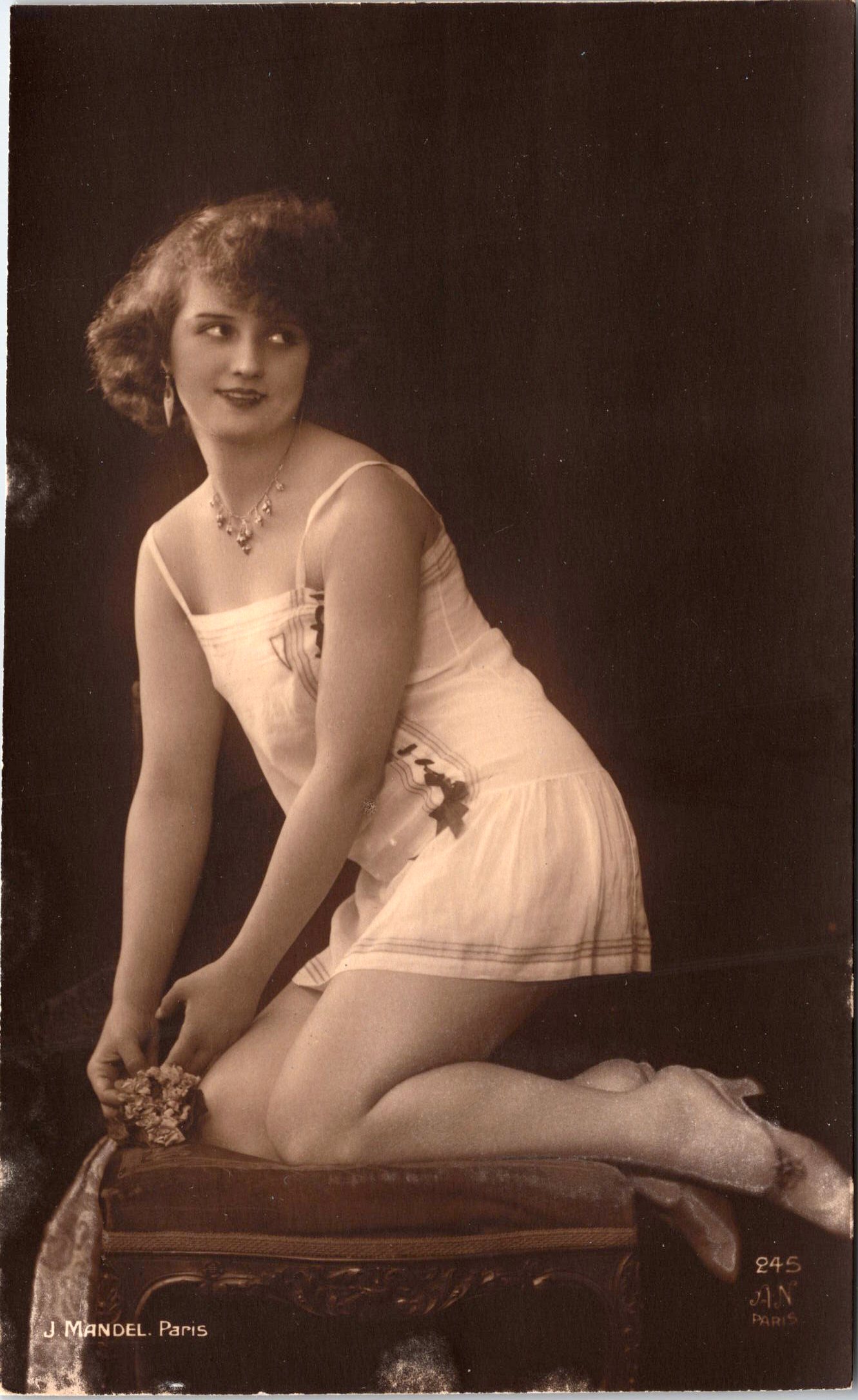
This vintage real photo features a pretty young woman wearing a negligee and holding a small bouquet of flowers.  The woman is  perched on an ornately carved wooden stool with upholstered fabric. She is in a graceful, slightly coy pose, looking off to her left, avoiding direct eye contact with the camera. She has short, wavy hair, characteristic of the 1920s or early 1930s style, giving her a modern and sophisticated look for the era. Her expression is flirtatious yet demure, exuding a mix of elegance and allure. She is wearing a light, sleeveless garment resembling a chemise or slip, commonly associated with boudoir or risqué photography of the time. The outfit is detailed with delicate embroidery and small ribbon accents, enhancing its feminine charm. Her night clothes are accessorized with a simple yet sparkling necklace and earrings. This postcard was  published by Alfred Noyer (Paris). The model’s photograph was taken by J. Mandel.  Mandel was a noted Parisian studio or publisher that specialized in photographic postcards during the early 20th century. Many of his works were part of the “boudoir” genre, featuring women posed in intimate or suggestive settings. SOLD

PAUL PORT : FRENCH POET : SYMBOLIST MOVEMENT : PHOTO BY HENRI MANUAL : RPPC

This vintage real photo postcard features French poet and innovator of literary experiments, Paul Fort (1872-1962).He is usually associated with the Symbolist Movement. He was just 18 years of age when he founded the Theatre d’Art. He also founded and edited the review Vers et Prose (1905-1914) which published the work of Paul Valery and other important Symbolist writers. Between 1897 and 1924, Fort wrote 30 volumes of ballads. This vintage postcard was published by Alfred Noyer as part of a series (No.145). Fort’s photo portrait was taken by celebrated photographer, Henri Manuel.  SOLD