CONSTANCE COLLIER : IN COSTUME AS CLEOPATRA : ACTRESS, ACTING COACH, WRITER

POSTCARD 1 (SOLD)

POSTCARD 2 (SOLD)

Postcard 1 is a vintage real photo postcard featuring English stage and film actress and acting coach, Constance Collier (1878-1955). She also wrote hit plays and films. She has another claim to fame. She was the first person to be treated with insulin in Europe. This postcard captures Miss Collier in costume for her role of Cleopatra in “Antony and Cleopatra” (1906). Marc Antony was played by Herbert Beerbohm Tree and the production’s venue was at  “His Majesty’s Theatre”. Collier began her stage career at the age of three. She appeared in “A Midsummer Night’s Dream”. At the age of 15, she became one of the “Gaiety Girls”. This group was a famous dance troupe based in London’s Gaiety Theatre. In 1905, Collier married English actor, Julian Boyle. He was better known as the famous theatrical cross-dresser, Julian L’Estrange. After appearing in “Antony and Cleopatra”, Collier became very popular and seen as a distinguished actress. In 1908, she made the first of several tours of the United States. In her 1916 tour of the US, she made four silent films including in D. W Griffith’s, “Intolerance”. In 1918, her husband died from the Spanish flu while the pair were on a US tour. The influenza epidemic of 1918-1919 killed 650,000 Americans. It was the era’s version of Covid-19. In the early 1920’s, Collier became close friends with actor, Ivor Novello. They acted and co-wrote together. In the late 1920’s, Collier relocated to Hollywood where she became a voice coach. She filled a valuable role because talkies were beginning to replace silent films and many actors were in need of help with the transition. Her most famous students were actresses, Colleen Moore, Marilyn Monroe, Vivien Leigh, and the Hepburn sisters. While teaching, she still performed on Broadway and made films. The IBDb reports that Collier was in 21 Broadway shows between 1908 and 1939. These shows included Oliver Twist (1912), Othello (1914), Camile (1931), and Dinner at Eight (1933). According to IMDb, Collier performed in 29 films, wrote 7, and was in the crew of 4. She performed for Otto Preminger as well as Alfred Hitchcock. She was awarded an American Shakespeare Festival Theatre Award for distinguished service for training actors for Shakespearean roles. This postcard was published by Rotary Photo as part of a series (No.4039H). Miss Collier’s photographic portrait was taken by the Foulsham & Banfield studio. The National Portrait Gallery possesses this same card in their Constance Collier postcard collection. They possess 33 different photographs of Miss Collier.   (SOLD)

Postcard 2 was published by Rapid Photo as part of a series (No.1834). Note the size of the buttons on her dress and her hair ornament composed of four leaves. (SOLD)

POSTCARD 1

POSTCARD 2

MAUD ALLAN : RISQUE : SALOME : DANCER, ACTRESS, AND CHOREOGRAPHER : 1908 : RPPC

POSTCARD 1 (SOLD)

POSTCARD 2 (SOLD)

POSTCARD 3 (SOLD)

POSTCARD 4 (SOLD)

POSTCARD 5 (SOLD)

POSTCARD 6 (SOLD)

POSTCARD 7 (SOLD)

POSTCARD 8 (SOLD)

POSTCARD 9 (SOLD)

POSTCARD 10 (SOLD)

These risque vintage real photo postcards feature Maud Allan (1873-1956). She was a Canadian-born dancer, choreographer, and actress, who performed in the United States and Europe at the turn of the 20th century. She was known for her performances of the “Vision of Salome”, an interpretive dance based on the Oscar Wilde play “Salome”, in which she portrayed the title character. Allan’s performances were controversial and often drew criticism for their erotic content. She also was known for her court case in 1918 against a British newspaper, the Illustrated Times, who published an article accusing her of promoting immorality and lesbianism. She sued for libel and won. In regard to Allan’s sexual orientation, she was a lesbian and was involved with women her entire life. She had a long affair with Margot Asquith, the wife of Herbert Henry Asquith, the Prime Minister of the United Kingdom from 1908 through 1916. Allan also had a long affair with Verna Aldrich, her secretary.

 Postcard 1 presents Allan dancing as “Salome”. She is wearing a sexually provocative costume. She is covered with jewelry. This postcard was published by Rotary Photo as part of a series (No.4946B). Miss Allan’s photograph was taken by the Foulsham & Banfield studio. An inscription on the card’s reverse reveals that the card is from 1908. (SOLD)

Postcard 2 This postcard also presents Allan dancing as “Salome”. Once again, she is wearing a sexually provocative costume and is covered with jewelry. This postcard was published by Rotary Photo as part of a series (No.4946Q). Miss Allan’s photograph was taken by the Foulsham & Banfield studio. This card is from circa 1908. (SOLD)

Postcard 3 is rare. The card captures Miss Allan wearing a sexually provocative costume. She is covered with jewelry. This postcard was published by Rotary Photo as part of a series (No.11406B). Miss Allan’s photograph was taken by the Foulsham & Banfield studio. This card is from circa 1908. (SOLD)

Postcard 4 is a risque vintage postcard that was published by Aristophot. Allan’s photograph was taken by Leopold Reutlinger as part of a series (no.E1586). This Salome postcard has a 1908 postmark. (SOLD)

Postcard 5: Most vintage postcards of Miss Allan, capture her in various risque poses during her performance in “Salome”. This uncommon postcard portrait captures her well dressed and elegant looking. This card is uncommon and was published by Rotary Photo as part of a series (No.4946Y). Miss Allan’s photograph was taken by the Foulsham & Banfield studio. This card has a 1906 postmark. (SOLD)

Postcard 6 features Maud Allan in an erotic costume as she plays “Salome”. This postcard was published by Rotary Photo as part of a series (No.4946D). Miss Allan’s photograph was taken by the Foulsham & Banfield studio.  (SOLD)

Postcard 7 was published by Rotary Photo as part of a series (No.4946N). Miss Allan’s photograph was taken by the Foulsham & Banfield studio. This postcard features Allan radiating an aura of refined elegance and timeless beauty. Her attire is a masterful display of Edwardian fashion. She wears a high-necked lace blouse adorned with intricate detailing, lending her an air of sophistication and grace. Over this, she dons a luxurious fur coat that adds richness and depth to her ensemble. Around her neck, a delicate pendant peeks out, suggesting a taste for understated yet exquisite jewelry. Her hat is a work of art in itself, lavishly adorned with roses, feathers, and ornate embellishments. The elaborate design frames her face beautifully, complementing her delicate features. Her hair, arranged in soft, voluminous curls beneath the hat, enhances her classic femininity. Maud’s expression is serene yet captivating, her slightly parted lips and soft gaze conveying both intelligence and an enigmatic charm. Her eyes hold a quiet confidence, suggesting a woman of depth, creativity, and individuality. Altogether, Maud Allan’s appearance in this postcard speaks to her remarkable beauty, not only in her physical features but also in the grace and character she exudes. She appears as a woman who is elegant, enigmatic, and effortlessly captivating. (SOLD) 

Postcard 8 is a portrait of Allan wearing an elaborate costume: strands of pearls draped across her shoulders and chest, a large bejeweled ornament on her bodice, and a pearl headdress with a central jewel resting on her forehead. Her dark hair frames her face, and she gazes with a calm, slightly enigmatic expression. The overall mood of the image is both theatrical and regal, emphasizing her role as a stage performer who often blurred the line between classical dance and sensual spectacle. The postcard was published by Rotary Photo as part of their “Opalette” series. The ornate printed “frame” around the oval portrait adds an additional decorative touch. The postcard has a divided back and there is a handwritten note dated in 1911. The correspondence reads: “How do you like this one, I don’t care much for it myself. I have not many more now. Th. B.R.” It is addressed to a man located in London. (SOLD)

Postcard 9 was published by Rotary Photo and is part of the firm’s Opalette Series. this postcard has a postmark from 1909. (SOLD)

Postcard 10 is a striking Edwardian real photo postcard features Maud Allan, the celebrated dancer and stage performer whose career bridged classical, exotic, and highly sensual performance at the turn of the 20th century. Allan is shown seated in a flowing, classical-style gown, posed against a dramatic seaside backdrop of rocks, surf, and stormy skies. The pose is both poised and emotionally charged, with her gaze turned slightly upward, giving the image a dreamlike, almost mythic quality. She is dressed in a soft, empire-waist gown with loose sleeves and a long, flowing skirt. The styling deliberately evokes antiquity and romantic fantasy, which aligns perfectly with Allan’s reputation for expressive, sensuous dance interpretations rather than traditional ballet technique. Her bare foot and relaxed posture add to the quiet intimacy of the image. The photograph was taken by Leopold Reutlinger, one of the most important and accomplished theatrical photographers of the period. Reutlinger’s portraits of performers are widely collected and appear in museum collections; his work is especially prized for its technical quality and dramatic staging. His signature appears in the image, and the postcard carries the Reutlinger studio mark and serial number E1587, confirming it as part of his commercial theatrical series. This is an Aristophot Real Photo Postcard, as clearly indicated on the reverse. Aristophot Co. Ltd. was a London-based publisher, specializing in high-quality photographic postcards of actors, dancers, and performers. The reverse also notes “Printed in Saxony,” which was common for high-end photographic postcard production during this period. This specific image of Maud Allan is uncommon. The combination of Maud Allan + Reutlinger + Aristophot makes this a particularly desirable postcard. In fact, this photograph of Miss Allan can be found in Britain’s National Portrait Gallery. The postcard in their collection was postmarked in 1909.  SOLD

POSTCARD 1

POSTCARD 2

POSTCARD 3

POSTCARD 4

POSTCARD 5

POSTCARD 6

POSTCARD 7

POSTCARD 8

POSTCARD 9

PEARL WHITE : AMERICAN STAGE AND FILM STAR : PERILS OF PAULINE : RPPC

POSTCARD 1 (SOLD)

POSTCARD 2 (SOLD)

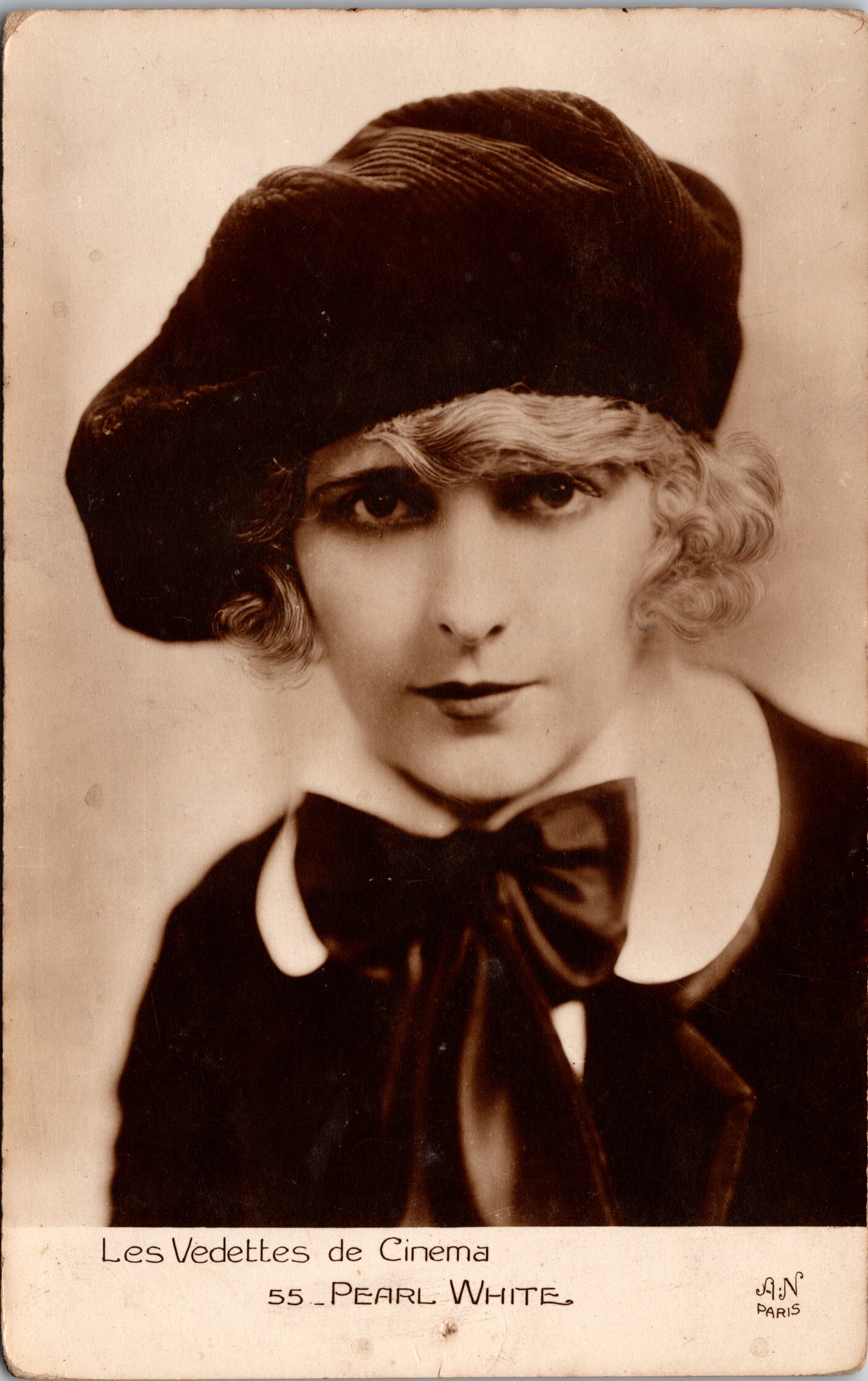
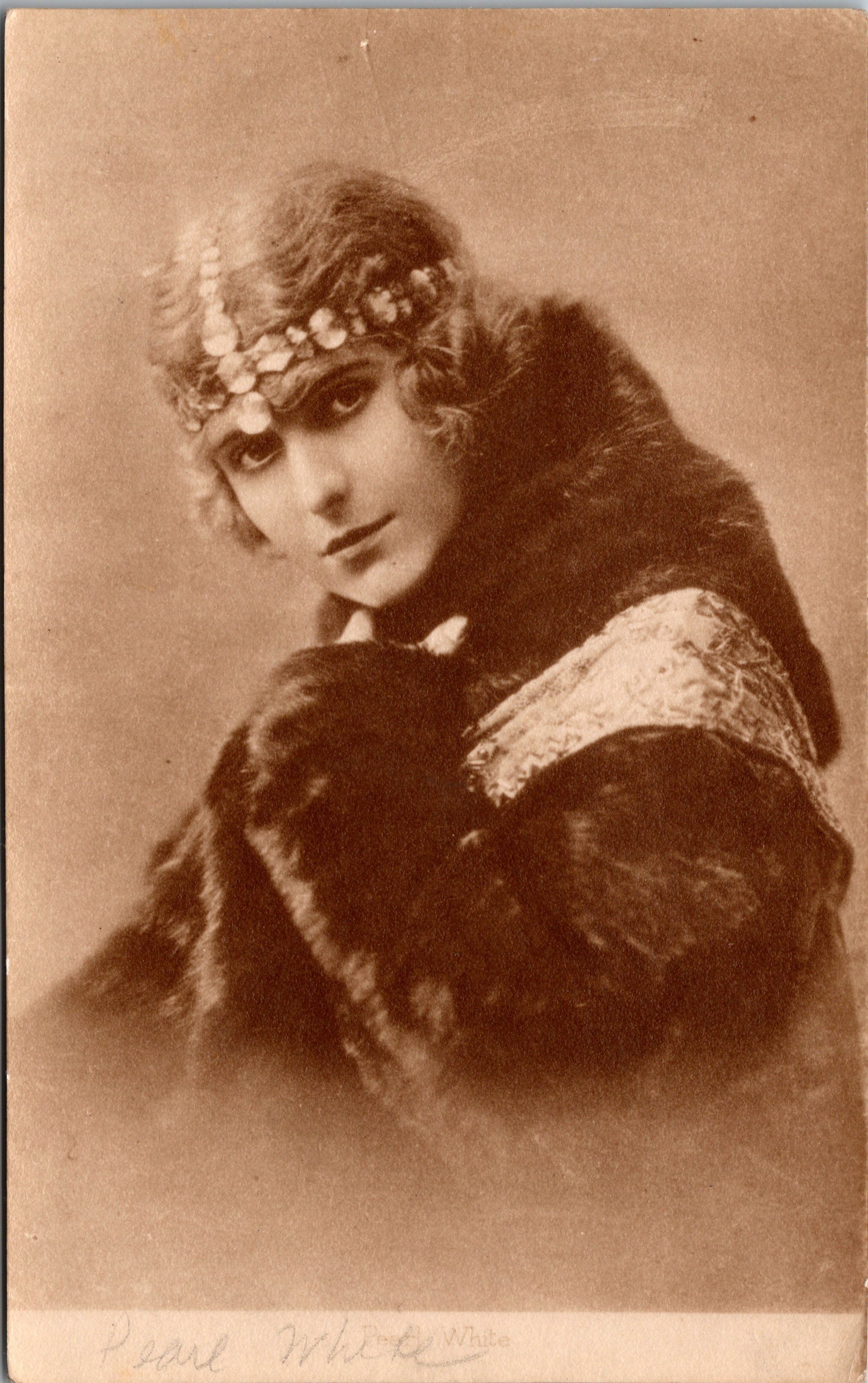
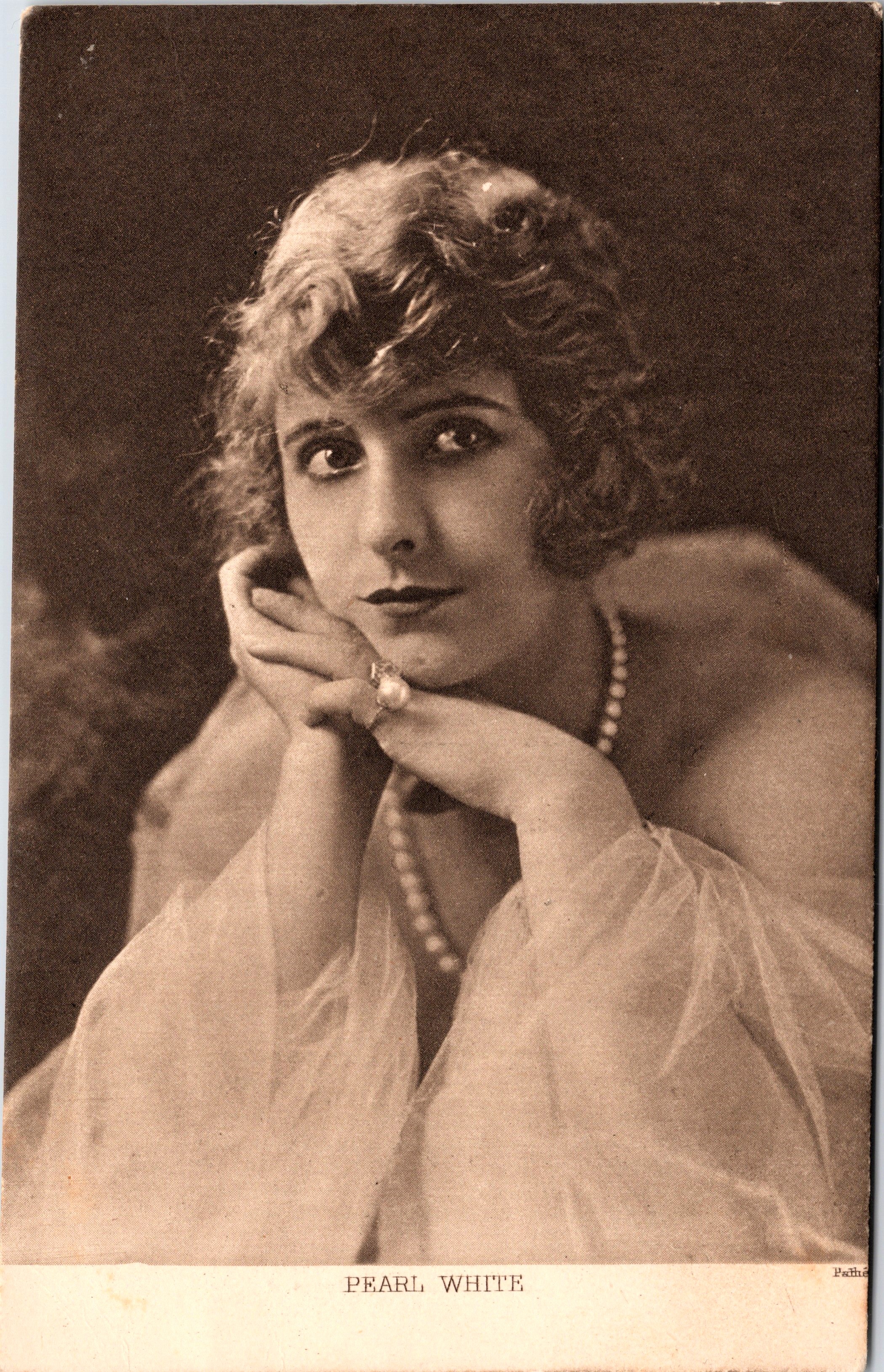
Pearl White (1889-1938) was an American actress of film and stage. She started her career on the stage at just 6 years old in the play, “Uncle Tom’s Cabin”. At thirteen years of age she was a bareback rider for a circus. She dropped out of high school to join a touring stage company. Next she worked as a singer in Cuba and South America. She made her appearances in dance halls and casinos. In 1910, her voice began to fail and she began to appear in silent films, including many popular serials. Her nickname was “Queen of the Serials’. She did the majority of her own stunts in these film serials. She is known well for her role in “The Perils of Pauline”. She was often cast in the role of an athletic heroine, rather than the more typical, innocent young woman. As a result of her appearances in “The Perils of Pauline”, she was soon earning $1,750 per week. She increased her star power as she appeared in other serials. In these films she flew airplanes, raced cars, and did other action hero feats. By 1919 White moved on to more dramatic roles. She appeared in ten drama films for Fox Film Corporation. She finished her career by taking roles in European films, and finally, appearing on the European stage. While performing in London, she earned three thousand dollars a week. At the time of her retirement (1924), White had banked two million dollars. She then began investing. Her investments included a hotel, a night club, and a stable of race horses. White was married twice, each time, for short duration to actors. White died of liver failure, possibly due to her history of heavy drinking. Her drinking may have been attributable to her problems with pain stemming from a spinal injury occurring during her stunt days. The IMDb site credits white with 228 film appearances between 1910 and 1924.

Postcard 1 was published by Cinemagazine (Paris Edition). The card is part of the “Les Vedettes de Cinema” (Stars of the Cinema) series (No.,55). White’s postcard photo portrait was taken by the celebrated photographer, Alfred Noyer. (SOLD)

Postcard 2 features White’s beauty. She is wearing a fur. Note her pretty head band.  Although this card is the size of a standard postcard, there is no printing on it’s reverse.  (SOLD)

POSTCARD 1

POSTCARD 2

MISS DE ROY : PRETTY PERFORMER : MUSIC HALL : CABARET : UNDIVIDED RPPC 1902

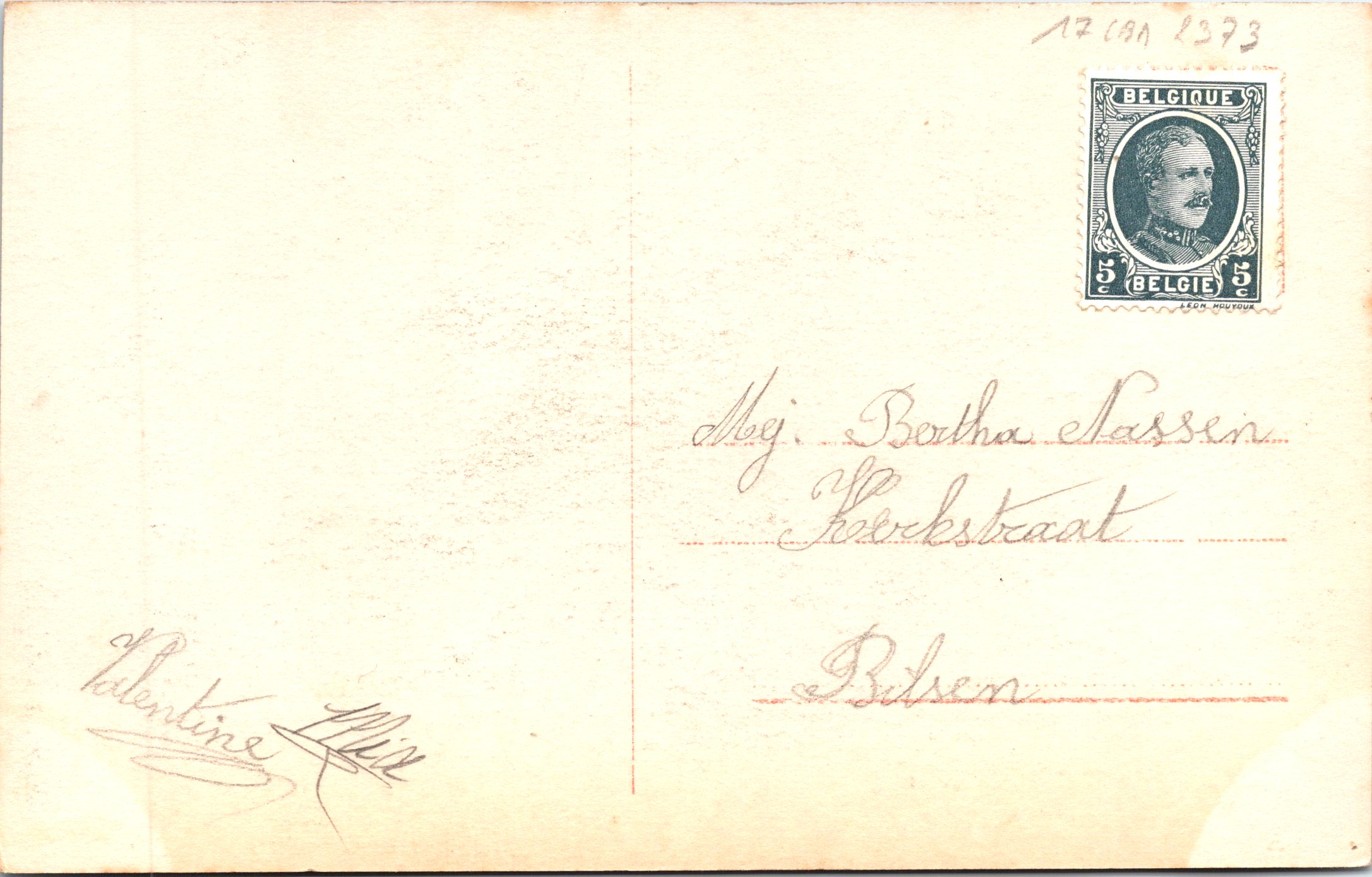
This rare vintage real photo postcard features pretty performer, A. De Roy. She looks stunning in her beautiful dress. The card is risque due to her low cut dress. She is identified on the front of the card. De Roy was likely a music hall or cabaret performer. This postcard was published by S. Bluh (SBW) as part of a series (No.437). The firm was located in Vienna, Austria and was the only agent in Austria for postcard publisher Rotophot. The card has a Belgian stamp and was postmarked in 1902. SOLD

SLEDDING SCENE : SPORTS : ROMANCE : ANTIQUE SLED : CHRISTMAS SEAL : RPPC 1910

This vintage real photo postcard features an attractive romantic couple riding a sled. The pair are dressed for winter. There is fake snow on the ground. This card was published by B.N.K. (Berlin-Neuroder Kunstanstalten) as part of a series (No.33272/6). The firm was located in Berlin, Germany. B.N.K. did it’s own printing and had four factories. During World War II, the company manufactured cardboard ammunition boxes. This postcard has a stamp from Denmark. In addition, there is also a 1910 Christmas Seal stamp on the card. Research reveals that the seal was issued for a charity dedicated to helping tuberculosis patients.  SOLD

Published in: on May 4, 2026 at 11:30 am  Leave a Comment  
Tags: , , , ,

OSSI OSWALDA: BEAUTIFUL GERMAN SILENT FILM STAR

POSTCARD 1

                                                    ossi                           POSTCARD 2 (SOLD)

                                                                  This image has an empty alt attribute; its file name is 5502_0001.jpgPOSTCARD 3   (SOLD)

Picture 1 of 3POSTCARD 4  (SOLD)

OSSI OSWALDA : BEAUTIFUL GERMAN SILENT FILM STAR : RISQUE RPPC - Picture 2 of 3 POSTCARD 5  (SOLD)

The beautiful actress seen in the top vintage real photo postcard is named Ossi Oswalda (1897-1947). She was born in Germany and appeared predominately in silent films. She was a leading lady, popular comedienne,  dancer, and singer. Due to her popularity, she  was known as “the German Mary Pickford”. Ossi began her career as a ballerina and she danced in a chorus line for a theater in Berlin. She made her film debute in “Night of Horrors” (1916) and was noticed by actor/screenwriter Hanns Kraly, who introduced her to director Ernst Lubitsch. Oswalda’s early career began with appearances in several Lubitsch films. In 1921, she and her husband started a film production company that produced four films over four years, all starring Miss Oswalda. After 1925, she was under contract to UFA, a German film company. After the transition to “talkies”, Oswalda joined the ranks of actresses and actors, who’s career took a nose dive. She only acted in two sound films. Her final screen appearance was in “The Star of Valencia”. She then began acting on the stage. She appeared in operettas in Germany and Vienna. When the National Socialists took power in Germany, she emigrated to Prague with her “Jewish life partner”, Julius Aubenberg. In 1943, she wrote a story for a Czechoslovakian film. In summarizing Ossi’s career, the IMDb credits her with 51 film appearances,  producing 5 films, and 1 screen writing credit. It is reported that she frequently played child-like spoiled women. She appeared in drag in at least one film. Oswalda’s first marriage (1919-1925) was to a Hungarian baron. After her divorce, the actress began a highly publicized romantic relationship with Crown Prince Willhelm (1882-1951). Simultaneously, the actress Lily Damita, was having an affair with the Prince’s son. The royal family put a kibosh to both “inappropriate” relationships. In 1947, she died in Prague at age 48, bankrupt and suffering from multiple health problems. This German real photo postcard is published by Ross Verlag soemetime between 1919 and 1924. The photograph of Miss Oswalda was taken by Becker & Maass of Berlin. Note her pretty hat and fan. Hopefully, she wasn’t allergic to feathers. Oswalda was young when this photograph was taken. She was beautiful and no older than 27 years of age.            

Postcard 2 features Miss Oswalda in a very skimpy costume. Her feathered hat is quite showy . She has a wonderful smile and pretty eyes. This risque postcard was part of  a series (no. 1050/2) and published by Ross Verlag of Berlin, Germany. The logo of UFA, a German film company, appears on the lower right hand corner of the postcard. The reverse of the postcard reveals that that the photographer is Strobl J. Nandor of Budapest, Hungary. (SOLD)

  Postcard 3 is a German real photo postcard that was published by Ross Verlag. Miss Oswalda’s photo was taken by celebrity photographer Alex Binder.   (SOLD)

Postcard 4 captures Miss Oswalda looking amused. She is flashing a wonderful smile. This postcard was published by Ross Verlag of Berlin, Germany (no.474/2).   (SOLD)

Postcard 5 captures Miss Oswalda in a provocative pose. She is wearing a short skirt resulting in quite a leggy photo. Posing her with her hands on her hips was aimed at being suggestive. This risque postcard was published by Ross Verlag of Berlin, Germany (no.483/1). The photographer of this portrait of Oswalda was celebrity photographer Alex Binder.  (SOLD)

POSTCARD 3

POSTCARD 4

POSTCARD 5

PORTRAIT OF A LOVELY WELL DRESSED COUPLE WITH A SENSE OF HUMOR (PORTLAND, OREGON)

This vintage real photo postcard features a lovely well dressed couple with a sense of humor. The gentleman in the photograph wrote a very funny message on the reverse of the card. The man, Joe, writes that the pair are being photographed on a mountain, twelve hundred feet above Portland, Oregon. He then demonstrated his flair for humor by suggesting to the postcard’s recipient,  “If you have any rats in your smoke house, just put this (photo) in there and I will insure you no more rats will bother”. This postcard was sent to a woman in Latham, Kansas, and was postmarked in Eads, Colorado. The card was written and mailed in 1908. Joe and his “lady friend” were photographed at 10 Minute Photos, by Cal Calvert. The studio was located in Council Crest (Portland, Oregon). Council Crest Park is a city park in southwest Portland. Council Crest is 1071 feet above sea leveland is one of the hightest points in in the Tualatin Mountains. The park offers a great view of Portland. The couple in this photo may have taken a street car to the park. The Portland Railway, Light and Power Company opened a street car route  (Council Crest Line) to the park in 1906. In 1907 the company opened an amusement park at the site. Research found information related to the photographer who took this photograph. Charles E. (Cal) Calvert operated his studio at Sixth & Ankeny from 1906 through 1930. In 1907, with the opening of Council Crest Amusement Park, he operated a studio and postcard stand on it’s grounds. He also ran a studio at the Washington Street entrance to Portland’s City Park in 1910. Cal was known for his use of rustic props and for his creativity. One of his sets involved subjects appearing as if they were flying an airplane over the city of Portland. A postcard employing this setting is part of a collection at the Portland Art Museum.  SOLD

TWO BATHING BEAUTIES : RISQUE : BEACH CABANA : PHOTO BY HENRY TRAUT : RPPC

POSTCARD 1 (SOLD)

POSTCARD 2 (SOLD)

These two vintage real photo postcards feature two smiling bathing beauties posing outside a beach cabana. This photographs are risque for their era. These images were produced by the studio of the esteemed photographer, Henry (Heinrich) Traut. The postcards were published by Rotophot Berlin (RPH). Rotophot eventually morphed in Ross Verlag. BOTH SOLD

POSTCARD 1

POSTCARD 2
AFRICAN AMERICAN MOM WITH CHILDREN & WICKER TRAM : STUDIO PORTRAIT : RPPC 1923

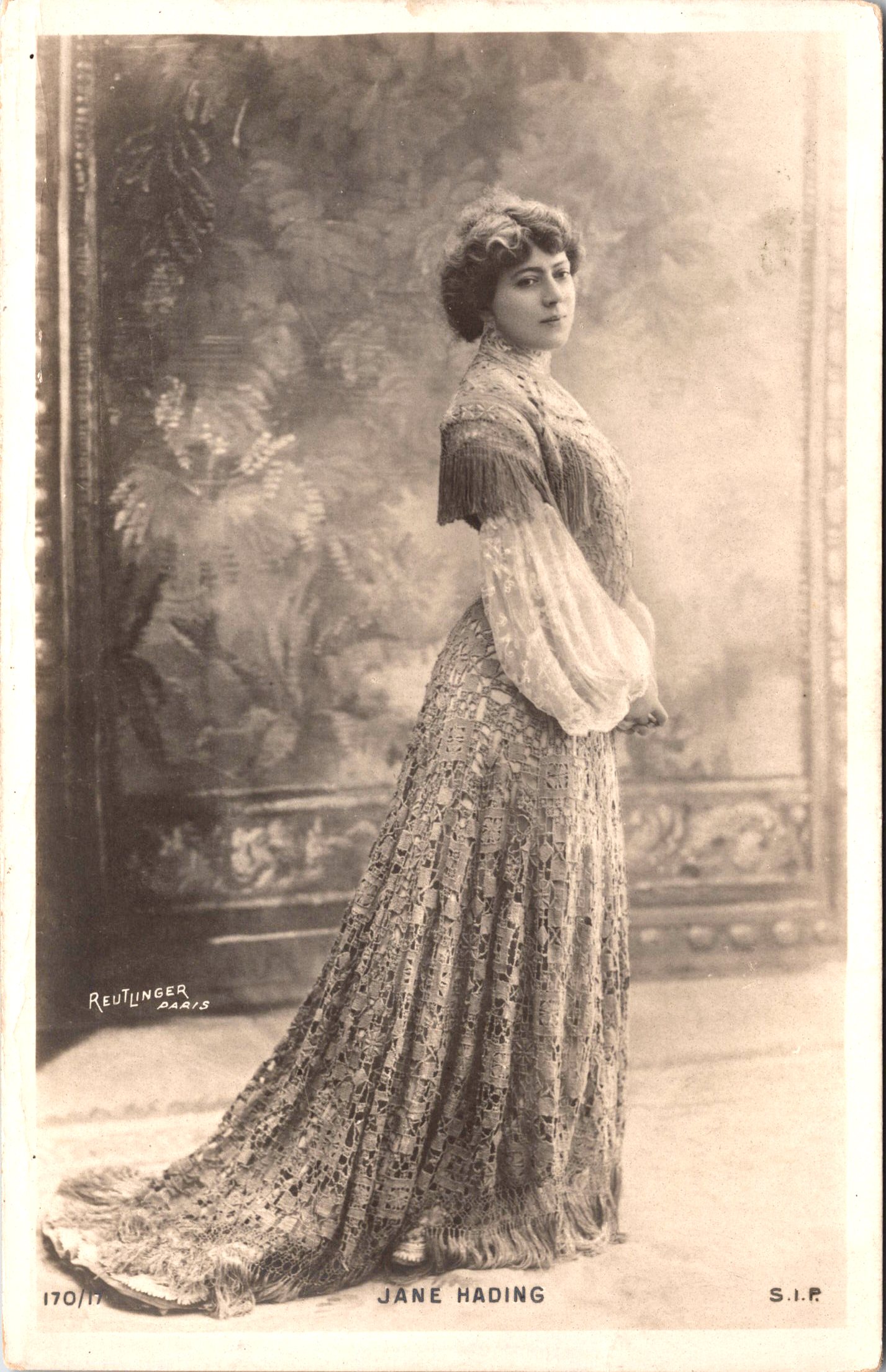
This poignant real photo postcard, dated 1923, captures a tender family moment—likely taken in a professional studio simulating an outdoor scene. The composition features an African American mother gently smiling as she stands behind a beautiful, large wicker baby carriage. Nestled inside the pram is a young infant with wide, alert eyes, while an older daughter stands nearby in a white dress, her expression serious and slightly pensive. The mother is dressed with quiet elegance in a light-toned wrap dress with lapels, tied at the waist—a popular post-World War I style that balances modesty with modernity. Her calm smile and direct gaze suggest pride and affection. The infant is dressed in traditional white baby clothing, resting on a cushioned lining in the pram. The older girl wears a crisp white dress, accented with a large hair bow—common children’s fashion for the early 1920s. The wicker baby carriage is especially eye-catching, with its sweeping curves and woven basket design, indicative of upscale early 20th-century prams. It rests on ornate wrought iron wheels, reinforcing the studio setting, where such props were often used to enhance domestic or garden-themed portraiture. The back of the card includes a divided back design and an AZO stamp box which was used between 1918 and 1930, consistent with the handwritten date of 1923 on the reverse.  (SOLD)

BEAUTIFUL THEATRE ACTRESS: YVONNE GARRICK “A MOST WELCOME RECRUIT FROM THE PARIS STAGE”

POSTCARD 1

Picture 1 of 2
Postcard 2
 YVONNE GARRICK : PRETTY STAGE ACTRESS : RPPC  1906

POSTCARD 3 (SOLD)

This vintage real photo postcard features the beautiful French theatre actress, Yvonne Garrick (1878-?). She performed at the “Theatre de L’Odeon”  and the “Comedie-Francaise” in Paris. During the World War I years, she appeared at the “Theatre Francais” in New York City. The IDBD reports that she performed on Broadway in two productions;  “Lets Go” (1918) and “Musk” (1920). The magazine, “Sketch: A Journal of Art and Actuality” (1902) published a glowing article about Mlle. Garrick. The writer stated that no artist had made such a “positive hurricane progress” in the French theatrical world as Yvonne Garrick of the O’Deon.  The critic also stated that he had recently seen Garrick in a play and her performance reminded him of the early days of Sarah Bernhardt. Although thewriter admits that she may not be the second coming of Mlle. Bernhardt; he believes that Garrick will make a world wide reputation. He continues to write that he has seen no young actress so “natural and so “sympathetic”.  The New York Times (1908) published a review for the play “Jeanne Qui Rit” in which Mlle. Garrick played a starring role. The article states that Yvonne Garrick was a young actress who has attracted much attention at the Comedy-Francaise. She was reported to have received a hearty reception and was “repeatedly recalled” (cheered for an encore). A New York Times (1918) article records Mlle. Garrick’s debut in a New York farcical comedy “Mon Ami Teddy”. In the piece she is described as a “comely and charming actress who proves a most welcome recruit from the Paris stage”.

Postcard 1 provides a portrait of Mlle. Garrick during the time she was appearing at the Comedie-Francaise.  The photograph was taken by Henri Manuel (1874-1947). In 1900, Manuel opened a portrait studio in Paris with his brother Gaston. He quickly became renowned for his portraits of politicians, artists, and athletes. His images were used by news agencies . His studio became the largest studio in Paris and it attracted many young photographers who sharpened their skills there. In 1925 the brothers expended their business to include fashion photography. They worked for such designers as Chanel, Patou, and Lanvin. The studio shut down during World War II and many of their photographic plates were destroyed. Manuel was the official photographer for the French government from 1914 through 1944. To view other photographs by Manuel, click on the category “Photographer: Manuel”. This portrait postcard is in very good condition (see scans).

Postcard 2 was taken by celebrity photographer, Leopold Reutlinger as part of a series (No.1306). The card was published by SIP.  (SOLD)

Postcard 3 was taken by celebrity photographer, Leopold Reutlinger as part of a series (No.1282). He was based in Paris. The card was published by SIP. (SOLD)

Buy this Vintage Real Photo Postcard (includes shipping within the US) #3916

To purchase this item, click on the Pay with PayPal button below

$27.75

Buy this Vintage Real Photo Postcard (includes International shipping outside the US) #3916

To purchase this item, click on the Pay with PayPal button below

$37.00

Postcard 1

Postcard 2

POSTCARD 3