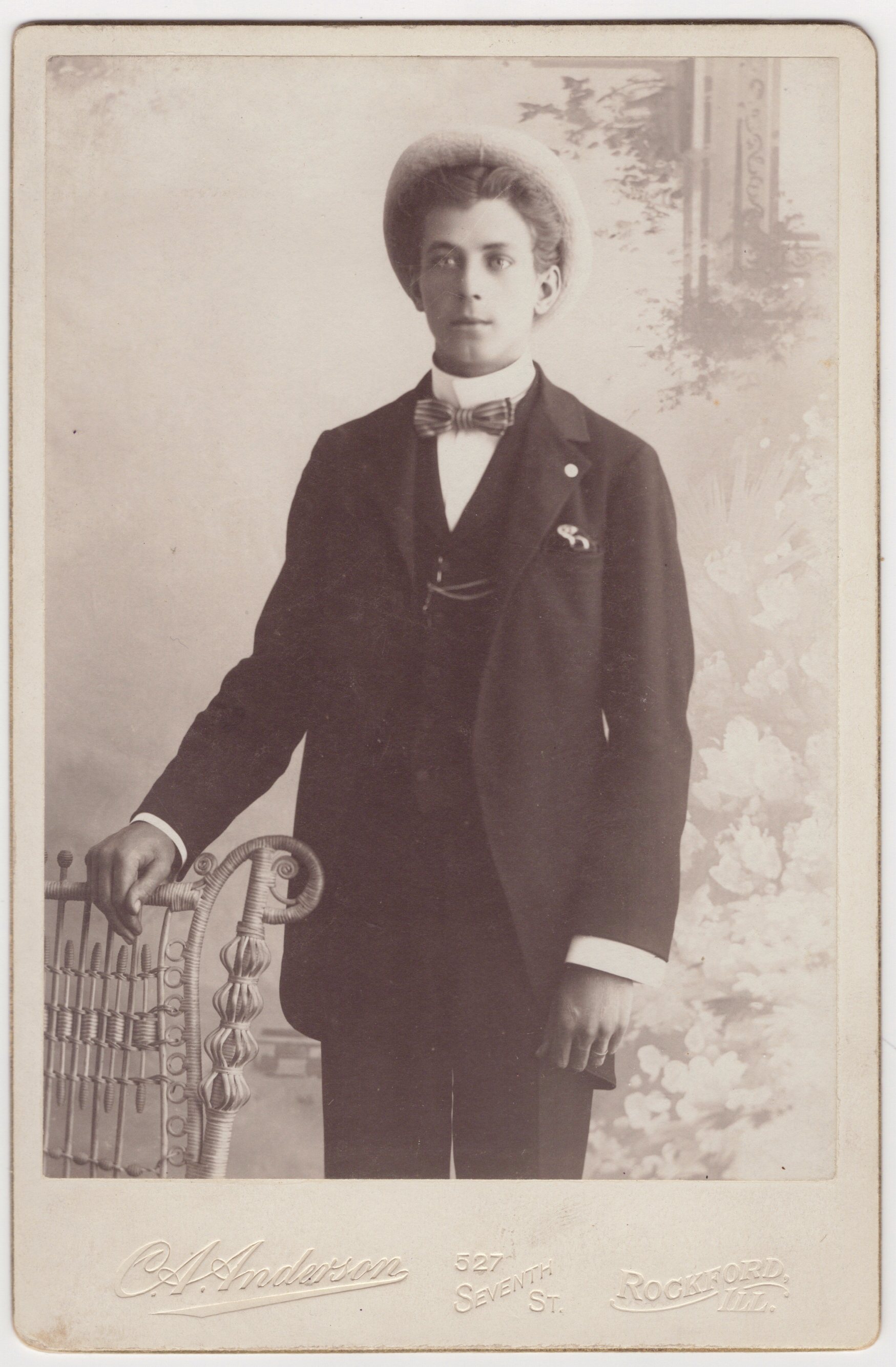
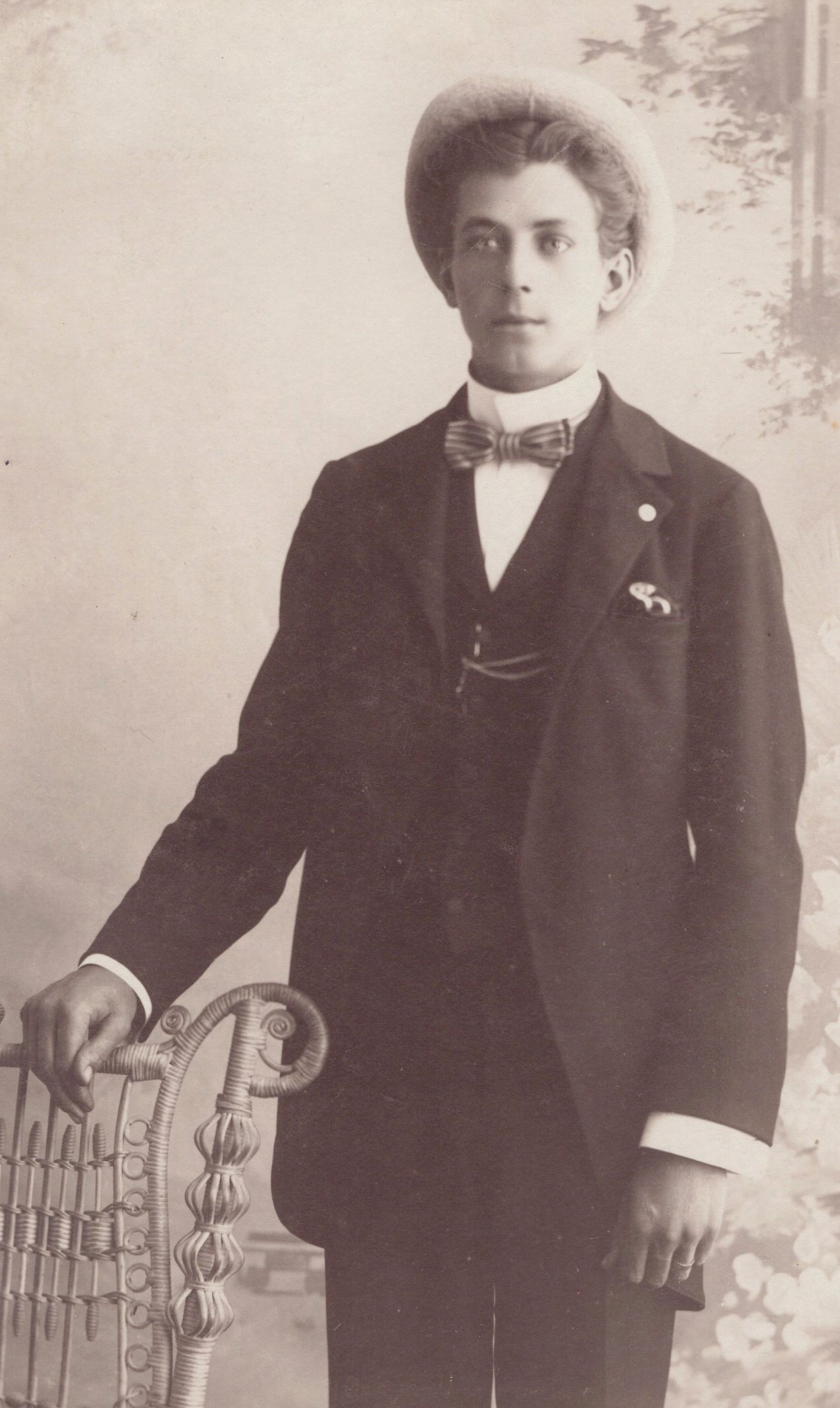
A handsome young man poses for his portrait at the studio of C. A. Anderson in Rockford, Illinois. The young man is wearing fine apparel and his appearance reflects an image of a dandy. SOLD
A handsome young man poses for his portrait at the studio of C. A. Anderson in Rockford, Illinois. The young man is wearing fine apparel and his appearance reflects an image of a dandy. SOLD


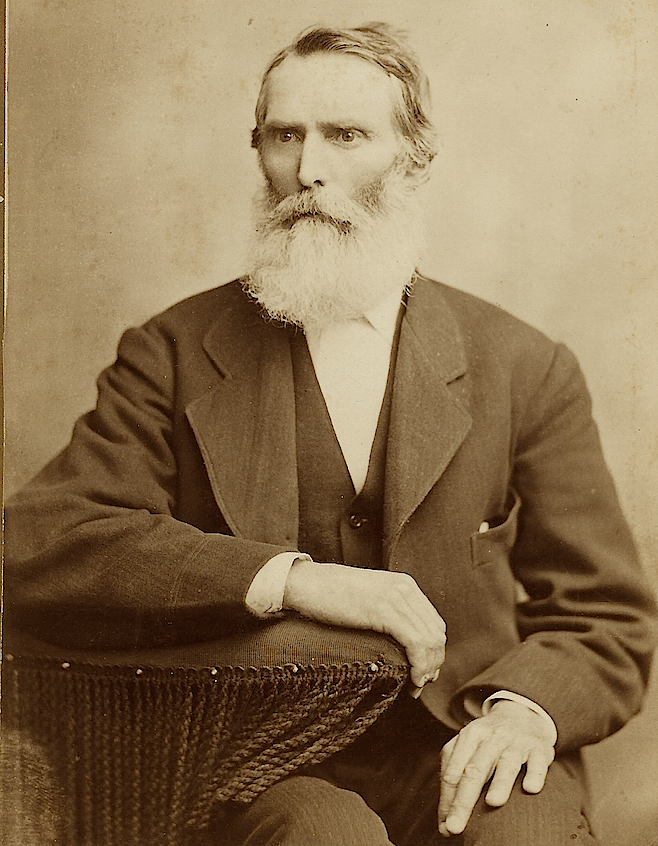
A distinguished looking older man with a white eard and mustache poses for his portrait at the Fenwick studio in Bloomington, Illinois. The man is dressed in his finest clothing for his day at the photographer but it seems he had no time to see a barber to tame his beard and longish hair. The photographer of this image is Richard Fenwick. He was born in England in 1845. He appears in the U.S. Census in 1870. He was living in a Bloomington boarding house and working as a laborer. The 1880 census finds Mr Fenwick (age 35) married to Alida Fenwick (age 30). The couple was married in 1875 and were living with their two children. Richard Fenwick had a 1 year-old daughter (Adda) and a 9 year-old step son (Rush Downey). Fenwick was working as a photographer. The 1900 census reveals that Fenwick still worked as a photographer and his step son, Rush, filled the manager role in the photography studio. Research reveals that between 1866 and 1875, Fenwick was associated with the Cook and Fenwick studio. This cabinet card is in good condition (see scans).
This Cabinet Card is available for purchase at my store, The History Peddler, for $22.00 or best offer
Interested collectors may view the listing here:
https://www.ebay.com/itm/236753226977

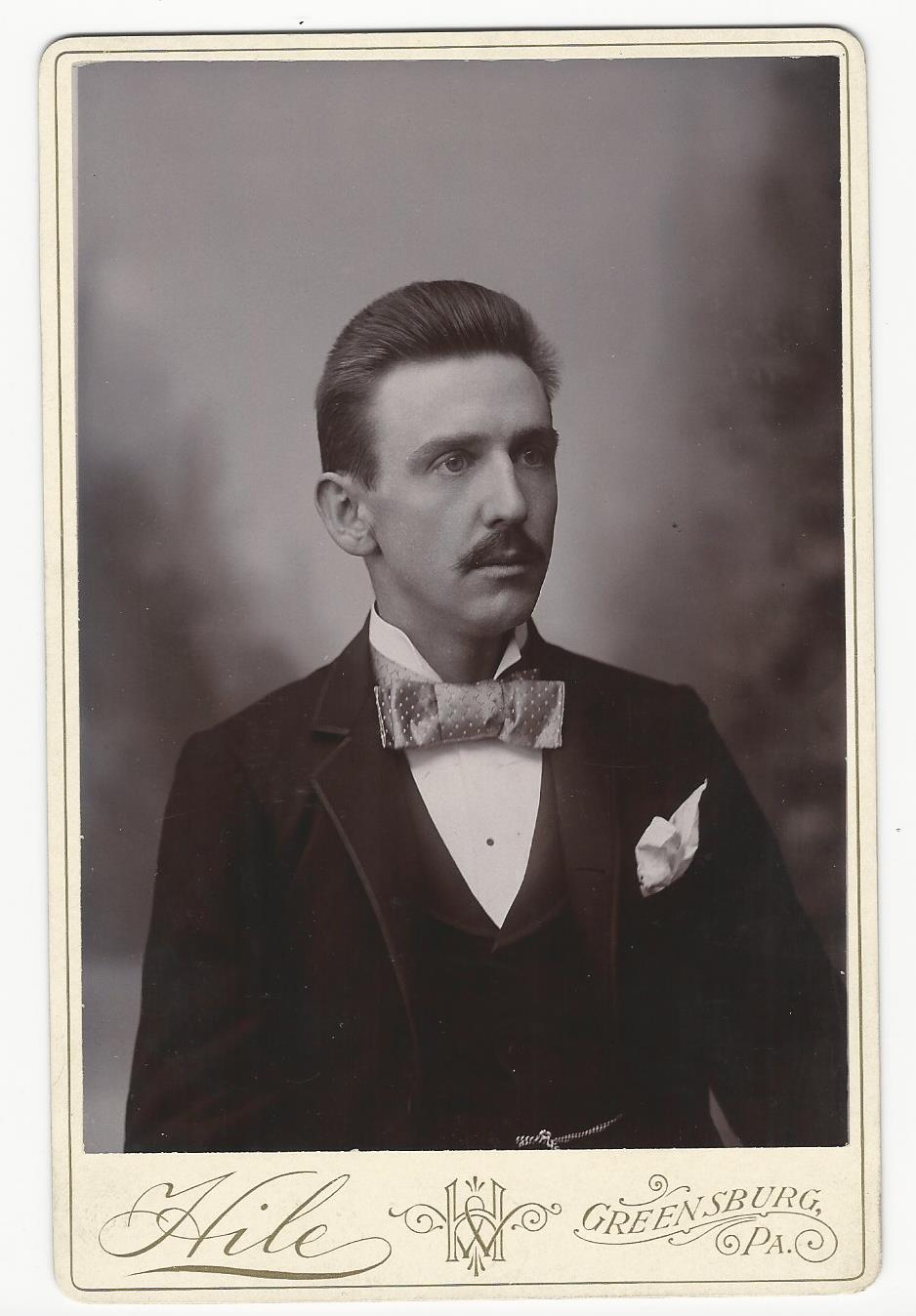
A very good looking man is the subject of this portrait from the Hile studio in Greensburg, Pennsylvania. This gentleman is perfectly coiffed and ready for a photo shoot with “Gentleman’s Quarterly”. Note his pretty and sizable bow tie and the gold chain of his watch visible at the bottom of the image. I wonder if this photograph is a wedding portrait? The photographer of this image, William Hile (1838-1922) operated his studio out of his home at 114 East Pittsburgh Street. His daughter Lilli was also a photographer at the studio. William Hile was married to Lucinda Reamer Hile (1841-1918) and the couple had four children. Today’s Greensburg is part of the Pittsburgh metropolitan area. During the cabinet card era, Greensburg was a railroad stop and a vibrant center of the local mining industry. William Hile is buried at the St. Clair Cemetery in Greensburg (view his grave marker below)
This Cabinet Card is available for purchase at my store, The History Peddler, for $45.00 or best offer.
Interested collectors may view the listing here:
https://www.ebay.com/itm/336610425774

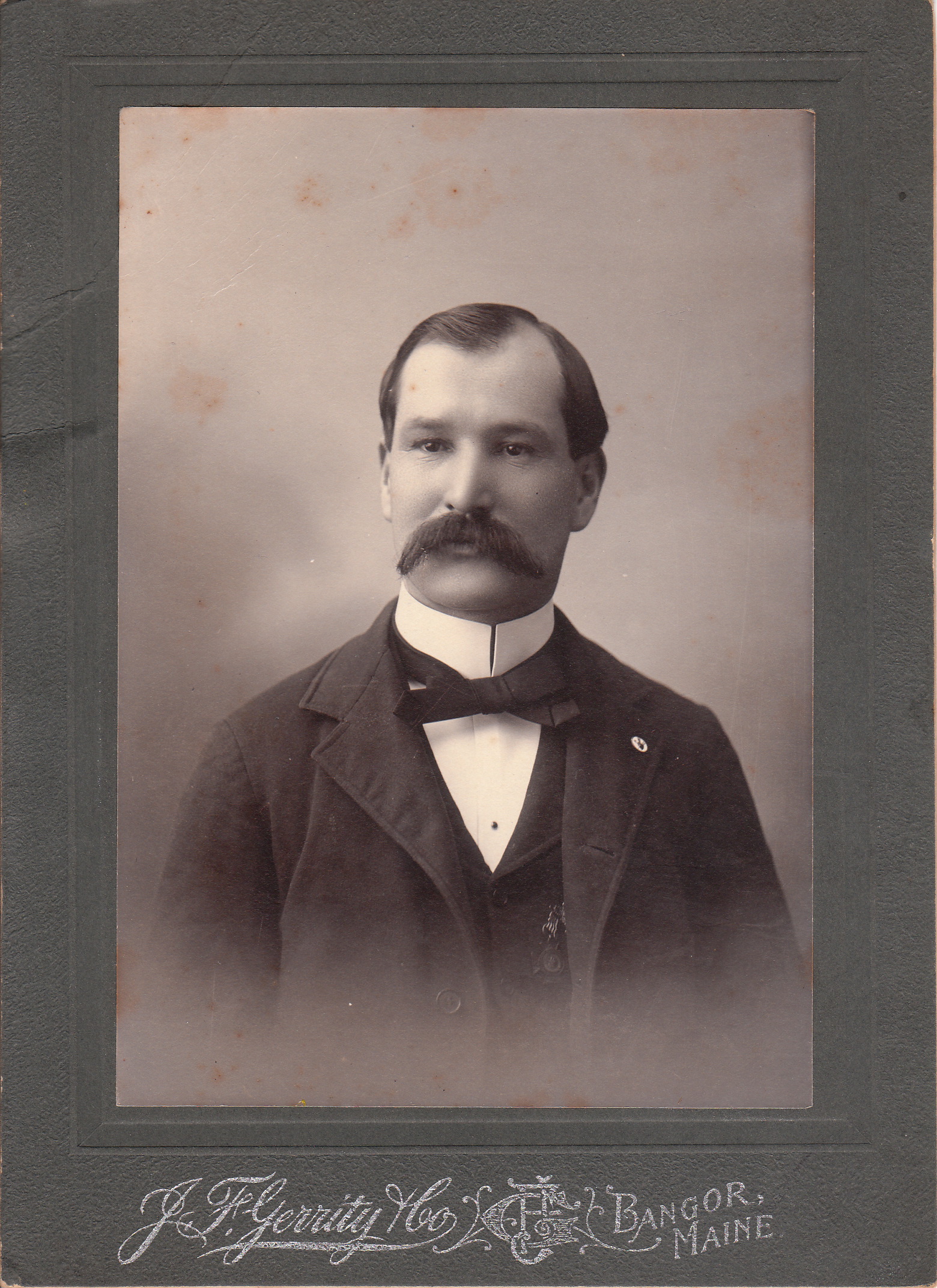
This photographic portrait captures a good looking and well dressed gentleman posing at the J. F. Gerrity Company studio in Bangor, Maine. The gentleman in this photograph has a wonderful well groomed mustache and is wearing what appears to be a pin back button on his lapel. There is a design on the button that I can not identify. The reverse of the photograph has an inscription that is dated 1898. The subject is identified as Harry H McLean. The message states “Merry Xmas, Happy New Year” and the word “University” followed by an unidentified word. An advertisement in a Bangor Board of Trade publication (1899) indicates that the Gerrity studio had two locations; 11 State Street in Bangor, and 244 Miiddle Street in Portland, Maine. City of Bangor directories indicate that he also owned a lumber business in Bangor. Census data reveals that Gerrity was born in 1855 and had at least two wives; Nancy (1920 census) and Edith (1930 census). No biographical information about Harry McLean was found. SOLD

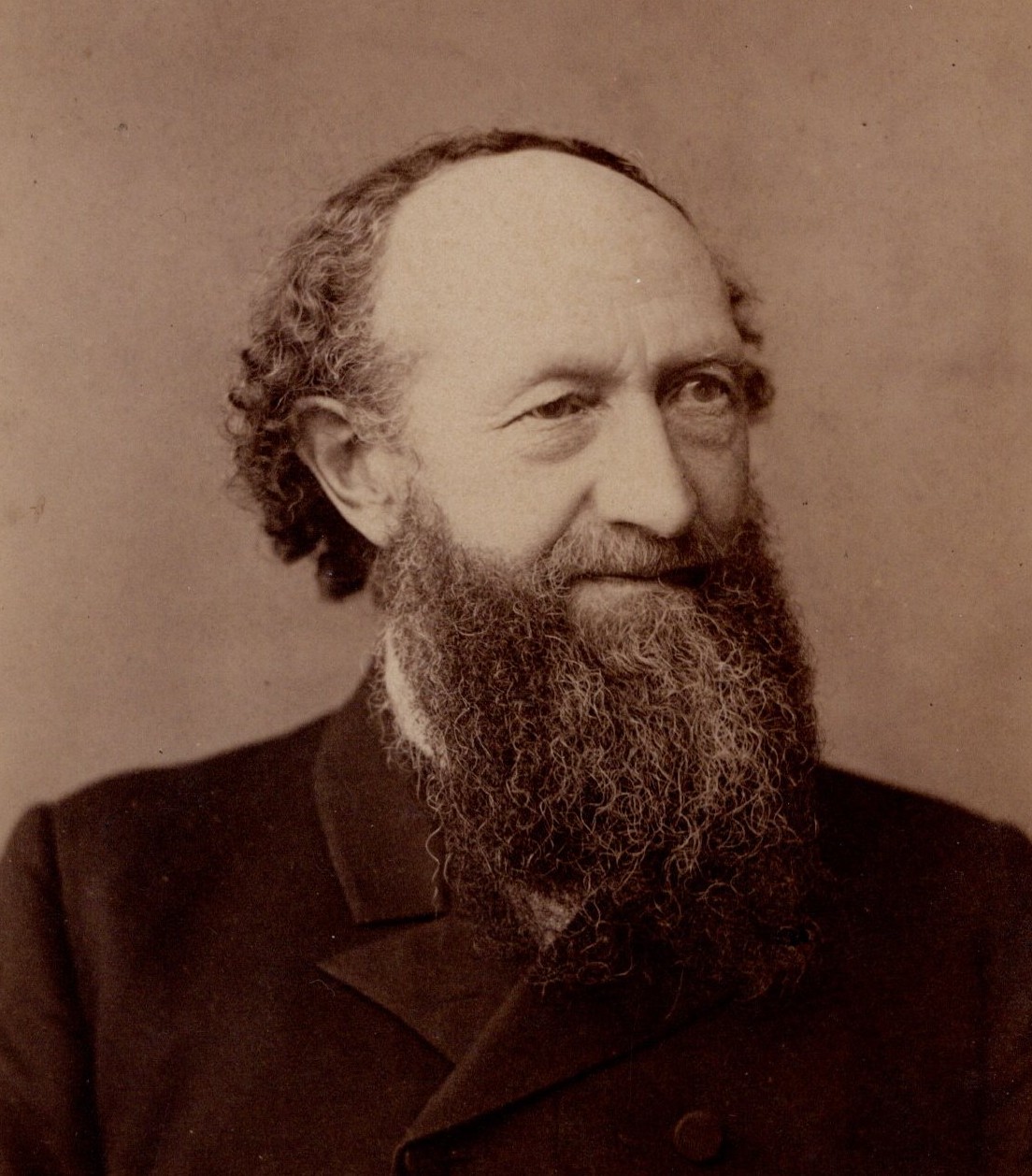
This cabinet card portrait features the portrait of a well dressed older man wearing a well groomed long beard. The reverse of the photograph identifies the gentleman as being Dr. Baker. The photograph was taken at the studio of Taylor & Martin. An ad for Taylor & Martin was found in a Chicago Business Directory (1887). The ad included the information that the studio was formerly called Gentile & Company before Taylor and Martin assumed ownership. This cabinet card is in very good condition. The photograph has great contrast and clarity. There is very minor edge wear. This is an attractive cabinet card that displays well (see scans).
This vintage Cabinet Card is available for purchase at my store, The History Peddler, for $36.00 or best offer
Interested collectors may view the listing here:
https://www.ebay.com/itm/236837365085
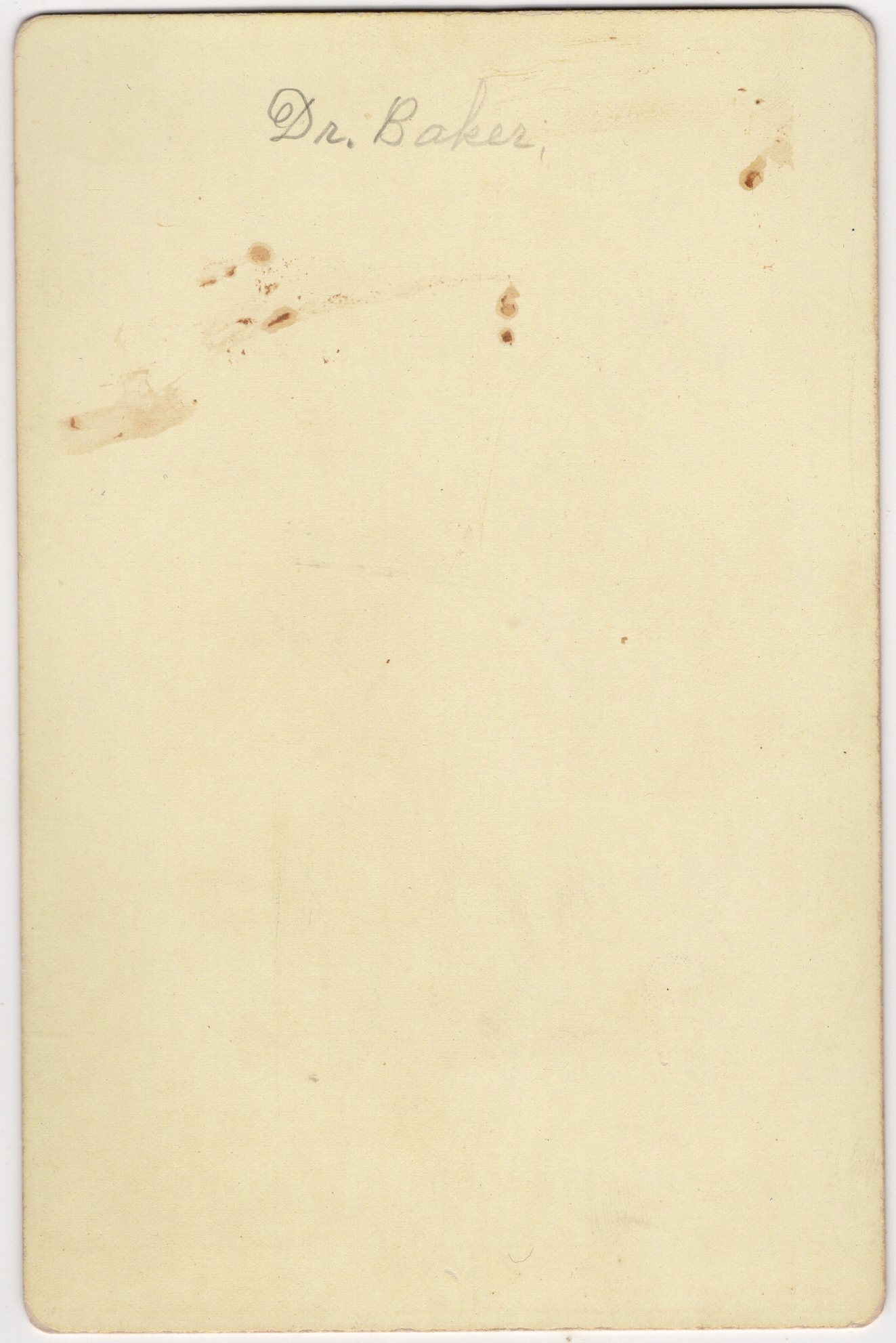
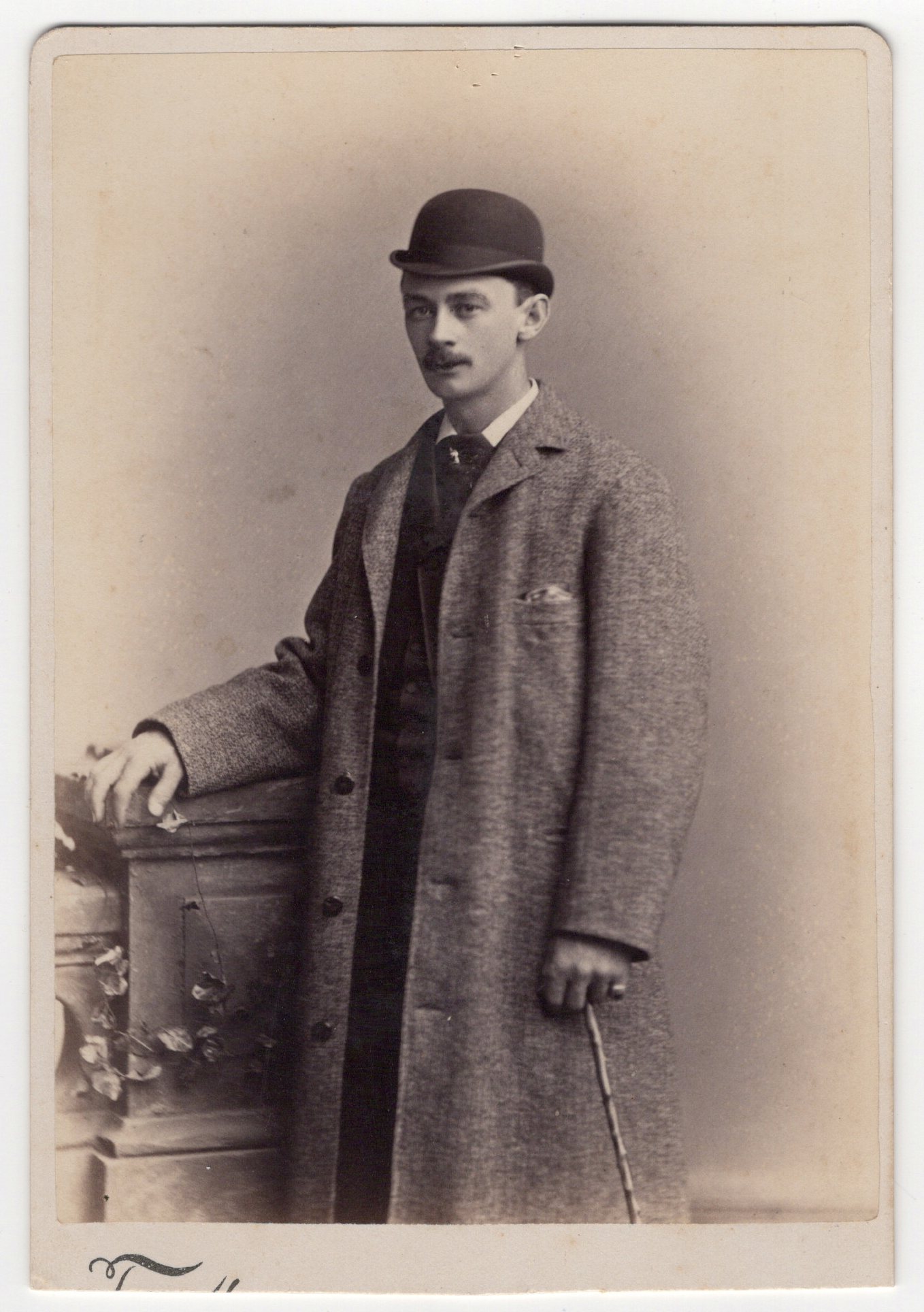
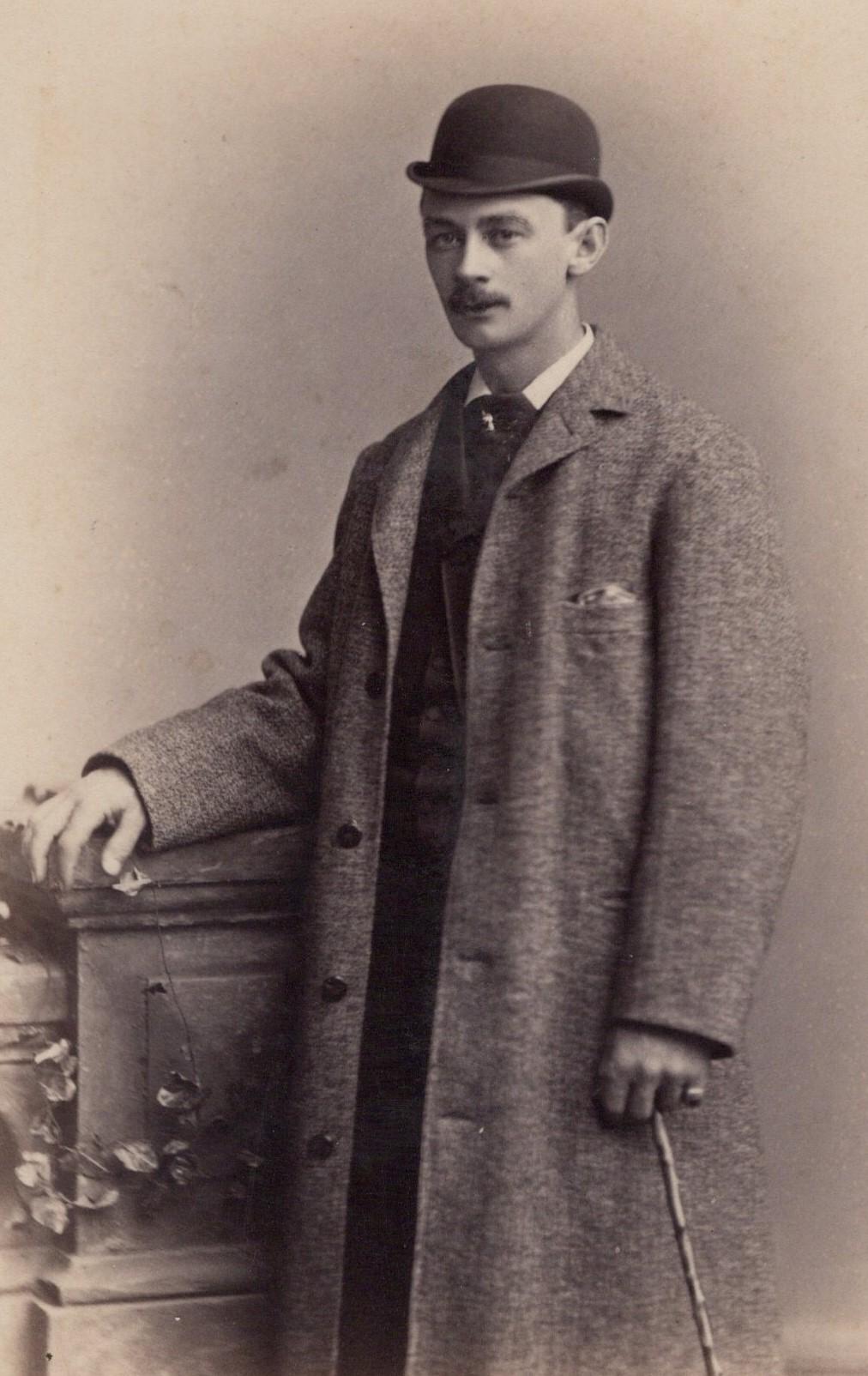
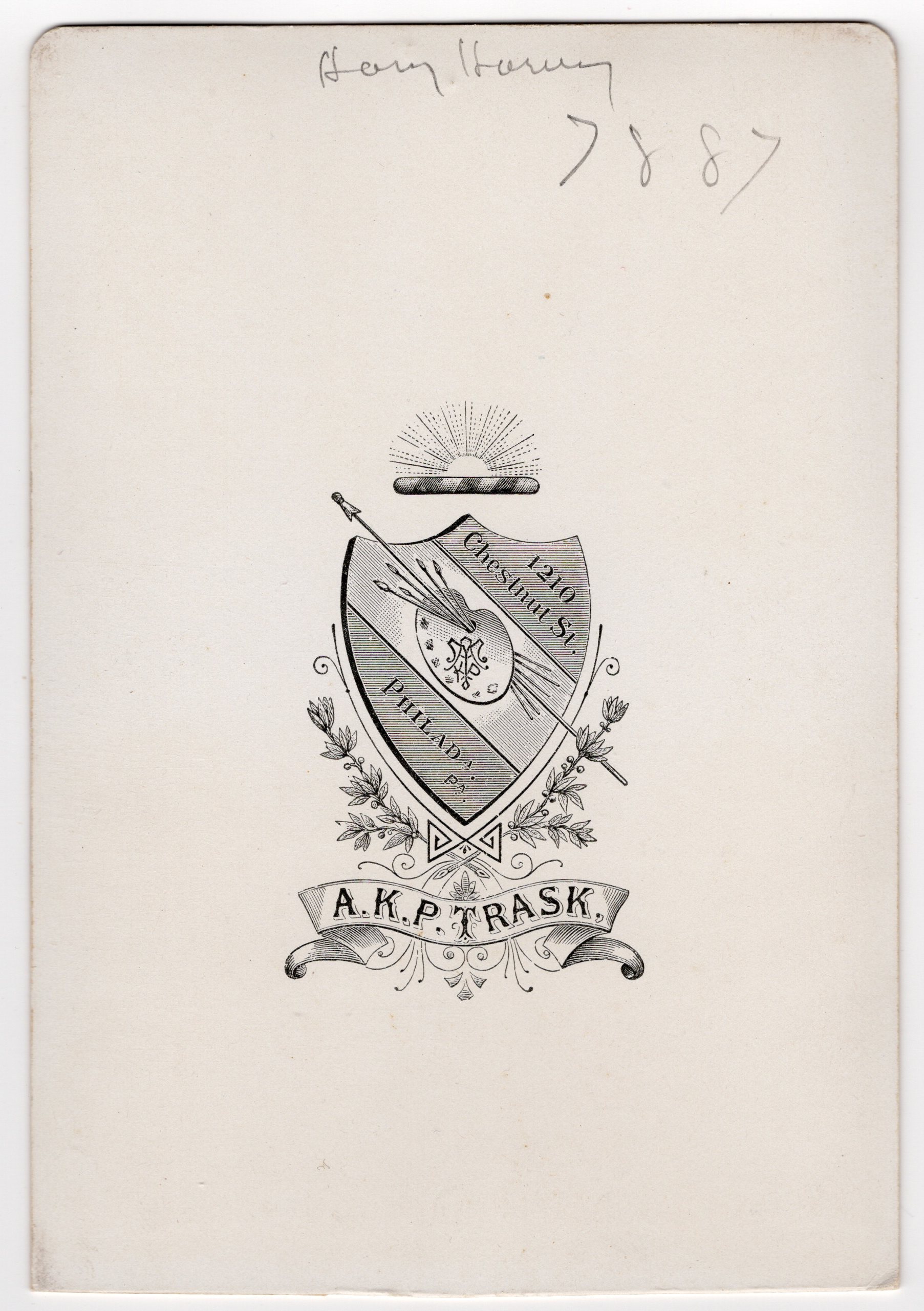
A distinguished looking and well dressed gentleman poses for his portrait in the studio of A. K. P. Trask at 1210 Chestnut Street, Philadelphia, Pennsylvania. The gentleman is dressed quite fashionably; wearing a bowler hat, a tweed overcoat, and holding a cane. The photographer, Trask, attended the 1871 convention of the National Photographic Association and the Philadelphia Inquirer (1872) reported that the pictures produced by Trask were “bewitchingly beautiful”. SOLD
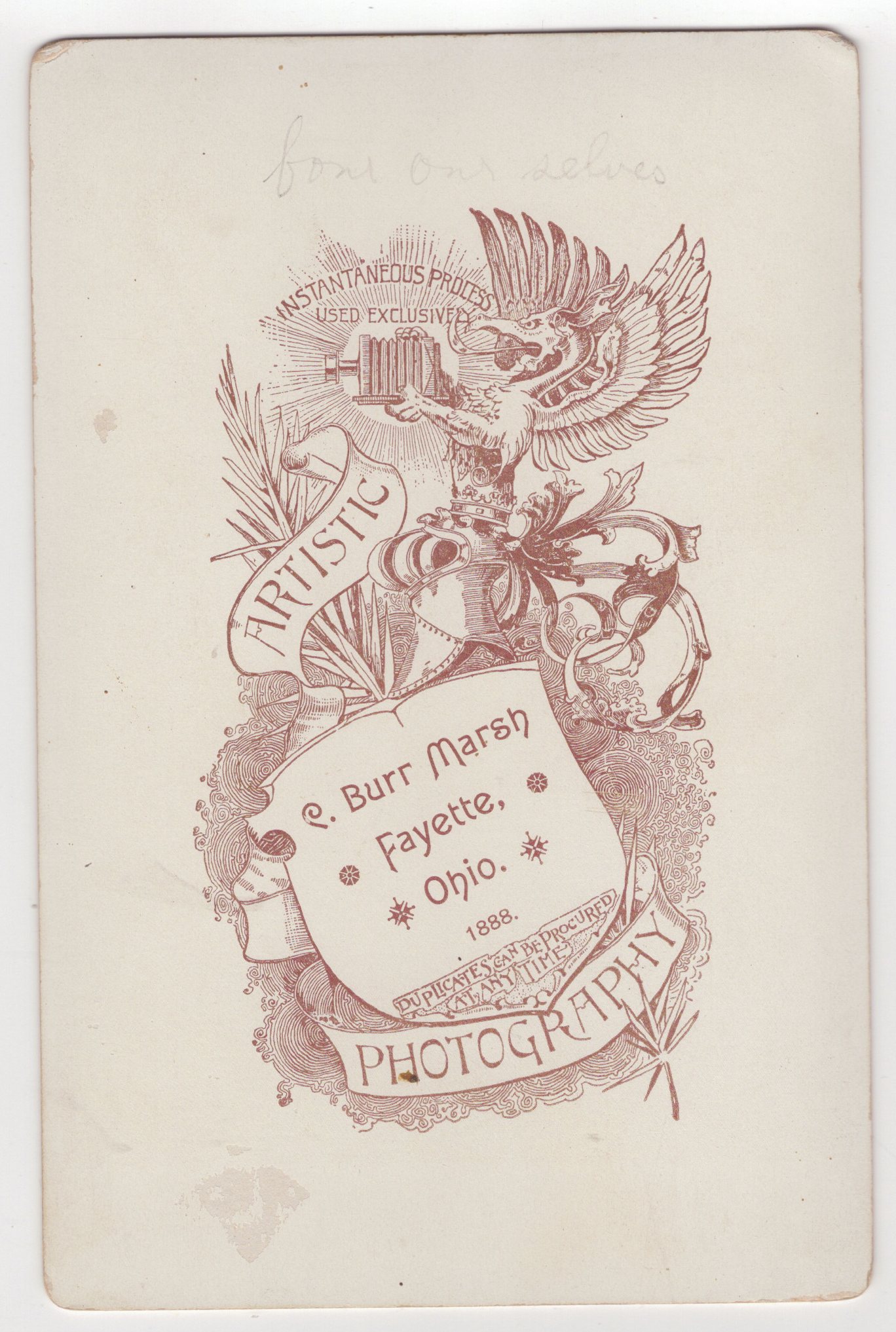
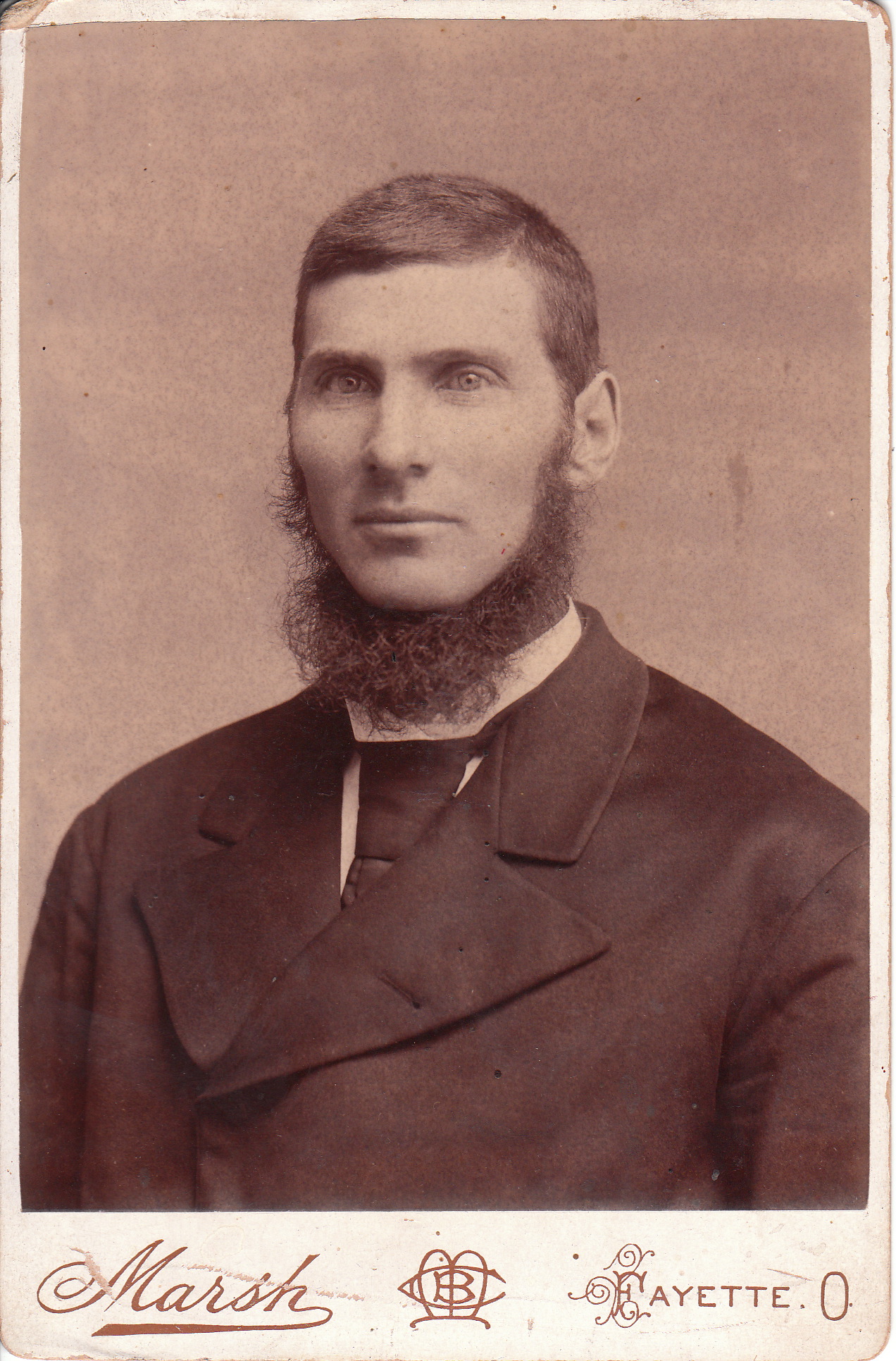 The gentleman in this cabinet card photograph sports a very unusual beard. One could call this beard a “neck beard” because there is virtually no facial hair populating the beard. This image was photographed in 1888 by C. Burr Marsh in Fayette, Ohio. Other photographs by Marsh, as well as biographical information about him, can be found by clicking on this site’s category “Photographer: Marsh”. (SOLD)
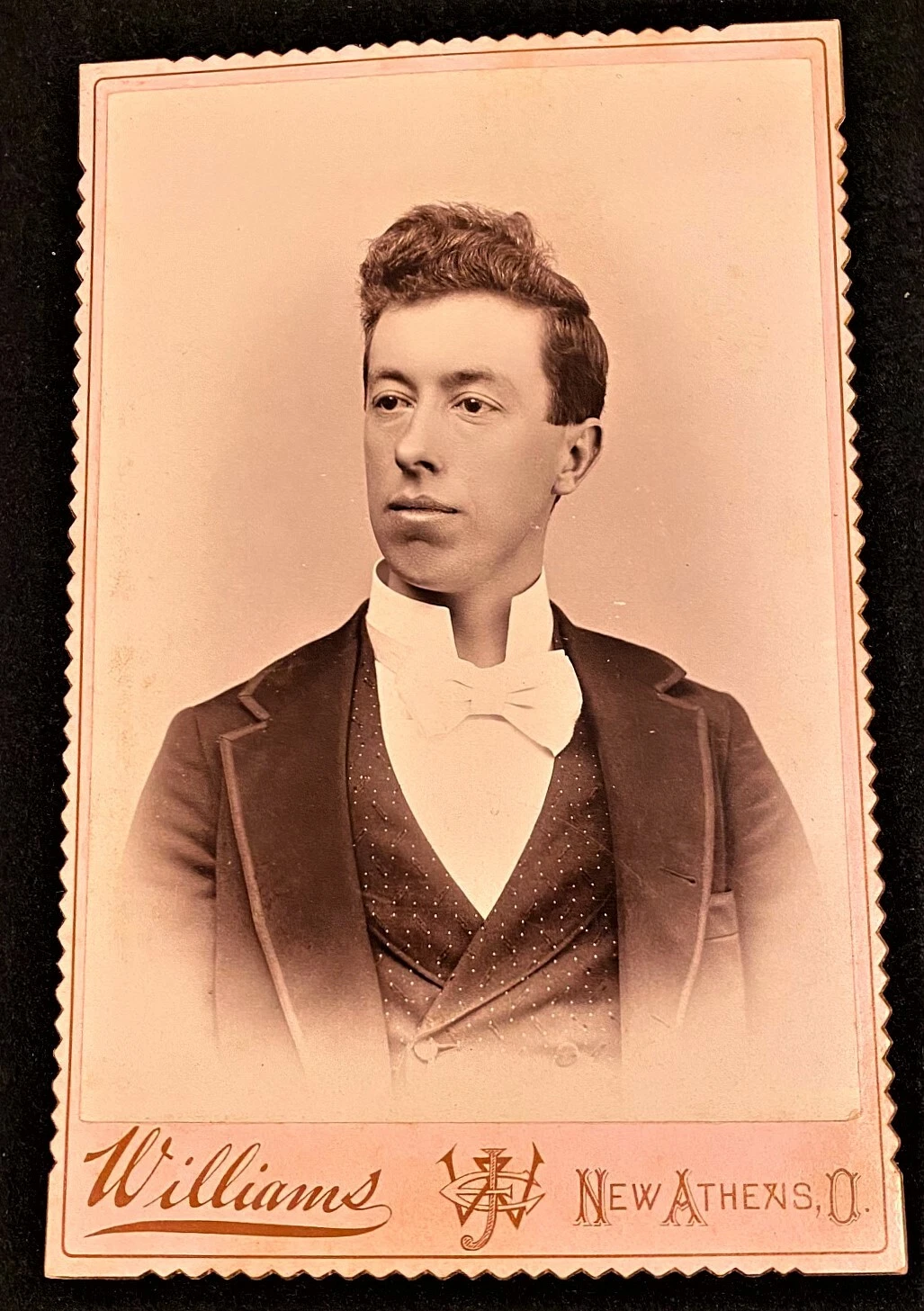
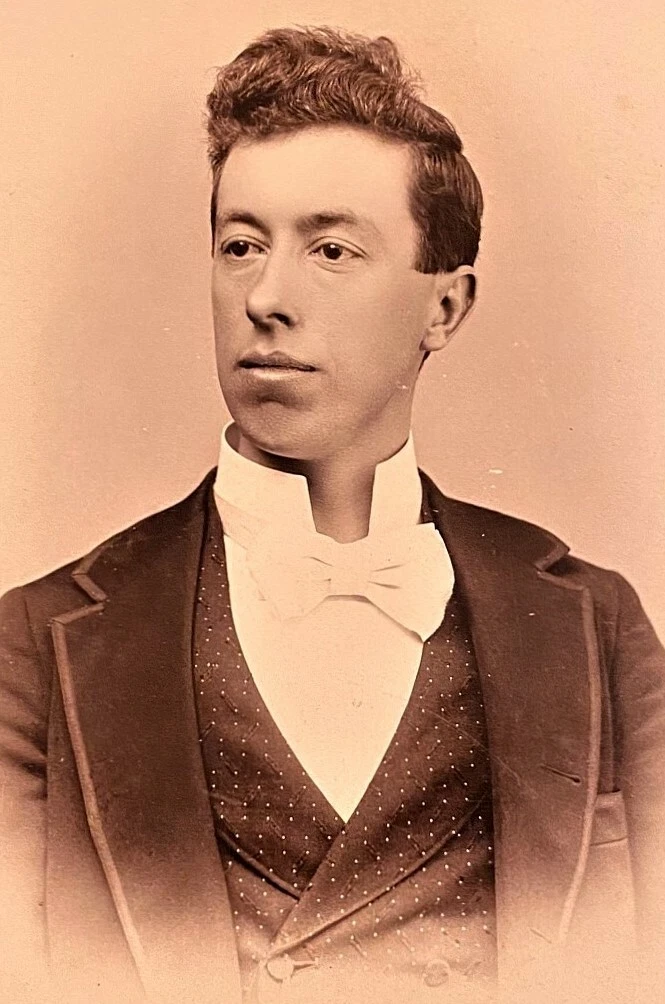
This cabinet card portrait (sorry for the poor quality of the scans) features a flamboyant looking, but handsome, young man. He is well dressed and well poised in front of the camera. Note his pouffey hair. This gentleman was photographed at the Williams studio in New Athens, Ohio. Joseph E. Williams (1856-1946) career as a New Athens photographer spanned decades. SOLD
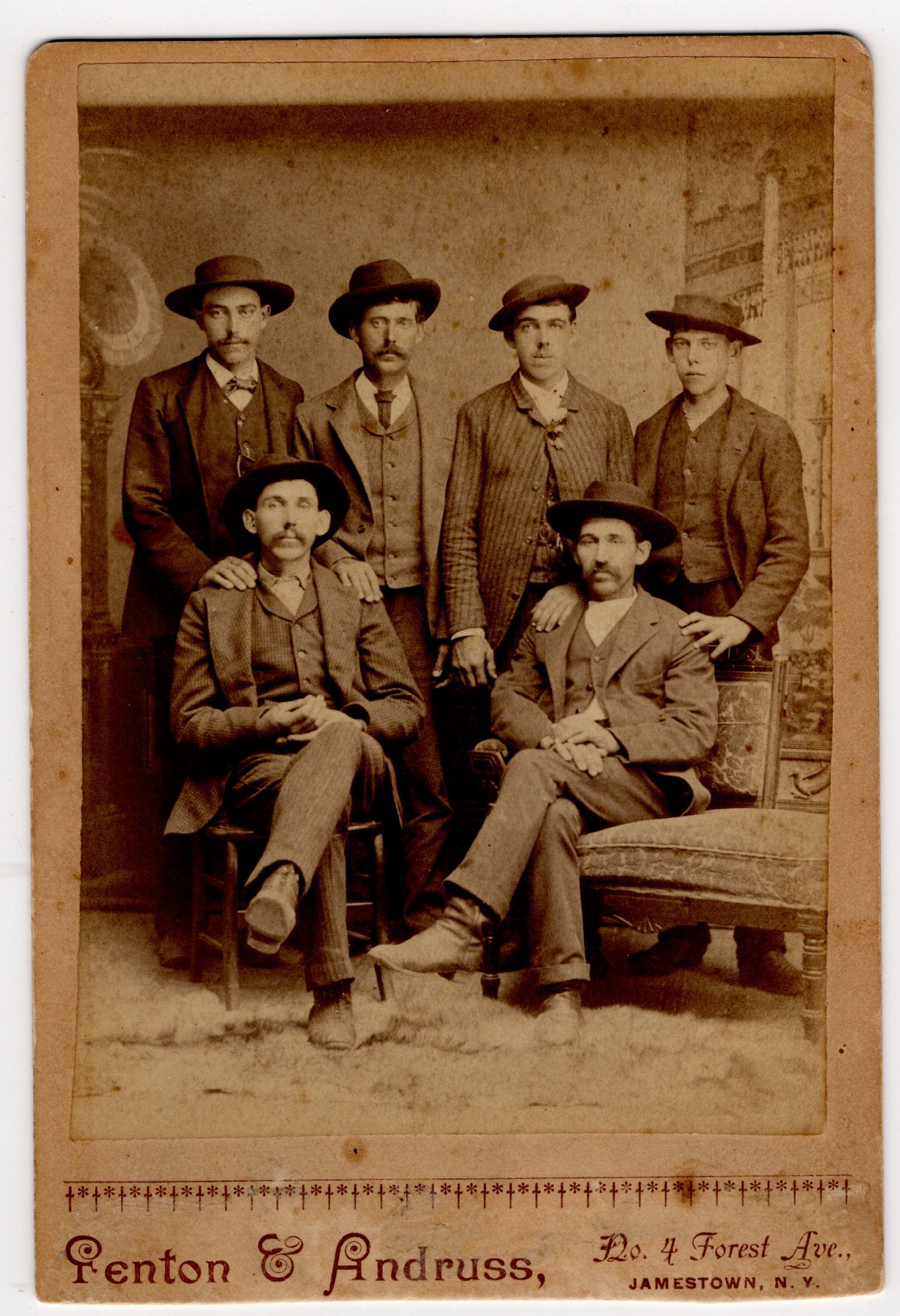
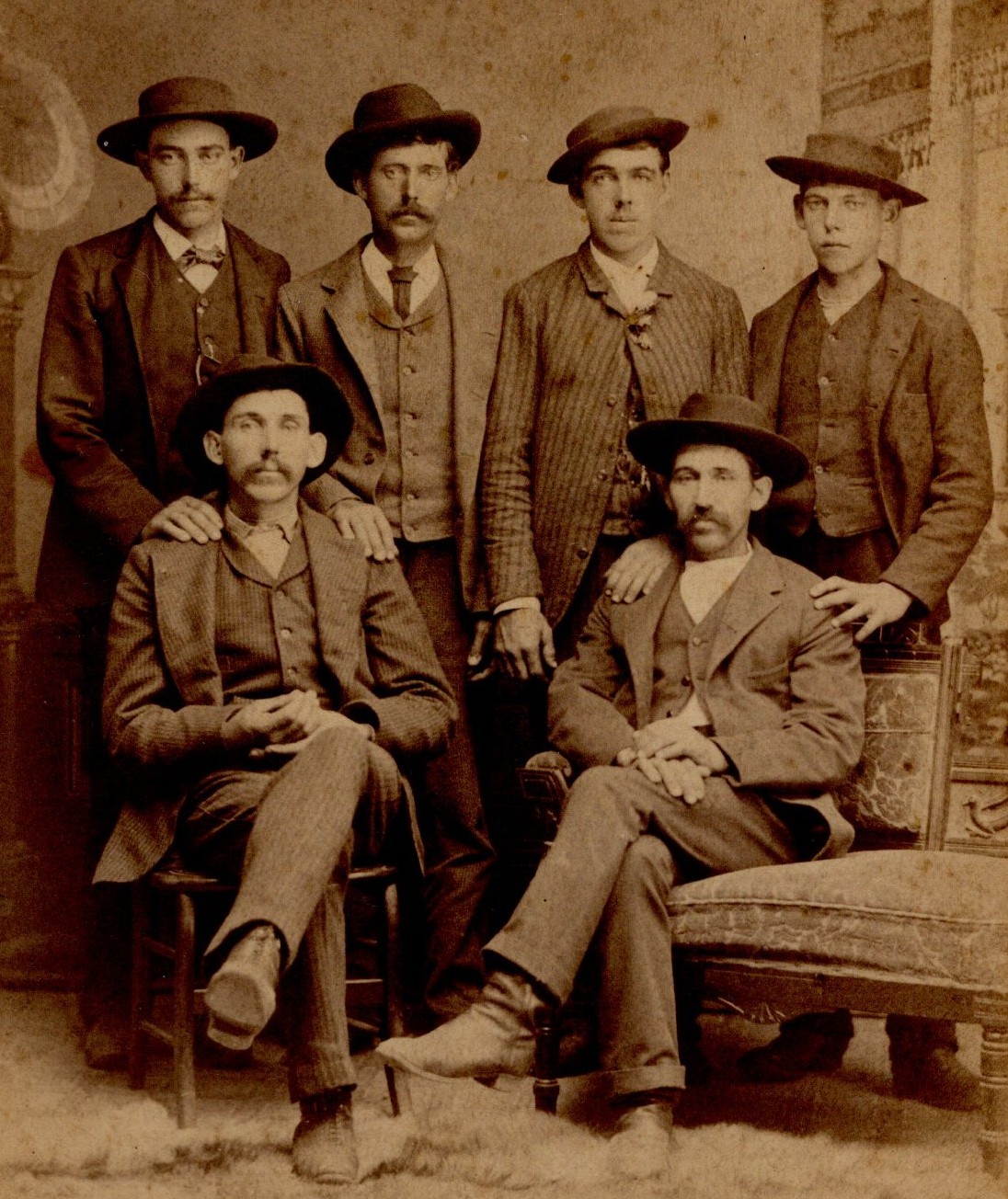
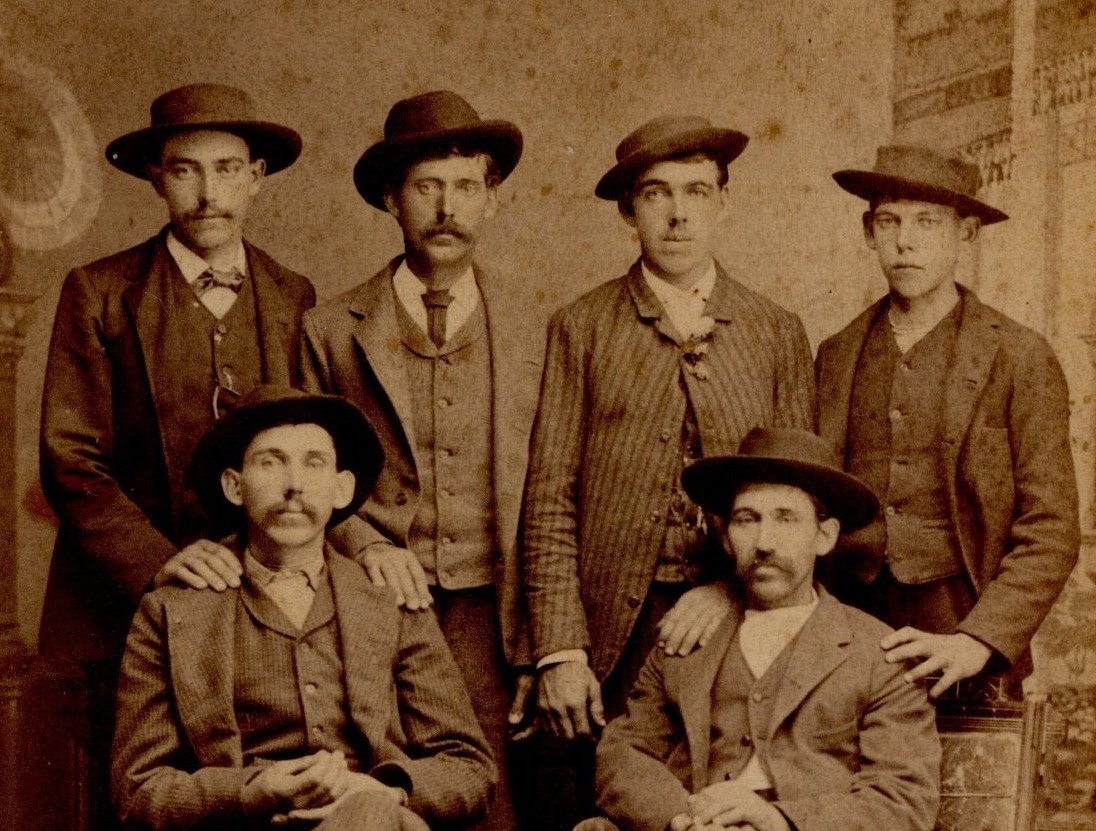
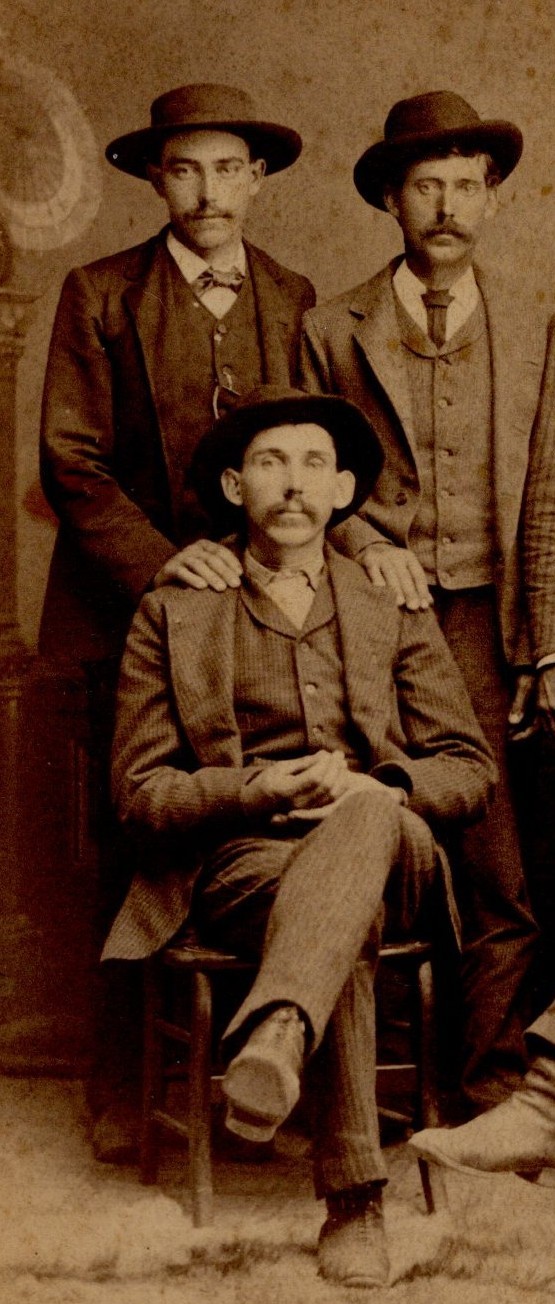
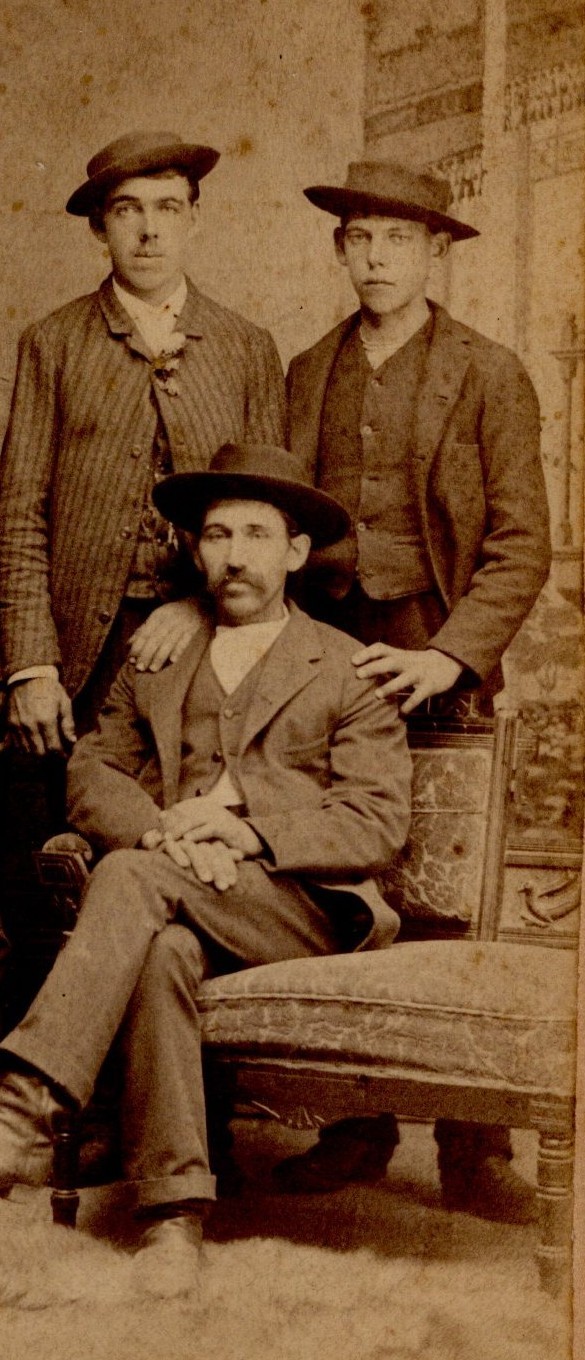
This striking original cabinet card photograph dates from the late 19th century, likely circa 1890, and captures a group portrait of six well-dressed men posing in a photographic studio in Jamestown, New York. The image was taken by Penton & Andruss, located at No. 4 Forest Ave., Jamestown, N.Y., as identified by the ornate imprint on the front mount. The men are dressed in typical late Victorian attire, wearing a variety of three-piece suits, waistcoats, high-collar shirts, and neckties or cravats. Each man wears a broad-brimmed hat, suggesting either a regional or occupational identity—possibly connected to rural life, ranching, or even a fraternal organization. The group is arranged in a formal pose: four men standing in the back and two seated in front on elegant studio furniture. The backdrop features painted columns and drapery, a common studio motif of the period meant to evoke elegance and sophistication. The seated men have a relaxed posture, one with legs crossed and hands folded in his lap, while the other leans slightly forward with a composed, confident expression. Each subject maintains a serious or neutral facial expression—typical for 19th-century portraiture due to long exposure times and social conventions around photographic solemnity. Penton & Andruss, the photographers, was a partnership based in Jamestown, New York during the late 19th century. While detailed biographical records on the firm are limited, they appear in regional business directories and period listings as active professional photographers. Jamestown was a thriving industrial and lumber town during this period, and it’s possible that these men were involved in local trades or belonged to a community club, union, or fraternal society. (SOLD)
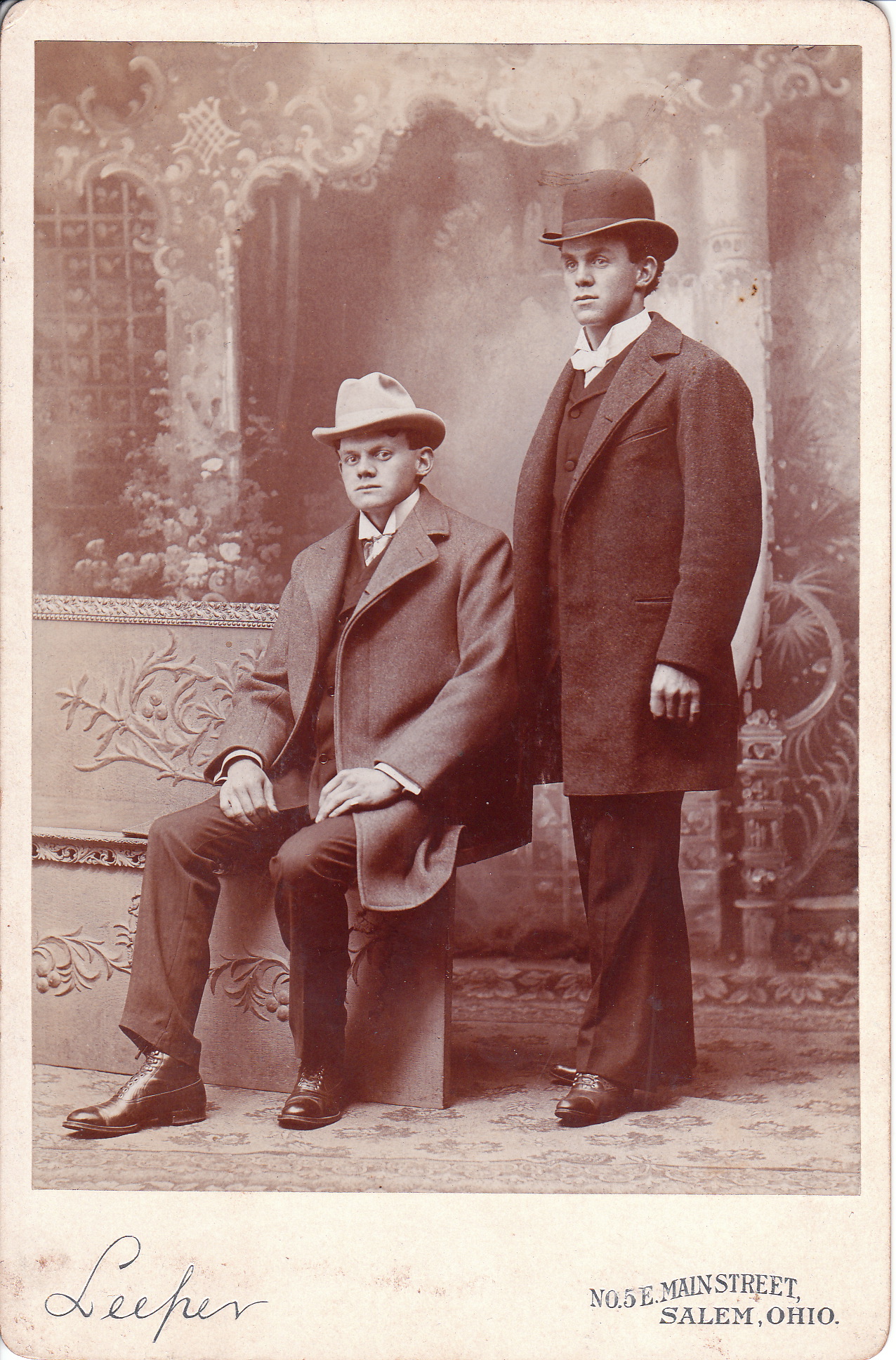
Two dapper men, looking quite professional, pose for their portrait at the Leeper studio, in Salem, Ohio. These men look like their on business. Are they lawmen? The gentleman who is standing is extremely handsome so perhaps the men are actors. The photographer is Burt Leeper. Leeper was born in Pennsylvania in 1865. He worked in Salem at the end of the nineteenth century. An article in a photographic journal (1900) cites Mr. Leeper as being part of a “Picture Trust”. It seems that he was part of a “price fixing” combine that was formed to resist the lowering of photographic studio prices as a result of fierce competition between photographers. Leeper and three other photographers agreed to match each others prices for services and goods. In addition, Leeper and two of the other photographers agreed to take turns being open for business on Sundays. The fourth photographer declined, preferring to stay closed on all Sundays. This cabinet card photograph is in good condition (see scans).
This cabinet card is available for purchase at The History Peddler for $38.00 or Best Offer.
Interested collectors may view the listing here:
 | bmarshphd on Young Egyptian Woman : Veil :… |
 | summertime75 on Young Egyptian Woman : Veil :… |
 | Cameron Hartwell on PORTRAIT OF A WOMAN ART CRITIC… |
| bmarshphd on PRETTY WOMAN HOLDING A PRETTY… |
 | Szélinger Balázs on PRETTY WOMAN HOLDING A PRETTY… |

