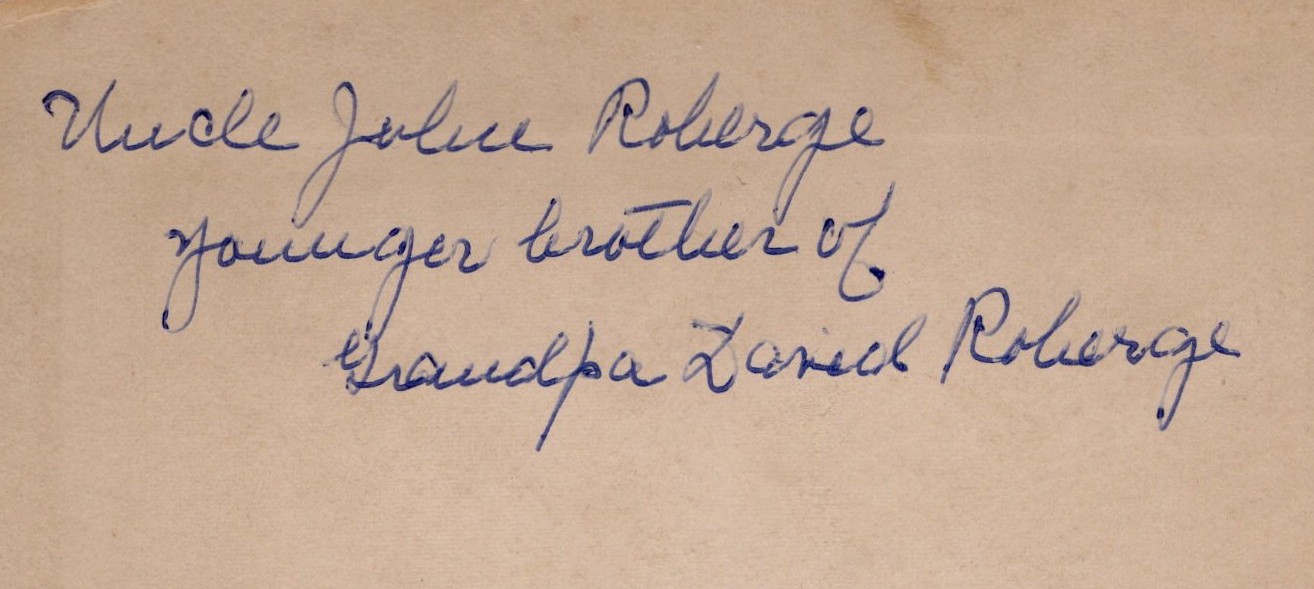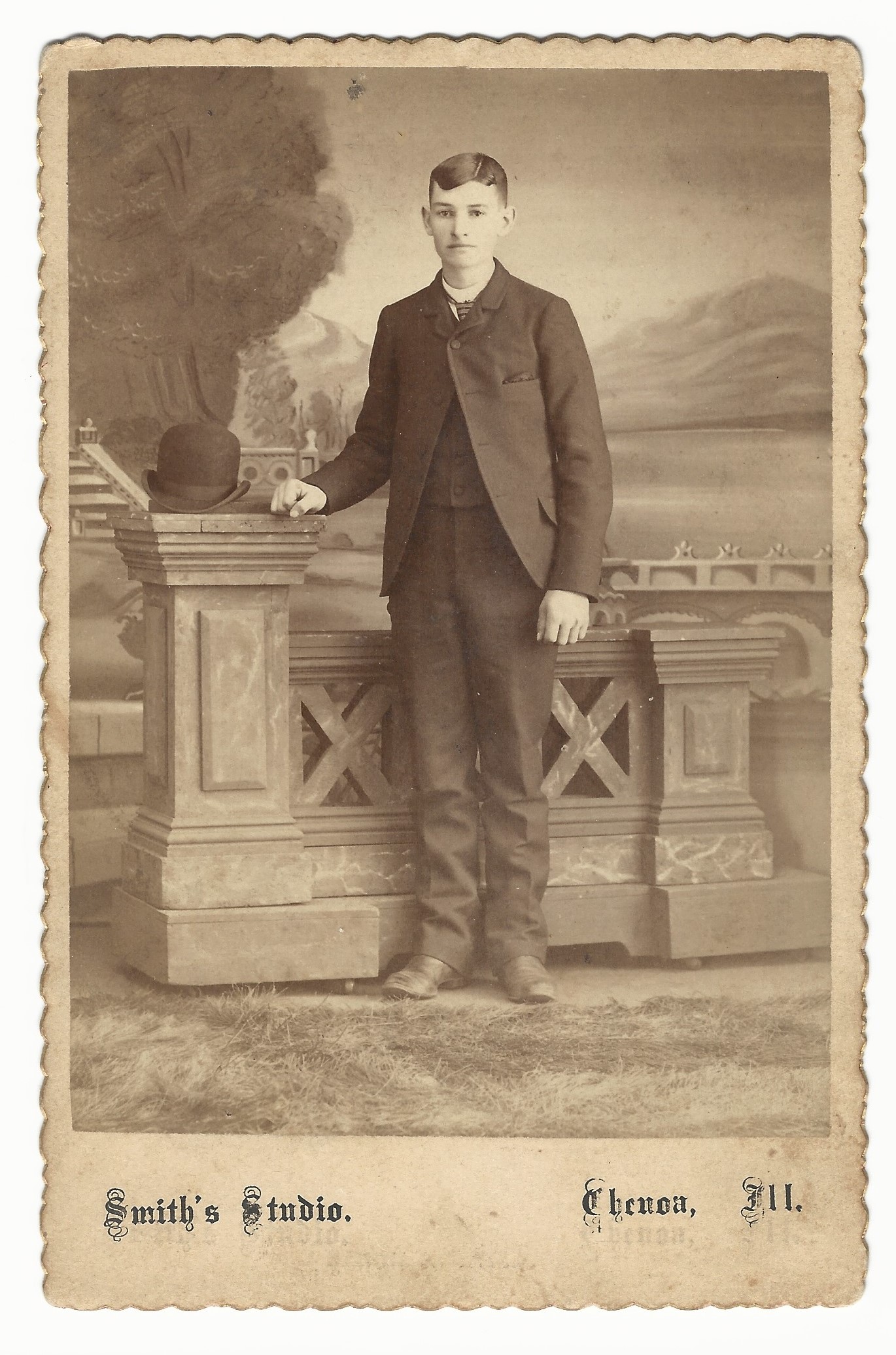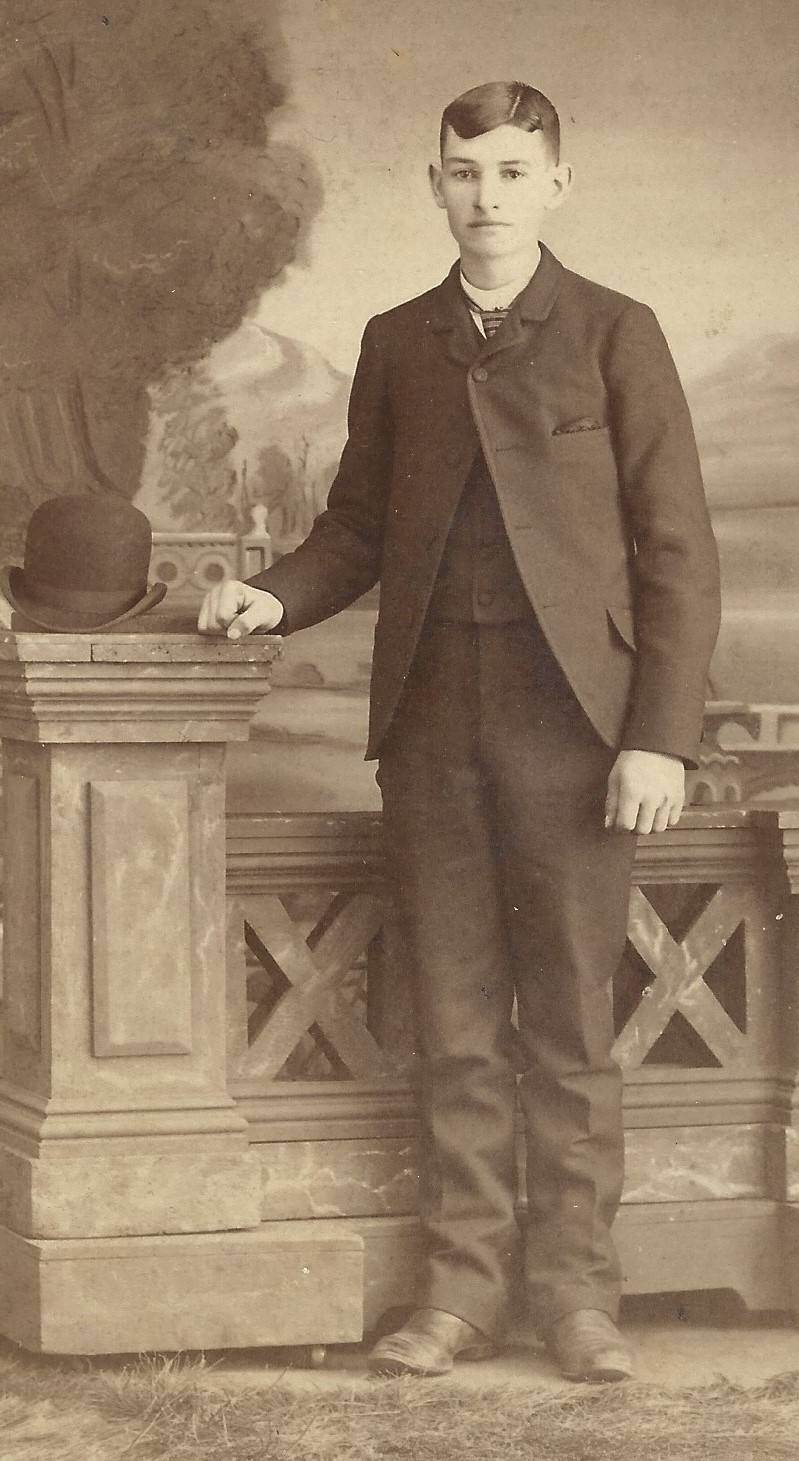
This cabinet card features a teenage boy posing for his portrait at Smith’s Studio in Chenoa, Illinois. He is well dressed in his three piece suit. His derby hat is beside him, sitting on a faux wall. Note the backdrop. The artist who created it did not have an abundance of talent. SOLD
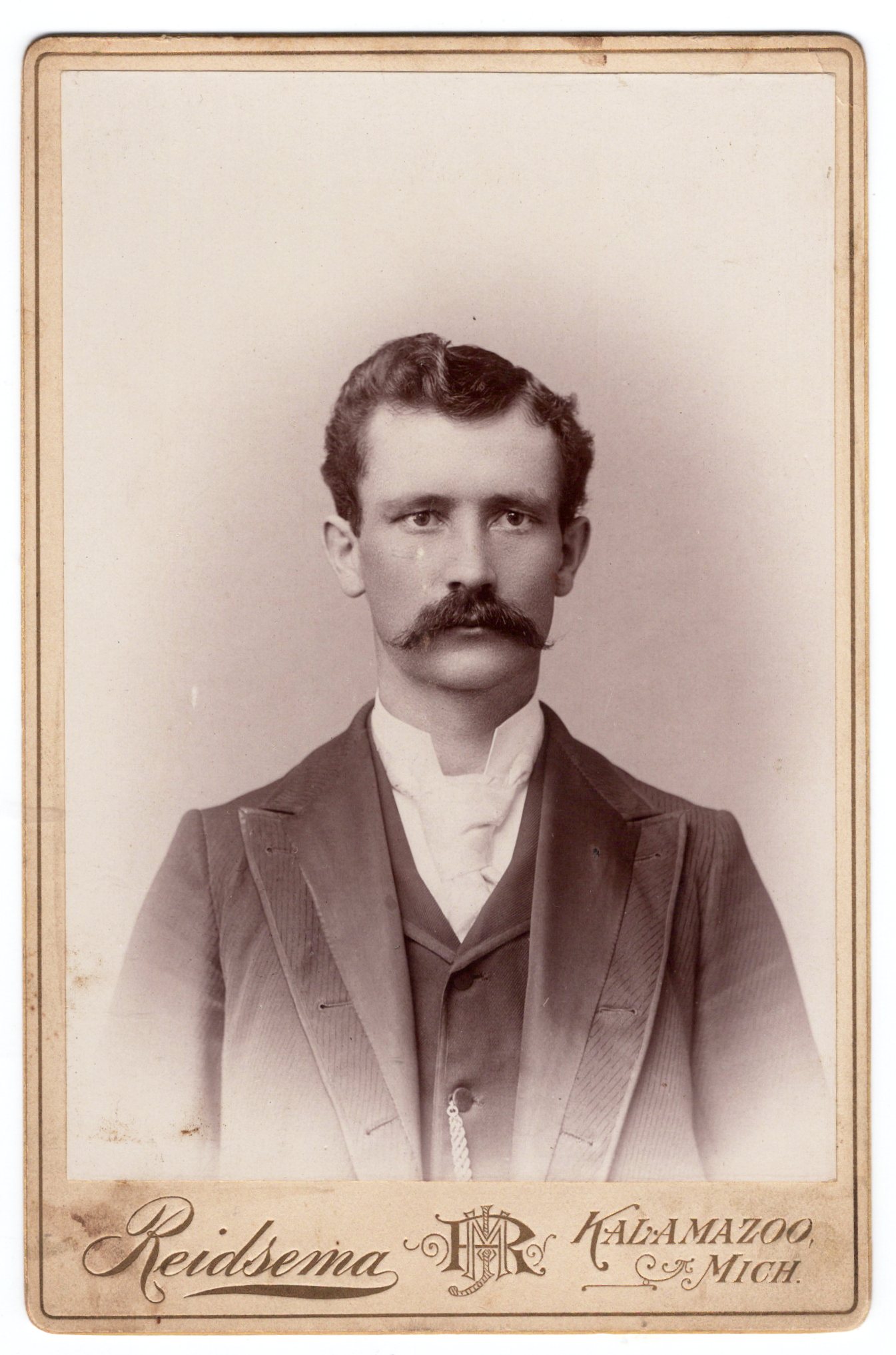
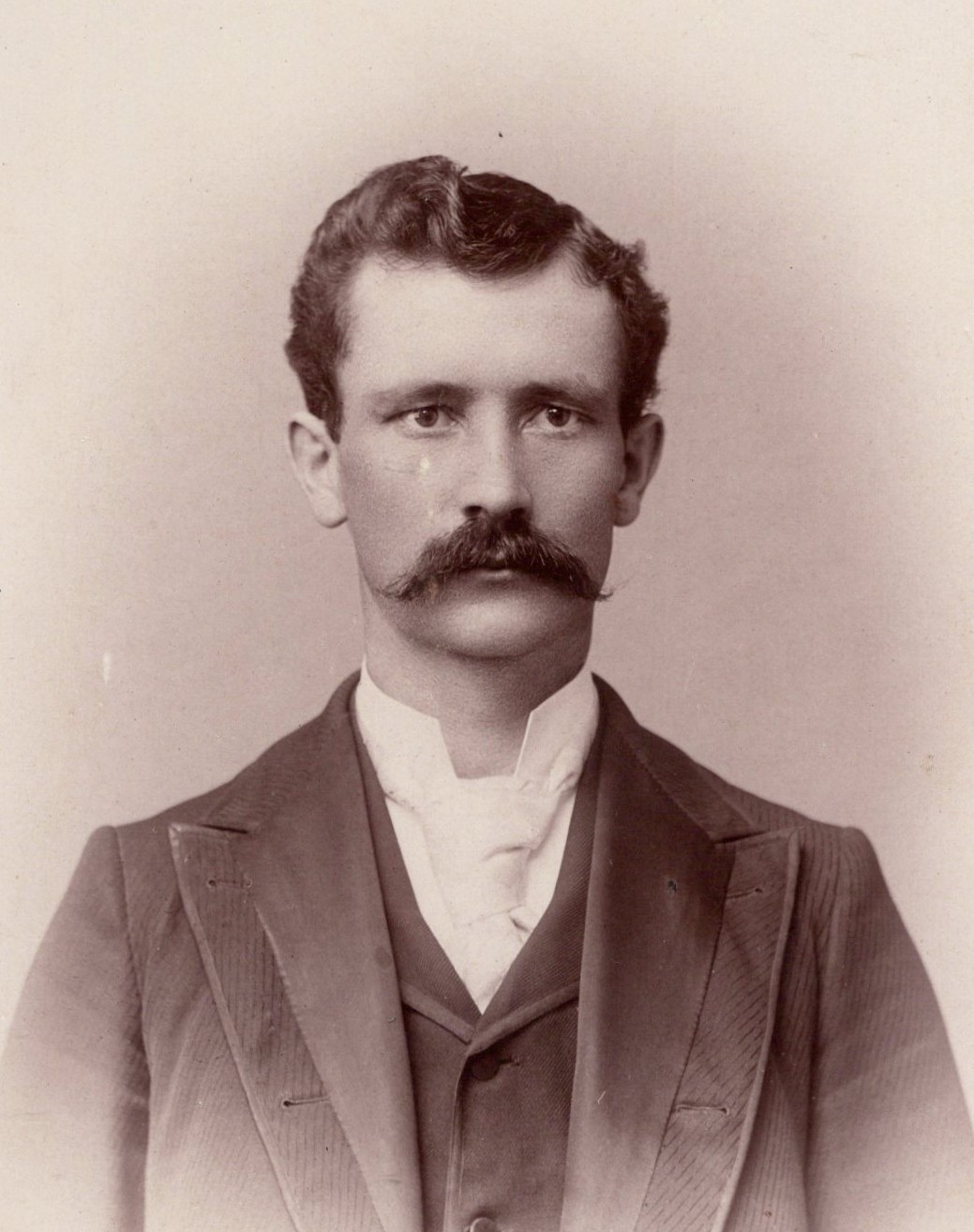
HANDSOME YOUNG MAN: KALAMAZOO, MICHIGAN : REIDSMA STUDIO : CABINET CARD c1890s
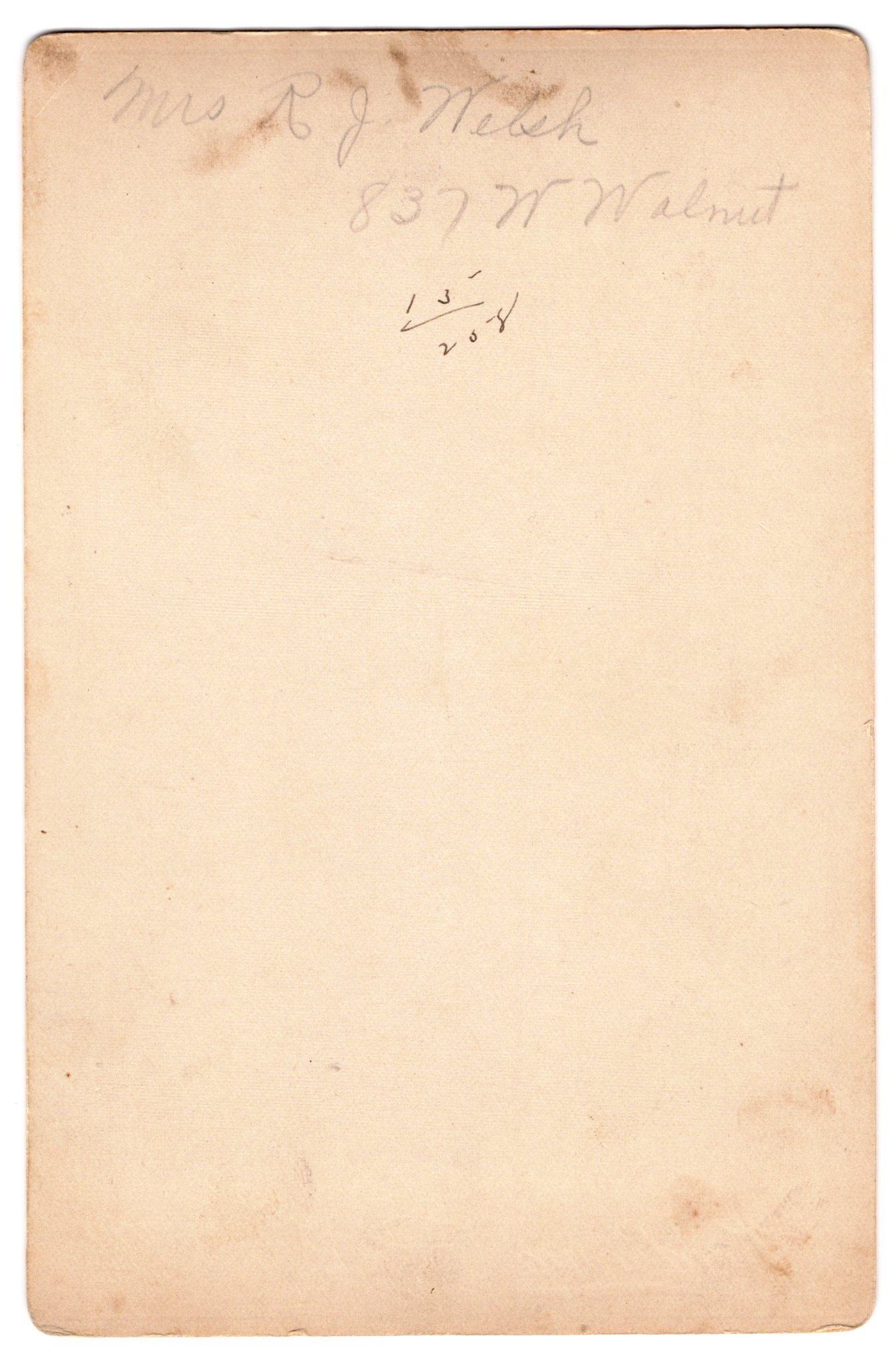
This cabinet card features a handsome young man with a composed, serious expression. His piercing eyes are steady and direct, suggesting confidence and a sense of purpose. He sports a neatly groomed, full mustache that accentuates his strong facial features, and his dark, wavy hair is styled close to the head with a modest wave. He is dressed formally in a three-piece suit typical of the late 19th century, consisting of a dark jacket with a subtle pinstripe, a matching vest, and a white high-collared shirt adorned with a cravat or tie tucked neatly into the collar. A pocket watch chain is visible just below the vest’s center buttons, a common accessory for men of the era. The photograph was taken by Reidsma Studio, as indicated by the imprint on the bottom mount. The ornate script spells out “Reidsma” alongside the photographer’s monogram and location: Kalamazoo, Michigan. Research into Mr. Reidsma reveals that the photographer was likely John Reidsma, a Dutch-American who operated a photography studio in Kalamazoo in the late 19th century. His work is known for its clarity and careful composition, often capturing the middle class and professional residents of the area during a time of industrial growth in Michigan. The presence of the brown line framing the image—also called a “rule line”—was a stylistic element commonly used in cabinet cards from the 1885–1895 period. This, along with the fashion and card style, helps date the photograph to the early 1890s. On the reverse, written in pencil, is the name: Mrs. R. J. Welch, 837 W. Walnut. The address is likely a local address for Kalamazoo itself or a nearby city. It is quite likely that Mrs. R. J. Welch was the wife of the man pictured. During this era, it was common for women—especially wives—to manage household affairs, including the commissioning and ordering of photographic portraits from local studios. Her name inscribed on the back may indicate ownership or responsibility for this photograph, perhaps sent or shared with family members.
PORTRAIT OF AN ABRAHAM LINCOLN LOOK-A-LIKE IN TRENTON, NEW JERSEY
The gentleman in this cabinet card portrait looks amazingly like Abraham Lincoln (1809-1865), the 16th President of the United States. As much a I would like this to be an early photograph of Lincoln, it most certainly is not. This photograph was produced several years after Lincoln’s death. The photographer of this image was George Pine (1840-1906). For part of George’s photography career he operated a studio with his brother Robert G. Pine. Records indicate that Pine conducted his business at the 27 & 29 East State between 1878 and 1888. He operated out of several addresses over the course of his career and all of his galleries were located in Trenton, New Jersey. I was able to confirm that he ran the studios from at least 1872 through the early 1900’s. George was born in New Jersey. An 1867 business directory indicates that he and his brother had a gold and silver plating business before entering the field of photography. The 1880 US census reveals that George lived in Trenton with his wife Theodosia Burroughs Pine (1842-1900). The couple were living alone. The Trenton Evening Times (1906) ran George’s obituary. He died in Trenton although he did spend some years in Florida where his wife passed away. At the time of his death he was the curator of the Cadwalader Park Museum. The article states that after a successful photography career, George had become a “prominent naturalist”. Cadwalader Park is located in Trenton.The park is nearly 100 acres and is the city’s oldest park (construction began in 1887). The park was designed by Frederick Law Olmsted (creator of New York City’s Central Park). SOLD
THREE MEN IN COSTUMES WITH ASIAN PARASOLS : BIZARRE VINTAGE SNAPSHOT PHOTO
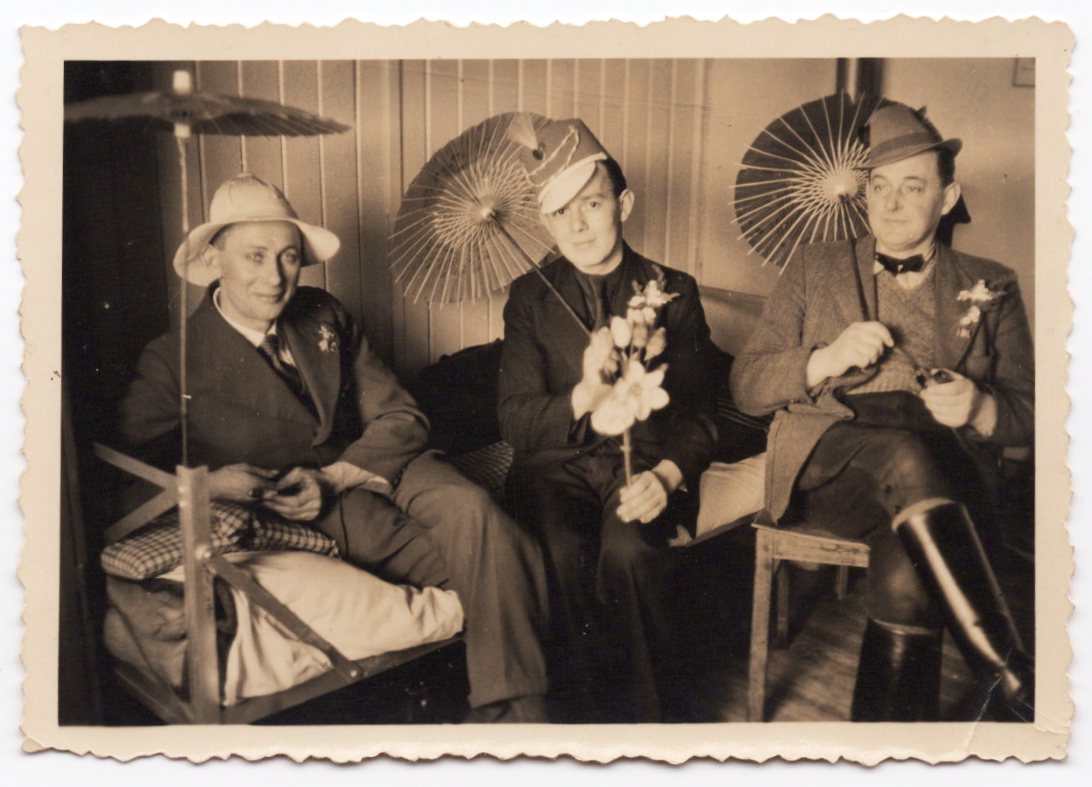
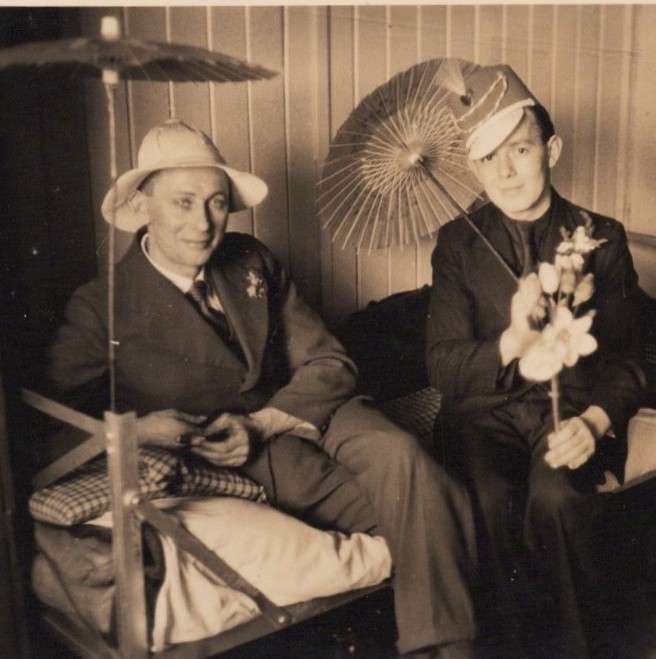
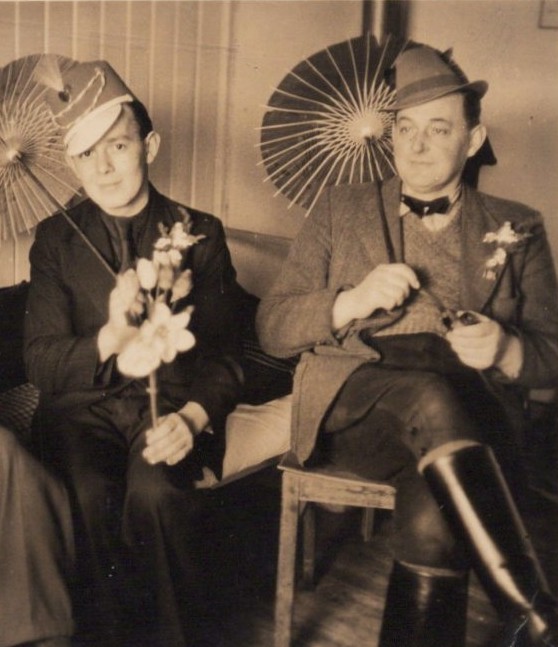
This small vintage snapshot photograph measures 2½ inches by 3⅜ inches and offers a wonderfully quirky scene of three men posing indoors, apparently during some kind of playful or costume event. The three men are seated closely together on benches. All three are dressed in semi-formal or smart-casual clothing. The man on the left wears a suit jacket, tie, and slacks, topped off with a light-colored, wide-brimmed hat reminiscent of a pith helmet or safari hat. He has a pleasant, slightly amused expression on his face. The man in the middle, dressed in dark clothing, holds a small bouquet of artificial flowers and wears a whimsical hat cocked at an angle. His expression is earnest, almost deadpan, which adds to the surreal charm of the scene. The man on the right sports a tweed jacket, bow tie, and riding boots. He also wears a jaunty hat and is casually holding a pipe in one hand, looking slightly amused and relaxed. In the background, Asian-style paper parasols are hanging or propped against the wall, adding an even more unusual and festive element to the setting. The combination of the flowers, whimsical hats, parasols, and formal clothing creates a truly bizarre, humorous, and delightful scene, suggesting this may have been a themed party, costume event, or simply friends enjoying a bit of light-hearted fun. This delightful vintage snapshot likely dates to the late 1930s or early 1940s, based on clothing and photographic style. (SOLD)
HANDSOME YOUNG MAN IN ROCHESTER, NEW YORK
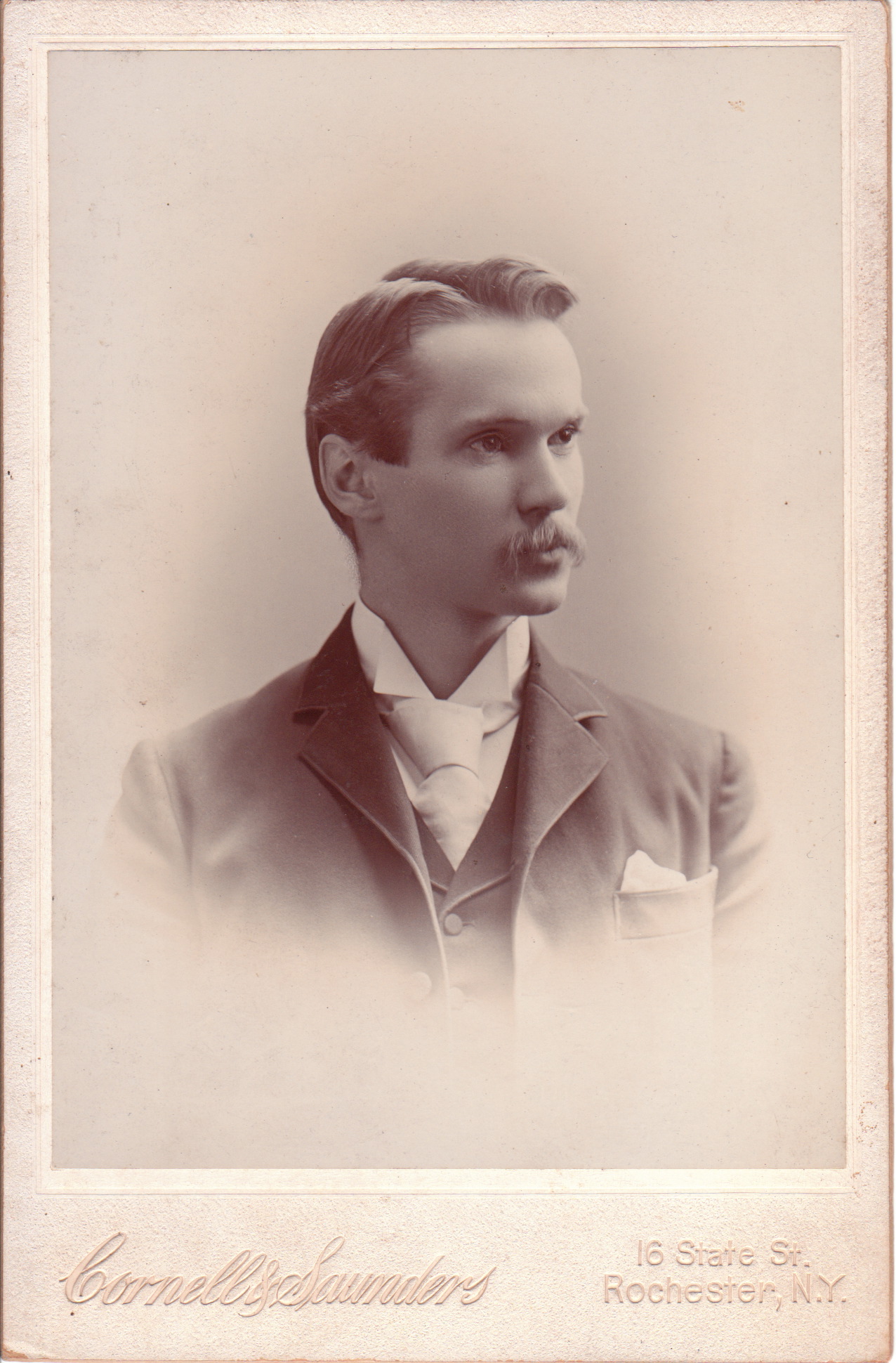
A handsome and well groomed young man poses for his portrait at the studio of Cornell and Saunders, in Rochester, New York. References to Cornell and Saunders were found in photographic journals of 1893 and 1894. SOLD
PORTRAIT OF IDENTIFIED HANDSOME GENTLEMAN : BINGHAMTON, NEW YORK : CABINET CARD
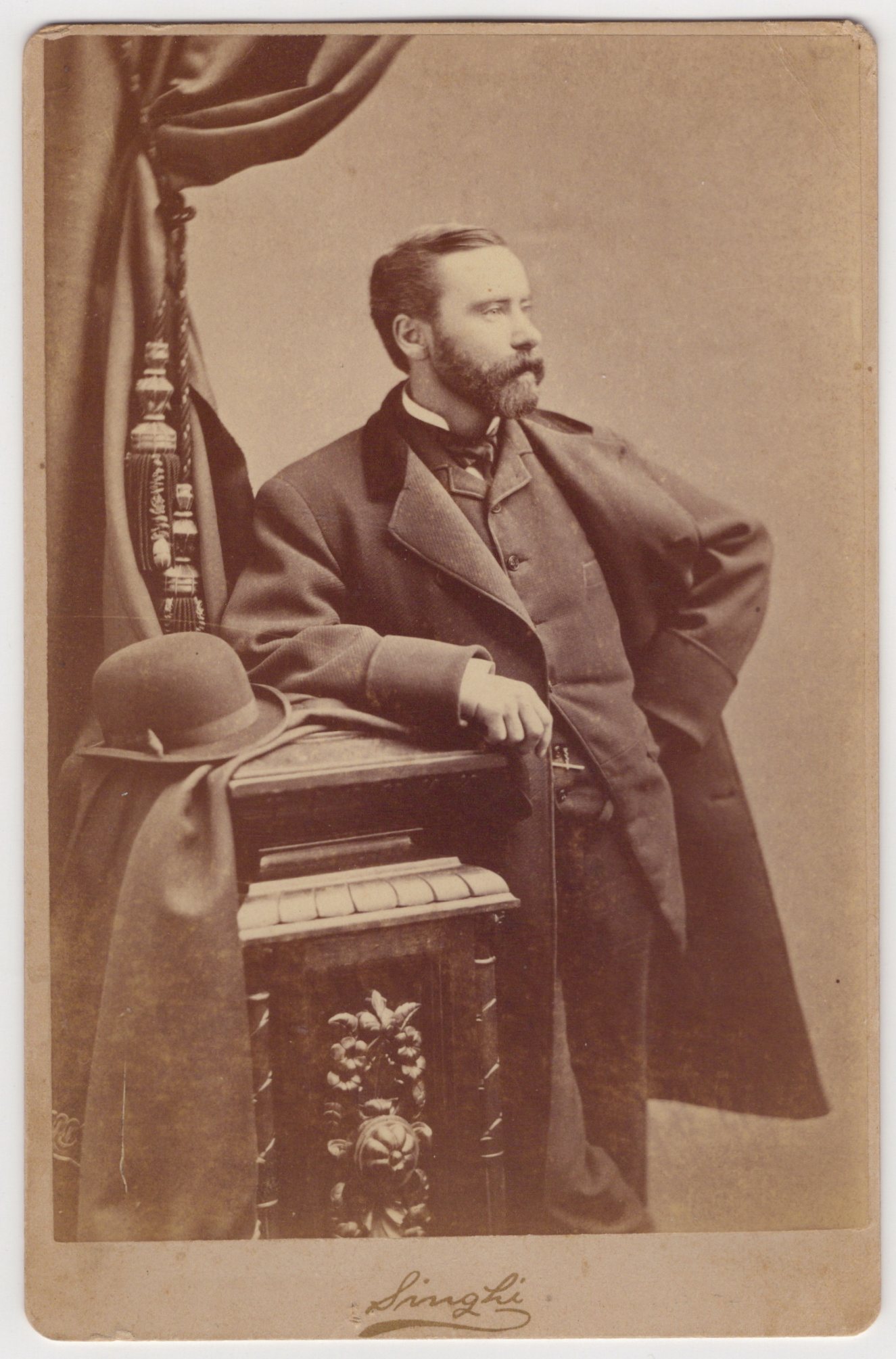
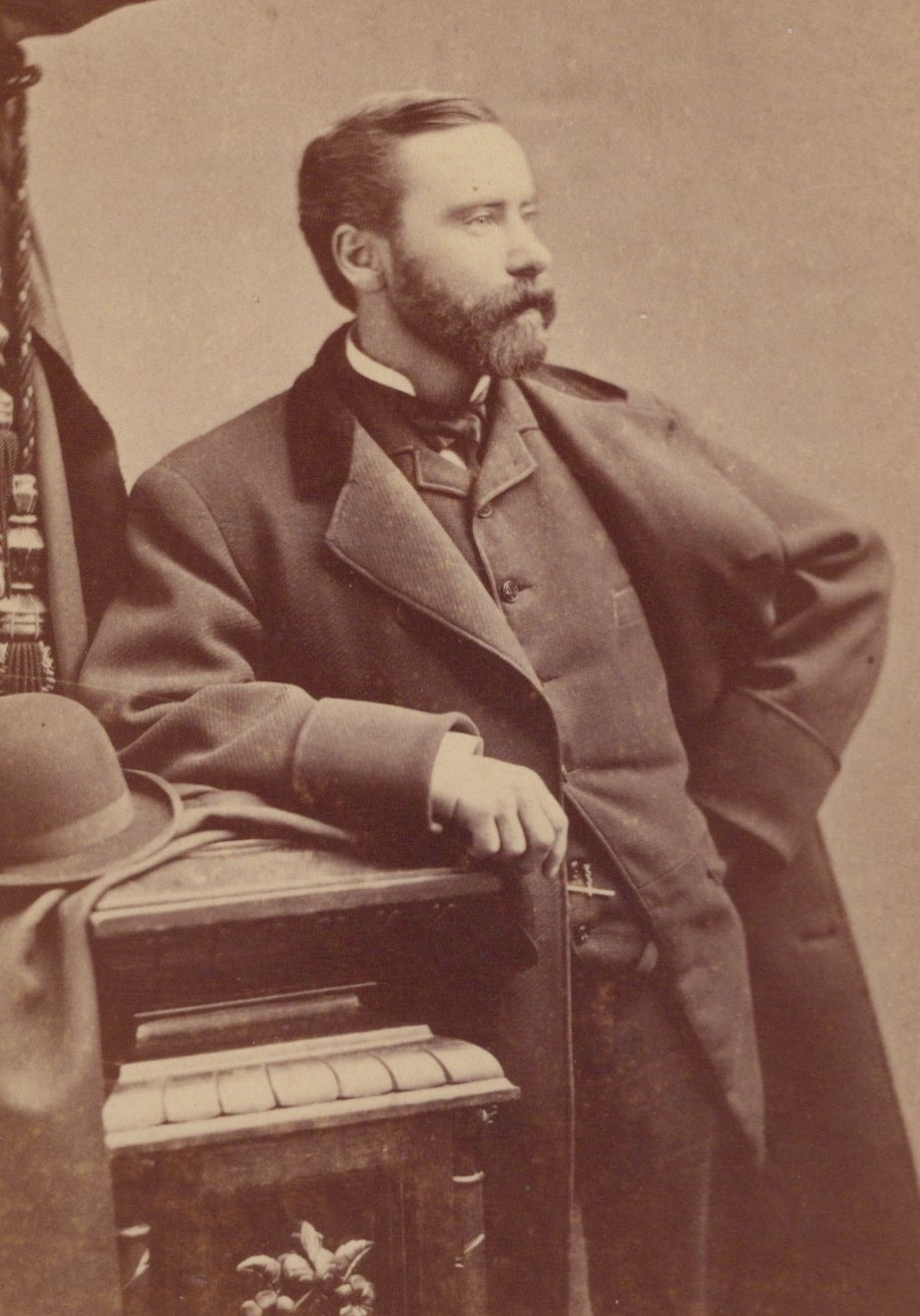
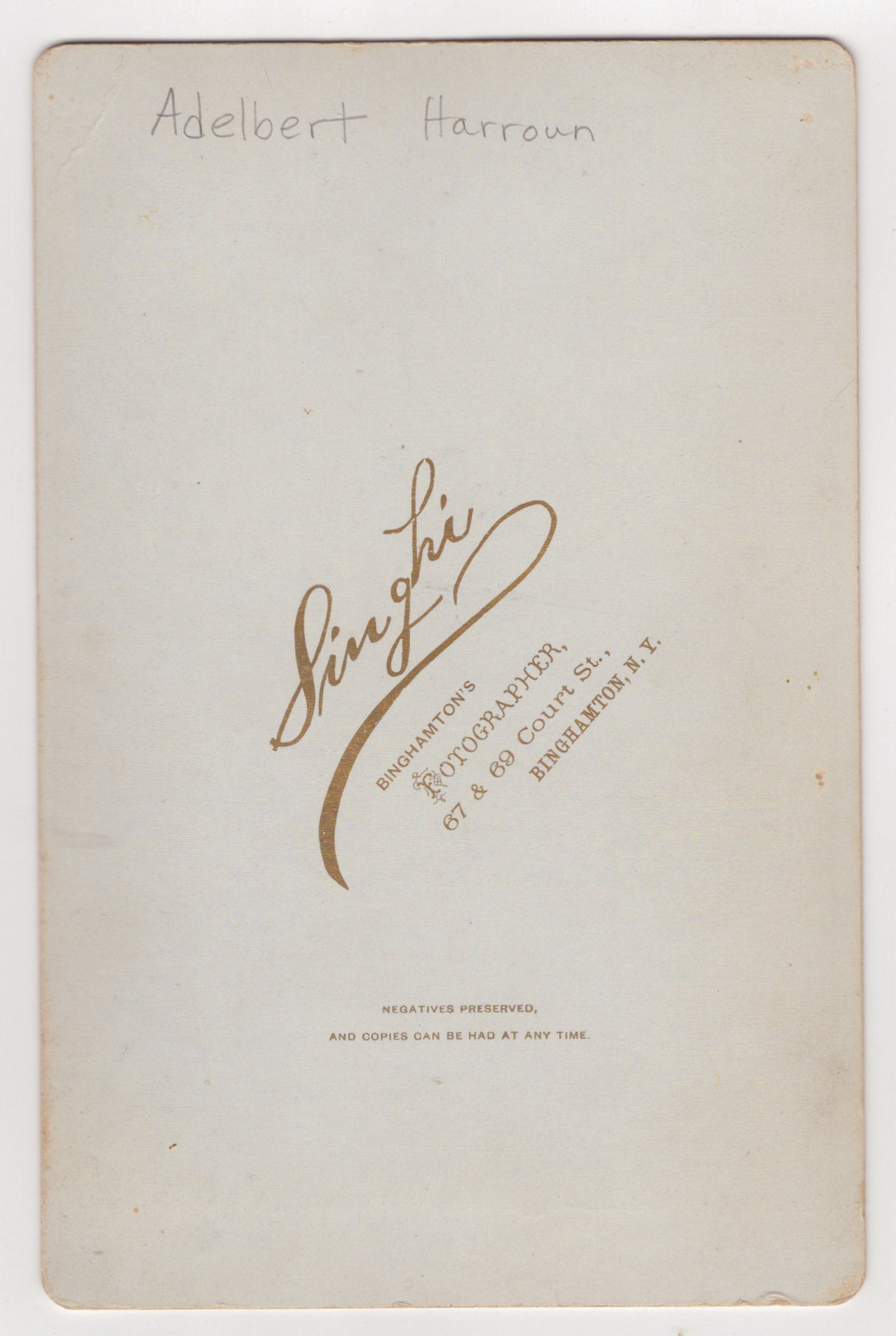
The man in this cabinet card photograph appears to be a professional gentleman. He is wearing an overcoat and a nicely trimmed beard. He is standing next to his derby hat and has a pocket watch. Perhaps the well dressed gentleman is an attorney. Maybe its not a coincidence that the Binghamton, New York based photographer, Singhi, was located on Court Street. The reverse of the photograph has an inscription which identifies the gentleman as “Adelbert Harroun”. Research reveals that Mr. Harroun was not a lawyer but instead, he was an accountant. The 1870 census notes that Thomas Adelbert Harroun (1851-?) was the 19 year-old son of Thomas Harroun (1824-1907) and Salina King Harroun (1824-1903). His father’s occupation was listed as a “Presiding Elder” and further research found that he was a Methodist clergyman. His mother was a homemaker. Adelbert lived with his parents and two siblings in Norwich, New York. Sister Flora (age 22) was a music teacher and brother Arthur (age 11) was a student. He married his wife, Mary Winton, in 1888. The couple had two children. The 1900 census finds the 47 year old Harroun living in Dunleith, Illinois. He was living with his wife, Mary, their son N. Winton (age 10), and daughter Anna Augusta (age 9). Harroun was working as a railroad yard clerk. Further investigation revealed that daughter Anna Augusta died in 1904 in Dubuque, Illinois. The 1920 census reports that the 67 year-old Harroun was widowed and living in Waukegan Lake, Illinois with his sister Flora. He was working as an accountant. The 1930 census locates Harroun in Prineville, Oregon and living as a boarder. At 79 years of his age, he was still working (bookkeeper). The photographer of this image is Will G. Singhi. He worked in Binghamton, New York between 1872 and 1886. His albumen print “A Winter Scene” is exhibited in the online “American Museum of Photography”. Singhi had taken a photograph that appeared to capture a snowball in mid flight heading toward a newsboy who was prepared to deflect it. The museum also has on display a funny cartoon self portrait caricature that Singhi used as an advertisement. The Photographic Times and American Photographer (1883) comments on Singhi’s wonderful sense of humor. SOLD
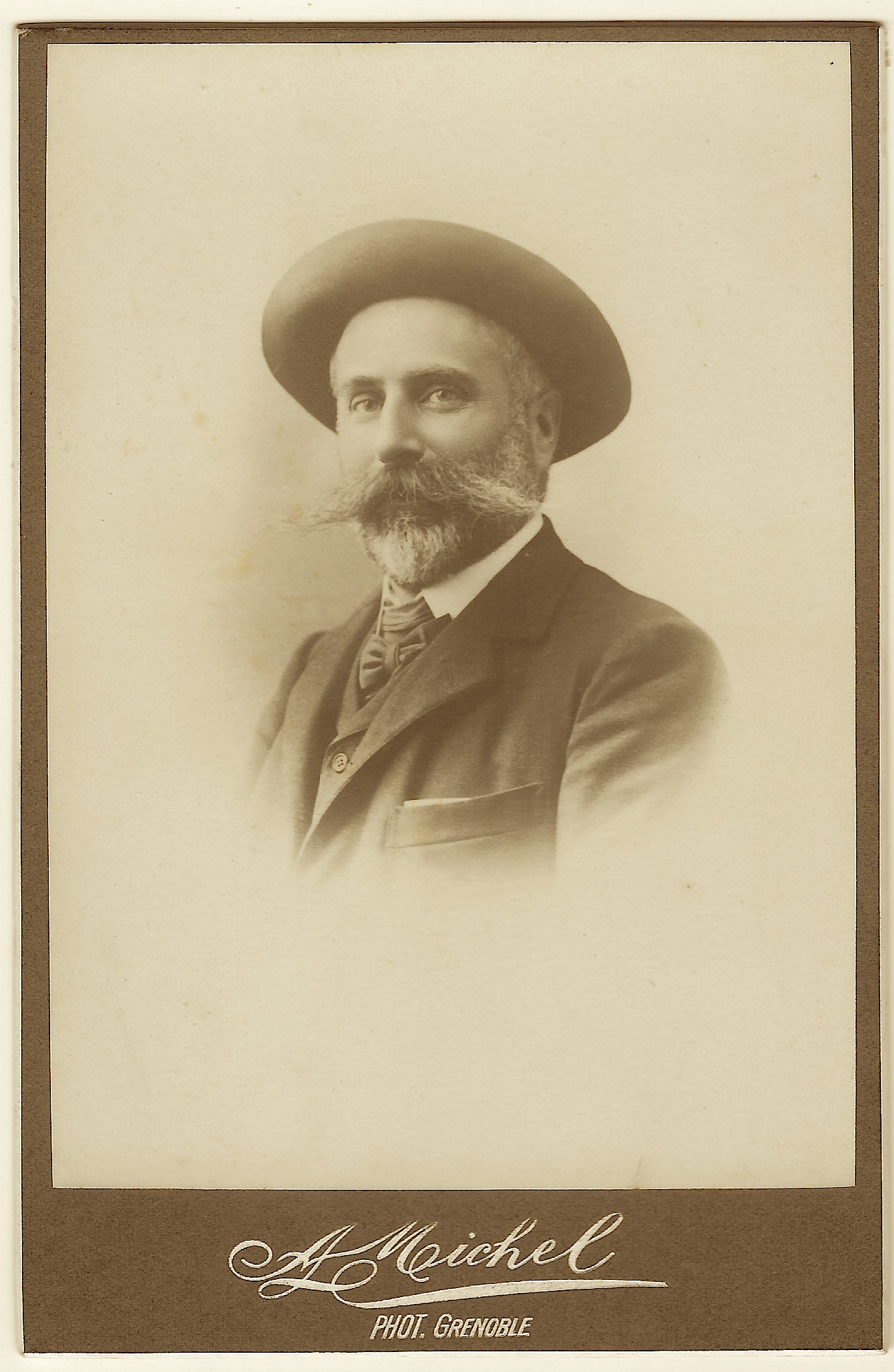
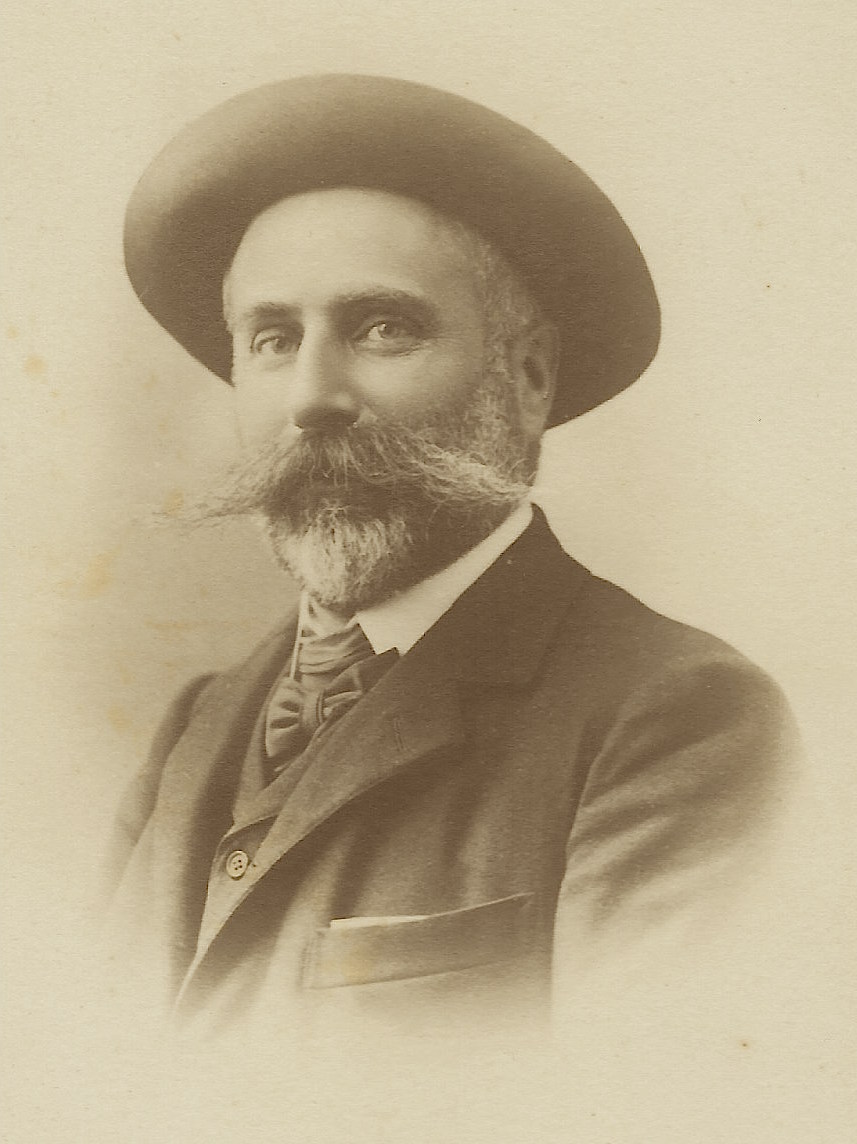
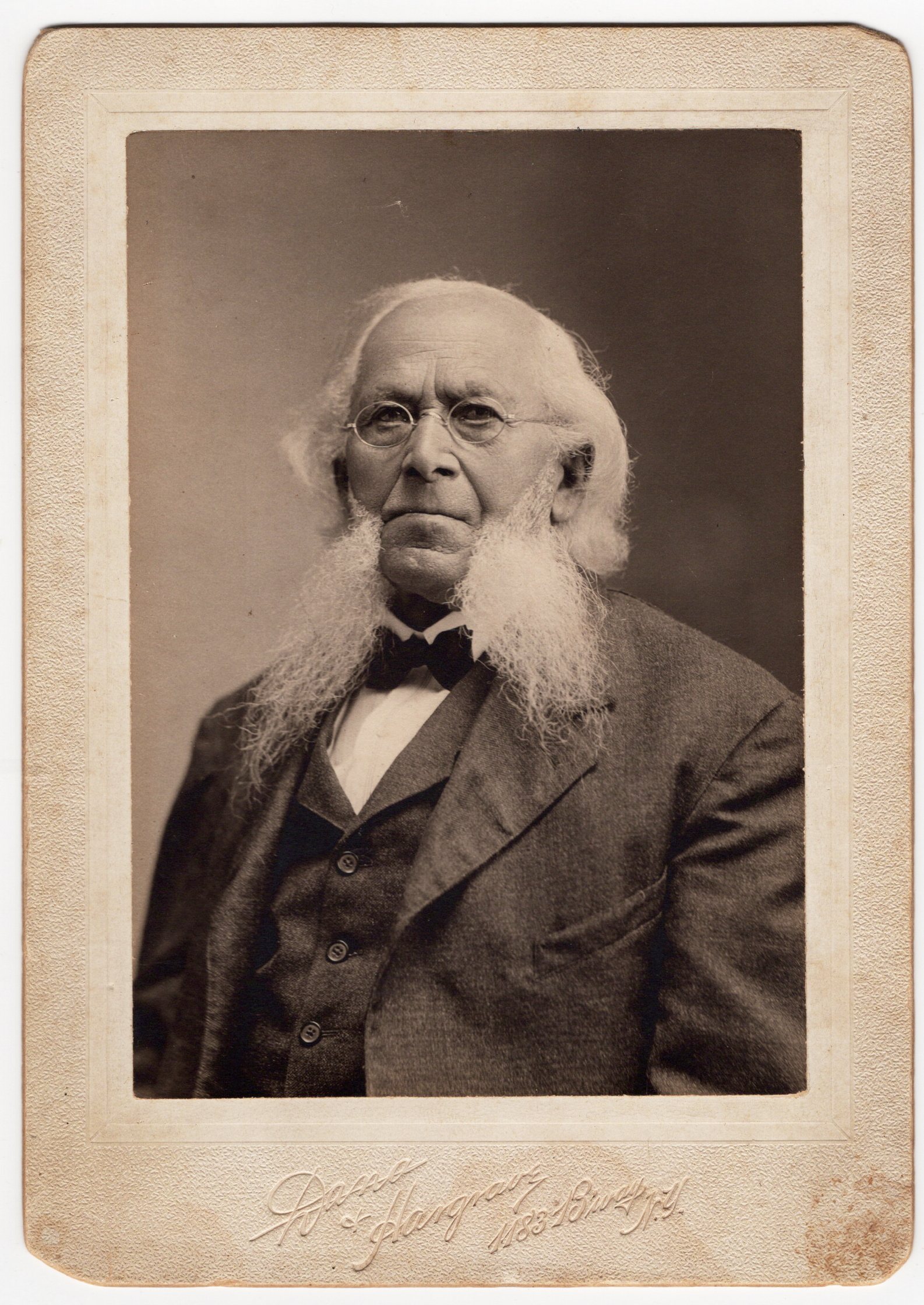
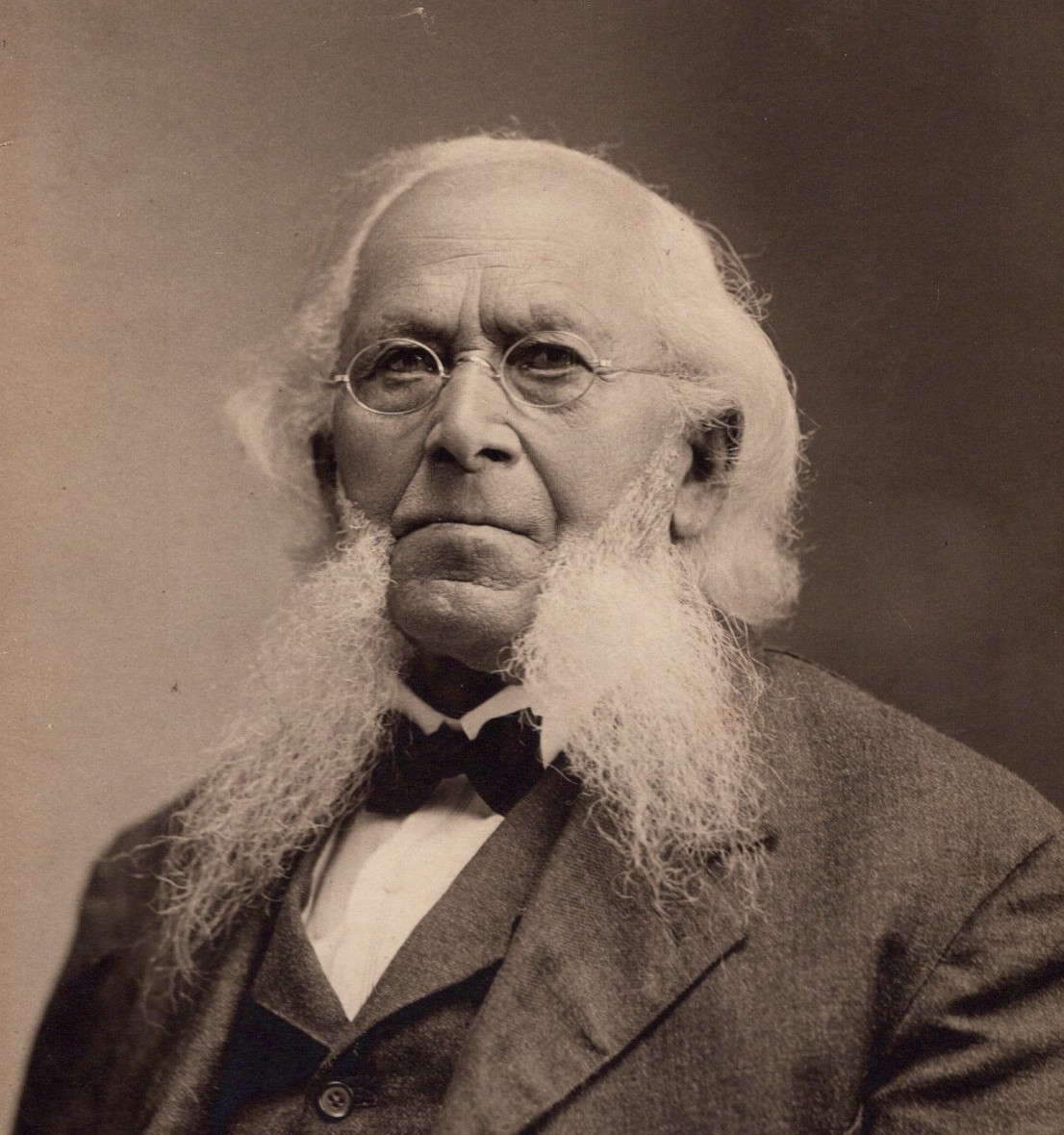
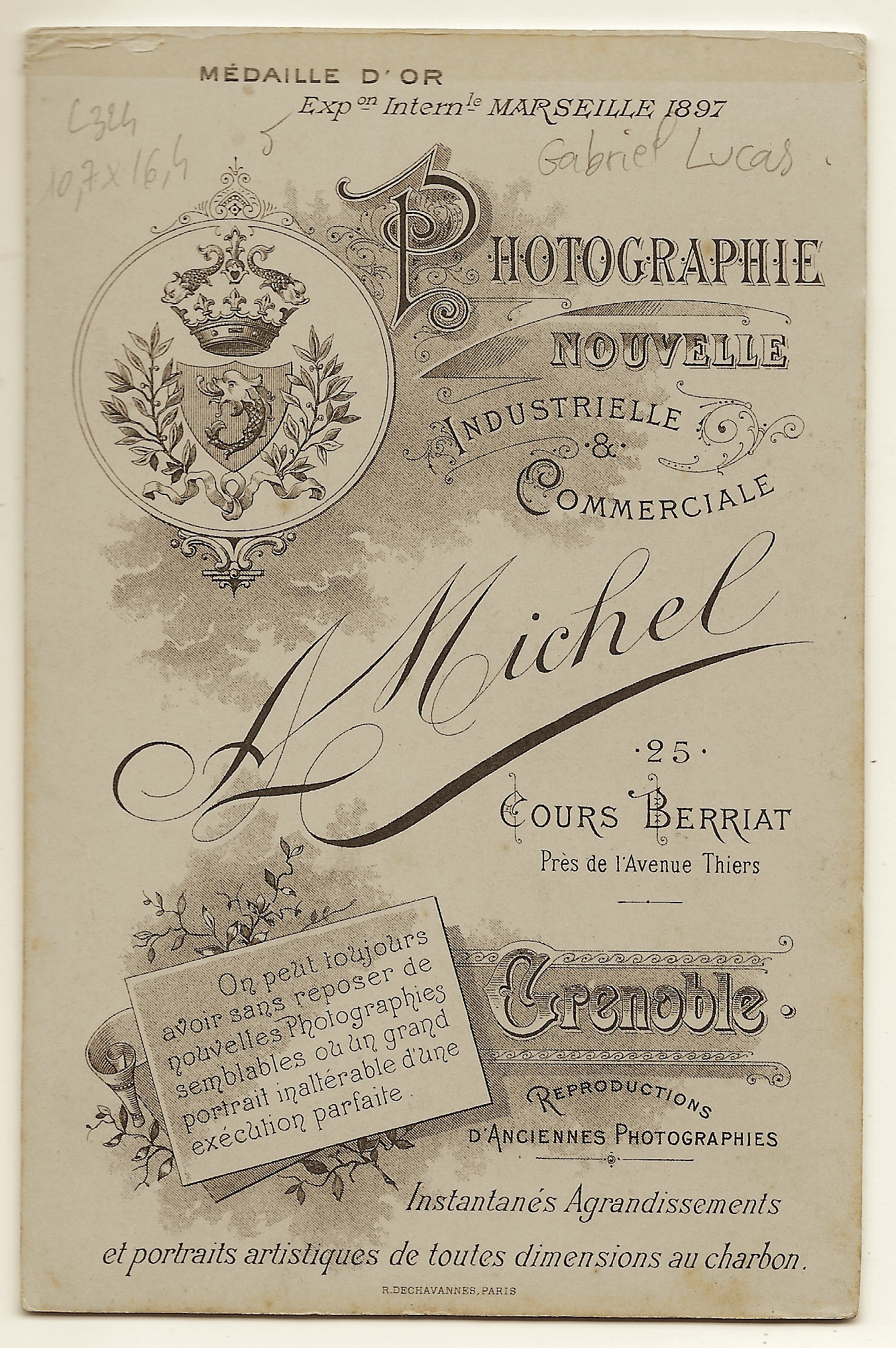
PORTRAIT OF A DAPPER OLDER MAN WITH AN EXQUISITE MUSTACHE IN GRENOBLE, FRANCE

This cabinet card photograph features a dapper older man with an exquisite mustache. The gentleman’s impressive mustache may be one of the widest mustaches that I have ever seen. He has a sparkle in his eyes but it is impossible to ascertain if he is smiling because his lip sweater is blocking our view. The photographer of this cabinet card portrait is A. Michel. He operated a studio in Grenoble, France. Grenoble is in the Auvergne-Rhone-Alpes region of southeastern France. It is known as a center for winter sports. Advertising on the reverse of the cabinet card indicates that Maichel won a medal at an exhibit in Marseille in 1897. The gentleman in the photograph is identified on the verso as Gabriel Lucas. This portrait was likely taken circa 1900. SOLD
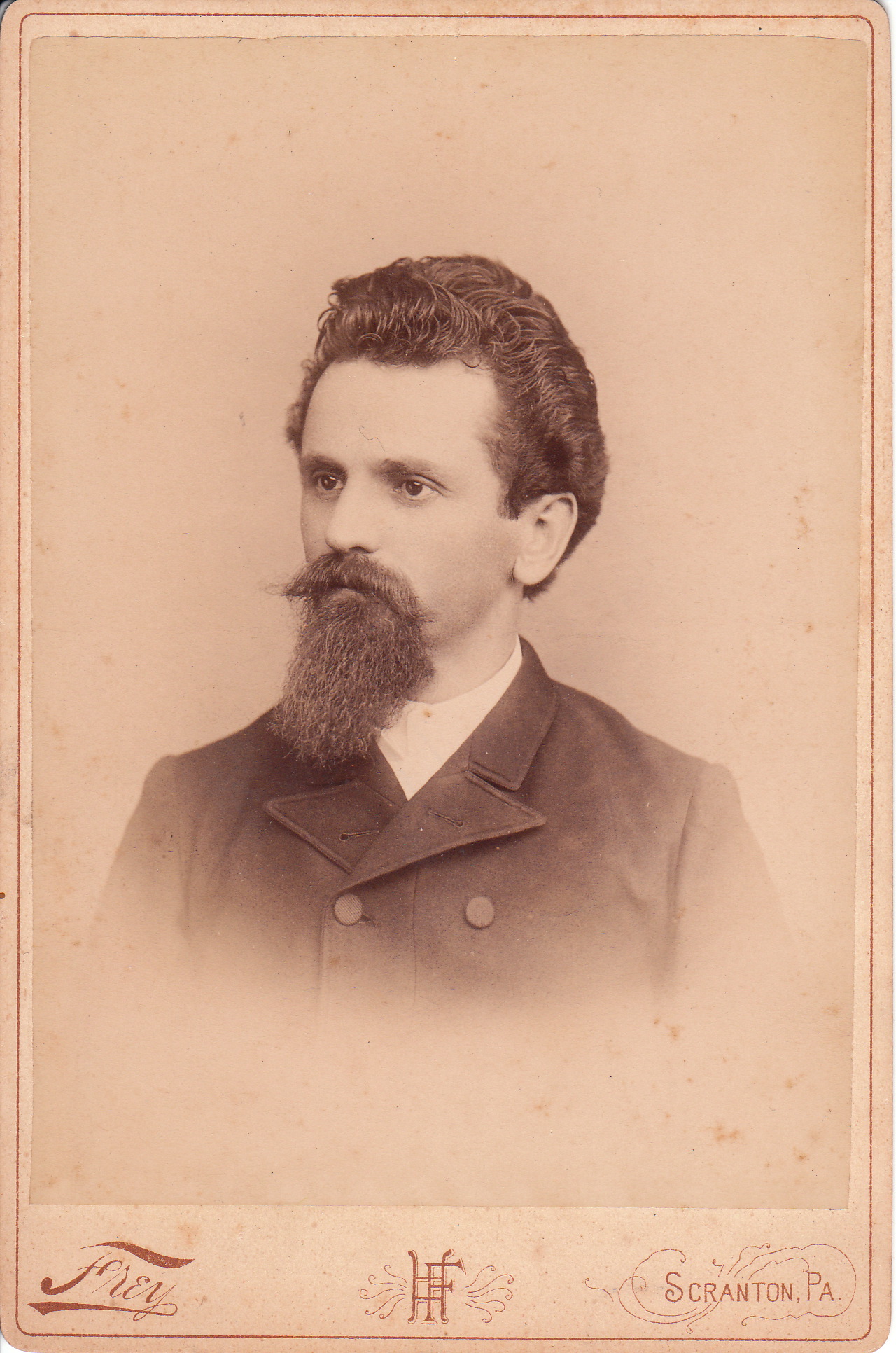
THE FIRST PRESIDENT OF THE HAIR CLUB FOR MEN (CIRCA 1880’s)
This cabinet card features a young man with an interesting beard and an abundance of hair atop his head. He isn’t the former President of the Hair Club for Men but his natural hair is styled in such a way to give an appearance of a hairpiece. The photographer is Henry Frey of Scranton, Pennsylvania. The studio was located at 121 Lackawanna Avenue. A second studio was located at 101 S. Main Avenue, in Hyde Park, Pennsylvania. To view other interesting beards, check out this site’s category of “Beards (Only the Best). SOLD
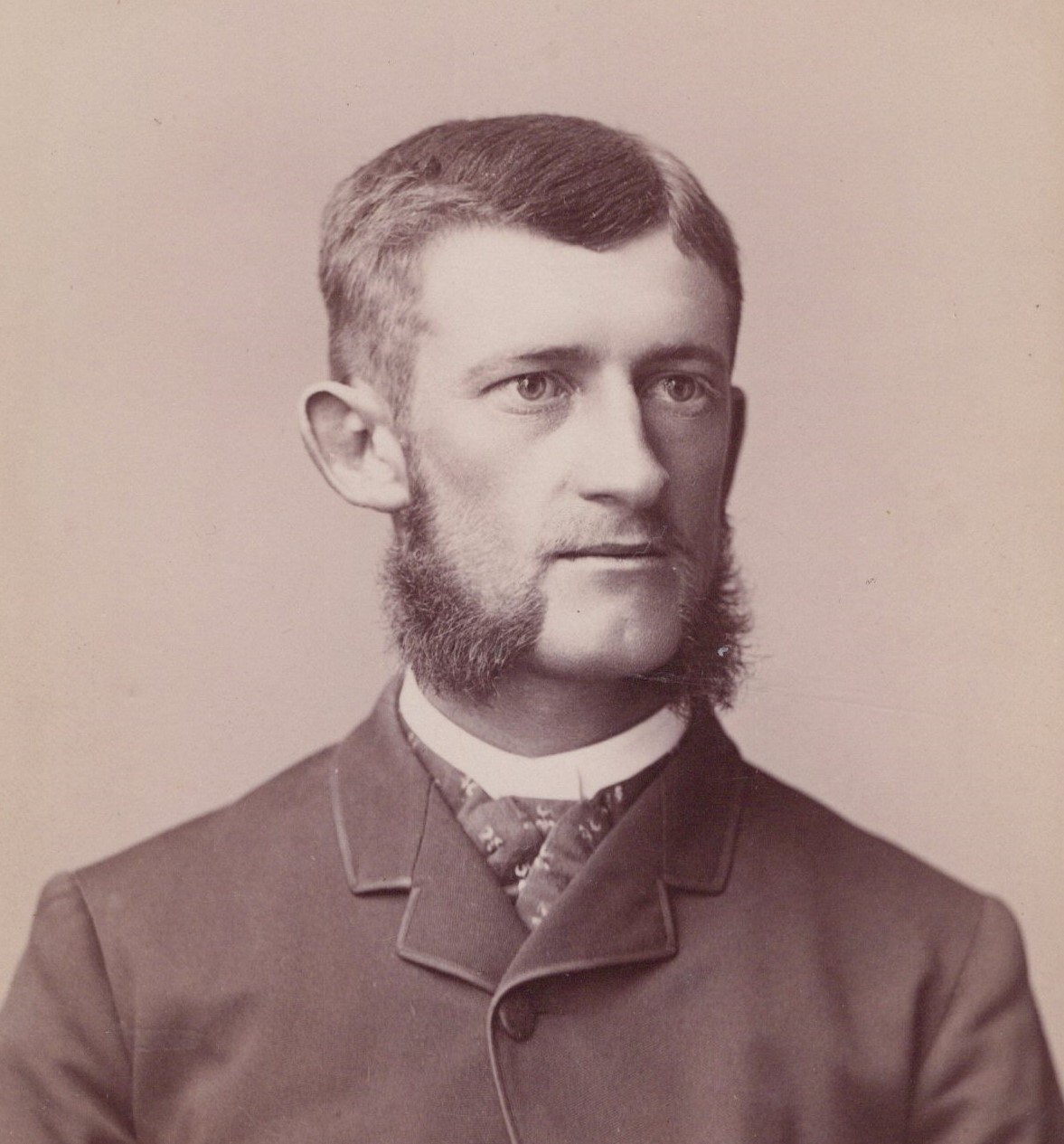
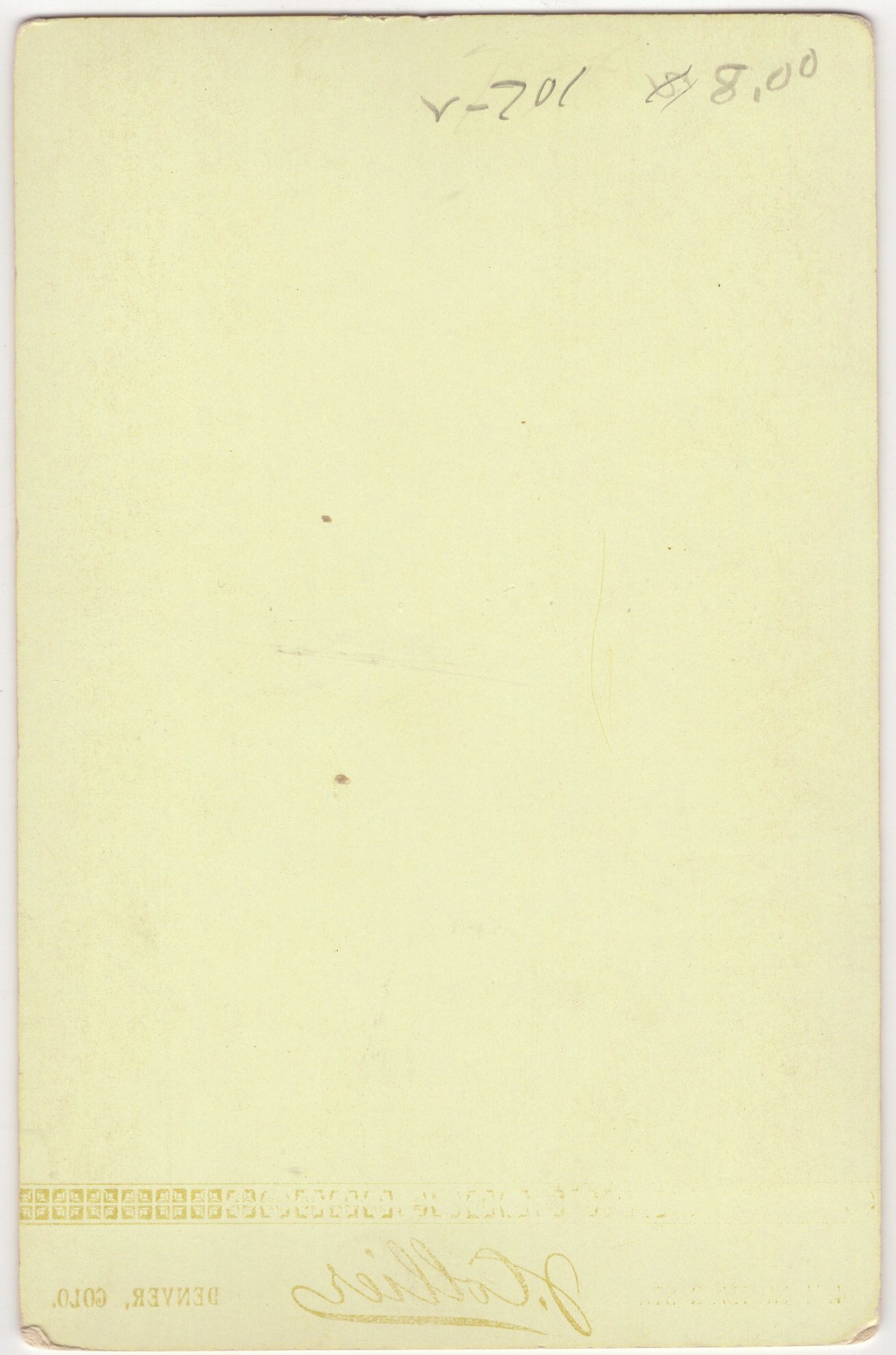
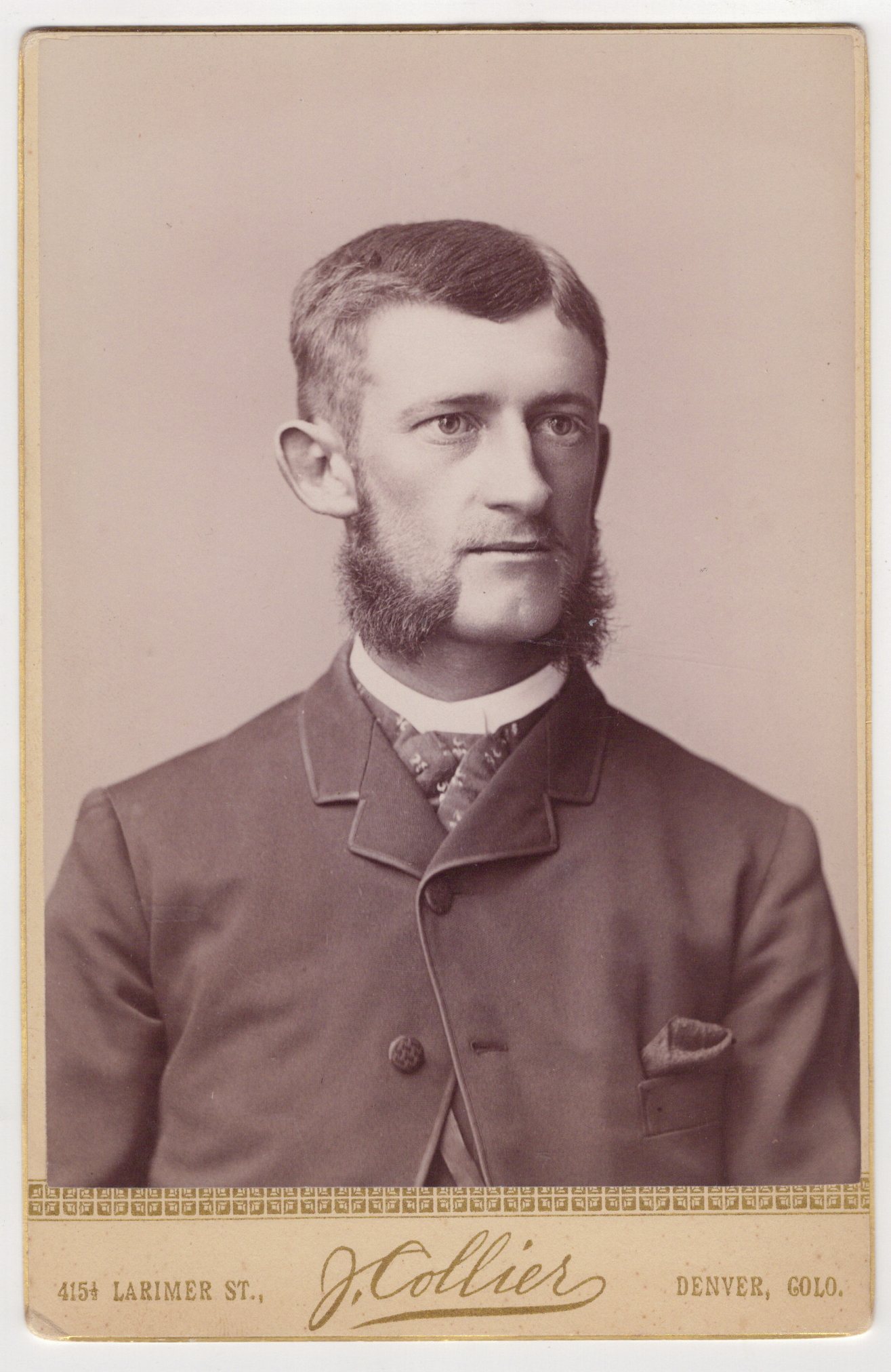
HANDSOME GENTLEMAN : FAMOUS COLORADO PHOTOGRAPHER (J. COLLIER) : CABINET CARD
This cabinet card portrait features a handsome man with interesting styled side burns. He is dressed fashionably. The gentleman was photographed by a famous Colorado photographer, Joseph Collier (1836-1910), at his Denver studio. Collier was born in Scotland, where he began his career as a photographer. When he first came to Colorado, he produced stereographic images. He gained fame in the late 1800’s for his images of Colorado. His subjects included the downtowns of Telluride, Golden, and Denver. He also photographed the Garden of the Gods (Colorado Springs) and many mountain sites. After Collier immigrated to the United States, in 1871 he came to Central City Colorado. He was invited there by his cousin who owned the local newspaper. Collier opened his first studio in the backroom of the newspaper. He immediately began making photographic trips through the Rocky Mountains of Colorado. In 1873, Collier gave a set of his Colorado stereoviews to Julia Grant, the wife of President Ulysses Grant. In 1877, Collier moved to Denver opening a studio on Larimer Street. He practiced photograph there and retired by the turn of the century. In 1874, Collier provided the photographs for a book entitled “Summering in Colorado”. In addition, a book was published in 1983 focused on displaying Collier’s photos. The book was entitled “The Photography of Joseph Collier. Colorado. 1871-1910”. Some of Collier’s photos can be found at the Getty museum in Los Angeles, California.
PORTRAIT OF A HANDSOME MAN : CROOKSTON, MINNESOTA : CABINET CARD
This cabinet card photograph features a handsome man posing for his portrait at the Anderson studio in New York City. A caption under the image identifies him as “W. H. Pomeroy, the Pony Man”. The caption also indicates that Pomeroy was from San Antonio, Texas. During the late 1880’s, Pomeroy owned “Pomeroy’s Western World Troupe” and “Pomeroy’s Western World Show”. Both were Wild West shows. The show was composed of more than 100 people and 125 horses, ponies, donkeys, and mules. The show also included a ten piece band. In 1891, Pomeroy partnered with Max Samuels, from San Antonio, to found a circus. The circus was called “Pomeroy & Samuel’s Great International Railroad Shows”. Pomeroy is well dressed and sports a nicely trimmed mustache. in this photograph. He is wearing a coarse wool coat and a matching waist coat. He is dressed in a crisp white shirt accentuated by a small silk bow tie. Atop his head is a flat crowned felt planter hat. There is something peeking out of his left jacket pocket. Mr. Pomeroy is posing in front of a backdrop. The photographer of this image was D. H. Anderson who operated a studio on Broadway in New York City. Anderson used the same photo studio formerly occupied by the famed photographer, Matthew Brady. Anderson had worked in various other American cities before moving to New York in 1881. He became known as a talented celebrity photographer. This photograph has an interesting aberration. If you look very closely in the sky next to the left side of his hat (slightly above the brim), you can see the words “Pony Man”. The words are very light and upside down. This developing error occurred more than one hundred years ago. SOLD