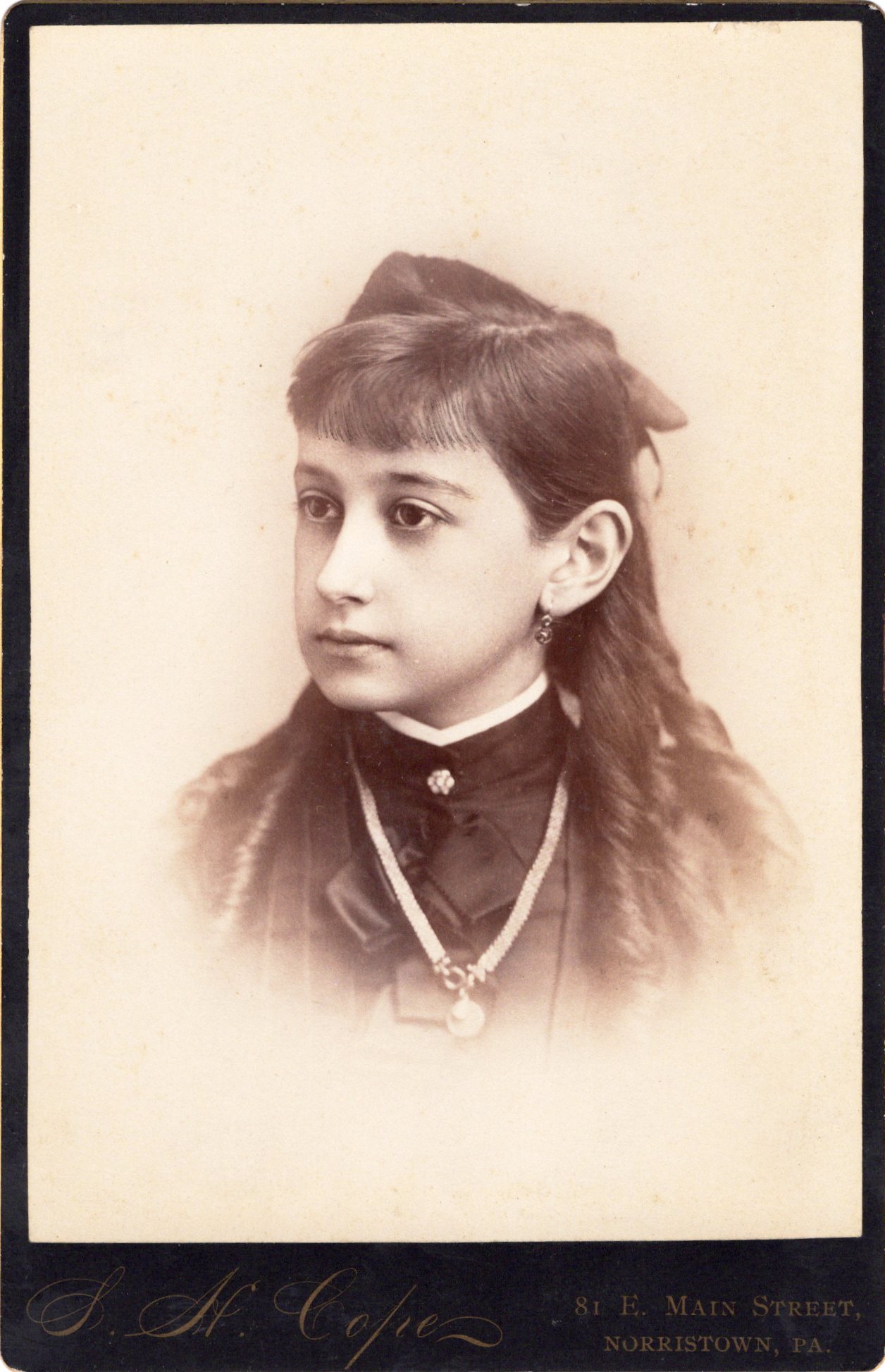
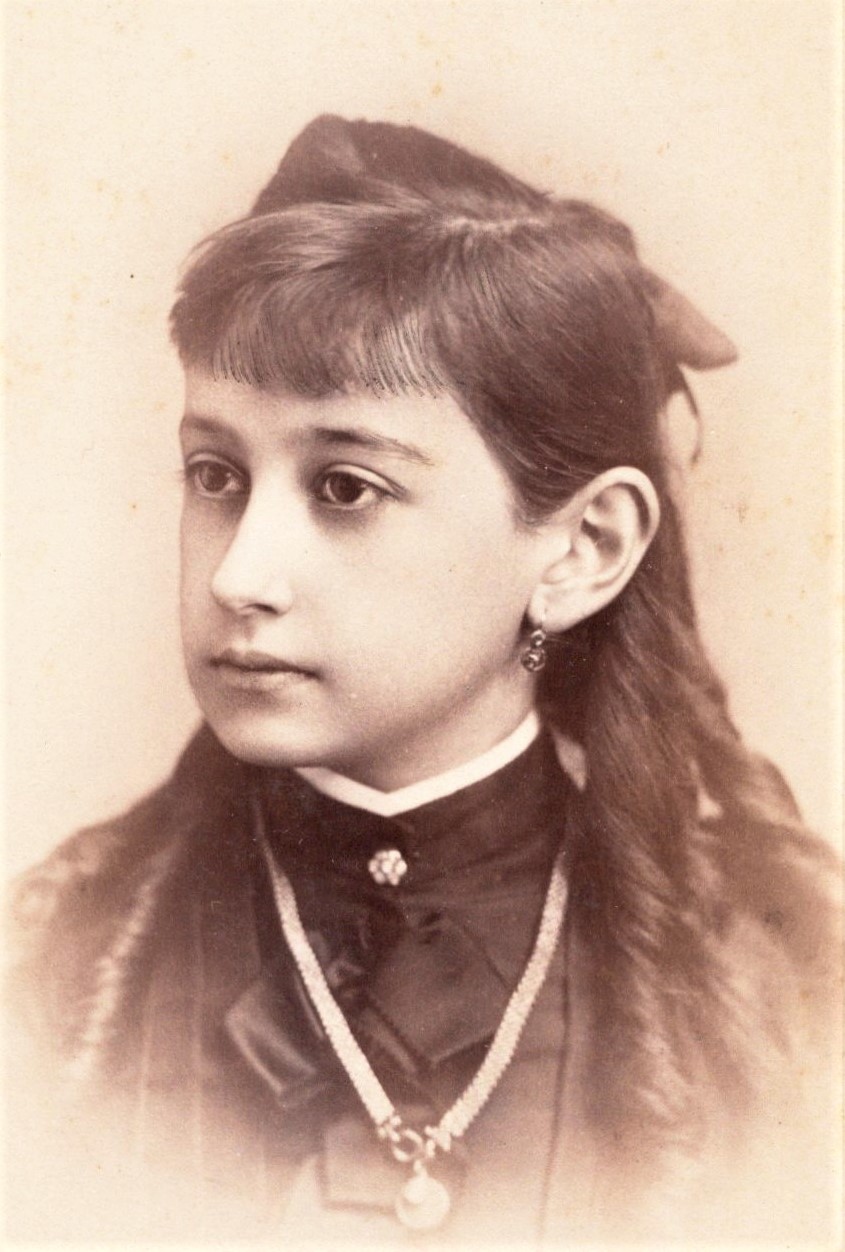
This cabinet card portrait features a well dressed young dark eyed girl. Her hair is styled in long ringlets. She is wearing earrings and an interesting necklace. The photographer is S. H. Cope of Norristown, Pennsylvania. Norristown is six miles northwest of Philadelphia. The town was named for Isaac Norris, a member of the colonial Pennsylvania legislature. Norris ordered the casting of the state house bell that later became known as the Liberty Bell. (SOLD)
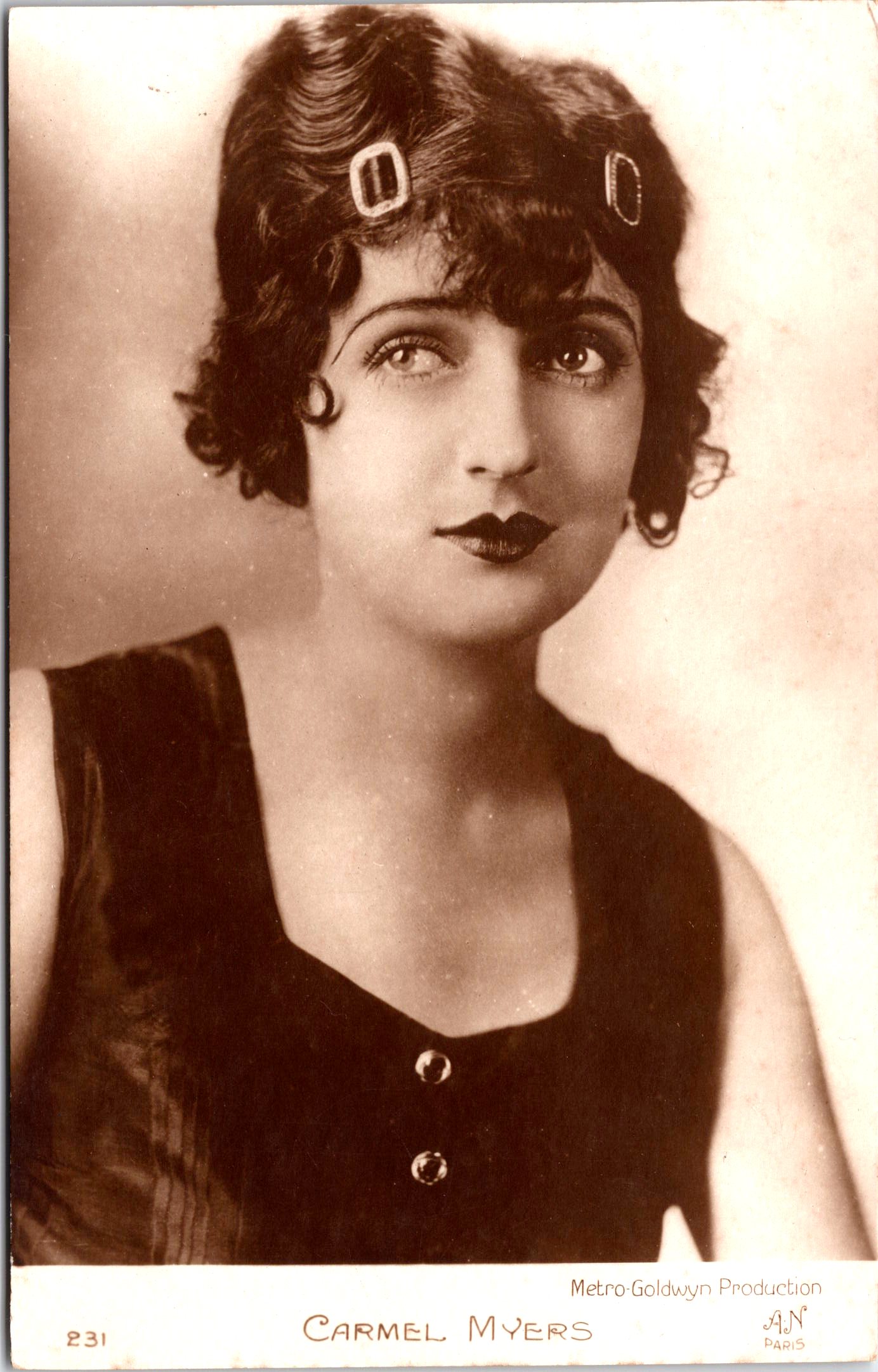
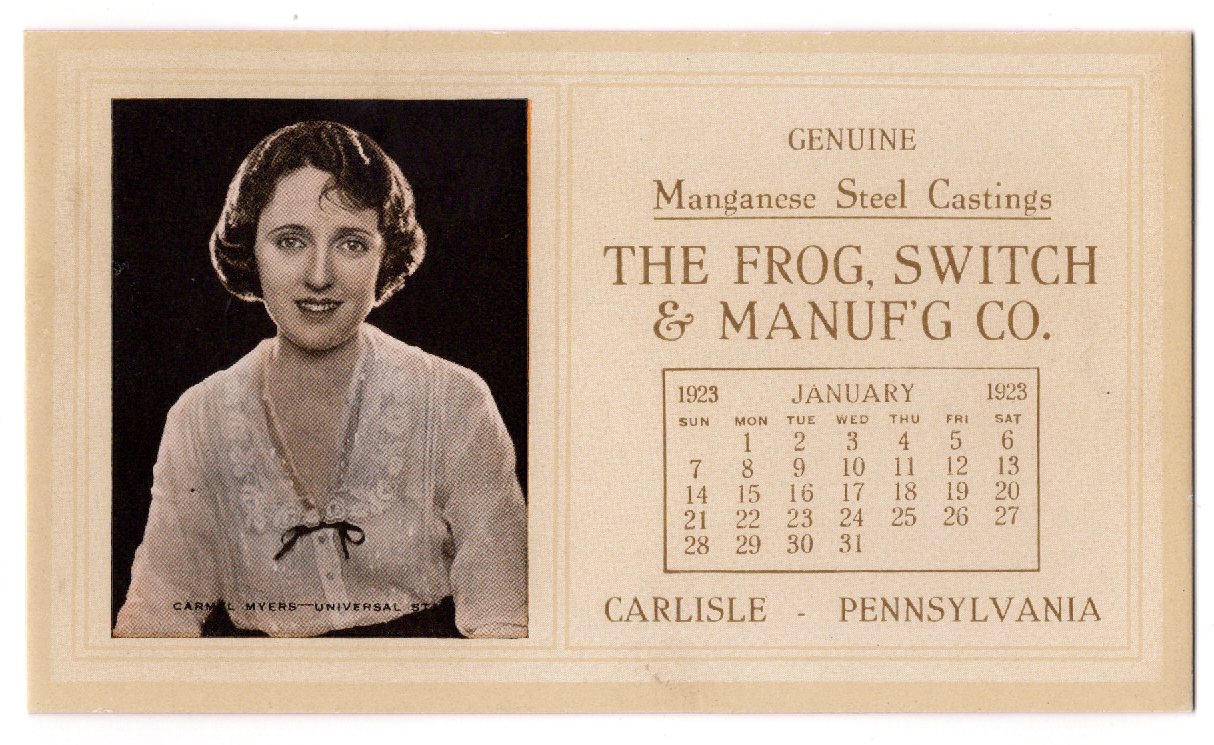
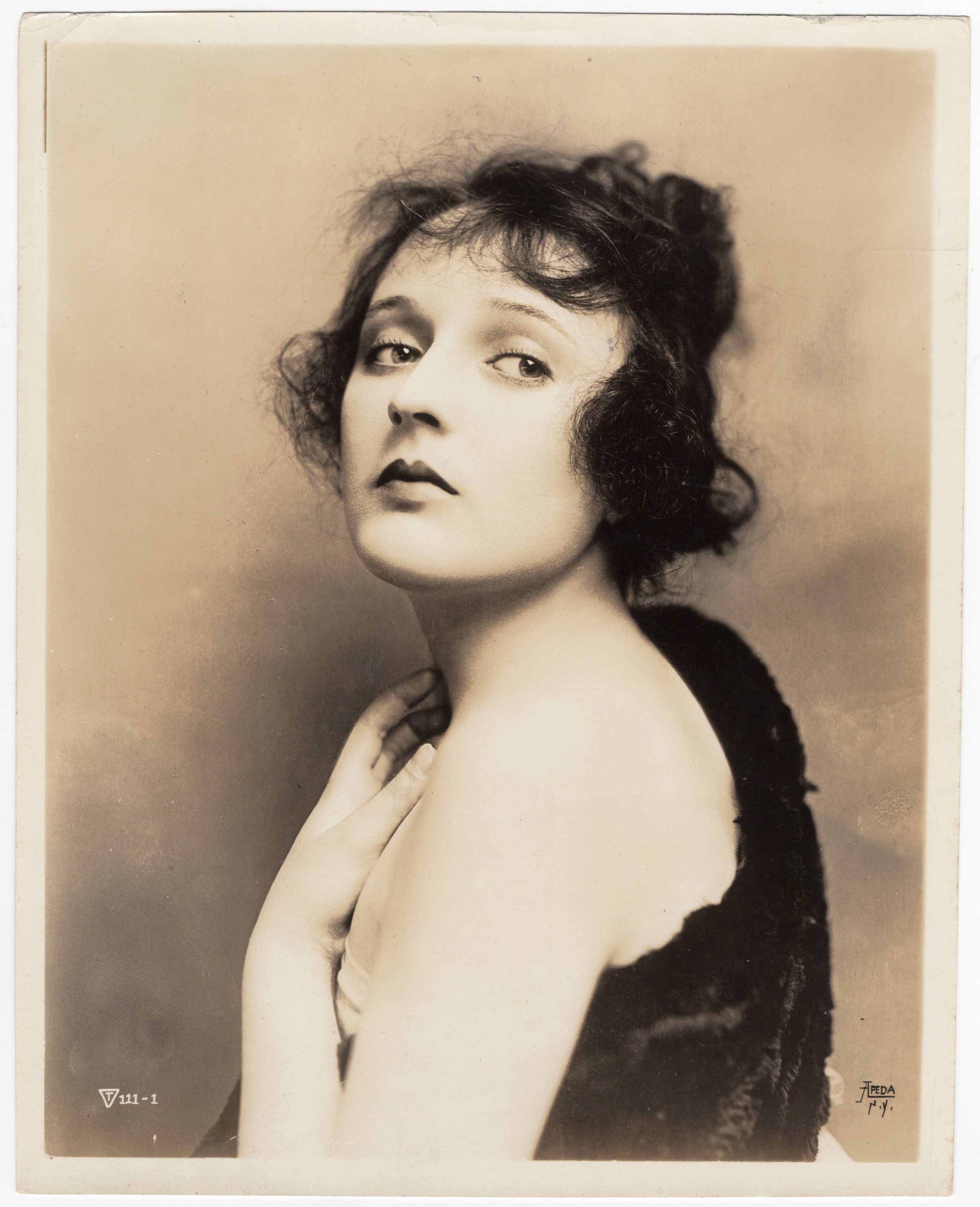
These images feature American silent and sound film actress, Carmel Myers (1899-1980). Carmel Myers was an extraordinary actress who captivated audiences during the early years of Hollywood. She had striking beauty, magnetic screen presence, and versatile talent. Myers was born in San Francisco to Jewish immigrants. Her father was a Rabbi from Russian and her mother was from Austria-Hungary. She grew up in a theatrical household and was exposed to the performing arts from a young age. She participated in both school plays and local theater productions. At the age of 16, Carmel Myers made her professional debut on stage, impressing both critics and audiences with her natural talent. It wasn’t long before she gained the attention of film producers. In 1916 she made her screen debut in the silent film “The House of Mystery”. This was the start of a more than twenty year career in the film business. During the silent film era, Carmel Myers became one of the most sought-after actresses in Hollywood. Known for her expressive eyes, graceful movements, and remarkable versatility, she effortlessly transitioned between comedic and dramatic roles. Her notable films during this period include “Ben-Hur” (1925), where she portrayed the seductive courtesan Iras. Many of her early roles were playing a “vamp”. Carmel Myers was also an early advocate for actors’ rights and was instrumental in establishing the Motion Picture Artists Association. She fought for fair wages, better working conditions, and creative control for performers, contributing to the formation of movie industry unions. With the advent of sound in films, Carmel Myers smoothly made the transition from silent movies to “talkies.” Her resonant voice and impeccable timing added another dimension to her performances. She starred in a range of films throughout the 1930s, including comedies, dramas, and musicals, collaborating with renowned directors and actors of the time. her most popular sound films were “Svengali” (1931) and “The Mad Genius” (1931). Her final film appearance was in the 1945 production of “Blonde Ransom,” marking the end of her illustrious acting career. However, Myers remained involved with both radio and television. Carmel Myers lived a private life outside of the spotlight, rarely divulging details about her personal affairs. She was married three times, first to an attorney and song writer in 1919, in 1929, she married a second attorney, and thirdly, she married a Paramount Pictures executive in 1951. Her first two marriages ended in divorce, and her third marriage ended with her husband’s death. After her husband’s death, she wrote a book about handling grief effectively. After retiring from acting, Carmel Myers devoted herself to philanthropy and community work. She supported various charitable organizations and advocated for social causes.
Image 1 was published by A. Noyer and is of French origin. The card has the MGM logo on it’s front. (SOLD)
Image 2 is a vintage ink blotter that advertises the Frog Switch & Manufacturing Company, located in Carlisle, Pennsylvania. The blotter has a calendar for January, 1923. The blotter also features a photograph (litho) of Carmel Myers. (SOLD)
Image 3 This press photo shows Myers in a classic glamour pose, her head turned slightly with a dramatic upward gaze that conveys both elegance and intensity. Her dark hair is softly styled with curls around her face, and she is draped in a fur wrap that slips over her shoulder, adding to the sense of sophistication and allure. In the lower left corner appears the photo’s numbering “V111-1”, while the lower right bears the imprint AFEDA, N.Y., the New York studio known for high-quality publicity portraits of stage and film stars of the era. Apeda was a photography studio in New York City. It was founded in 1906 by Alexander W. Dreyfoos, Sr. (1876–1951) and Henry Obstfield. The studio was known for pursuing two business strategies: shooting original portraiture and reproducing uncopyrighted images by other photographers of newsworthy scenes or celebrities under its own trade name. The second strategy resulted in them being brought to court for copyright infringement. They won the case. Dreyfoos was the head photographer and his focus was on sports, theatre and celebrity portraiture. (SOLD)
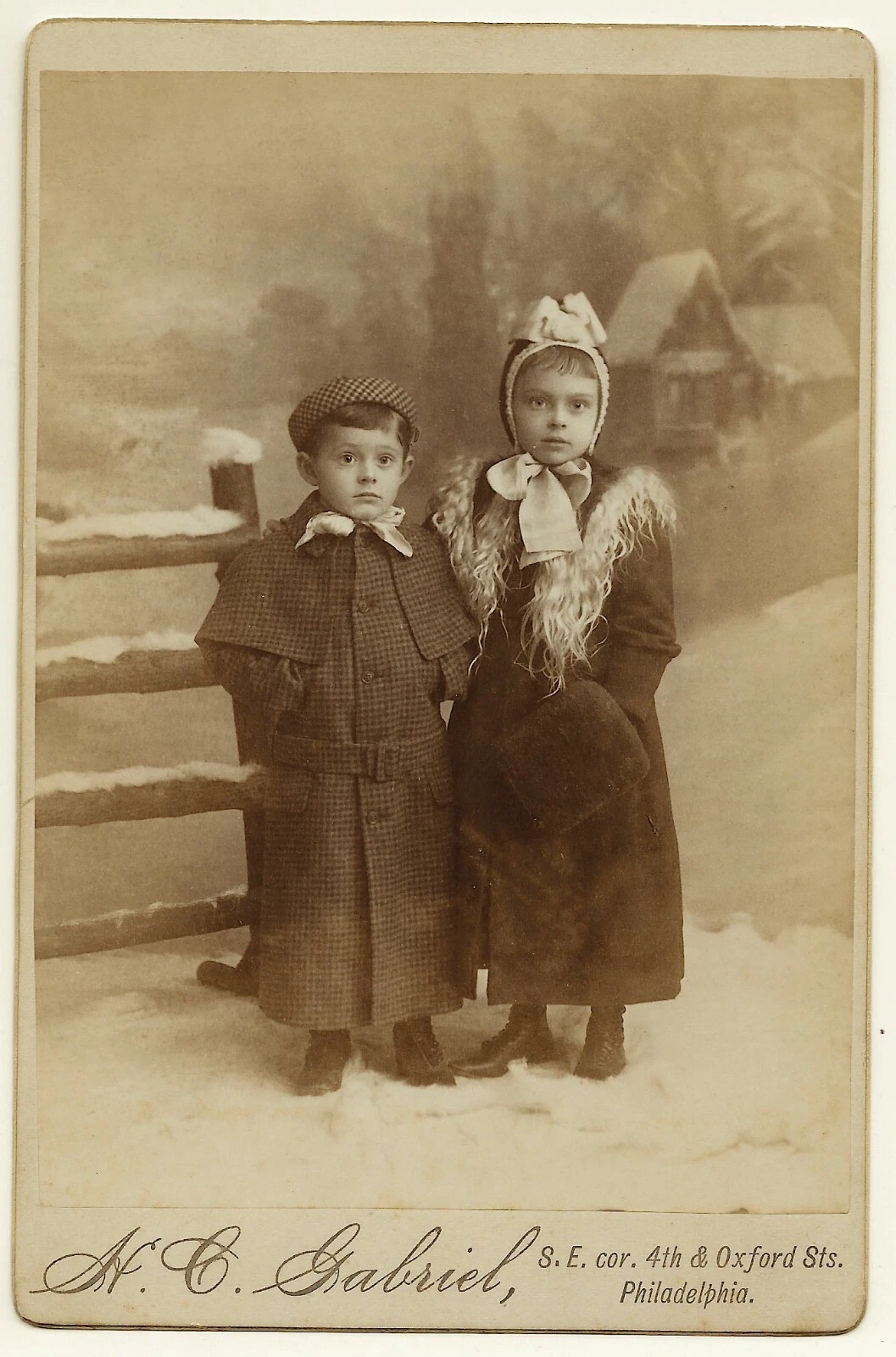
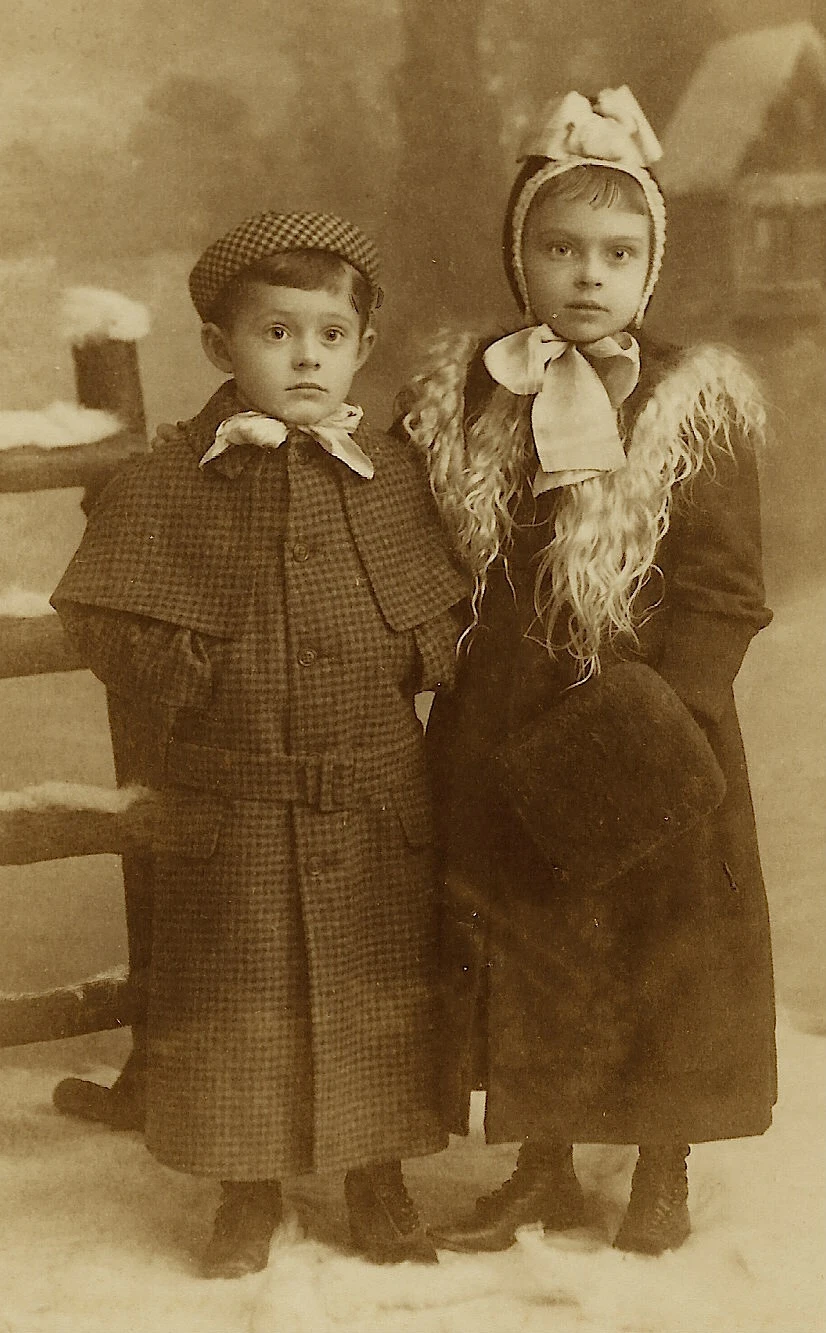
Two very well dressed children pose in their winter coats and hats at the studio of H. C. Gabriel in Philadelphia, Pennsylvania. The children are posed in a faux outdoor scene complete with snow on the ground and snow covered fences. Herman C. Gabriel is noted in the 1900 U. S. census. The census reveals that he was born in Austria in 1833. He was married in 1873 to Johanna Gabriel. He was living with his wife and 22 year-old, American born daughter, Emma. His occupation is listed as “Photographer”. Herman Gabriel is cited in the American Photographer (1916) for winning second place in a photography competition. This Cabinet Card portrait is in very good condition and has excellent clarity (see scans).
This Cabinet Card is available for purchase at my store, The History Peddler, for $66.00 or best offer
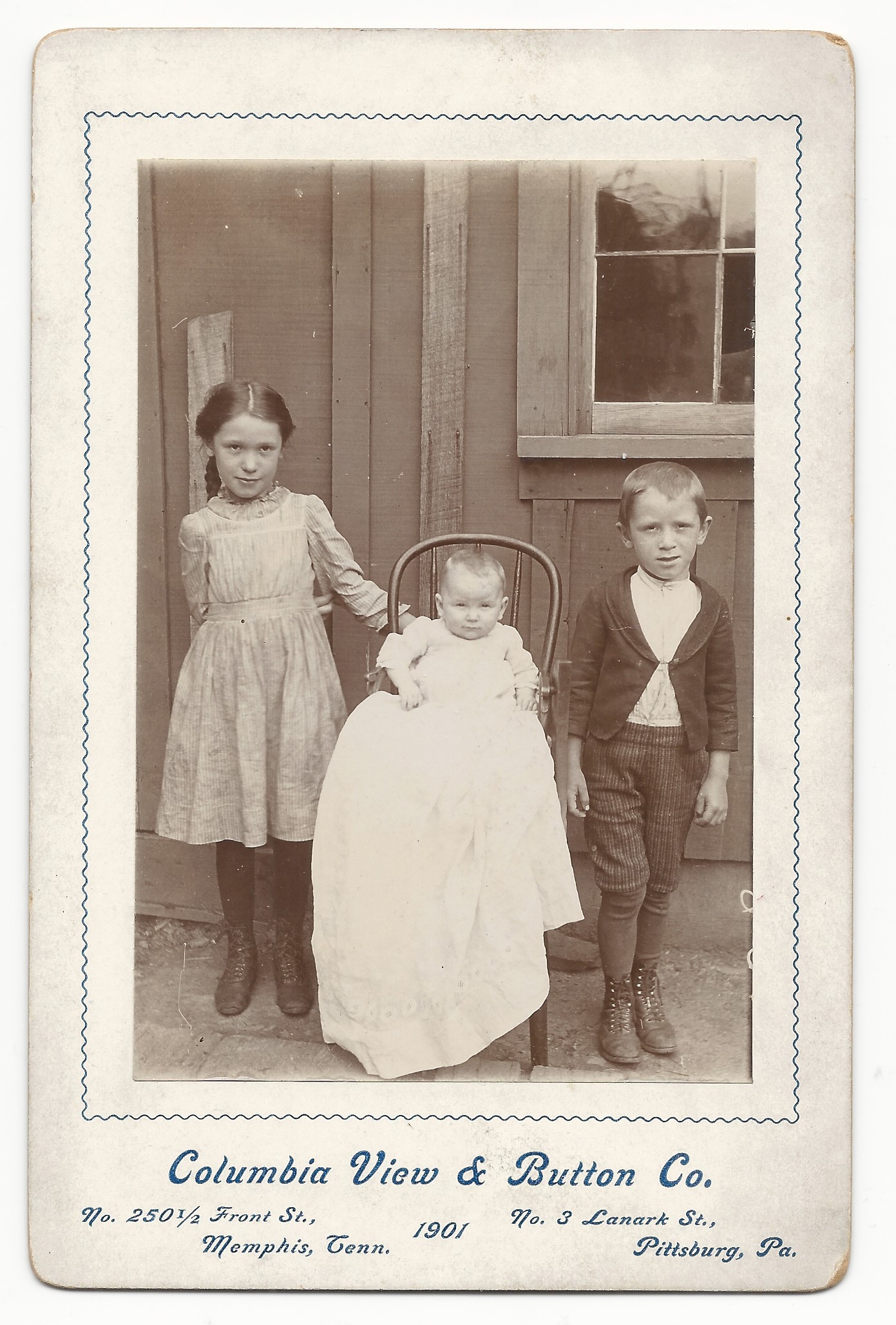
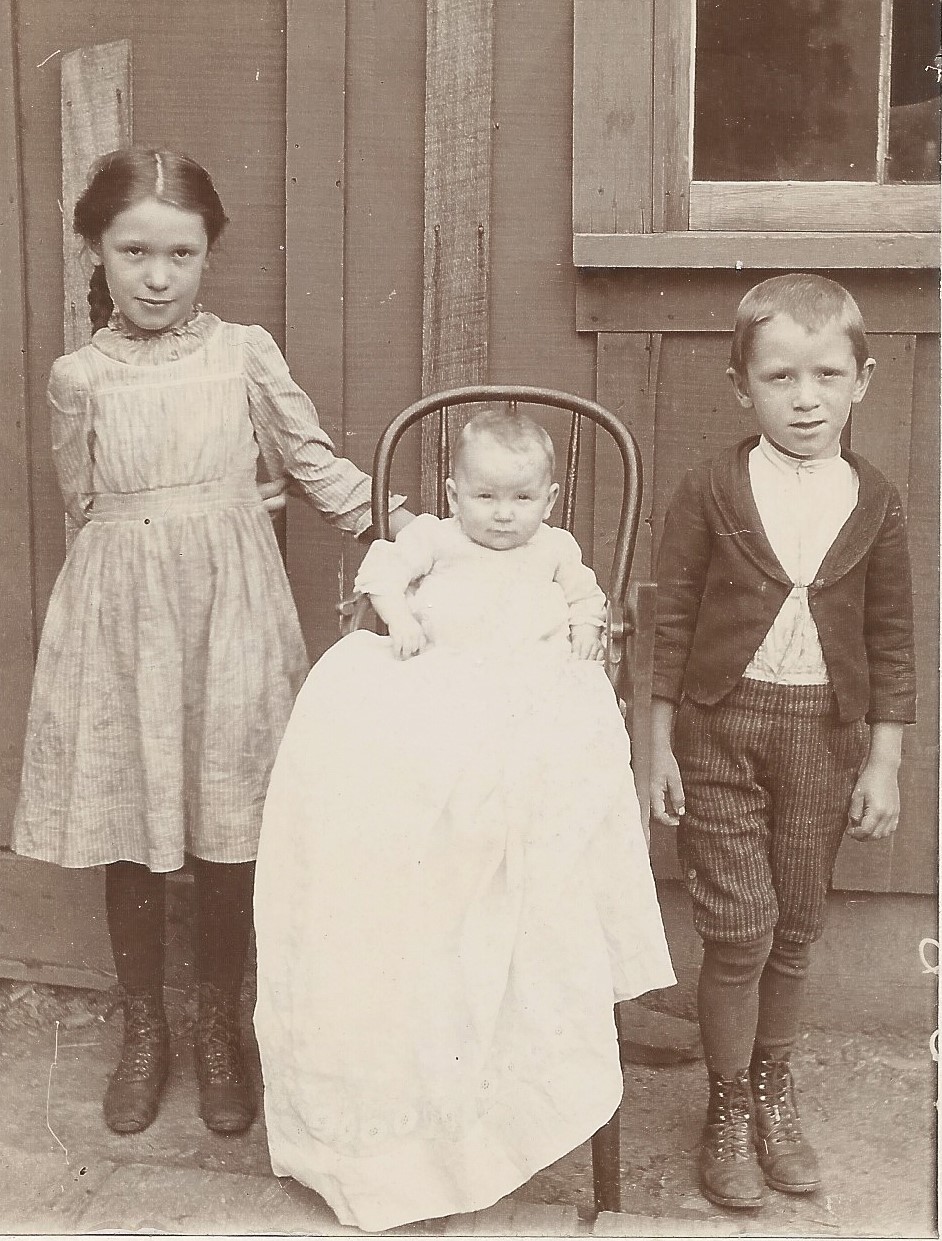
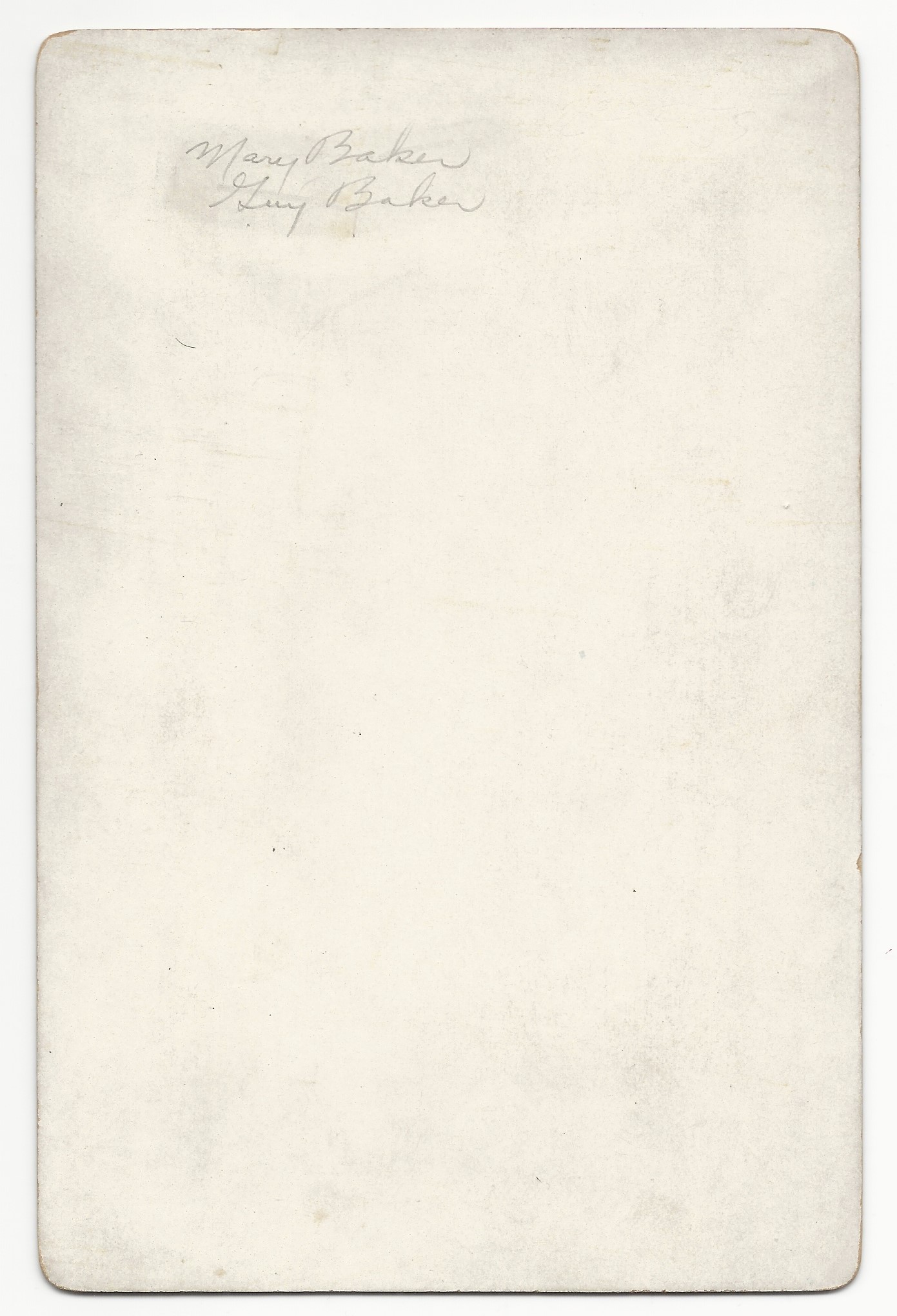
Three young children pose together for a cabinet card portrait by the Columbia View & Button Company of Memphis, Tennessee and Pittsburgh, Pennsylvania. This photograph precipitates a number of questions. Was this photograph taken outdoors, or is this an in-studio portrait? Was this image produced in Memphis, or, in Pittsburgh? Finally, why is the photographic studio called a “View & Button Company”? Lets attempt to answer the previous questions. It is not clear if this is an indoor, or outdoor photograph; nor is it apparent in which of the studios, the image was produced. However, one source reports that the Pittsburgh studio existed between circa 1893 and 1900. This cabinet card is marked on its front as being photographed in 1901. Does the 1901 date preclude the possibility that the image comes from the Pittsburgh studio? The answer is a resounding no. The date on the card was preprinted and the source is not certain the Pittsburgh studio definitely closed in the exact year 1900. The third question concerns the reason the name of the studio includes the terms “View & Button” . The likely answer is that the studio originally produced stereoviews and photograph buttons. The buttons were generally portraits and varied in size. They could be worn or displayed on a piece of furniture or shelf. Large photographic buttons were most popular between 1900 and 1930. The smaller pinback buttons were popular beginning the 1890’s. There is some other information that may prove to be important in learning more about the image. On the reverse of the cabinet card, there are two names written. These names likely identify two of the subjects in the photograph. The two subjects names are Mary Baker and Guy Baker. Searching census data with a common name like”Baker” was an exercise in frustration, in regard to identifying these probable siblings. After viewing this cabinet card, one notes that the three children in this photograph are not fashionably nor expensively dressed. They are different from most of the children seen in cabinet cards. The majority of children tend to wear their sunday best, which is generally much nicer than these children’s wardrobe. One surmises that these children are not from an affluent family. This cabinet card is in very good condition (see scans).
This Cabinet Card is available for purchase at my store, The History Peddler, for $68.48 at auction
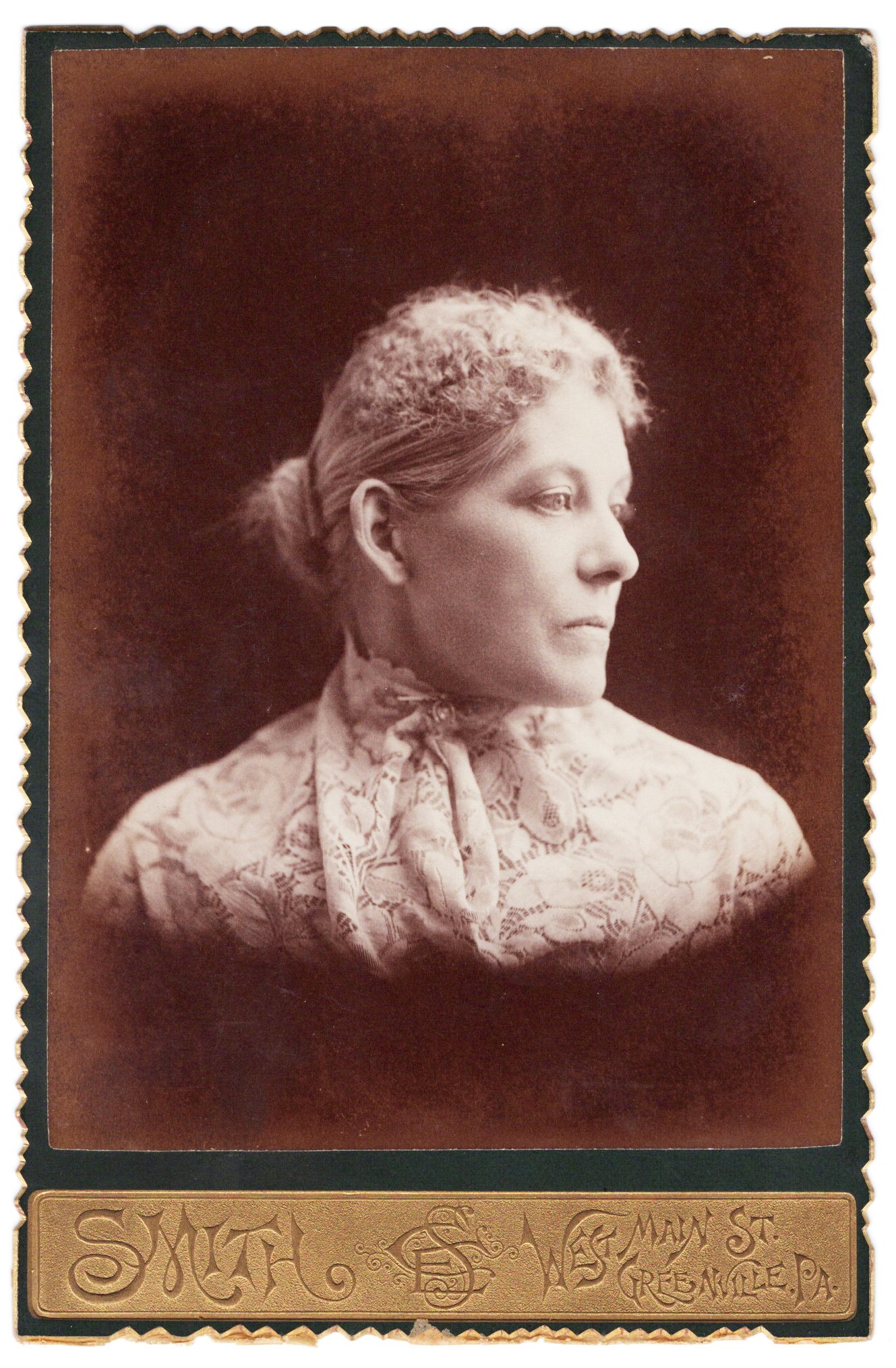
This cabinet card features a portrait of a blonde woman photographed by Smith of Greenville, Pennsylvania. A remarkable feature of this card is Smith’s use of dramatic lighting to present a crisp and clear image of the woman sitting for the portrait. The photographer is likely E. C. Smith who is noted in a number of photography magazines, from the late 1890’s, as an award winning photographer from Greenvile, Pennsylvania. SOLD
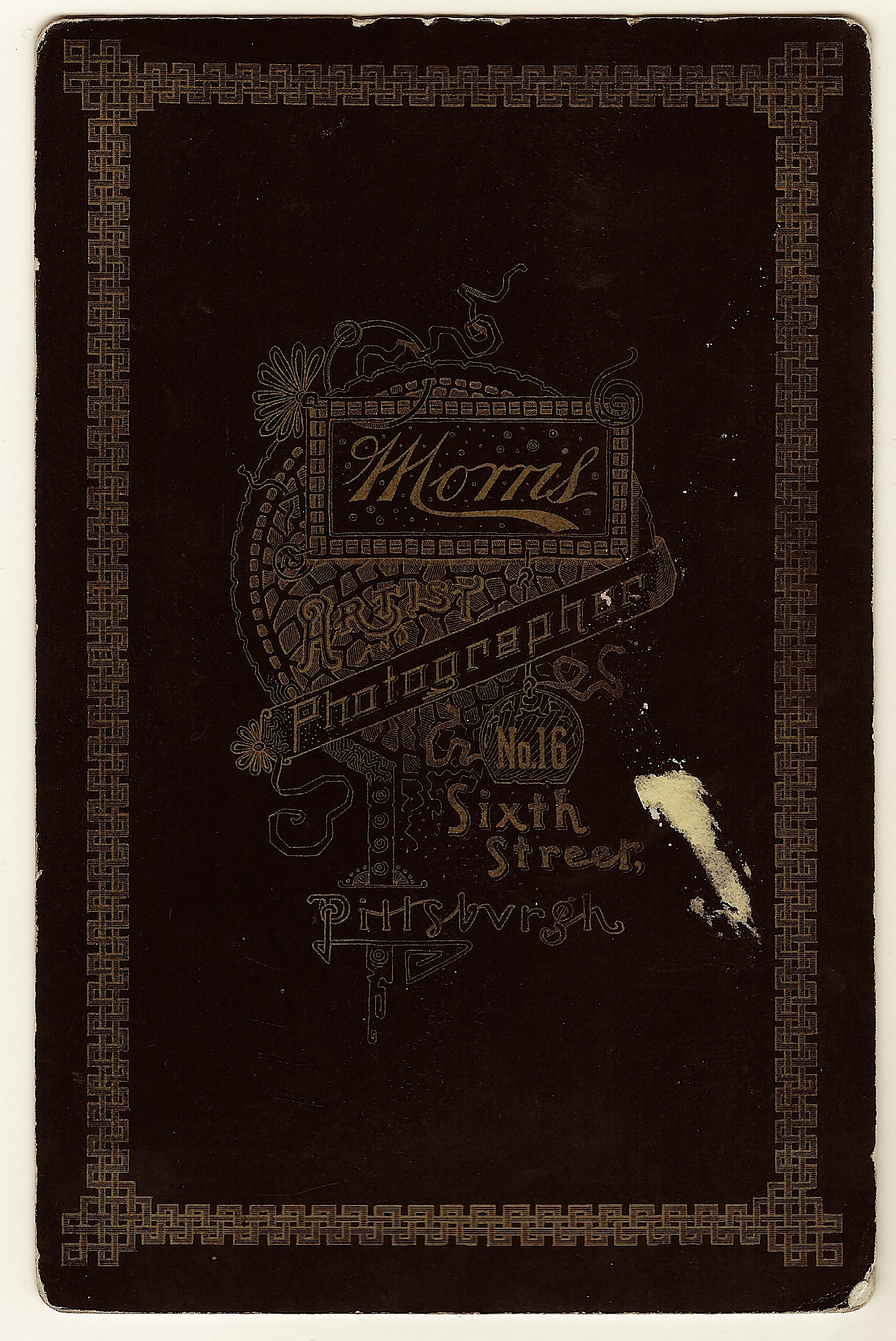
A pretty woman, wearing a fashionable, but unusual dress, poses for a photographer named Joseph G. Morris, in Pittsburgh, Pennsylvania. The studio was located at 16 Sixth Street, in Pittsburgh. She is wearing a collar pin. On the reverse of the photograph is the handwritten name, “Hillz”. One imagines that Hillz is the last name of the subject of this photograph. United States census data reveals some biographical information about the photographer of this cabinet card. Morris was located in the 1880 census. Morris was about 29 years old and he and his father (David Morris) were both working as photographer agents. In 1900, Morris and his 18 year old son, Harry, were boarders, and the older Morris was working as a photographer while the younger Morris was employed s a photographer apprentice. The 1910 U.S. Census finds Morris still working as a photographer and living with his wife, Mary P. Morris. SOLD
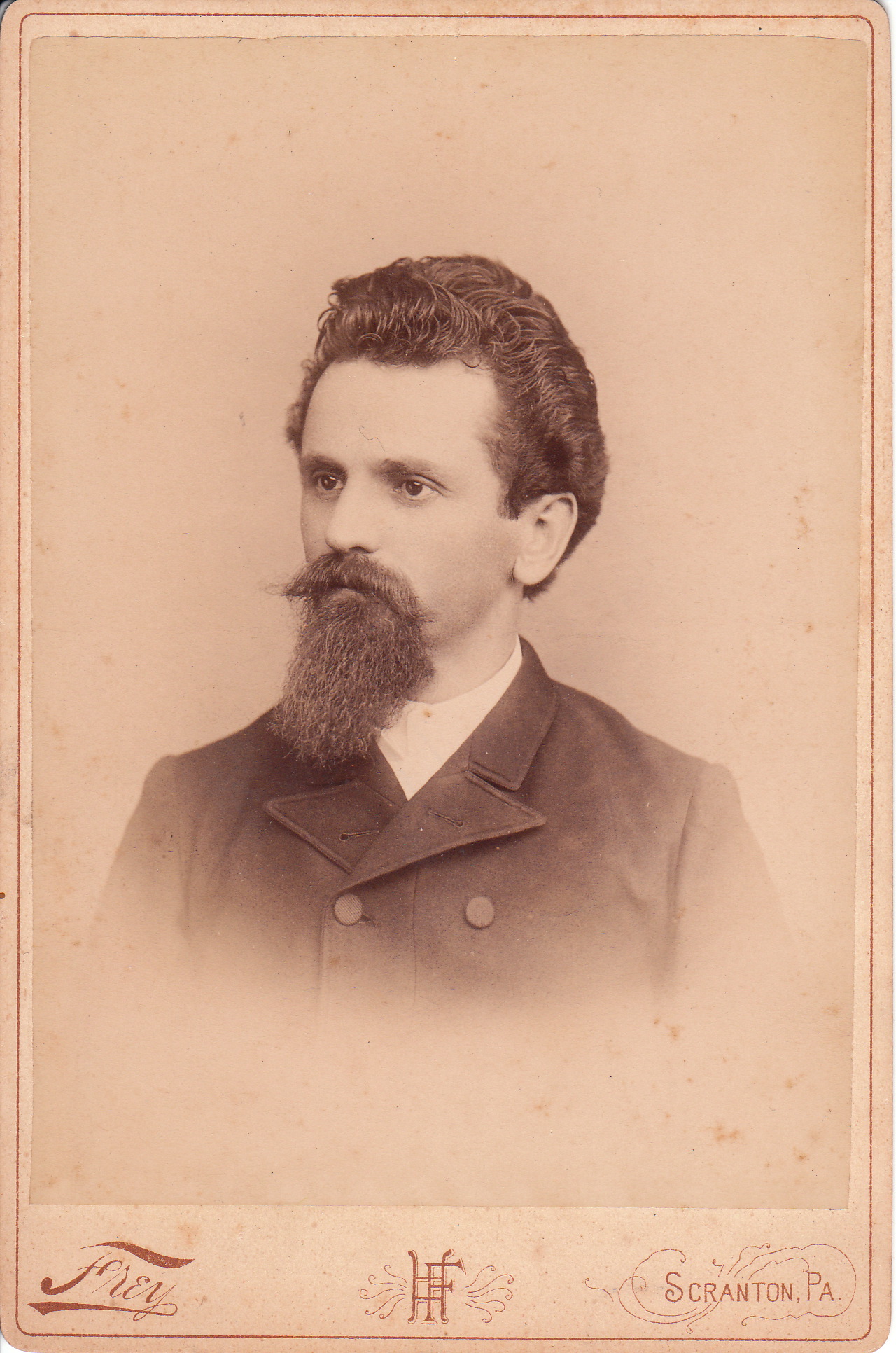
This cabinet card features a young man with an interesting beard and an abundance of hair atop his head. He isn’t the former President of the Hair Club for Men but his natural hair is styled in such a way to give an appearance of a hairpiece. The photographer is Henry Frey of Scranton, Pennsylvania. The studio was located at 121 Lackawanna Avenue. A second studio was located at 101 S. Main Avenue, in Hyde Park, Pennsylvania. To view other interesting beards, check out this site’s category of “Beards (Only the Best). SOLD
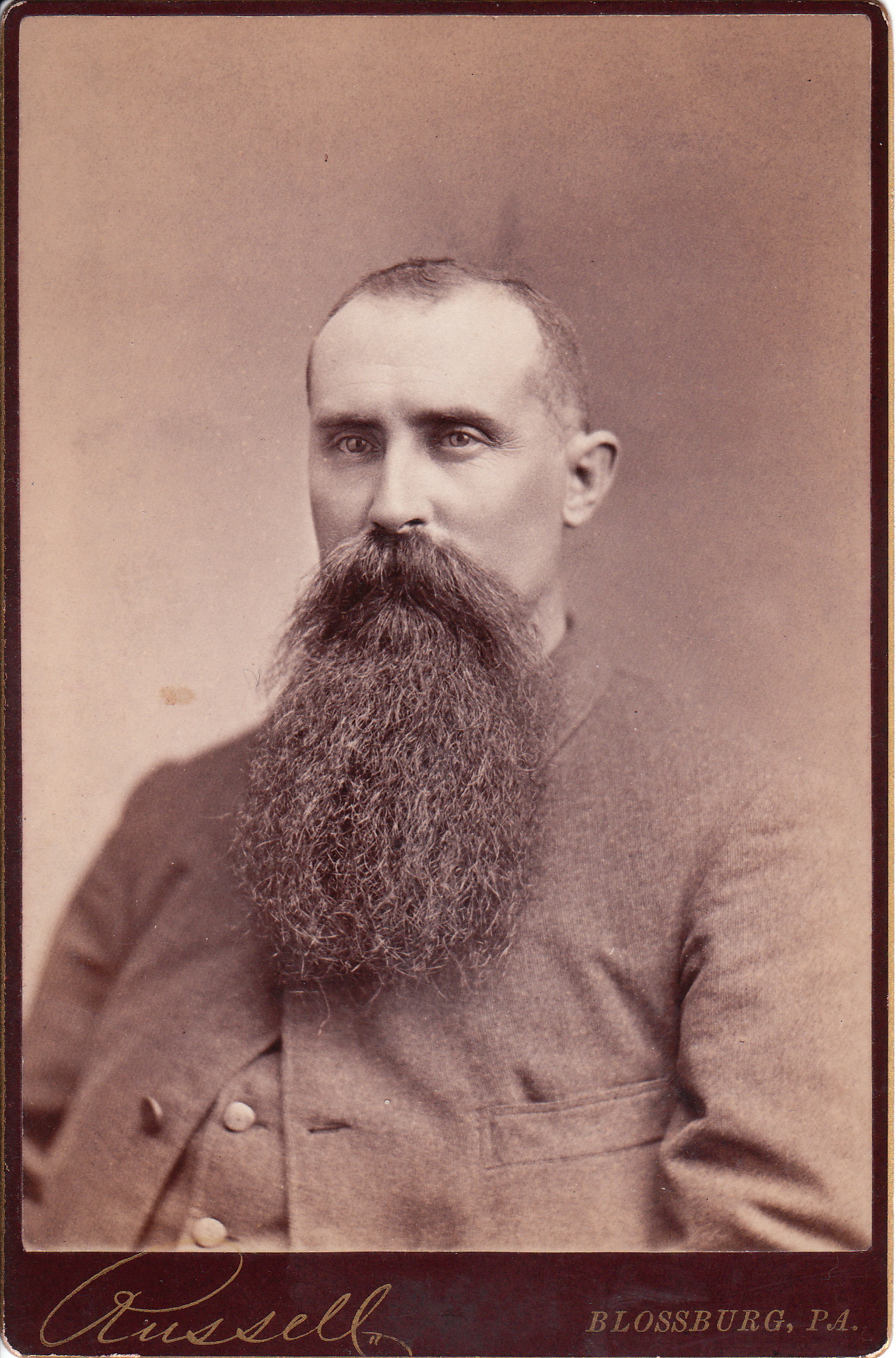
A man with a long bushy beard and formidable mustache poses for his portrait at the studio of E. L. Russell in Blossburg, Pennsylvania. Printed on the reverse of the card is the not so modest statement “From Russell, Blossburg’s Photographer”. Other interesting beards can be seen by clicking on this site’s category “Beards (Only the Best)”. SOLD
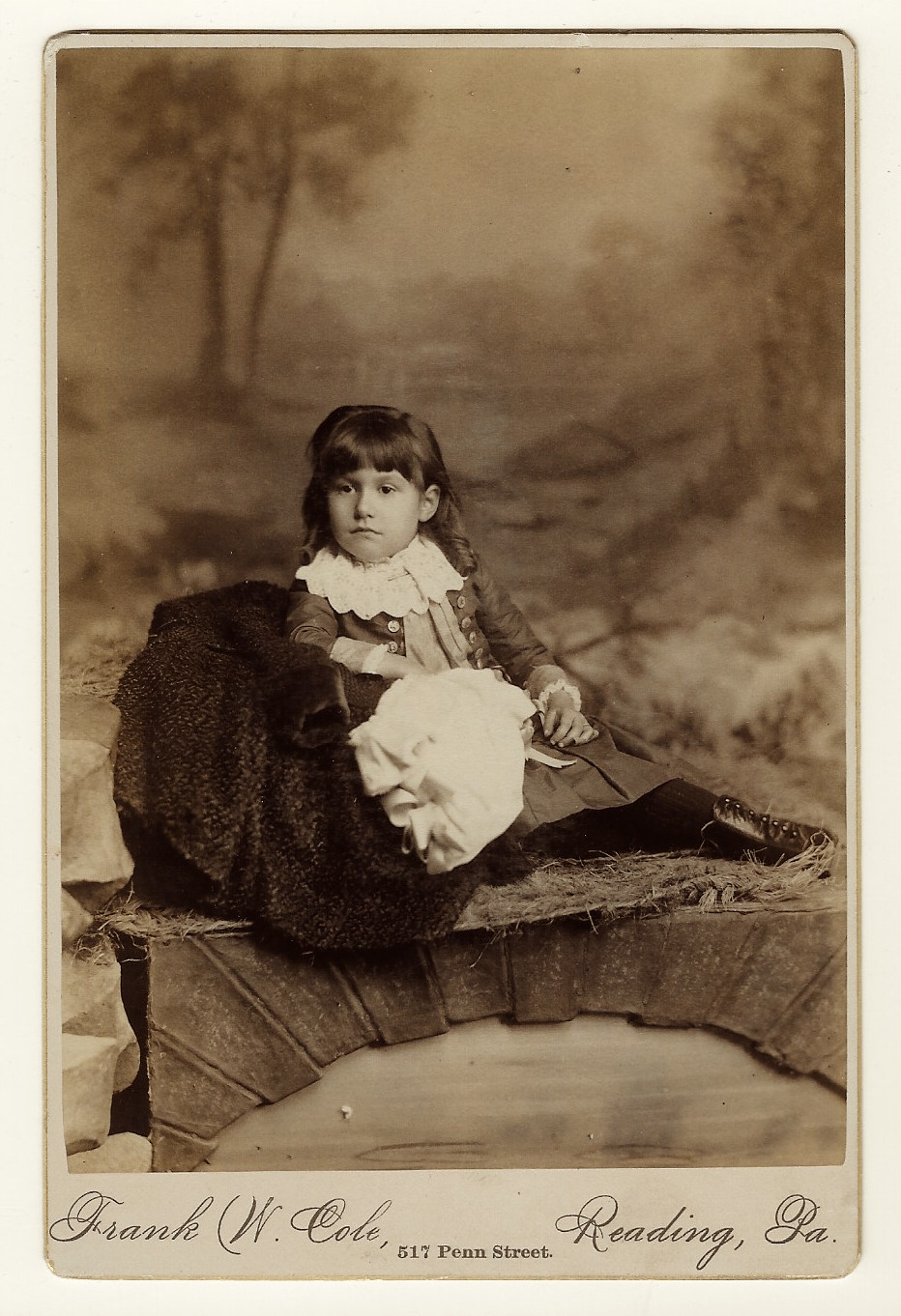
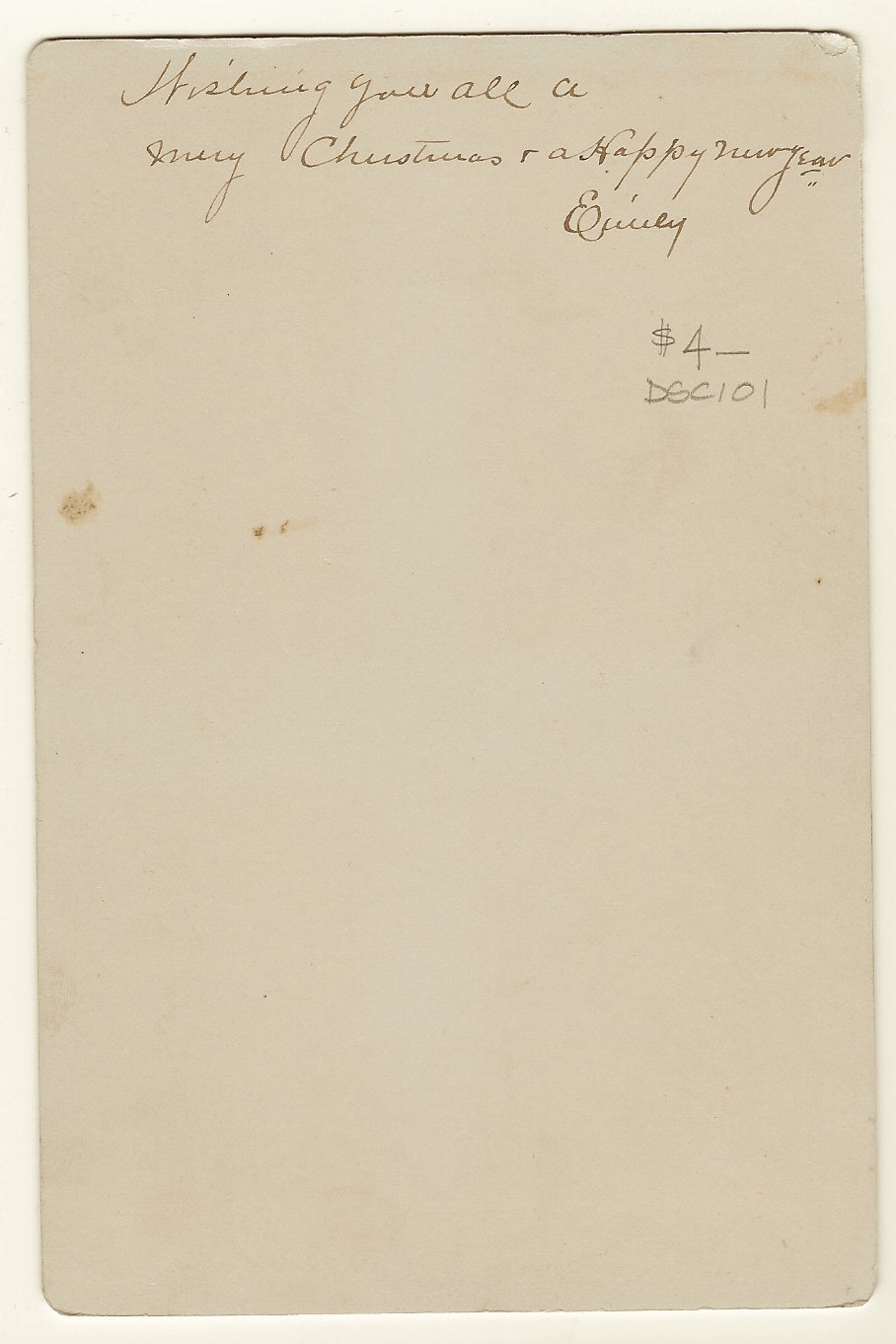
This cabinet card portrait features an adorable little girl while sitting on a platform covered with fake grass. The youngster exhibits a lot of poise for a child her age. Note her lace collar and the multitude of buttons on her jacket. She is holding her bonnet on her lap. The photographer of this image is Frank W. Cole (1857-1912) who operated a studio in Reading, Pennsylvania. Cole was born in Bethlehem, Pa. and learned photography there. He came to Reading in 1883 and opened a photography studio at the address printed at the bottom of this cabinet card. He closed the studio in 1885 and went to work for another photographer (Saylor). According to the information aforementioned, this photograph was taken between 1883 and 1885. A Christmas/New Year’s message on the reverse of the photograph (see below) reveals that this charming girl’s name is Emily. SOLD
This cabinet card photograph captures a pretty young woman with an” interesting look”. Her hair is styled in a somewhat unusual manner. The photograph was taken by an unidentified photographer in Scranton, Pennsylvania. SOLD



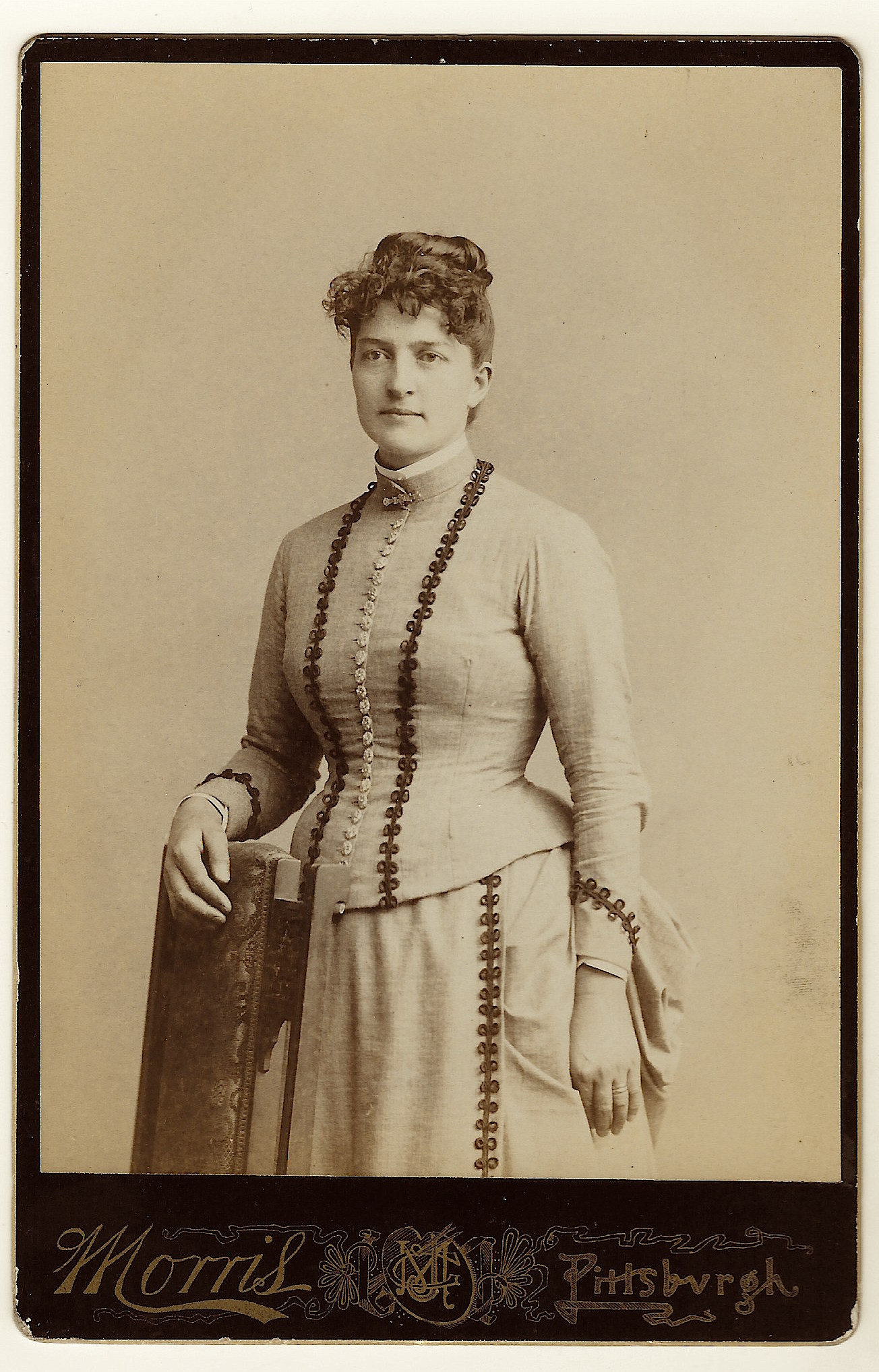
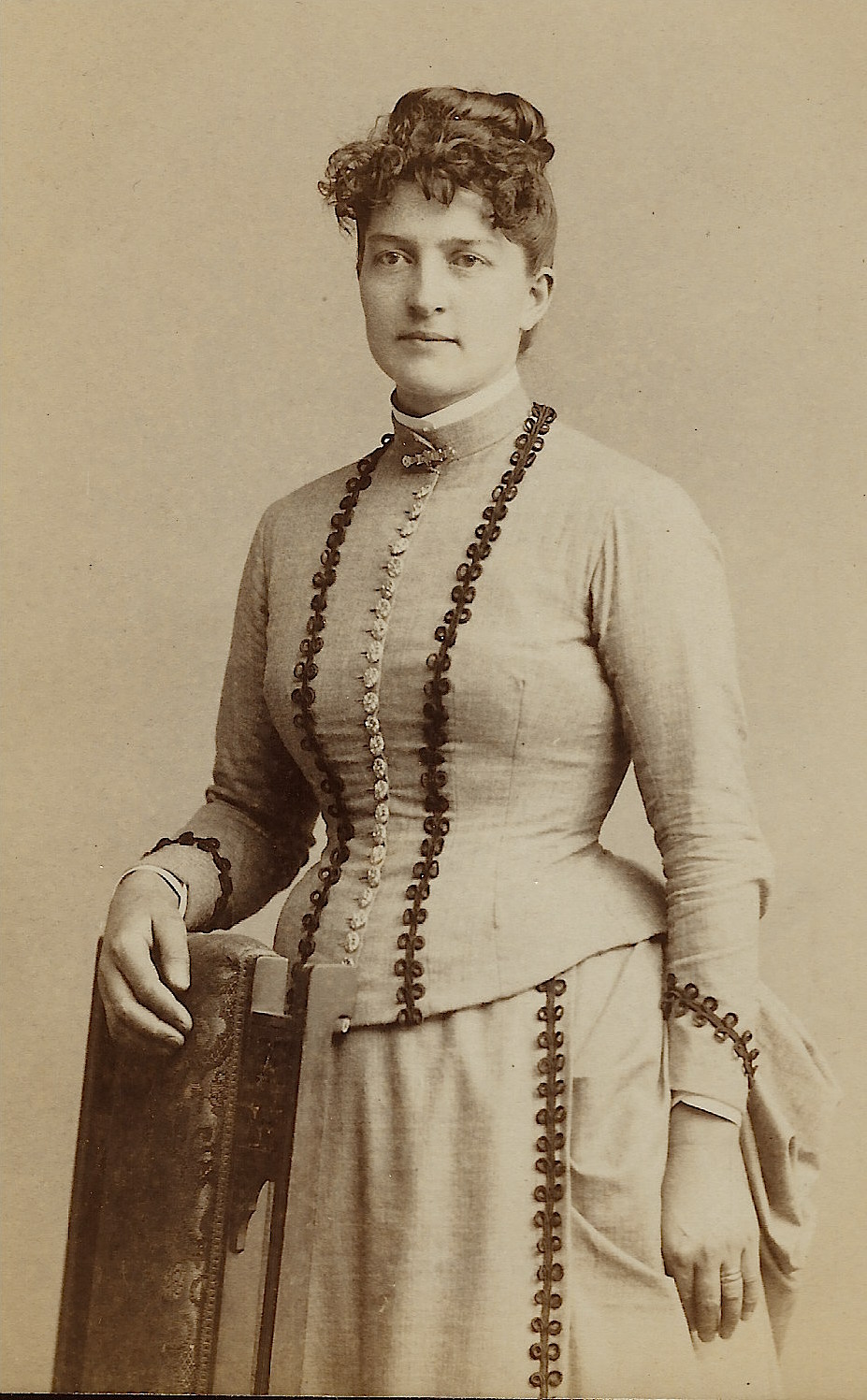 A pretty woman, wearing a fashionable, but unusual dress, poses for a photographer named Joseph G. Morris, in Pittsburgh, Pennsylvania. The studio was located at 16 Sixth Street, in Pittsburgh. She is wearing a collar pin. On the reverse of the photograph is the handwritten name, “Hillz”. One imagines that Hillz is the last name of the subject of this photograph. United States census data reveals some biographical information about the photographer of this cabinet card. Morris was located in the 1880 census. Morris was about 29 years old and he and his father (David Morris) were both working as photographer agents. In 1900, Morris and his 18 year old son, Harry, were boarders, and the older Morris was working as a photographer while the younger Morris was employed s a photographer apprentice. The 1910 U.S. Census finds Morris still working as a photographer and living with his wife, Mary P. Morris. SOLD