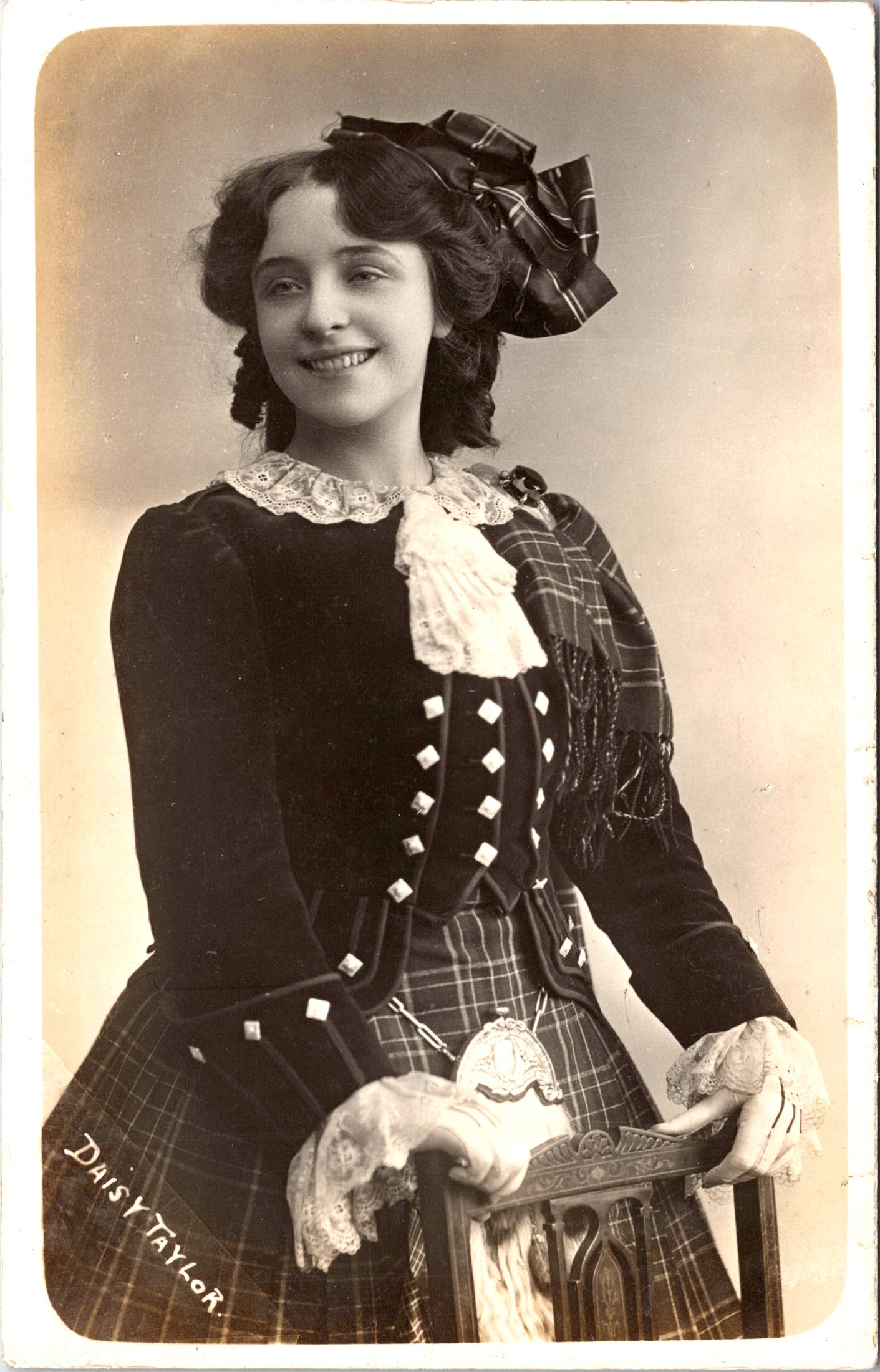
These vintage undivided real photo postcards feature Scottish music hall singer and dancer, Daisy Taylor (1894-1930). Daisy had a successful but brief performing career. Unfortunately, she died young. Her cause of death has been described as “a brief illness”. By the time 1913 arrived, Daisy had garnered much attention in London. Soon she was touring all over Great Britain and the United States. She toured South Africa in 1927. She made a number of cylinder recordings for Edison in London. You may hear some of her recordings by doing an internet search. Two of Daisy’s recordings that are easily accessible are “Archie! Archie!” and “Let’s Pretend We’re Married”. The latter title is a duet.
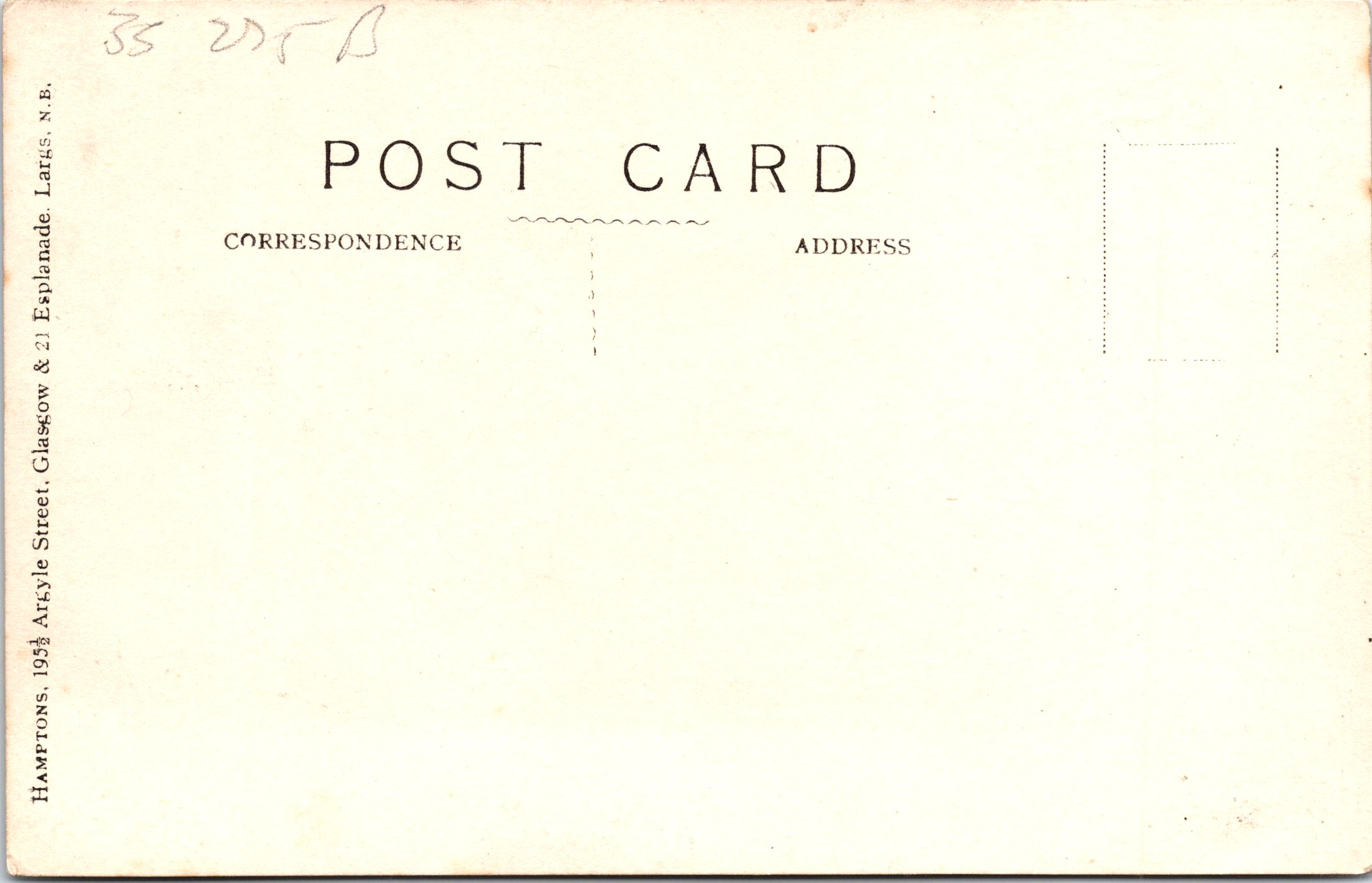
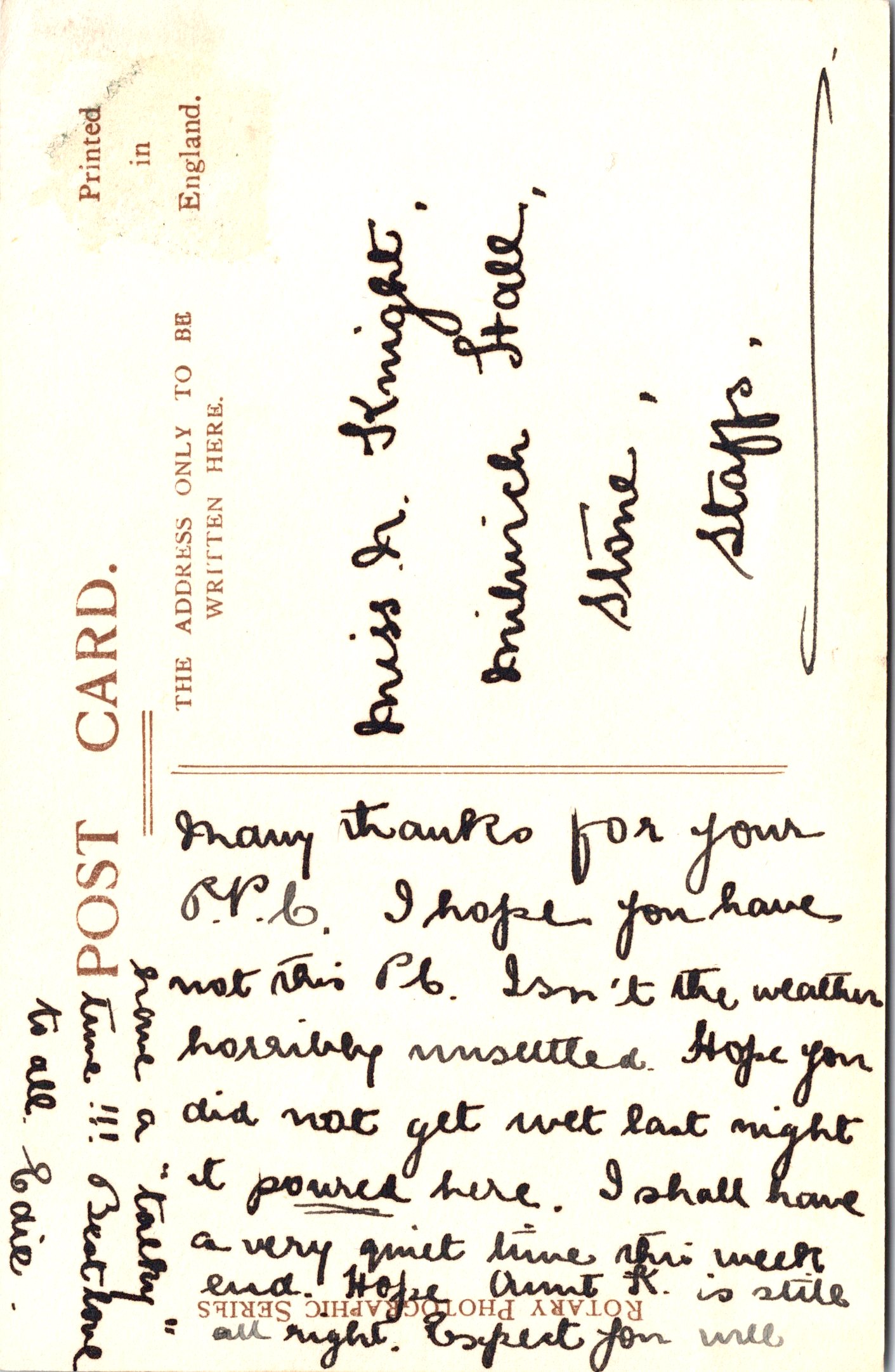
Image 1, a 1912 postcard, is remarkable because the reverse of the postcard has a written message from Miss Taylor to a Mrs. Boylan. Daisy tells Mrs. Boylan when she will be arriving in Chatham (England) and she asks if she can sleep in one of Boylan’s spare bedrooms. Perhaps Mrs Boylan managed or owned a boarding house. You may wonder how I know that Daisy really wrote the message on the card. I can’t guarantee it, but the handwriting seen on the reverse of the postcard, closely matches the handwriting on other postcards that she autographed. (SOLD)
Image 2 shows Daisy smiling, wearing a theatrical costume with a distinctly Scottish-inspired appearance. She wears a dark fitted bodice with bright square decorations, a plaid skirt, lace cuffs, and a lace-trimmed collar. A large plaid bow decorates her hair, and a matching plaid sash or shawl is draped over one shoulder. Her hands rest lightly on the back of a chair, giving the portrait a graceful, posed studio quality. This postcard was published by Hamptons (Glasgow). It was published circa 1912. (SOLD)
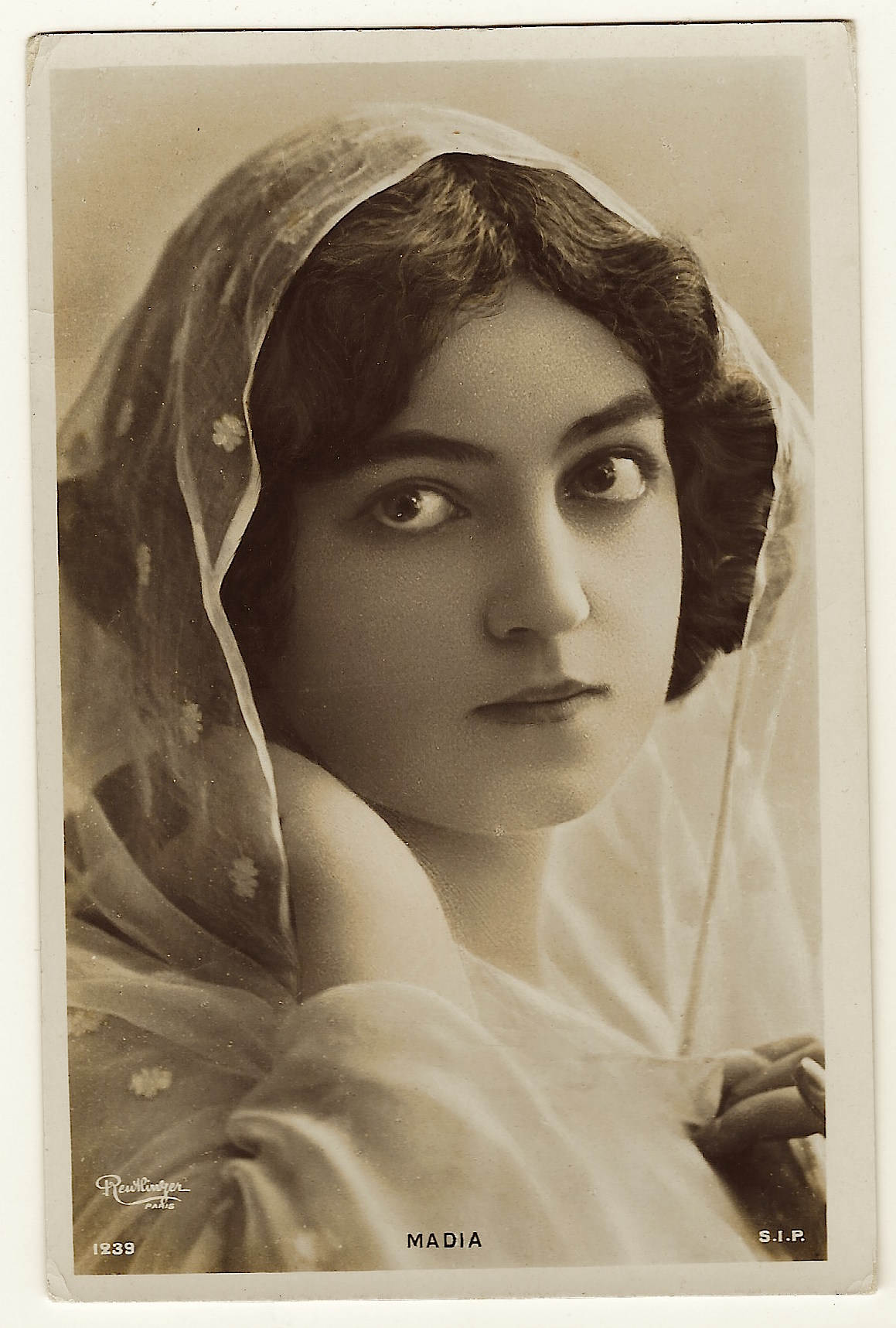
“Madia! I’ve just met a girl named Madia. And suddenly that name. Will never be the same.” With apologies to Leonard Bernstein, I just couldn’t resist. Madia Borelli was a Belle Epoque Parisian dancer and actress. Borelli was one of the many Parisian stage performers, dancers, and theatrical beauties photographed by Leopold Reutlinger during the early 1900s. She was not a major international stars such as Cléo de Mérode or Cécile Sorel, but she is known from a number of postcard Reutlinger created. Reutlinger was one of the premier Paris studios for images of actresses, dancers, singers, and other performers.
Image 1 is a vintage real photo postcard featuring dancer Madia Borelli. She was a Parisian dancer and actress active in the early twentieth century. The photographer of this portrait of Miss Borelli was the famed photographer Leopold Reutlinger of Paris, France. The postcard was published by S.I.P., which is the Societe Industrielle de Photograpie of Rueil, France. The postcard is part of a series (no. 1239). (SOLD)
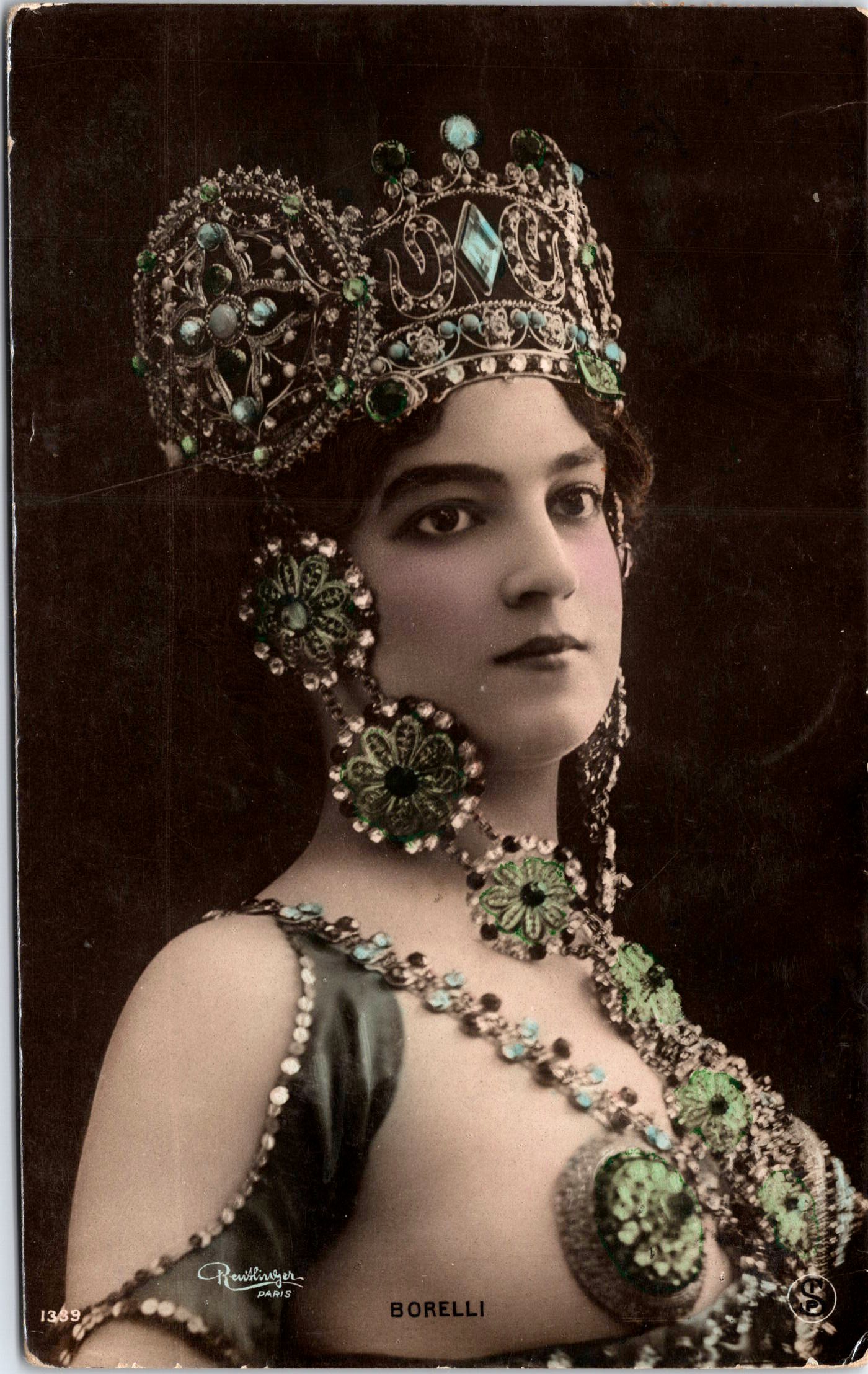
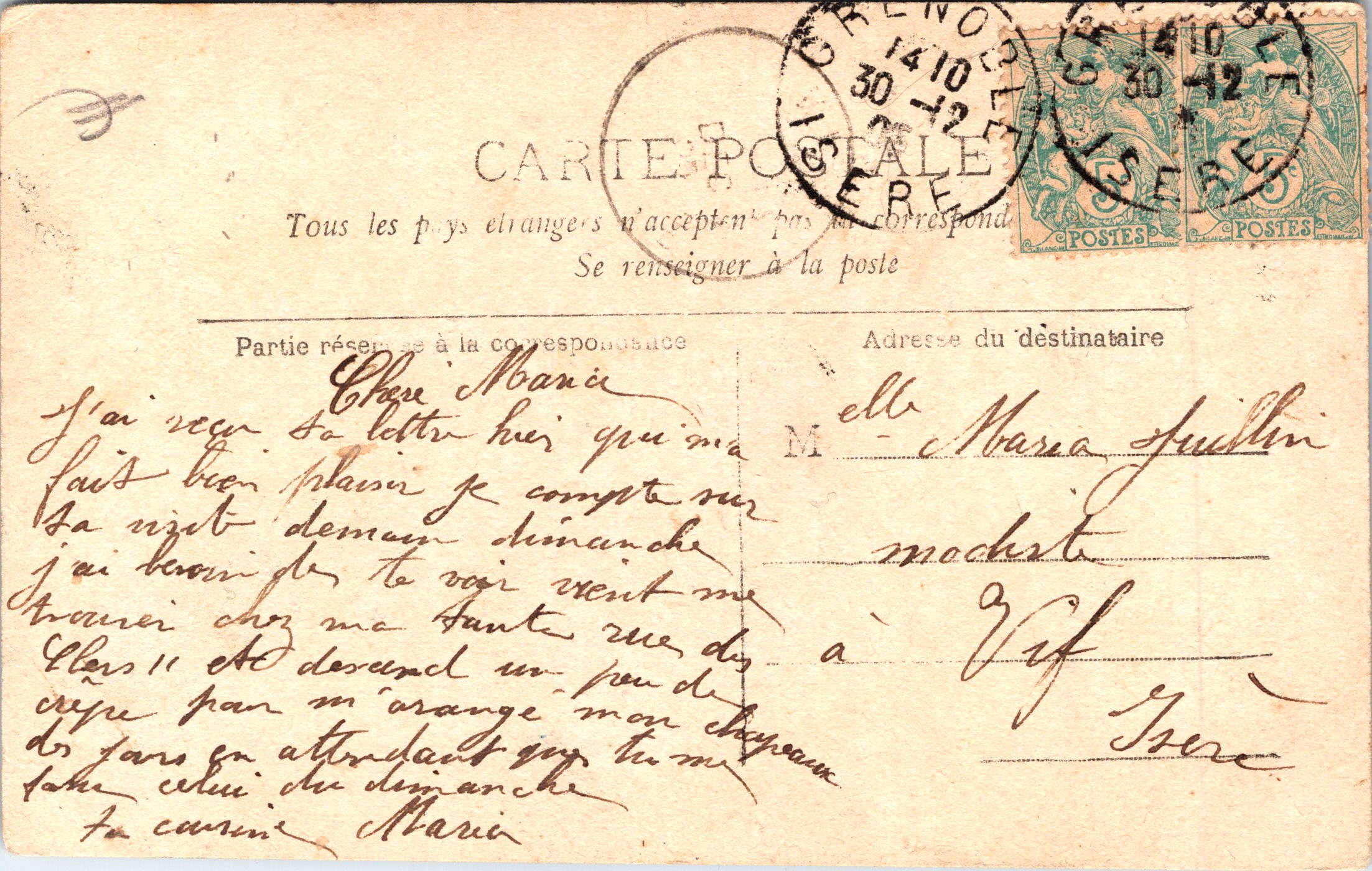
Image 2 is a striking risque vintage real photo postcard featuring Borelli, a Belle Époque Parisian dancer and actress, photographed by the famous Reutlinger studio of Paris. The postcard was published by S.I.P. (no.1339). This is a particularly beautiful and decorative theatrical postcard. Borelli is shown in an elaborate jeweled costume with an extraordinary crown-like headdress, large circular side ornaments, dangling jeweled chains, necklace ornaments, and richly decorated bodice. The image has attractive hand-coloring, especially the green and turquoise highlights in the jewels, which stand out dramatically against the dark background. Her serious expression and exotic stage costume give the portrait a very strong Belle Époque theatrical quality. The reverse of the card is postally used, with French stamps and a Grenoble postmark. The handwritten message is in French and the card was postmarked in 1906. This combination of Reutlinger photography, S.I.P. series numbering, postally used reverse, hand-coloring, and the highly ornate jeweled costume makes this a highly displayable card. (SOLD)
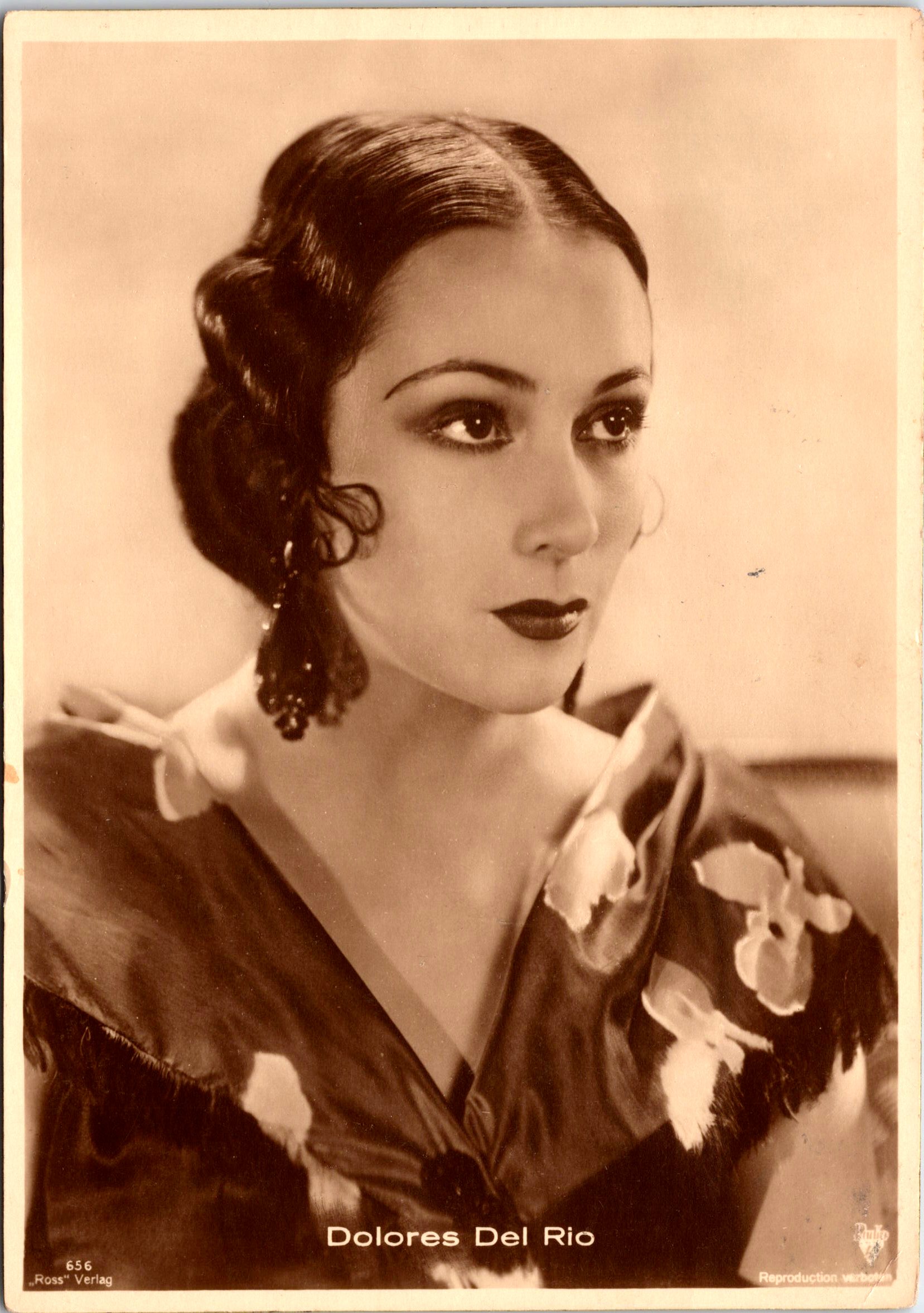
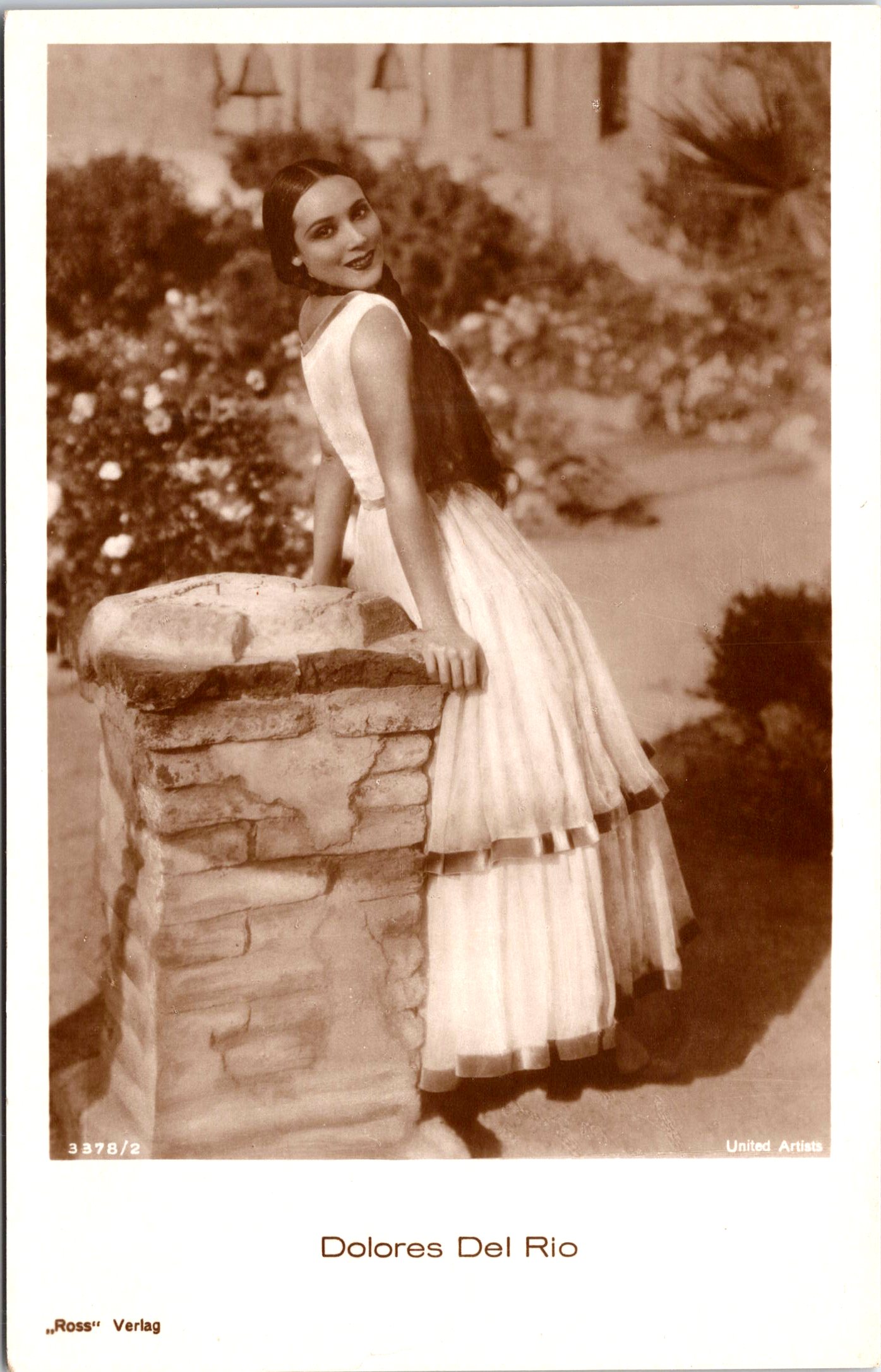
This vintage real photo postcard features pretty Mexican actress, dancer, and singer; Dolores del Rio (1904-1983). Del Rio’s performing career spanned more than half of a century. She was the first major Latin American actress to become an American film star (1920’s & 1930’s). Del Rio was also a major star in Mexican films. Dolores was known for her beauty as well as for her talent. She was discovered in Mexico and her Hollywood film career started in 1925. She began her career with a number of successful films, including “Ramona” (1928) and “Evangeline (1929). During the silent film era, she was considered the female version of “latin lover”, Rudolph Valentino. Del Rio was one of the fortunate actresses whose career was not destroyed by the advent of sound films. She acted in a wide range of film genres. “Bird of Paradise” (1932) and “Madame Du Barry” (1934) were among her successful films of the 1930’s. In the early 1940’s, her Hollywood career began to flounder sparking Del Rio to return to Mexico to become a major star of Mexican cinema. She continued acting in Mexican films through the 1950’s. Beginning 1960 she acted in both Mexican and Hollywood films. During the late 1950’s through the early 1970’s, Del Rio acted in theater and television. Dolores was born in Durango City, Mexico. Her parents were part of Mexican aristocracy whose lineage could be traced to Spain. Dolores was the cousin of actor Ramon Novarro (another silent film”latin lover”), and of Mexican cinema actress, Andrea Palma. During the Mexican Revolution (1910-1920), Dolores’s family lost its fortune. Her family felt threatened by Pancho Villa’s insurgence. It was time to “get out of town”. Her father fled to the United States while she and her mother escaped to Mexico City. Acting was an integral part of Dolores’s getaway. She and her mother felt compelled to dress as peasants to insure safe passage on the train to Mexico City. Her parents reunited there in 1912. Dolores attended a college in Mexico City operated by French nuns. After seeing Russian ballerina, Anna Pavlova perform; Dolores decided to become a dancer and took lessons from a well respected teacher. At age 17, Dolores married Jaime Martinez del Rio. He was from a wealthy family and was educated in England. The couple honeymooned in Europe for two years and Dolores formed close relationships with a number of members of European aristocracy. When the couple returned to Mexico, they settled in Mexico City. In 1925, Dolores met American filmmaker Edwin Carewe, and he was spellbound. He convinced Dolores and her husband to move to Hollywood where he promised to make Dolores a star. Her husband hoped to write screenplays there. When they arrived in Tinseltown, Carewe launched a public relations campaign to raise excitement about his beautiful find. He built up her aristocratic background by saying such gems as Dolores was “the first lady of high Mexican Society” and that she had come to Hollywood with a collection of shawls and combs valued at fifty thousand dollars. Dolores made her film debut in “Joanna” (1925), where she played a vamp of Spanish-Brazilian origin. Her first starring role was in the comedy “Pals First” (1926), directed by Carewe. That same year, Dolores appeared in the war film “What Price Glory?”. The movie was a huge financial success and helped Dolores become one of the “WAMPAS Baby Stars” of 1926. Other members of her “class” were Mary Astor, Joan Crawford, Janet Gaynor, and Fay Wray. By then, her film career was rocketing. Her role in Resurrection” (1927), a popular film based on a Tolstoy novel, further propelled her career. While her career was succeeding, her personal life was a “hot mess”. Her marriage to Del Rio ended in 1928. He had much difficulty being in the shadow of his famous and successful wife. Six months after Dolores filed for divorce, Del Rio died in Germany. While dealing with her grief, she had to deal with constant harassment from her discoverer, Edwin Carewe. He wanted to be more than her agent and her director since he had first launched her career. In 1929, Dolores announced to the press, that despite Carewe’s claims, the pair were just friends and business companions. She added that they had no plans for marriage. Soon thereafter, she cancelled her contract with him. The end result was a legal dispute that was settled out of court. Carewe’s anger did not end there. He disparaged her the press and refilmed “Resurrection” starring Lupe Velez, another popular Mexican film star. In 1930, Del Rio married MGM art director, Cedric Gibbons. They became one of Hollywood’s most followed couples of the early 1930’s. In 1932, the film, “Birds of Paradise”, was released to rave reviews. The film starred Del Rio and actor, Joel McCrea. The movie was a South Seas love story. A scandal arose from the film because of a scene featuring the pair swimming naked. Controversy continued in Del Rio’s appearance in “Flying Down to Rio” (1933). In this film, Del Rio was the first actress to wear a two piece bathing suit on screen. Fred Astaire and Ginger Rogers danced together for the first time on film, in this movie. Del Rio and Astaire also did an “intricate” dance number in the film. Del Rio found herself in political hot water when she and Ramona Novarro and Lupe Velez attended a special screening of a Mexican film which was accused of promoting Communism in California. Del Rio was accused of being a Communist for her attendance at the screening. In 1940, Del Rio began an affair with actor/filmmaker, Orson Welles. The dalliance resulted in Del Rio and Gibbons divorce. In 1954, Dolores was scheduled to co-star in a Spencer Tracy film, but the US government would not give her permission to work in the United States. The government believed she was sympathetic toward communism for attending the aforementioned film screening and for signing a petition supporting a world peace conference. After some time, she was able to remedy the problem by writing a persuasive letter to the US authorities. Later in life Del Rio did express some “political” beliefs. She stated that she wished she could play Mexican roles to show what life in Mexico was really like. She felt such an opportunity could help diminish the ugly stereotypes that existed about Mexicans in American society. She stated that it was her great wish to make fans realize the beauty, wonder, and greatness of Mexicans as a people. She asserted that the great majority of Americans view Mexicans as a “race of bandits, or laborers, dirty, unkempt, and uneducated”. Why do these false negative stereotypes sound so familiar? Del Rio wanted to show “the best that’s in my nation”. It has been pointed out by more than a few writers that Dolores del Rio was no “Latin bombshell”. Instead, she was noted for her elegance. The IMDb reports that Del Rio has 63 film credits ranging from 1925 through 1978.
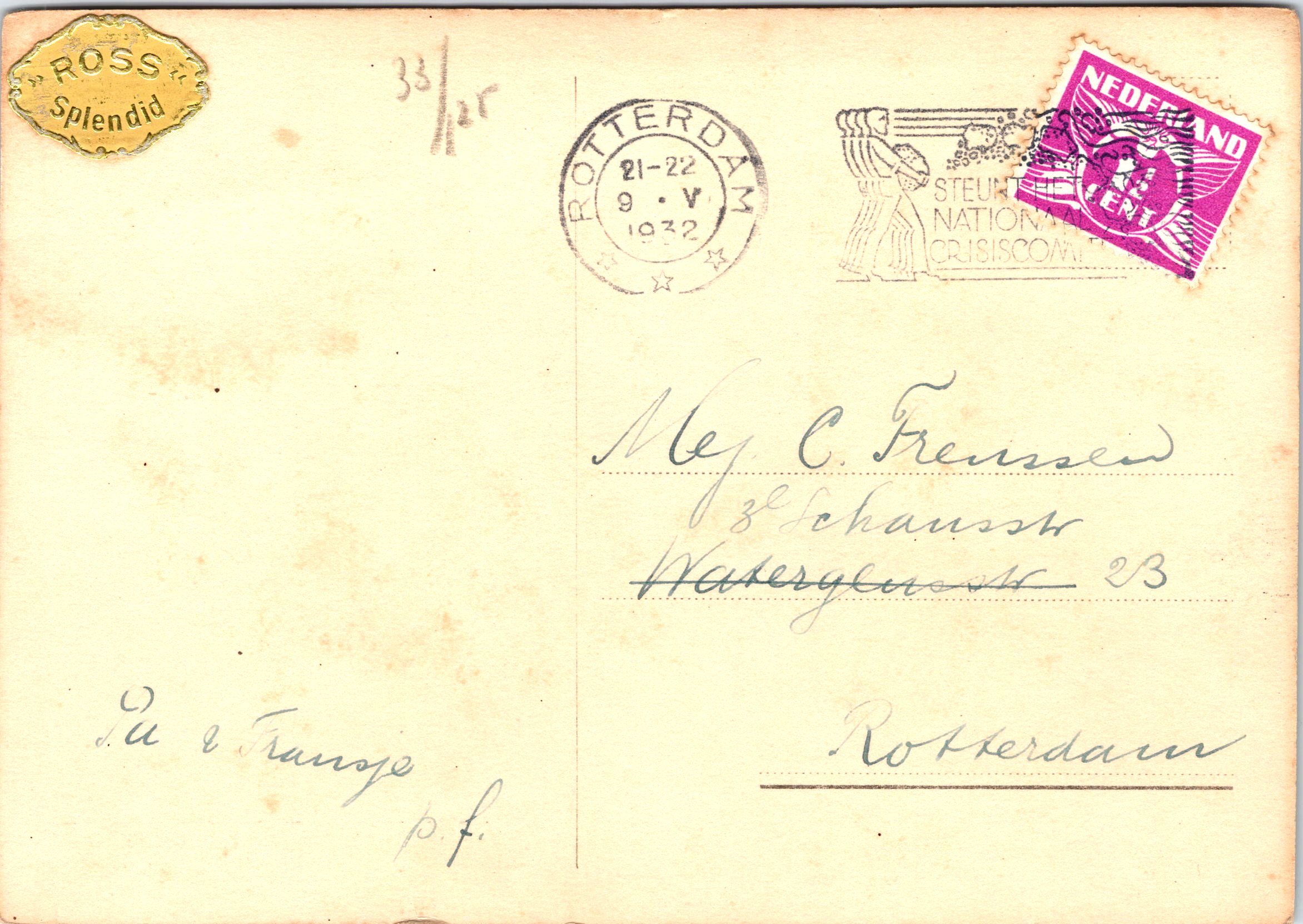
Postcard 1 was published by Ross Verlag as part of a series (no.656). The reverse of the card has a gold seal stating “Ross Splendid”. This postcard has a Netherlands stamp and was postmarked in Rotterdam in 1932. SOLD
Postcard 2 was published by Ross Verlag as part of a series (no.3378/2). SOLD
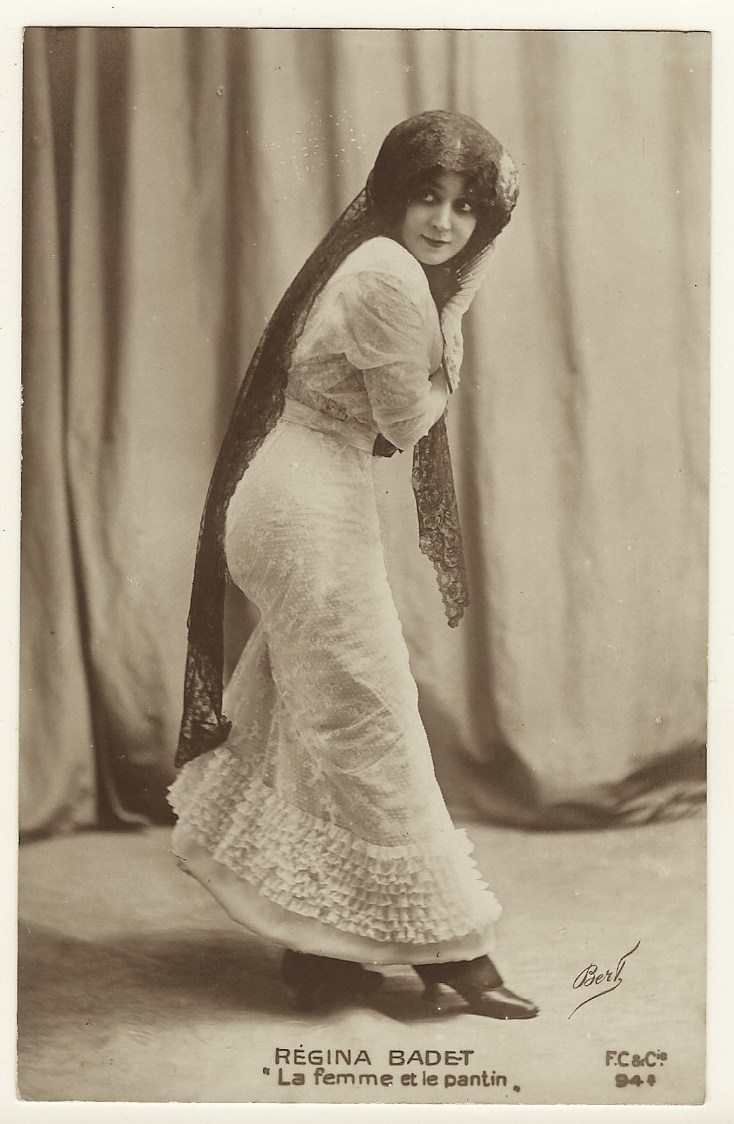
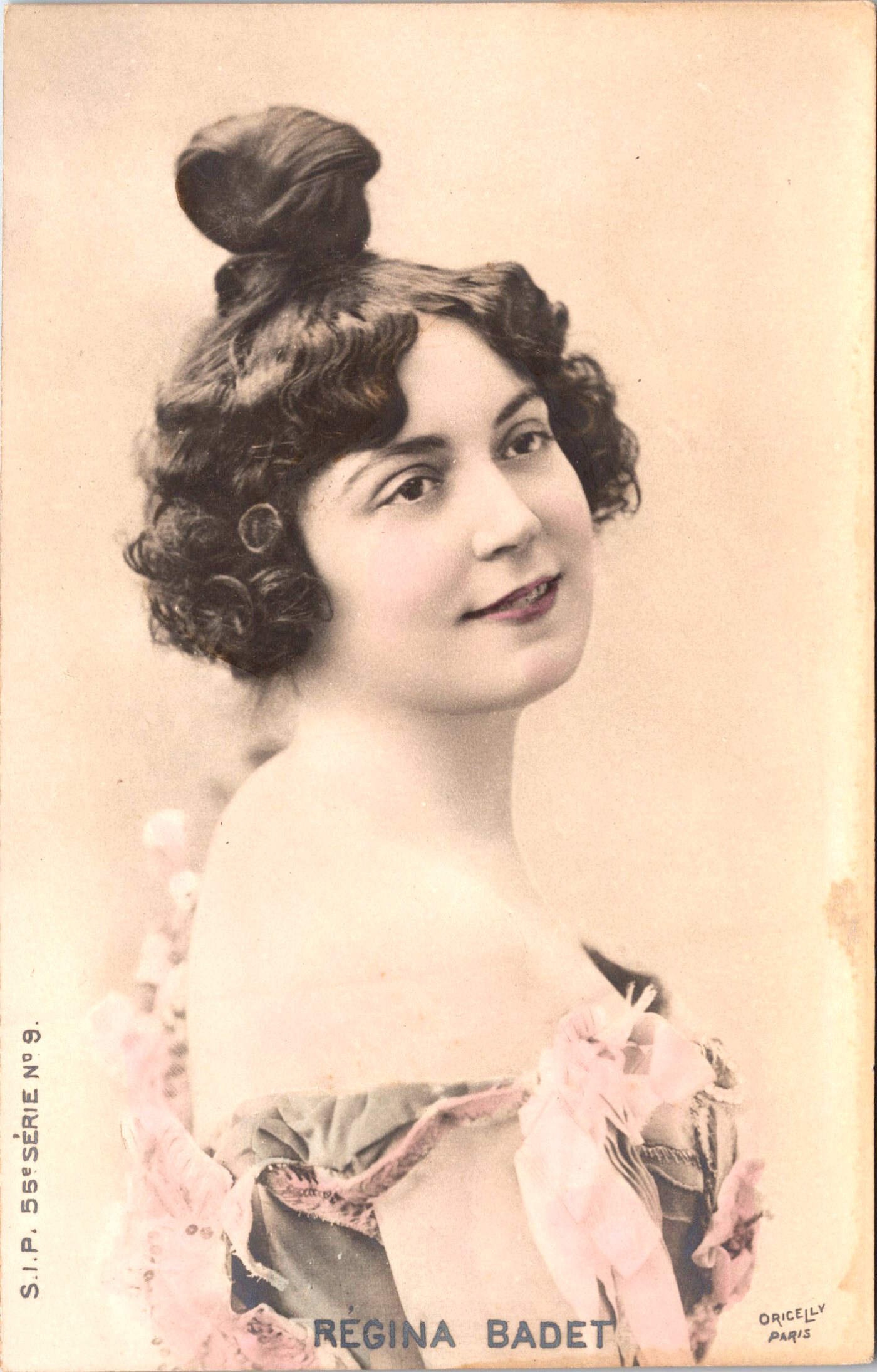
These vintage real photo postcards feature French actress and dancer, Anne Regina Badet (1876-1949). She was a major star of the Opera-Comique in Paris. She made her debut at the Grand Theatre de Bordeaux where she became a principal dancer She received much acclaim for her portrayal of Conchita Perez in “The Woman and the Puppet (1910)”. Postcard 1 shows her in this role. Her stage acting led her to a brief film career (eleven movies between 1908 and 1922). The Los Angeles Herald (1906) described Badet as the “new Paris pet” and that her dances in the Opera “Aphrodite” had “caused a furor among theater goers. A critic wrote that he went to see the performance because the opera was a “masterpiece” and because he wanted to see the star soprano, Mary Garden, interpretation of her role. Instead, he reports he was most drawn to the performance by Regina Badet. Miss Badet retired from stage and screen in the early 1920’s.
The photographer of the image on Postcard 1 is listed as “Bert”. I believe that this is a photographer who partnered with celebrated photographer Paul Boyer, renowned for his celebrity and theater images. This postcard was published by F. C. & C.
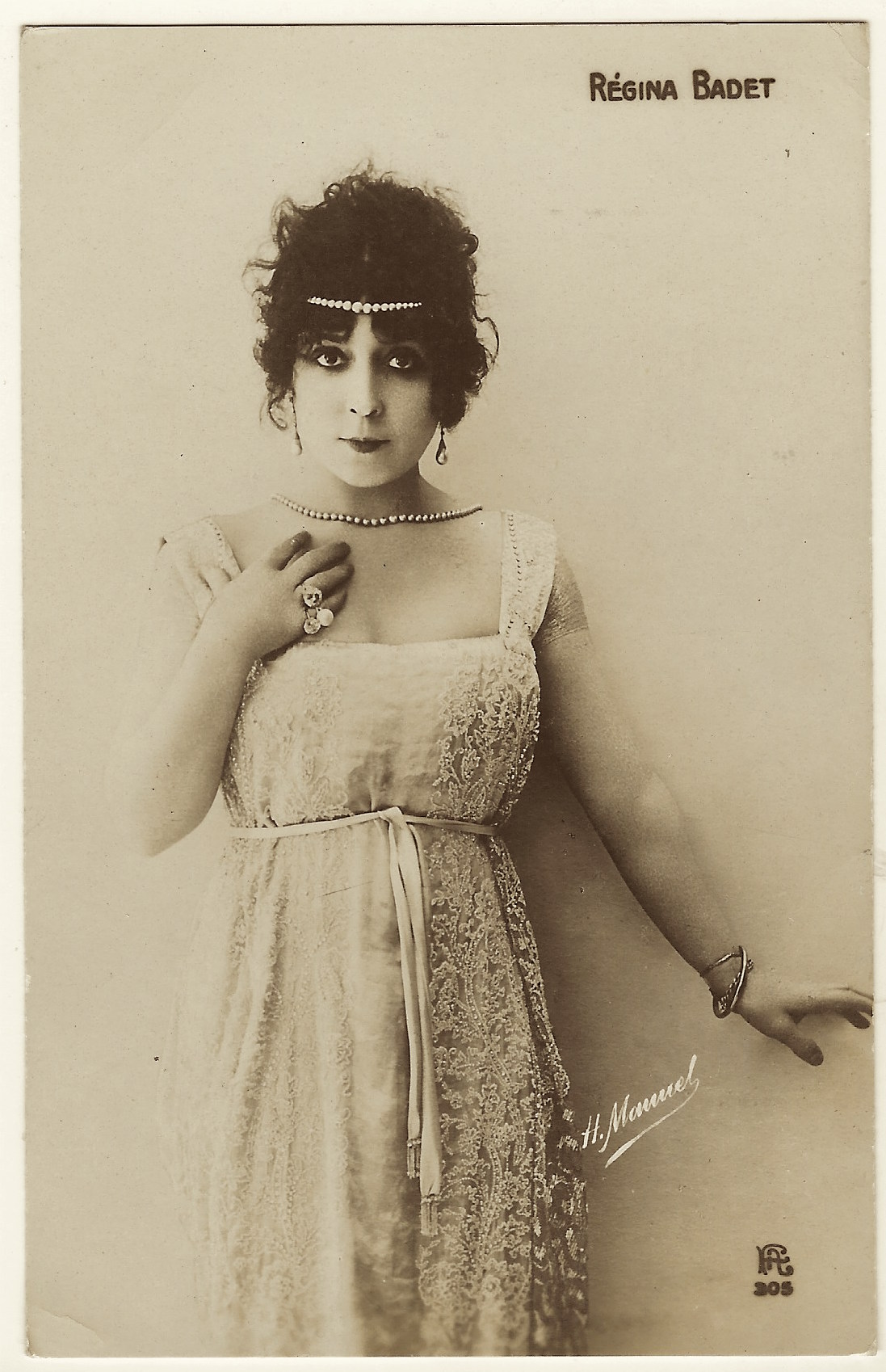
Postcard 2 offers a second portrait of Miss Badet. The pretty actress is wide eyed and wearing a lot of jewelry. The photograph was taken by Henri Manuel (1874-1947). In 1900, Manuel opened a portrait studio in Paris with his brother Gaston. He quickly became well known for his portraits of politicians, artists, and athletes. His images were used by news agencies . His studio became the largest studio in Paris and it attracted many young photographers who sharpened their skills there. In 1925 the brothers expended their business to include fashion photography. They worked for such designers as Chanel, Patou, and Lanvin. The studio shut down during World War II and many of their photographic plates were destroyed. Manuel was the official photographer for the French government from 1914 through 1944. SOLD Postcard 3 features a photograph of Miss Badet that was taken by celebrated photographer, Paul Boyer. SOLD
Postcard 4 features a photograph of Badet taken by the Oricelly studio. SOLD
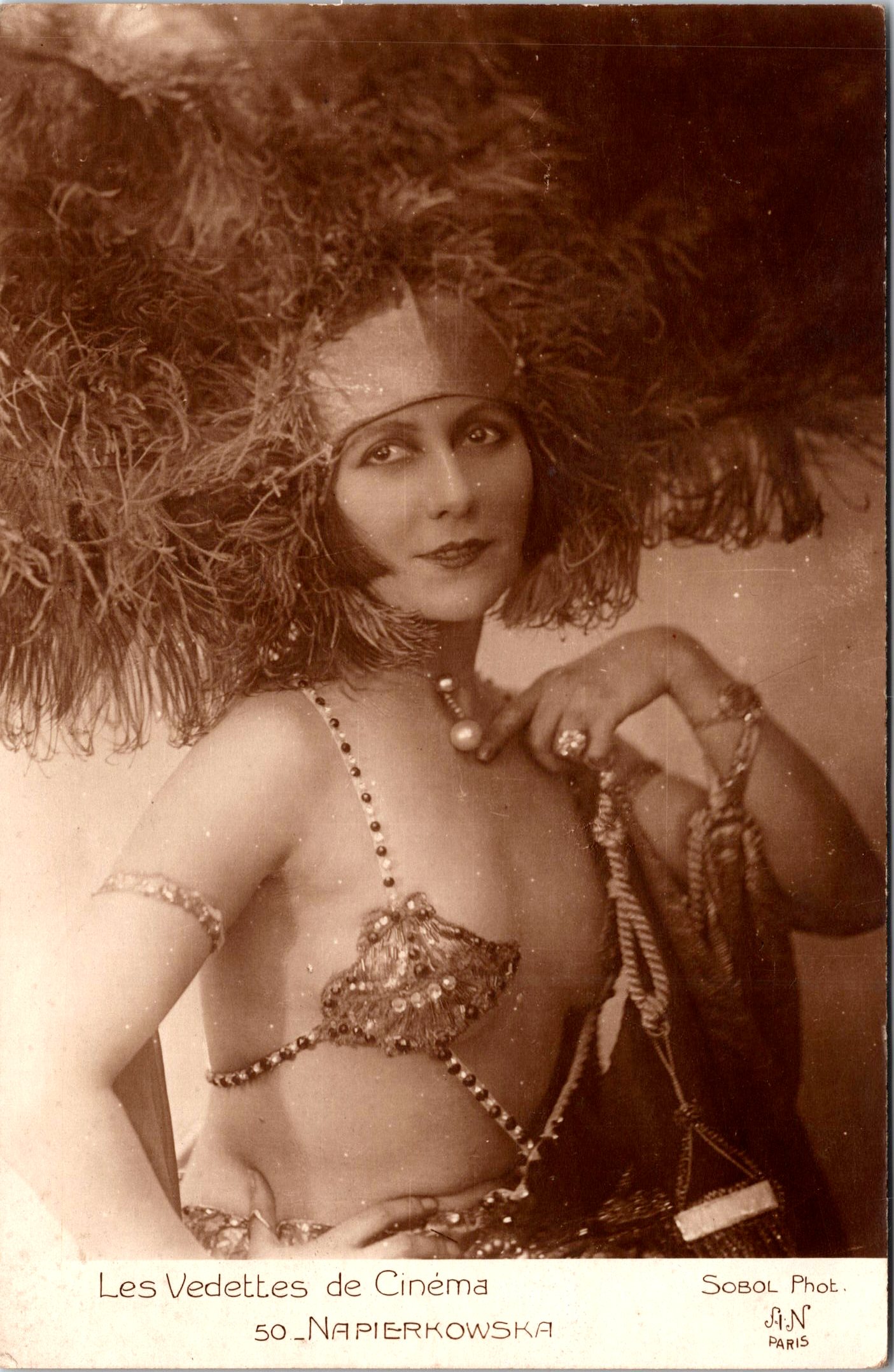
This risque vintage real photo postcard features Stacia Napierkowska (1891-1945). was a French actress and dancer during the silent film era. She also directed films. She was born in Paris and began her theatrical career with the Folies-Bergeres. She was “discovered” by the director of the Opera Comique who signed her to theatrical work. Next, she acted in silent films and reached stardom after playing opposite Max Linder, an actor often considered the first international star. In 1913 she left Europe for the United States to begin her own international career. The painter, Francis Picabia, met her on the ocean trip and he produced a series of paintings for which she was the inspiration. During a dance performance in New York City, Napierkowska found herself under arrest for indecency. Upon returning to France, according to Wikipedia, she said “I have not brought away a single pleasant memory from the United States”. She also declared that Americans were “narrow-minded people” and that they were “utterly impervious to any beautiful impression”. IMDb reports that Napierkowska appeared in 91 films between 1908 and 1926. This postcard is quite risque for it’s era. SOLD
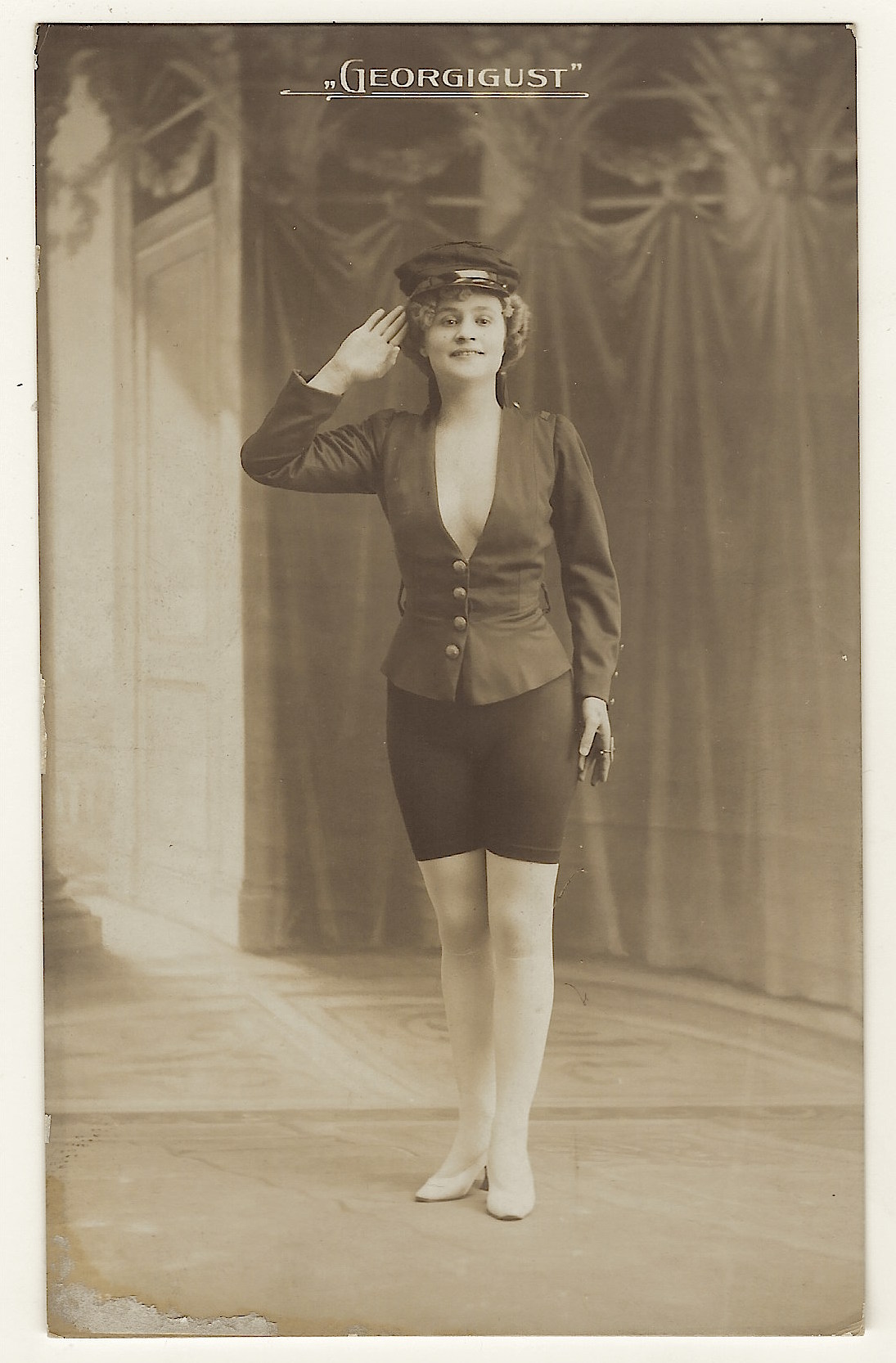
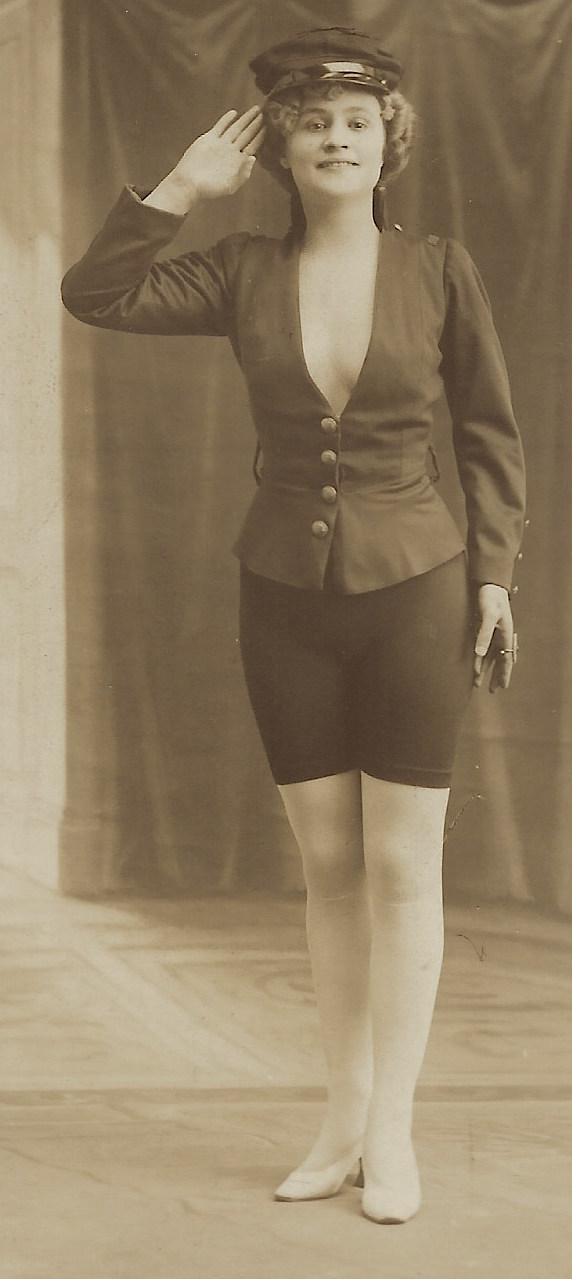
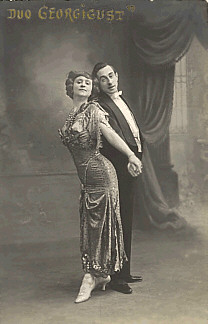
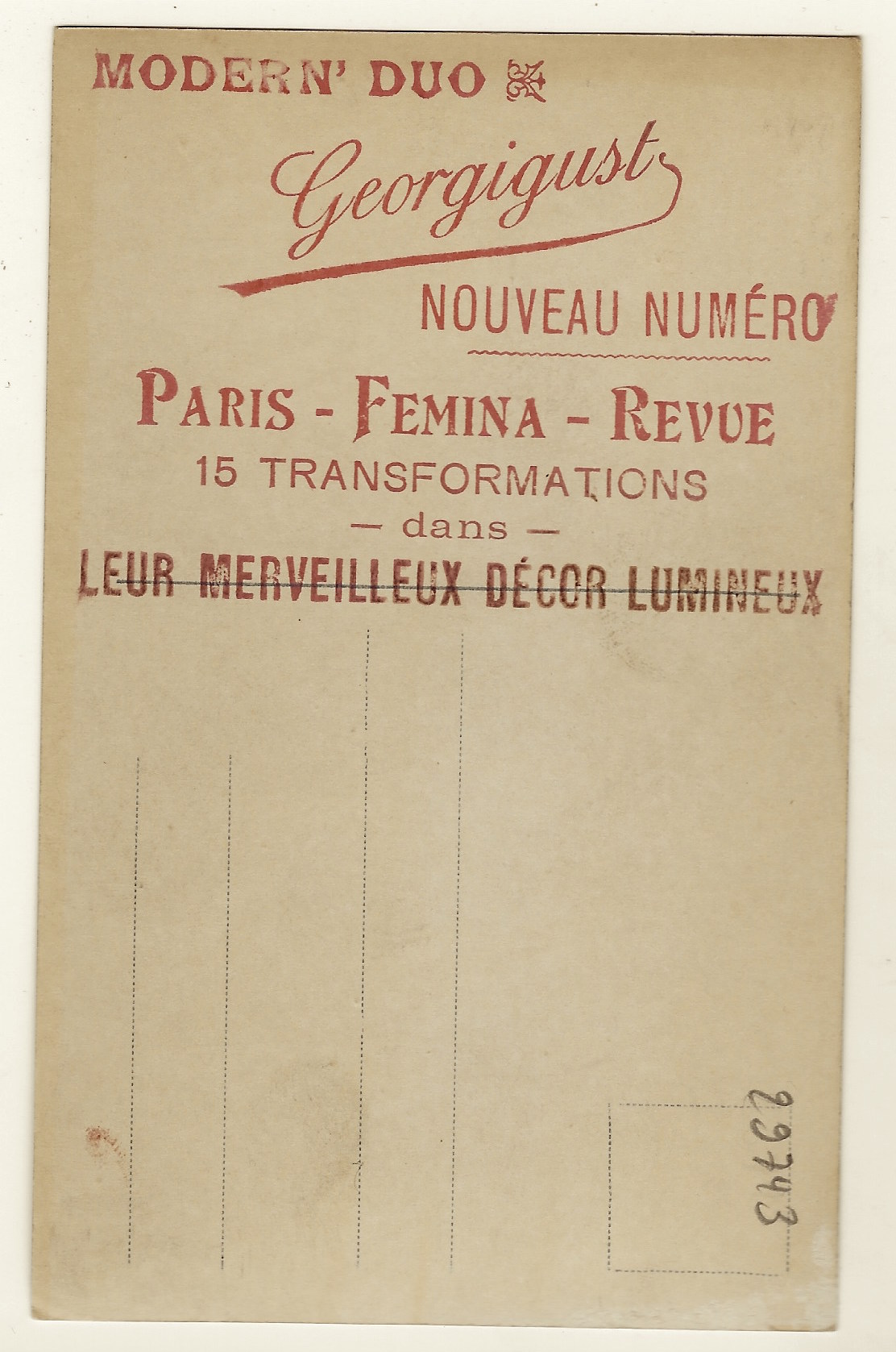
This vintage real photo postcard features one half of the dance partners from the “Duo Georgigust”. The pair were a popular dance couple during the 1910’s. Judging by the dancer’s tight clothing and revealing top, there must have been a sexual tone to her dance routine. This is a relatively risque photograph for it’s time. The reverse of this postcard is an advertisement for Georgigust’s act. Georgigust is described as a “modern duo” and promises that they will perform 15 transformations (different dances?, different acts?) and a “new number” in a wonderful bright decor. This postcard is an advertisement for the “Paris Female Revue”. The photo postcard below, shows the duo reunited and dancing together. SOLD
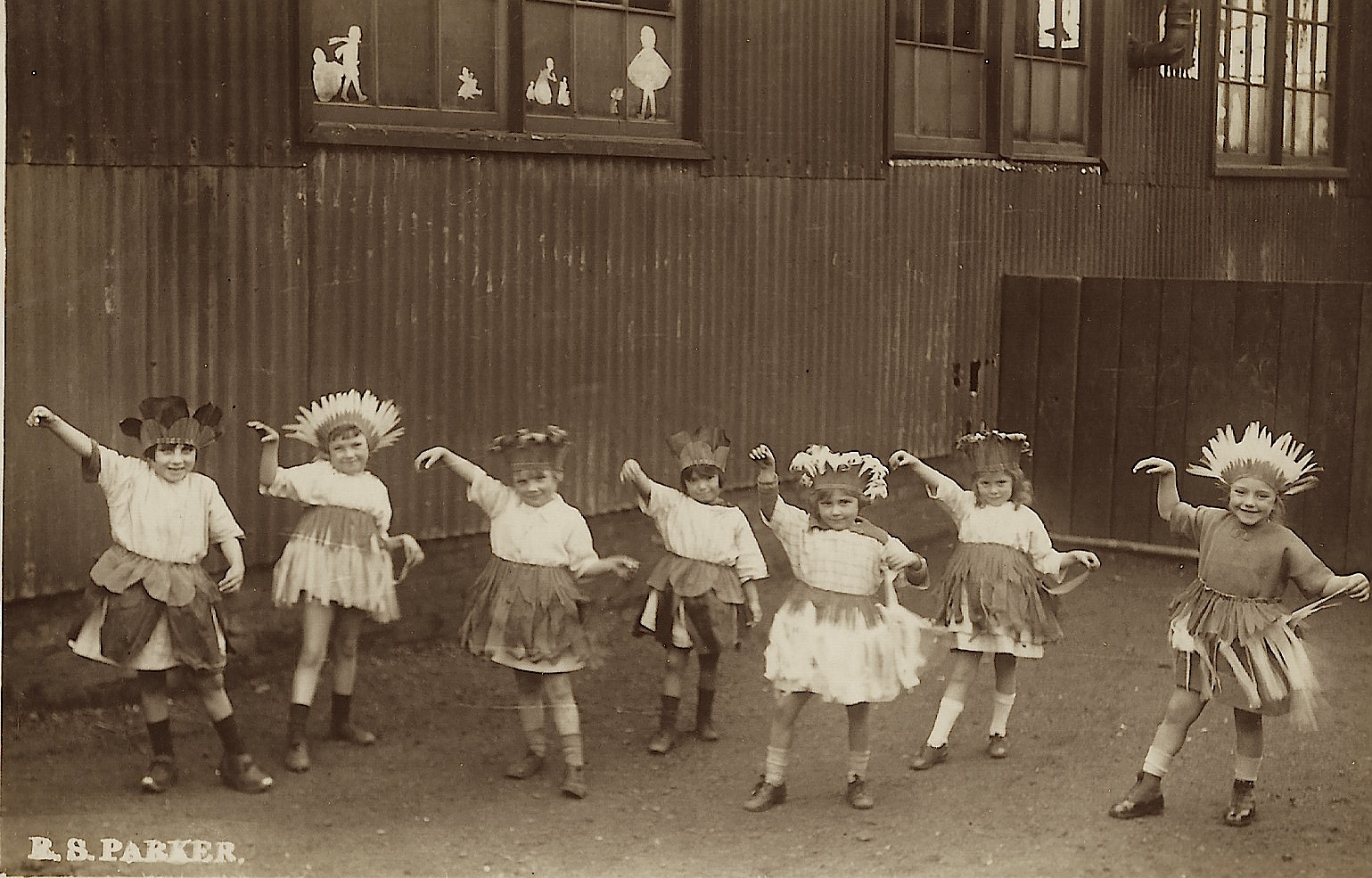
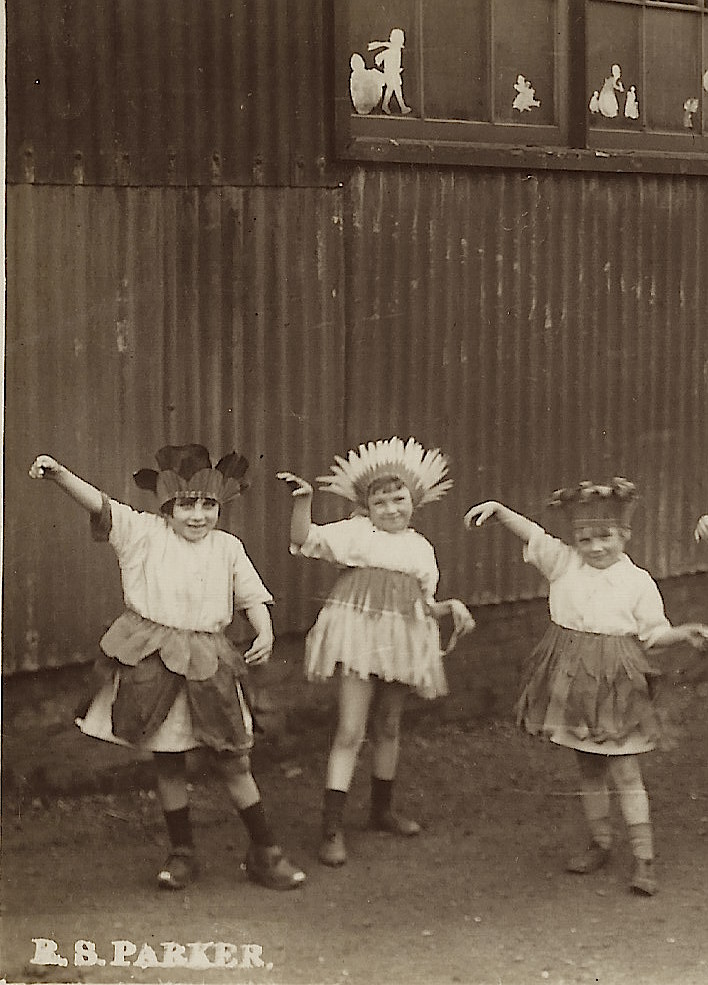
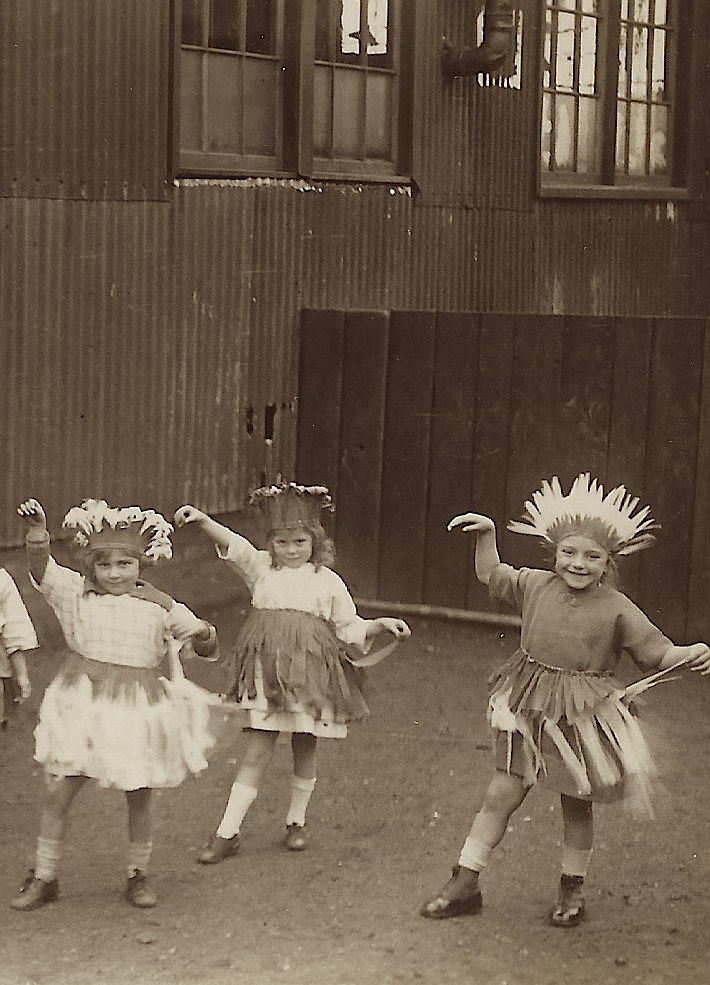
This vintage real photo postcard captures a “chorus line” of little girls during dance class. Perhaps they are performing in a recital. These costumed dance students are simply adorable. This photograph was taken by R. S. Parker. He operated a studio in Manchester, England. Some of his photographs are held by England’s National Archives, as well as by the Manchester Archives. During my research, I was able to find three of his photographs online. All the images were taken in schools. Perhaps, Parker’s niche was school photography. SOLD
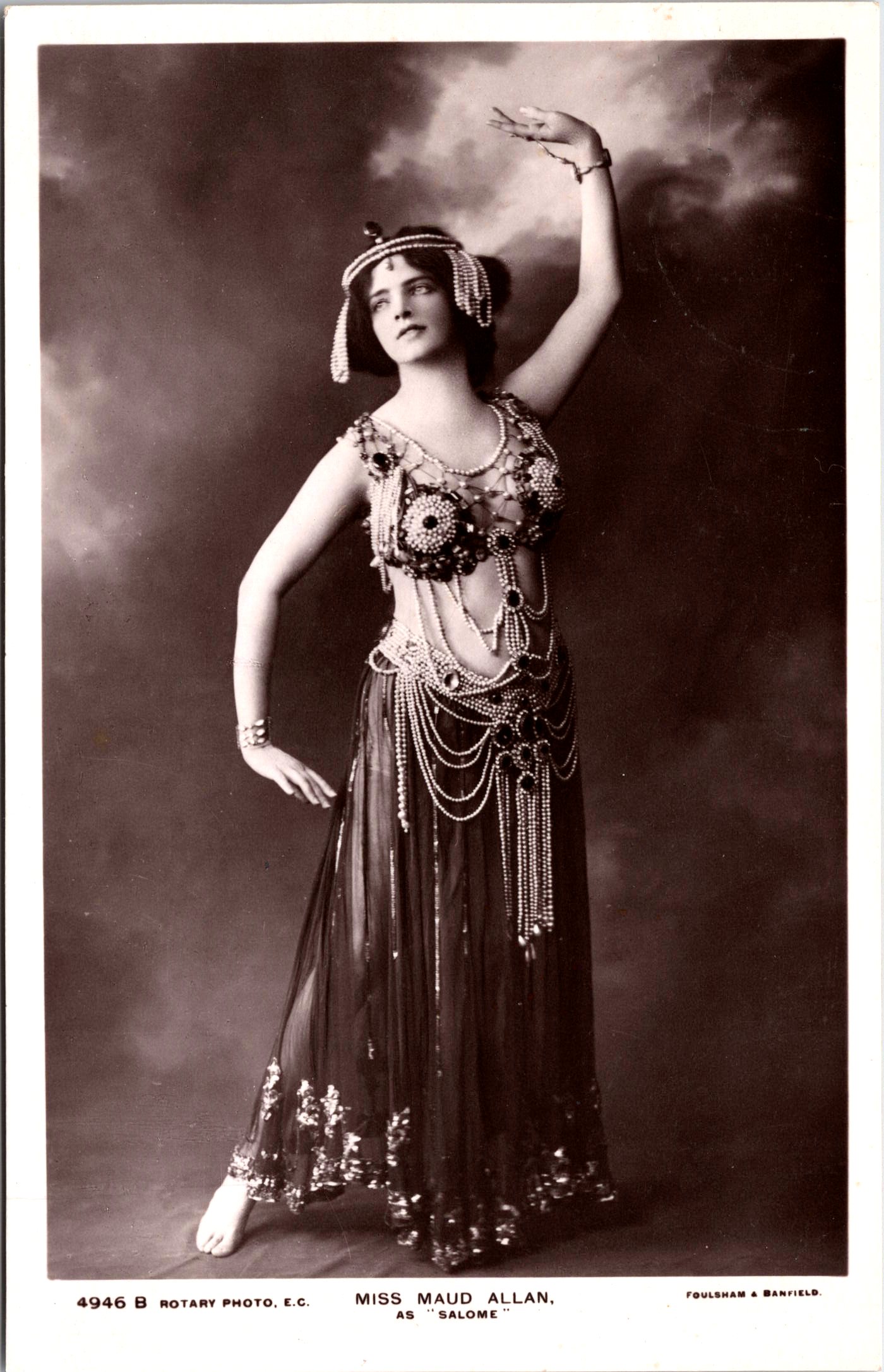
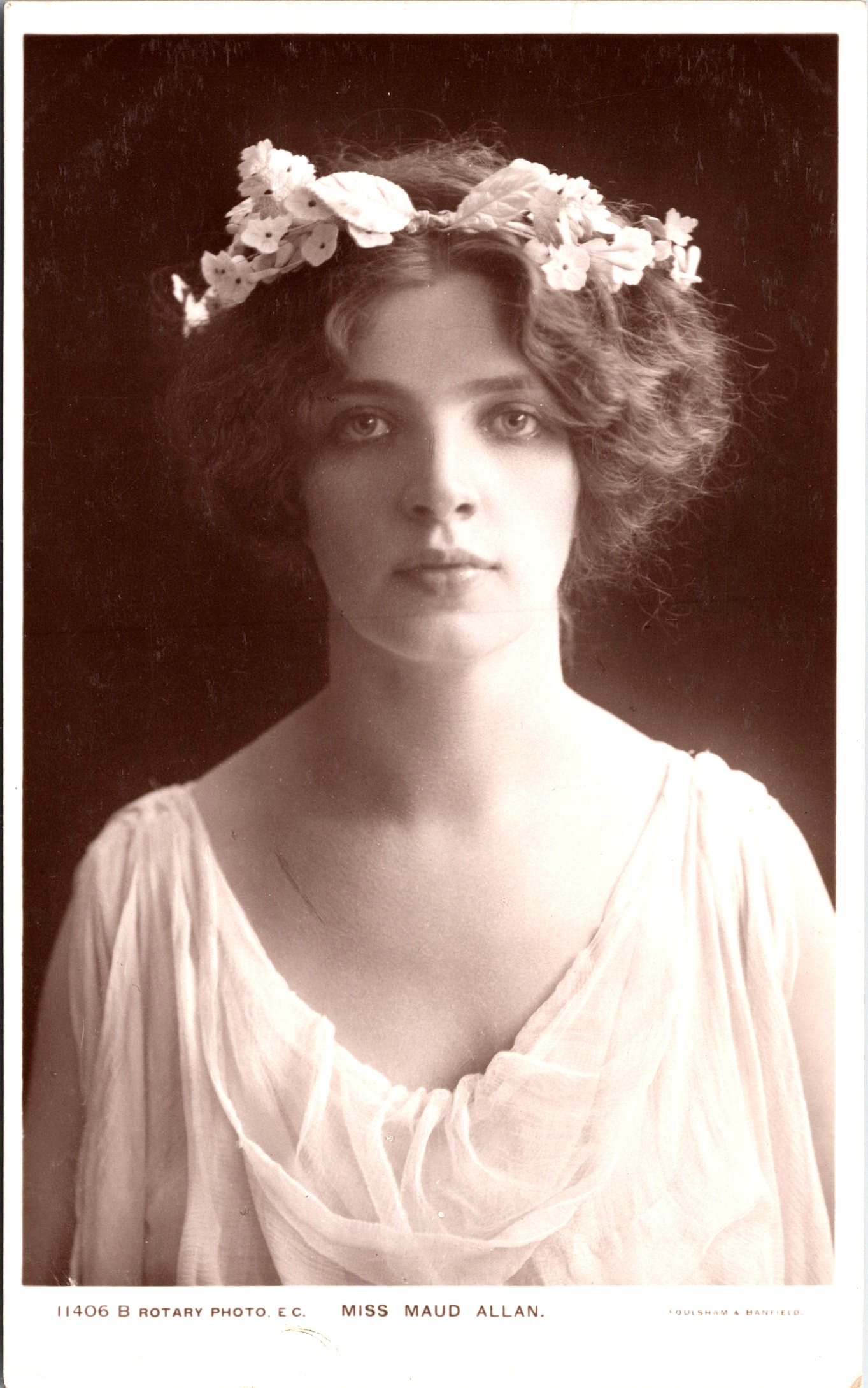
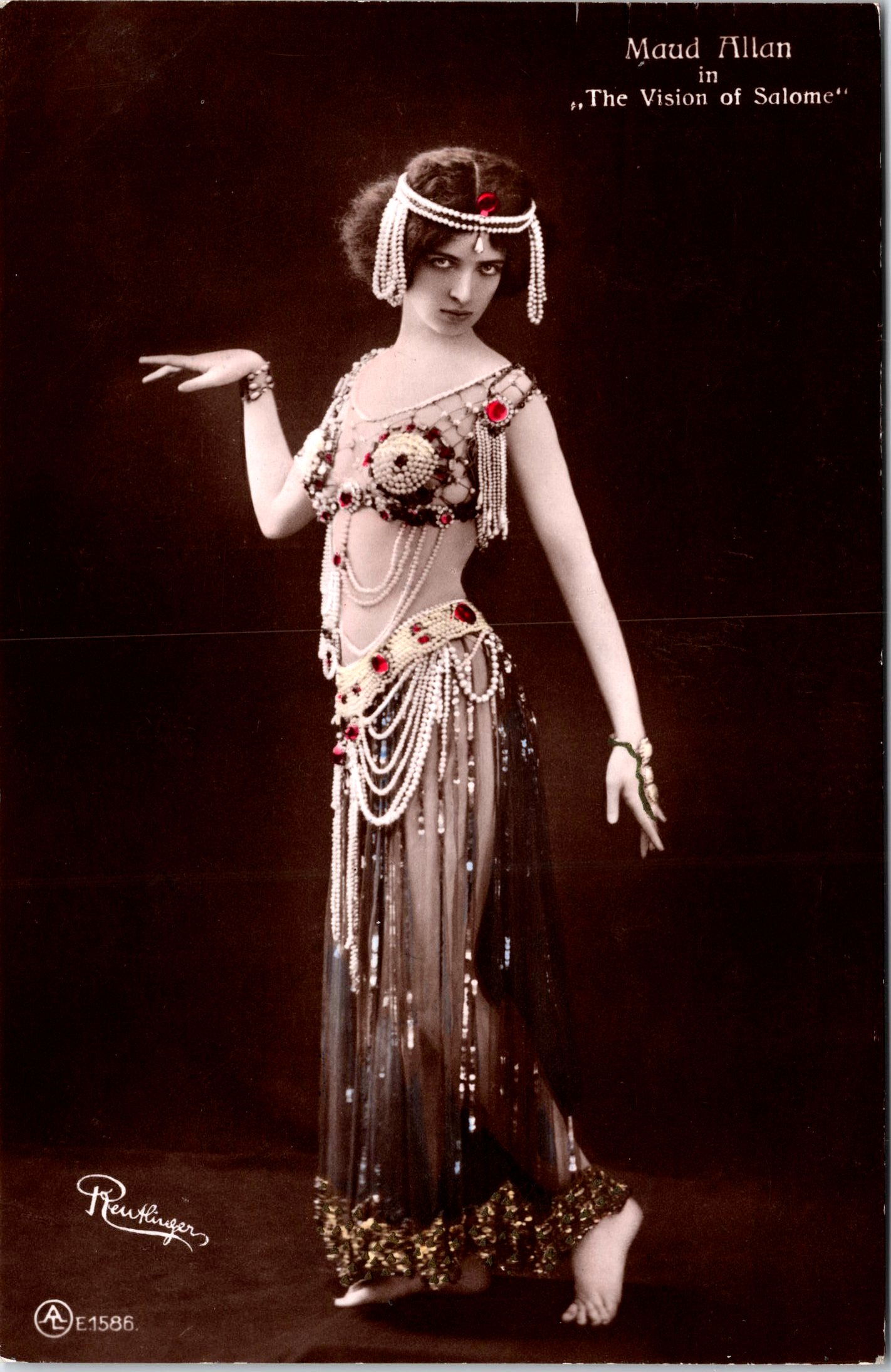
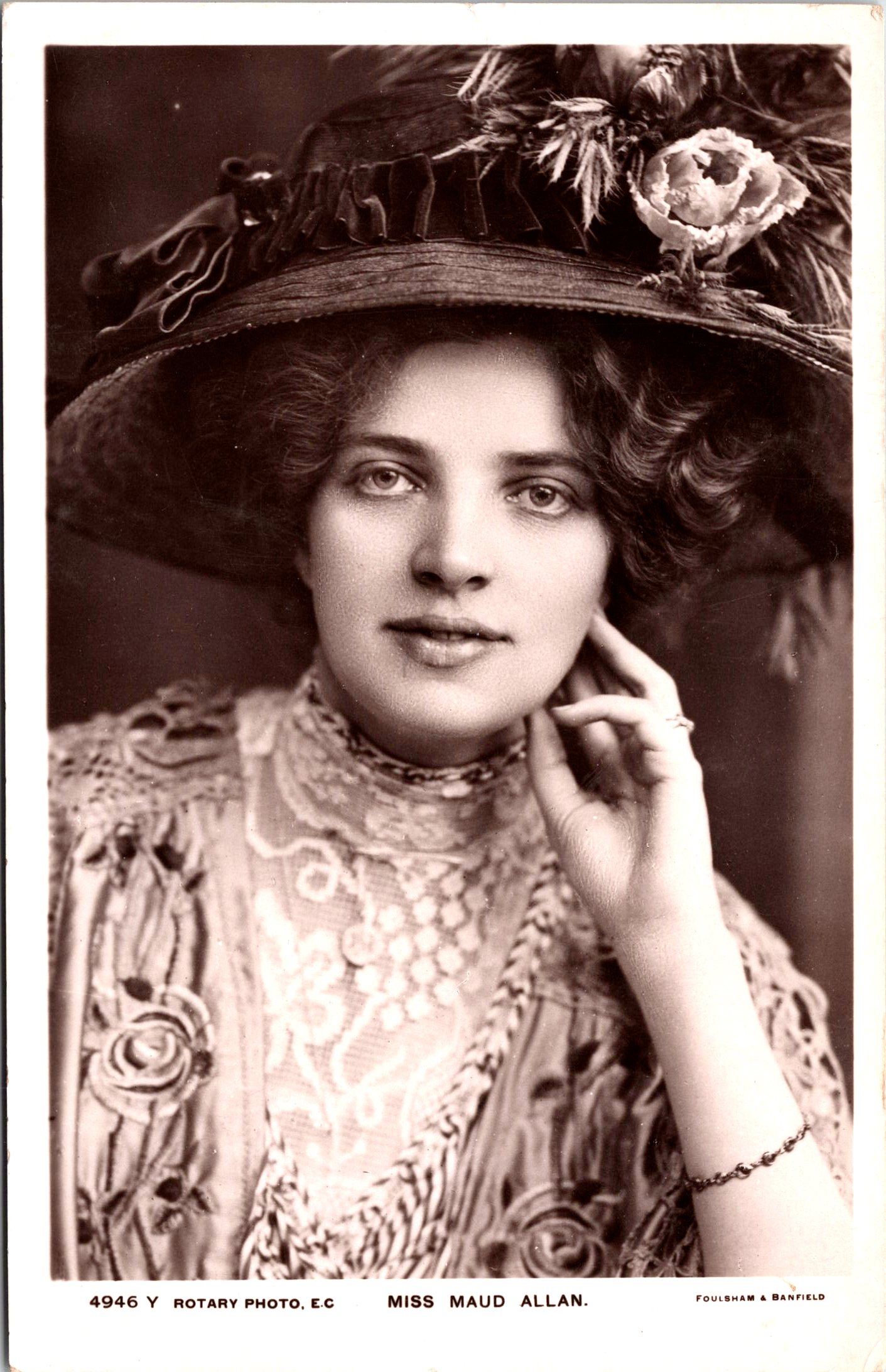
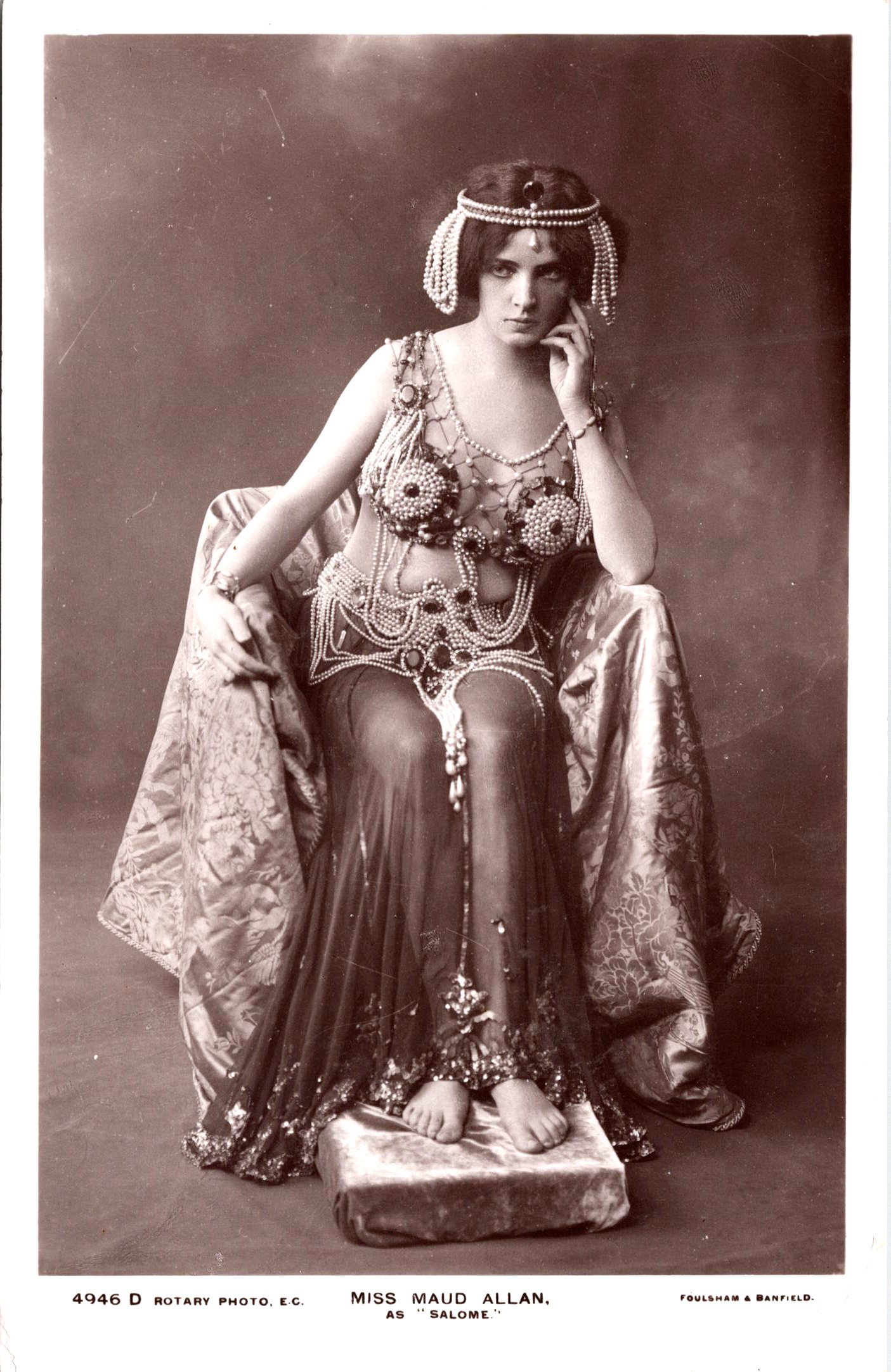
These risque vintage real photo postcards feature Maud Allan (1873-1956). She was a Canadian-born dancer, choreographer, and actress, who performed in the United States and Europe at the turn of the 20th century. She was known for her performances of the “Vision of Salome”, an interpretive dance based on the Oscar Wilde play “Salome”, in which she portrayed the title character. Allan’s performances were controversial and often drew criticism for their erotic content. She also was known for her court case in 1918 against a British newspaper, the Illustrated Times, who published an article accusing her of promoting immorality and lesbianism. She sued for libel and won. In regard to Allan’s sexual orientation, she was a lesbian and was involved with women her entire life. She had a long affair with Margot Asquith, the wife of Herbert Henry Asquith, the Prime Minister of the United Kingdom from 1908 through 1916. Allan also had a long affair with Verna Aldrich, her secretary.
Postcard 1 presents Allan dancing as “Salome”. She is wearing a sexually provocative costume. She is covered with jewelry. This postcard was published by Rotary Photo as part of a series (No.4946B). Miss Allan’s photograph was taken by the Foulsham & Banfield studio. An inscription on the card’s reverse reveals that the card is from 1908. (SOLD)
Postcard 2 This postcard also presents Allan dancing as “Salome”. Once again, she is wearing a sexually provocative costume and is covered with jewelry. This postcard was published by Rotary Photo as part of a series (No.4946Q). Miss Allan’s photograph was taken by the Foulsham & Banfield studio. This card is from circa 1908. (SOLD)
Postcard 3 is rare. The card captures Miss Allan wearing a sexually provocative costume. She is covered with jewelry. This postcard was published by Rotary Photo as part of a series (No.11406B). Miss Allan’s photograph was taken by the Foulsham & Banfield studio. This card is from circa 1908. (SOLD)
Postcard 4 is a risque vintage postcard that was published by Aristophot. Allan’s photograph was taken by Leopold Reutlinger as part of a series (no.E1586). This Salome postcard has a 1908 postmark. (SOLD)
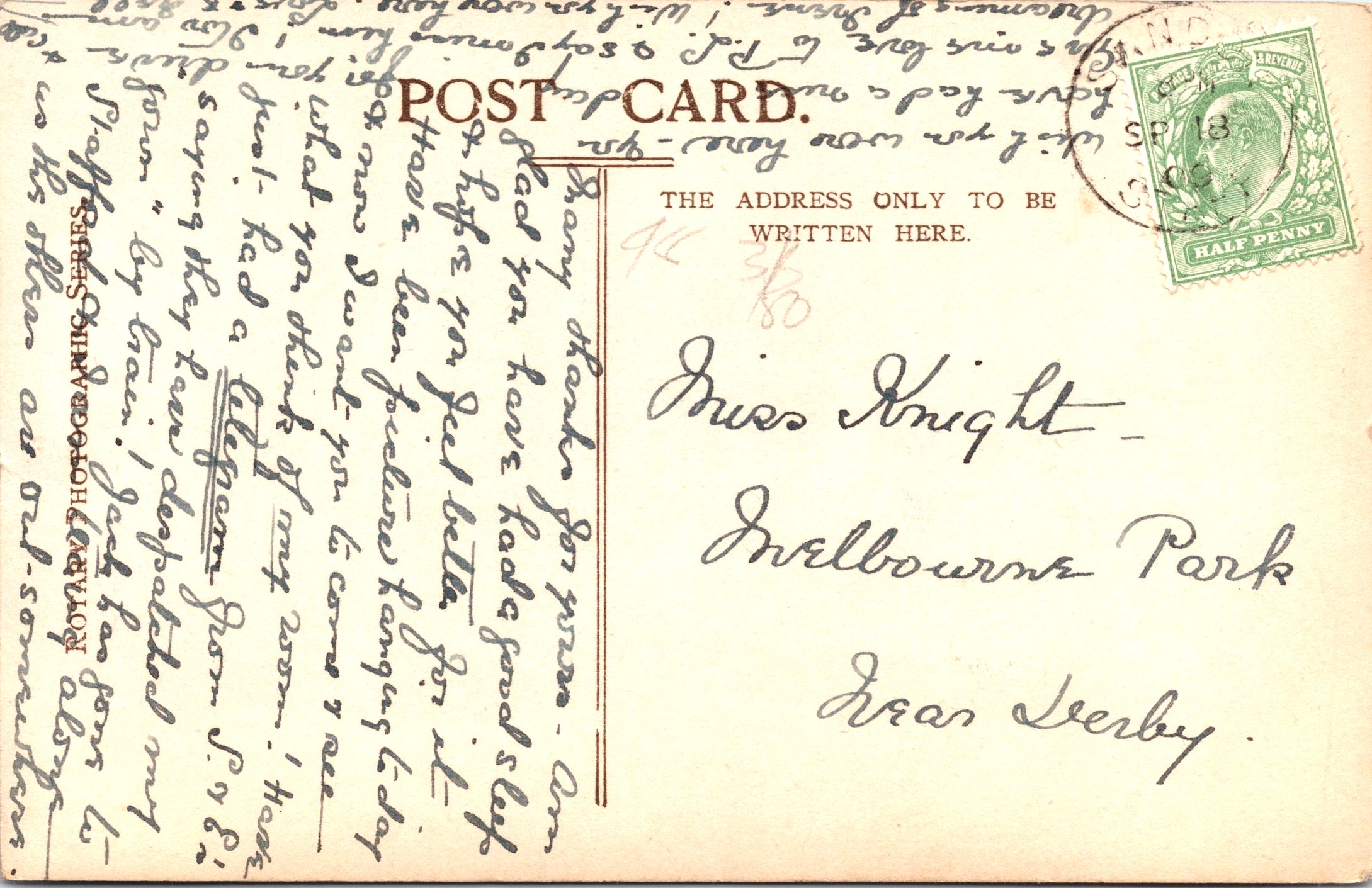
Postcard 5: Most vintage postcards of Miss Allan, capture her in various risque poses during her performance in “Salome”. This uncommon postcard portrait captures her well dressed and elegant looking. This card is uncommon and was published by Rotary Photo as part of a series (No.4946Y). Miss Allan’s photograph was taken by the Foulsham & Banfield studio. This card has a 1906 postmark. (SOLD)
Postcard 6 features Maud Allan in an erotic costume as she plays “Salome”. This postcard was published by Rotary Photo as part of a series (No.4946D). Miss Allan’s photograph was taken by the Foulsham & Banfield studio. (SOLD)
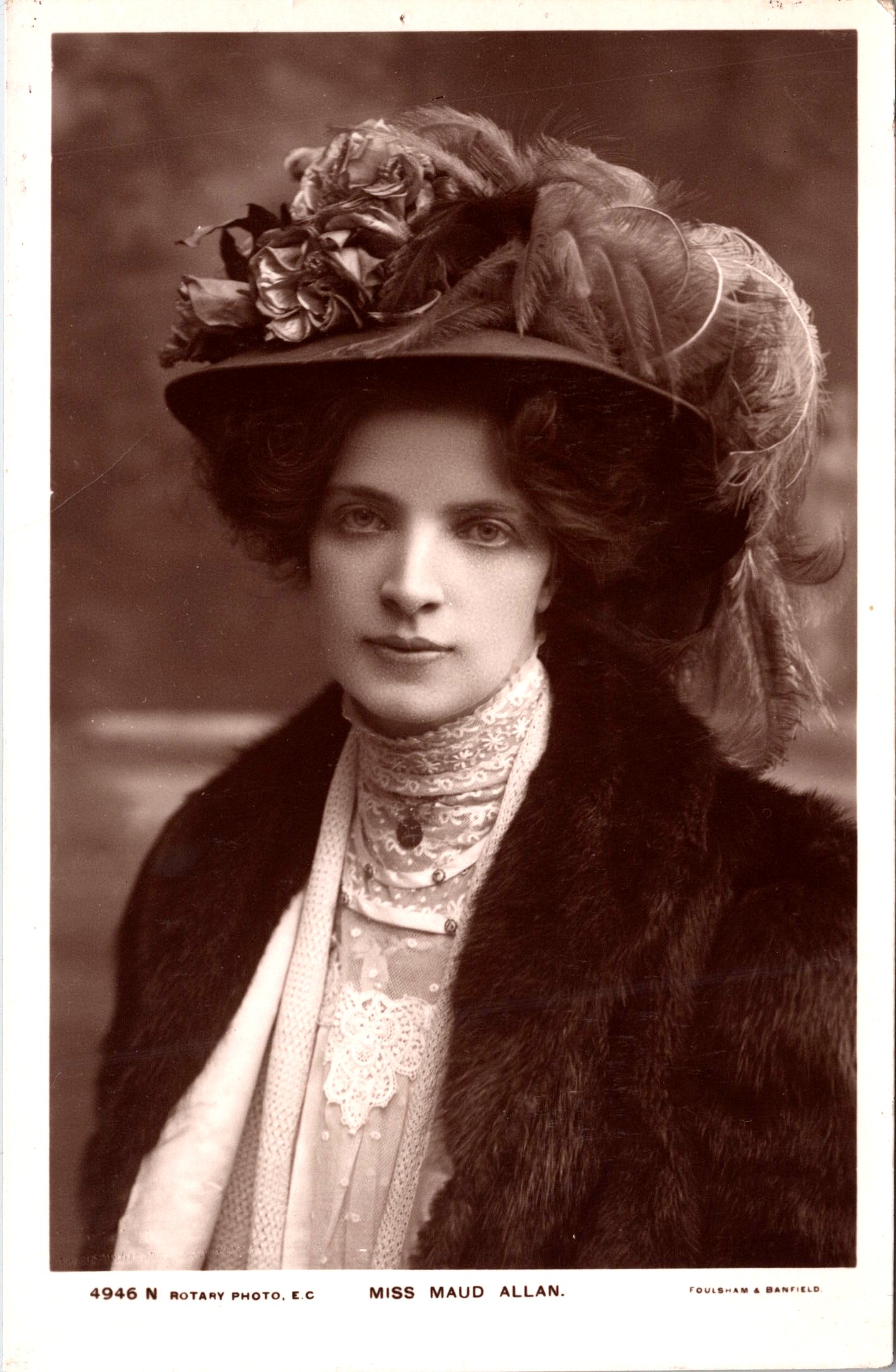
Postcard 7 was published by Rotary Photo as part of a series (No.4946N). Miss Allan’s photograph was taken by the Foulsham & Banfield studio. This postcard features Allan radiating an aura of refined elegance and timeless beauty. Her attire is a masterful display of Edwardian fashion. She wears a high-necked lace blouse adorned with intricate detailing, lending her an air of sophistication and grace. Over this, she dons a luxurious fur coat that adds richness and depth to her ensemble. Around her neck, a delicate pendant peeks out, suggesting a taste for understated yet exquisite jewelry. Her hat is a work of art in itself, lavishly adorned with roses, feathers, and ornate embellishments. The elaborate design frames her face beautifully, complementing her delicate features. Her hair, arranged in soft, voluminous curls beneath the hat, enhances her classic femininity. Maud’s expression is serene yet captivating, her slightly parted lips and soft gaze conveying both intelligence and an enigmatic charm. Her eyes hold a quiet confidence, suggesting a woman of depth, creativity, and individuality. Altogether, Maud Allan’s appearance in this postcard speaks to her remarkable beauty, not only in her physical features but also in the grace and character she exudes. She appears as a woman who is elegant, enigmatic, and effortlessly captivating. (SOLD)
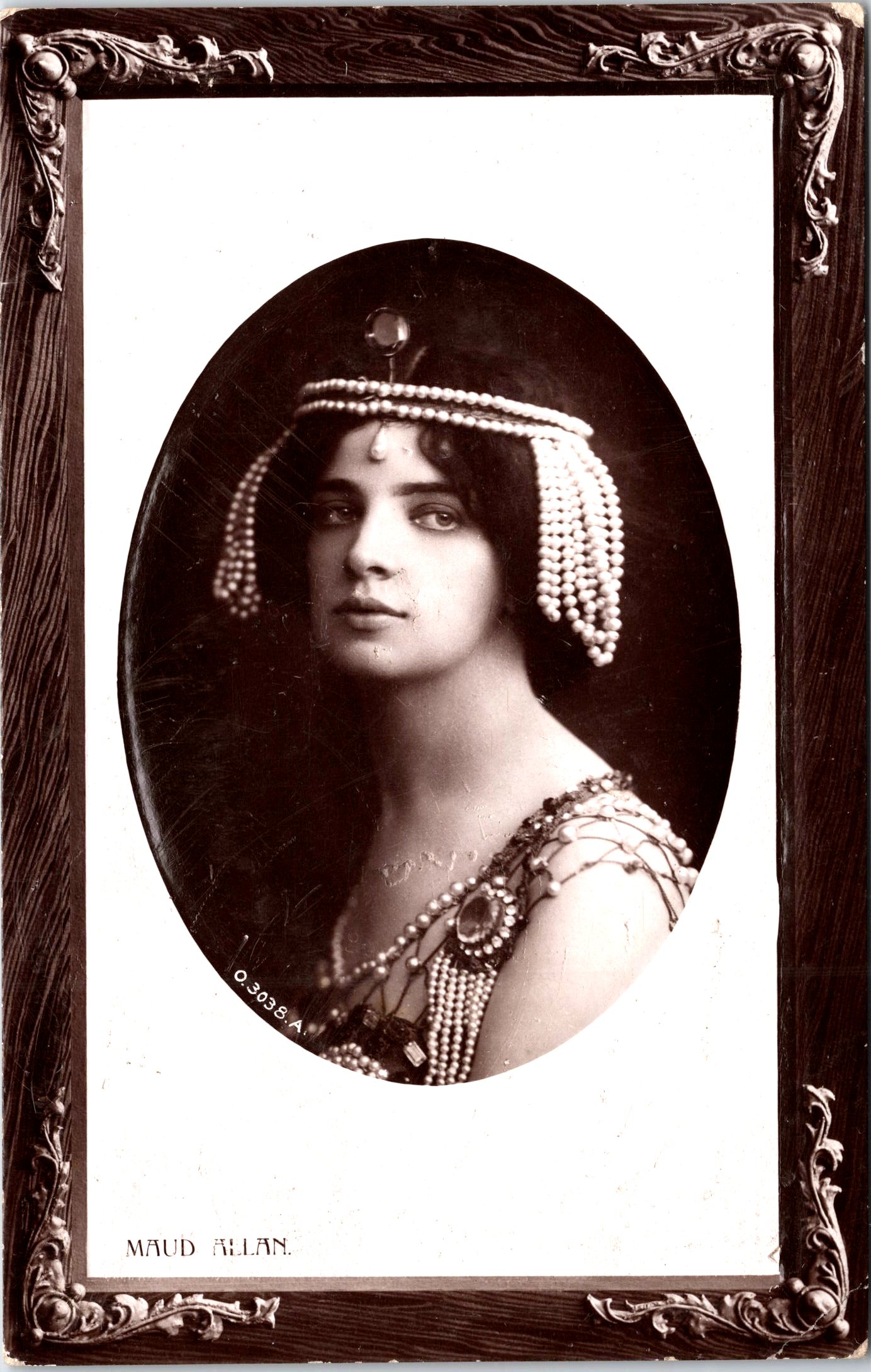
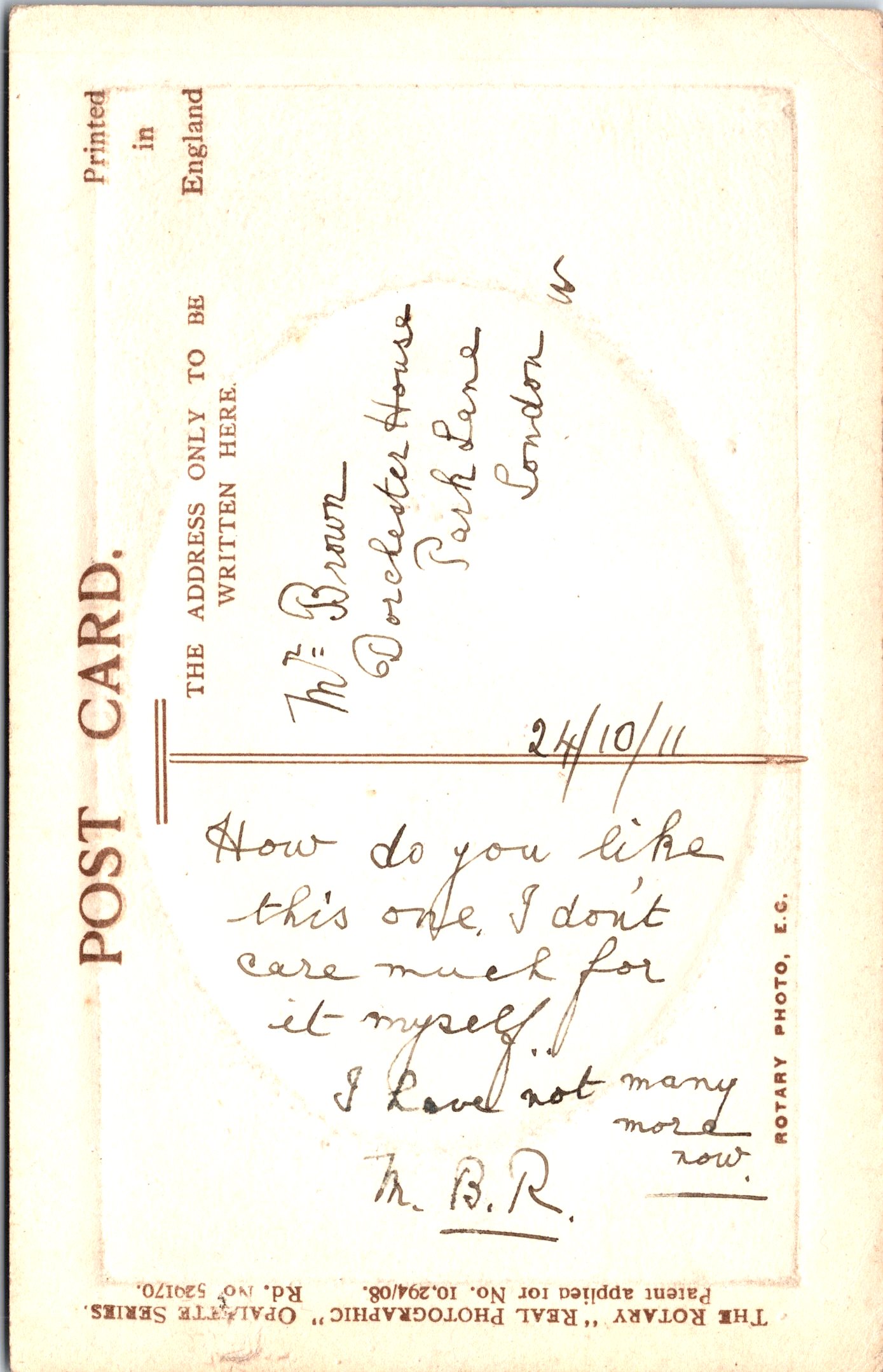
Postcard 8is a portrait of Allan wearing an elaborate costume: strands of pearls draped across her shoulders and chest, a large bejeweled ornament on her bodice, and a pearl headdress with a central jewel resting on her forehead. Her dark hair frames her face, and she gazes with a calm, slightly enigmatic expression. The overall mood of the image is both theatrical and regal, emphasizing her role as a stage performer who often blurred the line between classical dance and sensual spectacle. The postcard was published by Rotary Photo as part of their “Opalette” series. The ornate printed “frame” around the oval portrait adds an additional decorative touch. The postcard has a divided back and there is a handwritten note dated in 1911. The correspondence reads: “How do you like this one, I don’t care much for it myself. I have not many more now. Th. B.R.” It is addressed to a man located in London.(SOLD)
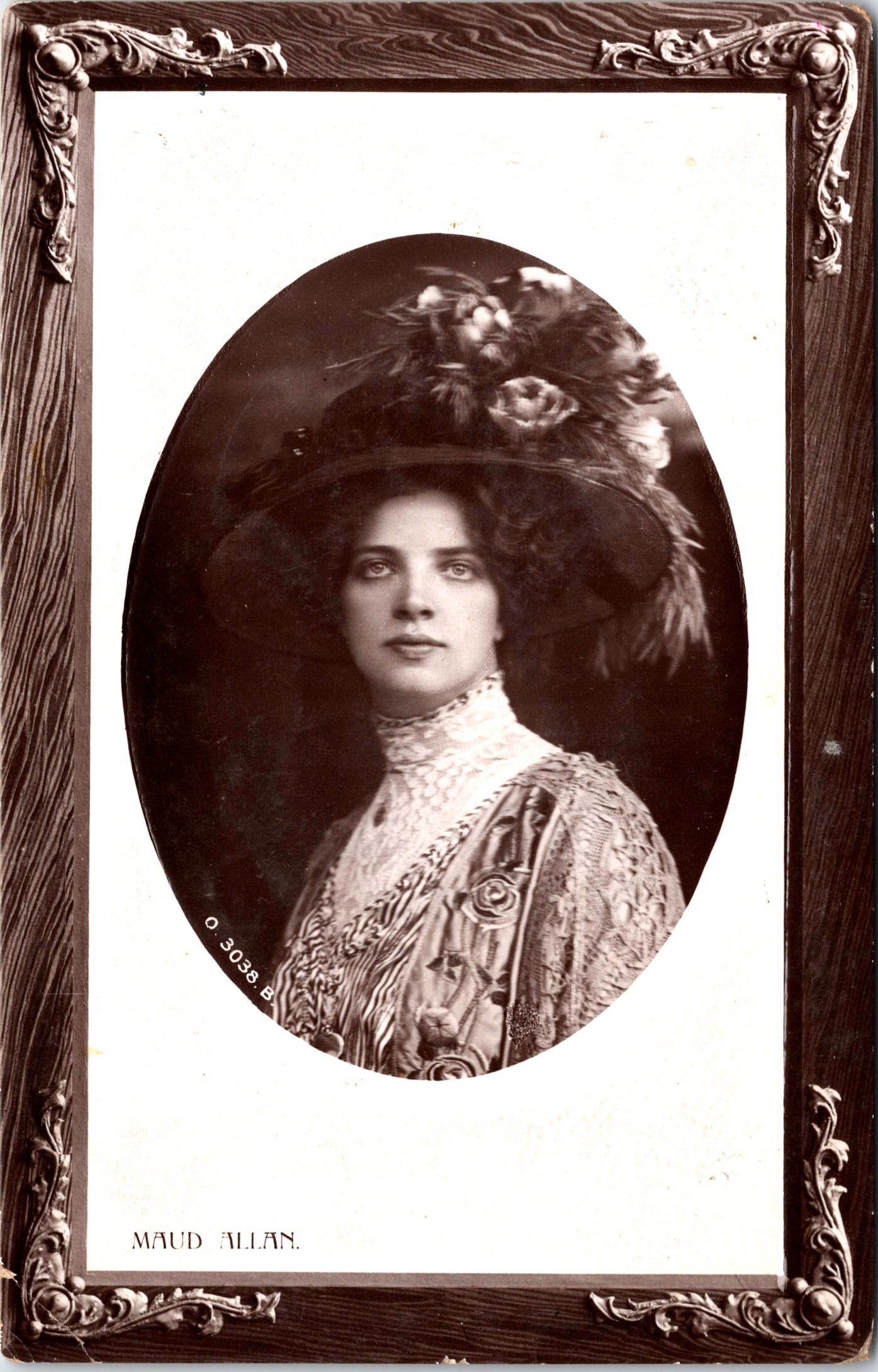
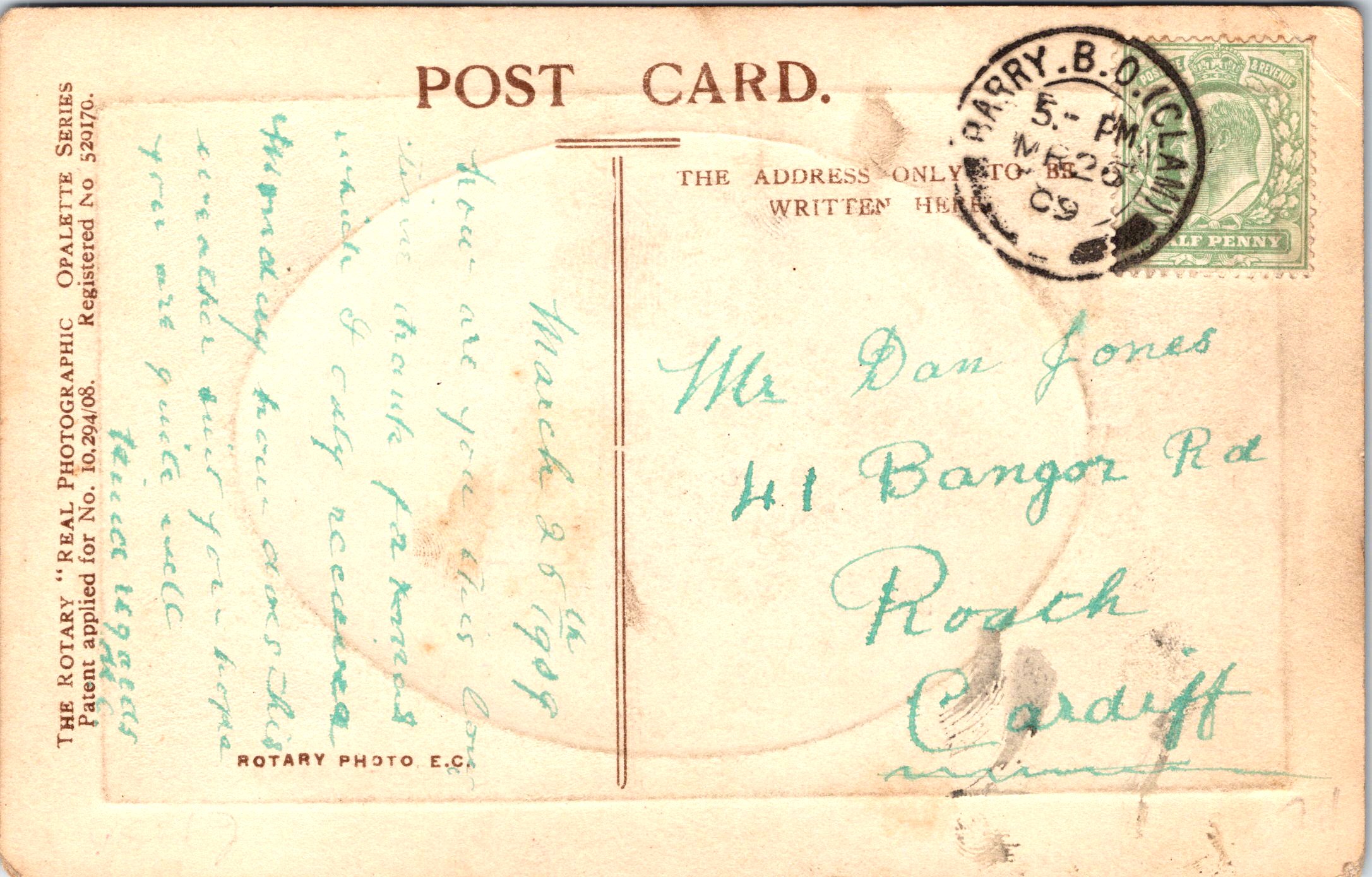
Postcard 9 was published by Rotary Photo and is part of the firm’s Opalette Series. this postcard has a postmark from 1909. (SOLD)
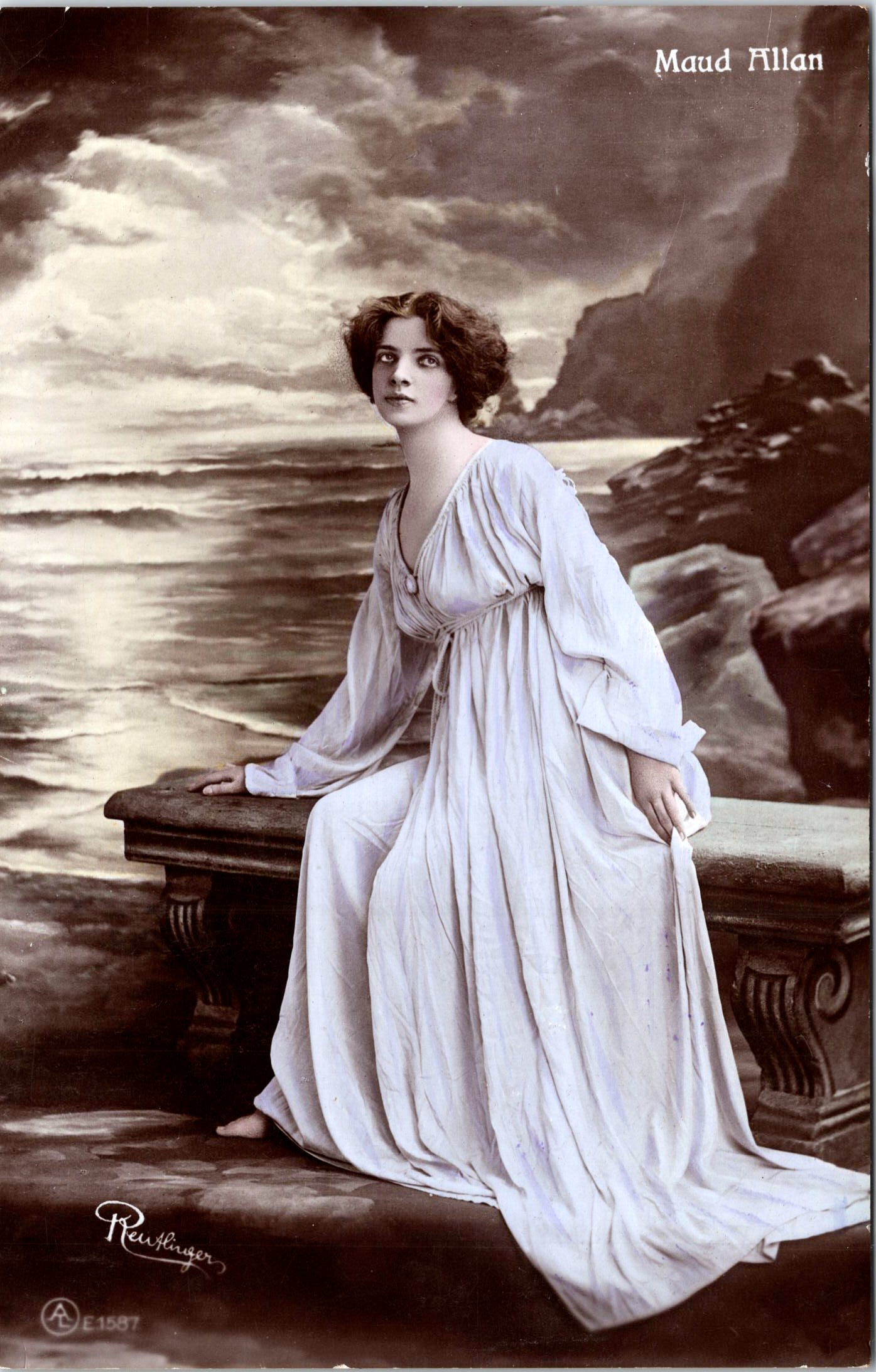
Postcard 10 is a striking Edwardian real photo postcard features Maud Allan, the celebrated dancer and stage performer whose career bridged classical, exotic, and highly sensual performance at the turn of the 20th century. Allan is shown seated in a flowing, classical-style gown, posed against a dramatic seaside backdrop of rocks, surf, and stormy skies. The pose is both poised and emotionally charged, with her gaze turned slightly upward, giving the image a dreamlike, almost mythic quality. She is dressed in a soft, empire-waist gown with loose sleeves and a long, flowing skirt. The styling deliberately evokes antiquity and romantic fantasy, which aligns perfectly with Allan’s reputation for expressive, sensuous dance interpretations rather than traditional ballet technique. Her bare foot and relaxed posture add to the quiet intimacy of the image. The photograph was taken by Leopold Reutlinger, one of the most important and accomplished theatrical photographers of the period. Reutlinger’s portraits of performers are widely collected and appear in museum collections; his work is especially prized for its technical quality and dramatic staging. His signature appears in the image, and the postcard carries the Reutlinger studio mark and serial number E1587, confirming it as part of his commercial theatrical series. This is an Aristophot Real Photo Postcard, as clearly indicated on the reverse. Aristophot Co. Ltd. was a London-based publisher, specializing in high-quality photographic postcards of actors, dancers, and performers. The reverse also notes “Printed in Saxony,” which was common for high-end photographic postcard production during this period. This specific image of Maud Allan is uncommon. The combination of Maud Allan + Reutlinger + Aristophot makes this a particularly desirable postcard. In fact, this photograph of Miss Allan can be found in Britain’s National Portrait Gallery. The postcard in their collection was postmarked in 1909. SOLD
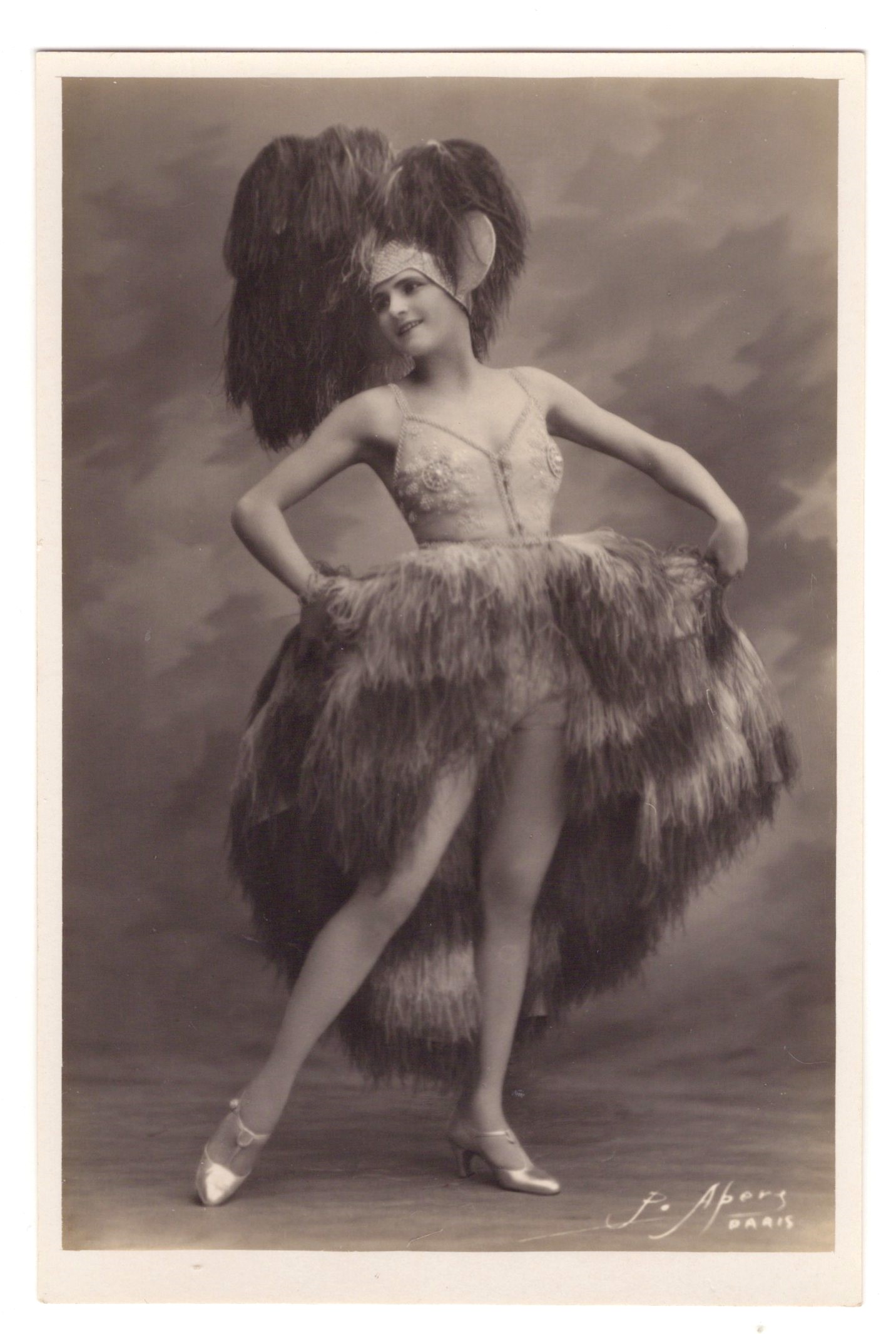
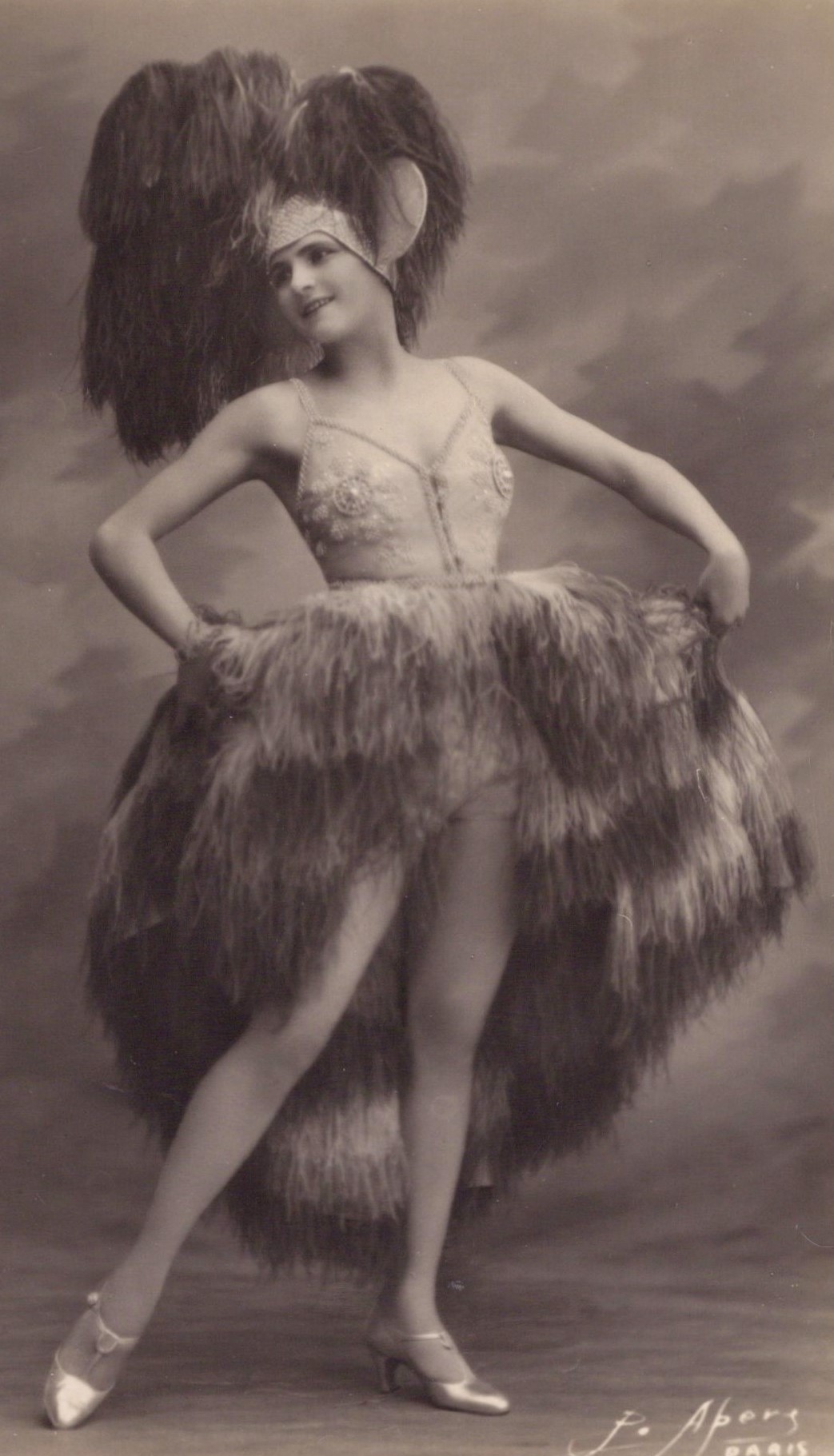
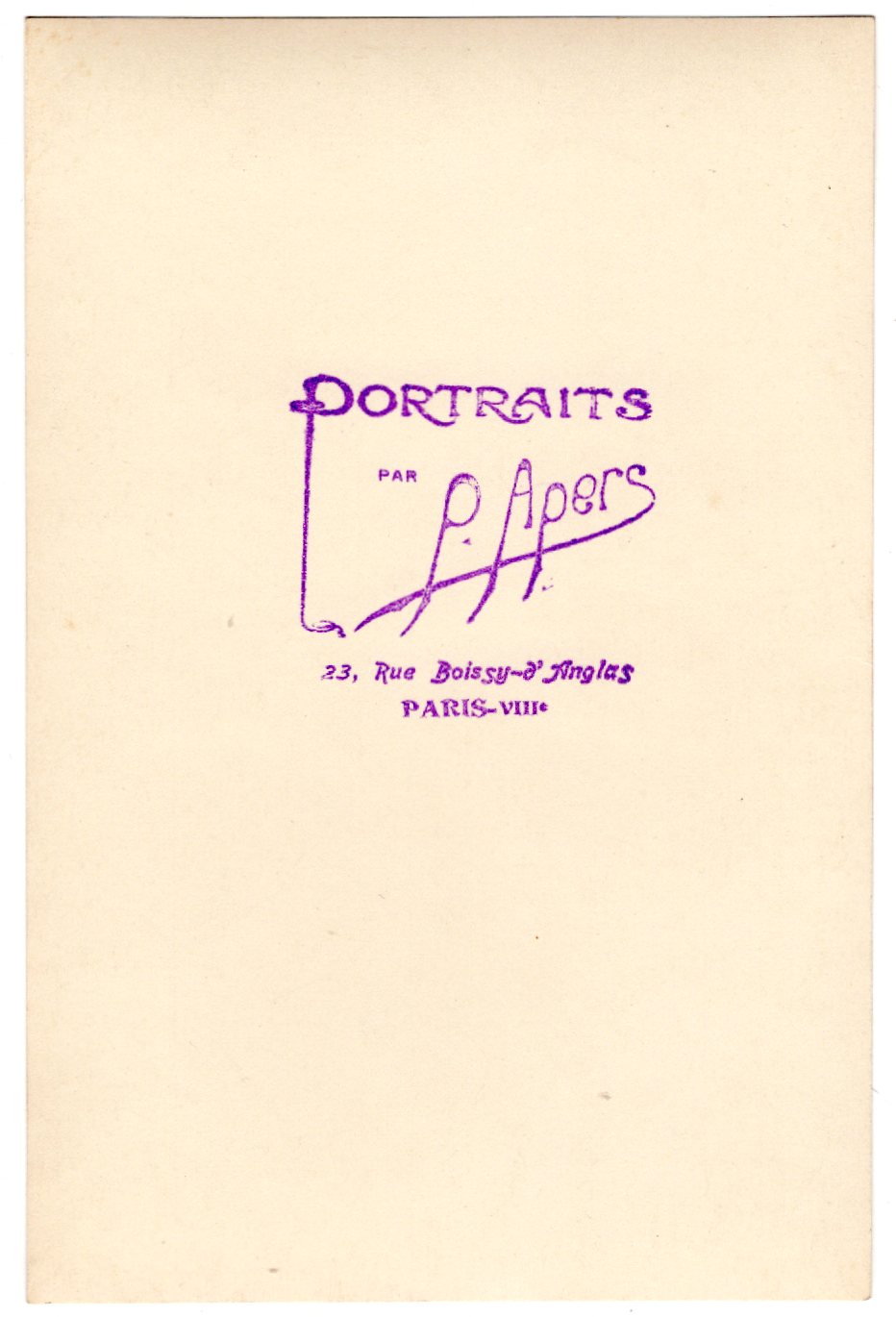
This vintage photograph features a pretty young dancer wearing a magnificent costume. I believe her hat and skirt are made of feathers. Her lithe body is accompanied by a winsome smile. This beautiful photograph comes from the Paris studio of Pierre Apers. He was a talented French photographer active in the 1920’s and 1930’s. His studio was in Paris and he specialized in portraiture. He is known for his photographs of French theatre and film stars. Some of his work is in the collection of the Bibliotech Francais in Paris. The reverse of the photograph has an ink stamp providing the address of Aper’s studio. SOLD
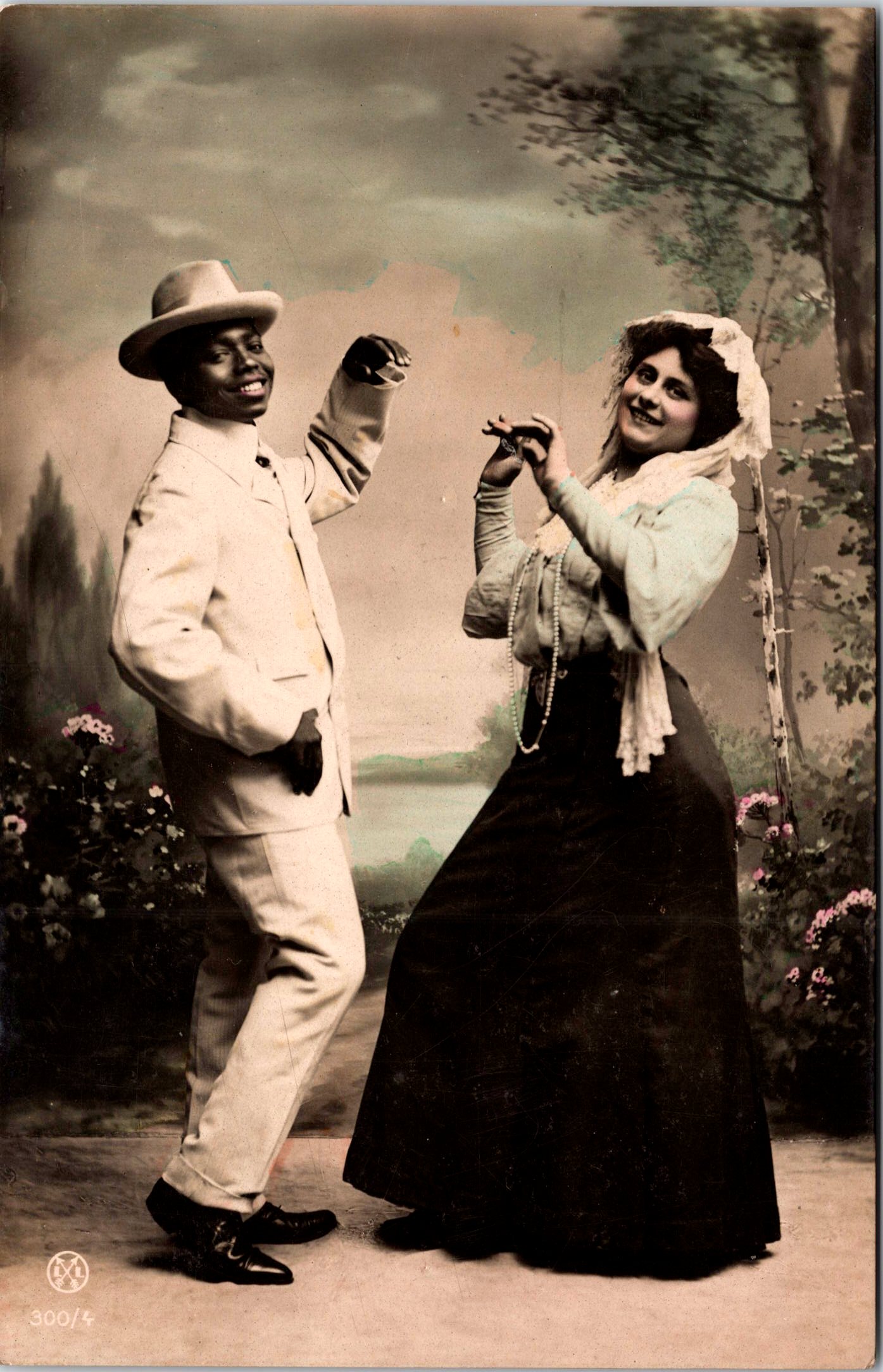
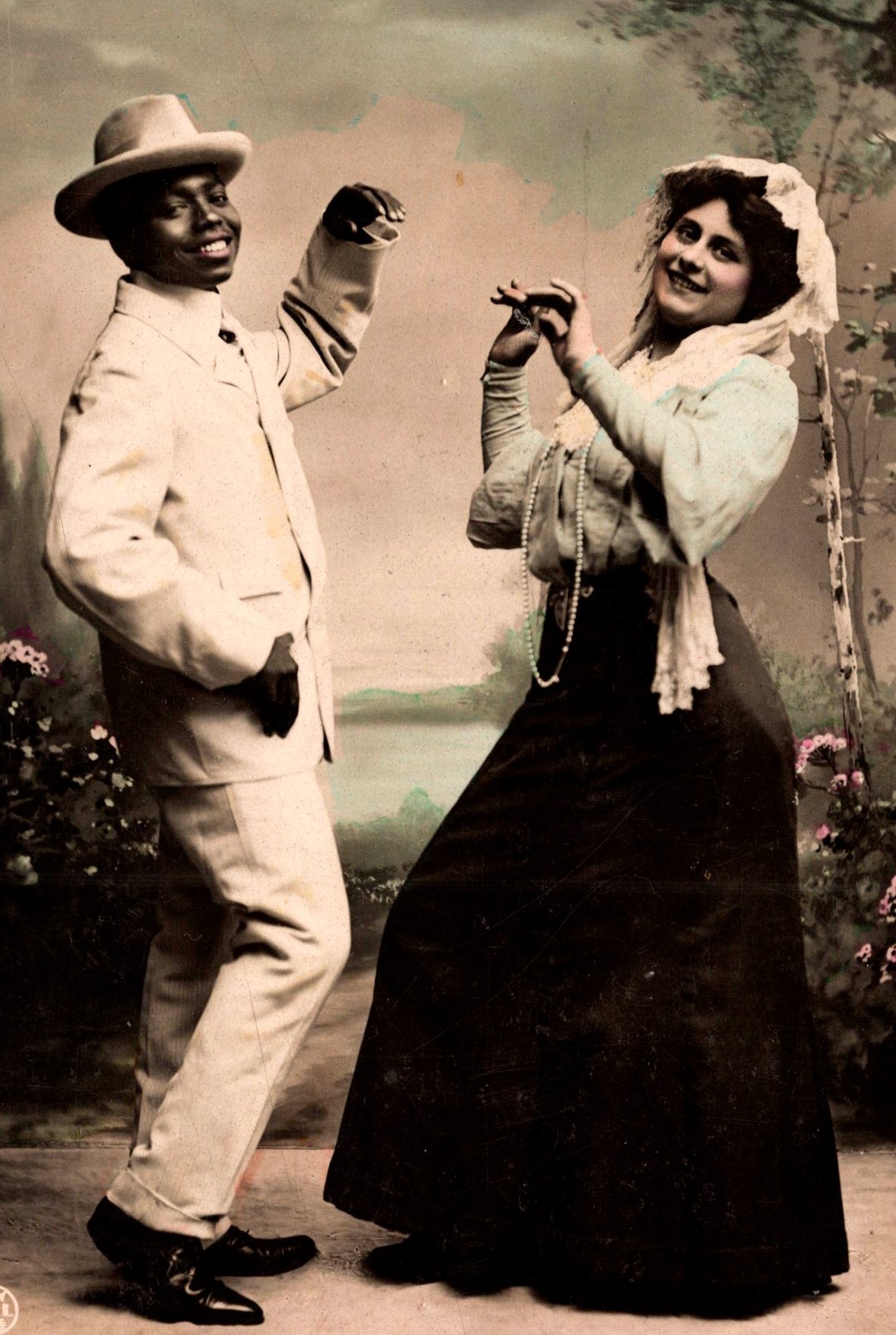
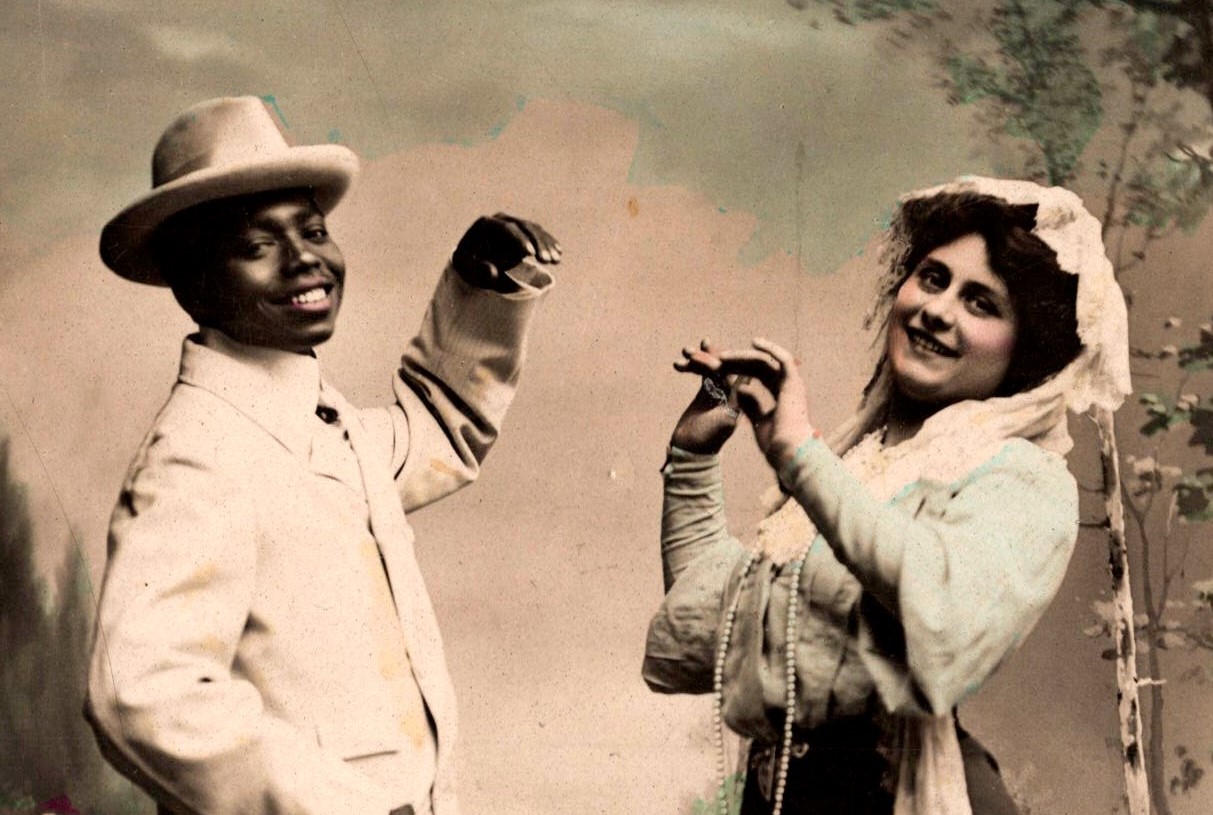
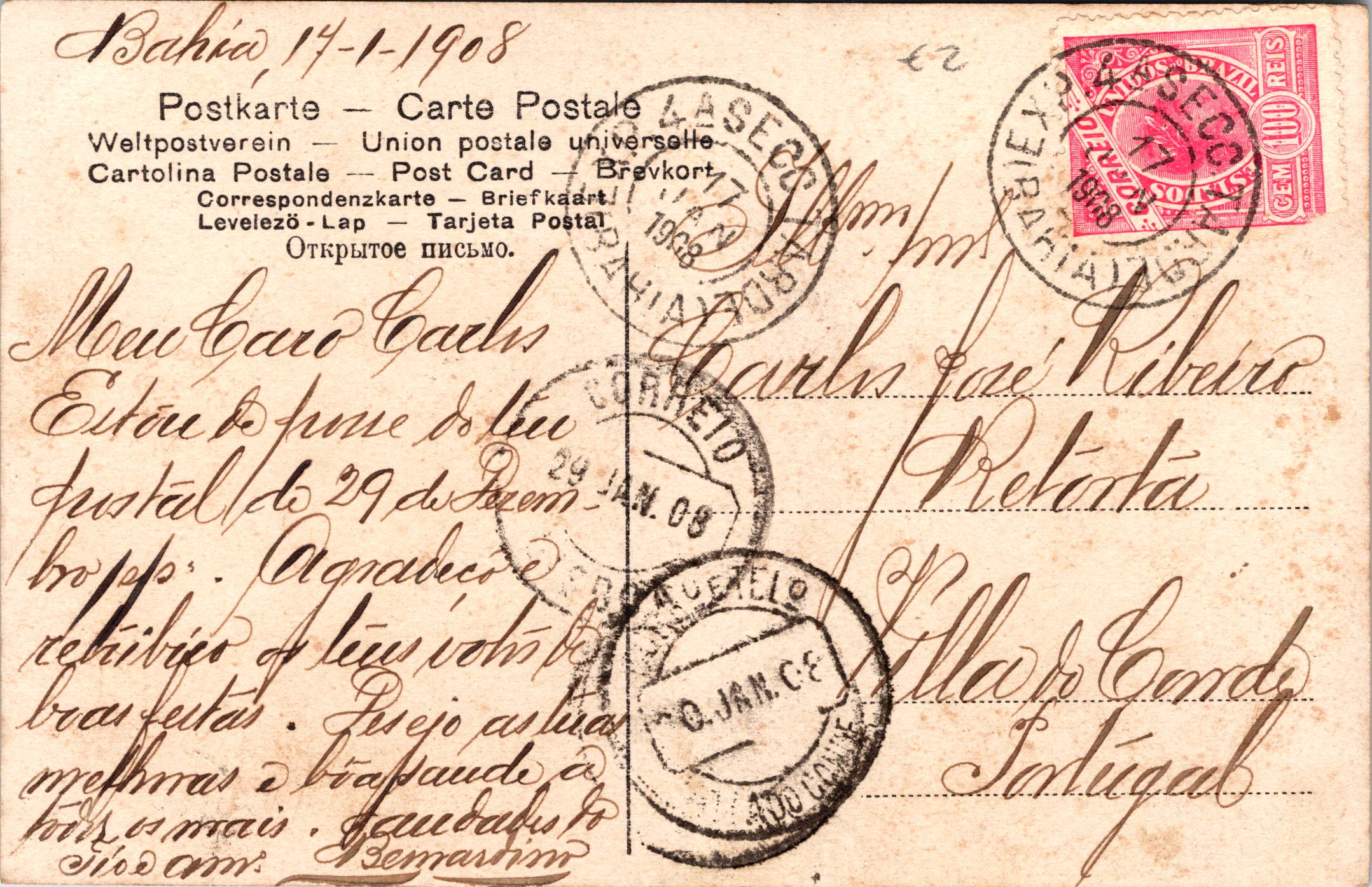
This vintage real photo postcard features an attractive dance couple. It appears that the dancers are from Brazil (judging by the postmark). The male dancer is wearing a very cool white suit while the woman is wearing traditional clothing. Both of the dancers are flashing beautiful smiles. This postcard was published by L. Langebartels. The firm was located in Berlin, Germany and also was a supplier of photographic paper and plates. The card was postmarked in 1908 in Bahia, Brazil. Bahia is in northeastern Brazil. Interestingly, the city’s annual carnaval celebration is known to bring together flamboyantly costumed dancers with samba and axe music for a massive “street party”. Could the couple seen in this postcard be carnaval dancing? SOLD