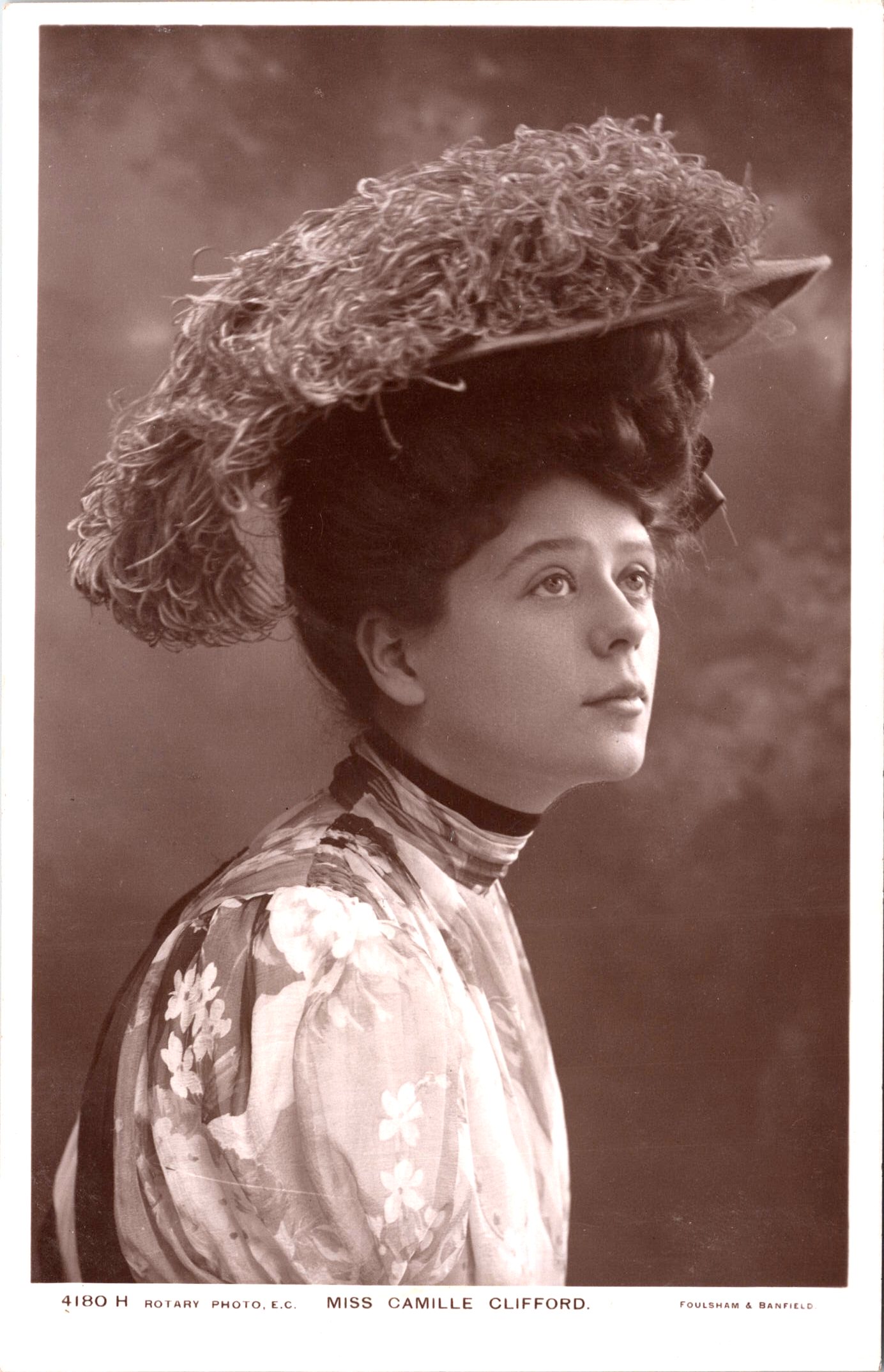
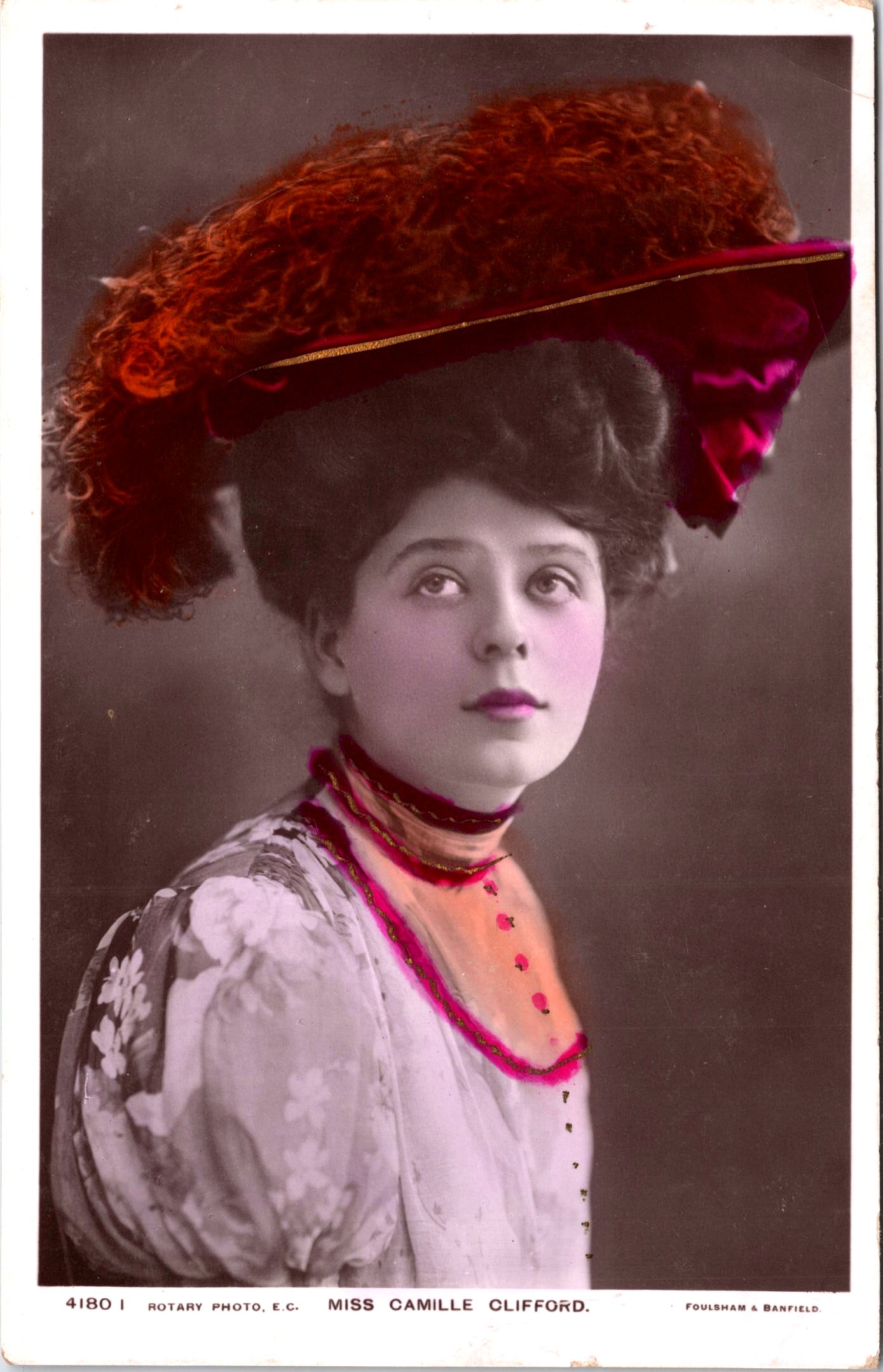
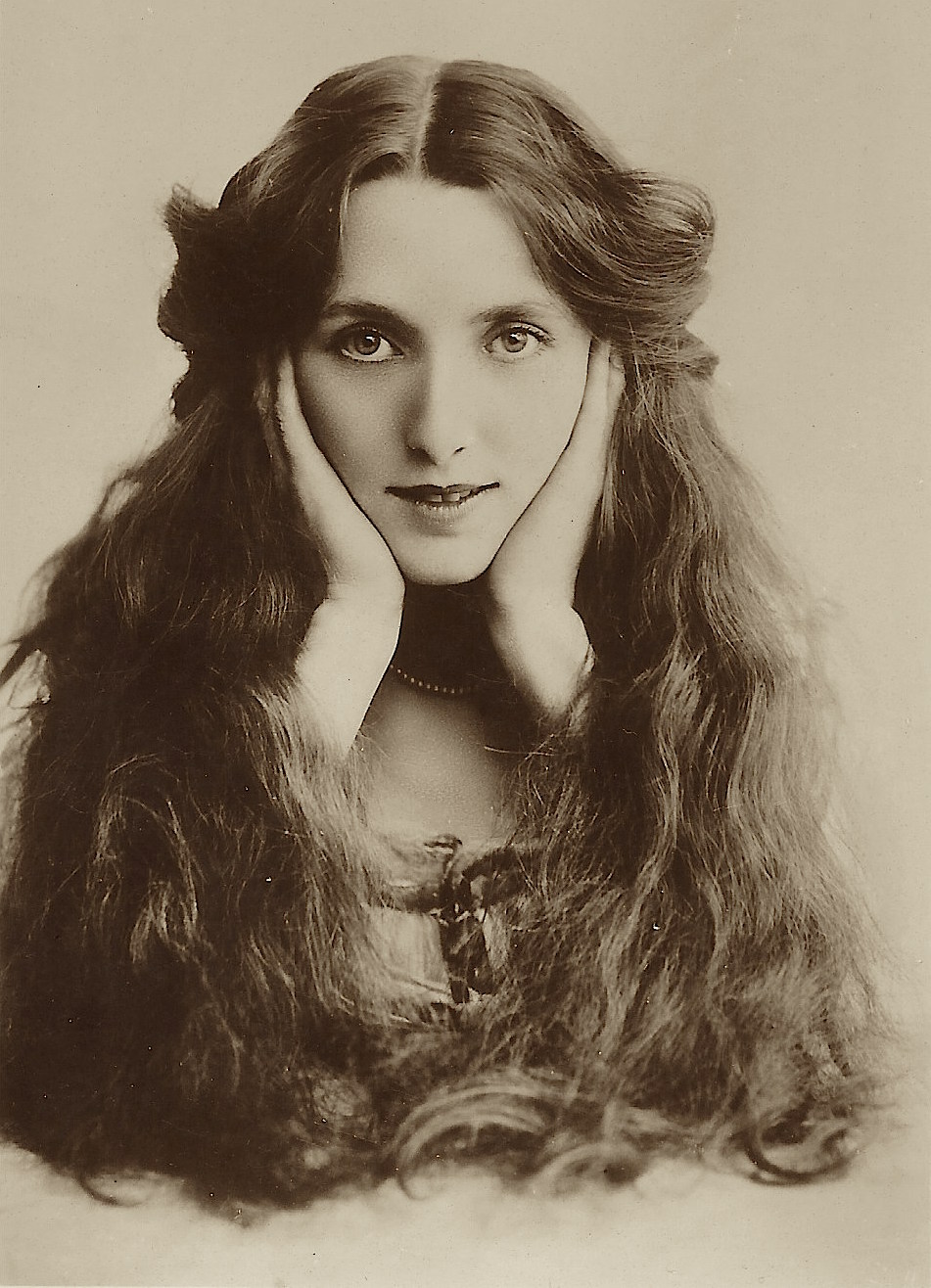
Camille Clifford (1885–1971) was a Belgian-born stage actress and fashion icon best known as the quintessential “Gibson Girl”, a feminine ideal created by American illustrator Charles Dana Gibson. Born in Antwerp, Belgium, she was raised in Sweden and later in Boston, Massachusetts. In 1902, she entered and won a contest sponsored by Gibson seeking the perfect embodiment of his Gibson Girl drawings, which rocketed her to fame. Clifford’s signature look — an hourglass figure, piled-high coiffure, and aristocratic bearing — made her an immediate sensation in Edwardian society. She soon transitioned to the London stage, where her statuesque beauty often overshadowed her acting roles. Her most famous performance was in the musical comedy The Catch of the Season (1904), where she appeared as the aristocratic Lady Crystal. In 1906, Clifford married the Hon. Henry Lyndhurst Bruce, son of the 2nd Baron Aberdare, and largely retired from the stage after marriage, though she made occasional returns in the 1910s and 1920s. After her husband’s death in World War I, she lived a quieter life but remained a symbol of Edwardian elegance. This is a striking Rotary Photographic Series real photo postcard featuring Miss Clifford, serial number (4180 H). It was published by Rotary Photo, one of the most prolific and respected postcard publishers in early 20th-century Britain. This striking real photo postcard portrays Camille Clifford, captured in one of the most graceful and refined portraits of the Edwardian era. This image, photographed by Foulsham & Banfield, presents Clifford in half-profile, gazing slightly upward with a soft, distant expression that conveys both poise and introspection. Her face is gently illuminated, the lighting accentuating her smooth complexion, delicate features, and the serene confidence that made her one of the most admired beauties of her time. Her hair, styled in the towering pompadour fashion that was so characteristic of the early 1900s, is crowned by an extravagant hat of remarkable size and texture. The hat is elaborately adorned with feathery plumes or straw embellishments that give it a light, almost cloud-like appearance. It sits dramatically atop her voluminous hairstyle, creating a sense of height and elegance that immediately draws the eye upward. Clifford’s dress is exquisitely detailed, made of a light, translucent fabric patterned with delicateblossoms. The floral design softens the overall composition, contrasting beautifully with the structural drama of her hat. The high collar, trimmed in a narrow dark band, elongates her neck and adds to the formality of her pose. The sheen of the fabric suggests silk or organza. Her shoulders are turned slightly away from the camera, allowing the folds of the dress to catch the light in subtle, graceful ways. The expression on her face is one of quiet thoughtfulness — a look that suggests reverie more than performance. Her lips are softly closed, and her eyes, directed slightly above the viewer’s gaze, convey a sense of calm aspiration. (SOLD)
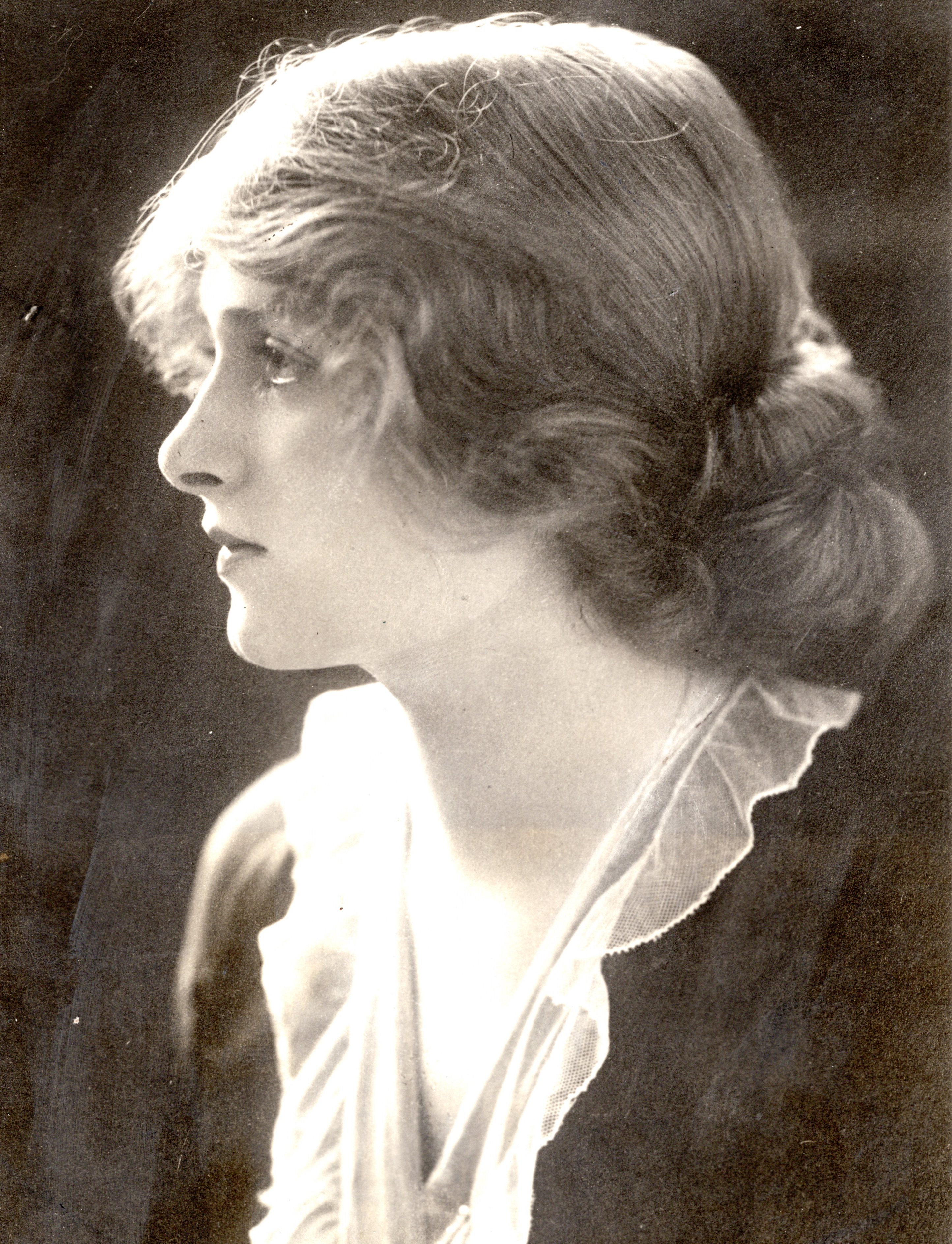
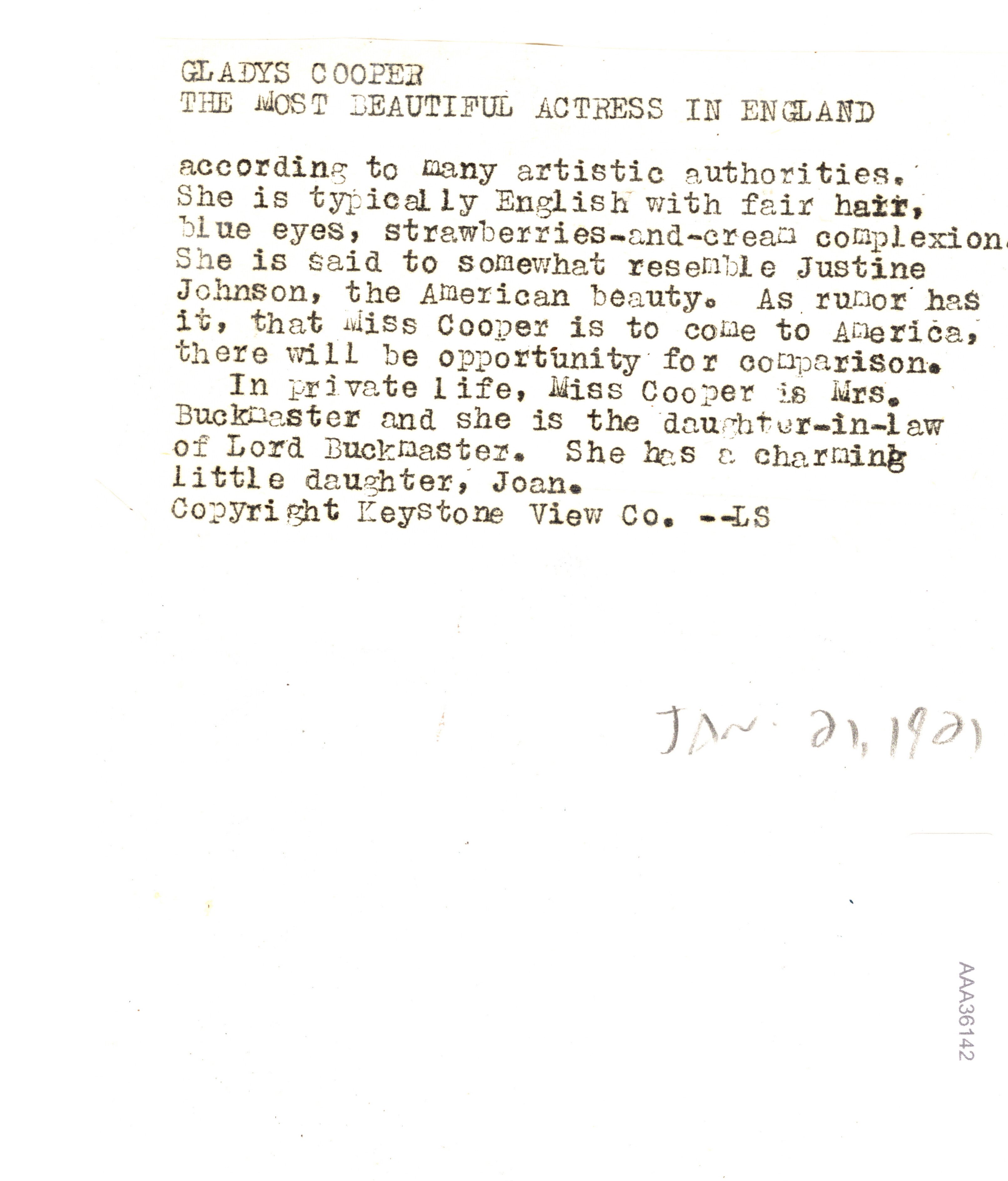
This 1921 press photo (Press Photo 1)features British actress, theatrical manager, and producer Gladys Cooper (1888-1971). Her career spanned over seven decades and she acted on stage, film, and television. She was a popular “pin-up” model for British troops during World War I. In 1967, she was awarded the coveted title of Dame of the Order of the British Empire. Cooper was known for both her talent and her beauty. This press photo focuses on her beauty. In fact the caption of the photograph states “Gladys Cooper : The Most Beautiful Actress In England”. This press photo was produced by the Keystone View Company. Cooper was about 33 years of age at the time this photograph was taken. (SOLD)
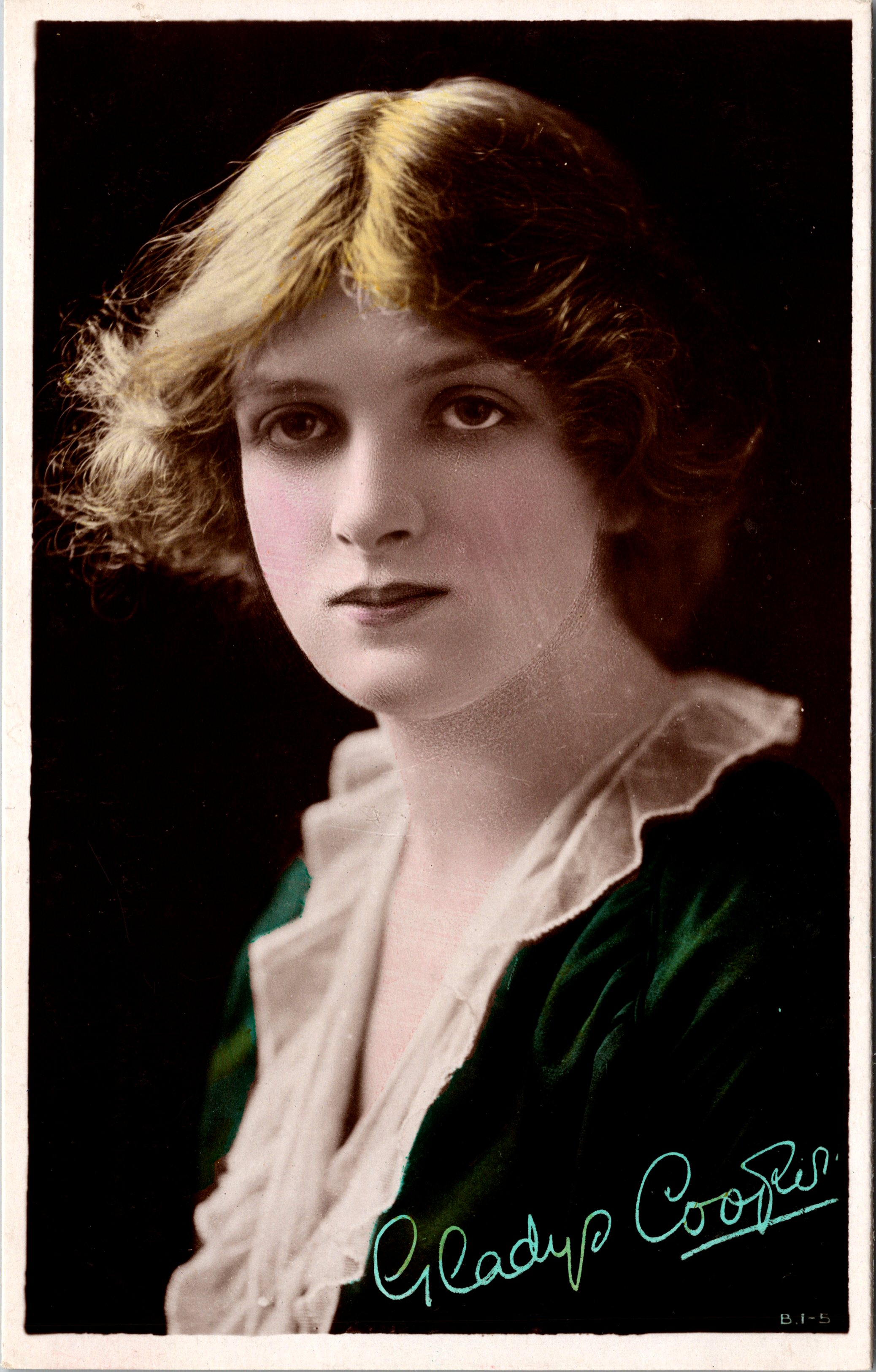
Postcard 1 features the Gladys Cooper’s fascimile autograph. This “hand-painted” postcard was published by Rotary Photo as part of the “British Beauty” series (B1-5). The firm was located in London. (SOLD)
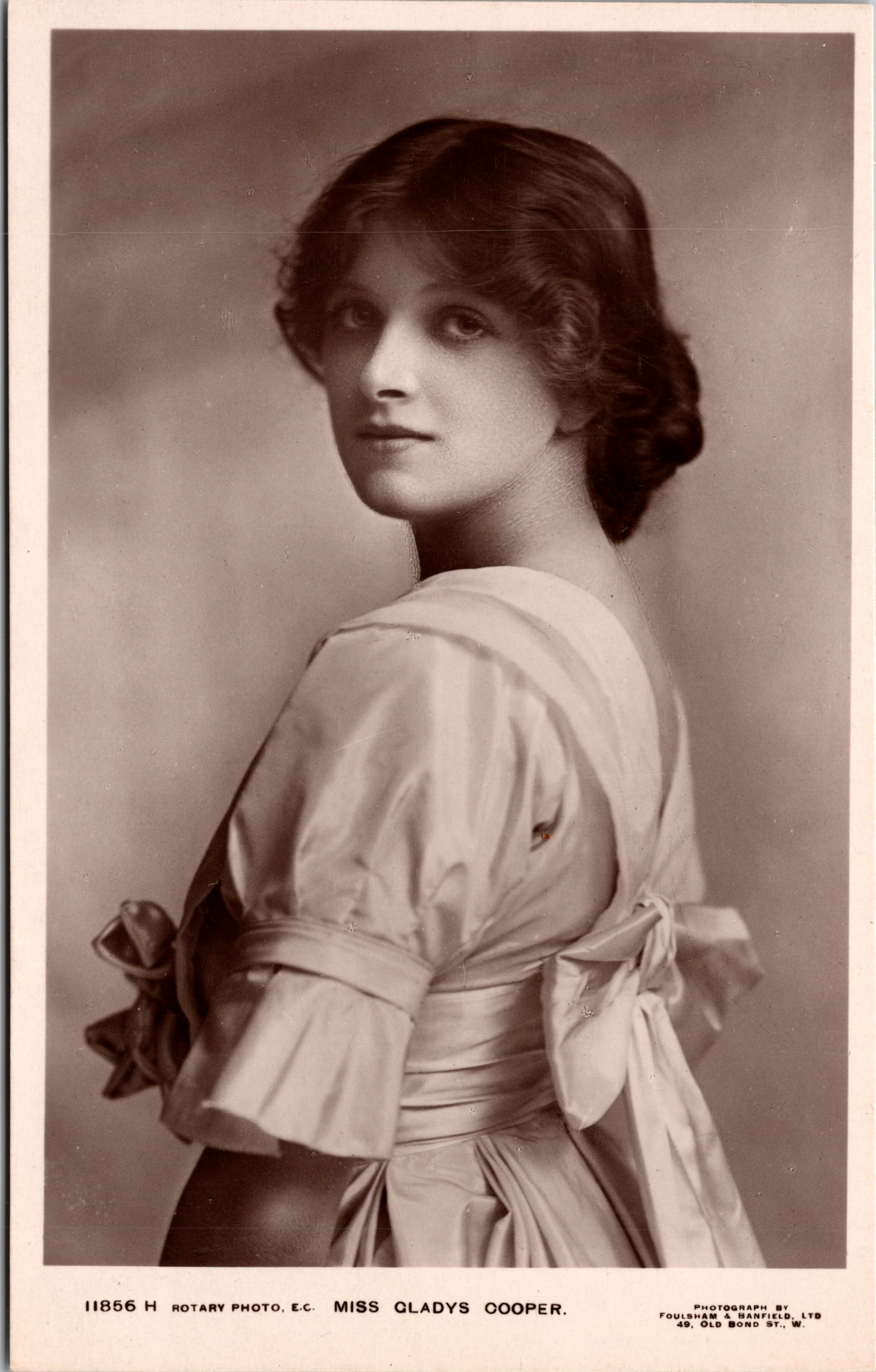
Postcard 2 was published by Rotary Photo as part of the “Rotary Photographic” series (11856H). The firm was located in London. (SOLD)
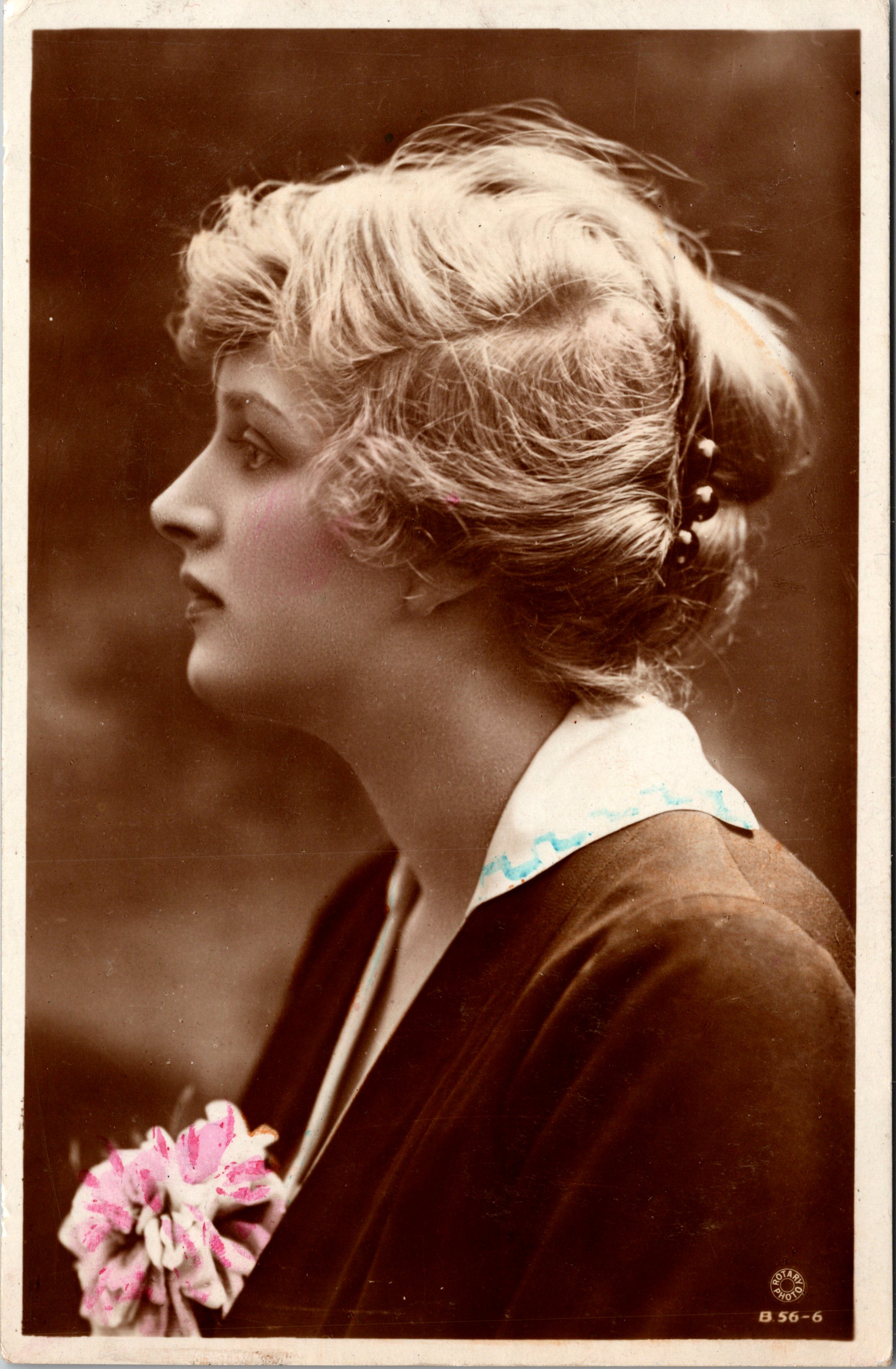
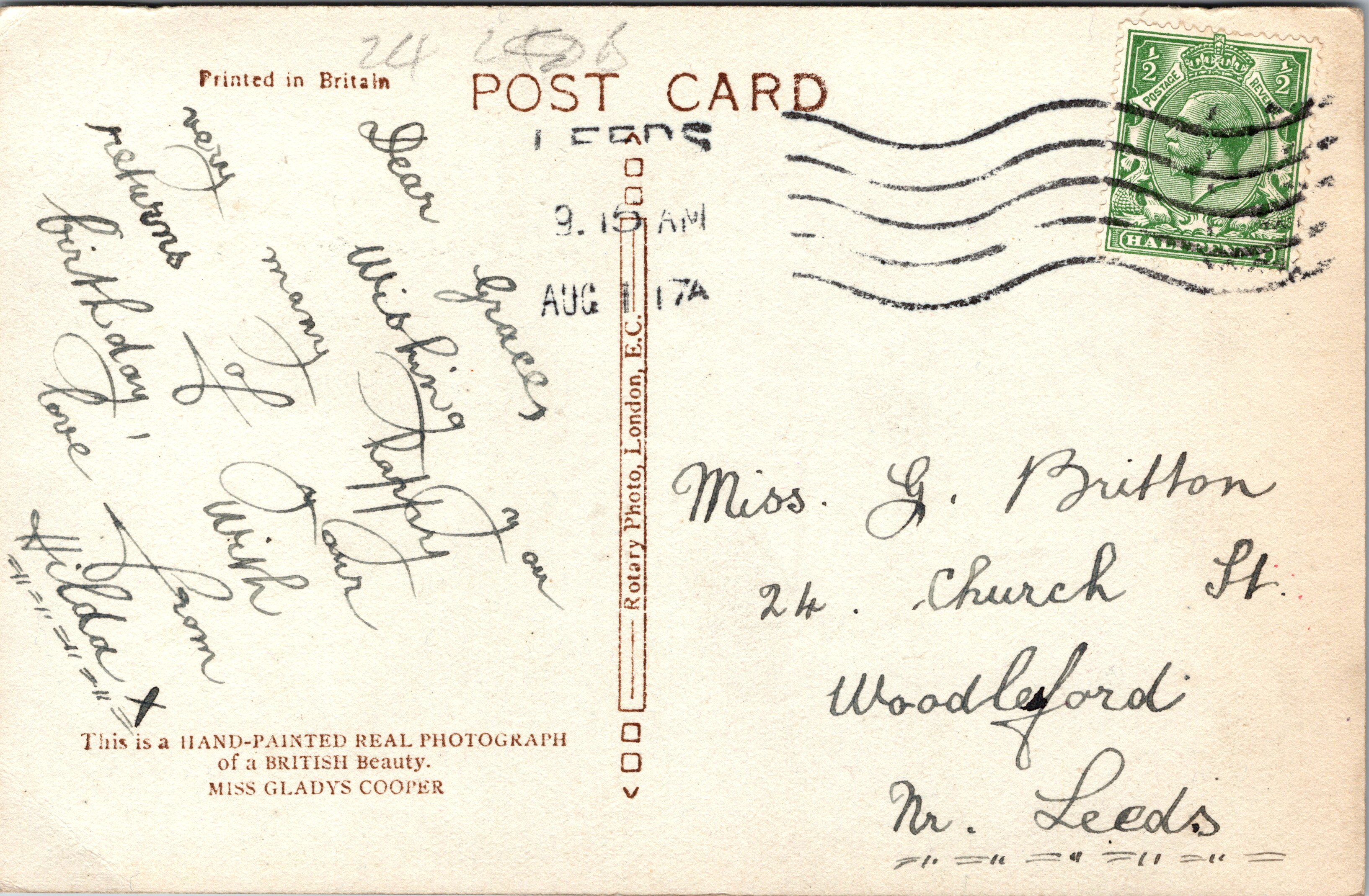
Postcard 3 is “hand-painted” and published by Rotary Photo as part of the “British Beauty” series (B56-6). The message on the card wishes the recipient many happy returns on her birthday. This postcard is in very good condition (see scans). (SOLD)
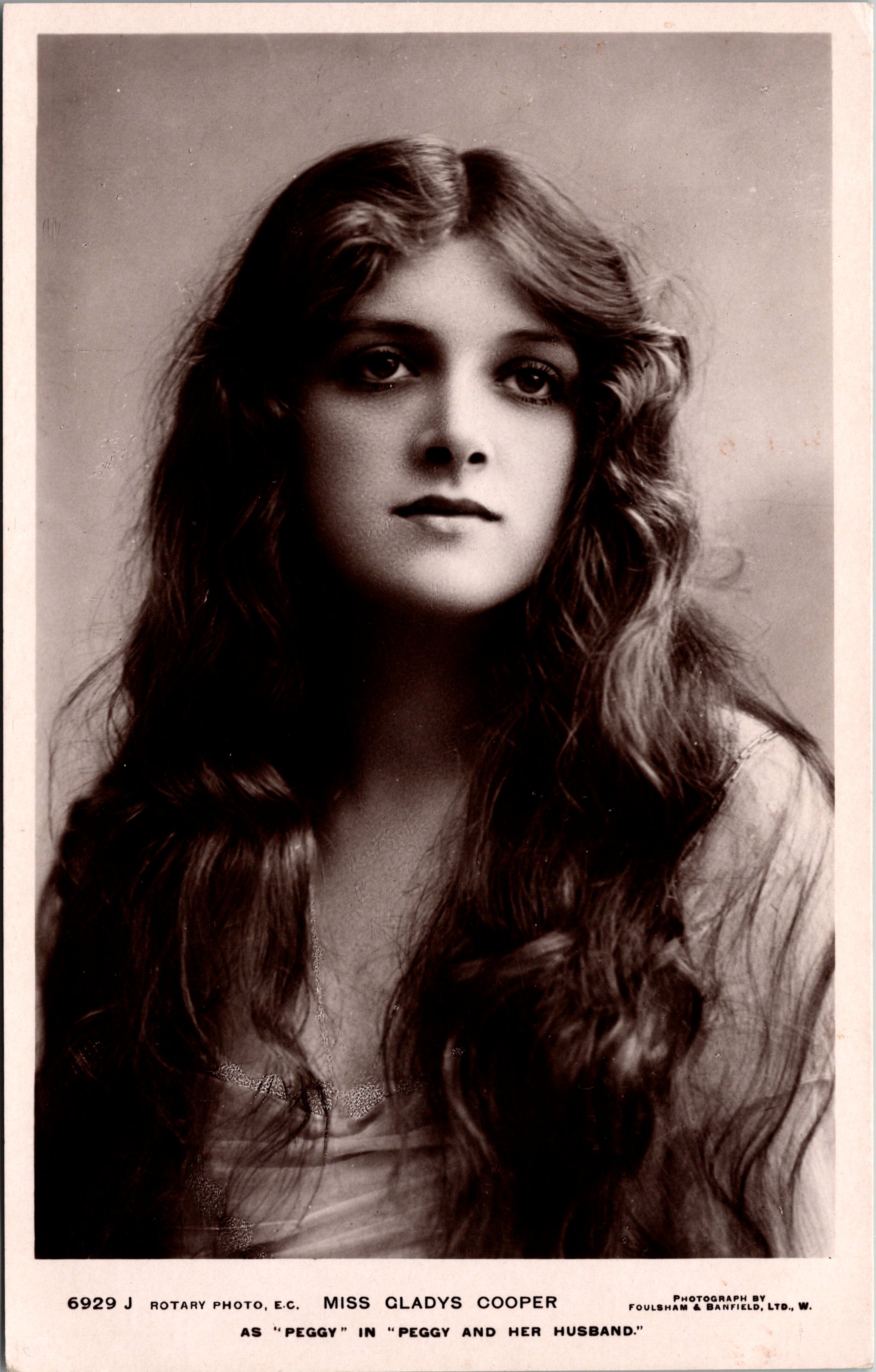
Postcard 4 captures Cooper in her role as “Peggy” in “Peggy And Her Husband” (1914). Cooper’s photograph on this card was taken by the Foulsham & Banfield studio. This postcard was published by Rotary Photo as part of a series (6929 J). The firm was located in London. (SOLD)
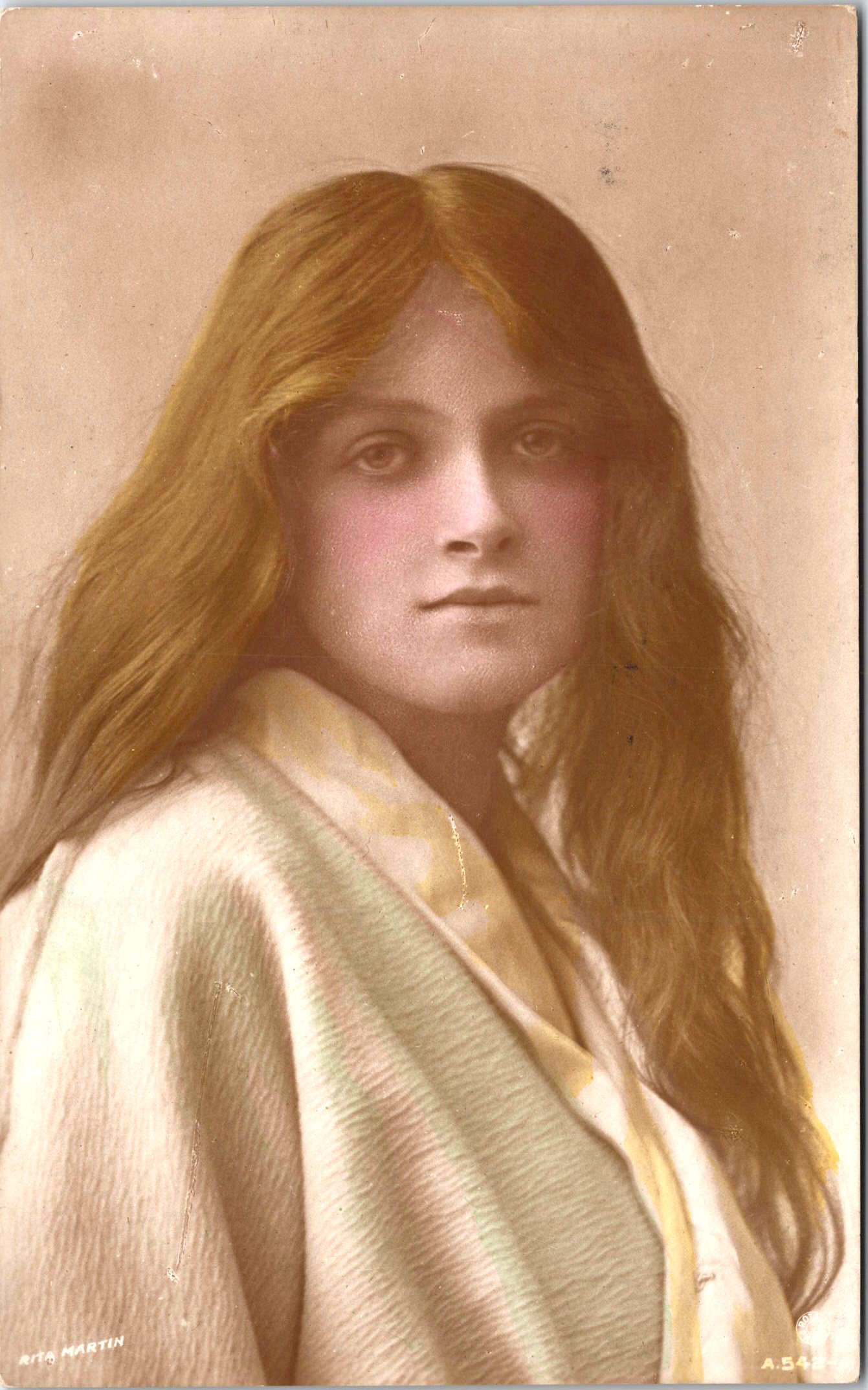
Postcard 5 features Cooper’s photograph taken by celebrated female photographer, Rita Martin. This uncommon postcard was published by Rotary Photo as part of the “British Beauty” series (A542). The firm was located in London. (SOLD)
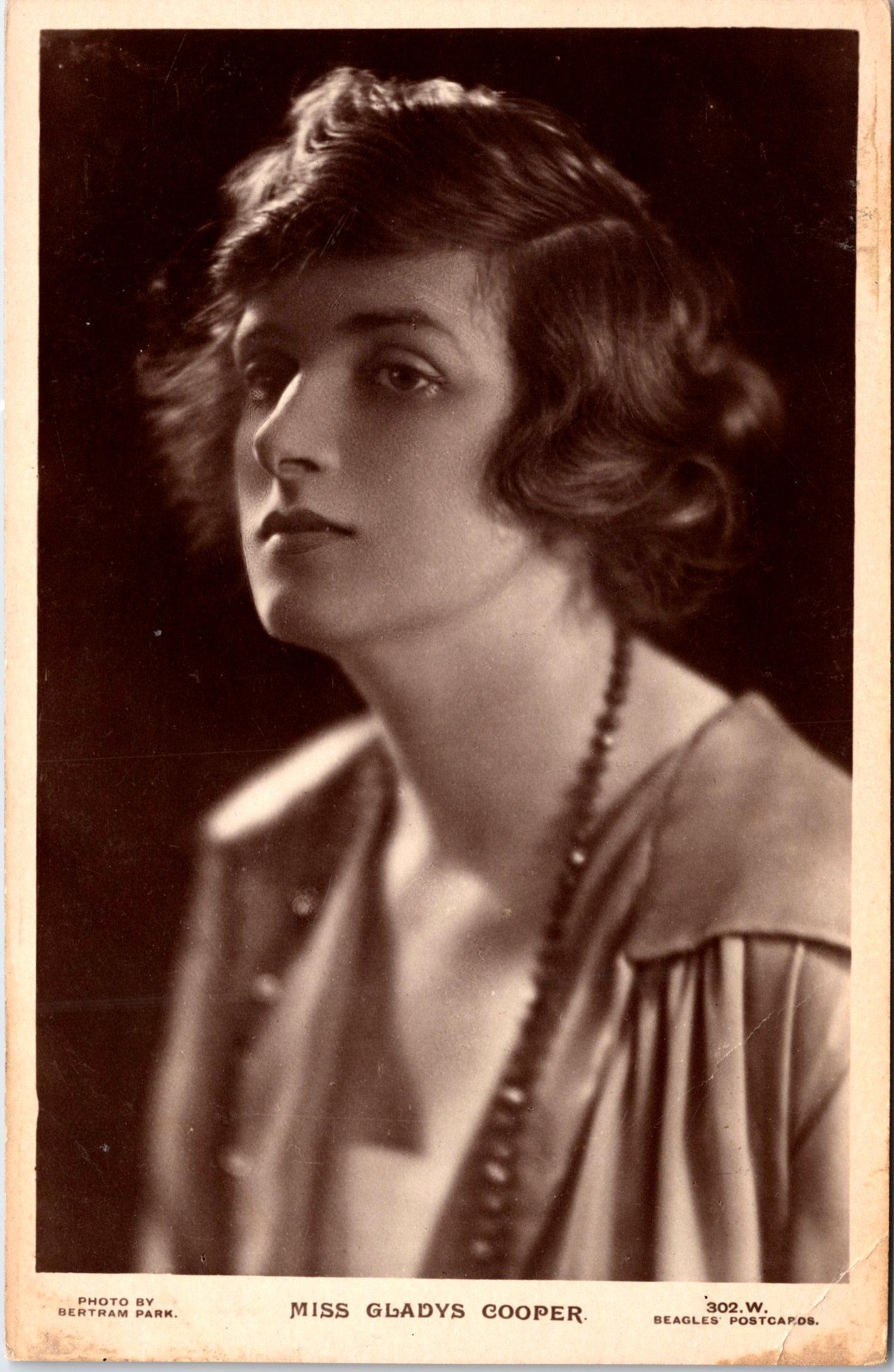
Postcard 6 features a portrait of Cooper that was taken by Bertram Park (1883-1972). He was an English portrait photographer. He photographed many celebrities including members of royalty. A number of engravings of his work were used on British and British Commonwealth stamps. Park was also very involved in producing theatrical photographs. His wife, Yvonne Gregory was also an esteemed photographer. In addition, she served as one of his models. The couple produced books on photographing nudes. Park was also an expert on rose cultivation. This postcard was published by J. Beagles & Co. as part of a series (302W). The firm was located in London. (SOLD)
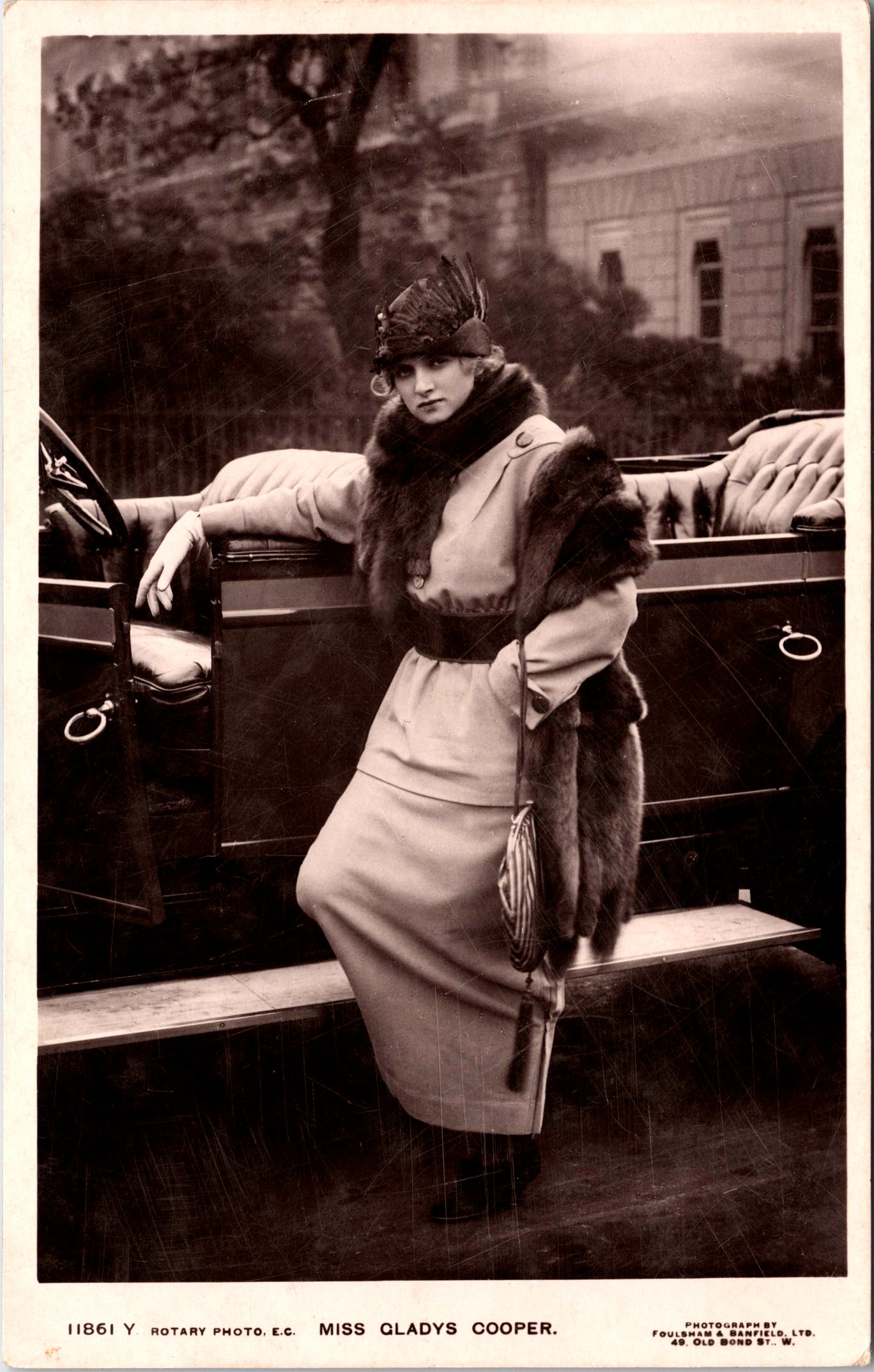
Postcard 7 captures a fashionable Miss Cooper standing next to a beautiful luxurious classic automobile. Cooper’s photograph on this card was taken by the Foulsham & Banfield studio. This postcard was published by Rotary Photo as part of a series (No11861Y). The firm was located in London. (SOLD)
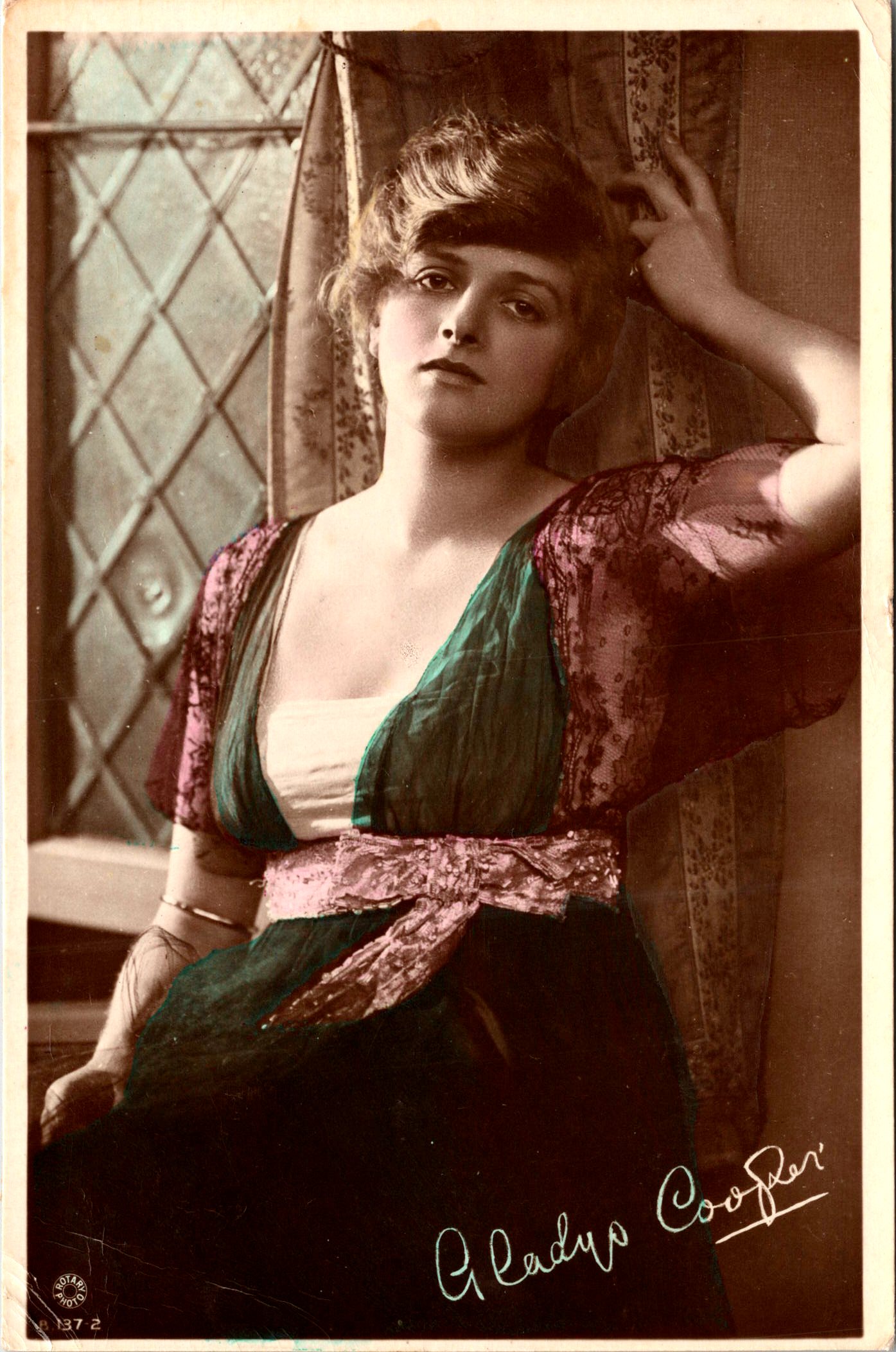
This vintage real photo hand tinted postcard features British actress, theatrical manager, and producer Gladys Cooper (1888-1971). Cooper’s career spanned over seven decades and she acted on stage, film, and television. She was a popular “pin-up” model for British troops during World War I. In 1967, she was awarded the coveted title of Dame of the Order of the British Empire. Cooper was known for both her talent and her beauty. This postcard portrait focuses on her beauty. In fact, she was considered by many to be the most beautiful actress in England. This postcard presents Miss Cooper posed sitting by a window deep in some emotional thought. Cooper’s facsimile autograph is located in the bottom right hand corner. This postcard was published by Rotary Photo as part of the “British Beauty” series (B137-2). The firm was located in London. SOLD
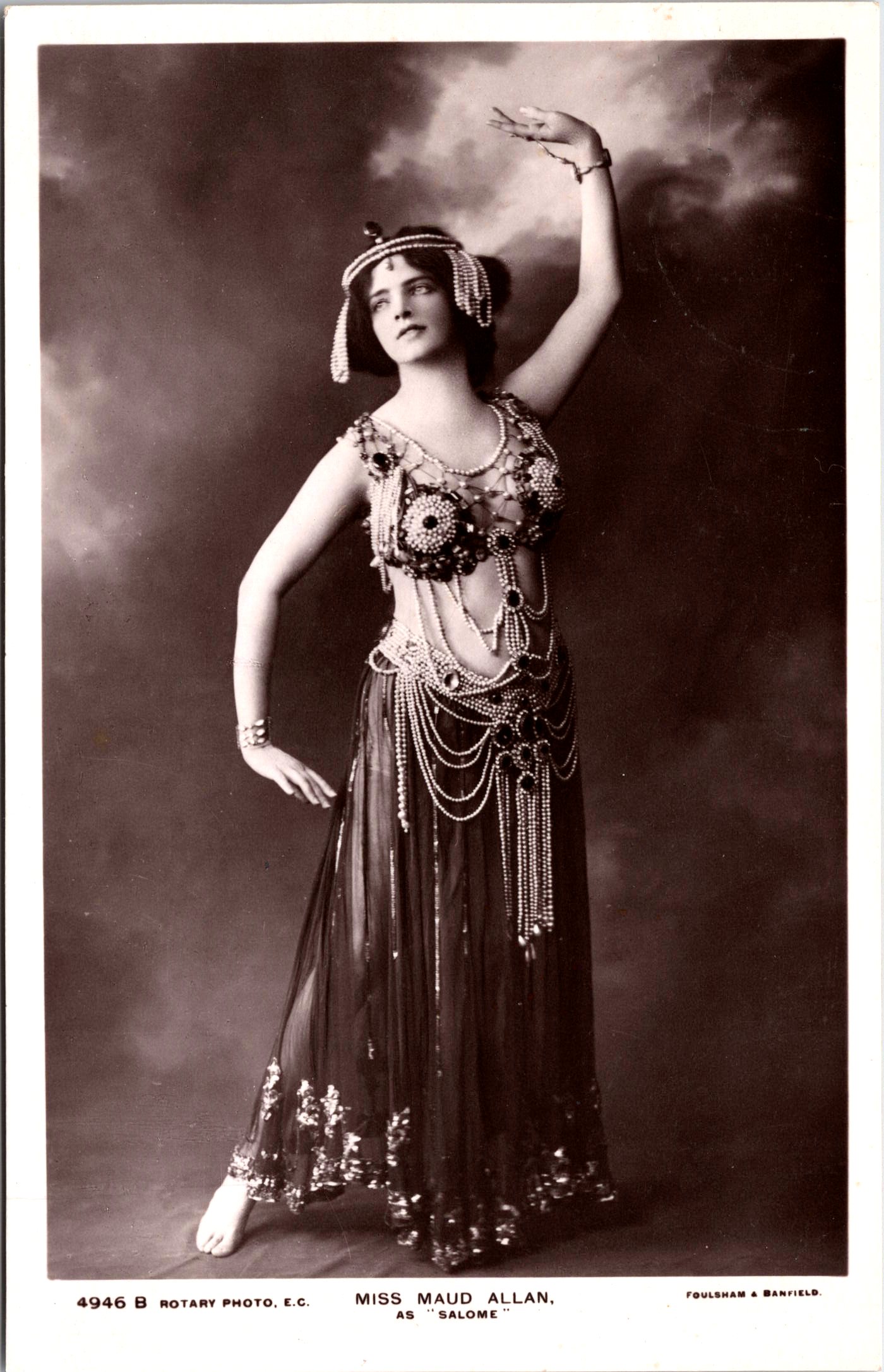
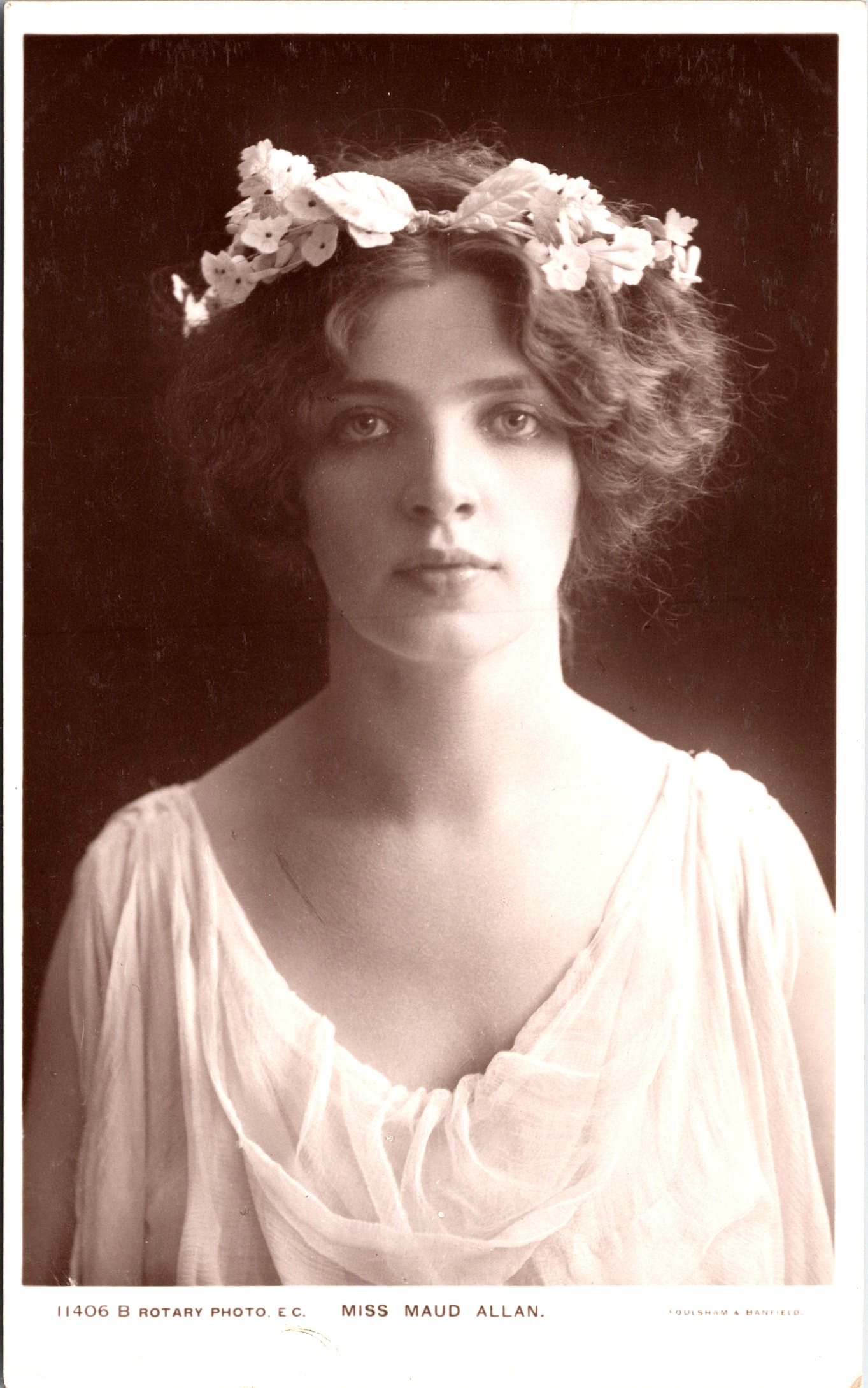
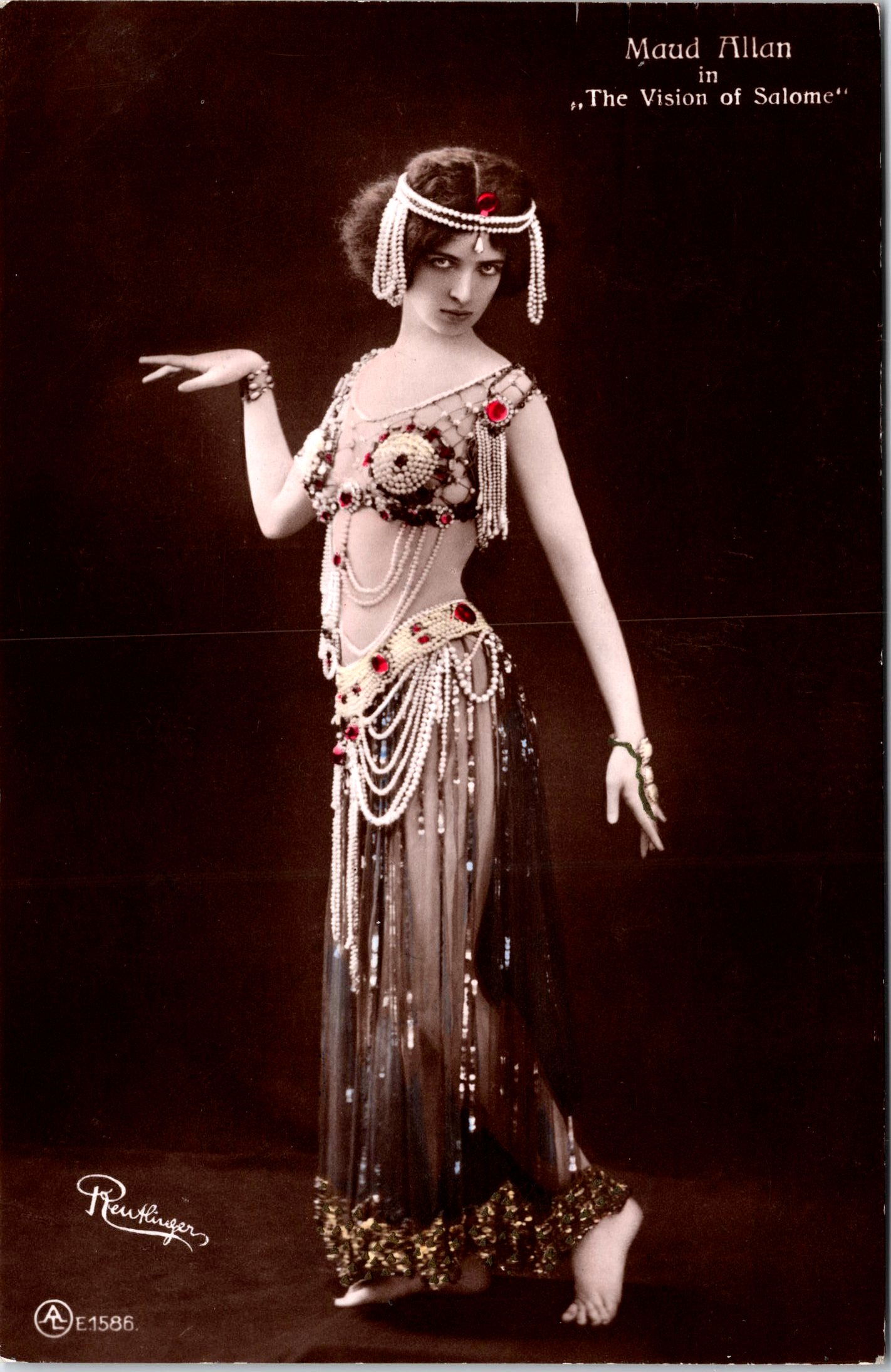
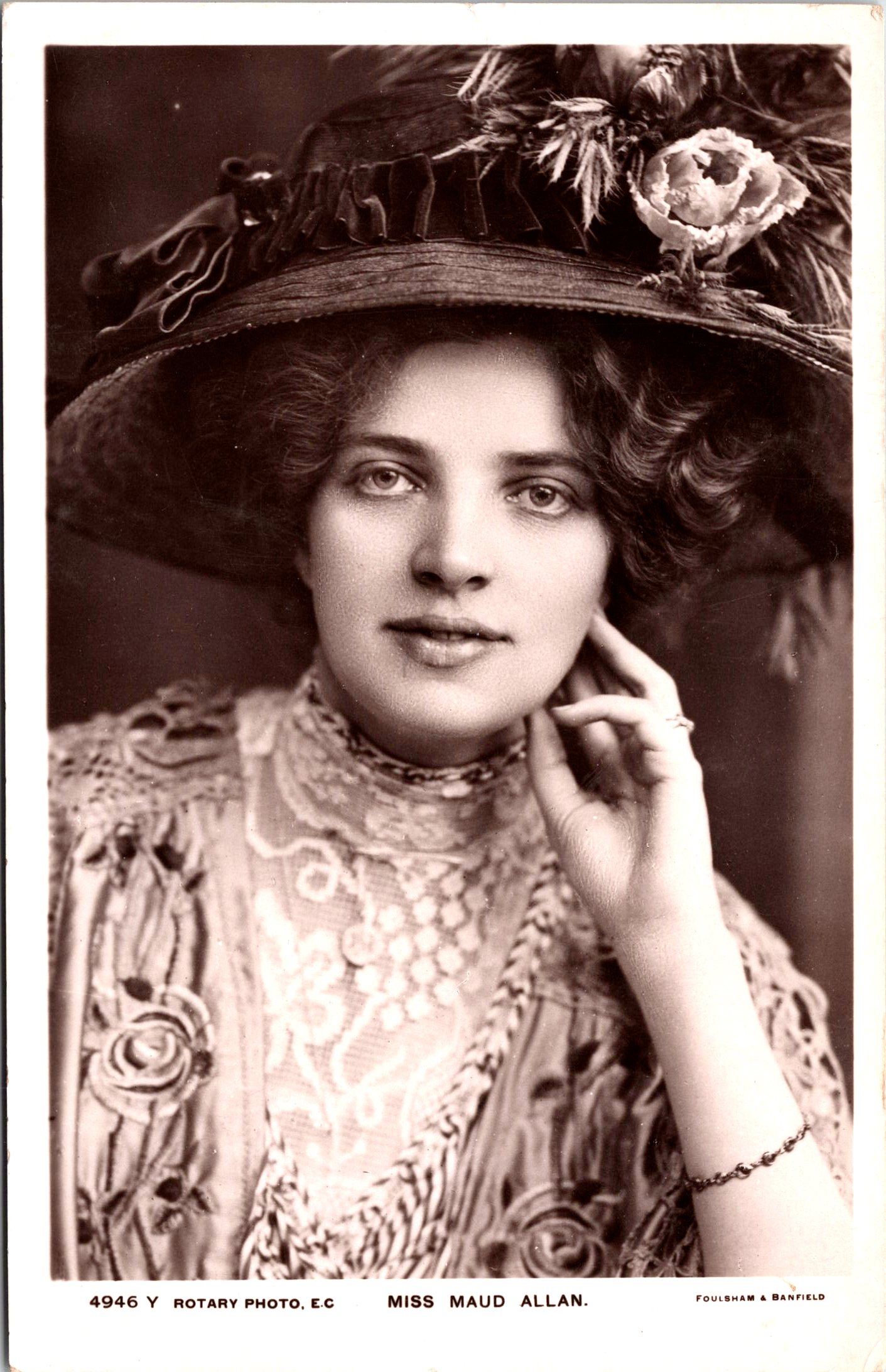
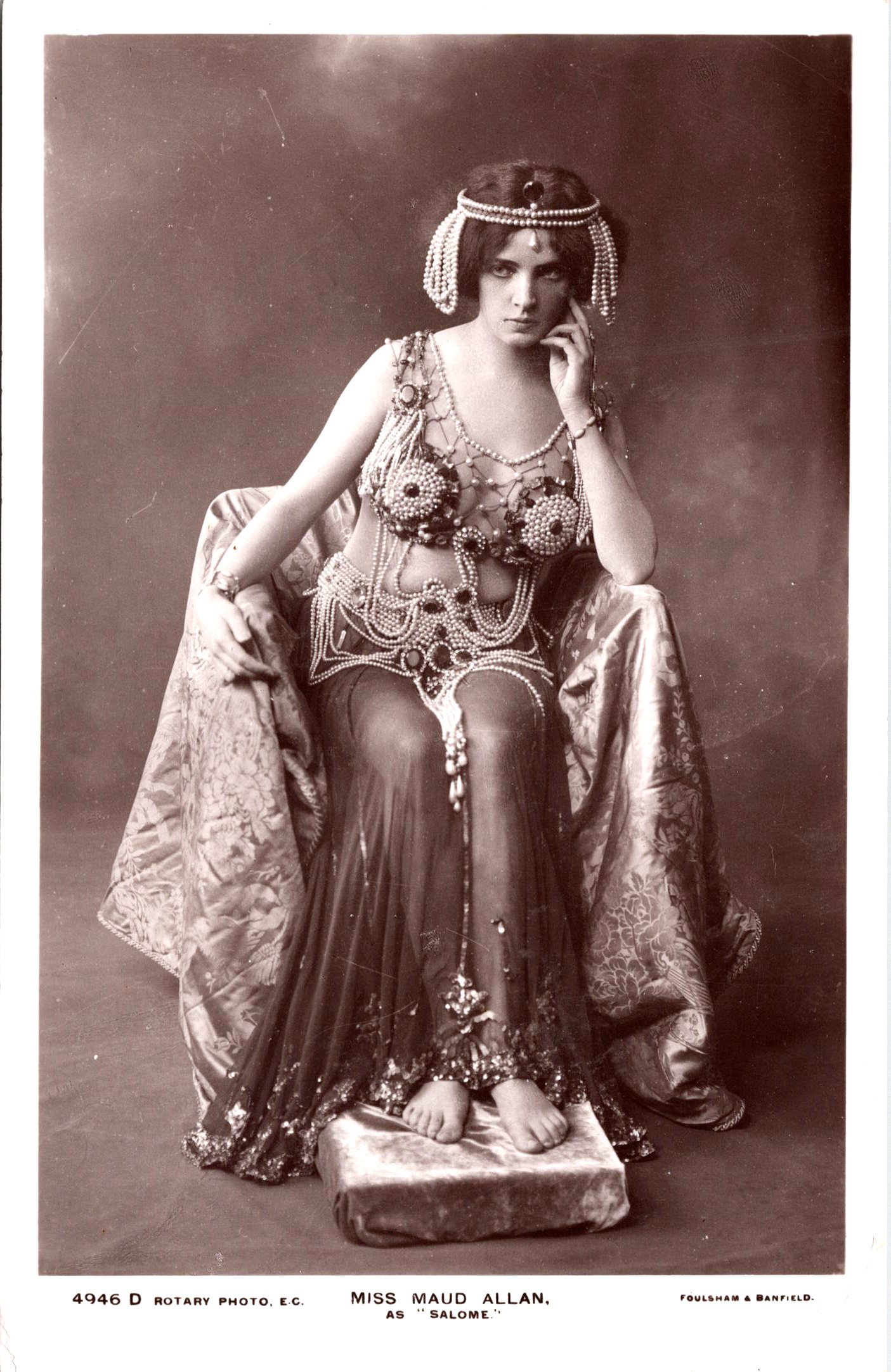
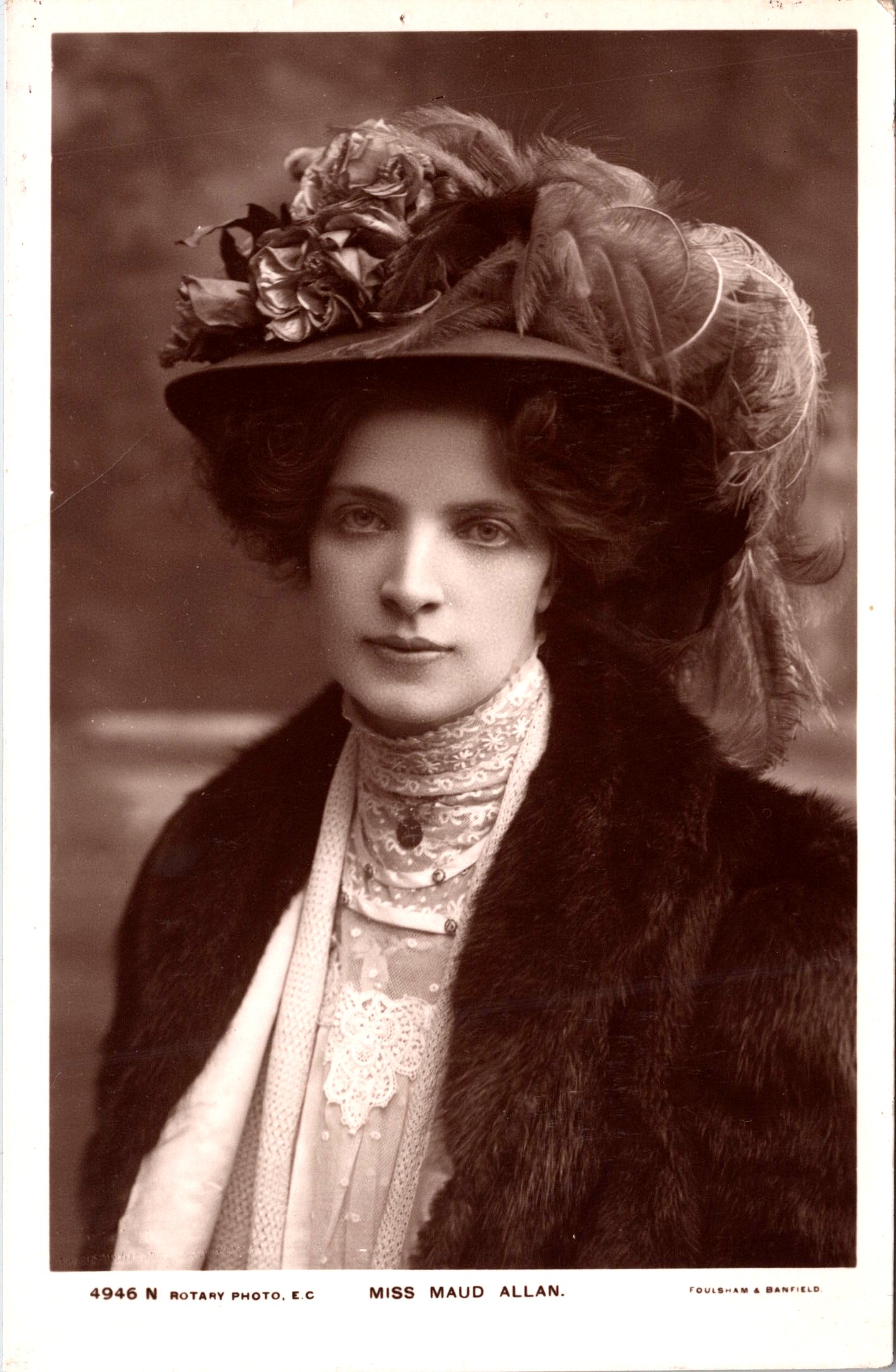
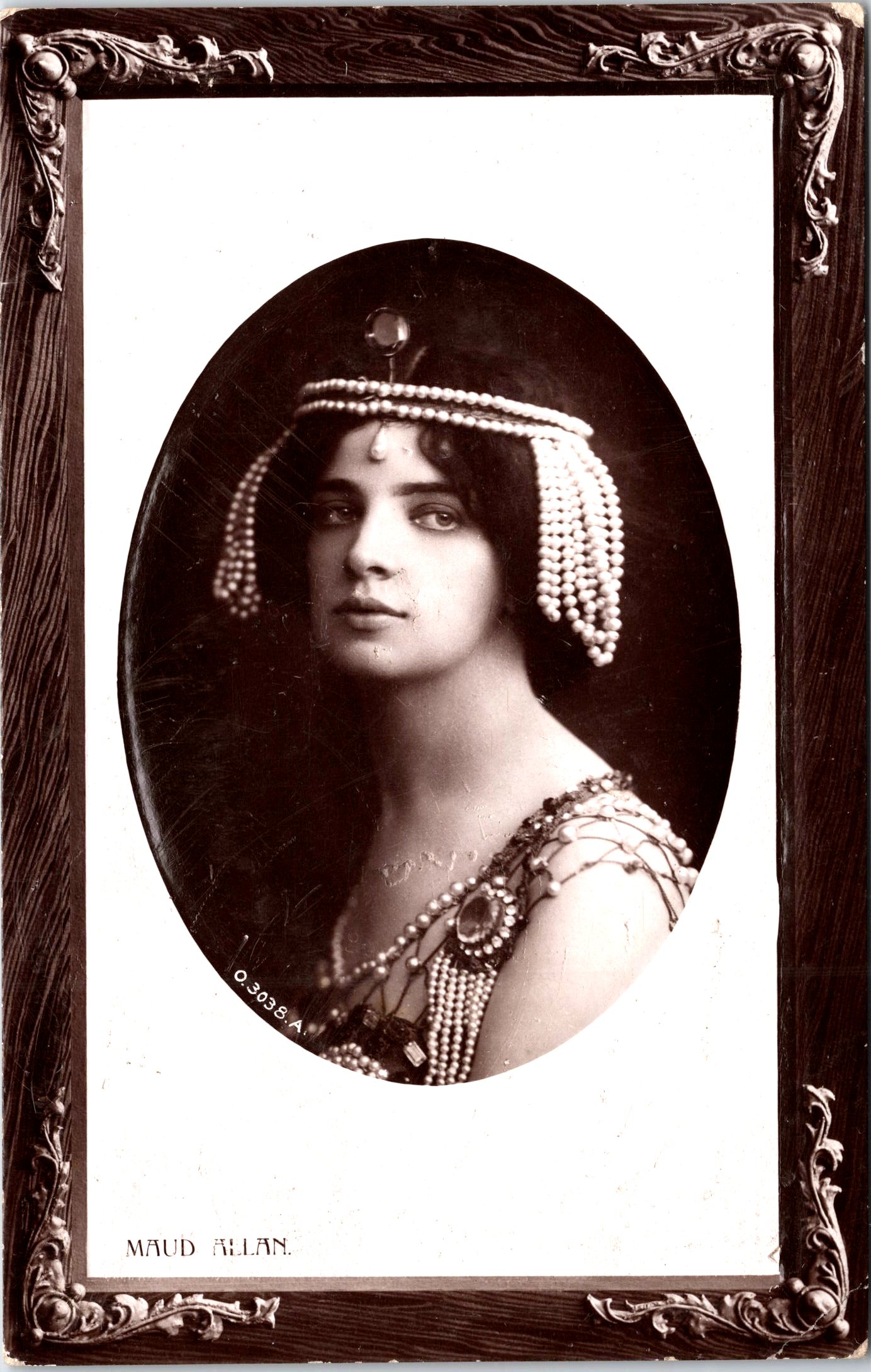
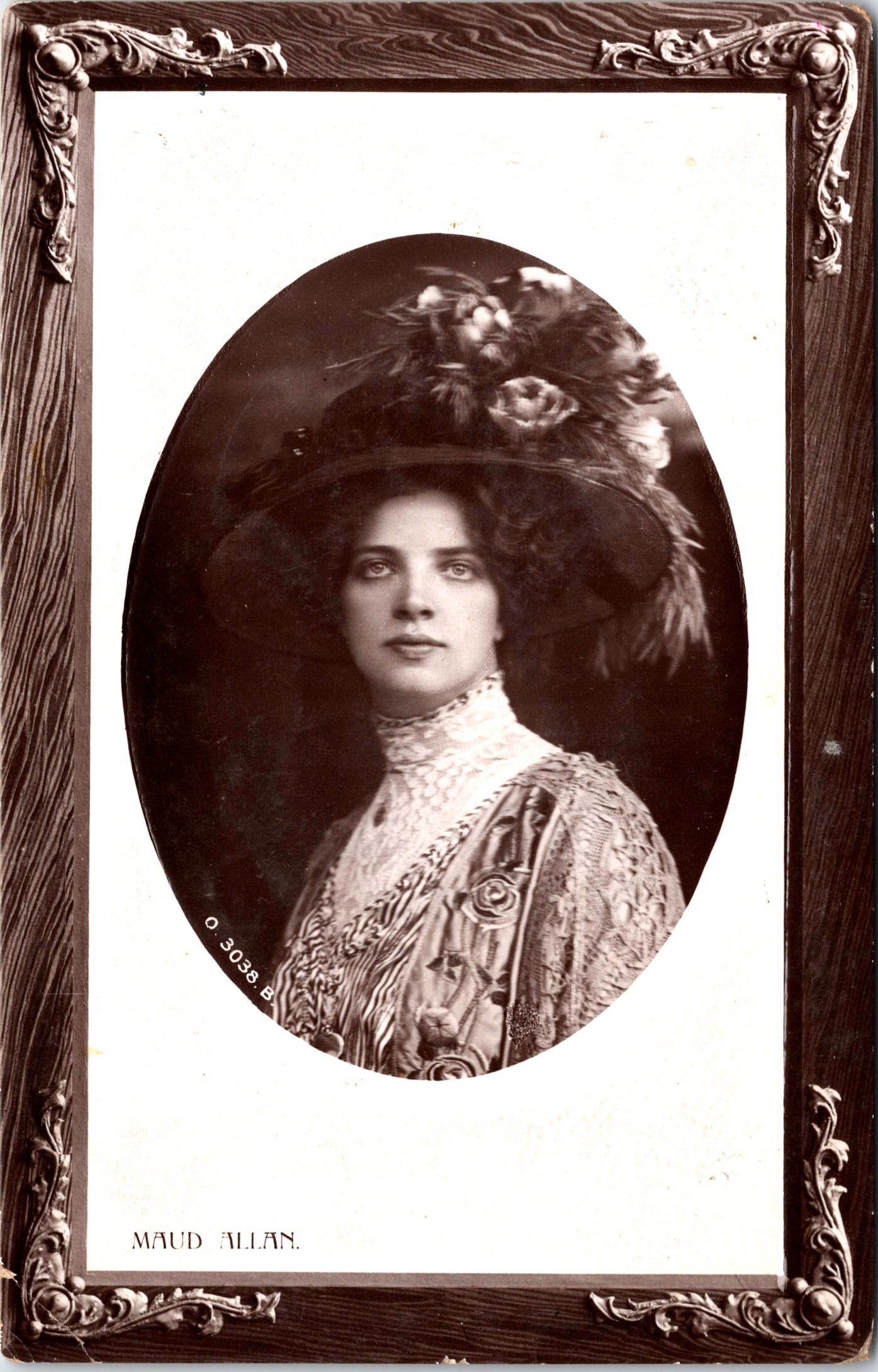
These risque vintage real photo postcards feature Maud Allan (1873-1956). She was a Canadian-born dancer, choreographer, and actress, who performed in the United States and Europe at the turn of the 20th century. She was known for her performances of the “Vision of Salome”, an interpretive dance based on the Oscar Wilde play “Salome”, in which she portrayed the title character. Allan’s performances were controversial and often drew criticism for their erotic content. She also was known for her court case in 1918 against a British newspaper, the Illustrated Times, who published an article accusing her of promoting immorality and lesbianism. She sued for libel and won. In regard to Allan’s sexual orientation, she was a lesbian and was involved with women her entire life. She had a long affair with Margot Asquith, the wife of Herbert Henry Asquith, the Prime Minister of the United Kingdom from 1908 through 1916. Allan also had a long affair with Verna Aldrich, her secretary.
Postcard 1 presents Allan dancing as “Salome”. She is wearing a sexually provocative costume. She is covered with jewelry. This postcard was published by Rotary Photo as part of a series (No.4946B). Miss Allan’s photograph was taken by the Foulsham & Banfield studio. An inscription on the card’s reverse reveals that the card is from 1908. (SOLD)
Postcard 2 This postcard also presents Allan dancing as “Salome”. Once again, she is wearing a sexually provocative costume and is covered with jewelry. This postcard was published by Rotary Photo as part of a series (No.4946Q). Miss Allan’s photograph was taken by the Foulsham & Banfield studio. This card is from circa 1908. (SOLD)
Postcard 3 is rare. The card captures Miss Allan wearing a sexually provocative costume. She is covered with jewelry. This postcard was published by Rotary Photo as part of a series (No.11406B). Miss Allan’s photograph was taken by the Foulsham & Banfield studio. This card is from circa 1908. (SOLD)
Postcard 4 is a risque vintage postcard that was published by Aristophot. Allan’s photograph was taken by Leopold Reutlinger as part of a series (no.E1586). This Salome postcard has a 1908 postmark. (SOLD)
Postcard 5: Most vintage postcards of Miss Allan, capture her in various risque poses during her performance in “Salome”. This uncommon postcard portrait captures her well dressed and elegant looking. This card is uncommon and was published by Rotary Photo as part of a series (No.4946Y). Miss Allan’s photograph was taken by the Foulsham & Banfield studio. This card has a 1906 postmark. (SOLD)
Postcard 6 features Maud Allan in an erotic costume as she plays “Salome”. This postcard was published by Rotary Photo as part of a series (No.4946D). Miss Allan’s photograph was taken by the Foulsham & Banfield studio. (SOLD)
Postcard 7 was published by Rotary Photo as part of a series (No.4946N). Miss Allan’s photograph was taken by the Foulsham & Banfield studio. This postcard features Allan radiating an aura of refined elegance and timeless beauty. Her attire is a masterful display of Edwardian fashion. She wears a high-necked lace blouse adorned with intricate detailing, lending her an air of sophistication and grace. Over this, she dons a luxurious fur coat that adds richness and depth to her ensemble. Around her neck, a delicate pendant peeks out, suggesting a taste for understated yet exquisite jewelry. Her hat is a work of art in itself, lavishly adorned with roses, feathers, and ornate embellishments. The elaborate design frames her face beautifully, complementing her delicate features. Her hair, arranged in soft, voluminous curls beneath the hat, enhances her classic femininity. Maud’s expression is serene yet captivating, her slightly parted lips and soft gaze conveying both intelligence and an enigmatic charm. Her eyes hold a quiet confidence, suggesting a woman of depth, creativity, and individuality. Altogether, Maud Allan’s appearance in this postcard speaks to her remarkable beauty, not only in her physical features but also in the grace and character she exudes. She appears as a woman who is elegant, enigmatic, and effortlessly captivating. (SOLD)
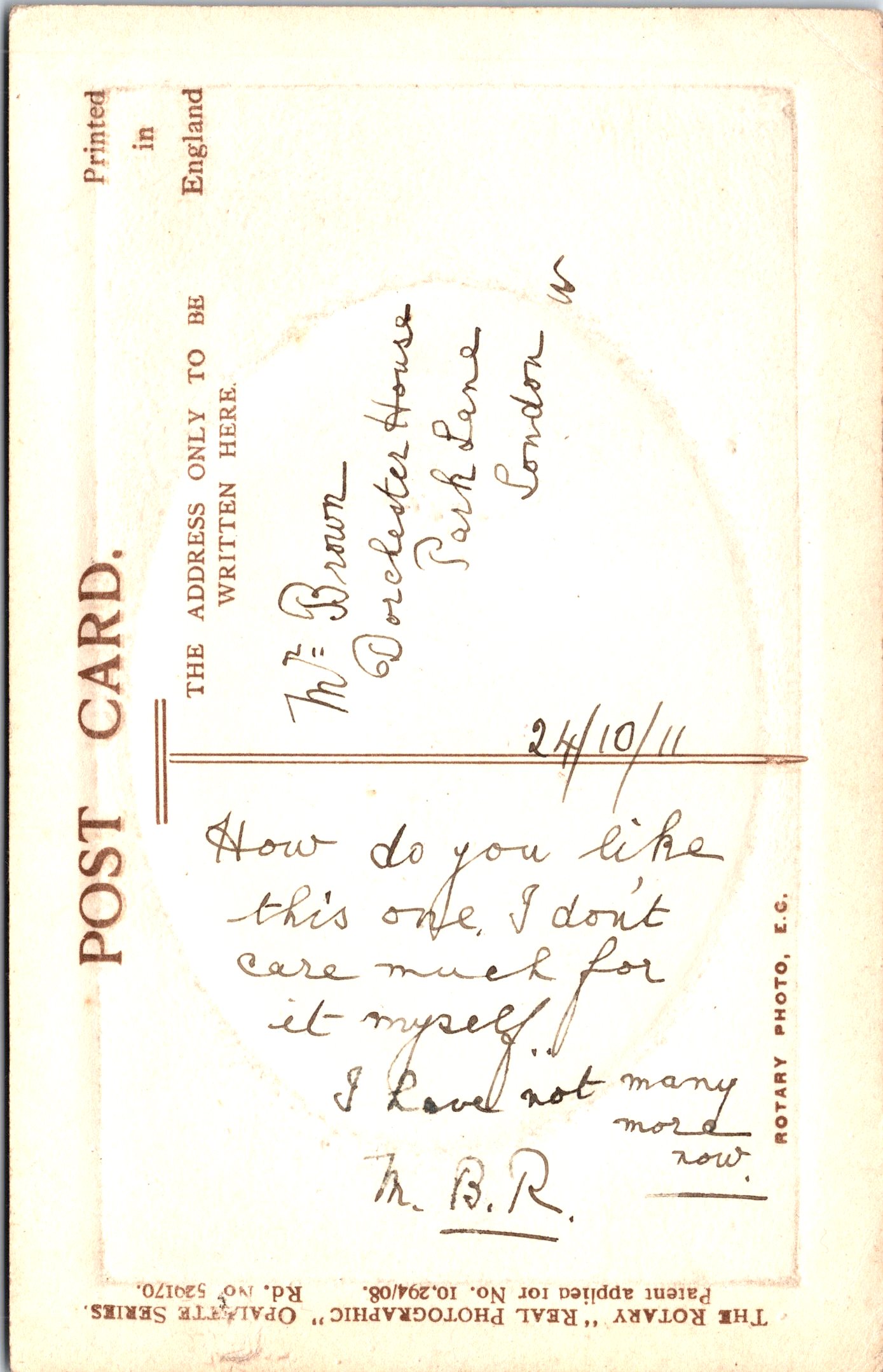
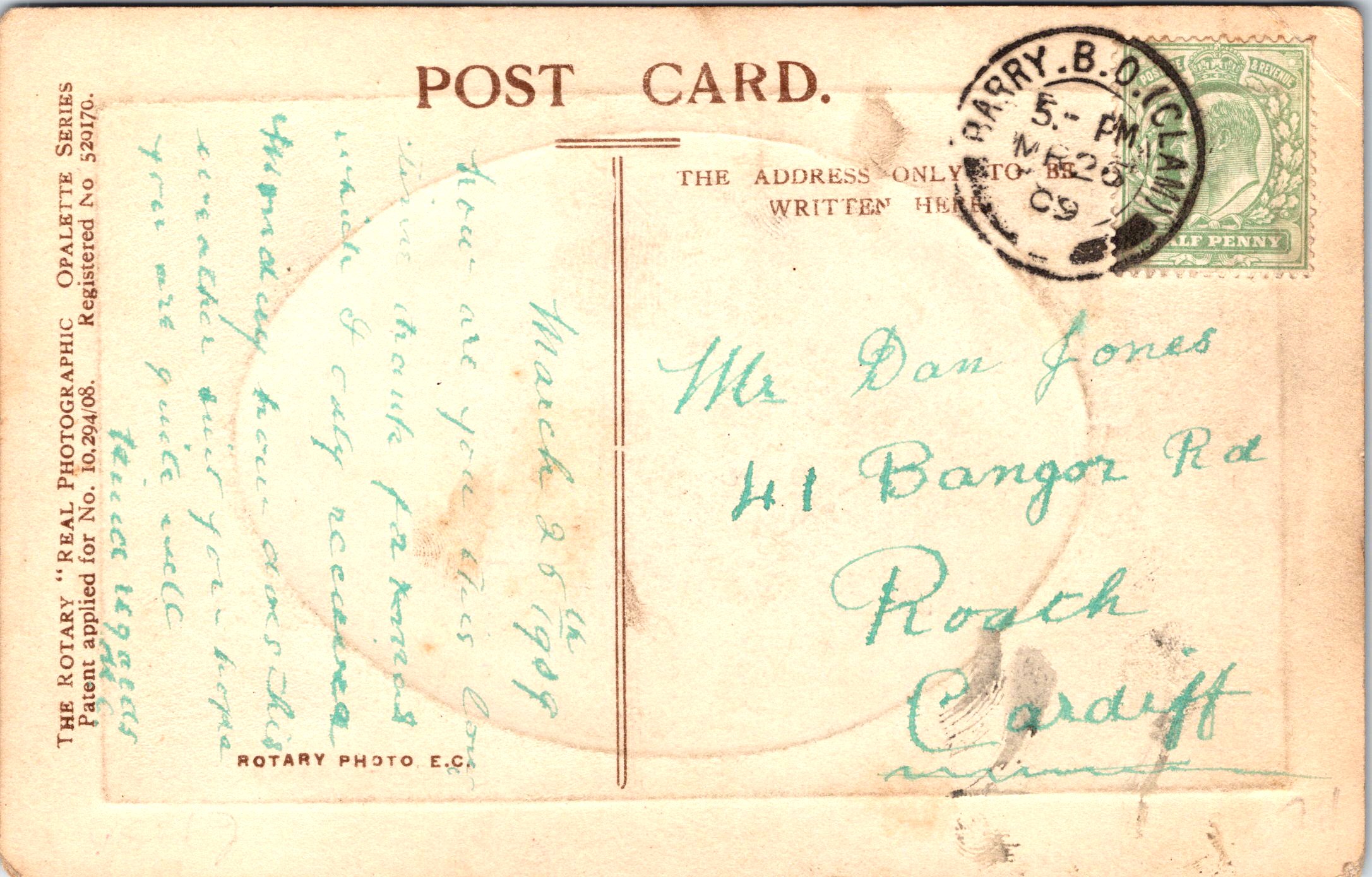
Postcard 8is a portrait of Allan wearing an elaborate costume: strands of pearls draped across her shoulders and chest, a large bejeweled ornament on her bodice, and a pearl headdress with a central jewel resting on her forehead. Her dark hair frames her face, and she gazes with a calm, slightly enigmatic expression. The overall mood of the image is both theatrical and regal, emphasizing her role as a stage performer who often blurred the line between classical dance and sensual spectacle. The postcard was published by Rotary Photo as part of their “Opalette” series. The ornate printed “frame” around the oval portrait adds an additional decorative touch. The postcard has a divided back and there is a handwritten note dated in 1911. The correspondence reads: “How do you like this one, I don’t care much for it myself. I have not many more now. Th. B.R.” It is addressed to a man located in London.(SOLD)
Postcard 9 was published by Rotary Photo and is part of the firm’s Opalette Series. this postcard has a postmark from 1909. (SOLD)
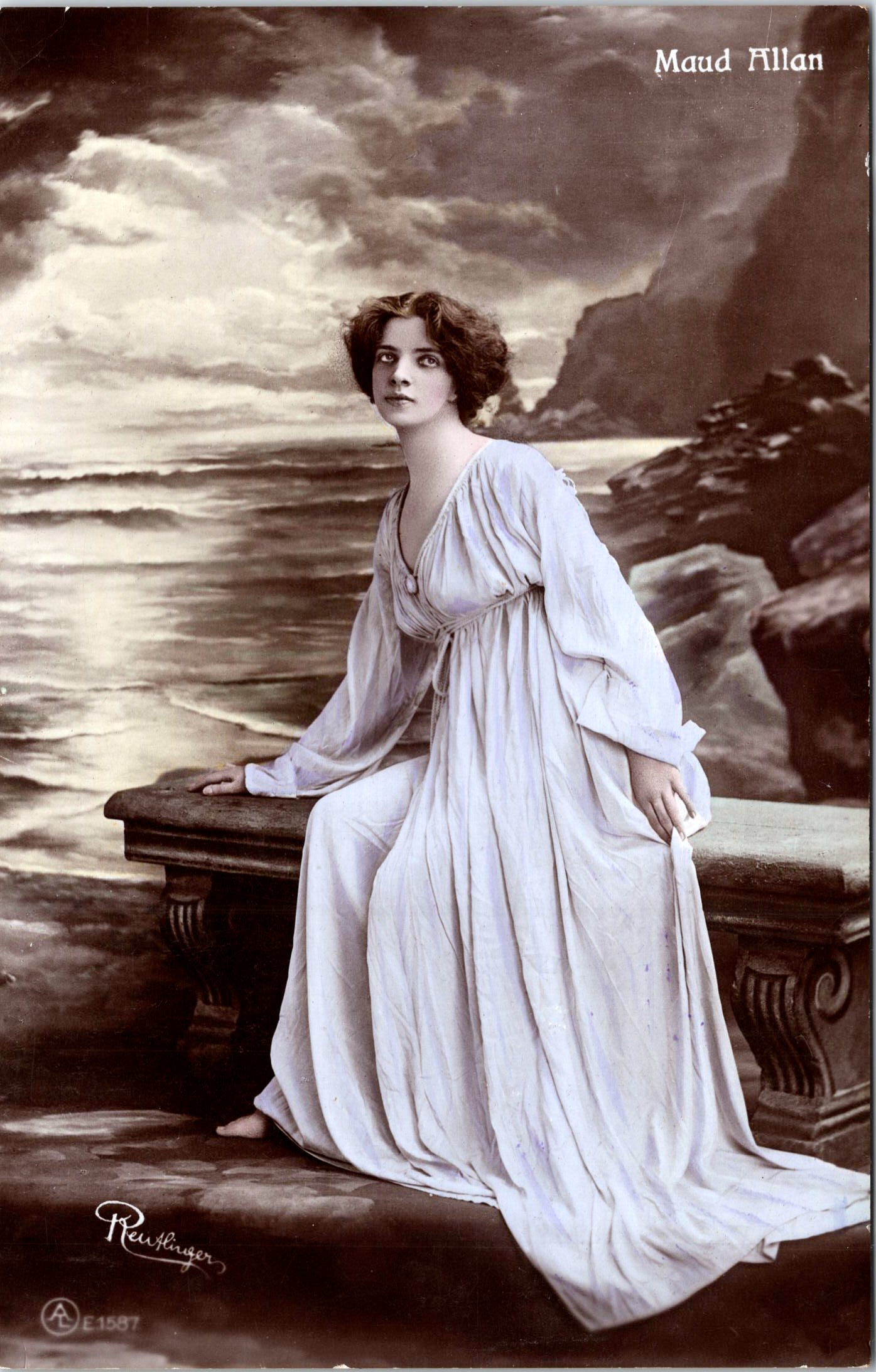
Postcard 10 is a striking Edwardian real photo postcard features Maud Allan, the celebrated dancer and stage performer whose career bridged classical, exotic, and highly sensual performance at the turn of the 20th century. Allan is shown seated in a flowing, classical-style gown, posed against a dramatic seaside backdrop of rocks, surf, and stormy skies. The pose is both poised and emotionally charged, with her gaze turned slightly upward, giving the image a dreamlike, almost mythic quality. She is dressed in a soft, empire-waist gown with loose sleeves and a long, flowing skirt. The styling deliberately evokes antiquity and romantic fantasy, which aligns perfectly with Allan’s reputation for expressive, sensuous dance interpretations rather than traditional ballet technique. Her bare foot and relaxed posture add to the quiet intimacy of the image. The photograph was taken by Leopold Reutlinger, one of the most important and accomplished theatrical photographers of the period. Reutlinger’s portraits of performers are widely collected and appear in museum collections; his work is especially prized for its technical quality and dramatic staging. His signature appears in the image, and the postcard carries the Reutlinger studio mark and serial number E1587, confirming it as part of his commercial theatrical series. This is an Aristophot Real Photo Postcard, as clearly indicated on the reverse. Aristophot Co. Ltd. was a London-based publisher, specializing in high-quality photographic postcards of actors, dancers, and performers. The reverse also notes “Printed in Saxony,” which was common for high-end photographic postcard production during this period. This specific image of Maud Allan is uncommon. The combination of Maud Allan + Reutlinger + Aristophot makes this a particularly desirable postcard. In fact, this photograph of Miss Allan can be found in Britain’s National Portrait Gallery. The postcard in their collection was postmarked in 1909. SOLD
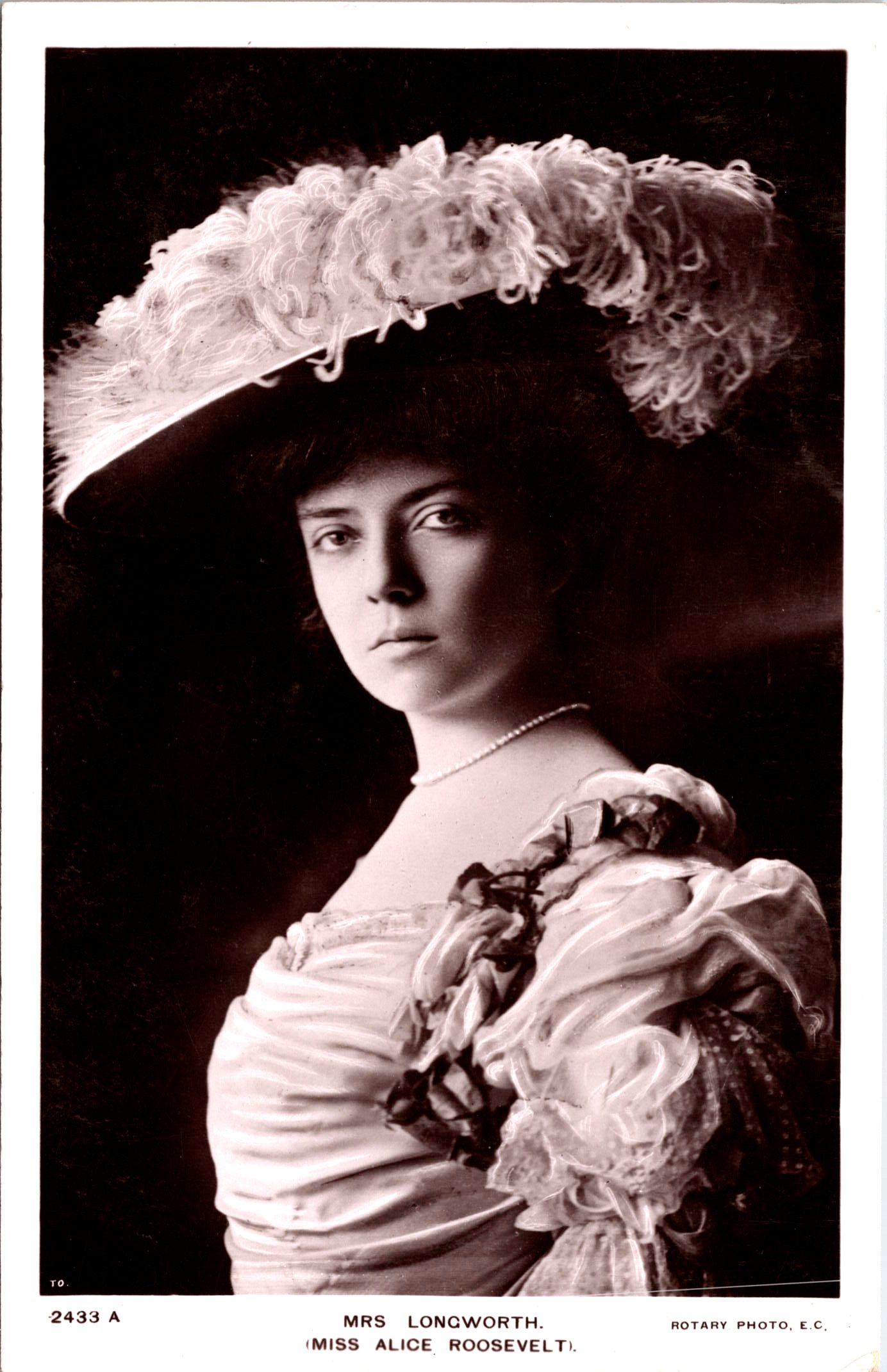
This is an original Rotary Photographic Series real photo postcard (RPPC) featuring pretty Alice Roosevelt Longworth, the vivacious and controversial daughter of President Theodore Roosevelt. The card is numbered 2433A, produced by Rotary Photo, E.C., and printed in England. This postcard is uncommon. Alice Roosevelt was one of the most famous women of the early 20th century, known for her sharp wit, rebellious nature, and scandalous behavior. Born in 1884, she was the daughter of Theodore Roosevelt and his first wife, Alice Hathaway Lee, who tragically died shortly after her birth. Raised in the White House, Alice defied convention, smoking cigarettes, gambling, and keeping a pet snake named Emily Spinach. She became the darling of Washington society, yet also a political force who influenced generations of leaders. In 1906, Alice married Nicholas Longworth, a powerful Republican congressman from Ohio who later became Speaker of the House. Their marriage, though lasting until his death in 1931, was known to be troubled. Alice’s rebellious streak extended well into her marriage. She was notorious for her extramarital affairs, the most famous being with Senator William Borah of Idaho, known for his fiery speeches and staunch independence. It was rumored that Alice’s only child, Paulina Longworth, born in 1925, was not actually Nicholas Longworth’s daughter, but rather the senator’s. Despite these scandals, Alice maintained her social standing, using her charisma and sharp wit to hold court in Washington for decades. Her attitude toward sex and politics was summed up in her famous quip: “If you haven’t got anything nice to say about anybody, come sit next to me.” This unfiltered personality made her a legend in Washington society, long outlasting her political contemporaries. She remained a major political influencer until her death in 1980 at the age of 96. Alice exudes Edwardian-era elegance in this striking postcard portrait. Her large, wide-brimmed hat adorned with ostrich feathers frames her piercing gaze and confident expression. She wears a delicate pearl necklace and an off-the-shoulder silk gown with lace and ribbon accents, embodying the high fashion of the early 1900s. Her slightly pursed lips and direct gaze hint at the intelligence and bold personality that made her a social powerhouse. (SOLD)
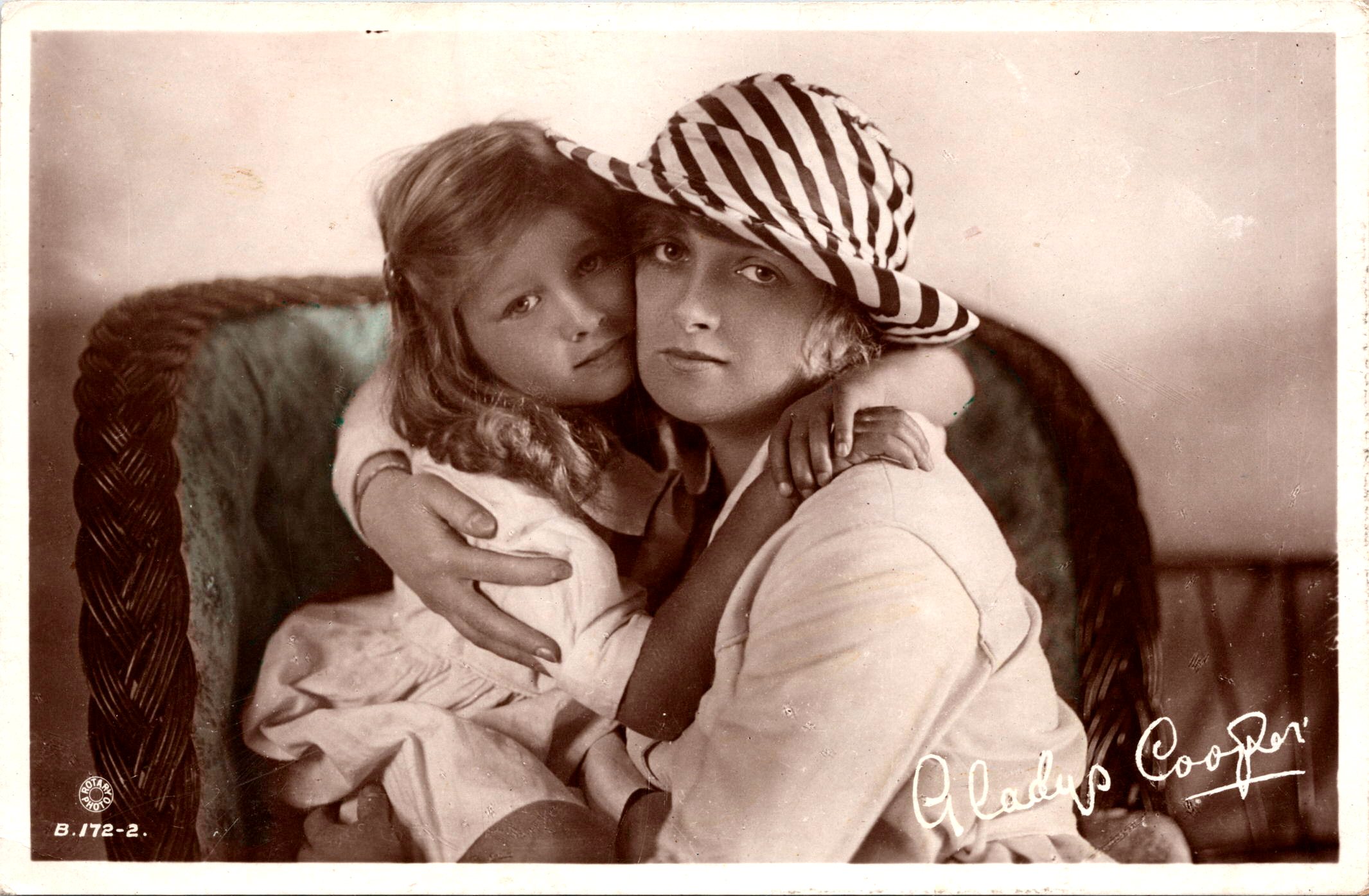
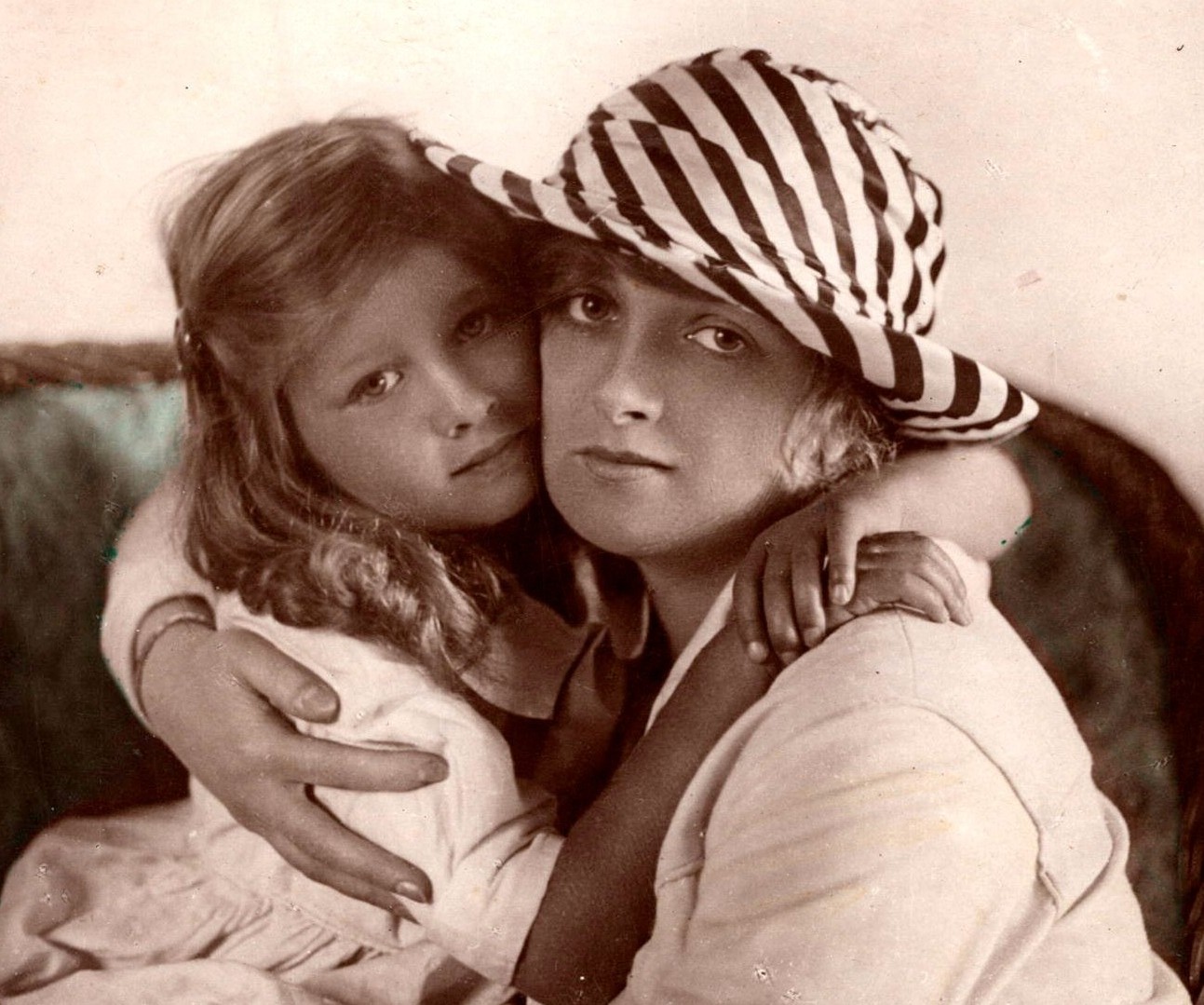
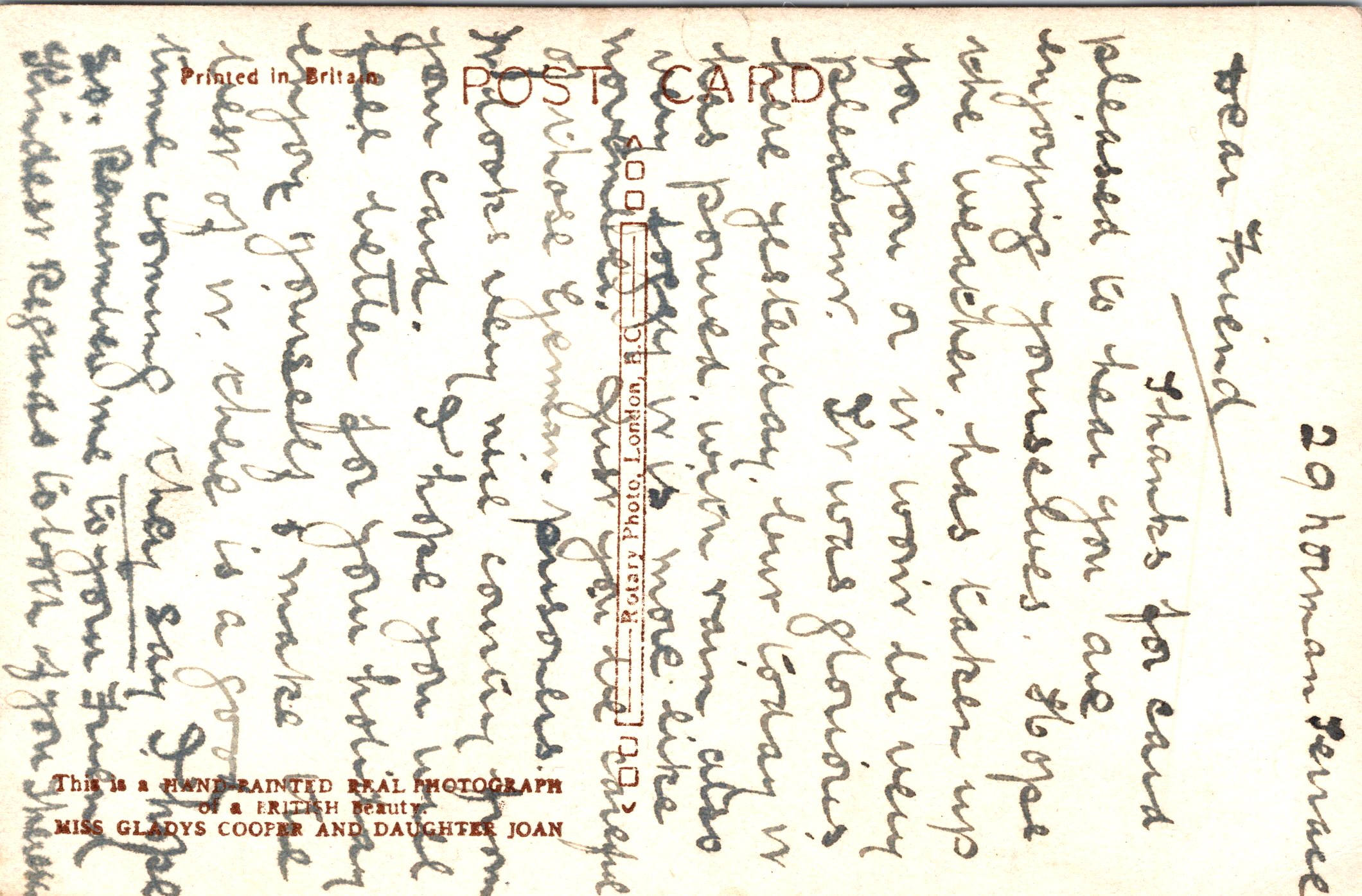
This rare vintage real photo hand-painted postcard features British actress, theatrical manager, and producer Gladys Cooper (1888-1971). Cooper’s career spanned over seven decades and she acted on stage, film, and television. She was a popular “pin-up” model for British troops during World War I. In 1967, she was awarded the coveted title of Dame of the Order of the British Empire. Cooper was known for both her talent and her beauty. In fact, she was considered by many to be the most beautiful actress in England. This is a real photo postcard featuring Gladys together with her daughter Joan. The postcard was published in Britain by Rotary Photo, this card is catalogued B.172-2. The postcard features Gladys seated in a wicker chair, dressed in a light coat and striking wide-brimmed hat with bold black and white stripes. Her expression is calm and direct, gazing steadily at the camera. Joan leans into her mother’s embrace, wearing a light dress, her long curls framing her face, and looking tenderly toward the viewer. The intimate pose conveys both warmth and strength. Cooper’s bold autograph facsimile appears at the bottom right. The reverse of the postcard is divided back and has a message. The following is an approximate transcription. “Dear Friend, Thanks for card, pleased to hear you are enjoying yourself. Jones’ leg is better I hope you have gone for good. Weather has taken up & it won’t be very long before you are more like yourself. Yesterday was glorious, but today is dull & very damp. Remember me to your mother. With kindest regards to you both.”(SOLD)
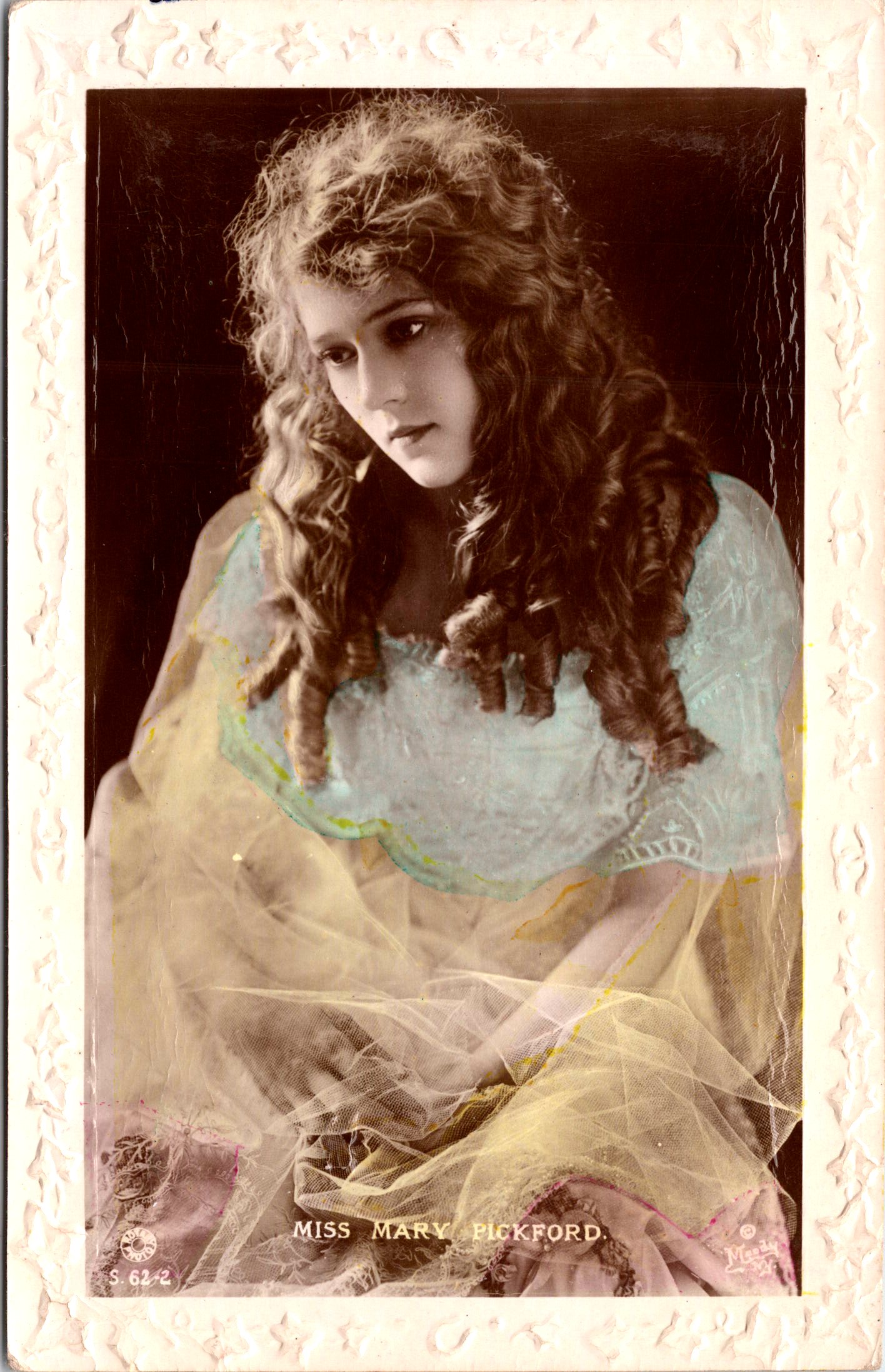
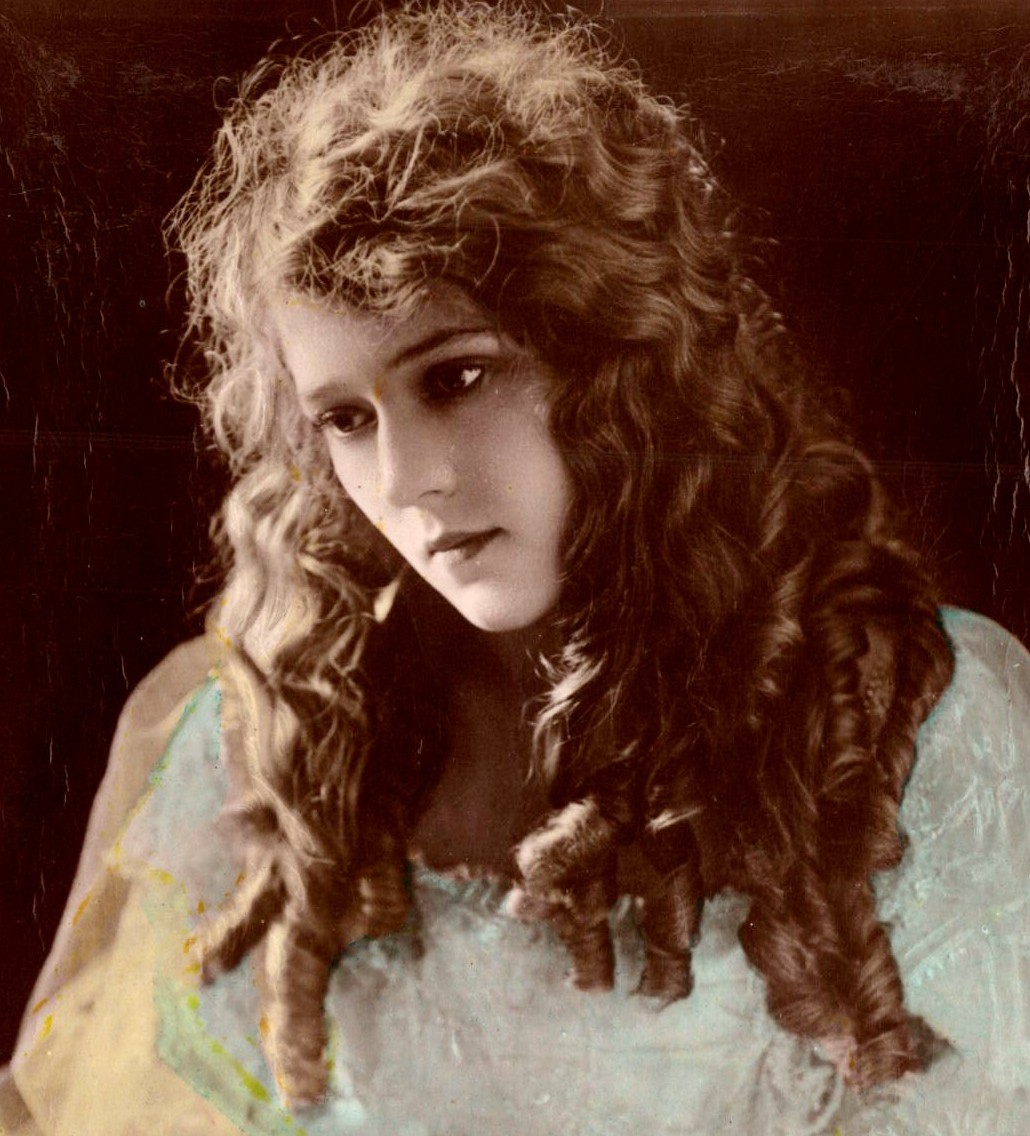
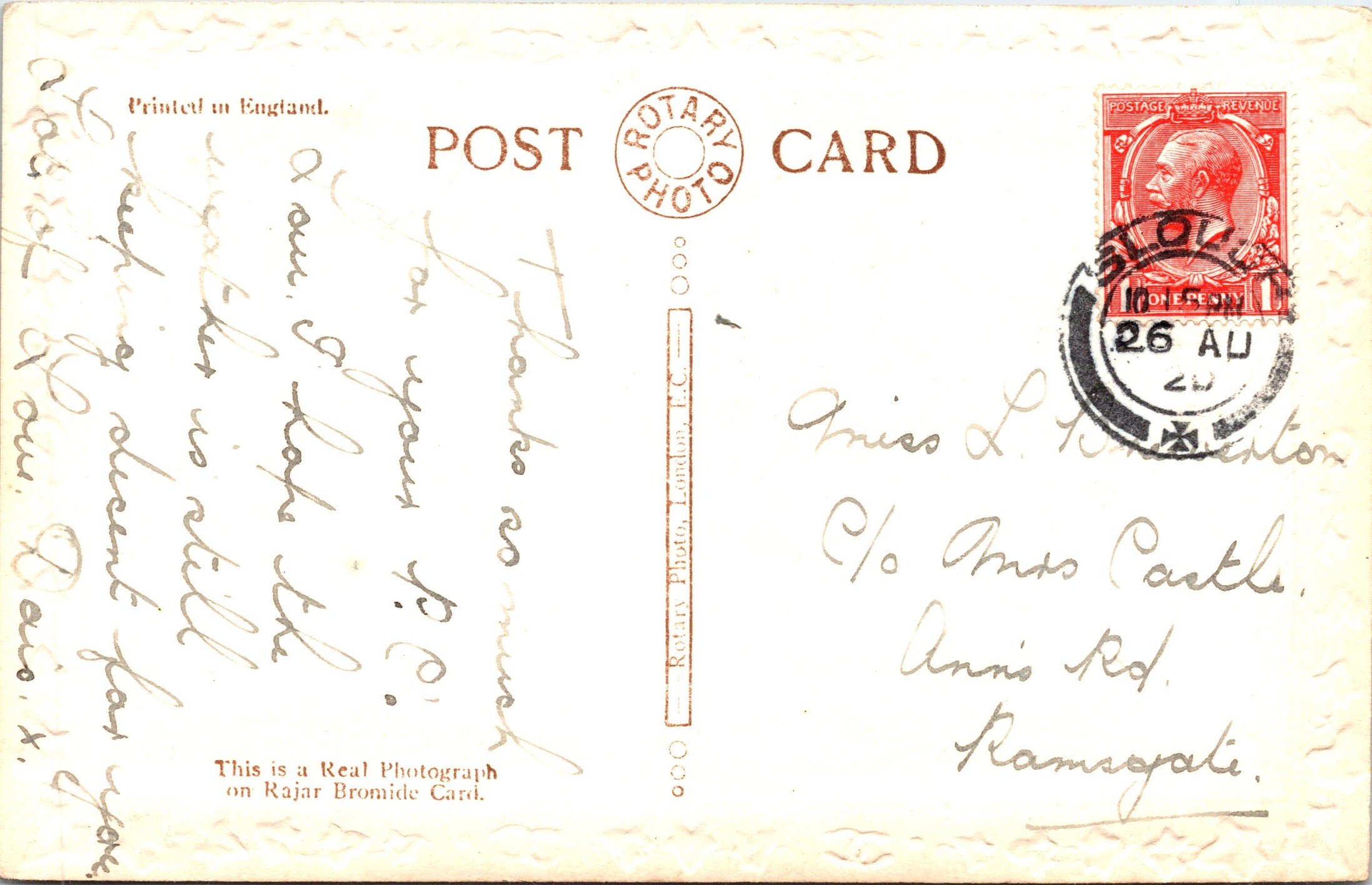
This beautiful vintage real photo postcard features Mary Pickford, shown here in a soft, introspective portrait that perfectly captures the romantic visual style of the early 1910s. Pickford is posed in three-quarter profile, her gaze cast downward, with her signature long curls cascading over her shoulders. She wears a delicate, flowing gown rendered in subtle hand-applied color, with pale blue and warm cream tones carefully brushed over the original photograph, lending the image a dreamy, ethereal quality. The overall effect is gentle and luminous, emphasizing her youthful features and expressive eyes. This postcard was produced by Rotary Photo, one of the most prolific and collectible publishers of celebrity real photo postcards in the early 20th century. The image is identified by the ID No. S.62-2, printed at the lower edge, and the reverse confirms it was printed in England via (Rajer Bromide). Mary Pickford needs little introduction; often called “America’s Sweetheart,” she was one of the most beloved and influential actresses of the silent film era, helping to define early Hollywood stardom. This particular image emphasizes her emotional subtlety and screen presence rather than theatrical glamour, making it especially appealing to collectors of classic film portraiture. The reverse reveals the postcard was postally used and that it is bearing a British King George V one-penny red stamp, postmarked in 1920. The card was mailed to someone in Harrogate, England. The handwritten message reads, in part “Just a card to let you know I am quite well. Hoping you are the same. Best love…”. (SOLD)
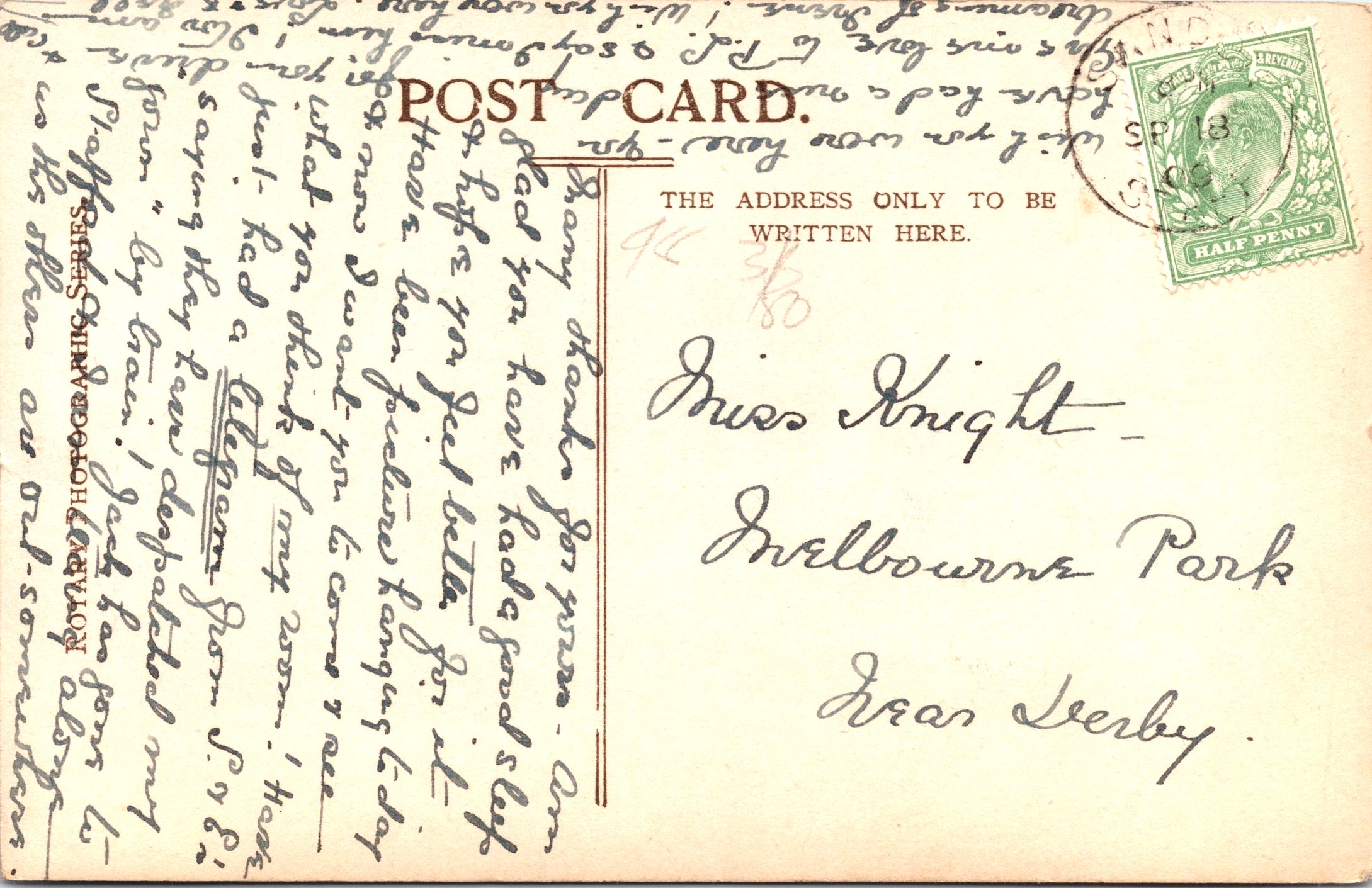
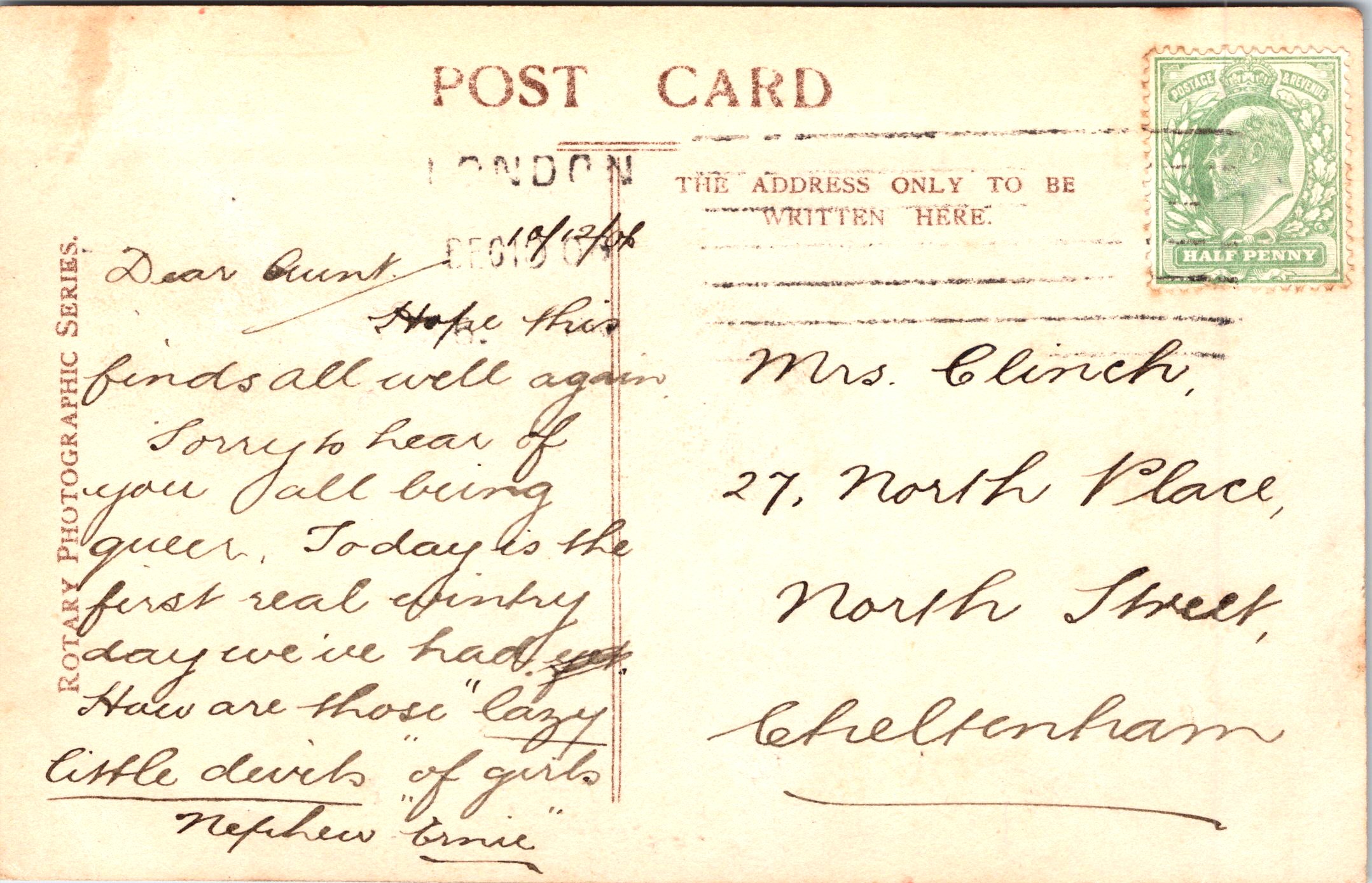
Camille Clifford (1885–1971) was a Belgian-born stage actress and fashion icon best known as the quintessential “Gibson Girl”, a feminine ideal created by American illustrator Charles Dana Gibson. Born in Antwerp, Belgium, she was raised in Sweden and later in Boston, Massachusetts. In 1902, she entered and won a contest sponsored by Gibson seeking the perfect embodiment of his Gibson Girl drawings, which rocketed her to fame. Clifford’s signature look — an hourglass figure, piled-high coiffure, and aristocratic bearing — made her an immediate sensation in Edwardian society. She soon transitioned to the London stage, where her statuesque beauty often overshadowed her acting roles. Her most famous performance was in the musical comedy The Catch of the Season (1904), where she appeared as the aristocratic Lady Crystal. In 1906, Clifford married the Hon. Henry Lyndhurst Bruce, son of the 2nd Baron Aberdare, and largely retired from the stage after marriage, though she made occasional returns in the 1910s and 1920s. After her husband’s death in World War I, she lived a quieter life but remained a symbol of Edwardian elegance. This is a striking hand tinted Rotary Photographic Series real photo postcard featuring Miss Clifford, serial number (4180 I). It was published by Rotary Photo, one of the most prolific and respected postcard publishers in early 20th-century Britain. In this image, Camille Clifford appears wearing an immense, lavishly plumed hat in rich tones of red and deep pink, its dramatic sweep perfectly framing her elaborately coiffed dark hair. Her gown, light and sheer with a delicate floral pattern, is accented by a high ruffled collar and ribbons tinted in shades of crimson and coral. The colorist has applied subtle blush to her cheeks and a soft rose tint to her lips, heightening her serene yet alluring expression. She gazes slightly upward and away from the camera, her eyes thoughtful and composed, embodying the calm confidence and refined beauty that made her one of the most photographed women of the early twentieth century. The reverse of the postcard is written and postally used, addressed to Mrs. Clinch, in Cheltenham. The message, written in ink, reads: Dear Aunt, Hope this finds all well again. Sorry to hear of your fall being queer. Today is the first real drizzly day we’ve had yet. How are those “lazy little devils” of girls? Nephew Ernie. The postcard bears a green half-penny King George V stamp, which was first issued in 1911. The postmark is partially legible but shows London, and appears to read 1912. This dating aligns perfectly with the height of Camille Clifford’s stage fame and with the active period of Rotary Photo, E.C. and Foulsham & Banfield, the photographers credited at the right. Together these details place the postcard firmly in the early 1910s, likely around 1912, when hand-colored photographic postcards of theatrical personalities such as Clifford were immensely popular with collectors throughout Britain. (SOLD)
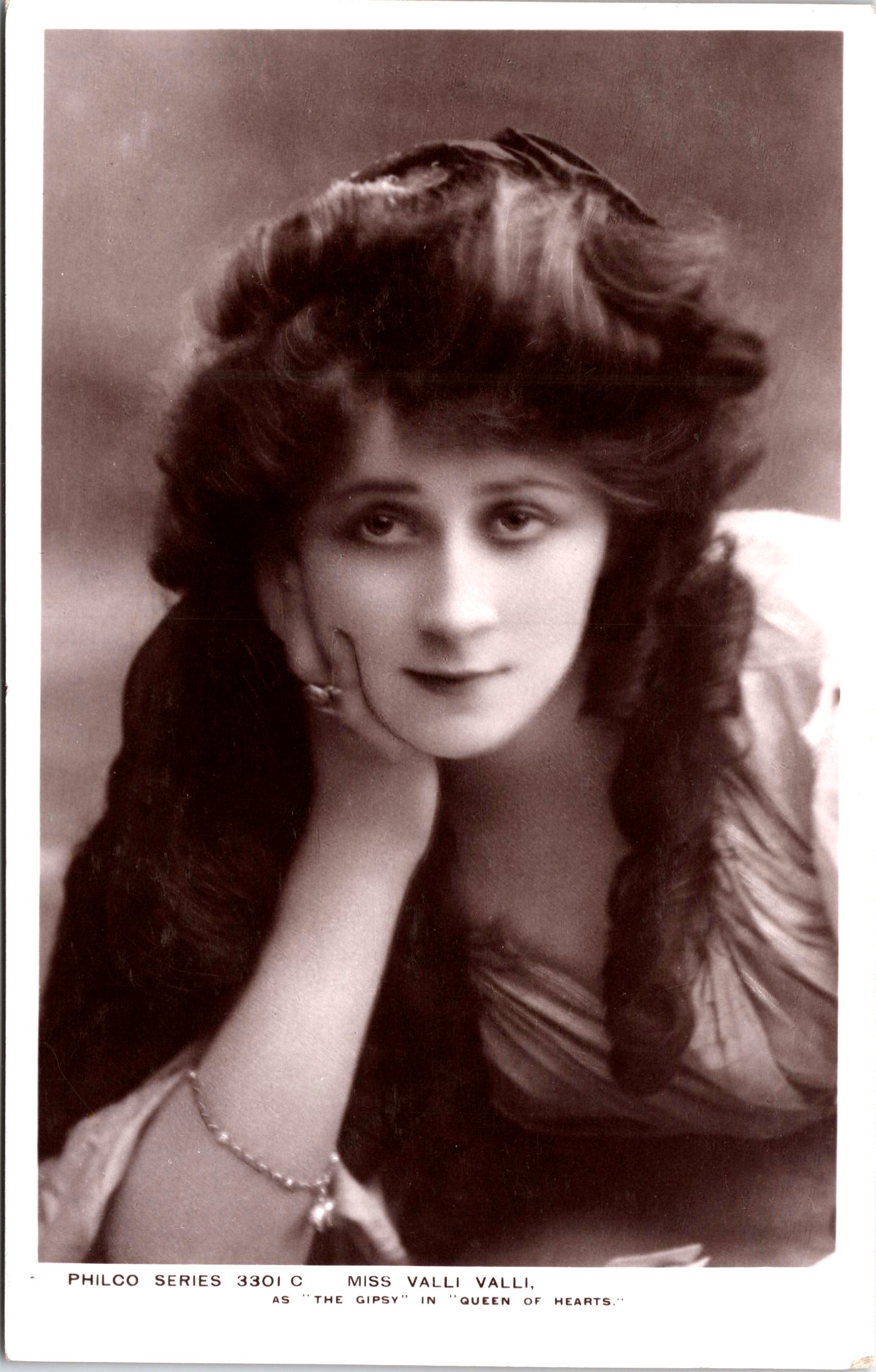
These vintage real photo postcards feature British beauty and actress, Valli Valli (1882-1927). She was a British musical comedy actress and a silent film performer. She was born in Berlin but spent most of her life in England. Her sisters, Lulu and Ida Valli were both actresses. Her father was a merchant. She was educated in London and Paris. She made her stage debut in London at the age of twelve. At thirteen years of age she had a successful run in the musical comedy “Morocco Bound” in Berlin. The next year she performed at London’s Drury Lane Theatre in a pantomime version of Cinderella. As an adult, Valli was a beautiful woman. She performed mostly on the English stage but did tour the United States a number of times. These plays include “The Dollar Princess” and her final New York City performance in “Miss Millions” (1919). In all, she appeared in seven Broadway plays between 1905 and 1920. Valli appeared in four films during 1915 and 1916. These films included “The Turmoil” which was an adaptation of a Booth Tarkington novel. In 1917, she married Louis Dreyfus, head of a music publishing house, and later, a theatrical producer. Valli died from tuberculosis at the young age of forty-five.
Postcard 1 captures Valli, in a pensive, or possibly, dejected mood. The card was published by Rotary Photo as part of a series (No.1760G). Miss Valli was photographed by the Bassano studio. (SOLD)
Postcard 2 features Valli, in a pensive or imploring mood, identical to the mood she exhibits in postcard 1. This card was published by Rotary Photo as part of a series (No.11415A). (SOLD)
Postcard 3 captures Valli in her role as “The Gipsy” in “Queen of Hearts” . The card was published by Rotary Photo as part of a series (No.11415A). (SOLD)
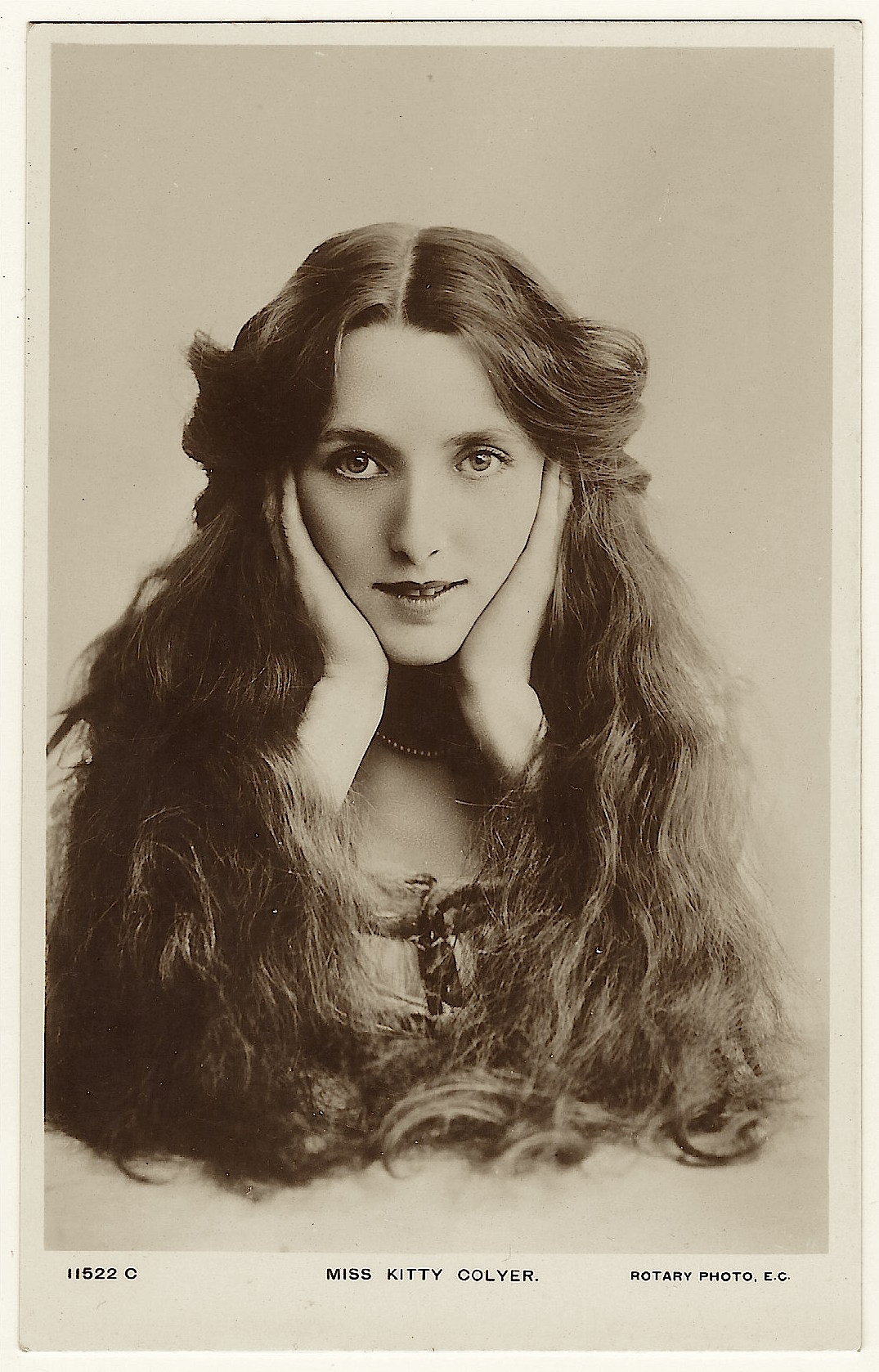
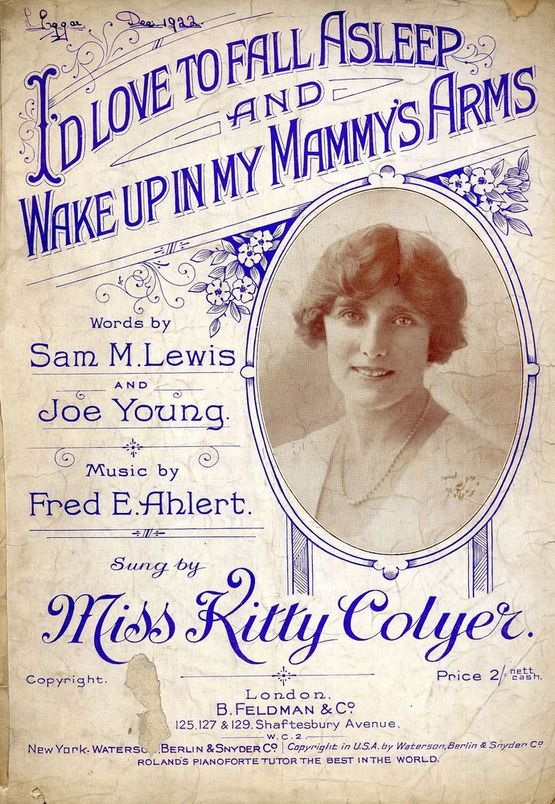
The pretty actress seen in this vintage real photo postcard, is Miss Kitty Colyer (1897-?). Here are some biographical facts that I discovered in preliminary research about the English actress. She started her career at age eleven. In addition to being an actress, she was also a dancer. She has also been described as a music hall singer and a comedian. Her dance routines were varied but her favorites were acrobatic, toe, buck, and national dancing. She performed primarily in the 1920’s. She played the role of Cinderella in “Cinderella” (1920). As the roaring twenties came to a close, her career fizzled out and she left the entertainment business. A review of Miss Colyer can be found in John Culme’s “Footlight Notes” (website). A writer from “The Era” (1911) wrote “Miss Kitty Colyer’s sensational dancing reaches its climax in some very energetic handsprings and her lissomness and activity are quite irresistible in her rendering of “By the Light of the Silvery Moon”. Look below to see an example of sheet music (1920) featuring Kitty Colyer. Now, back to the vintage postcard. It was published by Rotary Photo and is part of the Rotary Photographic Series (no. 11522 C). The photographer is unknown. SOLD