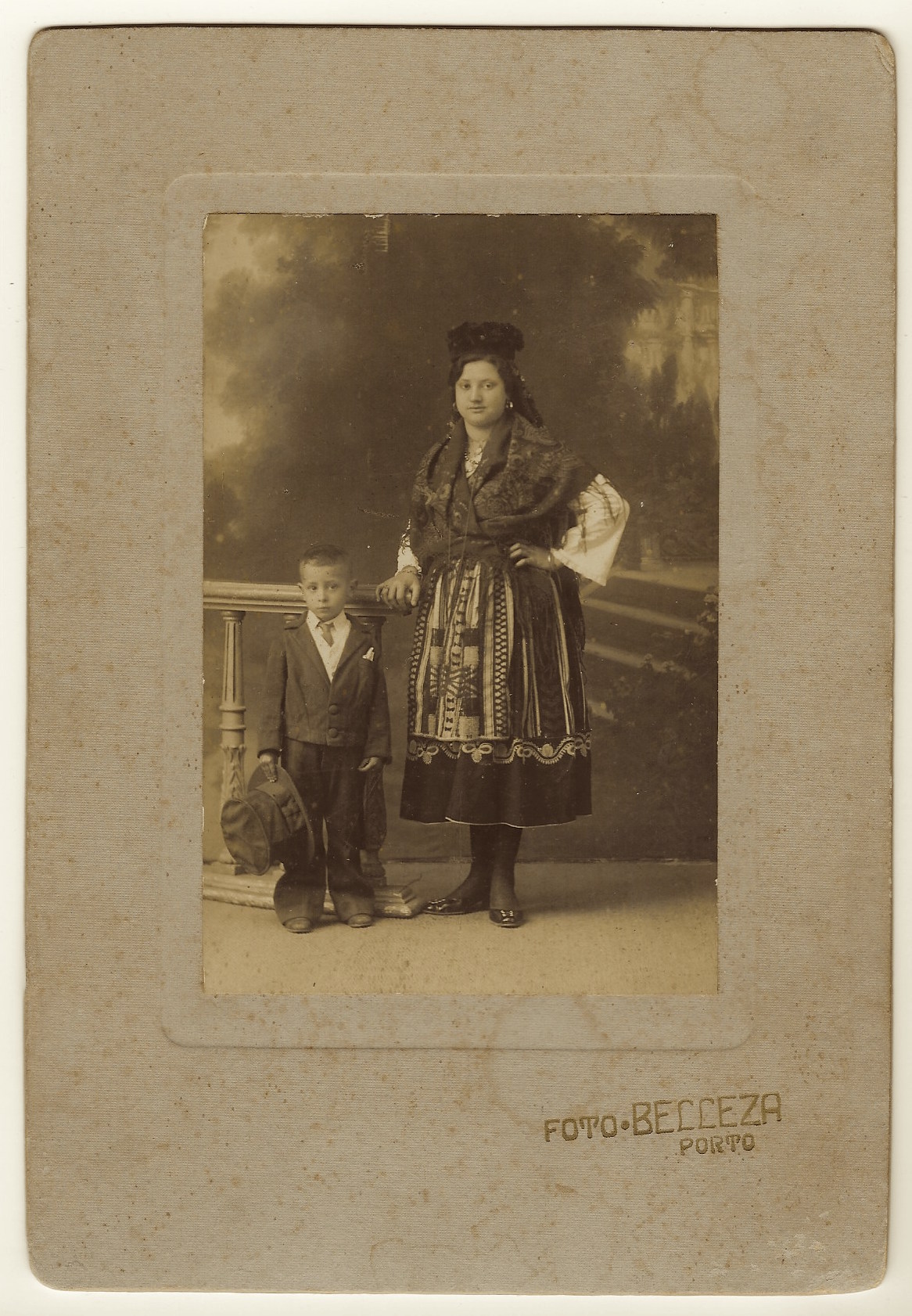
This cabinet card provides a portrait of a lovely young mother and her three small children. Some viewers may disagree and opine that the photograph an image of four siblings. The oldest child in this photograph is holding a hat by his side and his mother is holding a fan. Not the little girl’s hair band. The family in this image is unidentified and the location of the studio that produced the cabinet card is unknown. I would hypothesize that the studio was European. It appears that the photographer’s or the studio’s name was “Melanie” which is a name of French origin.
This Cabinet Card is available for purchase at my store, The History Peddler, for $22.00 or best offer
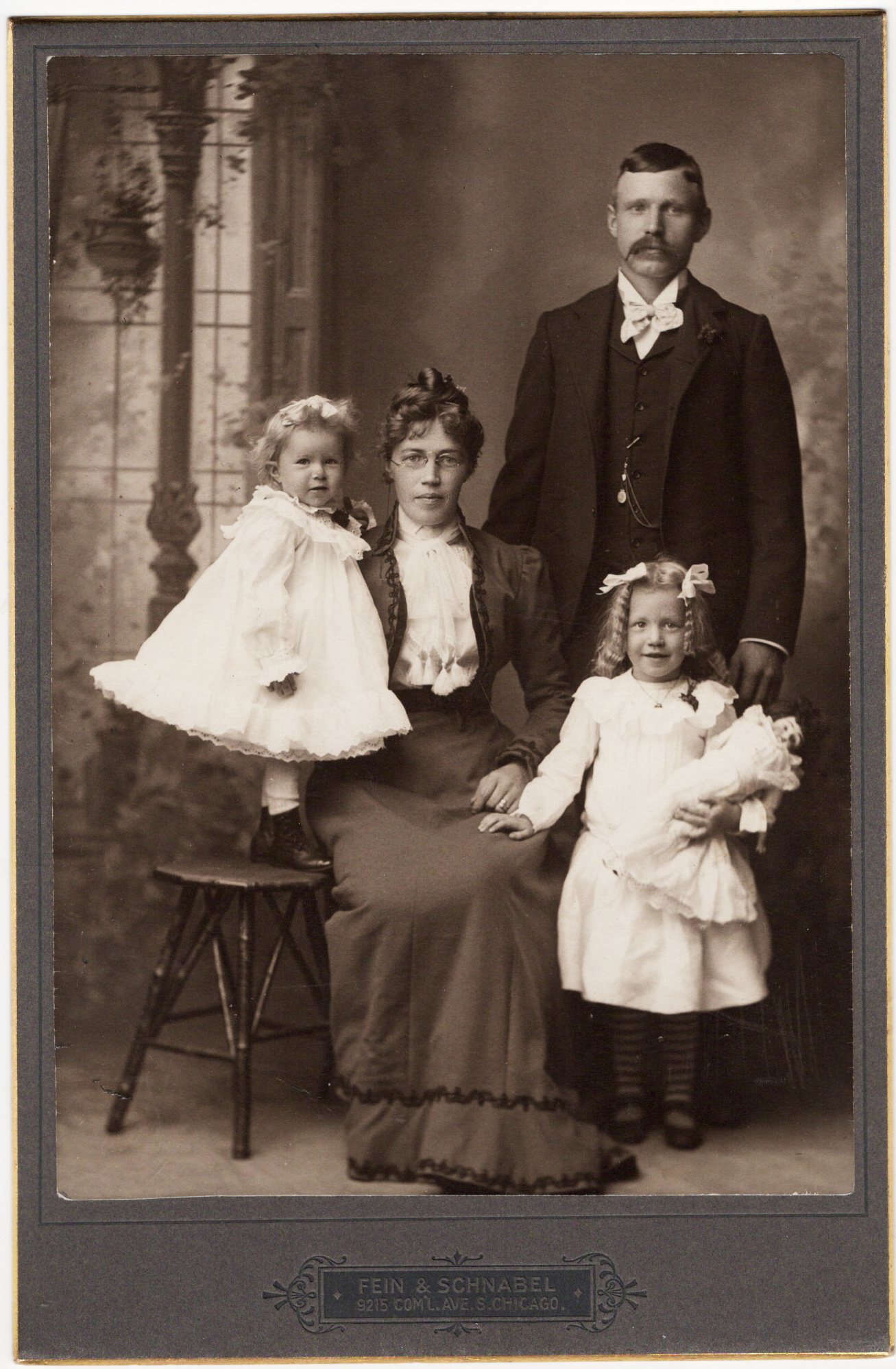
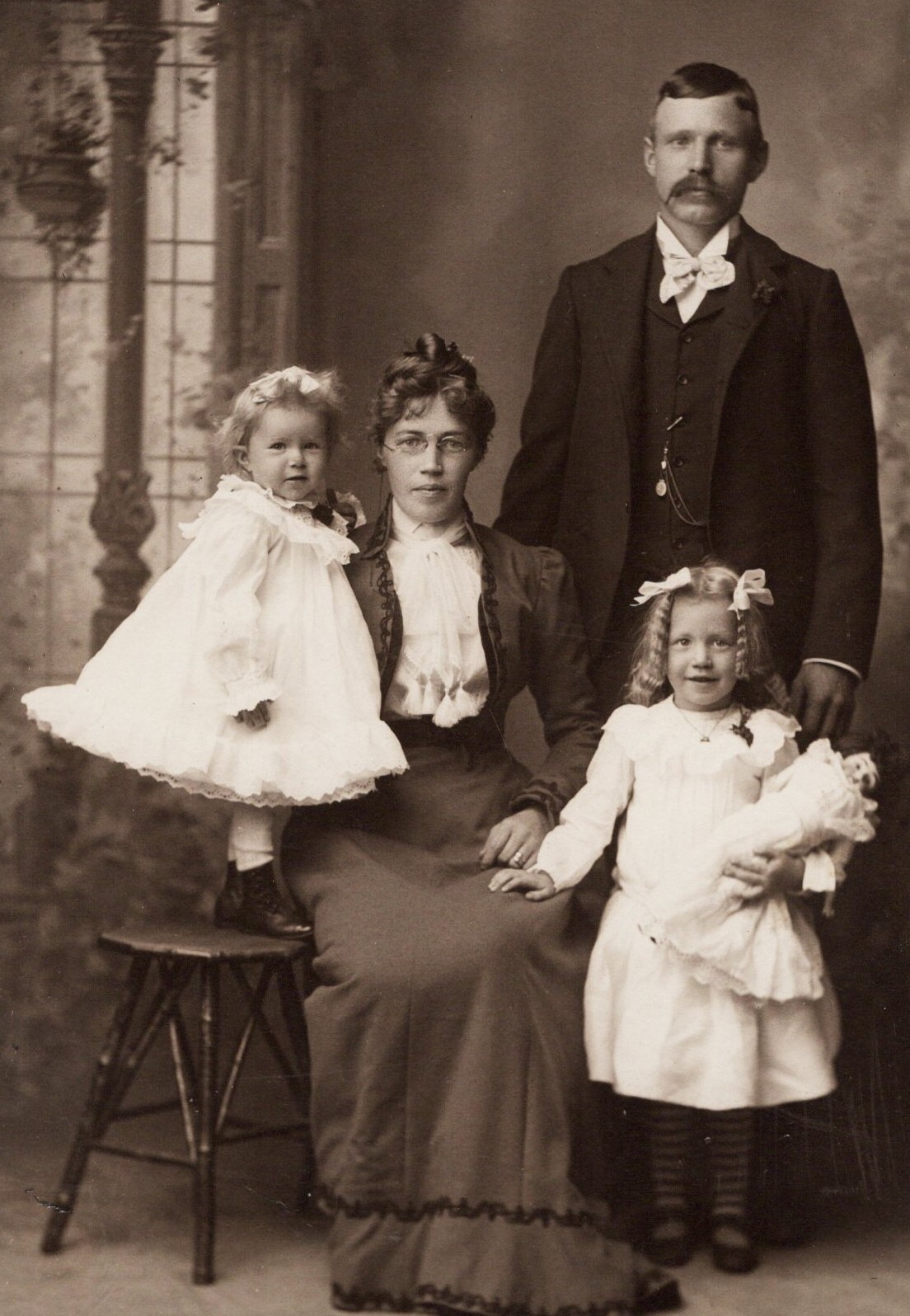
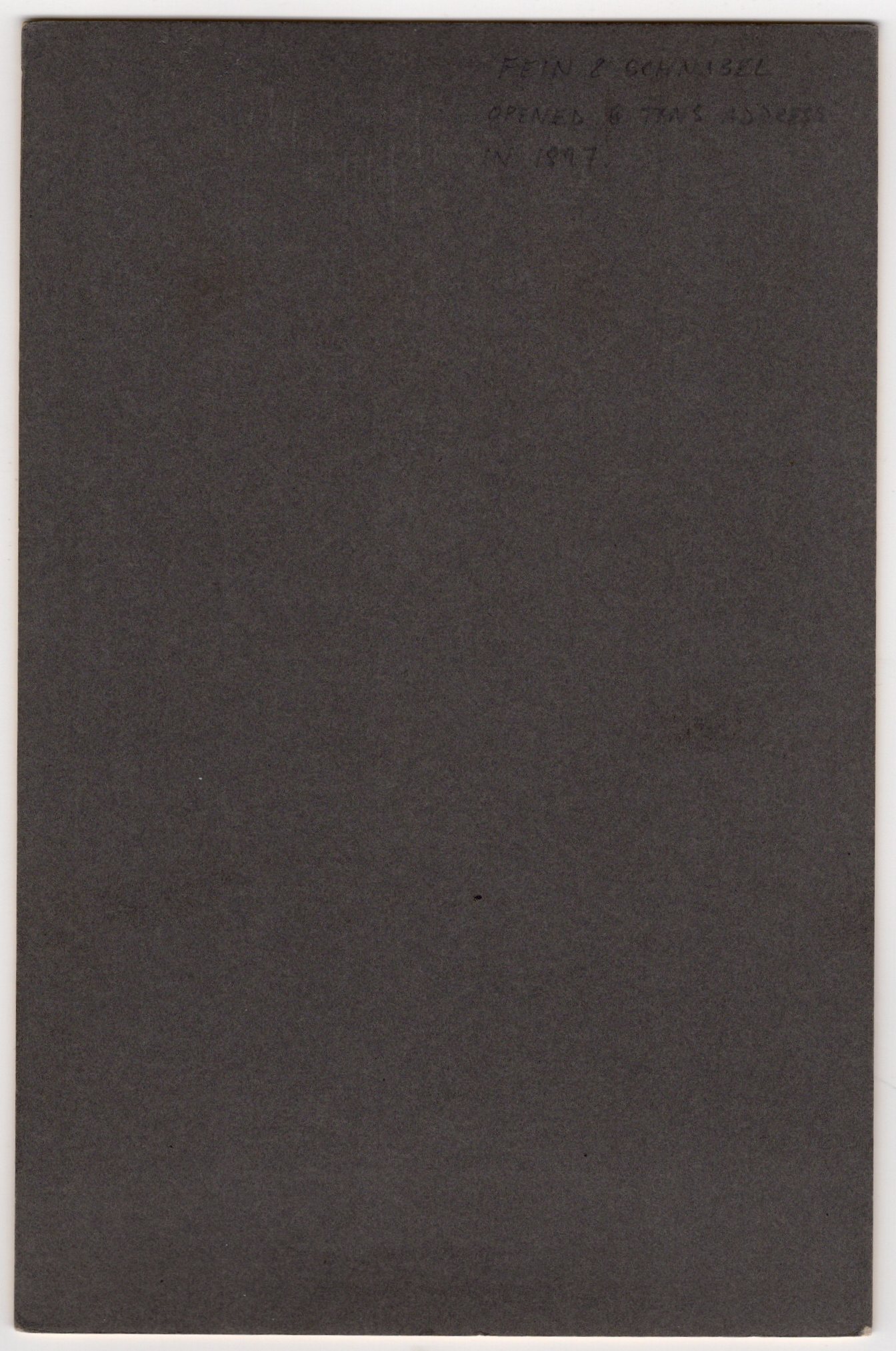
This is a beautiful original cabinet card photograph of a family taken at the Fein & Schnabel Studio, locaated in Chicago, Illinois. The studio imprint is elegantly embossed on the card’s lower margin, framed by decorative flourishes. Fein & Schnabel opened their studio at this address in 1897, and they were known for producing finely composed, high-quality portraits of Chicago’s working and middle-class families during the late 19th and early 20th century. The image captures a formal family portrait featuring a mother, father, and their two young daughters. The father stands proudly at the rear, wearing a dark three-piece suit with vest, bow tie, and watch chain. His mustache and upright stance convey a strong, confident presence. Seated at the center, the mother wears a tailored dark skirt and lighter blouse with ruffled trim, her hair neatly pinned up and spectacles perched at the bridge of her nose. On her lap is the younger daughter, posed on a stool, dressed in a flowing white dress with lace trim and high-button boots. Standing at her side is the older daughter, also in a white dress with ribbons in her hair. She holds an exquisite bisque-head doll in a white dress, complete with detailed shoes and curls. The backdrop is a classic studio setting, with architectural elements and hanging plants painted to create the impression of a genteel interior space. The overall composition conveys formality but also a sense of family closeness, particularly through the subtle hand placements and the doll prop, which would have been a prized possession of the era. The cabinet card is in excellent condition. A standout feature is its beveled gold edges, which remain remarkably well-preserved and add a refined presentation to the mount. The photograph itself is crisp and clear, with excellent contrast and detail—especially in the children’s dresses and facial expressions. The reverse of the card is blank aside from very light penciled notes.(SOLD)
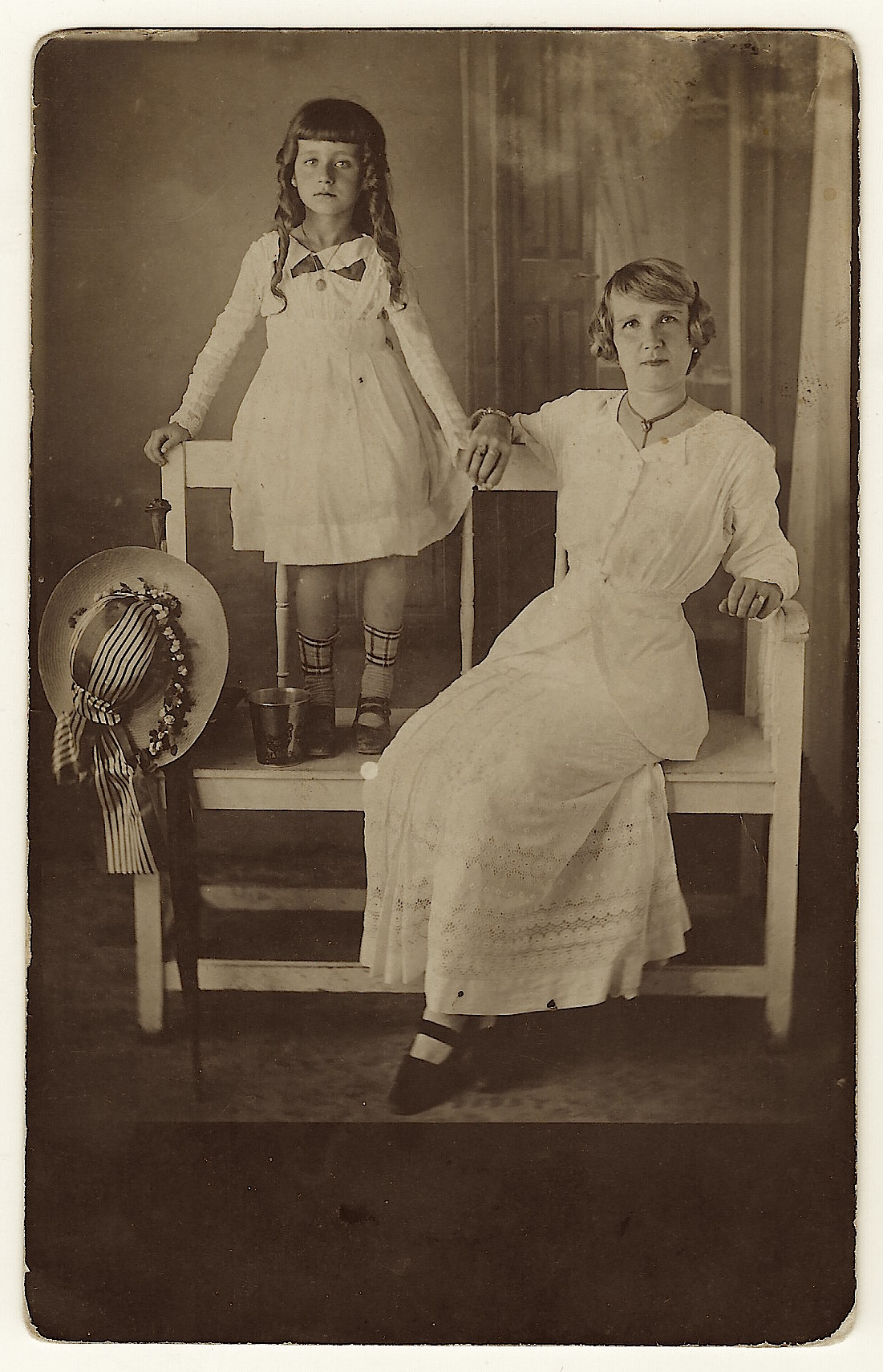
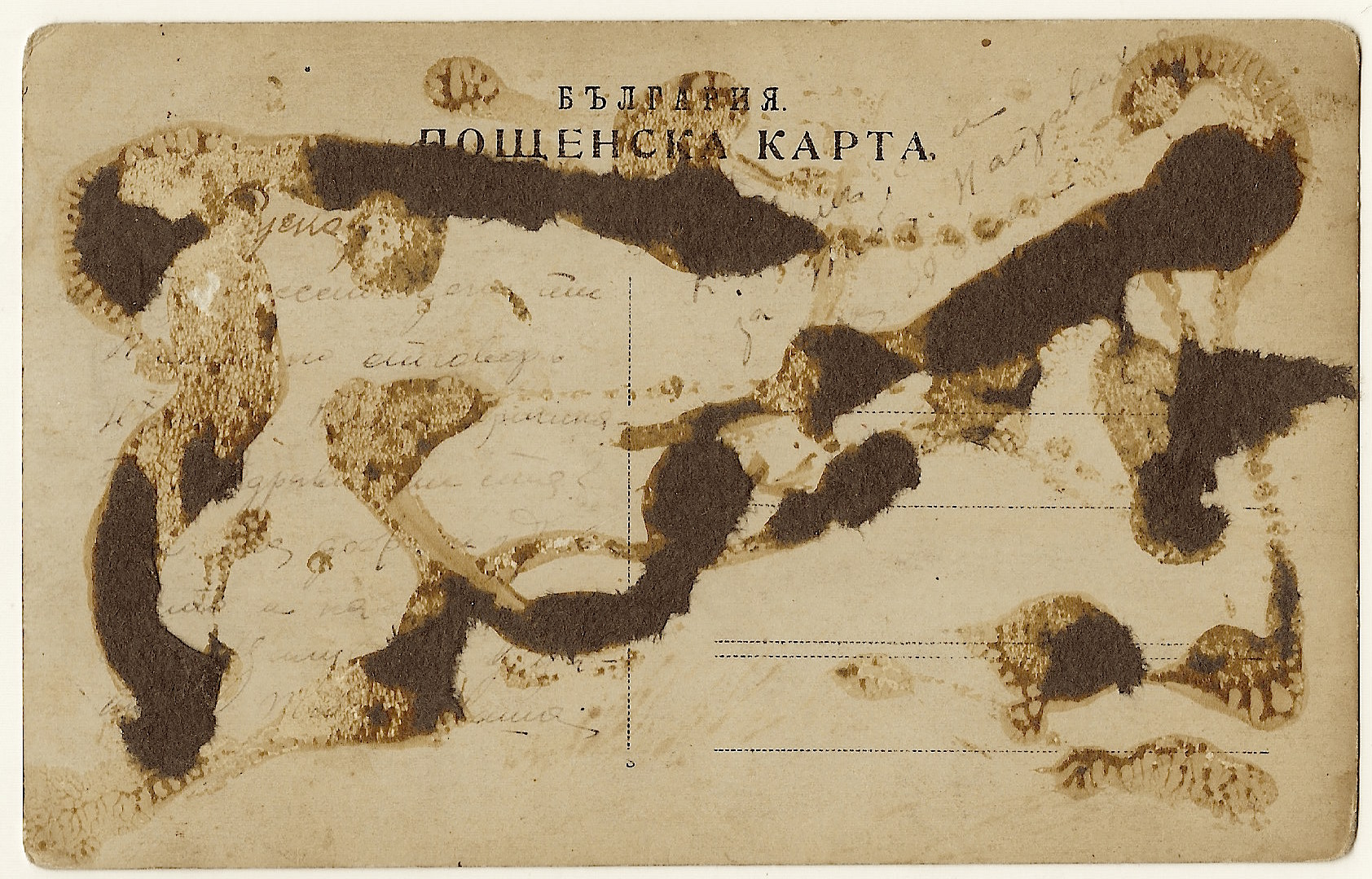
This vintage real photo postcard features a mother and daughter and a bench. Mom is sitting on and the little girl is standing on the bench. The child is directing an eerie stare at the photographer. Note 1) the child’s cute socks, 2) mom’s hat hanging on the armrest of the bench, and 3) the small pail on the bench in front of the little girl (there are roosters painted on the pail). I believe that this postcard is Hungarian based on a “google translate” search of the word “Kapta” which appears on the reverse of the card. This vintage postcard is in good condition (see scans).
This vintage Postcard is available for purchase at my store, The History Peddler, for $16.00 or best offer.
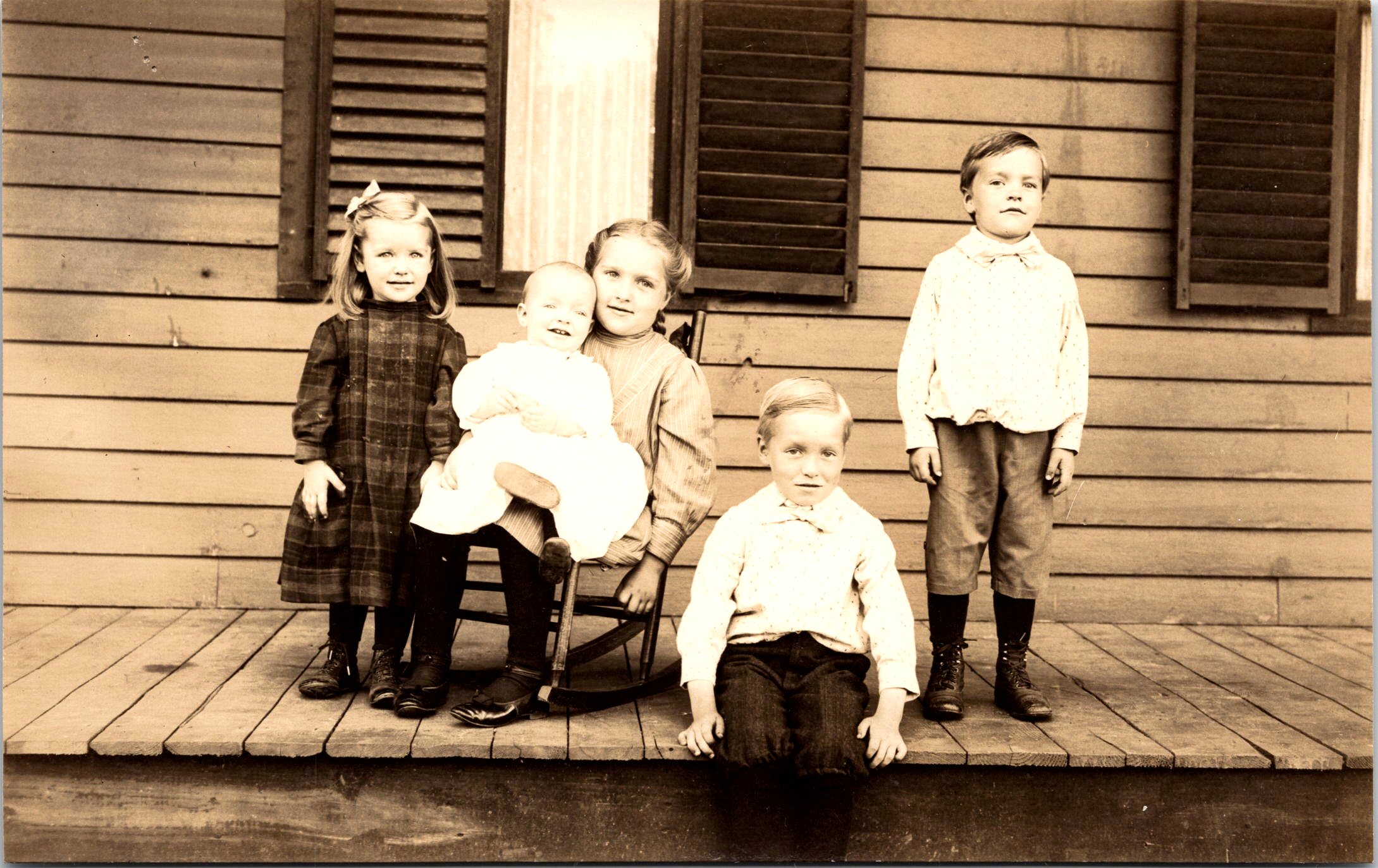
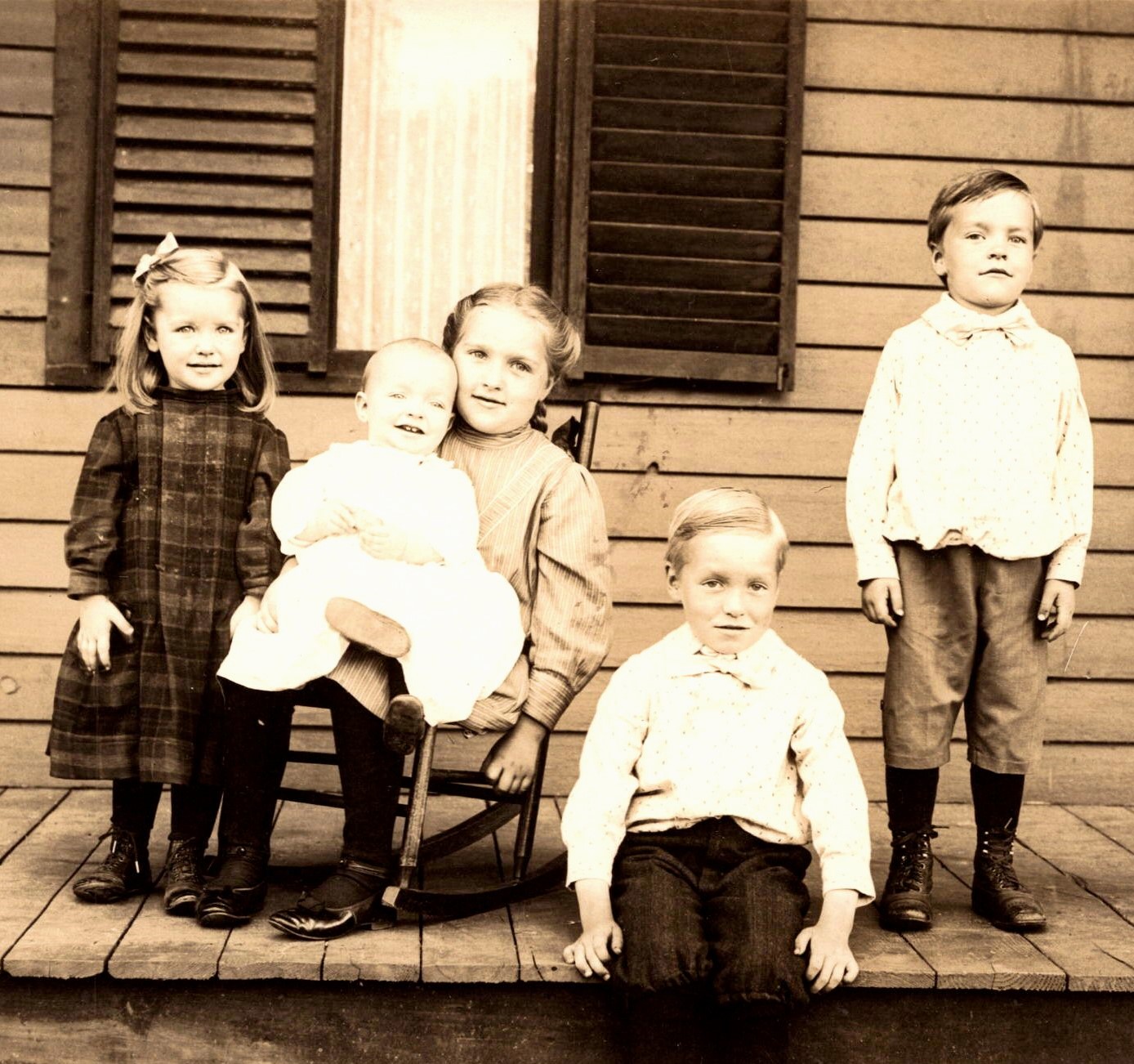
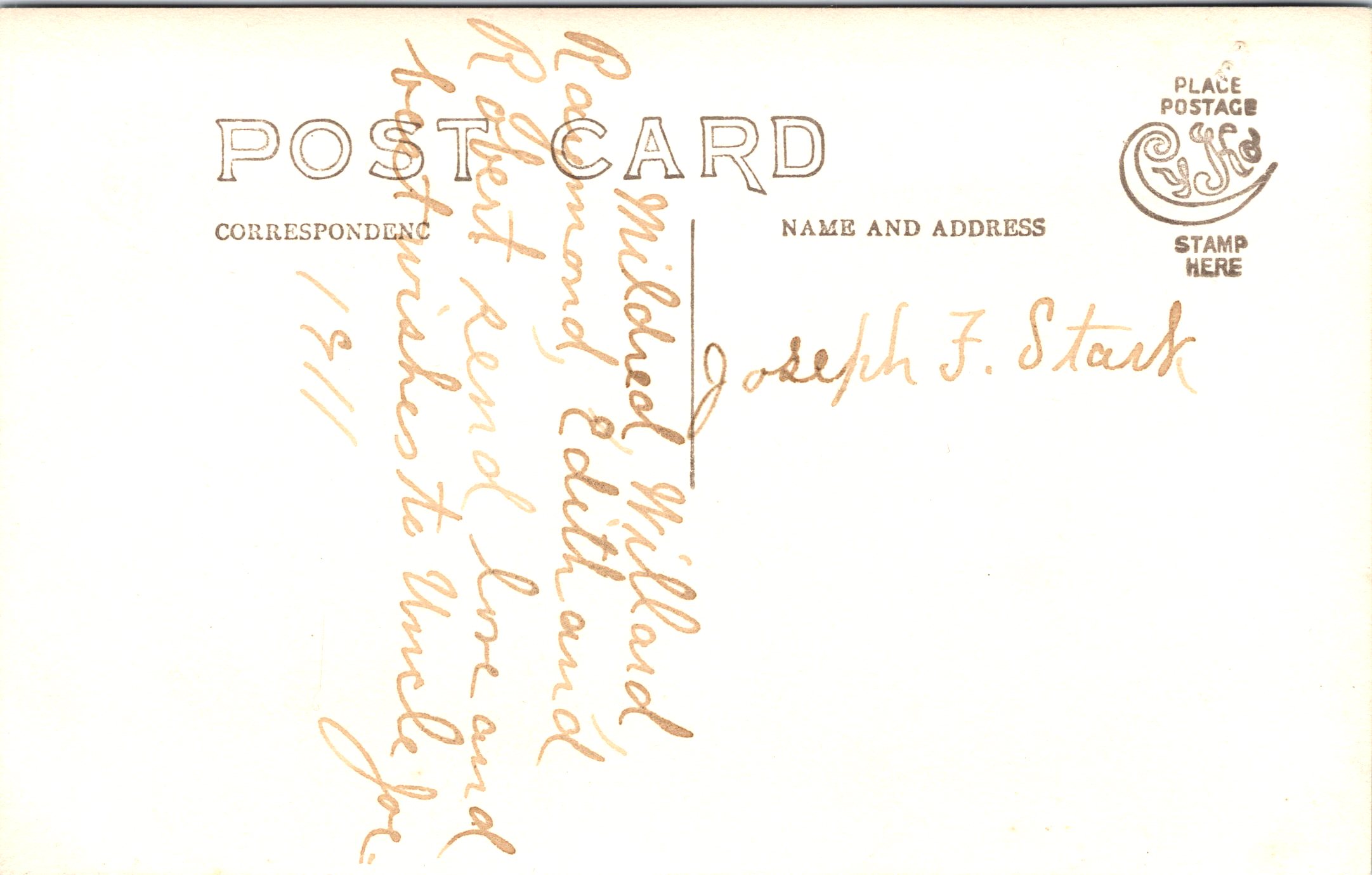
This vintage real photo postcard captures five siblings posed on a front porch. They are likely in front of their own home. The oldest child is sitting on a rocking chair and has the baby of the family on her lap. The writer of this postcard addressed it to “Uncle Joe” and introduces him to each child by their first name. The stamp box indicates that this postcard was produced by Cyko. SOLD
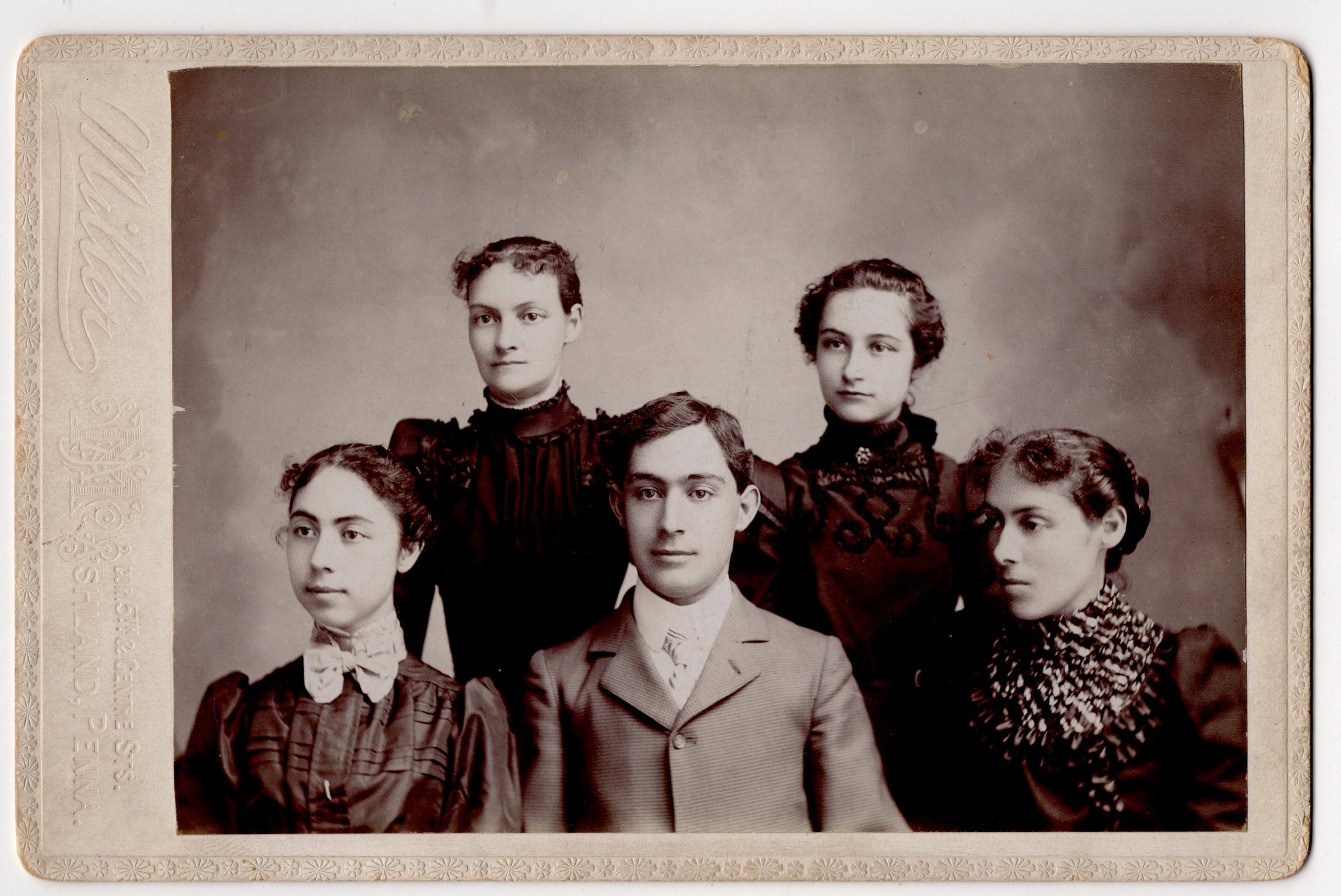
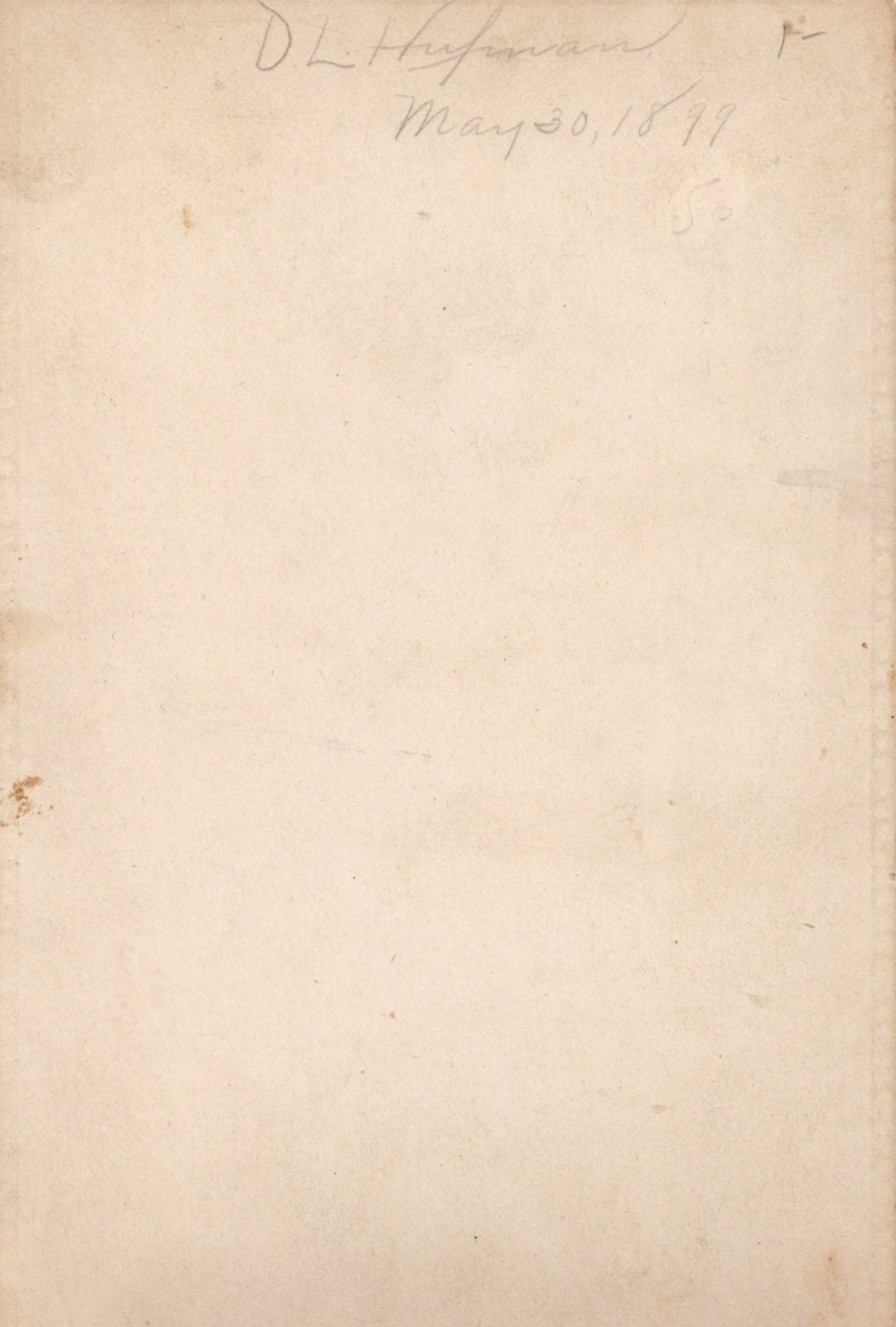
This striking 1899 cabinet card photograph, taken by the Miller studio in Ashland, Pennsylvania, features a group of five well-dressed young adults posing in a formal portrait. The composition suggests a close familial or social connection between them, possibly a group of siblings, cousins, or classmates. At the center of the image sits a young man, likely in his late teens or early twenties, wearing a well-fitted, light-colored suit with a high-collared white shirt and a neatly knotted tie. His hair is neatly combed, and he has a calm, composed expression, looking directly at the camera. Surrounding him are four young women, all dressed in elegant, high-necked dresses typical of the late Victorian era. Their outfits are adorned with lace, ruffles, and intricate detailing, showcasing the fashion sensibilities of the time. Their hair is styled in soft curls or pulled back in a refined manner, further enhancing their polished appearance. The young women appear to range in age from their late teens to mid-twenties. Their expressions are serious, with subtle hints of warmth and poise. Each of them maintains an upright posture, suggesting a well-mannered and possibly upper-middle-class upbringing. The backdrop is a simple studio setting, emphasizing the subjects and their attire without distractions. The soft lighting highlights their facial features and creates depth in the image. On the reverse side of the card, there is an inscription in pencil that reads “D.L. Huffman, May 30, 1899.” This could indicate the name of one of the individuals in the photograph or the person who owned or giftedit. This photo was taken at a studio in Ashland, Pennsylvania. Ashland is a borough in Schuylkill and Columbia counties in Pennsylvania. The town is located 15 miles northwest of Pottsville. It is part of Northeastern Pennsylvania. Records at the New York Public Library help identify the photographer as Alexander J. Miller (1843-1912). Local business directories reveal that Miller operated a studio in Ashland between 1897 and 1911. An inscription on the reverse of the photo indicates that the photo was taken in 1899. Before Miller had a studio in Ashland, he operated a studio in Pottsville, Pennsylvania. Miller’s photographic work can be found in the collection of the George Eastman Museum. (SOLD)
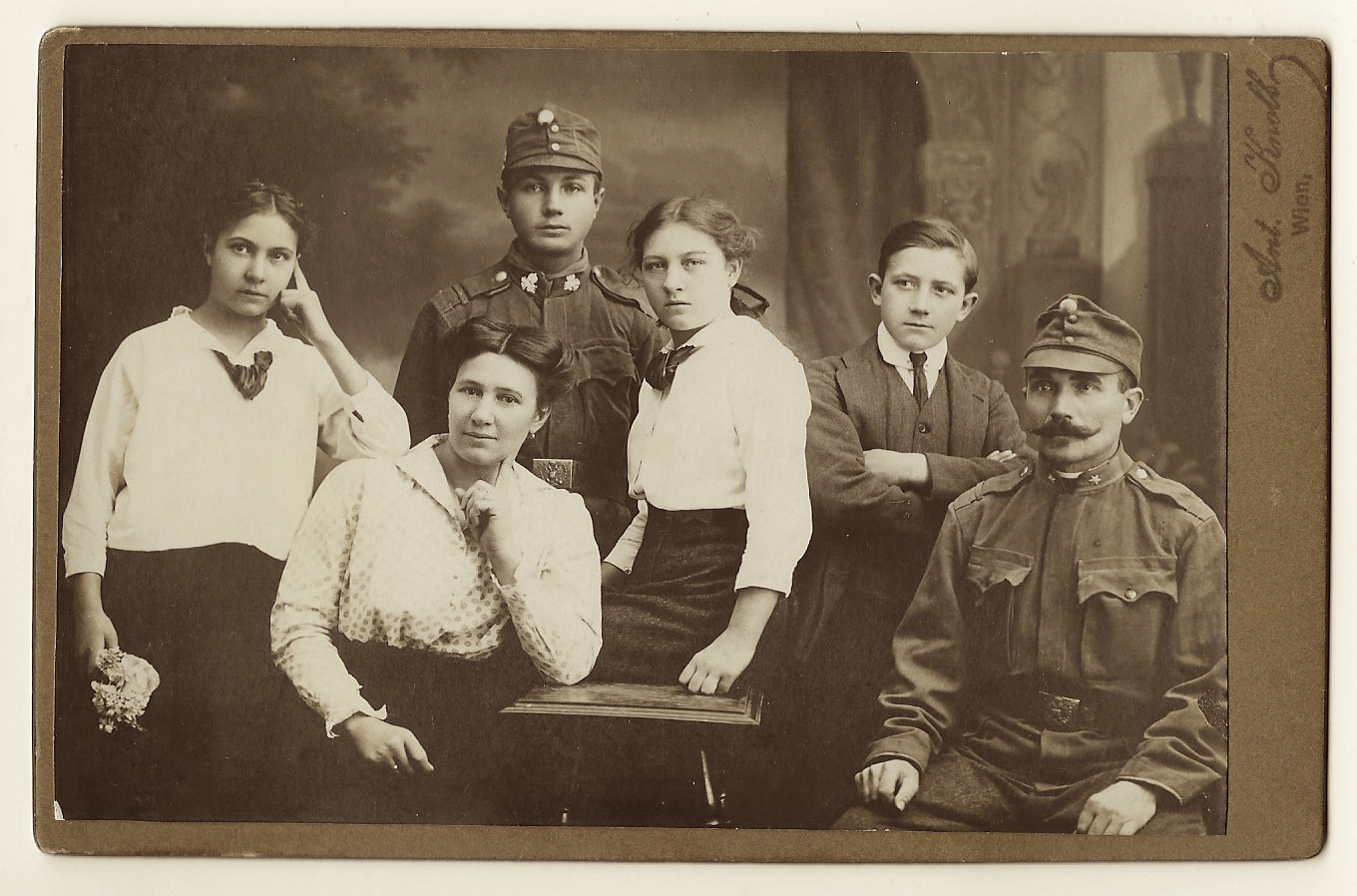
War is hell to nations, communities, and families. In “A Farewell to Arms” (1929), novelist and World War I veteran Ernest Hemingway wrote “There were many words that you could not stand to hear and finally only the names of places had dignity. Abstract words such as glory, honor, courage, or hallow were obscene.” This cabinet card photograph illustrates the impact of war on a family. The two men in uniform are likely the father and oldest son of the family. The men could not look more serious. Perhaps at the time of this photograph their nation was near, or at war. The remainder of the family (mother, two daughters, and a son) look extremely concerned and worried. The welfare of their nation and their family unit was in jeopardy. This terrific photograph speaks loudly and clearly about the horror of war. The photographer of this emotionally charged image is Ant. Knoll who operated a studio in Vienna, Austria.
This real photo postcard is available for purchase at my store, The History Peddler, for $65.00 or best offer.
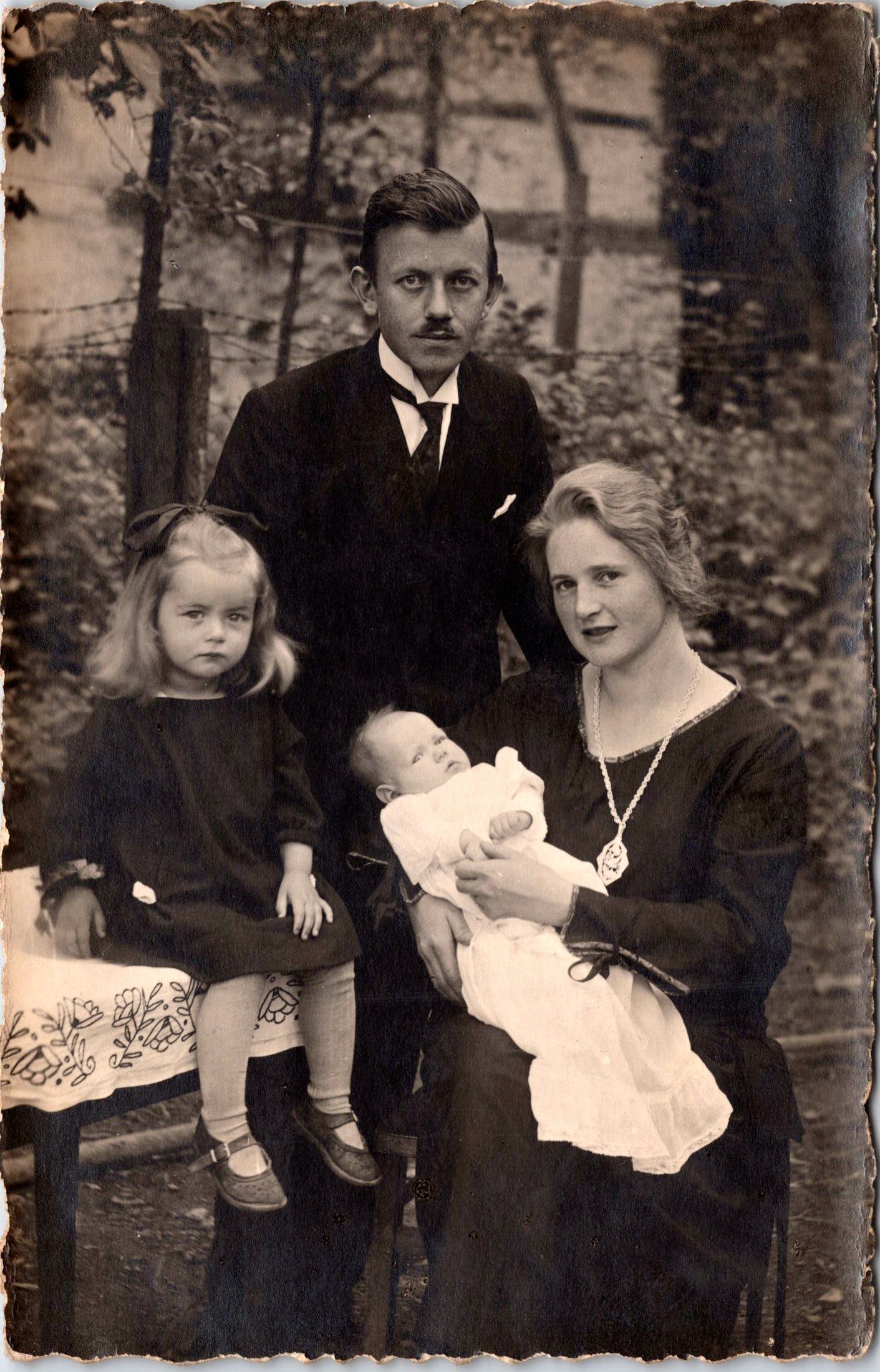
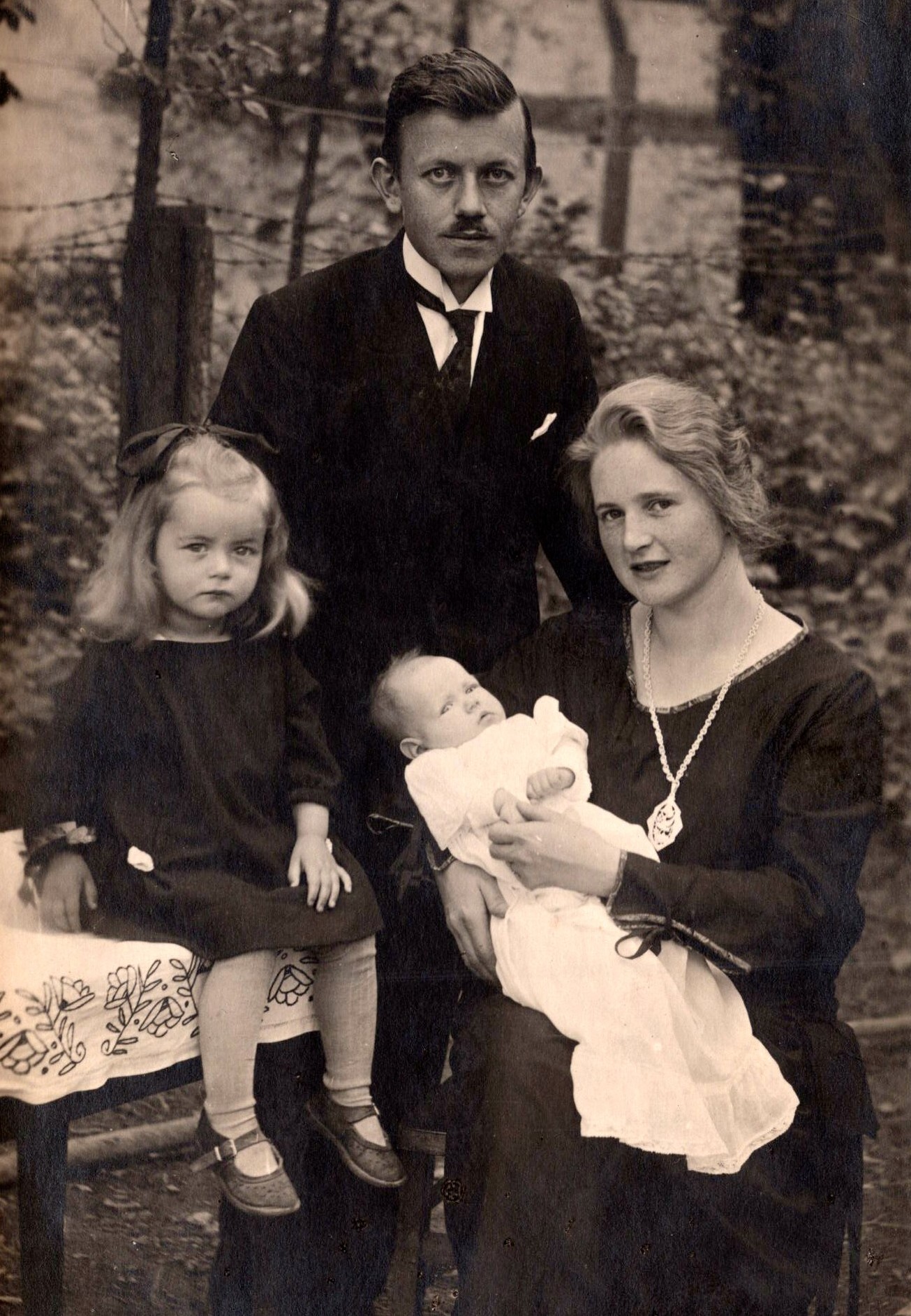
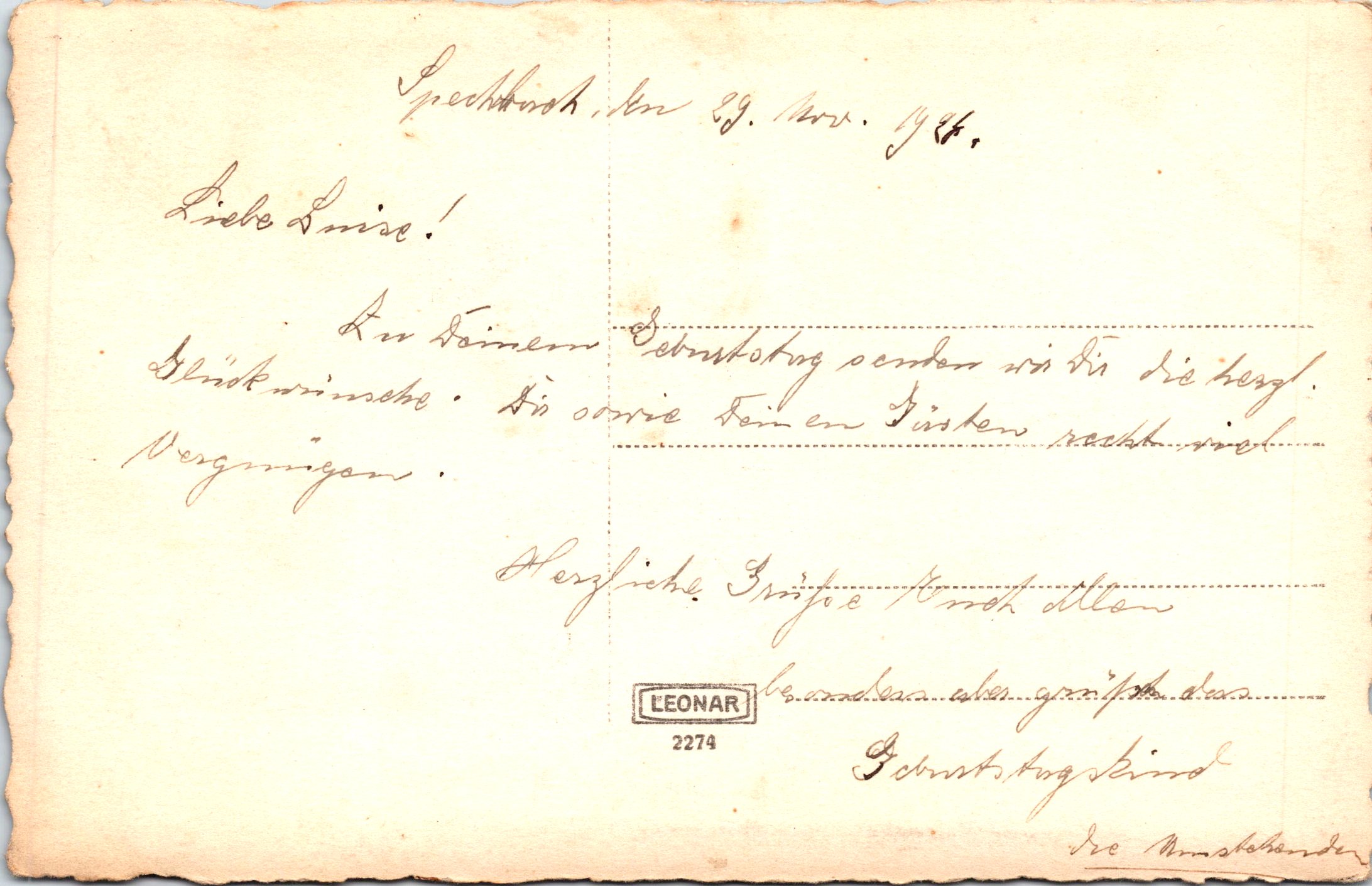
This evocative scallop edged, early 20th-century real photo postcard, presents a carefully posed family portrait, photographed outdoors in what appears to be a wooded park or garden setting. The image depicts a young couple with two children, arranged in a formal yet intimate composition that reflects both affection and dignity. The father, standing behind the group, wears a dark tailored suit with narrow lapels, a stiff white collar, slim tie, and a neatly groomed mustache—hallmarks of late 1910s to early 1920s European men’s fashion. His hair is closely cropped and carefully parted, reinforcing the formal tone of the portrait. The mother, seated at right, cradles an infant in her arms. She wears a dark long-sleeved dress with a modest neckline and a long decorative pendant necklace. Her softly waved hair, worn up but not tightly pinned, is consistent with post–World War I women’s fashion, circa 1919–1923. The older child, a little girl seated at left, appears to be approximately 3–4 years old. She wears a dark dress, light stockings, and strap shoes, with a large bow in her hair. Her direct, serious gaze gives the photograph much of its emotional weight and presence. The infant, likely under one year of age, is dressed in a long white christening-style gown, commonly used for formal portraits and special occasions during this period. The contrast between the dark adult clothing and the infant’s bright garment draws the viewer’s eye to the youngest family member. Overall, this is not a casual snapshot but a deliberately composed, commissioned portrait, intended to commemorate family life during the immediate post-war years. The reverse is divided-back, with a handwritten message in German, written in flowing cursive script. The card is postally unused (no stamp or cancellation). An approximate translation of the message is “Grechwitz (Germany), March 29, Dear Luise! On your birthday we send you our warmest good wishes. For your dear children…Warm greetings” to everyone.” The message is affectionate and familial in tone, suggesting this postcard was sent as a birthday greeting, reinforcing the idea that this portrait held personal significance for the sender and recipient. On the reverse of the card is the printed name “Leonar”. Leonar was a German photographic paper and postcard publisher. The postcard is on Leonar paper but it is not certain that the firm was also the publisher of the card. This vintage postcard is in very good condition. The card has light, even age toning. There is minor edge and corner wear. The image is clear with strong contrast. (SOLD)
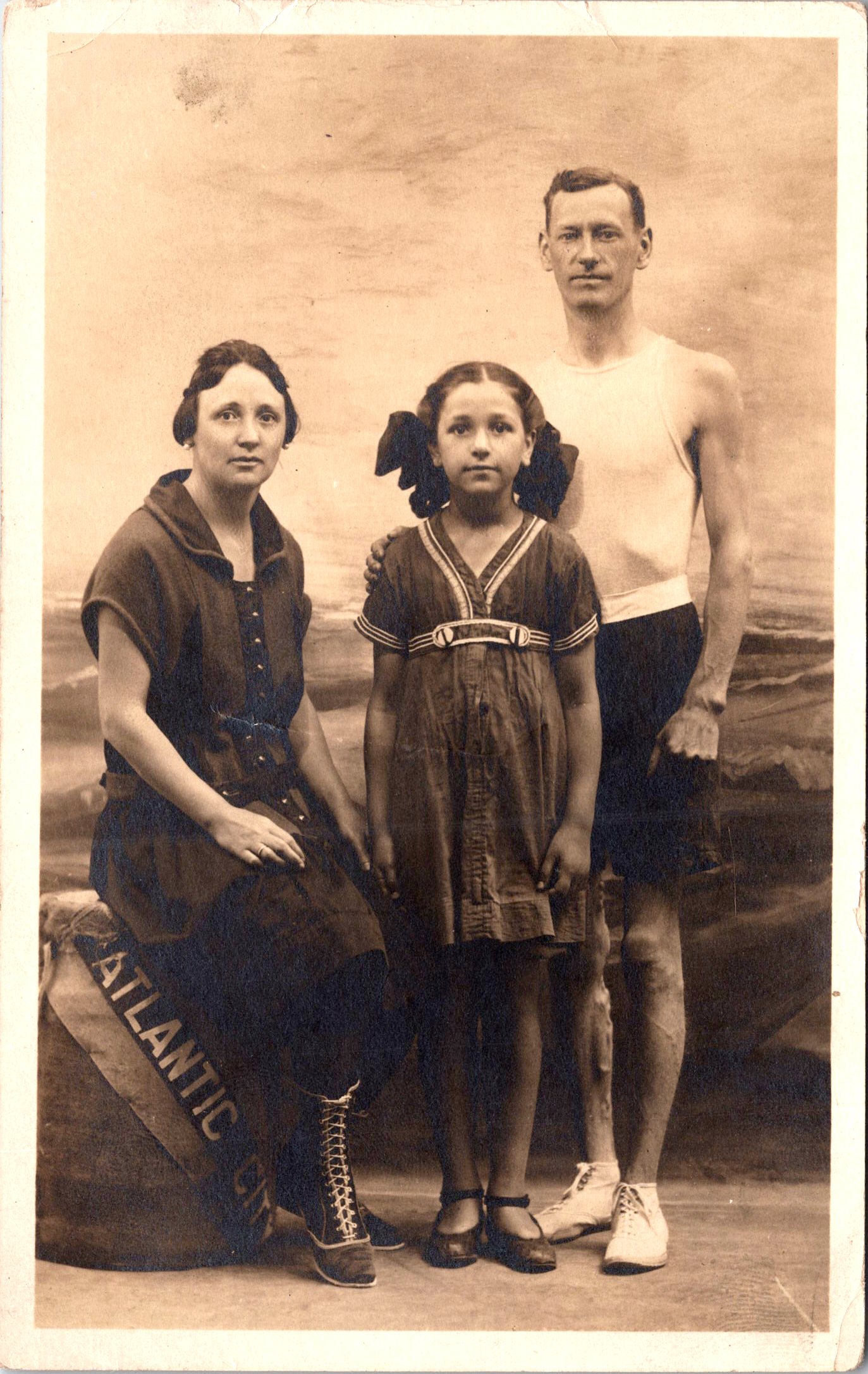
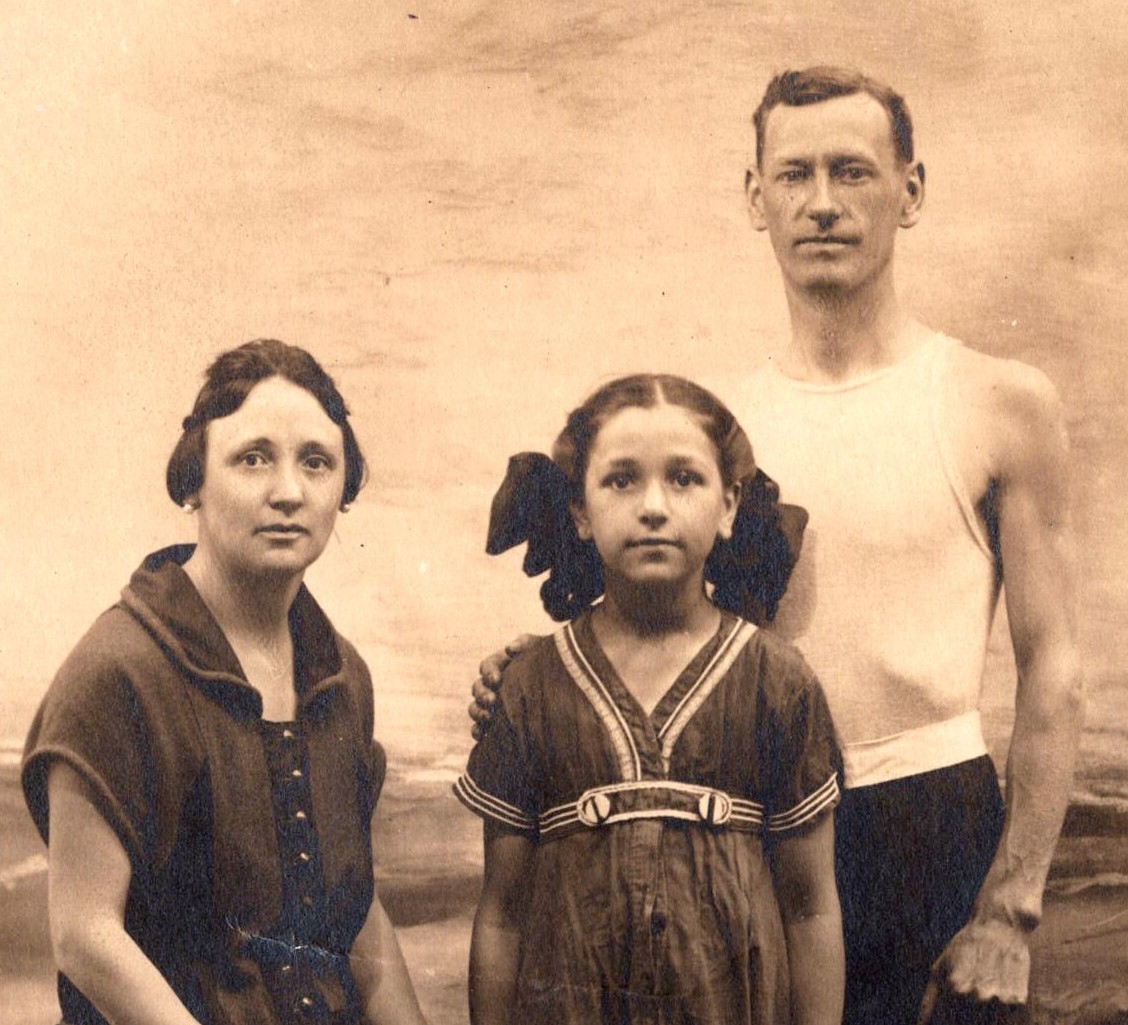
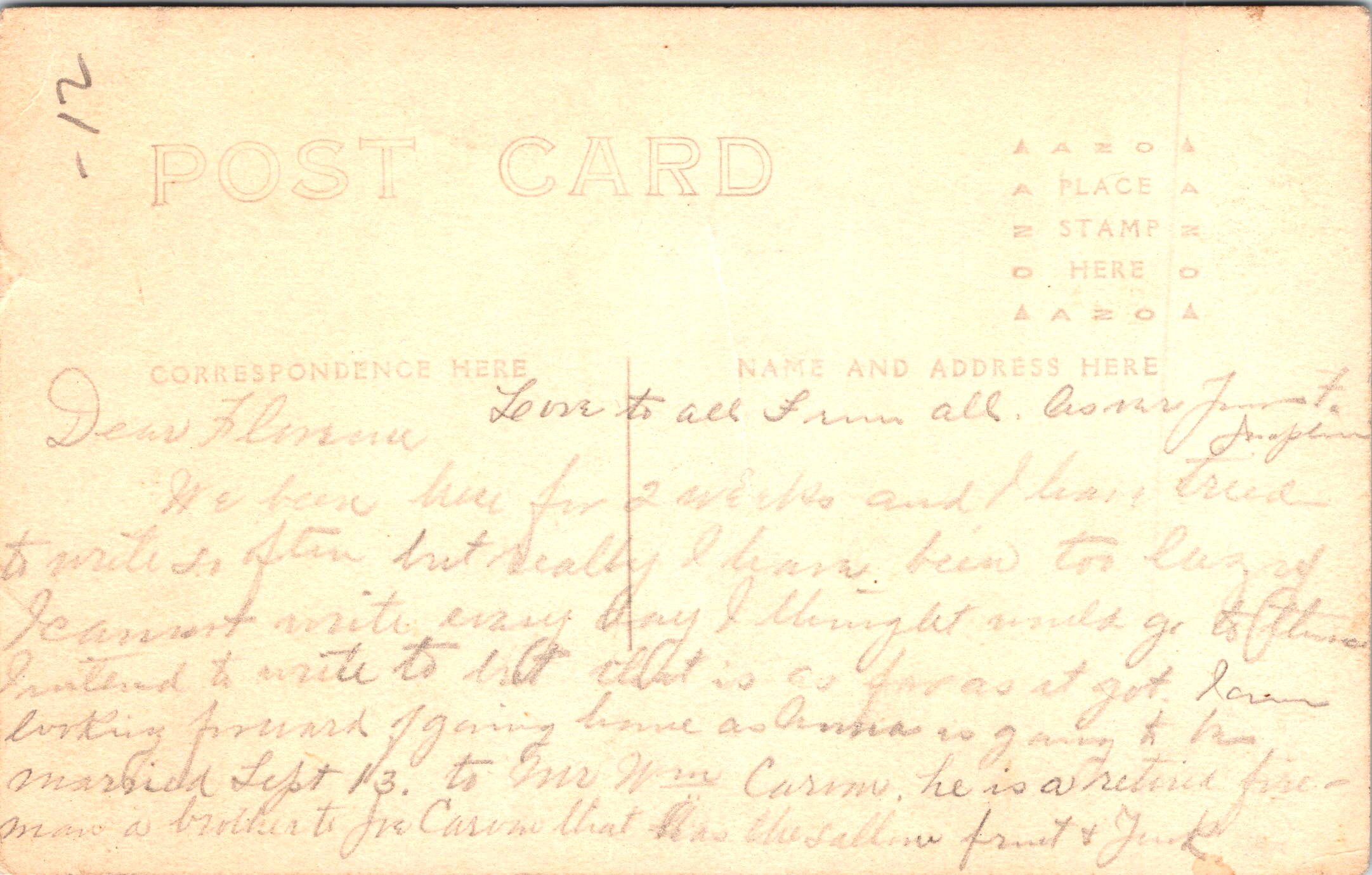
This vintage real photo postcard (RPPC) captures a striking studio portrait of a family—mother, father, and young daughter—likely taken as a souvenir along the Atlantic City Boardwalk in the 1920s. The woman is dressed in a fashionable dark seaside outfit with lace-up boots, seated on a prop with “ATLANTIC CITY” clearly visible. The young girl, wearing a sailor-style dress with large hair bows, stands between her parents, while the man wears a sleeveless athletic undershirt and shorts, a typical beach attire of the period. The backdrop is painted to resemble the seashore, a hallmark of boardwalk souvenir photography studios. A rough transcription of the message on the reverse of the photograph is as follows: “Dear Florence, We’ve been here for 2 weeks and I have tried to write a few but really I have been too lazy. I cannot write every day. I thought I would go to Florence. Intend to write to all that is a good as it got. I am looking forward to going home as Andrew is going to be married Sept 13 to Em Wm Carrow. He is a retired fireman a brother to Joe Carrow that has the saloon front & back. Love to all from all, Asmy Joseph”. The postcard has an AZO stamp box dating it to approximately 1904-1918. Atlantic City’s boardwalk photographers were popular during the early 20th century, offering tourists a chance to take home a posed souvenir photo, often with seaside props or painted backdrops. The mix of casual and dressed attire in this card is characteristic of family beach portraits from the era.(SOLD)
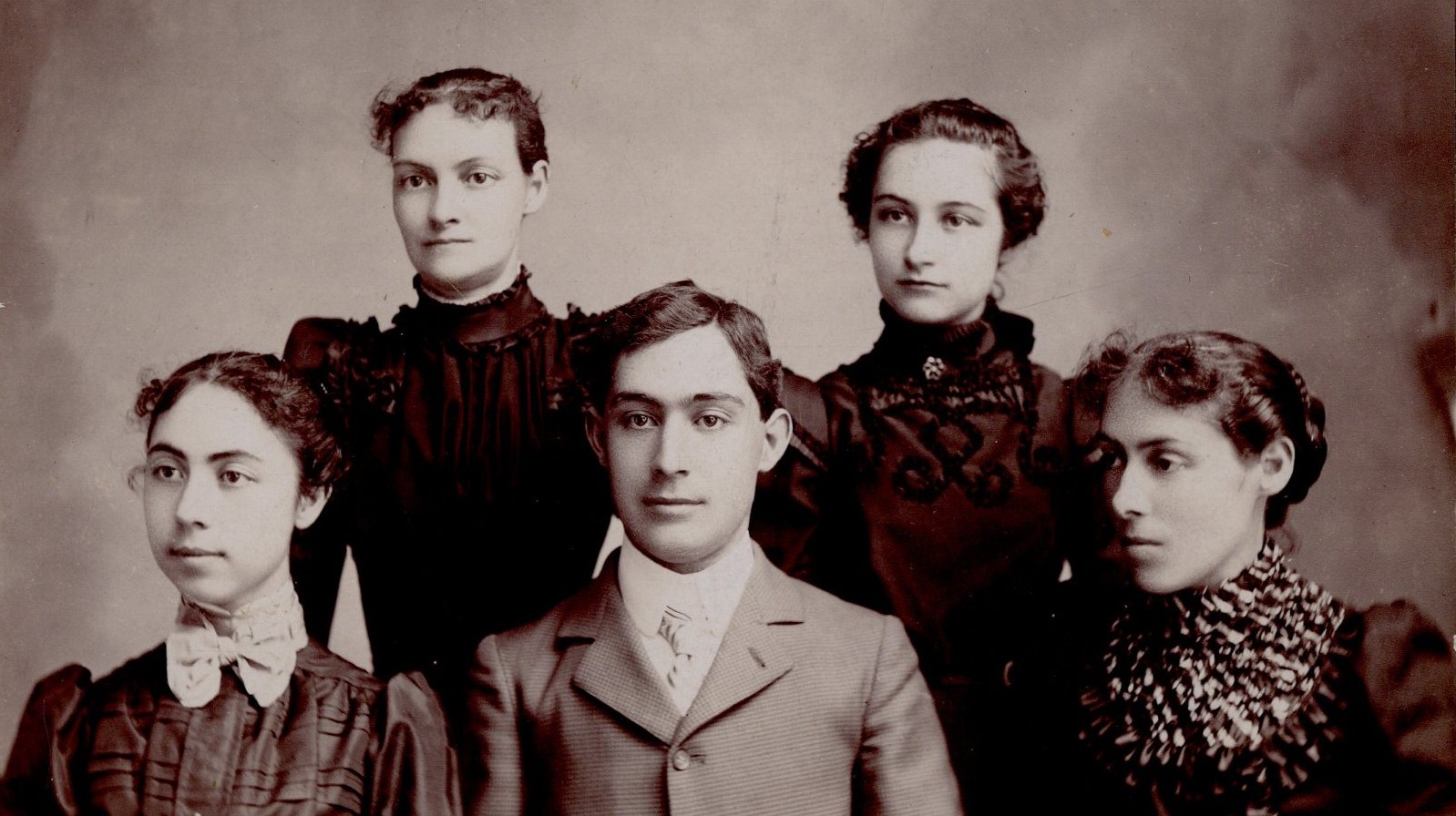
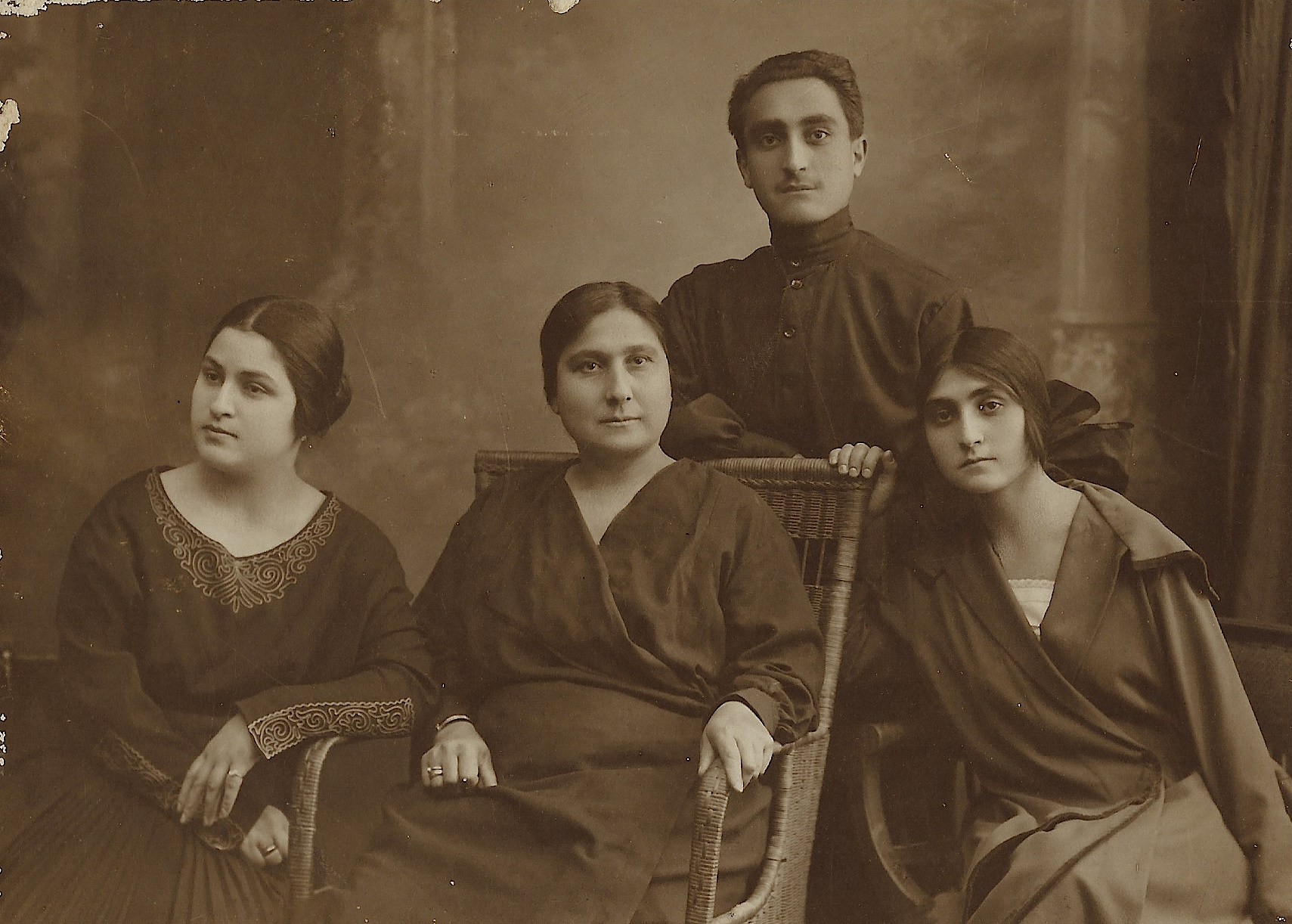
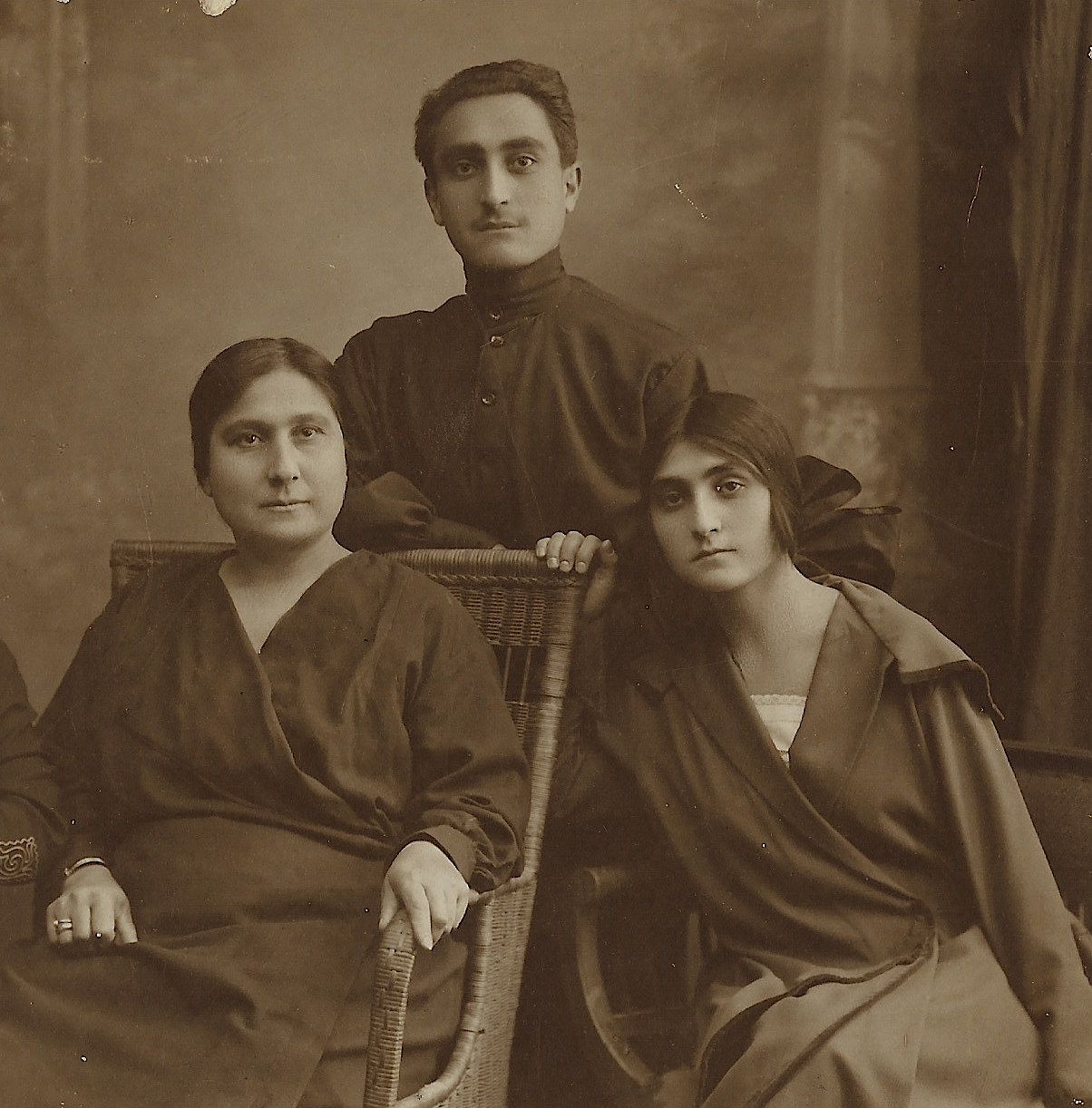
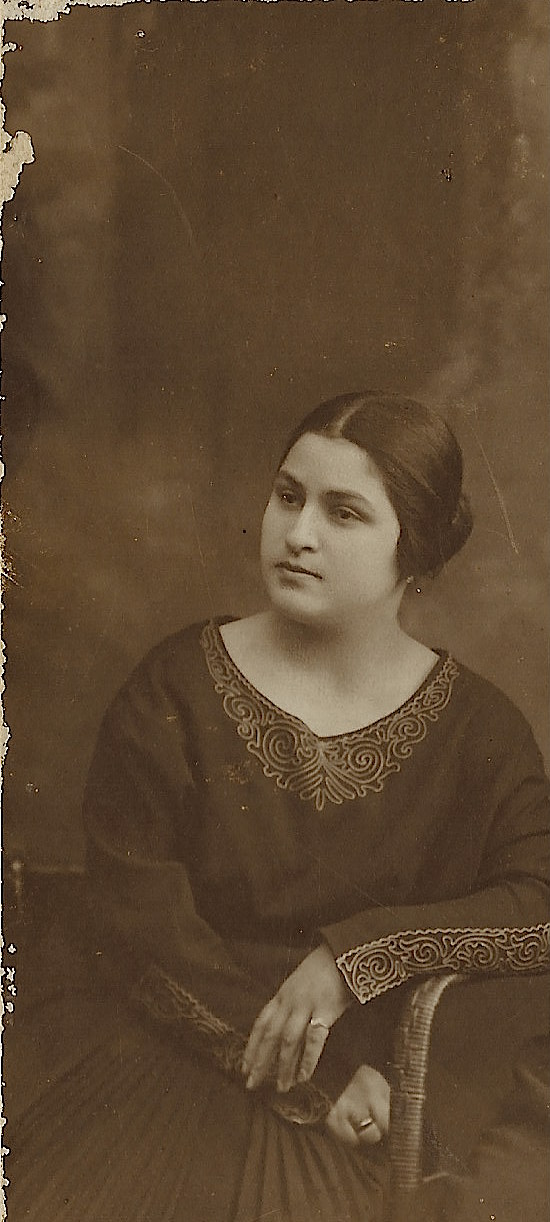
This photograph appears to be a family portrait judging by the family resemblance seen among the subjects. There is something very special about this image. Each of the four subjects have a very striking appearance. The young woman, furthest on the right side of the image, is especially beautiful. She has piercing eyes and seems to have troubling thoughts. This photograph has an abundance of personality. I am uncertain about where the photograph originates from. Reading the name of the photographer which is embossed on the bottom right hand corner of the mat, suggests that this is a Russian photograph. However, I have a major deficit in recognizing foreign languages, and this image could be from one of many other places in eastern Europe. SOLD
ADDENDUM: I have received feedback from a few readers of Russian about this photograph. There appears to be agreement that the embossed logo advertising the photographer’s studio reveals that the photograph was taken in the city of Tiflis, which became Tbilisi (the capital city of then nation of Georgia). There is also consensus that the photographers name is P. Kosloff or P. A. Kozlov.
ADDENDUM !!: I received the following message about this photograph on 5/4/23. The commenter saw the photo on another site. “the picture was taken very likely before 1917, because Koslov is written in old Russian orthography. There was no independent Georgia at that time, as Tiflis was Partner the Russian empire. And the family looks Armenian.”
This cabinet card, photographed by P. W. Taft, features two young adult women and two young girls. Perhaps the two older girls are sisters and the two young girls are daughters of the older woman. The family constellation in this image is impossible to determine. It is interesting to note that the two little girls are both wearing dresses styled after a sailor suit. The two dresses are similar, but not identical. Taft’s studio was located in Saxtons River, Vermont. To view other photographs by Taft, click on the category “Photographer: Taft”. Preston William Taft (1826-1901) was listed in the Windham County Business Directory 1884) as having a photography business in Saxtons River. Research reveals that he established a Daguerreotype, and later Photography business in 1856 and operated the studio until 1878. He was married in 1850 to Rose Melissa Miller and the couple had three sons and a daughter. Sons Frank (born 1851), Charles (born 1863), and Edward (born 1868), all became photographers. The daughter’s name was Nettie (born 1865). It is likely that this cabinet card was produced by one of P. W. Taft’s sons since, judging by characteristics of the cabinet card, it was likely photographed after he had left the business. To view other photographs by P. W. Taft, click on the category “Photographer: Taft”. SOLD