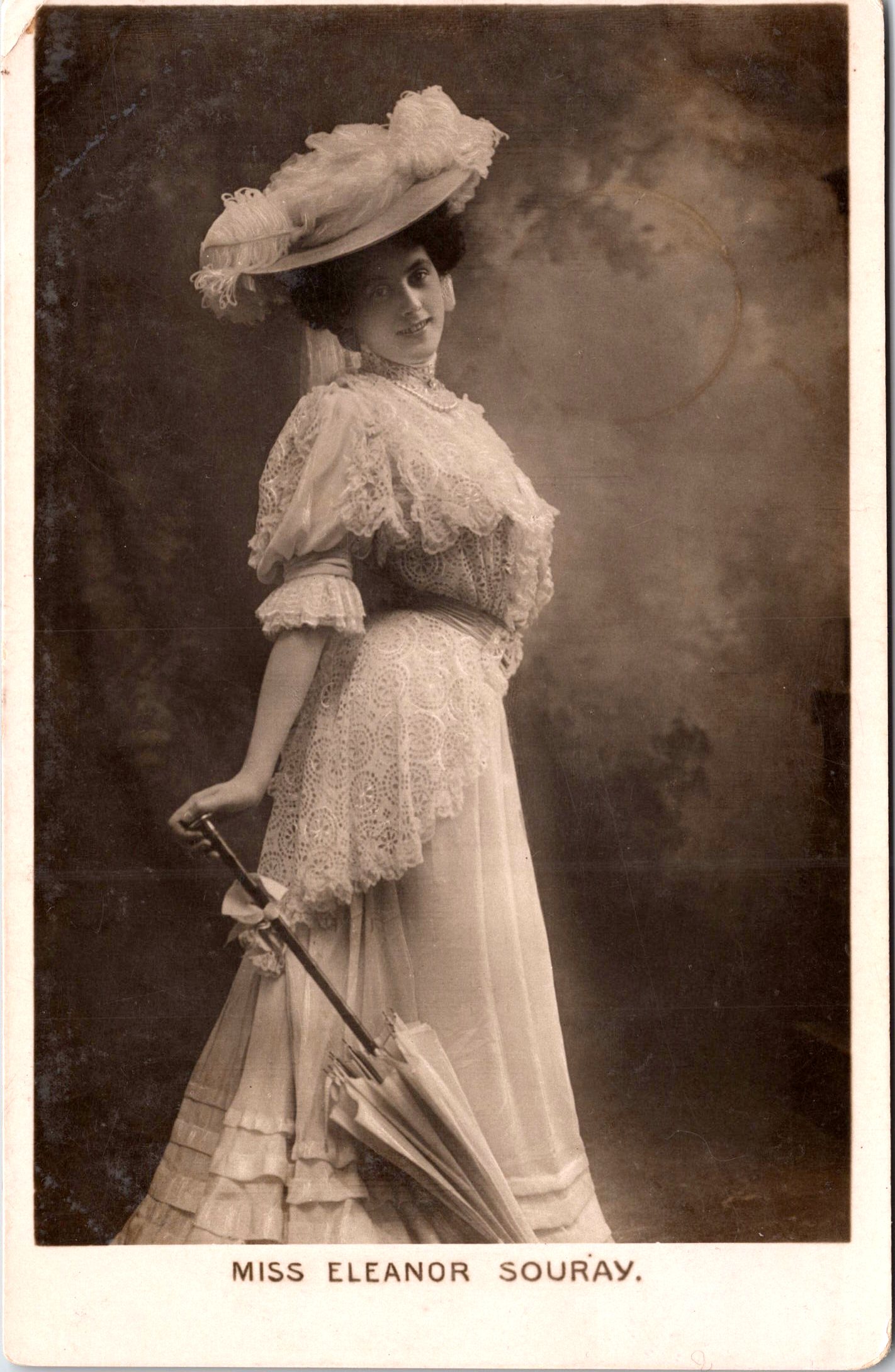
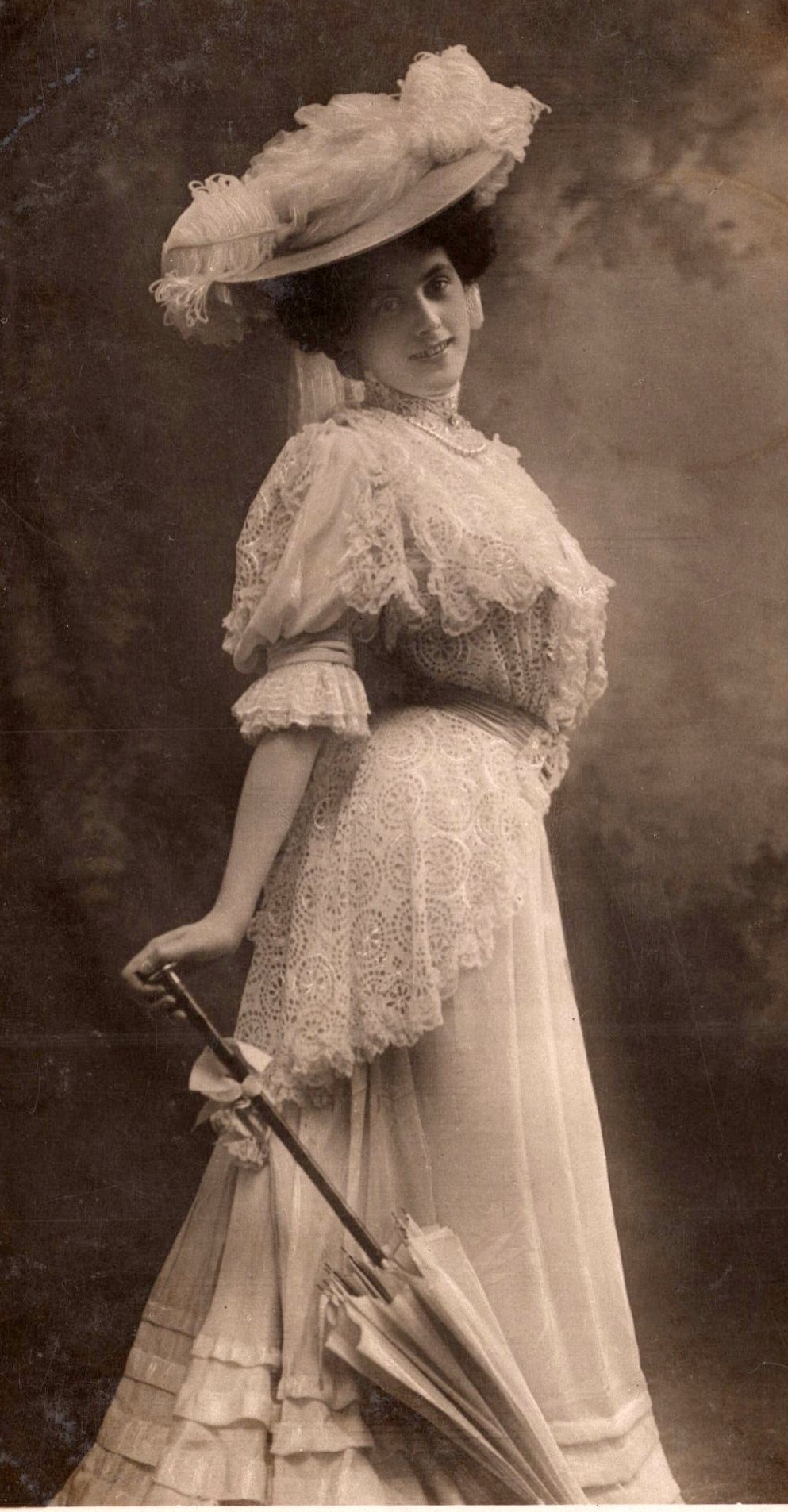
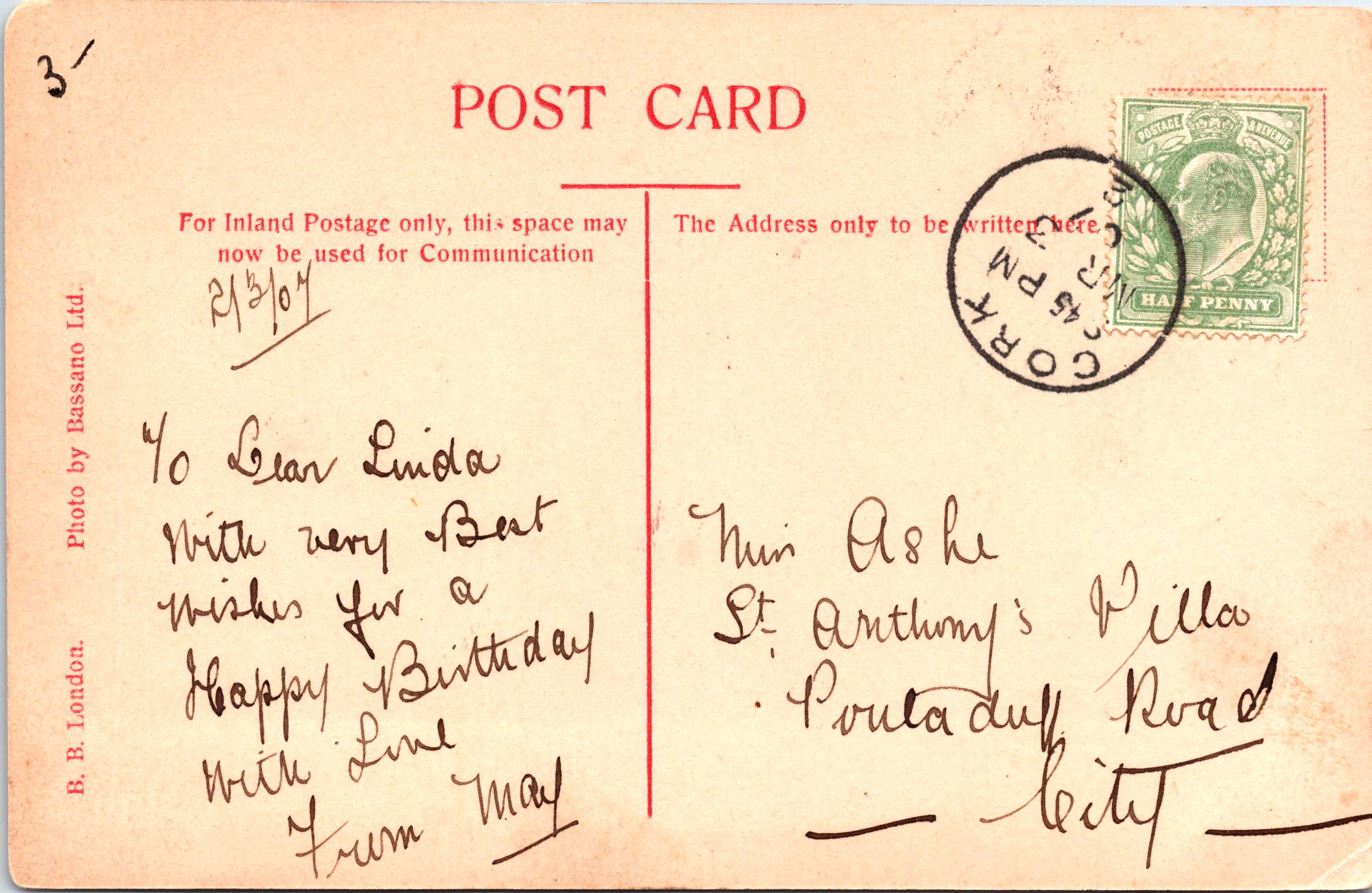
This vintage real photo postcard features English actress, Eleanor (Nellie) Souray (1880-1931). She was also known as Viscountess, or Lady Torrington. She was known for her roles in Edwardian musical comedies, pantomime, and light opera. Her sister, Maidie Souray was also an actress. Eleanor ran away from school to act in a touring company from Brighton. It was not long before she was starring in plays on the London stage. Among the plays she appeared in were “The Black Tulip” (1898), “The Blue Moon” (1905), and “The Merveilleuses” (1906). She was also a Gaiety Theatre girl. Eleanor was also an author, penning “Over the Garden Wall: A Story of Racing and Romance” (1924). In 1910, she wed George Master Byng, the 9th Viscount Torrington. They only knew each other three day before they were married. They shared a strong interest in horse racing. The pair divorced after World War l. She became more involved in horse racing and that interest led to her bankruptcy in 1930. In 1931 she committed suicide by gas. At the time of her death she was struggling with poverty and loneliness.
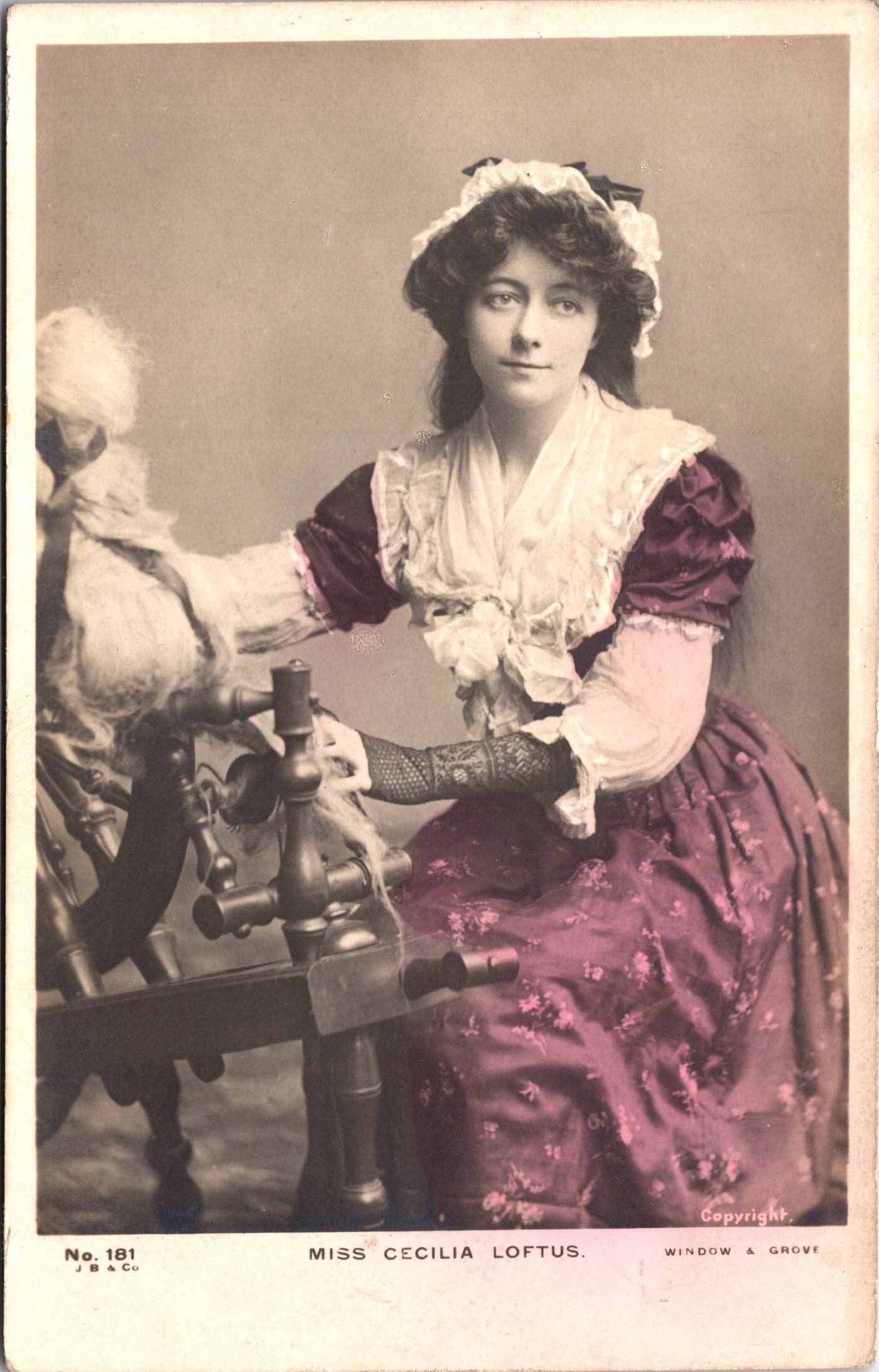
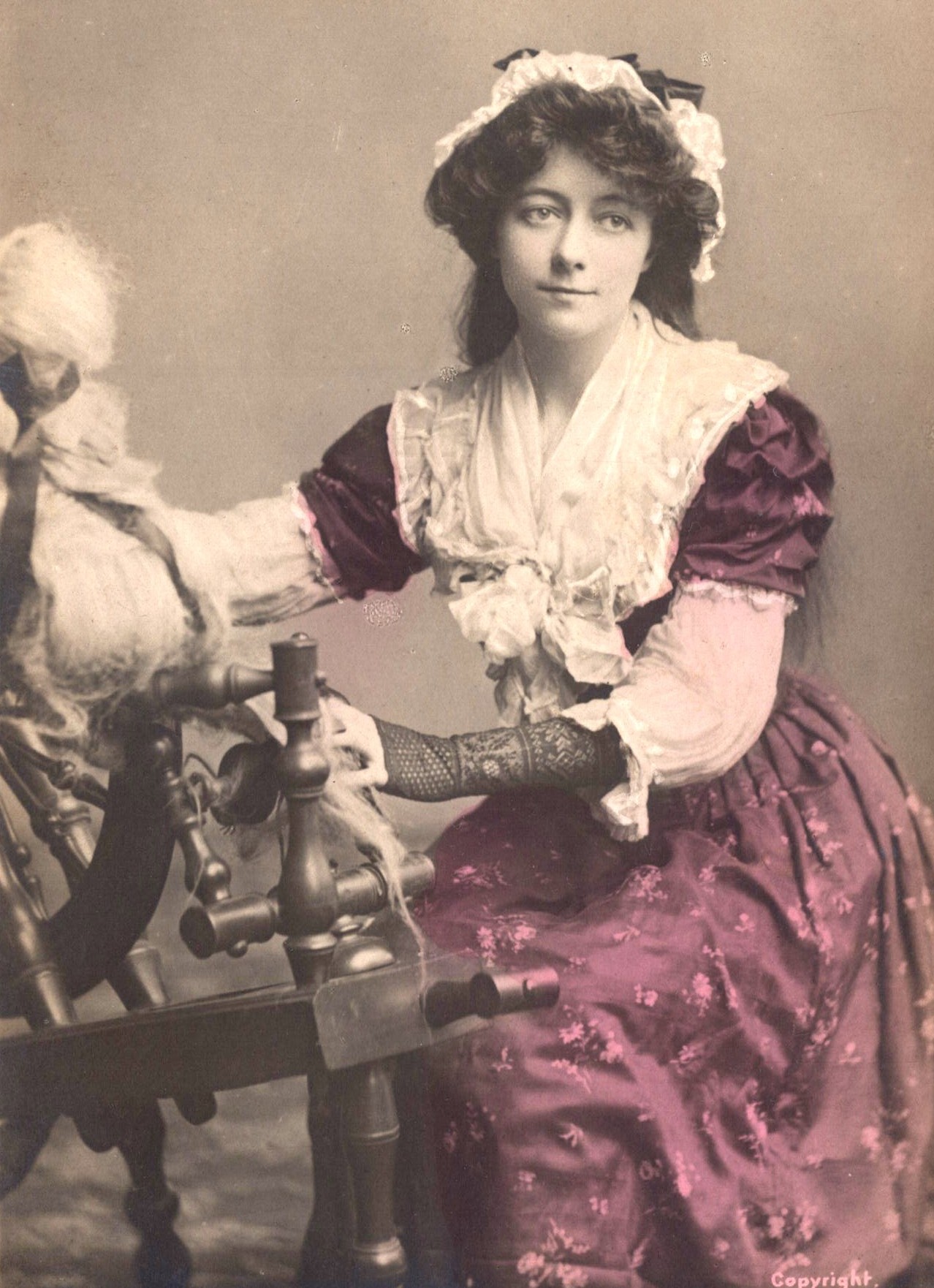
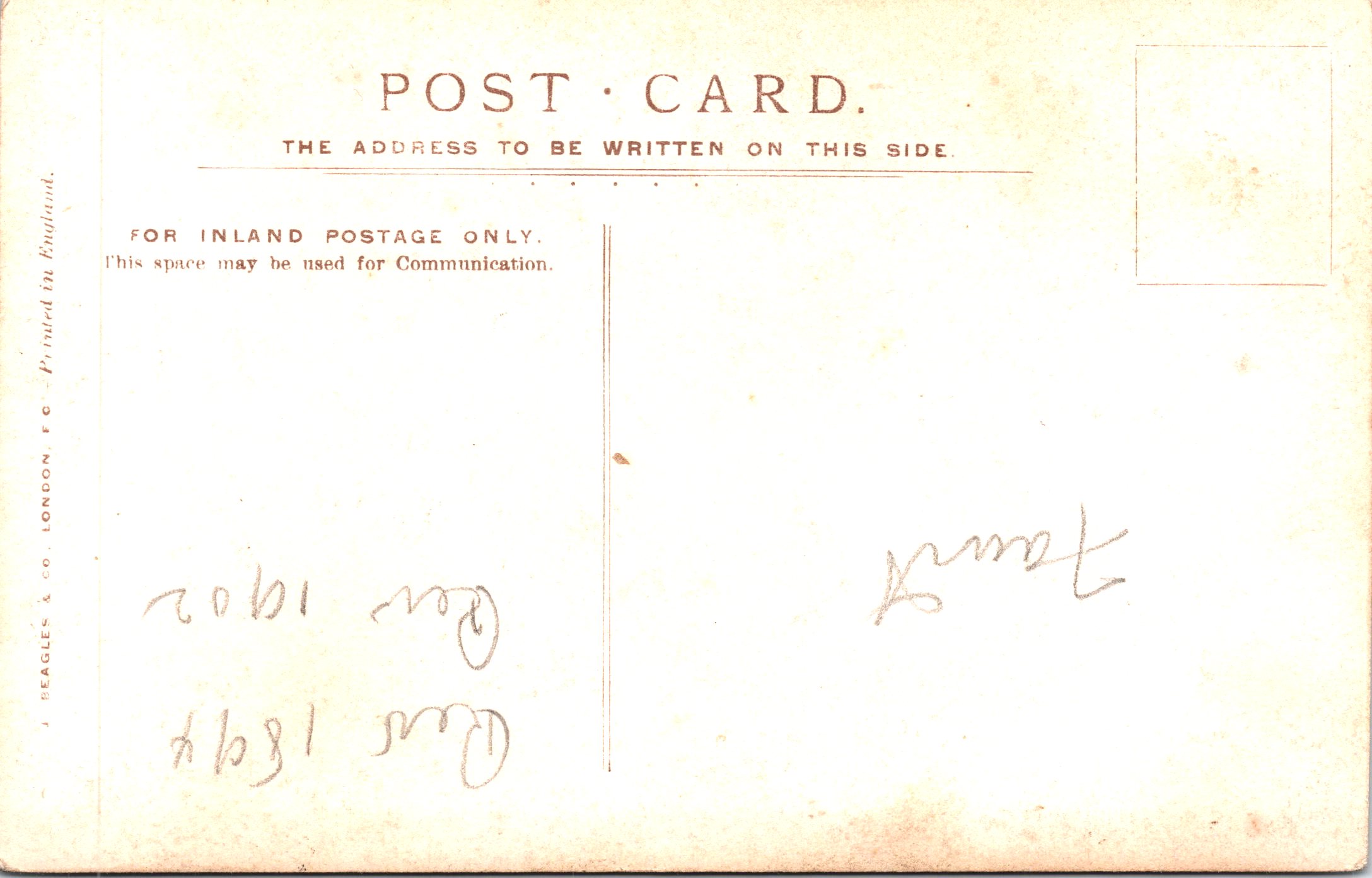
This vintage real photo postcard features a stage beauty named Cecilia Loftus (1876-1943). She was a Scottish actress, singer, mimic, vaudevillian, and music hall performer. Her career spanned the late 19th and early 20th centuries. She was a product of parents who were performers. Her father was a member of a successful variety group and her mother was an actress, music hall performer, and burlesque star. At age seventeen, Cecilia (Cissy) made her debut at the Oxford Music Hall in London. She began her career in Music Halls and then appered in musical comedy at the Gaiety Theatre. In 1894, she appeared in Vaudeville at the Lyceum Theatre in New York City. She joined the Ada Rehan Company, and then the Augustin Daly Company. In 1898, she began to appear in legitimate theatre. She toured with actor Sir Henry Irving. In 1905 she had success appearing in Henrik Ibsen’s “A Doll’s House”. Later that same year, she received much acclaim for her portrayal of Peter Pan. Loftus had a successful career in burlesque as well as on Broadway. The IBDb credits Loftus with appearing in 39 different Broadway productions between 1900 and 1941. Many of her roles were in Shakespeare plays. She also appeared in 14 films from the 1910’s to the 1940’s. Cecilia had a tumultous personal life. She eloped at 17 with an Irish writer, twice her age. The marriage failed. In 1908 she married an American doctor. Within six years, her marriage and health were in bad shape. She divorced her husband. Healthwise, she became dependent on alcohol and pain killers. In 1922, she was arrested for possession of morphine. She received probation from an English court and in 1923, she permanantly left Great Britain and returned to New York City to pursue her career on Broadway and in Hollywood. This postcard presents a beautifully staged studio photograph of the young, strikingly pretty actress posed in what appears to be an interior working space rather than a domestic room. The setting is almost certainly a theatrical or photographic studio set, carefully arranged to suggest activity and character rather than everyday life. She is shown seated at a spinning wheel, her hands engaged with the mechanism as if in the act of spinning wool or thread. The wheel itself is prominently placed in the foreground, its turned wooden elements and spindle clearly visible, lending the image a strong sense of craft and period atmosphere. To the left, a mass of raw wool or fiber rests against the wheel, reinforcing the impression that she is meant to be “working,” though the scene is clearly theatrical and symbolic rather than documentary. Her costume is elaborate and highly decorative, consistent with late Victorian or Edwardian stage imagery. She wears a richly colored dress—hand-tinted in shades of deep plum or rose—with a fitted bodice and full skirt patterned with small floral motifs. The sleeves are puffed and trimmed with lace, and a sheer white lace fichu or shawl softens the neckline. Her hair is styled in soft waves and partially covered with a lace cap or bonnet, adding to the pastoral, old-world aesthetic. Dark lace gloves extend partway up her forearms, emphasizing elegance over practicality. Her expression is gentle and composed, with a direct yet slightly wistful gaze toward the camera. The pose balances grace and suggestion of labor, a common visual trope in actress postcards of the period, where beauty and refinement are foregrounded even in scenes meant to evoke work or tradition. The image is clearly a studio composition, not a real working room. The neutral background, controlled lighting, and carefully placed props indicate a staged photographic environment designed to showcase the sitter’s charm and versatility rather than document an actual interior. At the bottom margin, the card is identified as No. 181 in a series published by J. Beagles & Co., with a photographer crediting the photographic studio “Window & Grove,”. Overall, this is a classic British actress postcard: romantic, theatrical, and visually rich, combining period costume, symbolic activity, and the carefully cultivated image of a popular and very attractive stage performer. This vintage postcard is in good condition. There is minor corner and edge wear present (see scans).
This vintage Postcard is available for purchase at my store, The History Peddler, for $14.00 or best offer.
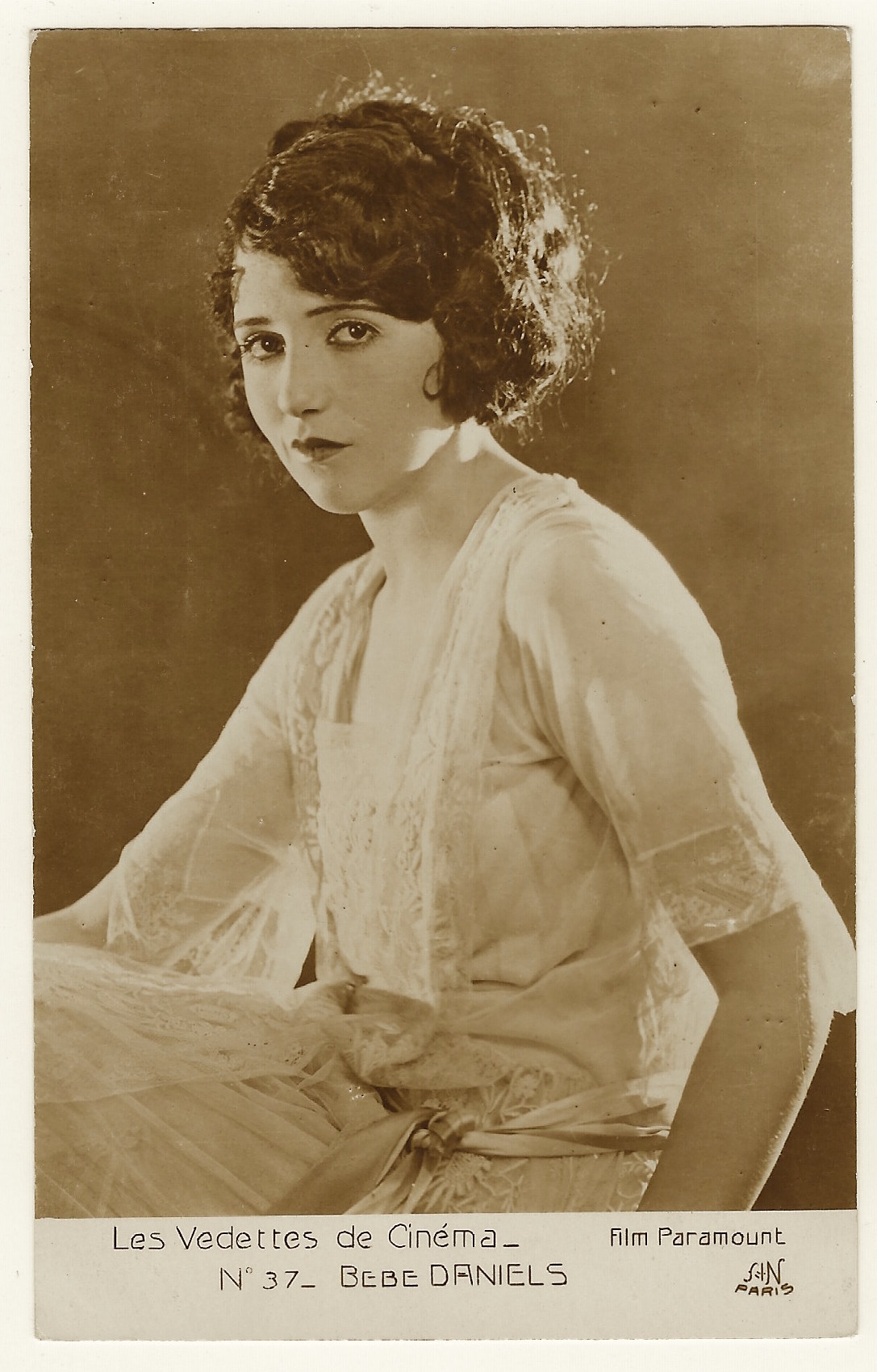
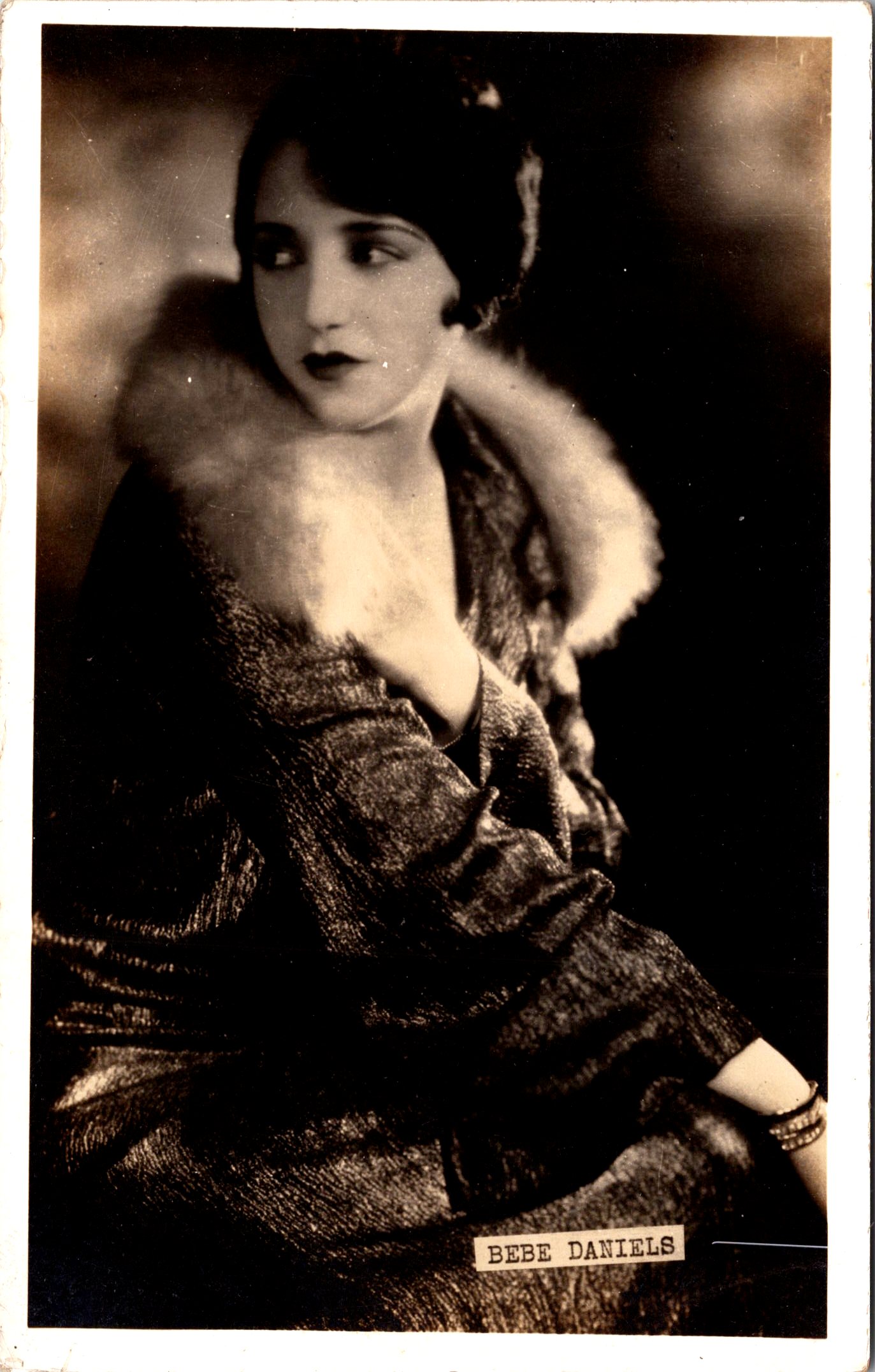
These vintage real photo postcards feature actress Bebe Daniels (1901-1971). The top postcard was published by Cinemagazine (Paris Edition) and is part of a series (no. 121?). Miss Daniels is absolutely beautiful. She is nicely dressed and her outfit includes furs. She is wearing a large ring and a necklace with a cross. Bebe Daniels was an American actress, singer, dancer, writer and producer. She was born in Dallas, Texas to show business parents. Her father was a theater manager and her mother was a stage actress. She started her career in Hollywood as a silent film child actress. She became a star in musicals such as “42nd Street”. She worked opposite Harold Lloyd and was under contract with Cecil B. DeMille. She later became a popular radio and television actress in Great Britain. In the 1920’s she was under contract with Paramount Pictures and made the transition to adult roles. In 1924 she played opposite to Rudolph Valentino in “Monsieur Bearcaire”. She also recorded songs for RCA Victor. When talkies began, she was hired by RKO. While with RKO her movies included a number of musicals such as “Dixiana” (1930) and “Love Comes Along” (1930). Over the course of her career, she appeared in 230 films. She retired from Hollywood in 1935. After World War II she was awarded the Medal of Freedom by President Truman for her service during the war. An interesting story concerning Miss Daniels is that while appearing in a Chicago hotel, several thousand dollars worth of her jewelry was stolen from her hotel room. Al Capone, the notorious gangster, was a longtime Daniels fan and put out an order that the thief had just 24 hours to return it “or else”. The jewelry was returned the following day. (SOLD)
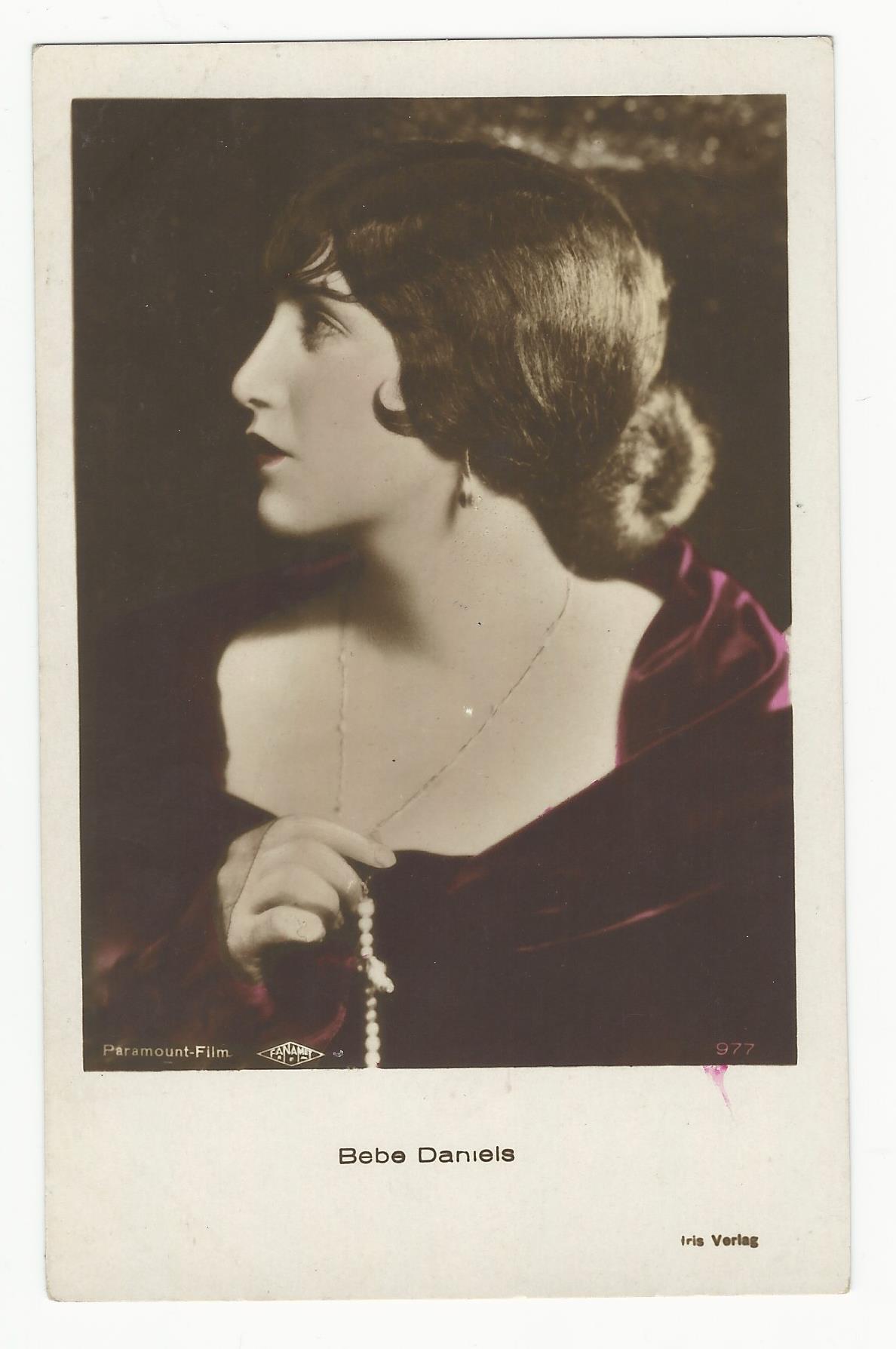
The second postcard of Miss Daniels was published by Iris Verlag for Paramount Films (Fanamet). Fanamet was an Austrian film distribution company. The postcard was part of a series (no. 977). This profile portrait also displays the beauty and appeal of Miss Daniels.Iris Verlag was the most important Austrian publisher of film star postcards. It operated from Vienna during the 1920’s and 1930’s. Iris Verlag was a different company than Germany’s Ross Verlag. Iris cards restricted itself to one postcard format and did not publish scene card series popularized by Ross. The early Iris cards had a sepia brown tone while the cards from the 1930’s were closer to “black and white”.
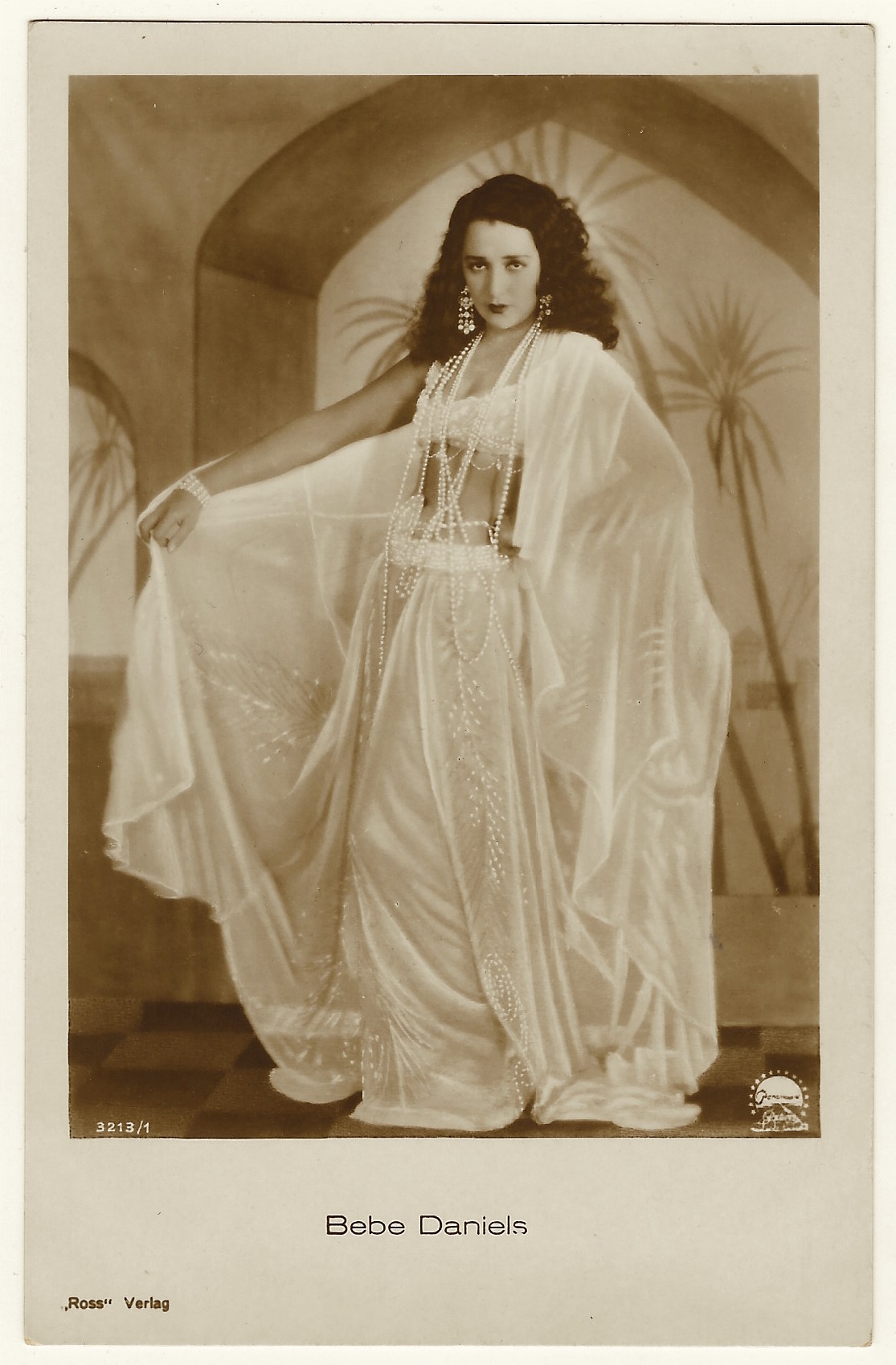
The third photo postcard features Bebe Daniels dressed as a “harem princess”. She is wearing a two piece dress with lots of see-through material. She is dressed and posed to look beautiful and sexy. I believe that the mission was accomplished. The postcard was published by Ross Verlag in Germany circa 1920’s. The postcard is part of a series (no. 3213/1) and Paramount Studio is credited. This postcard portrait of Miss Daniels is rare.
Postcard 4 is from a series (No. 37) called “Les Vedettes de Cinema (Stars of the Cinema)”. The postcard includes the logo of Paramount Studios. This real photo postcard is published by Cinemagazine and was produced in France. (SOLD)
Postcard 5 features Miss Daniels in a beautiful portrait. She is nicely dressed and her outfit includes furs. She is wearing a large ring and a necklace with a cross. This postcard was published by SSSS sometime between 1924 and 1929. (SOLD)
This cabinet card provides a portrait of a lovely young mother and her three small children. Some viewers may disagree and opine that the photograph an image of four siblings. The oldest child in this photograph is holding a hat by his side and his mother is holding a fan. Not the little girl’s hair band. The family in this image is unidentified and the location of the studio that produced the cabinet card is unknown. I would hypothesize that the studio was European. It appears that the photographer’s or the studio’s name was “Melanie” which is a name of French origin.
This Cabinet Card is available for purchase at my store, The History Peddler, for $22.00 or best offer
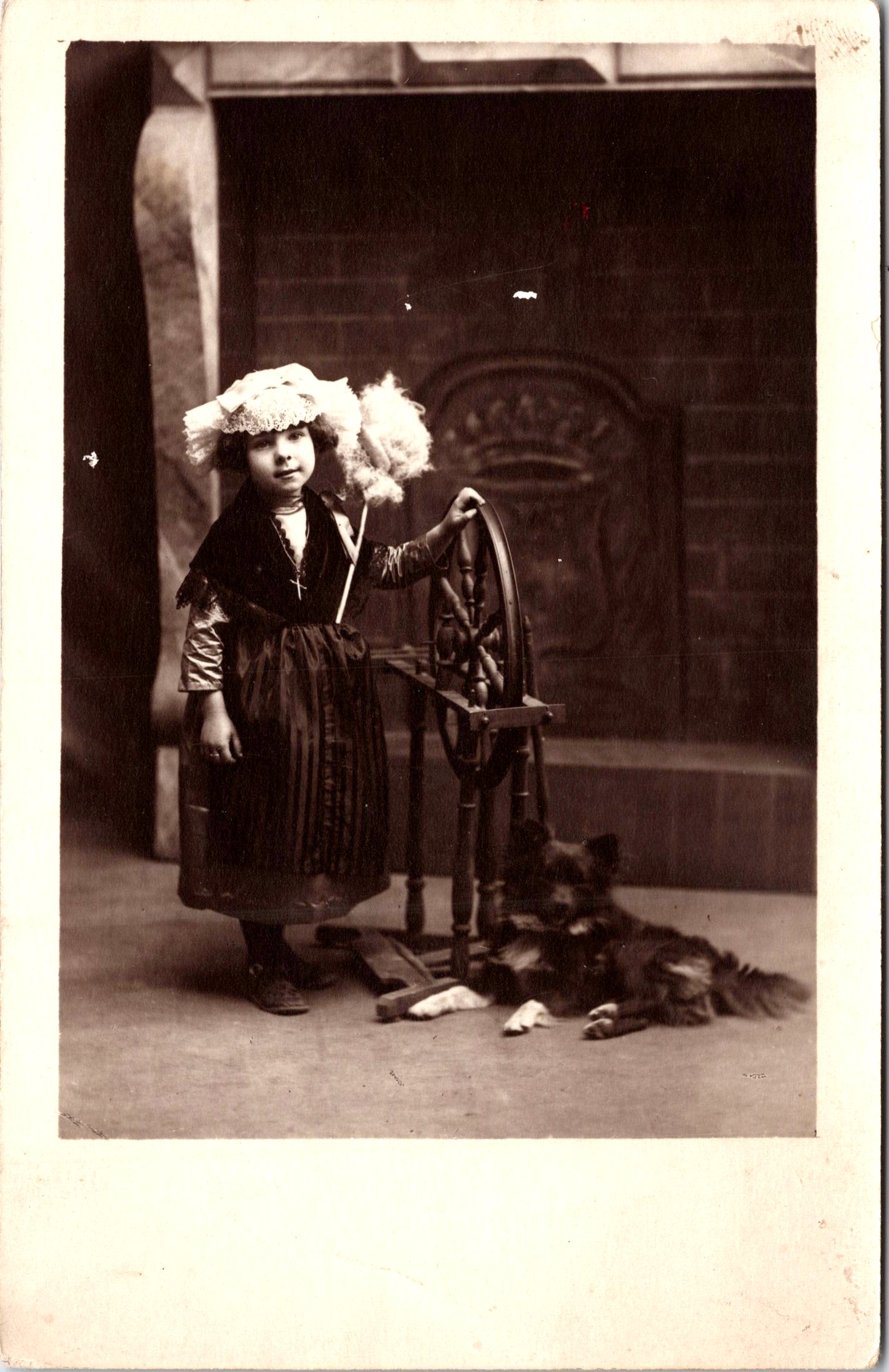
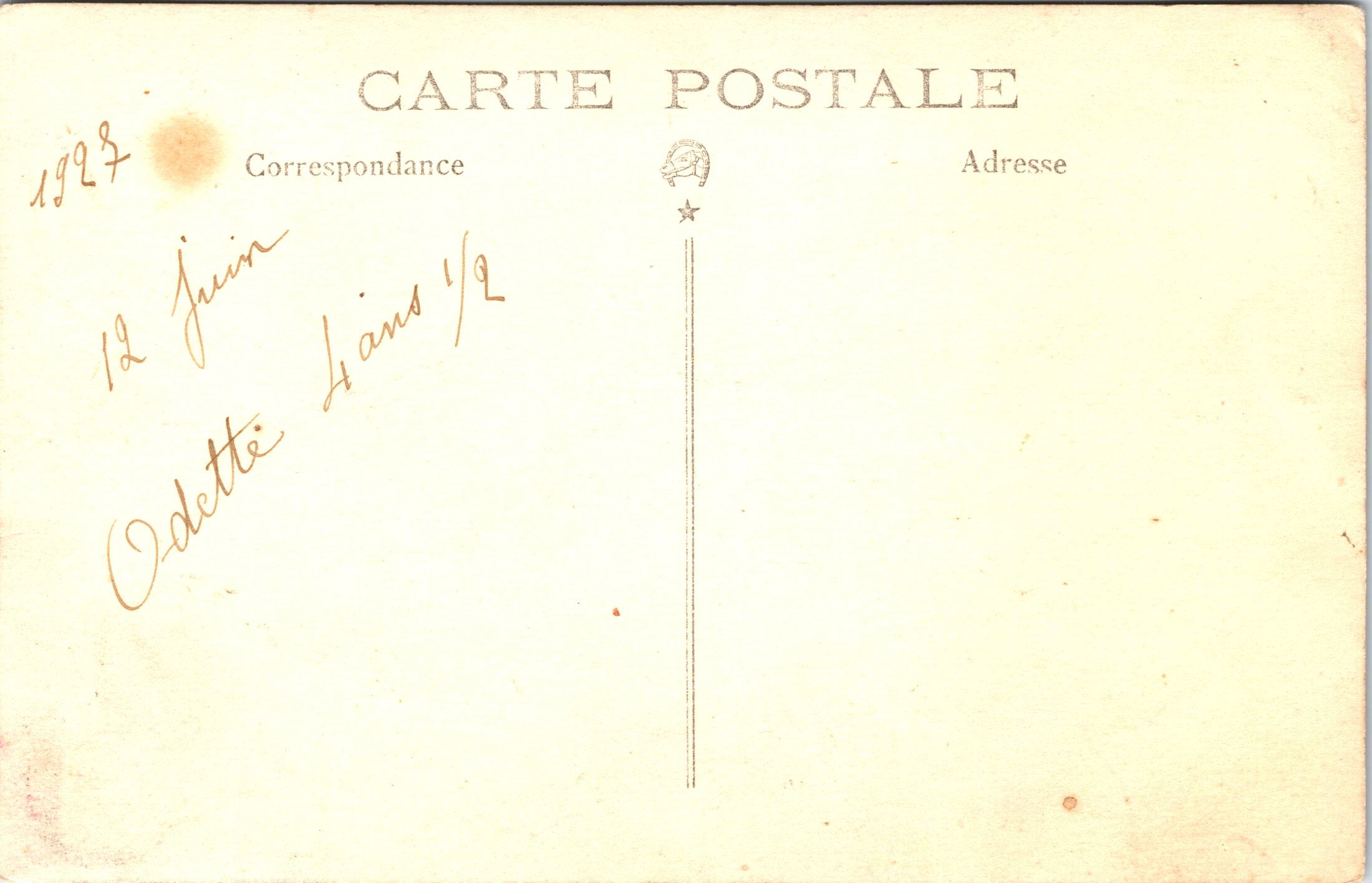
This vintage real photo postcard features a most adorable little girl in a fancy dress standing beside a spinning wheel and her cute dog. A spinning wheel is a device used to spin thread or yarn from fibres. It was an important tool prior to the Industrial Revolution. An inscription on the reverse of this photograph reveals that the girls name is Odette and the photo was taken in 1927. SOLD
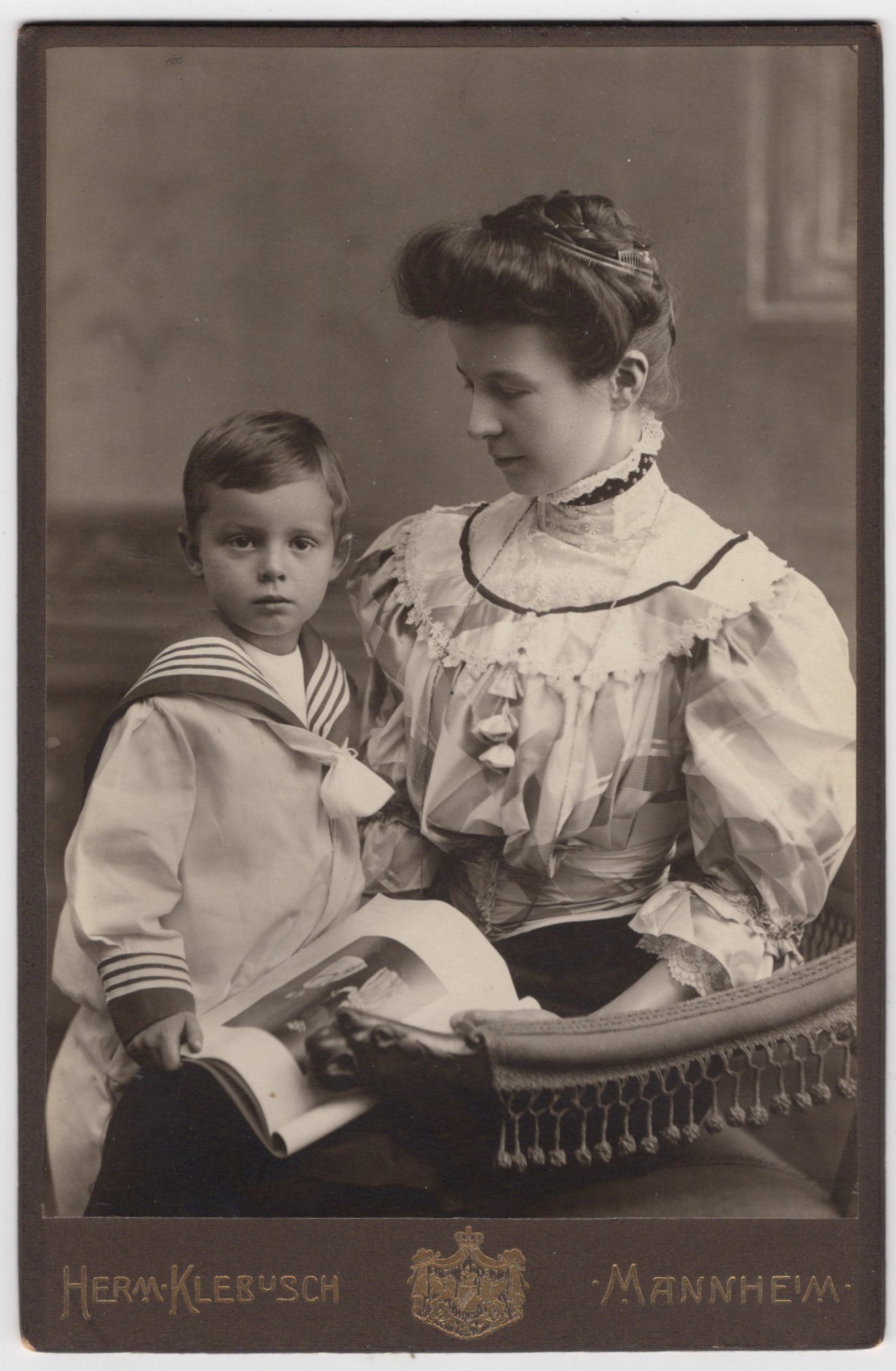
This is a beautiful and tender 1906 cabinet card portrait by the highly regarded German court photographer Hermann Klebusch of Mannheim. The image shows a refined mother seated with her young son, who wears a handsome sailor-style outfit typical of children’s fashion in the early 20th century. The boy looks directly at the viewer with a calm, steady expression, while his mother gazes down at him lovingly. She is dressed in an exquisite high-necked blouse with intricate lace, ruffles, and puff sleeves—fashion hallmarks of the Edwardian period. The composition is elegant and intimate. The mother gently steadies an open book on her lap while the boy holds one corner of the page. The chair with its tassel fringe and the soft studio background add richness and depth to the scene. This is a superb example of German studio portraiture during a time when photographic ateliers were producing some of Europe’s finest family images. The front mount is printed in gold with the photographer’s name, Herm. Klebusch, along with the coat of arms indicating his designation as a Hofphotograph—a Court Photographer, a prestigious title granted to photographers who served royalty or nobility. The reverse is beautifully printed in gold, giving details about the photographer’s studio and stating the photograph was taken in 1906. The cabinet card remains in very good antique condition. The photograph itself is crisp and clean, showing only the faintest signs of age. Tonal range is strong. The mount is solid and attractive with light, age-appropriate edge wear but nothing distracting. The gold printing on both front and back remains sharp and vivid. Overall, this is a very well-preserved example with outstanding display appeal.
This Cabinet Card is available for purchase at my store, The History Peddler, for $48.00 or best offer
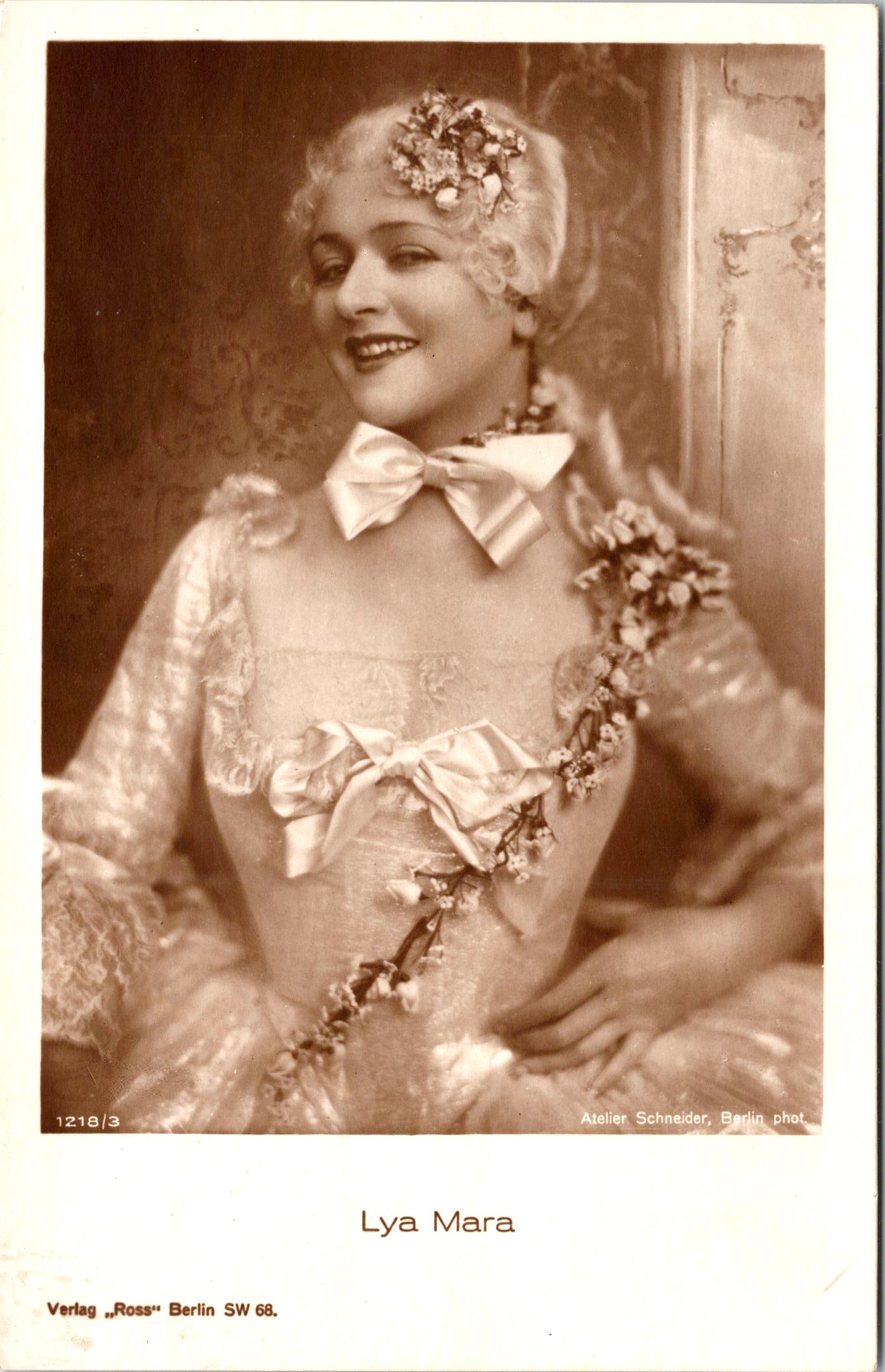
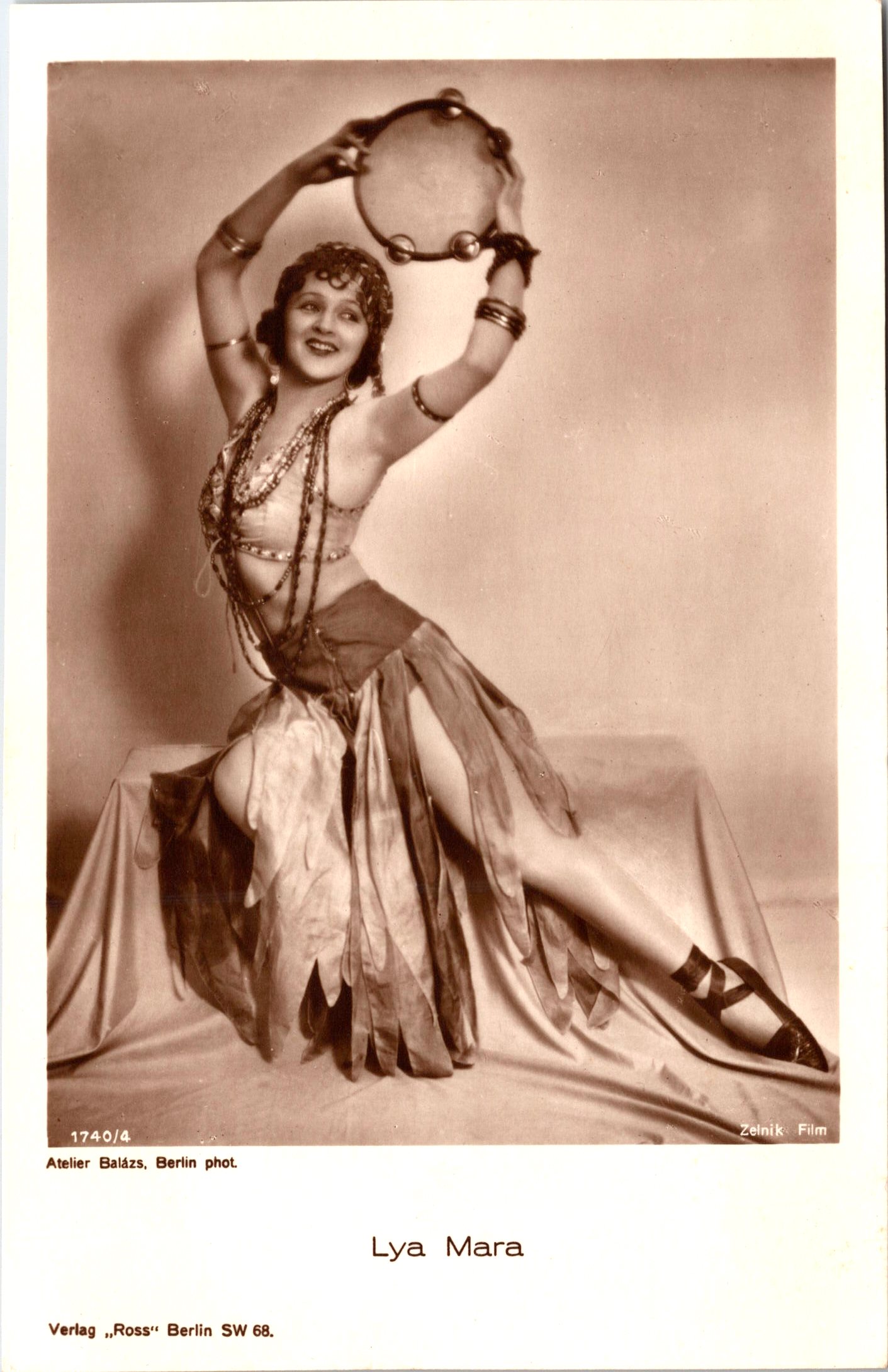
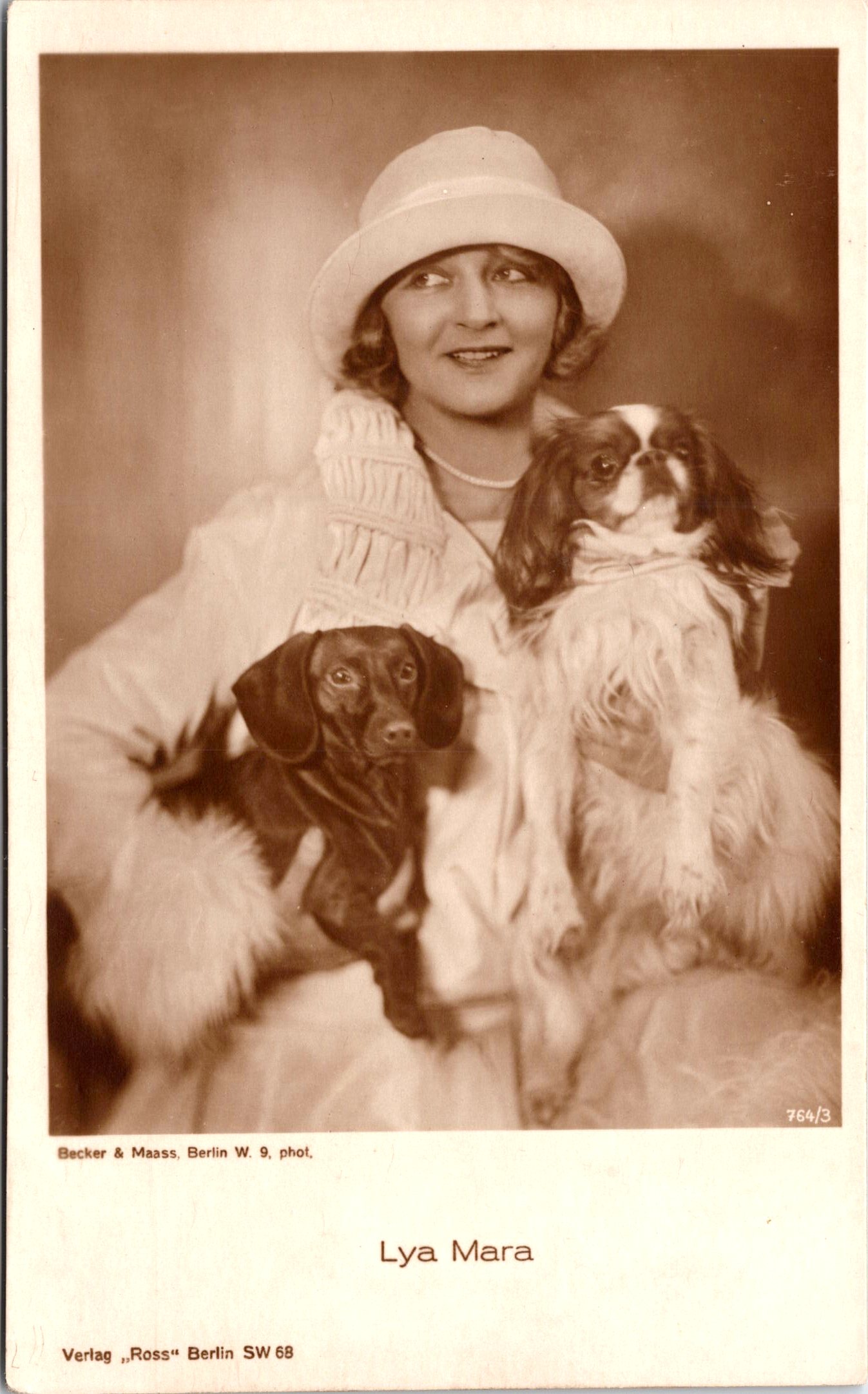
These vintage real photo postcards feature German silent film star, Lya Mara (1897-1960). She was born in Latvia. Mara was trained as a ballerina. She was a stage performer before World War I. Her rise to fame was rapid and her career spanned a number of continents. Her first film in Germany was in 1918. It was produced by renowned producer, Frederic Zelnick, whom she married in 1918. Zelnick promoted her into major stardom. Her popularity in film was illustrated by the hundreds of photographs of her produced into postcards, cigarette cards, and trade cards. She had exotic looks, expressive eyes, and ability to convey complex emotions non verbally. These attributes made her perfect for appearing in silent films. In film she displayed a combination of sex appeal and naivety. A serious car accident in the 1920’s interrupted her career. At the end of the 1920’s she appeared in a number of Austrian films. She was unsuccessful in making the transition into sound films. In 1933, with Hitler in power, Zelnick and Mara hightailed it to London. She spent the last years of her life in Switzerland. Her long filmography spans from 1916 to 1931.
Postcard 1 was published by Ross Verlag as part of a series (No.1218/3). Mara’s photograph was taken by Ernst Schneider. He was considered to be one of the most celebrated studio photographers in Berlin during three decades (1900’s, 1910’s, 1920’s. He photographed many celebrities from the world of theater, opera, circuses, and film. He was also one of the most prominent fashion photographers in Berlin. In addition, he was well known for his nude photography and he published books showcasing his work in this domain. Sometime around 1908 Schneider began working with postcard publishers “Rotophot” and “Neue Photographische Gesellschaft” (NPG). In 1919 he began working with Ross Verlag. (SOLD)
Postcard 2 features Mara posed in a risque dynamic and theatrical stance, holding a tambourine aloft with both hands. She is dressed in a flowing layered skirt with pointed fabric panels, a midriff-baring top adorned with strands of beads, and numerous bangles and jewelry. Her footwear consists of strapped dance shoes, complementing her lively pose. Her playful smile and expressive gaze capture both glamour and motion, giving the portrait a sense of performance frozen in time. The photograph was taken by Atelier Balázs, Berlin, and published by Ross Verlag (No. 1740/4), one of the most prominent publishers of cinema postcards in Germany. The image is associated with a Zelnik Film production, as noted in the lower right corner. (SOLD)
Postcard 3 features smiling German silent film star, Lya Mara (1897-1960) and her two adorable dogs. One of these pups is a dachshund. This postcard was published by Ross Verlag as part of a series (No.764/3). Lya Mara’s portrait was taken by the Becker and Maass studio (Berlin). (SOLD)
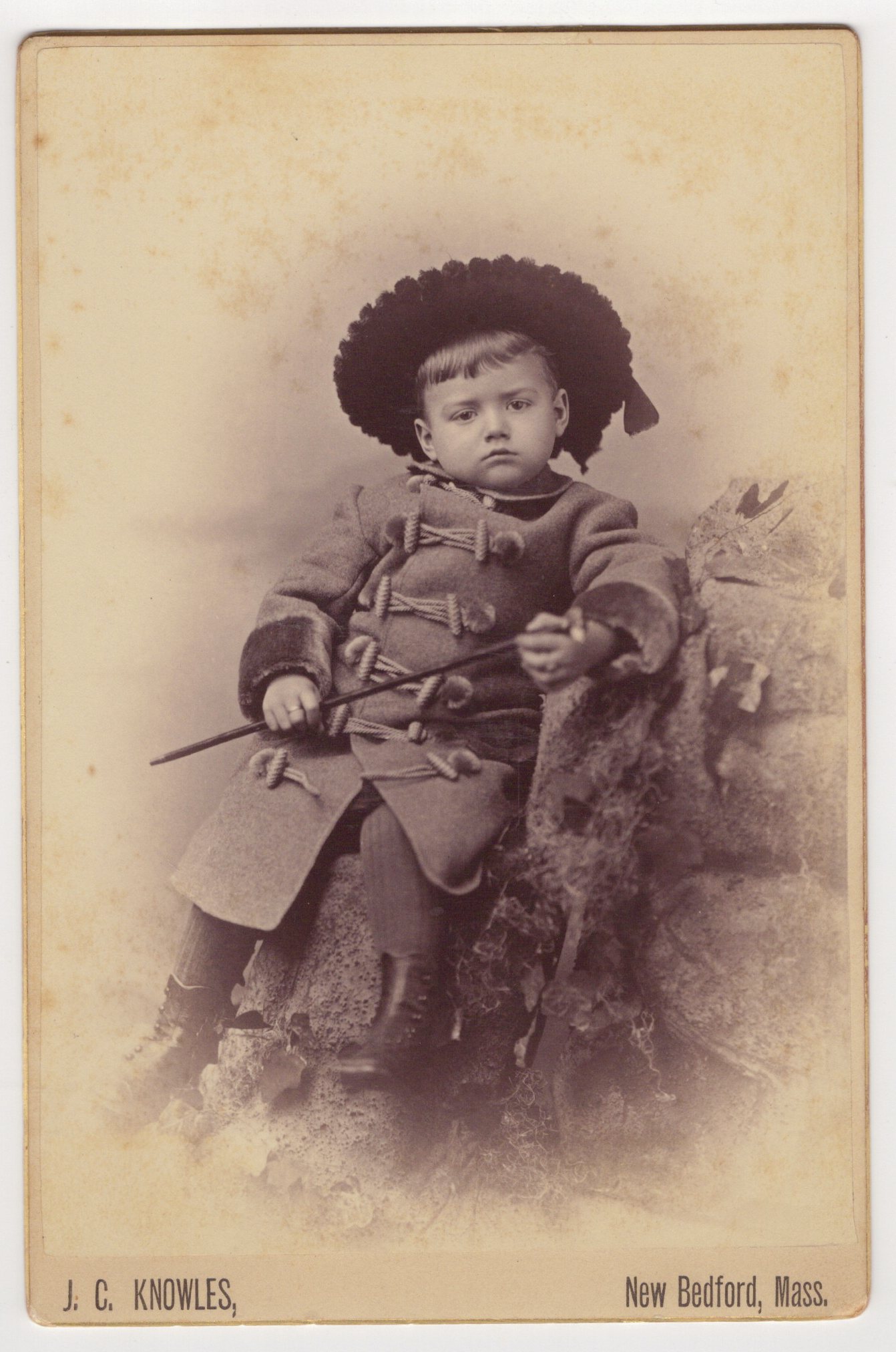
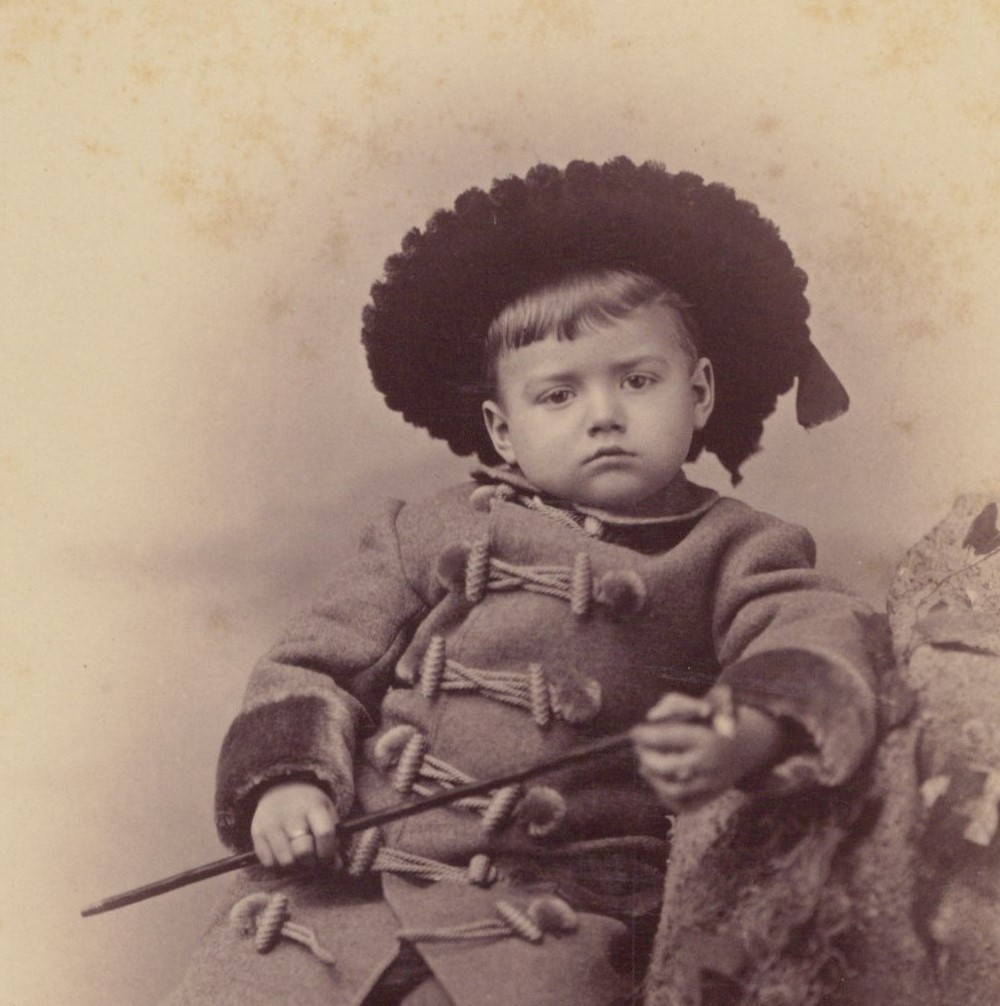
This cabinet card captures a young boy posing for his portrait while wearing a winter coat and wide brimmed hat. The child has a dour expression and looks none too happy to be posing for a photographer. The boy is holding a stick of some sort. It is very likely a toy given to him to keep him occupied. The photographer of this photograph is J. C. Knowles. He operated a studio in New Bedford, Massachusetts. This cabinet card is in good condition (see scans).
This Cabinet Card is available for purchase at my store, The History Peddler, for $28.00 or best offer
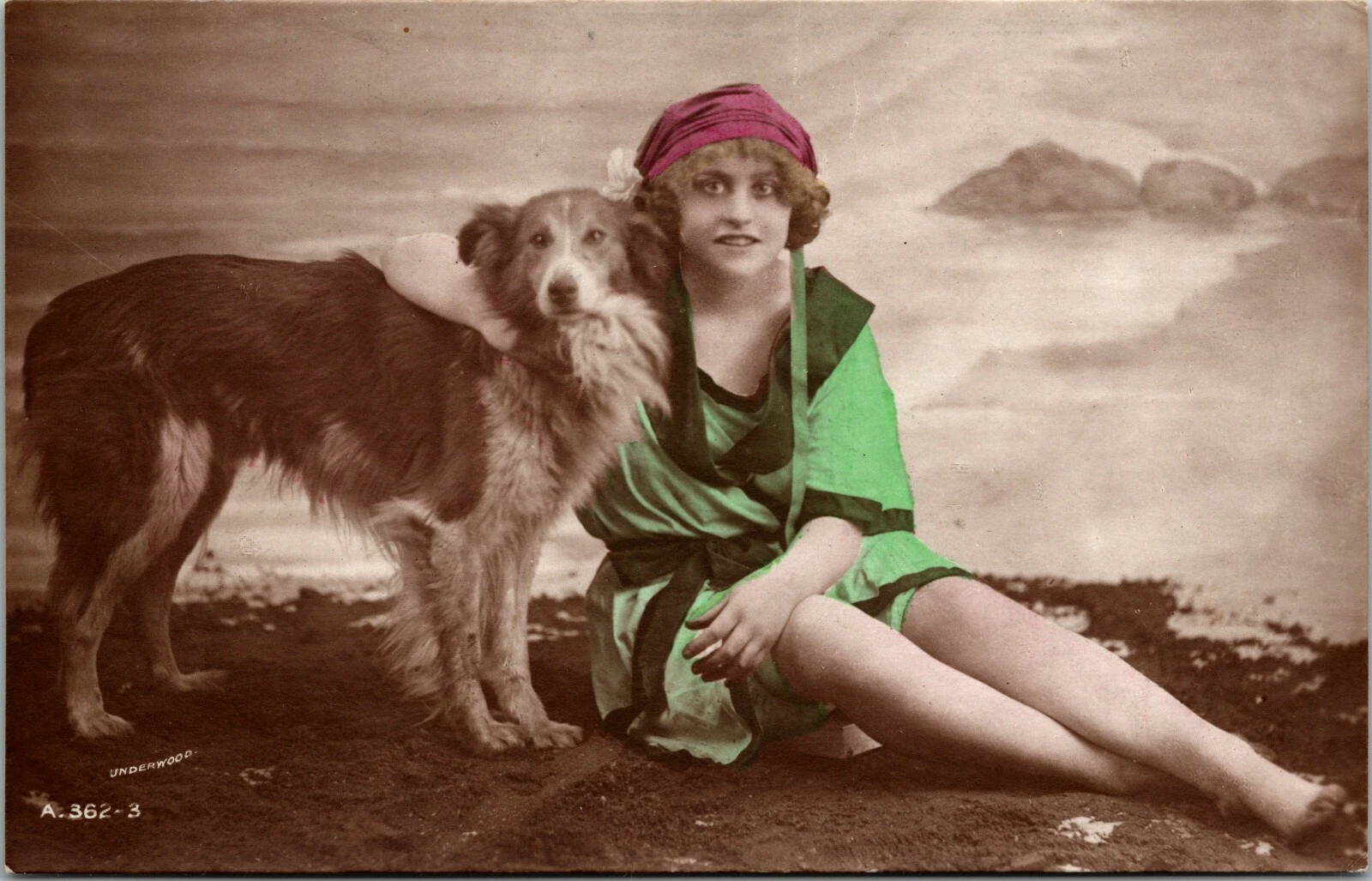
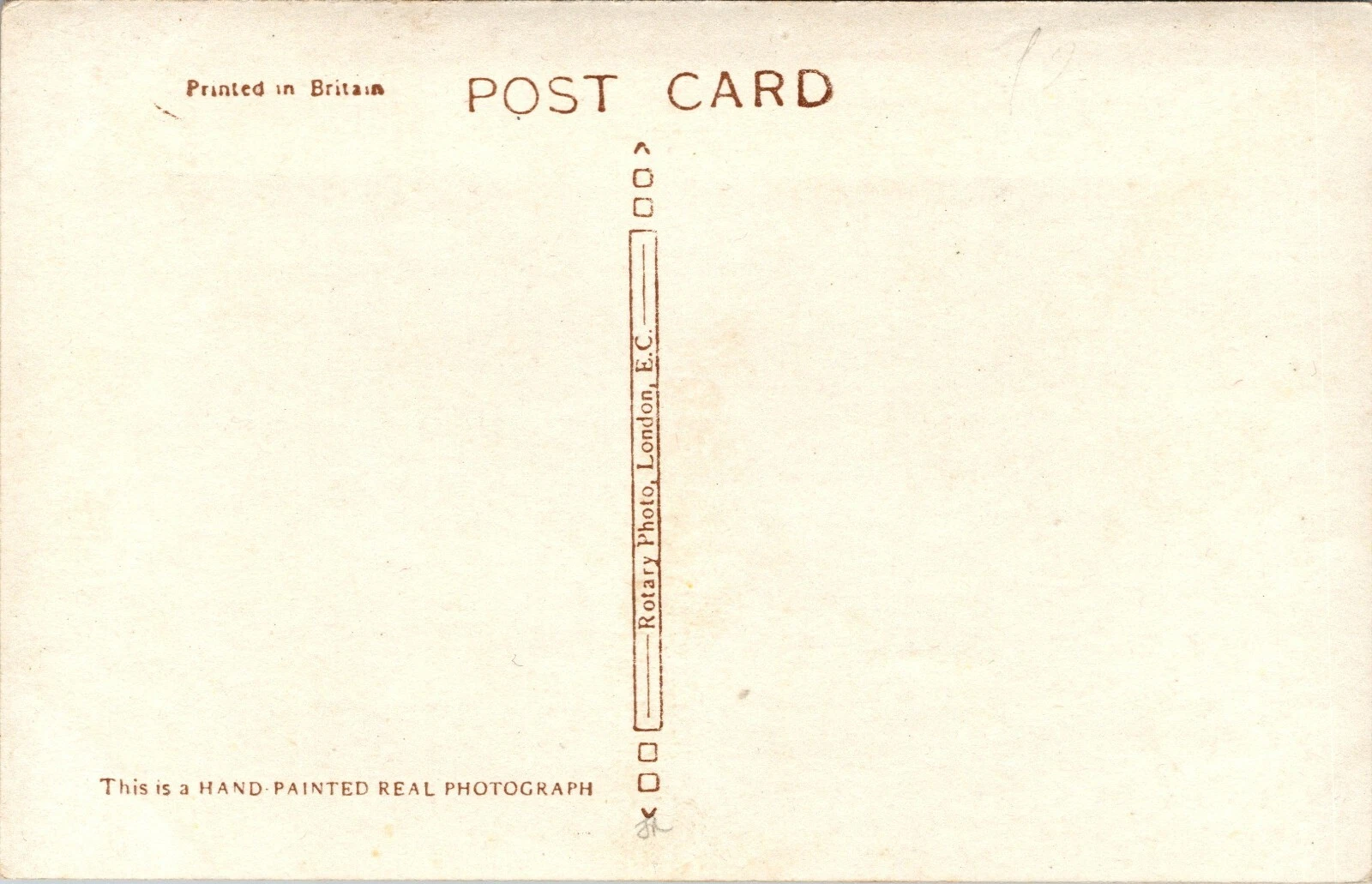
This vintage real photo postcard features a pretty young woman and her collie dog. The photographers model is skimpily dressed and most of her legs are exposed. This image is risque for it’s era. The photographer is listed as “Underwood”. It is my hypothesis that this postcard was actually produced by the publishing company of Underwood & Underwood. This New York firm existed between 1882 and 1920. The company was founded by photographers Elmer and Burt Underwood in Ottawa, Kansas. The headquarters was moved to New York City in 1897. The firm grew and soon had offices in Toronto, Canada and London, England. Underwood & Underwood was known for publishing stereo-views, and in fact, they published nearly 40,000 titles. In 1910 they began to supply news photos for newspapers and postcard publishers. It appears that the image seen in this photo postcard was supplied by Underwood to the National Herald. Underwood & Underwood was sold to the Keystone View Company in 1921. This postcard was published by Rotary Photo (London, England) as part of a series (No. A362-3). SOLD
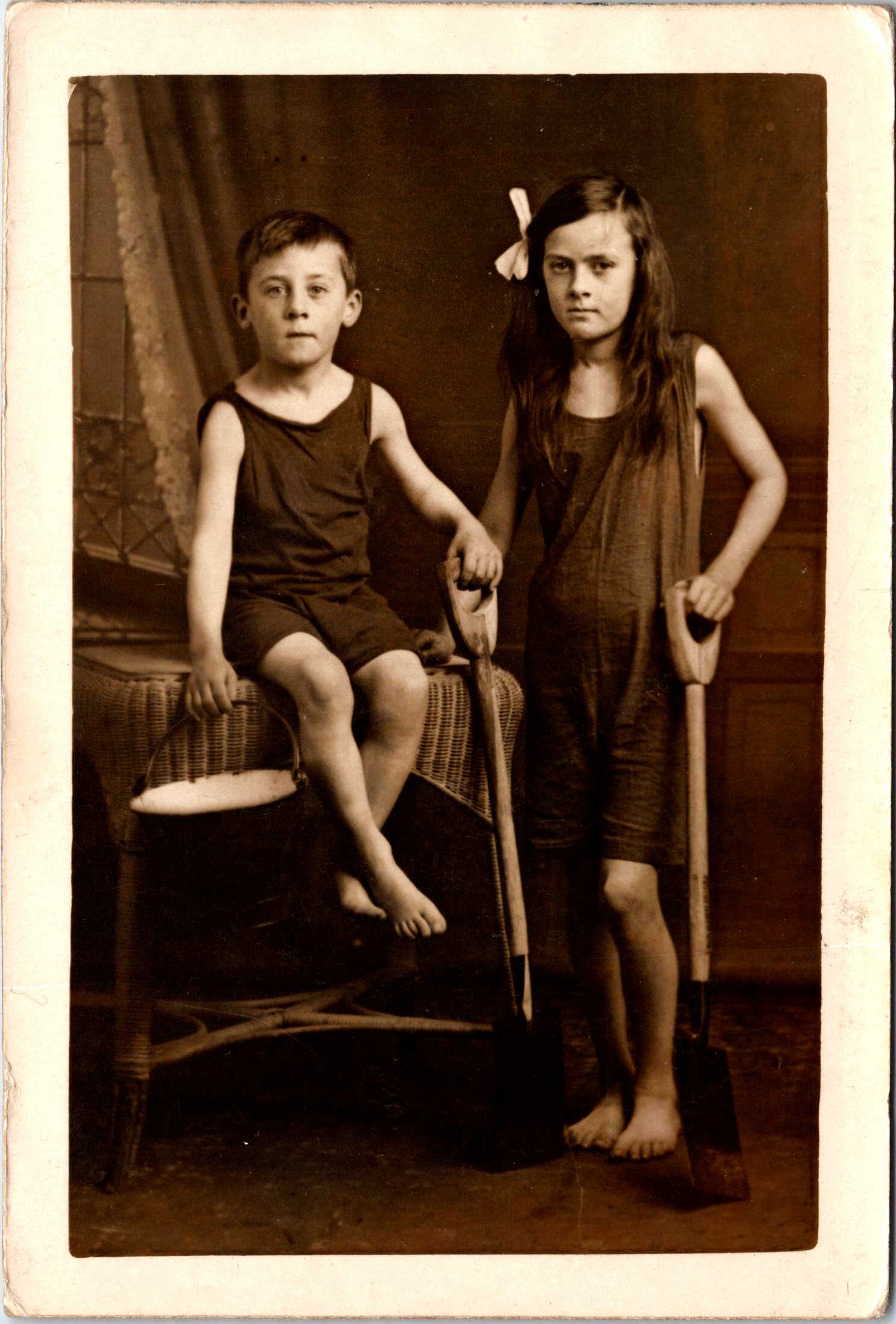
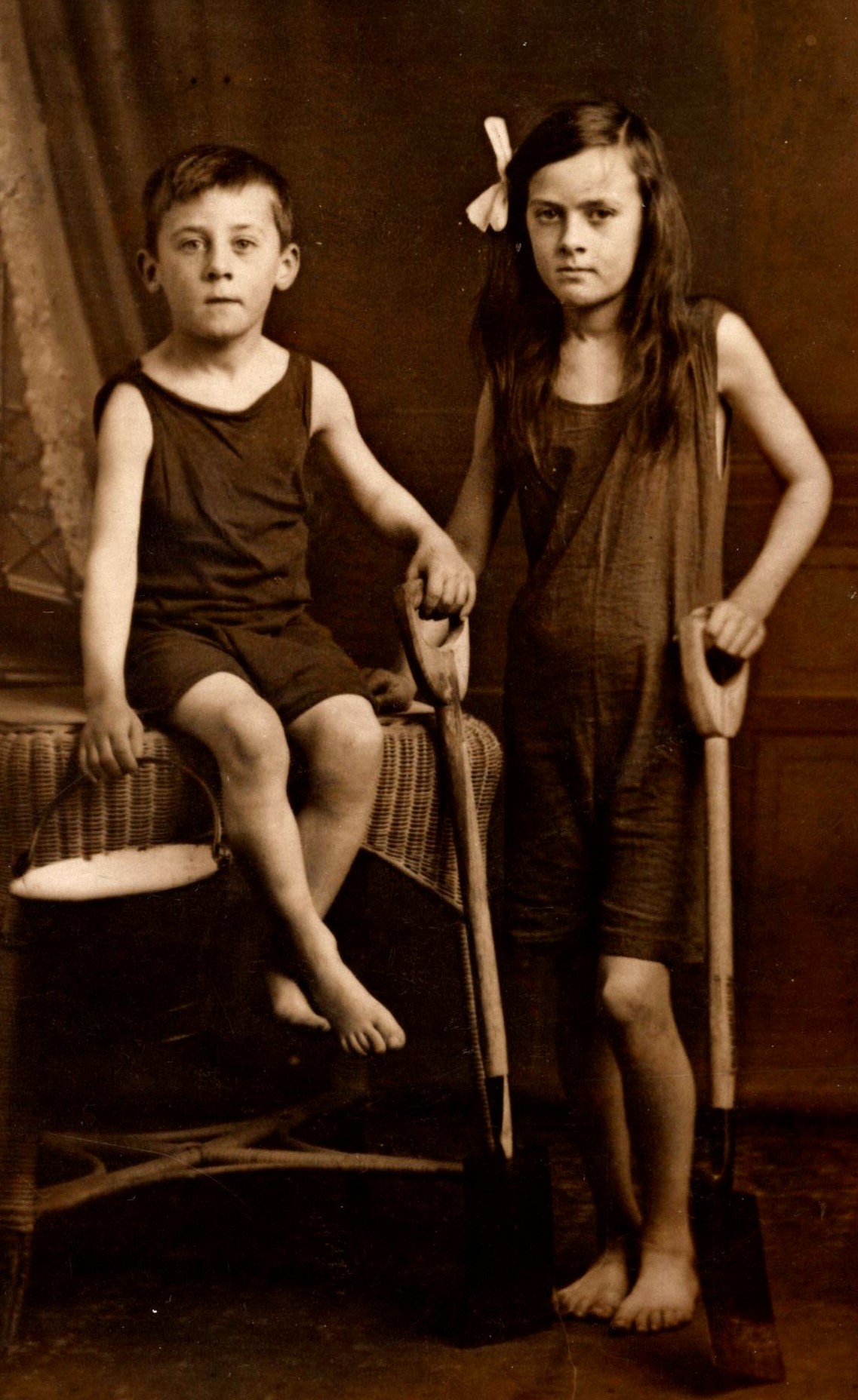
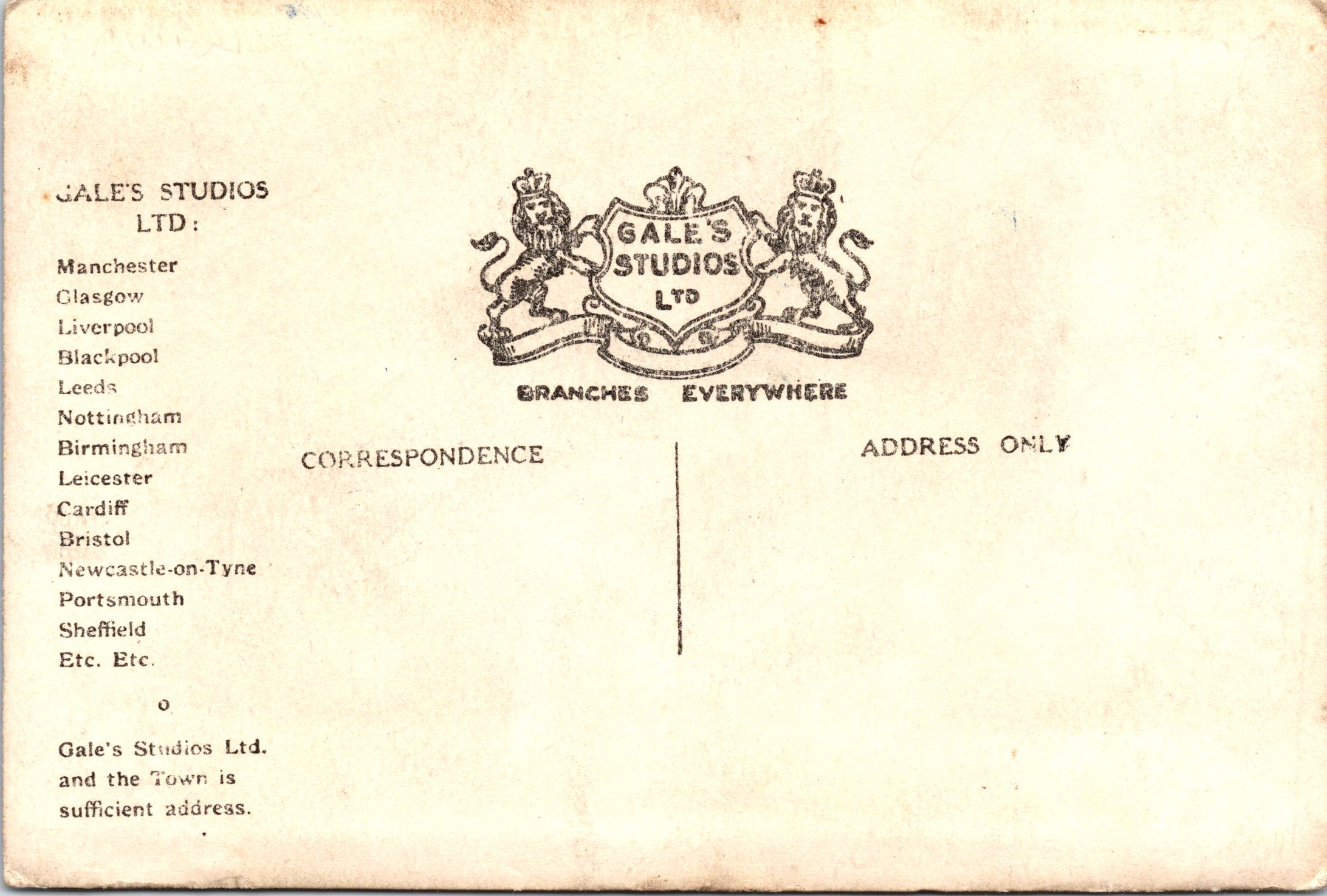
This vintage real photo postcard features two adorable siblings clad in bathing suits preparing for the beach. Both children are holding shovels and the little boy is also holding a pail. They are ready to build castles in the sand. This postcard was published by Gale’s Studios, which had branches in multiple cities in the United Kingdom. This is likely a one-of-a-kind photo postcard. The postcard is in overall good condition (see scans).
This vintage Postcard is available for purchase at my store, The History Peddler, for $34.00 or best offer.