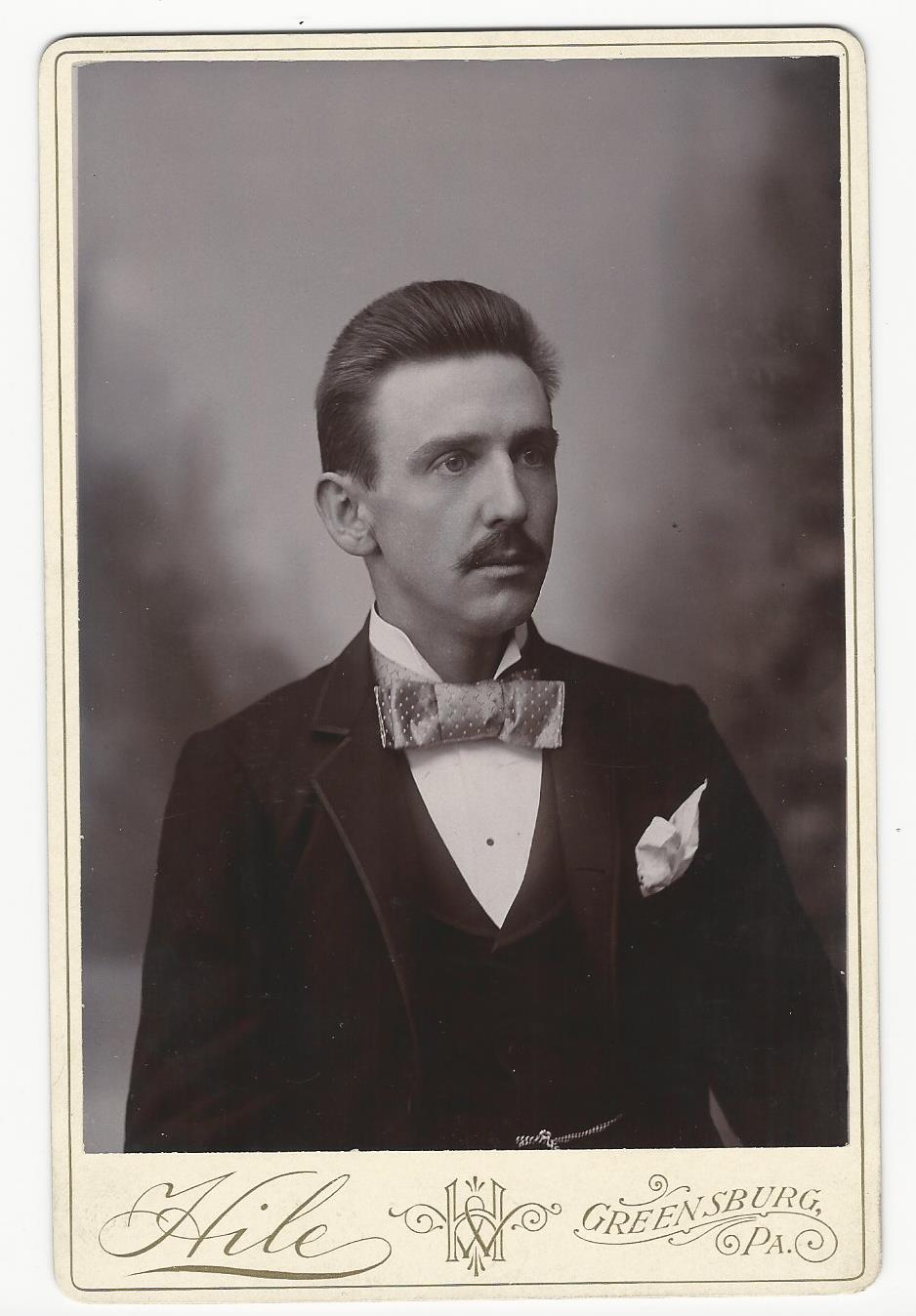
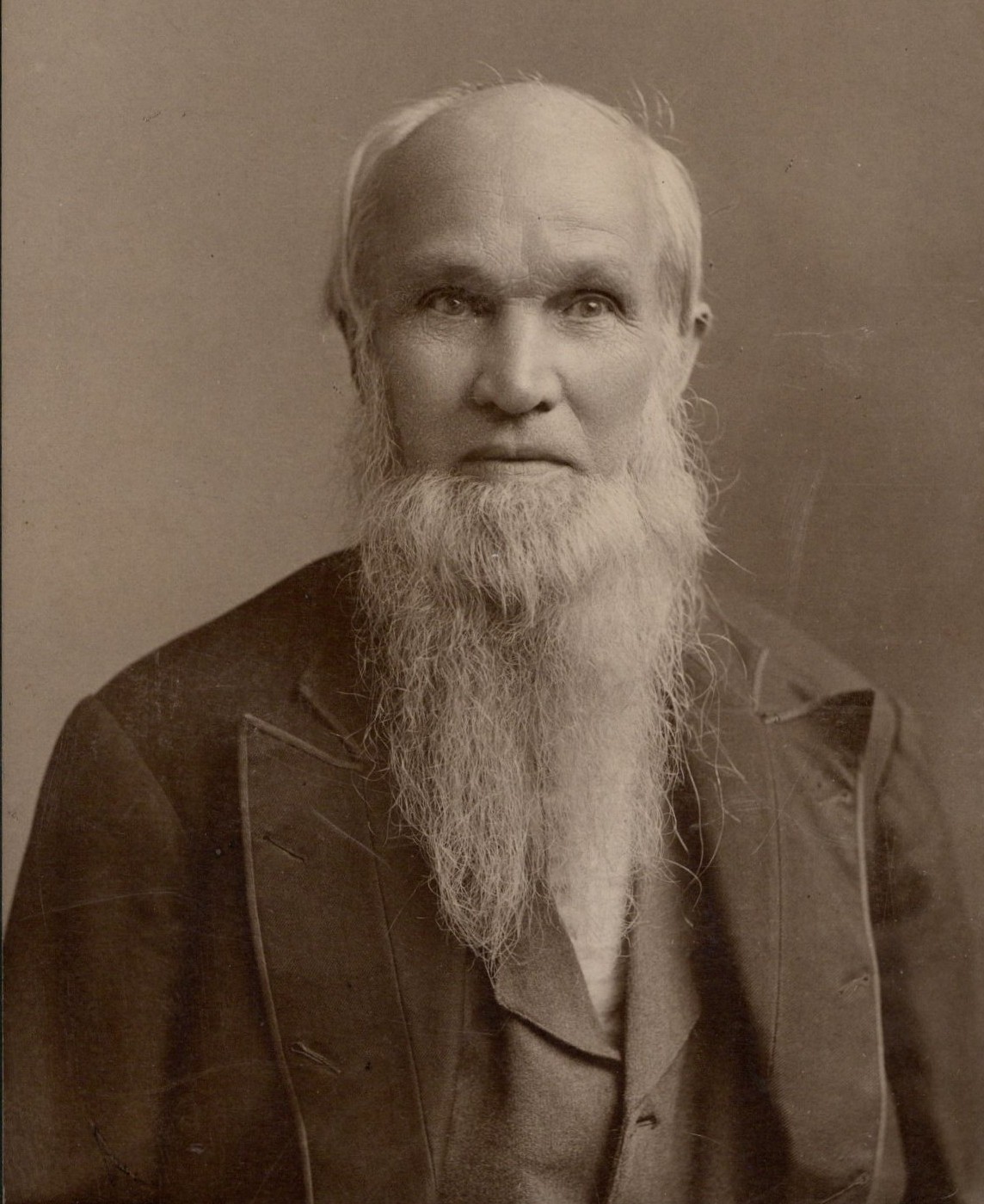
A very good looking man is the subject of this portrait from the Hile studio in Greensburg, Pennsylvania. This gentleman is perfectly coiffed and ready for a photo shoot with “Gentleman’s Quarterly”. Note his pretty and sizable bow tie and the gold chain of his watch visible at the bottom of the image. I wonder if this photograph is a wedding portrait? The photographer of this image, William Hile (1838-1922) operated his studio out of his home at 114 East Pittsburgh Street. His daughter Lilli was also a photographer at the studio. William Hile was married to Lucinda Reamer Hile (1841-1918) and the couple had four children. Today’s Greensburg is part of the Pittsburgh metropolitan area. During the cabinet card era, Greensburg was a railroad stop and a vibrant center of the local mining industry. William Hile is buried at the St. Clair Cemetery in Greensburg (view his grave marker below)
This Cabinet Card is available for purchase at my store, The History Peddler, for $45.00 or best offer.
Interested collectors may view the listing here:
https://www.ebay.com/itm/336610425774


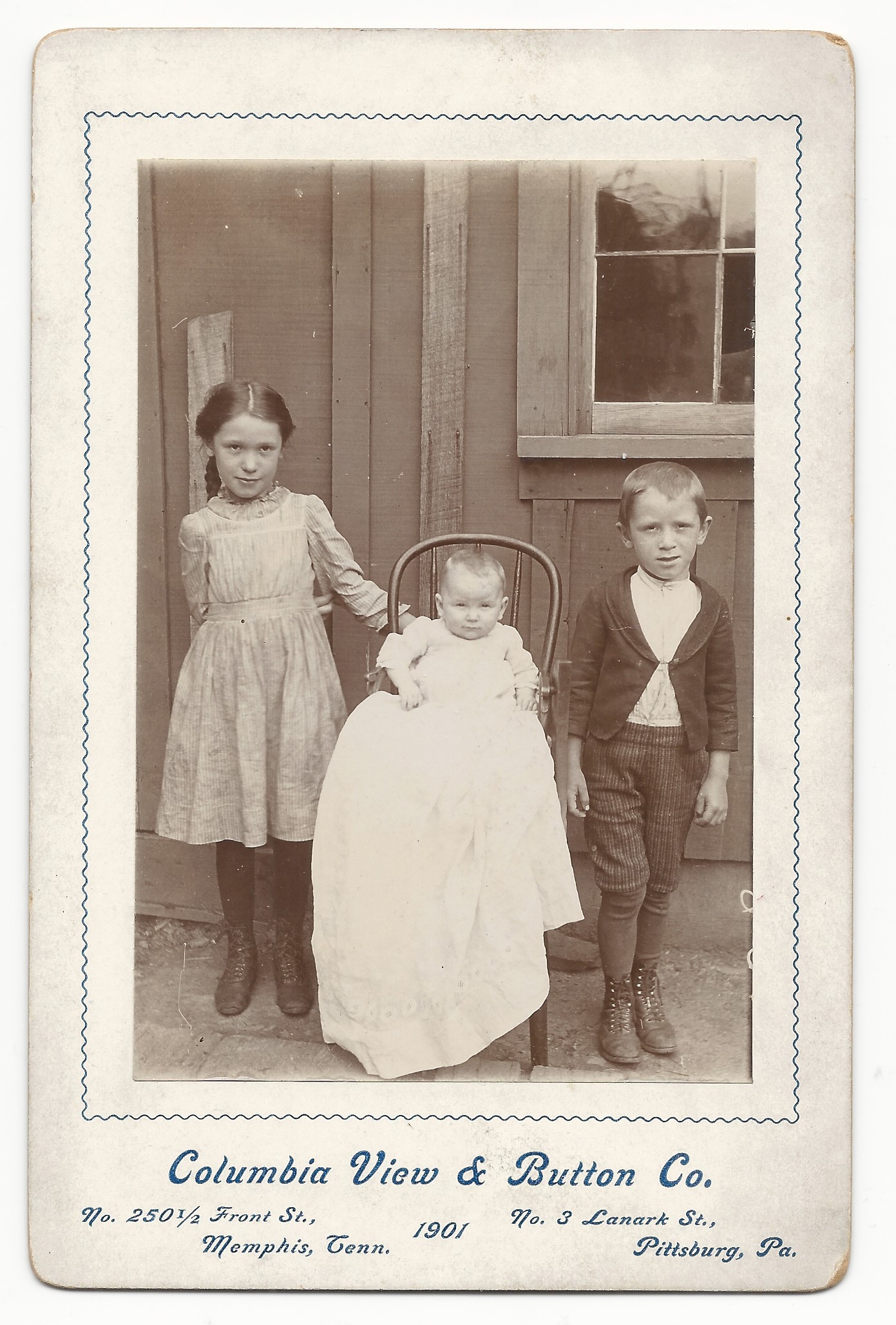
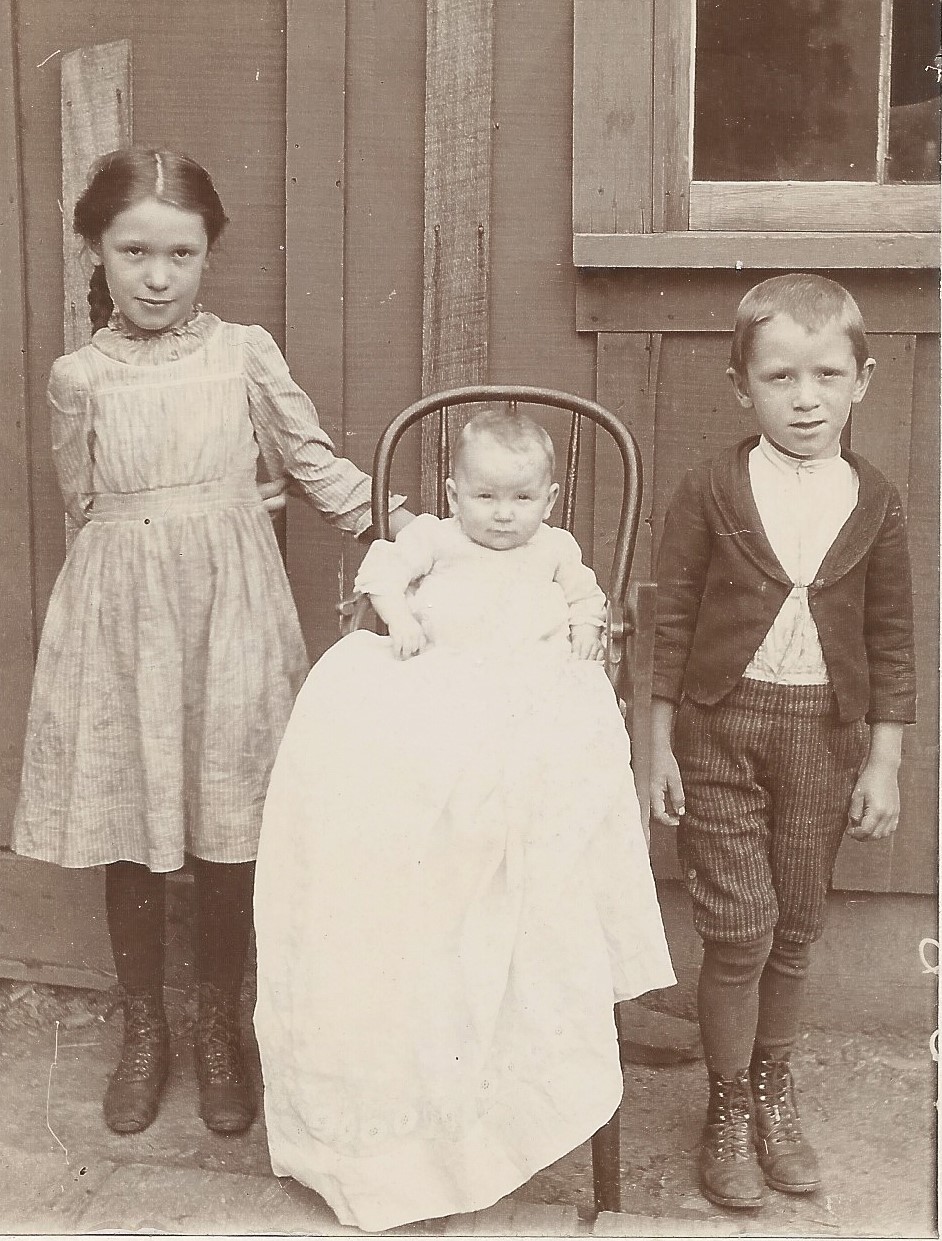
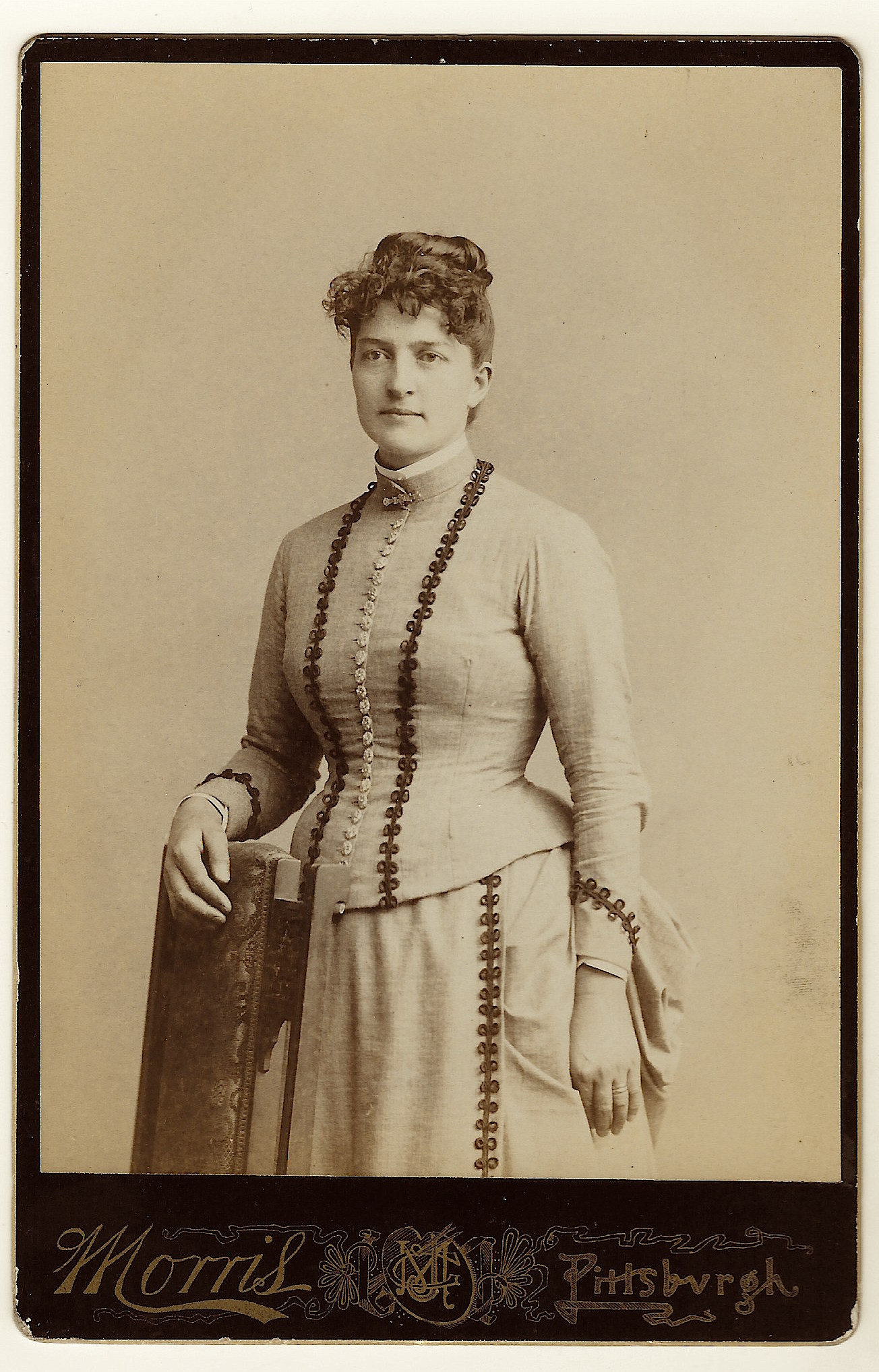
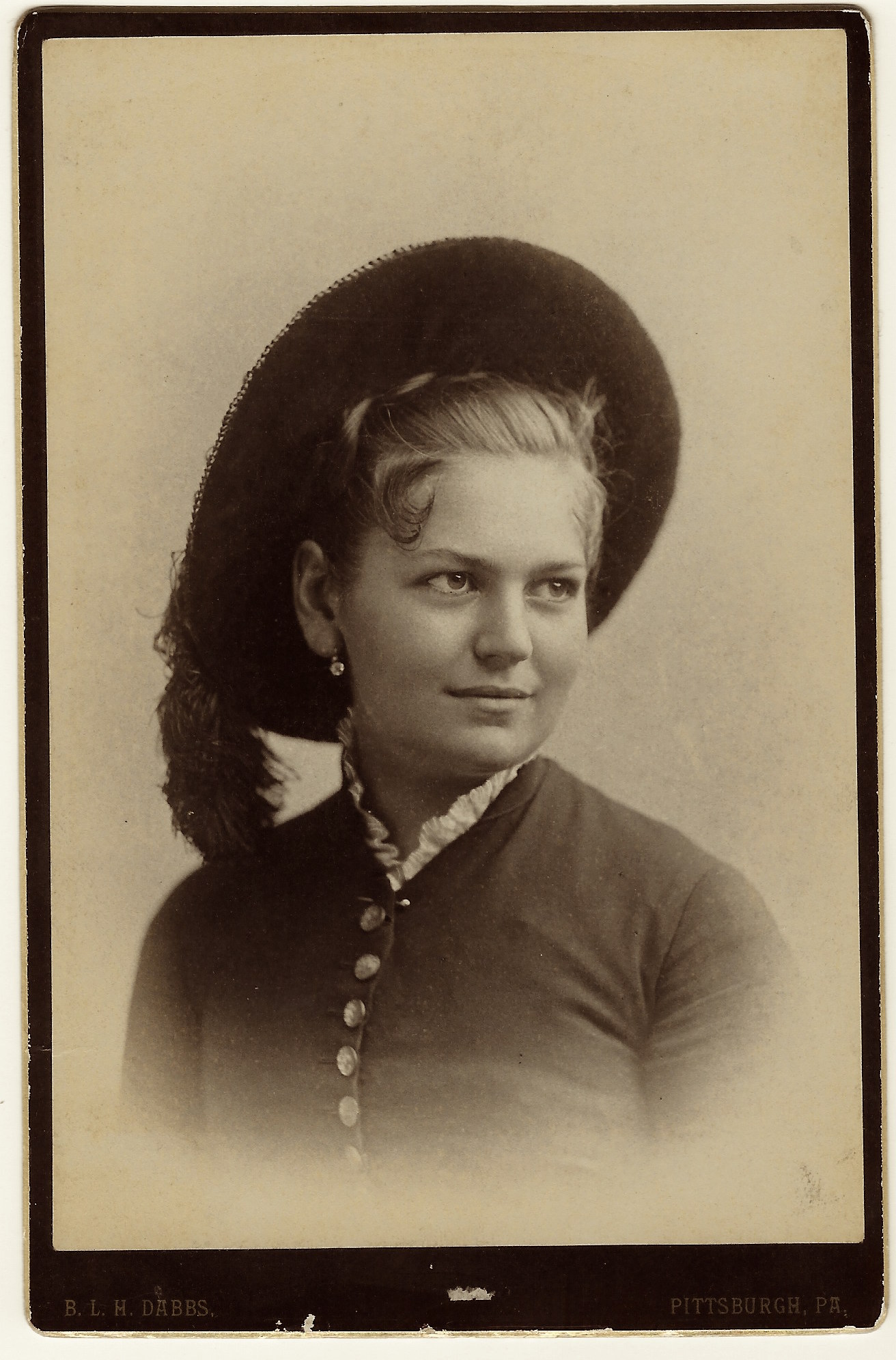
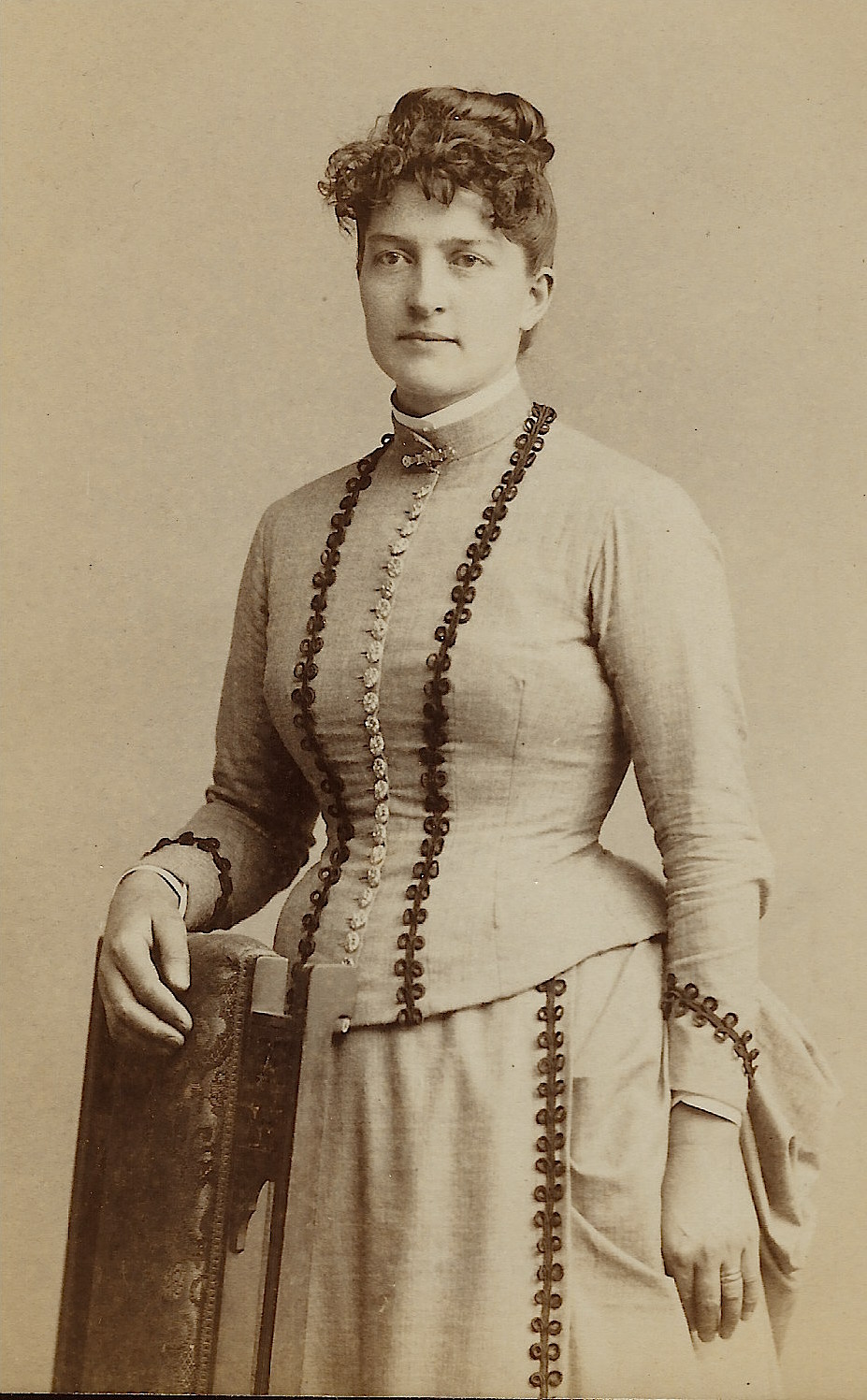 A pretty woman, wearing a fashionable, but unusual dress, poses for a photographer named Joseph G. Morris, in Pittsburgh, Pennsylvania. The studio was located at 16 Sixth Street, in Pittsburgh. She is wearing a collar pin. On the reverse of the photograph is the handwritten name, “Hillz”. One imagines that Hillz is the last name of the subject of this photograph. United States census data reveals some biographical information about the photographer of this cabinet card. Morris was located in the 1880 census. Morris was about 29 years old and he and his father (David Morris) were both working as photographer agents. In 1900, Morris and his 18 year old son, Harry, were boarders, and the older Morris was working as a photographer while the younger Morris was employed s a photographer apprentice. The 1910 U.S. Census finds Morris still working as a photographer and living with his wife, Mary P. Morris. SOLD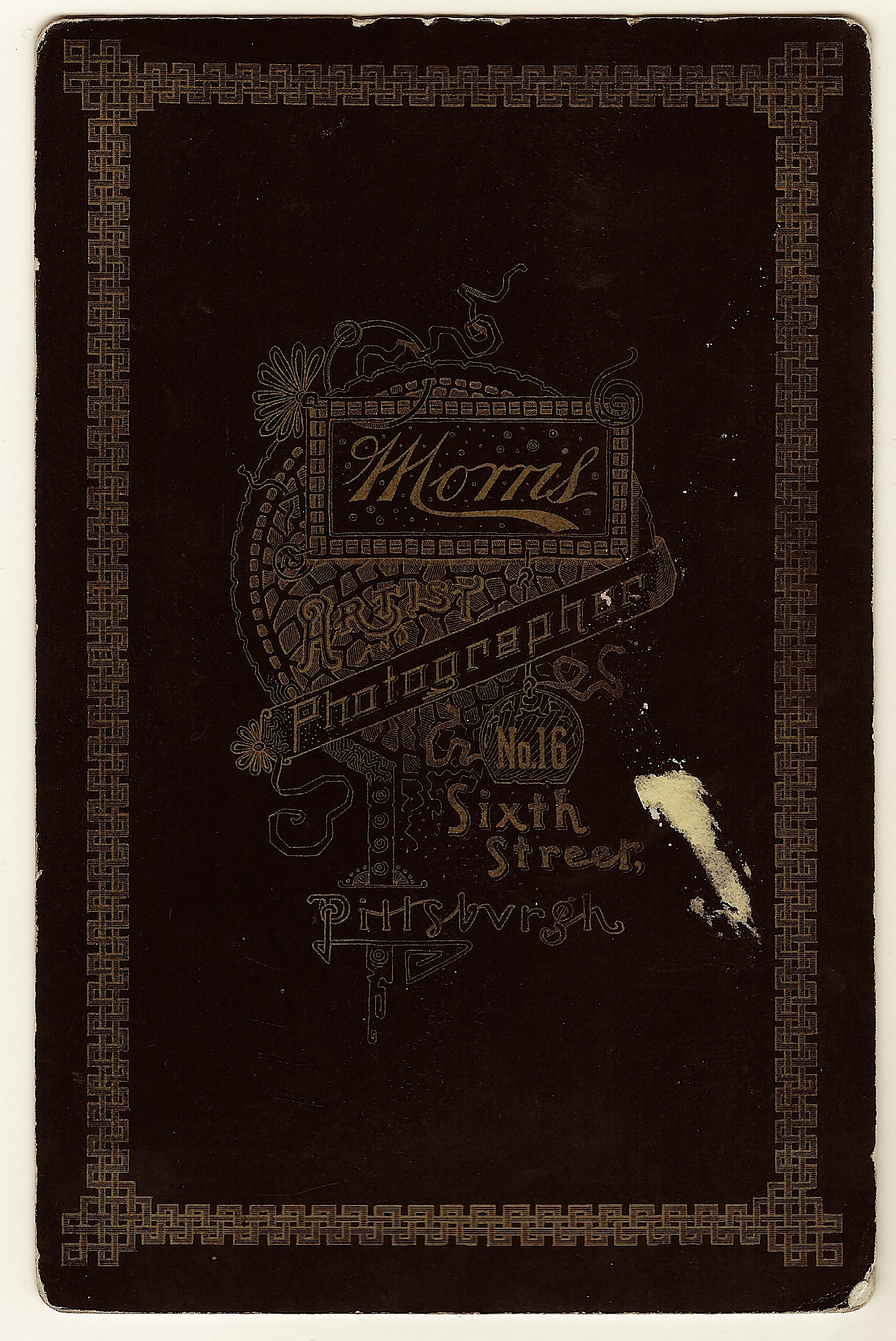
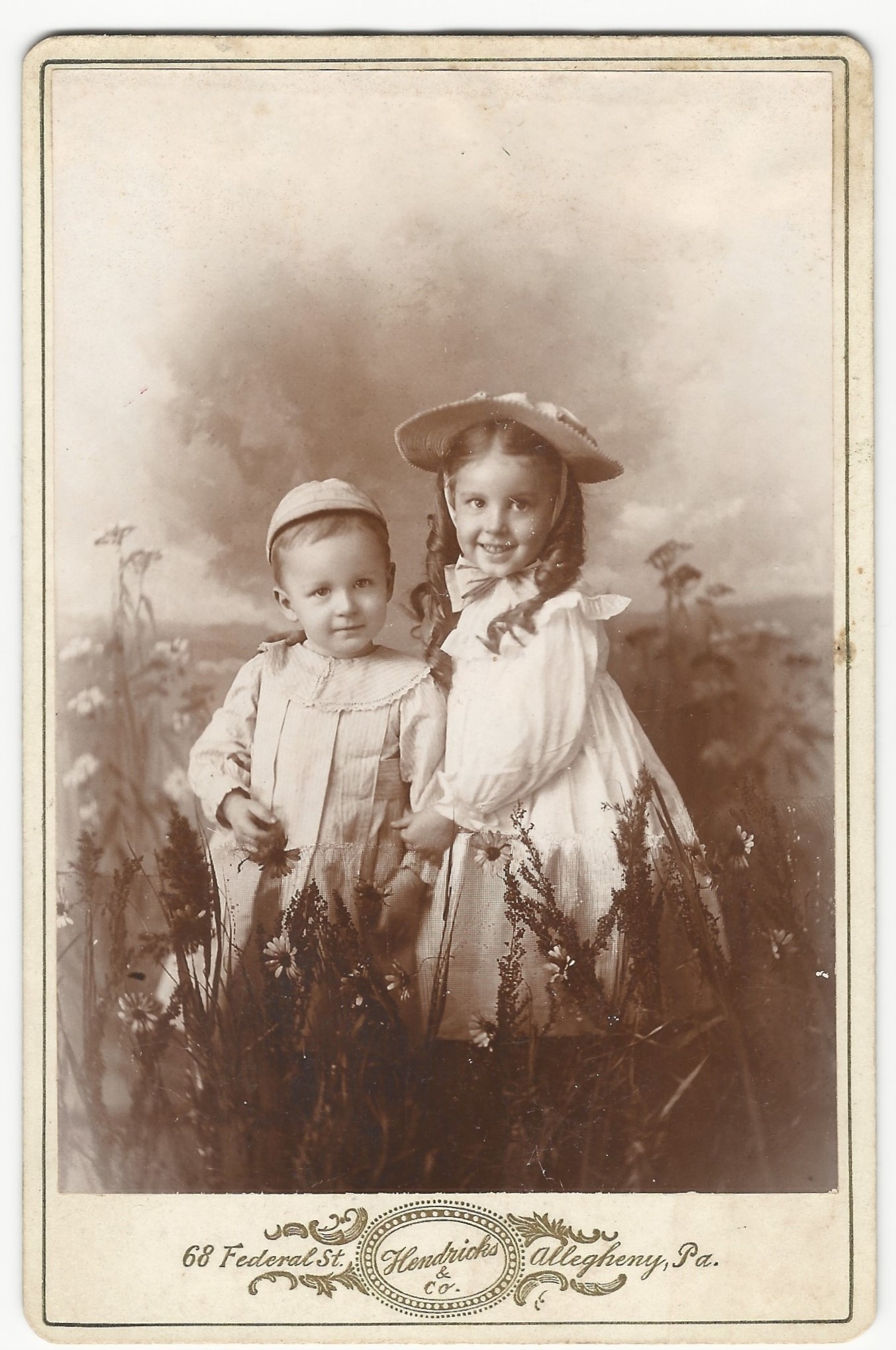 The two children seen in this cabinet card photograph are precious. They have incredibly sweet smiles. They are standing in a faux field of daisies. This photo was taken by Hendricks & Co., a studio in Allegheny, Pennsylvania. The town was originally named Allegheny City and it was established in 1788. In 1907, it was annexed by the city of Pittsburgh. The photographer of this image is John P Hendricks. He is listed in the 1891 and 1893 Pittsburgh City Directories. If this photograph is typical of his work, he was quite talented. This cabinet card portrait is in good condition (see scans). Note the foxing on the reverse of the photograph. SOLD
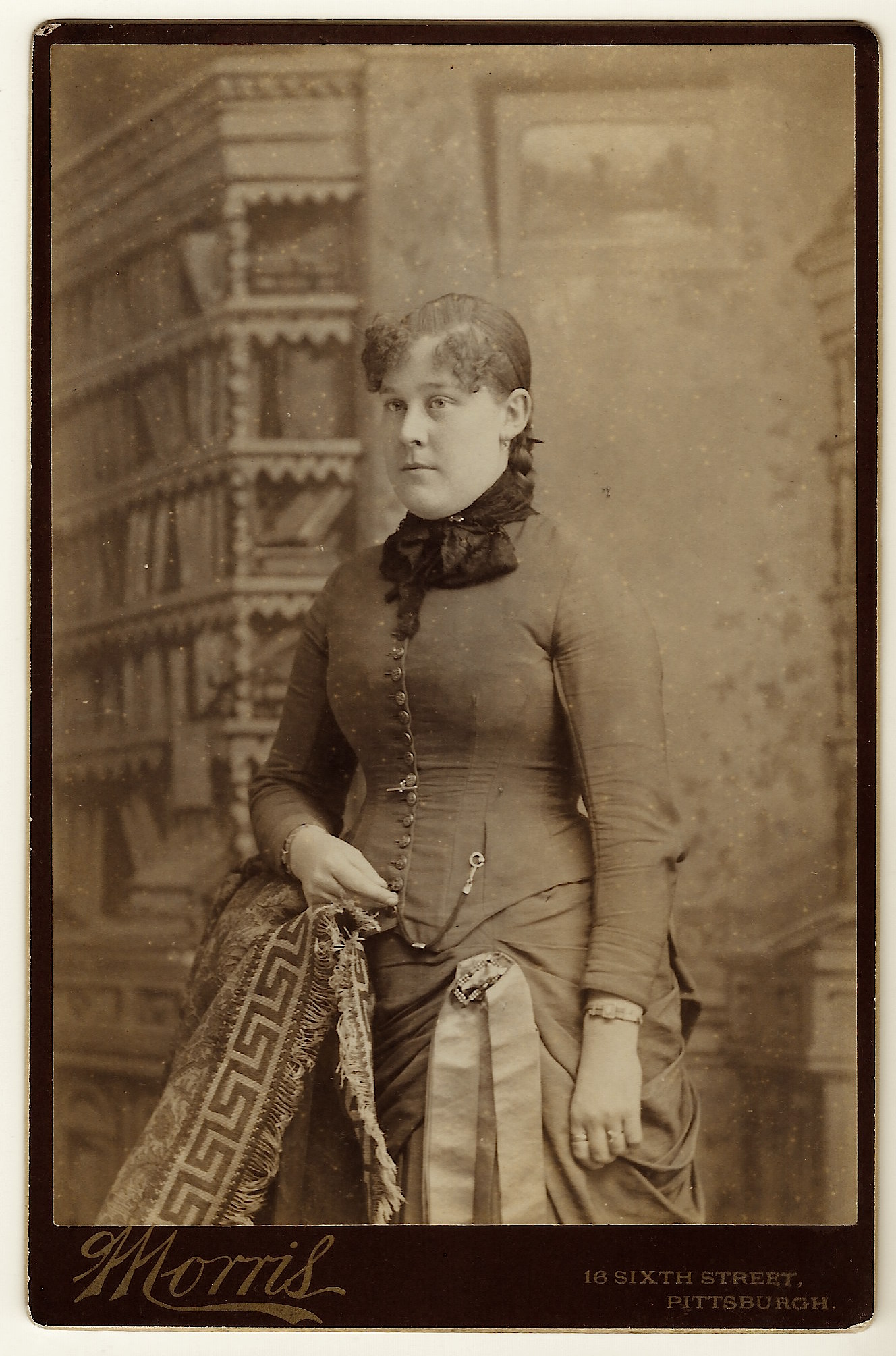
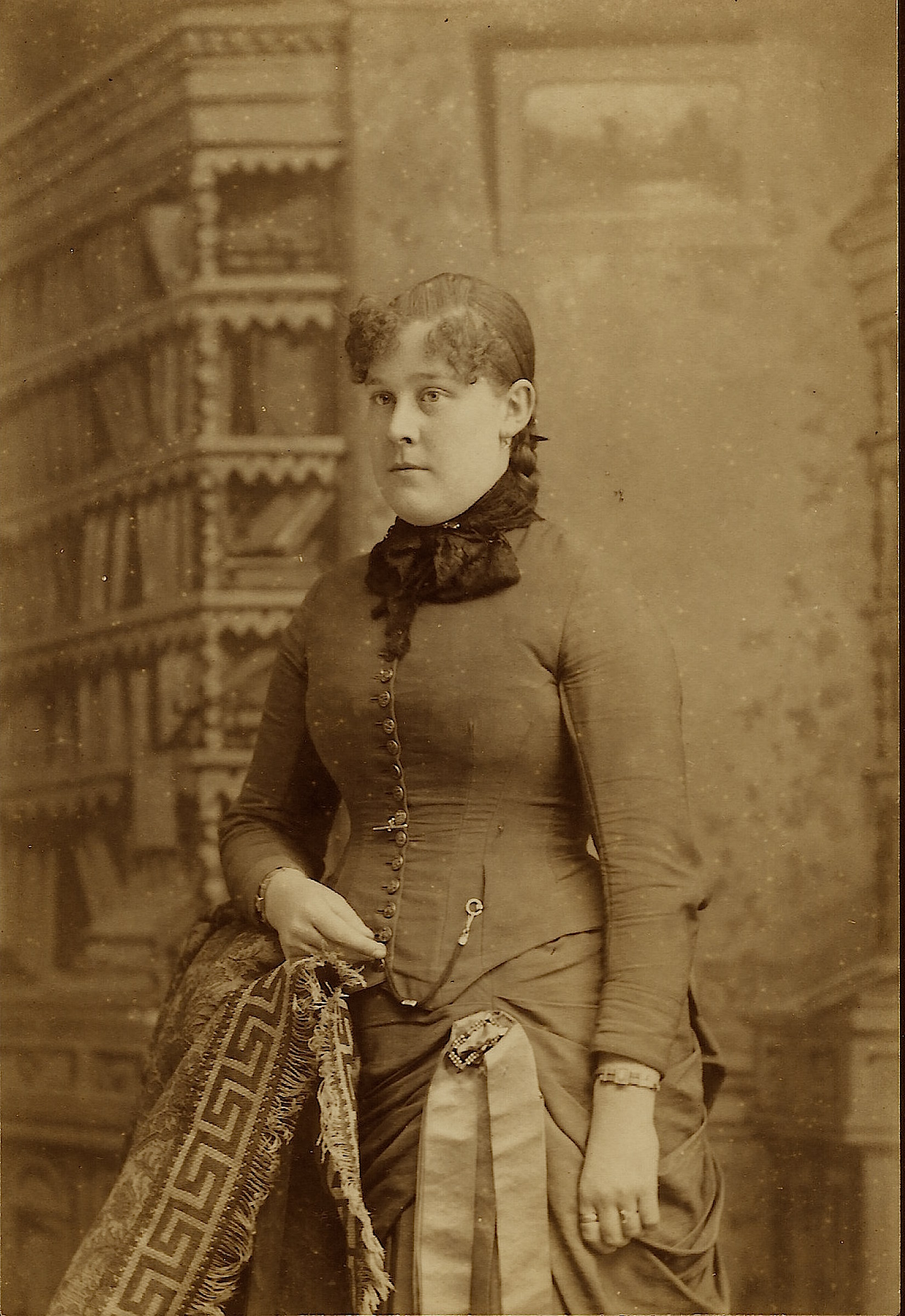 This cabinet card photograph features a fashionable young woman. Her plain dress is spiced up with a fancy collar and a sash. She is accessorized with two bracelets and what appears to be a chain and pocket watch. She was photographed by the Morris studio in Pittsburgh, Pennsylvania.