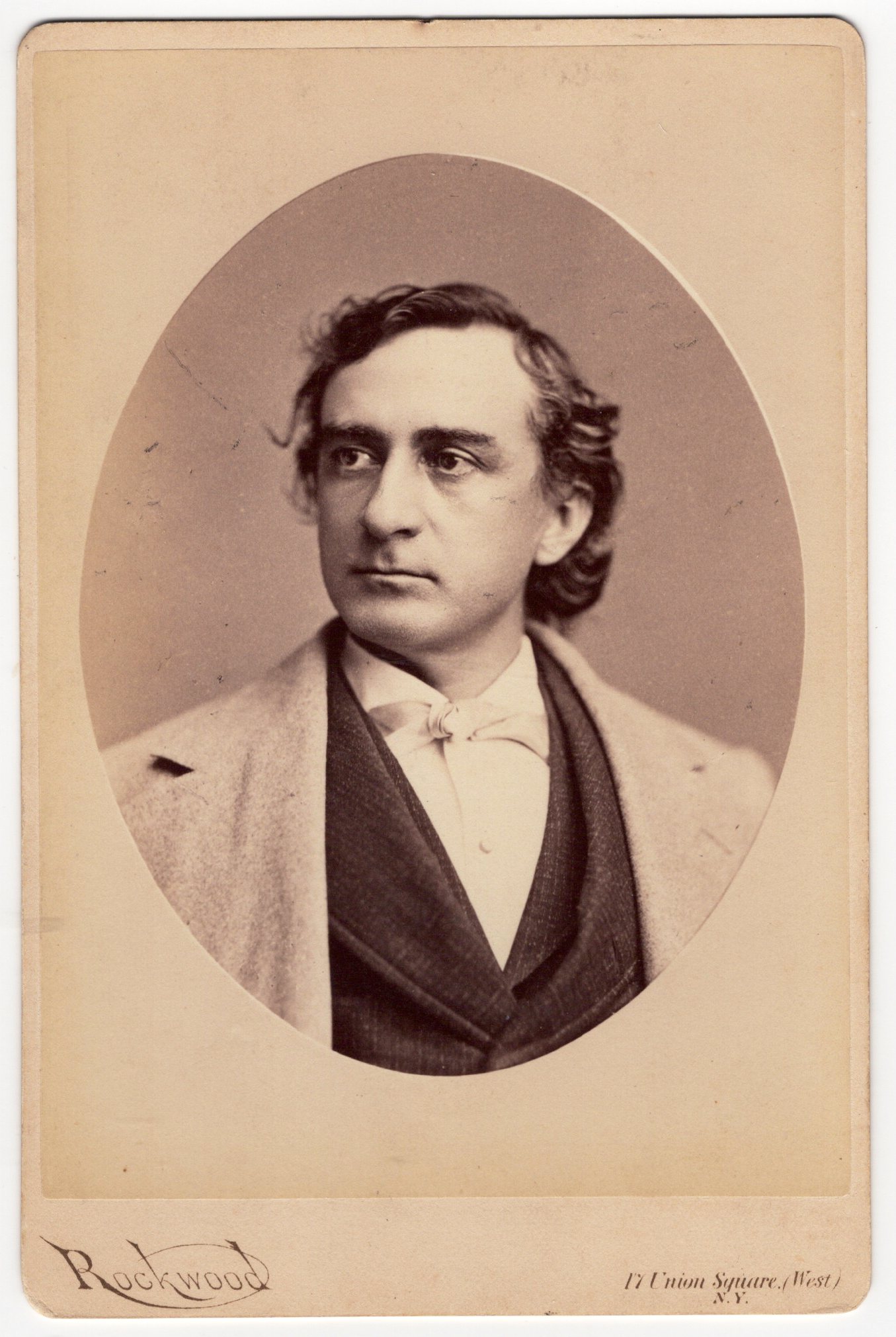
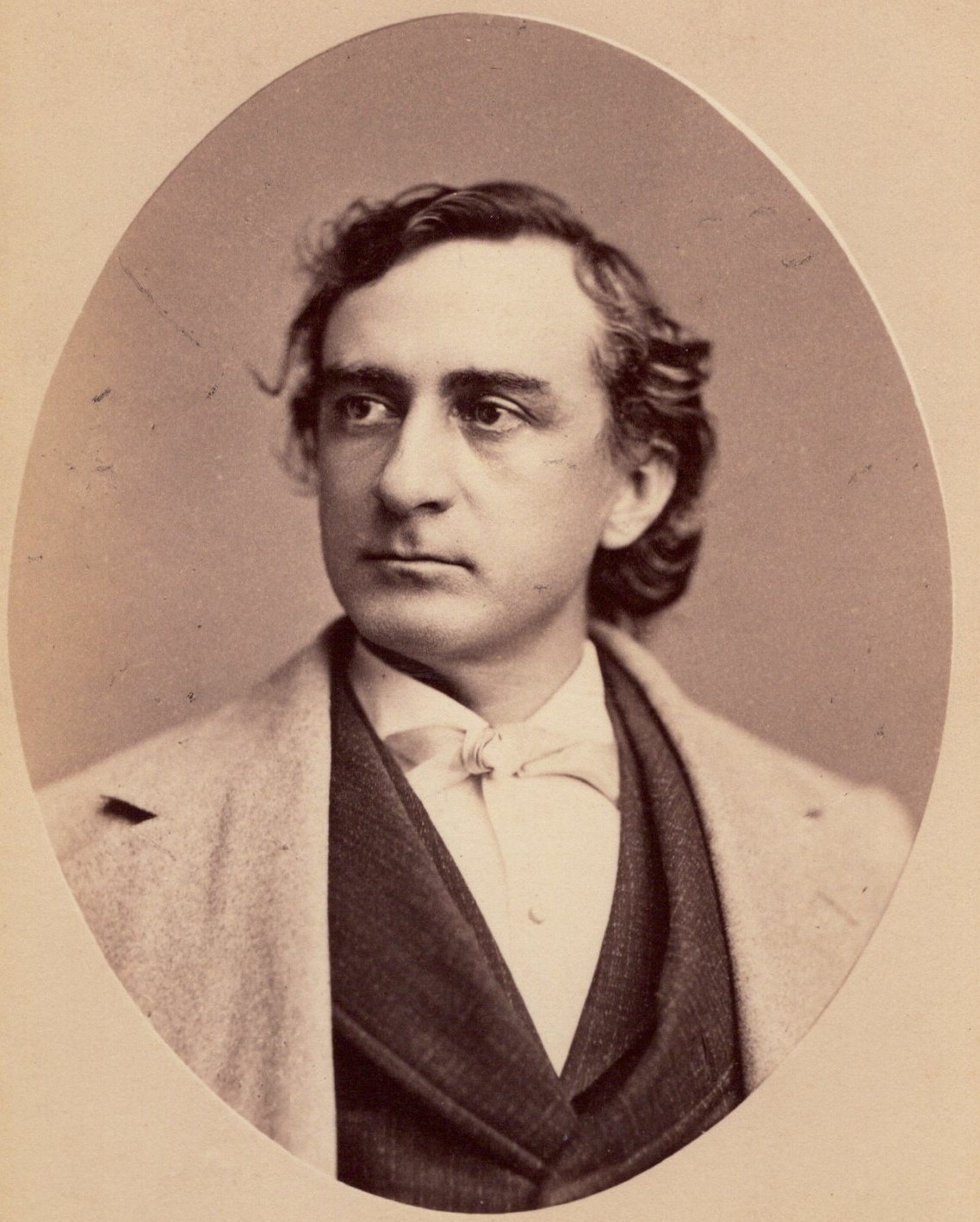
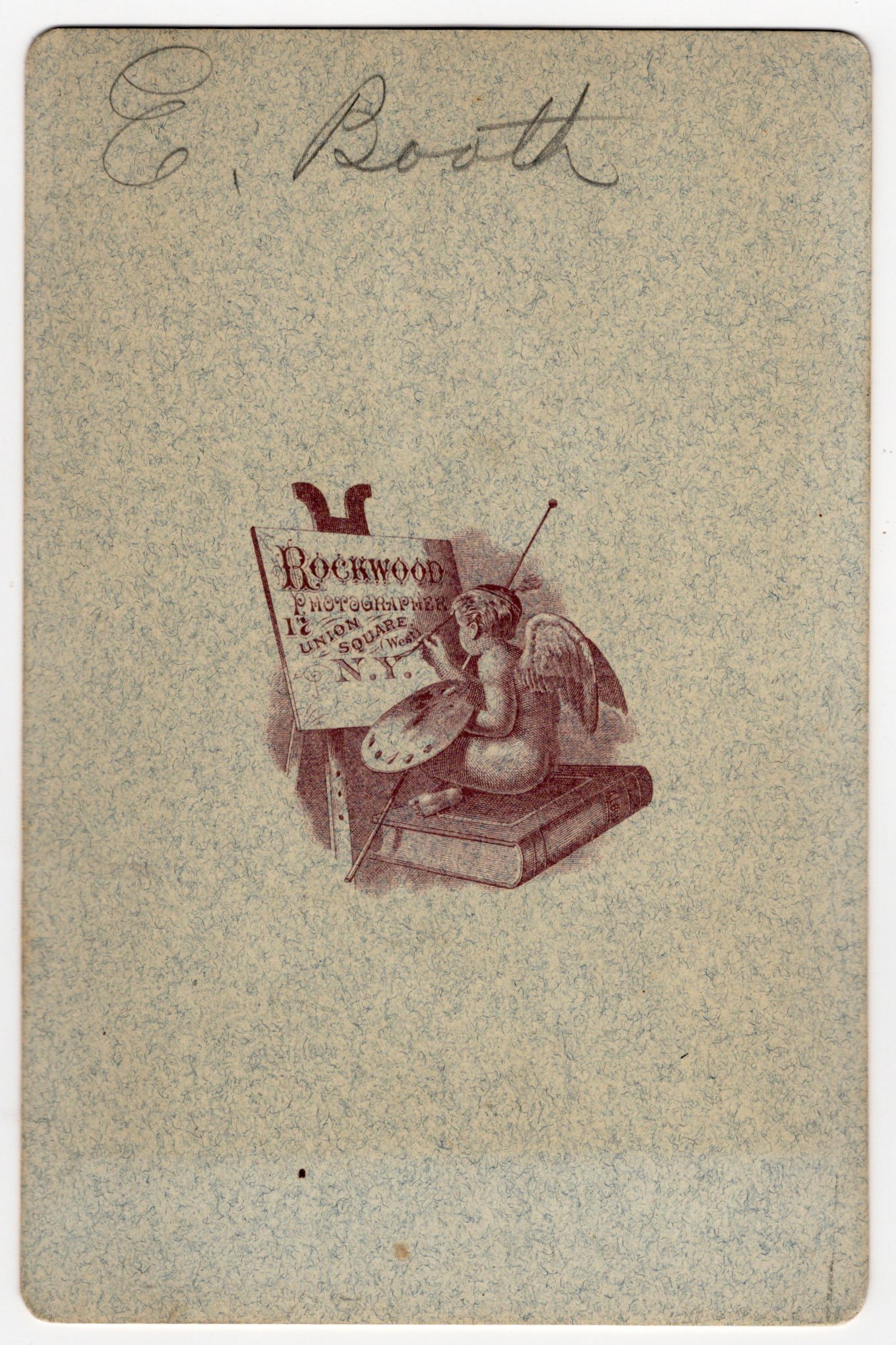
This stunning cabinet card portrait captures Edwin Booth, one of the most celebrated Shakespearean actors of the 19th century. Taken by renowned photographer George G. Rockwood of New York, the image boasts exceptional clarity and sharp detail, making it an outstanding example of 19th-century portrait photography. Booth is dressed in elegant period attire, featuring a high-collared white shirt with a neatly tied bow tie, a dark waistcoat, and a light-colored overcoat draped over his shoulders. His hair, swept back in soft curls, frames his distinguished face, exuding an air of quiet confidence and introspection. His gaze is directed slightly away from the camera, lending a dramatic and contemplative quality to the portrait—a fitting expression for a man known for his deep and emotional performances on stage. The cabinet card is in very good condition, with minimal signs of wear, and the sepia tones remain rich and well-preserved. The reverse of the card is equally impressive, featuring Rockwood’s distinctive studio imprint, which includes a charming illustration of a cherub holding a painter’s palette and brushes, next to an artist’s easel that advertises the Rockwood studio at 17 Union Square (West), New York. Additionally, there is an inscription at the top that reads: “E. Booth,” a reference to the legendary actor. Edwin Booth (1833–1893) was one of the greatest American actors of the 19th century, best known for his Shakespearean roles, particularly Hamlet, which he performed more than 100 times—an unprecedented feat at the time. His extraordinary talent and deep emotional connection to his roles earned him widespread acclaim in both America and Europe. Despite his artistic triumphs, Booth’s life was forever overshadowed by his brother’s infamous act—John Wilkes Booth’s assassination of President Abraham Lincoln in 1865. The tragedy devastated Edwin, who was a staunch Unionist and had publicly opposed his brother’s views. He briefly retired from the stage but later returned, determined to restore his family’s name through his craft. In 1888, he founded The Players Club in New York City, a private social club for actors, which still exists today. The Booth family was a dynasty of performers—Edwin’s father, Junius Brutus Booth, was an acclaimed English actor, and his brothers, John Wilkes Booth and Junius Brutus Booth Jr., also pursued theatrical careers. However, Edwin’s talent and legacy far outshone the rest of his family, cementing his place as one of America’s greatest classical actors. The photographer of Mr. Booth was George Rockwood (1832-1911). He was a renowned photographer whose studio was located in New York City. Rockwood was born in Troy, New York and graduated from college with a PhD, reportedly either from the University of Chicago, or Columbia University. At 21 years of age, he was a newspaper reporter for the Troy Daily Times and at age 23, he was managing editor of the Troy Daily Post. He began working as a photographer in St. Louis and in 1857 opened a studio with his brother Elihu in New York City. He has been credited with bringing CDV’s to America. His obituary in the Washington Post reports that Rockwood photographed more than 350,000 people. SOLD


 THE CABINET CARD GALLERY
Leave a comment