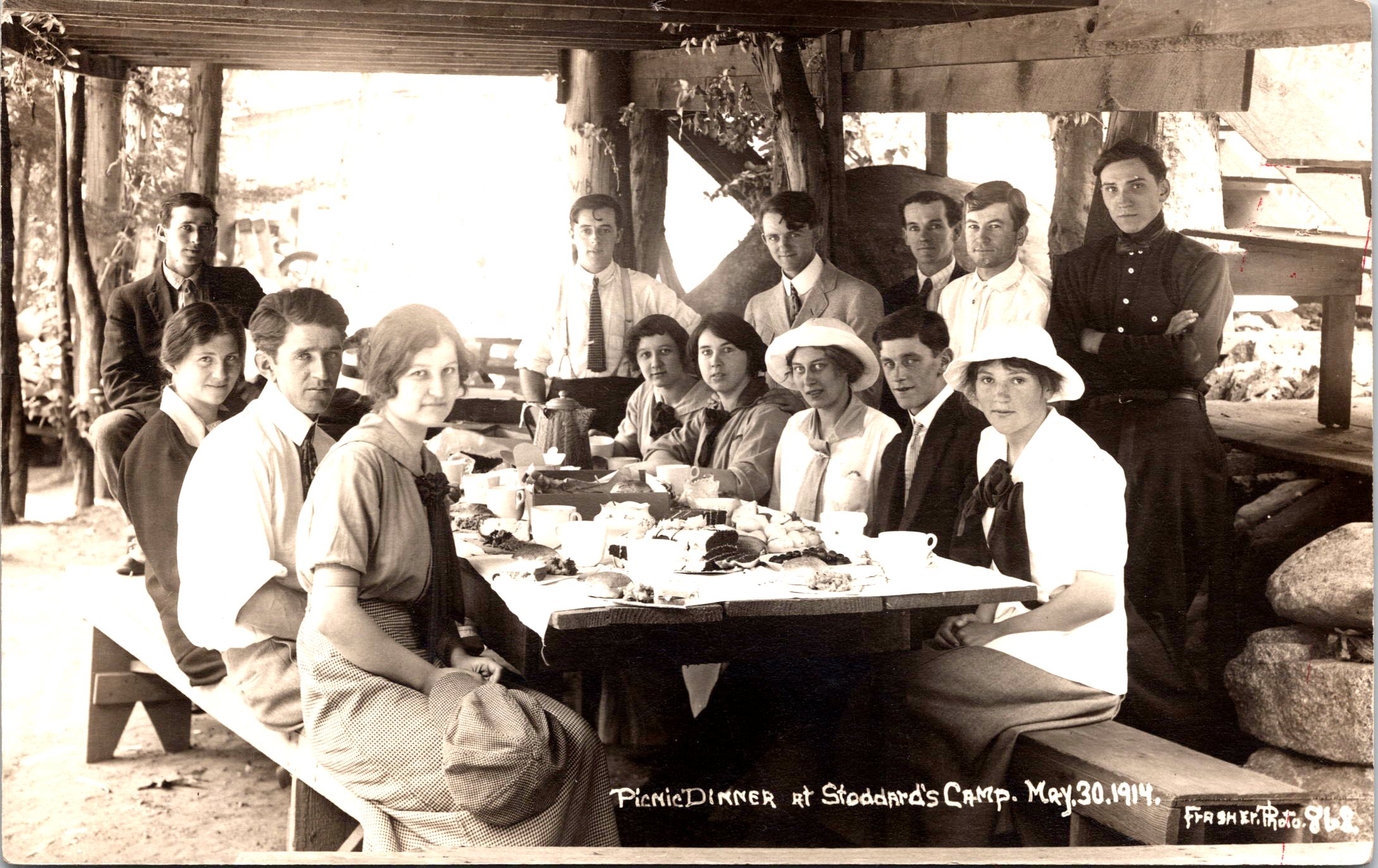
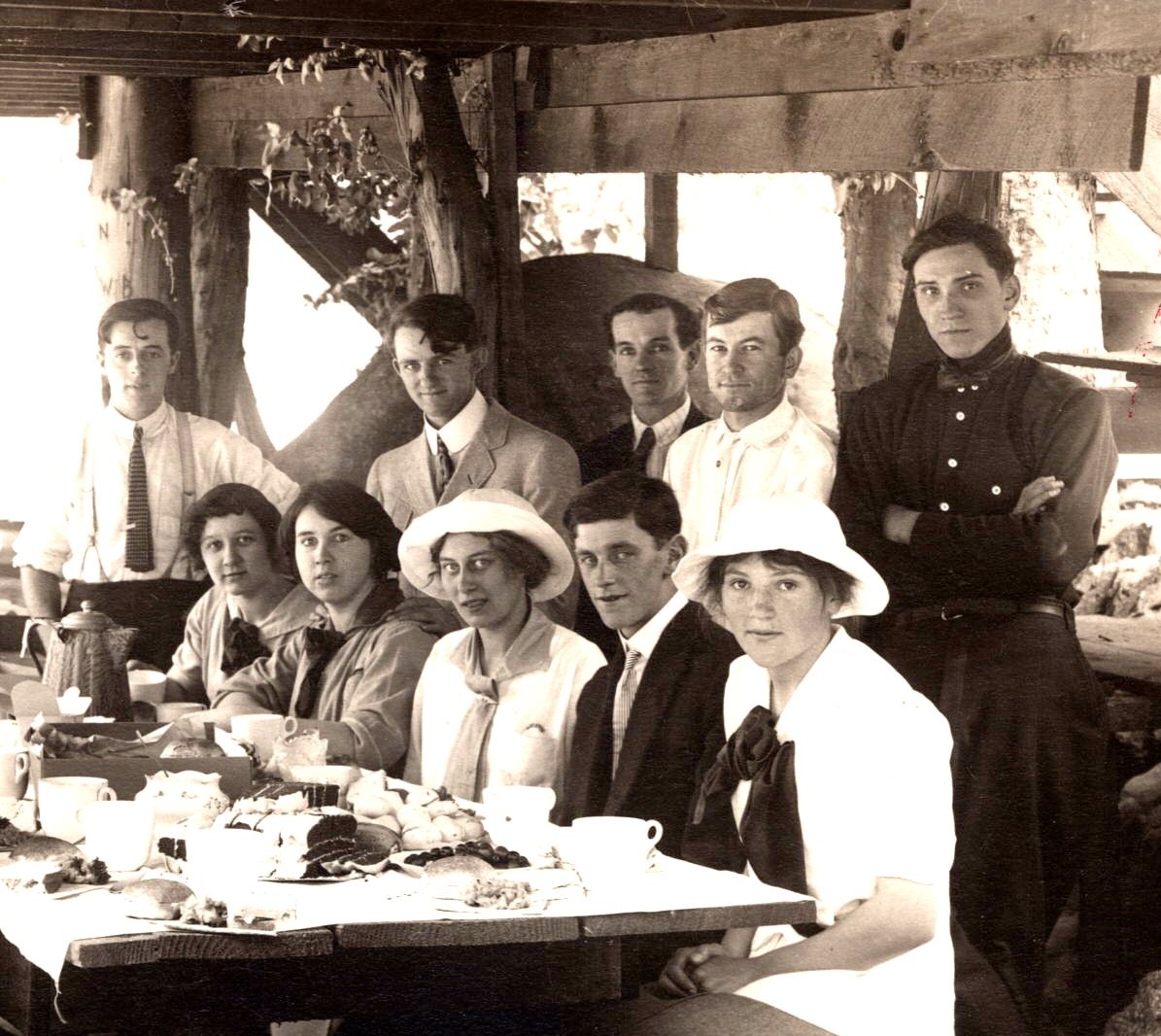

This engaging real photo postcard captures a large picnic gathering posed around a long wooden table. The scene is identified in caption as a “Picnic Dinner at Stoddard’s Camp, May 30, 1914.” The scene appears to be set beneath a rustic open-sided shelter, likely part of a campground or excursion destination, with heavy timber beams overhead and large rocks visible in the background—details that strongly evoke an early 20th-century recreational camp environment. Seated and standing around the table are fourteen young adults, men and women, most appearing to be in their late teens to early thirties. The men wear period-appropriate shirts, ties, and jackets—some with suspenders—while the women are dressed in modest blouses and long skirts, several accessorized with wide-brimmed hats typical of the 1910s. Their expressions range from relaxed to quietly formal, suggesting the photographer asked the group to pause mid-meal. The table is covered with cups, plates, and food, reinforcing the sense of a communal outing rather than a staged studio portrait. The overall mood is social and intimate, offering a vivid snapshot of leisure culture just before World War I, when group picnics and organized outings were popular among young working adults and social clubs. The shelter structure and natural surroundings hint that this was a known destination rather than a private backyard. In the lower right corner of the image, the photographer credit appears to read “Frasher Photo” followed by a number (possibly “863”). This attribution is consistent with Frasher, a well-known western U.S. photographer active in the early 20th century, particularly in the Pacific Northwest and Intermountain West. Burton Frasher (1888 –1955) was an influential American photographer and publisher best known for his extensive documentation of the landscapes, towns, and daily life of the American West in the first half of the 20th century. Frasher began his career in photography in 1914 when he established a studio in Lordsburg(now La Verne) California. By 1921, he relocated the studio to Pomona, California, where Frasher shifted his focus toward producing and publishing real photo postcards. These postcards—marketed as “Frasher Fotos”—quickly became popular, capturing scenic vistas, historic towns, and the evolving infrastructure of the West. His work spanned California, Arizona, New Mexico, Colorado, Utah, Nevada, Oregon, Washington, Alaska, and parts of Mexico. The reverse of the postcard is clearly marked “IDAHO” in pencil. There was a Stoddard’s Camp in Idaho, believed to have been a recreational campground (likely in northern Idaho), making Idaho a plausible—though not absolutely confirmed—location for this image. There were campgrounds in other states that had “Stoddard” in their names. In addition, if Frasher took the photo on this card, it had to be very early in his career since the photo was taken in his first year of business. The question remains, was there another photographer, sharing the Frasher name who operated the same time as Burton Frasher. It is strange though that both photographer labeled their postcards, “Frasher Photos”. (SOLD)


 THE CABINET CARD GALLERY
One wonders if any of the young men went to war in the next few years.