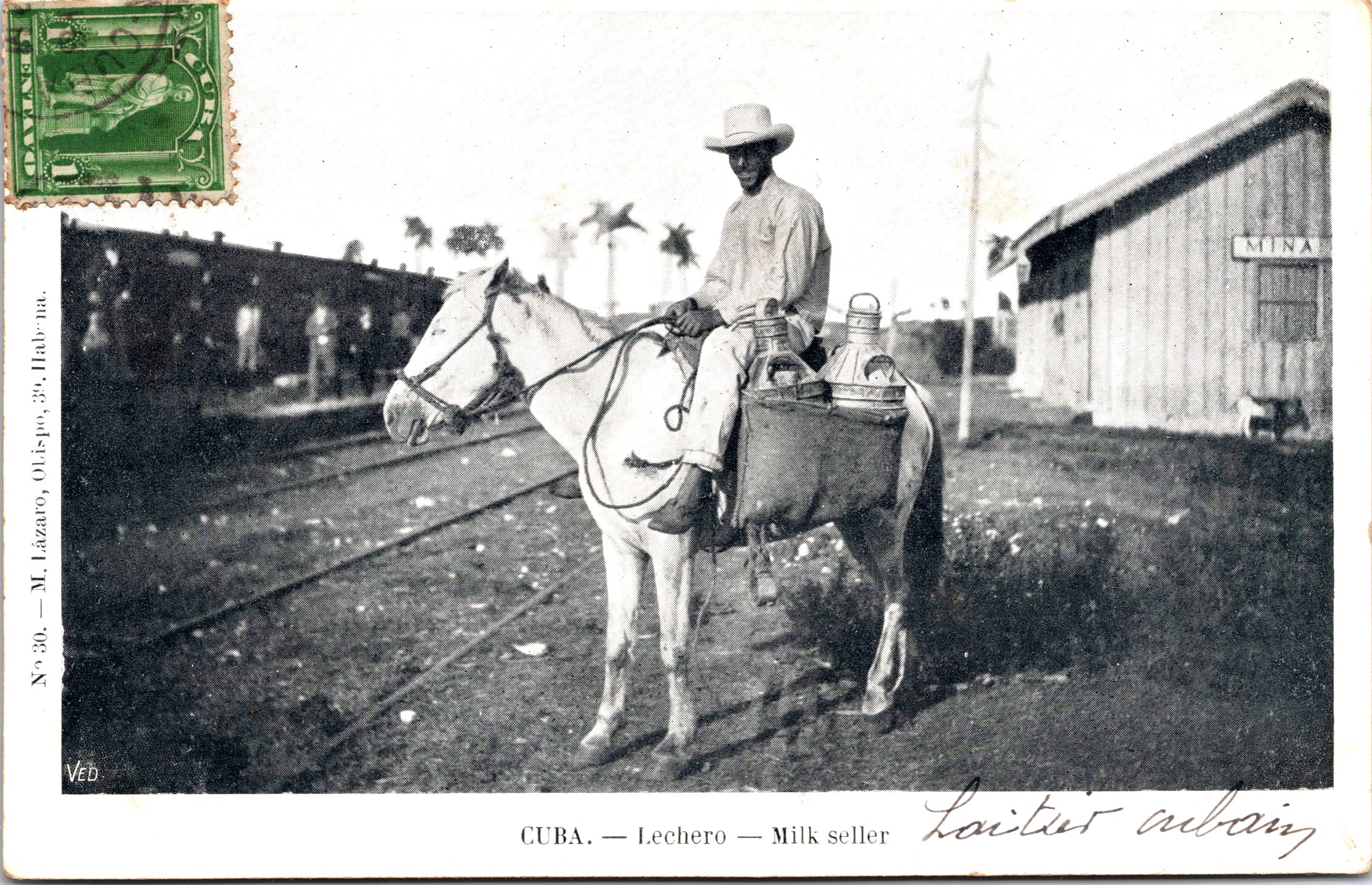
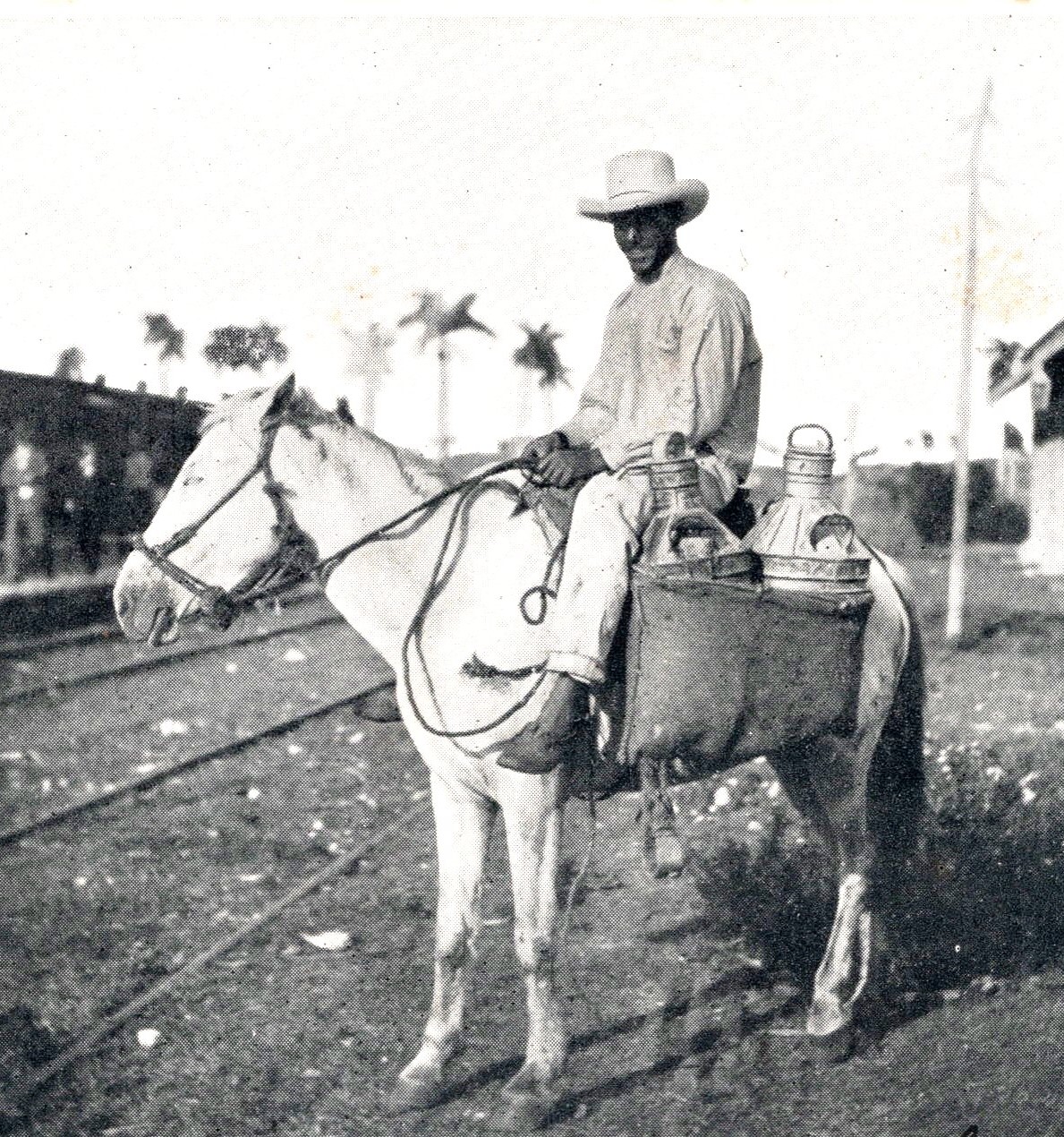
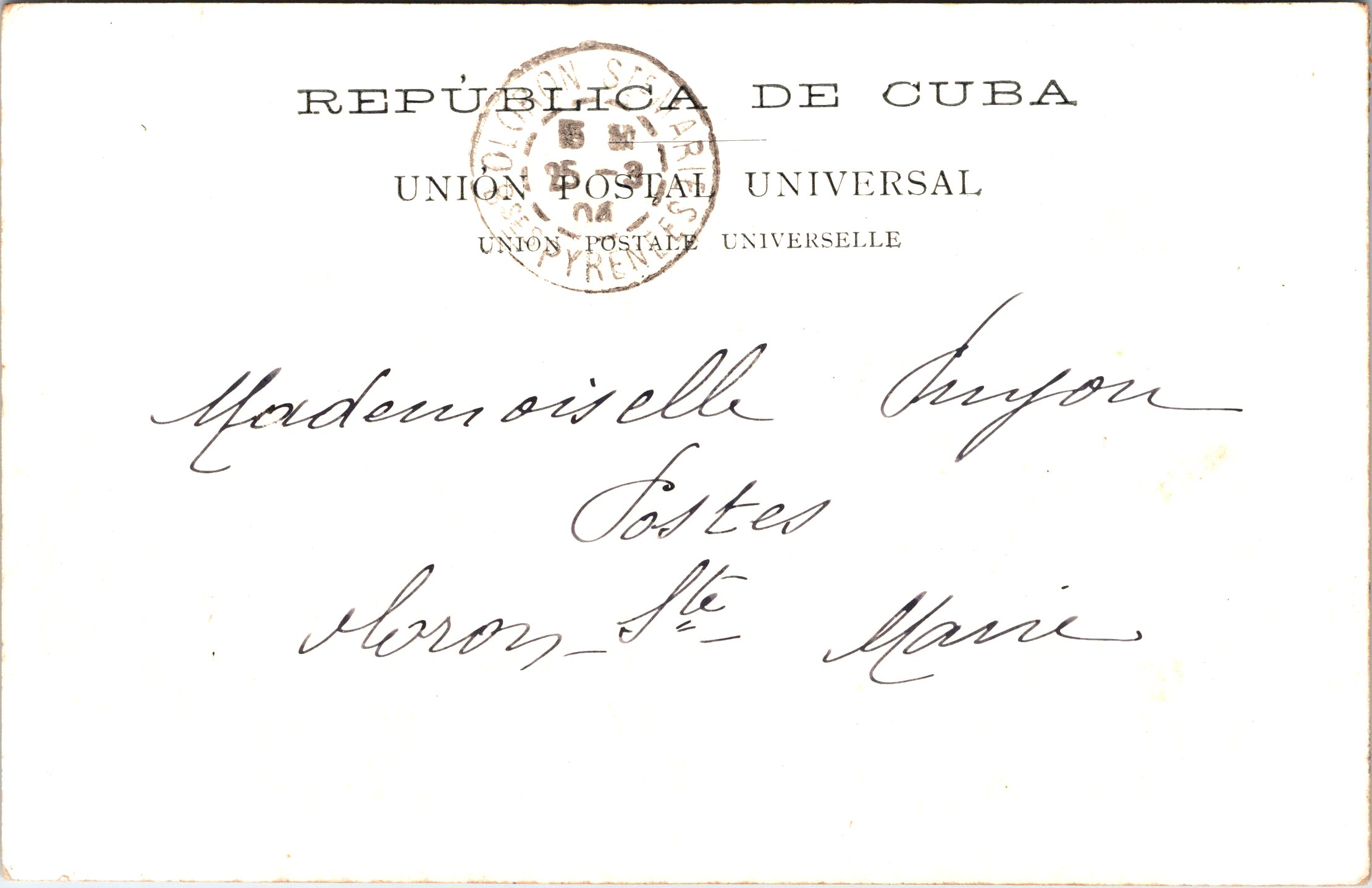
This is an interesting early twentieth-century Cuban postcard depicting a traditional milk vendor, or lechero, delivering milk on horseback. The image shows the rider seated calmly on a light-colored horse beside railway tracks, carrying large metal milk containers in saddle baskets. The scene captures a moment of everyday life in Cuba during a time when milk was commonly delivered door-to-door before refrigeration and modern dairy distribution. The printed caption at the bottom of the card reads: “CUBA — Lechero — Milk seller.” The fact that the caption includes English language, likely reveals that this postcard was meant to be sold to tourists who had a profound interest in occupational postcards. Postcards depicting occupational scenes such as this—milk vendors, street sellers, and other everyday trades—were especially popular with travelers visiting Havana during the early 1900s. The word “lechero” is the Spanish term for a milk vendor who transported fresh milk into towns and neighborhoods, often selling it directly to households. In many cities across Latin America and the Caribbean during the late nineteenth and early twentieth centuries, milk was delivered daily by riders or cart drivers who carried large metal milk cans similar to those visible in this photograph. A particularly interesting detail in this postcard is the pair of large metal milk cans secured in wooden carrying crates attached to the saddle. These containers were early transport milk churns designed to be tightly sealed to prevent contamination or spillage while traveling through town. In warm climates such as Cuba, milk sellers sometimes wrapped the cans with damp cloth or straw coverings to create a simple evaporative cooling effect that helped keep the milk fresh during the day. Milk vendors typically collected fresh milk early in the morning from nearby dairies and transported it into town in these containers. The milk was then measured and poured directly for customers, often using a smaller serving container carried along with the larger storage cans. Because refrigeration and pasteurization were not yet widespread, the milk was meant to be sold and consumed the same day. Note that there is a sign over the window in the building seen in this postcard. “Mina” can be translated as “mine” or a “mining facility”. Likely related to the mine is the railroad tracks running along side the building. The publisher of this lithographic postcard was M. Lazaro. He was located on Obispo Street in Havana. Obispo Street is one of the city’s most historic commercial streets and a well-known center of tourist shops, photographers, and postcard dealers during the early twentieth century. A Cuban one-centavo green stamp appears on the reverse of the card. The postcard is postmarked Bordeaux, France, indicating that the postcard was mailed internationally. The postcard remains in good antique condition overall with strong photographic detail and clear printing. There is general age toning and light handling wear. There is minor corner wear. The stamp remains attached on the front with a visible postal cancellation. The reverse shows the original message and address in ink along with the printed Cuban postal markings. Overall, this is an appealing and historically interesting occupational postcard documenting a traditional milk delivery scene in early twentieth-century Cuba (see scans).
This postcard is available for purchase at my store, The History Peddler, for $18.00
Interested collectors may view the listing here:
https://www.ebay.com/itm/236708188277


 THE CABINET CARD GALLERY
Leave a comment