This vintage real photo postcard features a serious young boy wearing a wide brimmed hat. He doesn’t seem very happy to be spending his time at a photo studio. This card has a Cyko stamp box indicating that the photo ws taken sometime between 1904 and 1920. SOLD
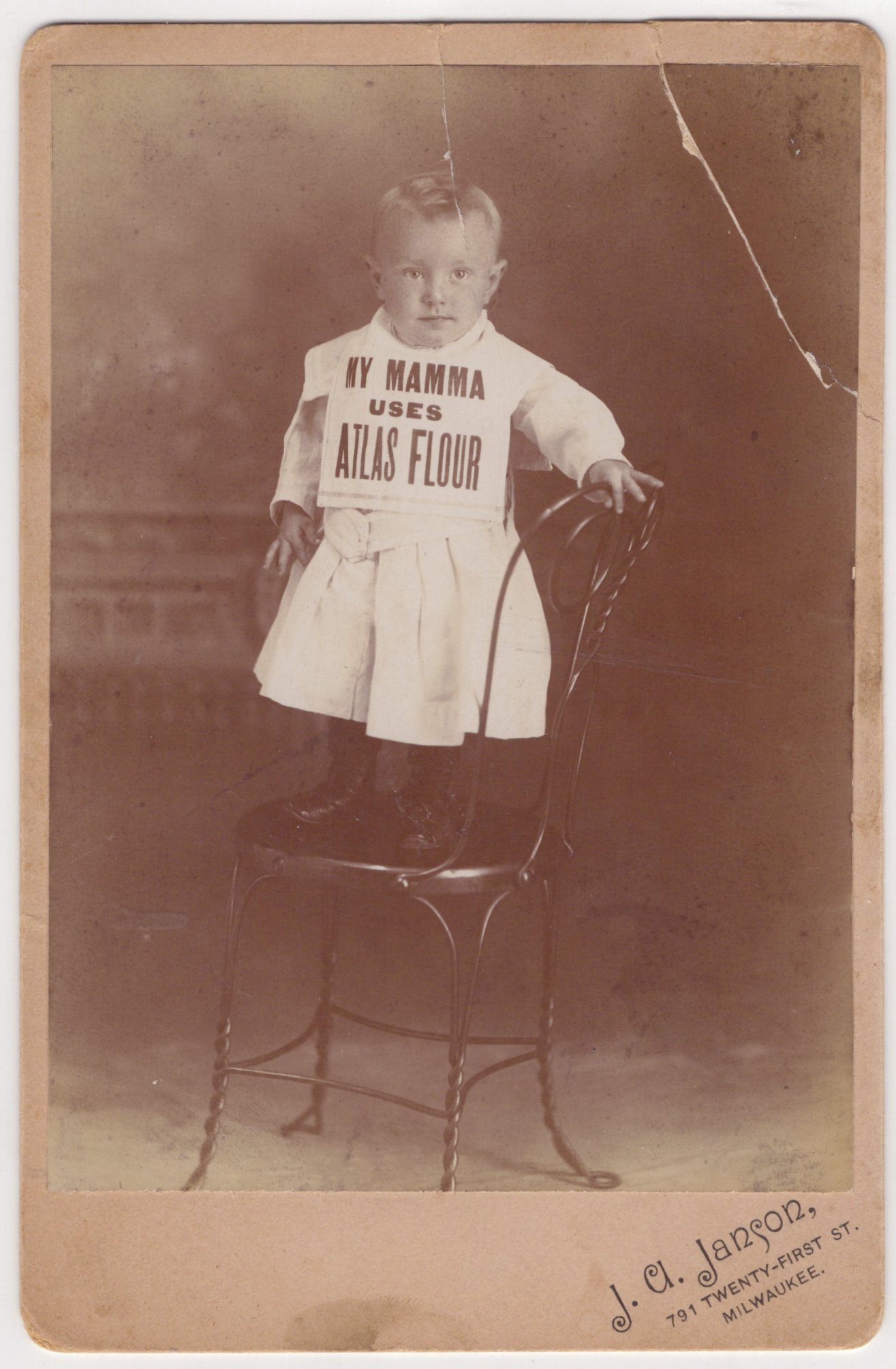
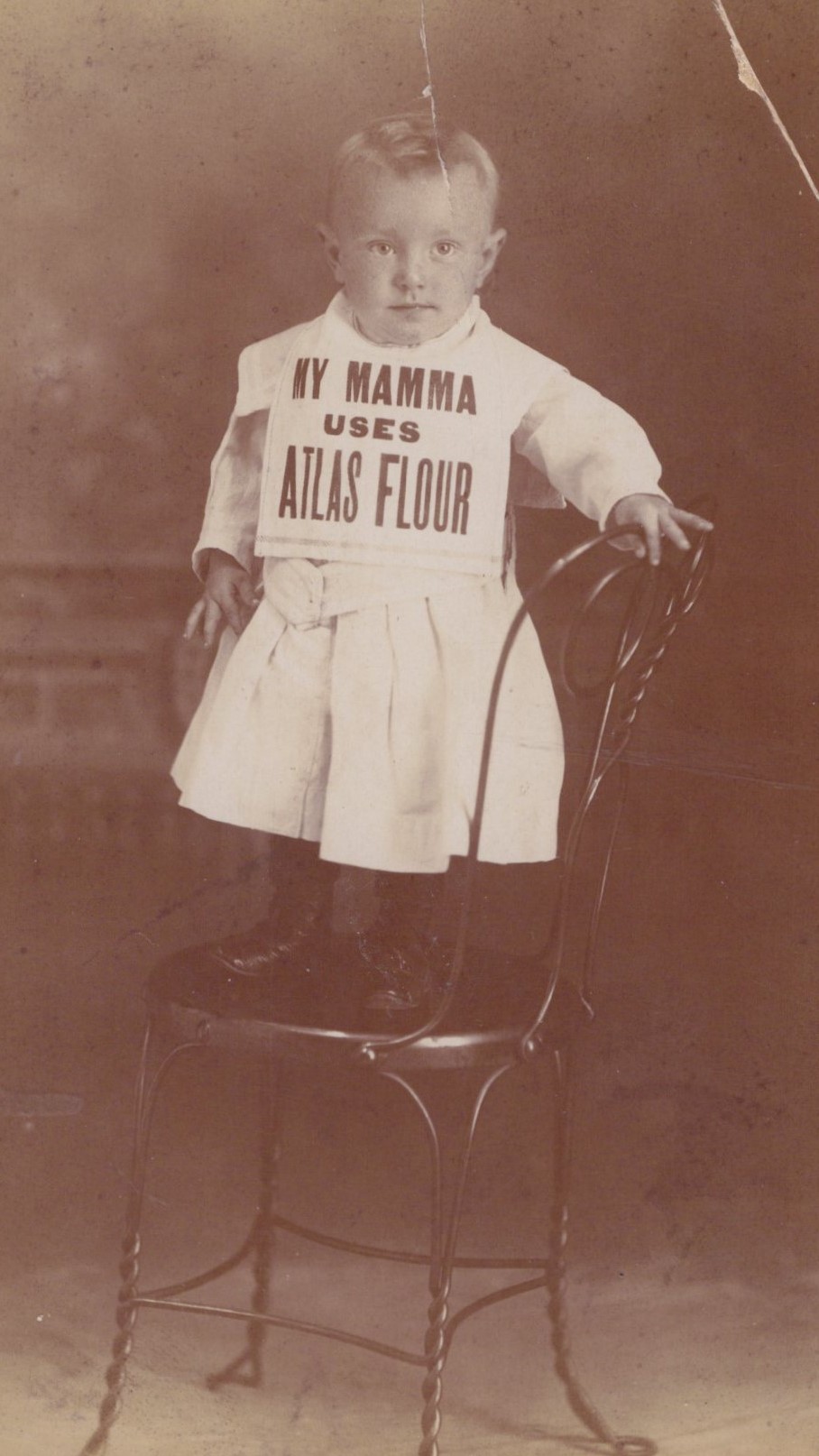
This advertising cabinet card features a little boy on a metal chair wearing a bib imprinted “MY MAMMA USES ATLAS FLOUR”. Atlas Flour was manufactured by B. Stern & Sons (Milwaukee, Wisconsin). The card’s photograph was taken by J. A. Janson in his studio also located in Milwaukee. This cabinet card, along with similar examples, was likely produced as part of a local promotion for the flour. It is likely that photos were of children of the company’s employees or other city residents. SOLD
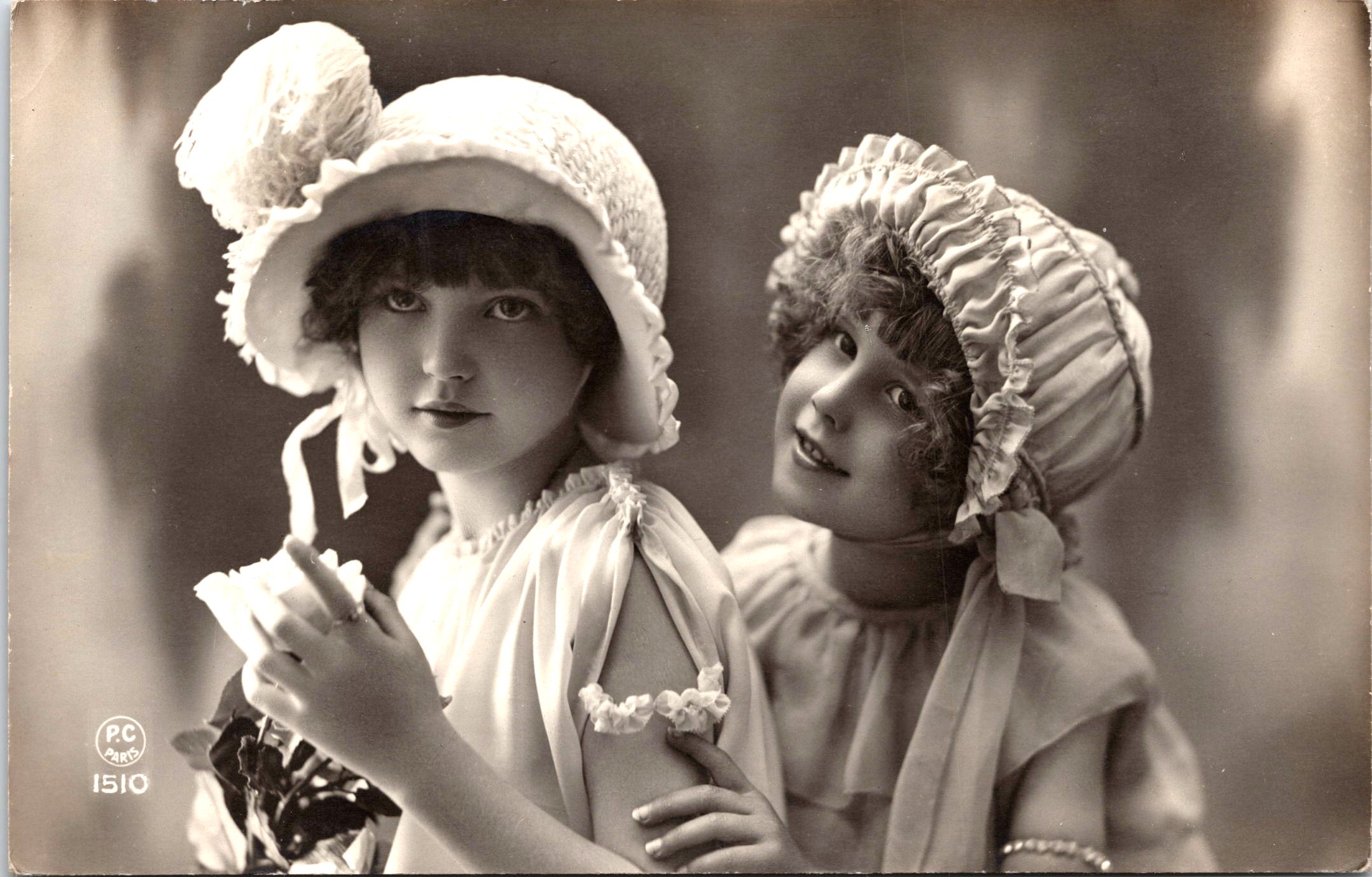
This vintage real photo postcard captures two very adorable and beautifully dressed little girls. They have magnificent smiles and sparkling eyes. This postcard was produced by PC Paris as part of a series (No.1510). The P.C logo is an abbreviation for Papeteries d Levallois-Clichy. The firm published a variety of real photo postcard topics including portraits of pretty models, nudes, views, and holiday cards. The company was active in the 1920’s. Here is the translation of the French message on the postcard: “Very Dear Cousin Agathe, On the occasion of your lovely name day,receive my best wishes and greetings, as well as those of my parents. I also send you my sweetest kisses to you and to all your family. Your little cousin, M. Soensur” (SOLD)
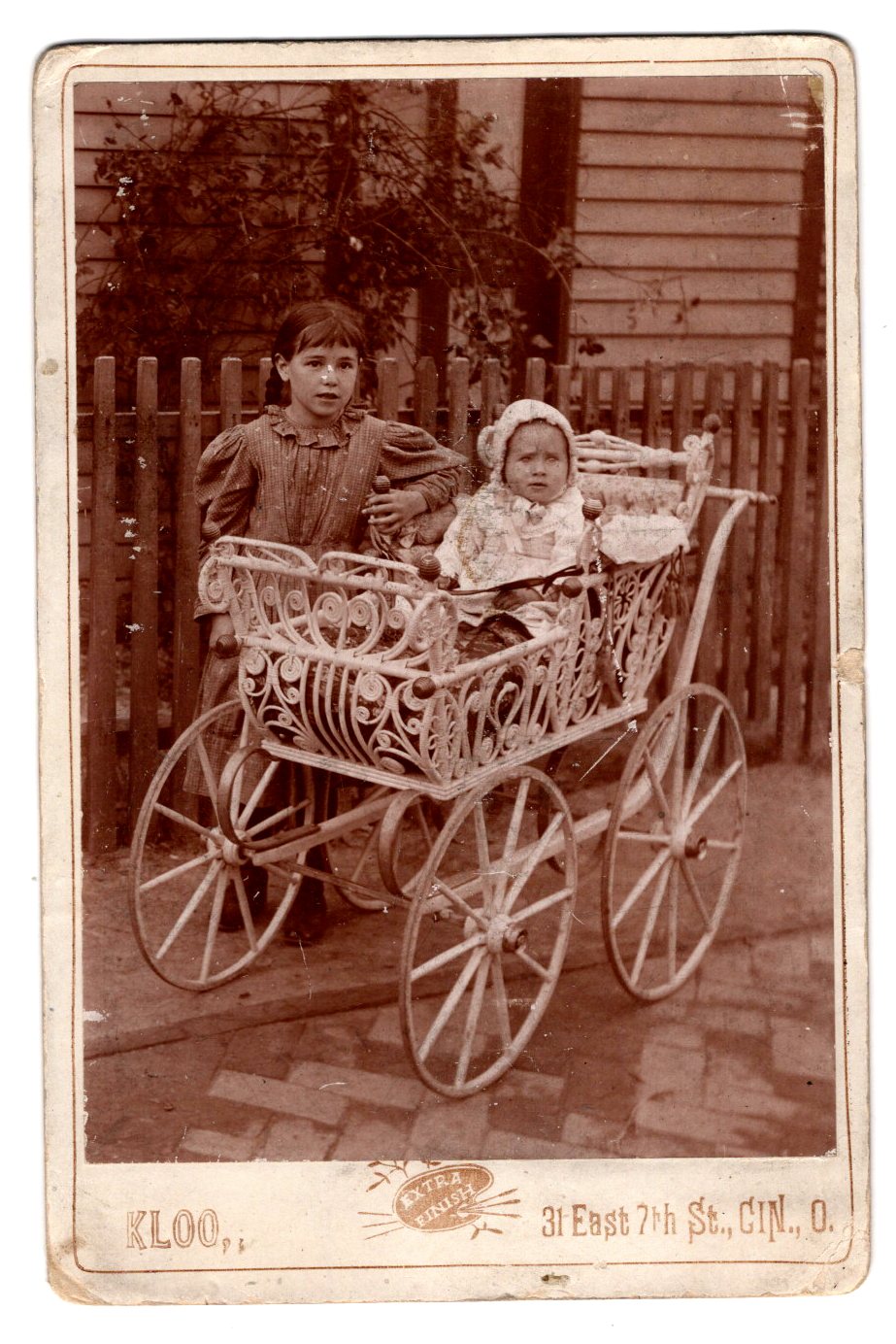
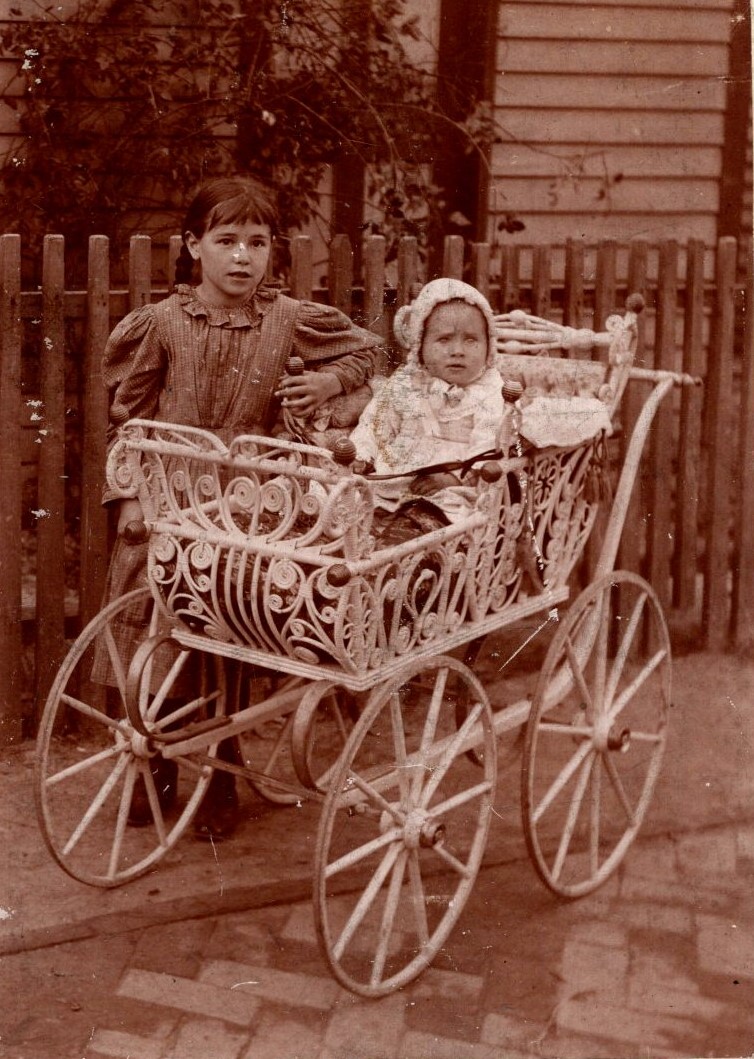
This cabinet card features a school age girl minding a bundled up baby in a large fine bentwood and wicker baby carriage. The carriage is on a brick lane and in the background is a fenced clapboard house. The older child is wearing a fine dress with mutton sleeves and the baby is clothed in a gown and cute cap. The photographer is Kloo, of Cincinnati, Ohio. The photographer may be Carl H. Kloo ,who, according to a photography journal (1906) was a photographer in Covington, Kentucky . SOLD
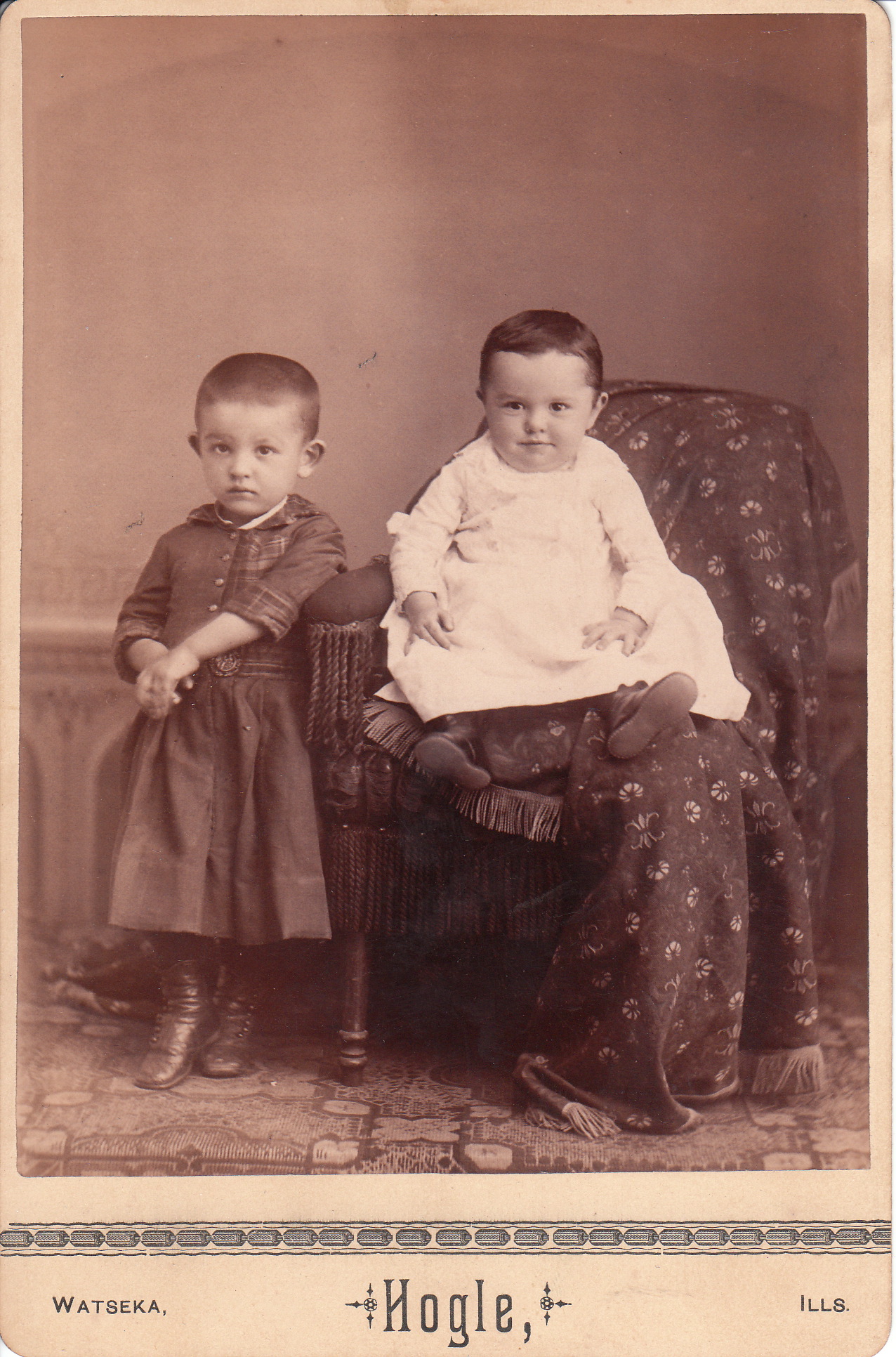
Two impish looking children pose for their portrait in Watseka, Illinois. The photographer is Hogle. The children are probably siblings. The oldest appears somewhat intimidated by the photographer while the youngest child is displaying a devilish grin. This cabinet card is in Very Good Condition (see scans). SOLD
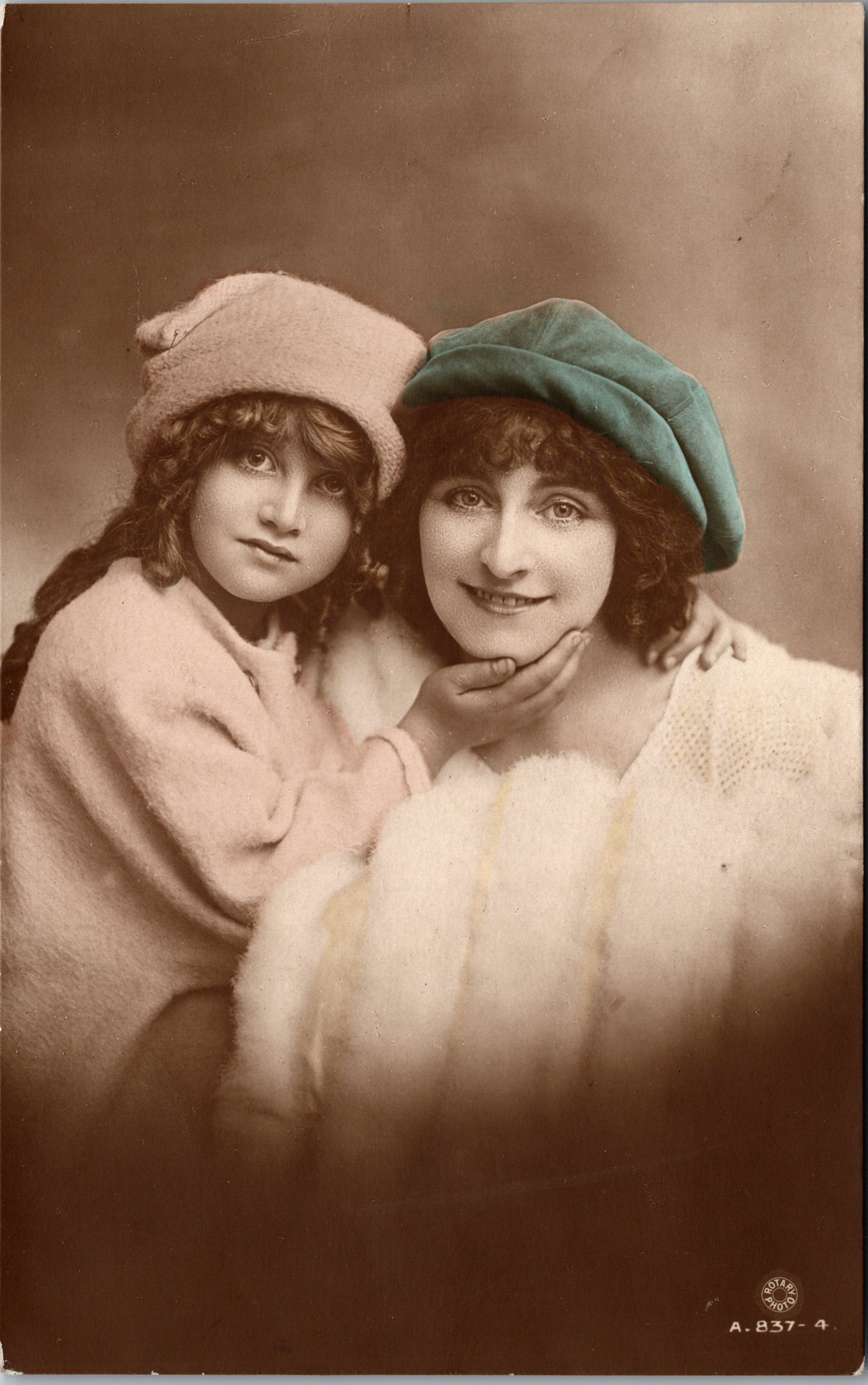
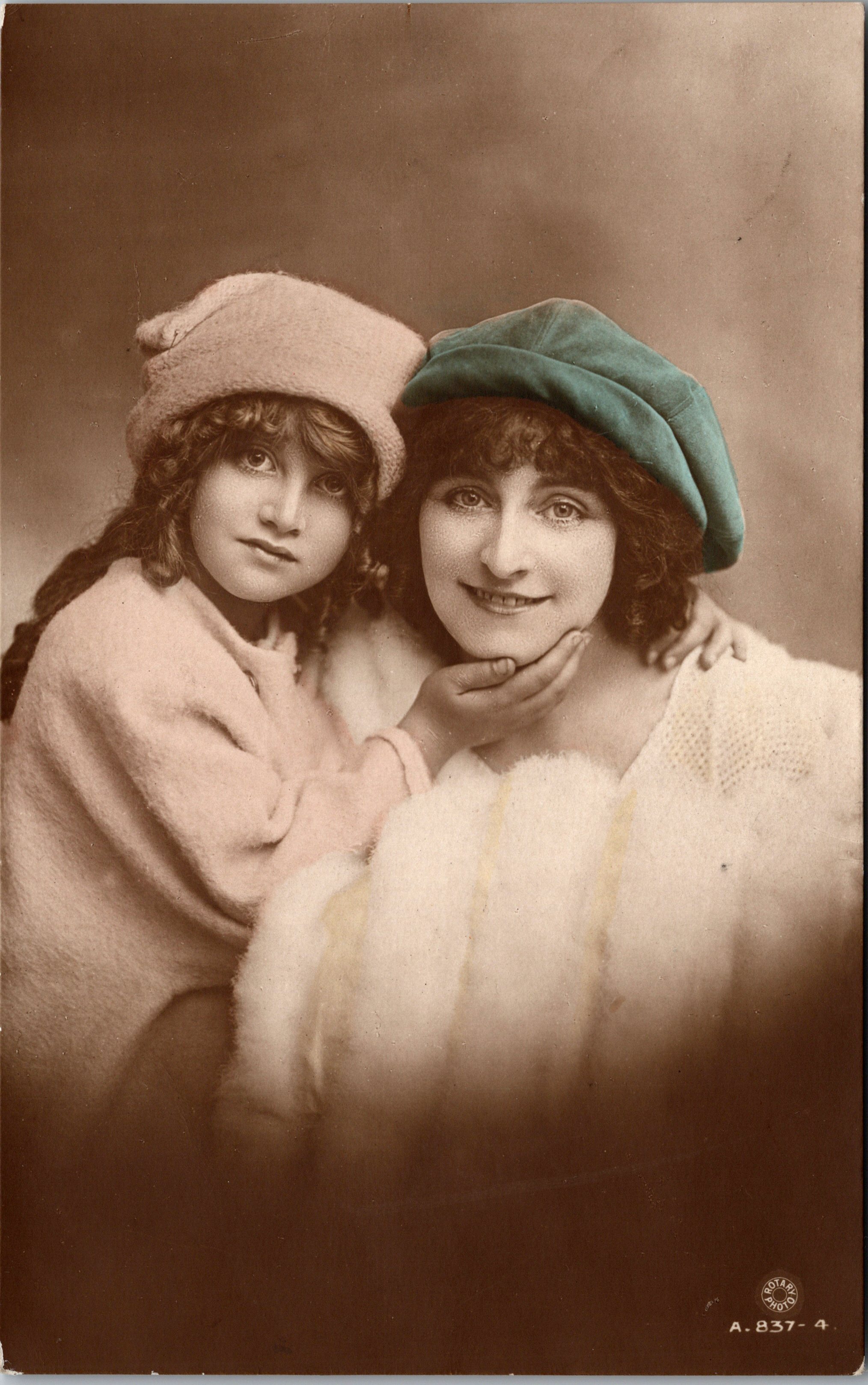
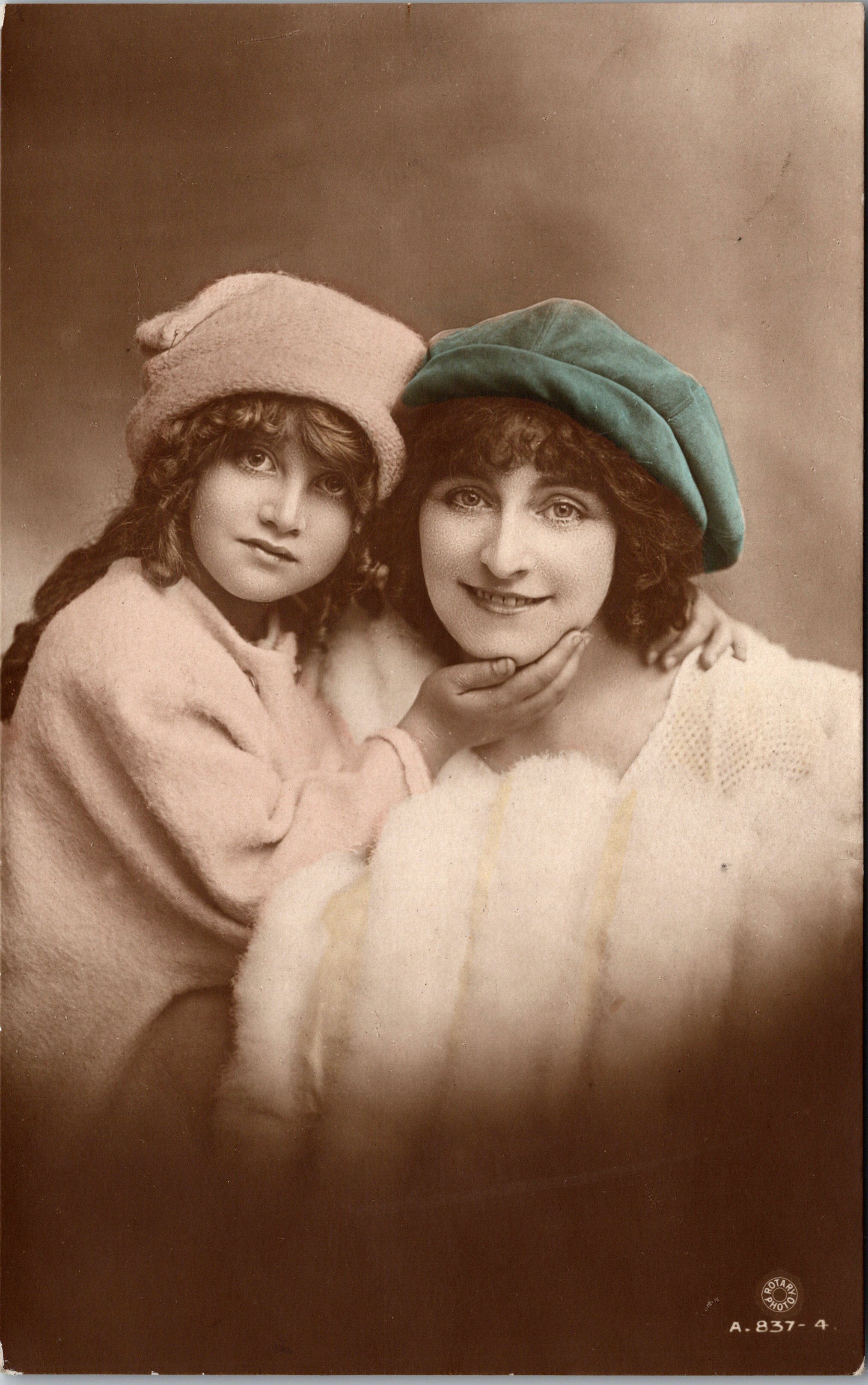
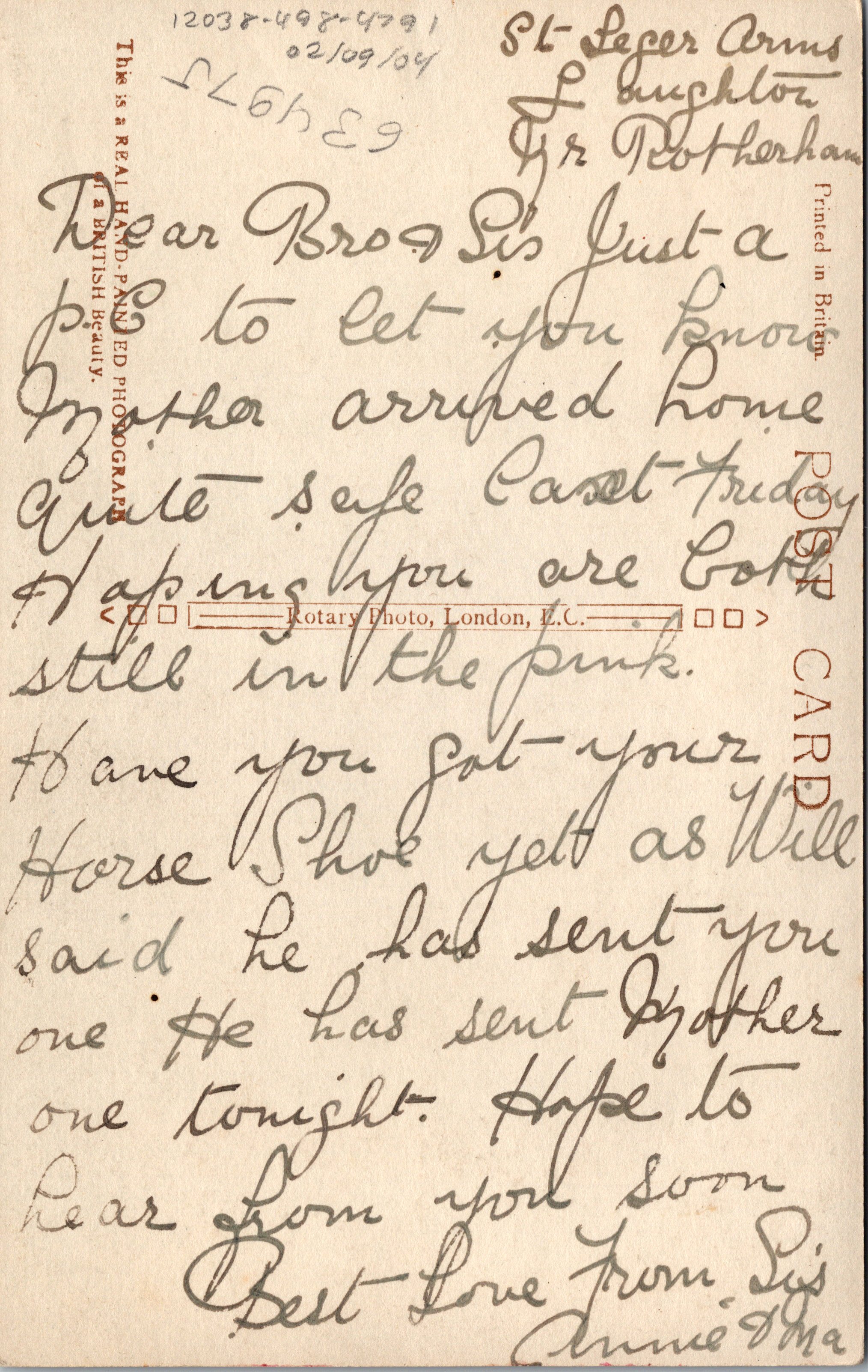
This vintage hand painted real photo postcard features a portrait of a very beautiful mother and her equally beautiful daughter. The pair are dressed for winter and looking quite fashionable. Their hats are terrific. Mom is wearing a fur coat. They have wonderful smiles. The writer of the postcard expresses to the reader, “Hoping you are both still in the pink”. I haven’t heard that expression in a while. If you don’t know, “in the pink” is a idiom that means in the peak of health. This vintage postcard was published by Rotary Photo as part of a series (No.A837-4). It was written in the first decade of the 1900’s. The postcard is in very good condition (see scans).
Buy this Vintage Real Photo Postcard (includes shipping within the US) #5324
To purchase this item, click on the Pay with PayPal button below
$34.00
Buy this Vintage Real Photo Postcard (includes International shipping outside the US) #5324
To purchase this item, click on the Pay with PayPal button below
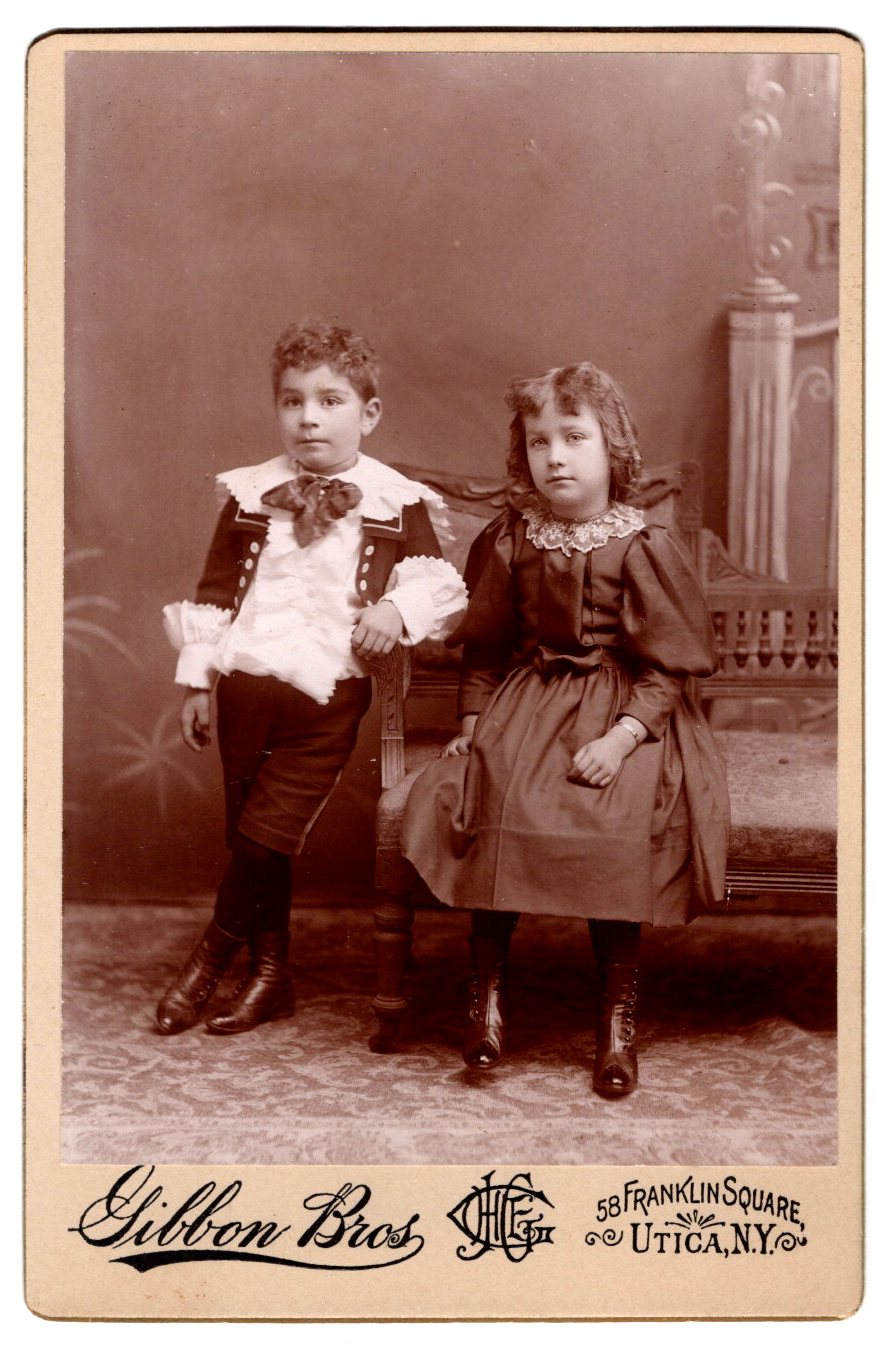
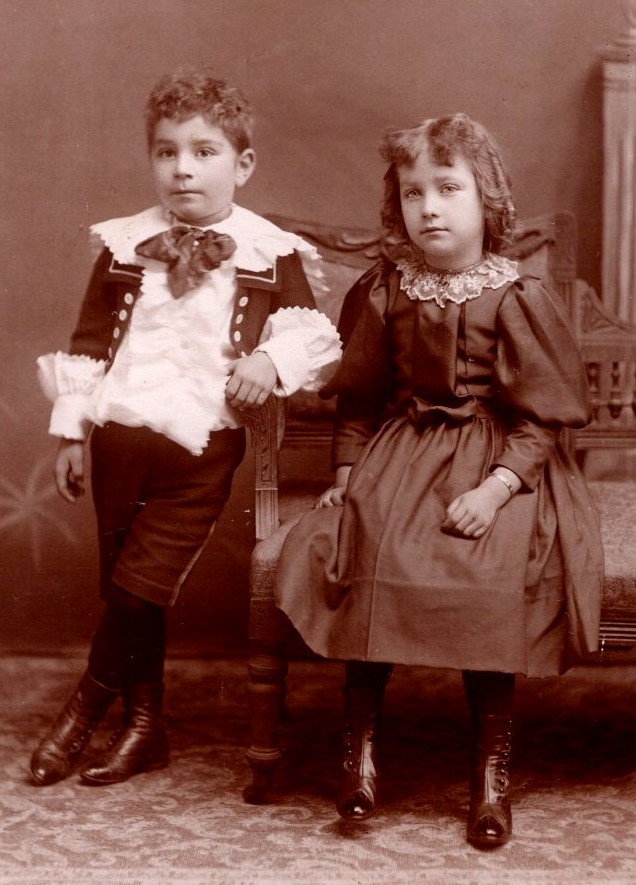
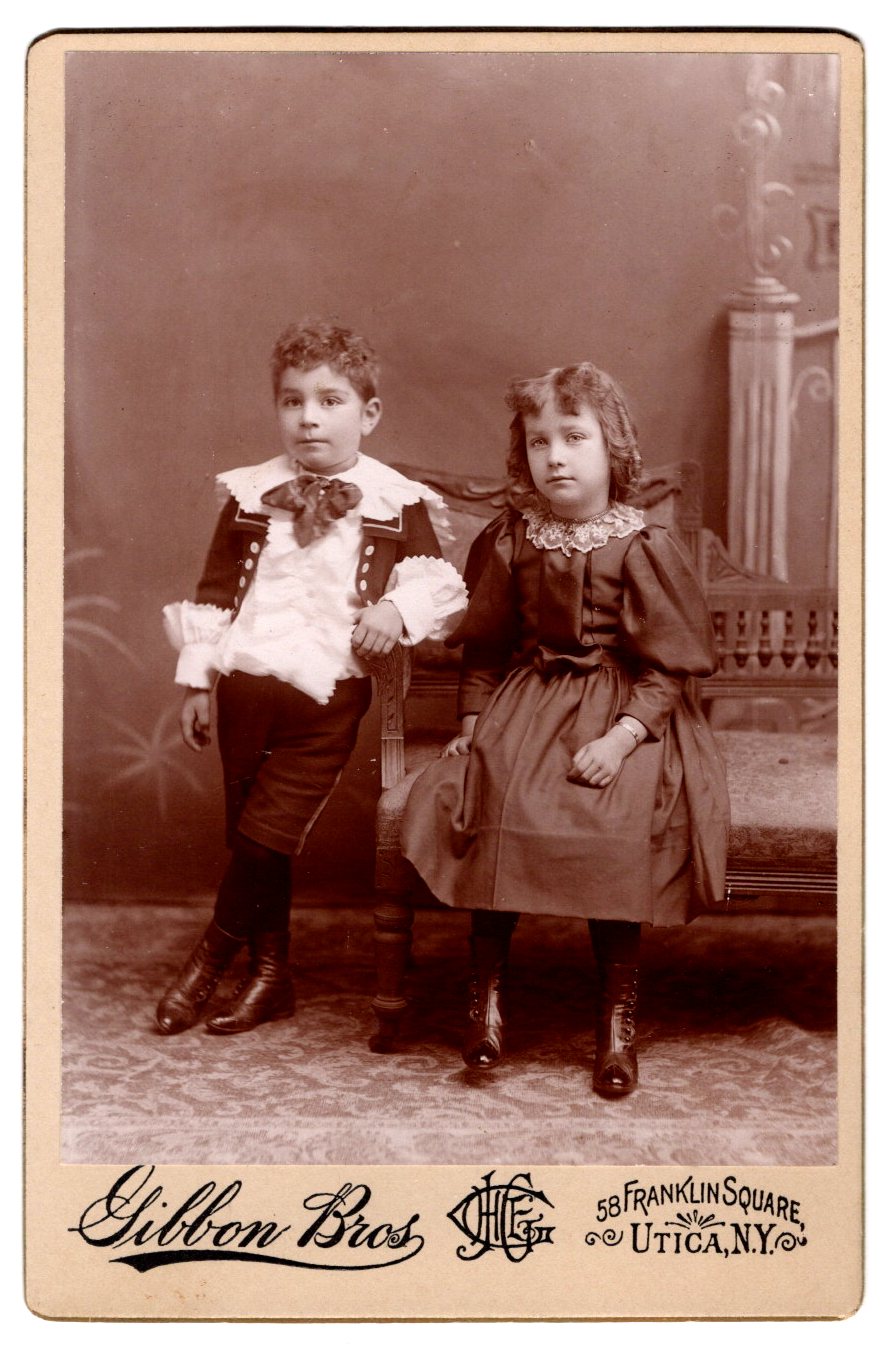
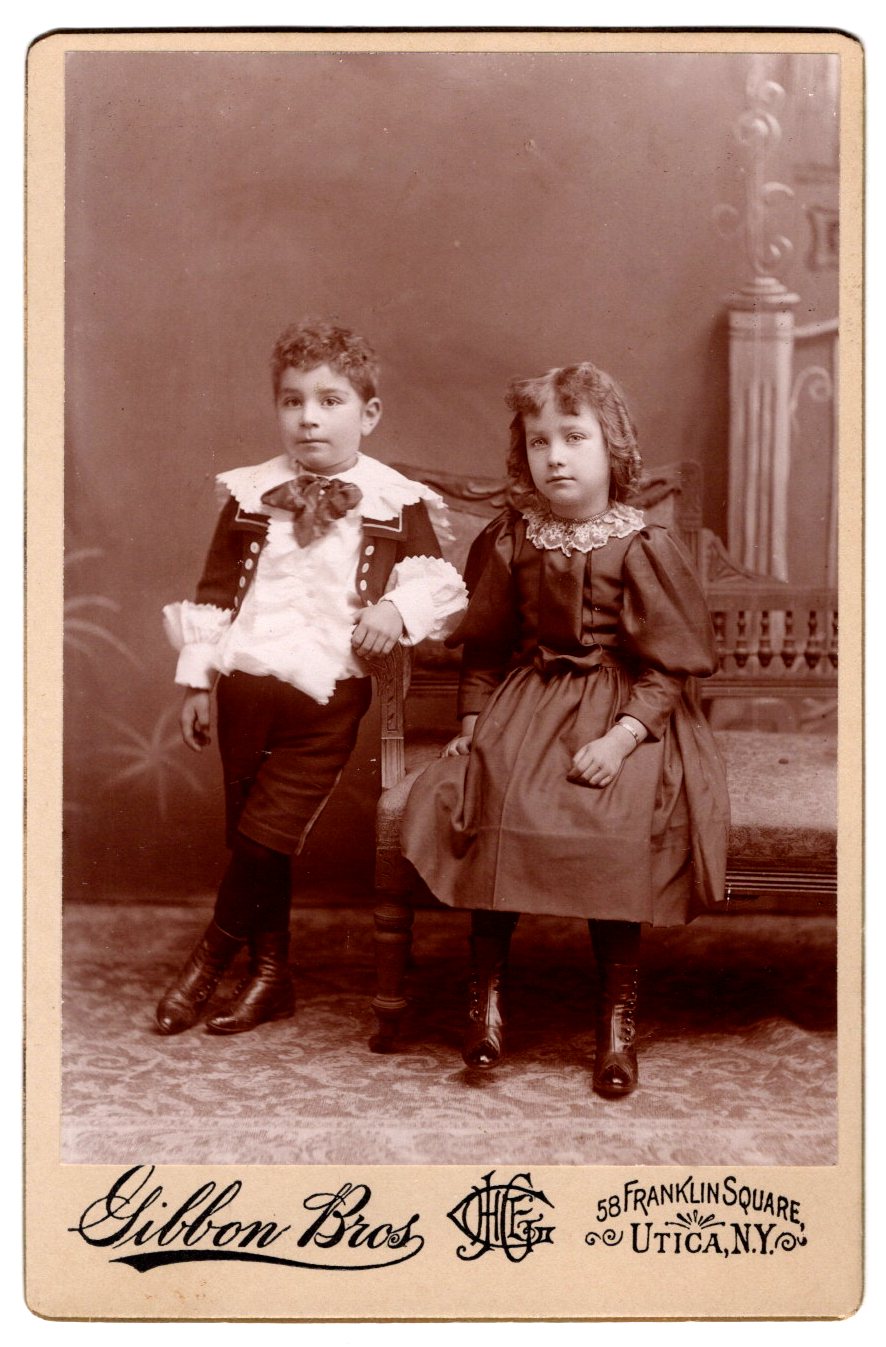
Two beautiful children pose for their portrait at Gibbon Brothers Studio in Utica, New York. The children are most likely siblings and judging by their fashionable outfits, they appear to be from a well-to-do family. These kids are the “Abercrombie” kids of their era. This cabinet card has excellent clarity and gold beveled edges. This cabinet card is in Excellent Condition (see scans).
Buy this Cabinet Card Photograph (includes shipping within the US) #6552
To purchase this item, click on the Pay with Paypal button below
$35.00
Buy this Vintage Original Cabinet Card (includes International shipping outside the US) #6552
To purchase this item, click on the Pay with Paypal button below
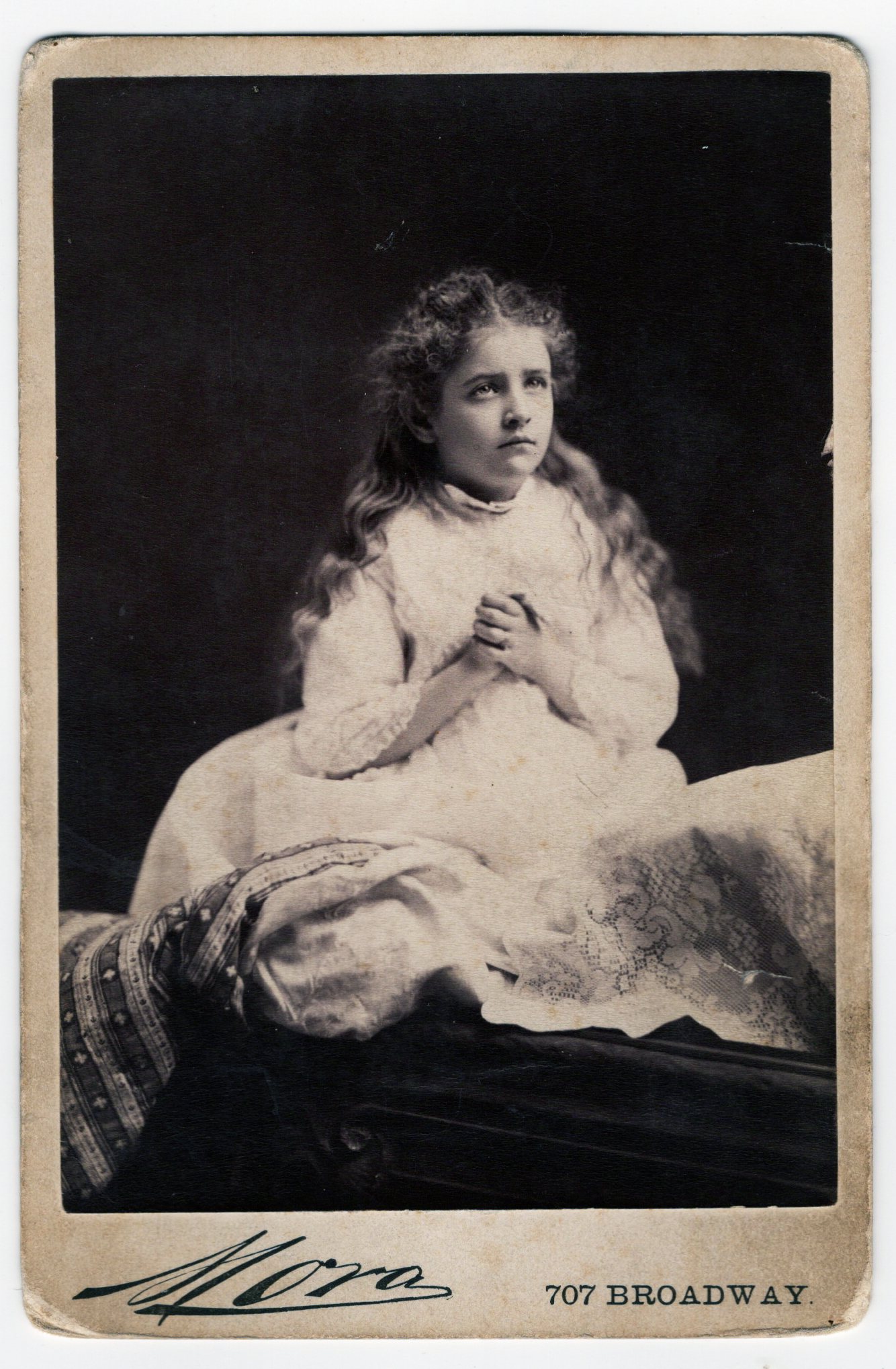
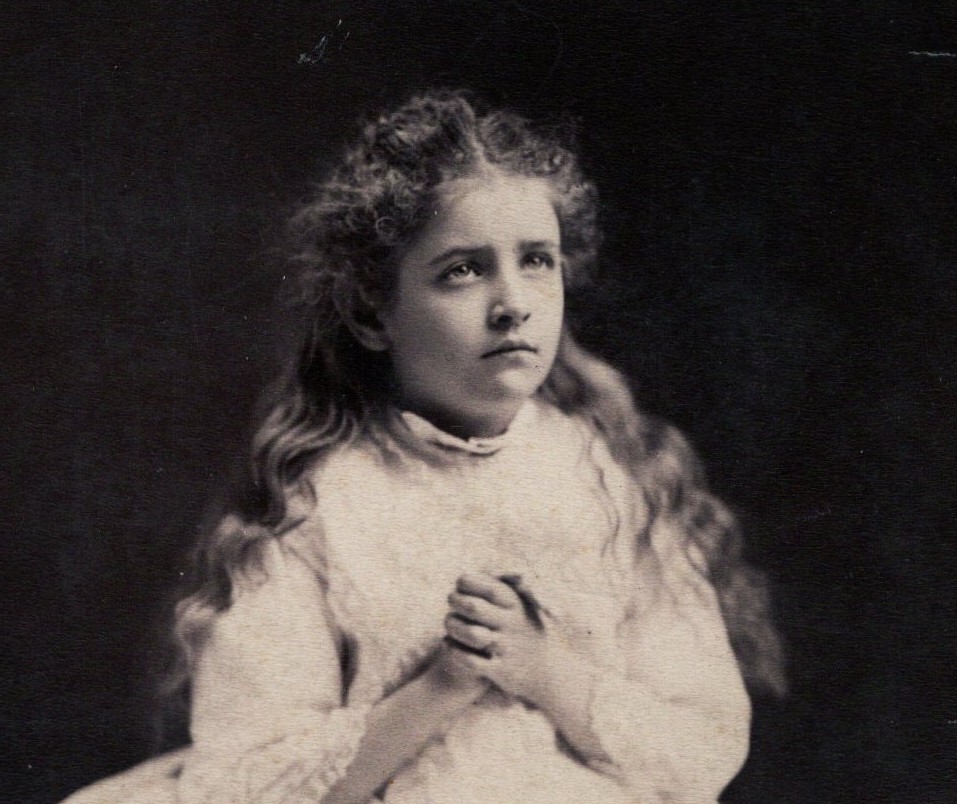
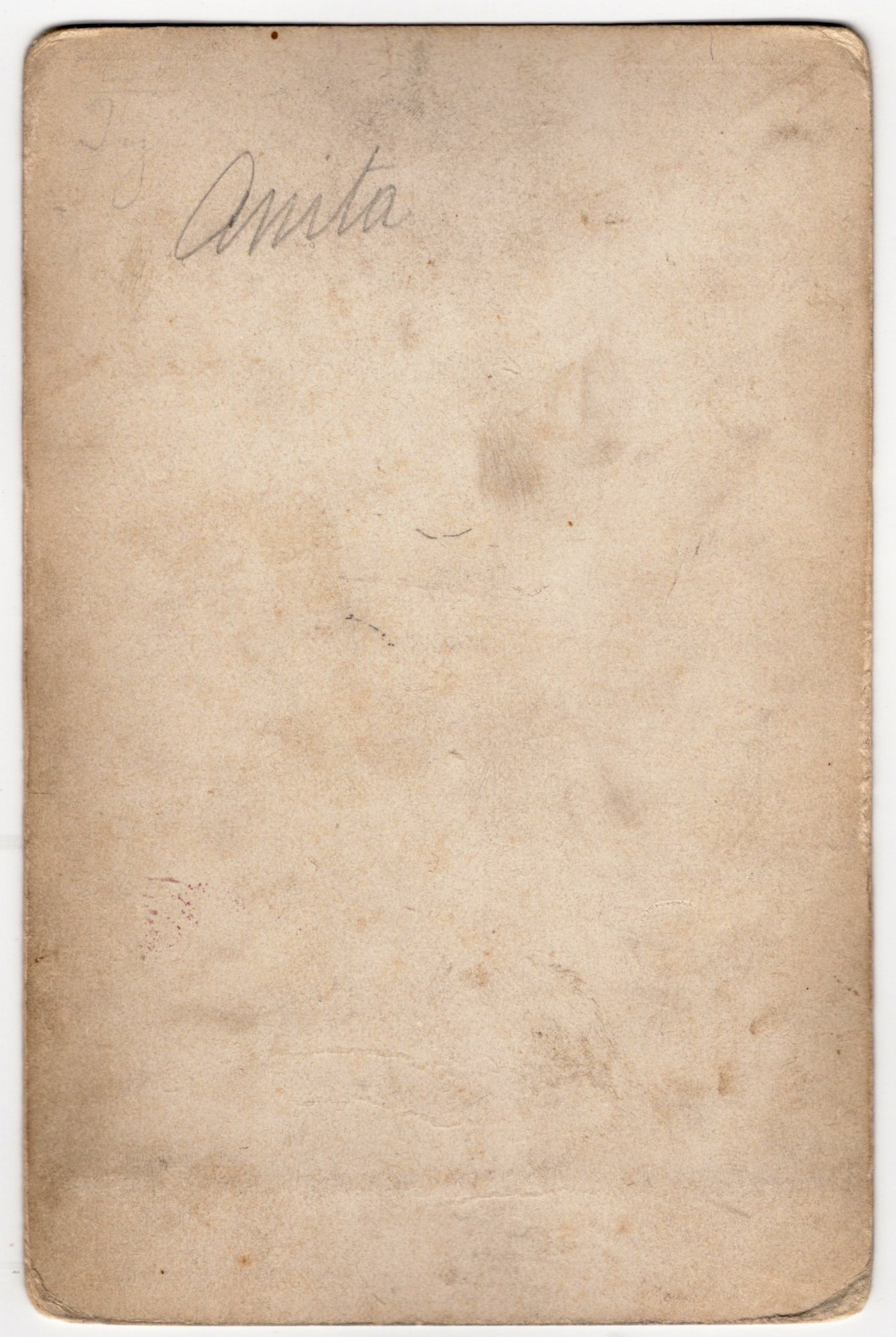
In this striking cabinet card photograph, young Anita Manson sits poised in an elegant white dress, her delicate hands clasped gently together. Her soft curls frame a face of quiet intensity, her large, expressive eyes gazing into the distance with a look that seems both wistful and contemplative. There is a serene grace in her posture, a stillness that suggests innocence yet carries an air of maturity beyond her years. This image is the work of renowned celebrity photographer José Mora, who operated a prestigious studio on Broadway in New York City during the late 19th century. Mora, having secured the exclusive rights to photograph Anita, captured her beauty in at least fifty different poses—each new image eagerly anticipated by an adoring public. It is said that she was first discovered by Napoleon Sarony, another famous photographer of the era, who was captivated by her striking appearance while she was out with her nurse. With permission, he photographed her, thus launching her into the realm of celebrity. Anita Manson was not only a celebrated child model but also an admired figure in private theatricals and entertainment circles. Her portraits, such as this one, were in such high demand that in Boston alone, over 25,000 copies were sold. Her delicate lace-trimmed gown, the rich textures of the draped fabric beside her, and the dramatic lighting of the photograph all contribute to the ethereal quality of her image. She was, as the newspapers of the time declared, a true “child beauty”—a young girl whose face enchanted a generation and whose likeness became one of the most sought-after images of its time. SOLD
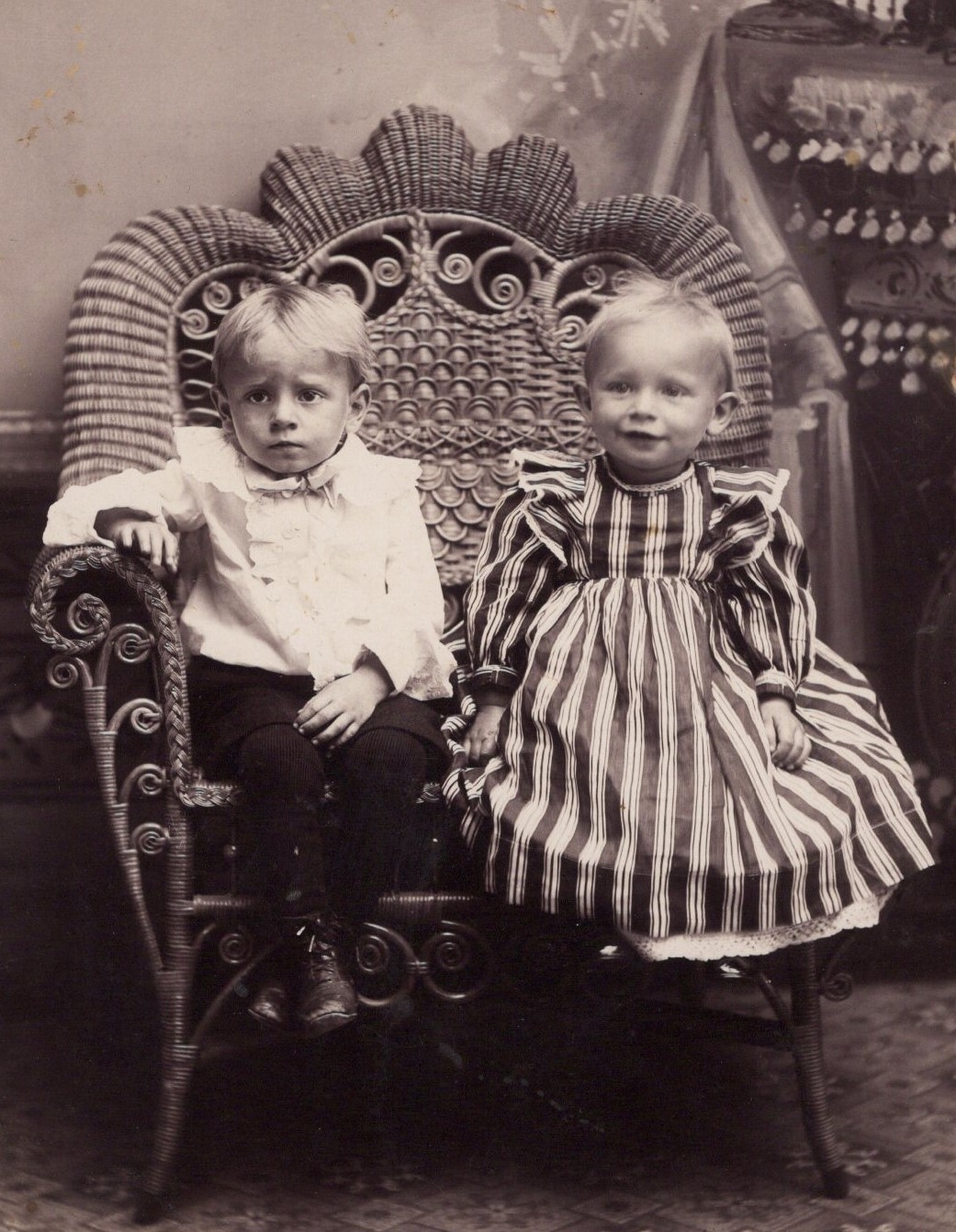
Two adorable kids pose for their cabinet card portrait at the studio of Myer, in Shell Rock, Iowa. The children are most likely siblings; possibly even twins. They are sitting on a large wicker chair. The young girl is smiling and wearing a cute striped dress. The young boy appears less happy than his sister and is wearing a white shirt with ruffles. This cabinet card portrait has some foxing and corner wear and is in fair condition.
Buy this Cabinet Card Photograph (includes shipping within the US) #6543
To purchase this item, click on the Pay with Paypal button below
$22.48
Buy this Vintage Original Cabinet Card (includes International shipping outside the US) #6543
To purchase this item, click on the Pay with Paypal button below
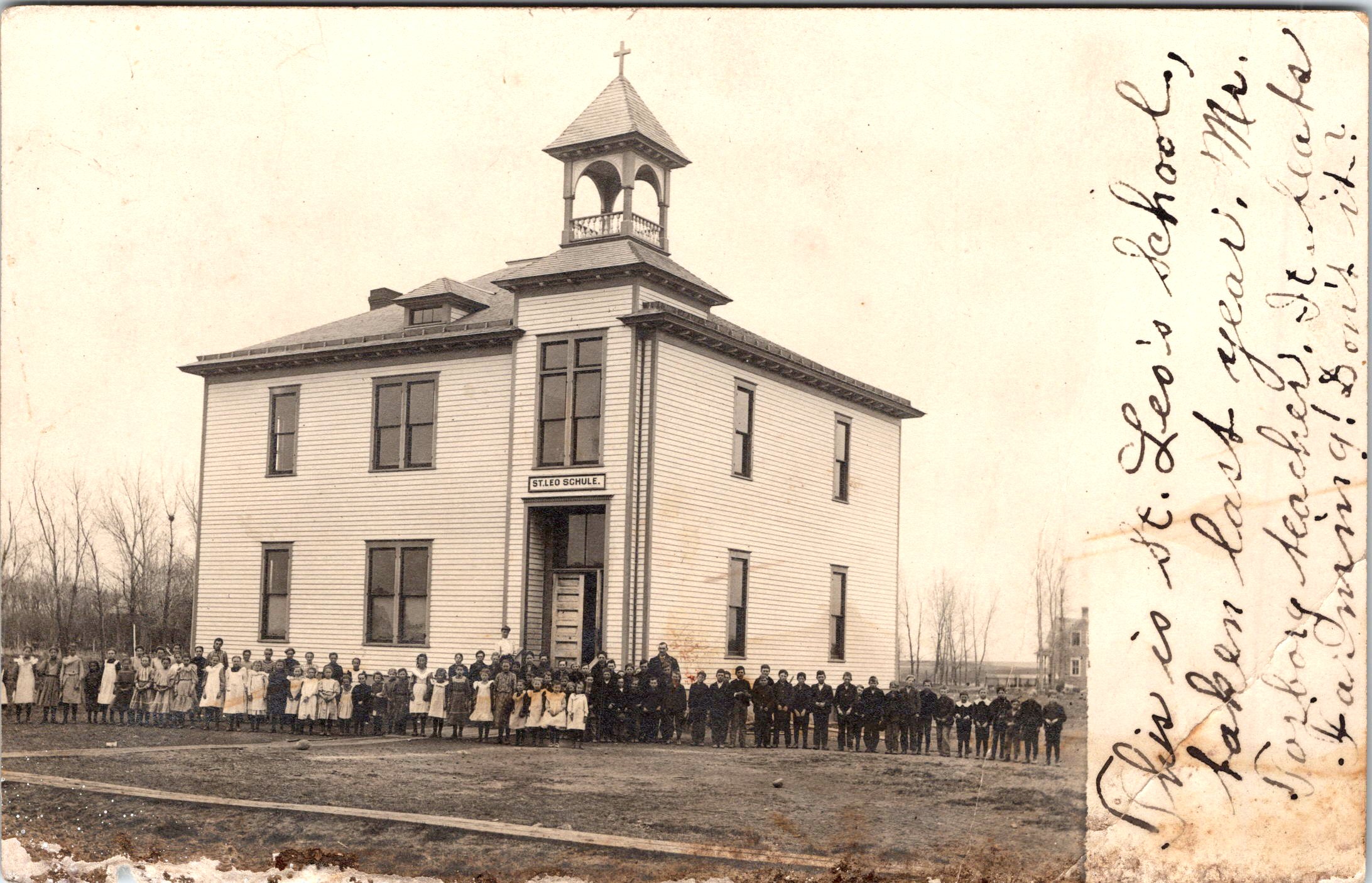
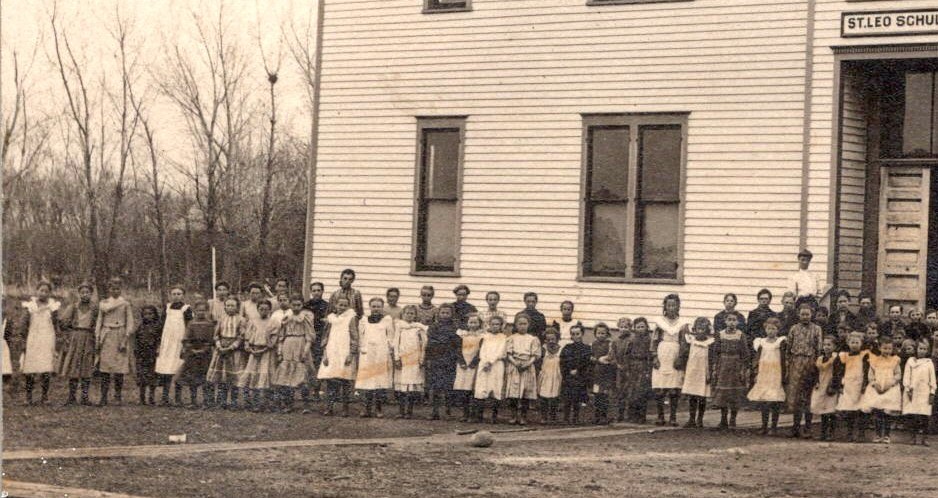
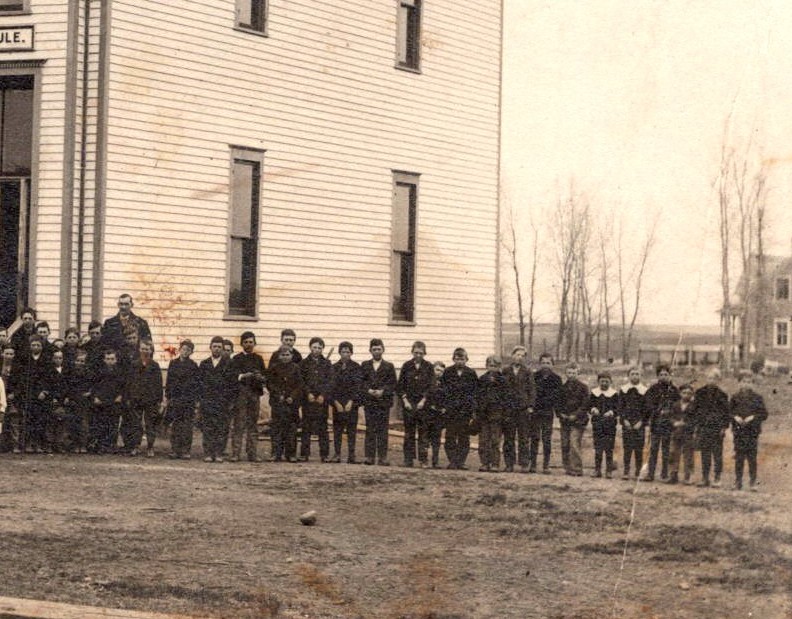
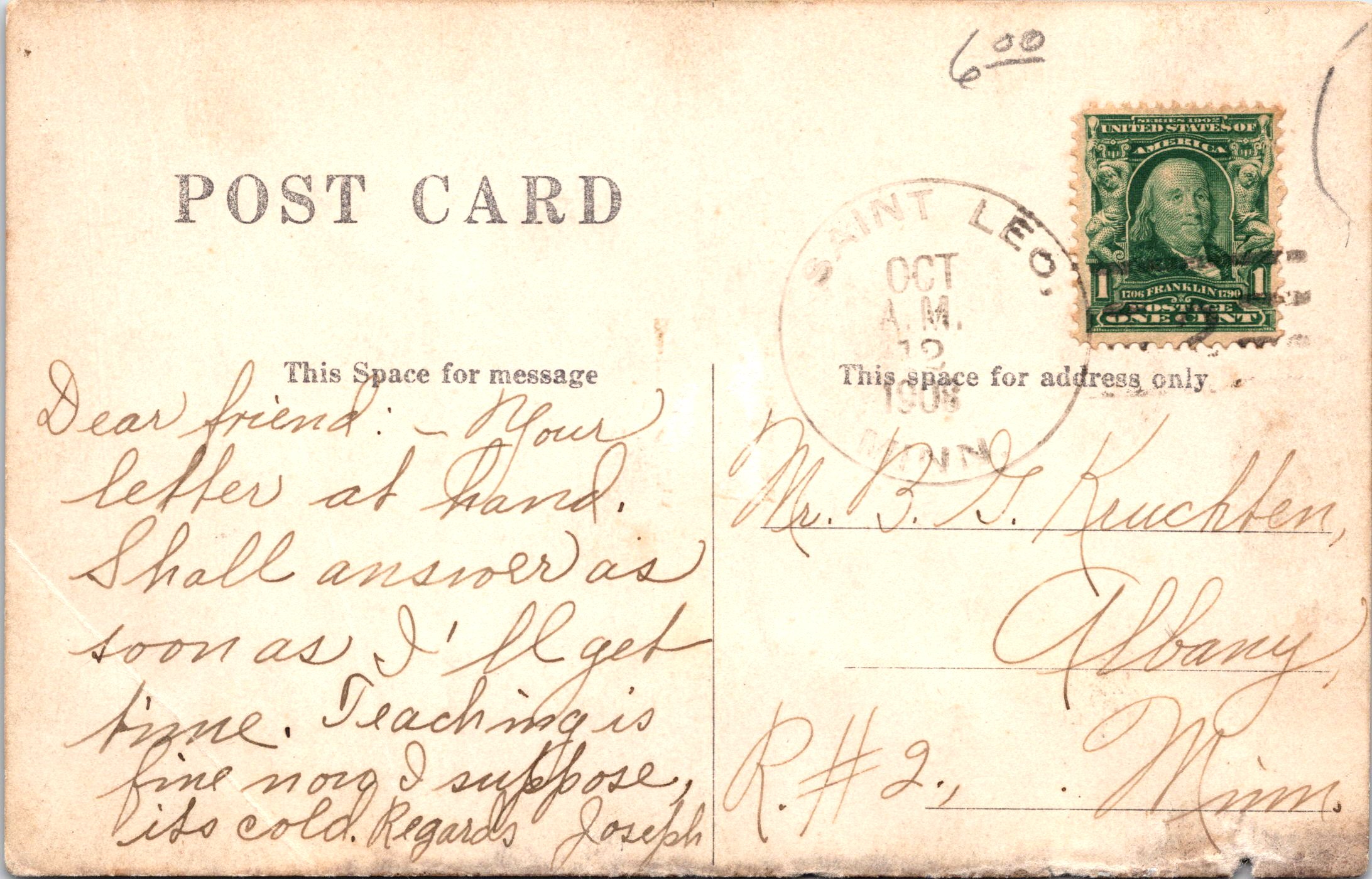
This real photo postcard captures a moment in time outside St. Leo’s School, a two-story wooden schoolhouse with a central bell tower topped by a cross. The sign above the doorway clearly reads “ST. LEO SCHULE,” suggesting a German influence in the local community. The school stands in what appears to be a rural area, with a few trees and a distant building visible in the background. In front of the school, a large group of schoolchildren—boys and girls of various ages—stand in an orderly line. The girls are dressed in long skirts or dresses, many wearing aprons over them, while the boys are attired in dark suits, jackets, and trousers, appearing more formal. A single teacher, possibly Joseph, who wrote the message on the card, stands among them, dressed in a longer coat. The handwritten inscription on the front of the postcard identifies the scene:“This is St. Leo’s School, taken last year. My school, St. Leo’s, So. Min.” On the back, a brief note is addressed to Mr. B. S. Kuchen in Albany, Minnesota, and is signed Joseph. He mentions receiving a letter and promises to respond soon, adding: “Teaching is fine now I suppose. It’s cold. Regards, Joseph.” The postmark is from Saint Leo, Minnesota, dated October 12, 1908, and features a one-cent Benjamin Franklin stamp. This postcard is a wonderful historical artifact, offering a glimpse into early 20th-century rural education in Minnesota. The presence of a German-language school sign and the formal attire of the children suggest a tight-knit immigrant community. (SOLD)










 THE CABINET CARD GALLERY