JAPANESE OIRAN COURTESAN : BEAUTIFUL GEISHA : FROM US NAVAL OFFICER : RPPC

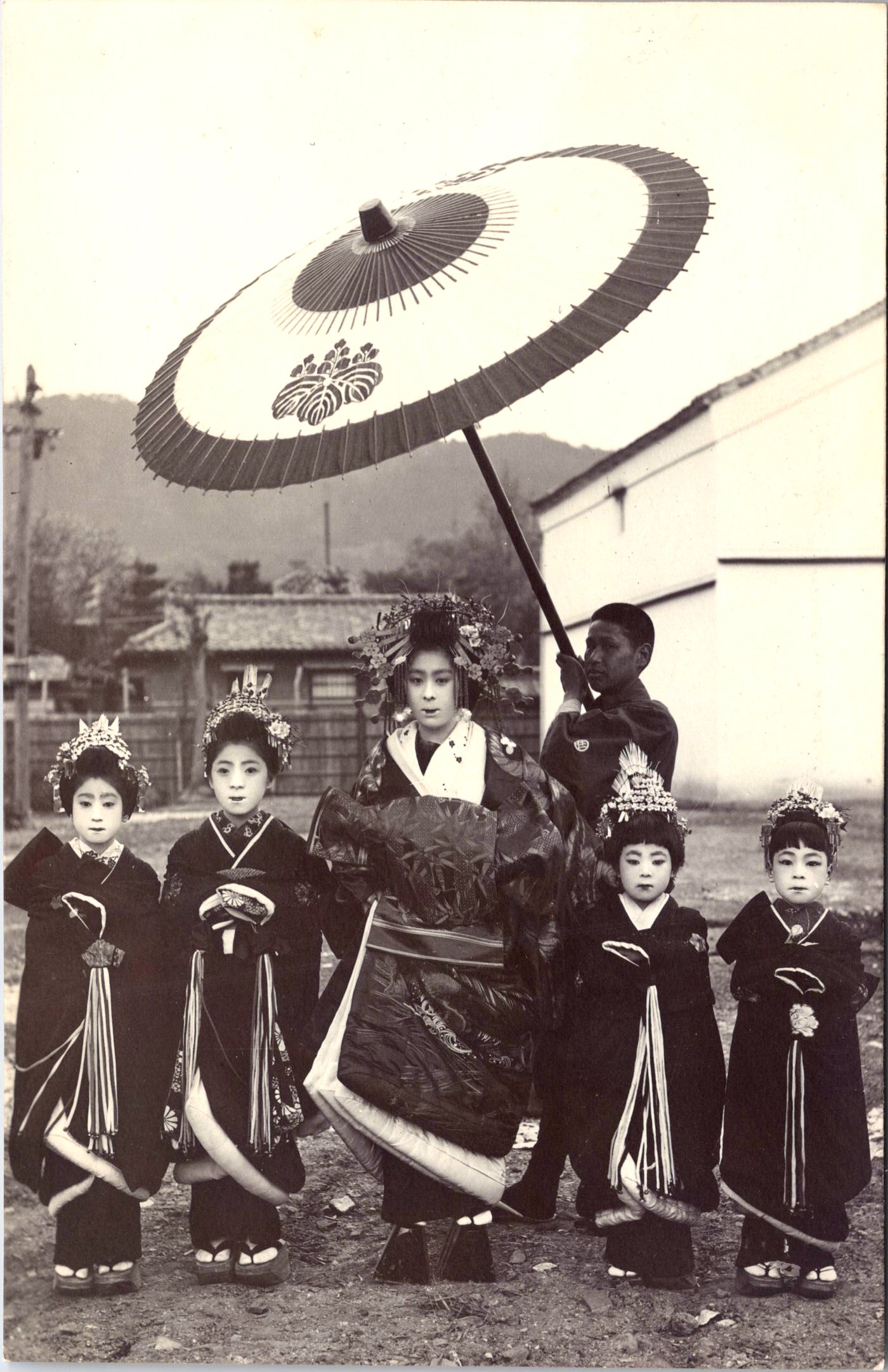
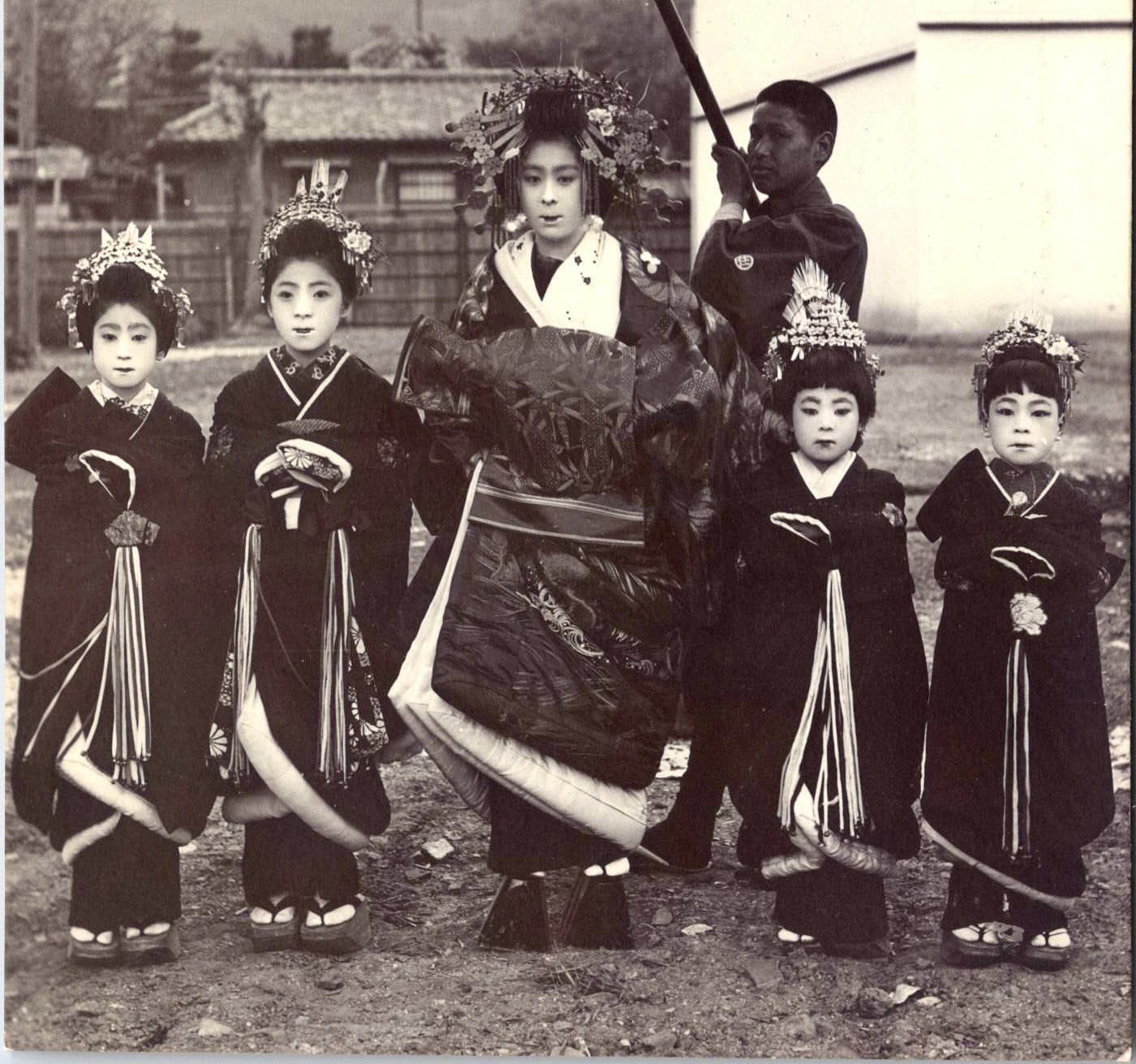
This vintage real photo postcard features a beautiful Oiran Courtesan accompanied by her young assistants (kamaro). What is an Oiran? An Oiran is a high class, beautiful and esteemed prostitute in Tokyo. Her assistants are often apprentices; in other words, future Oirans. How are Oirans different from Geishas you may ask. Geishas are highly trained entertainers. They entertained via song, dance, or playing a musical instrument. Geishas were not necessarily prostitutes, though some were. This postcard comes from a collection that belonged to a US Navy officer. He likely acquired the card while in a Japanese port during his tour of duty. This postcard likely was issued in around 1908. SOLD

Published in: on September 22, 2025 at 12:00 pm  Leave a Comment  
Tags: , , , ,

BEAUTIFUL GEISHA : JAPAN : RPPC

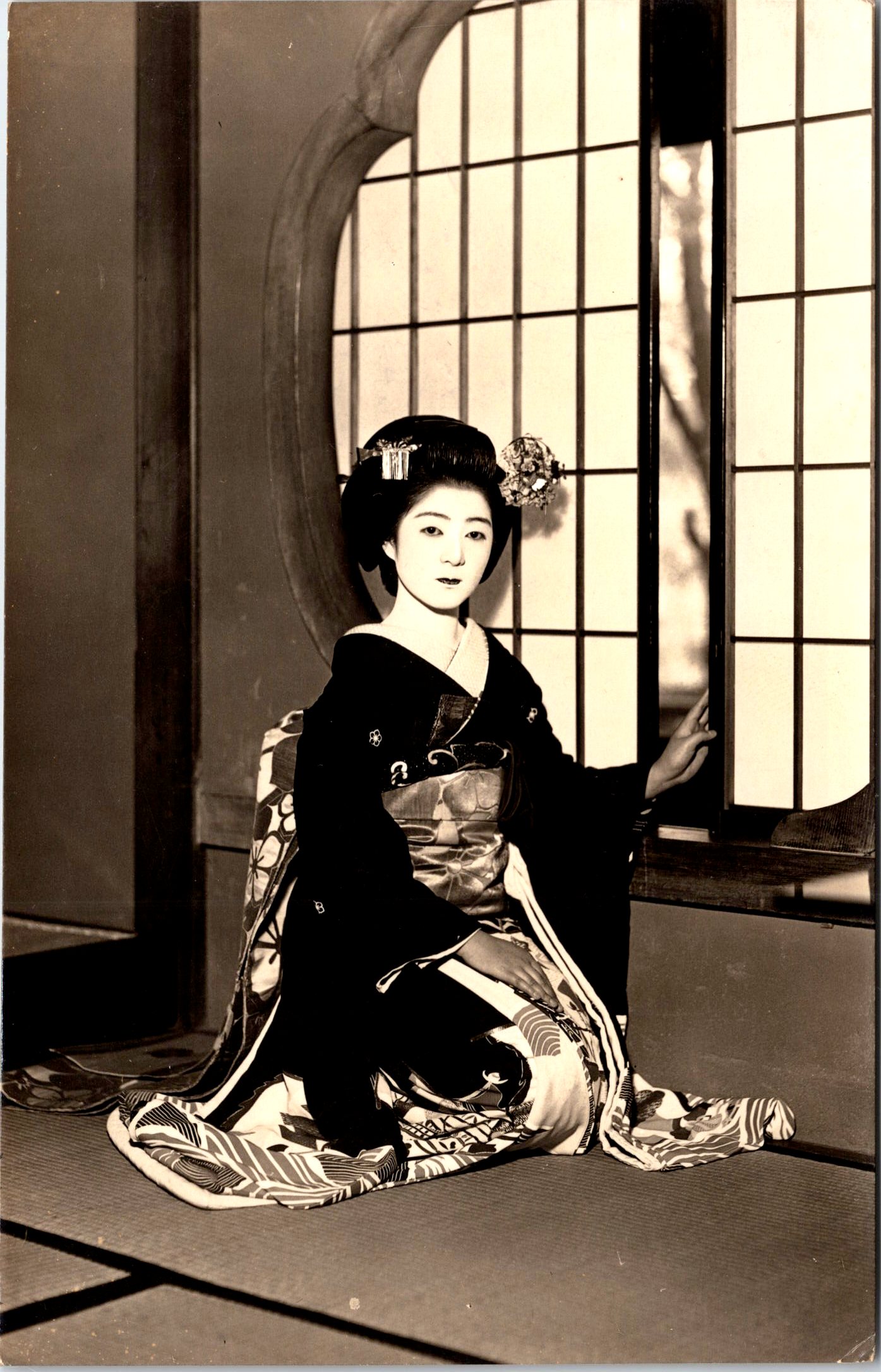
This vintage real photo postcard features a beautiful geisha. Geishas entertained via song, dance, or playing a musical instrument. Geishas were not necessarily prostitutes, though some were. This postcard is printed on Hinode photo paper.  SOLD

Published in: on June 8, 2025 at 12:00 pm  Leave a Comment  
Tags: ,

PRETTY GEISHA GIRL : WEARING KIMONO : COY EXPRESSION : RPPC

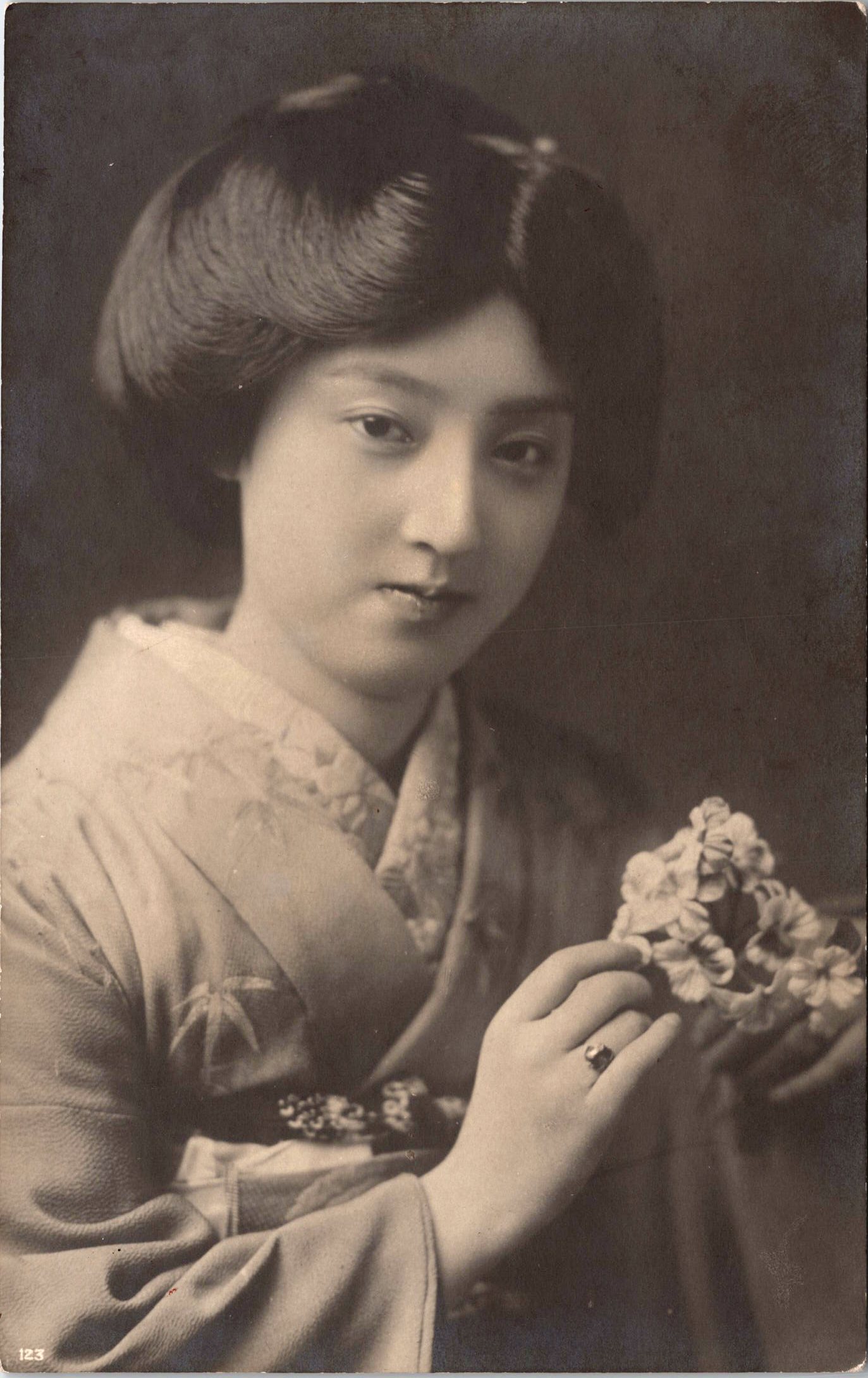
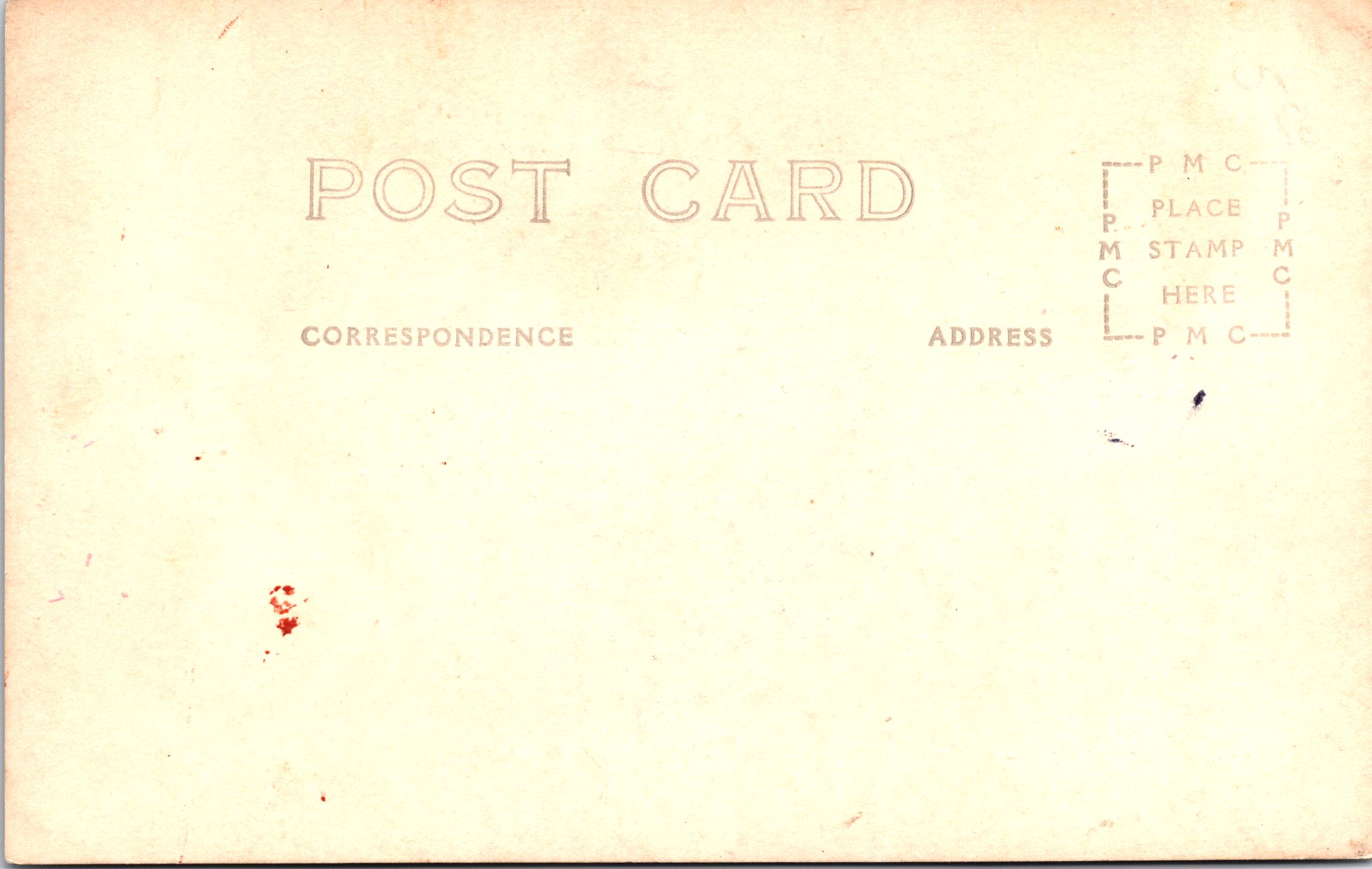
This vintage real photo postcard features a beautiful Geisha Girl dressed in a kimono and clutching flowers. She is wearing a coy expression. This postcard was published by PMC. The PMC stamp box on the reverse of this postcard indicates that it dates back to sometime between 1920 and 1935.  SOLD

Published in: on December 28, 2024 at 12:00 pm  Leave a Comment  
Tags: , , ,

PRETTY JAPANESE WOMAN : KIMONO : AOMORI, JAPAN : CARTE DE VISITE

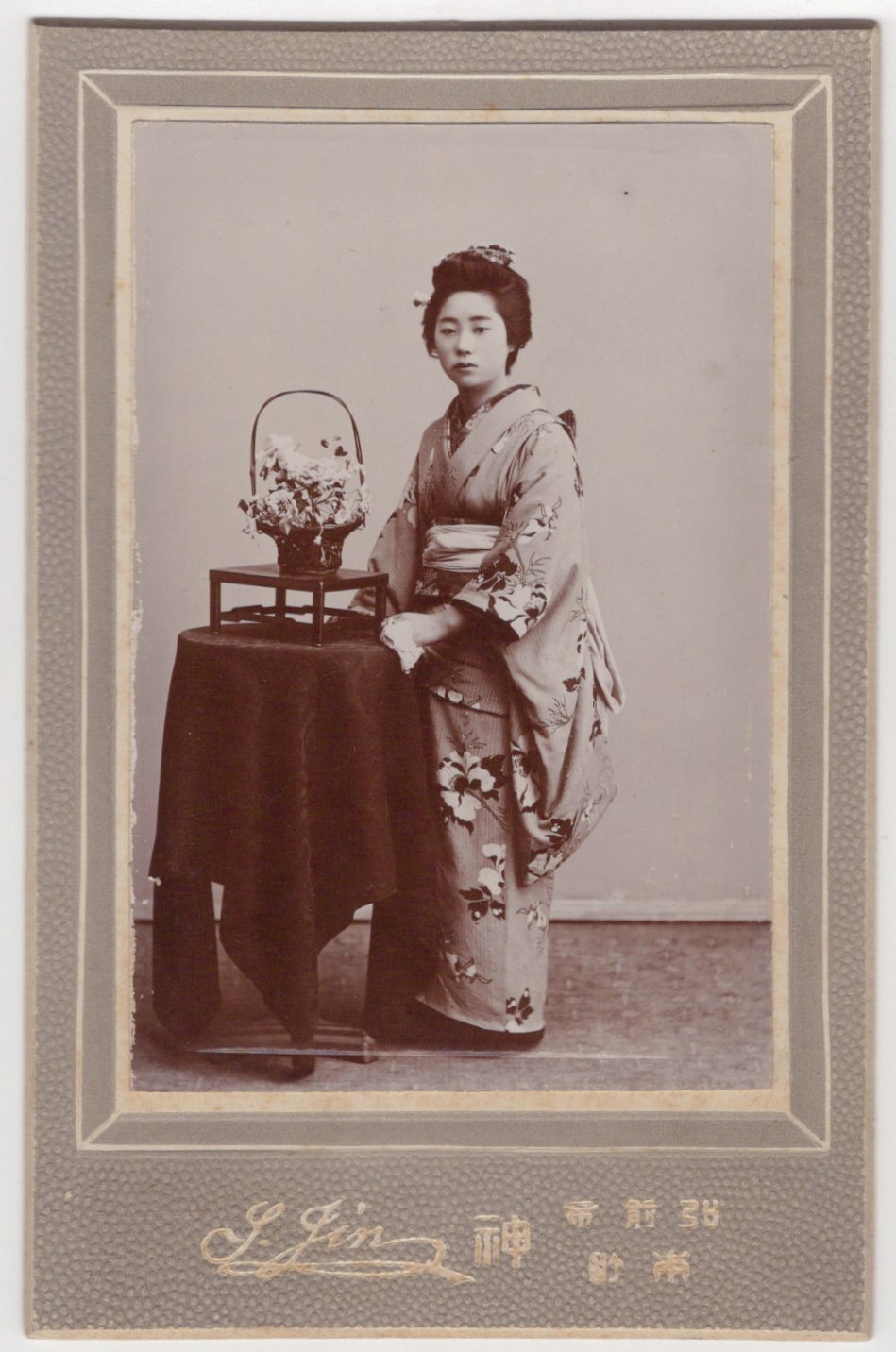
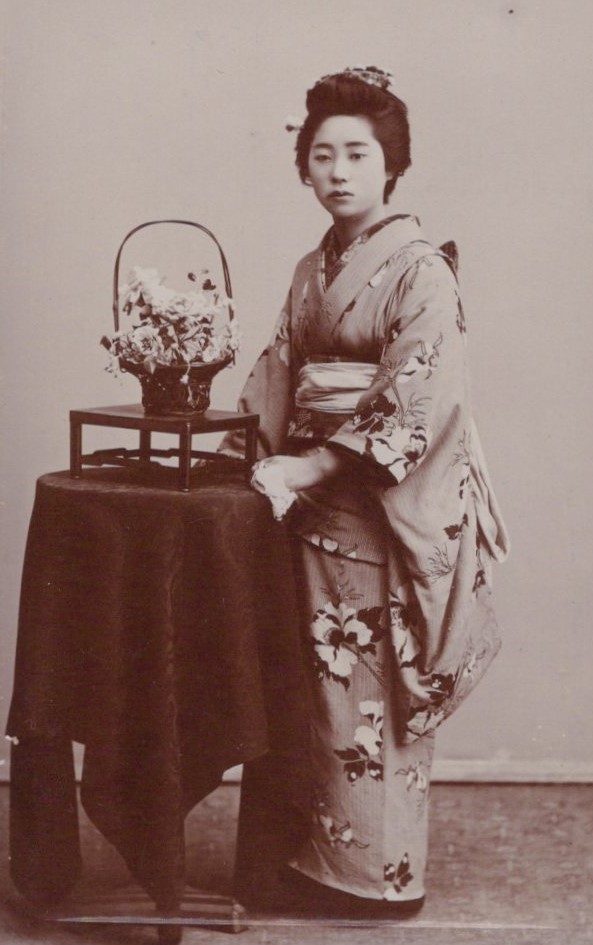
This vintage photograph features a young pretty Japanese woman posing for her portrait at the Jin studio in Aomori, Japan. She is standing next to a table that is topped by a basket of flowers on a stand. The woman is wearing a kimono and may be a Geisha. Aomori is the capital city of Aomori Prefecture in the Tohoku region of Japan. This photograph measures about 3.00 x 4.50 inches. (SOLD)

Published in: on September 15, 2024 at 8:05 am  Leave a Comment  
Tags: , , , ,

JAPAN: SCHOOL PRINCIPAL : 10th ANNIVERSARY OF HIS HIRING PHOTO : KATO : 1910

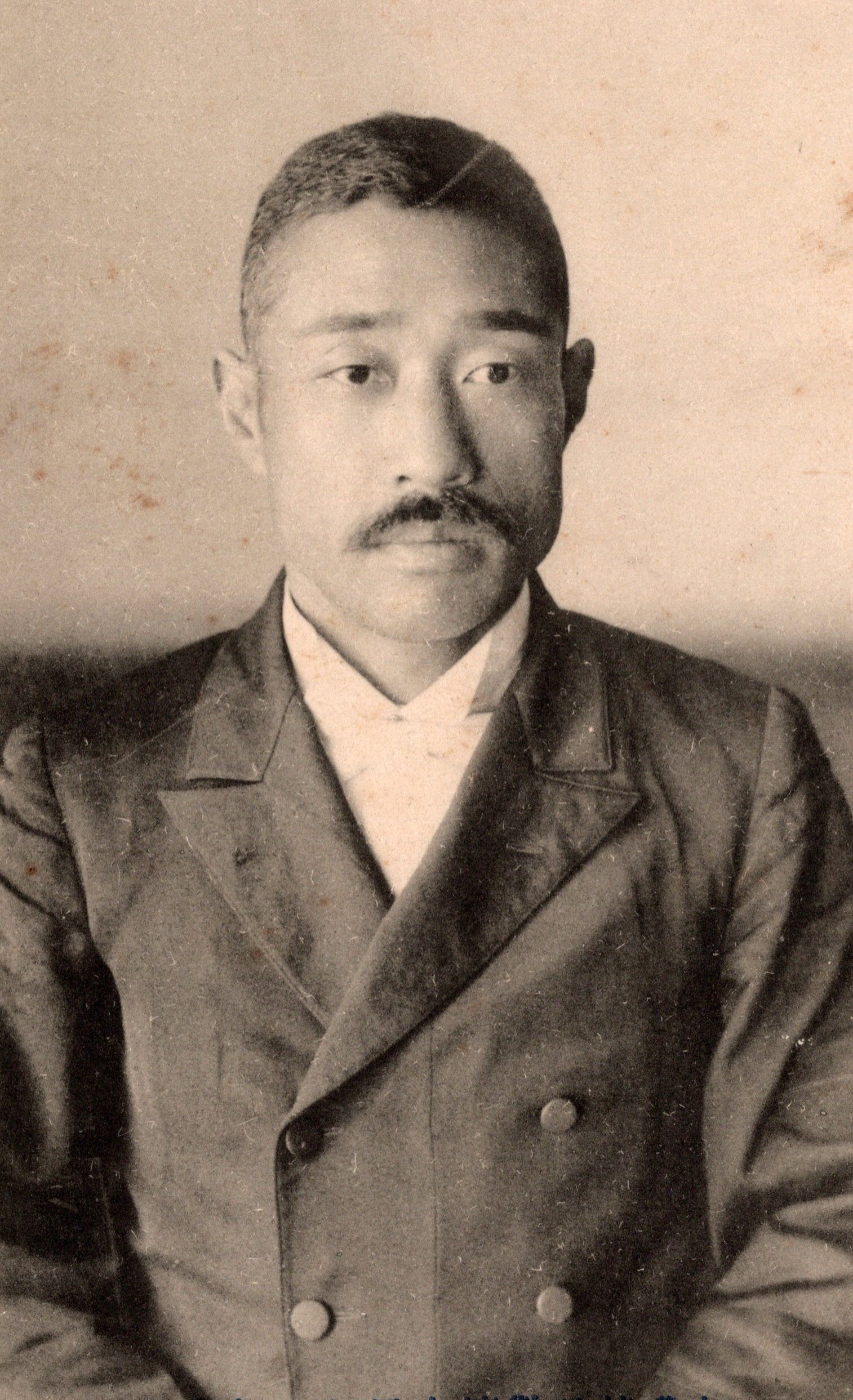
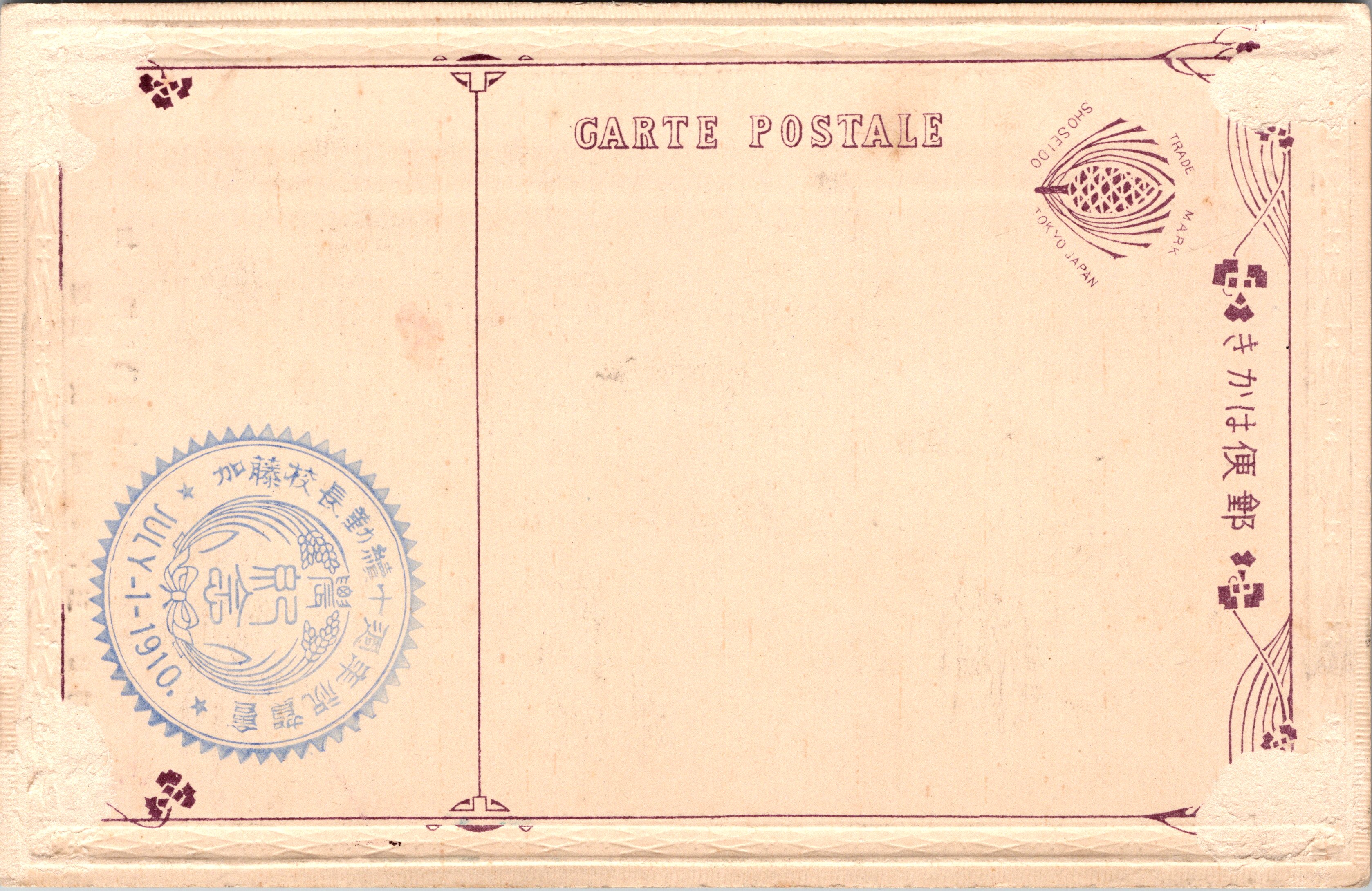
This vintage real photo postcard honors a Japanese school principal celebrating his tenth anniversary of employment at an Agricultural school in Kato, Japan. The city of Kato is in the Chiba Prefecture. A printed stamp on the reverse of the card indicates that it was published in 1910.  SOLD

Published in: on August 23, 2024 at 12:00 pm  Leave a Comment  
Tags: ,

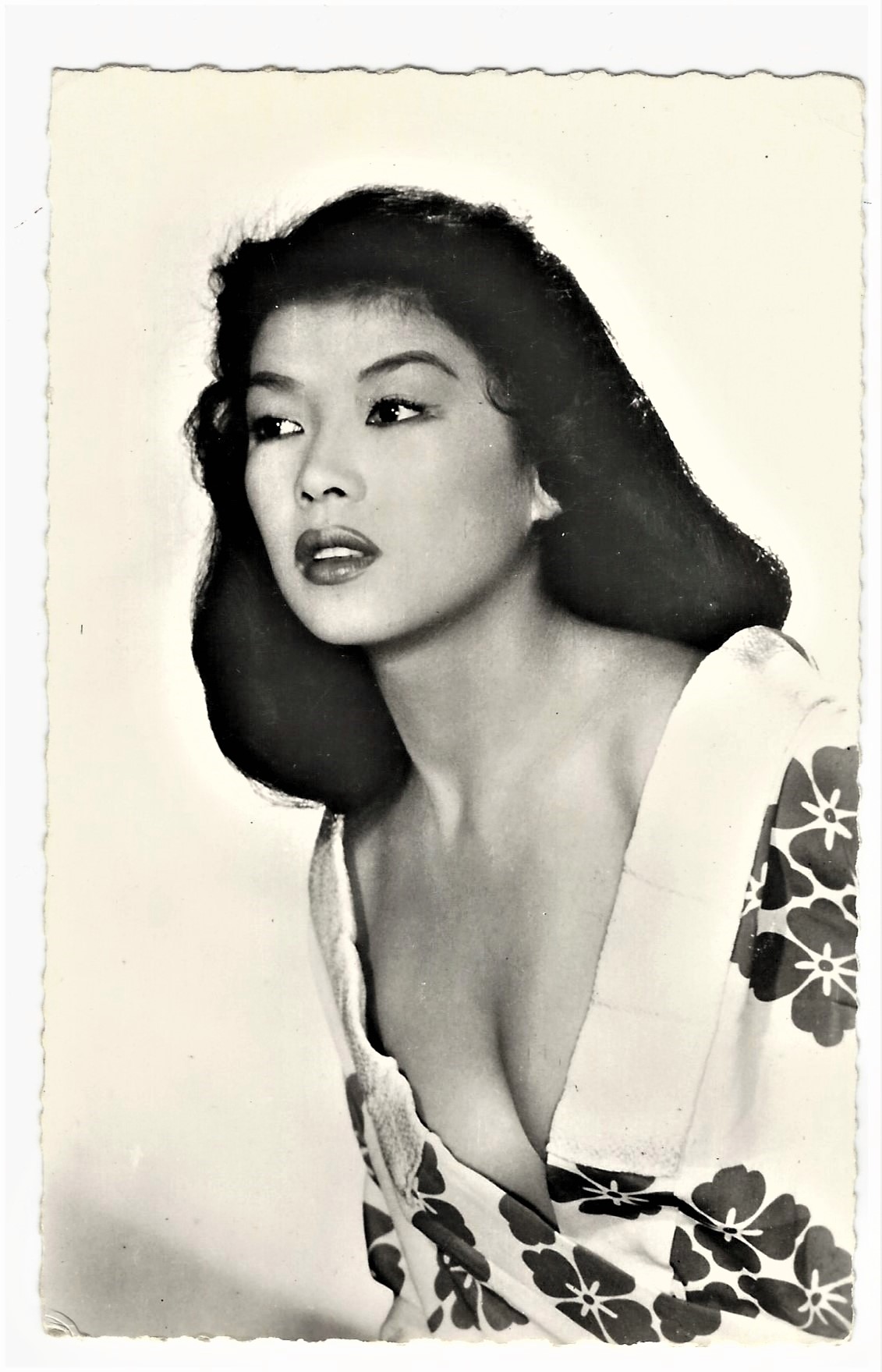
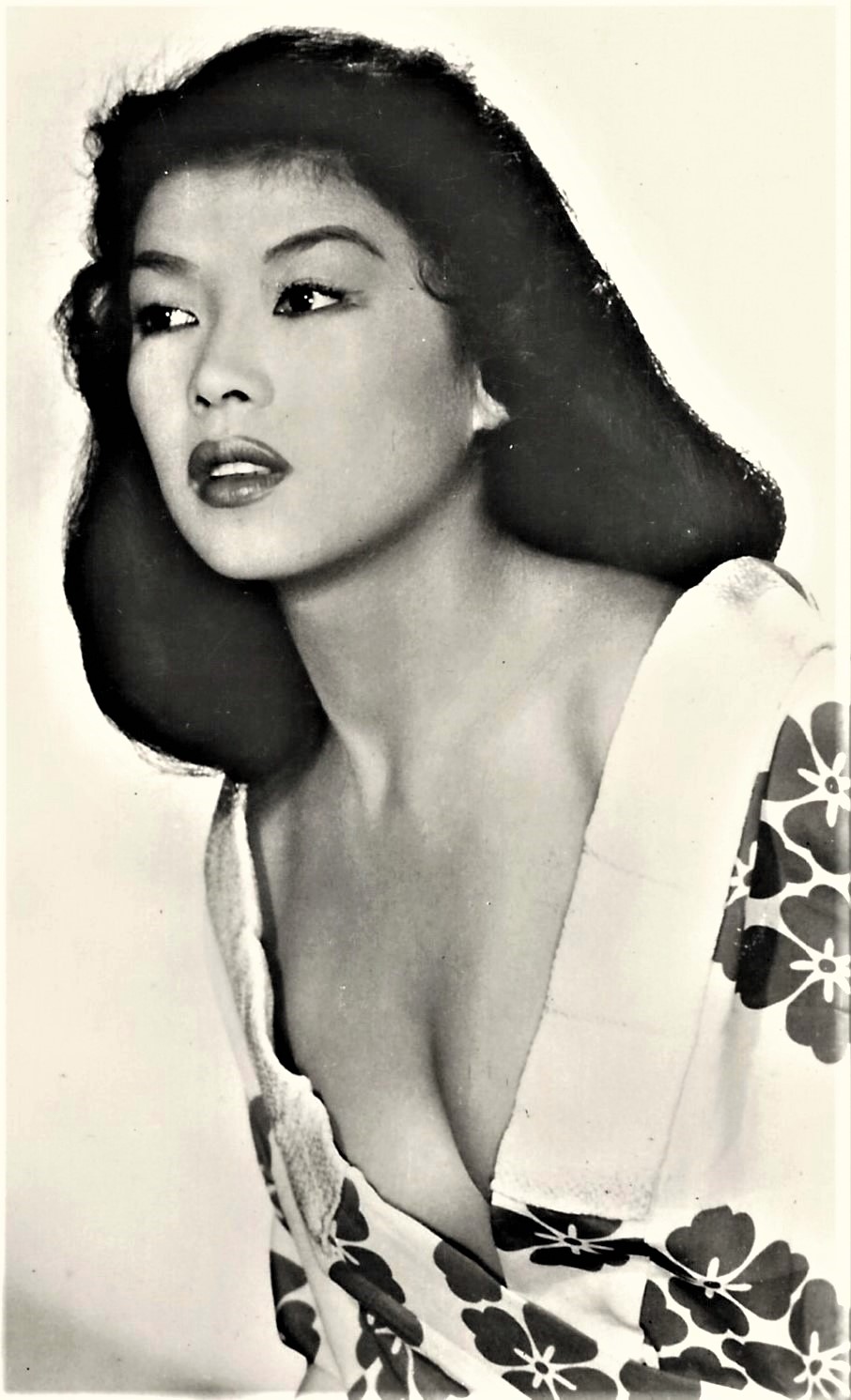
YOKO TANI : SUCCESSFUL JAPANESE ACTRESS IN EUROPE AND DELIVERER OF CHEESECAKE

POSTCARD 1

POSTCARD 1 (CLOSE-UP)
POSTCARD 2  (SOLD)

POSTCARD 2 (CLOSE-UP)  (SOLD)

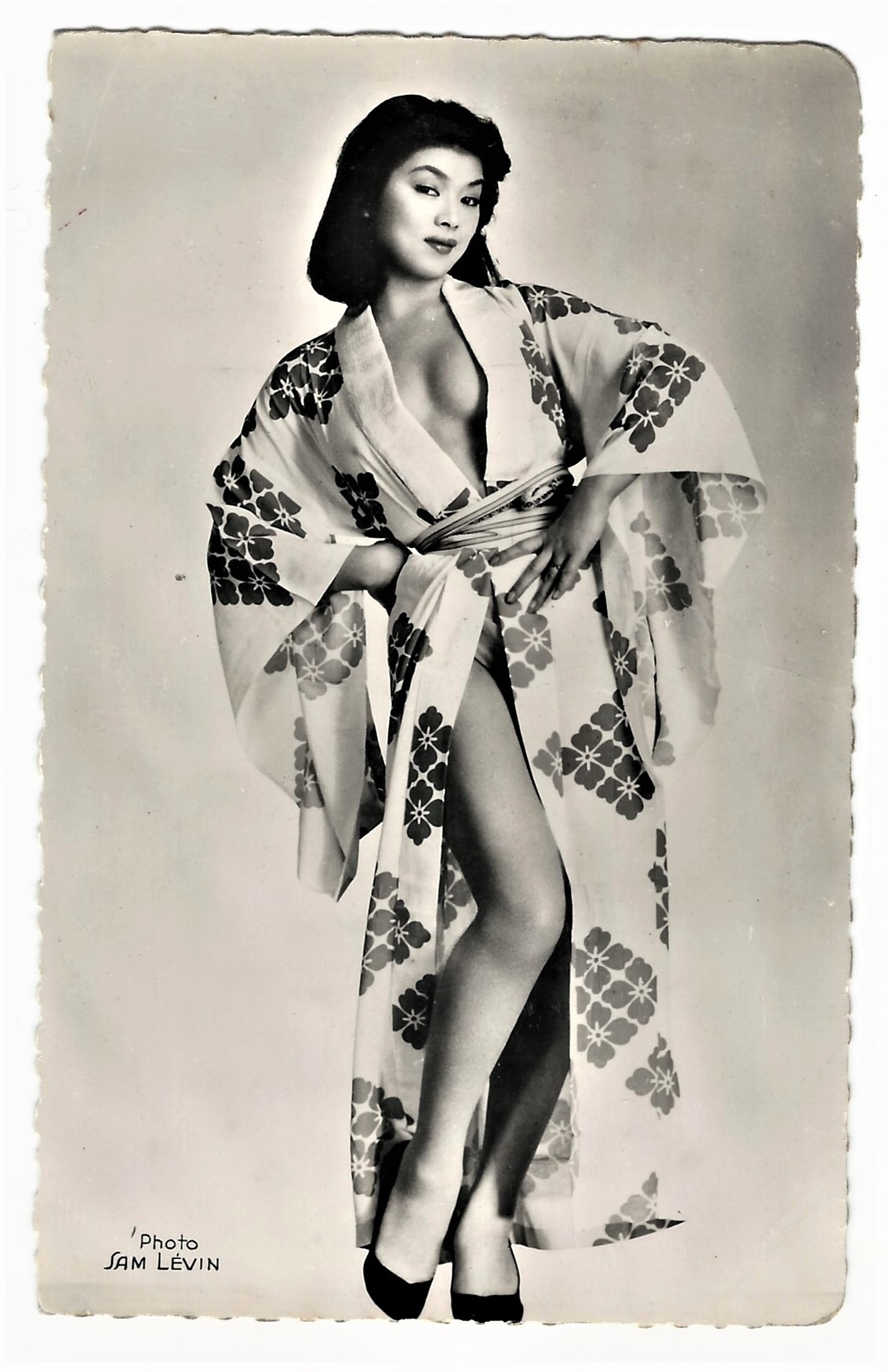
Yoko Tani (1928-1999) was a Japanese actress and nightclub entertainer. Some writers have described her as “Eurasian” or “half French”. These half white labels were thought necessary because there was a belief she would be accepted more as an exotic than as a Japanese woman by European post World War II audiences. The reality is that both her parents were Japanese but worked for the Japanese embassy in Paris. She was conceived on a boat to France and born in Paris. She was given the name “Yoko” which means “ocean child”. She and her family returned to Japan in 1930 and she returned to France in 1950 after finishing her schooling in Japan. She went back to France because she was awarded a scholarship to study aesthetics at the University of Paris. She stayed in school for a couple of years but it did not hold her interest. She developed a strong attraction to the world of cabarets, night clubs and music halls. She entered into “show business” and became known as an “exotic oriental beauty” with her provocative sexy “geisha” dances. These dances often ended with her slipping out of her kimono. She also appeared in “cheesecake photographs”. Discovered by Marcel Carne, a French film director, she entered into his social world of filmdom. She met and later married Roland Lesaffre, the French actor. It would be the first of two marriages. She soon began acting in films. Until the mid 1950’s her acting roles were confined to stereotyped Asians in French films. In 1956 she appeared in French films in more substantial roles. While in Japan, she appeared in a film with a “women in prison” theme. Between 1957 and 1962, Tani appeared in international films. Her first English language film was Graham Greene’s “The Quiet American”. She had a small role playing a French speaking Vietnamese nightclub hostess. In regard to English language films, Tani’s first great success was in “The Wind Cannot Read” (1958). She had a leading actress role and her success helped land her additional English language roles (Great Britain and the United States). Additional Hollywood parts included My Geisha (1962) and “Who’s Been Sleeping In My Bed” (1963). In about 1963, she became more of a European based actress. She worked on mainly low budget Italian films and in femme fatale roles in British television. Tani maintained her love for cabaret and nightclubs throughout her career. The producer of “The Wind Cannot Read” wrote that when looking to recruit Tani for the picture, she found her in a “girlie club”, basically, a strip tease joint in Paris. It was reported that in the 1960’s, she worked in the Le Crazy Horse de Paris nightclub. In 1997, at nearly 50 years of age, she was in Brazil to play a small role in a sexploitation film. Also in 1977 she starred in a transvestite show in downtown Sao Paulo. The IMDb credits Tani with 53 film acting credits between 1949 and 2018.

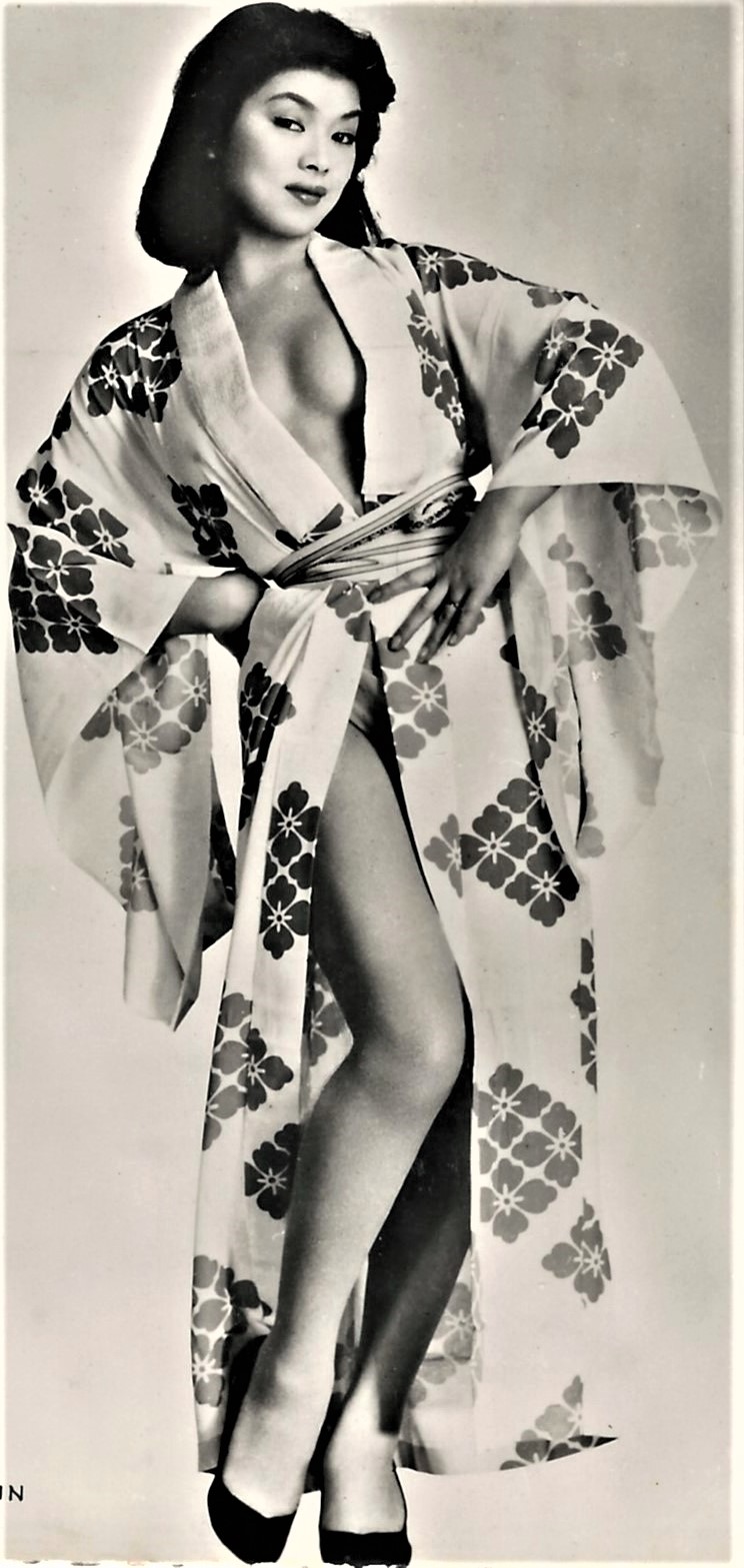
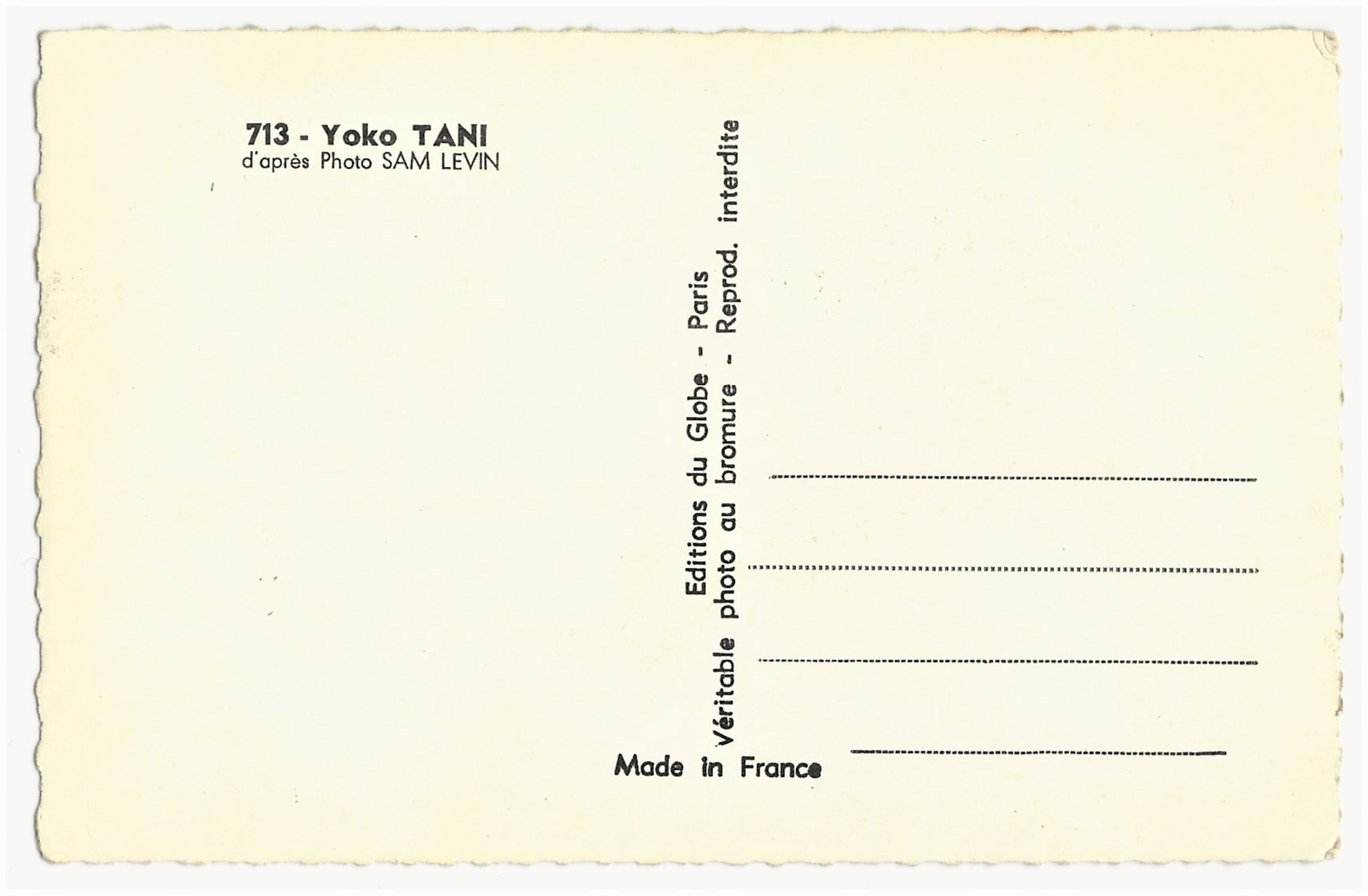
  Postcard 1 showcases the beauty of Yoko Tani. This photograph is certainly a “cheesecake” image. Tani seems to be falling out of her robe (kimono). Let there be no doubt, sex sells. This was true in the 1950’s and 1960’s as well as today. Unfortunately, women were, and are, seen as objects. This vintage real photo postcard was made in France and published by the “Globe”. The card was part of a series (no.713). The photograph was taken by famed celebrity photographer Sam Levin. Levin was popular both in Europe as well as the United States. This photo postcard is in very good condition (see scans).

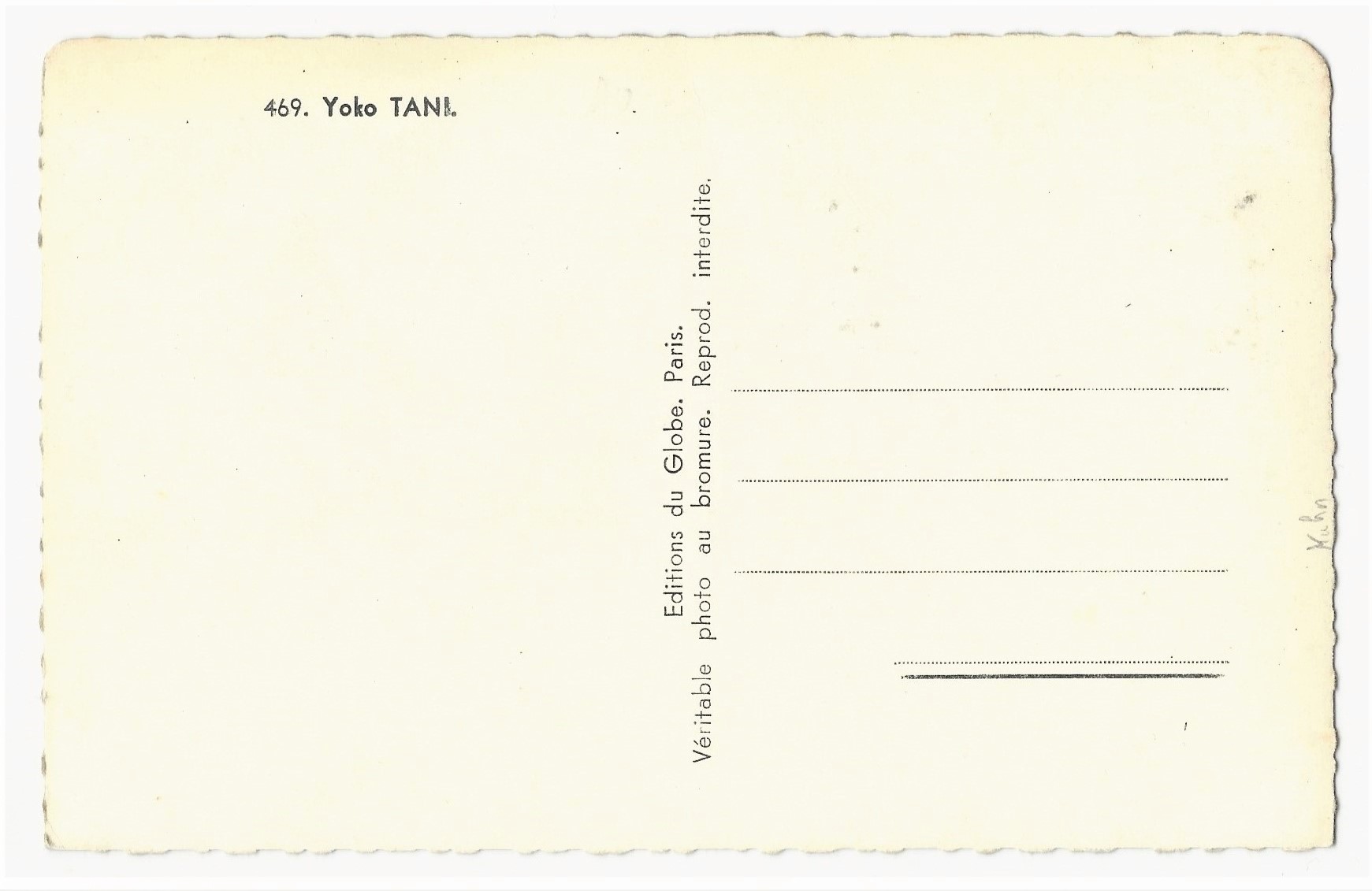
Postcard 2 is a risque photograph of Miss Tani. She is wearing the same robe as the one she wears in Postcard 1. It is strategically ill fitting. The postcard is made in Paris and published by the globe as part of a series no.469). The photographer is Sam Levin.  SOLD

Buy this Vintage Real Photo Postcard (includes shipping within the US) #3116

To purchase this item, click on the Pay with PayPal button below

$14.72

Buy this Vintage Real Photo Postcard (includes International shipping outside the US) #3116

To purchase this item, click on the Pay with PayPal button below
$23.22

POSTCARD 1POSTCARD 2

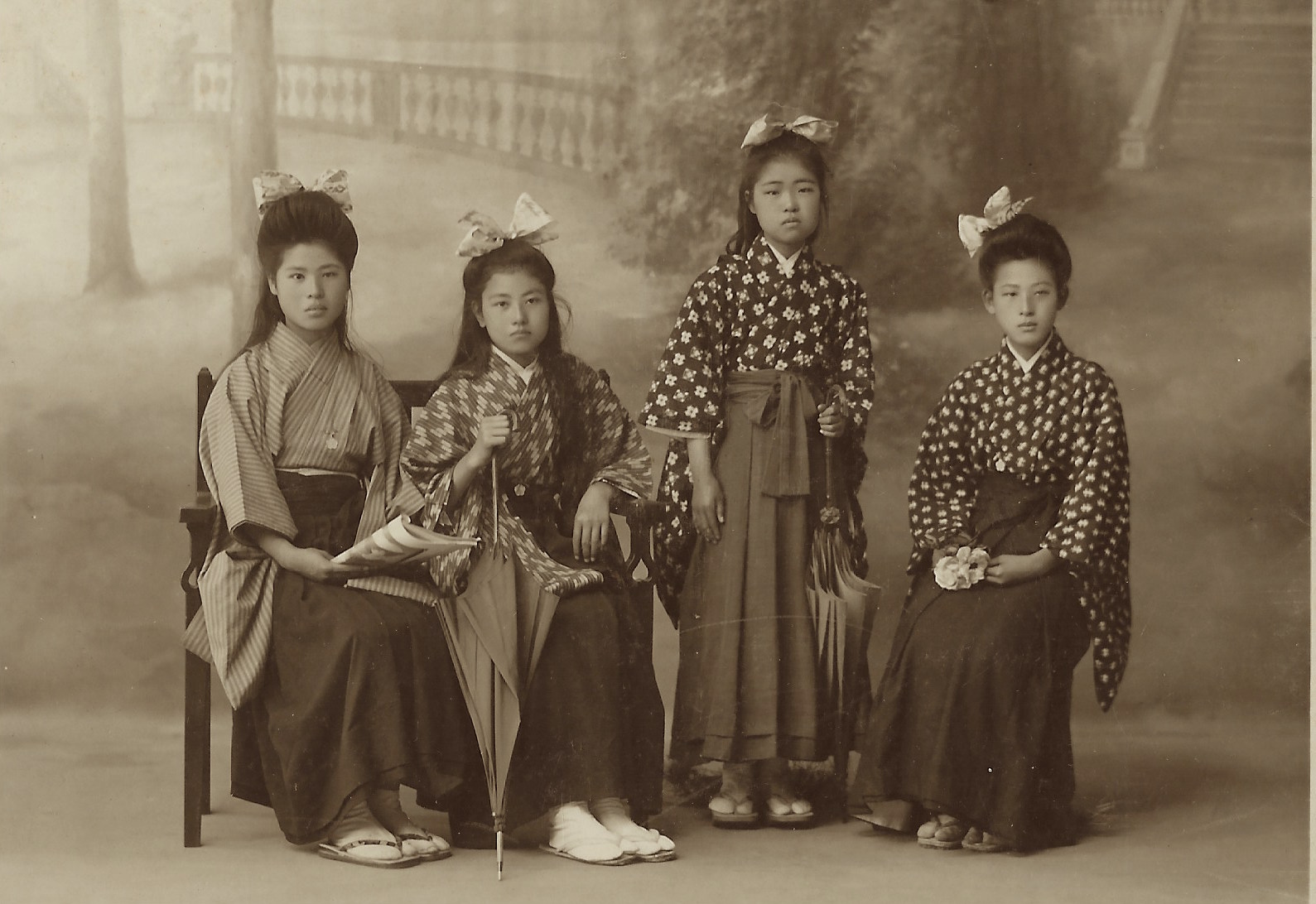
PORTRAIT OF FOUR LOVELY AND BEAUTIFULLY DRESSED JAPANESE STUDENTS IN FUKUI, JAPAN (VINTAGE PHOTOGRAPH)

japanese girls

japanese girls 1

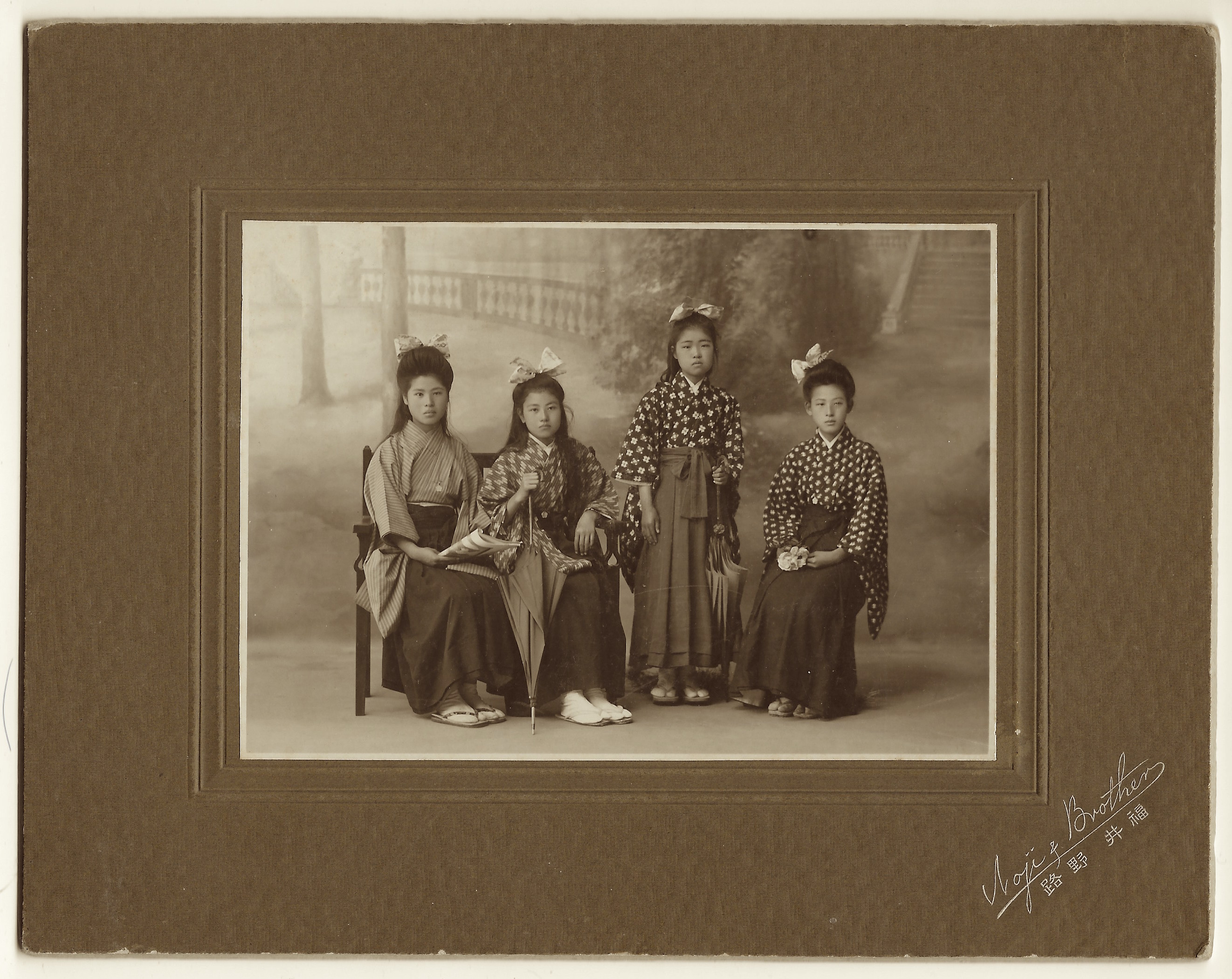
This vintage photograph features four lovely and beautifully dressed Japanese girls.Two of the girls are holding parasols and all four are wearing hair bows. The previous owner of the card shared some information about this image. I was told that the girls were students and dressed in Hakama style. Hakama are a type of traditional Japanese clothing. The Imperial Chinese court wore trousers during the Sui and Tang dynasties and the Japanese adopted this style in the sixth century. Hakama are tied to the waist and fall down to near the ankles. They are worn over a kimono. According to the previous owner this wardrobe was popular among students during the Meiji period (1868-1912) and Taisho period (1912-1926). This photograph was taken during either the latter Meiji era or sometime during the Taisho era. The photographer of this wonderful image is S. Noji and his studio was located in Fukui, Japan. The city is located on the coast of the Sea of Japan. This photograph measures about 8 1/2 ” x 6 1/2″.   SOLD

Published in: on August 10, 2023 at 12:00 pm  Comments (2)  
Tags: , , , , , , ,

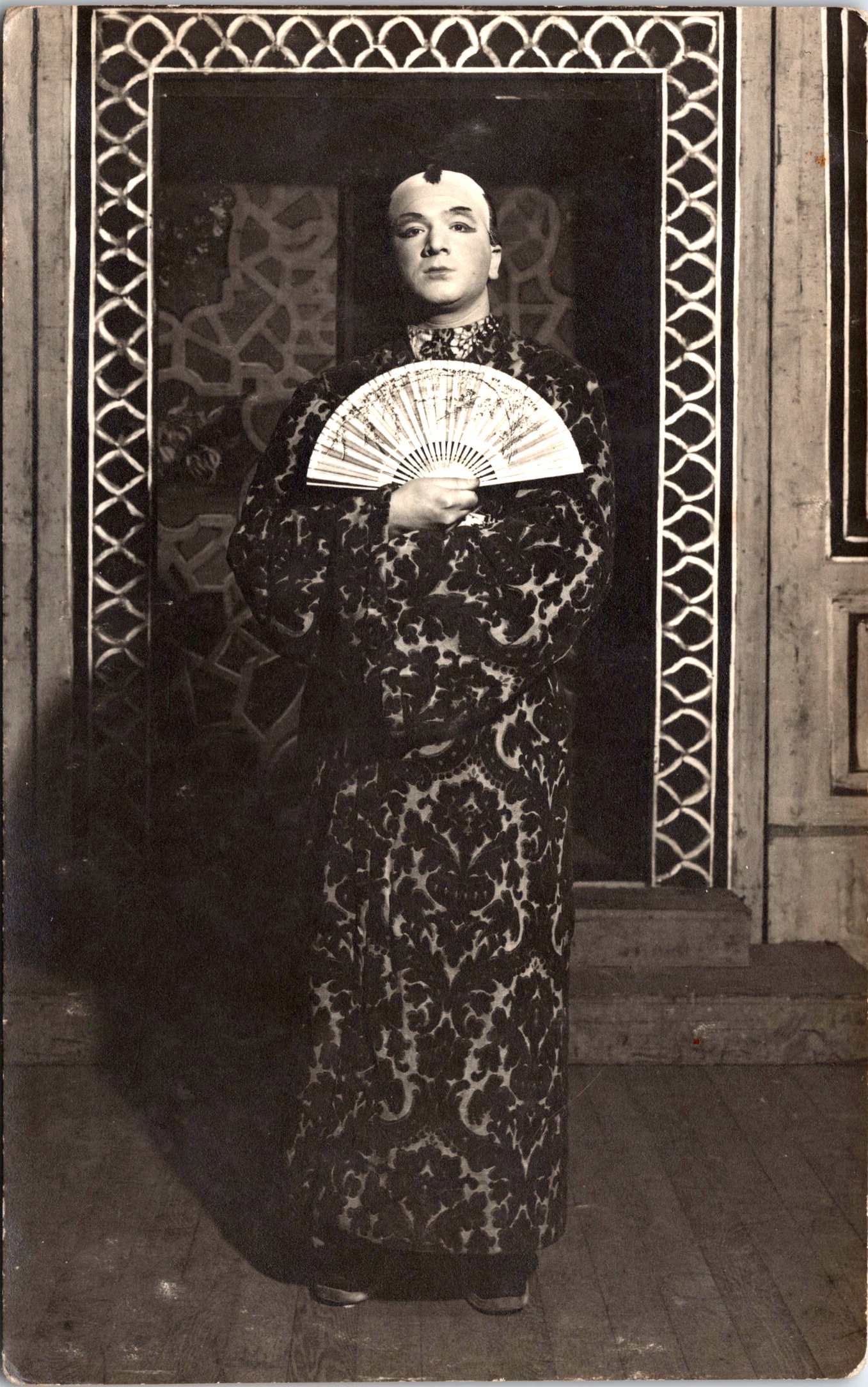
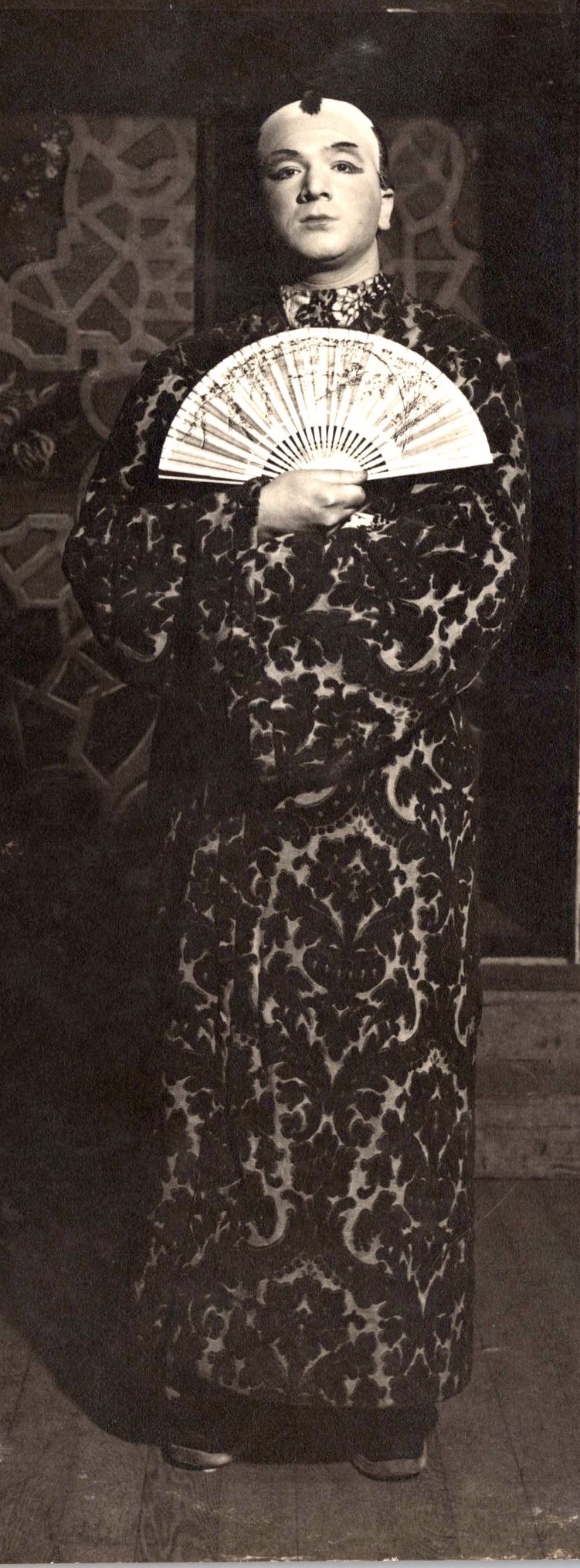
MALE JAPANESE KABUKI PERFORMER : IN COSTUME : HOLDING A FAN : RPPC

This vintage real photo postcard features a male kabuki performer. He is dressed in traditional costume and holding a fan. Kabuki is a classical type of Japanese dance/song/drama. Kabuki theater includes very stylized performances, glamorous costumes, and intricate make-up. (SOLD)

Published in: on March 1, 2023 at 4:00 pm  Comments (4)  
Tags: ,

PORTRAIT OF A SAILOR FROM THE U.S.S. BOSTON IN NAGASAKI, JAPAN (1896)

This cabinet card portrait features a uniformed sailor from the navy ship, the U.S.S. Boston. The photograph was taken by Kiosheikwan of Nagasaki, Japan. The sailor probably had the photograph taken in order to send it to family or a girlfriend back home in the United States. A web site dedicated to the U.S.S. Boston and the men who served on her, was very helpful in providing details about the ship and the dates it served in the Pacific. The site reveals that there has been seven ships named  “Boston” that served America since 1776. The ship that the sailor in the photograph served on was a Protected Cruiser that sailed between 1887 and 1940. She was the U.S. Navy’s second steel ship and was propelled by sails and/or steam engine. The ship’s crew consisted of about 284 men. Initially. the ship patrolled the waters of Latin America and Haiti, but in 1892, she began to serve in the Pacific. In 1896, she was attached to the Asiatic Station at Yokohama, Japan. When the Spanish American War occurred in 1898,the U.S.S. Boston took part in the Battle of Manila Bay as well as, the capture of Manila. Reviewing the history of the ship, it seems probable that this photograph was taken in 1896 or 1897.  (SOLD)

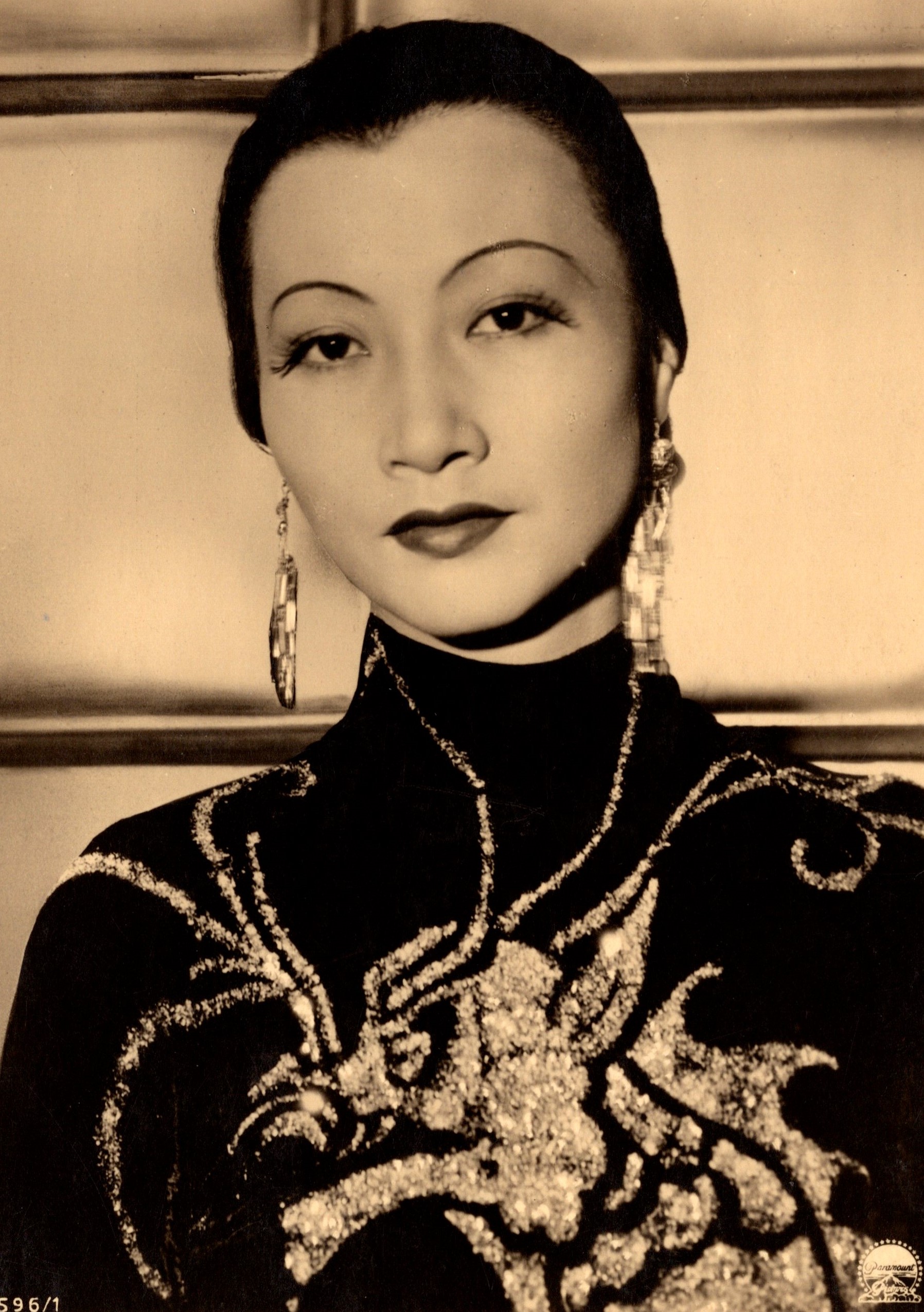
ANNA MAY WONG : FIRST CHINESE AMERICAN MOVIE STAR : FLAPPER : ANTI ASIAN BIAS

This vintage real photo postcard features the first Chinese American movie star, Anna May Wong (1905-1961). She had diverse performing experiences including silent film, sound film, stage, television and radio. Among her honors is that she will be depicted on the reverse of quarters as part of the “American Woman Quarter Series”. She was born in Los Angeles, California. She had to transfer from her public school to a Chinese school due to racial taunting. She began acting in silent films as a teenager. In 1922 she was in one of the first color films and appeared with Douglas Fairbanks in “The Thief of Bagdad” (1924). By 1924, Wong was an international star and a fashion icon. Wong was one of the early flappers. In 1928, Wong grew tired of playing stereotypical roles in Hollywood. She had enough of being the “Dragon Lady” or the “Butterfly Woman”. She began playing starring roles in Europe in some important plays and films. In the early to mid 1930’s, Wong commuted between Europe and the United States to perform in both theater and film. In 1935, Wong was the victim of significant anti-Asian discrimination when she was refused the starring role in Pearl Buck’s “The Good Earth”. MGM used a white actress in yellow face to play the starring role of the Asian character. One of the reasons she was excluded from the part was because she would have had to kiss a Caucasion actor is she took the role. Interracial kisses were prohibited in Hollywood. The next year Wong went to China to film a documentary about Chinese Culture and to visit the village that her family ancestors lived in. During the late 1930’s, Wong played in a number of B movies for Paramount Pictures. These films presented Chinese and Chinese American characters in a positive manner. During World War II she worked hard to aid the Chinese in their conflict with Japan. In the 1950’s she became involved with appearing on television. Wong never married. There were rumors of her being a lesbian and having affairs with director Leni Riefenstahl and actress Marlene Dietrich. In 1936, she was asked by reporters if she had marriage plans. She responded “No. I am wedded to my art”.  The IMDb reports that Wang has 61 credits in her filmography (1920-1961). In 1961, she died of a heart attack. This vintage portrait postcard was published by Ross Verlag as part of a series (No9596/1). The logo for Paramount Pictures can be seen in the lower right hand corner of the image. (SOLD)