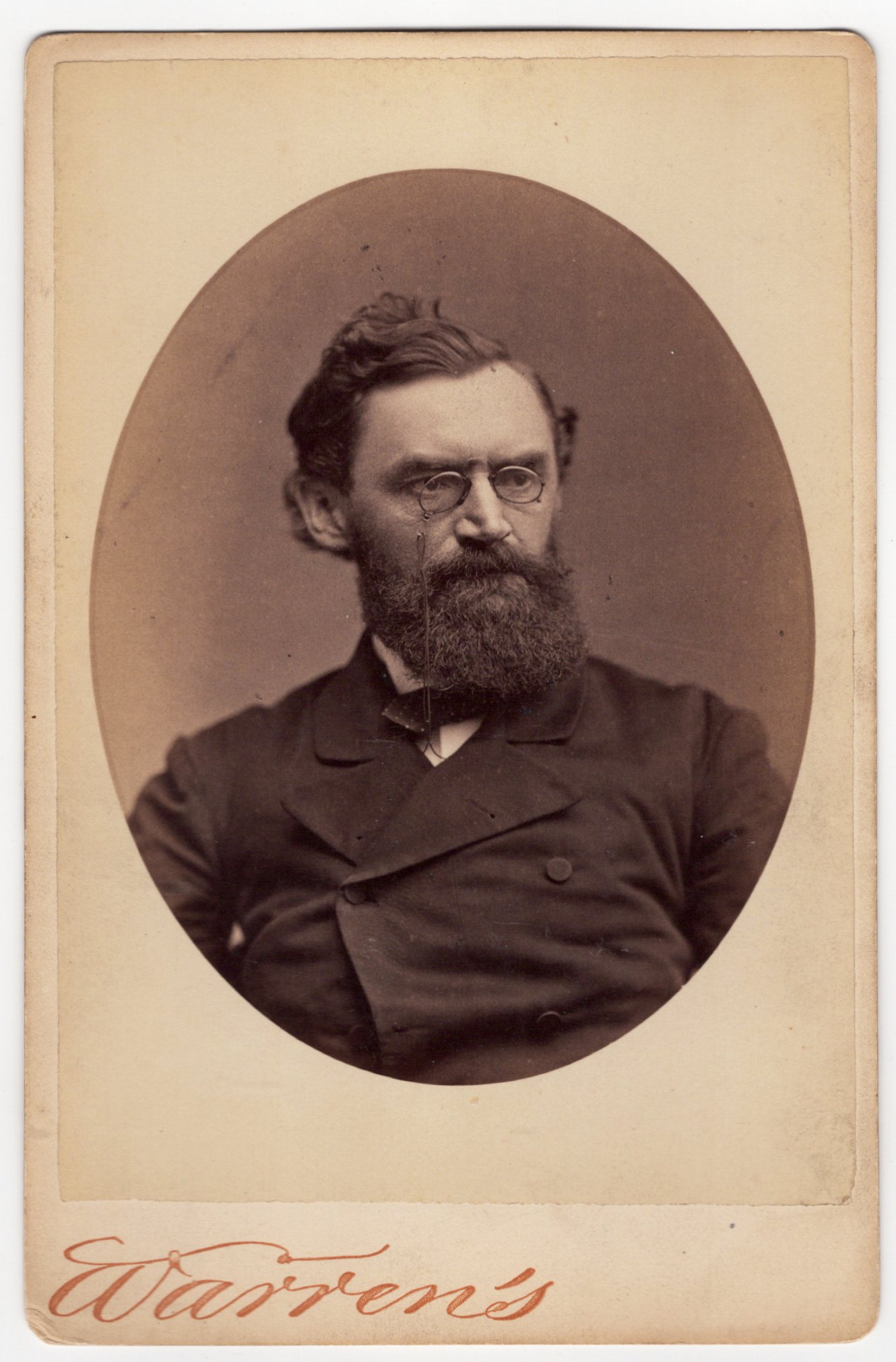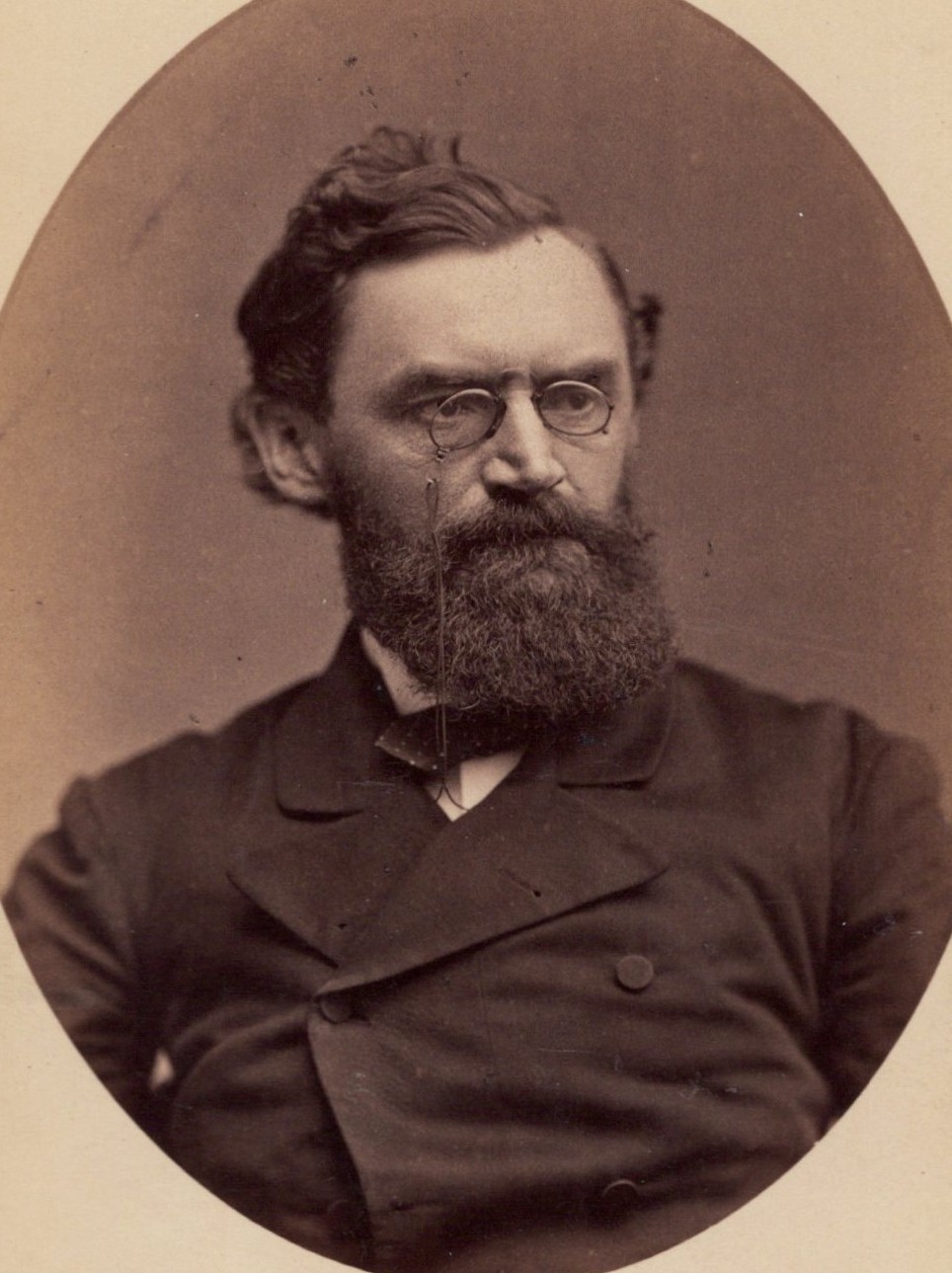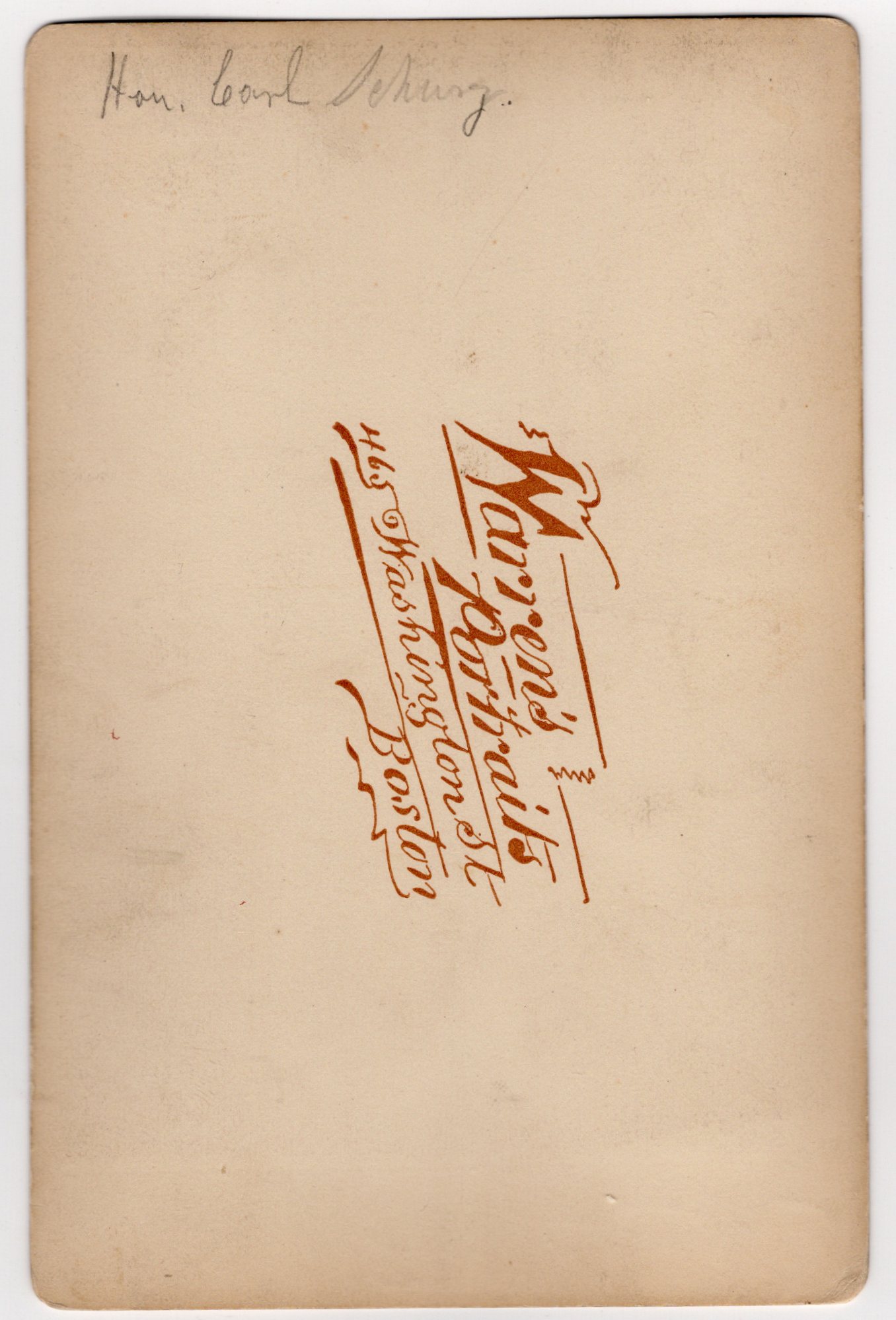
This striking 19th-century cabinet card features The Honorable Carl Schurz (1829-1906), a distinguished Civil War general, U.S. Senator, and reform-minded statesman. The photograph was taken at Warren’s Portraits, a prestigious Boston studio located at 465 Washington Street and renowned for its elegant images of notable figures during the late 1800s. In this formal portrait, Schurz is captured in a three-quarter view, seated in a dark, double-breasted coat with a subtle bow tie at his collar. His thick, well-kept beard and wavy hair give him a scholarly yet commanding presence. He gazes slightly to his left, a monocle suspended at his eye—projecting a look of intellectual rigor and seriousness. The background is a simple studio gradient, helping focus all attention on Schurz’s intense expression and refined appearance. On the reverse, the card is elegantly marked with the Warren’s Portraits logo. In pencil is written: “Hon. Carl Schurz,” affirming the identity of the sitter. Carl Schurz was born in Liblar, Prussia (modern-day Germany) in 1829. A revolutionary in his youth, he fought in the 1848 German uprisings, which ultimately failed, forcing him to flee Europe. He emigrated to the United States in 1852, where he quickly became involved in politics and the anti-slavery movement. During the American Civil War, Schurz was appointed brigadier general of Union volunteers by President Lincoln in 1862. He eventually rose to the rank of major general. Though courageous and respected, his battlefield performance received mixed reviews. He fought in key engagements including: the Second Battle of Bull Run (1862), the Battle of Chancellorsville (1863), and the Battle of Gettysburg (1863), where his XI Corps was flanked on the first day. While he was not a professional military man, Schurz’s service was notable for his efforts to advocate for German-American troops and his commitment to the Union cause. He did not have prior military experience in Europe before serving in the U.S. Army. After the war, Schurz enjoyed a long and prominent career in politics. He served as a U.S. Senator from Missouri (1869–1875) and later as Secretary of the Interior under President Rutherford B. Hayes (1877–1881). A staunch advocate of civil service reform and anti-corruption measures, he became one of the leading voices of the Liberal Republican movement. This cabinet card was produced by Warren’s Portraits, one of Boston’s most prominent photography studios in the 19th century. Operated by William Shaw Warren, the studio specialized in elegant, high-quality portraits and was especially known for photographing celebrities, politicians, military figures, and distinguished members of Boston society. Warren’s operated primarily during the 1860s through the 1890s. Warren’s images often feature clean studio backdrops, strong lighting, and detailed retouching, emphasizing refinement and dignity—qualities clearly present in this cabinet card of Carl Schurz. (SOLD)
WWI SOLDIERS : PATRIOTIC : U.S. FLAG BACKDROP : RPPC 1904-1918
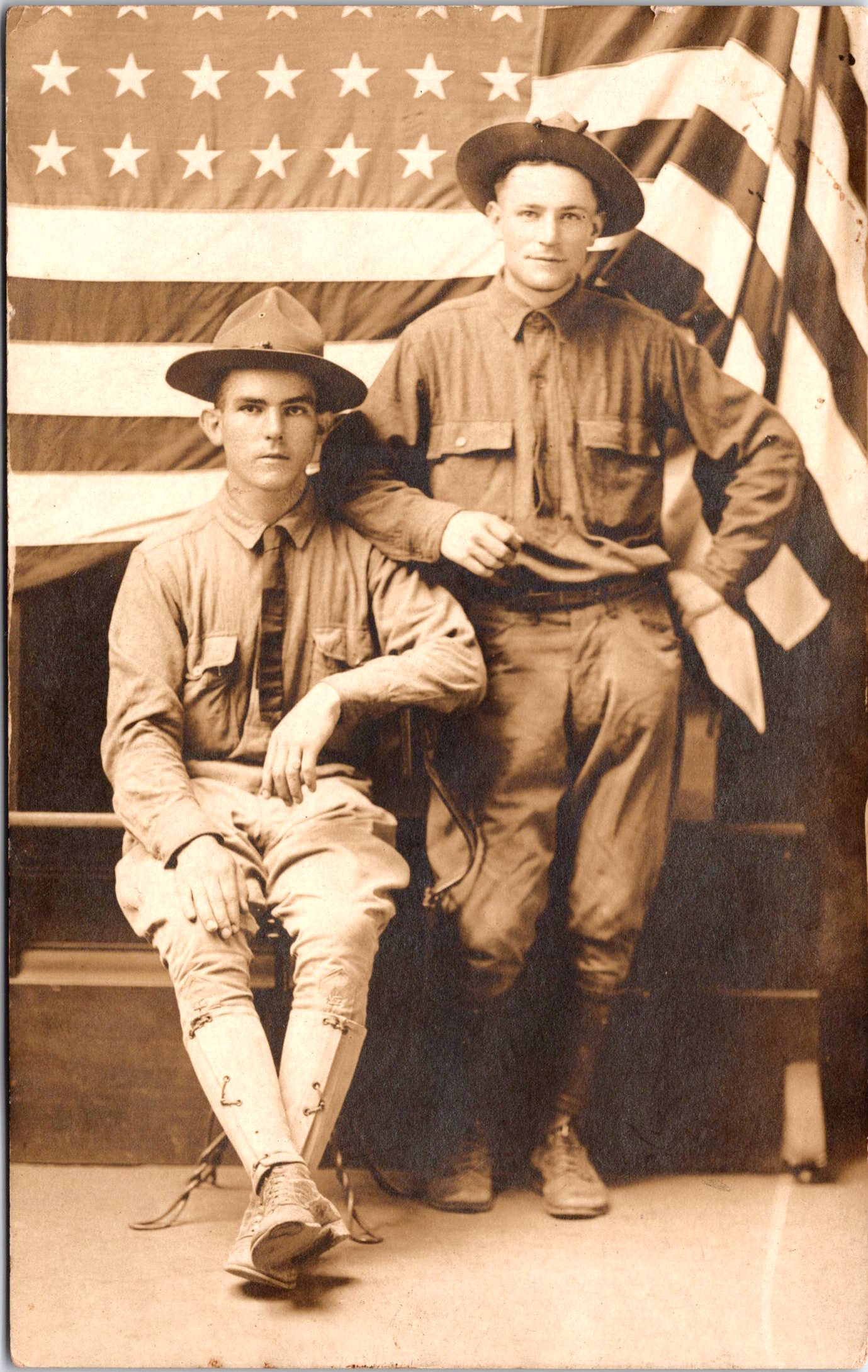
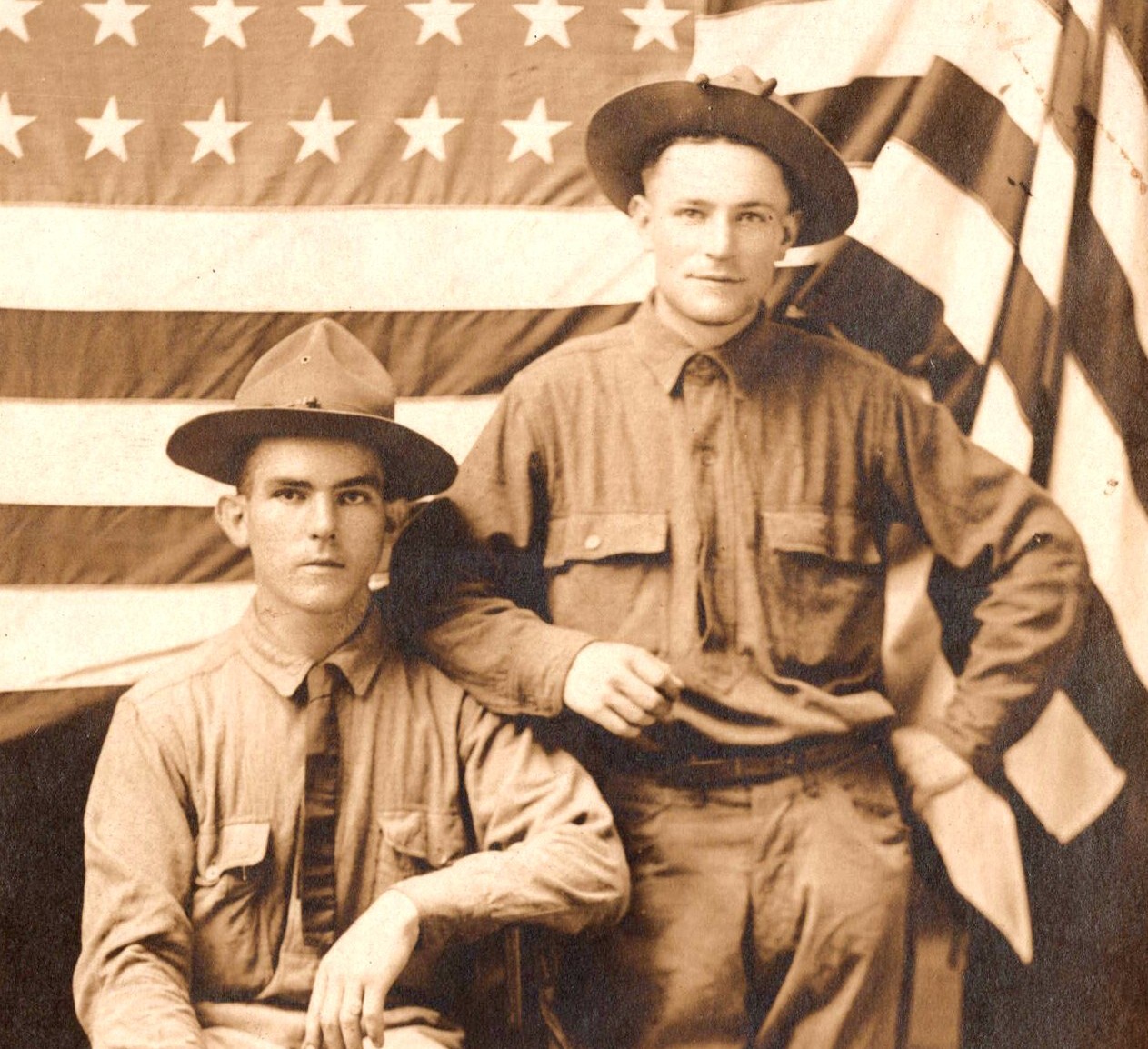
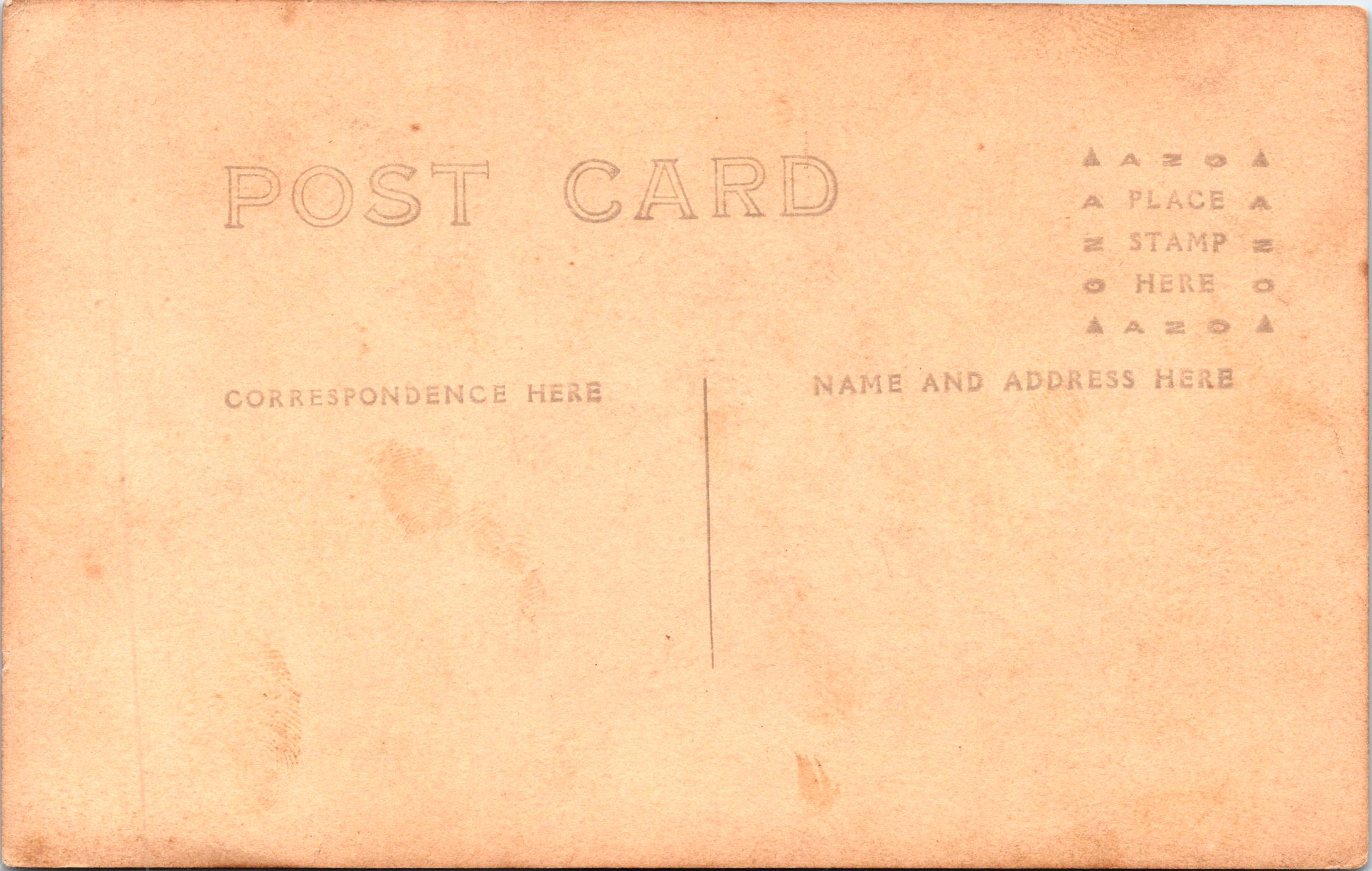
This original real photo postcard captures two World War I-era American soldiers posed proudly in front of a large U.S. flag backdrop. Both men wear their service uniforms complete with campaign hats, buttoned shirts, and breeches tucked into puttees or leggings. The soldier on the left is seated with legs crossed, hands resting naturally, and gazes directly at the camera. The standing soldier rests his hand casually on his comrade’s shoulder, creating a sense of camaraderie. The flag’s stars and stripes fill the background, adding a strong patriotic tone to the image. The reverse of this postcard has an AZO stamp box indicating that it dates back to between 1904 and 1918. The card’s style and subject matter suggest that the postcard likely dates to the World War I period (circa 1917–1919). SOLD

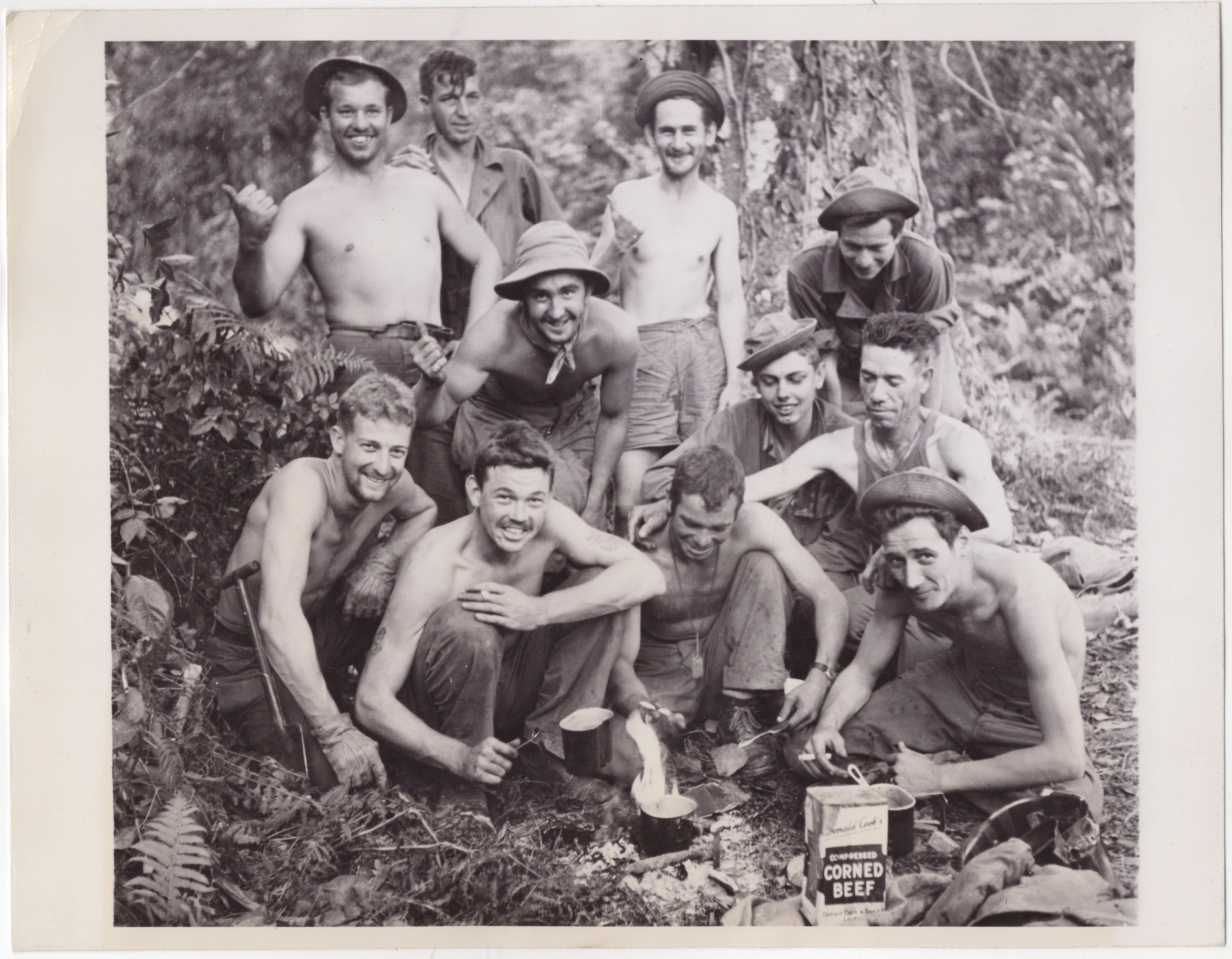
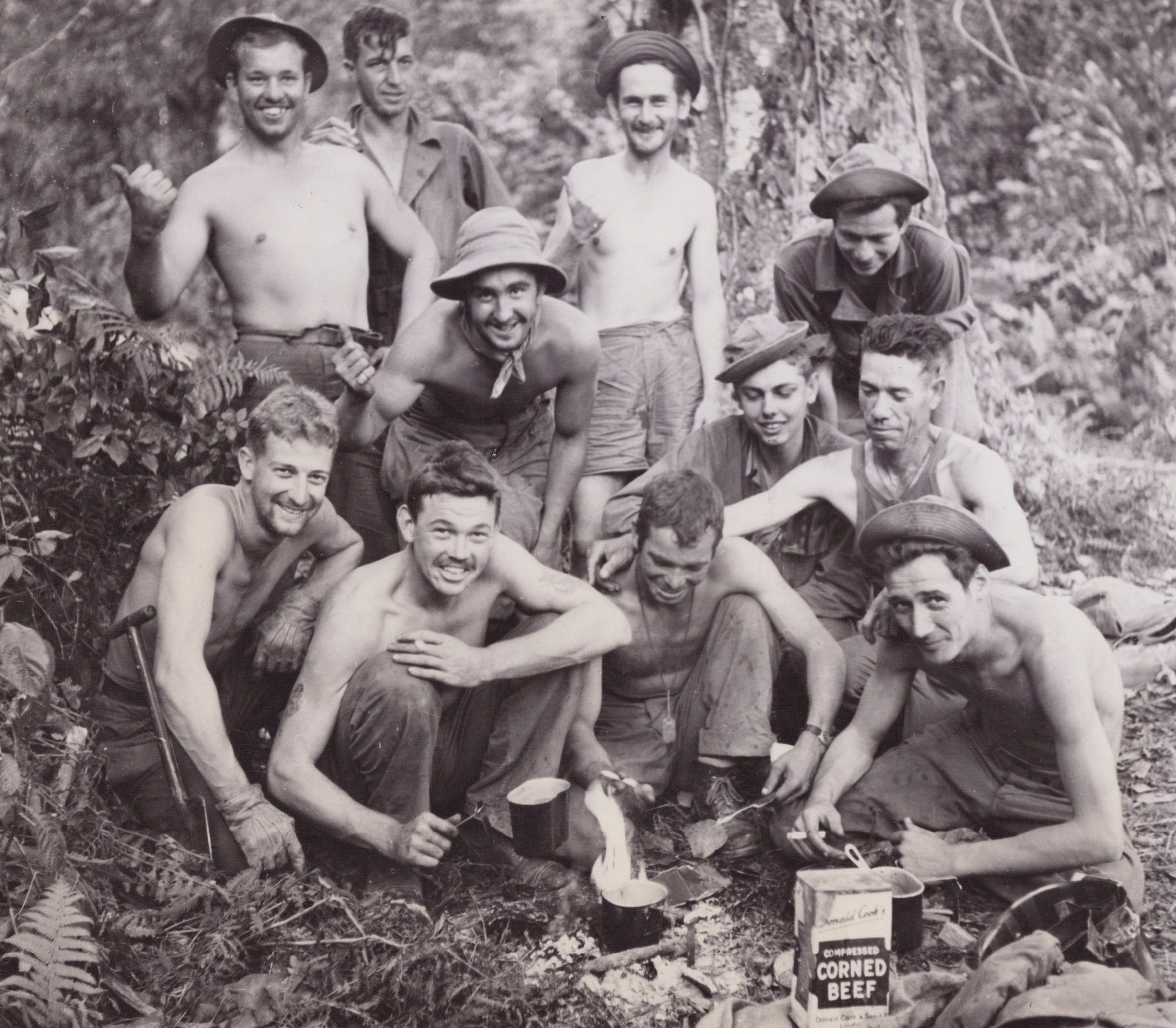
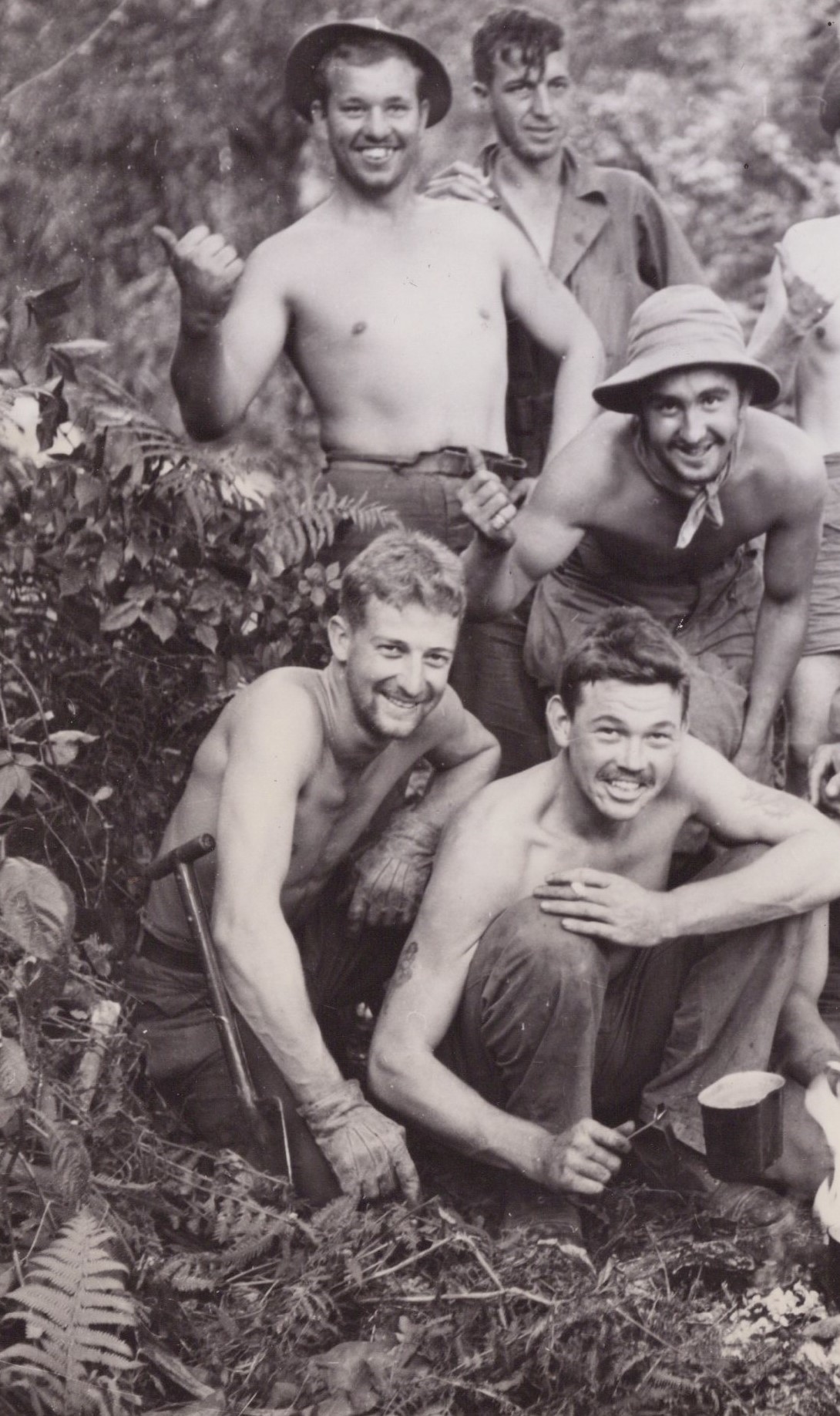
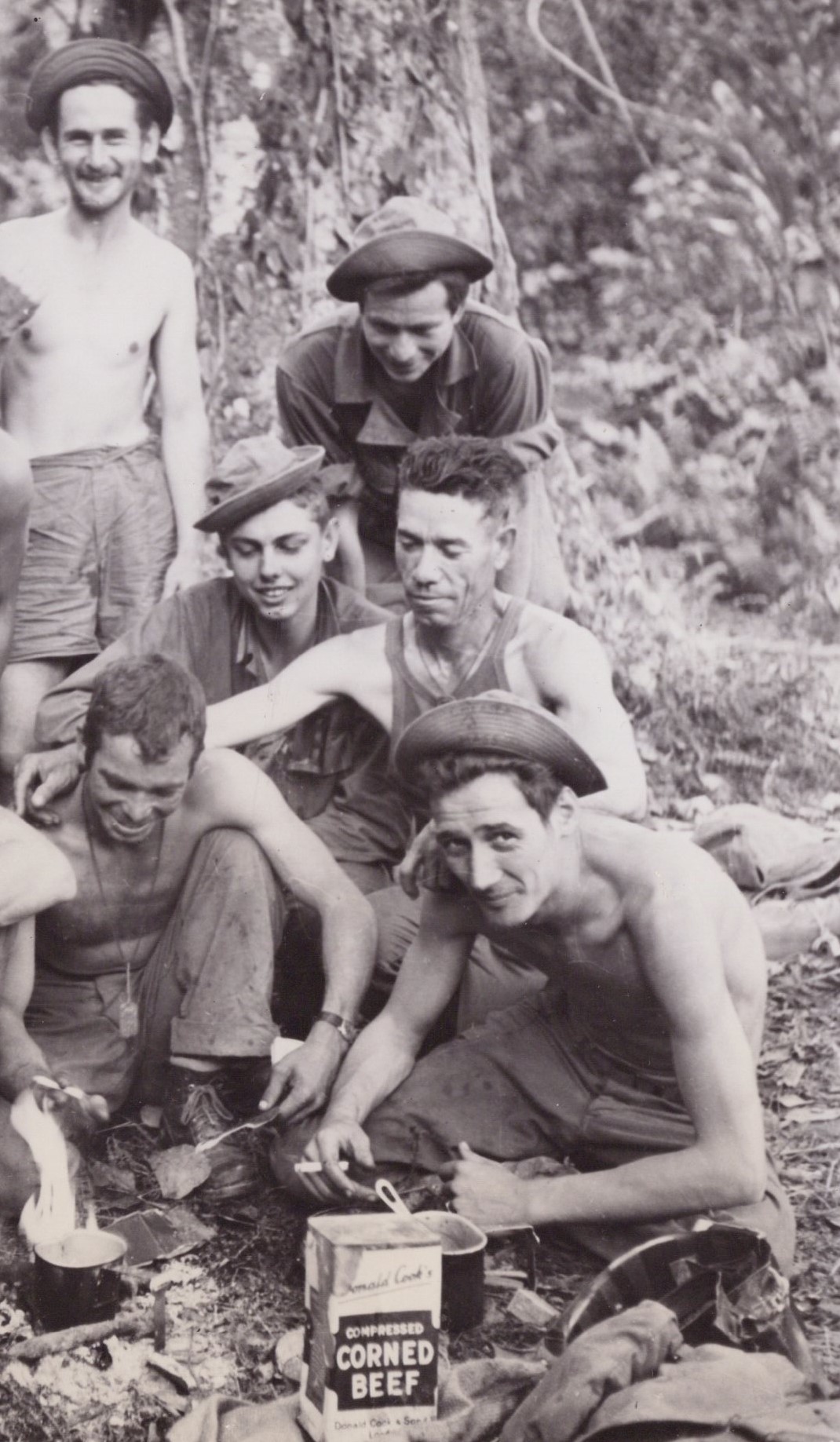
MERRILL’S MARUDERS : BURMA : WW ll : JUNGLE FIGHTERS : PRESS PHOTO

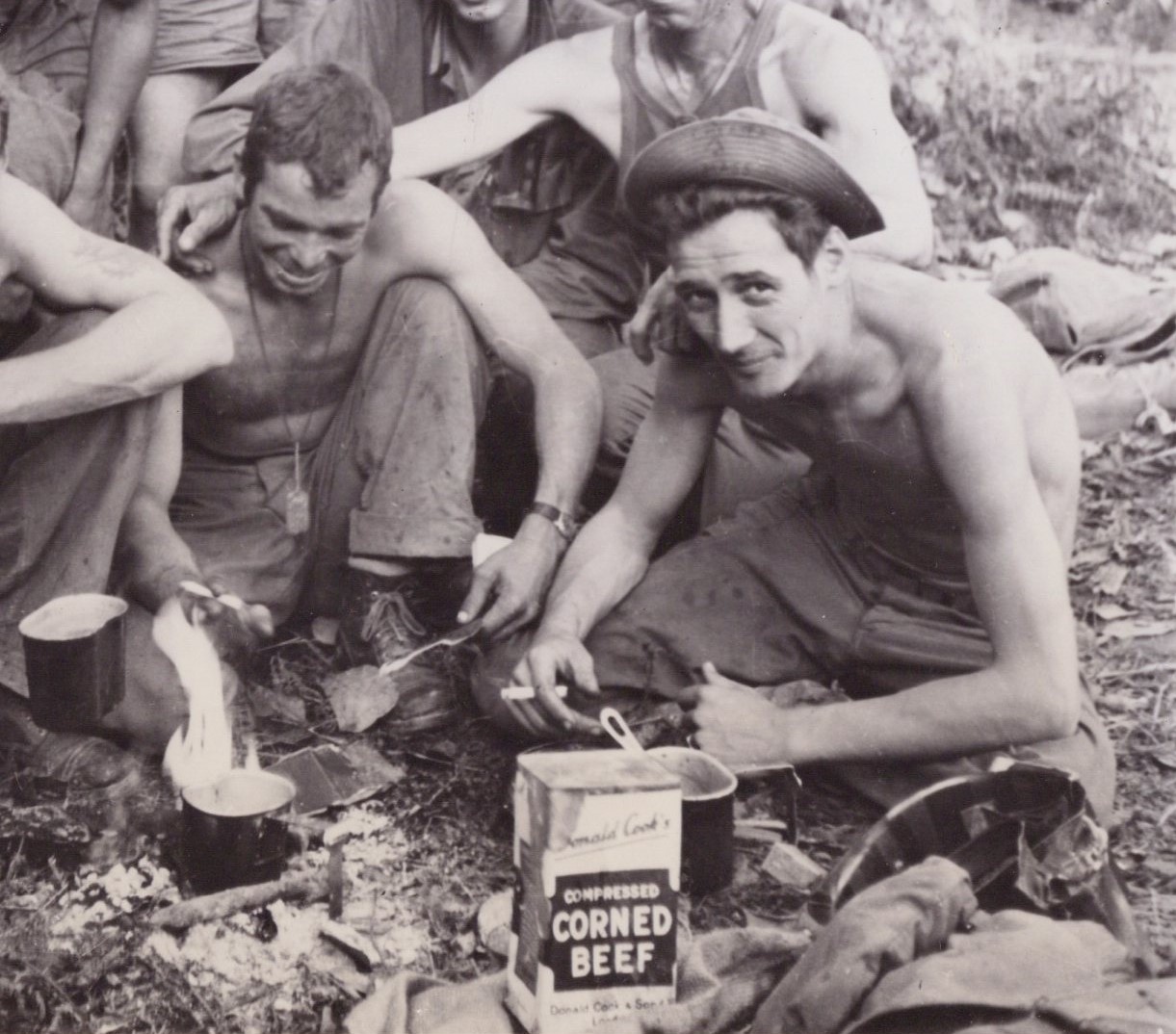
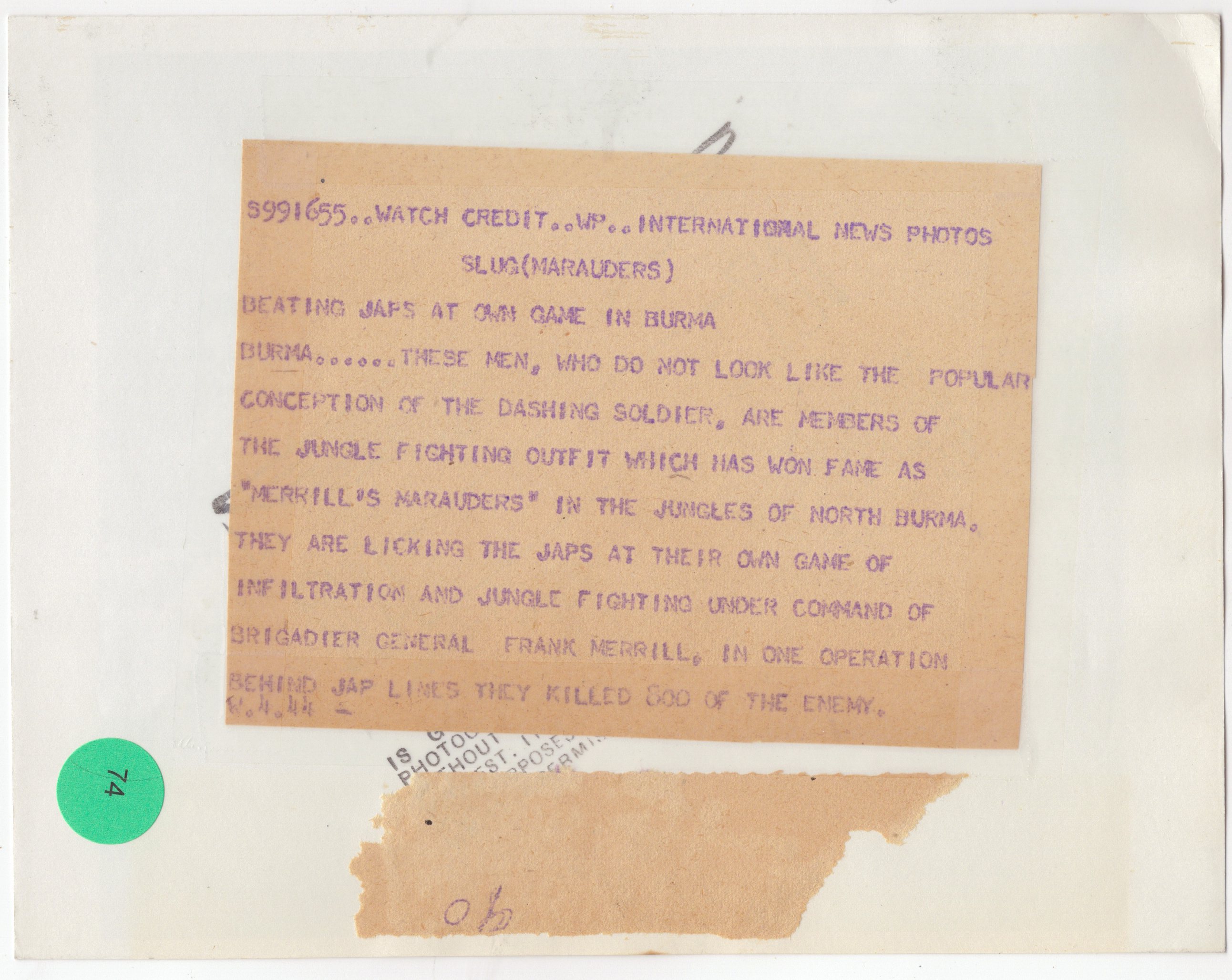
This vintage press photo features members of Merrill’s Maruders, a specialized American fighting group that fought the Japanese in the jungles of North Burma. They fought much like the Japanese soldiers. This American unit used Guerilla war tactics. The American unit was officially known as the 5307th Composite Unit. They conducted long-range penetration missions behind enemy lines. They were established in 1943 and named after their commander, Brigadier General Frank Merrill. All members of the Maruders were volunteers from various Army division. Many were already skilled in jungle warfare. The US soldiers faced many challenges besides facing Japanese forces. The Americans had to deal with harsh weather, disease and supply shortages. The unit completed their mission in 1944 and were disbanded. Many consider the Maruder’s as the predecessor to US modern day special forces. In 1962, a popular movie was released that told the story of this famous 3000 man unit. The movies, unsurprisingly, was titled “Merrill’s Maruders”. This photo includes eleven members of Merrill’s outfit. They are cooking a meal over a flame. Note the large can of compressed corned beef. Despite the tough conditions, the men are smiling as the pose for this news photograph. The photo was taken by the International News Photo. SOLD

GENERAL FREDERICK WAYAND : VIETNAM WAR : CHIEF OF US FORCES : PRESS PHOTO
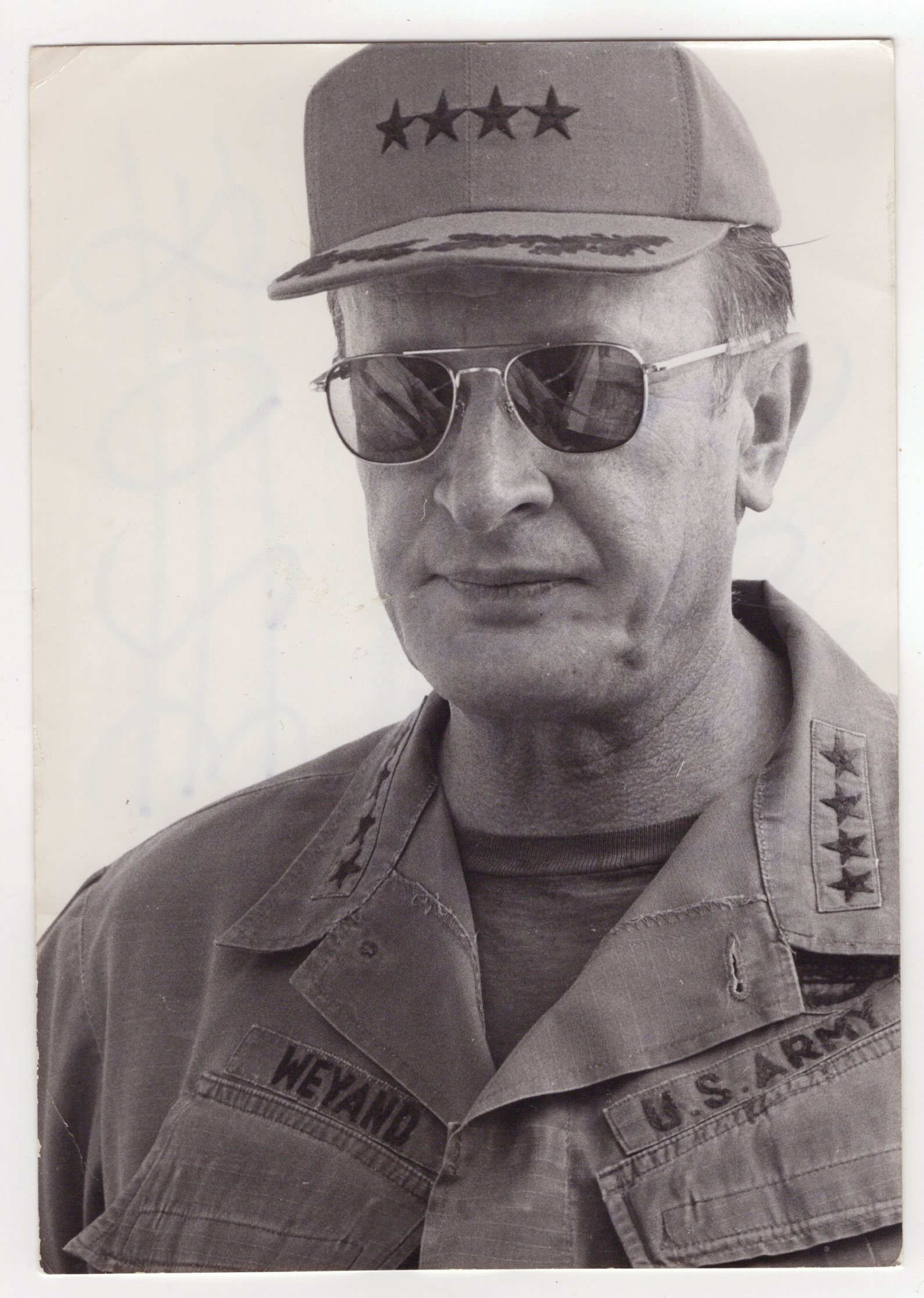
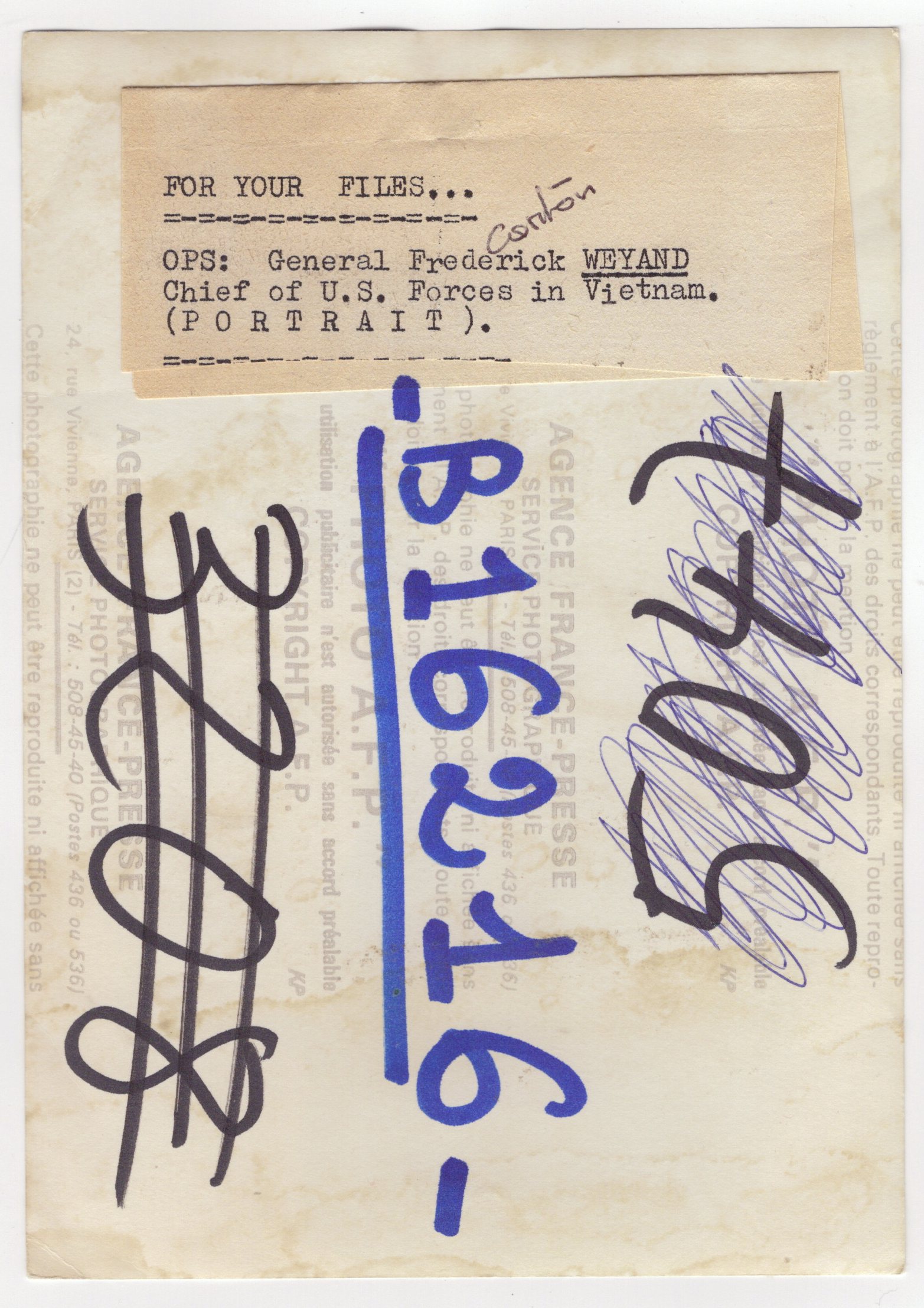
This vintage press photo features General Frederick Carlton Weyand (1916-2010), the last commander of US forces during the Vietnam War (1972-1973). He oversaw the withdrawal of American troops from South Vietnam. He served as Chief of Staff of the United States Army from 1974 to 1976. He was born in California and graduated as a second lieutenant from ROTC at the University of California (Berkeley). He served during both World War II and the Korean War. This photograph shows General Weyand as a four star general. He earned that rank in 1970. This press photo was taken for Agence France-Presse Service. (SOLD)
PORTRAIT OF A FRENCH INFANTRY OFFICER AND HIS PRETTY WIFE
This vintage real photo postcard features a lovely young couple. The husband is a French non-commissioned officer of the the 156th infantry regiment. The pin on his hat reveals his specific regiment. The soldiers pretty wife apparently likes ruffles. Her long sleeve dress is riddled with ruffles. I’m certainly no fashionista, but I think her dress is lovely as well as interesting. SOLD
TWO INTERESTINGLY DRESSED GUYS ARM IN ARM IN VIENNA, AUSTRIA
This interesting oversized cabinet card was photographed by L. Grillich in Vienna, Austria. The subjects are two very interesting looking young men. One man is wearing a tuxedo and top hat. He is holding a cane and wearing eyeglasses. The second young man appears to be wearing a formal military uniform. He is holding white gloves and wearing a sword. There is likely an interesting story attached to this photograph but that story is lost to history. The photographer of this image was Ludwig Grillich (1855-1926). Grillich was a portrait photographer located in Vienna and in Franzensbad. Included in the list of famous subjects of his portraits, are Johann Strauss, Johannes Brahms and Sigmud Freud. Grillich is also known for a series of postcards he published that displayed many of Vienna’s famous buildings of that era. SOLD
GENERAL WESLEY MERRITT : CIVIL WAR : CHANCELLORSVILLE, GETTTYSBURG, APPOMATTOX
This cabinet card features a portrait of civil war General Wesley Merritt (1836-1910). During the war, he served on the side of the Union. Merritt graduated from West Point in 1860. Initially, as a second lieutenant, he served under John Buford in Utah. In 1862, he was named a Captain in the 2nd Cavalry and participated in the defense of Washington D.C.. In 1863, he was appointed adjutant for Major General George Stoneman. Merritt participated in Stoneman’s Raid in the Battle of Chancellorsville. He participated in the Gettysburg campaign as commander of the Reserve Brigade, 1st Division, Cavalry Corps of the Army of the Potomac. He saw no real action until the third day of the battle. He took part in the attack, led by Brig Gen Judson Kilpatrick on the Confederate right. He sustained a slight wound in the Battle of Brandy Station. His actions at Brandy Station contributed to his promotion to Brigadier General. Upon the death of John Buford, Merritt took over command of the 1st Division of the Cavalry Corps. He led the division during Grant’s Overland Campaign in 1864. Merritt later became the commander of the 1st Division Cavalry Corps of the Army of the Shenandoah, under Major Gen. Phillip Sheridan. He participated in Sheridan’s Valley Campaigns of 1864. His division routed the confederates in the Third Battle of Winchester. He was second to command under General Sheridan during the Appomattox Campaign and was present for the Confederate surrender at Appomattox. He had a long and accomplished career in the military, after the civil war. He commanded the Cavalry in the Southwest and participated in the Indian Wars. After serving on the frontier, he spent five years as superintendent of West Point. In 1895 he was promoted to major general in the regular army. In 1898, he commanded the Eighth Army Corp in the Spanish American War. After the victory, Merritt became the first American military governor of the Philippines. Merritt retired from the army in 1900. His military career had a 40 year duration. This cabinet card appropriately shows General Merritt in military uniform. Nielen’s Studio, in Cincinnati, Ohio is credited just below Merritt’s image. Andries Nielen (1850-1940) was born in Holland. He emigrated to the United States and in time, became the head of a tea and spice firm in Cincinnati. He retired in 1905 and he travelled around the world. He began a new career as a photographer and postcard publisher. He also was an amateur philosopher. He ran a publication espousing his philosophy as well as published the “wisdom” of others. SOLD
A UNIFORMED SOLDIER AND TWO LAMBS – A STUDY IN CONTRAST

A uniformed soldier sits against a fence and he is holding two adorable lambs on his lap. This is a study in contrast. A military warrior represents battle and lethality, while the young lambs represent peace and calm. Before anyone gets “up in arms”, I want to state that I know that soldiers can represent peace and protection. Note the soldier’s high boots. They appear to be for weather protection rather than for long marches. SOLD

PORTRAIT OF A PRETTY EUROPEAN FEMALE SOLDIER (1947)

This vintage photograph features a military woman in uniform. She is from a European nation and it’s my hypotheses that she is from Russia. Her branch of service is not identified. There is an inscription on the reverse of the photograph but I can not decipher it. The inscription indicates that the photograph was taken in 1947, two years after the end of World War II. Hopefully, a Cabinet Card Gallery visitor will be able to provide a translation. SOLD

DEATH CARD : WORLD WAR I GERMAN SOLDIER : DIED IN BATTLE : TRIBUTE TO FRANZ HUBER
This item is a World War I death card. It was customary to issue a card for fallen soldiers of the German army, navy and air force. The front of the card states that it is a Christian commemoration of the campaign soldier youth, Franz Huber. Information about his regiment and overall unit is provided. It is stated that the soldier was awarded the Cross of Merit. Furthermore, it states that Huber died a heroic death for his country on April 5, 1918. He died as the result of a serious injury at the young age of 24. A prayer is at the bottom of the card and there is a notation that the card was printed by H. Ostermann of Waging, Germany. The reverse of the card has a touching quote. “With the tender love of a mother I want to comfort you. SOLD