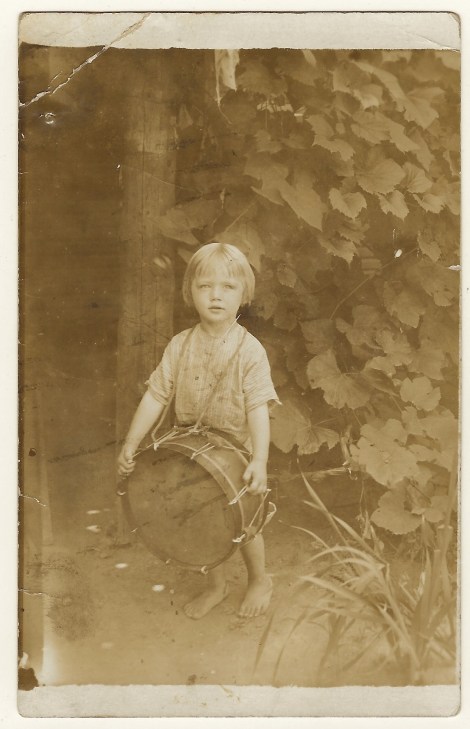
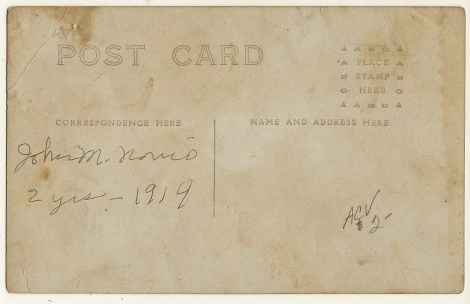
This endearing vintage real photo postcard captures a barefoot little boy and his drum. He is looking quite proud and serious. The drum does not look like a toy. Perhaps it saw some action during the civil war. The reverse of the postcard has an inscription revealing that the child is named John M. Norris and that he is two years old. The inscription also states that this photograph was taken in 1914. The AZO stamp box offers a confirmation of the date. This stamp box was utilized between 1904 and 1918. This postcard was purchased near Austin, Texas. SOLD
I wish I knew what was going on in the photograph on this vintage real photo postcard. Mom, Dad and their child all are displaying very intense expressions. The man and woman are staring at each other. It is as if their eyes are throwing darts at each other. The child, wearing a nautical outfit, looks like he just saw a ghost. The child is standing on a wagon. The family dog is standing on it’s hind legs with one paw on the wagon. This postcard’s AZO stamp box indicates that it was produced sometime between 1904 and 1918. (SOLD)
Henny Porten (1890-1960) is the subject of this real photo postcard. Porten was a German actress and film producer of the silent era. She was Germany’s first major film star and appeared in more than 170 films produced between 1906 and 1955. Along with Asta Nielsen and Pola Negri, she was one of the three most popular German actresses. Her father was a film director and her sister was an actress/screenwriter. She began her film career without any stage experience which was an unusual phenomenon for German actresses. Porten was not well known outside of Germany. A large number of her early films were directed by her husband, Curt Stark. Stark died during World War I (1916) while serving on the Eastern Front. In 1921 she remarried a Jewish man named Wilhelm von Kaufmann. When the Nazis took power, she received much pressure to divorce her husband. She refused to comply and her career plummeted. She was denied a visa to emigrate. Her career blossomed again after World War II. The photograph of Miss Porten seen on this postcard is by the Becker & Maass studio of Berlin, Germany. The photographers were well known for portrait and fashion photography in the first decades of the twentieth century. They photographed dozens of German film stars for magazines and postcards. You can view more of this studios photographs by clicking on the category “Photographer: Becker & Maass”. The postcard is published by Rotophot which began publishing “RPH” postcards in 1916. There were three different series: Buhnen-Sterne (stage star), Film Sterne (film star), and Film Sterne (displayed scenes). This postcard is from the Film Sterne series and was no. 216/3. The film star series ran from number 61 through number 224. The front of the Film Sterne cards included the name of the film studio represented. This card advertises Messter-Films of Berlin. These postcards were continued by the Ross Verlag company who’s origins can be traced back to the earlier Rotophot postcard company. The You Tube clip below presents Henny Porten in some scenes from “24 Hours from the Life of a Woman” (1931).
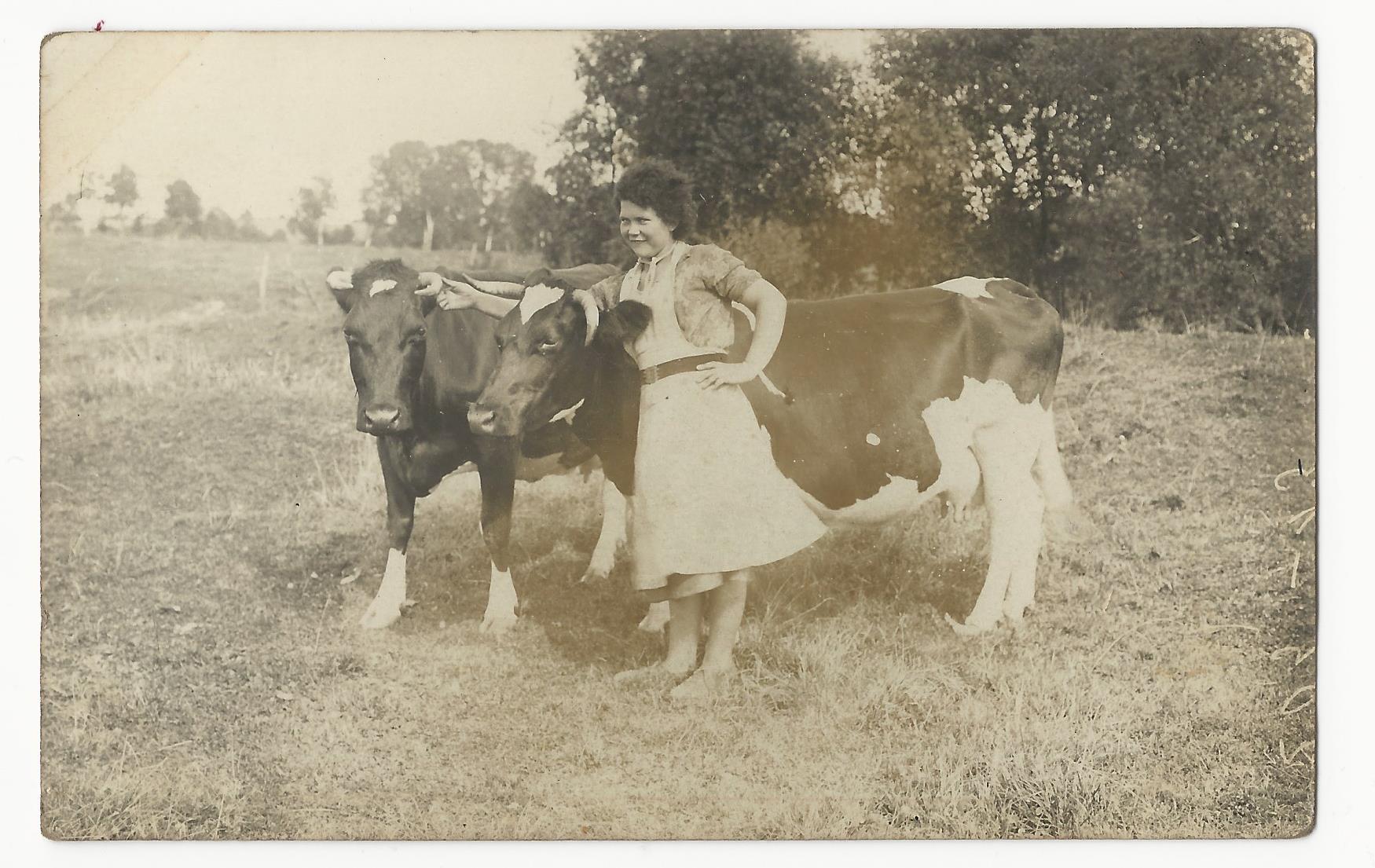
This vintage real photo postcard features a stout woman posing with two cows. The woman is wearing a wide smile. One might say that she is in a state of udder delight. This bovine aficionado seems a bit young to have gone to pasture. A postcard like this one would likely fall in the “rare” category. Over the many years I have collected real photo postcards, I have yet to see one like it. SOLD
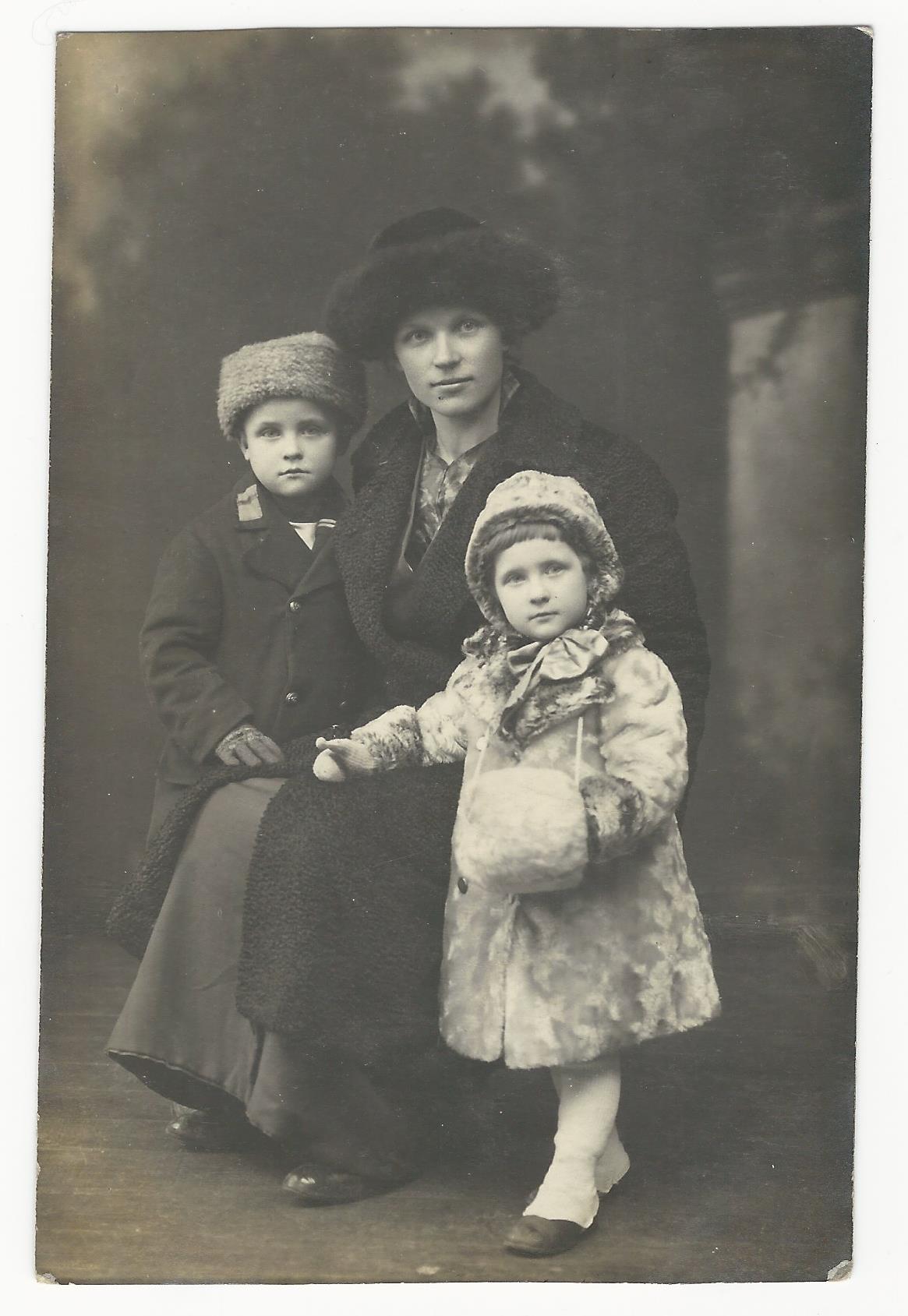
This vintage real photo postcard captures a mother and her two young children posing for their portrait at an unidentified photo studio. The whole family appears quite apprehensive about having their photograph taken. The trio are dressed for winter. All three are wearing winter coats and hats. The older child is wearing gloves and the youngest child is wearing a muff. This image features a truly attractive family.
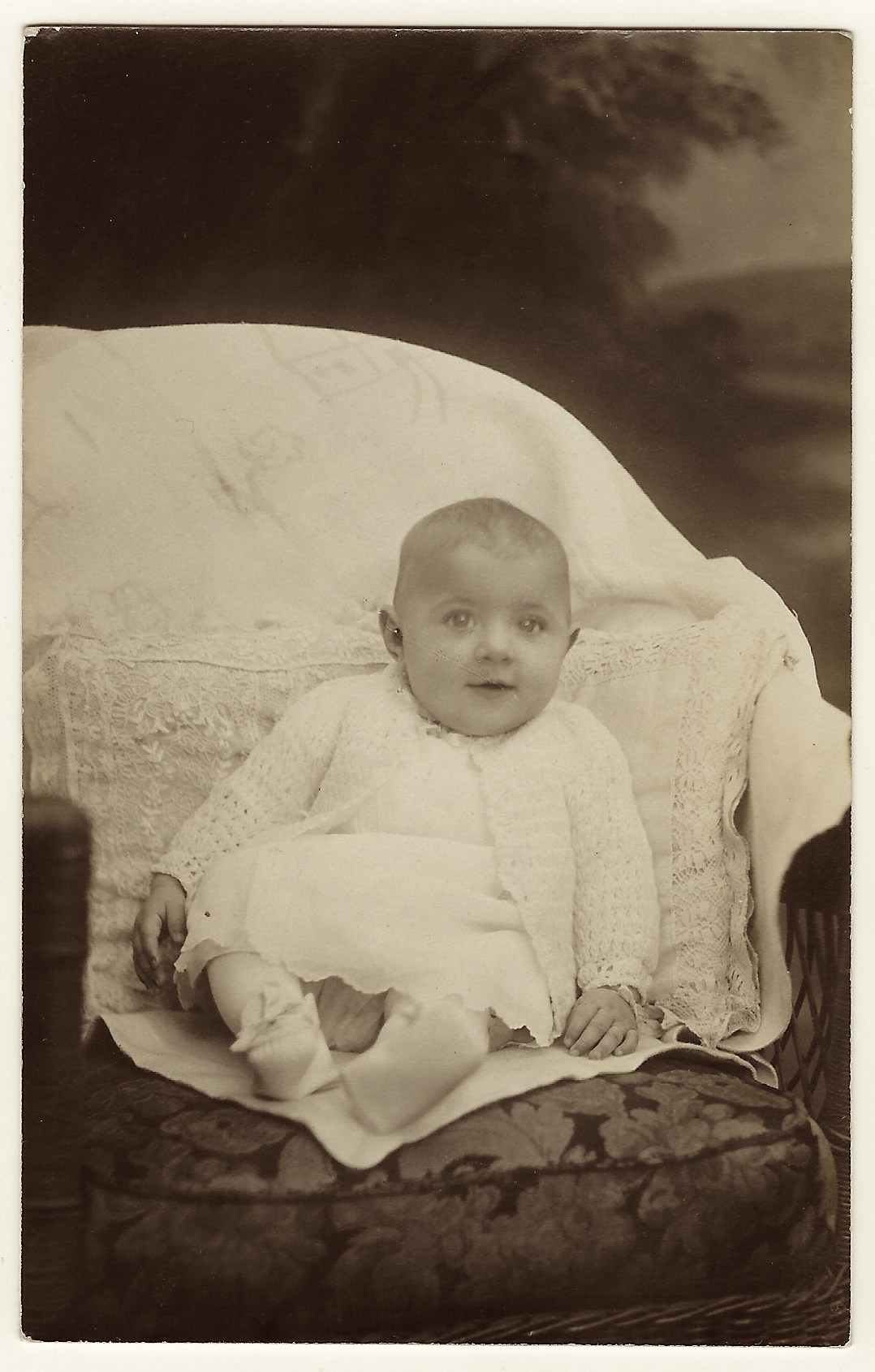
This image is special because it features a baby with a wonderful smile and happy demeanor. It is a rare occurrence to find a portrait of a baby with such a great smile. The photograph was taken at a studio and was used to produce this vintage real photo postcard. The baby is dressed in white and looks so adorable wearing a white sweater and little booties. The baby is sitting on a chair that is covered by a lace light blanket. I am unsure how the baby is safely held in the chair. There is no evidence of a hidden mother’s hands or a device to hold the baby safely in place. A studio backdrop can be seen in the background. The AZO stamp box on the reverse of the image indicates that the postcard was produced sometime between 1924 and 1949
These vintage real photo postcards feature British actress Winifred Barnes. She is absolutely beautiful and photographer, Rita Martin did a fine job of capturing both her beauty and personality in these photographs. It is not surprising that Rita Martin produced such fine photo postcards. Miss Martin was well known for her expertise in taking portraits of theater stars and other celebrities. Other images by Rita Martin can be seen by clicking on the Cabinet Card Gallery’s category “Photographer: Rita Martin”. Barnes made her theatrical debut in a minor role in “Our Miss Gibbs” at the Gaiety Theater in 1909. Great Britain’s National Portrait Gallery has ten portraits of Winifred Barnes including one by Rita Martin. Her obituary appears in the New York Times (1935). The article describes her as a former chorus girl who became a star. She was one of George Edwardes’s leading actresses. Edwardes (1855-1915) was an English theatre manager and producer who received much credit for his contribution to British musical theatre. Many of Barnes’s major roles occurred during the first World War. She scored a huge success in the production of “Betty” (1915) at Daly’s Theatre. After her 1924 marriage to barrister, Roy Faulkner, she became a successful poultry farmer. She also became widely known for her cooking expertise. Both of these photo postcards were produced by Rotary Photo of London. The two postcards are part of a series (A. 1123-1) and (11867 A).
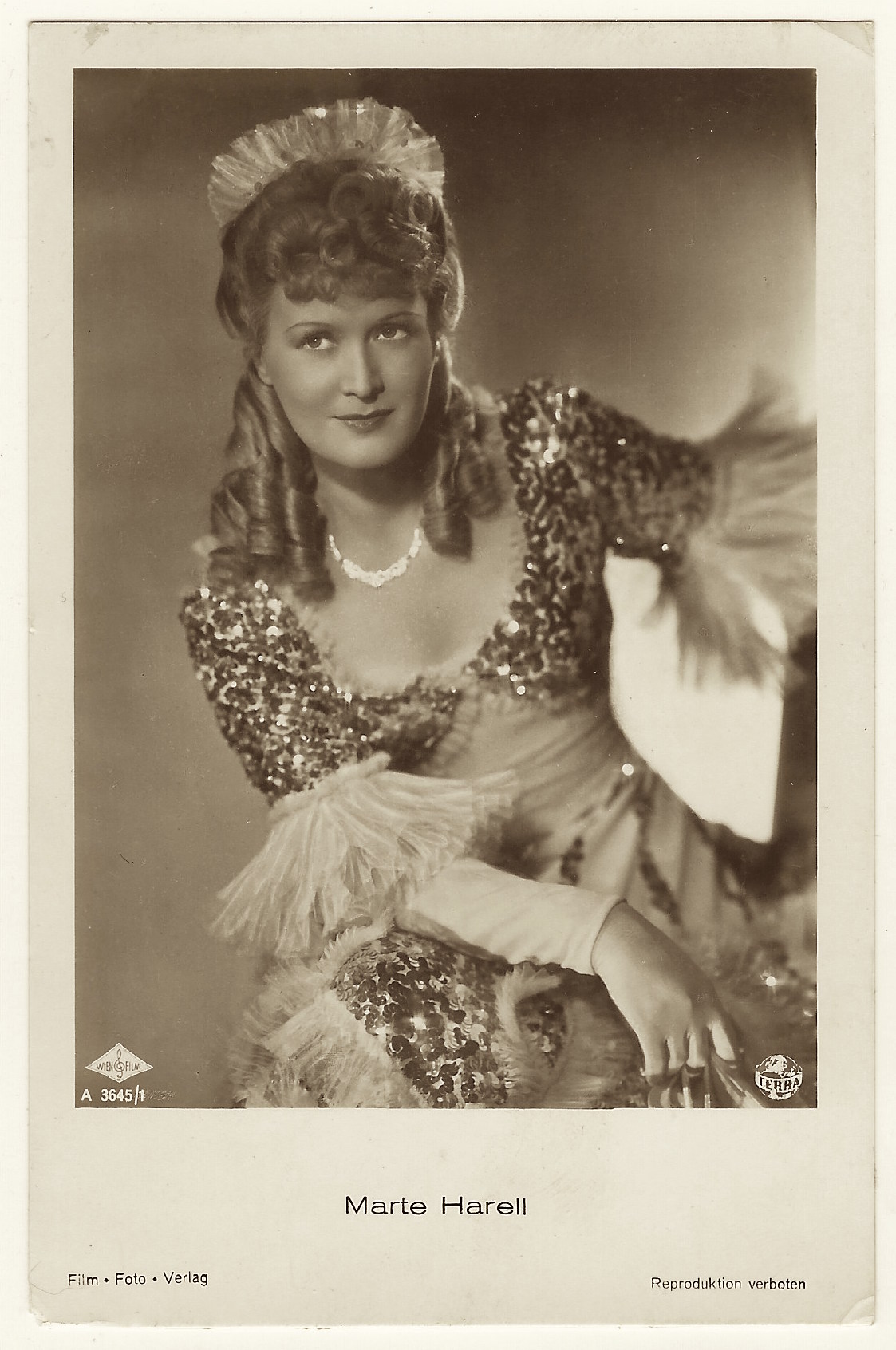
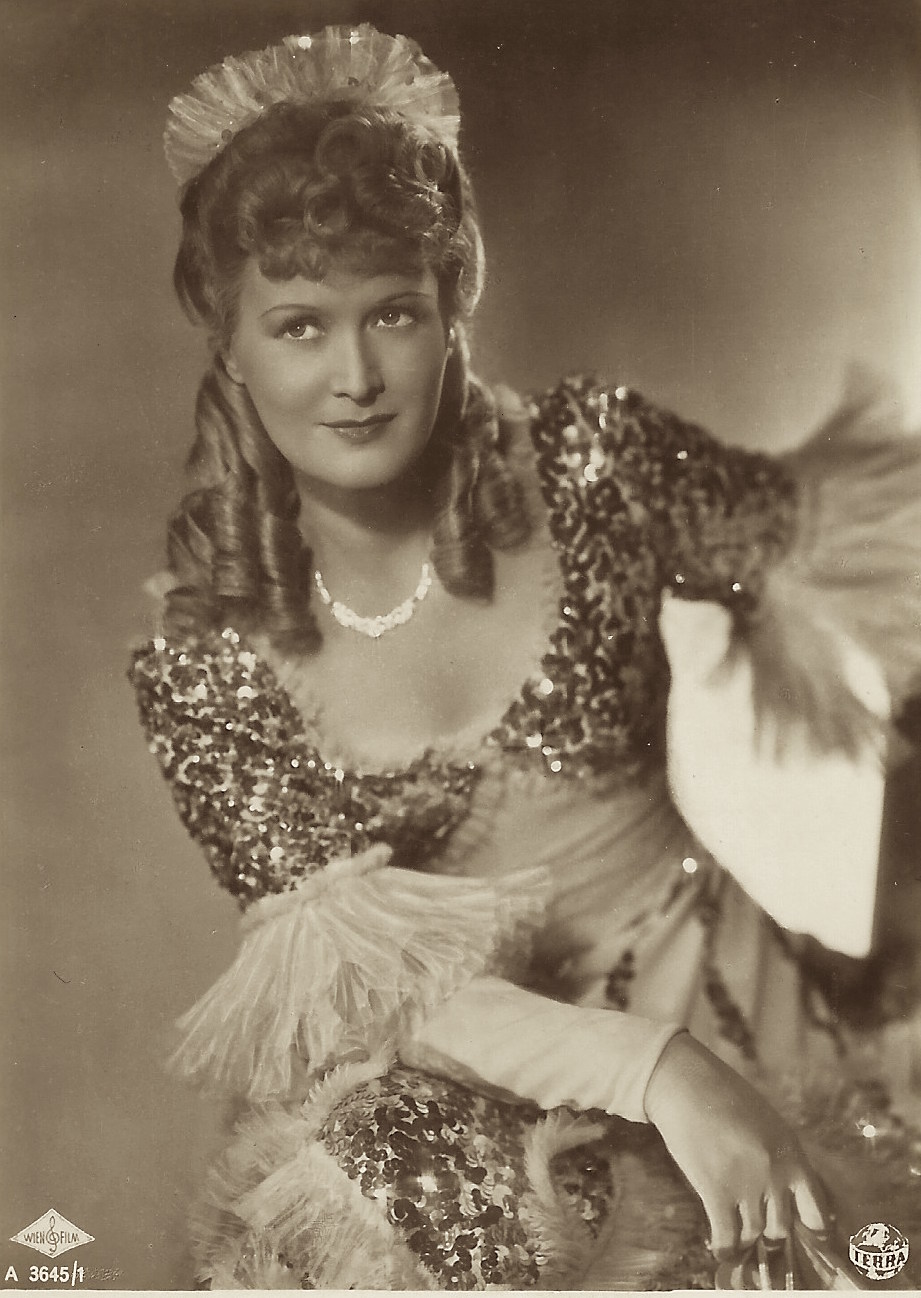
Marte Harell (1907-1996) was an Austrian film actress. She was married to Karl Hartl (1899-1978), an Austrian film director. Harell’s filmography includes “Women Are No Angels” (1943), “After The Storm” (1948), and “The Congress Dances” (1955). She was active in film and television between 1939 and 1981. Early and late in her career she also did theater. She made her film debut at age 32. She was in a number of films by Wien-Film. Hartl was the production manager of the company. This photo postcard was made for Wien-Film. The postcard is part of a series (no. A 3645/1). It is likely that this is a photograph of Miss Harell in costume for one of her film roles
This vintage real photo postcard features two well dressed African American men posing for their portrait at an unknown photography studio. The men look quite fashionable. The shorter man is wearing a single breasted jacket and fedora while the taller gentleman is wearing a bowler hat and double breasted suit.The postcard has an “AZO” stamp box indicating it was produced sometime between 1904 and 1918.
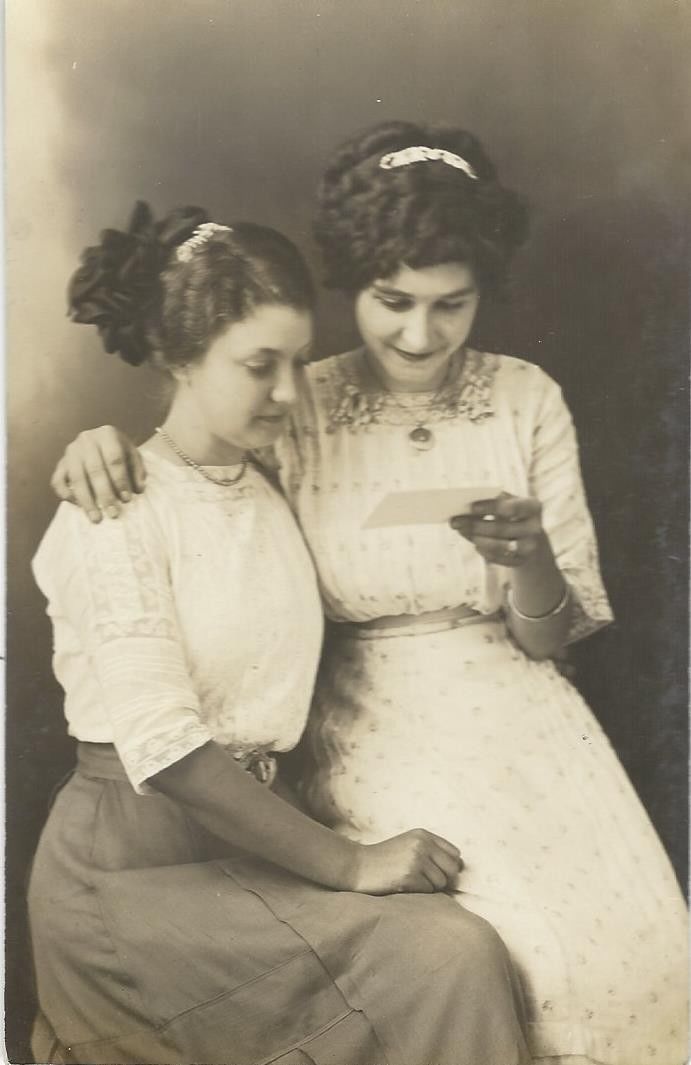
This vintage real photo postcard features two pretty teenage girls reading a letter together. One wonders about the content of “the letter”. It certainly has put smiles on these girl’s faces. Both girls are well dressed and wearing necklaces and hair accessories. The girl holding the letter is also wearing a bracelet and a ring. This postcard was published by AZO sometime between 1904 and 1918.



 POSTCARD 1
 POSTCARD 2 (SOLD)
 Top Postcard