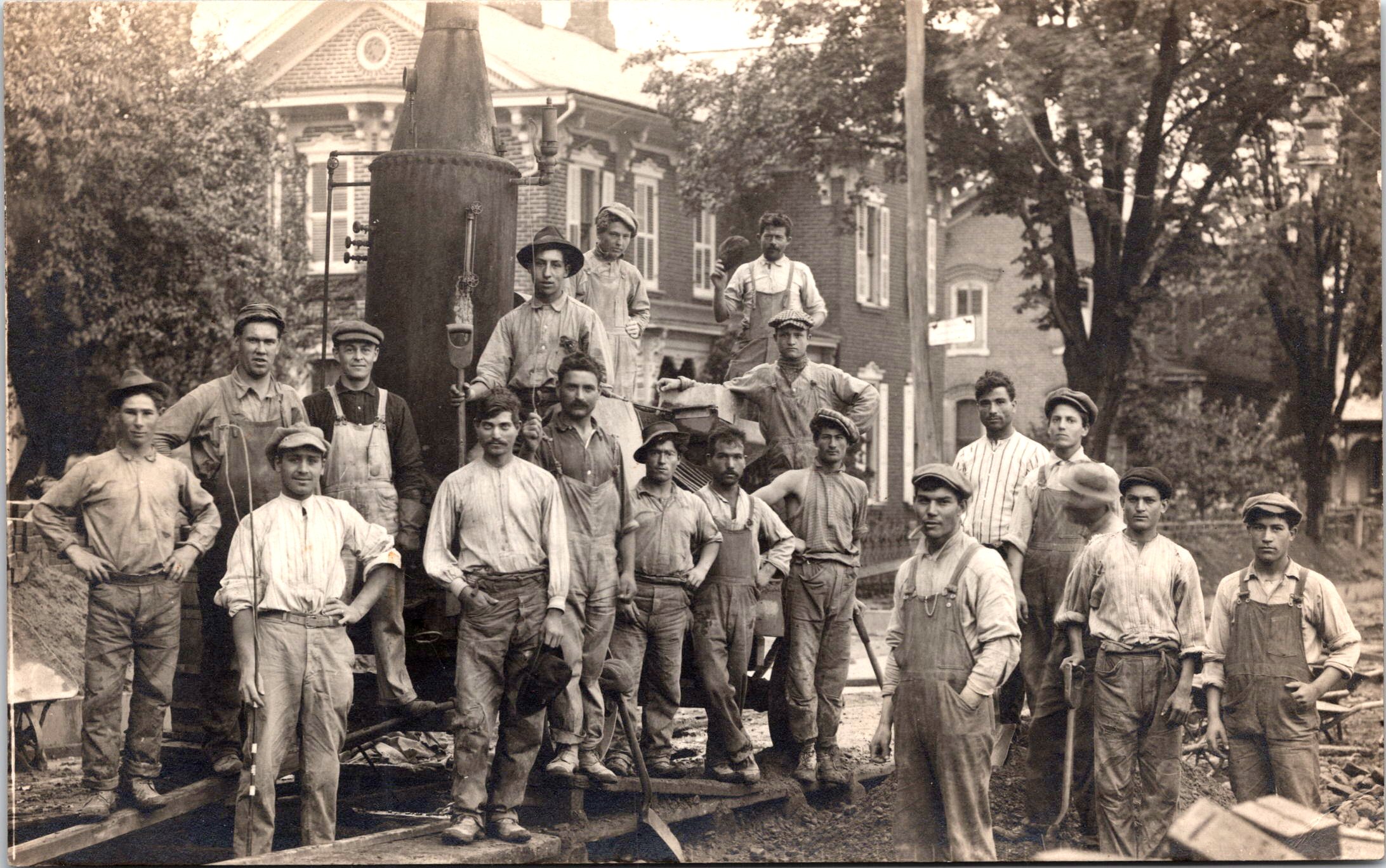
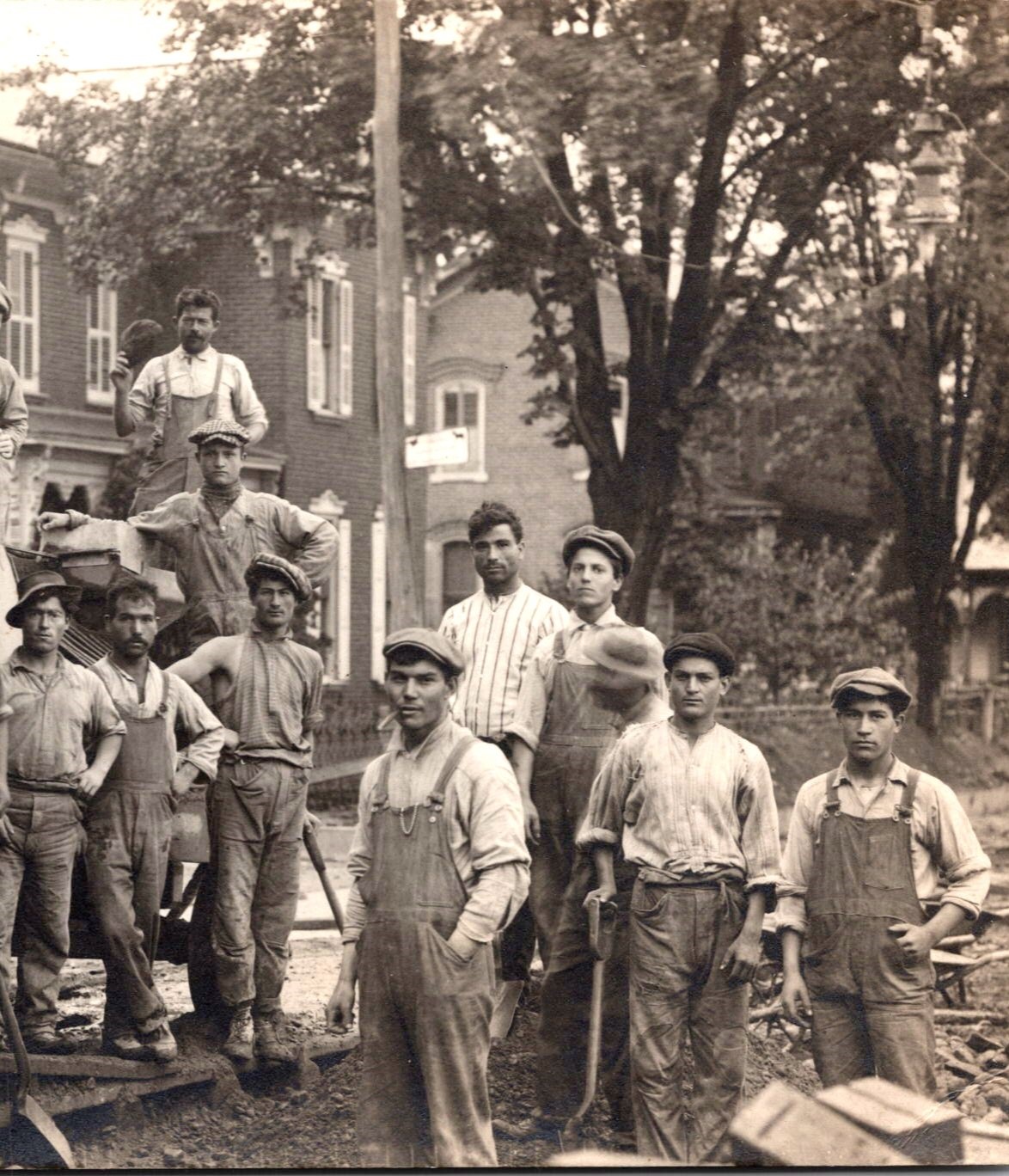
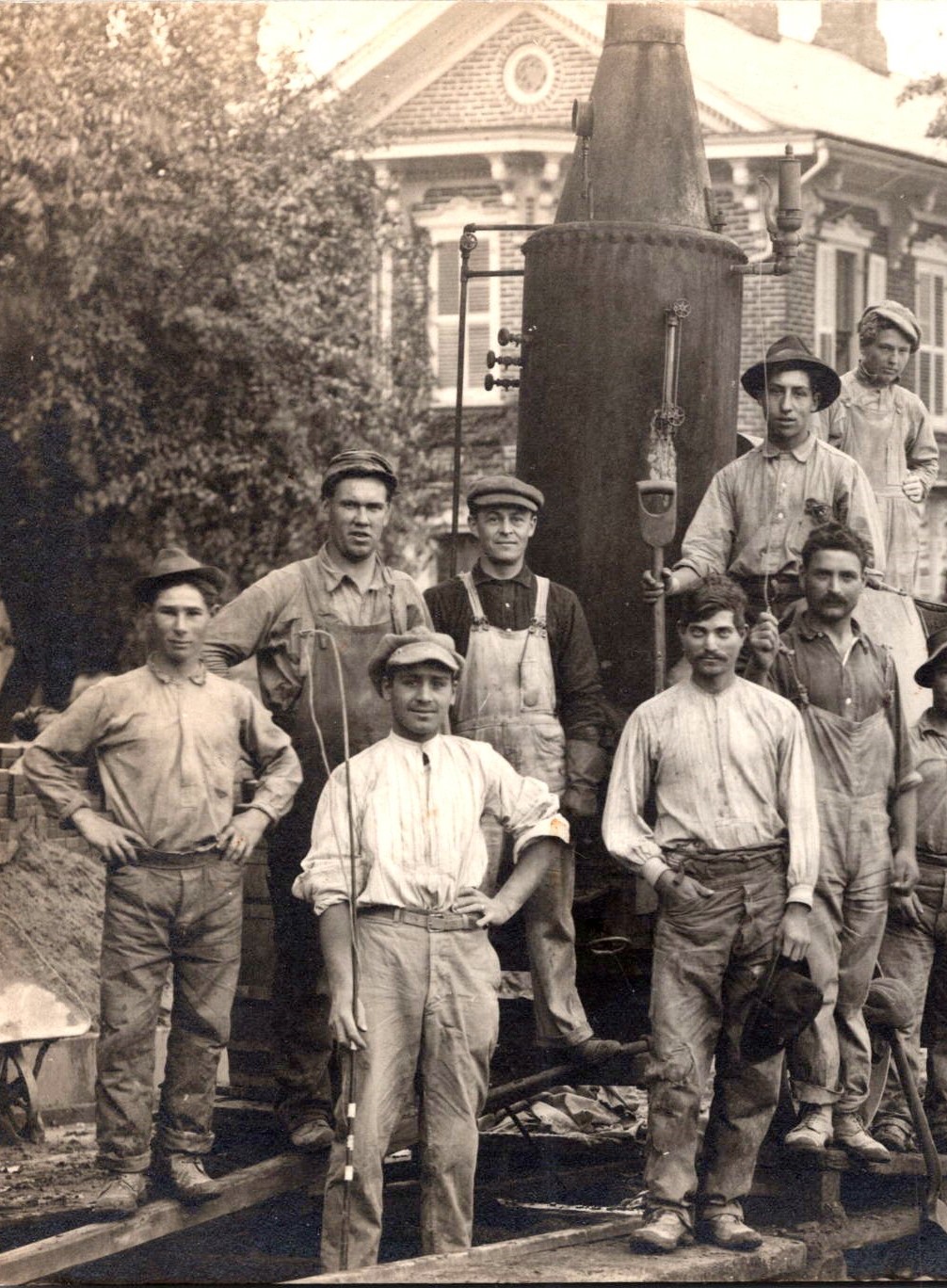
This vintage real photo occupational postcard features a portrait of a large group of construction workers. They are standing by some sort of steam engine. They may be constructing tracks or a bridge. SOLD
This vintage real photo occupational postcard features a portrait of a large group of construction workers. They are standing by some sort of steam engine. They may be constructing tracks or a bridge. SOLD

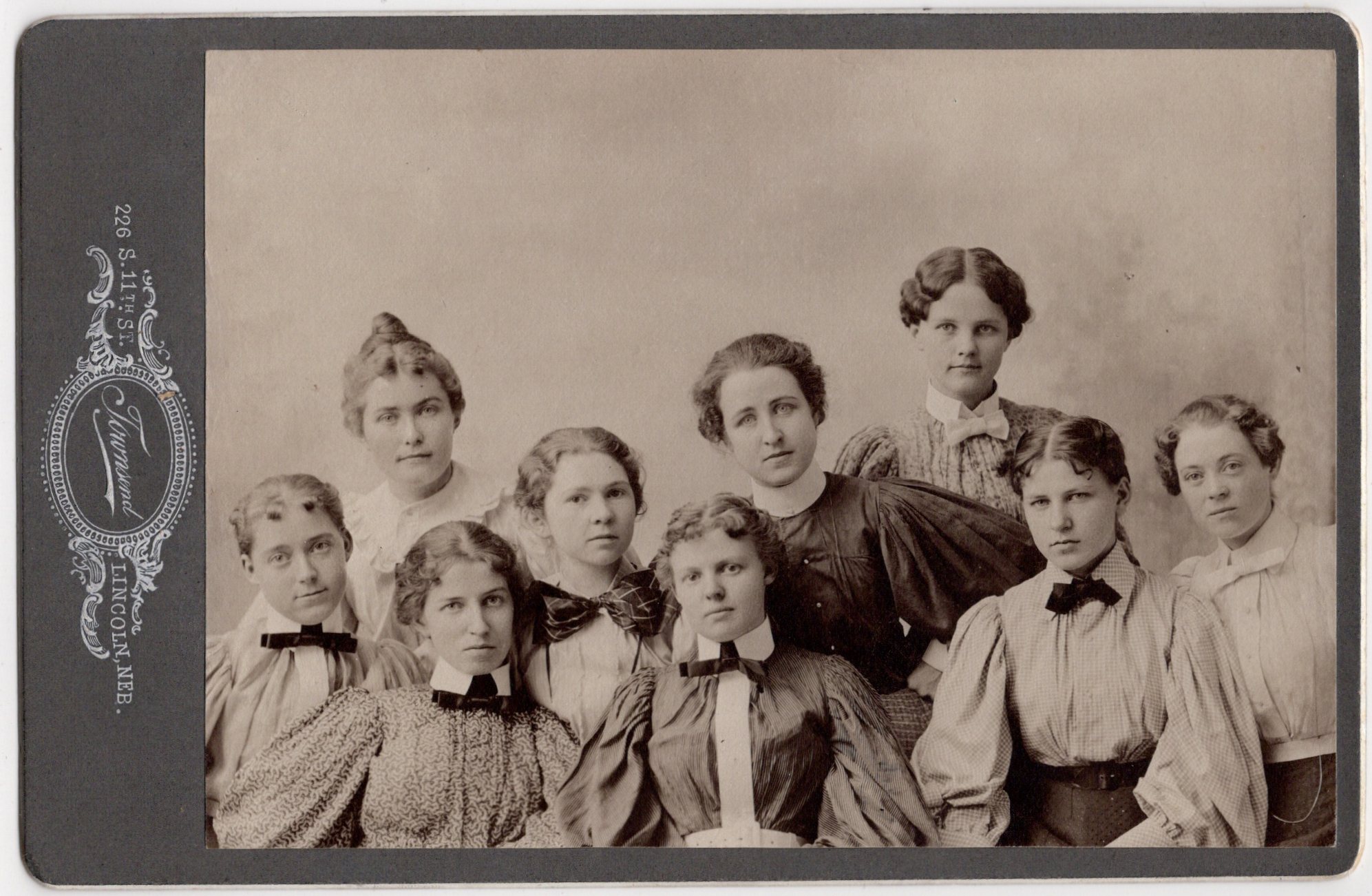
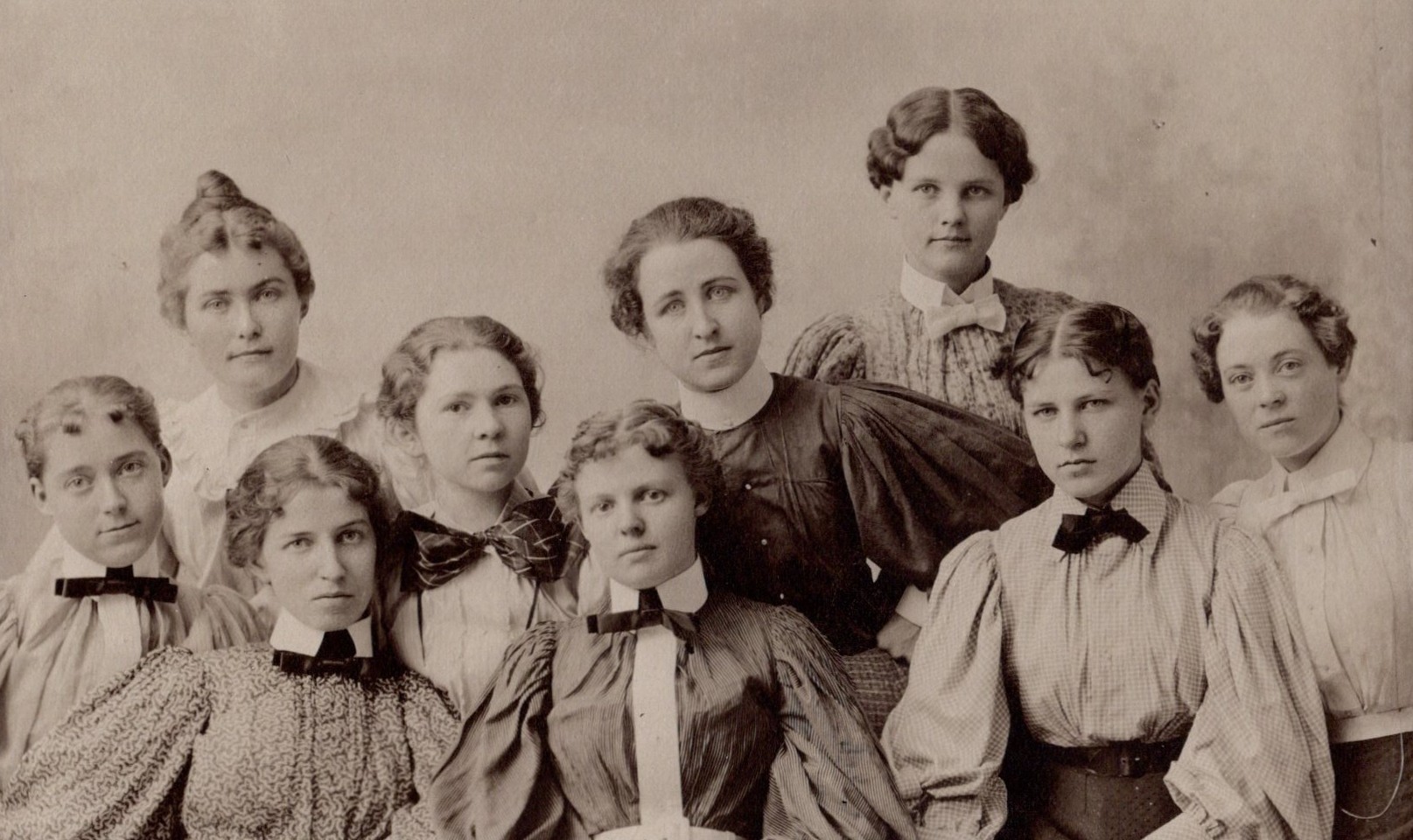
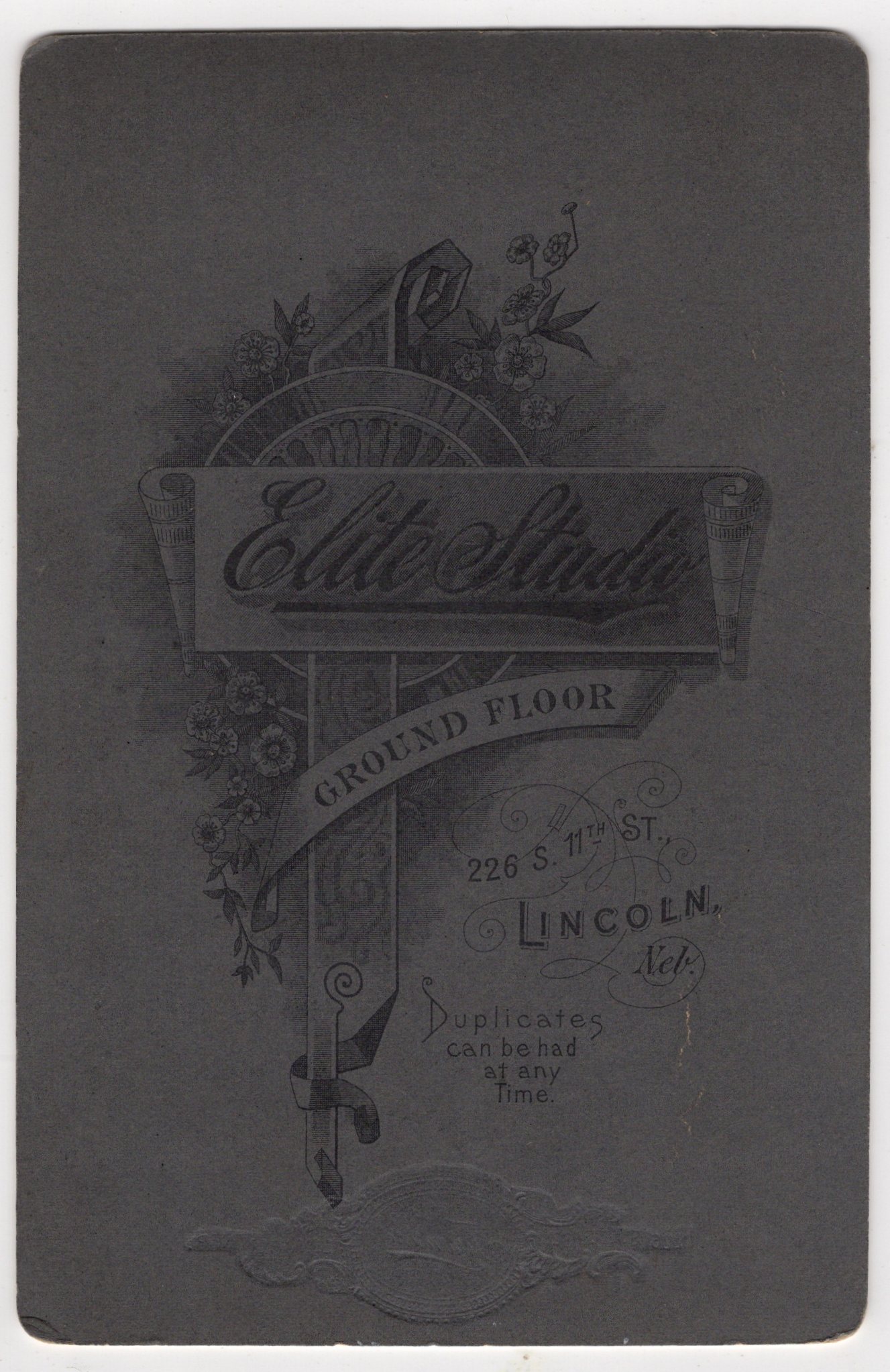
This is an exceptional and visually striking cabinet card featuring a group portrait of nine young women, posed closely together in a carefully arranged studio composition. Their attire—high-collared blouses, puffed sleeves, and decorative bows—reflects late Victorian to early Edwardian fashion, suggesting a date in the circa 1895–1905 range. The sitters present a unified and dignified appearance, possibly indicating a school group, literary society, or women’s club, all of which were increasingly prominent during this period. The photographer’s imprint appears prominently on the mount: “Elite Studio, Ground Floor, 226 S. 11th St., Lincoln, Neb.” The elaborate back mark, featuring decorative typography and floral motifs, is typical of turn-of-the-century cabinet card design and suggests a studio positioning itself as modern and upscale. It is likely that the photographers name is “Townsend”. That name can be found in the logo. Lincoln, Nebraska, during the cabinet card era was a rapidly growing Midwestern city following its designation as the state capital in 1867. By the late 19th century, Lincoln had developed into a regional hub for education, commerce, and culture, anchored by the presence of the University of Nebraska. The image itself is beautifully rendered, with strong tonal range and fine detail in the faces and textiles. The women’s expressions range from composed to subtly assertive, lending the photograph a compelling presence and a sense of individuality within the group. The cabinet card is in very good antique condition overall. The photograph remains crisp and well-defined, with strong contrast. There is light corner wear to the mount. The reverse backmark is clear and attractive, with only minor wear and no significant damage. Overall, this is a clean and highly displayable example. See Scans.
This vintage postcard is available for purchase at my store, The History Peddler, for $28.00 or best offer.
Interested collectors may view the listing here:
https://www.ebay.com/itm/236722549767
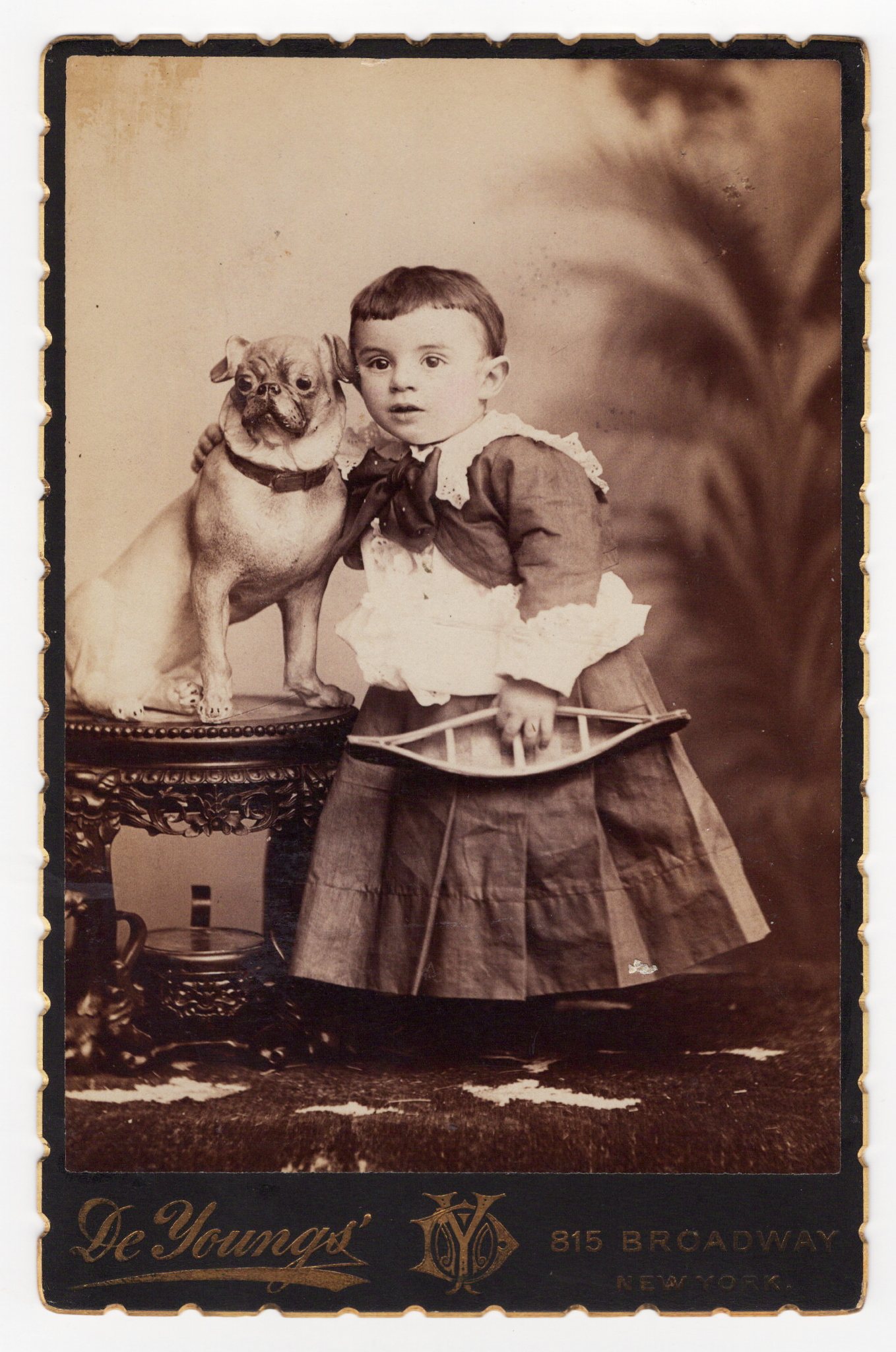
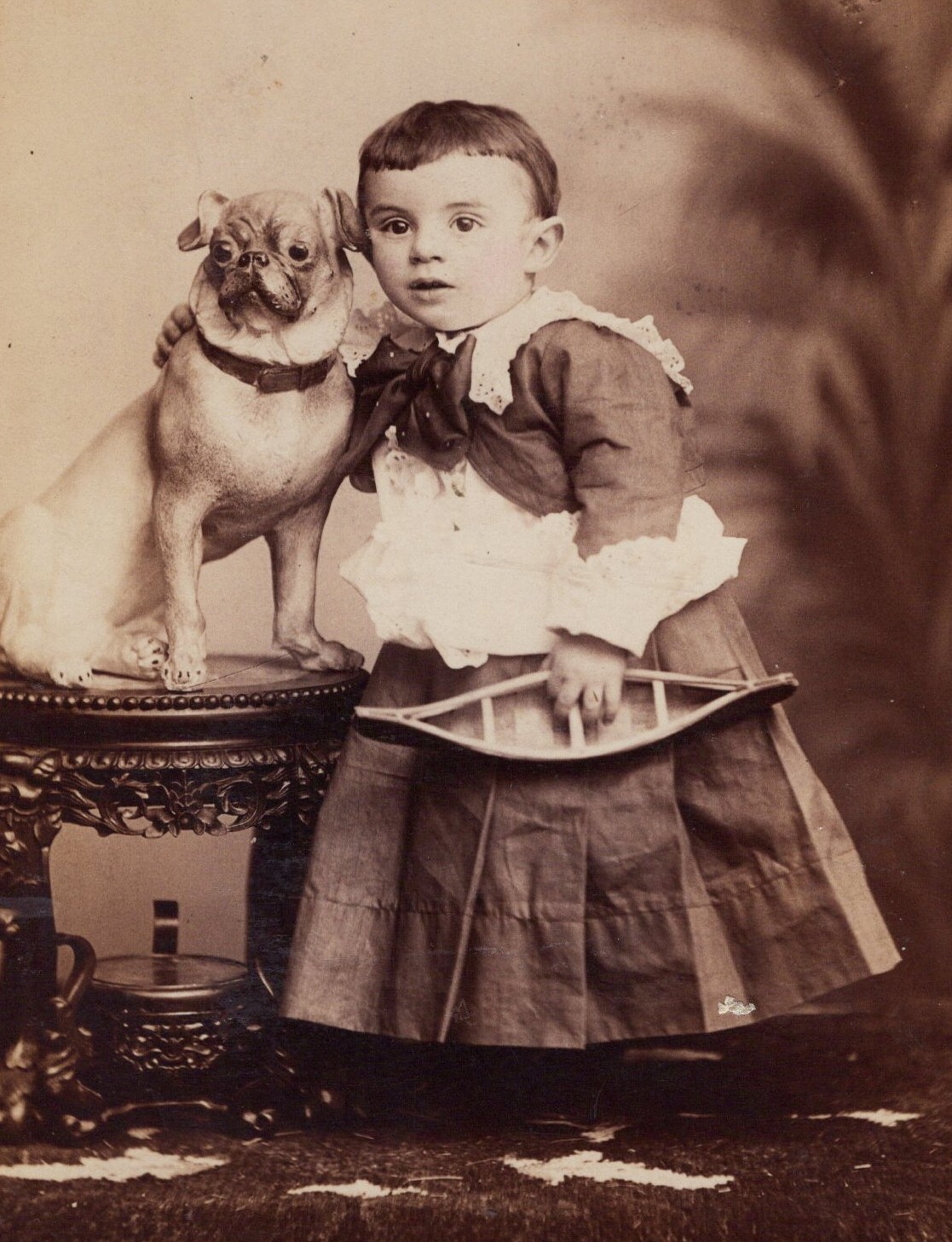
This striking cabinet card photograph captures a young child, seemingly around two or three years old, standing beside a small dog that is perched on an ornately decorated pedestal table. The child, dressed in a beautifully tailored Victorian outfit, places an arm around the dog in a gentle yet confident embrace, looking directly at the camera with an expression that conveys a mix of curiosity and composure. The child holds a small wooden toy boat, a charming prop that adds an element of playfulness to the otherwise formal portrait. The child is dressed in a dark-colored, long-sleeved dress with a pleated skirt, a lace-trimmed collar, and a large bow at the neck. White lace detailing decorates the cuffs and bodice, further emphasizing the intricate craftsmanship of the garment. The child’s short, neatly trimmed hair, round face, and large eyes give them an endearing yet serious appearance. At first glance, the dog appears almost lifelike, but upon closer inspection, its stiff posture, rigid gaze, and unnatural stillness suggest that it may not be a live animal but rather a taxidermy specimen or even a sculpted prop. The dog’s breed resembles that of a pug or pug-mix, with a compact, sturdy build, a broad face, short snout, and slightly bulging eyes. Its expression is frozen in an almost human-like seriousness. The photograph is mounted on a cabinet card with elegant scalloped edges, a decorative feature that enhances its visual appeal. The photographer’s name, De Young’s, is embossed in gold lettering at the bottom, along with the studio’s address at 815 Broadway, New York. The photographer, Joseph DeYoung (1843-1919), was both well known and highly respected. He had operated his studio from a number of addresses in New York City. He left the 815 Broadway address, where this photograph was taken in about 1890. He was at that location from at least 1884. In 1907 DeYoung’s studio was involved in the apprehension of a noted thief. The studio had a display case outside the store so pedestrians could see samples of their work. The thief was caught jimmying open the case and removing two sports photographs. The police were very interested in the home address given to them by their new arrestee. They were surprised that he lived in a mansion but it made sense when they learned he was a millionaire’s butler. He had worked in that same capacity for other millionaires living in the city. When the police searched his room, they found a cache of personal items belonging to his current and former employers. Years later, a deceased DeYoung made the news because of his bizarre estate planning. When he died, he left five dollars to his wife, five dollars to his son, and one half of his business to his business partner, Matilda Wallace. The back of the cabinet card is a masterpiece in itself, featuring an elaborate gold-embossed design against a black background. Swirling Victorian filigree, floral motifs, and elegant typography proudly advertise the services of De Young’s as Photographers, Portrait Painters, and Crayon Artists. The phrase “Extra Finish” suggests that this particular image may have been a premium offering, possibly with superior printing quality or special treatment. (SOLD)
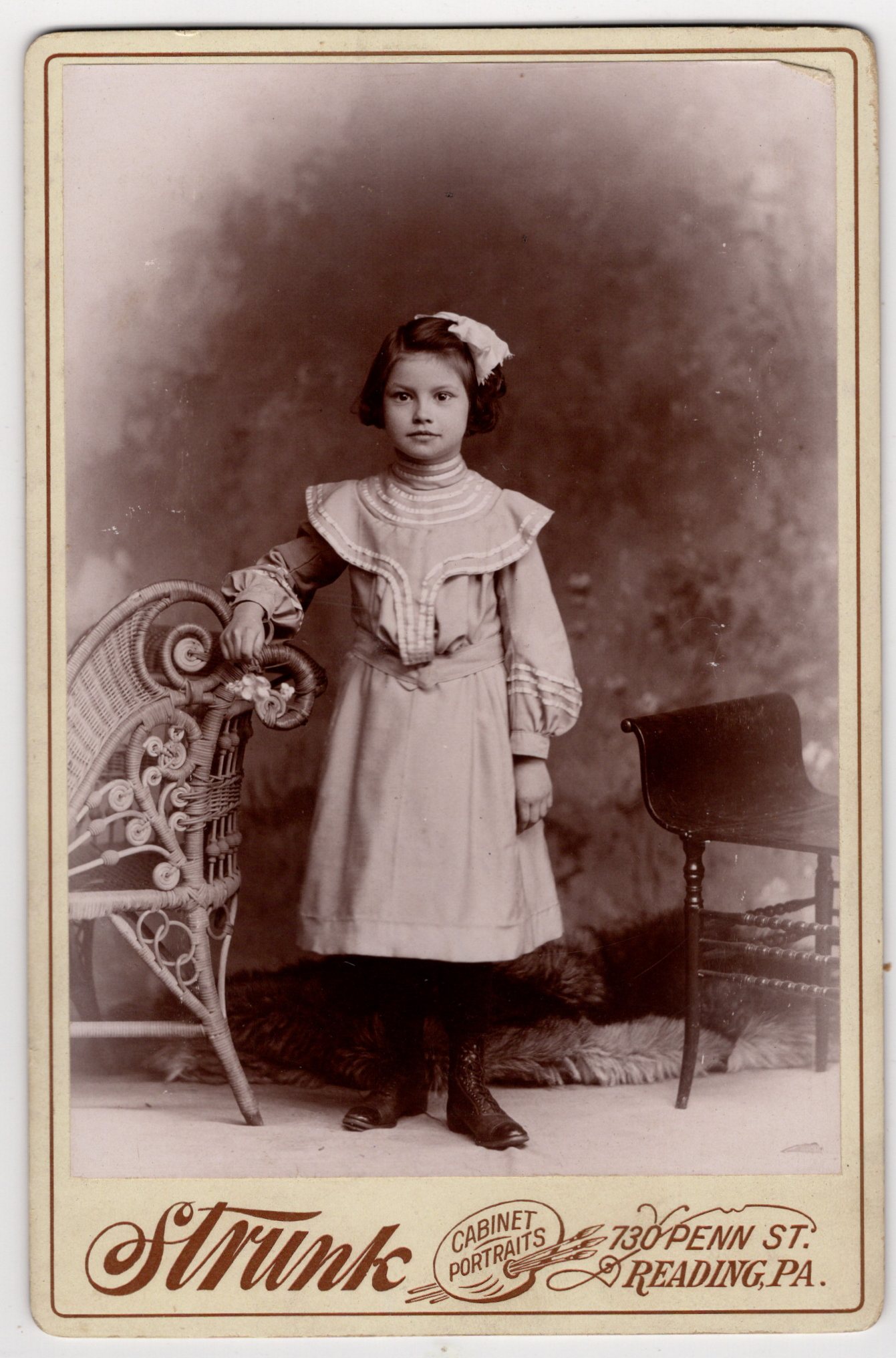
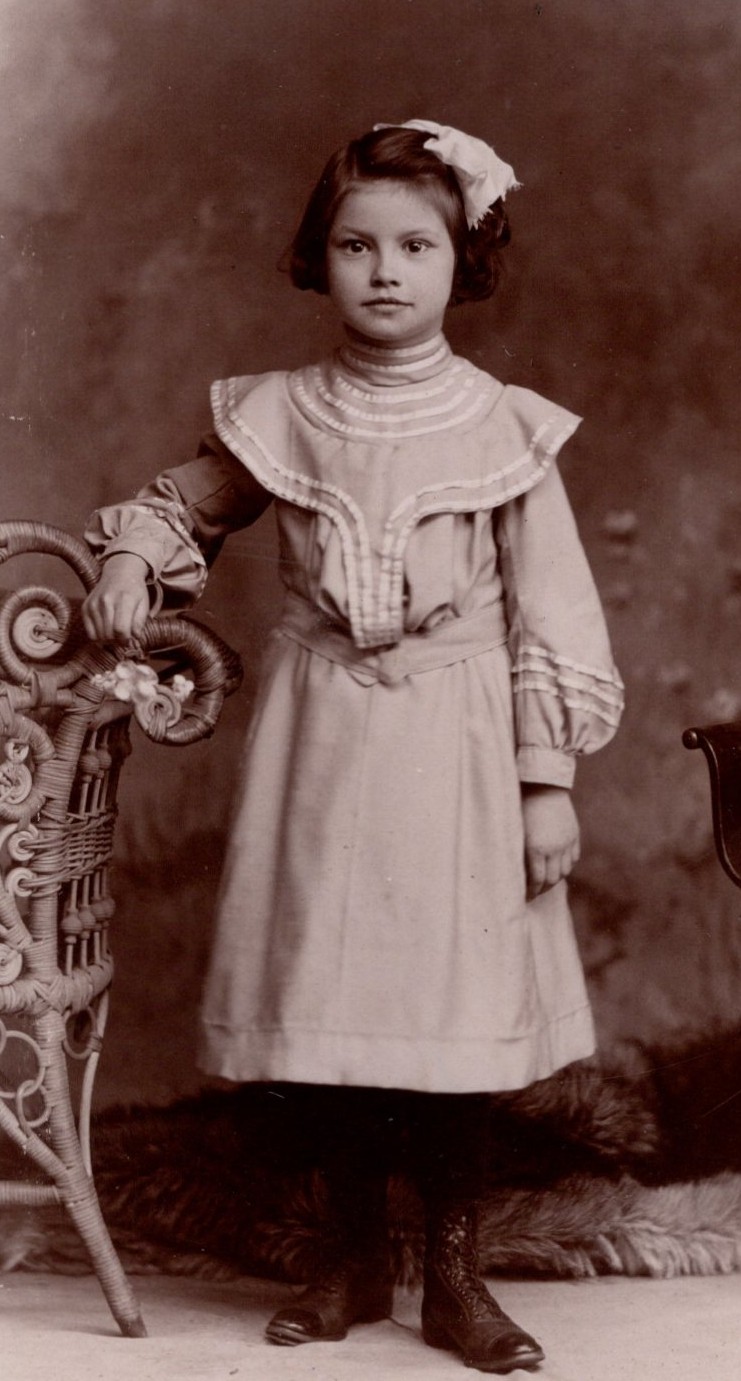
This lovely antique cabinet card photograph features a full-length studio portrait of a young girl, photographed by Strunk of Reading, Pennsylvania, whose studio imprint appears prominently at the bottom of the mount. The girl stands beside an ornate wicker chair, resting one hand on the elaborately curved armrest. A small wooden chair is positioned on the opposite side, and a fur rug is visible beneath her feet, all typical studio props used in late 19th and early 20th century portrait photography. The painted studio backdrop creates a soft, neutral setting that keeps the focus on the subject. She wears a light-colored dress with decorative trim and a wide, ruffled collar, along with dark stockings and lace-up boots. A large bow adorns her hair, which is styled in a short bob with gentle waves. Her expression is serious and composed, as was common in children’s studio portraits of the period, and she stands very still in a formal pose, suggesting the photograph dates to a time when longer exposure times required subjects to remain motionless. John D. Strunk was a well-known Reading, Pennsylvania photographer and a pioneer in photography in the region, operating a studio in Reading for many decades. His cabinet cards are widely collected today, particularly those depicting children and families from the Reading area. I have a collection of Strunk photographs; he was a prolific photographer. Much of his work reflects high craftsmanship. This cabinet card is in very good condition for its age. The photograph retains strong detail throughout, with good contrast and clarity. The image has a tiny crease in it’s top right corner but is generally clean. Overall, it presents extremely well and remains a well-preserved portrait of an adorable little girl. (see scans). Based on the mount style, studio props, and the child’s clothing and hairstyle, this cabinet card likely dates to the late 1890s to early 1900s.
This Cabinet Card is available for purchase at my store, The History Peddler, for $24.00 at auction.
Interested collectors may view the listing here:
https://www.ebay.com/itm/336504202383
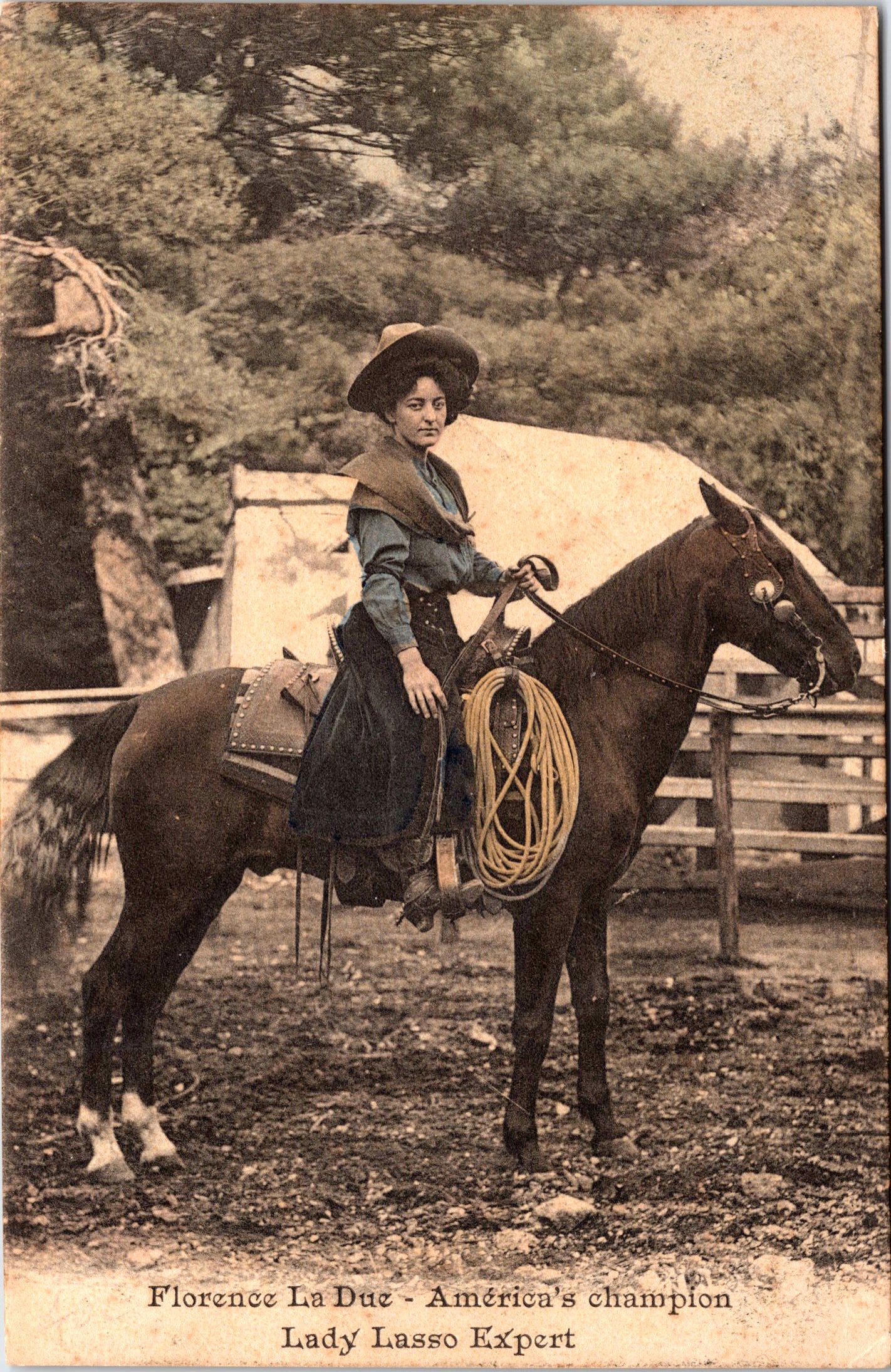
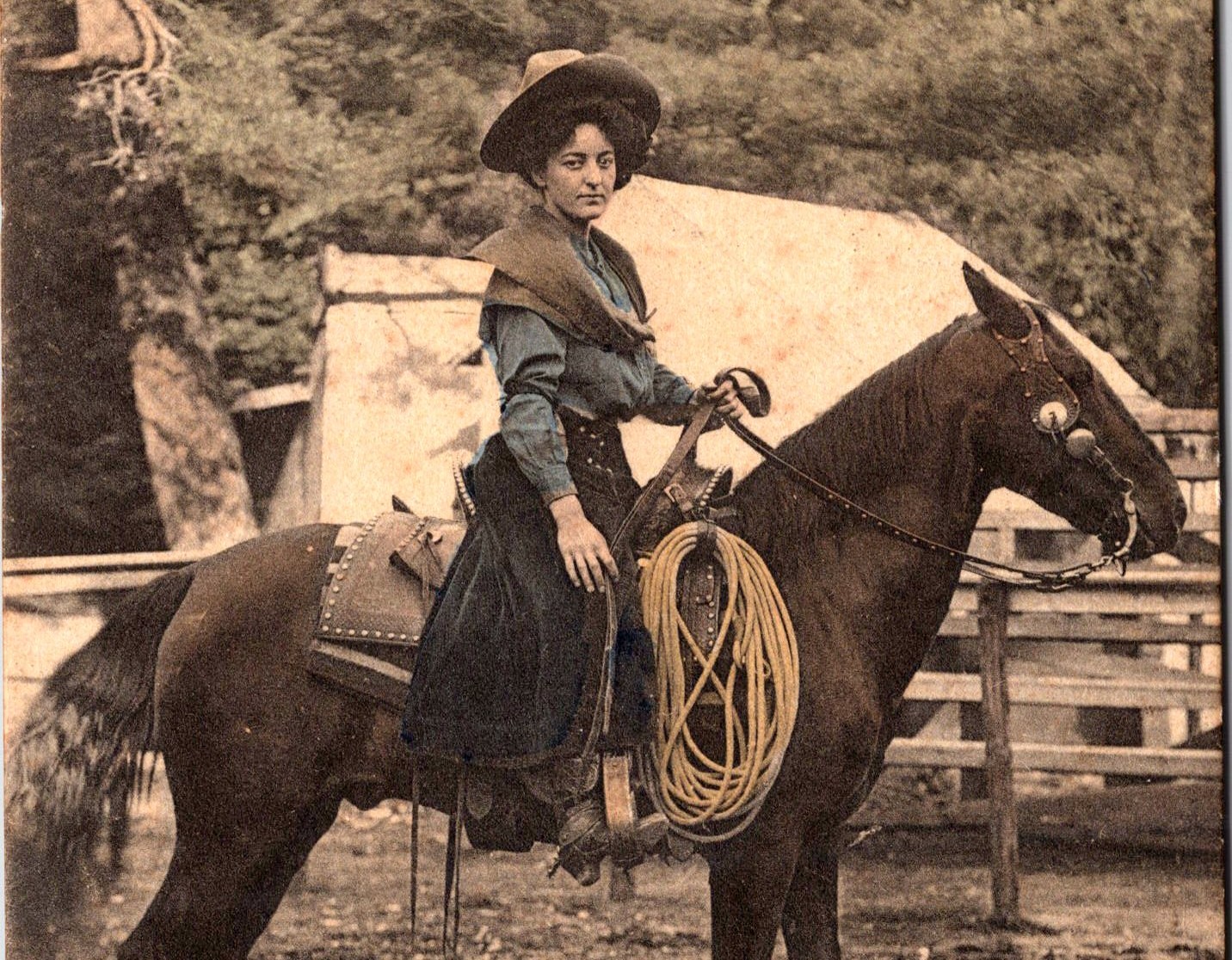
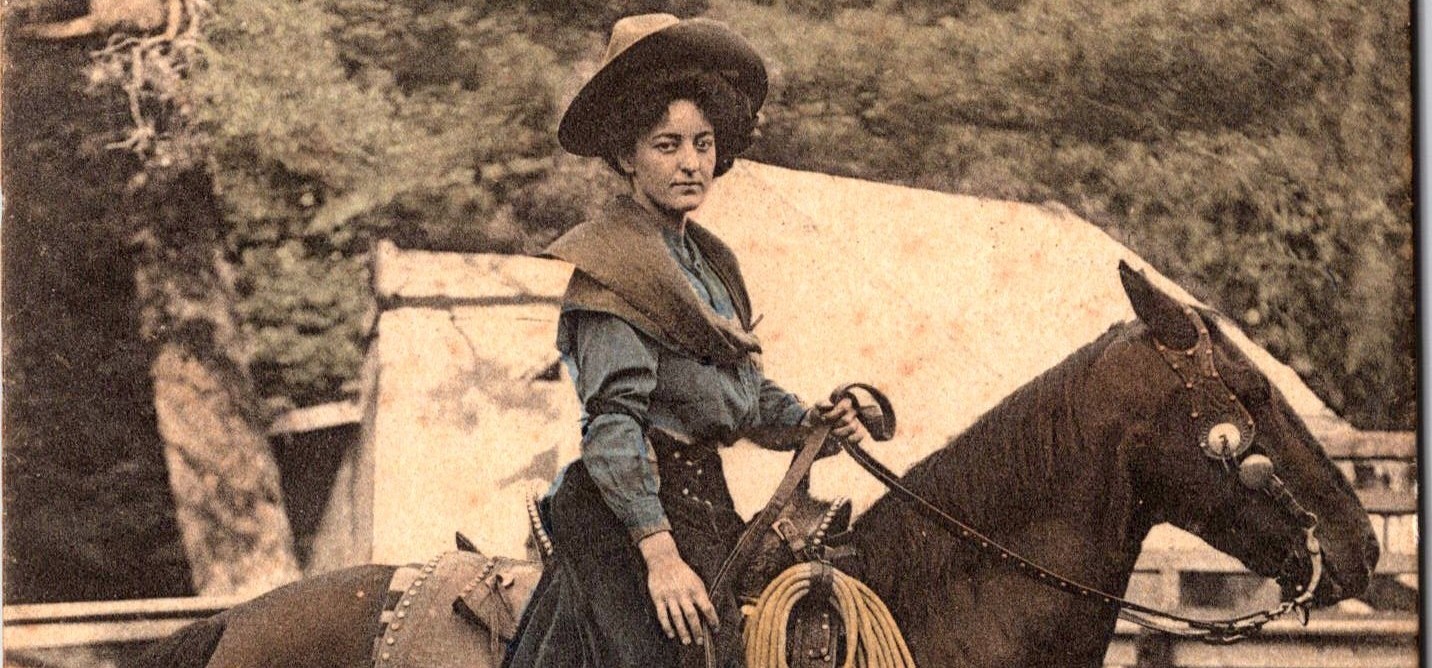
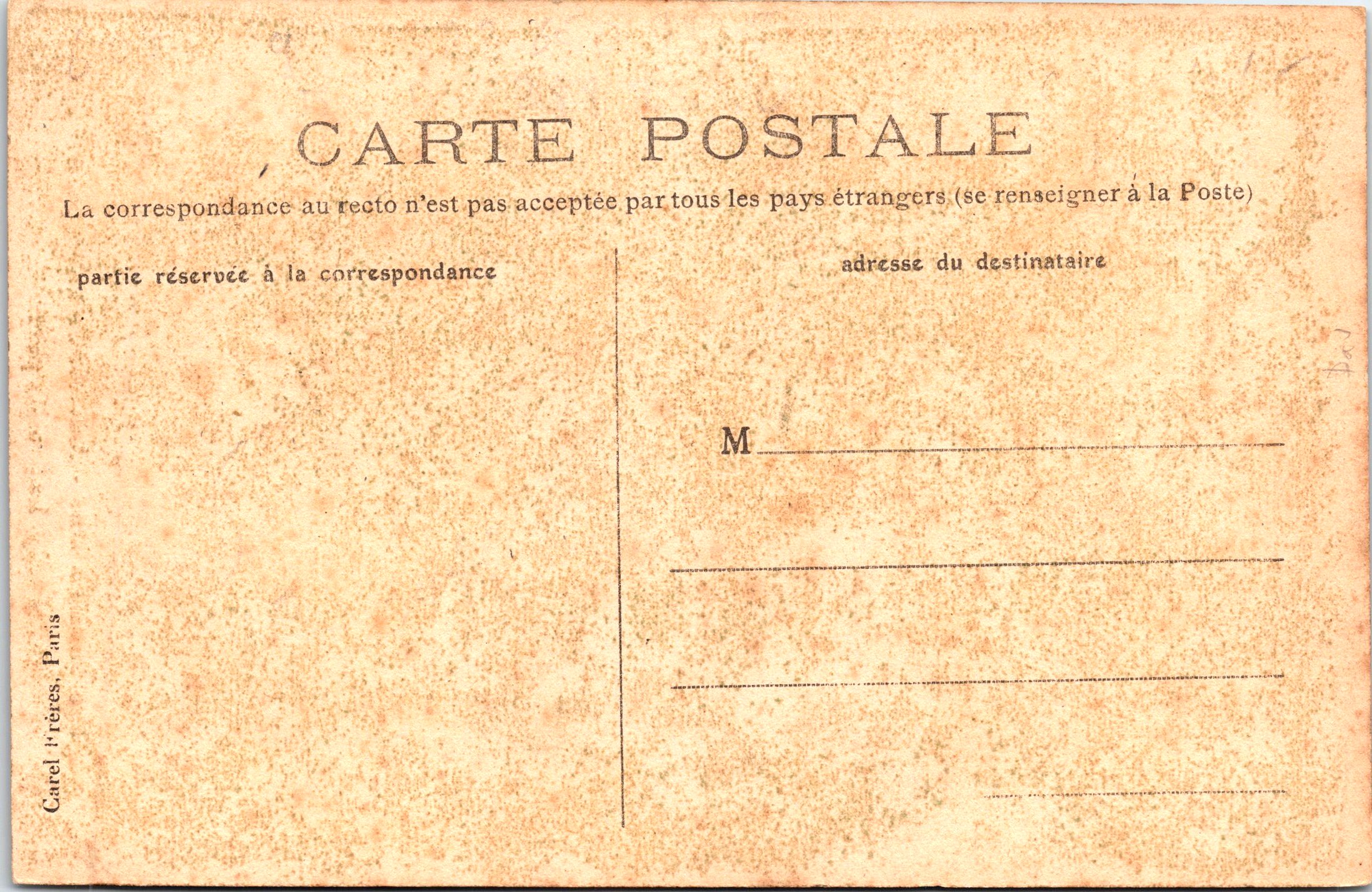
This striking early 20th-century French postcard features Florence Laduz, posed confidently on horseback in full working cowgirl attire—wide-brimmed hat, practical skirt, boots, and coiled lariat at the saddle. The image blends realism and performance: Laduz is presented not as a novelty but as a capable rider, projecting quiet authority and self-possession. Her direct gaze toward the camera reinforces that impression, making this a particularly compelling portrait of a woman in a traditionally male-dominated role. The photograph likely dates to the circa 1900–1910 period, a time when European fascination with the American West—and with female equestrians and performers—was at its height. In France especially, images of women riders were popular in postcards, circus publicity, and illustrated journals, often straddling the line between documentary portrait and performance persona. The postcard was published by Carpel Frères, Paris, a French publisher active in the early postcard era and known for producing high-quality photographic and semi-photographic cards, including portraits of performers, costumed figures, and theatrical or novelty subjects. Florence Laduz, better known on stage as Florence LaDue, was the professional name of Grace Maud Bensel (1883–1951), a celebrated vaudeville performer and internationally recognized champion trick roper. Born in Montevideo, Minnesota, she experienced an unconventional upbringing: her mother died when she was an infant, and she spent much of her childhood on a Sioux reservation, where her grandfather served as a government agent. These early years appear to have shaped both her independence and her remarkable horsemanship. As a young woman, Bensel left home—by some accounts running away to join a Wild West show—and adopted the stage name Florence LaDue. By 1905, she was performing with Cummins’s Wild West Show and Indian Congress, where she met fellow rider and roper Guy Weadick. The two married in 1906 and spent the next several years touring extensively across North America and Europe. LaDue enjoyed a distinguished career in vaudeville and Wild West exhibitions, appearing with major circuits including Keith-Albee, Orpheum, and Pantages, and performing internationally in London, Glasgow, and Paris—making the presence of her image on a French postcard especially fitting. She appeared both solo and with her husband, sometimes billed as Weadick and LaDue, and was equally at home in theatrical settings and competitive roping exhibitions. She also appeared on Broadway in the production Wyoming Days and later with Will Rogers’ Wild West Show. By 1912, LaDue and Weadick settled in Calgary, Alberta, where she played a foundational role in the creation of the Calgary Stampede. LaDue retired after a 31-year career as the undefeated World Champion Lady Fancy Roper, a title that underscored her status as one of the most accomplished female ropers of her era. In recognition of her legacy, Florence LaDue was inducted into the National Cowgirl Museum and Hall of Fame in 2001. Her contributions continue to be honored: in 2024, the Calgary Stampede announced that a major park approach would be named “Flores LaDue Parade,” commemorating her central role in the event’s early history. She died in 1951 in Phoenix, Arizona. (SOLD)
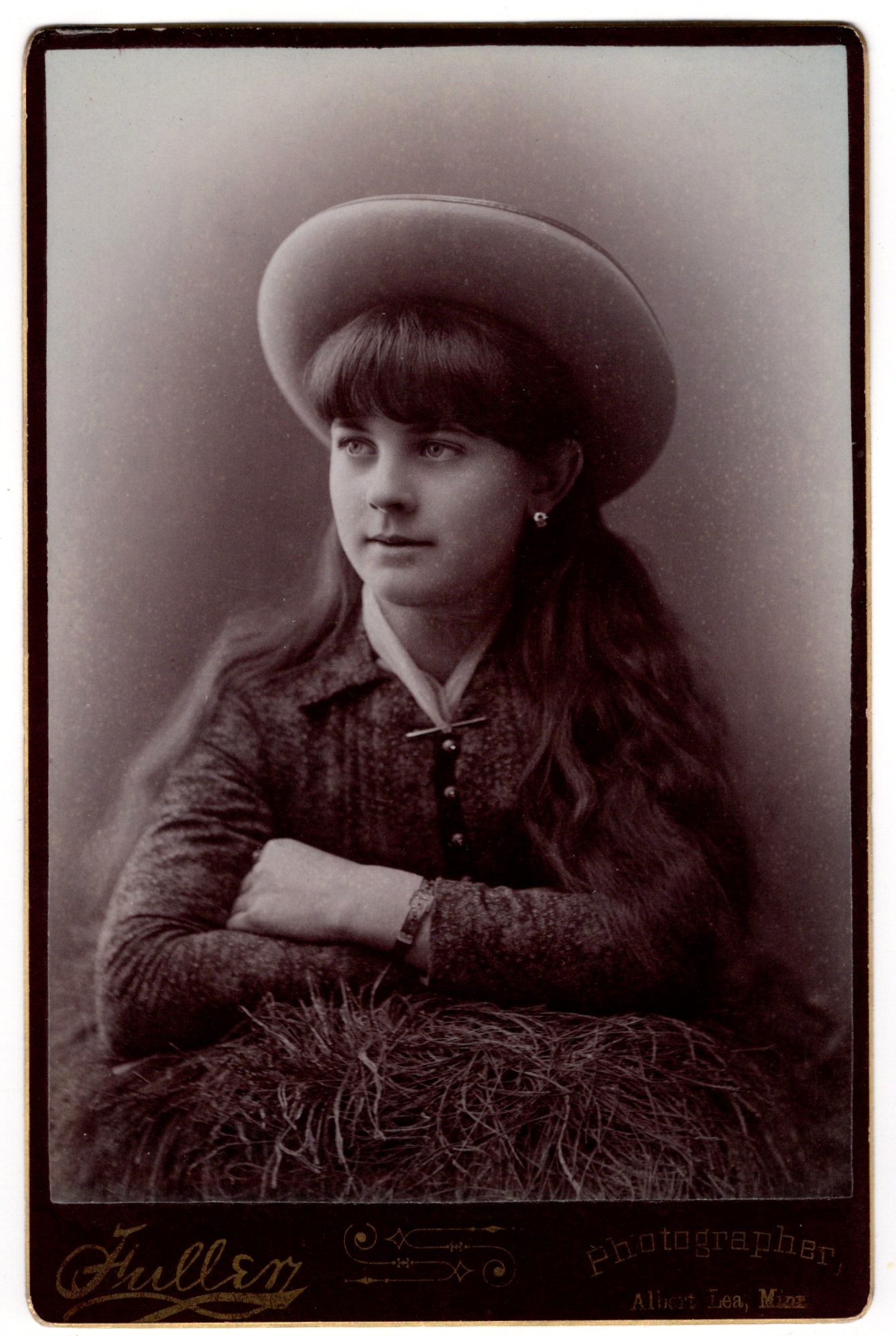
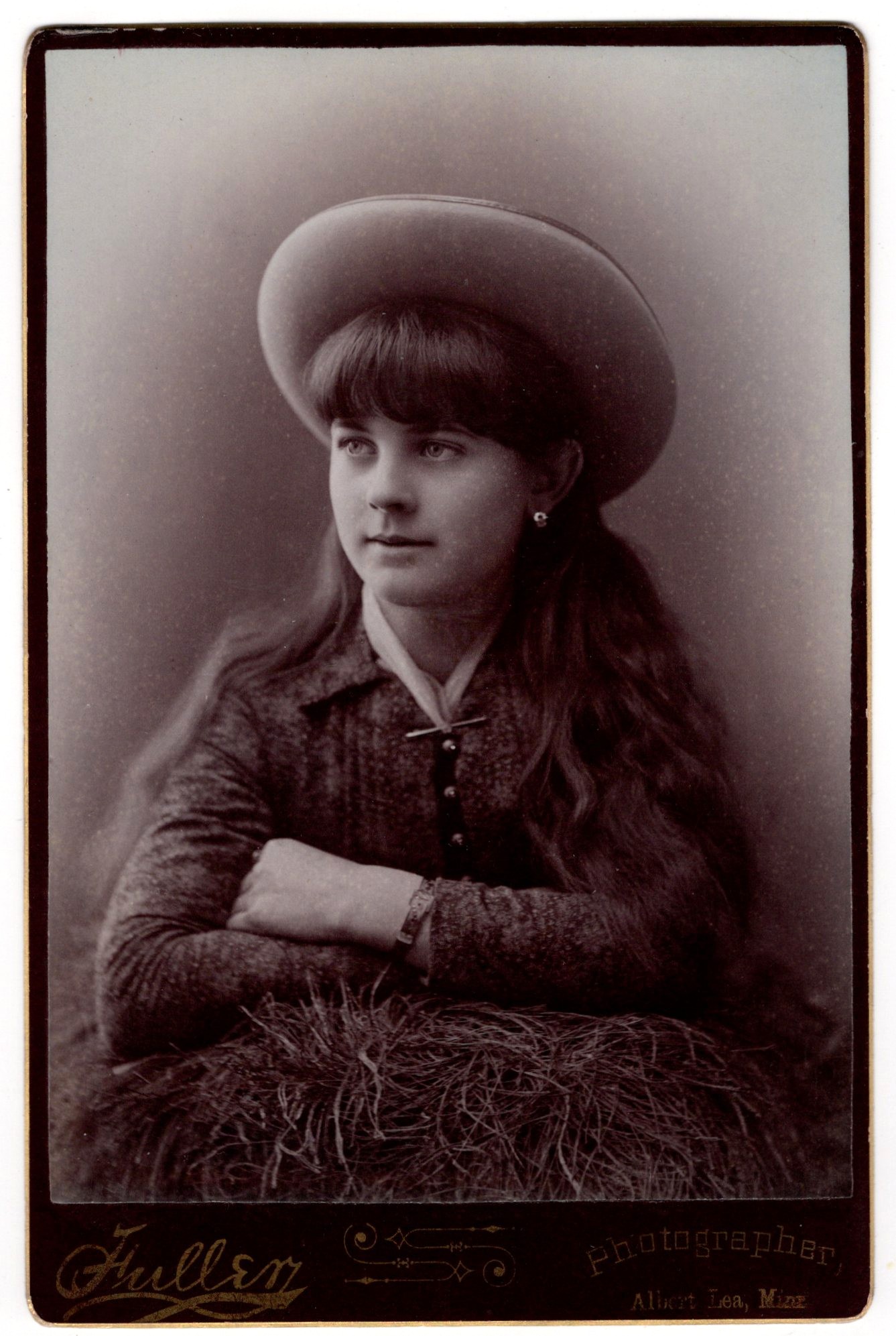
Offered here is a beautiful cabinet card portrait of a very pretty young woman photographed by Fuller of Albert Lea, Minnesota. The sitter is shown in a classic late 19th-century studio pose, seated with arms folded and resting on a rustic studio prop, possibly meant to simulate a natural setting. She wears a wide-brimmed hat, a patterned dress with a decorative collar bar pin, a bracelet, and small earrings. Her long hair falls over her shoulder in a carefully arranged style typical of the period. The portrait has a soft, elegant studio lighting effect and is a particularly appealing example of Victorian portrait photography. The photographer was Joseph A. Fuller (1851–?), an early Minnesota photographer. Fuller was born in Walworth County, Wisconsin, and worked as a photographer in Decorah, Iowa, and Chatfield, Minnesota, before moving to Albert Lea in 1873, where he established his photographic studio. His studio operated for many years and produced cabinet cards, tintypes, and other photographic formats, serving the residents of Albert Lea and the surrounding Freeborn County area. Albert Lea, Minnesota, where this photograph was taken, is located about ninety miles south of Minneapolis and was named after Albert Miller Lea, a topographer with the U.S. Dragoons who surveyed the area in 1835. By the 1870s and 1880s, Albert Lea was a growing Midwestern town, and photographers like Fuller played an important role in documenting its residents and families. Based on the mount style, typography, and photographic presentation, this cabinet card likely dates to the mid to late 1880s (c1885-1890). The cabinet card is in very good antique condition. The photograph itself is clear with good contrast and detail with only minor surface wear. The mount has gold beveled edges. The reverse is blank and shows some light surface wear and minor discoloration near the lower area, typical for a cabinet card of this period. Overall, the cabinet card is very clean and attractive portrait of a very pretty girl in her teen years. See Scans.
This cabinet card is available for purchase at my store, The History Peddler, for $65.00 at auction.
Interested collectors may view the listing here:
https://www.ebay.com/itm/336507878225

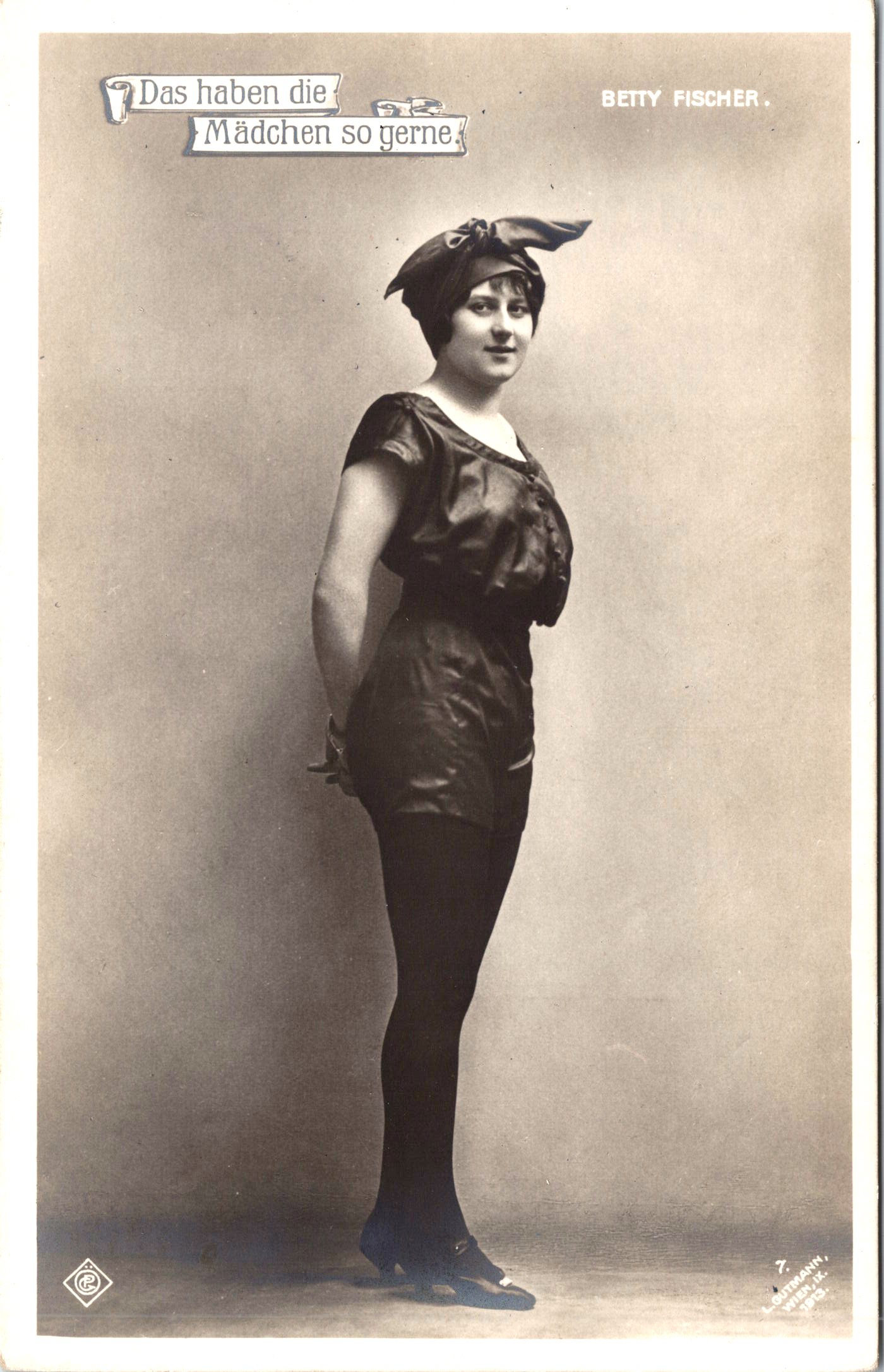
This striking European real photo postcard features stage performer Betty Fischer, photographed in Vienna in 1913 by L. Gutmann, whose imprint appears at the lower right of the image: “L. Gutmann, Wien 1913.” The postcard presents Fischer in a full-length studio pose wearing a theatrical costume consisting of a short satin stage outfit with stockings, heeled shoes, and a large headscarf tied in a dramatic bow. The outfit would have been considered fashionably daring for the period and is typical of costumes worn in cabaret, operetta, and theatrical revue performances in pre–World War I Vienna. The German caption at the top translates roughly to: “That’s what the girls like so much!” suggesting the postcard was likely part of a theatrical or humorous series associated with stage performance culture of the period. Betty Fischer (1887–1969) was an Austrian operetta singer, born in Vienna and she spent most of her career in Vienna’s vibrant operetta and theater world. She began performing at a young age in variety productions and operetta and became an established performer at the Raimundtheater between 1900 and 1903. She then rose to prominence as a prima donna at the Theater an der Wien from 1903 to 1928, one of Vienna’s most important operetta venues. In 1928 she starred at the Johann Strauss Theater, and she also made guest appearances at other theaters in Vienna and in other musical centers. In her later years, she appeared in character roles at the Raimundtheater and also taught at the Vienna Conservatory. Fischer was considered an outstanding operetta singer in her day, known for excelling in both traditional operetta roles and contemporary works. The photographer L. Gutmann of Vienna was active in the early 20th century and is known for producing theatrical and portrait postcards of performers working in Vienna’s entertainment industry. His work is frequently encountered on postcards dating from the 1910s, particularly portraits of stage personalities. At the lower left corner of the front is a publisher’s logo that appears to be the intertwined letters “OPG”, standing for Osterreichische Photographische Gesellschaft (Vienna, Austria), a firm that issued theatrical and actress postcards in the early 20th century. Printing on the front of the postcard indicates that it was published in 1913. The postcard is in very good antique condition with a strong, clear image and pleasing contrast. There is light corner wear consistent with age. Under close inspection, a very faint line is visible in the right background area near the subject’s knee, lightly extending across part of the image; it does not affect the subject and is relatively unobtrusive, mentioned here for accuracy. Overall, this is a clean and highly displayable example an Austrian opera star photo postcard. See scans.
This postcard is available for purchase at my store, The History Peddler, for $22.00 at auction.
Interested collectors may view the listing here:
https://www.ebay.com/itm/236722549768
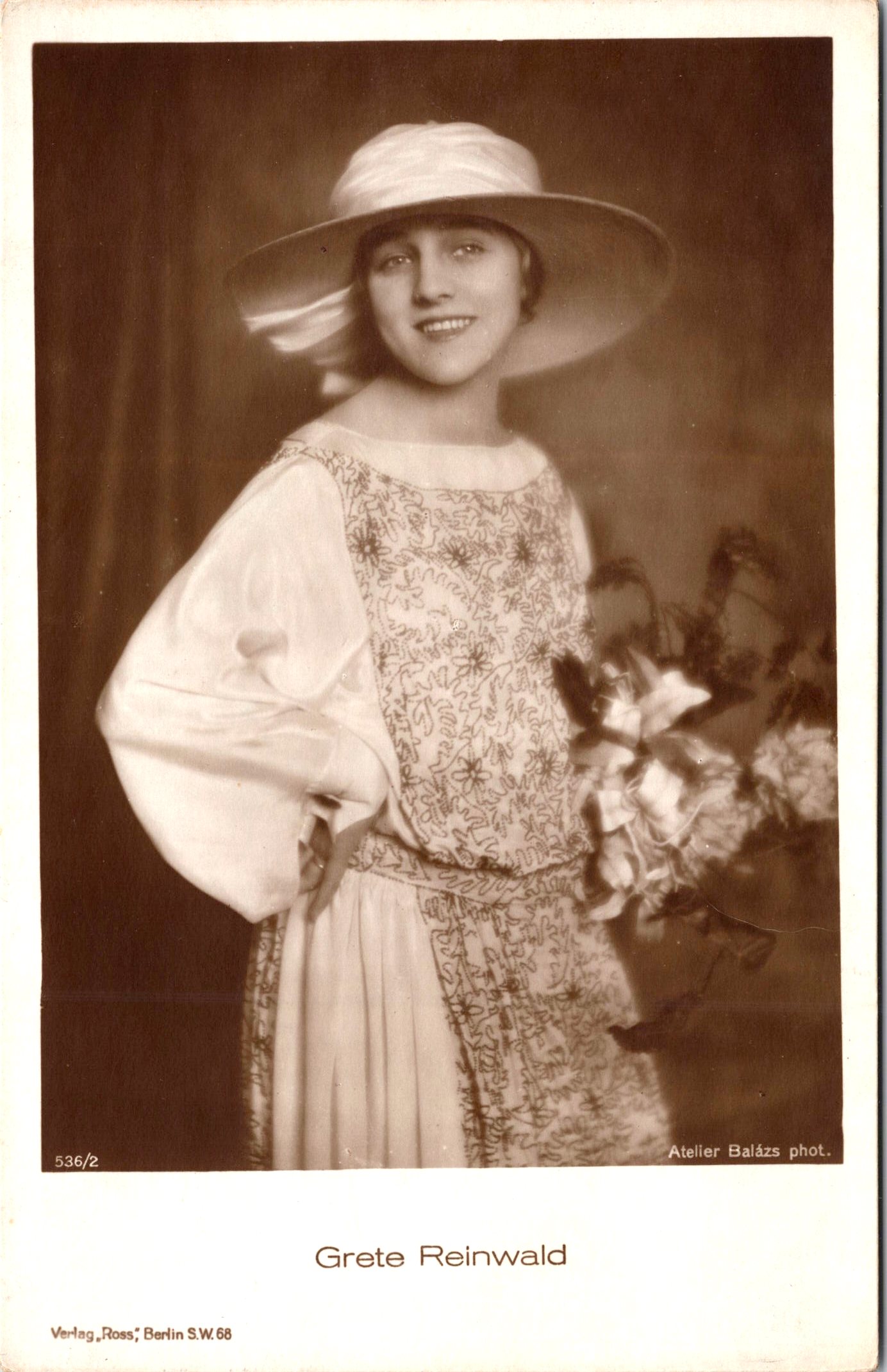
POSTCARD 1 (SOLD)
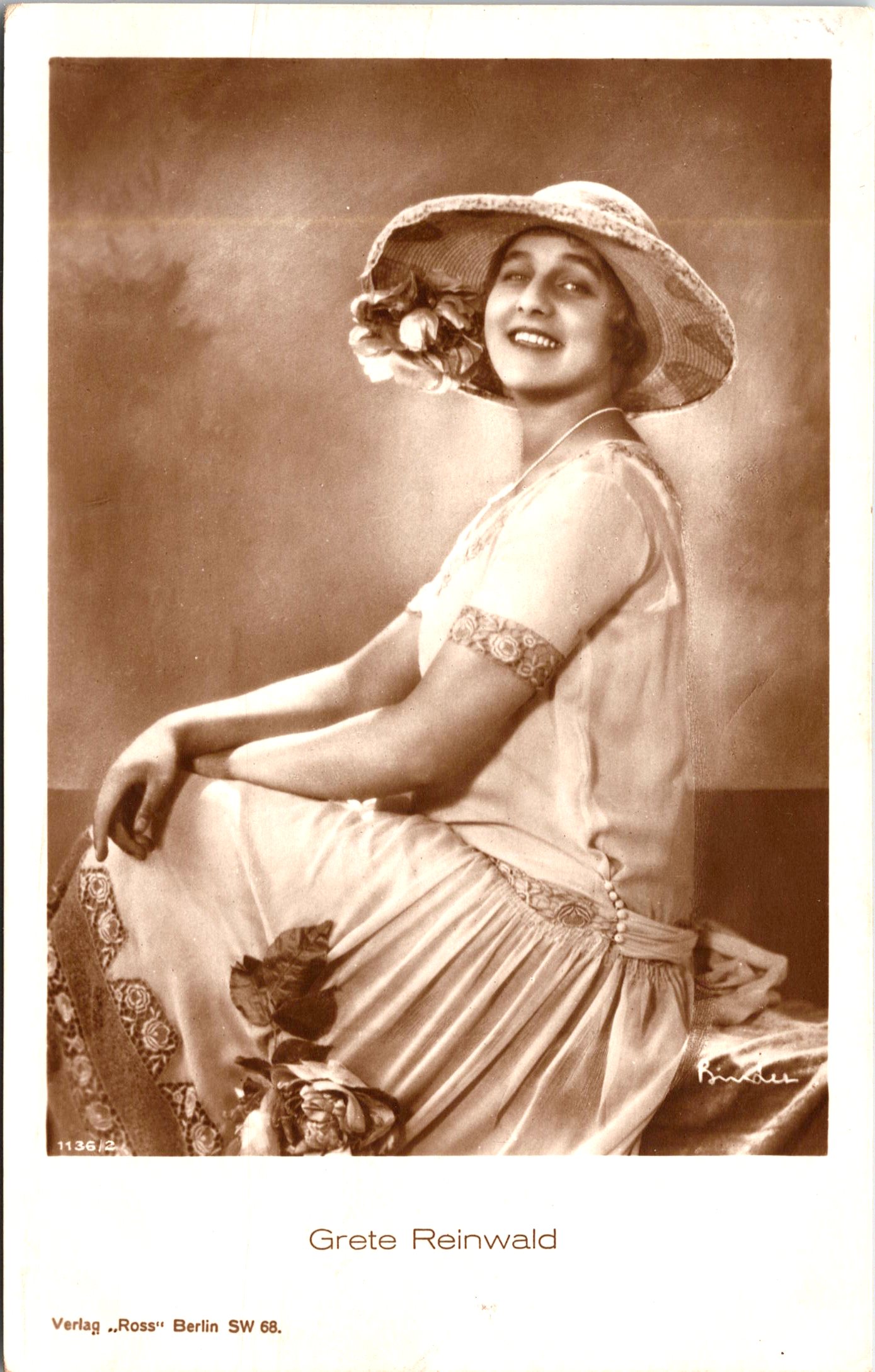
POSTCARD 2 (SOLD)
These real photo postcards feature the elegant German actress Grete Reinwald, who began her career as a celebrated child model and went on to achieve recognition on stage and in silent films. Born in 1902 in Stuttgart, Grete Reinwald started modeling as a child and quickly gained popularity in Germany. Alongside her siblings Hanni and Otto, she became a fixture in early German cinema and theater. She transitioned into film during the silent era and continued acting into the 1930s, admired for her expressive face and natural charm. She passed away in 1983, leaving behind a rich legacy in German performing arts.
Postcard 1 captures Reinwald in young adulthood in a graceful, studio portrait taken by Atelier Balázs, a well-known photographic studio. Grete is dressed in a flowing, embroidered dress featuring a detailed swirling floral motif across the bodice and skirt. The dress is belted at the waist and paired with a wide-brimmed hat that adds a sophisticated flair to her ensemble. She holds a bouquet of large flowers—possibly carnations or peonies—adding a touch of natural softness to the scene. Her expression is one of calm confidence, and she gazes slightly to the side with a pleasant, relaxed smile. Her posture, with one hand resting on her hip and the other holding the bouquet, exudes poise and charm. This image perfectly captures her transition from a cherubic child star to a refined young woman, retaining her signature warmth and beauty. The postcard was published by Ross Verlag, a prominent German publisher of celebrity postcards, and is marked 536/2, indicating it is part of their numbered photo series. The clarity of the photo, Grete’s fashion-forward appearance, and the reputable publisher all contribute to its desirability among collectors. (SOLD)
Postcard 2 is a studio portrait taken by Alex Binder, a well known celebrity photographer. Grete flashes a beautiful smile beneath a wide brimmed hat. This postcard was published by Ross Verlag. The card is marked 1136/2, indicating it is part of a series. (SOLD)
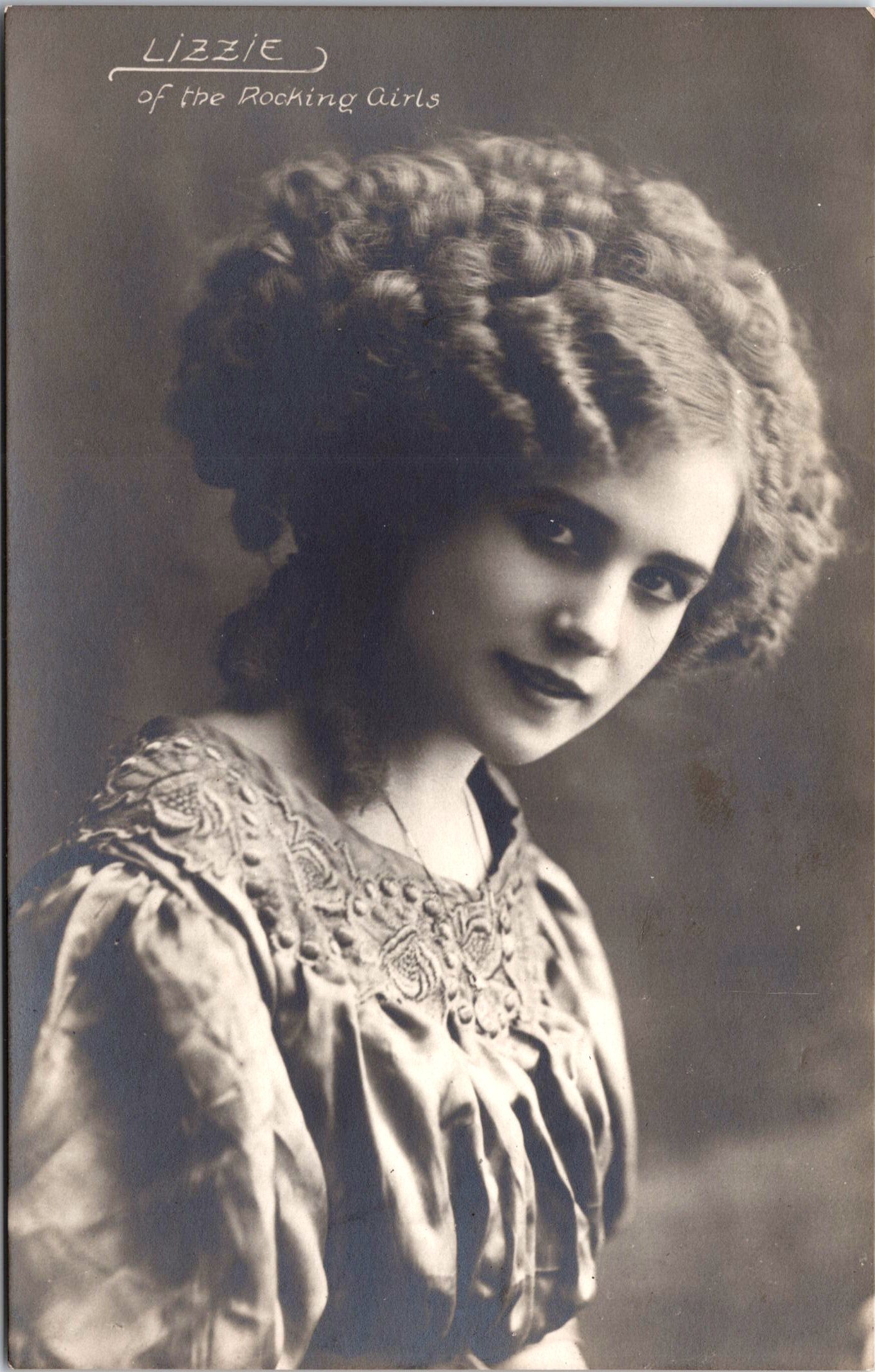
This striking real photo postcard features a studio portrait identified in period handwriting as “Lizzie of the Rocking Girls.” The image shows a young woman posed in a three-quarter view, her elaborate curled hairstyle and theatrical costume suggesting that she was a stage performer rather than a private studio sitter. Her blouse features decorative embroidery typical of stage or costume wear, and the dramatic lighting and soft-focus photographic style are consistent with theatrical portrait photography from the early 20th century. The caption “Lizzie of the Rocking Girls” likely refers to a theatrical troupe, musical comedy chorus line, vaudeville act, or touring stage company. During the circa 1905–1915 period, many small traveling performance groups—often called “girls” troupes (for example, chorus lines, dance revues, or musical comedy ensembles)—produced and sold photographic postcards of individual performers as souvenirs. These postcards were commonly sold after performances or used for promotional purposes, which would explain the professional quality of the portrait and the identification written directly on the image. The term “Rocking Girls” may refer to a song-and-dance troupe, possibly associated with a musical revue or vaudeville circuit. Many such groups had names like “The ___ Girls,” and individual performers were often marketed by first name only, which suggests that “Lizzie” may have been a stage name rather than a full professional name. Preliminary research found no information about the “Rocking Girls” which suggests that this may have been a regional or touring vaudeville company, making the postcard a scarce and interesting piece of theatrical ephemera. The postcard back has a divided back style. This real photo postcard can be dated to approximately circa 1908–1913, based on several visual and production clues. The postcard is in good antique condition overall, with a strong, clear image and pleasing contrast. There is light corner wear consistent with age. A small, faint spot is visible in the right background area a way from the subject’s chin. This postcard is an overall well-preserved and very displayable card. See scans.
This vintage postcard is available for purchase at my store, The History Peddler, for $22.00 at auction.
Interested collectors may view the listing here:
https://www.ebay.com/itm/336507708040
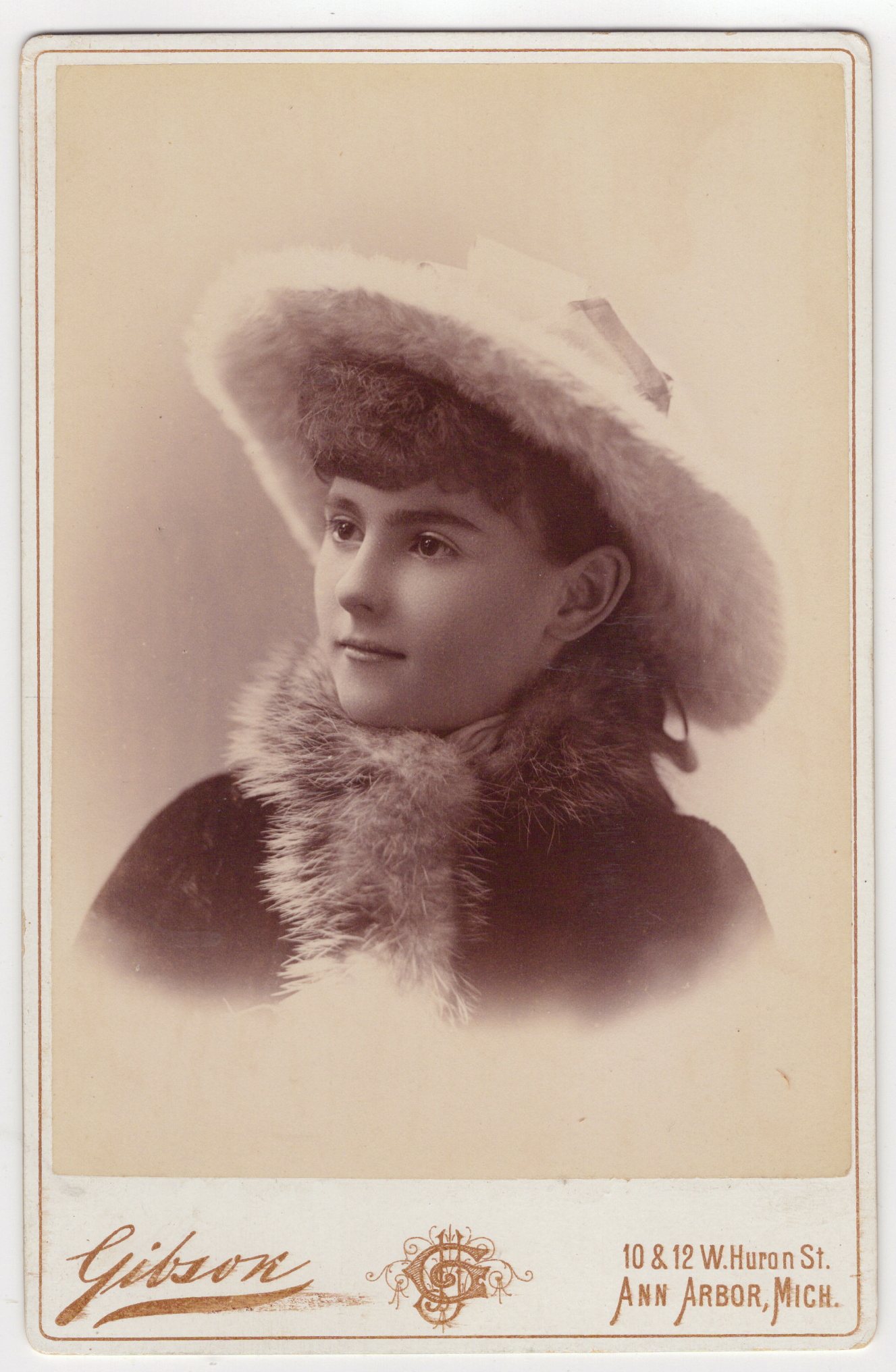
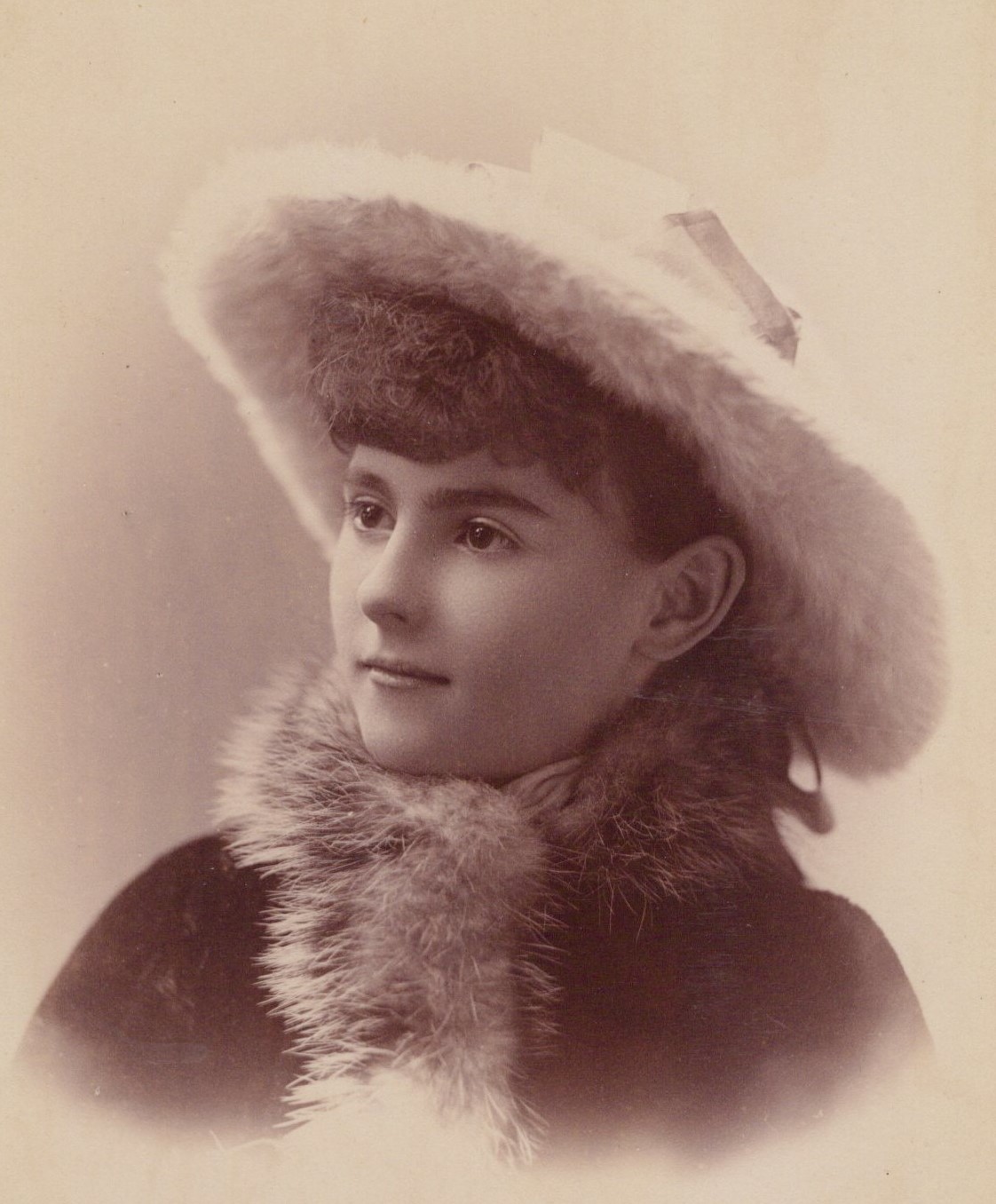
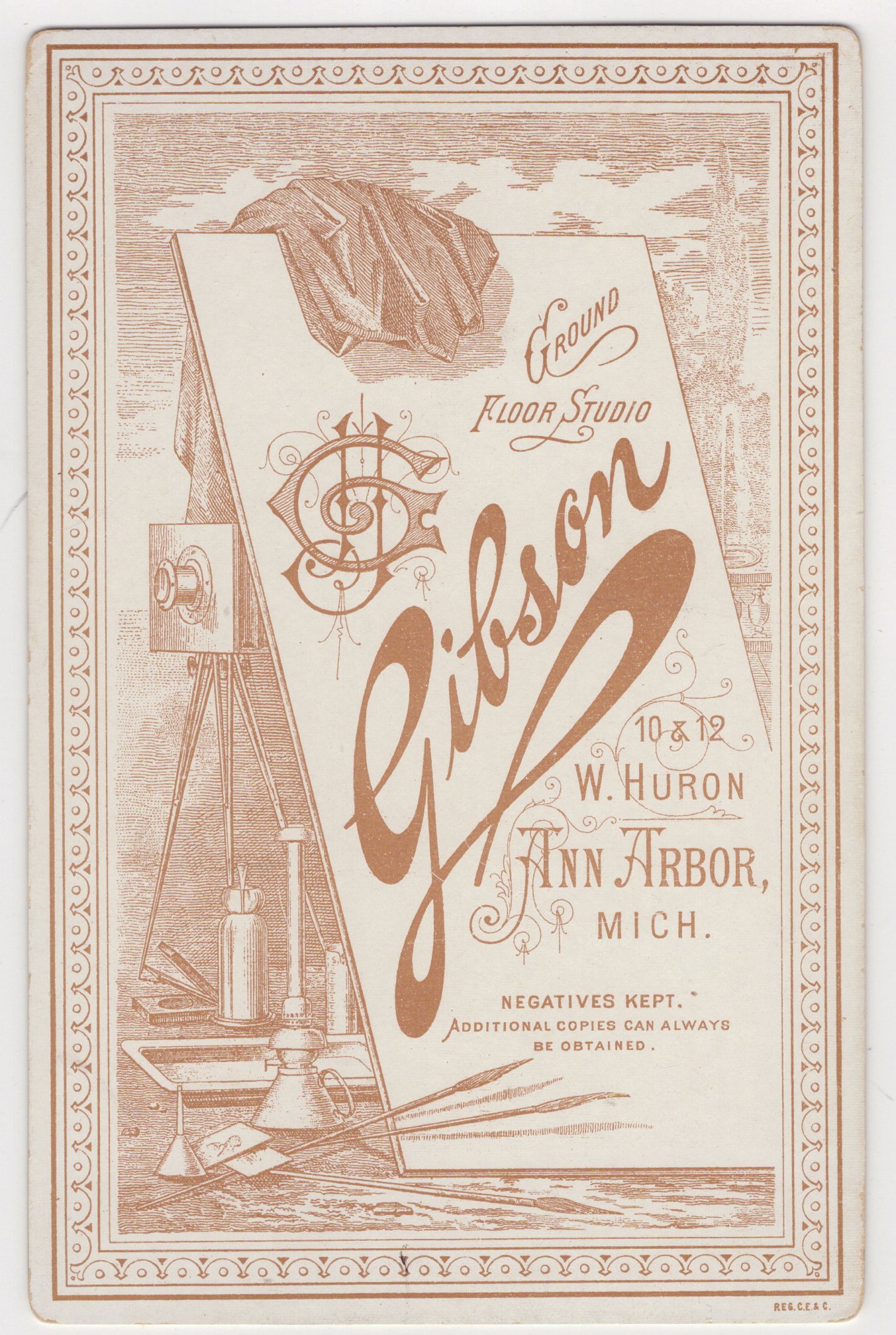
This cabinet card captures the the charm and innocence of a very fashionable young girl. She appears comfortable in front of the camera. She appears to be in her teenage years. The photographer of this pretty girl is Canadian born, John Jefferson Gibson and he took this photo at his Ann Arbor studio. He was a portrait photographer in Michigan in the 1880’s to 1893. Gibson also had studios during his career in Bay City and Detroit, Michigan. He married a Ypsilanti resident, May Clark, in 1889. Gibson was the official portrait photographer at the World’s Columbian Exposition in 1893. The Gibsons stayed in Chicago after fair and they opened a photography studio. Gibson died in 1902 at a young age (between 30 and 40 years-old). His cause of death was tuberculosis. After his death, his wife took over the studio and eventually it became the Montgomery Wards Portrait studio. Jefferson took many series of photos at the University of Michigan and this work has been published in Journals and it is currently held at the Bentley Historical Library at the University of Michigan. (SOLD)
 | bmarshphd on ELEANOR GAINES : LUBIN SILENT… |
 | phantomfamous0cbbe9d… on ELEANOR GAINES : LUBIN SILENT… |
 | summertime75 on MARY MILES MINTER : SILENT FIL… |
 | beth on WINGS CIGARETTES : ADVERTISING… |
| beth on FOUR CHEERFUL SASSY FRIENDS :… |
 THE CABINET CARD GALLERY