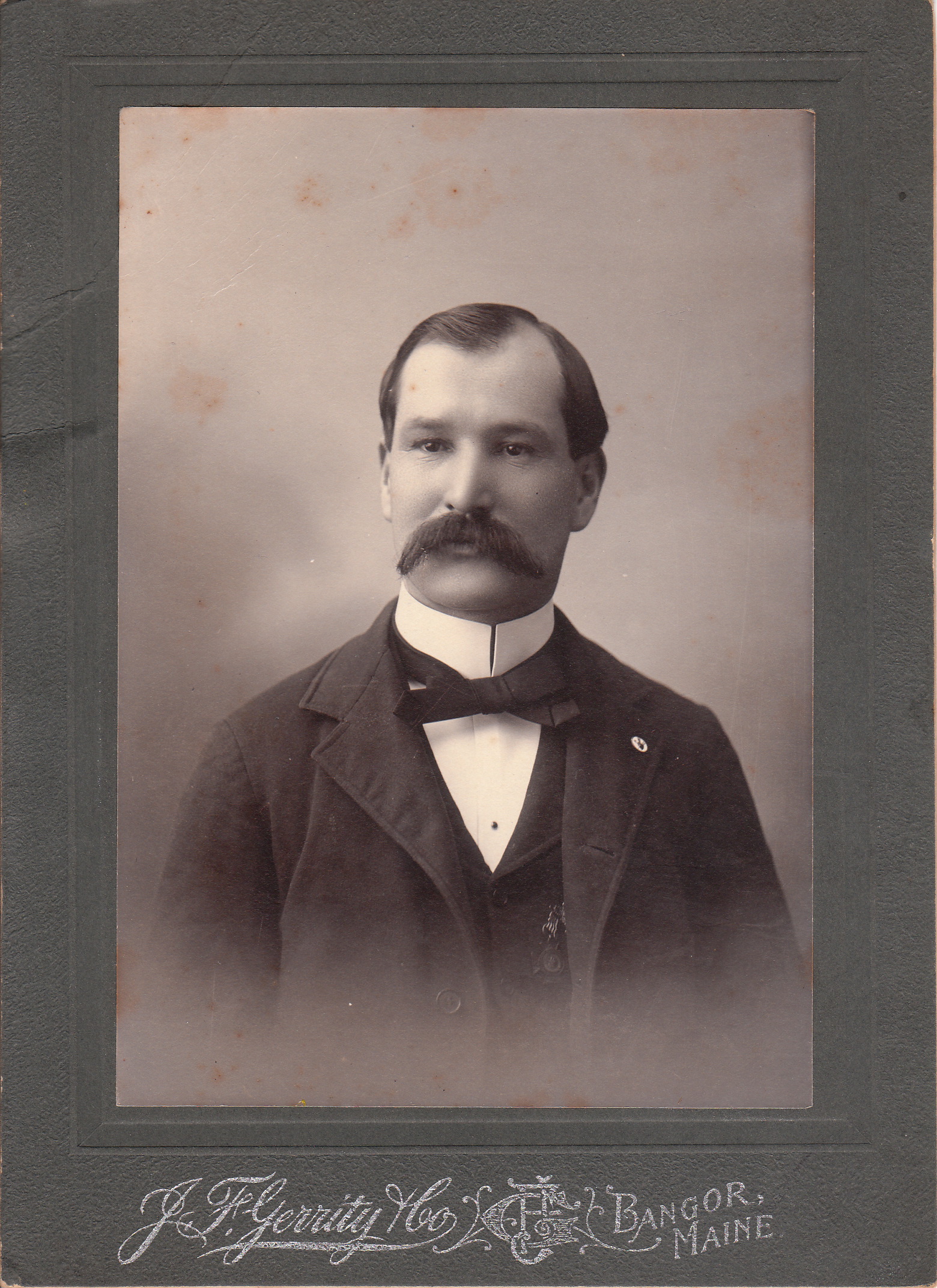
This photographic portrait captures a good looking and well dressed gentleman posing at the J. F. Gerrity Company studio in Bangor, Maine. The gentleman in this photograph has a wonderful well groomed mustache and is wearing what appears to be a pin back button on his lapel. There is a design on the button that I can not identify. The reverse of the photograph has an inscription that is dated 1898. The subject is identified as Harry H McLean. The message states “Merry Xmas, Happy New Year” and the word “University” followed by an unidentified word. An advertisement in a Bangor Board of Trade publication (1899) indicates that the Gerrity studio had two locations; 11 State Street in Bangor, and 244 Miiddle Street in Portland, Maine. City of Bangor directories indicate that he also owned a lumber business in Bangor. Census data reveals that Gerrity was born in 1855 and had at least two wives; Nancy (1920 census) and Edith (1930 census). No biographical information about Harry McLean was found. SOLD
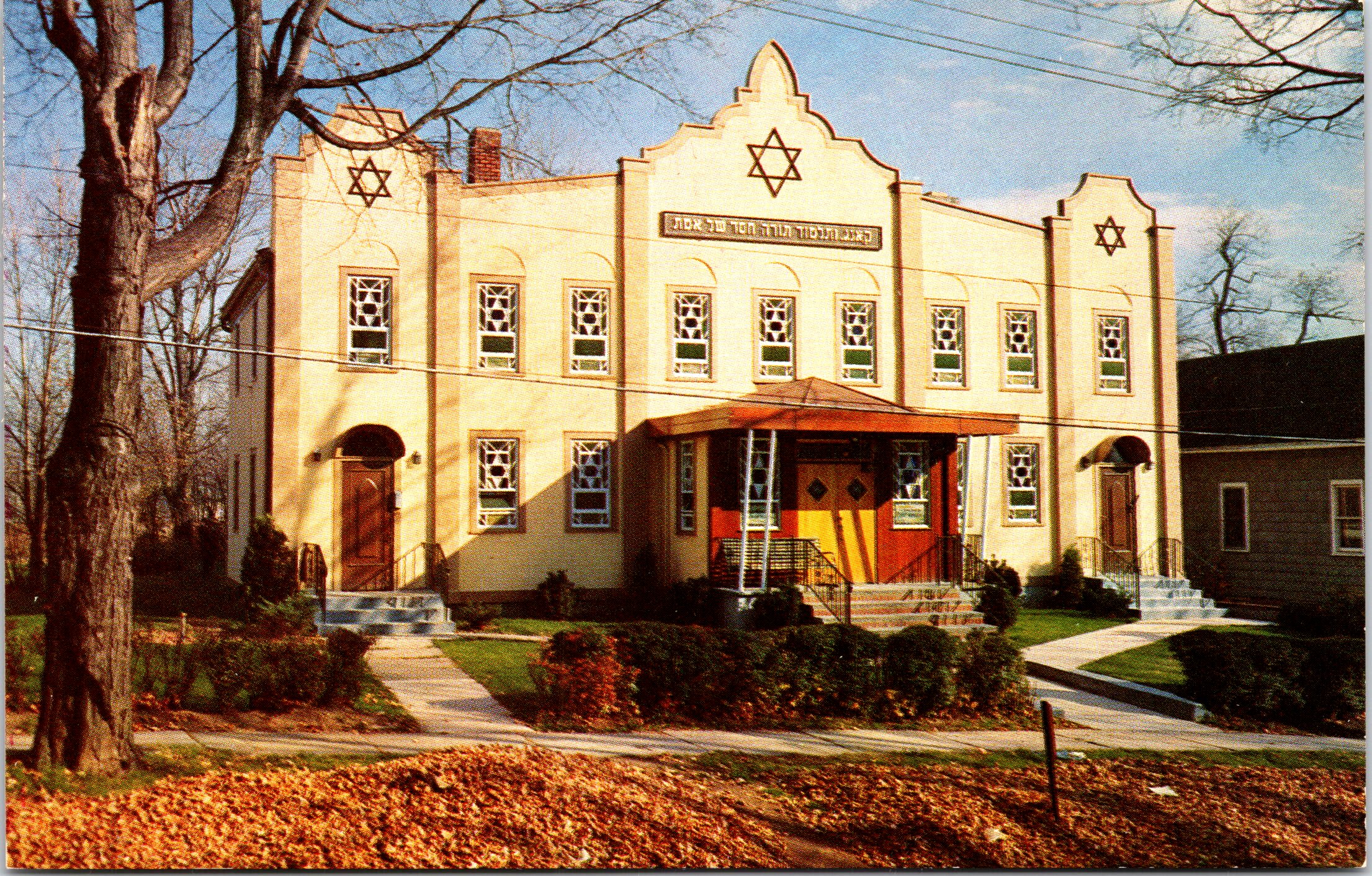
This is a vintage artchrome color postcard depicting the Liberty Street Synagogue in Monticello, New York. The card was published by Gramatan Art Company, Inc., Mount Vernon, New York, and numbered S 13884. The image is credited to photographer Arthur J. Gutter. The synagogue’s Hebrew sign roughly translates as “Torah and true kindness.” The Liberty Street synagogue was tied to Congregation Chessed Shel Emes in Monticello, and records note that in 1963 the congregation on Liberty Street consolidated with the Jewish General Aid Association. This is a vintage used postcard in excellent condition (see scans).
This vintage Postcard is available for purchase at my store, The History Peddler, for $5.85 or best offer.
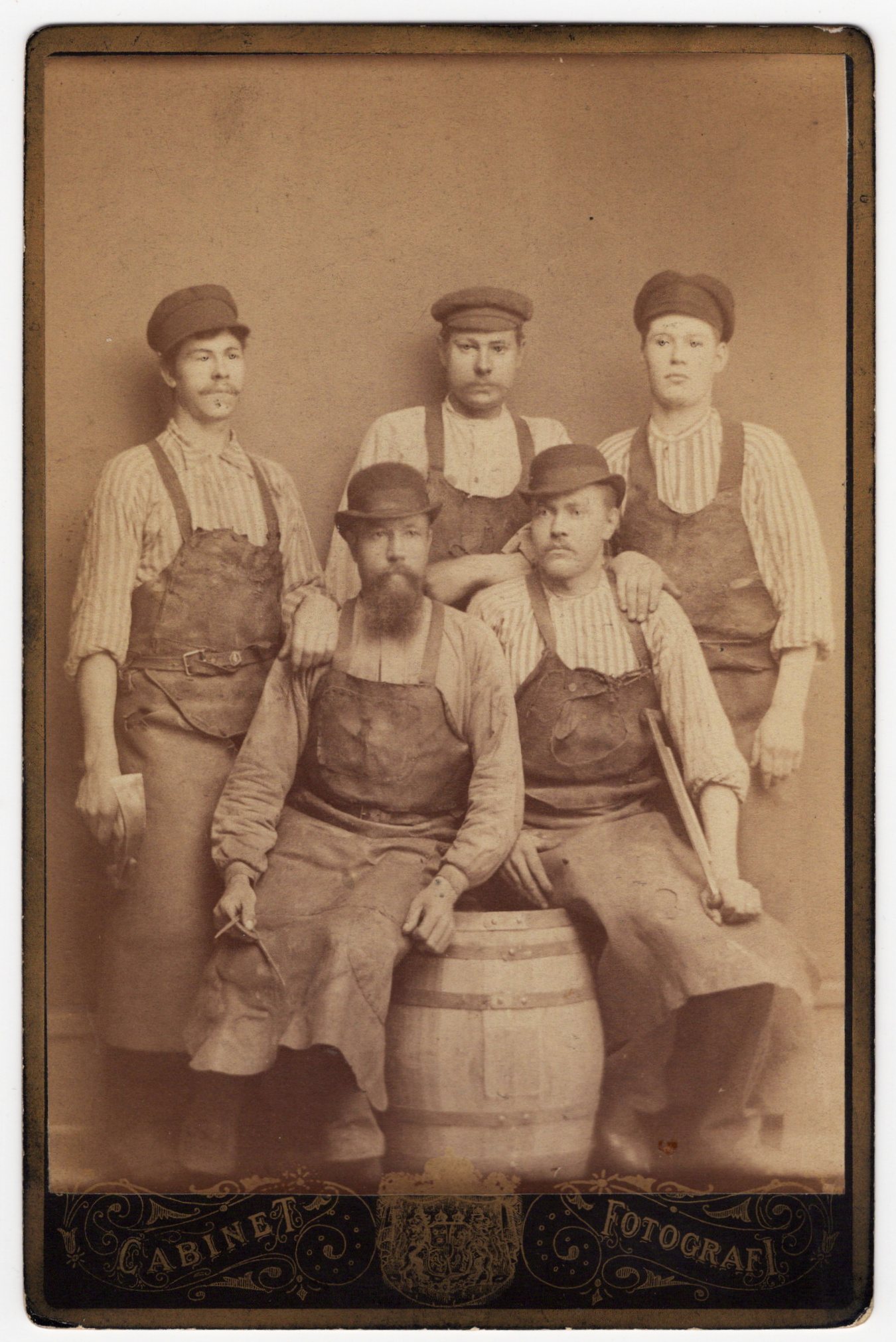
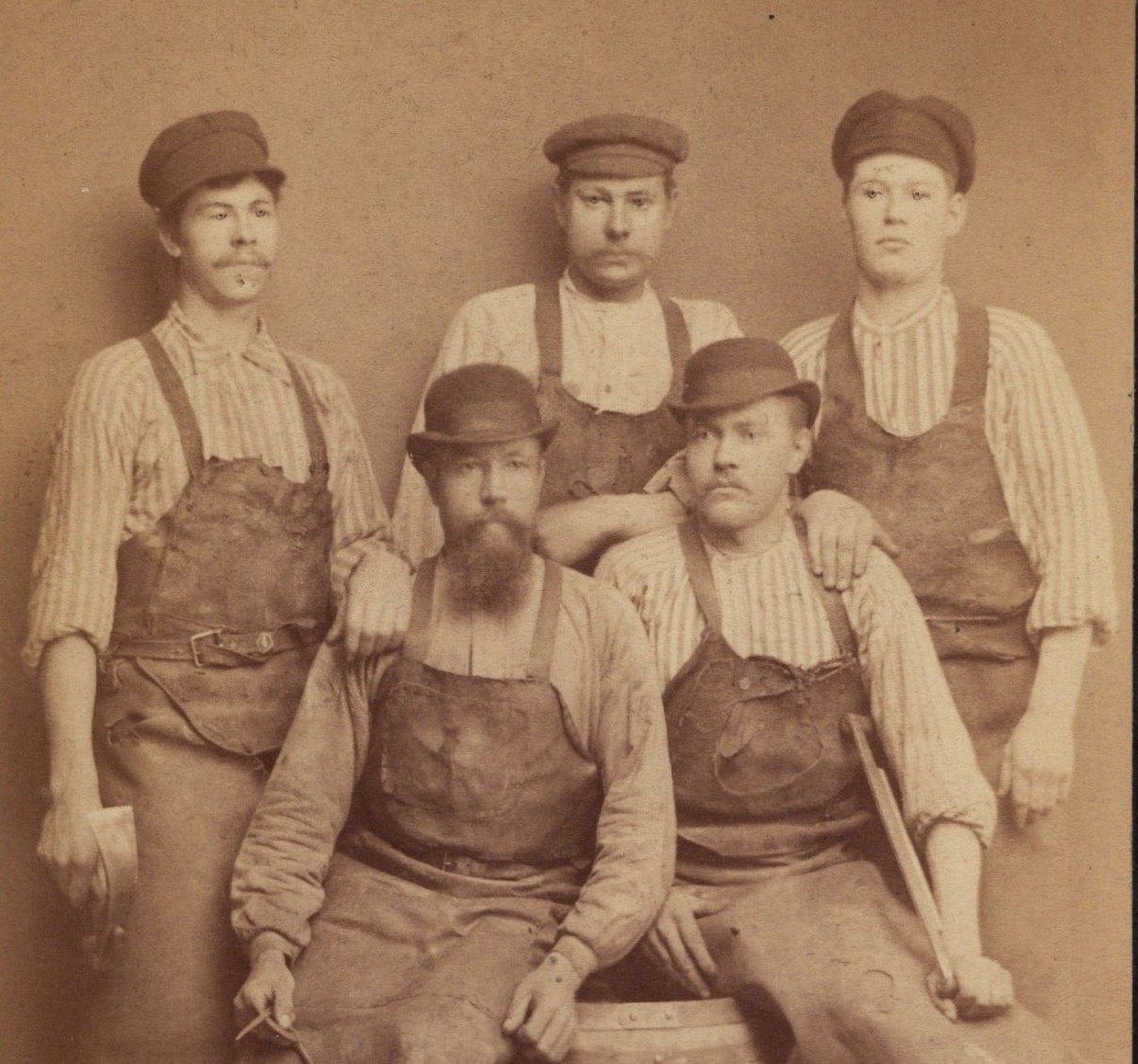
This outstanding occupational cabinet card photograph features a group of five coopers—craftsmen who specialized in barrel-making—posed in their work attire. The image likely dates from the 1880s or early 1890s, based on the fashion and presentation. The five men are dressed in heavy leather aprons and striped work shirts, typical attire for men engaged in manual trades during the late 19th century. Three of them wear work caps, while the two seated men—likely the most senior members of the group—wear bowler-style hats. Their expressions range from stoic to faintly assertive, with the bearded man seated at center giving a particularly strong presence, perhaps suggesting he was the master cooper or foreman. Tools of their trade are visible: one man clutches a drawknife, and another holds a cooper’s hammer. They are posed around a freshly constructed wooden barrel, which adds important context and visual authenticity to their profession. The studio name at the bottom of the mount reads simply “Cabinet Fotograf”, embellished with gold scrollwork and a central crest. This suggests the image was produced in Scandinavia—most likely Sweden or Norway—where “Fotograf” was commonly used. Unfortunately, there is no photographer’s name or city listed. The reverse of the card is blank. This image is an exceptional representation of occupational portraiture. SOLD
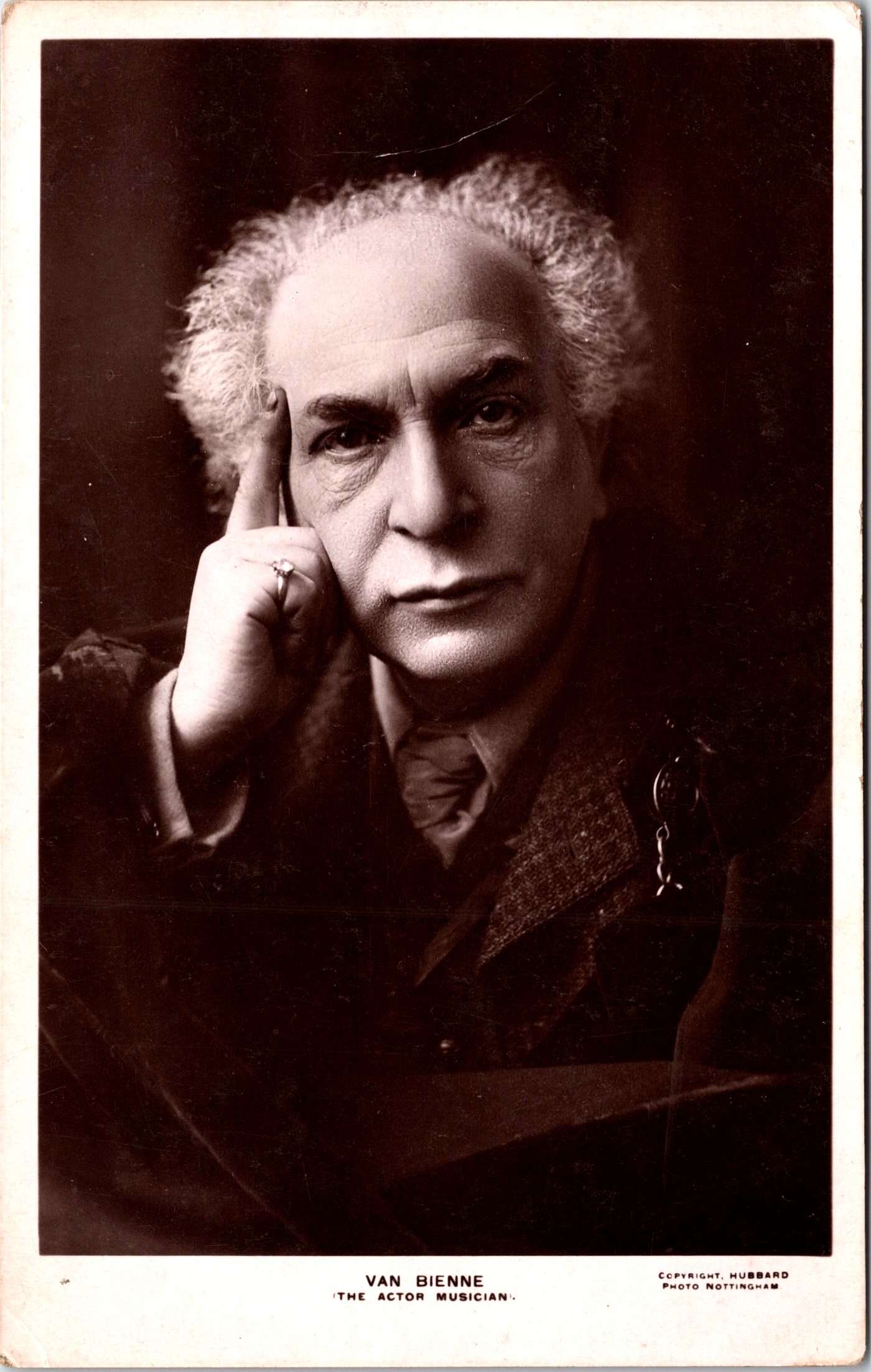
This dramatic vintage real photo postcard shows Auguste van Biene, printed on the card as “Van Bienne — The Actor Musician.” The spelling on the postcard appears to add an extra “n,” but the performer is best known historically as Auguste van Biene, the Dutch-born cellist, composer, actor, and theatrical personality. Van Biene was both an accomplished musician and stage actor. Van Biene was born in Rotterdam in 1849, and died in Brighton, England in 1913. He studied cello, moved to London as a young man, and was discovered by conductor Sir Michael Costa, who engaged him for the Covent Garden orchestra. He later became principal cellist, worked with Richard D’Oyly Carte’s opera company, and became known as a theatrical manager, conductor, composer, actor, and touring stage attraction. His great success was The Broken Melody, a musical play for which he composed the famous cello melody and in which he starred as a musician. He toured widely with the work, and his reputation became so closely tied to the cello that he was sometimes described as the “Magician of the Cello.” His death was famously theatrical: van Biene died while performing on stage at the Brighton Hippodrome in 1913, reportedly while playing the cello in The Master Musician, with his son conducting the orchestra. He was buried at Golders Green Jewish Cemetery in London. This portrait itself is wonderfully intense. Van Biene is shown close-up, with his hand raised to his temple and a penetrating, thoughtful expression. The pose is almost psychological in its effect, presenting him not simply as a musician but as a brooding theatrical figure. The postcard was issued from a Nottingham photographic source/publisher. The postcard was likely published circa 1910. The postcard’s condition is good overall, with a powerful, high-contrast image. The borders show corner and edge wear. The reverse is unused, with general toning and corner wear including a darker worn area at the upper right corner. Overall, the card remains very displayable, with the dramatic portrait presenting strongly (see scans).
This vintage Postcard is available for purchase at my store, The History Peddler, for $16.00 or best offer.
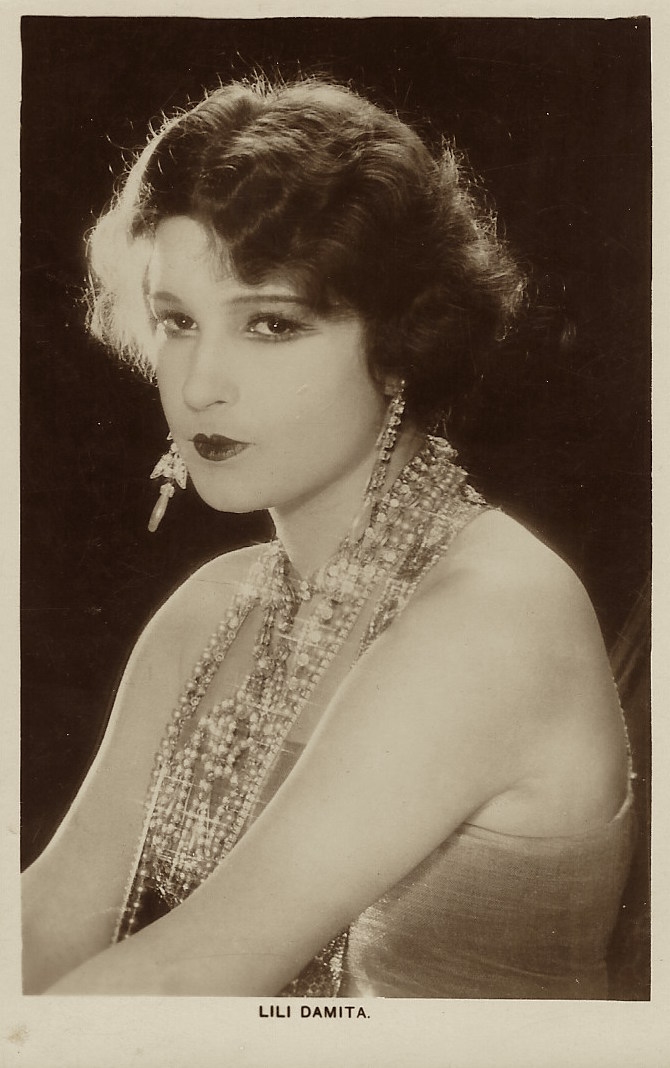
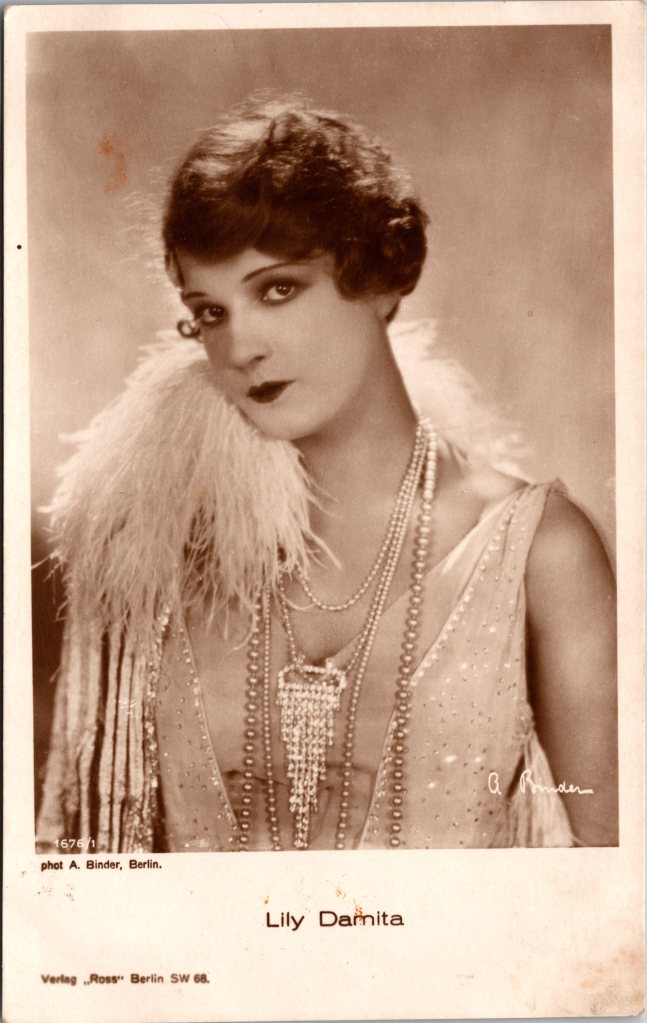
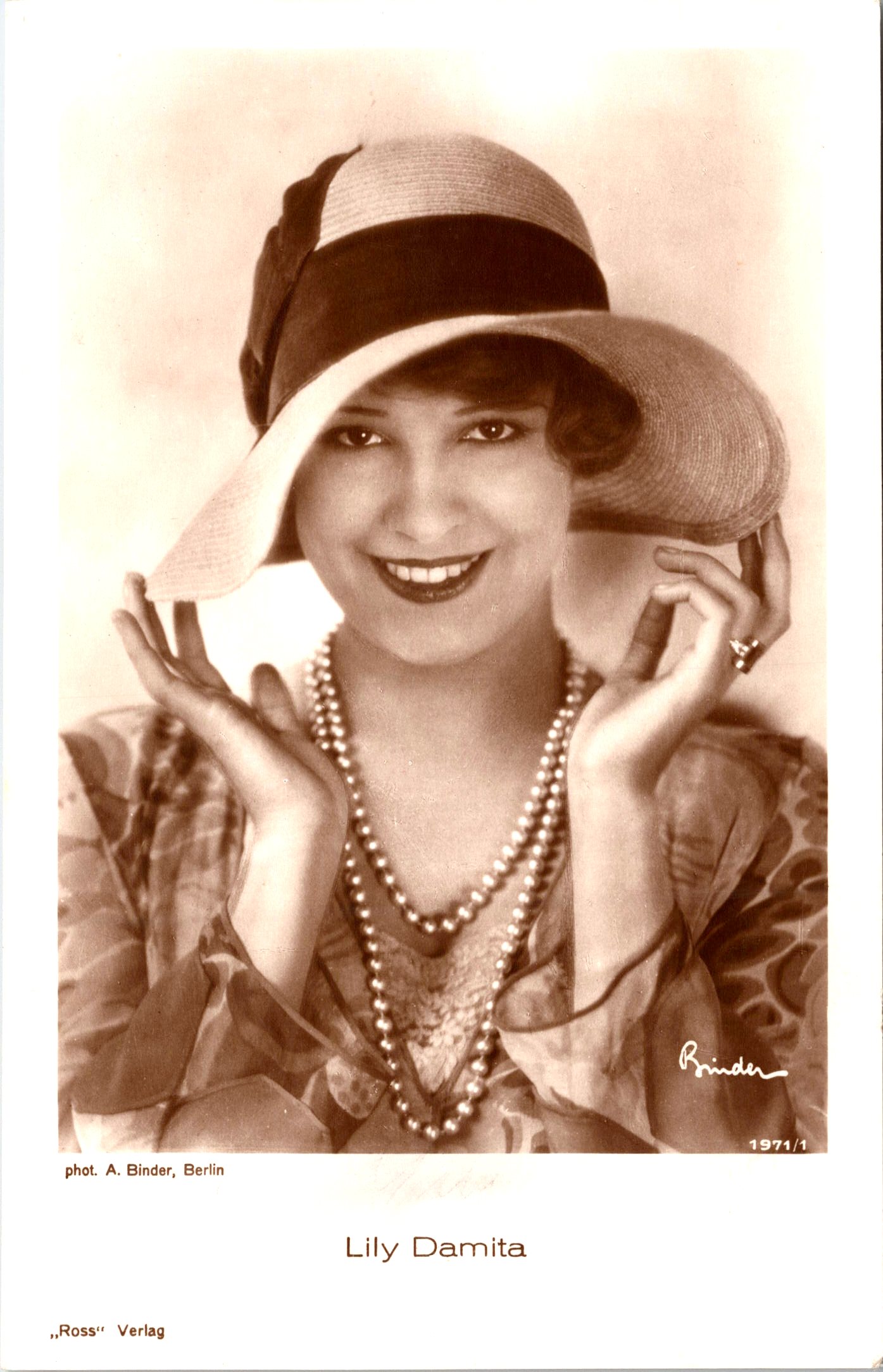
These vintage real photo postcards feature actress singer Lili Damita (1904-1994). She was born Liliane Marie Madeleine Carre in Blaye, France in 1904. She was educated in convents and ballet schools in several European countries. She was a pretty and talented star actress of silent movies as well as early talkies. Her filmography includes 33 film appearances between 1922 and 1937. Damita started dancing professionally at sixteen years of age and made her film debut in 1922. As a teenager she danced in music halls and appeared in the revue of the Casino de Paris. She also worked as a photographic model. She starred in the film “The Queen was in the Parlor” (1926) by Noel Coward. She appeared with Ronald Colman in Sam Goldwyn’s film “The Rescue” (1929). Goldwyn feared that Damita’s accent would be a deterrent for success in talkies so Damita worked to change her accent and she appeared in her first talkie, “The Cockeyed World” (1929). Goldwyn eventually dropped her partially because she had been too honest with the press about her millionaire lovers. During her career, Damita worked with celebrated actors including Gary Cooper, Laurence Olivier, Cary Grant, Maurice Chevalier, and James Cagney. She had more than one marriage. Her second husband was actor Errol Flynn. They married in 1935 and were divorced seven years later. Cooper’s infidelities contributed to the dissolution of their marriage. The couple’s son, Sean Flynn, disappeared while photographing the Vietnam War, and was never found. She married again; this time to a dairy farmer named Allen Loomis. Her marriage to Loomis dissolved in 1962. In 1994 Damita died of Alzheimers disease in Palm Beach, Florida. A YouTube tribute to Lili Damita can be seen below.
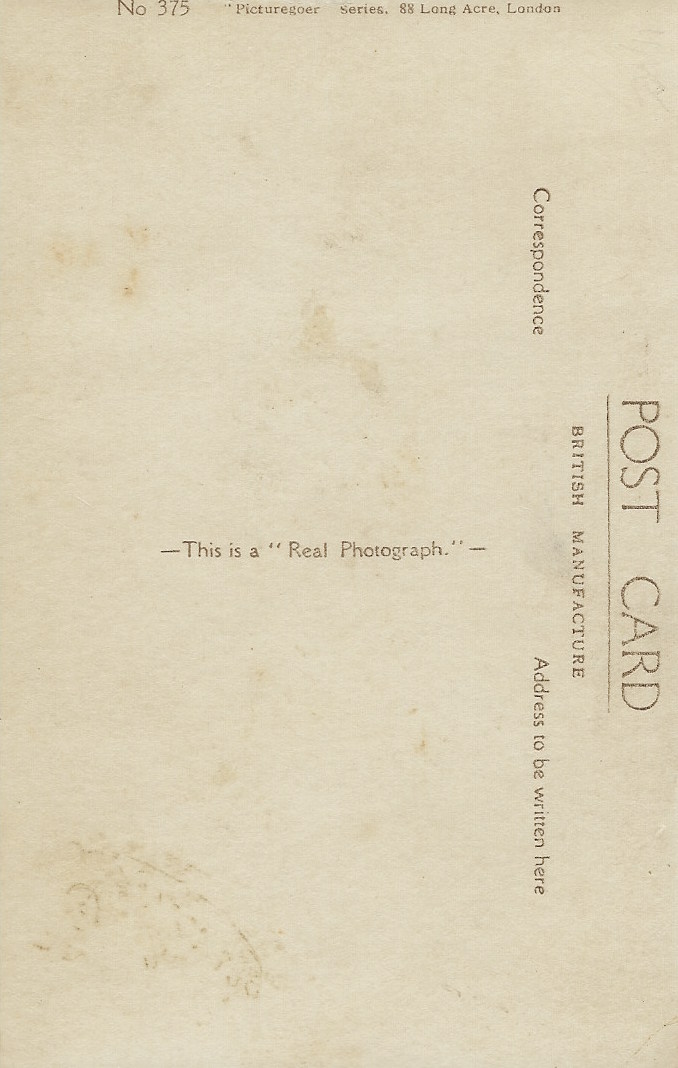
Postcard 1 is part of the “Picturegoer Series (No. 375” ) and was published in London, England. Picturegoer was a British fan magazine focussing on contemporary films and the actors and actresses who performed in them. Picturegoer also published postcards. In fact, they produced over 6500 different real photo postcards on 2000 actors and actresses. Miss Damita looks quite lovely in this photo portrait.
The photograph seen on Postcard 2 was taken during the flapper era. Miss Damita’s portrait on this postcard was taken by celebrity photographer Alex Binder. This card was published by Ross Verlag as part of a series (no.1676/1). It is a white border postcard and it dates back to around the 1920’s.
Postcard 3 was formerly part of the Serge Bonnet Collection as indicated by the stamp on the reverse of the card. This card is provocative. The photo of Damita’s bare legs make the postcard risque for it’s era. This postcard was published by Ross Verlag as part of a series (No.4993/2).The postcard has the logo for Fox films in it’s lower right hand corner. SOLD
Postcard 4 was published by Ross Verlag as part of a series (No.1971/1). Damita’s photograph was taken by Alexander Binder. from 1908 to 1910 he studied photography at a school in Munich, Germany. After the completion of his photography studies, he went to Berlin and in 1913 opened his first photography studio. Before long, he became one of the premier photographers in Berlin. He primarily focused on fashion and celebrity photography. (SOLD)
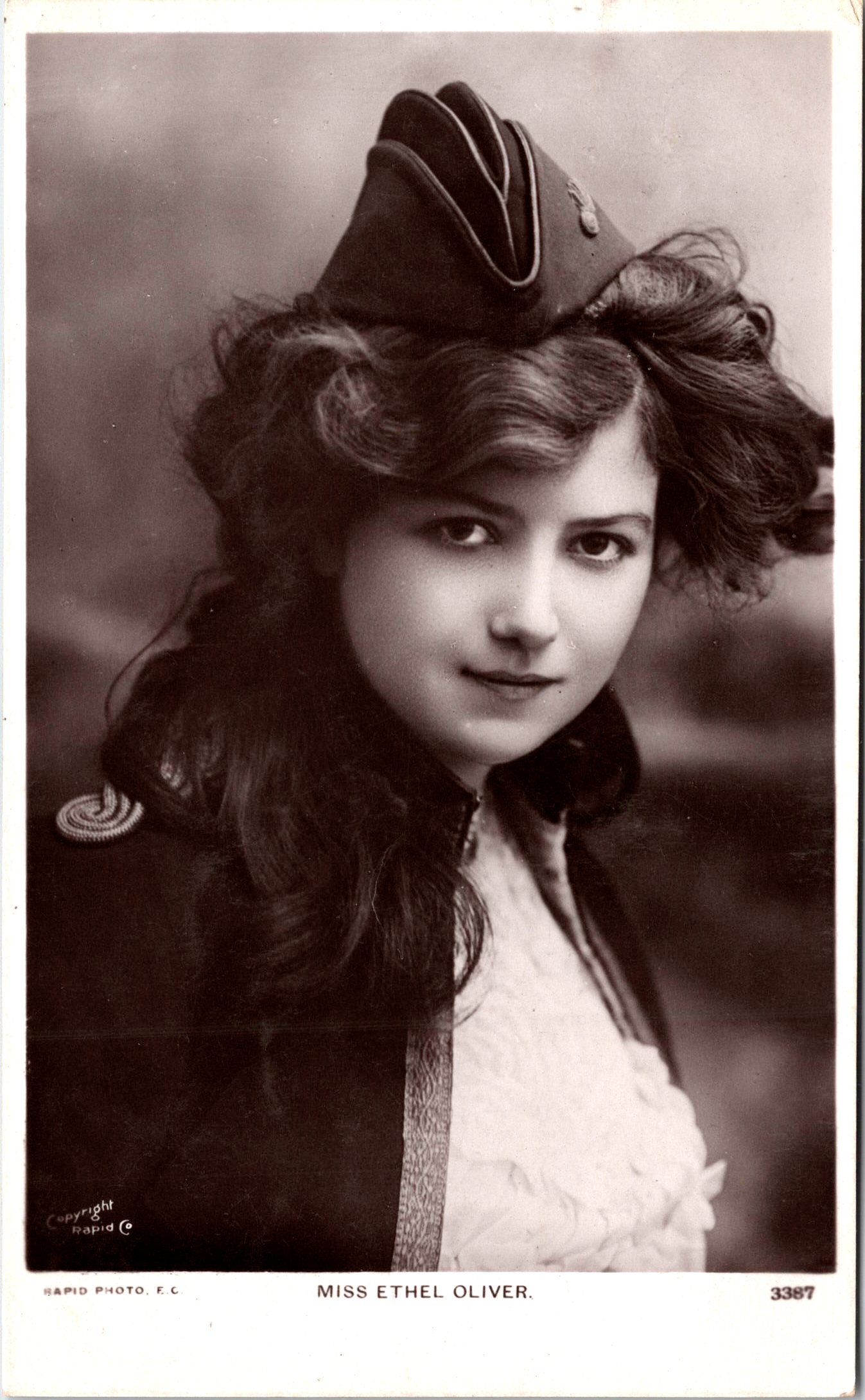
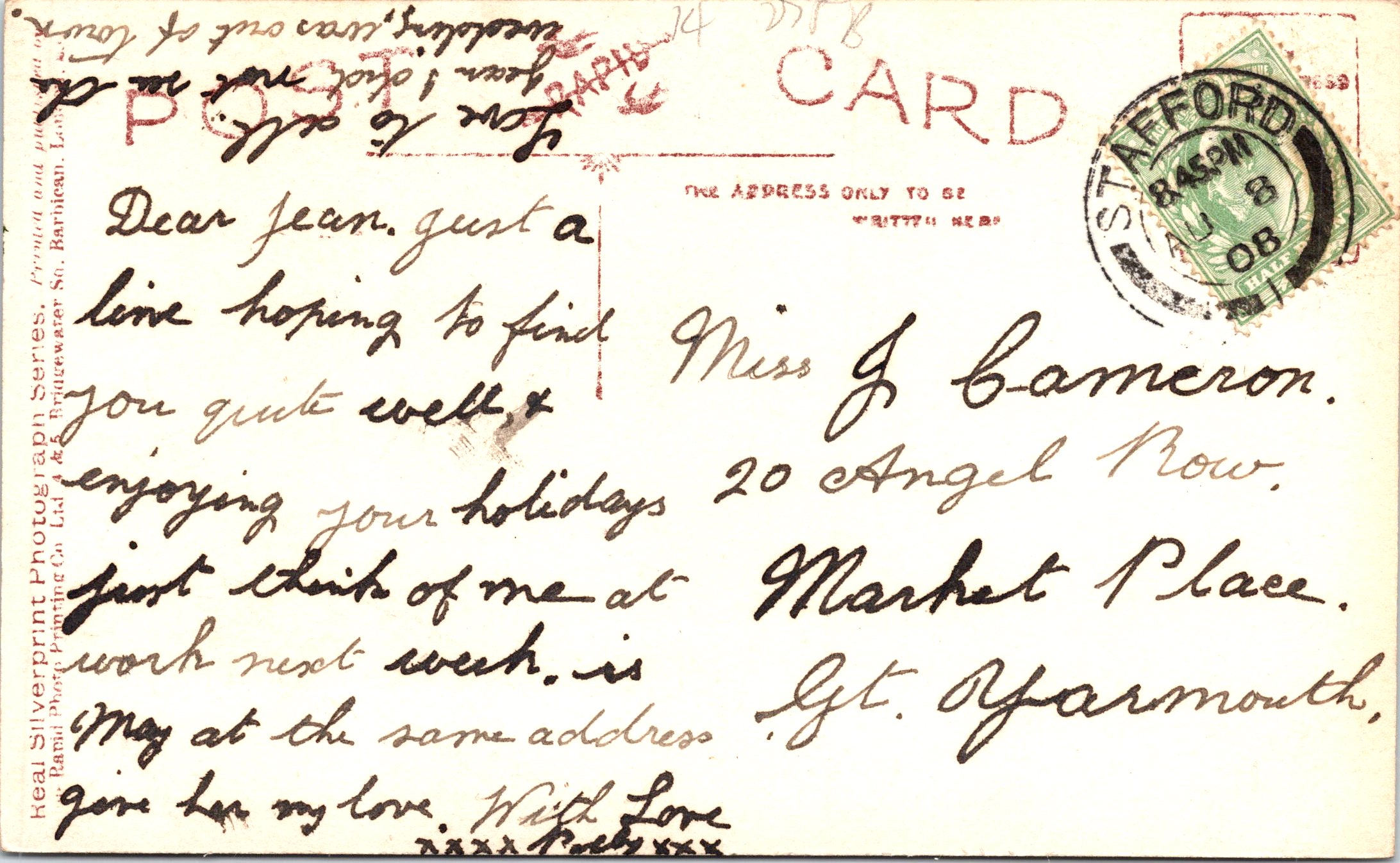
This postcard features a close-up portrait of British stage and film actress, Miss Ethel Oliver. She is wearing a costume from one of her performances. Little information is readily available about Miss Oliver. She is listed as being a chorus member in the play at the Gaiety Theater, “The Orchid” (1903), In 1917, Oliver starred in the musical comedy “Pomponette at the Newcastle upon Tyne Theatre Royal. The IMDb reports that she acted in two films; “The Return” (1921) and “A Soul’s Awakening” (1922). Oliver was also a dancer. She was a sitter for twelve portraits in Britain’s National Portrait Gallery. The card was issued by Rapid Photo Co. (no.3387) in its “New Process – Silverprint Series”, a glossy, high-quality photographic line printed in England during the Edwardian era (circa 1905-1910 for this view). This card has been posted and has a 1908 postmark. In regard to condition, the card is very nice for its age. The card has rich tonal range and sharp detail. There is only minor corner wear (see scans).
This vintage Postcard is available for purchase at my store, The History Peddler, for $16.00 or best offer.
This vintage real photo postcard features Belle Epoque French Opera Soprano, Marie Thierry (1875-1918). She is elegantly dressed and holding a pretty fan. She made her debut at the Monnaie Bruxelles in 1900. Her Paris debut was at the L’Opera-Comique. She is known for her roles in “Miss Pinson” (1910), “Le Cheval Pie” (1911), and “La Bonne Hotesse” (1917). Mlle Thierry’s postcard portrait is from the studio of Leopold Reutlinger (Paris). The card was published as part of a series. SOLD
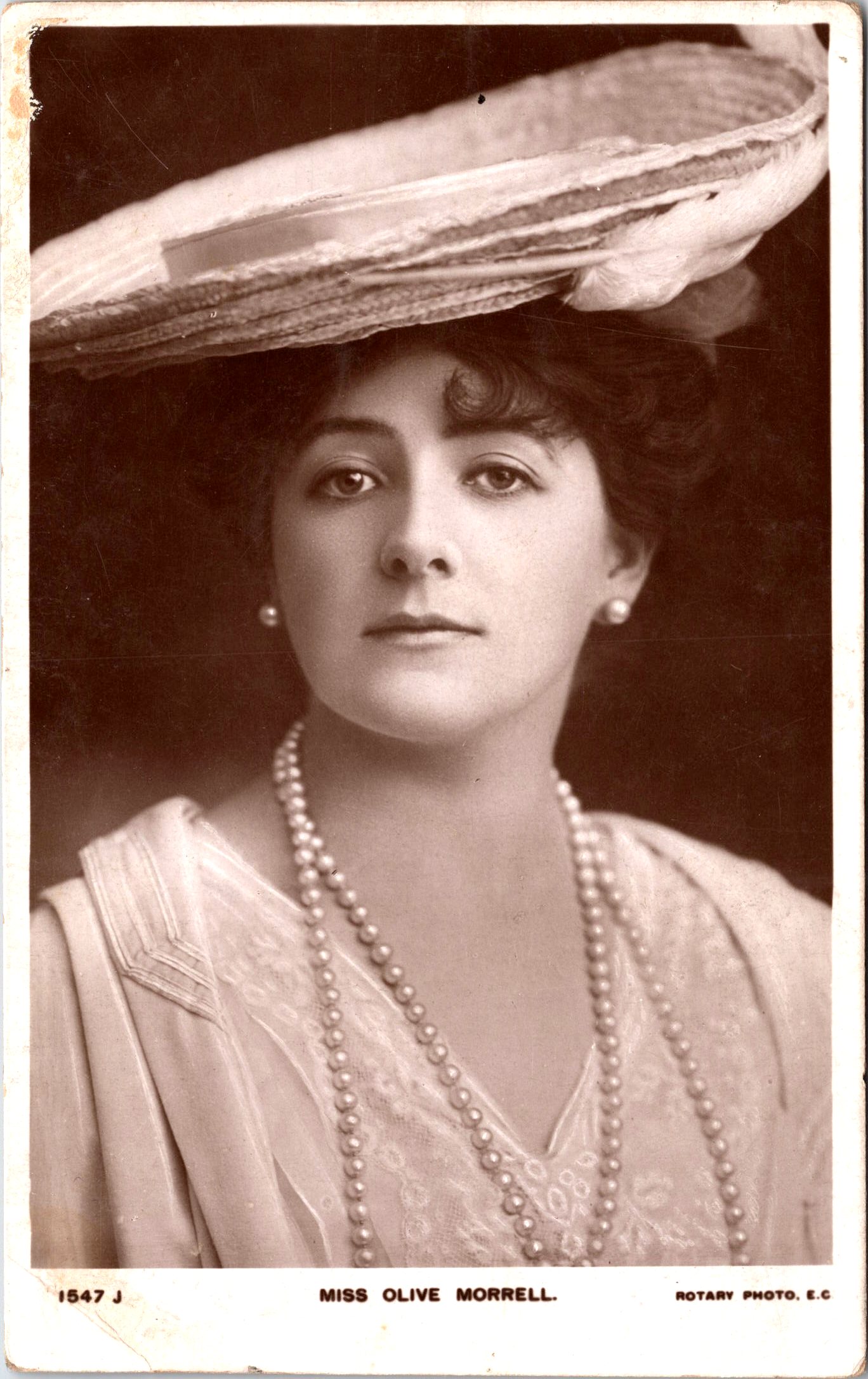
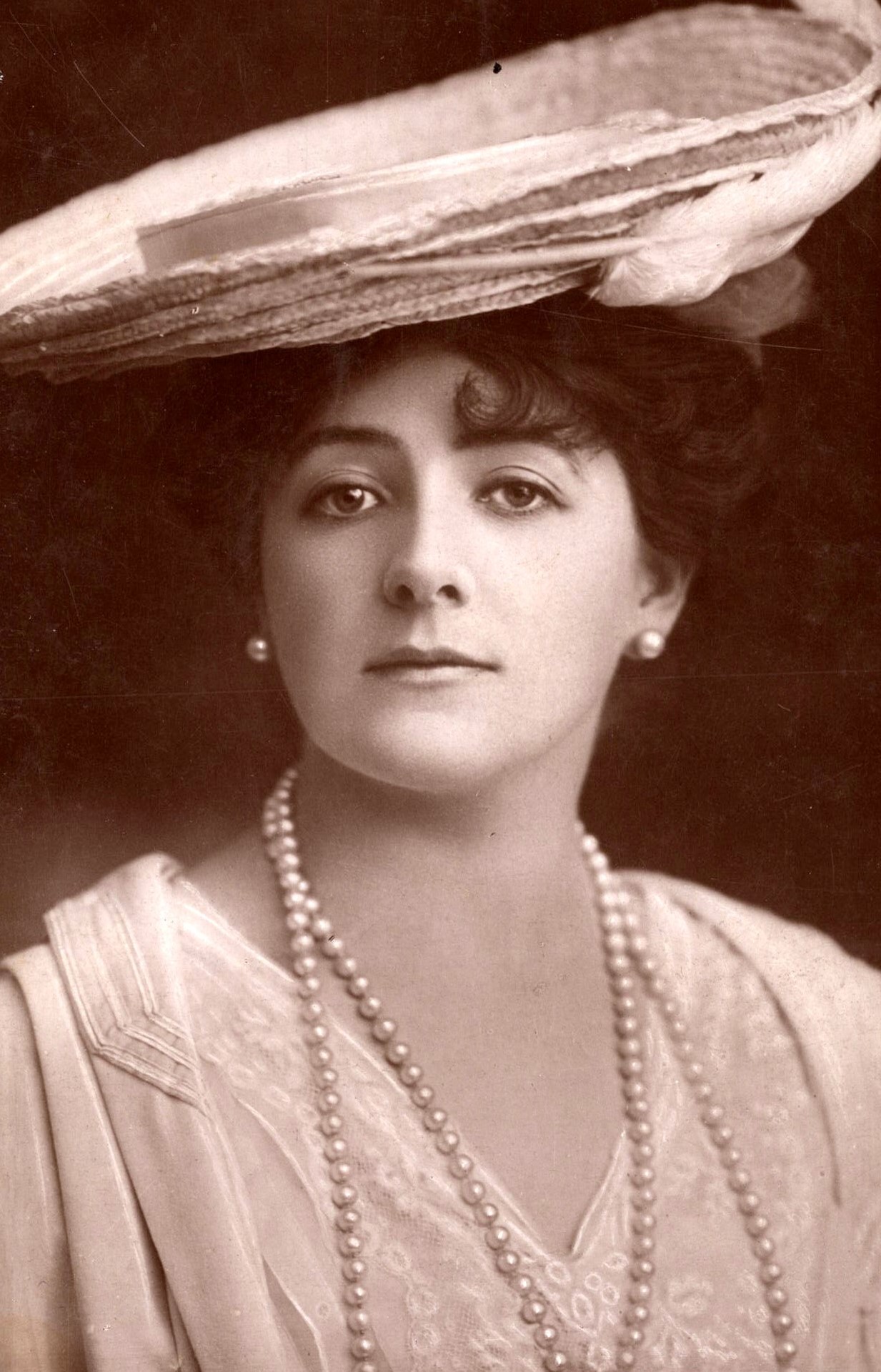
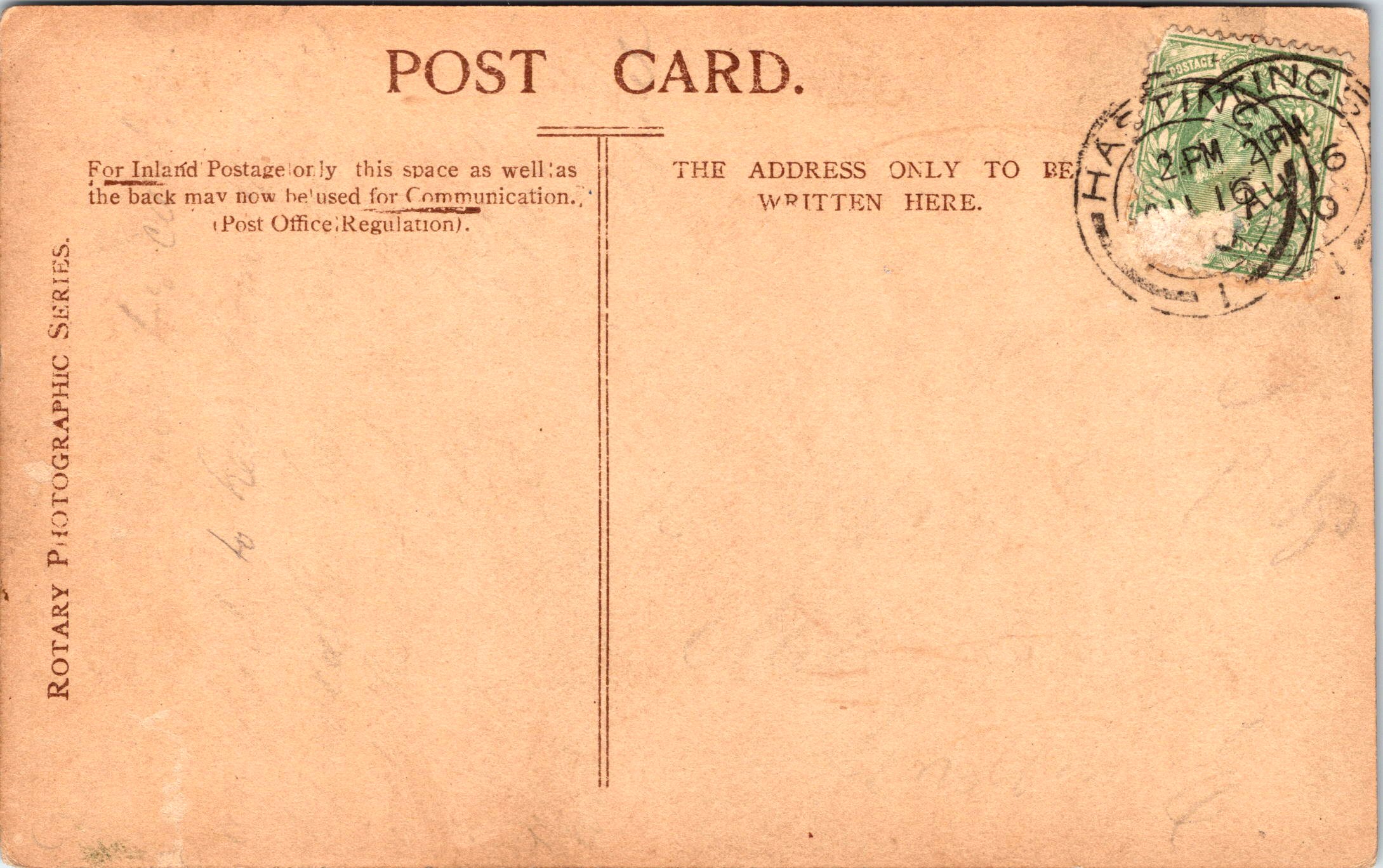
This vintage real photo postcard features a very beautiful British stage actress named Olive Morrell. She was a successful enough actress to merit having six portraits of her included in the United Kingdom’s National Portrait Gallery. She performed in England and toured in Australia. She was born as Olive Miller; Morrell was her stage name. In 1908, she married Willie Kelly (1877-1960), an Australian politician. The Illustrated Sporting and Dramatic News (1905) highlights her career including her role in “The Spring Chicken” at the Gaiety Theatre. In researching the play, I was struck by the number of well known actresses appearing alongside her. The cast included Kitty Mason, Kate Cutler, Gaynor Rowlands, Ethel Oliver, and Gertie Millar. This was certainly an all star lineup and any collector of theatrical postcards will be familiar with these actresses. Collectors will also note that these women were quite pretty and their postcard images were, and still are, very collectible. Miss Morrell is also the subject of an article in The Play Pictorial (1905) which mentions her appearance in a theatre production called “The Talk of the Town”. This postcard was produced by Rotary Photo as part of the Rotary Photographic Series (no. 1847 J). It is truly a special portrait of Miss Morrell. After viewing many postcard images of this actress; I believe this portrait is one of the finest portraits of Olive Morrell that a postcard collector can find. This photograph captures her beauty as well as provides a close look at fashion during the turn of the century. This postcard is in fair condition. There is some soiling and wear in the corners and edges. The image itself is sharp with excellent contrast and detail. The image itself is virtually unscathed. This postcard is priced in line with it’s condition. See Scans.
This vintage Postcard is available for purchase at my store, The History Peddler, for $12.00 or best offer.
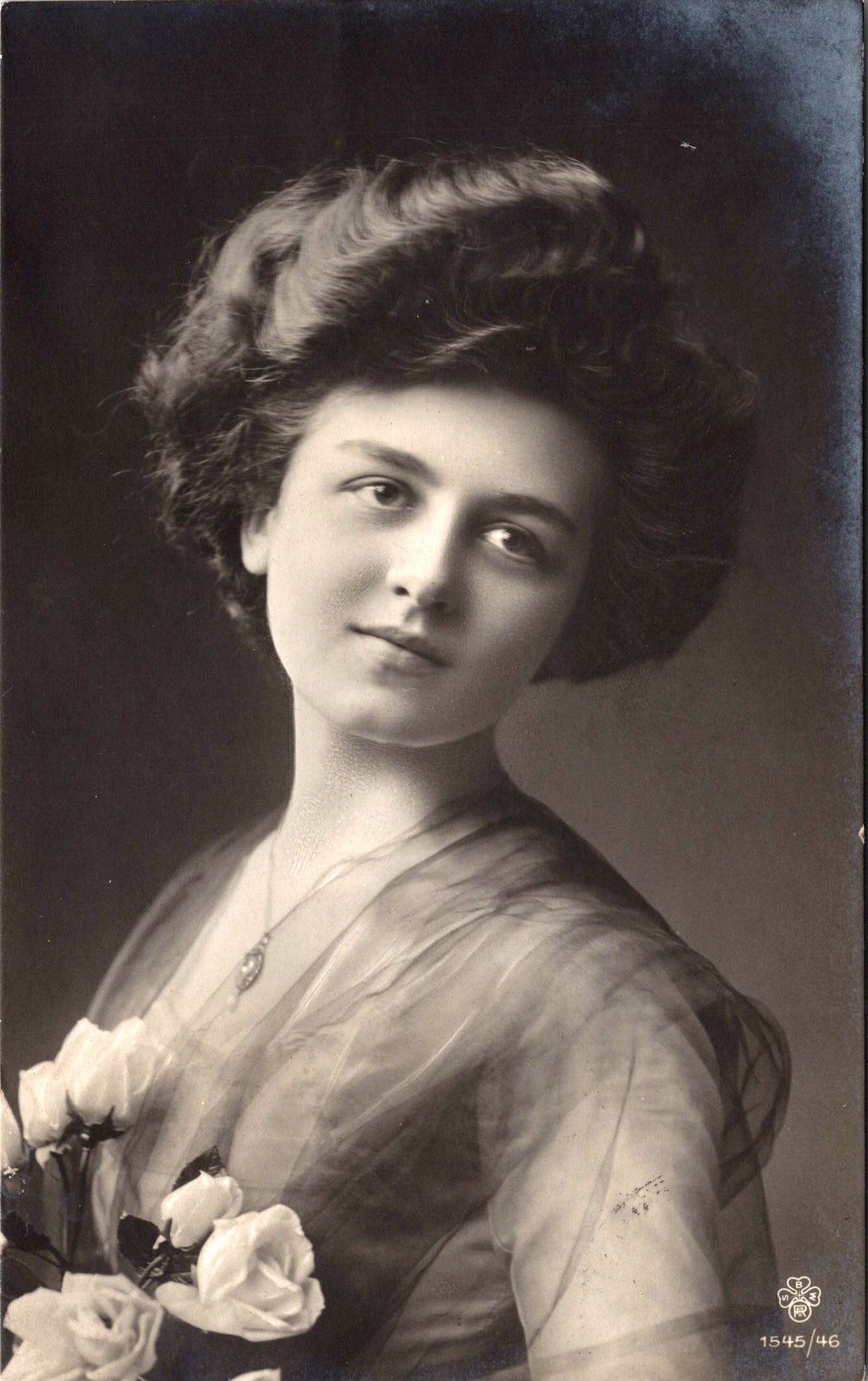
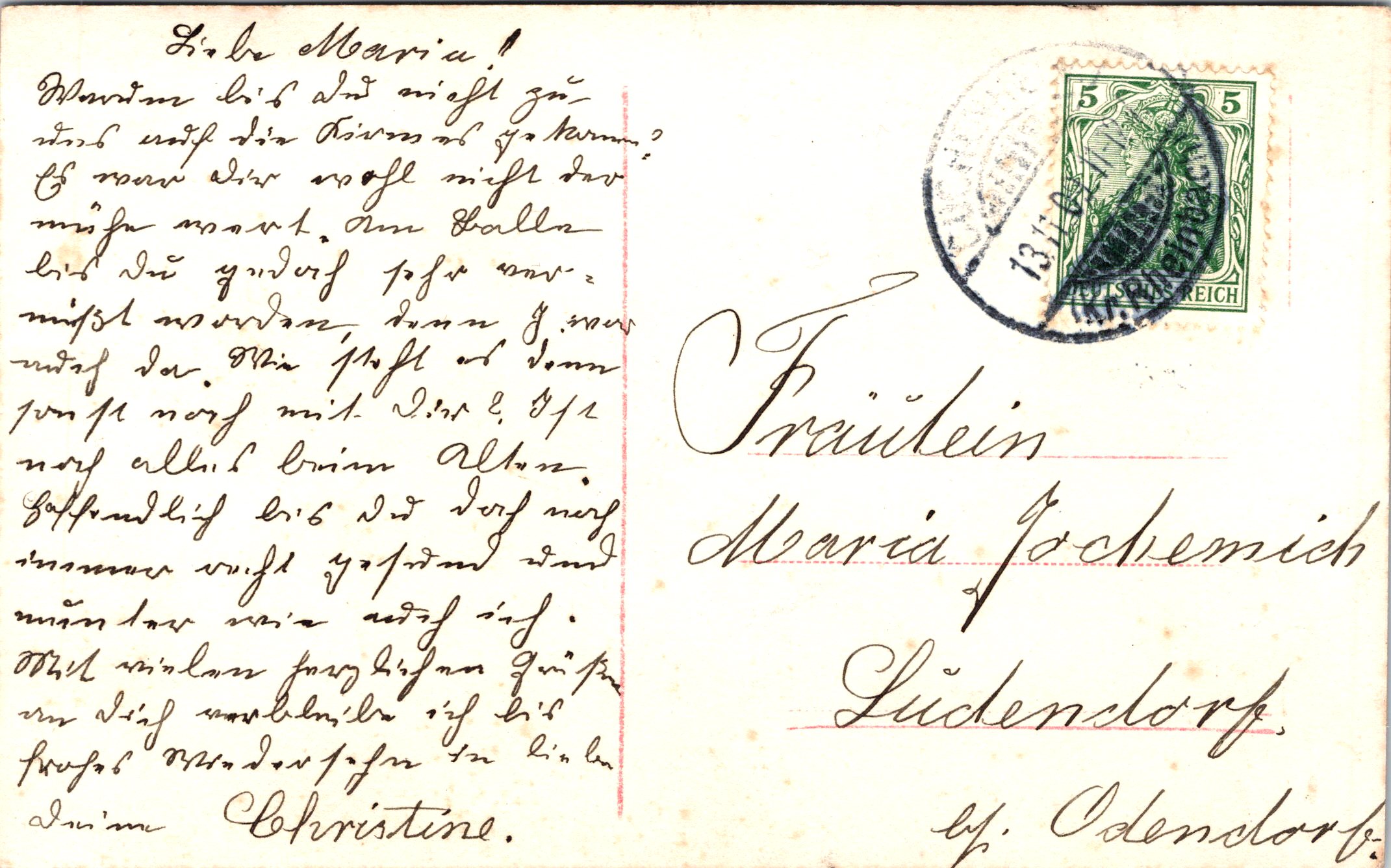
This vintage real photo postcard features a pretty young woman. This bright eyed woman appears to be in her teenage years. A message on the reverse of the postcard is roughly edited and translated as “Dear Maria! Why didn’t you come to the fair? Didn’t you think it was worth the effort? You were really missed at the fair. How is it with you? Everything is still the same. Hopefully, you will be as healthy and happy as you are. With many warm greetings to you, I remain until we see each other again, yours, Christine.” The letter is addressed to Maria Jochemich Lüdensdorf. This postcard was published by rotophot. The card has a 1912 postmark. SOLD
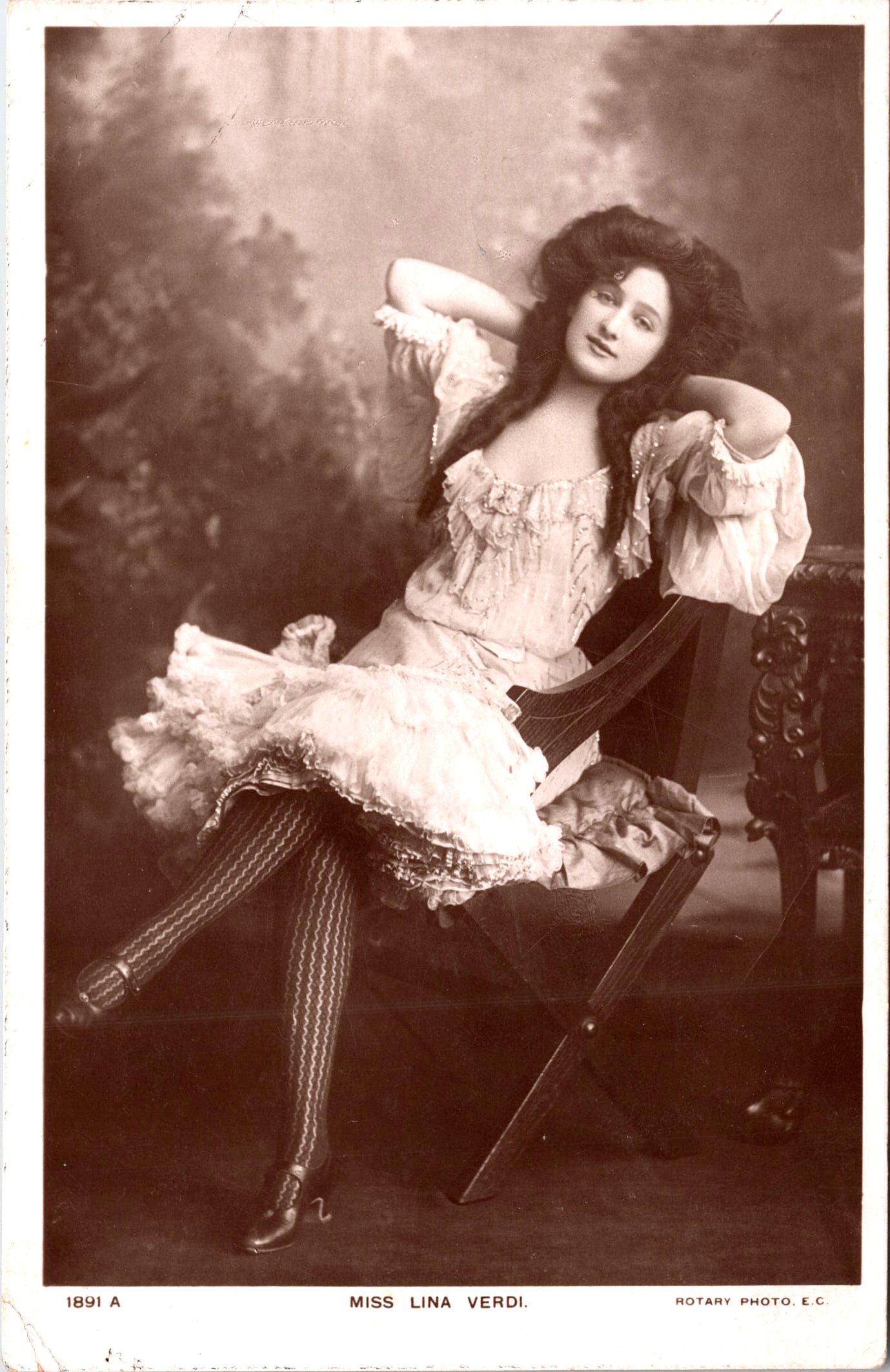
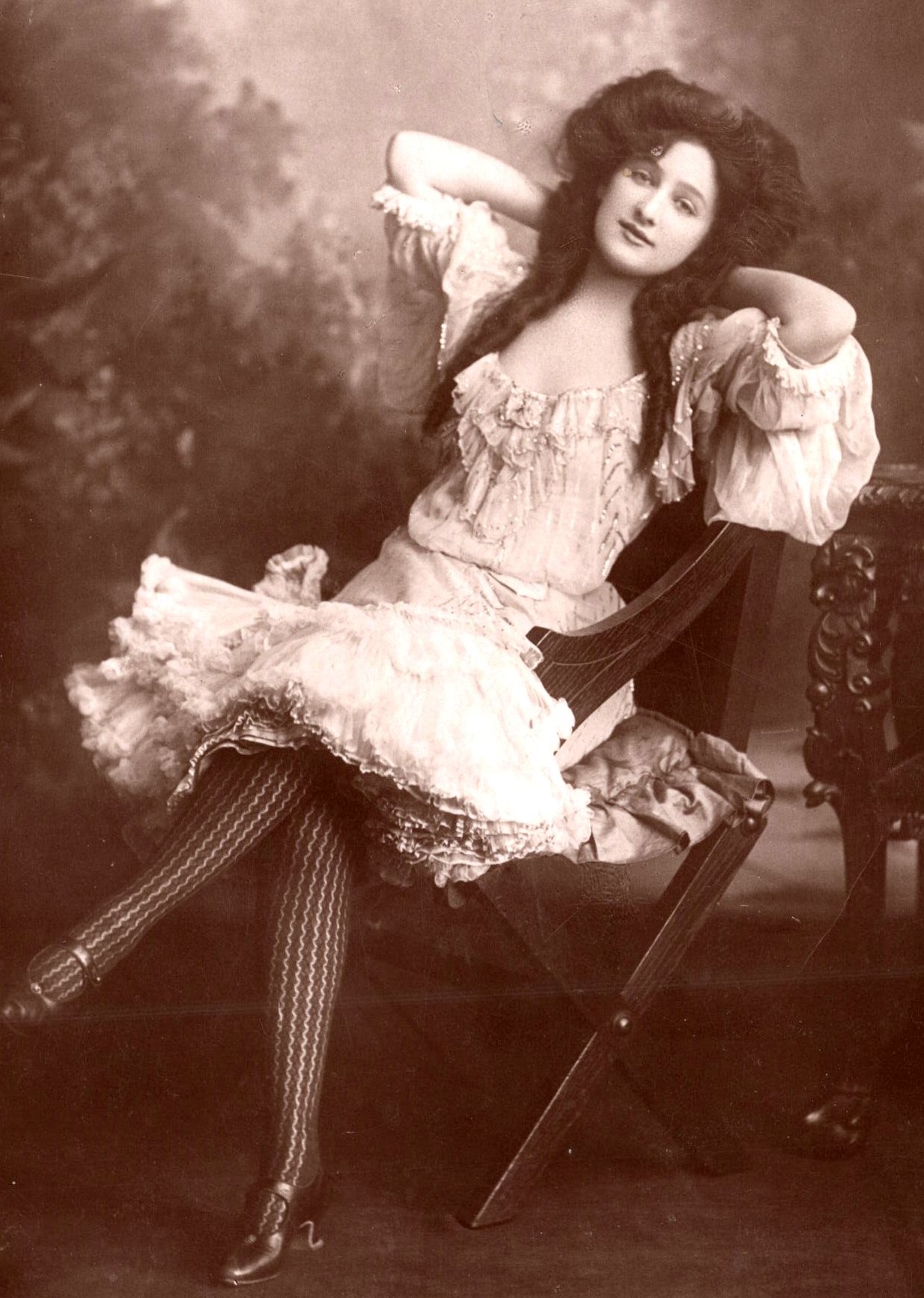
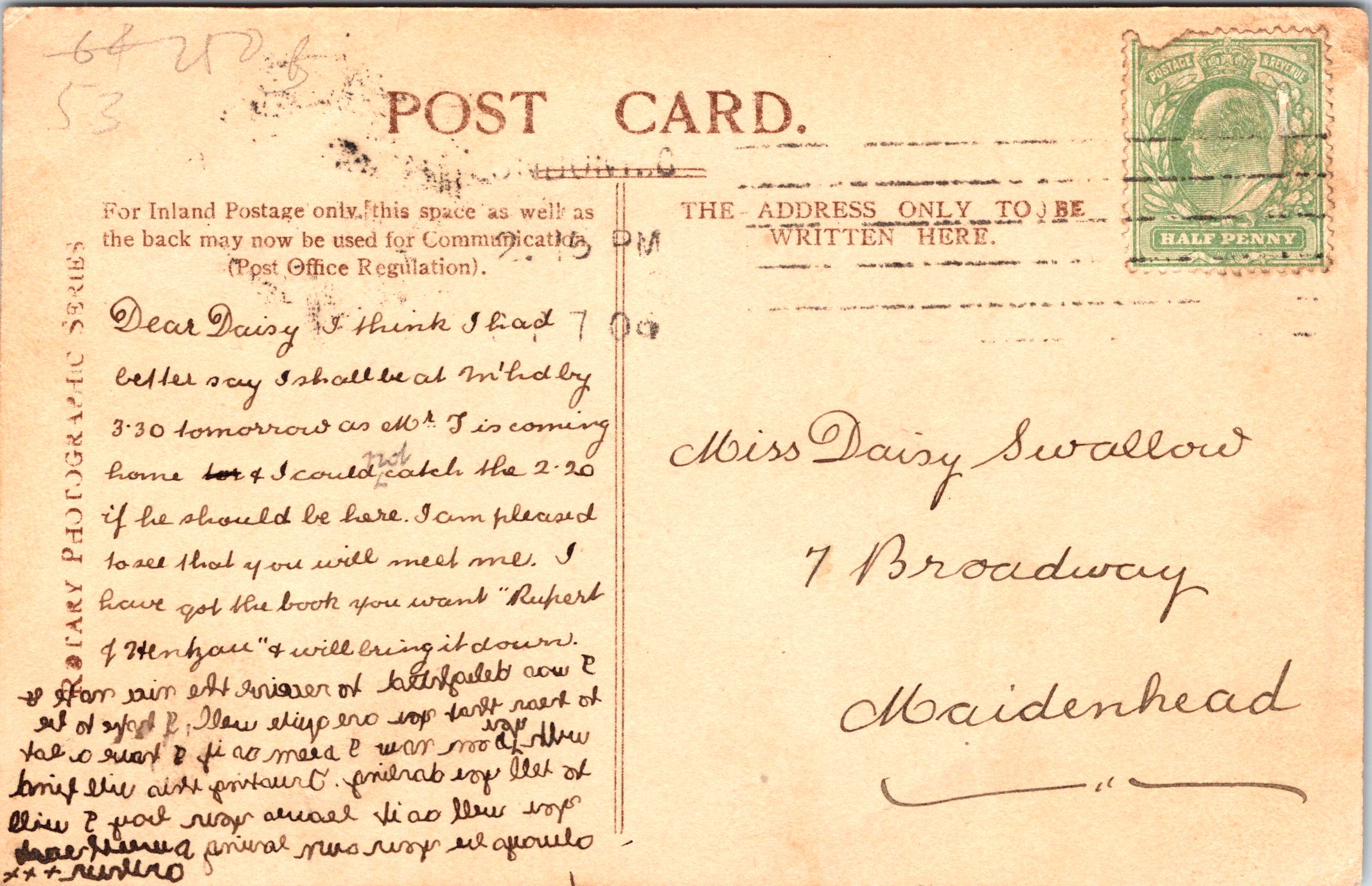
This striking Edwardian theatrical postcard features Miss Lina Verdi, a British music-hall performer, posed in a playful and slightly risqué studio portrait. She reclines in a folding chair with her arms raised behind her head, wearing a light, frilled theatrical dress, striped stockings, and pointed stage shoes. Her long loose hair, dreamy expression, and relaxed pose give the card a strong Belle Époque / Edwardian stage-glamour quality. This is exactly the sort of image that made early actress and music-hall postcards so popular with collectors. The lower margin identifies the publisher as Rotary Photo (no.1891A).The National Portrait Gallery identifies the company as active from 1897 to 1916 and the firm was associated with many theatrical and celebrity portraits. Lina Verdi is not as fully documented today as the major Edwardian stars, but she was a real music-hall and variety performer. Contemporary newspaper references describe Miss Lina Verdi as a “dainty singer and graceful dancer” and note her success as Dandini in Cinderella at the Tyne Theatre in Newcastle. Another theatrical postcard dealer identifies her more simply as a “mimic and dancer.” Another reference describes “Little Lina Verdi” delighting audiences with her imitations, suggesting that she may have begun as a youthful mimic or child performer before becoming a music-hall artist. The back of the card is postally used. The card bears a green Great Britain King Edward VII halfpenny stamp, the standard domestic postcard rate stamp of the period. The postmark appears to be Maidenhead. The date is obscured, but the card appears to be from about 1905, which is also supported by the postcard format. The writer of of the postcard states in his/her message that they are bringing a book to the postcard’s recipient. The book is “Rupert of Hentzau”. Research reveals that the book, published in 1898, is an adventure novel by Anthony Hope and is a sequel to “The Prisoner of Zenda”. SOLD







 THE CABINET CARD GALLERY