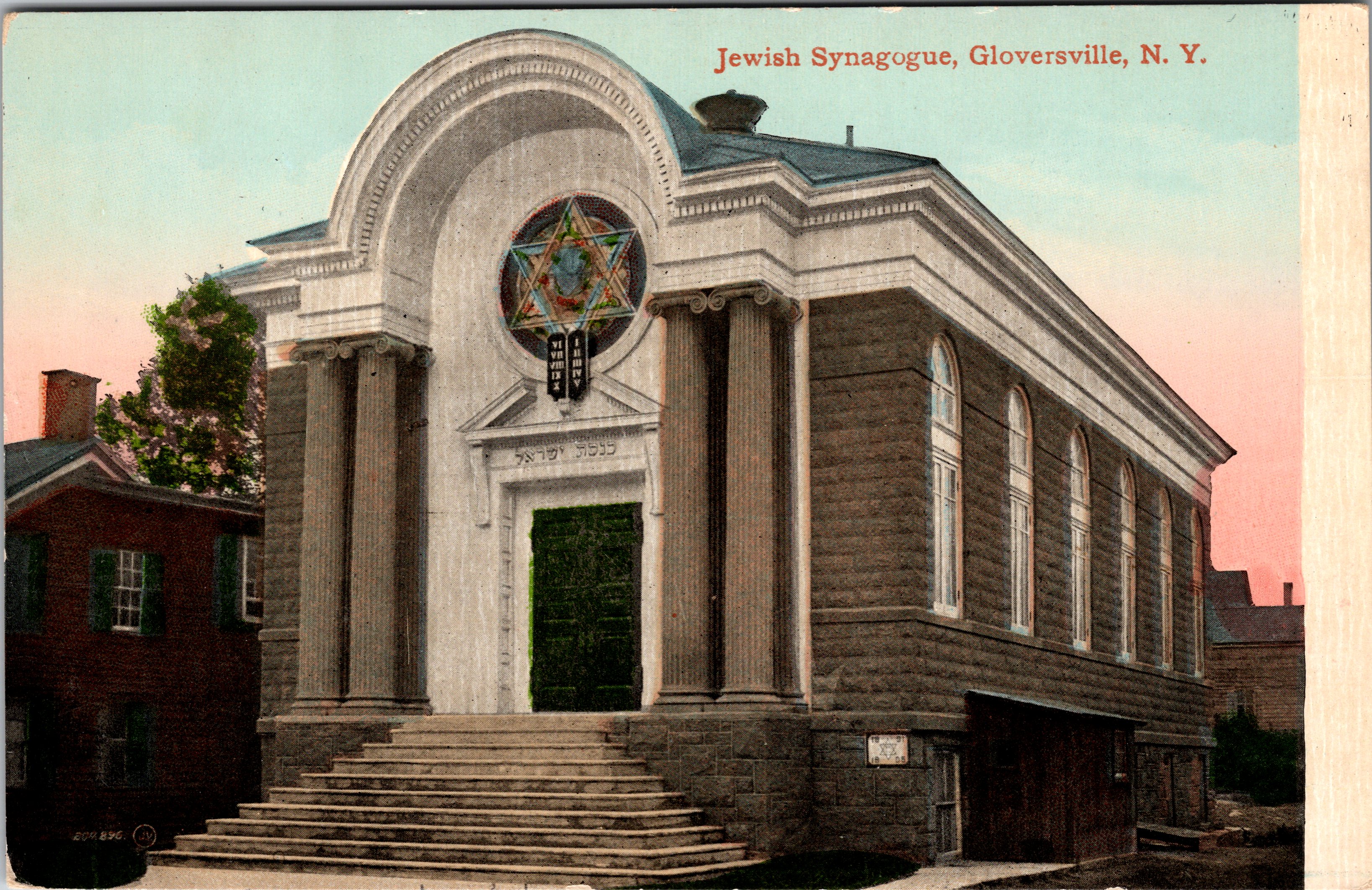
This vintage postcard features the Jewish synagogue located in Gloversville, New York. Note the Star of David window. Gloversville is a community located in upstate New York. German Jews settled in the area in th 1850’s. This turn of the century (c.1900’s) postcard was published by V. & Sons (New York and Boston) and printed in the United States. SOLD
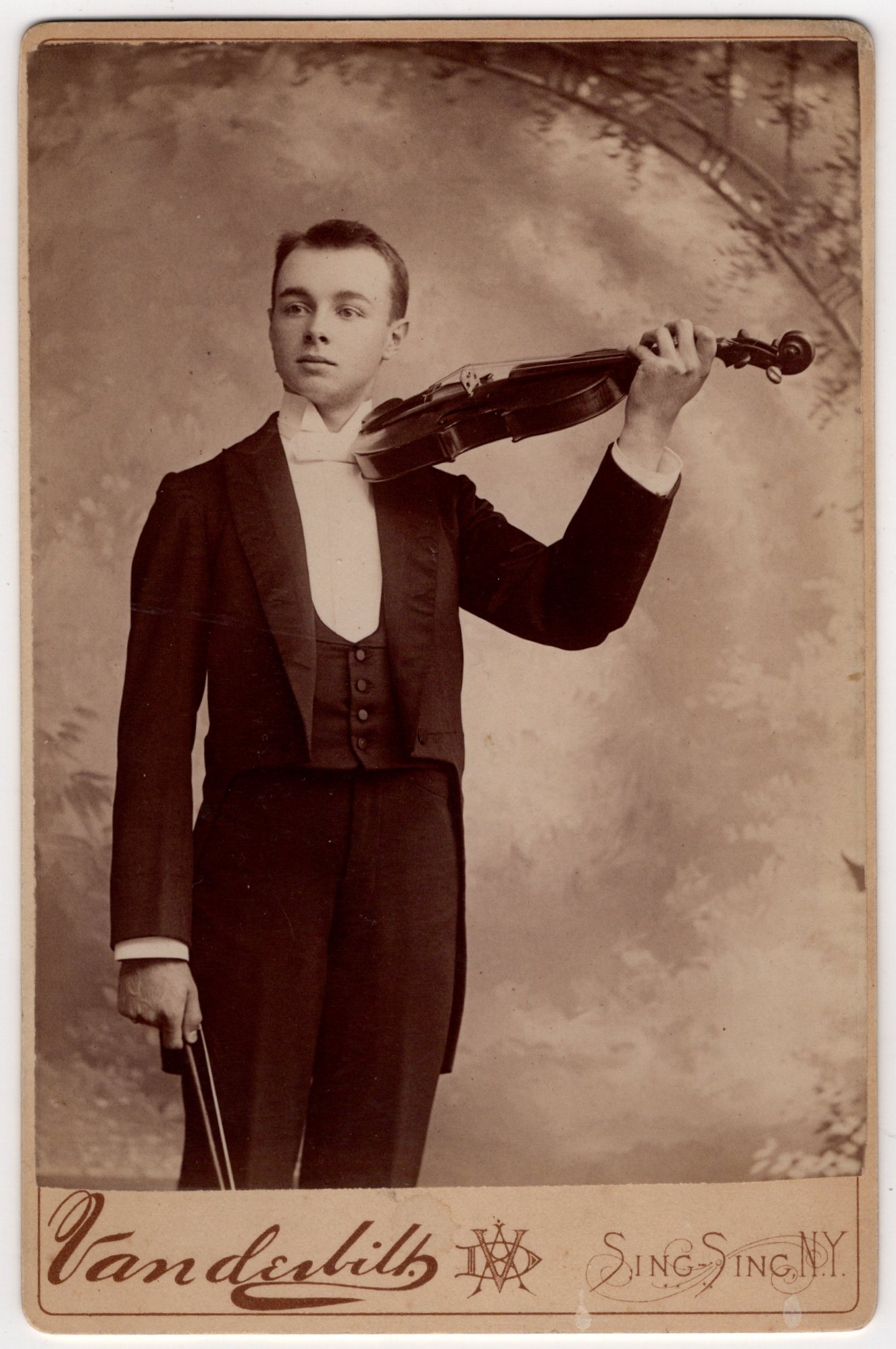
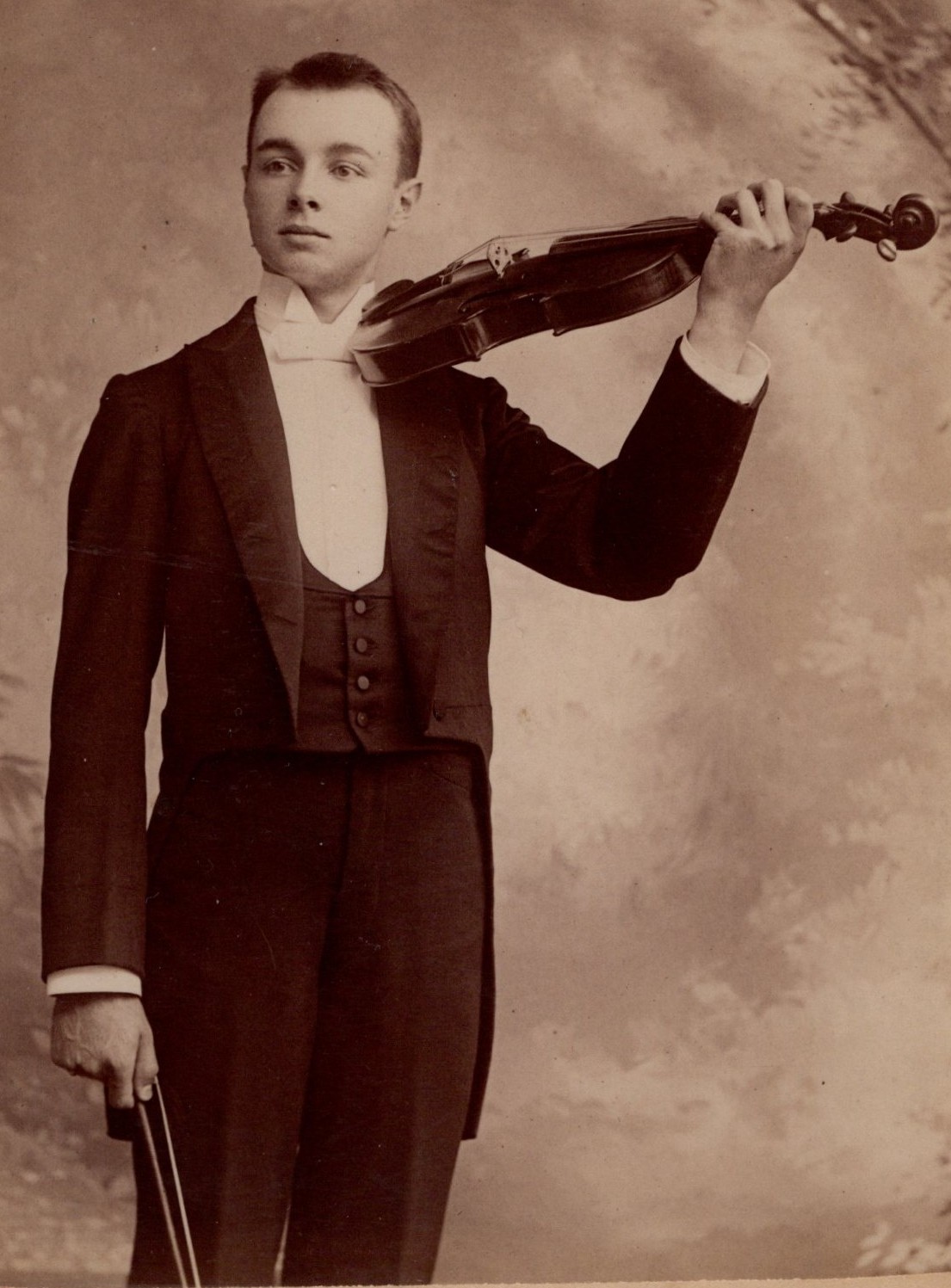
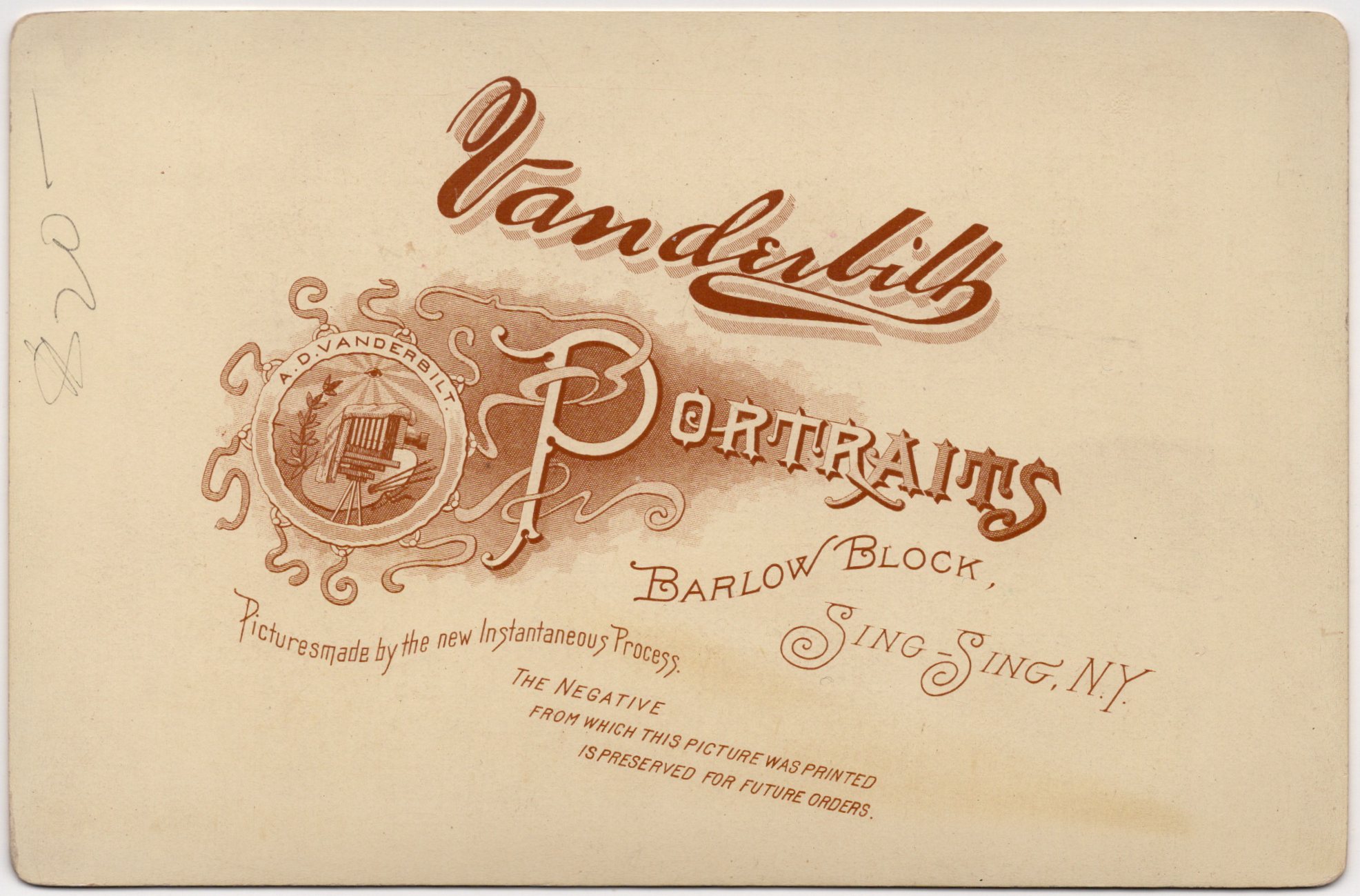
This elegant cabinet card photograph depicts a poised young gentleman holding a violin (sometimes called a fiddle in folk traditions), along with the bow in his right hand. The instrument’s distinctive shape, tuning pegs, and chin rest clearly identify it as a violin rather than a viola or other bowed instrument. The young man holds the violin resting against his shoulder in a theatrical pose, suggesting that he was likely either a trained musician or wished to present himself in the fashionable image of a cultured performer. The subject appears to be a young adult man dressed in formal evening attire typical of the 1890s. He wears a dark tuxedo-style coat with satin lapels, a waistcoat fastened with buttons, and a white shirt with a prominent bow tie. His carefully combed hair and composed expression give him a refined and somewhat introspective look, while his sideways gaze adds a touch of drama to the portrait. Such poses were often used in studio photography to emphasize talent, social status, or artistic identity. The violin, a long-established symbol of classical music and culture, reinforces the impression that the sitter was a musician. The photograph was produced by A. D. Vanderbilt, whose studio operated in the village historically known as Sing Sing, New York. The town, located along the Hudson River in Westchester County, later changed its name to Ossining to avoid the notoriety associated with the famous prison located there. The name “Sing Sing” originally derived from the Sintsink Native American tribe, from whom the land was purchased in the seventeenth century. During the late nineteenth century the village was a bustling Hudson River community. The reverse of this cabinet card has a logo which provides additional details about the studio. It was located on the Barlow Block of Sing Sing. The ornate design incorporates a decorative emblem containing a classical column and photographic camera—symbols often used by photographers of the period to convey artistic skill and technical mastery. The Barlow Block referenced on the card was a commercial building on Main Street rebuilt after a major fire in 1872 and became an important center of retail activity in the village.The studio imprint also advertises that the photographs were “made by the new instantaneous process,” a marketing phrase commonly used by photographers in the late nineteenth century to highlight improved photographic technology that allowed shorter exposure times and sharper portraits. This cabinet card was most likely produced circa 1887-1893. SOLD
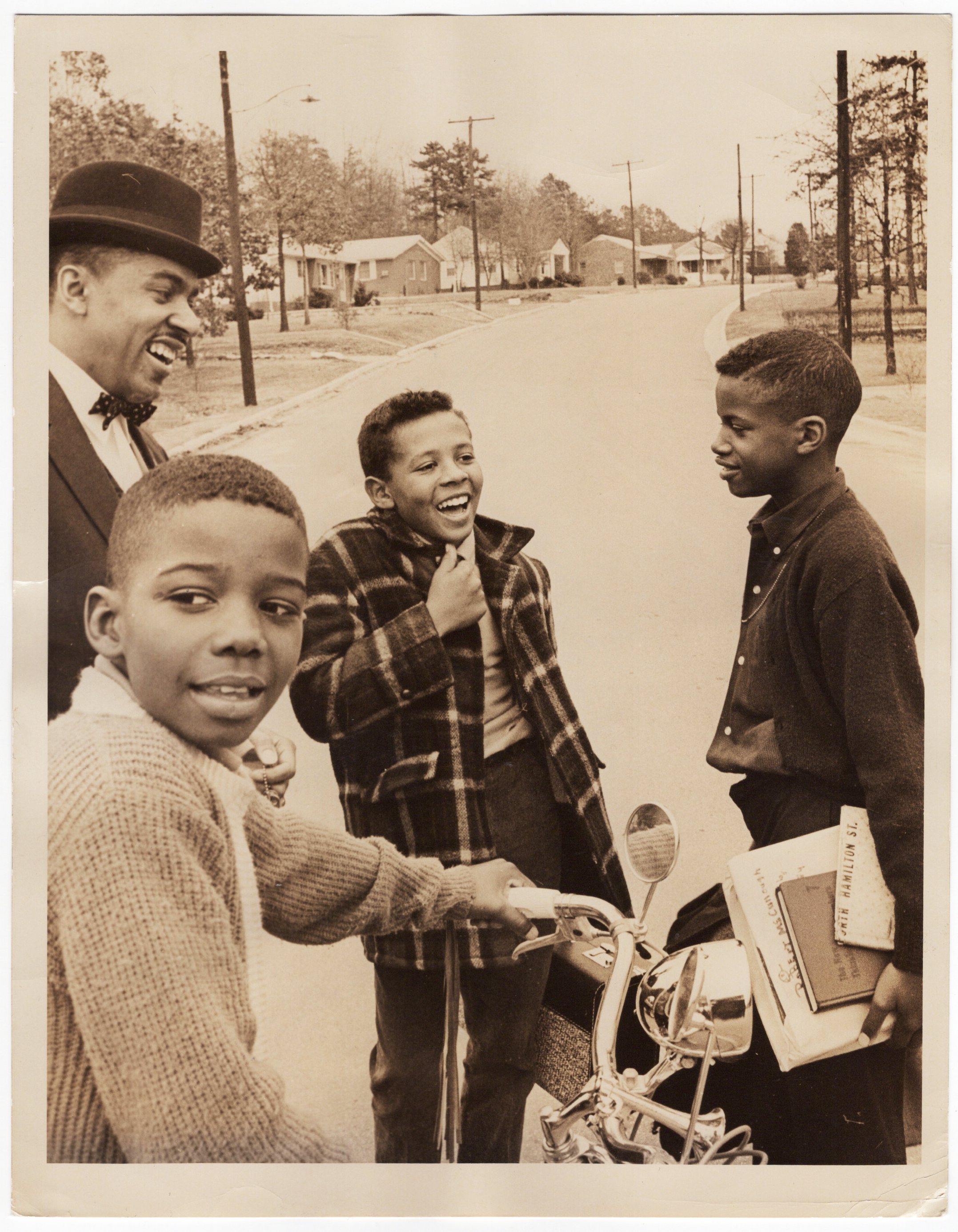
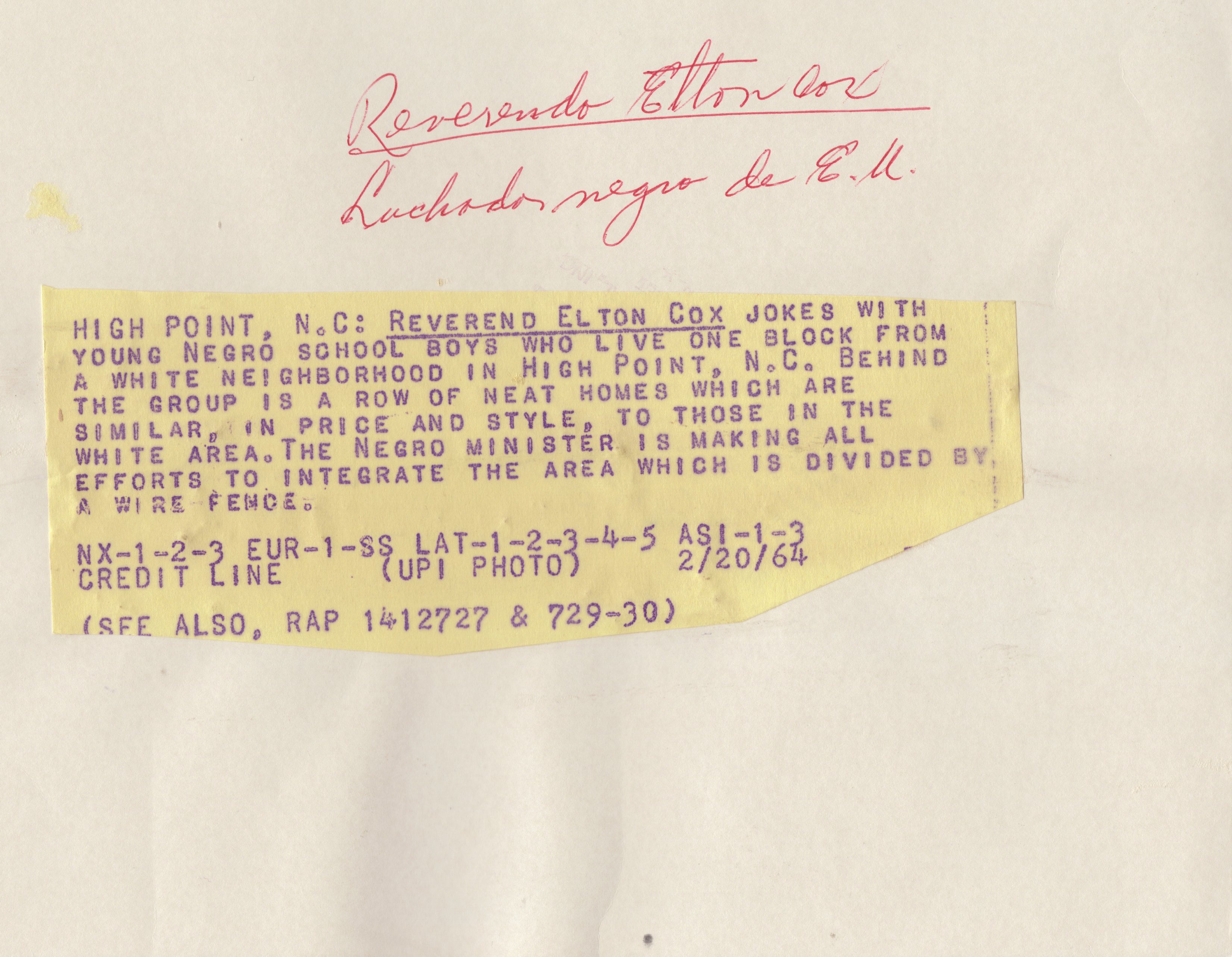
This vintage press photo features an African American clergyman named Reverend Elton Cox (1931-2011). He was photographed while joking with some neighborhood children who appear to be going to, or returning from school. Reverend Cox is in the neighborhood for a reason. The community is segregated. There is a wire fence dividing the white area from the black area. The caption on the reverse of the photograph points out that the houses on each side of the fence are basically the same. The fence is an unnatural boundary. Reverend Cox is determined to find a way for the Black and White residents in the community to integrate. He had a tough battle ahead of him to reach that goal. Racism, unrealistic fear, and unfair discriminatory laws all stood in the way. It is now nearly 60 years after this photograph was taken. I wonder whether the neighborhood is integrated today. Most would hope so. This photograph was taken in 1964 by a United Press International (UPI) photographer. Elton Cox was a civil rights movement activist and preacher. He was part of the Freedom Riders protest in 1961 and interviewed in the documentary about it. He was nicknamed “Beltin” Elton”. He grew up in Kankakee, Illinois. He had to take a break from high school to work to help support his family. He graduated high school at age 20 and went on to Livingston College in Salisbury, North Carolina. Next he studied for a Divinity degree at Howard University. He was ordained in 1958. He became a pastor at the Pilgrim Congregational Church in High Point. He quickly went to work to support the civil rights movement. His work included starting desegregation efforts at local schools. Cox had strong beliefs in non-violence. James Farmer, then of the NAACP, hired Cox to help push for civil rights in the south. He worked with students and organized non-violent sit-ins. Despite his non-violent approach, Cox was arrested seventeen times over the decades. One arrest, in Louisiana for “disturbing the peace” resulted in a conviction that was appealed all the way to the US Supreme Court where his conviction was overturned. Later in life, Cox returned to High Point to work as a Minister. Next, he worked as a chaplain at a VA hospital in Illinois. His final position was working as a school counselor in Jackson, Tennessee. Elton Cox is one of many unsung heroes of the civil rights movement. SOLD
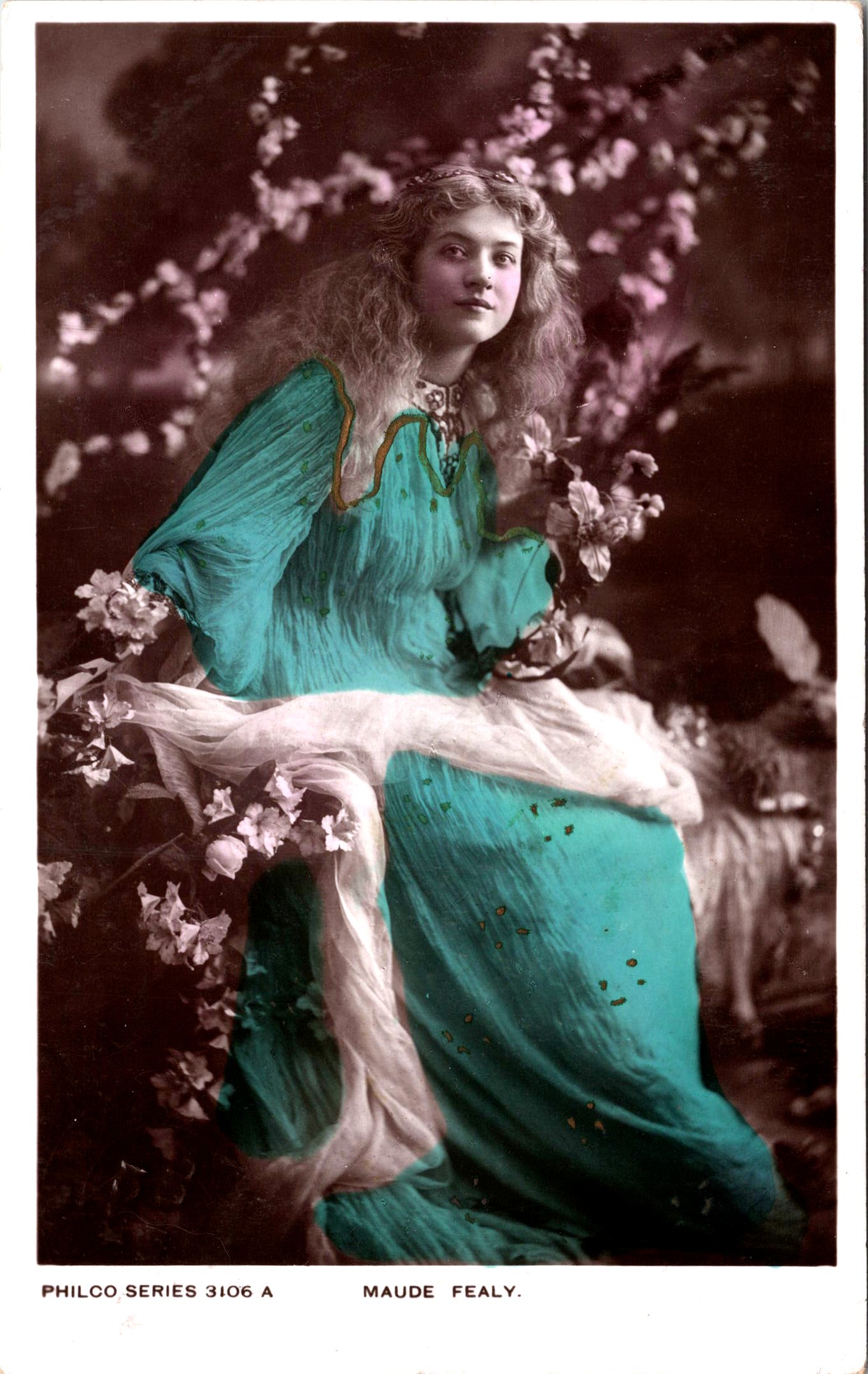
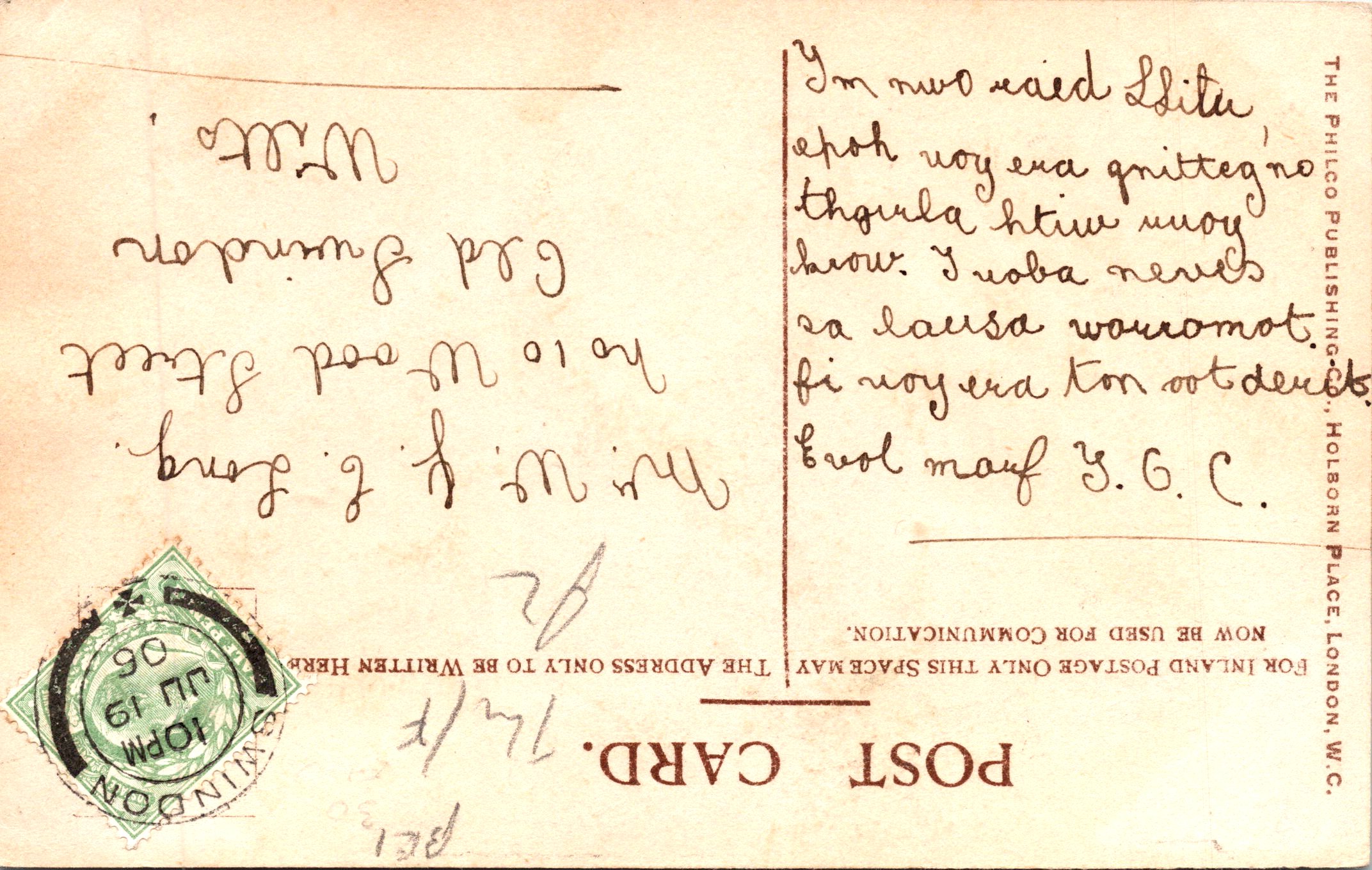
This beautiful hand-colored theatrical postcard features American stage actress Maude Fealy portrayed in a romantic and highly artistic studio portrait. The image captures Fealy seated among flowering branches in a softly staged garden-like setting, creating an ethereal atmosphere characteristic of early twentieth-century theatrical photography. In this portrait Fealy appears in the role of Fair Rosamund in the play Becket, the celebrated historical drama centered on the conflict between King Henry II and Archbishop Thomas Becket. Fair Rosamund—traditionally portrayed as the king’s beloved—is often depicted in literature and theater as a figure associated with beauty, innocence, and romantic tragedy. The floral setting and delicate costuming in this image reflect that idealized interpretation of the character. Fealy gazes slightly upward toward the camera with a calm and reflective expression, giving the portrait a dreamy, contemplative quality. Her long, softly curling hair frames her face and enhances the romantic tone of the composition. She wears a flowing, gauzy gown that has been carefully hand-tinted in a striking turquoise-green color, a technique commonly used on high-quality theatrical postcards of the Edwardian era. Subtle gold accents outline the garment, and the loose fabric drapes gracefully across her lap while blossoms appear to rest lightly in her hands, reinforcing the floral and poetic mood of the scene. The lower margin of the postcard identifies the publisher as the Philco Publishing Company (London).The card is number 3106A in a series. Maude Fealy (1883–1971) was a successful stage actress who later appeared in silent films and early talking pictures. Born in Memphis, Tennessee, she was the daughter of actress Margaret Fealy and began performing at a young age. Fealy developed a strong reputation on the American stage and toured widely before transitioning into motion pictures beginning in the 1910s. This postcard was mailed and postmarked June 19, 1906. The original green Edward VII one-half penny stamp remains affixed at the upper right. The postcard remains in good overall antique condition. The hand-colored image retains strong visual appeal with attractive color. There is minor corner wear consistent with age and handling. The reverse displays the original stamp, clear postmark, and handwritten message. Overall, this is a very appealing example of an early theatrical postcard depicting Maude Fealy in one of her noted stage roles (see scans).
This postcard is available for purchase at my store, The History Peddler, for $32.00
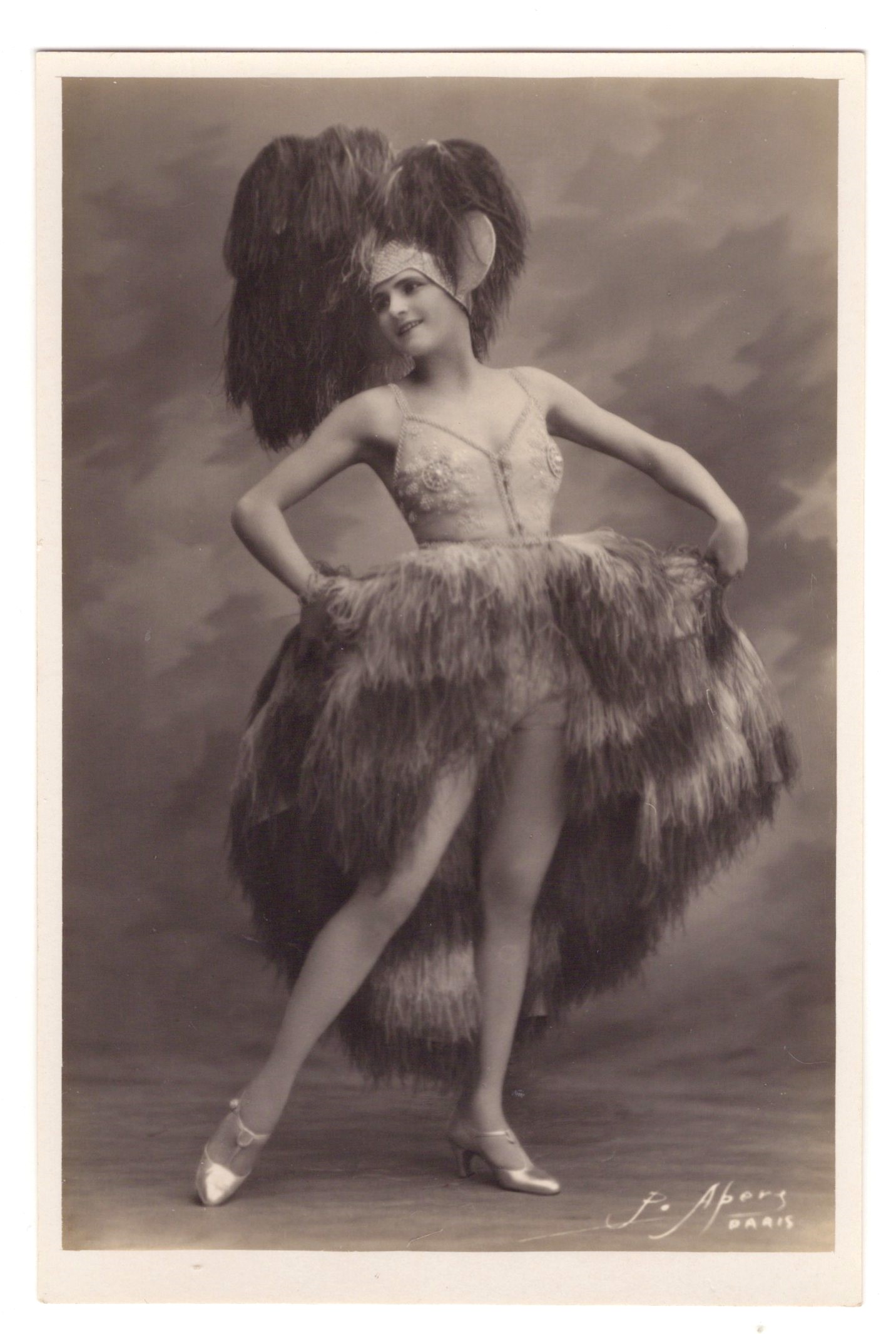
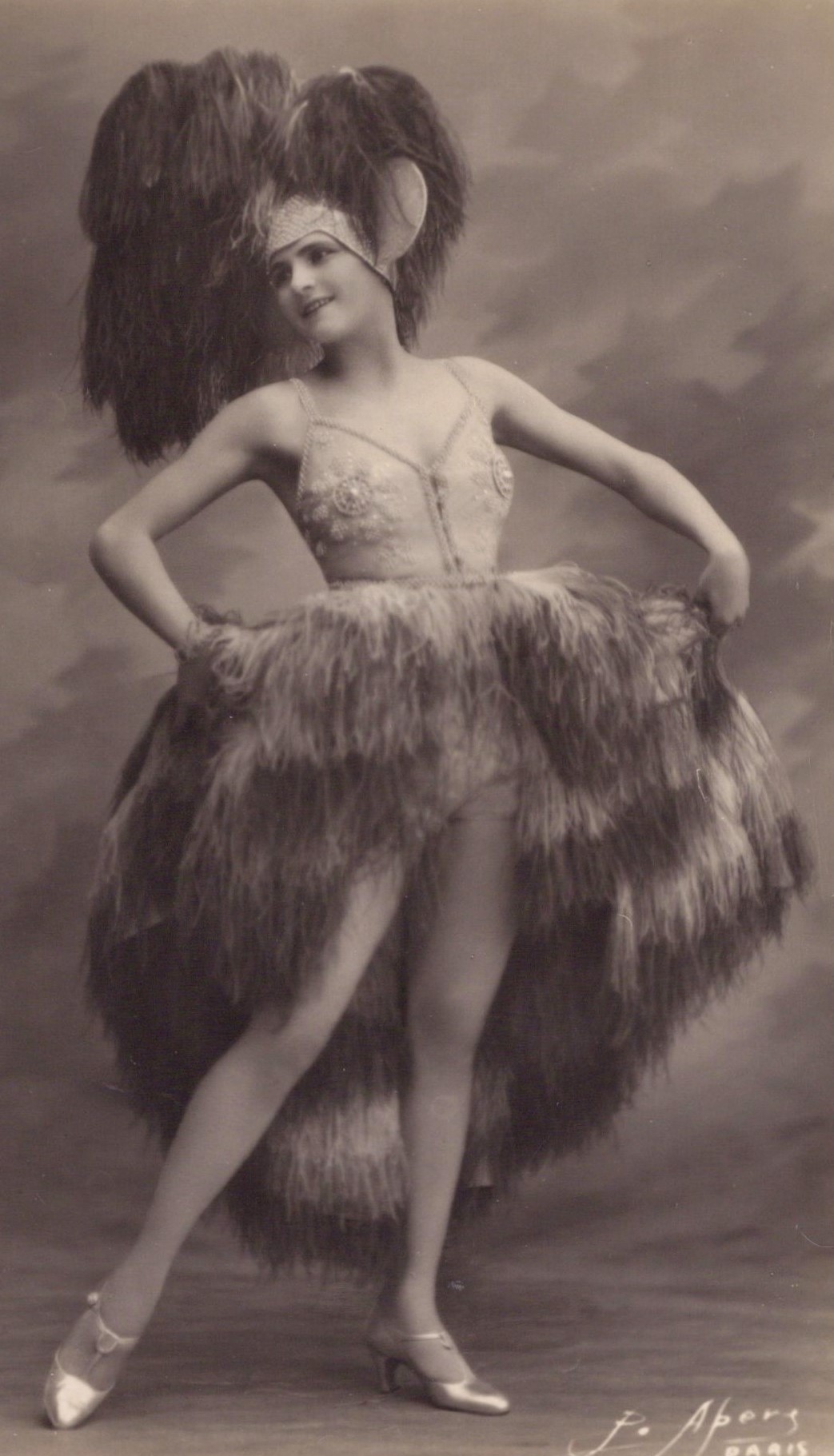
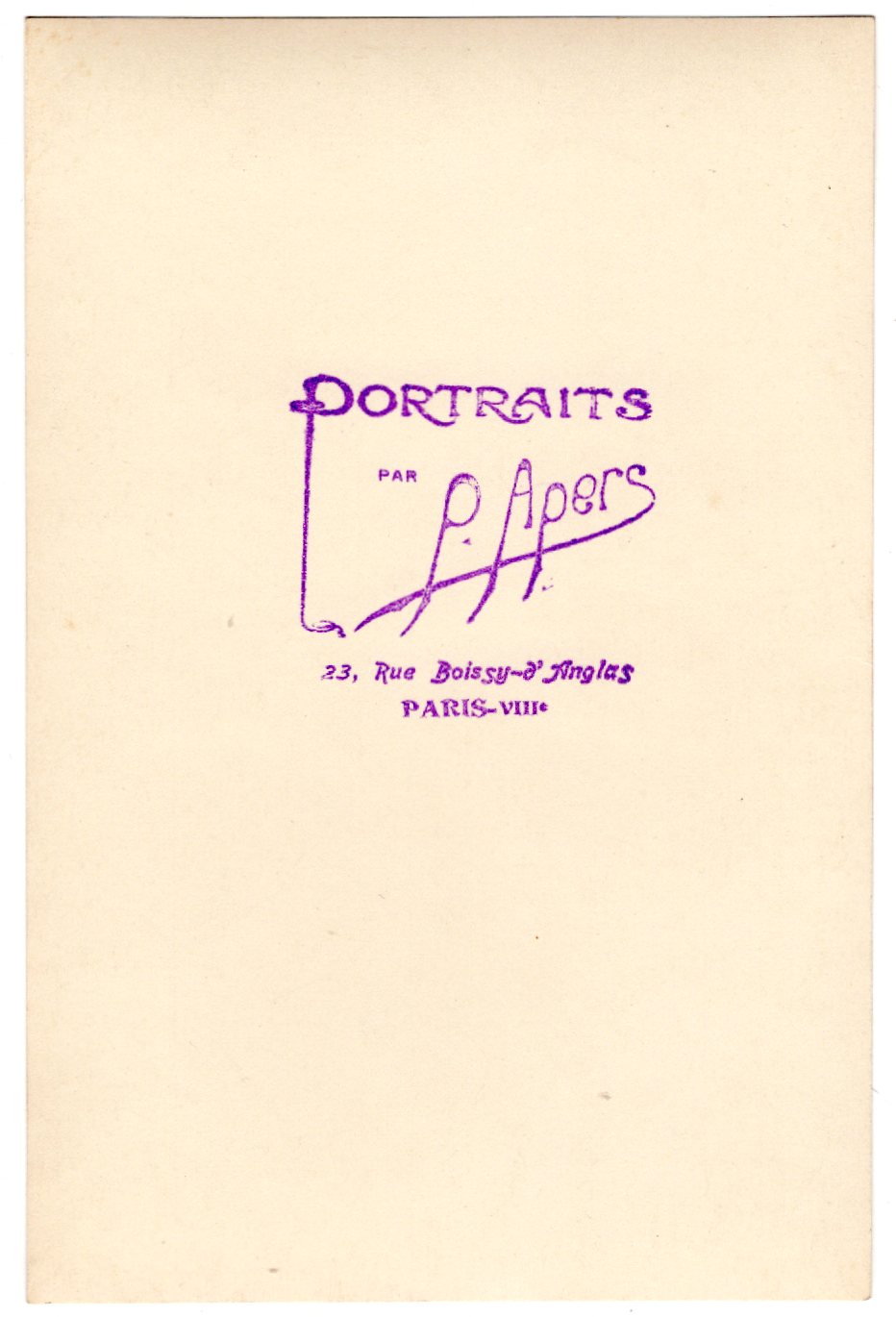
This vintage photograph features a pretty young dancer wearing a magnificent costume. I believe her hat and skirt are made of feathers. Her lithe body is accompanied by a winsome smile. This beautiful photograph comes from the Paris studio of Pierre Apers. He was a talented French photographer active in the 1920’s and 1930’s. His studio was in Paris and he specialized in portraiture. He is known for his photographs of French theatre and film stars. Some of his work is in the collection of the Bibliotech Francais in Paris. The reverse of the photograph has an ink stamp providing the address of Aper’s studio. SOLD
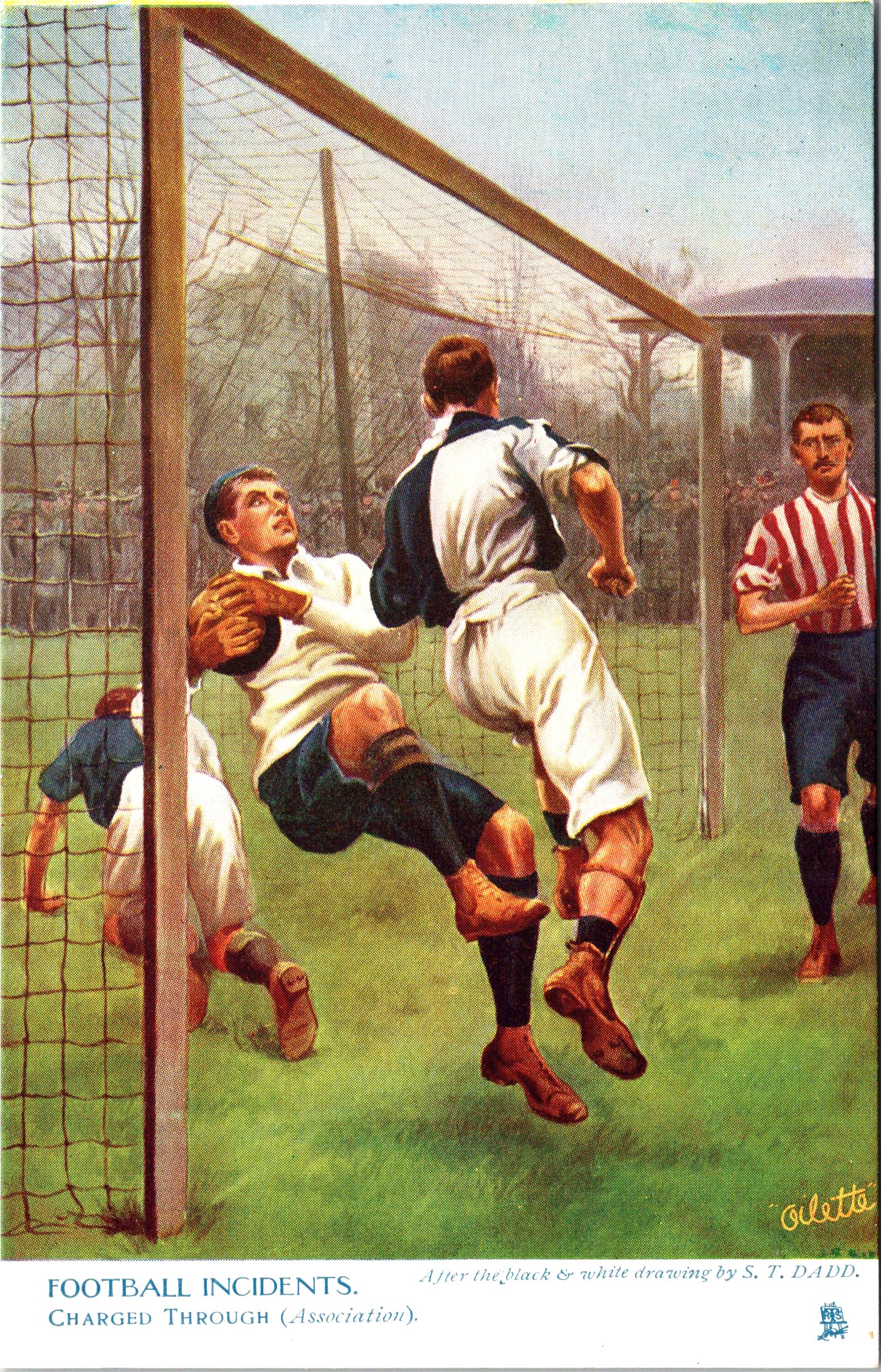
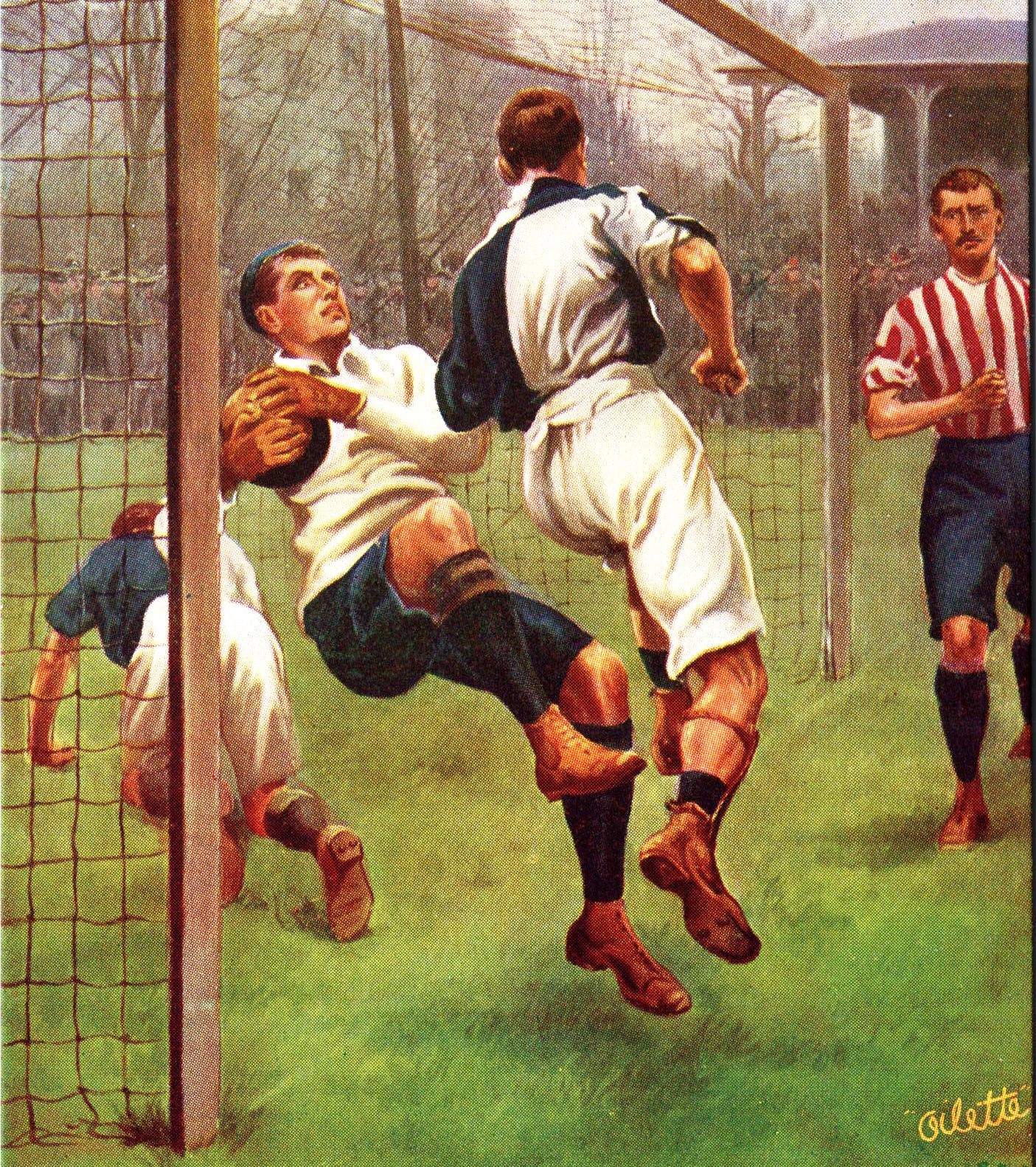
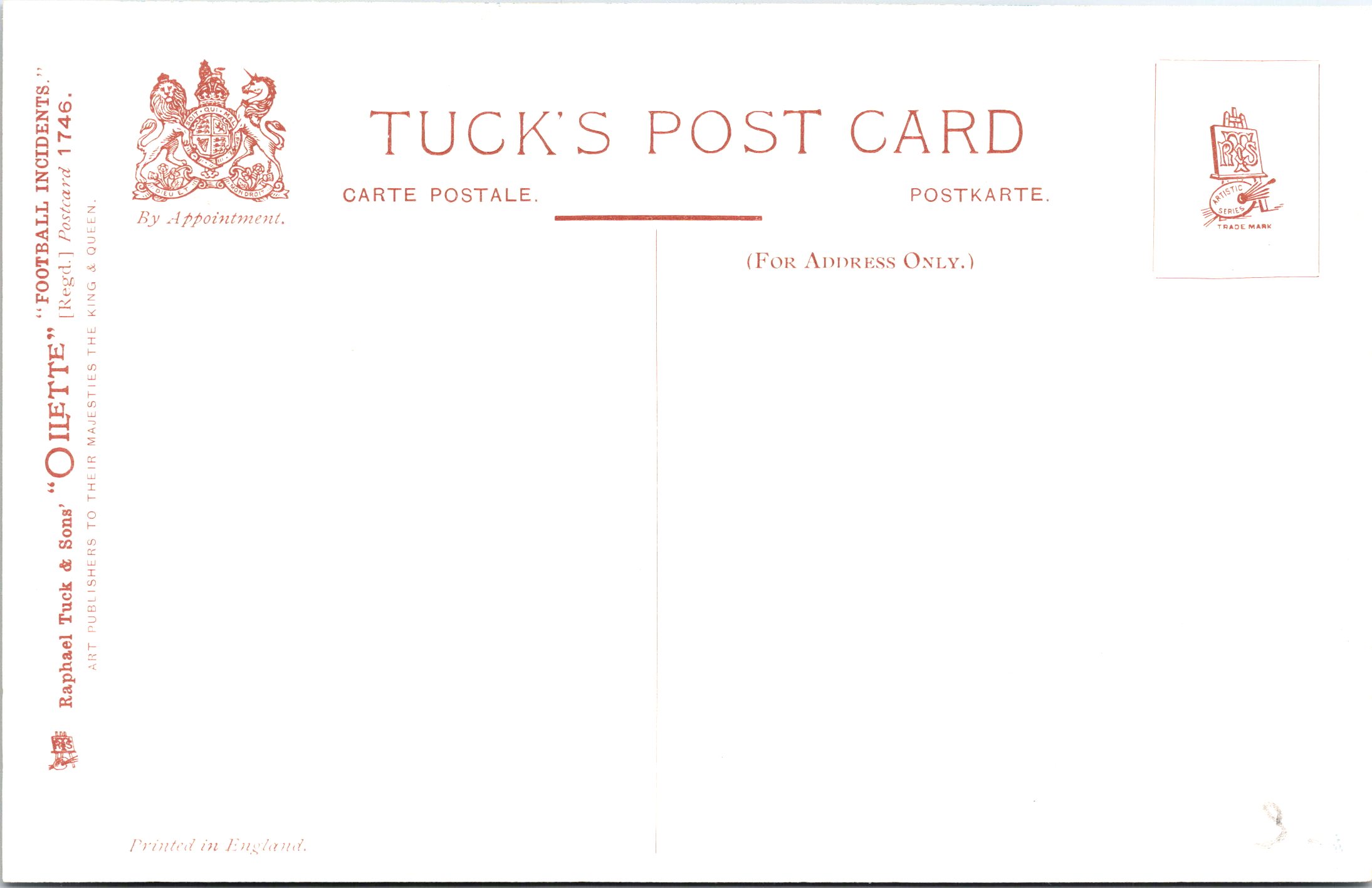
This action packed postcard features a soccer goalie making a “save” and preventing the opposing team from making a score. The caption reads “Charged Through”. This refers to the player that has run past the goalie and travelled into the net. The referee, wearing a striped red and white shirt, observes the action. This postcard was published by Raphael Tuck & Sons and is part of the “Oilette ” series (no. 1746). Oilette cards are copies of the work of commissioned artists. This postcard is part of a sub series entitled “Football Incidents”, and the card itself is captioned “A Try”. This rugby image was modeled after a black & white drawing by S. T. Dadd. The postcard was postmarked in 1907, but was issued in 1904. Raphael Tuck and his wife started their photography business in 1866 in London. Their store sold pictures, greeting cards, and in time, postcards. Their success came from the sale of postcards during the late 1890’s and early 1900’s. In the early 1900’s the firm conducted postcard competitions for collectors of Tuck postcards. These competitions offered cash prizes and they were very popular. The winner of one of these competitions had a collection consisting of over twenty-five thousand cards. Three of Tuck’s four sons participated in the business. The company was devastated by German bombing during World War II. In 1959 the company merged with two other printing companies. This postcard is in good condition (see scans).
This cabinet card is available for purchase at my store, The History Peddler, for $22.00
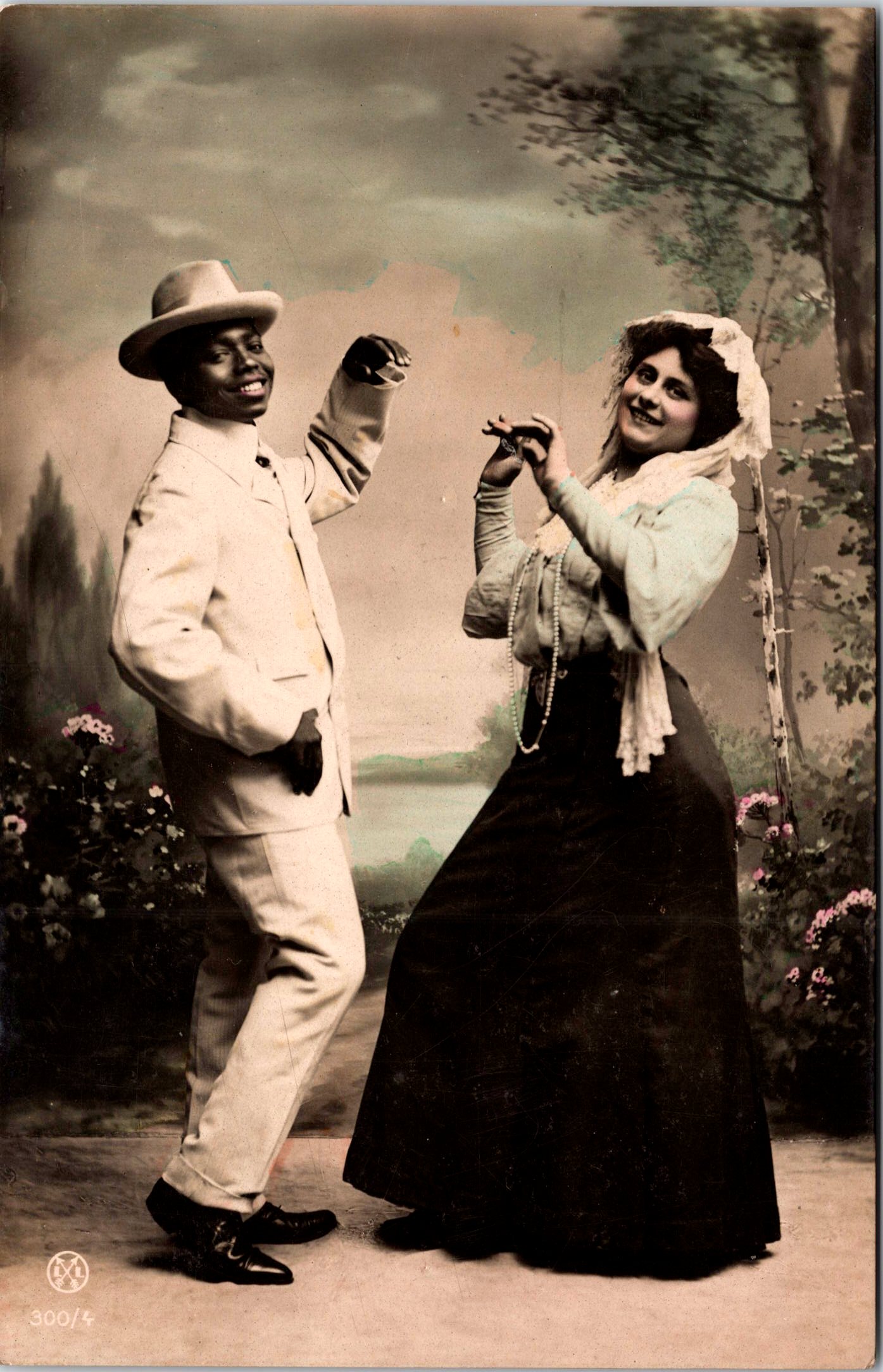
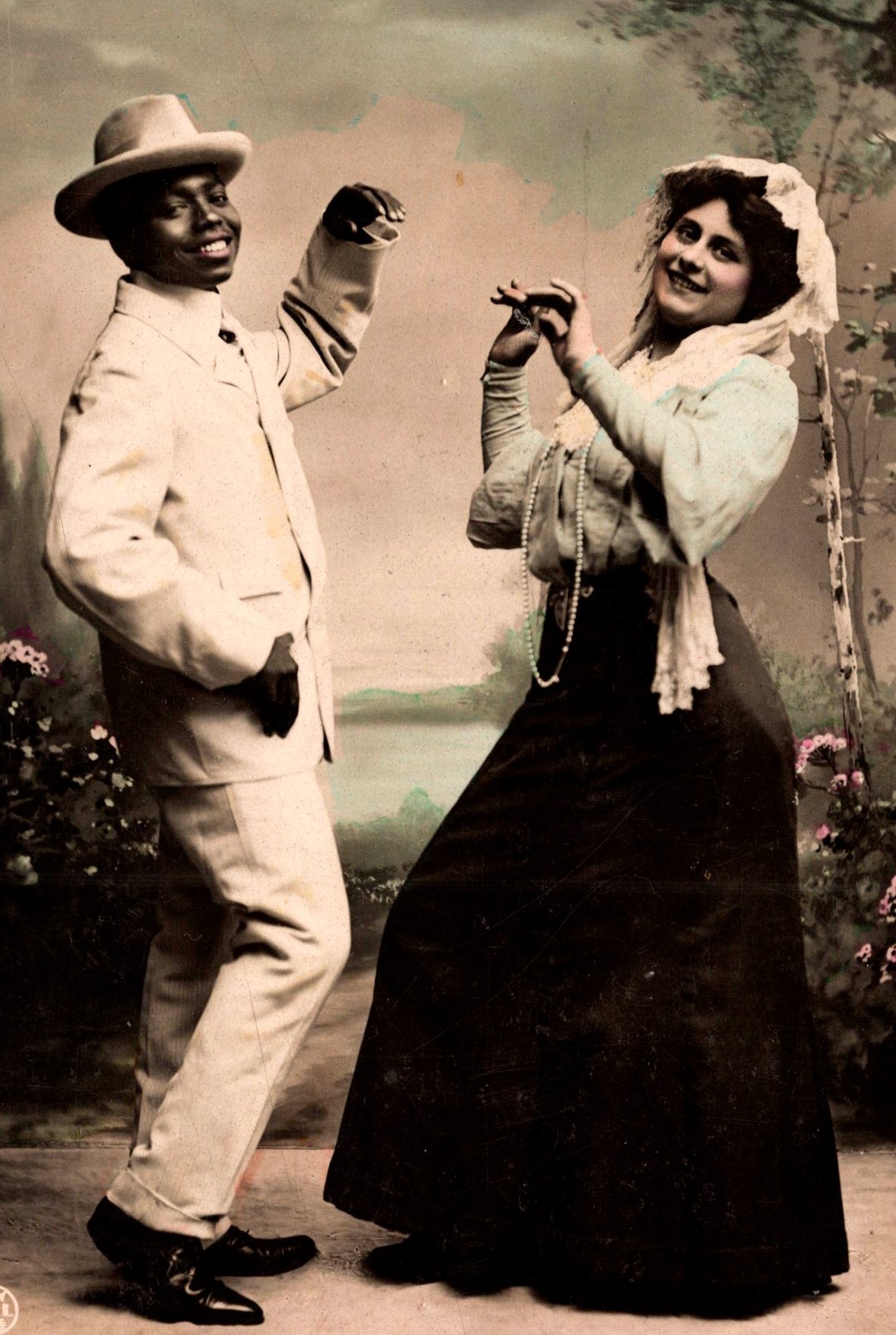
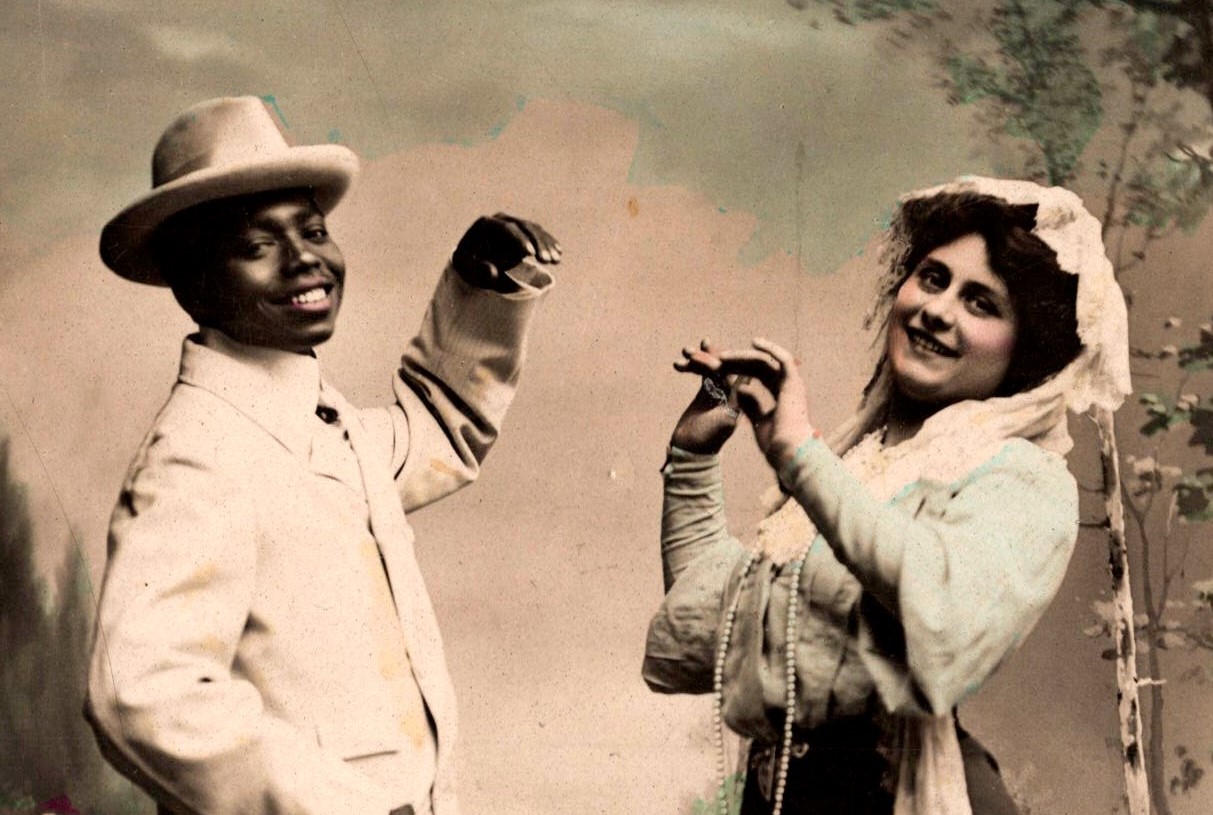
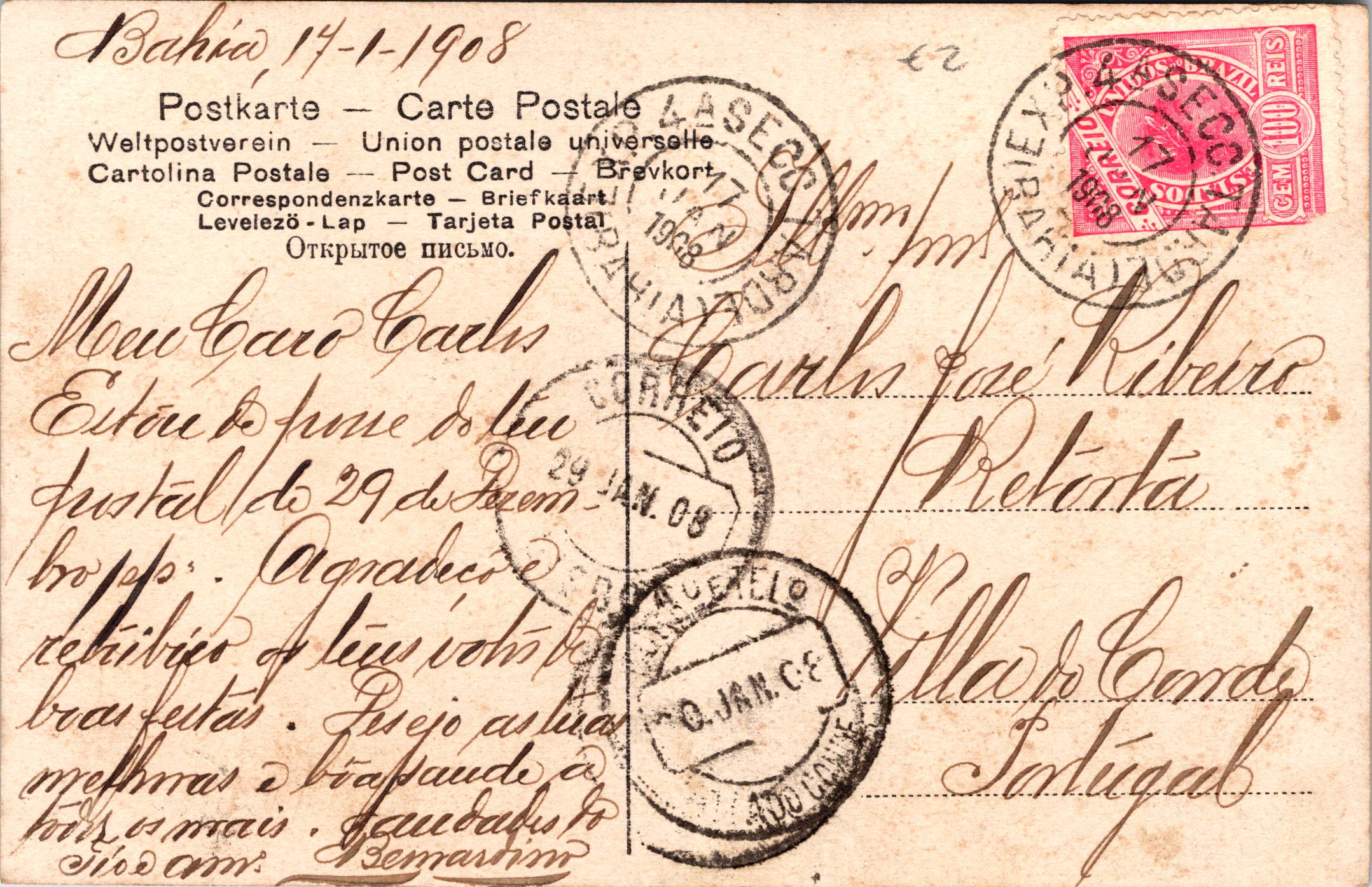
This vintage real photo postcard features an attractive dance couple. It appears that the dancers are from Brazil (judging by the postmark). The male dancer is wearing a very cool white suit while the woman is wearing traditional clothing. Both of the dancers are flashing beautiful smiles. This postcard was published by L. Langebartels. The firm was located in Berlin, Germany and also was a supplier of photographic paper and plates. The card was postmarked in 1908 in Bahia, Brazil. Bahia is in northeastern Brazil. Interestingly, the city’s annual carnaval celebration is known to bring together flamboyantly costumed dancers with samba and axe music for a massive “street party”. Could the couple seen in this postcard be carnaval dancing? SOLD
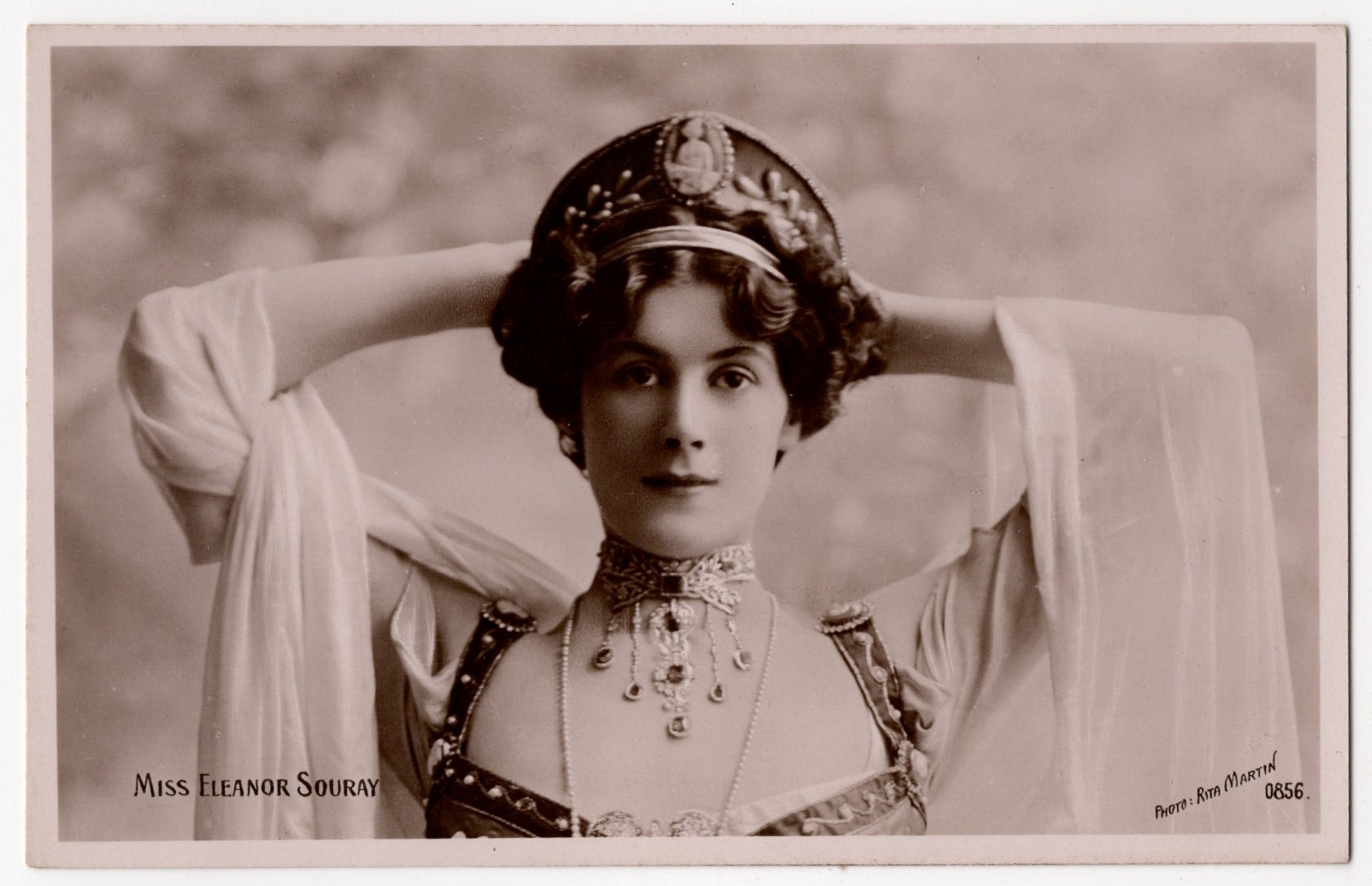
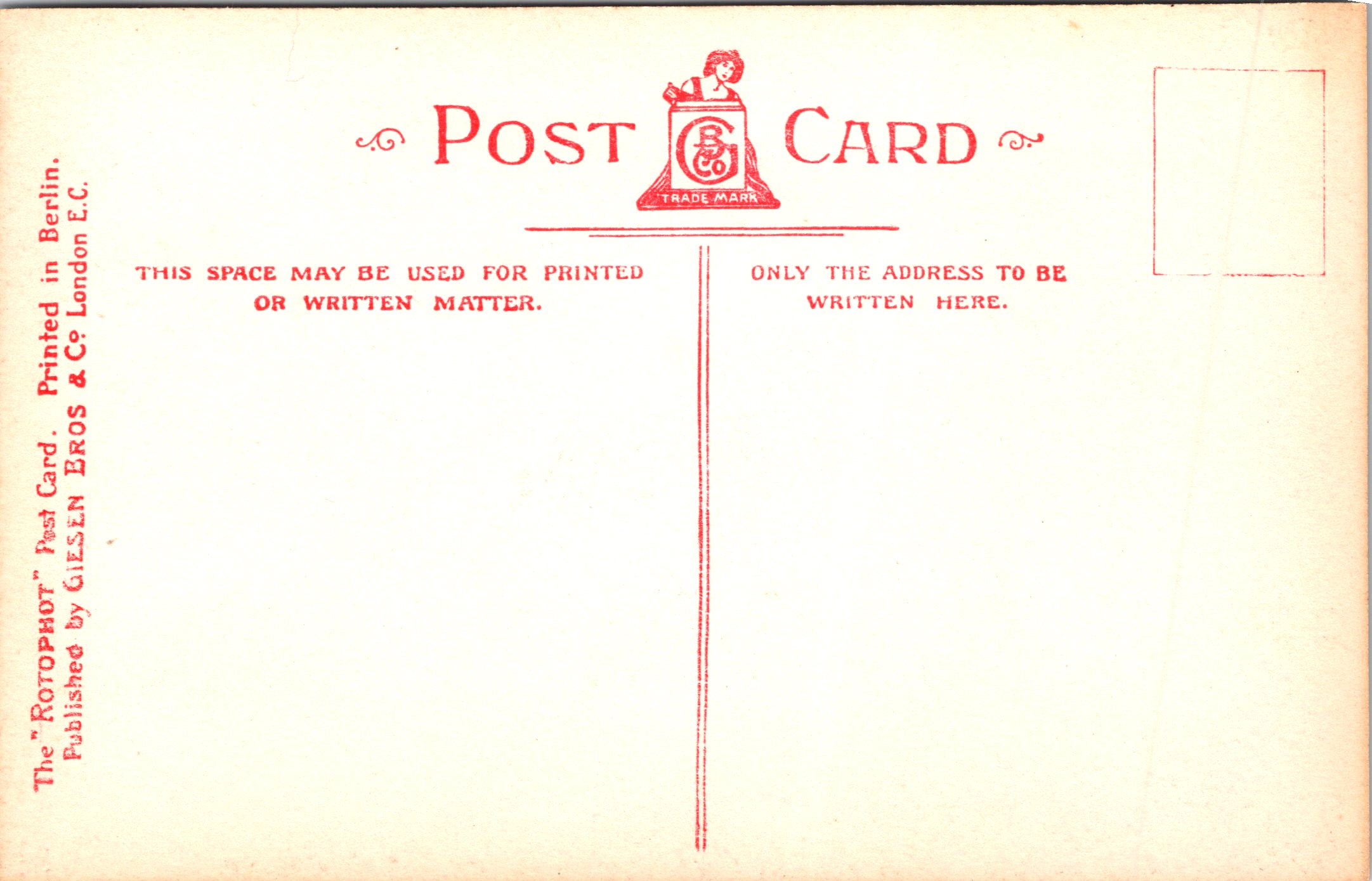
This uncommon vintage real photo postcard features English actress, Eleanor (Nellie) Souray (1880-1931). She was also known as Viscountess, or Lady Torrington. She was known for her roles in Edwardian musical comedies, pantomime, and light opera. Her sister, Maidie Souray was also an actress. Eleanor ran away from school to act in a touring company from Brighton. It was not long before she was starring in plays on the London stage. Among the plays she appeared in were “The Black Tulip” (1898), “The Blue Moon” (1905), and “The Merveilleuses” (1906). She was also a Gaiety Theatre girl. Eleanor was also an author, penning “Over the Garden Wall: A Story of Racing and Romance” (1924). In 1910, she wed George Master Byng, the 9th Viscount Torrington. They only knew each other three day before they were married. They shared a strong interest in horse racing. The pair divorced after World War l. She became more involved in horse racing and that interest led to her bankruptcy in 1930. In 1931 she committed suicide by gas. At the time of her death she was struggling with poverty and loneliness. This postcard’s photo was taken by Rita Martin, the celebrated female photographer known for her portraits of stage stars. The postcard was published by Rotophot (Giesen Bros.).This vintage postcard is in very good condition (see scans).
This cabinet card is available for purchase at my store, The History Peddler, for $18.00
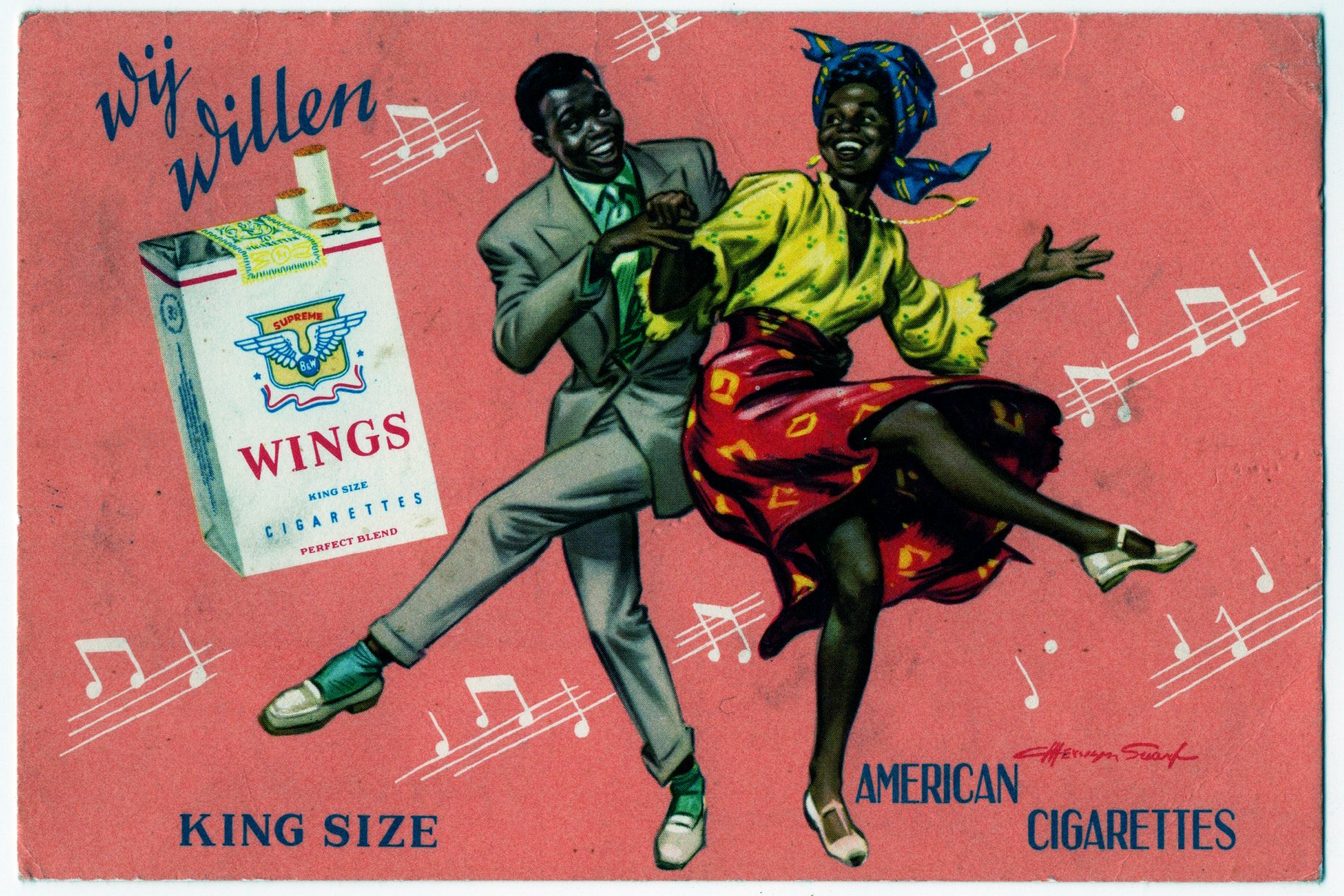
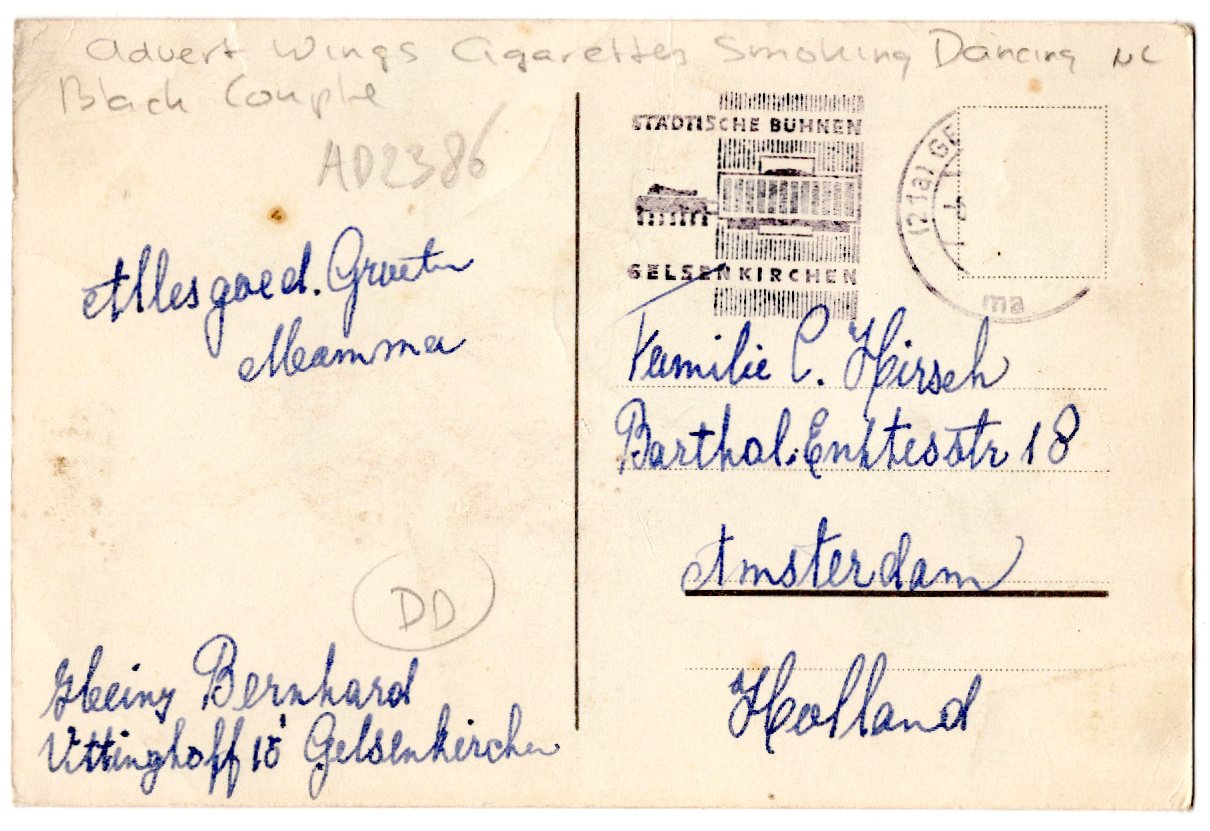
This striking uncommon vintage postcard advertises Wings Cigarettes, a brand first launched in 1929 by Brown & Williamson as a budget cigarette during the Depression era. On the front, the colorful lithograph illustration shows a joyous Black couple caught mid-dance, their movements surrounded by floating musical notes. The man, dressed sharply in a gray suit, steps forward with energy while his partner, in a bright yellow blouse, patterned skirt, and blue headscarf, matches him with exuberant motion. To the left of the scene is a large pack of Wings King Size Cigarettes, with the phrase “American Cigarettes — Perfect Blend” beneath. At the top left corner, the text reads “Wij Willen”, Dutch for “We want”, suggesting that this postcard was part of an overseas advertising campaign in the Netherlands or Belgium. The artist’s signature appears in red at the lower right; it is stylized and difficult to decipher. The reverse of the card deepens its international story. It is addressed to the Hirsch family in Amsterdam, Holland. The handwritten note is brief and in Dutch. The message translates to “Everything good. Greetings, Meanna.” Also printed text on the back includes the translated words “Municipal Theaters of Gelsenkirchen”, showing a German connection as well. The combination of Dutch and German references makes it clear this was not produced for the American market but rather intended as a European advertising piece. The card likely dates from the 1930s to the 1950s, a period when Wings was promoted both in the United States and abroad. During this era, the brand was widely known for its affordability—ten cents a pack—and later for its collectible airplane trading cards inserted into cigarette packs, which were especially popular in the early 1940s. The “King Size” emphasis seen here fits with mid-century branding, when longer cigarettes were marketed heavily. This postcard in Continental size (6 x 4 inches).(SOLD)
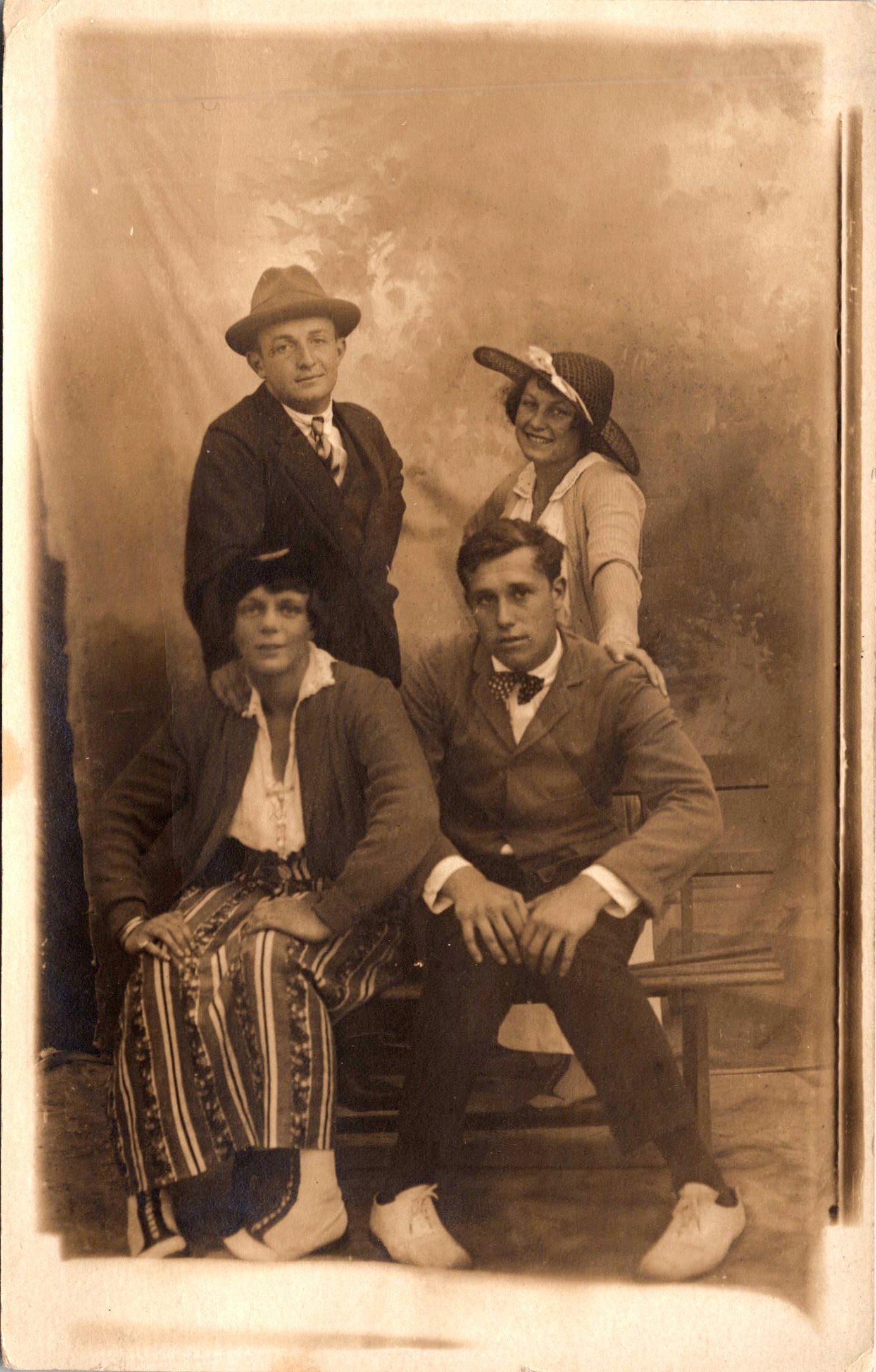
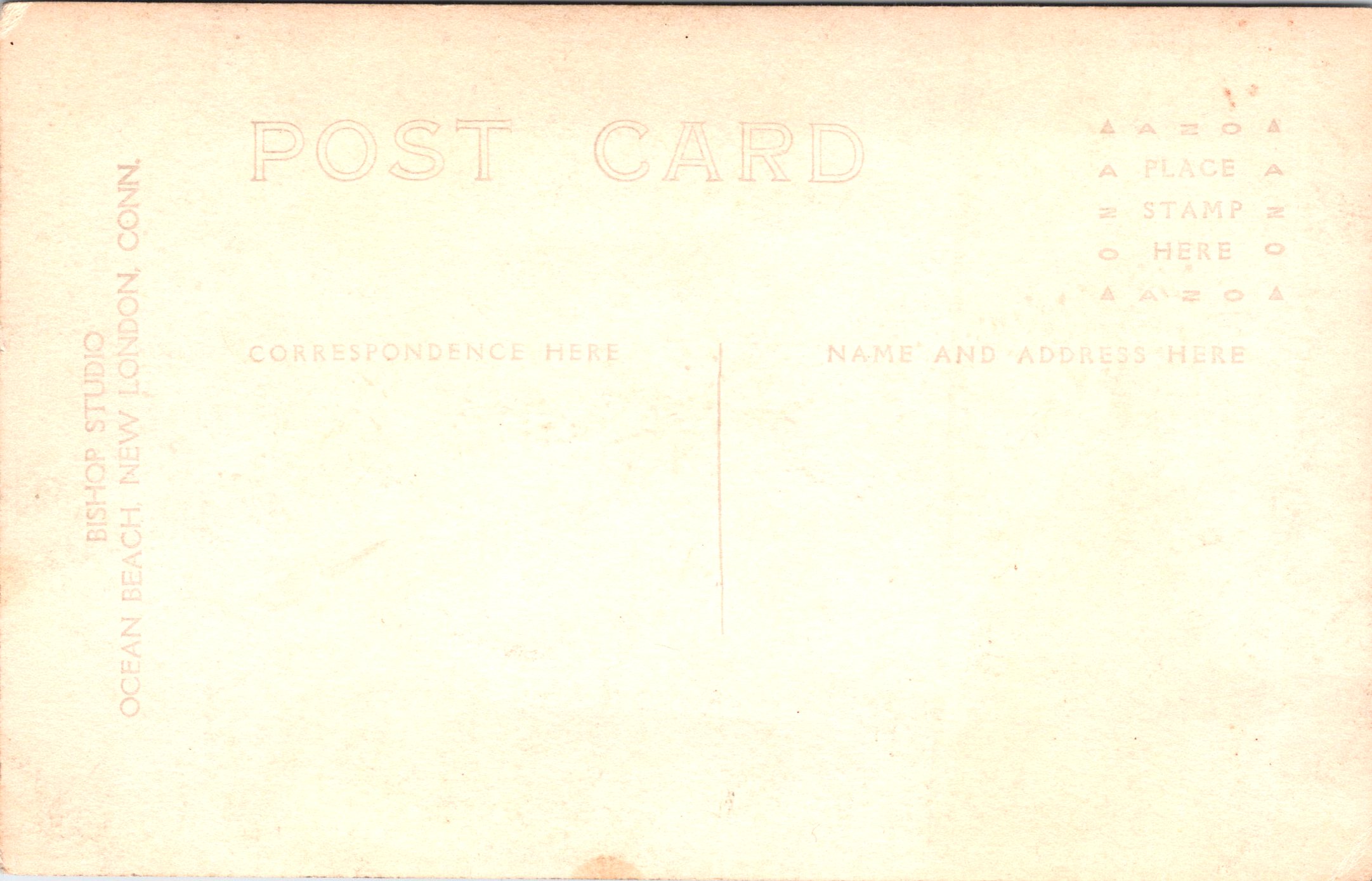
This appealing real photo postcard captures a relaxed and cheerful group portrait of four young adults posed together in a seaside photo studio in the early twentieth century. The image was produced by Bishop Studio of Ocean Beach, New London, Connecticut, a studio that catered to visitors enjoying the popular shoreline resort area along Long Island Sound. Ocean Beach was a well-known summer destination during this period, and souvenir photographs such as this were commonly made for vacationers wishing to preserve memories of their time at the shore. The photograph shows two women and two men arranged in a casual grouping. In the foreground, a young man sits on a wooden bench wearing a light-colored suit jacket, white shirt, and a neatly tied bow tie. His posture is relaxed but attentive, with his hands resting on his knees, and he looks directly toward the camera with a calm, somewhat serious expression. Beside him sits a young woman dressed in a blouse and cardigan with a striking vertically striped skirt. She appears comfortable and self-assured, gazing forward with a composed expression. Standing behind them are the other two members of the group. The man on the left wears a suit and tie topped with a soft felt hat. His head tilts slightly and his expression carries a faint smile, giving the impression of quiet amusement or easy confidence. To the right stands a young woman wearing a wide-brimmed woven hat decorated with a ribbon. She leans forward slightly with one hand resting on the seated man’s shoulder, smiling broadly and warmly toward the camera. Her bright sassy expression and the relaxed closeness of the group suggest these four were likely friends enjoying a day together at the beach. The reverse of the card shows an AZO photographic paper stamp box that dates the card to approximately 1904–1918. Also on the reverse appears the publisher’s credit: “Bishop Studio, Ocean Beach, New London, Conn.” The postcard remains in good overall vintage condition. There is minor corner wear consistent with age. The borders show slight darkening and handling marks typical of early real photo postcards, and there is mild corner softening. The reverse is unused and clean, and despite fading, the studio credit and the AZO stamp box are clearly visible. Overall, it displays nicely and remains a charming example of an early seaside souvenir portrait. See Scans.
This postcard is available for purchase at my store, The History Peddler, for $22.00 or best offer



 THE CABINET CARD GALLERY