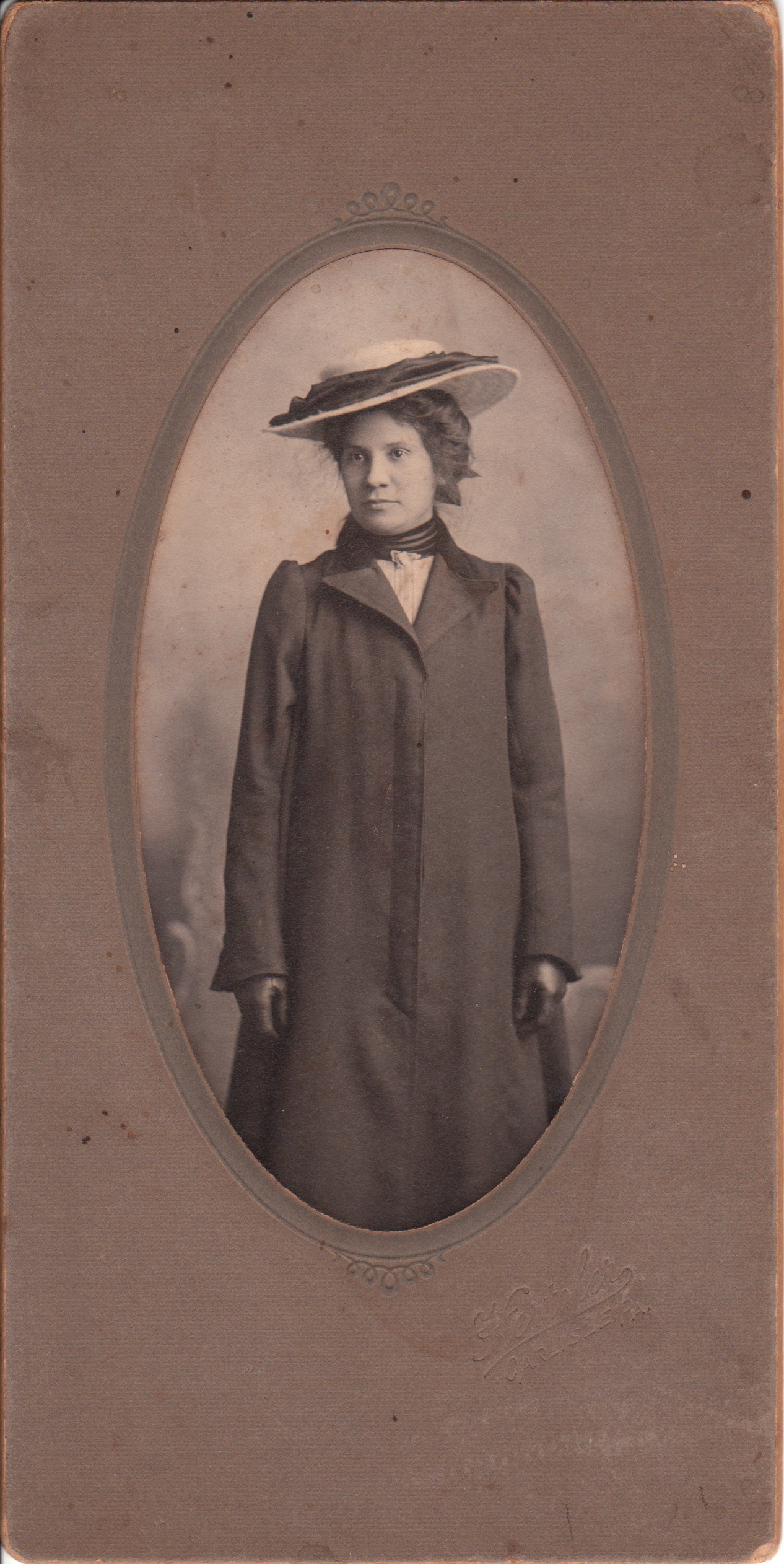
 The reverse of this photograph has an inscription and is signed by the subject. The young woman in this image is Amy Dalphus and the inscription states “to sister “Phillips” from sister “Beaver” Remember the day this was taken”. Miss Dalphus is well dressed and attractive in her coat, hat, and leather gloves. The photographer of this image was Hertsler whose studio was located in Carlisle. Research reveals that Amy E. Dalphus was from the Sioux tribe in South Dakota. She graduated from the Carlisle Indian Industrial School in 1903. She is cited in the book “A Biobibliography of Native American Writers, 1772-1924: A Supplement”by Littlefield and Parins (1985). Next to her name is the following: “Red Man and Helper, February 20-27, 1903”. Perhaps she wrote an article for this magazine or maybe her graduation is listed in the magazine’s pages. Research found little information about Miss Dalphus. Her name was listed on a number of annual “Indian Census” reports from the turn of the century. The “Indian Census” of 1896 reported her to be living in South Dakota with her step mother (Mrs. Moore) and three brothers and a sister. She lived under the auspices of the “Cheyenne River Agency”. The 1900 US census found her living in Carlisle as a student.The story of the Carlisle Indian school is an example of well meaning people committing terrible deeds in an effort to help others. It is important to realize that not everyone involved in this school, and others like it, were actually well intentioned. The Carlisle school operated from 1879 through 1918 as a boarding school founded by Captain Richard Henry Pratt. The school was part of the effort of the US government to assimilate children from 39 tribes into the majority culture. This was an effort to “civilize the Indian”. Pratt saw his task as similar to his experience with the “domestication of wild turkeys”. He believed his mission was the “annihilation of the Indian and his salvation as an American Citizen”. Pratt’s goal was to “kill the Indian in him, and save the man”. Many children were subject to this assimilation project. During some years, the school had as many as a thousand students a year. In addition, there were other schools engaged in the same endeavor. The students were forced to take English names to replace their given tribal names. This was very difficult for the students to accept because their tribal names had personal meanings that reflected their experiences or relationships. In the inscription on the reverse of this photograph, Amy Dalphus refers to herself as “Beaver” alongside her English name. Perhaps this is an effort by her to not surrender her tribal name. The Carlisle school became well known for its athletic programs. Coach Pop Warner and the talented athlete, Jim Thorpe, received national attention. More people are aware of Carlisle’s sports prowess than the actual abuse and racism that permeated the concept and operation of the school. SOLD
FEMALE NATIVE AMERICAN STUDENT AT THE CARLISLE INDIAN SCHOOL IN CARLISLE, PENNSYLVANIA

PRETTY WOMAN IN HENRY, ILLINOIS
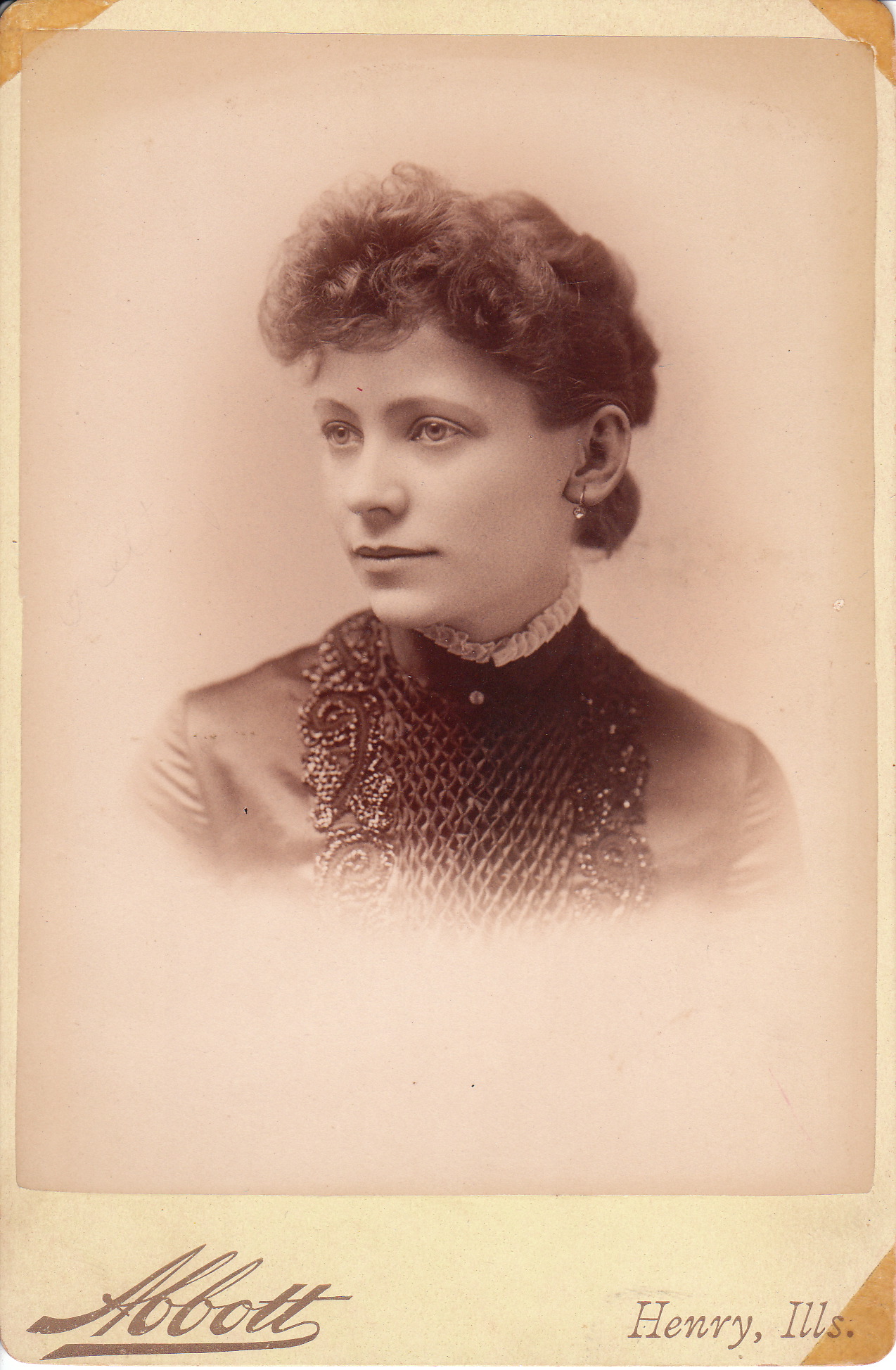
This cabinet card portrait features a pretty woman named Lizzie Smitz. She is identified on the reverse of the image. She is wearing earrings and what appears to be a beaded dress. Ms Smitz has great eyes. The photographer is Abbott, whose studio was located in Henry, Illinois. No biographical information about Lizzie Smitz could be found. The photographer, Charles Abbott is listed in the 1880 US census as an artist. He was 35 years old and lived with his wife, Louisa Abbott (age 32), and their son Harry (age 12). The family lived in a boarding house. The couple had married in 1867. Louisa Abbott was also listed in the census as an artist. The 1900 census finds the Abbots living as a couple in Henry, and Charles working as a photographer. Research also discovered that during the civil war, Charles was a Private in the 27th Maine Volunteer Infantry (Company K). SOLD
MARIA AND MINA CORIO : MEXICAN DIVAS : RPPC

This vintage real photo postcard features Maria and Mina Corio. They are Mexican divas. This postcard was published by CIF Registrado. SOLD
PAUL PORT : FRENCH POET : SYMBOLIST MOVEMENT : PHOTO BY HENRI MANUAL : RPPC
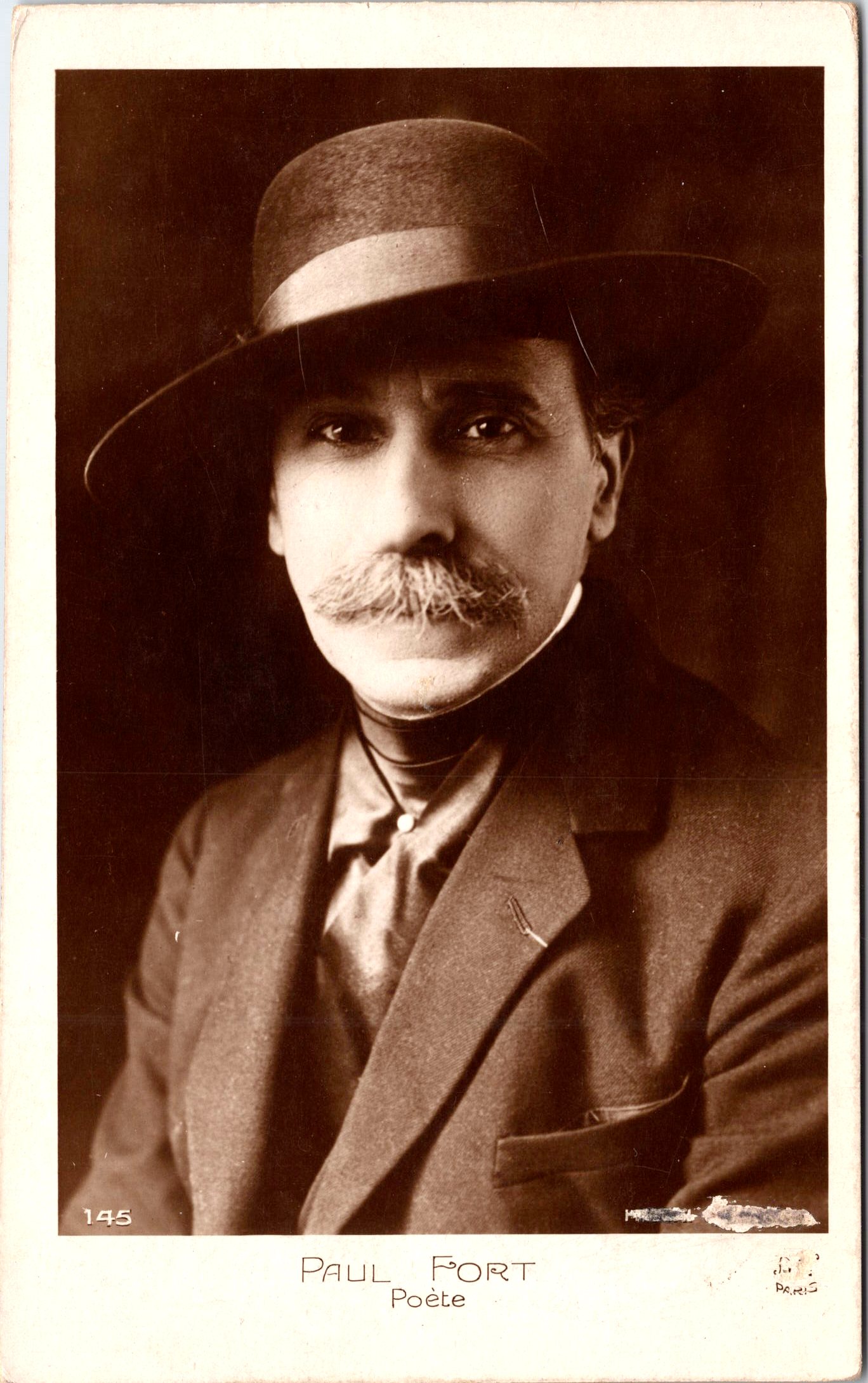
This vintage real photo postcard features French poet and innovator of literary experiments, Paul Fort (1872-1962).He is usually associated with the Symbolist Movement. He was just 18 years of age when he founded the Theatre d’Art. He also founded and edited the review Vers et Prose (1905-1914) which published the work of Paul Valery and other important Symbolist writers. Between 1897 and 1924, Fort wrote 30 volumes of ballads. This vintage postcard was published by Alfred Noyer as part of a series (No.145). Fort’s photo portrait was taken by celebrated photographer, Henri Manuel. SOLD
TWO HANDSOME AFFECTIONATE SAILORS : IN UNIFORM : PRIVATE STUDIO : RPPC 1930-1950

This vintage real photo postcard features two handsome uniformed sailors in an affectionate pose. This is a studio photograph and is likely one-of-a-kind. The card’s EK stamp box indicates that the photo was taken sometime between 1930 and 1950. SOLD

ANTIQUE PEDAL WOODEN TOY AIRPLANE AND IT’S YOUNG RIDER : VINTAGE PHOTOGRAPH
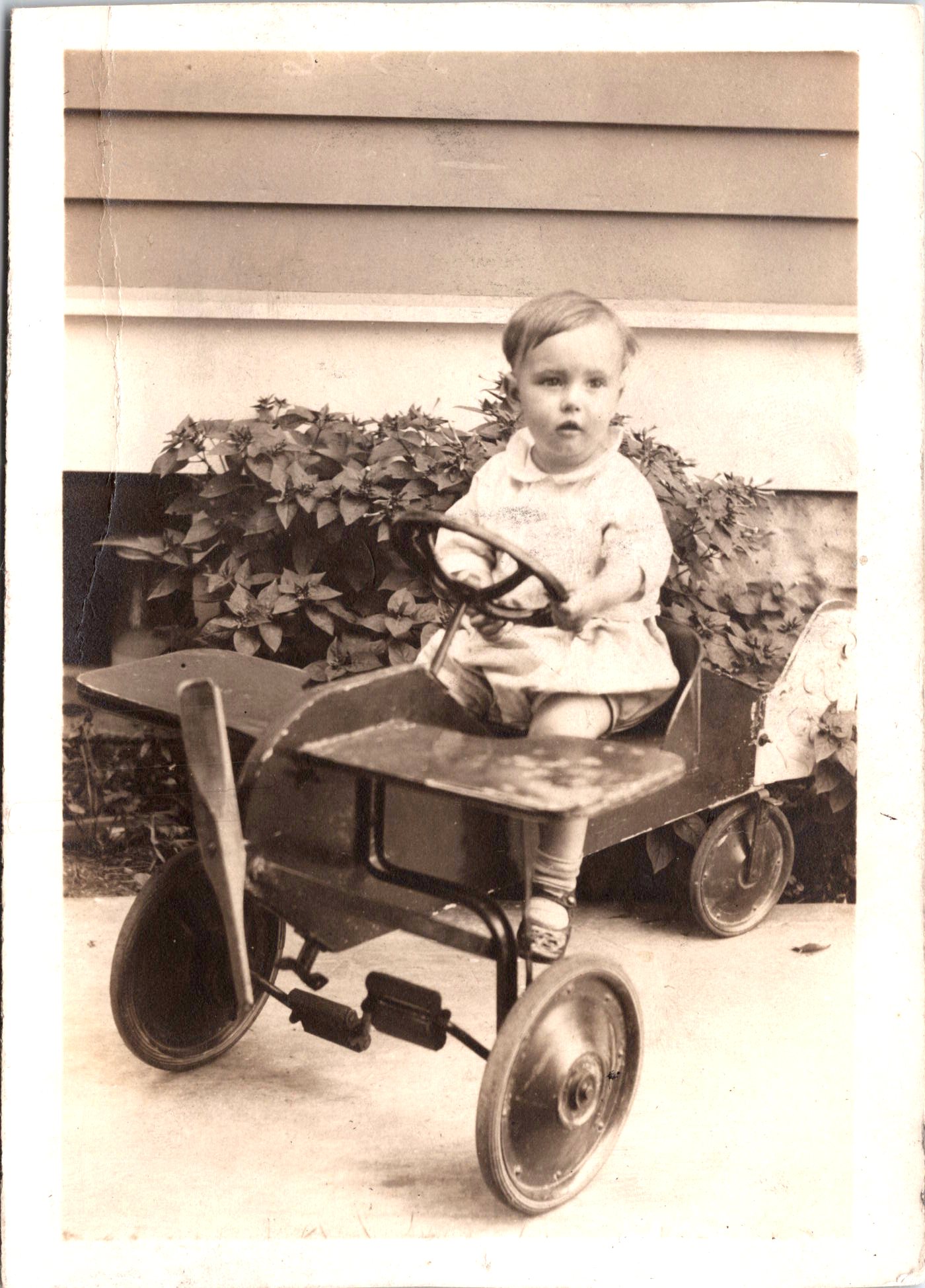
This vintage photograph features a child sitting in an antique toy wooden pedal airplane. The plane has a propellor and it’s pedals are clearly visible in the photo. This vintage photograph measures about 3 1/2 x 4 7/8 inches. SOLD

HANDSOME GENTLEMAN : FAMOUS COLORADO PHOTOGRAPHER (J. COLLIER) : CABINET CARD
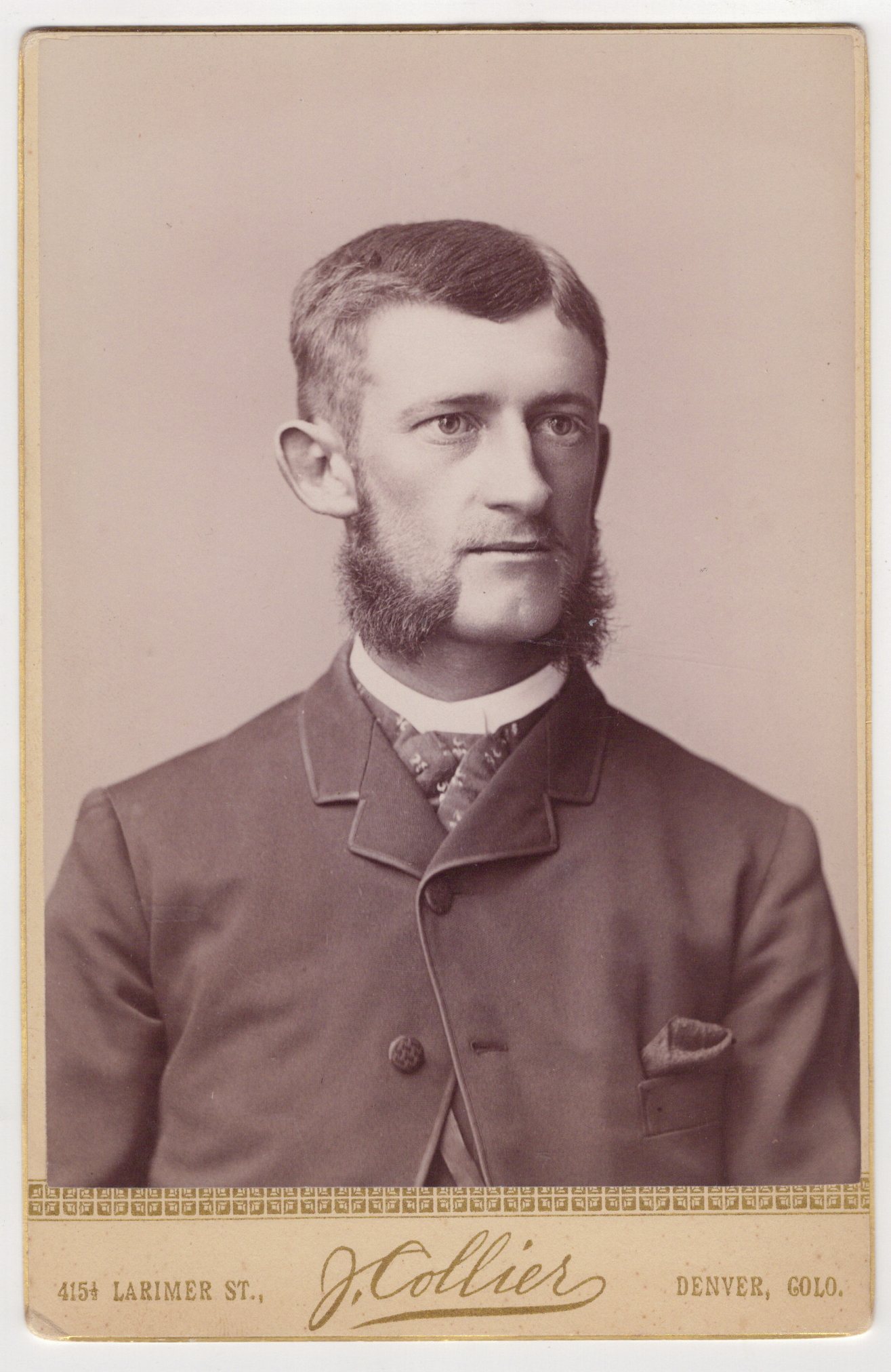
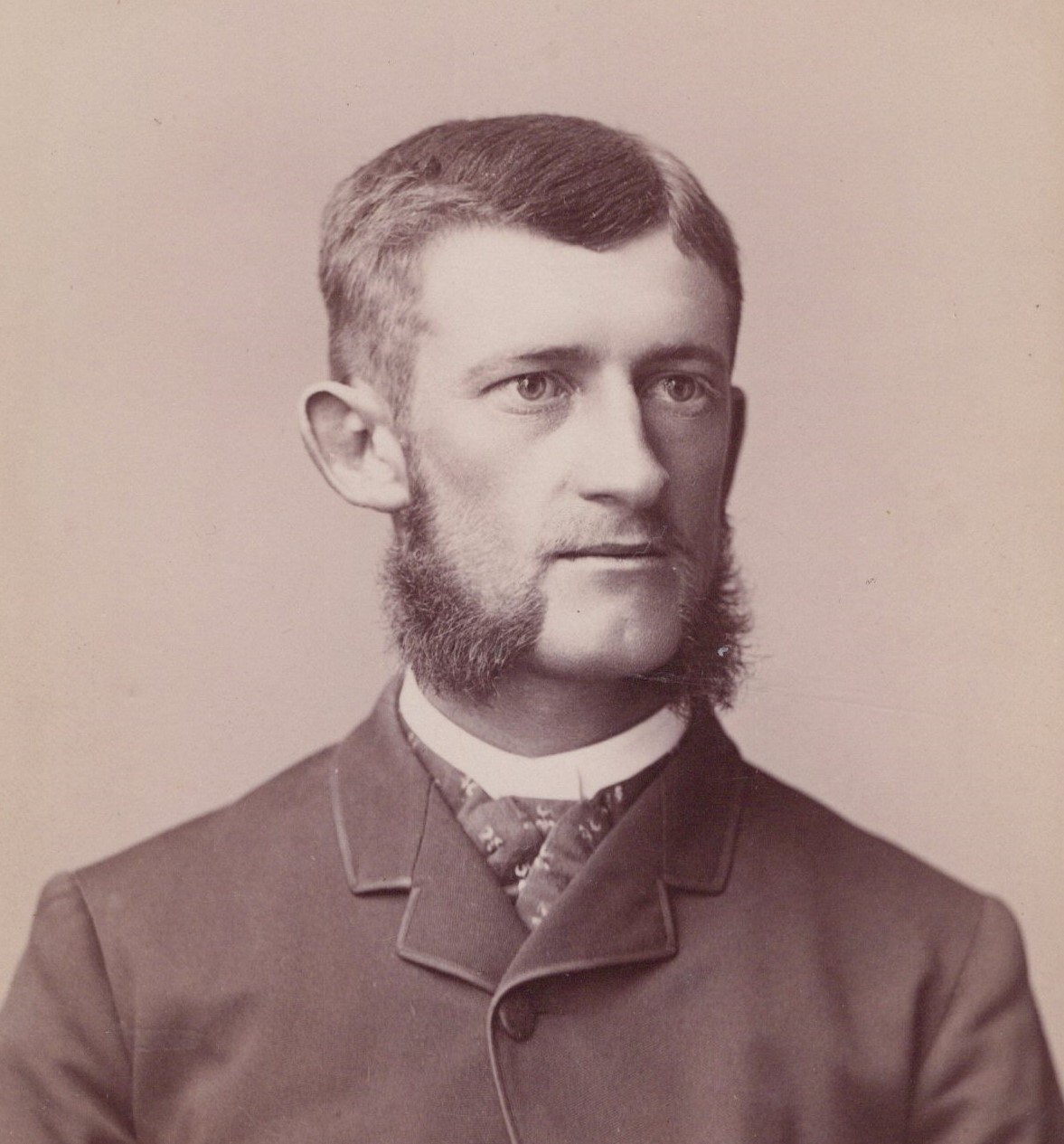
This cabinet card portrait features a handsome man with interesting styled side burns. He is dressed fashionably. The gentleman was photographed by a famous Colorado photographer, Joseph Collier (1836-1910), at his Denver studio. Collier was born in Scotland, where he began his career as a photographer. When he first came to Colorado, he produced stereographic images. He gained fame in the late 1800’s for his images of Colorado. His subjects included the downtowns of Telluride, Golden, and Denver. He also photographed the Garden of the Gods (Colorado Springs) and many mountain sites. After Collier immigrated to the United States, in 1871 he came to Central City Colorado. He was invited there by his cousin who owned the local newspaper. Collier opened his first studio in the backroom of the newspaper. He immediately began making photographic trips through the Rocky Mountains of Colorado. In 1873, Collier gave a set of his Colorado stereoviews to Julia Grant, the wife of President Ulysses Grant. In 1877, Collier moved to Denver opening a studio on Larimer Street. He practiced photograph there and retired by the turn of the century. In 1874, Collier provided the photographs for a book entitled “Summering in Colorado”. In addition, a book was published in 1983 focused on displaying Collier’s photos. The book was entitled “The Photography of Joseph Collier. Colorado. 1871-1910”. Some of Collier’s photos can be found at the Getty museum in Los Angeles, California.

ADORABLE LITTLE GIRL : TEDDY BEAR : WATERING CAN : TOYS : SWITZERLAND : CDV
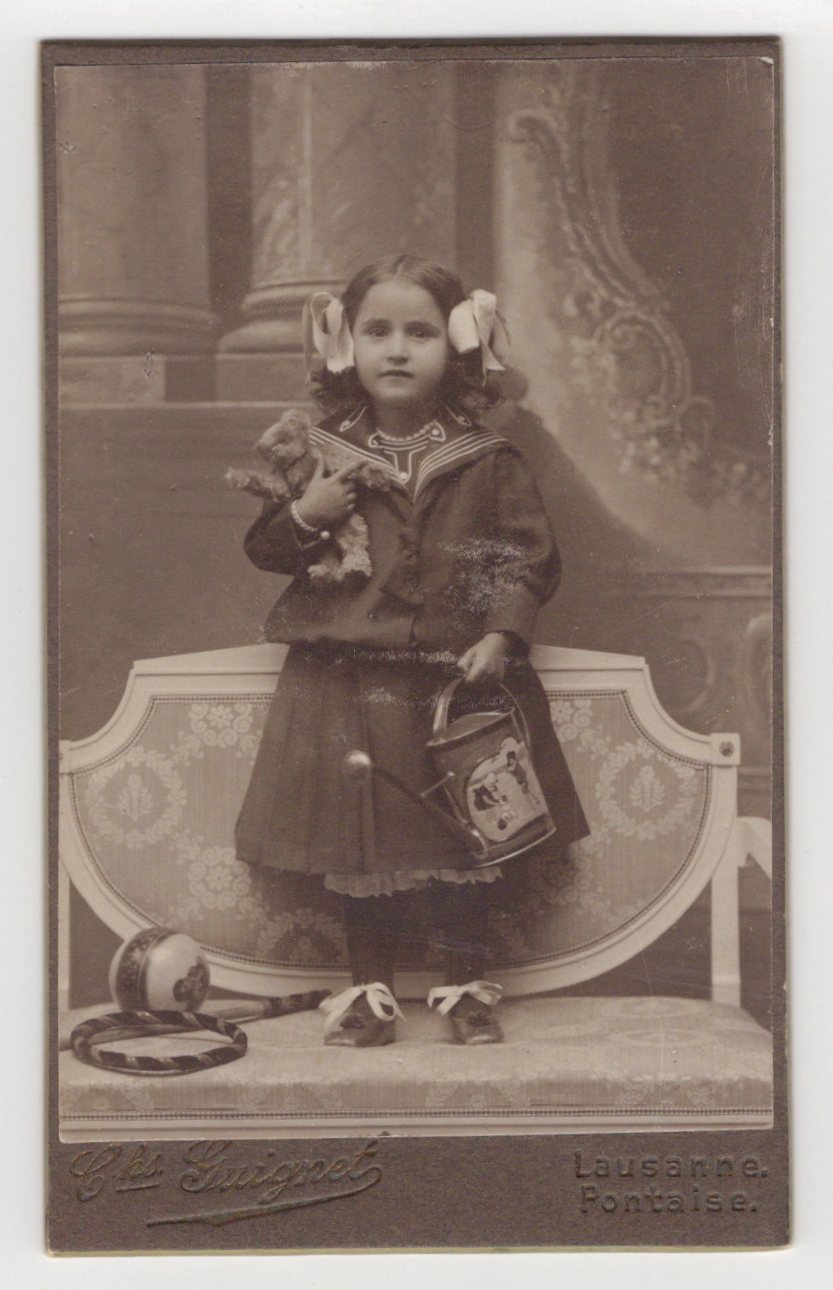
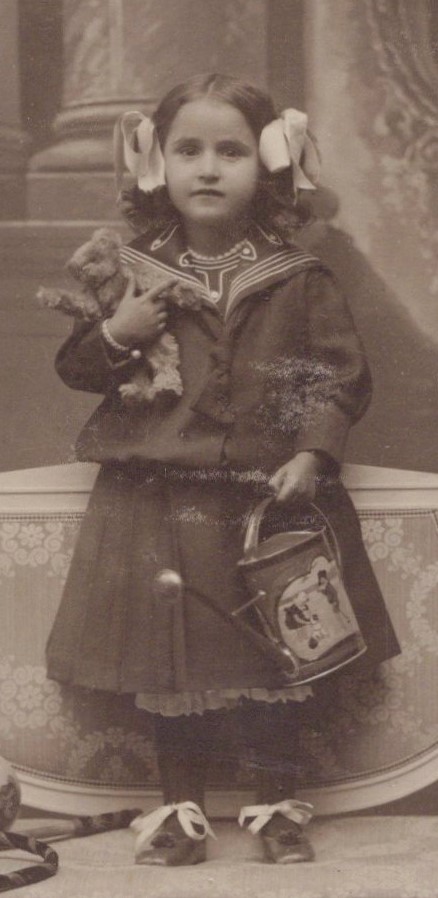
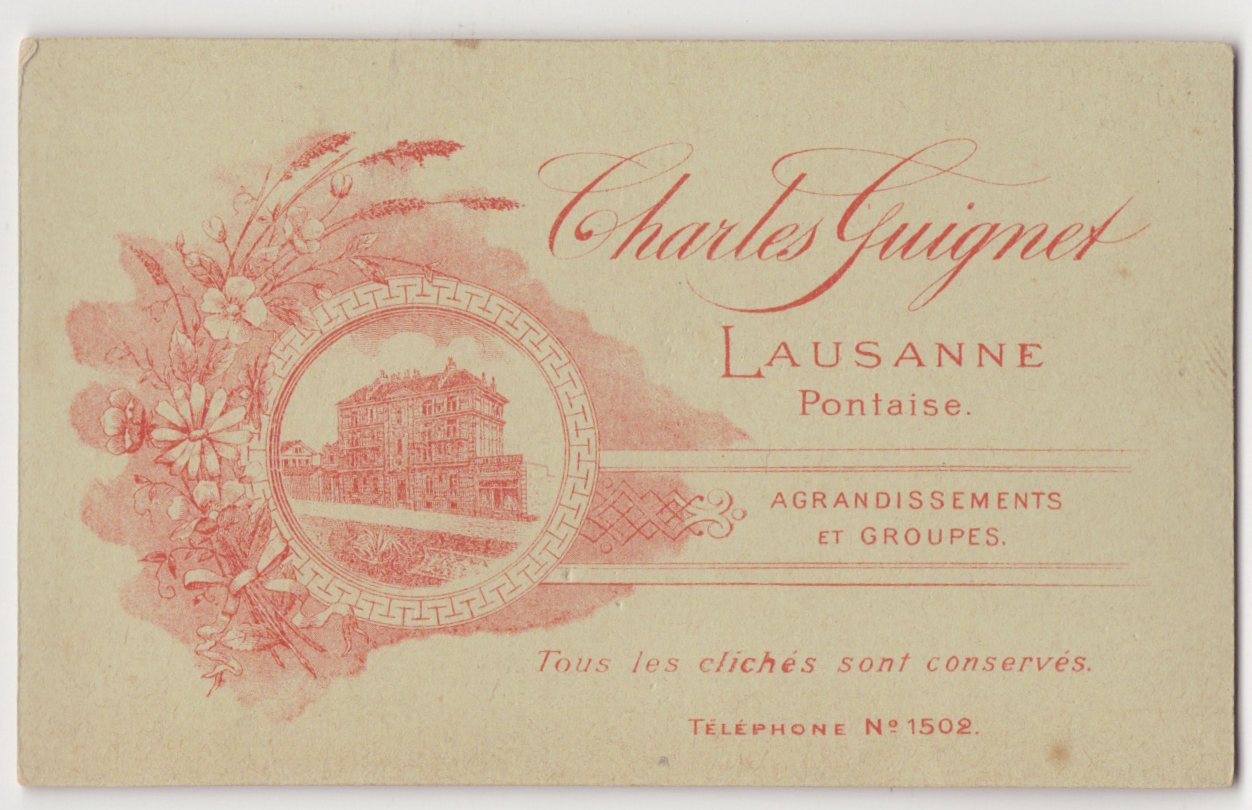
The little girl featured in this cartes de visite is adorable. She is nicely dressed in a navy style dress. She is standing on a chair and holding a watering can in one hand and a teddy bear in the other hand. She is posed next to a ball and other toys. Note the girl’s hair bows as well as the bows on her shoes. The photographer of the child’s portrait was Charles Guignet. He operated a studio in Lausanne, Switzerland. The city is located on the shores of Lake Geneva. There is a French town across the lake. Lausanne is about 38 miles northeast of Geneva. This CDV measures about 2.5x 4 inches. SOLD
PORTRAIT OF A HANDSOME MAN : CROOKSTON, MINNESOTA : CABINET CARD
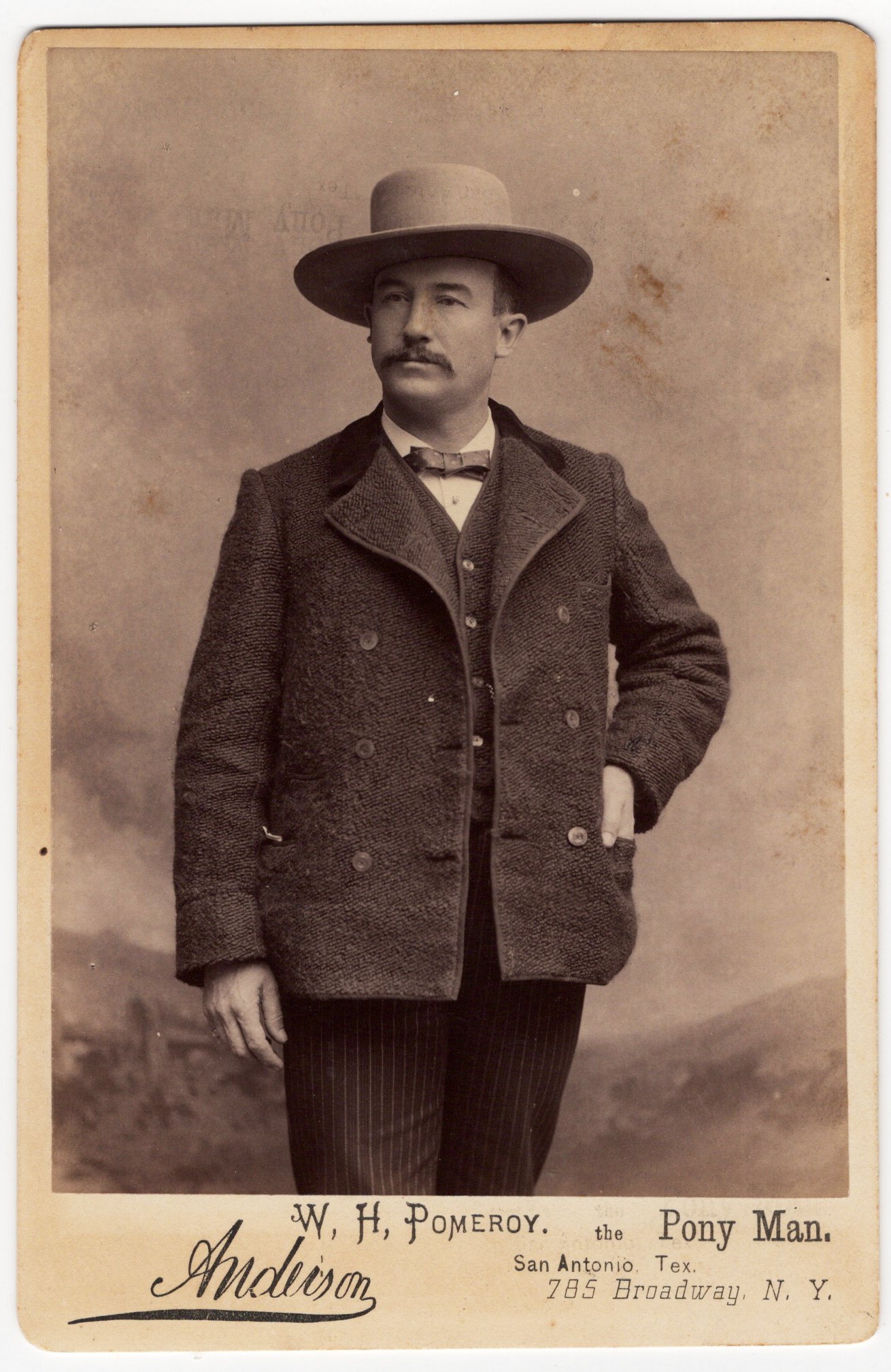
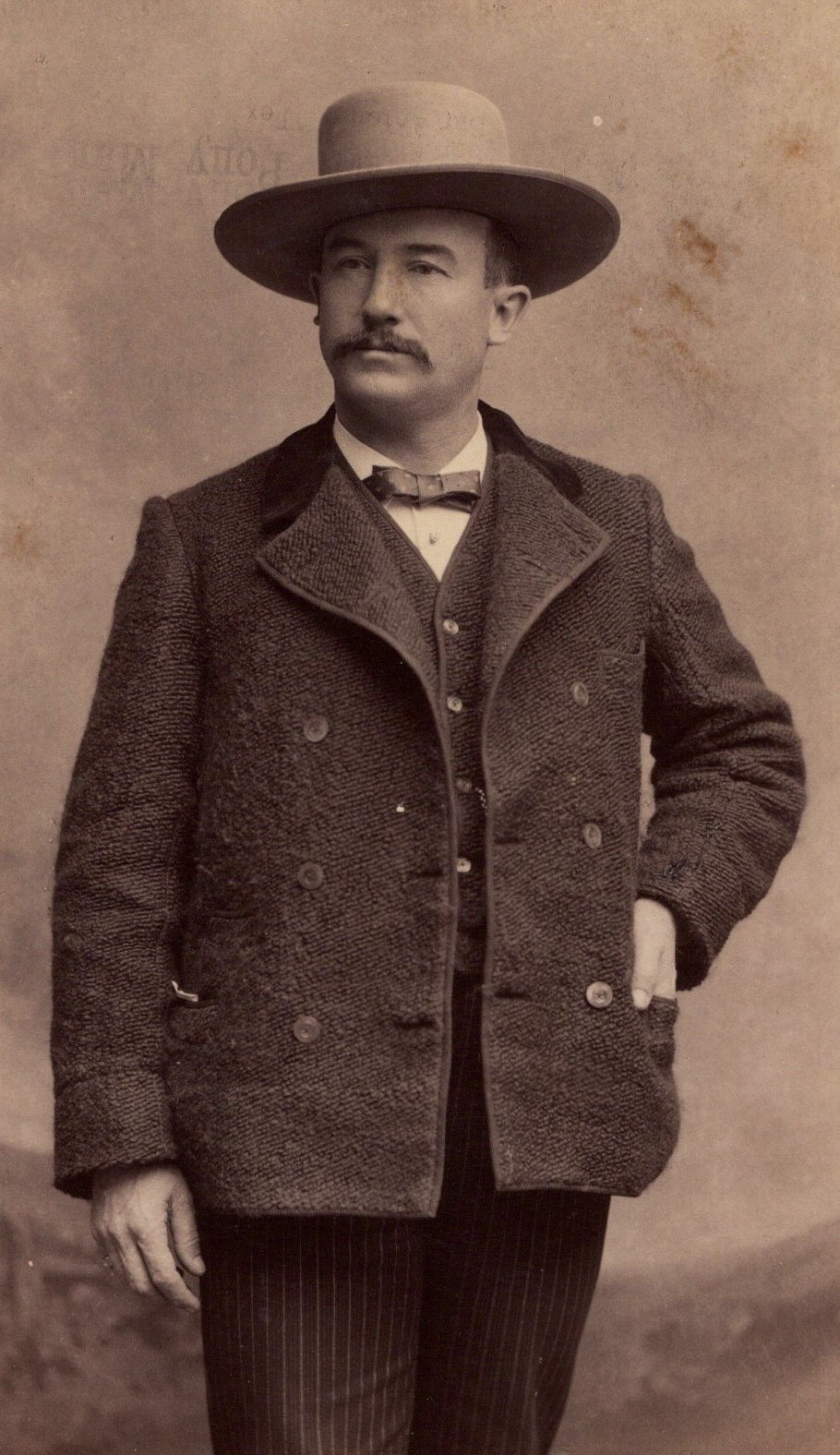
This cabinet card photograph features a handsome man posing for his portrait at the Anderson studio in New York City. A caption under the image identifies him as “W. H. Pomeroy, the Pony Man”. The caption also indicates that Pomeroy was from San Antonio, Texas. During the late 1880’s, Pomeroy owned “Pomeroy’s Western World Troupe” and “Pomeroy’s Western World Show”. Both were Wild West shows. The show was composed of more than 100 people and 125 horses, ponies, donkeys, and mules. The show also included a ten piece band. In 1891, Pomeroy partnered with Max Samuels, from San Antonio, to found a circus. The circus was called “Pomeroy & Samuel’s Great International Railroad Shows”. Pomeroy is well dressed and sports a nicely trimmed mustache. in this photograph. He is wearing a coarse wool coat and a matching waist coat. He is dressed in a crisp white shirt accentuated by a small silk bow tie. Atop his head is a flat crowned felt planter hat. There is something peeking out of his left jacket pocket. Mr. Pomeroy is posing in front of a backdrop. The photographer of this image was D. H. Anderson who operated a studio on Broadway in New York City. Anderson used the same photo studio formerly occupied by the famed photographer, Matthew Brady. Anderson had worked in various other American cities before moving to New York in 1881. He became known as a talented celebrity photographer. This photograph has an interesting aberration. If you look very closely in the sky next to the left side of his hat (slightly above the brim), you can see the words “Pony Man”. The words are very light and upside down. This developing error occurred more than one hundred years ago. SOLD

CORINNE: FAMOUS CHILD ACTRESS AND SUBJECT OF A SENSATIONAL CHILD ABUSE CASE
 CABINET CARD 1
 CABINET CARD 2
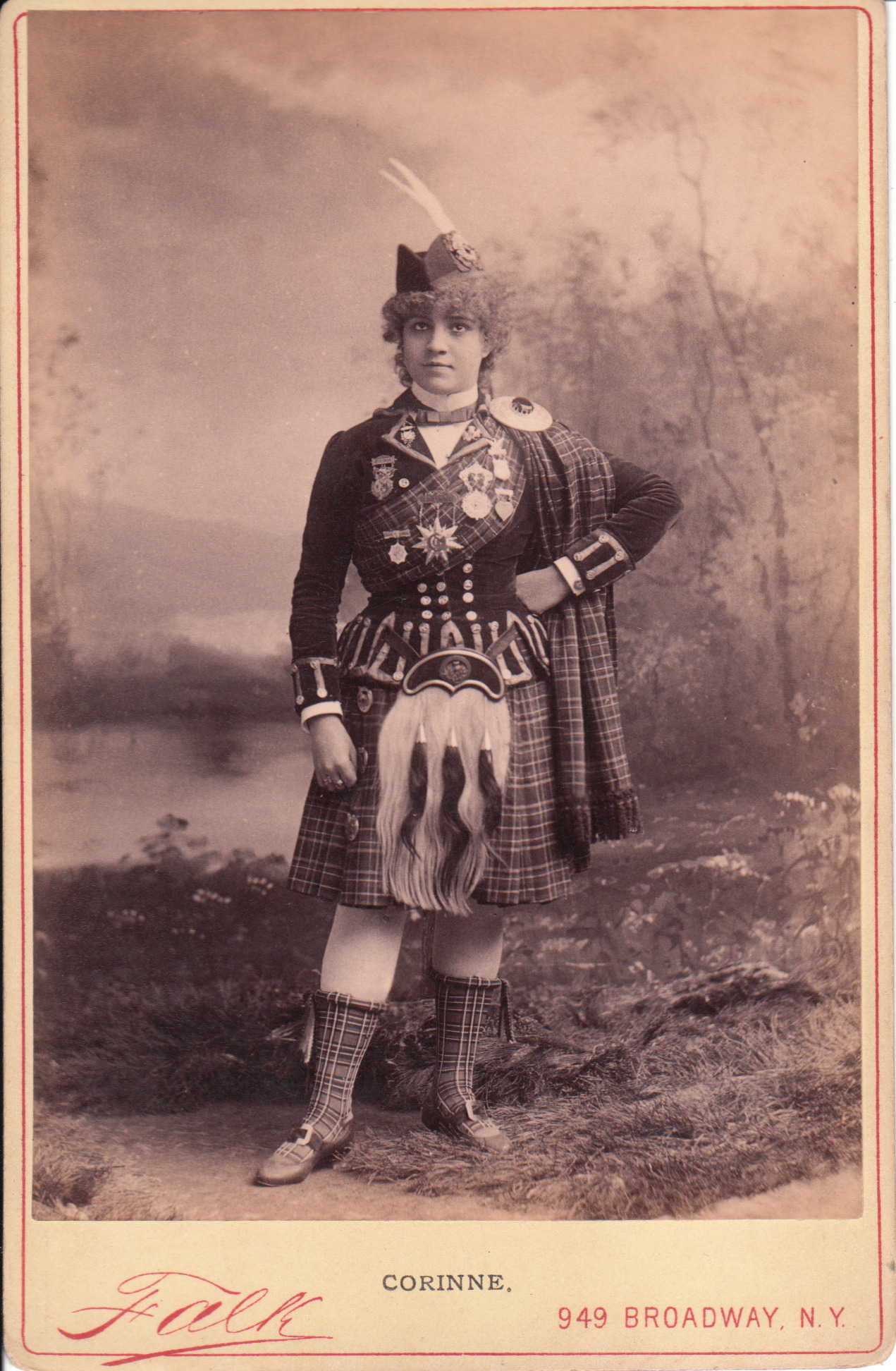
The actress pictured in Cabinet Card 1 is Corrine. Corrine, like Elvis or Selena, was a performer that received national recognition and was known by just her first name. In the top portrait by celebrity photographer B. J. Falk, Corrine looks to be teenager or young adult. She is dressed in theatrical costume. Corinne was the daughter of actress Jennie Kimball. Kimball acted in the theater between 1865 and 1873. The year of her retirement, she became the mother of Corinne, who the New York Times (1896) labelled “the most famous of all the child actresses of this country”. It is not clear how Kimball and her husband came to raise Corinne, but is was speculated that she was adopted as an orphan. Kimball trained her young daughter for the stage. Corrine debuted in the theater at age two and a half. At five years of age she played the part of “Little Buttercup” in the Boston production of “Pinafore”. She played the role more than one hundred times. At fifteen years of age she was traveling as head of her own theater company. Jennie Kimball doubled as Corinne’s mother and manager. The New York Times (1896) reported that Corinne “was a goldmine” during her early days for Mrs. Kimball and remained a major money producer through the time the article was written. At the time the article appeared, Corinne was twenty-two years old. Jennie Kimball’s successful management of her daughter’s career wasn’t appreciated by all observers. The New York Times (1881) asserted that the Society for the Prevention of Cruelty to Children objected to the way Corinne was being raised and successfully pursued custody of the child. During the custody hearing, eight year-old Corinne was put on the stand and interrogated by the society’s lawyer. He asked her how many times she was photographed and she didn’t know but said “she was never photographed in tights nor with her limbs and breast exposed”. The lawyer’s questioning revealed that the child had never attended school. However, Jennie Kimball did give her “lessons” each morning. The lawyer then gave Corinne an impromptu writing/spelling test during her testimony. The attorney also prompted the child to say she had never attended sunday school and didn’t know what a bible was nor had she ever been taught anything about Jesus Christ. The society lawyer was initially able to convince the judge to remove the child from the custody of Mrs Kimball because she was “unlawfully exhibited and employed” in dancing, singing and acting on the theatrical stage. Mrs. Kimball was allowed to take her daughter for a brief period to change her clothing but was assigned an escort to insure that the child would be brought to the society. Mrs Kimball was advised by George Hackett, the manager of a Providence opera house that if she took her daughter from New York to Jersey City, New Jersey; the girl would be out of the courts jurisdiction and she could keep her daughter. Mrs. Kimball followed his suggestion, and allowed a man to spirit the child out of state. As a result, Mrs. Kimball was charged with abduction and she ended up back in court. After a short time, the judge considered all the testimony that he heard and decided to return Corinne to her parents (he called them guardians). He believed that they were loving toward the child and responsible enough to continue raising her. Interestingly, he had something to say about the religious angle pursued by the society lawyer. The judge wrote that the the US constitution protected Corinne’s parents from being punished for not providing religious education to their daughter. Corinne continued her acting career and eventually became involved in burlesque theater. The New York Times (1894) wrote “Corinne has grown up and proves a lively and entertaining performer. The article adds that “she has no large share of original talent, musical or dramatic, but she can sing and dance “well enough”.
Cabinet Card 2 pictures Miss Corinne and was published by Newsboy (#20 of a series). She is wearing jewelry galore and flowers in her hair. What is that contraption that she is wearing around her waist? Is it a pouch? If so, what is it meant to carry? SOLD


 THE CABINET CARD GALLERY