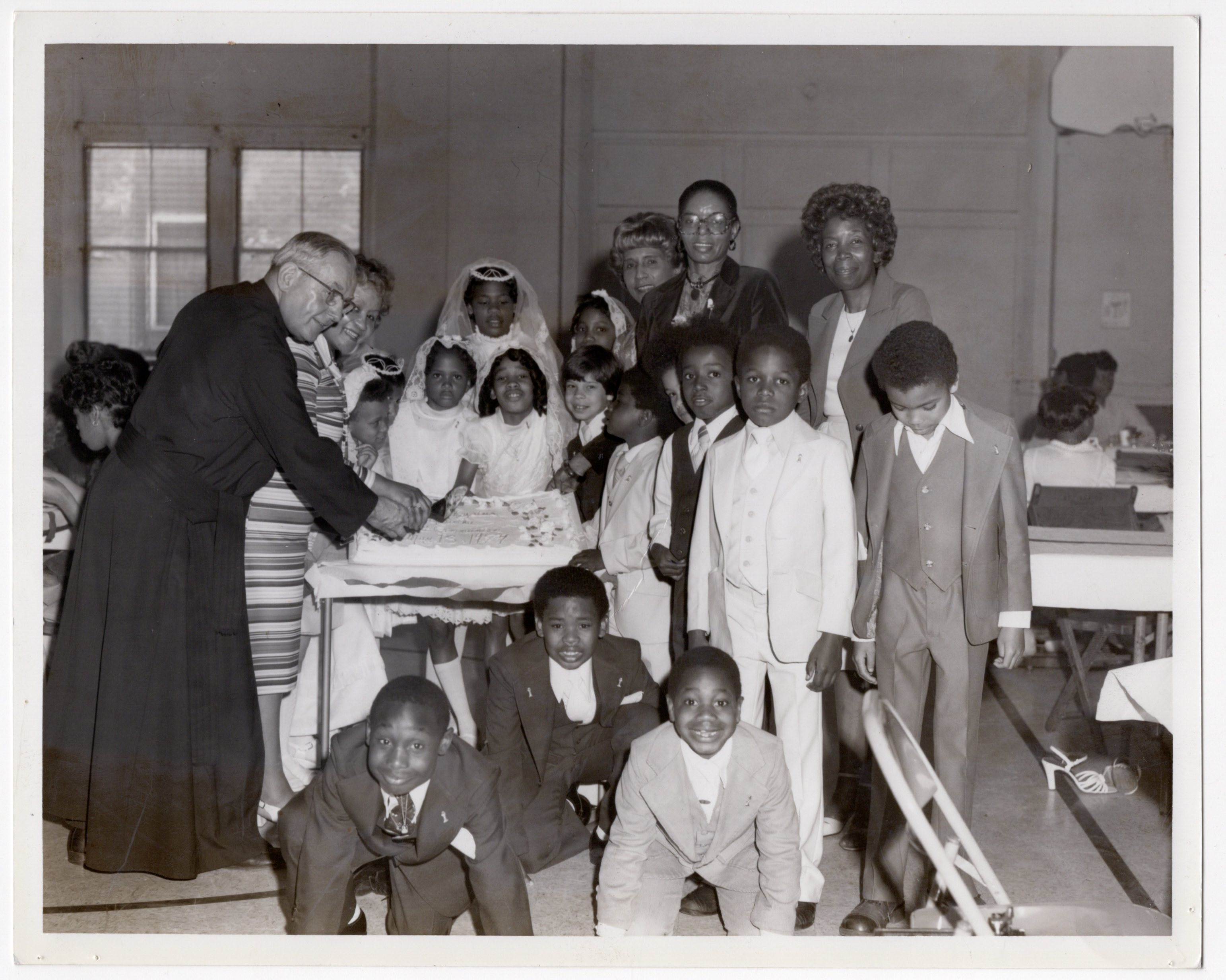
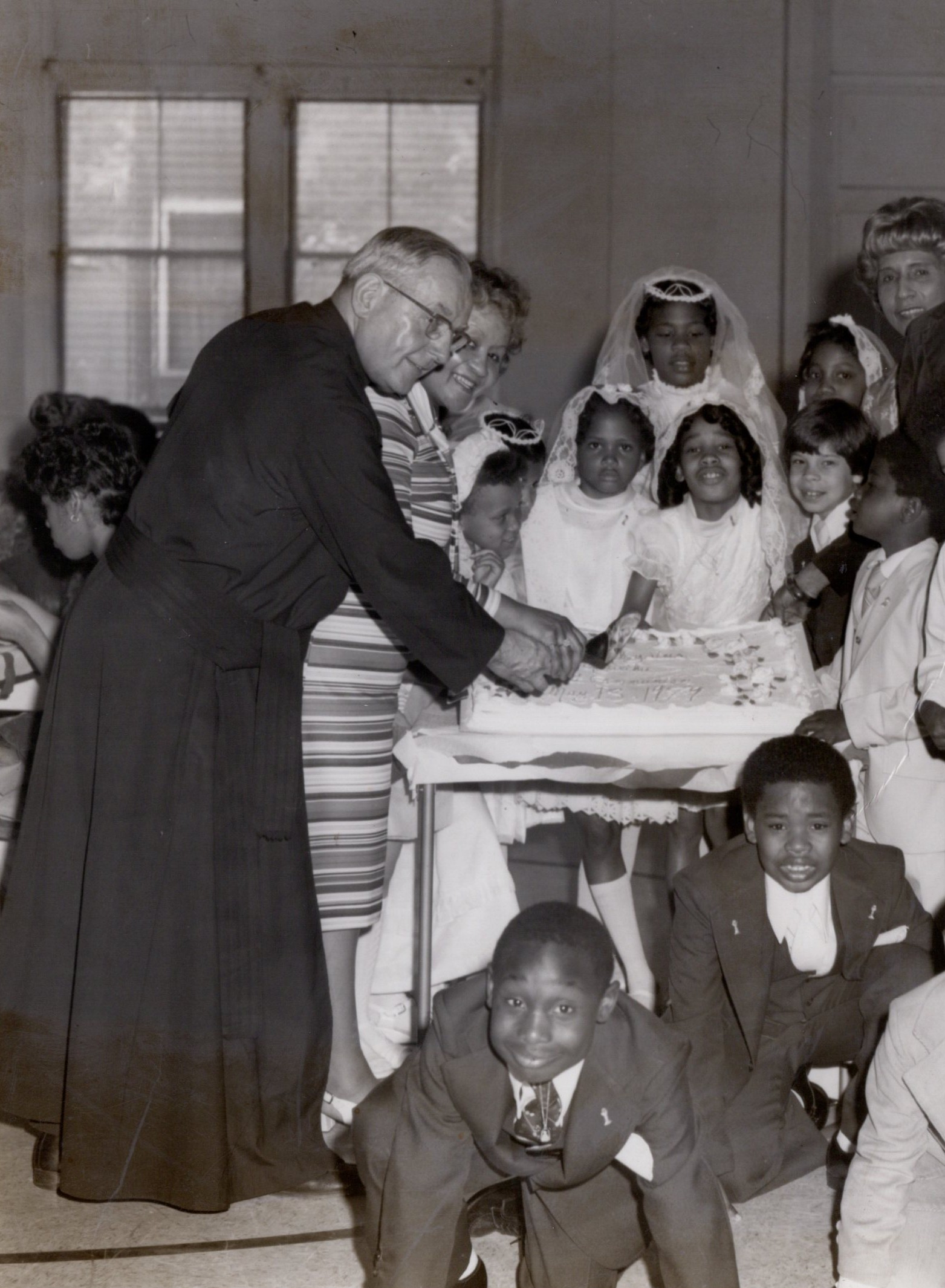
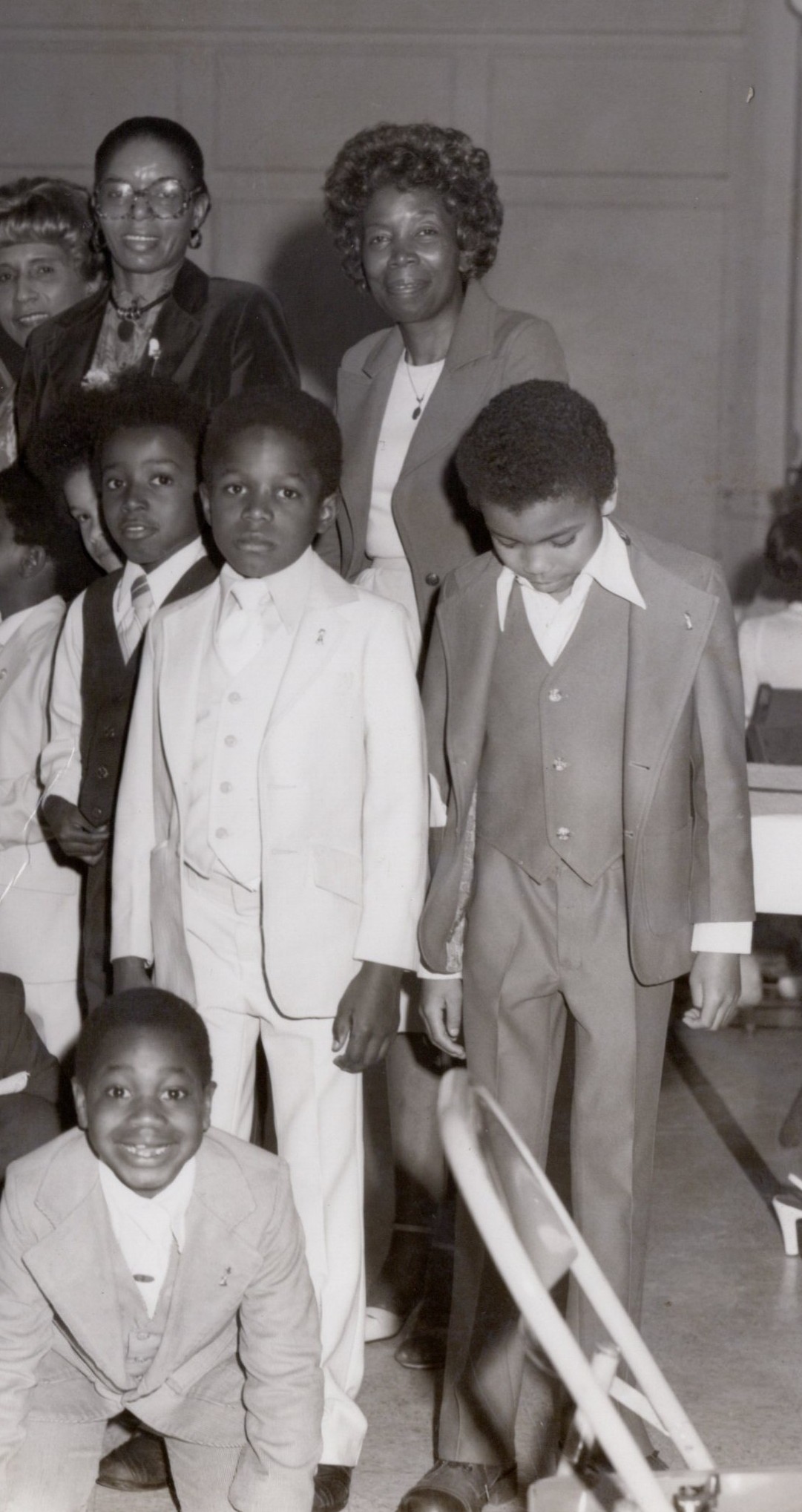
This original vintage press photograph (measuring approximately 8 by 10 inches) beautifully captures a celebratory moment in a church or parish hall, taken by noted African-American Cleveland photographer Jimmy Baynes. The scene shows a priest, dressed in his clerical robes, cutting a large frosted cake surrounded by children and adults. The children are dressed formally, with several girls wearing white communion dresses and veils, suggesting this may be a First Communion or confirmation celebration. The boys wear smart suits in both light and dark colors, complete with ties or bow ties. Their attire reflects both the solemnity of the religious occasion and the joy of the gathering. Some children smile brightly toward the camera, while others look on with curiosity and seriousness, lending authenticity and personality to the scene. Behind the children stand several women, elegantly dressed, who appear to be family members or parishioners sharing in the celebration. The priest’s presence at the cake table underscores the ceremonial importance of the event, blending sacred tradition with communal joy. The composition is lively and warm, with details like the children crouched at the front grinning toward the photographer, the ornate veils of the girls, and the cutting of the cake all contributing to a vivid record of mid-20th century African-American community life. The photographer of this photograph, Jimmy Baynes was known for his ability to capture the essence of African American life, culture, and entertainment from the 1950s through the 1980s. Originally a postal worker, Baynes pursued photography as a passion, ultimately founding Baynes Foto Service. His work chronicled the vibrancy of mid-century African American social life, from intimate gatherings and beauty contests to the pulsating energy of live music performances and political events. Baynes photographed some of the most iconic figures in entertainment history, including Aretha Franklin, Louis Armstrong, Count Basie, Mahalia Jackson, Louis Jordan, Jerry Lee Lewis, the Platters, and the Drifters. His ability to capture both candid and staged moments gave his work a lasting impact, preserving the rich history of Cleveland’s African American community. His legacy is recognized today by institutions such as the Rock and Roll Hall of Fame and Museum Library and Archives in Cleveland, which houses a collection of his photographs, primarily focusing on music and entertainment. In 2010, shortly before his passing, his work was featured in the “Polaroid: Instant Joy” exhibition in Brooklyn, New York, reaffirming his role as a visual storyteller of African American life in the mid-20th century. This photograph was taken in the 1950’s. This is a powerful image not only for its documentary value but also for its warmth and charm, preserving a moment of community, faith, and celebration. (SOLD)



 THE CABINET CARD GALLERY