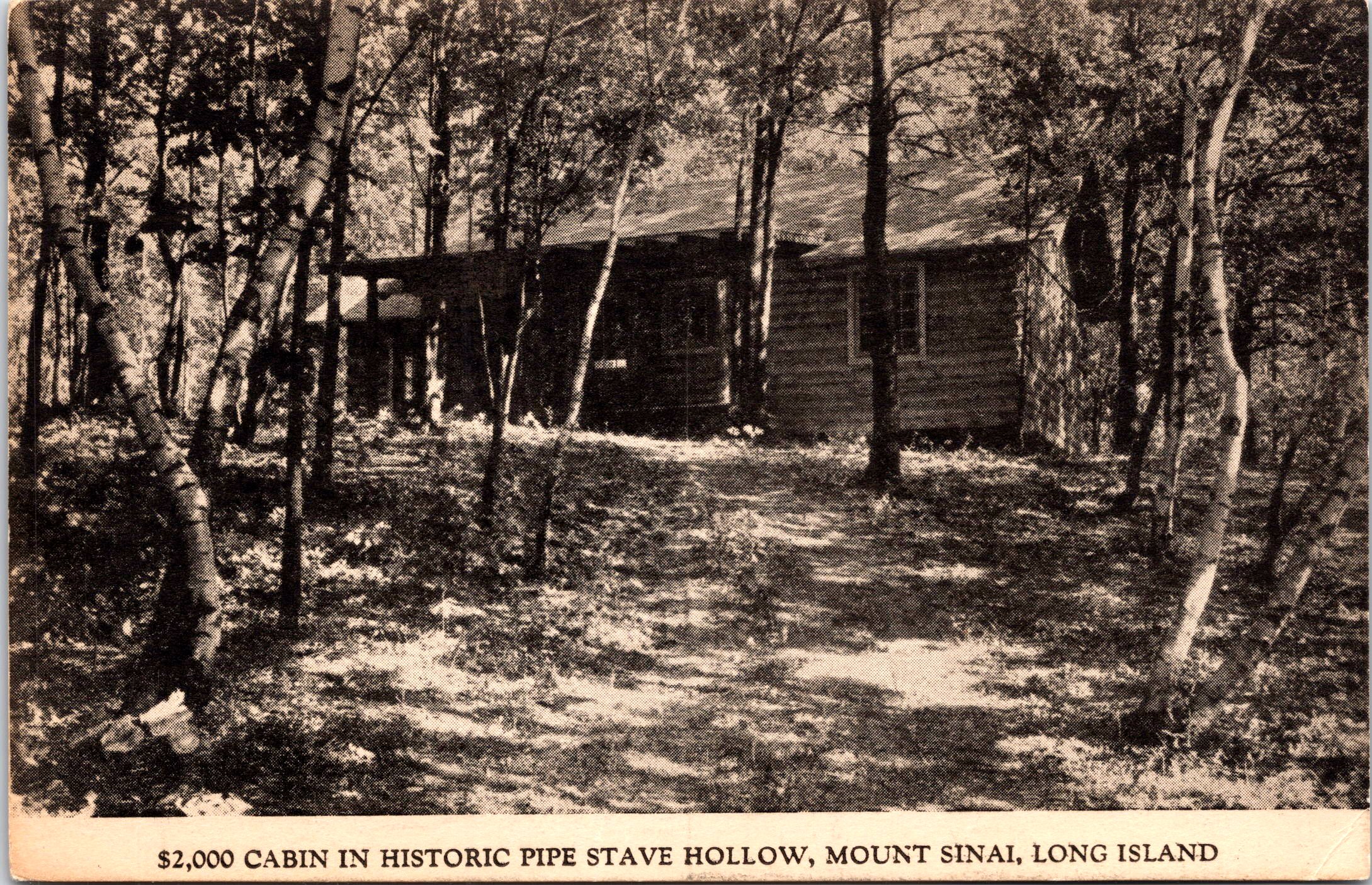
This vintage postcard features two sides, each depicting lithographic prints of cabins located in “Historic Pipe Stave Hollow” in Mount Sinai, Long Island, New York. The purpose of the postcard is to advertise cabin rentals in a secluded, rustic area near the Long Island Sound, and it offers a glimpse into mid-20th-century marketing practices, including discriminatory policies. The lithographic image on the front showcases a cabin surrounded by a dense grove of trees. The setting is tranquil and woodsy, suggesting a retreat-like atmosphere. The caption below the image reads: “$2,000 Cabin in Historic Pipe Stave Hollow, Mount Sinai, Long Island.” This implies that the cabin was valued at $2,000—a significant sum at the time. The image emphasizes the natural beauty of the area, with dappled sunlight filtering through the trees, creating an idyllic appeal for potential renters. The reverse side contains another lithographic image, this time of a smaller, simpler cabin nestled among the trees. The text below describes the rental terms “Rent: $165 for a furnished cabin from March to November, Amenities: The cabin features four rooms, an inside flush toilet, a kitchen sink, and an outdoor shower, and Setting: The cabins are located in a “rocky wooded glen near Long Island Sound,” further promoting the serene, natural environment. Other cabins in the same area are advertised for higher rents ($200–$300), likely reflecting size or location differences. “Pipe Stave Hollow” in Mount Sinai, Long Island, is described as a historically significant location. This area may have derived its name from a historical use of the land, such as for the manufacturing of pipe staves (wooden pieces used in barrels or pipes), a practice common in colonial times. This postcard is anti-semitic. The postcard explicitly states, “We prefer Christians,” revealing a discriminatory and anti-Semitic policy that was unfortunately commonplace in certain regions and industries during the early 20th century. This statement provides insight into the social and cultural climate of the period, emphasizing the exclusionary practices that were socially tolerated at the time. This postcard likely dates to the 1920’s or 1930’s. SOLD


 THE CABINET CARD GALLERY