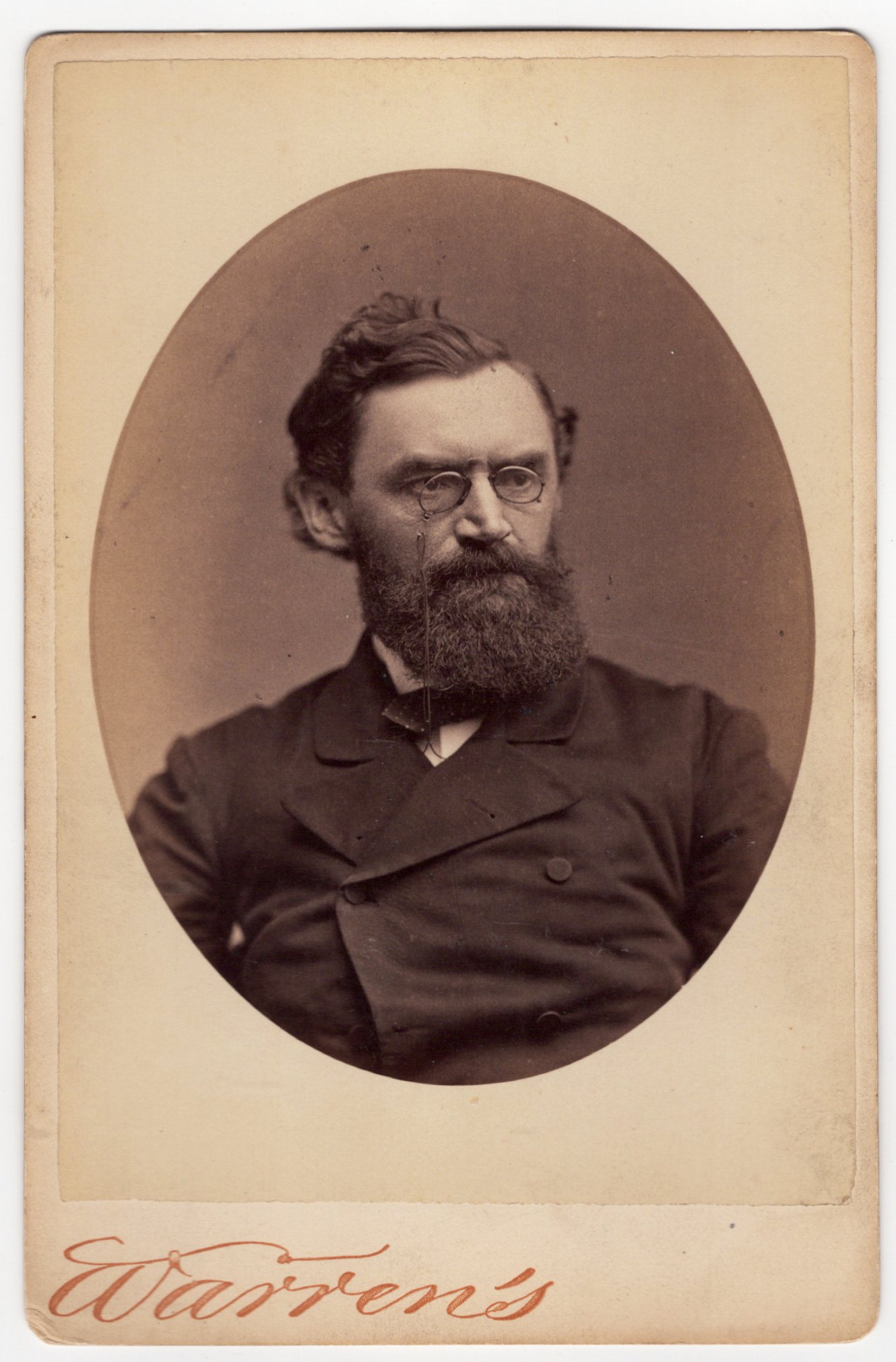
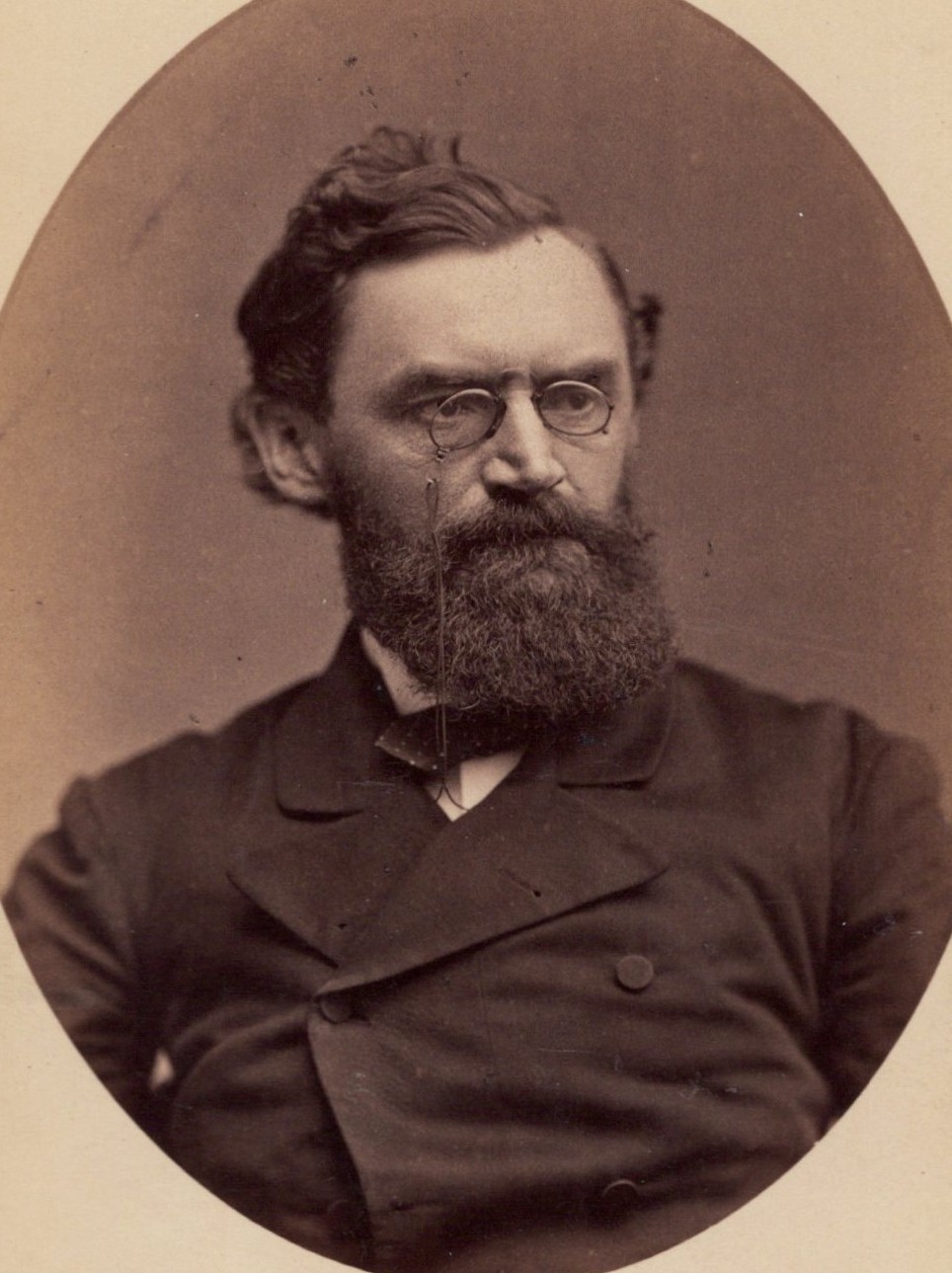
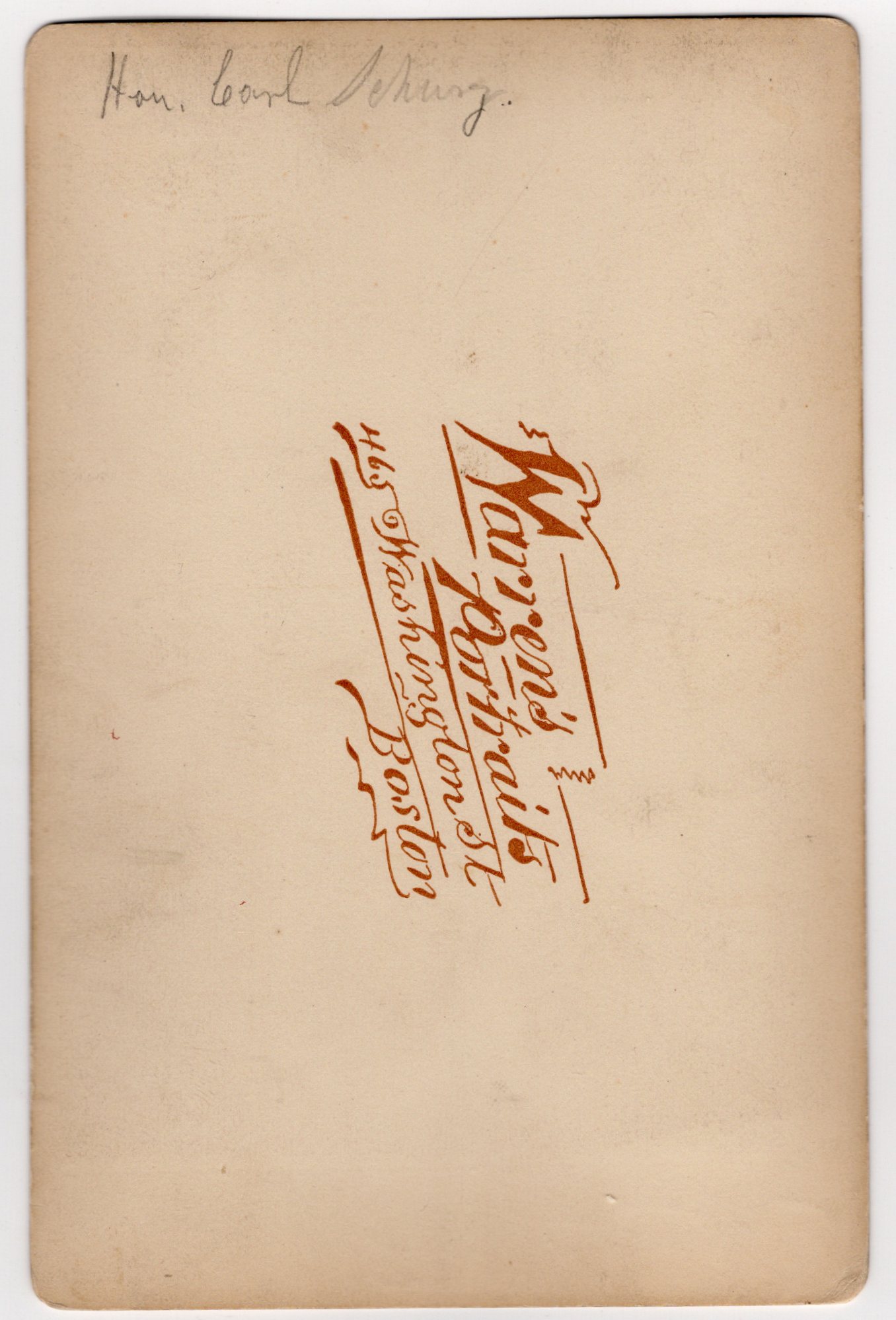
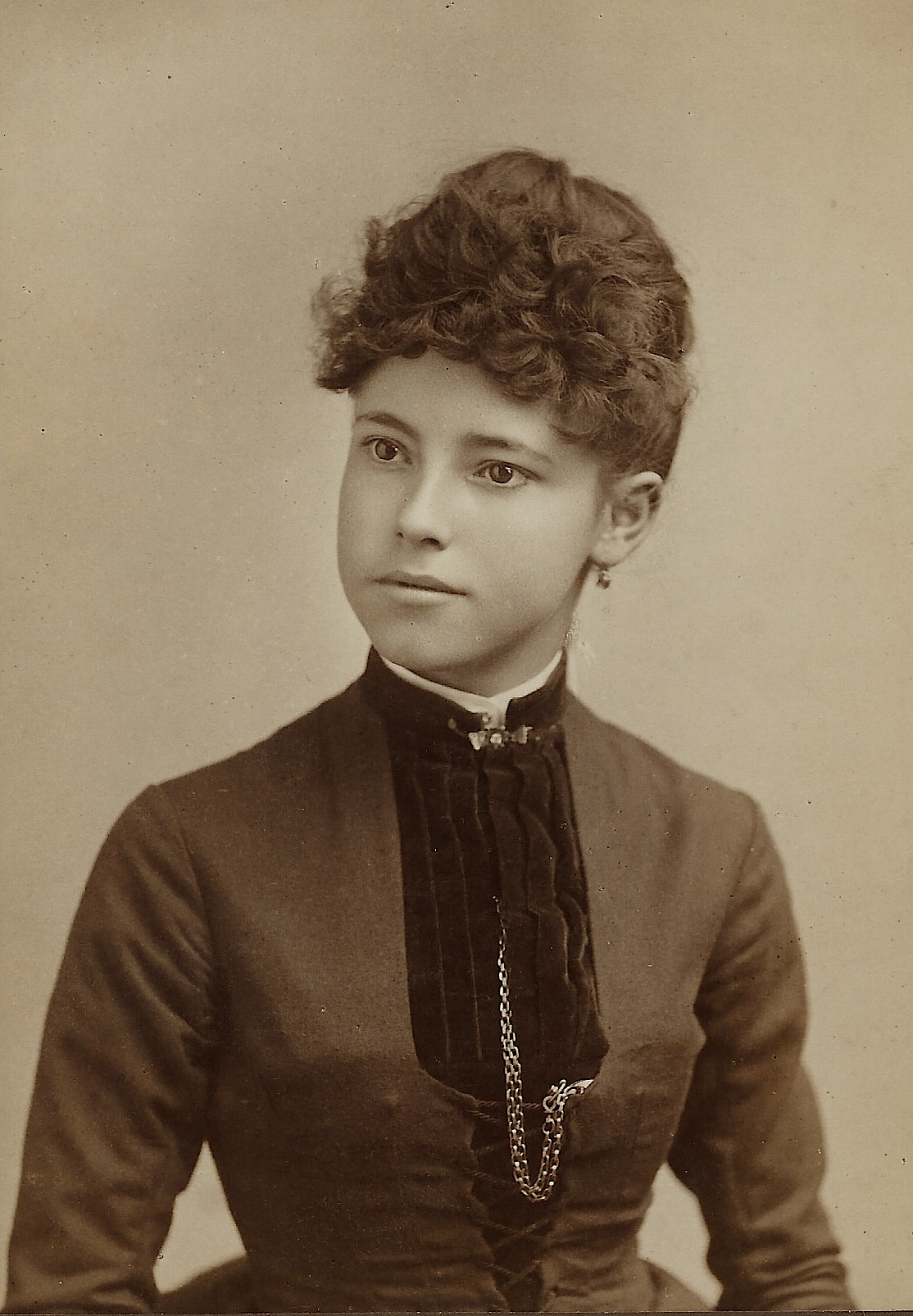
This striking 19th-century cabinet card features The Honorable Carl Schurz (1829-1906), a distinguished Civil War general, U.S. Senator, and reform-minded statesman. The photograph was taken at Warren’s Portraits, a prestigious Boston studio located at 465 Washington Street and renowned for its elegant images of notable figures during the late 1800s. In this formal portrait, Schurz is captured in a three-quarter view, seated in a dark, double-breasted coat with a subtle bow tie at his collar. His thick, well-kept beard and wavy hair give him a scholarly yet commanding presence. He gazes slightly to his left, a monocle suspended at his eye—projecting a look of intellectual rigor and seriousness. The background is a simple studio gradient, helping focus all attention on Schurz’s intense expression and refined appearance. On the reverse, the card is elegantly marked with the Warren’s Portraits logo. In pencil is written: “Hon. Carl Schurz,” affirming the identity of the sitter. Carl Schurz was born in Liblar, Prussia (modern-day Germany) in 1829. A revolutionary in his youth, he fought in the 1848 German uprisings, which ultimately failed, forcing him to flee Europe. He emigrated to the United States in 1852, where he quickly became involved in politics and the anti-slavery movement. During the American Civil War, Schurz was appointed brigadier general of Union volunteers by President Lincoln in 1862. He eventually rose to the rank of major general. Though courageous and respected, his battlefield performance received mixed reviews. He fought in key engagements including: the Second Battle of Bull Run (1862), the Battle of Chancellorsville (1863), and the Battle of Gettysburg (1863), where his XI Corps was flanked on the first day. While he was not a professional military man, Schurz’s service was notable for his efforts to advocate for German-American troops and his commitment to the Union cause. He did not have prior military experience in Europe before serving in the U.S. Army. After the war, Schurz enjoyed a long and prominent career in politics. He served as a U.S. Senator from Missouri (1869–1875) and later as Secretary of the Interior under President Rutherford B. Hayes (1877–1881). A staunch advocate of civil service reform and anti-corruption measures, he became one of the leading voices of the Liberal Republican movement. This cabinet card was produced by Warren’s Portraits, one of Boston’s most prominent photography studios in the 19th century. Operated by William Shaw Warren, the studio specialized in elegant, high-quality portraits and was especially known for photographing celebrities, politicians, military figures, and distinguished members of Boston society. Warren’s operated primarily during the 1860s through the 1890s. Warren’s images often feature clean studio backdrops, strong lighting, and detailed retouching, emphasizing refinement and dignity—qualities clearly present in this cabinet card of Carl Schurz. (SOLD)



 THE CABINET CARD GALLERY