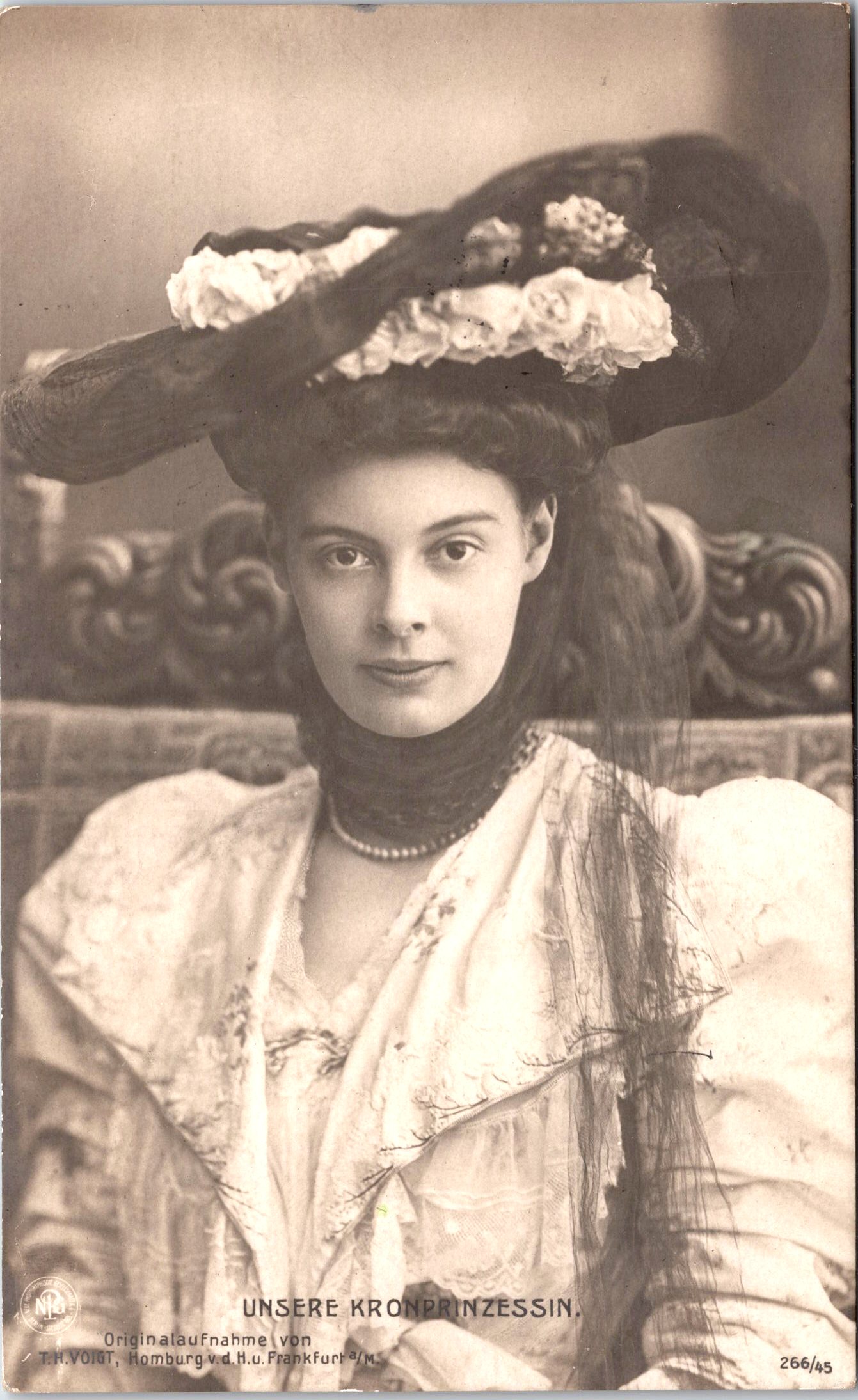

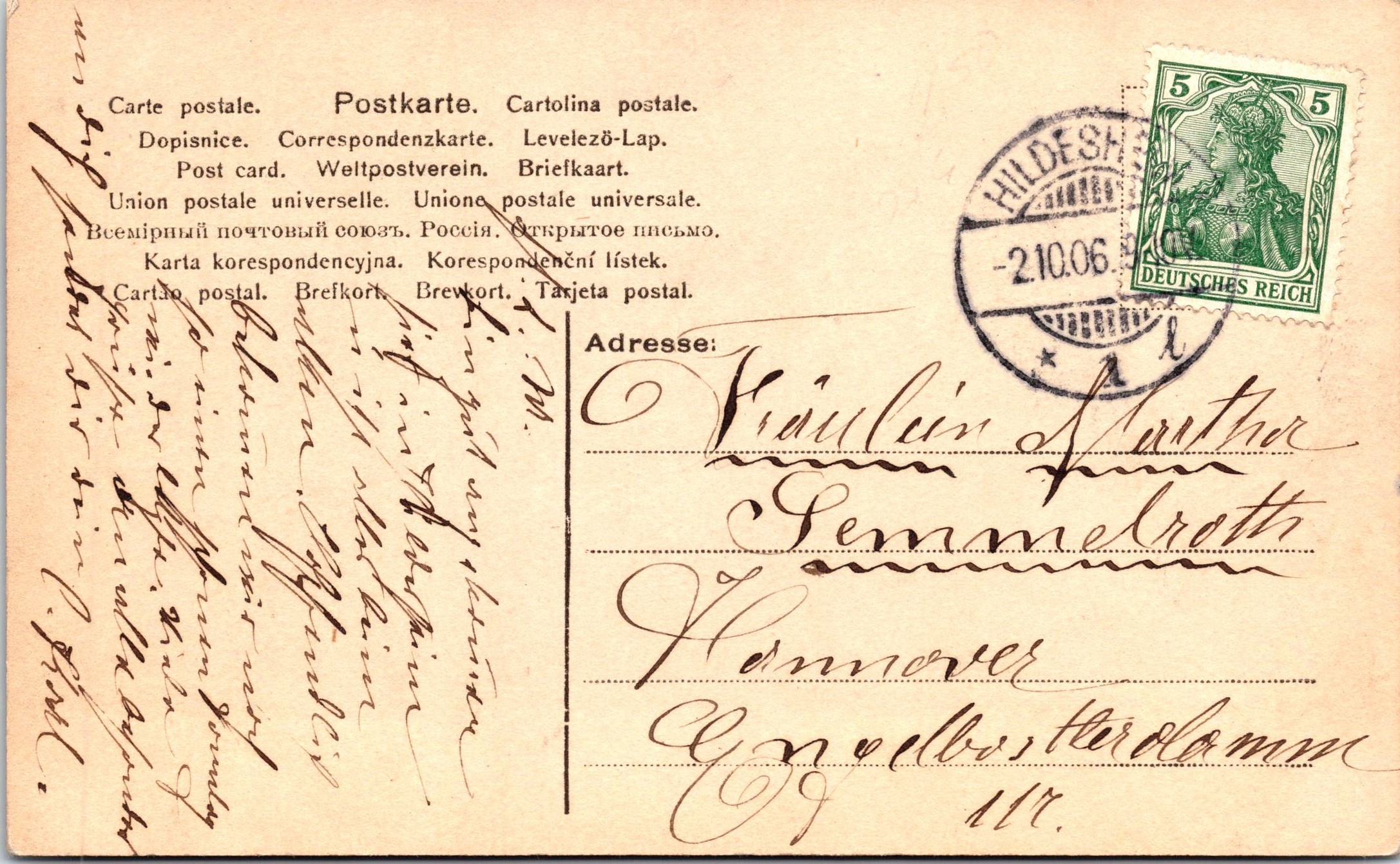
Crown Princess Cecilie of Prussia (1886–1954) was a prominent royal figure in early 20th-century Germany. She was the daughter of Frederick Francis III, Grand Duke of Mecklenburg-Schwerin, and Grand Duchess Anastasia Mikhailovna of Russia, making her a granddaughter of Emperor Nicholas I of Russia. Cecilie came from a highly prestigious lineage that united German and Russian imperial bloodlines. In 1905, she married German Crown Prince Wilhelm (Wilhelm of Prussia (1882–1951), the eldest son of Kaiser Wilhelm II, Emperor of Germany and King of Prussia. As the wife of the Crown Prince, Cecilie held the title of German Crown Princess and was seen as the future Empress of Germany. However, the German monarchy was overthrown in 1918 at the end of World War I, and the family went into exile. Wilhelm never ascended the throne, as the monarchy was abolished with the abdication of his father, Wilhelm II. Cecilie and Wilhelm had six children.Their marriage, while initially harmonious and dutiful, became strained over time due to Wilhelm’s infidelities and political turmoil. Despite no longer being royalty in power, Cecilie remained a respected figure. After the monarchy fell, she lived modestly in Germany and did not follow her husband into exile in the Netherlands. She died in Bad Kissingen, West Germany, in 1954. This real photo postcard is a studio portrait of Crown Princess Cecilie, taken by T.H. Voigt, a photographer based in Homburg v.d.H. and Frankfurt a/M. The publisher number “266/45” appears in the lower right corner, and the “NPG” logo indicates it was part of the Neue Photographische Gesellschaft series—one of the most prestigious photo publishers in Imperial Germany. In this beautifully lit and softly focused portrait, Crown Princess Cecilie sits regally, gazing directly at the camera with serene confidence. Her expression is calm and composed, projecting the quiet dignity expected of a royal consort. She wears a sumptuous white or light-colored gown, richly embroidered with floral motifs and delicate lace details. Around her neck is a strand of pearls, and an elegant dark scarf or netting is wrapped gracefully around her collar and beneath her chin. Her wide-brimmed hat, adorned with layers of flowers and lace, is spectacular—an extravagant Edwardian fashion statement in keeping with her status. Her long hair is styled in a voluminous updo beneath the hat. The combination of textures—lace, netting, silk, and pearls—exudes both softness and formality, symbolic of her royal role. The postcard is addressed to a woman residing in Hanover, Germany and the card is postmarked in 1906 in Hildesheim, Germany. Cecilie had been a princess for just a short time when this photo was taken. The stamp on the card is a 5 Pfennig green stamp bearing the image of Germania, a common stamp of the Deutsches Reich (German Empire), designed by Paul Eduard Waldraff and issued between 1900–1922. The cursive German message on the left margin is difficult to fully decipher, but it appears to be a friendly greeting. (SOLD)


 THE CABINET CARD GALLERY