EDWIN BOOTH : RENOWNED STAGE ACTOR : BY GEORGE ROCKWOOD : UNCOMMON CABINET CARD

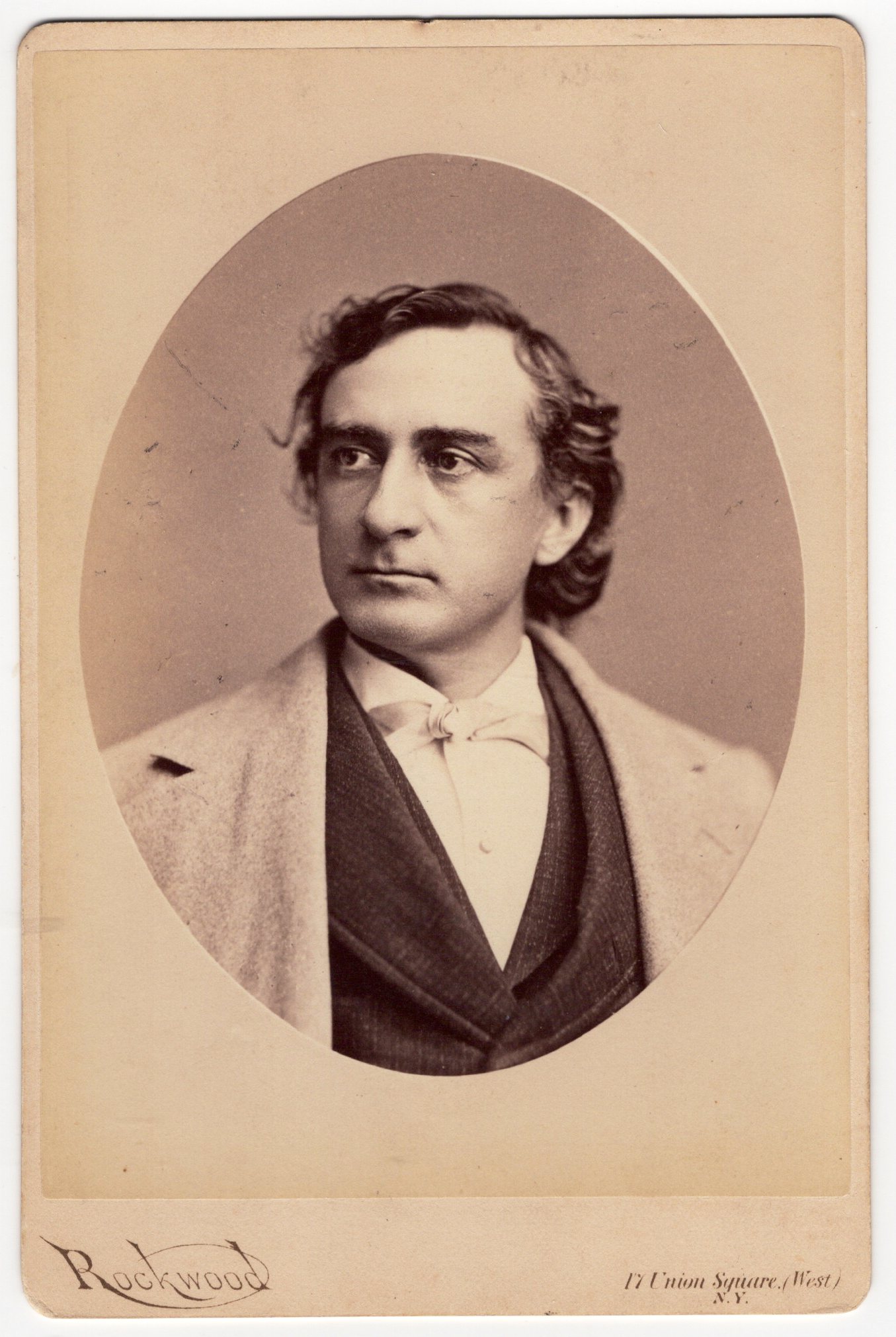
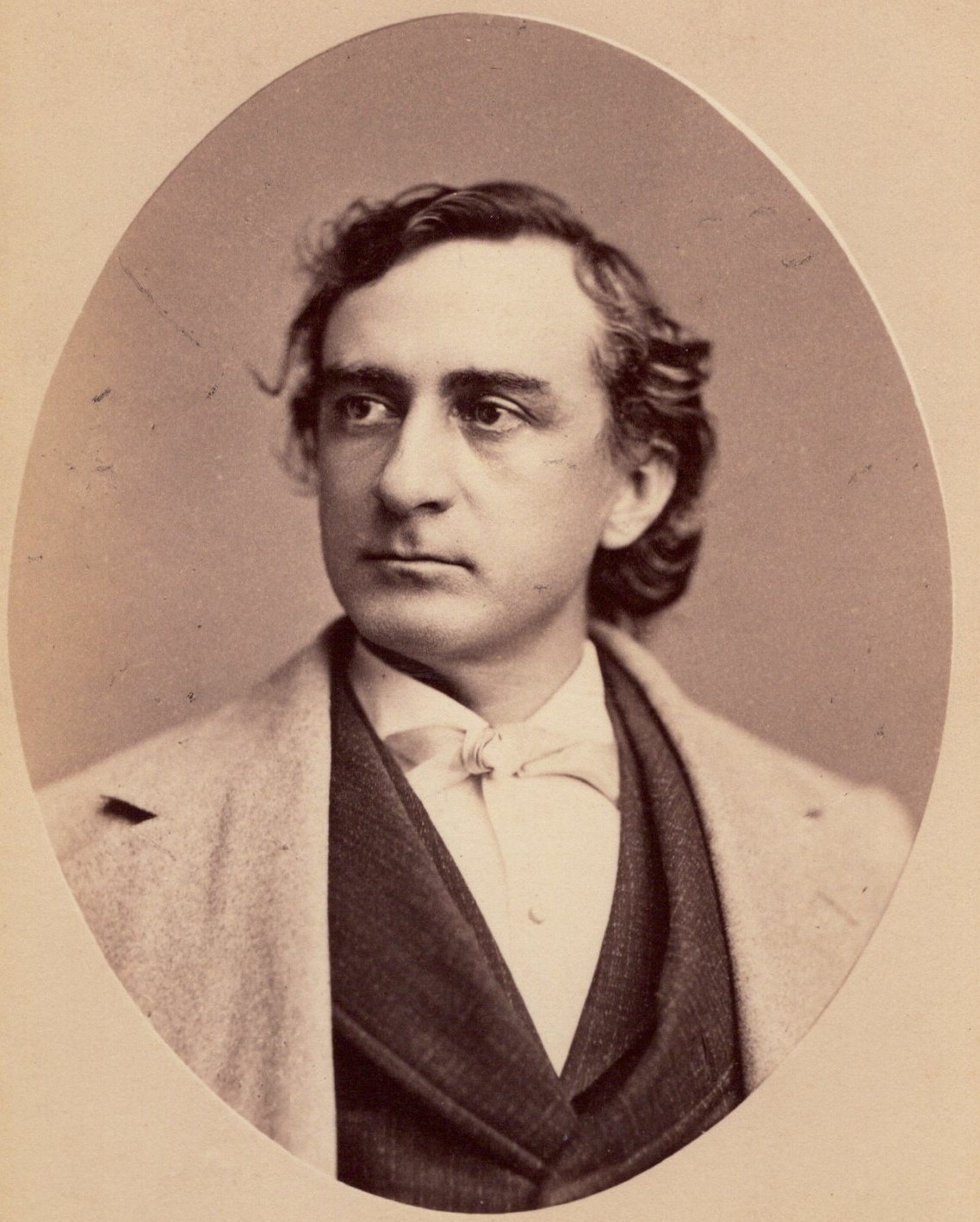
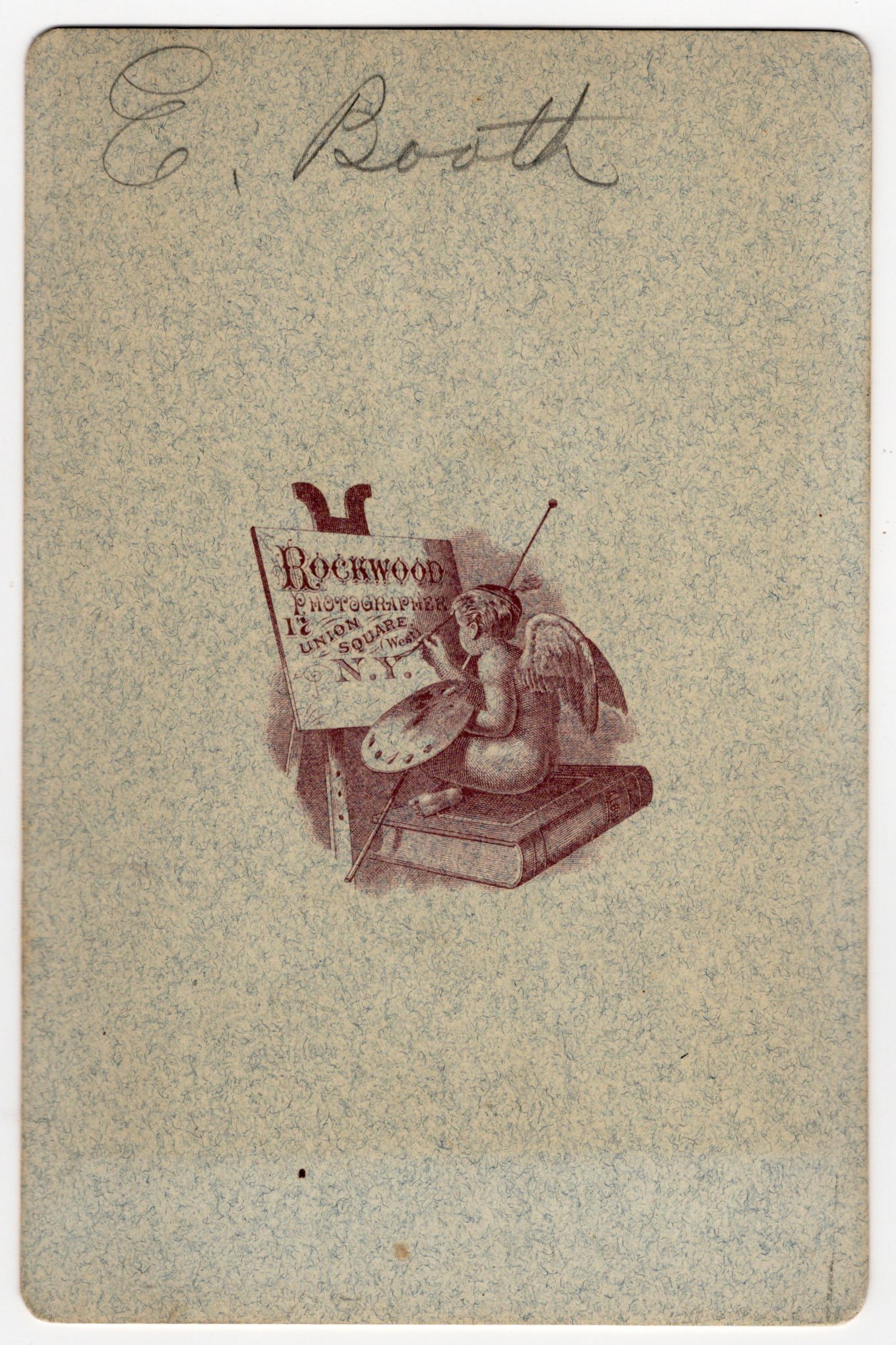
This stunning cabinet card portrait captures Edwin Booth, one of the most celebrated Shakespearean actors of the 19th century. Taken by renowned photographer George G. Rockwood of New York, the image boasts exceptional clarity and sharp detail, making it an outstanding example of 19th-century portrait photography. Booth is dressed in elegant period attire, featuring a high-collared white shirt with a neatly tied bow tie, a dark waistcoat, and a light-colored overcoat draped over his shoulders. His hair, swept back in soft curls, frames his distinguished face, exuding an air of quiet confidence and introspection. His gaze is directed slightly away from the camera, lending a dramatic and contemplative quality to the portrait—a fitting expression for a man known for his deep and emotional performances on stage. The cabinet card is in very good condition, with minimal signs of wear, and the sepia tones remain rich and well-preserved. The reverse of the card is equally impressive, featuring Rockwood’s distinctive studio imprint, which includes a charming illustration of a cherub holding a painter’s palette and brushes, next to an artist’s easel that advertises the Rockwood studio at 17 Union Square (West), New York. Additionally, there is an inscription at the top that reads: “E. Booth,” a reference to the legendary actor. Edwin Booth (1833–1893) was one of the greatest American actors of the 19th century, best known for his Shakespearean roles, particularly Hamlet, which he performed more than 100 times—an unprecedented feat at the time. His extraordinary talent and deep emotional connection to his roles earned him widespread acclaim in both America and Europe. Despite his artistic triumphs, Booth’s life was forever overshadowed by his brother’s infamous act—John Wilkes Booth’s assassination of President Abraham Lincoln in 1865. The tragedy devastated Edwin, who was a staunch Unionist and had publicly opposed his brother’s views. He briefly retired from the stage but later returned, determined to restore his family’s name through his craft. In 1888, he founded The Players Club in New York City, a private social club for actors, which still exists today. The Booth family was a dynasty of performers—Edwin’s father, Junius Brutus Booth, was an acclaimed English actor, and his brothers, John Wilkes Booth and Junius Brutus Booth Jr., also pursued theatrical careers. However, Edwin’s talent and legacy far outshone the rest of his family, cementing his place as one of America’s greatest classical actors. The photographer of Mr. Booth was George Rockwood (1832-1911). He was a renowned photographer whose studio was located in New York City. Rockwood was born in Troy, New York and graduated from college with a PhD, reportedly either from the University of Chicago, or Columbia University. At 21 years of age, he was a newspaper reporter for the Troy Daily Times and at age 23, he was managing editor of the Troy Daily Post. He began working as a photographer in St. Louis and in 1857 opened a studio with his brother Elihu in New York City. He has been credited with bringing CDV’s to America. His obituary in the Washington Post reports that Rockwood photographed  more than 350,000 people. SOLD
MARIE WAINWRIGHT: PORTRAIT OF A THEATRE ACTRESS (PHOTOGRAPHED BY SARONY)

PHOTO 1

wainwright

PHOTO 2   (SOLD)

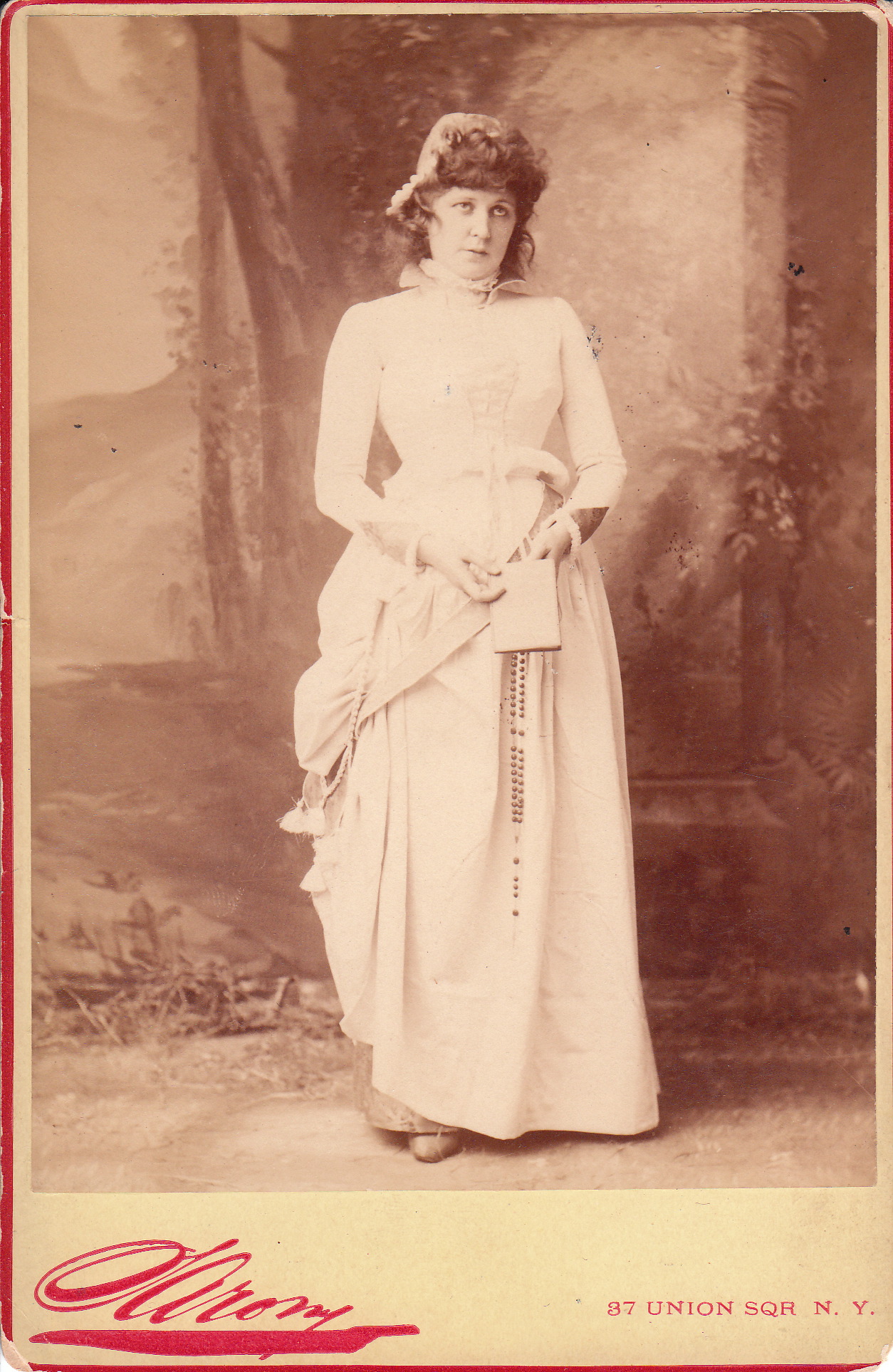
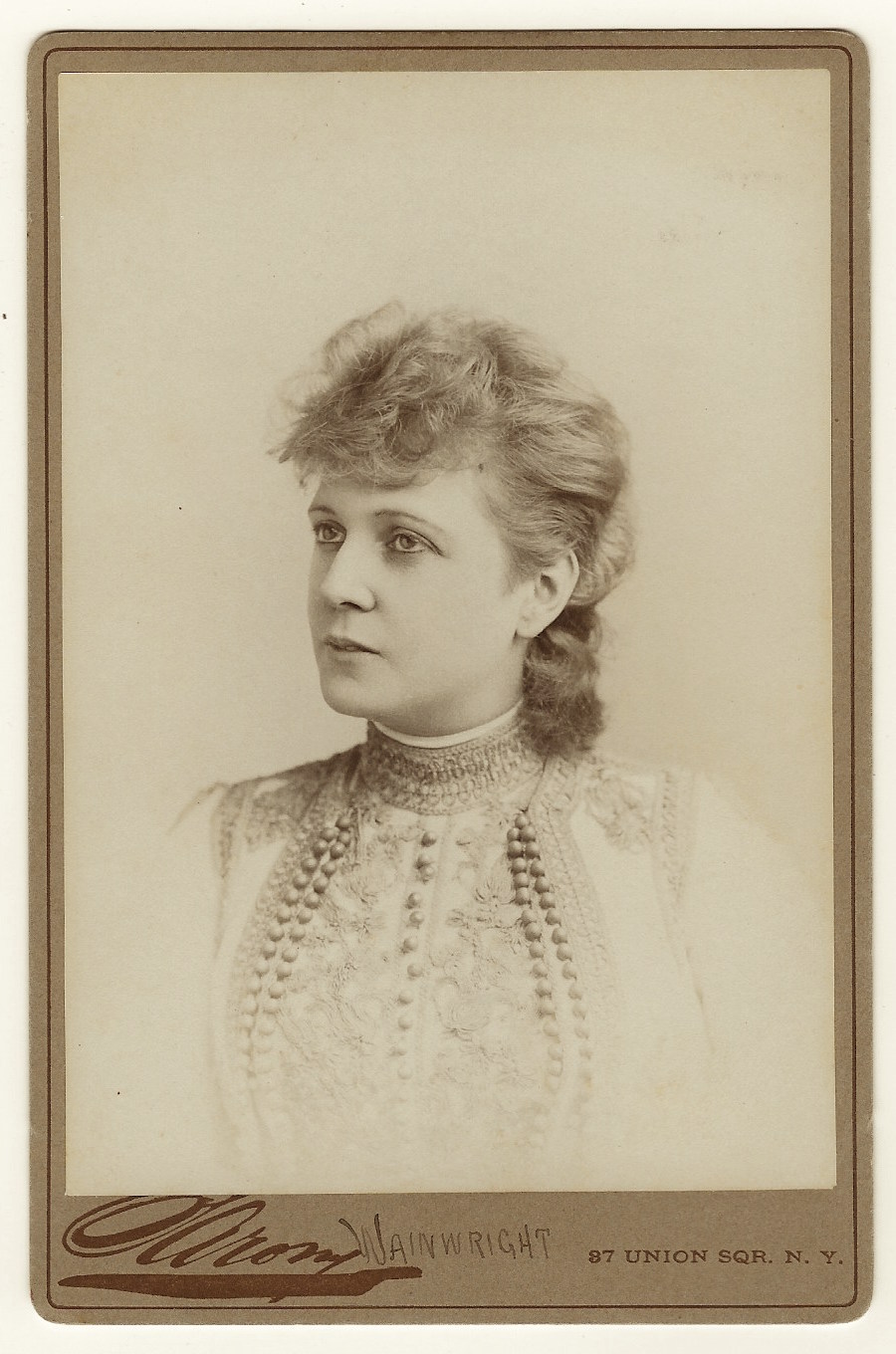
These cabinet cards feature Marie Wainwright (1853-1923), an American stage actress and singer. She also appeared in three silent films between 1918  and 1920. Most of her fame came from the Victorian stage. She was born in Philadelphia and as educated in Paris, France. She received her acting training in Paris. Her first stage appearance was in New York in “Romeo and Juliette (1877)”. Her career flourished afterward. She spent many years in the Boston Museum company and later on, operated her own theatre company. During her career, she was the leading lady for Edwin Booth, Lawrence Barrett, and other well known actors. She appeared primarily in classics and high dramas until the turn of the century. She then appeared in more contemporary productions. Her resume includes roles in “H. M. S. Pinafore” and “Diplomacy”. When asked why she entered the acting profession, in a New York Times interview (1878), she stated that she did it for her children’s sake. Wainwright claimed that she was married before the age of fifteen, and had three kids before she turned twenty-one years of age. She stated that her husband was not supporting her and the children, and she needed to work for financial reasons. It appears that the breakup of Wainwright’s marriage was a hot news item. The marital conflict was quite dramatic and there were some questions about Ms. Wainwright’s character. The top  photographic portrait is by Sarony’s New York City  studio. Sarony was a famous celebrity photographer and other examples of his work can be seen by clicking on the category labelled “Photographer: Sarony”. This image shows Wainwright wearing a white gown and bonnet. She is holding a book and rosary beads.

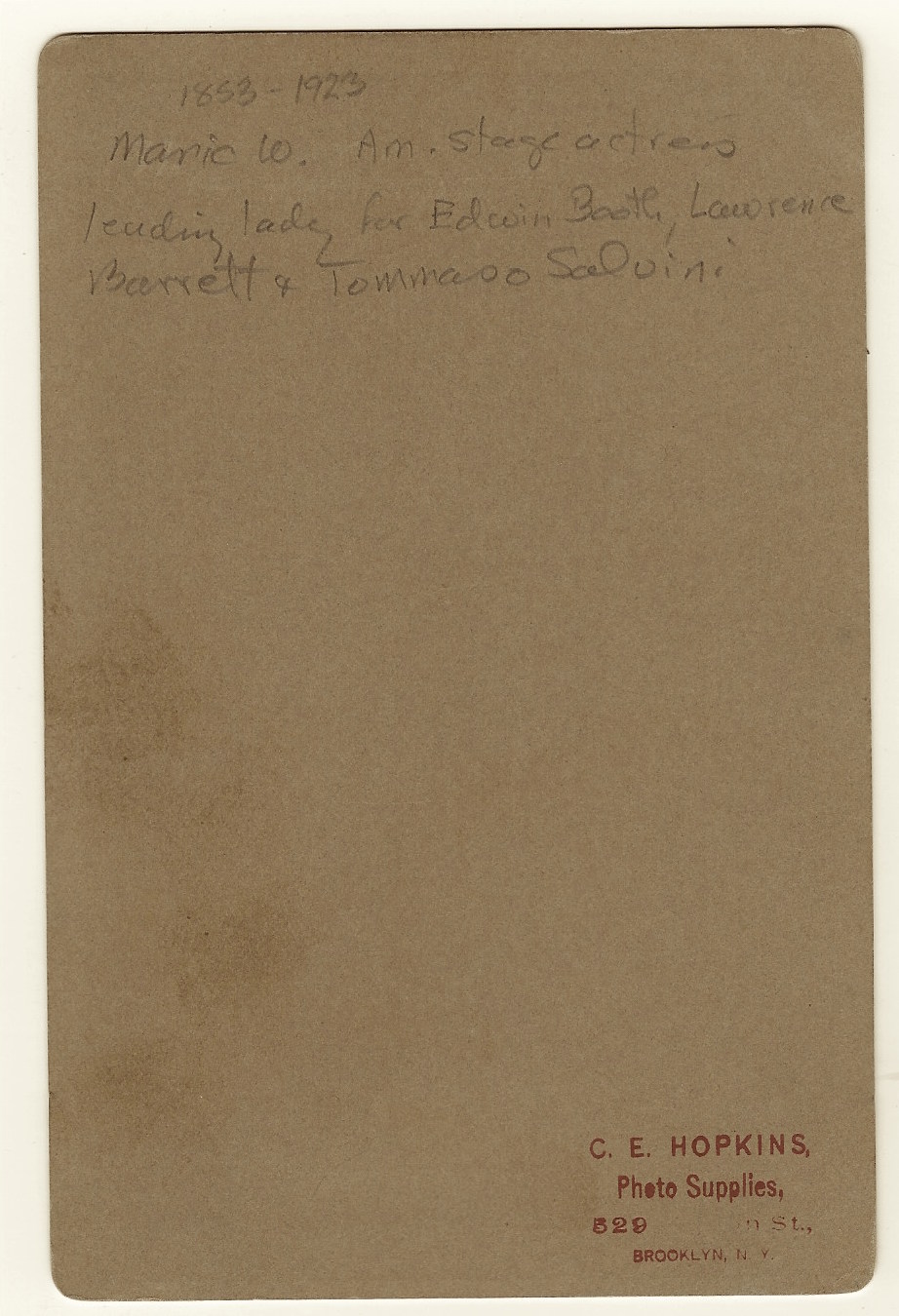
The second cabinet card was also photographed by Sarony. Miss Wainwright certainly was a pretty woman. The reverse of the cabinet card has an inscription describing some aspects of her career. There is also a stamp from a photographic supply dealer on the photo’s reverse. The dealer is C. E. Hopkins whose business was located in Brooklyn, New York. Mr Hopkins was an excellent self promoter as illustrated by mention of his name and business in several photographic journals of his time. For example, “Photographic Times” (1890) recounts that one of Mr Hopkins’s amateur customers produced a series of photographs pertaining to a duel, that Mr Hopkins had shared with the publication. It is likely that this cabinet card portrait of Miss Wainwright once could be found “for sale” in C. E. Hopkins’s shop.

wainwright-1

JOSEPH WHEELOCK SR: LEADING THEATRE ACTOR

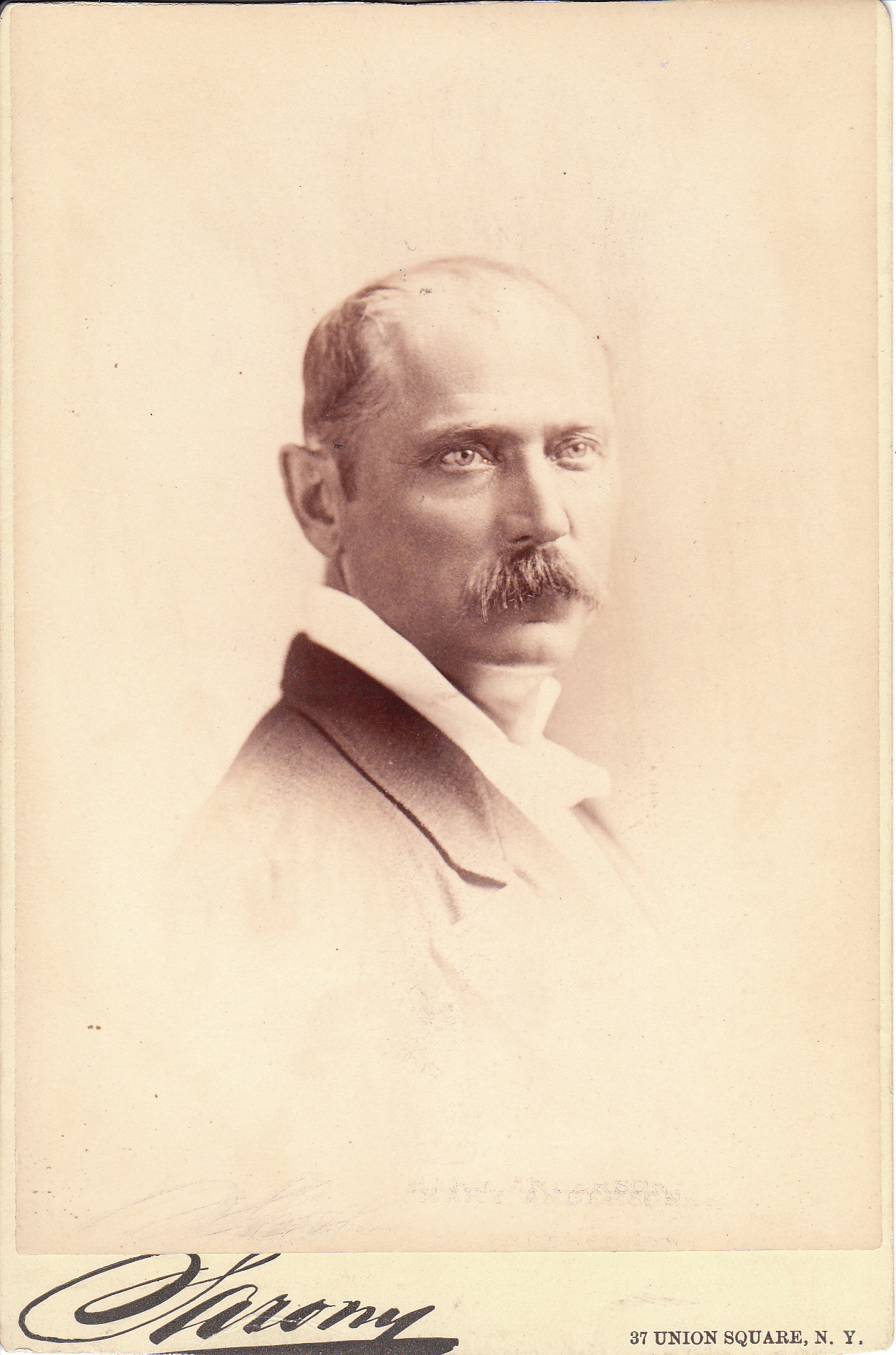
This cabinet card features stage actor, Joseph Wheelock Sr. (1839-1908). He began his careeer in Boston and later played leads in various stock companies. His first hit was his appearance in  “The Stranger”. His principal stock company was the Meech Brothers. During his career he appeared with many of the most renowned theatre actors. His fellow cast members included Edwin Booth, Agnes Booth, Adelaide Neilson, Mary Anderson, Edward Sothern and Julia Marlowe. Wheelock was one of the founders and the first President of the Actors Society of America. The society was organized in 1895 and its purpose was to regulate and standardize contractual obligations between performers and producers. The group dissolved in 1912.  This cabinet card was photographed by Napoleon Sarony of New York City, one of the most popular celebrity photographers of this era. To see other photographs in the Cabinet Card Gallery by Sarony, click on the category “Photographer: Sarony”. It is important to note that Joseph Wheelock Sr. had a son who was also an actor. Judging by the estimated age of the subject of this photograph, and the estimated date of this photograph; it seems almost certain that this image is that of Joseph Wheelock Sr., and not Joseph Wheelock Jr.

EFFIE ELLSLER: STAGE ACTRESS

ellsler_0002

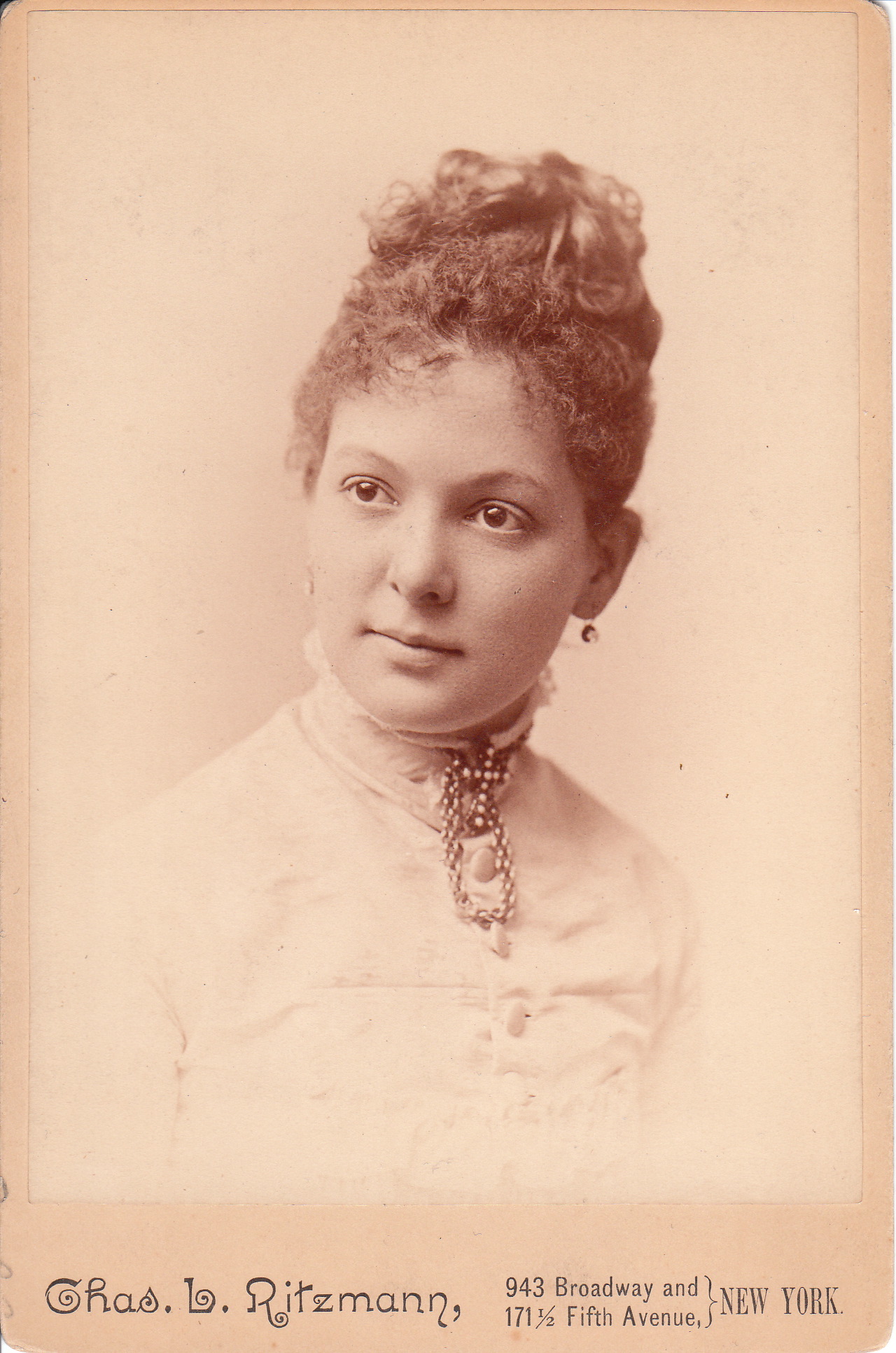
This is a Cabinet card portrait of stage actress Effie Ellsler (1855?-1942). She was born in Cleveland, Ohio where her parents were actors and ran a leading playhouse. She made her debut as a child and as an adult had opportunities to act with Edwin Booth, Lawrence Barrett and other celebrities during their Cleveland tours. Ellsler came to New York in 1880 and was a sensation in her first part in the title role of Hazel Kirke. She played that role for three years but than made a series of poor starring role choices in a number of melodramas. For most of the 1890’s she toured in road companies. She later played with Maxine Elliott in the Merchant of Venice.  Ellsler’s last hit was in the Bat (1920). This Cabinet card portrait is from the esteemed studio of Charles Ritzmann of  New York City.