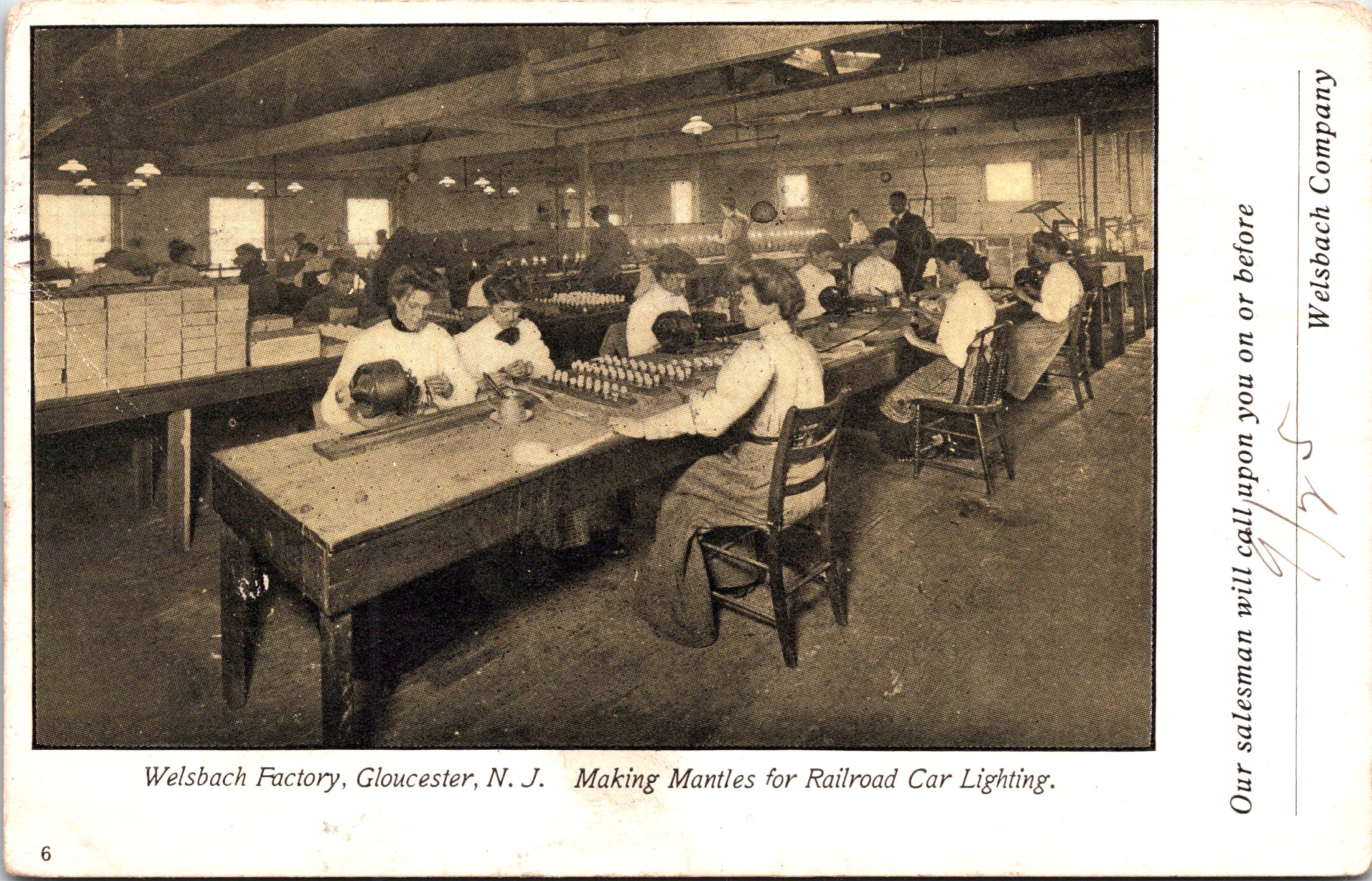
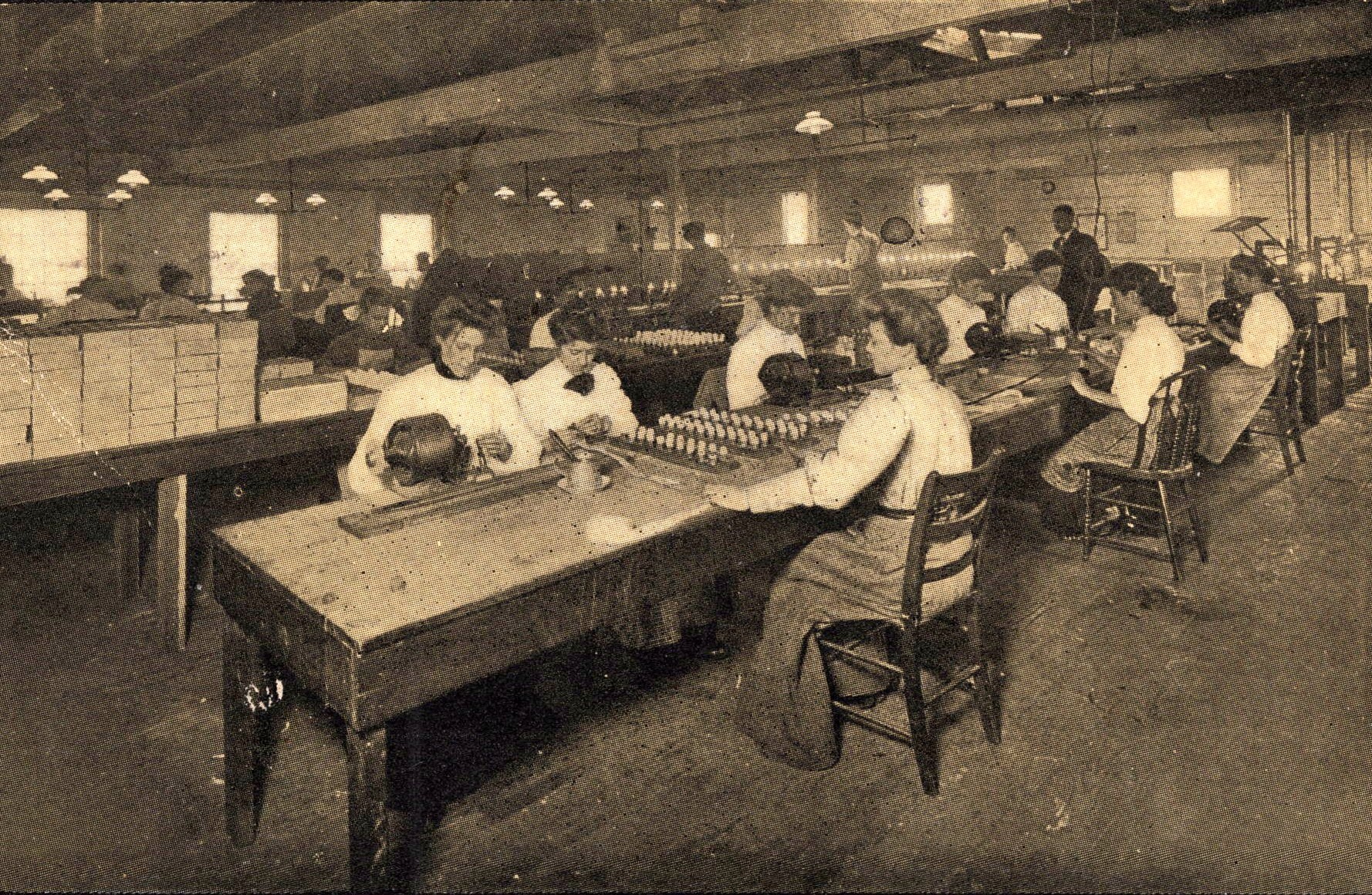
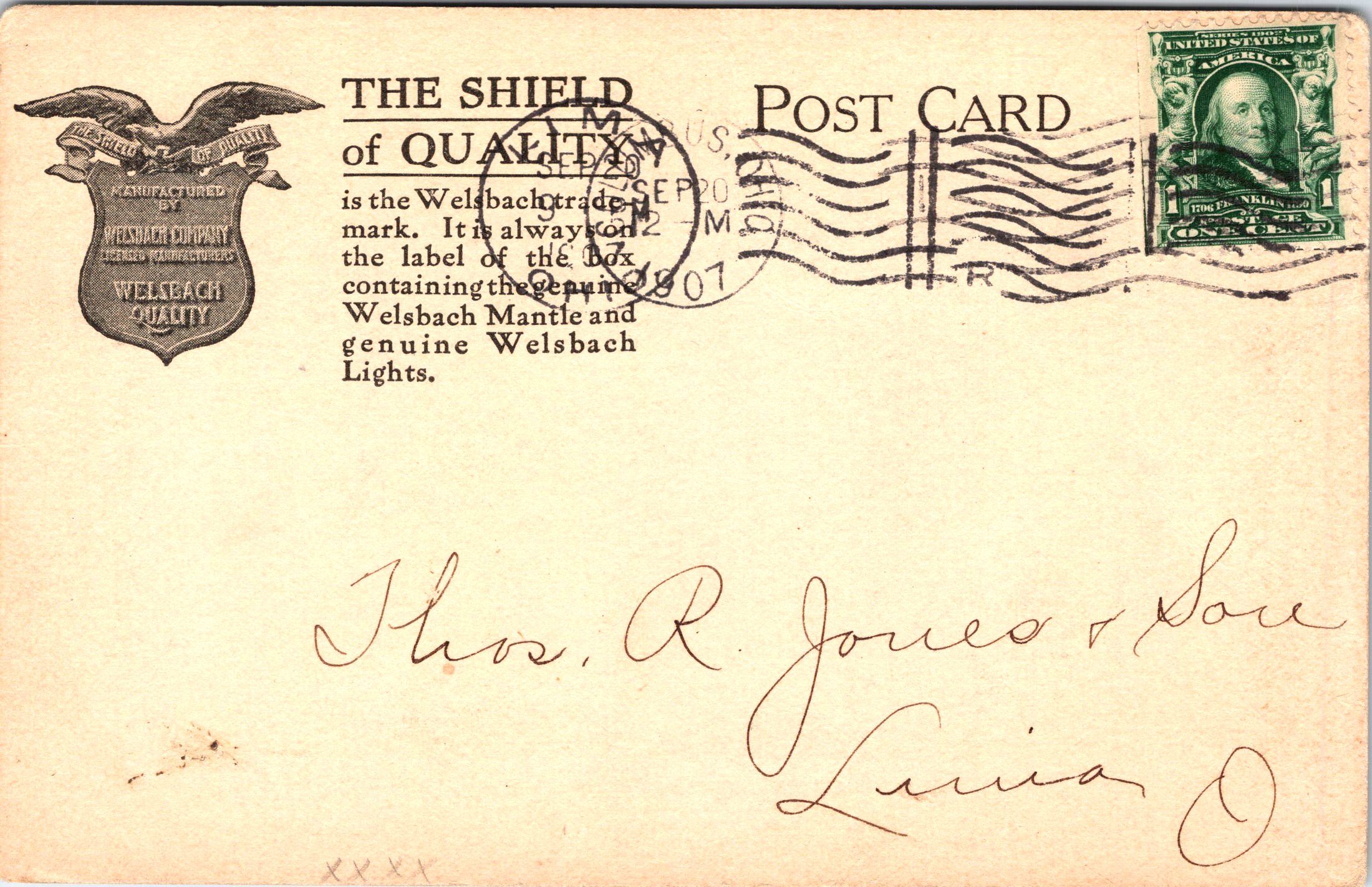
This early 20th-century lithographic postcard offers a fascinating window into American industrial history. The scene depicted shows the Welsbach Factory in Gloucester, New Jersey, where women are seated at long wooden worktables manufacturing gas mantles for railroad car lighting. These mantles were used in Welsbach gas lamps, which produced brilliant light before the widespread adoption of electricity. The image—clearly a lithographic print rather than a real photo—shows dozens of women, most dressed in white blouses and long skirts, working with concentration under bright overhead lighting. One woman is seen turning a crank on a mechanical device, while others place mantles in organized rows. The factory setting is clean, orderly, and filled with wooden furniture, boxes, and workstations. Several men are visible supervising or moving through the workshop. This undivided-back postcard carries the printed caption: “Welsbach Factory, Gloucester, N.J. Making Mantles for Railroad Car Lighting.” On the reverse side, a vertical promotional message from the Welsbach Company reads: “Our salesman will call upon you on or before _________ Welsbach Company.” This clearly identifies the postcard as a business advertising card, likely distributed by Welsbach to customers or wholesalers as part of their sales strategy. This postcard is postmarked 1907, which falls in the final years of the undivided back era in U.S. postcards (1901–1907). It features a green Ben Franklin one-cent stamp, consistent with domestic postcard postage at the time. The card’s message and address are both written on the front, as was standard practice before divided backs were permitted for message writing. The Welsbach Company, founded in the late 19th century, was named after Carl Auer von Welsbach, an Austrian chemist and inventor of the gas mantle. The Welsbach Company became one of the primary manufacturers and distributors of these mantles in the United States, with major production facilities in Gloucester, NJ. The Gloucester plant employed many women and helped revolutionize gas lighting for residential, industrial, and transportation use—especially in street lamps and railway cars. Welsbach mantles used rare earth elements to produce an intense white glow when heated by a gas flame. The company played a key role in the history of gas illumination before the electrical grid became dominant. (SOLD)


 THE CABINET CARD GALLERY