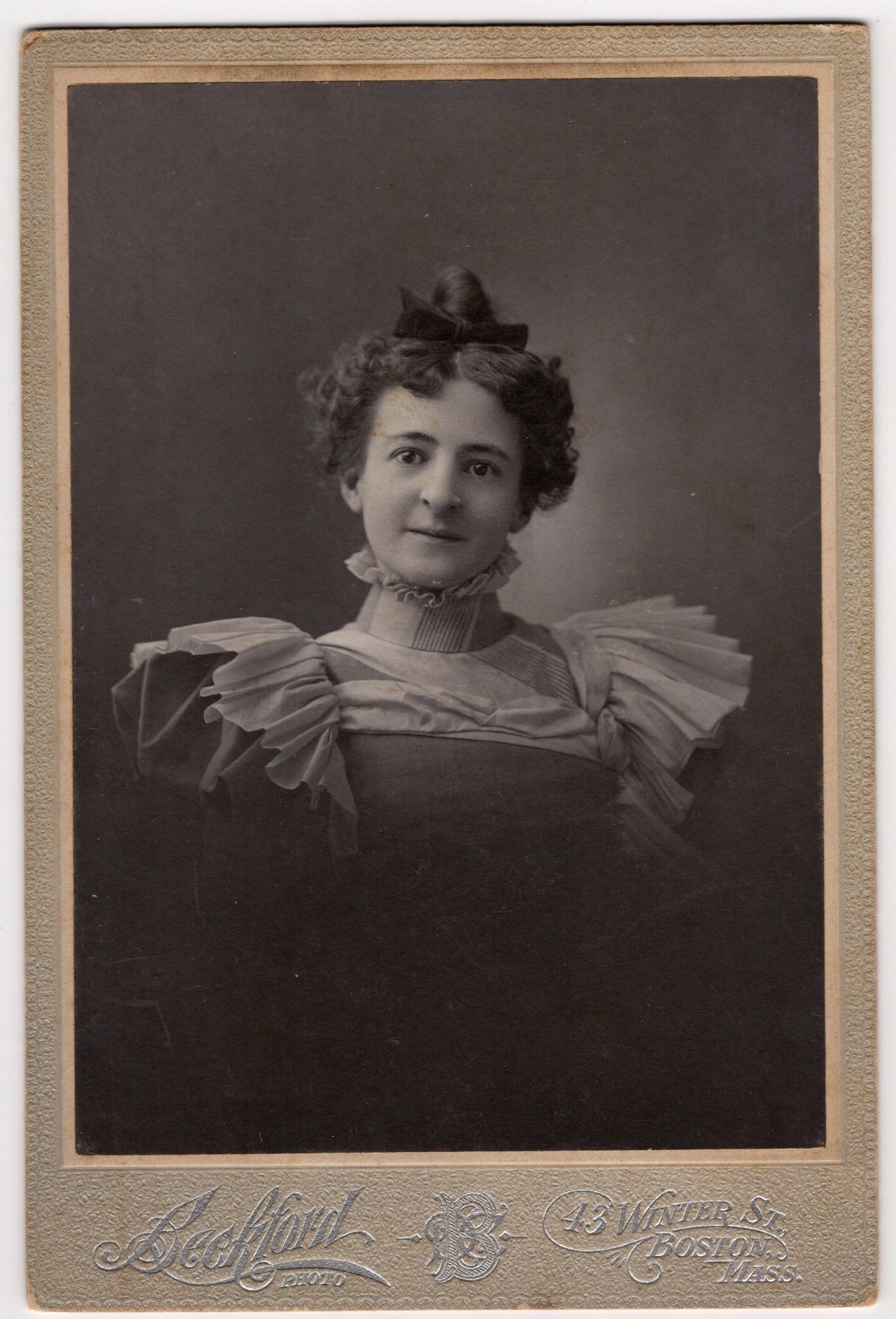
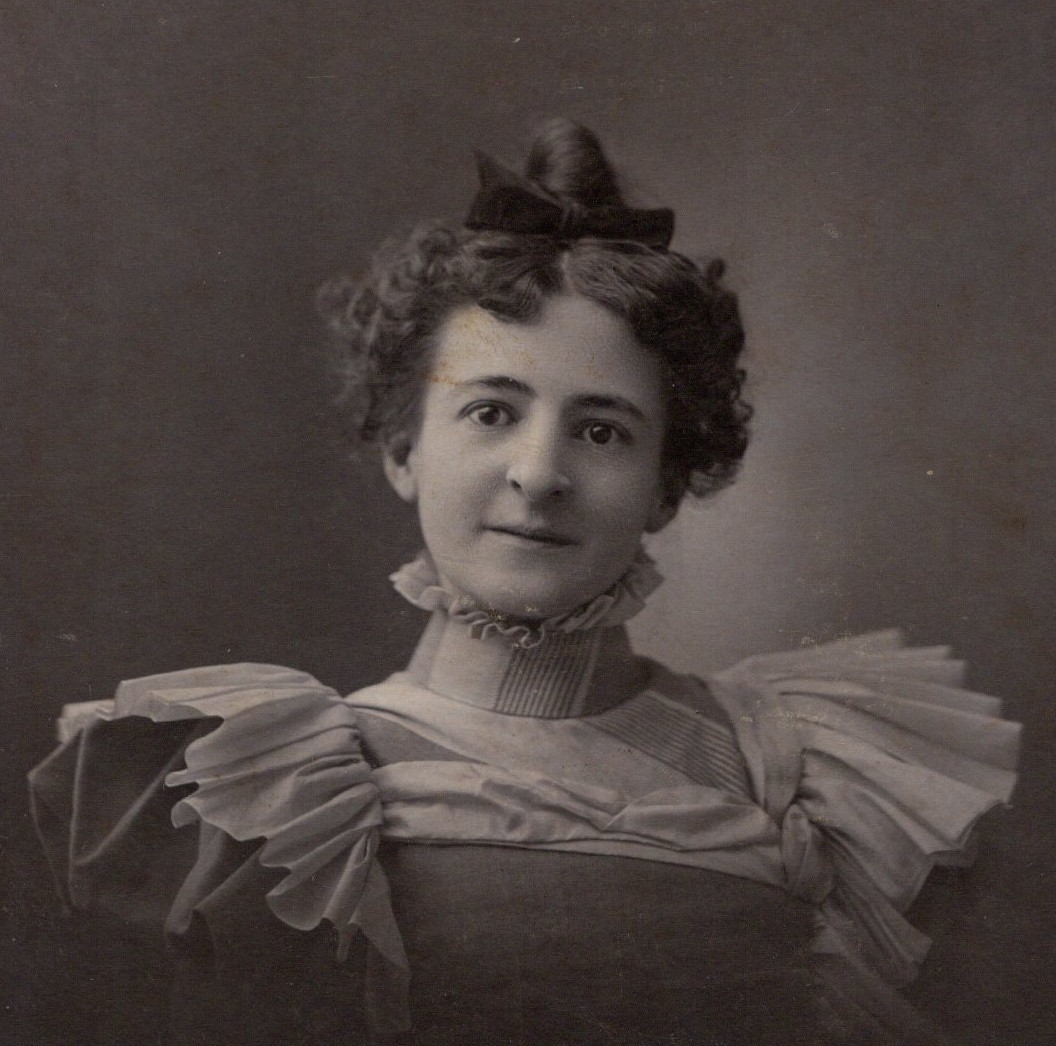
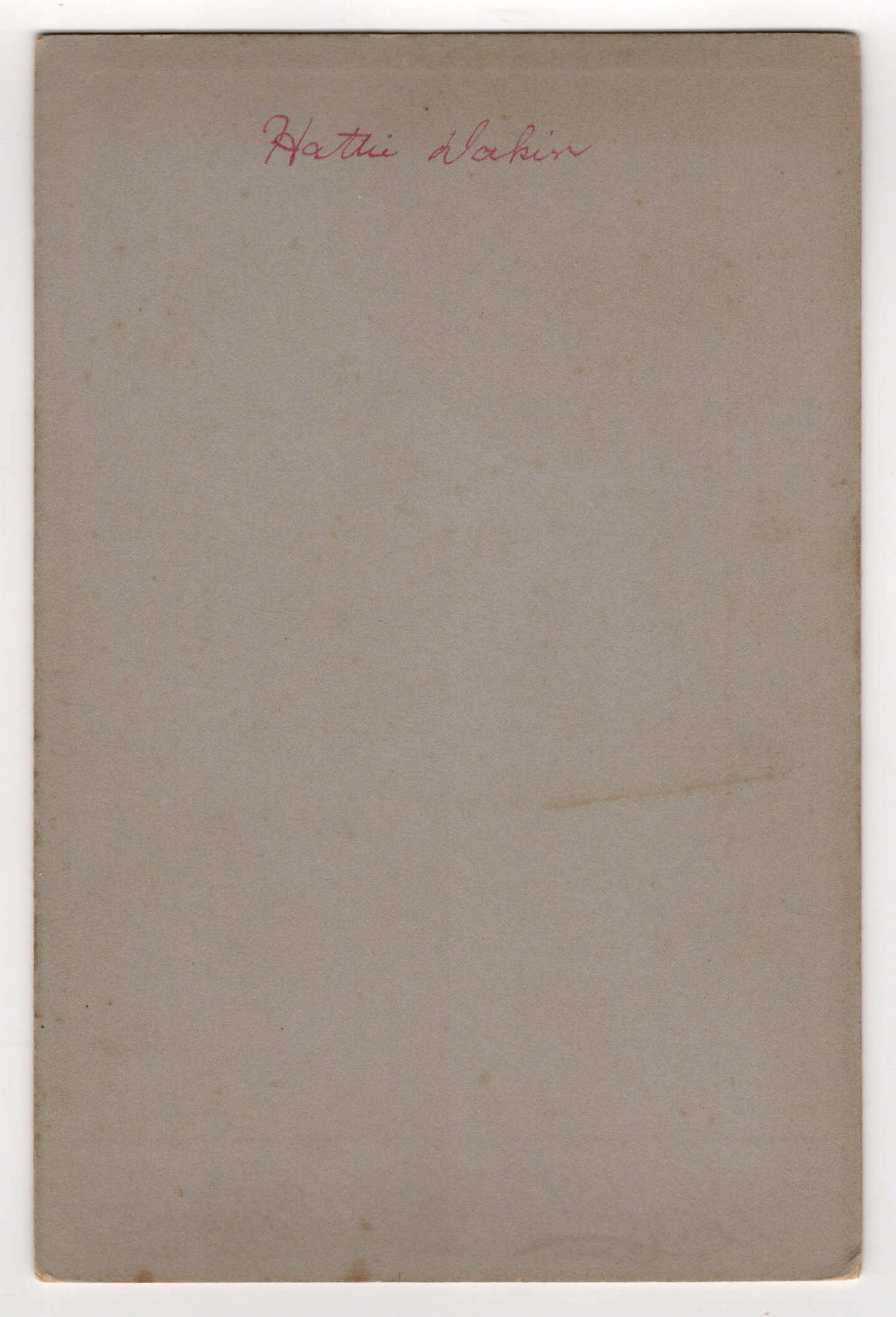
This original 1899 cabinet card photograph features a charming and elegant young woman identified on the reverse as Hattie Dakin. Her portrait is beautifully posed and lit, capturing her in a high-necked gown typical of the late Victorian period—with puffed gigot sleeves, delicate pleats, and a structured bodice. Her hair is styled in curls, pulled up with a ribbon bow, and her expression is serene, with just a hint of a smile. The reverse inscription provides her name. This cabinet card was discovered as part of a larger group of similar photographs, all featuring young women, each dated and named—supporting the theory that these were likely taken to commemorate a school graduation in 1899. What makes this particular image especially significant is the identity of the photographer: David C. Beckford, an African American photographer whose studio—Beckford Photo, 43 Winter Street, Boston, Massachusetts—was among the leading photography establishments of its time. David C. Beckford was a native of Jamaica, born in 1856, and immigrated to the United States in 1872. He originally worked for Walter E. Chickering (a disreputable businessman), and eventually took over the business in 1888, renaming it under his own name. His studio employed four assistants and was highly respected. Beckford operated his photography studio until at least 1909, while also managing a hardware business in Jamaica, which he rebuilt after a devastating earthquake. Beckford’s status as a Black photographer in turn-of-the-century Boston is noteworthy. He received recognition in the book “Boston: Its Commerce, Finance, and Literature,” and is also referenced in a 1909 article in The Southern Workman, confirming both his heritage and his professional stature. His life reflects the resilience and entrepreneurship of a man who overcame barriers of race and geography to establish himself as a photographic artist and businessman. Photographs by African American photographers from the 19th century are uncommon. (SOLD)


 THE CABINET CARD GALLERY