

This original vintage real photo postcard presents a formal group portrait associated with the Salvation Army, photographed in Kingston, Jamaica, likely in the late 1910s to early 1920s. The image shows five individuals posed in a studio setting: three Salvation Army officers seated in the foreground, with two women standing behind them. Four of the workers are wearing uniforms. The Salvation Army uniforms are clearly identifiable by the distinctive “S” collar insignia, confirming the religious and missionary context of the photograph. Group portraits such as this were commonly made to commemorate postings, service assignments, or transfers within the organization, and were often mailed or retained as keepsakes. Of particular historical interest is the inclusion of a Black woman standing at right, very likely a native of Jamaica, reflecting the Salvation Army’s active presence among local communities during the colonial period. Her dignified posture and inclusion within the group provide an important visual record of race, religion, and social structure in early 20th-century Jamaica. My research reveals that this photograph was taken by a Kingston, Jamaica photography studio operated by J. W. Cleary and E. W. Elliott. A handwritten notation on the reverse reads identifies one of the Salvation Army officers as a Staff Captain. The captains name is illegible. (SOLD)


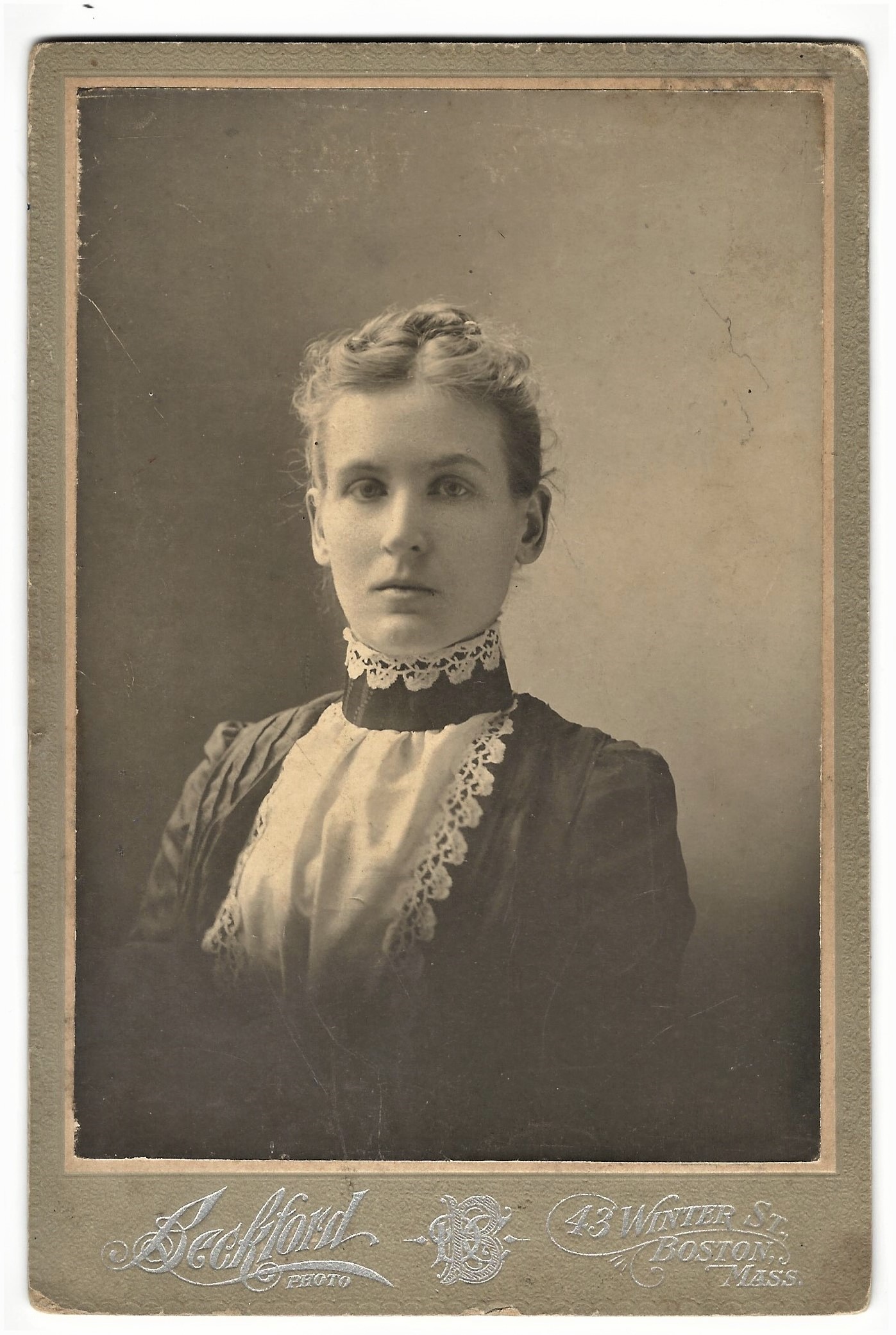
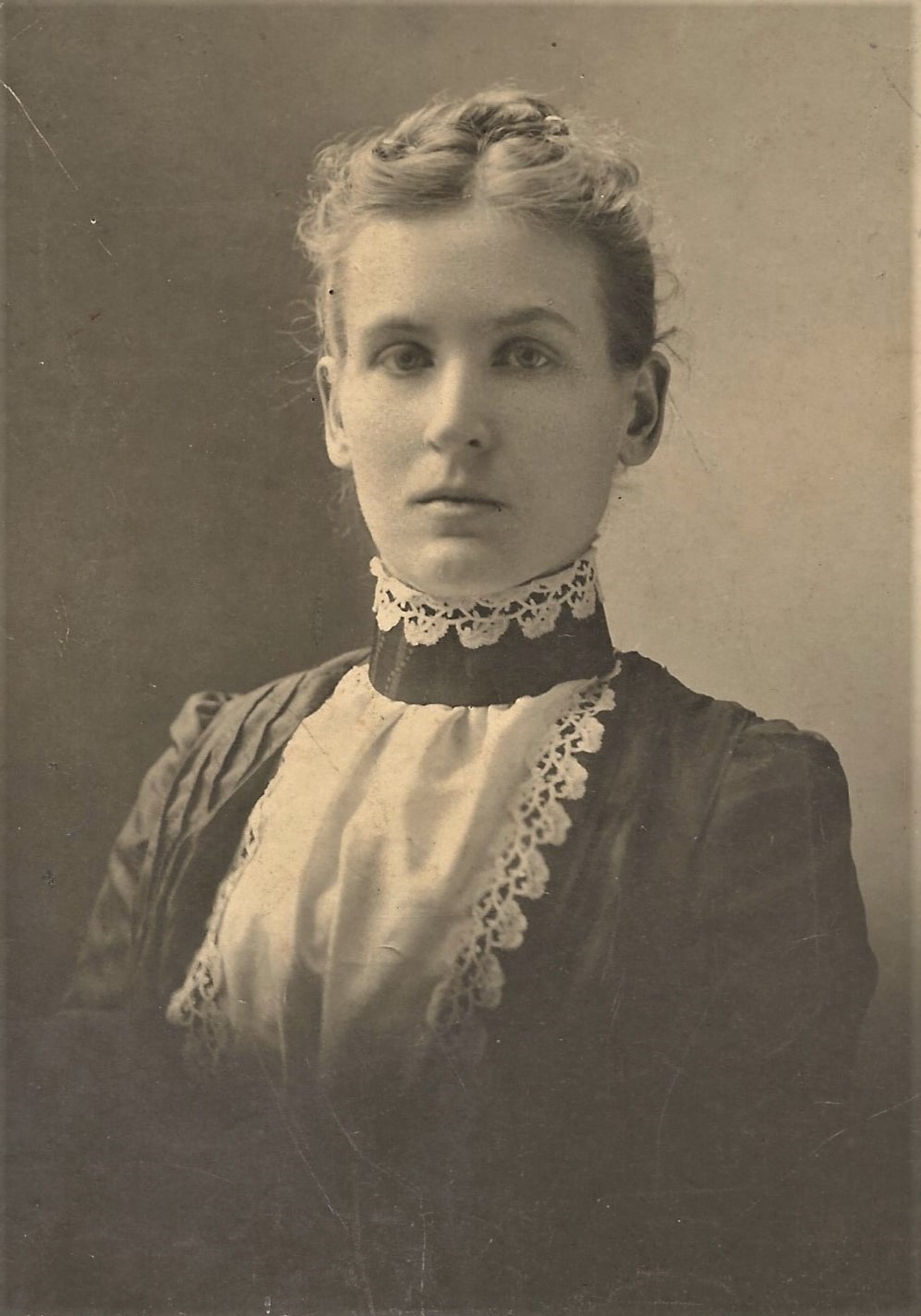 This cabinet card portrait features a well-dressed pretty young woman. Her high collared dress includes lots of lace. She is wearing a serious expression. She appears to be in her teenage years or slightly older. This photograph was taken by the Beckford Photo, a studio located in Boston, Massachusetts. David C. Beckford received mention in the book, “Boston: Its Commerce, Finance, and Literature”. His studio is described as a leading photo studio in the country. The business was established in around 1872 as the Chickering Photo Company. The proprietor, Walter E. Chickering (not to be confused with Elmer Chickering, a well respected Boston photographer of the era) was a notorious swindler. He was especially known for his dishonesty and blatant resistance to paying his bills. Walter must have been a tough boss to tolerate. Beckford took over the business in 1888. Beckford’s establishment employed four assistants. Beckford was a native of Jamaica. He came to Boston in about 1872 and worked for Chickering for several years. According to one source, Beckford operated a Hardware business in Jamaica, at least part of the time, while he ran his photo studio in Boston. A Massachusetts directory of photographers asserts that Beckford was active as a photographer until 1909. Beckford is cited in an article appearing in the “Southern Workman” (1909). The title of the article was “Improvement in Housing Negroes in the North”. The writer states that Beckford had recently returned from a business trip to Jamaica where he directed the rebuilding of his properties; and reestablished his hardware business which had been destroyed in an earthquake. The “Southern Workman” article was the first reference that I found that indicated that David C. Beckford was a Black man. Examining the 1900 US census data provided confirmation that Beckford was indeed a Black man. Census data conflicted with other legal documents in regard to where Beckford was born. It appears he was born in either England or Jamaica. He was born in 1856 and immigrated to the United States in 1872. He married Elvira P. Gott in 1881. She was a Black woman born in Massachusetts. She was close in age to Beckford. Photographs by Black photographers are not common, making this image a great find. This cabinet card portrait is in fair condition (see scans). Note the presence of peeling along the left and bottom border of the card mount. The image itself has excellent clarity and is in good condition. (SOLD)


 THE CABINET CARD GALLERY