 Two sisters, in identical dresses, pose for a cabinet card portrait, as they play separate xylophones. The girls are very conscious of the camera as they pretend to play their duet. The xylophones are atop interesting pieces of furniture, or perhaps, trunks. Viewers of this image must consider the possibility that the sisters in this photograph are actually one, and the same, person. It was not unusual during this era for a photographer to use trick photography to place one person in two positions in the same photograph. The photographer of the cabinet card was E. J. (possibly E. T.) Vanderbilt, whose studio was located in Liverpool, England.
A XYLOPHONE DUET IN LIVERPOOL, ENGLAND

A BOY AND A SHOVEL (1886)
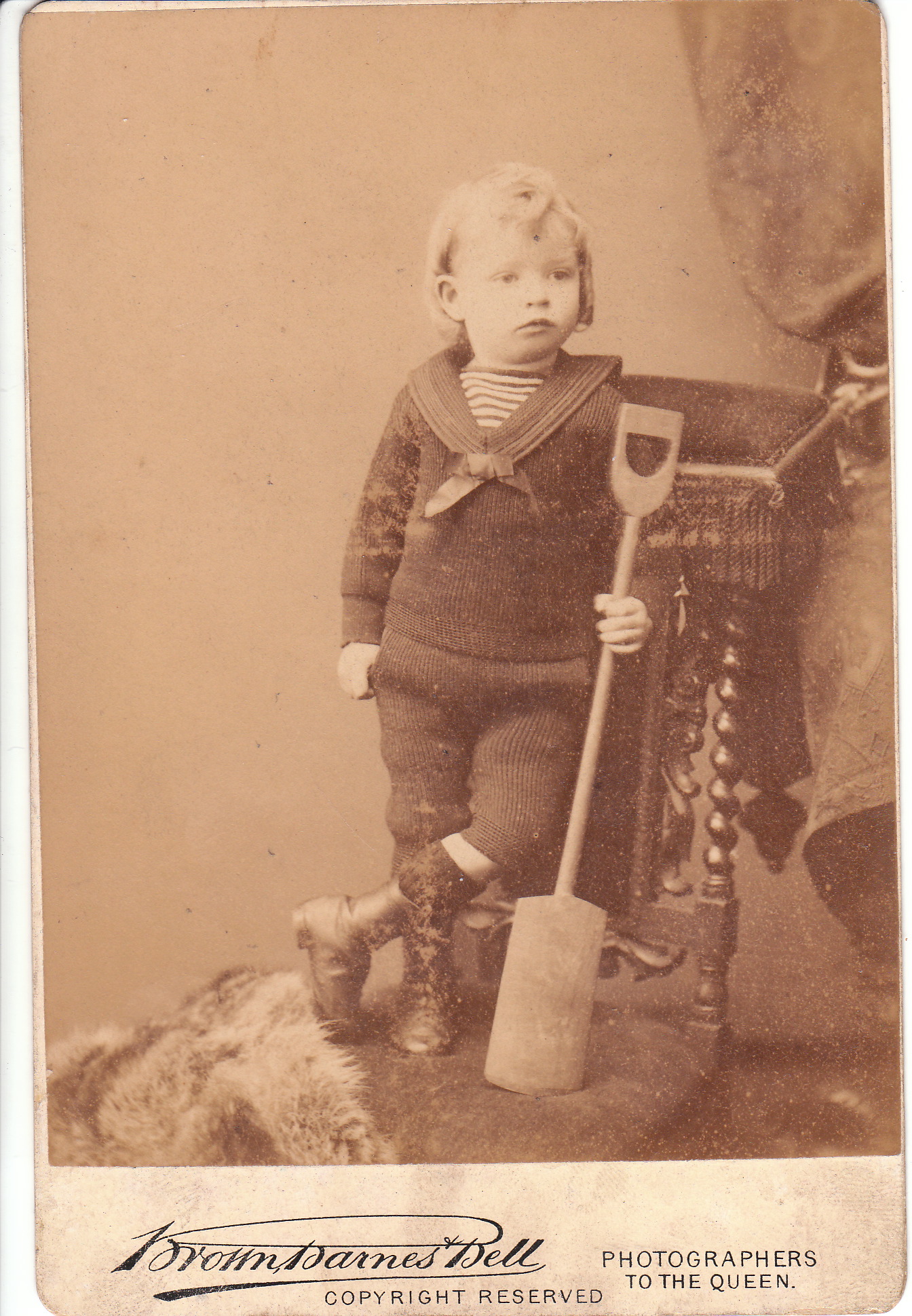 A young boy poses in the studio of Brown, Barnes and Bell for a portrait. He is wearing a knit sailor outfit and holding a toy shovel. The tool is most likely a studio prop and not revealing any information about the child. The photograph was taken in 1886 as determined by the logo on the reverse of the card. Richard Brown, Robert William Barnes and Joseph Bell built a dynasty of photographic studios that reached around the world. At the time of this photograph, the studio had locations in London, Edinburgh, Leeds, Liverpool, Manchester, and New Castle. All of these studios were located in England so the international expansion had not begun yet. The studio advertised themselves as photographers to “Her Majesty The Queen” and the Prince of Wales, and several members of the Royal Family.
FASHIONABLE FAMILY OF FOUR IN LIVERPOOL, ENGLAND
 This Cabinet Card was produced by the Electric Light & Daylight Studios of Richard Brown in Liverpool, England. This well dressed family of four poses for their portrait. Both father and son are wearing suits with exposed watch chains. Mom is wearing a beautiful dress and the daughter is adorned with a necklace. Research indicates that advertising one’s studio as “Electric Light & Daylight” was a method of informing people that the studio was capable of evening hour photography.


 THE CABINET CARD GALLERY