
POSTCARD 1 (SOLD)
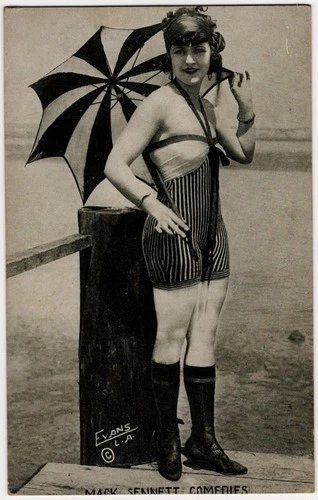 ARCADE CARD 1 (SOLD)
The pretty actress featured in this vintage real photo postcard is film actress Marie Prevost (1896-1937). She was born in Canada and during her twenty-year career, she made 121 silent and talking movies. She was originally “discovered” by Mack Sennett who inked her to a film contract after she played a bit part in one of his movies. She was only on the set (Keystone Studios) because she was running an errand for the law firm where she was employed as a secretary. She became one of his Bathing Beauties in the late 1910’s. She appeared in dozens of Sennett’s short comedy films. Her first lead role was for Sennett in “Yankee Doodle in Berlin” (1919). She than began to make feature length films for Universal Studios, where she signed for $1,000.00 a week. In 1922 she moved to Warner Brothers where she became one of the studio’s leading ladies (her contract was for $1,500.00 per week). Her movie roles at Warner included “The Beautiful and Damned” (1922), “The Marriage Circle” (1924), and “Kiss Me Again” (1925). Warner Brothers dropped her in 1926 and her career began to diminish as she was offered primarily secondary roles. Her personal life also began to decline, if not plummet. Her mother died in 1926 and her second marriage, to actor Kenneth Harlan, fell apart in 1927. She became very depressed and her symptoms included alcohol abuse and binge eating. In 1928 she was cast in “The Racket” which was directed by Howard Hughes. The pair had a brief affair and when it ended, Prevost fell into an even deeper depression. It became increasingly difficult for her to obtain parts in films and her last film role was in 1936. At the age of 38, Marie Prevost died from acute alcoholism and malnutrition. Her estate was worth just three hundred dollars and her death helped prompt the creation of the Motion Picture & Television Country House and Hospital. The details of Prevost’s death have become a bit of Hollywood legend. She was found in her apartment two days after her death. Also at death scene were empty bottles of alcohol, a promissory note to Joan Crawford, and Prevost’s pet dachshund. She was discovered because neighbors had complained about her dog’s continued barking. The legend claims that by the time she was found, her corpse was half-eaten by Maxie, her dog. It was asserted that this of course was only because the dog was trying to awaken his deceased master. This story is not true, but it appeared in Kenneth Anger’s book “Hollywood Babylon” (1959) and in Nick Lowe’s song “Marie Provost” (1978). The lyrics from Lowe’s song include “She was the winner, That became the doggie’s dinner, She never meant that much to me, Woe, poor Marie”.
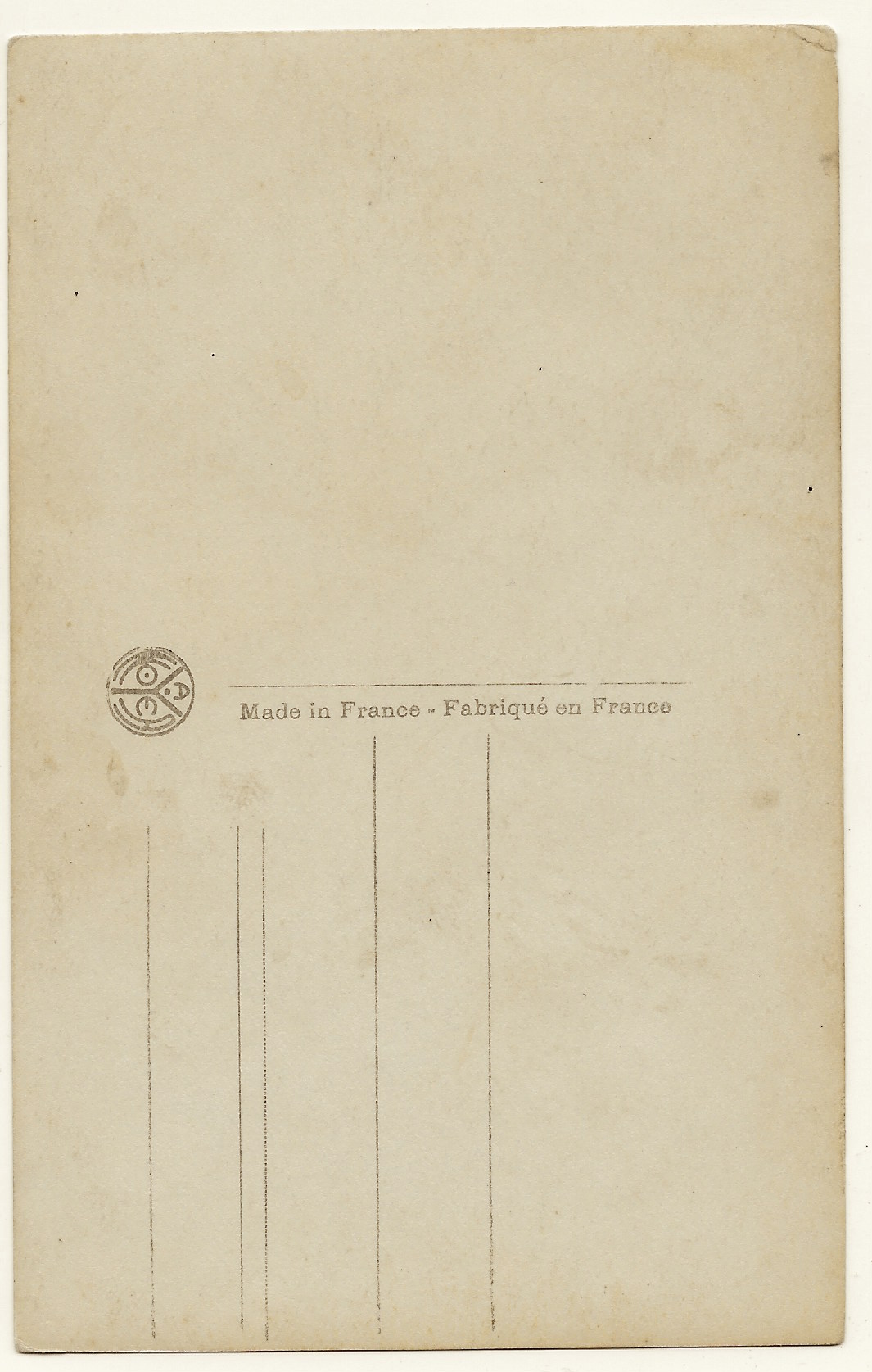
Postcard 1 was published by A.N. of Paris for Universal Films. It is part of as series entitled “Les Vedettes de Cinema” (The Stars of Cinema). This postcard is the first in the series (No. 1). SOLD
Arcade Card 1 This striking vintage arcade card features silent film star Marie Prevost, posed in an eye-catching beach setting as part of a Mack Sennett Comedies publicity series. The card is marked “Evans – L.A.”, identifying the work of a notable Hollywood photographer known for capturing many silent-era stars in playful and glamorous portraits that were mass-produced as postcards and arcade cards during the 1920s. Marie Prevost stands confidently on a wooden dock or boardwalk, with the sea or beach receding into the background. She is dressed in a bold, striped one-piece bathing costume, typical of the early 1920s, with black knee socks and classic lace-up shoes. She holds a whimsically oversized parasol — black and white with a bold pinwheel pattern — behind her shoulder, adding a splash of theatrical flair to the scene. Her expression is flirtatious and relaxed, with a subtle smile and a slight tilt of the head. A ribbon wraps around her short, styled hair, in keeping with the flapper aesthetic of the Jazz Age. At the bottom of the image, the words “Mack Sennett Comedies” are clearly printed, linking this photo to the famed Keystone-style slapstick studio that helped launch the careers of many silent film legends — including Marie Prevost. The signature “Evans – L.A.” refers to a Los Angeles-based photography studio active in the 1920s and 1930s that produced portraits of film stars for promotional use. Though not as well-documented as some Hollywood photographers, Evans specialized in theatrical and beach-themed photos of actresses for use in arcade cards, penny cards, and other mass-market prints that were sold in coin-operated machines or five-and-dime stores. These cards remain highly collectible today. This is a lithographed arcade card. SOLD
 POSTCARD 1

POSTCARD 2



 THE CABINET CARD GALLERY