VESTA TILLY : FAMOUS MUSIC HALL STAR & MALE IMPERSONATOR : VINTAGE RPPC POSTCARD

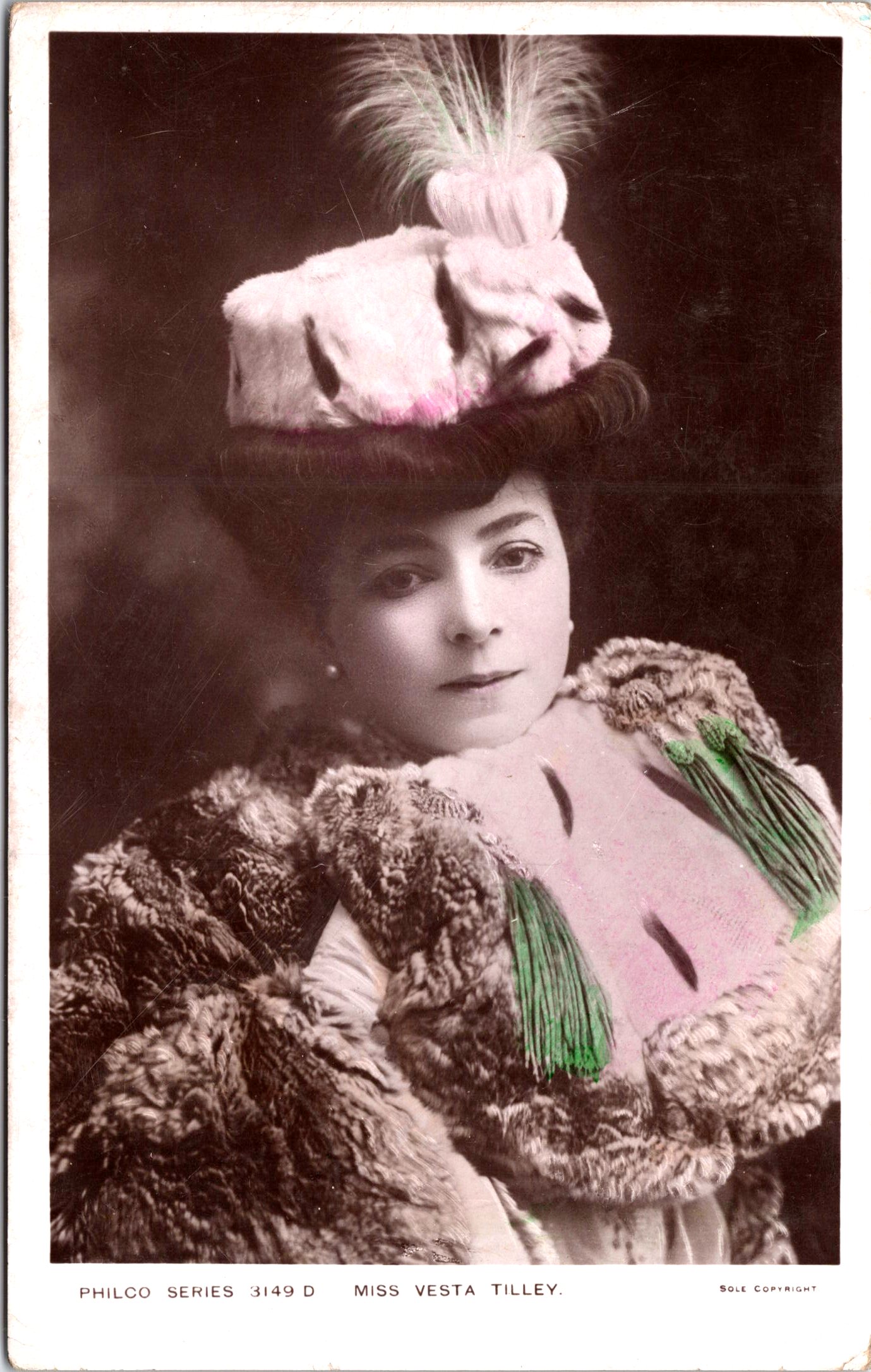
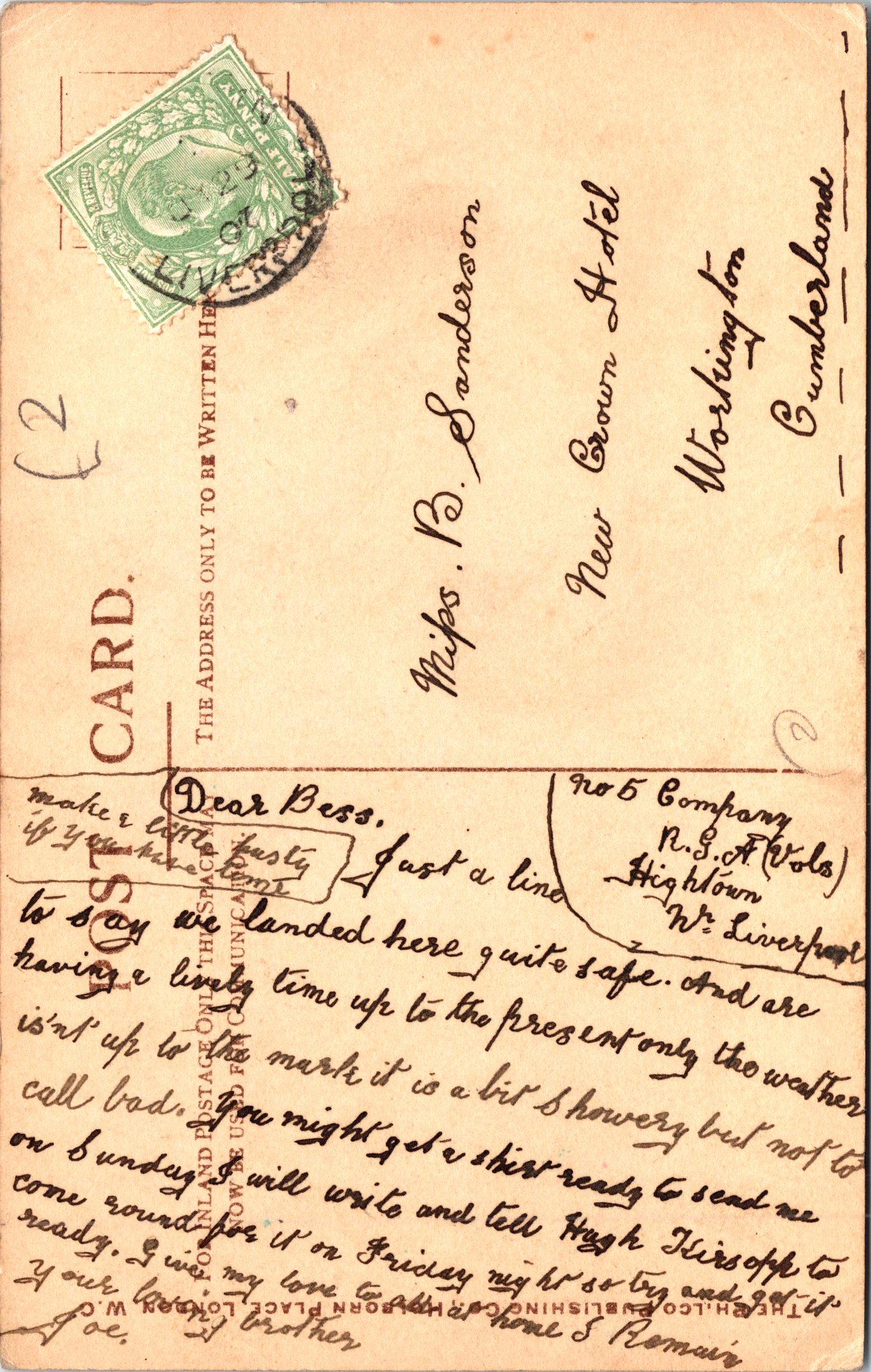
Vesta Tilly (1858-1952) was one of the most beloved and influential performers of the British music hall era. She was a groundbreaking male impersonator who captivated audiences for decades with her wit, charm, and powerful stage presence. Born into modest beginnings, she rose to become a symbol of British patriotism and a pioneer for women on the stage. Tilly was born in Worcester, England. She was the second of thirteen children born to Henry Powles, a self-employed musician and fiddler, and Matilda Powles. Her father, deeply involved in local musical performances, recognized Matilda’s precocious talent at an early age and began showcasing her on stage by the time she was just three years old. The Powles family moved to London when Matilda was a child, in pursuit of more lucrative theatrical opportunities. With her father acting as her manager, she began performing under the stage name “Little Tilly” in pantomimes and variety shows. Matilda’s first male impersonation was at the tender age of six. By her teenage years, she had taken the stage name Vesta Tilly, inspired by the Roman goddess of the hearth (Vesta) and a common nickname (Tilly). Her success as a “principal boy” in pantomime was soon eclipsed by her signature act: portraying men with startling authenticity and satirical flair. What set Tilly apart was her command of the stage and her uncanny ability to adopt male gestures, mannerisms, and vocal inflections. She didn’t just mimic men—she portrayed them with intelligence, humor, and often, social critique. She frequently played dapper young men, military officers, or swells (wealthy young men), sometimes poking fun at political figures or addressing social issues. She became one of the most highly paid and respected performers in the British music hall scene during the late Victorian and Edwardian periods. Her stage appearances were so convincing that many audience members did not initially realize she was a woman. Vesta Tilly’s career spanned over four decades, and she performed in countless popular songs and sketches. Some of her most iconic performances included: “Following in Father’s Footsteps”, “Burlington Berlie”, and “The Boy in the Gallery”. She was particularly popular among working-class audiences and soldiers. During World War I, Tilly took on a new patriotic role, performing in uniform to recruit young men to the military. She was so effective that she earned the nickname “England’s Greatest Recruiting Sergeant.” In 1890, Vesta Tilly married Walter de Frece, a theatrical impresario and songwriter. Their relationship was both romantic and professional—Walter became her manager and guided much of her career. He was instrumental in helping shape her brand and ensuring her continued success on the music hall circuit. After World War I, Walter was knighted and later became a Member of Parliament. This new political role brought Vesta into a more socially prominent world, and she gradually withdrew from the stage. Vesta Tilly gave her final performance in 1920 at the London Coliseum. Her retirement was widely publicized and emotional for her devoted fan base. After stepping away from the stage, she became Lady de Frece, supporting her husband’s political ambitions and engaging in charity work. The couple eventually moved to Monte Carlo, where they lived a quieter life. Walter de Frece died in 1935, and Vesta lived on until 1952. The postcard’s image shows Tilley in a fur-trimmed coat, accessorized with a hat adorned with feathers. The card has been hand-tinted, with touches of pink on her costume and hat and green on the tassels. The following is a transcription of the letter: “Dear Bess, Just a line to say we landed here quite safe. And are having a lovely time up to the present, only the weather isn’t up to the mark, it is a bit showery but not too bad. You might get a skirt ready to send me on Sunday. Will write and tell Hugh this aft to come round for it on Friday night so try and get it ready. Give my love to [all at home]. Joe” (Writer’s details also appear: No. 5 Company R.S. of Vols, Hightown, Nr. Liverpool.) This postcard was published by Philco as part of a series (No.3149D). (SOLD)
MADAME LE GAI : PANTOMIMIST : VAUDEVILLE : PIN-UP : HOLLYWOOD PHOTO 1918

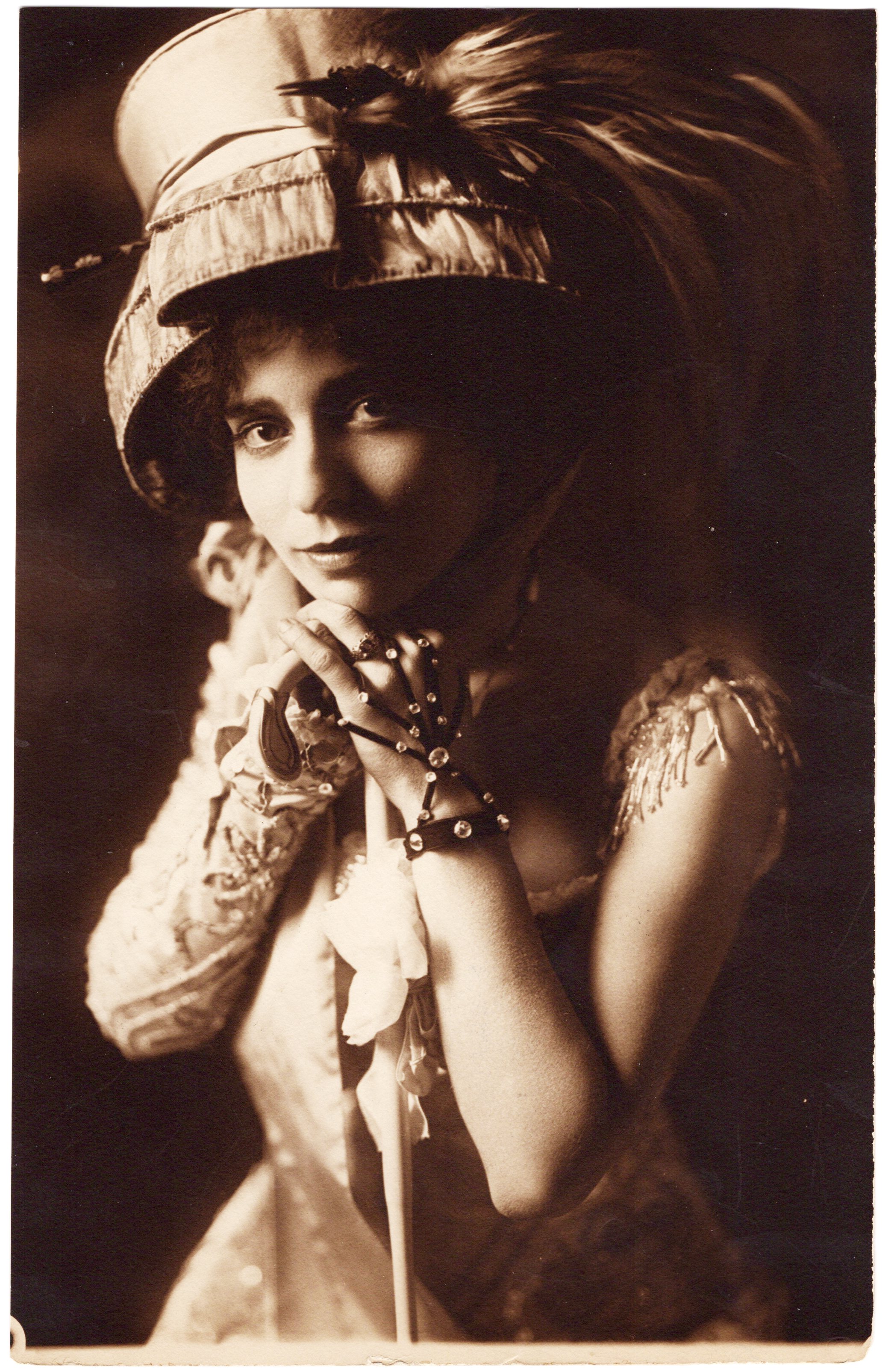
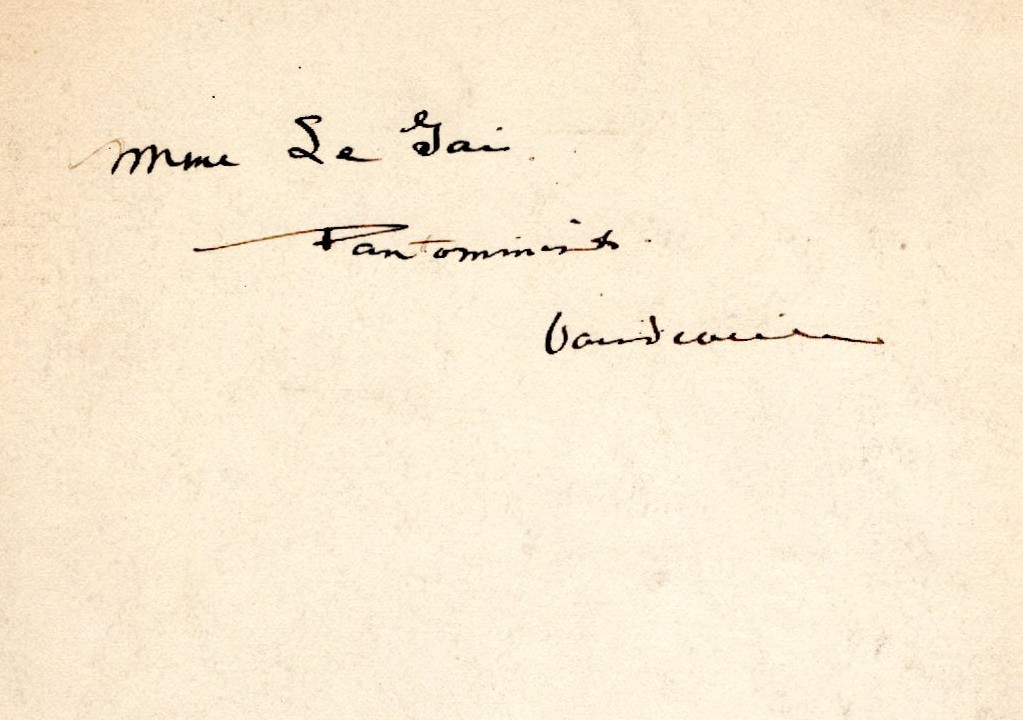
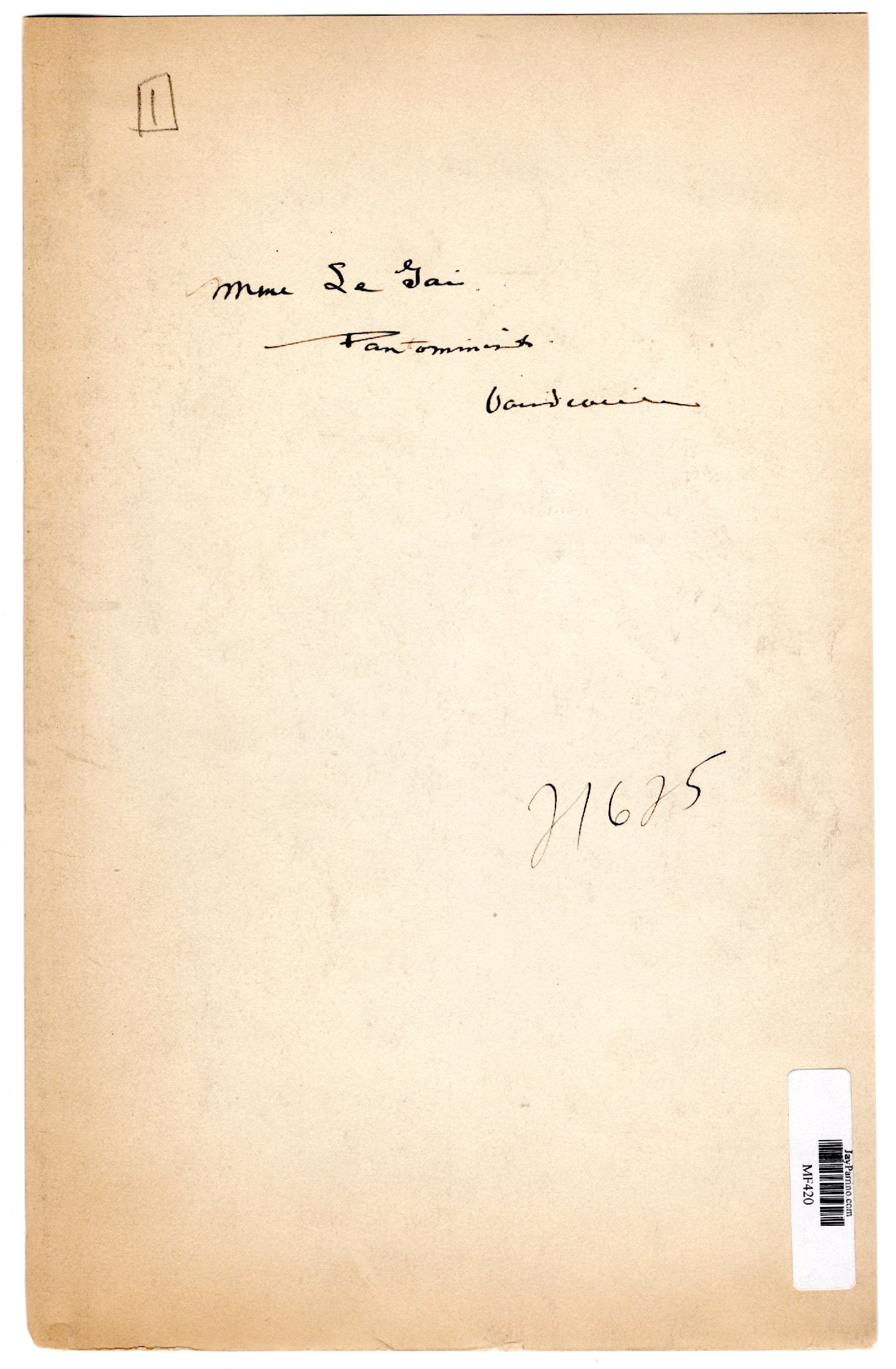
This is a stunning and rare sepia-tone glamour portrait of a woman identified as Mme Le Gai, described on the reverse as a “Pantomimist” and “Vaudevillian.” Believed to date from around 1918, this photograph showcases an elegant, mysterious woman in elaborate costume—perhaps a stage or cabaret performer—gazing confidently into the camera. She wears a richly adorned hat with plumes, a beaded glove-like bracelet, and a delicately embroidered gown with satin and lace textures. Her theatrical pose and sensual expression make this image a prime example of early Hollywood pin-up photography, though its style is also heavily influenced by European cabaret traditions. The handwritten inscription on the back appears to read: “Mme Le Gai / Pantomimist / Vaudevillian.” There is some ambiguity—“Mme” could stand for Madame or Mademoiselle, and the surname may also be interpreted as Le Gai or Le Gaï. The elegant script suggests a deliberate stage name, possibly borrowed from the famed Parisian pantomime houses of the same name. “Le Gai” (French for “the merry” or “joyful”) was also used in naming French performance venues such as Le Théâtre Gai or variations like Le Gai Paris. This connection strengthens the possibility that the subject either performed in or took inspiration from these Parisian theatrical traditions. Though solid biographical confirmation of Mme Le Gai has not yet been found, the visual evidence, style, and inscription point to her role as a vaudeville-era pantomime performer, likely active in the United States or France around World War I. Her alluring presence and costume are consistent with the kind of studio portraiture used for performer promotion, possibly circulated as publicity or collectible pin-up material during the silent film and vaudeville boom.  (SOLD)

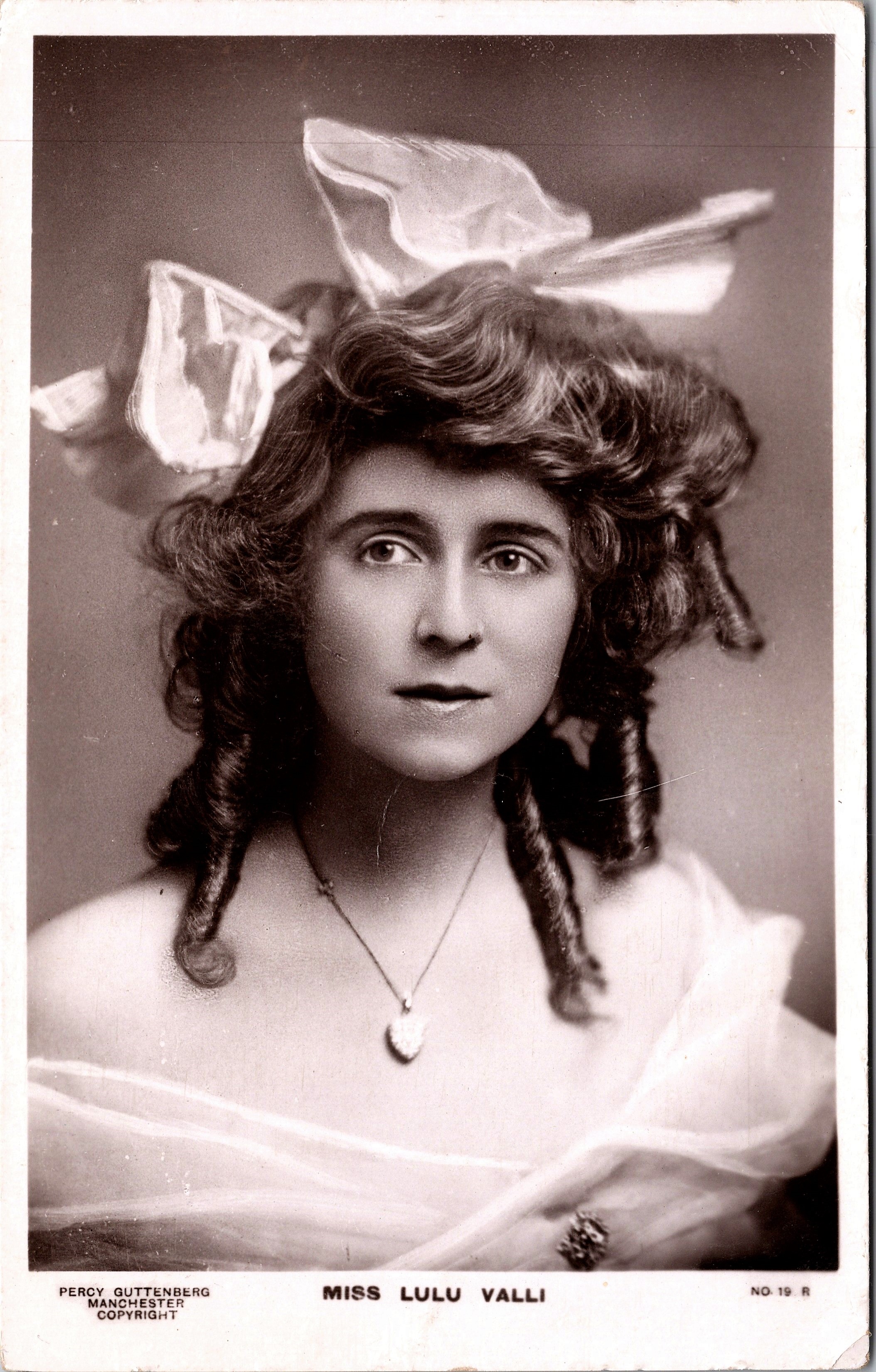
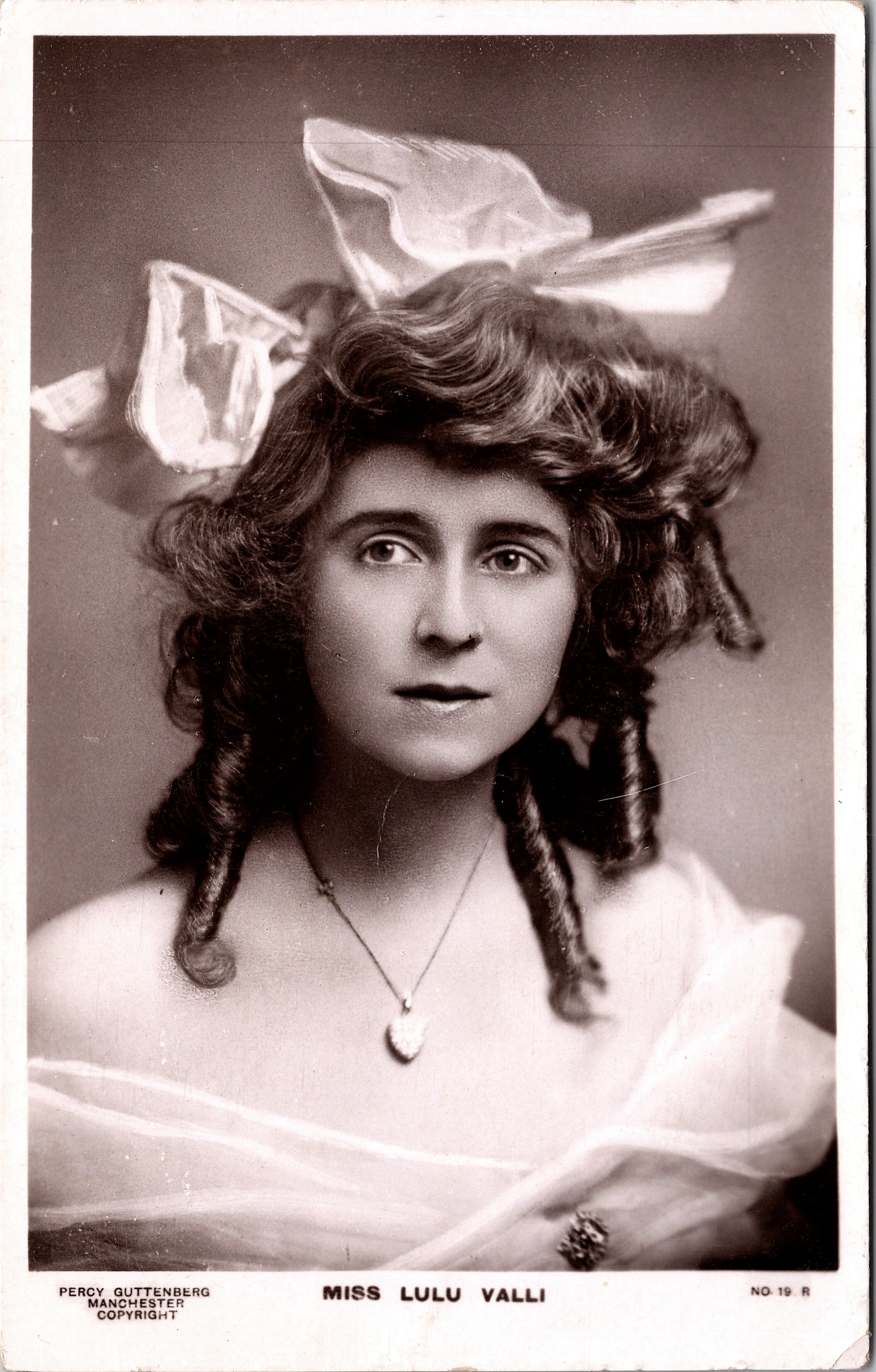
LULU VALLI : BRITISH STAGE ACTRESS : CHILD STAR : SISTER OF VALLI VALLI : RPPC

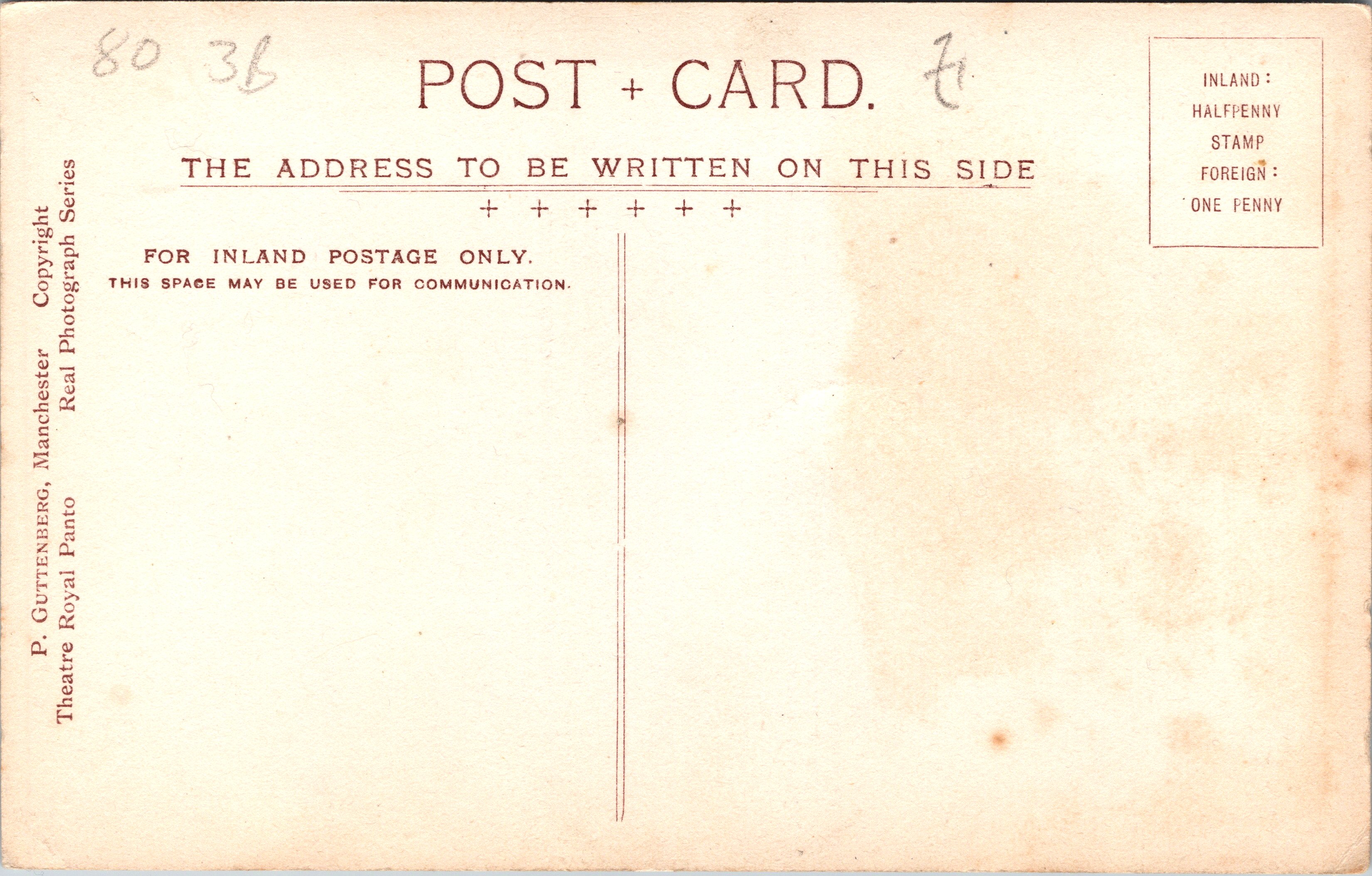
This vintage real photo postcard features British actress, Lulu Valli (1887-1964). She was active in the 1890’s through the1900’s. She began acting as a child. Two of her sisters (Ida and Valli) were also actresses. She was married to hotelier, Edward Parsons. A photograph of Lulu Valli can be found in the collection of England’s National Portrait Gallery. This antique postcard was published by Percy Guttenberg of Manchester, England. The card is part of a series (No.19 R). Printing on the reverse of the postcard mentions “Theatre Royal Panto”. Panto is short for pantomime. This vintage postcard portrait is in good condition (see scans). 

5307_0001

Buy this original Vintage Real Photo Postcard (includes shipping within the US) #5307

To purchase this item, click on the Pay with PayPal button below

$22.00

5307_0001

Buy this original Vintage Real Photo Postcard (includes International shipping outside the US) #5307

To purchase this item, click on the Pay with PayPal button below

$32.00

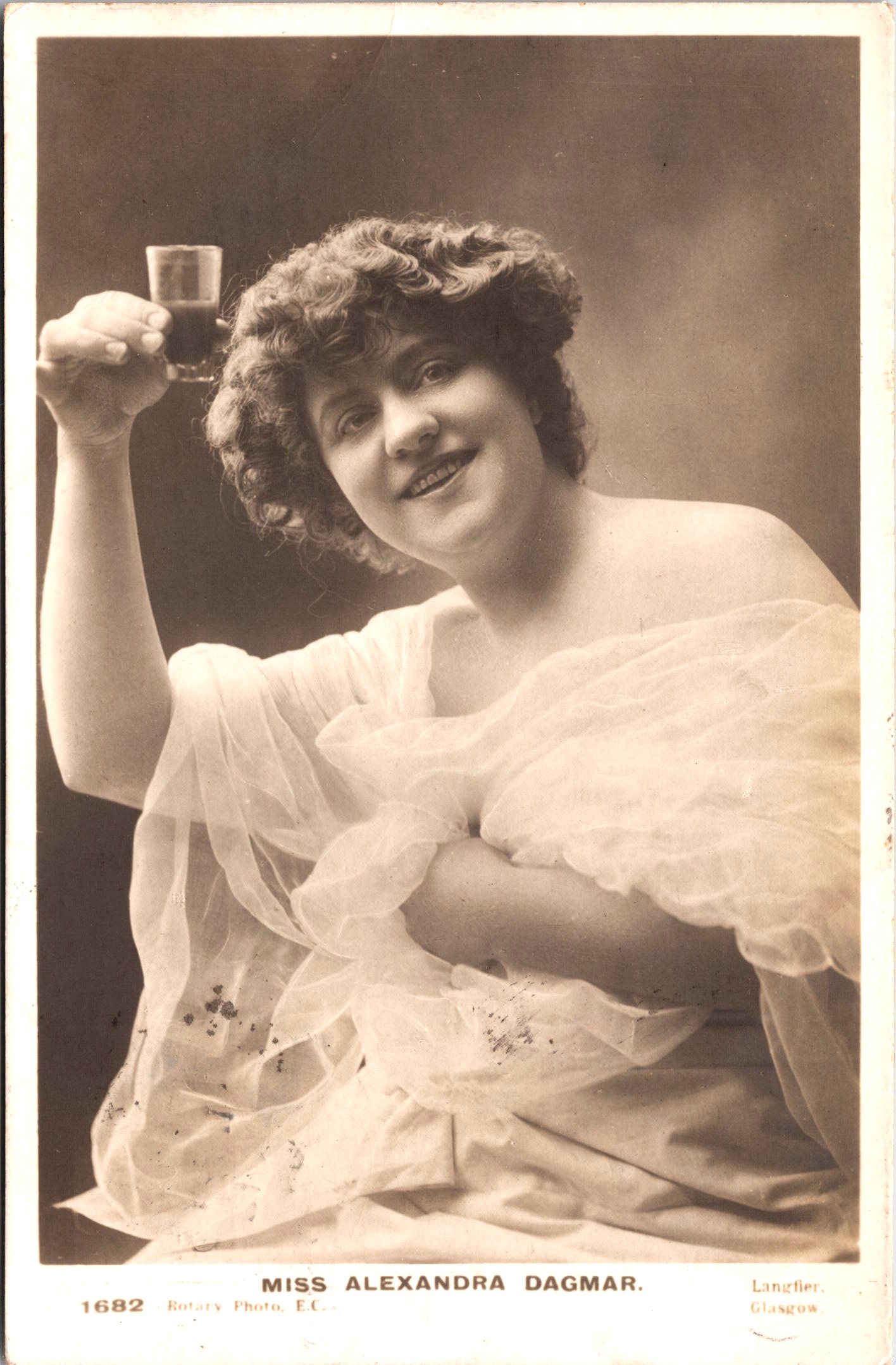
ALEXANDRA DAGMAR : MUSIC HALL PERFORMER & PANTOMIMIST : RPPC 1904

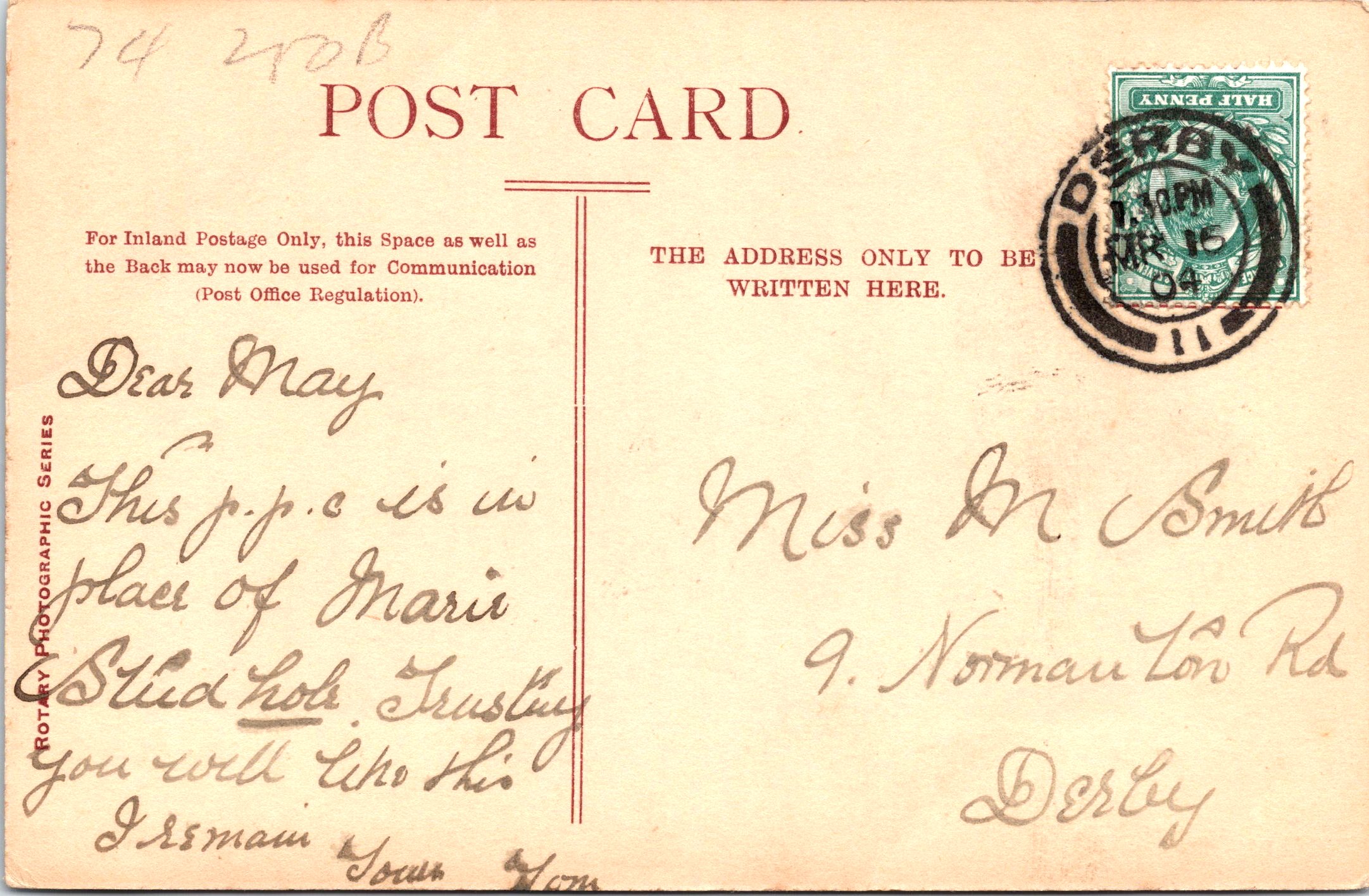
This vintage real photo postcard features music hall vocalist and pantomime performer, Alexandra Dagmar (1868-1940). Dagmar appears to be making a toast in the postcard’s photo. She was born in Polar, England to Danish born parents. Her father was a ship chandler (seller of ship supplies and equipment), and later a wholesale provision merchant. Dagmar came to the public’s attention at the Grand National Amphitheatre in London. where she appeared in “Richard III”. She subsequently toured the United States where she met Edmond DeCelle (1854-1920), a tenor, who she married in New York (1888).The pair appeared together in both the United States and Great Britain for a few years until Dagmar resumed her solo career. She retired upon the onset of the First World War and she and her family made the US her home. She died in Mobile, Alabama at about 72 years of age. This postcard was published by Rotary Photo as part of a series (No.1682). The photo on this card was taken by the Langfer studio which was located in Glasgow, Scotland. This postcard was postmarked in Derby in 1904.  (SOLD)

MISS GLADYS GUY: STAGE ACTRESS APPEARING IN MUSICALS AND PANTOMIMES

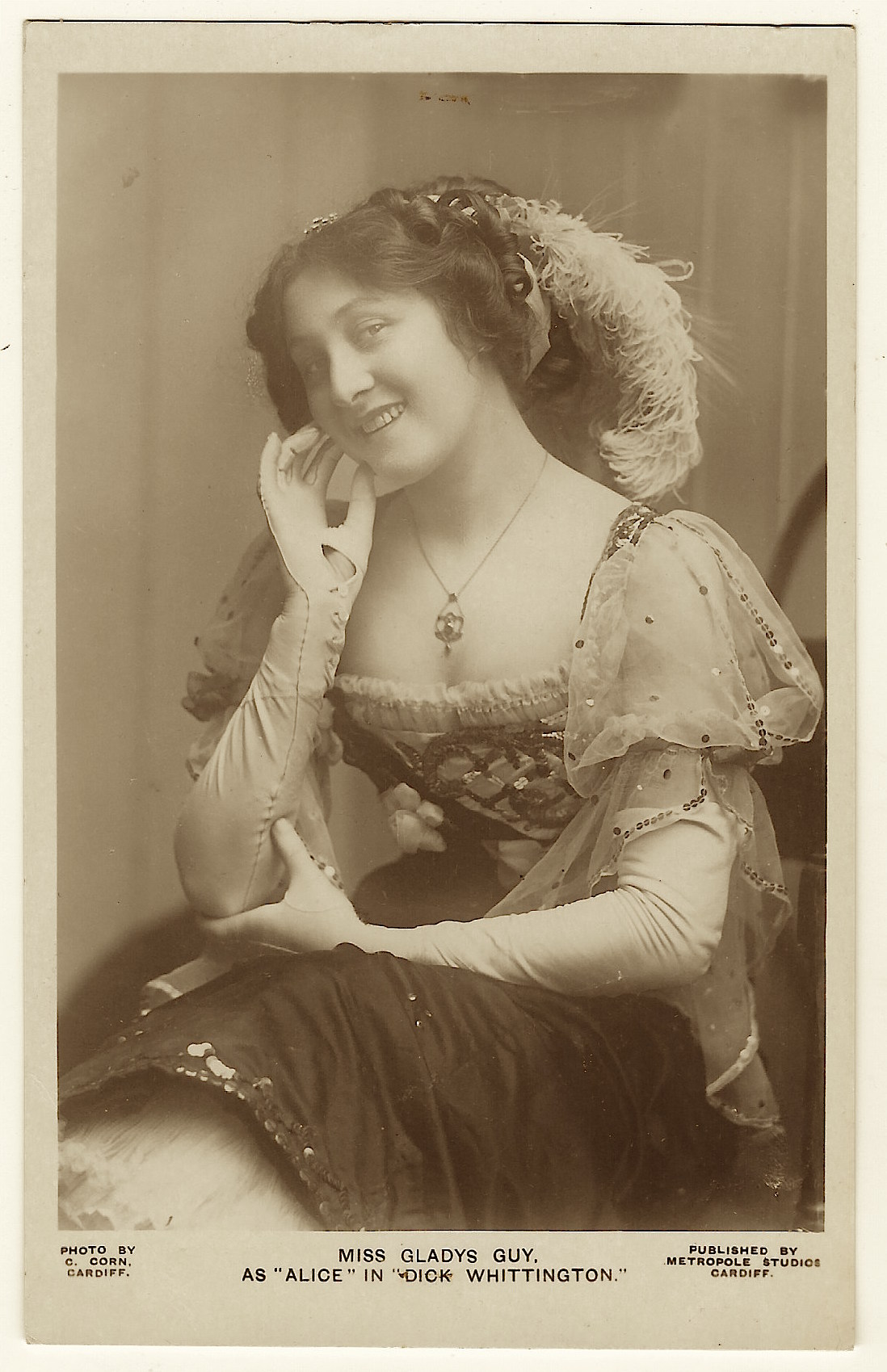
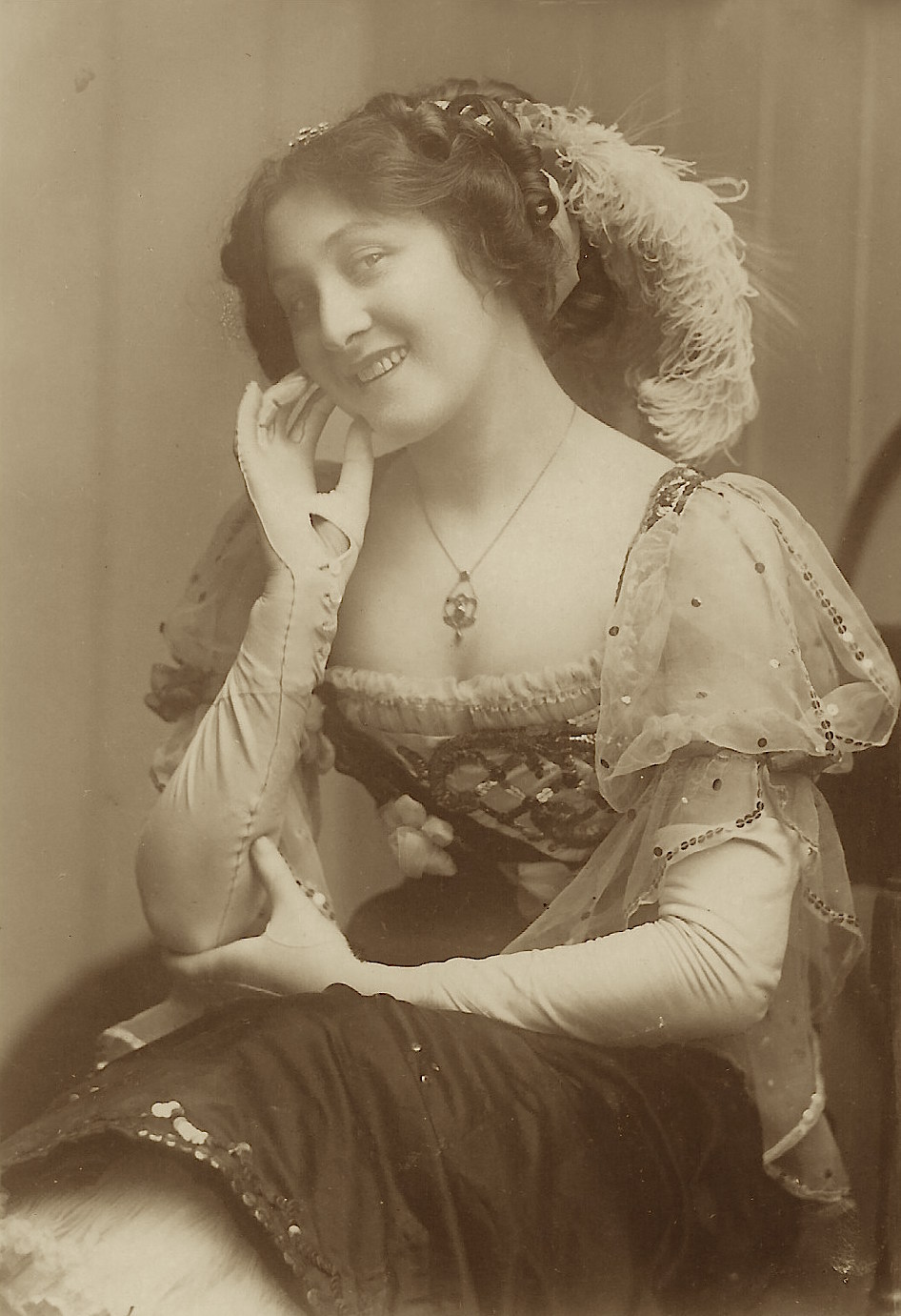
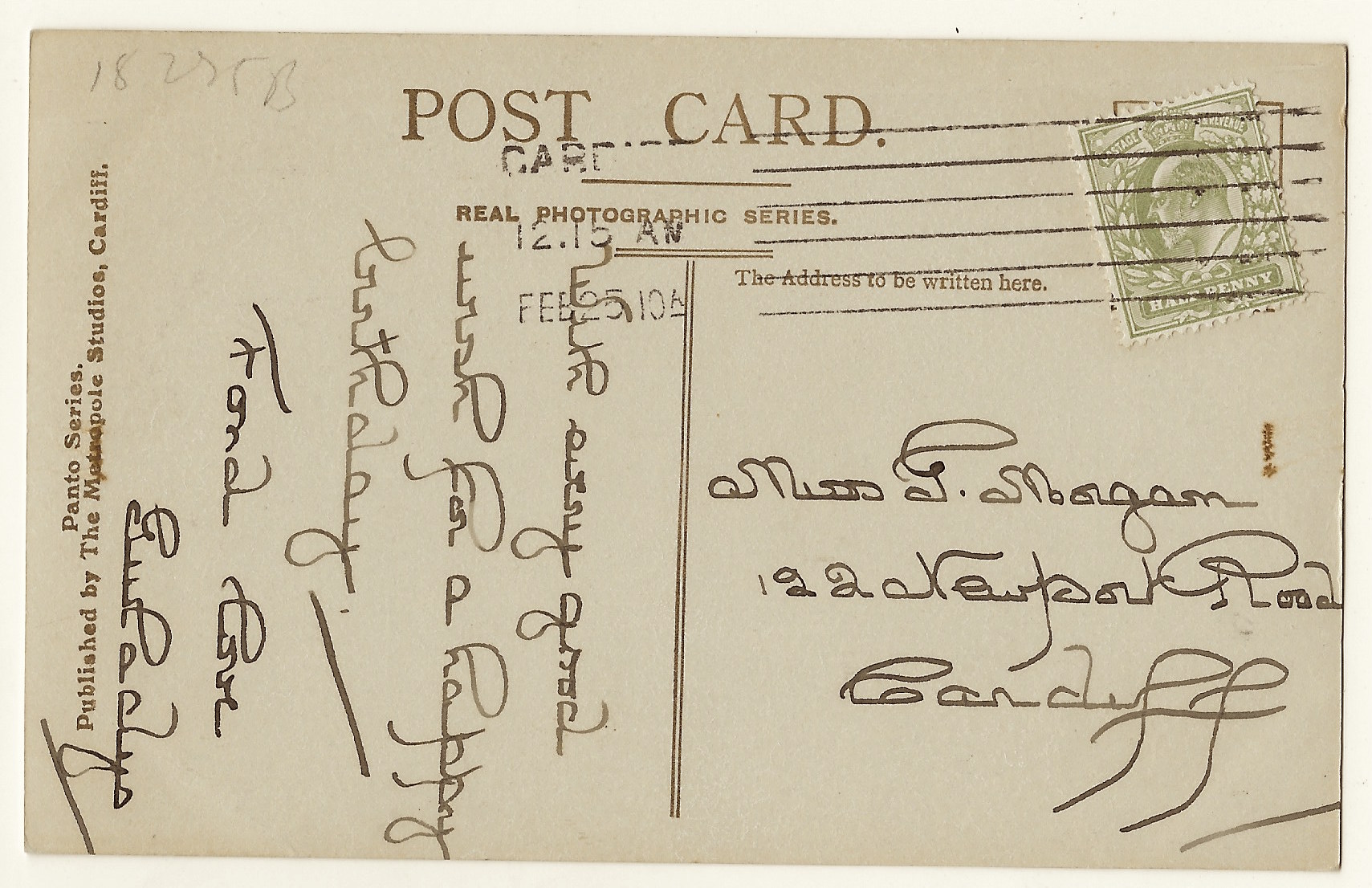
This vintage real photo postcard features Miss Gladys Guy (1888-1968) as she appeared in the pantomime, “Dick Whittington” (1909) at the New Theatre, Cardiff, England. The actress is a pretty woman. She has a wonderful smile. She is wearing a terrific hat; the large feather really adds to her appearance. I find her long gloves interesting. Why is there a hole in her glove, just under her thumb. It appears to be part of the design of the glove but I wonder about it’s purpose. Gladys Guy was an English actress and singer. Her father was a violinist. She began her career in about 1905 and between then and 1917 she appeared in a number of successful London musical productions. At times, she served as an understudy to both Gabrielle Ray and Phyllis Dare. In 1912 she married George Augustus Guy (1851-1939), an actor who later joined the Indian Army. He rose in the ranks until he became a lieutenant colonel. Miss Guy’s career ended with the birth of her son. Interestingly, the son followed his parents into acting and became quite well known . His name was Basil Henson. This postcard was published by the Metropole Studios in Cardiff. Cardiff is a port city on the south coast of Wales. The postcard is part of the “Panto Series” (Panto=Pantomime). The photographer was C. Corn.    SOLD

Published in: on September 14, 2018 at 12:00 pm  Leave a Comment  
Tags: , , , , , ,