AMERICAN POW’s IN NORTH VIETNAM : COLLABORATORS & HEROES : PRESS PHOTO 1970

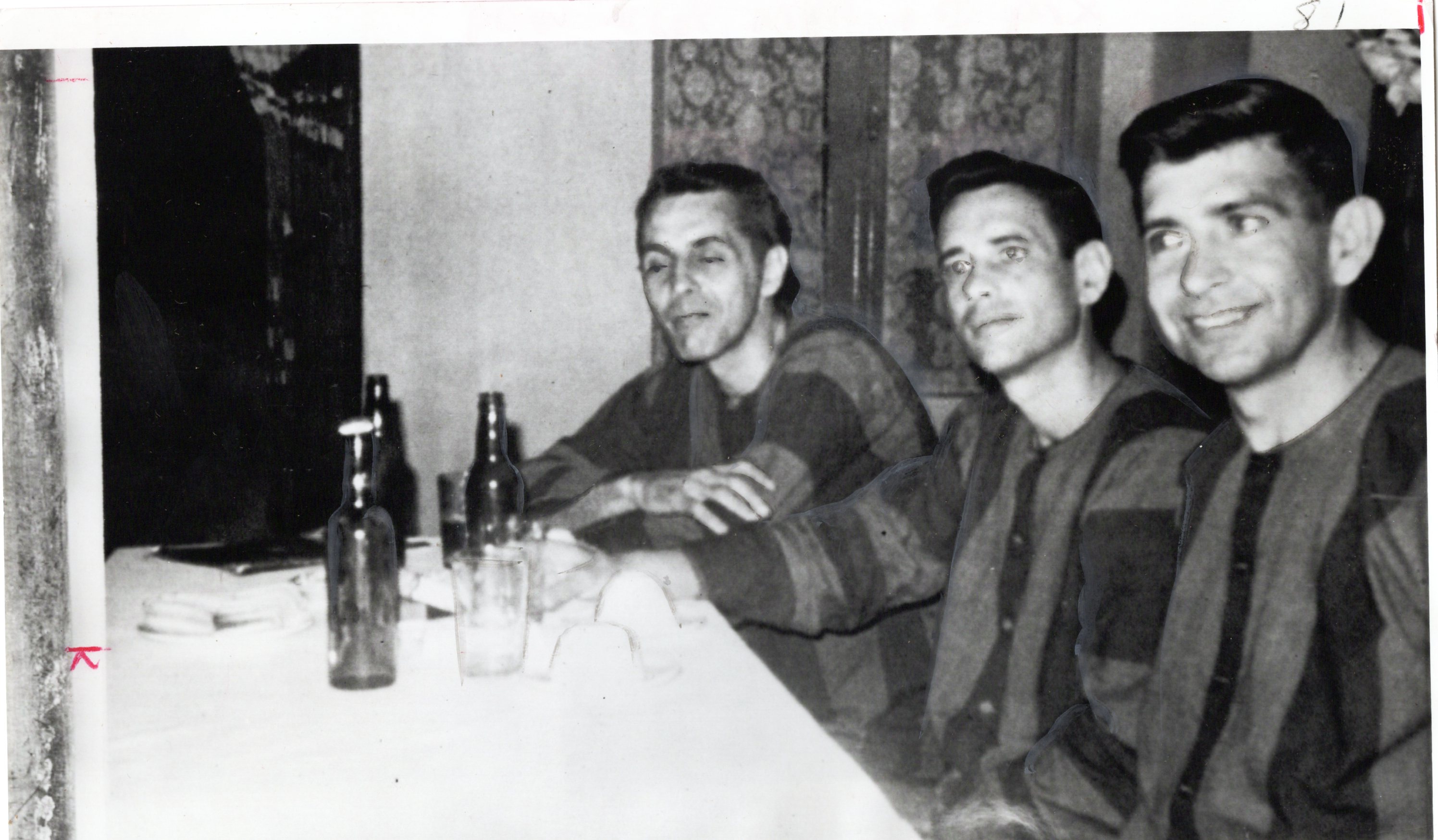
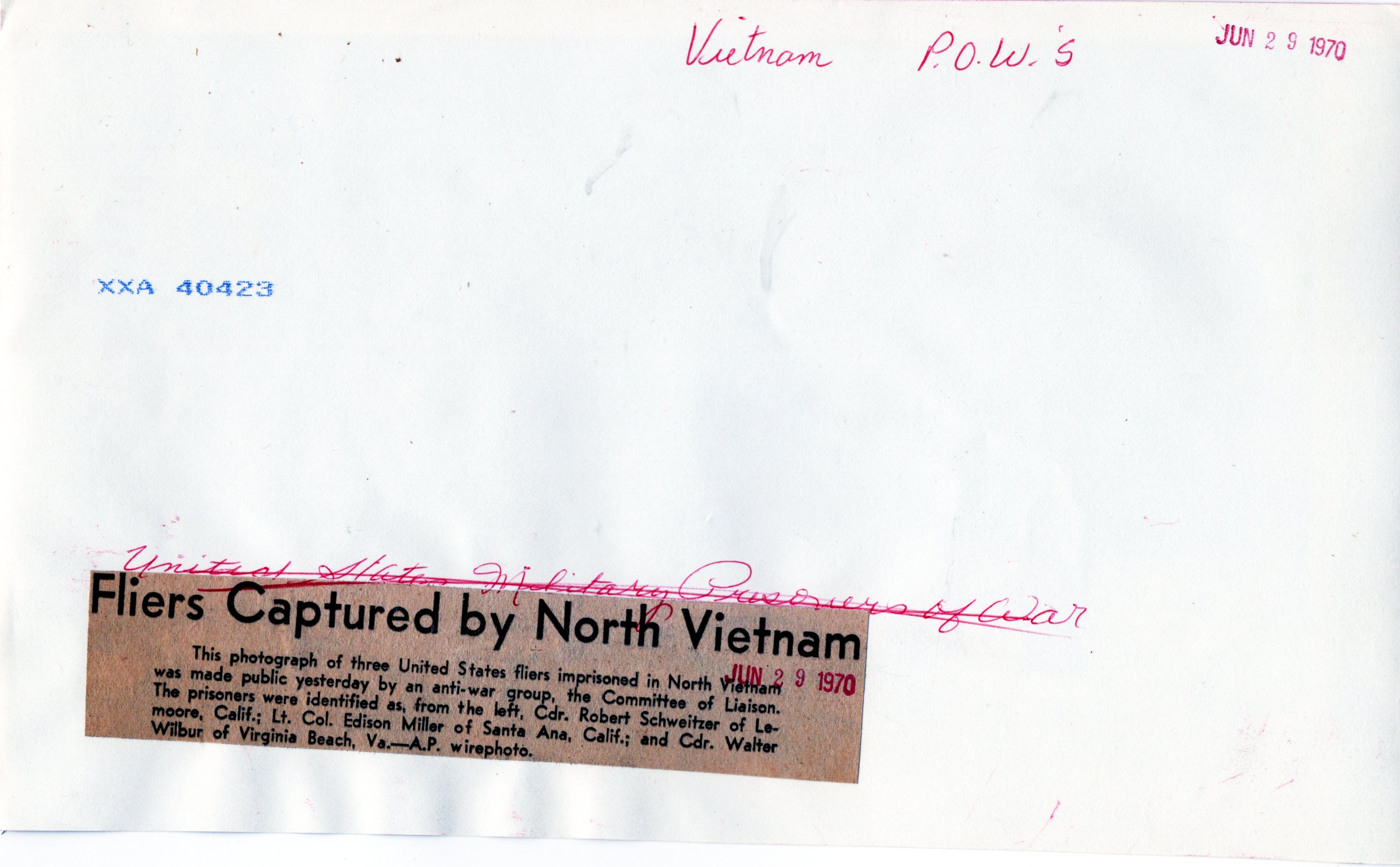
This black-and-white photograph shows three men sitting at a table wearing striped uniforms. The clothing is prison or POW (prisoner of war) attire. The men are American fliers held captive during the Vietnam War. They are seated around a table with bottles and glasses, possibly in a setting arranged for propaganda purposes. The expressions on their faces vary: one man on the right is smiling, while the other two appear more subdued or wary. The background includes a curtain or window covering, and the setting appears to be indoors. Given the historical context, this image likely originates from the Hanoi Hilton (Hoa Lo Prison). This type of image was often used for propaganda purposes by the North Vietnamese to show that prisoners were being treated well. However, many POWs later testified that such photographs were staged under coercion. This black-and-white photograph, dated June 29, 1970, was made public by an anti-war group, the Committee of Liaison, which sought to communicate between American POWs and their families. The prisoners are identified as, from left to right: Commander Robert Schweitzer of Lemoore, California, Lieutenant Colonel Edison Miller of Santa Ana, California, and Commander Walter Wilber of Virginia Beach, Virginia.​ The three American fliers depicted in the photograph were released as prisoners of war (POWs) in 1973, following the Paris Peace Accords. During their captivity, these men were involved in complex interactions with their fellow POWs and captors. Allegations arose that they provided uncoerced antiwar statements to the North Vietnamese, leading to tensions within the POW community. This situation resulted in their relief from certain military authorities during captivity. ​All three were among a small group of US prisoners who were accused of collaboration with their North Vietnamese captors. It was thought that the three men received less severe treatment than their fellow airmen due to their cooperation with the enemy. There is much written about the issue of collaboration between American POW’s held in Vietnam and their captors. One should not rush to judgement in condemning these men for their “disloyalty”. During their imprisonment, they were under extraordinary stress both physically and psychologically. All three men exhibited courage as combat pilots.  SOLD
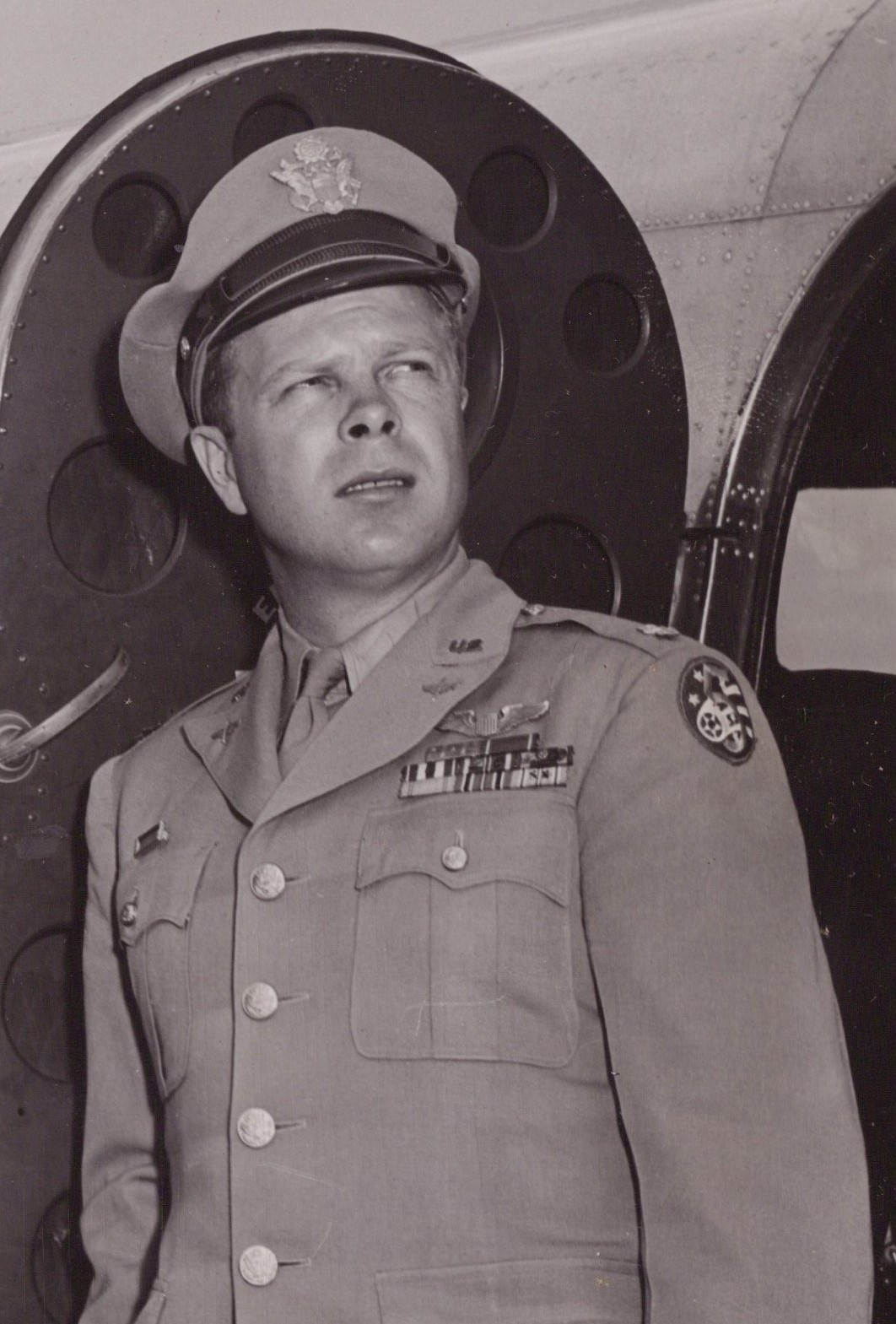
FIGHTER PILOT ACES : WORLD WAR II : TOP GUN : MEDAL OF HONOR : PRESS PHOTO 1945

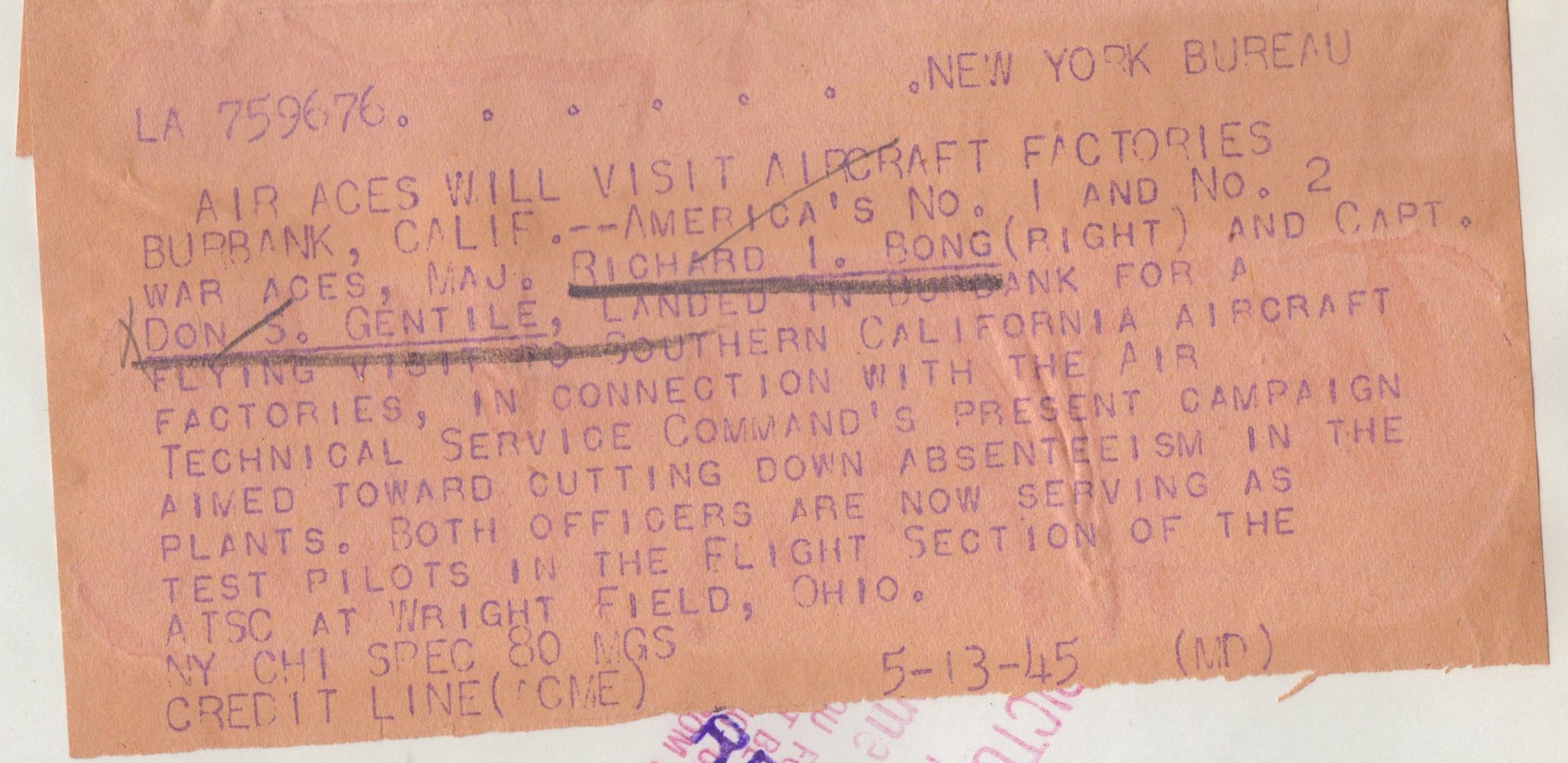
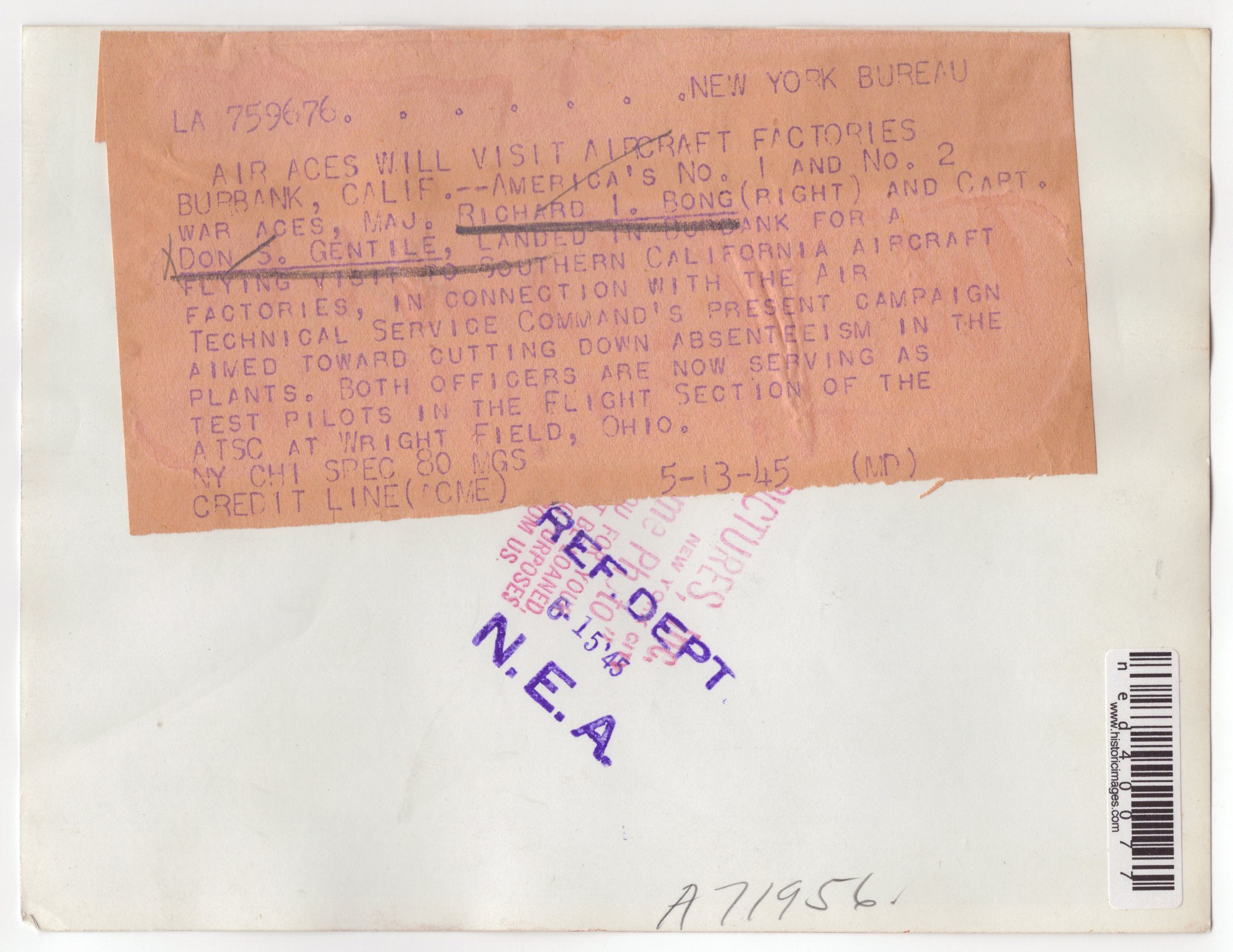
This vintage press photo features two American fighter pilot ACES. They were pilots in World War II and this photograph was taken in 1945 when they were on a mission to visit airplane manufacturing factories in Burbank, California. They were involved in a campaign to reduce worker absenteeism. These pilots were America’s #1 and #2 aces. The pilot on the right side of this photo is Richard Bong (1920-1945) was born in Superior, Wisconsin. His exceptional skill, courage and tenacity earned him the title of America’s “Ace of Aces” during World War II. Bong was fascinated by airplanes from childhood. In fact, he took his first flight at the age of nine. He took a civilian pilot training program directly upon graduation from high school in 1938. He enlisted in the US Army Air Forces in 1941, completed flight training and was commissioned as a second lieutenant. He was assigned to the Pacific Theater and flew primarily P-39 Lightning fighter planes. These planes were renowned for their speed and versatility. Bong quickly showed his unparalleled ability to outmaneuver and outshoot enemy aircraft. He quickly began to tally up a long string of aerial victories. Bong scored his first aerial victory in December, 1942 by dowing a Japanese Zero. By the summer of 1944, he had 40 confirmed kills to make him America’s top fighter pilot. In reaching his top status, he had to face aerial combat, mechanical failures, and navigational difficulties. In December of 1944, after completing 200 combat missions, he was relieved from active duty and sent back to the US. He received many awards, including the Medal of Honor. Bong’s life was tragically cut short when working as a test pilot, he died in a plane crash in August of 1946. Bong was just 24 years old at the time of his death. The second pilot in this photograph, Don Gentile, was born in Piqua, Ohio. Like Bong, his passion for flying began at a young age. He even had his own plane before the war. After Pearl Harbor in 1941, Gentile enlisted in the Canadian Air Force. Lacking a college degree, he was not immediately eligible for the US Army Air Forces. He experienced his first kills while flying for the Canadians. He transferred to the US Army Air Forces in 1941. He demonstrated exceptional marksmanship and aerial combat prowess. His tally of confirmed kills climbed steadily over time until he became a top ace. One of his more famous missions occurred in 1944 when he led a squadron of P-51s against a large formation of Luftwaffe fighters over Germany. During that aerial battle, he personally shot down three enemy aircraft and shared credit for two more. By the time his tour of duty ended, he had a total of 30 confirmed aerial victories. Upon his return to the US, he was active in raising money via supporting war bond sales. Gentile, like his fellow pilot, Bong, died in a tragic plane crash. He was killed while flying a trainer aircraft. SOLD