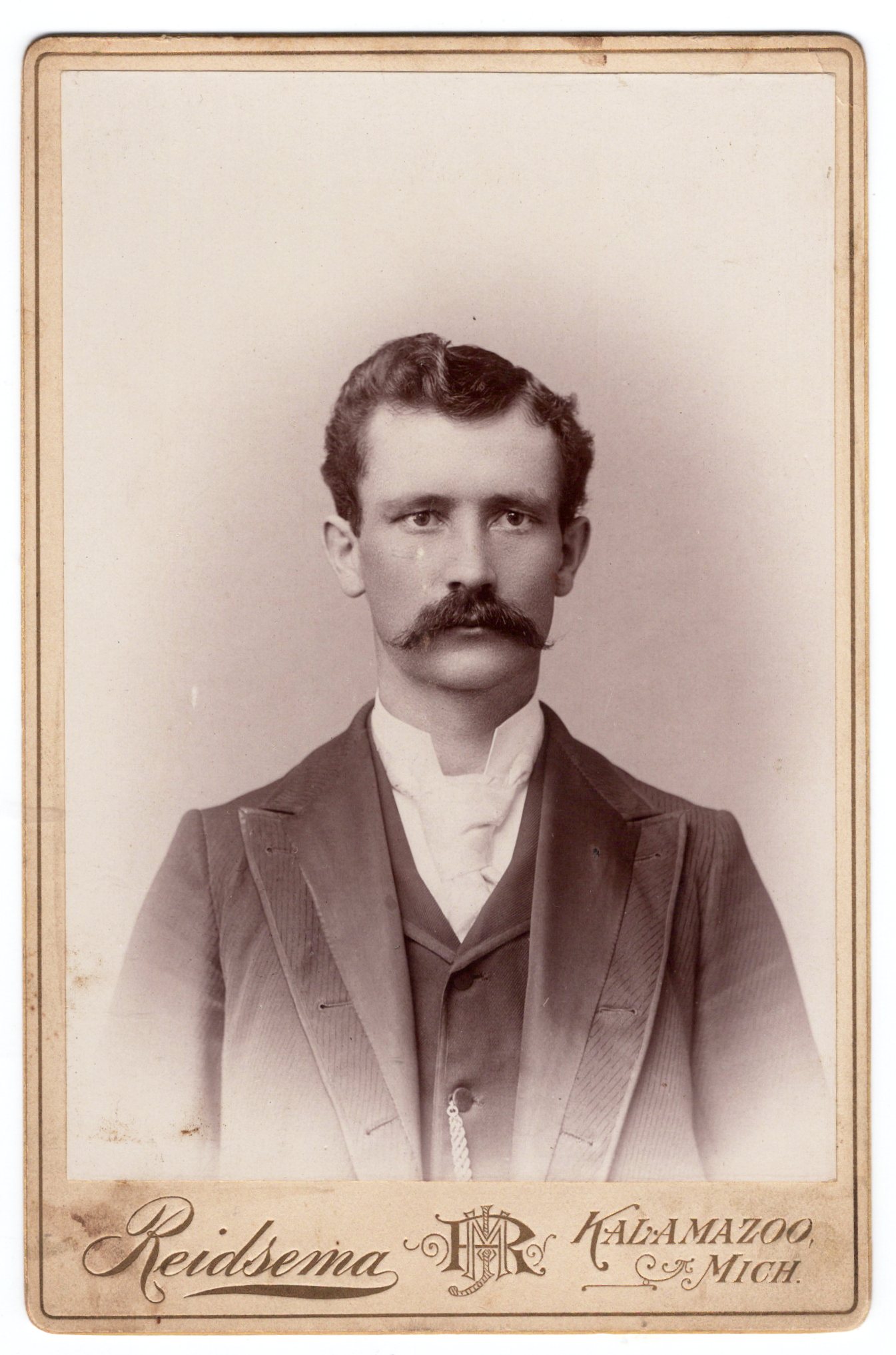
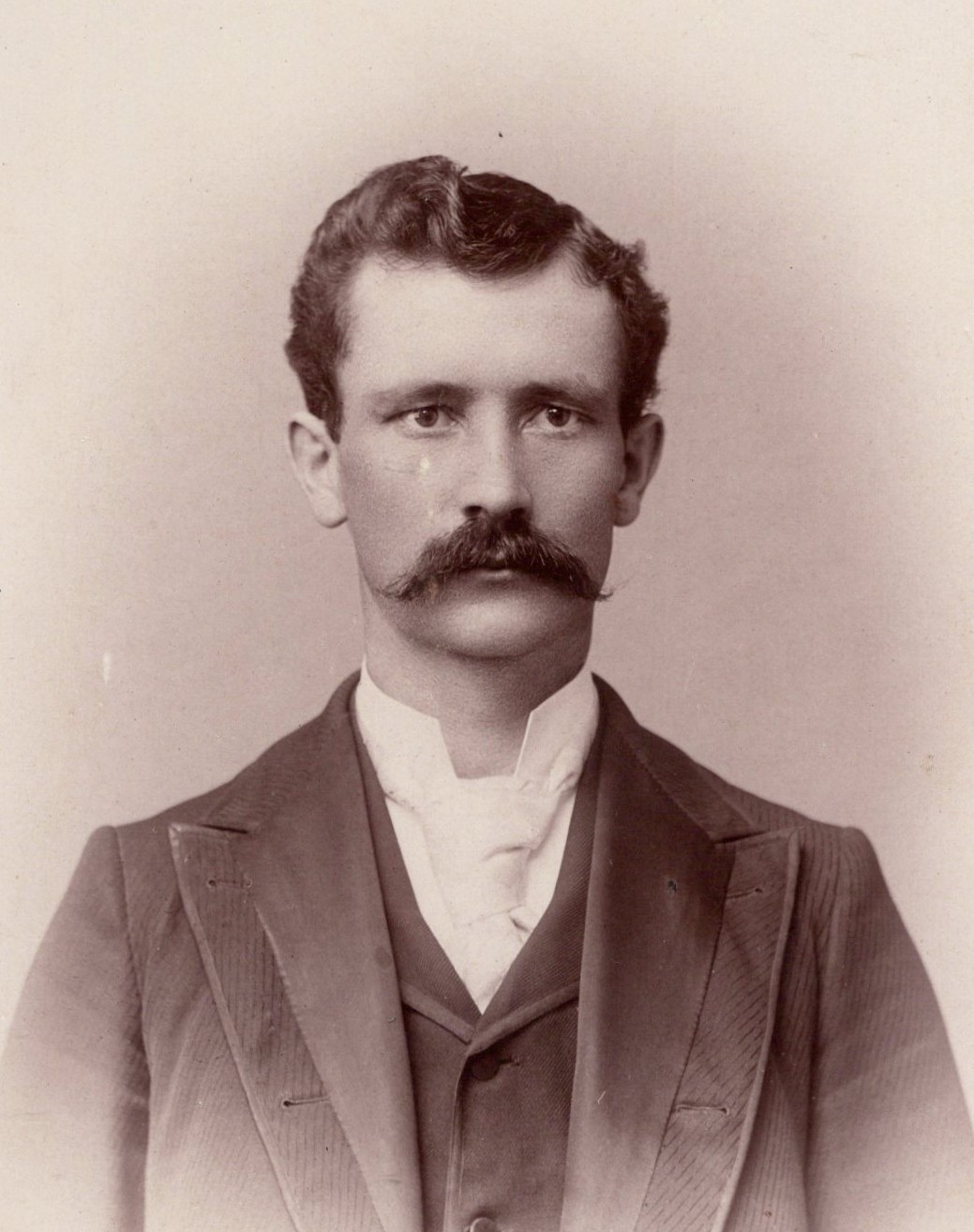
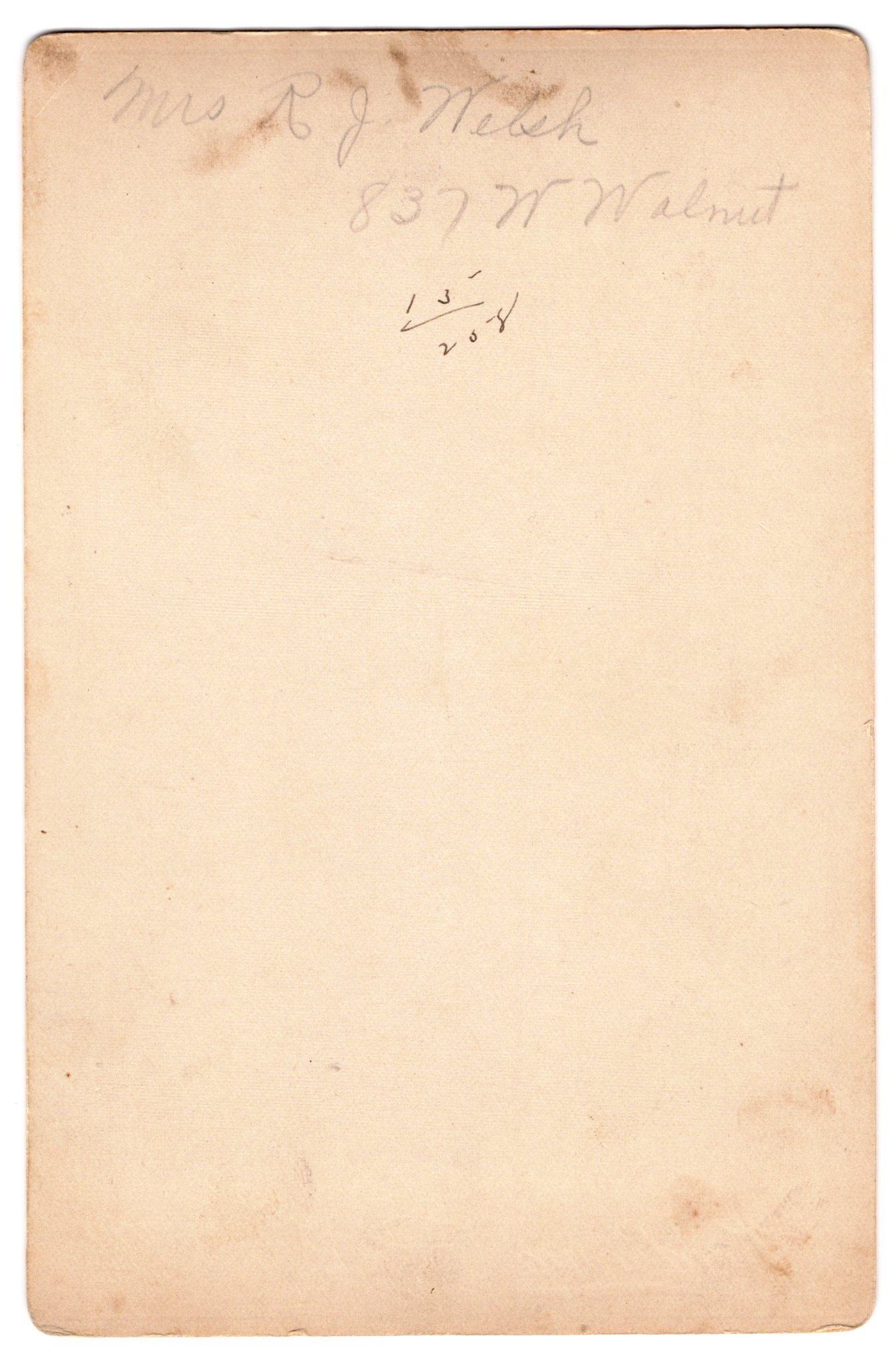
This cabinet card features a handsome young man with a composed, serious expression. His piercing eyes are steady and direct, suggesting confidence and a sense of purpose. He sports a neatly groomed, full mustache that accentuates his strong facial features, and his dark, wavy hair is styled close to the head with a modest wave. He is dressed formally in a three-piece suit typical of the late 19th century, consisting of a dark jacket with a subtle pinstripe, a matching vest, and a white high-collared shirt adorned with a cravat or tie tucked neatly into the collar. A pocket watch chain is visible just below the vest’s center buttons, a common accessory for men of the era. The photograph was taken by Reidsma Studio, as indicated by the imprint on the bottom mount. The ornate script spells out “Reidsma” alongside the photographer’s monogram and location: Kalamazoo, Michigan. Research into Mr. Reidsma reveals that the photographer was likely John Reidsma, a Dutch-American who operated a photography studio in Kalamazoo in the late 19th century. His work is known for its clarity and careful composition, often capturing the middle class and professional residents of the area during a time of industrial growth in Michigan. The presence of the brown line framing the image—also called a “rule line”—was a stylistic element commonly used in cabinet cards from the 1885–1895 period. This, along with the fashion and card style, helps date the photograph to the early 1890s. On the reverse, written in pencil, is the name: Mrs. R. J. Welch, 837 W. Walnut. The address is likely a local address for Kalamazoo itself or a nearby city. It is quite likely that Mrs. R. J. Welch was the wife of the man pictured. During this era, it was common for women—especially wives—to manage household affairs, including the commissioning and ordering of photographic portraits from local studios. Her name inscribed on the back may indicate ownership or responsibility for this photograph, perhaps sent or shared with family members.


 THE CABINET CARD GALLERY