PORTRAIT OF TWO YOUNG MEN IN BRAINERD, MINNESOTA

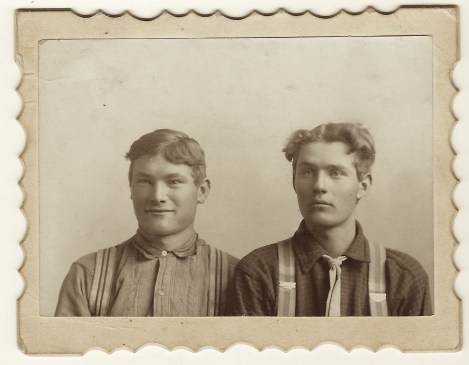
This scallop edged vintage photograph features two teenage boys. The boy in the dark shirt and tie is quite handsome. They are both wearing suspenders. The photograph was taken by the Drysdale studio in Brainerd, Minnesota. James S. Drysdale (1862-1914?) operated his own studio but at one time he was a partner in the Quam & Drysdale gallery. Drysdale had a studio in both Brainerd and St. Cloud between about 1894 and 1899. The Quam and Drysdale studio was located in Walker, Minnesota (1900). Drysdale returned to Brainerd in 1901 and operated a studio there until 1904. Drysdale appears in the 1900 US census. Data indicates that he was Canadian born, immigrated in 1880, and a naturalized US citizen. At the time of the census he was living on the Chippewa Reservation in Cass, Minnesota. The census reports that his race was “White”. Although he was listed as married (1899), he was living independently.  SOLD

Published in: on July 16, 2017 at 11:56 am  Comments (2)  
Tags: , , , , ,

PORTRAIT OF A YOUNG BOY IN MAINE BY A PHOTOGRAPHER WITH A BIZARRE STORY

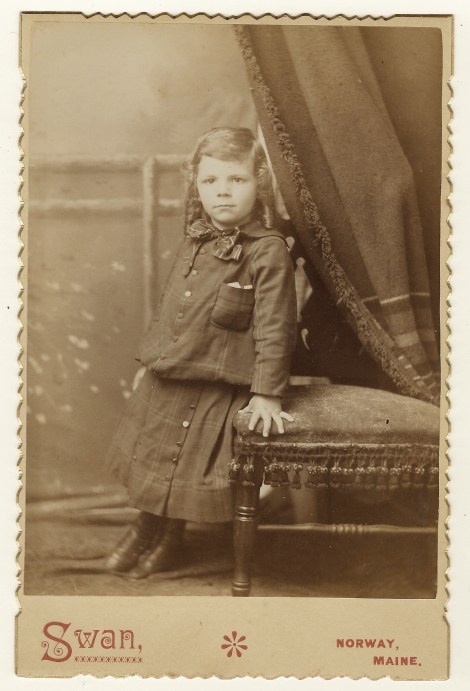
This scallop-edged cabinet card features a young boy posing for his photograph at the Swan studio in Norway, Maine. Some may argue that the child is actually a girl. However, it was common for young boys to wear skirt type clothing and have long hair. John Wesley Swan (1857-?) appears in the 1884 Portland, Maine city directory as a photographer. The 1900 US census reveals that Swan was Canadian born and lived in Norway with his wife (Annie) and their two daughters. Swan married his wife in 1883. According to Anthony’s Photographic Bulletin (1900), Swan’s studio was destroyed by fire and he lost a large number of valuable negatives of scenery in the area of Norway. The journal also states that the “loss was large and the insurance is said to be small”. Swan was the official photographer of the Grand Trunk Railway system. He won a gold medal at the Paris Exposition according to Photo-Era magazine (1900). At one point in his career in Norway, Swan had a partner in his business (Swan & Cobb). John Wesley Swan was involved in a bizarre incident that made the annals of the history of Norway. The book,  “A History of Norway, Maine: From the Earliest Settlement to the Close of the Year 1922”, tells a  mysterious story about Mr. Swan. While on a trip to Boston in 1893, Swan disappeared for a period of about six months. The writer states that Swan “claimed to have been sand-bagged and robbed in Boston and when he partially recovered consciousness found himself in New Orleans”. His memory had “left him” and he wandered around until his memory returned while he was in Texas. Swan returned to Norway and explained his disappearance to his friends and family, and community. According to the writer, many doubted the validity of his explanation.   (SOLD)

Published in: on July 15, 2017 at 12:00 pm  Comments (3)  
Tags: , ,

PORTRAIT OF A CHARMING LITTLE GIRL AND HER DOLL

This vintage hand-colored real photo postcard features a charming little girl holding her doll. The child has a wonderful smile. She is wearing a fancy white lace dress, a necklace, and a hair bow. The postcard was published in 1904 by Neue Photographische Gesellschaft (NPG) which was located in Berlin and Stuttgart, Germany.The company was in business between 1894 and 1948. It was founded by Arthur Black (1862-1943) and it became one of the most well known and largest companies involved in the production of postcards.The postcard is an Oranotypie. An oranotype is a trade name for a type of glossy real photo postcard published by NPG at the beginning of the 20th century.The postcard was mailed to someone in Paris, France and is postmarked in either 1906 or 1908 (it is difficult to decipher which date).  (SOLD)

Published in: on July 14, 2017 at 5:43 pm  Comments (1)  
Tags: , ,

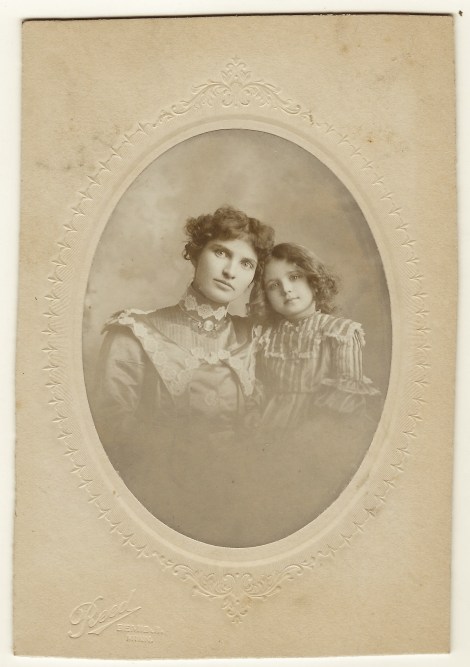
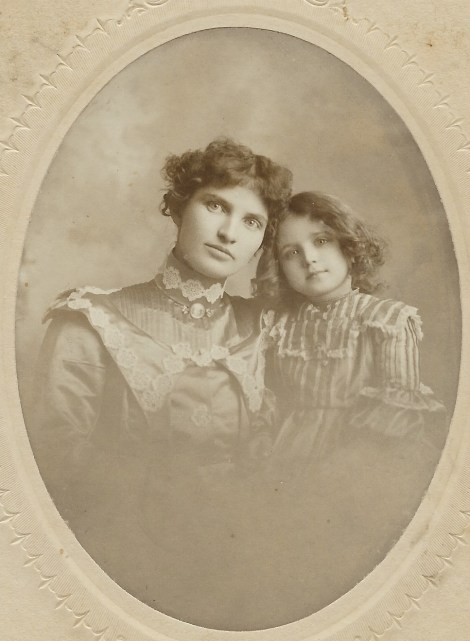
PORTRAIT OF A BEAUTIFUL MOTHER AND DAUGHTER IN BEMIDJI, MINNESOTA (BY FAMOUS PHOTOGRAPHER ROLAND REED)


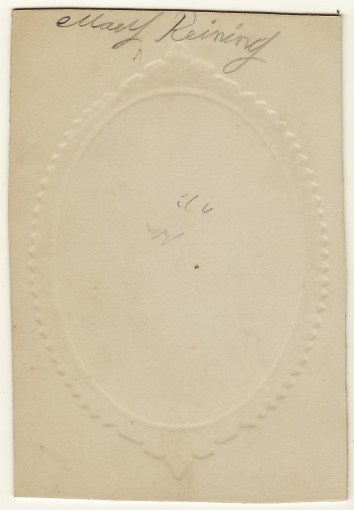
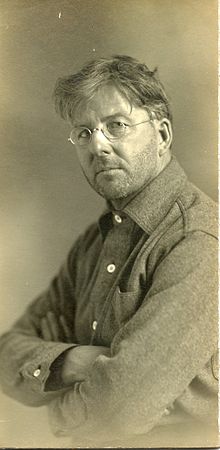
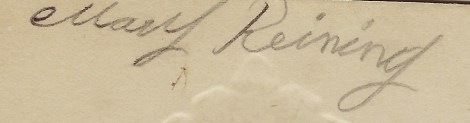
This vintage photograph features a smartly dressed pretty woman with her adorable young daughter. The little girl’s expression is absolutely priceless. The photograph was taken by the Reed studio in Bemidji, Minnesota. Bemidji is a Ojibwe (Chippewa) word that means “a lake with crossing waters”. The town was chartered and organized in 1896. The town has been called the “curling capital” of the United States. An inscription on the reverse of the photograph has the name “Mary Keining”. This is probably the name of the mother in this portrait. The photographer of this photograph was a well known American artist and photographer named Roland (Royal Jr.) W. Reed (1864-1934). He was part of an early 20th century group of photographers of Native Americans known as pictorialists. The pictorialist movement was influenced by the 19th century art movement of Impressionism. The pictorialists emphasized lighting and focus. They tried to recreate images as they may have been rather than as it was. A group of pictorialists took photographs of Native Americans and Native American life as it was before the damage wrought on the culture by reservations. Roland Reed was born in Wisconsin. He grew up with a strong caring interest in Native Americans and a desire for adventure. His first job when he left home was working in a Minnesota sawmill. In 1885 he worked for the Canadian Pacific Railroad and became familiar with the Plains Indians. He soon returned to Minnesota and used it as a home base for five years of exploration and adventure which included traveling to Tennessee, Arkansas, New Mexico, and finally Montana in 1890. He worked for the Great Northern Railway and utilized his artistic talent doing portrait sketches of Piegan and Blackfeet Indians as well doing landscape sketches and paintings. In 1893 he apprenticed with photographer Daniel Dutro in Havre, Montana. The pair eventually became partners in a studio and they also sold Native American photographs to the Great Northern Railway. For a short duration in 1897, Reed worked for the Associated Press in Alaska photographing the Klondike Gold Rush. He returned to Havre but in 1899 he opened a photo studio in Ortonville, Minnesota. He quickly developed a reputation for being an outstanding photographer of local landscapes and children. His business grew and he opened another studio in Bemidji. He frequently would leave his Bemidji studio to go photograph the Ojibwe Indians on nearby reservation. In 1907, he sold both of his studios and went to live near the Ojibwe Red Lake Reservation so he could focus on his work documenting Native Americans. He pursued this interest full time for two years. In 1909, Reed returned to Montana and opened a studio in Kalispell (the town near the western entrance of today’s Glacier National Park. He operated the studio there and also sold copies of his Native American photographs and Native American arts and crafts. While in Kalispell he spent six years on a major project of ph0tographing the Plains Indians, including the Blackfeet, Piegan, Boood, Flathead and Cheyenne. While in Montana he became part of the state’s community of artists. Included was western artist Charlie Russell. In 1913, Reed spent several months photographing the Navajo and Hopi in Arizona. That same year, Reed opened a branch of his photography studio in San Diego, California. After just a few years, he retired to Ortonville, Minnesota.  It didn’t take too long for wanderlust to set in. In 1916 he built a cabin near Cable, Wisconsin where he spent half his time between there and Ortonville. In 1920 he relocated to Denver, Colorado, where he opened a new studio and remained in business for seven years. In 1930 he retired again, this time to San Diego. During this time he worked on a book of his photographs titled “Reed’s Photographic Art Studies of the North American Indian”. While visiting Colorado Springs in 1934 he was killed in an accident. Reed’s work photographing Native Americans were funded by himself. He had little interest in having his photography utilized for advertising. He is known to have turned down an offer of fifteen thousand dollars for 200 negatives in order to ensure they would not be used commercially. In 1950, National Geographic Magazine licensed the rights to approximately forty of his photographs. A portrait of Roland Reed can be seen directly below. (SOLD)
ENGLISH THEATRE ACTRESS PAMELA GAYTHORNE AND HER NOT SO SUBTLE HAT

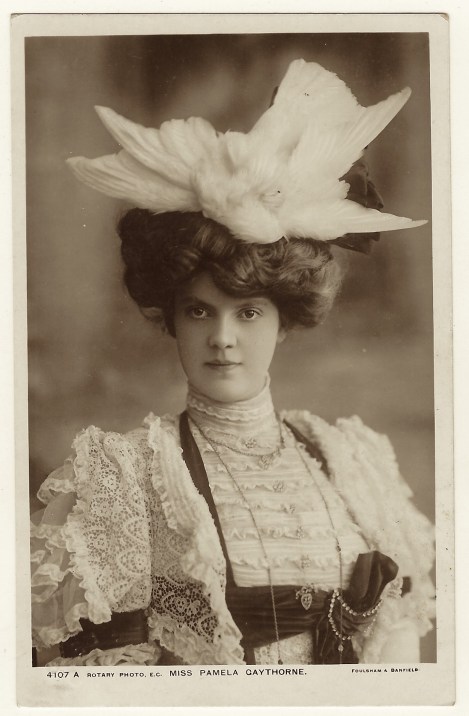
This vintage real photo postcard features English stage actress Pamela Gaythorne. She is quite attractive and wearing much jewelry and lace. Note her not so subtle hat. It looks as if a seagull is resting on her head.  Miss Gaythorne is captured in this image as she appeared in “The Fascinating Mr. Vanderveldt. She appeared in this theatre production with Violet Vanbrugh and Arthur Bourchier. The IBDB reveals that Miss Gaythorne appeared in, and often starred in, 12 Broadway productions. Her Broadway career spanned from “Keeping Up Appearances” (1910) through “This Fine-Pretty World” (1923). The New York Times (2/14/1911) reviewed a play named “Nobody’s Daughter”. Gaythorne appeared in this play and in writing about her, the reviewer wrote that he “heartily commends” her performance. The article adds that she played her character with “delightful spontaneity, charm, variety, and suggested youth and spirit, while touching the more sentimental passages with manifest sincerity”. The photographers of this image was Foulsham and Banfield, a prolific celebrity postcard portrait studio. The postcard was produced by Rotary Photo and is part of a series (no. 4107 A). The message on this card is from Bob to Miss Marion Lipman and states “I will come in and see you when I go to the city”. Also written in the message section is what appears to be “The Empire Confectionary”. Perhaps a Cabinet Card Gallery visitor can throw some illumination on that term and also ascertain what nation the stamp of this postcard represents. The postcard is postmarked 1906.

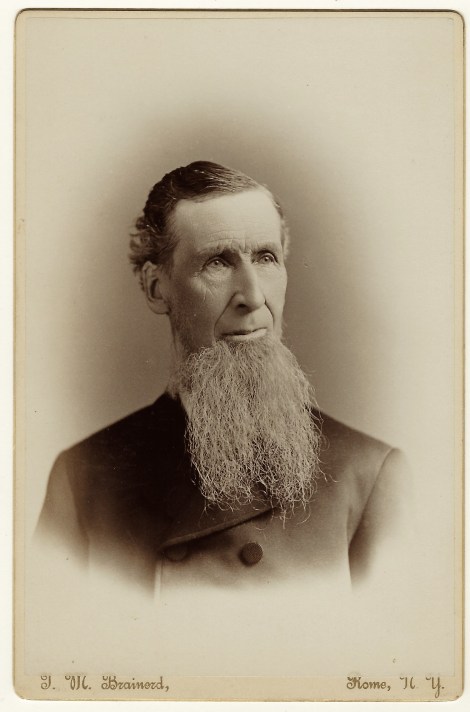
PORTRAIT OF AN OLDER MAN WITH A NOTABLE BEARD IN ROME, NEW YORK

This cabinet card portrait features an older gentleman with an interesting “billy goat” beard. The Cabinet Card Gallery has an interesting collection of photographs of men with remarkable beards. You can access these images by clicking on the category “Beards and Mustaches (Only the Best)”.  This particular photograph was taken by photographer, Jonathan Millard Brainerd (1851-1926). Brainerd operated a studio in Rome, New York and was a friend of famed photography entrepreneur, George Eastman. Brainerd has another photograph in the Cabinet Card Gallery and you can see that image, as well as learn more about him, if you click on the category “Photographer: Brainerd”.  (SOLD)