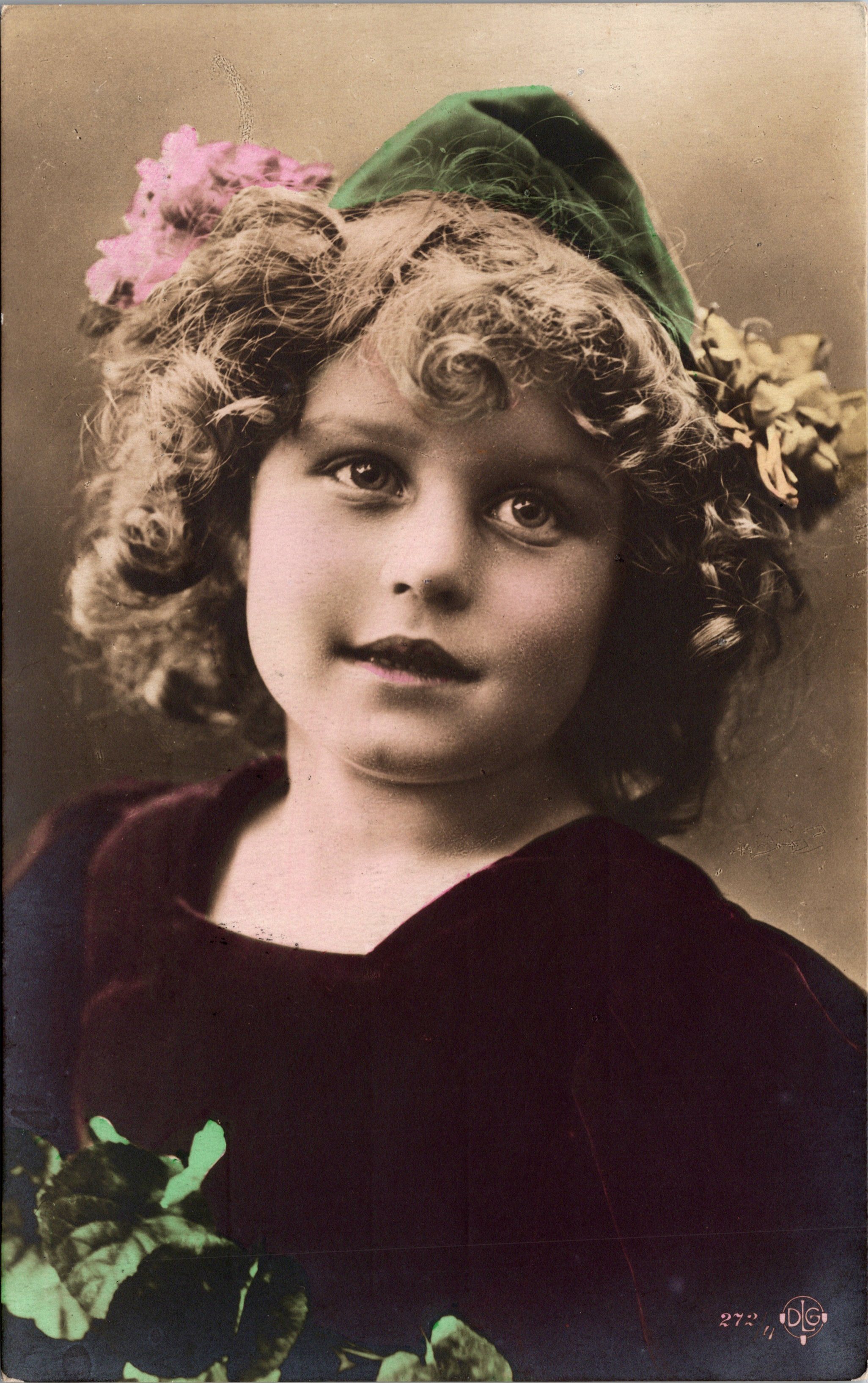
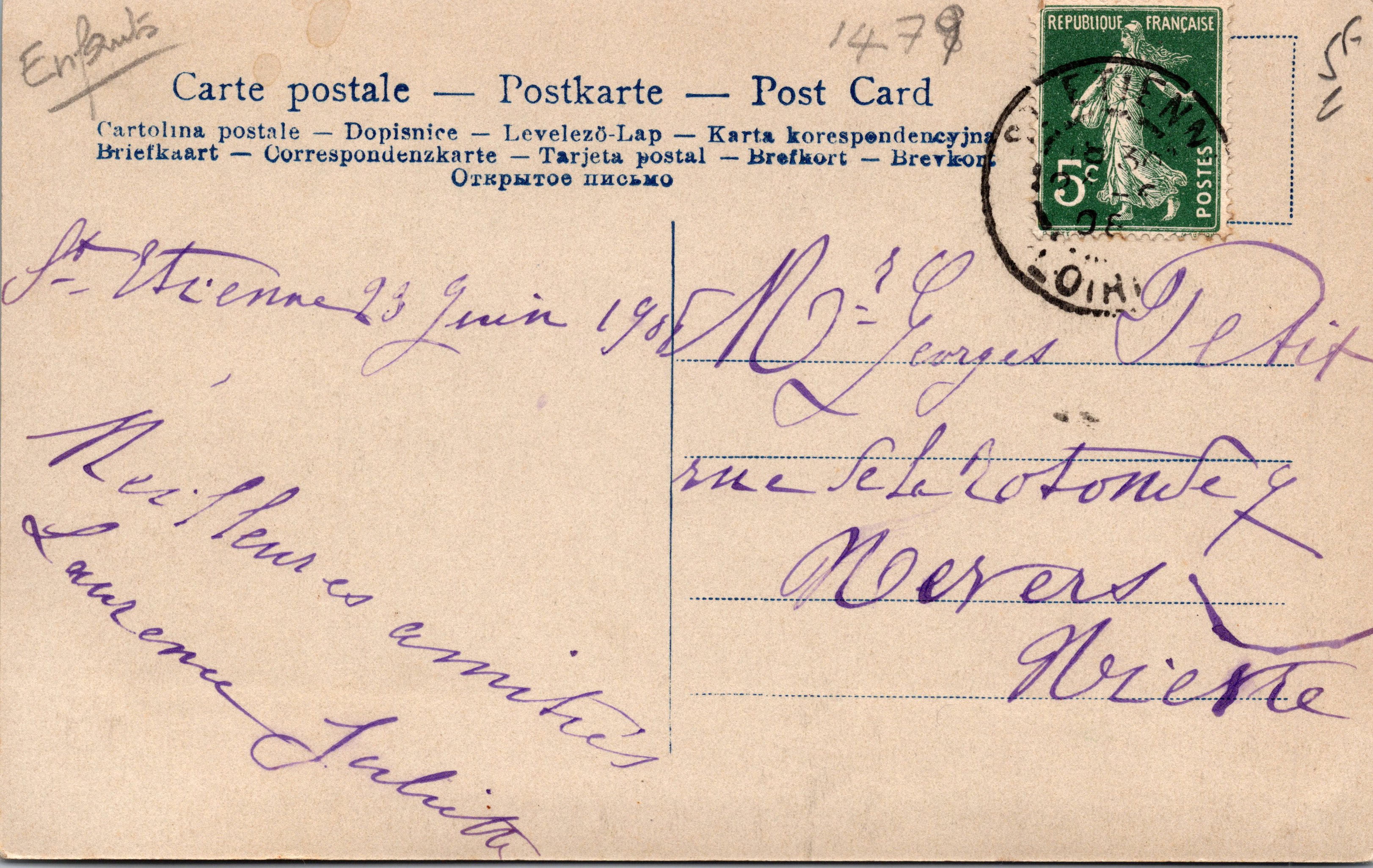
This vintage real photo postcard features a an adorable curly haired little girl. The child has a wonderful smile and dancing eyes. The postmark on this card is from 1906 and it has a French stamp. Note that the the postcard is hand colored. The card was published by DLG a part of a series (No.272). This real photo postcard is in good condition (see scans). SOLD
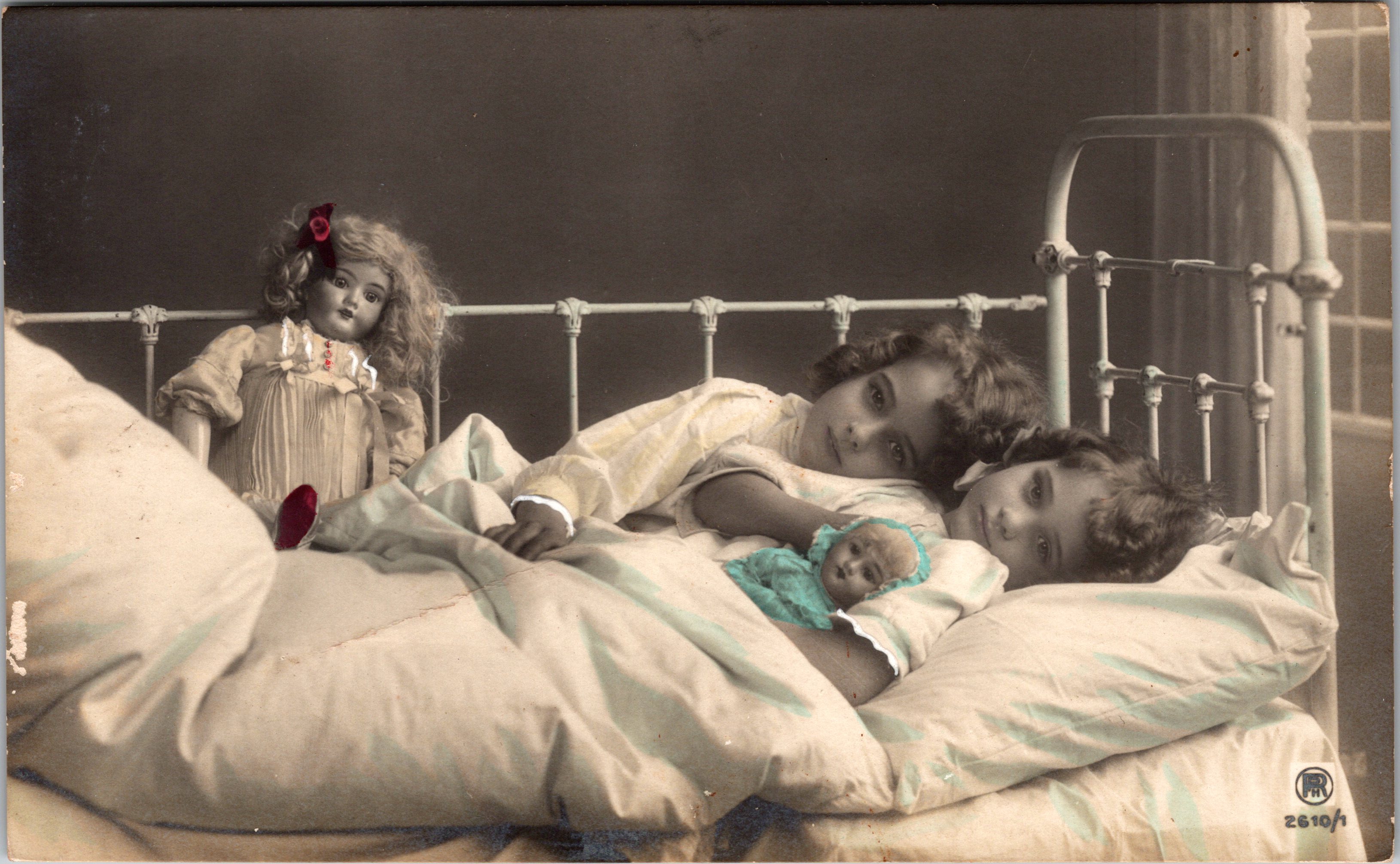
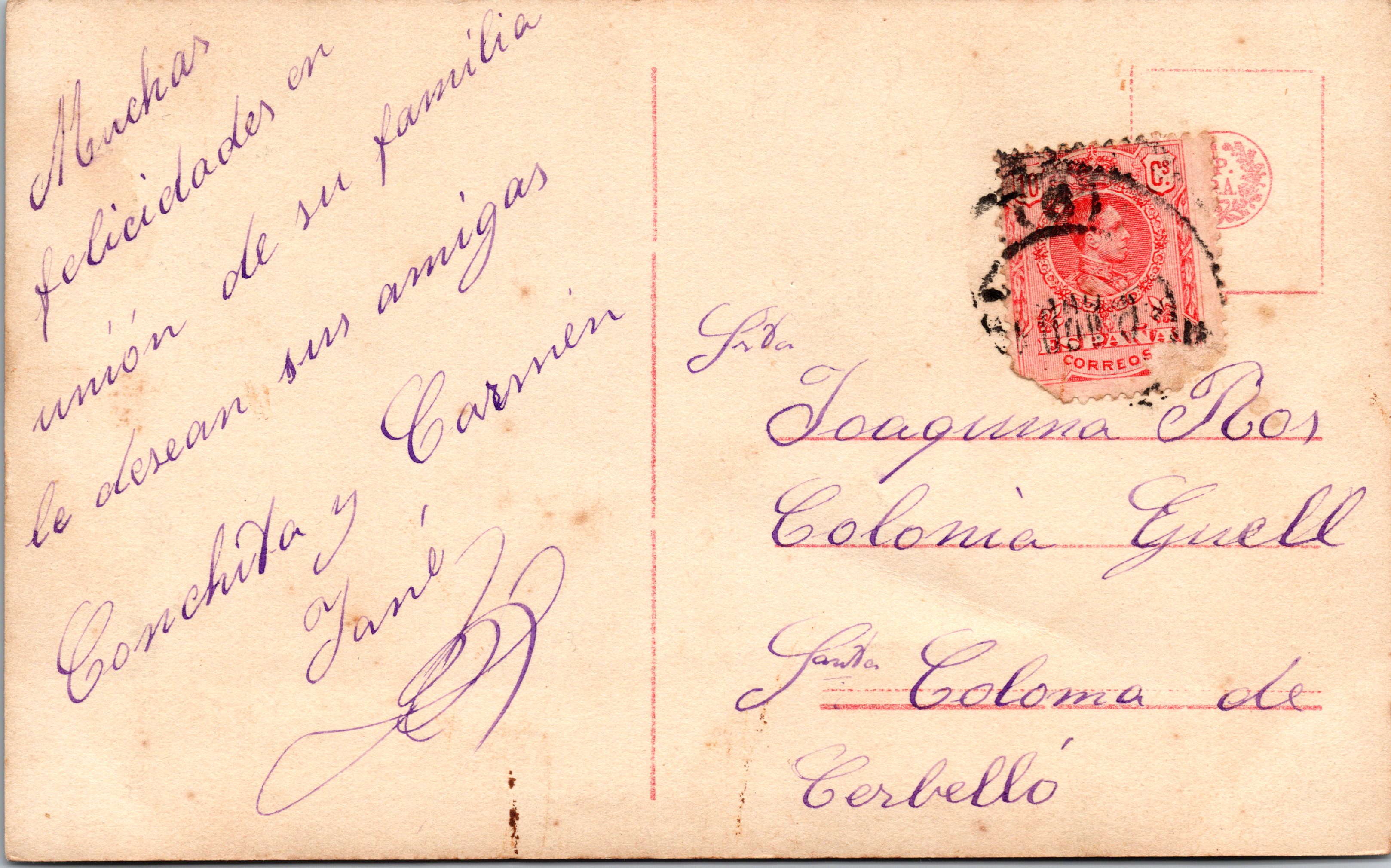
This vintage real photo postcard captures two adorable little girls (sisters) lying in bed. They are accompanied by two of their dolls. The affection between the sisters is very apparent. This is a sweet card. SOLD
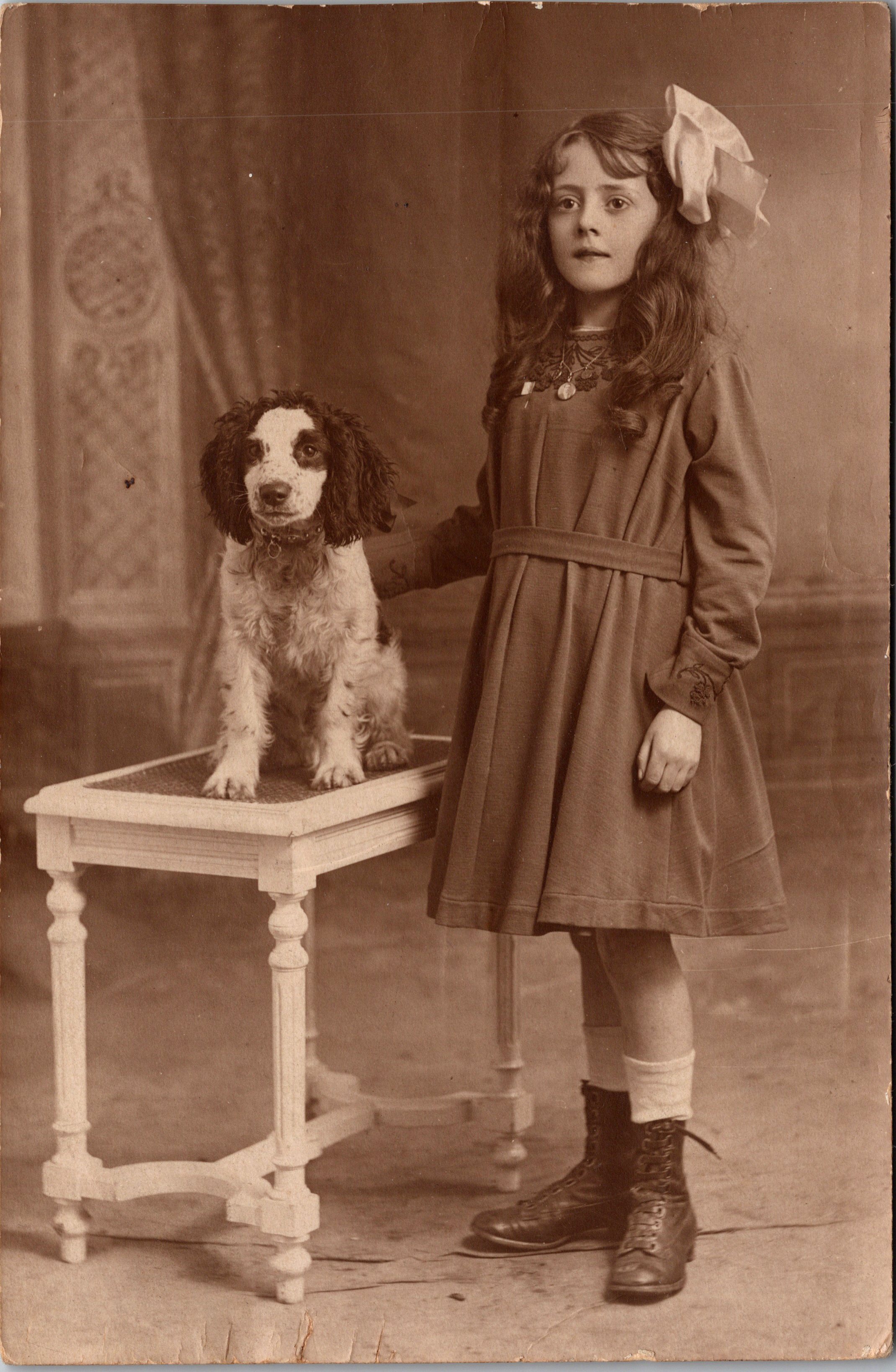
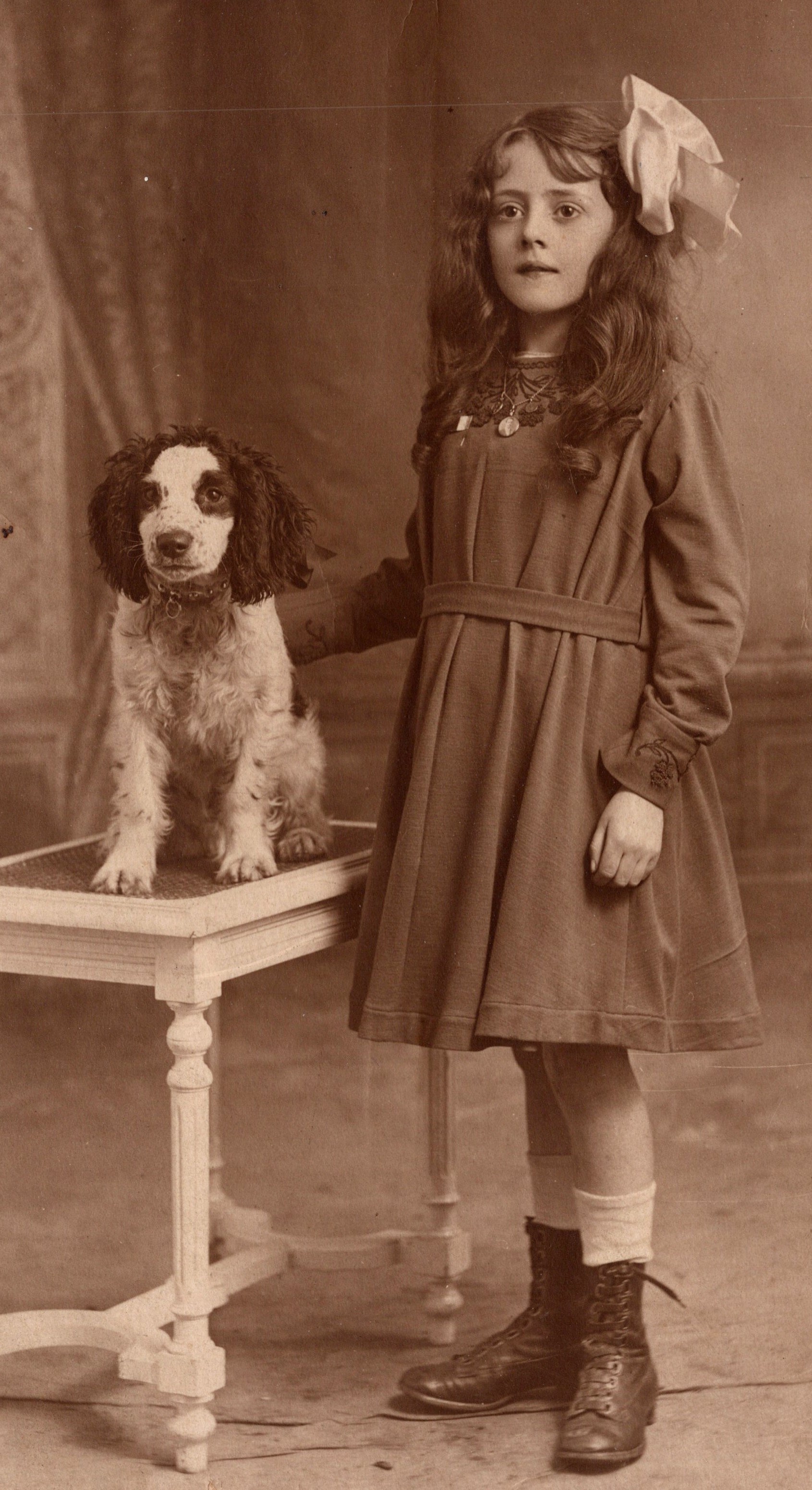
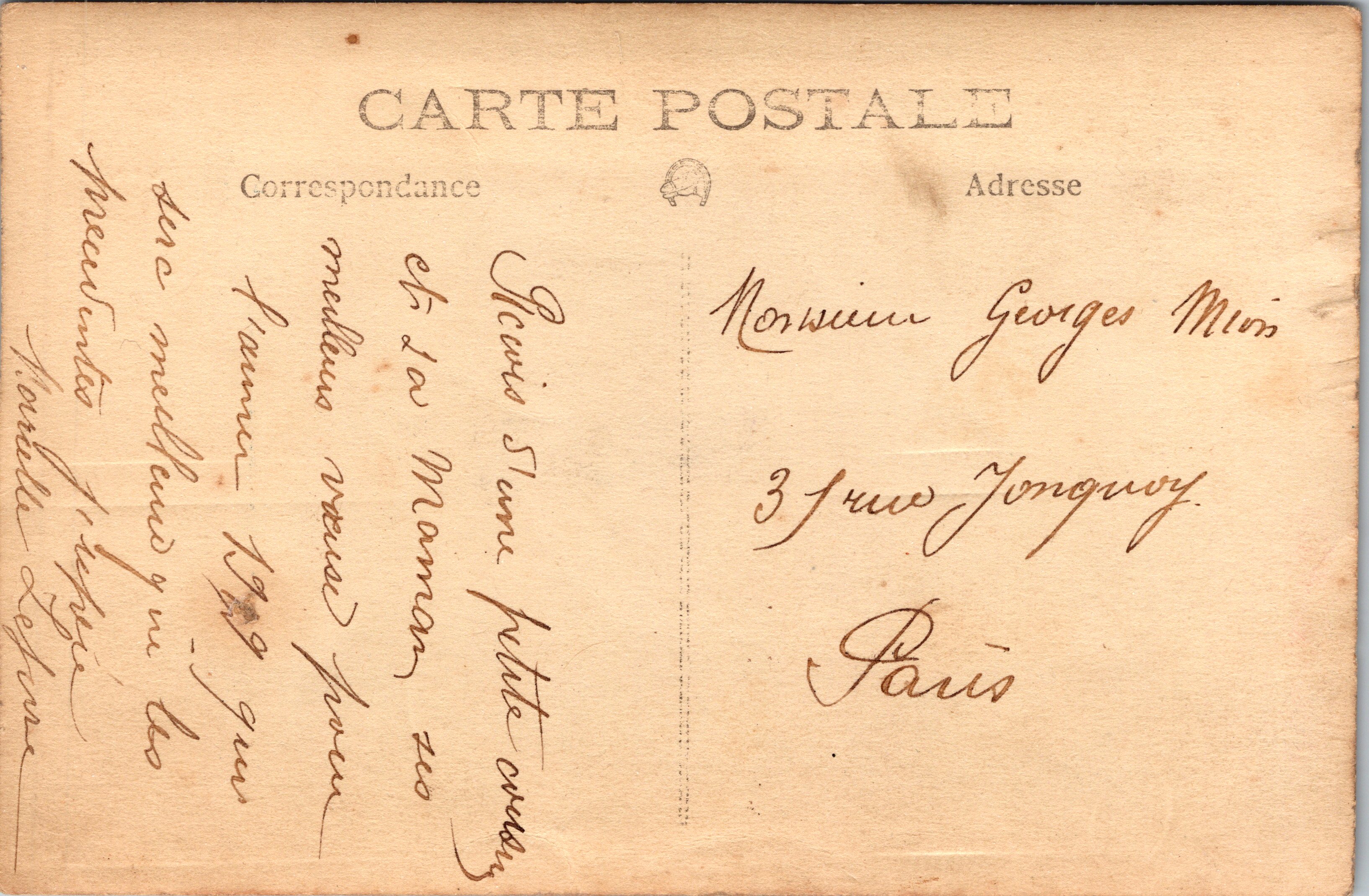
This vintage real photo postcard features an adorable little standing along side her dog. The girl rests her hand on the dog’s back .The dog is seated on a wooden table. I believe the dog is some sort of Spaniel. SOLD
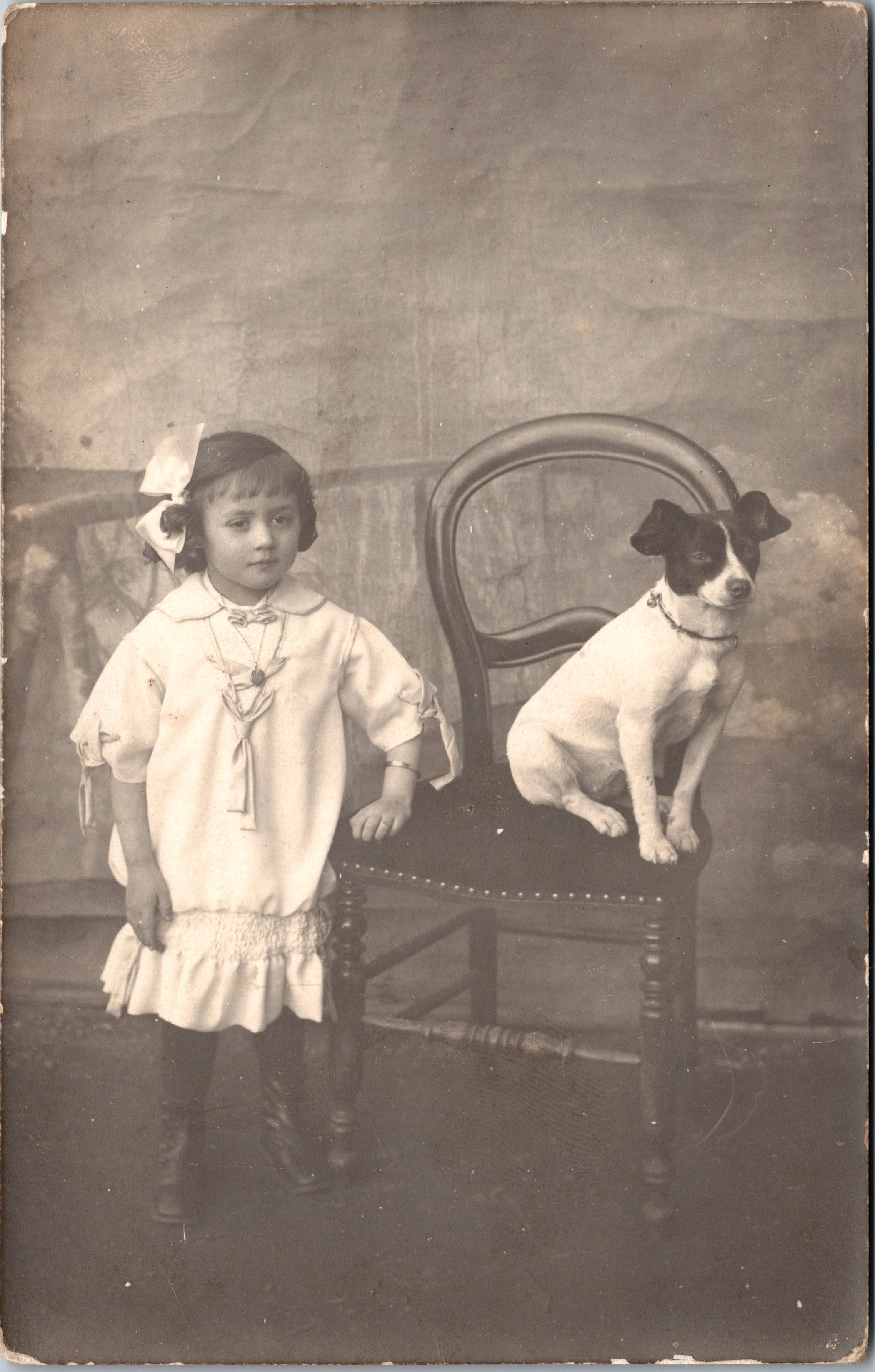
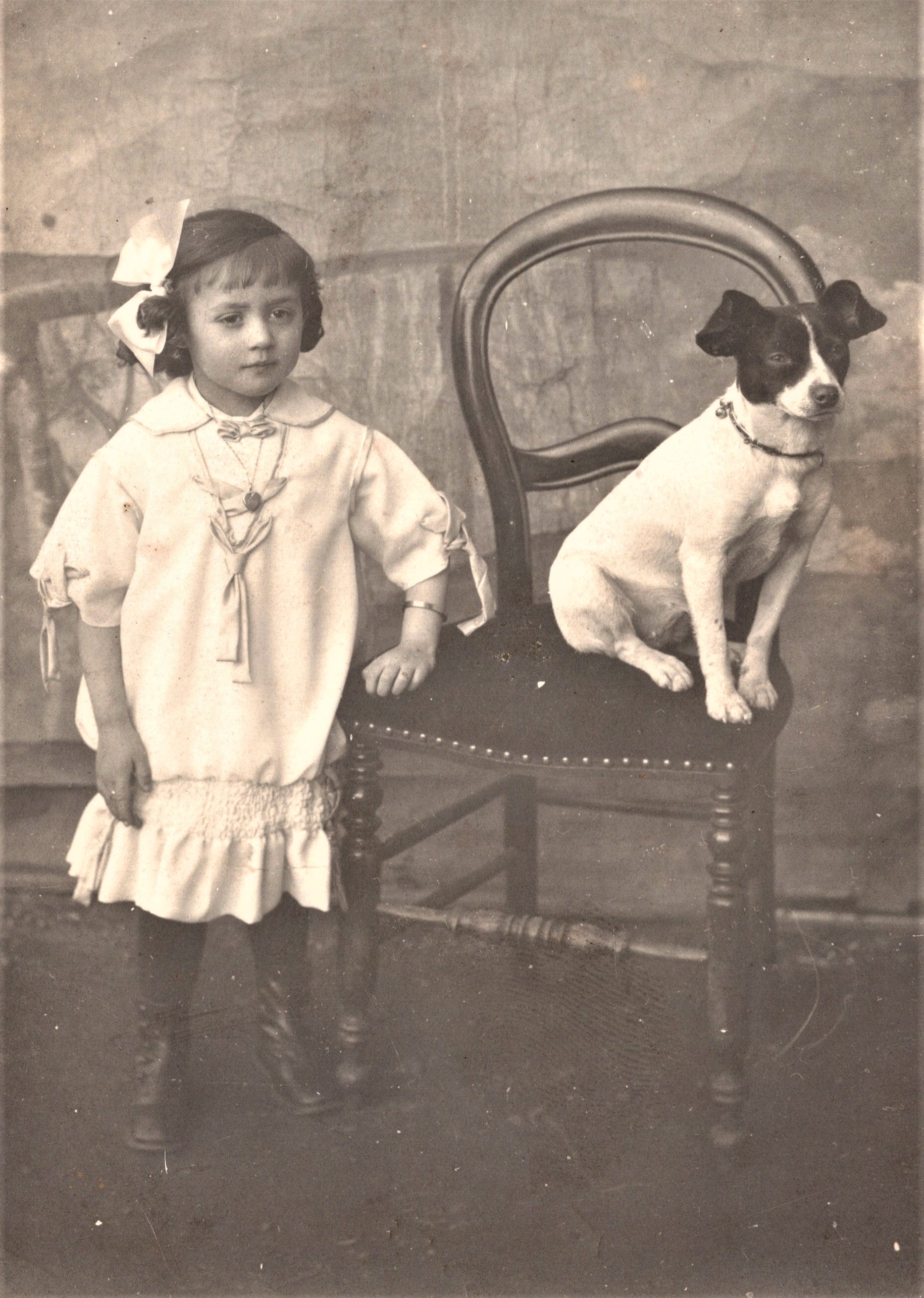
This vintage real photo postcard features an adorable little girl standing along side her dog. The dog is seated on a wooden chair. I believe the dog is a Jack Russell terrier. The girl is holding the dog’s leash. SOLD
This vintage real photo postcard features a large group of children celebrating May Day. They are standing in a circle and most of the children are holding a ribbon attached to a Maypole. What is a Maypole and what is the point of this tradition? A maypole is a tall pole, usually made of wood, that is erected as part of a traditional May Day celebration. The pole is usually decorated with flowers, ribbons, and other decorations, and people dance around it, weaving the ribbons into intricate patterns. The maypole is a symbol of spring and renewal, and the tradition of dancing around the maypole dates back hundreds of years in Europe. In some cultures, the maypole was also seen as a symbol of fertility, and was associated with various rituals and customs related to the coming of spring. SOLD
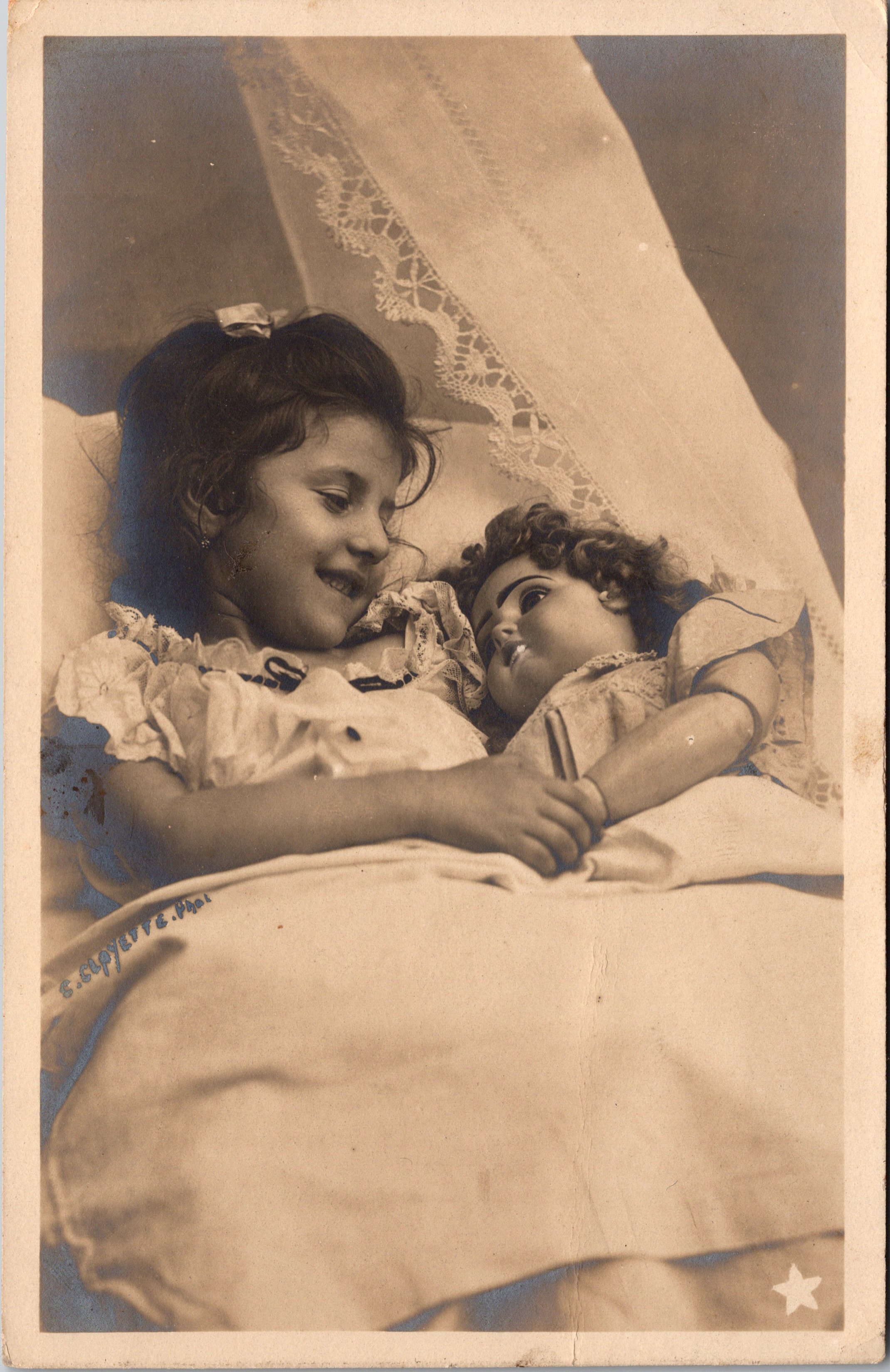
This gorgeous vintage undivided real photo postcard captures a smiling little girl lying in bed and lovingly looking at her doll beside her. Sweet dreams are made of this. This vintage postcard is in good condition (see scans).
Buy this Vintage Real Photo Postcard (includes shipping within the US) #5049
To purchase this item, click on the Pay with PayPal button below
$28.79
Buy this Vintage Real Photo Postcard (includes International shipping outside the US) 5049
To purchase this item, click on the Pay with PayPal button below
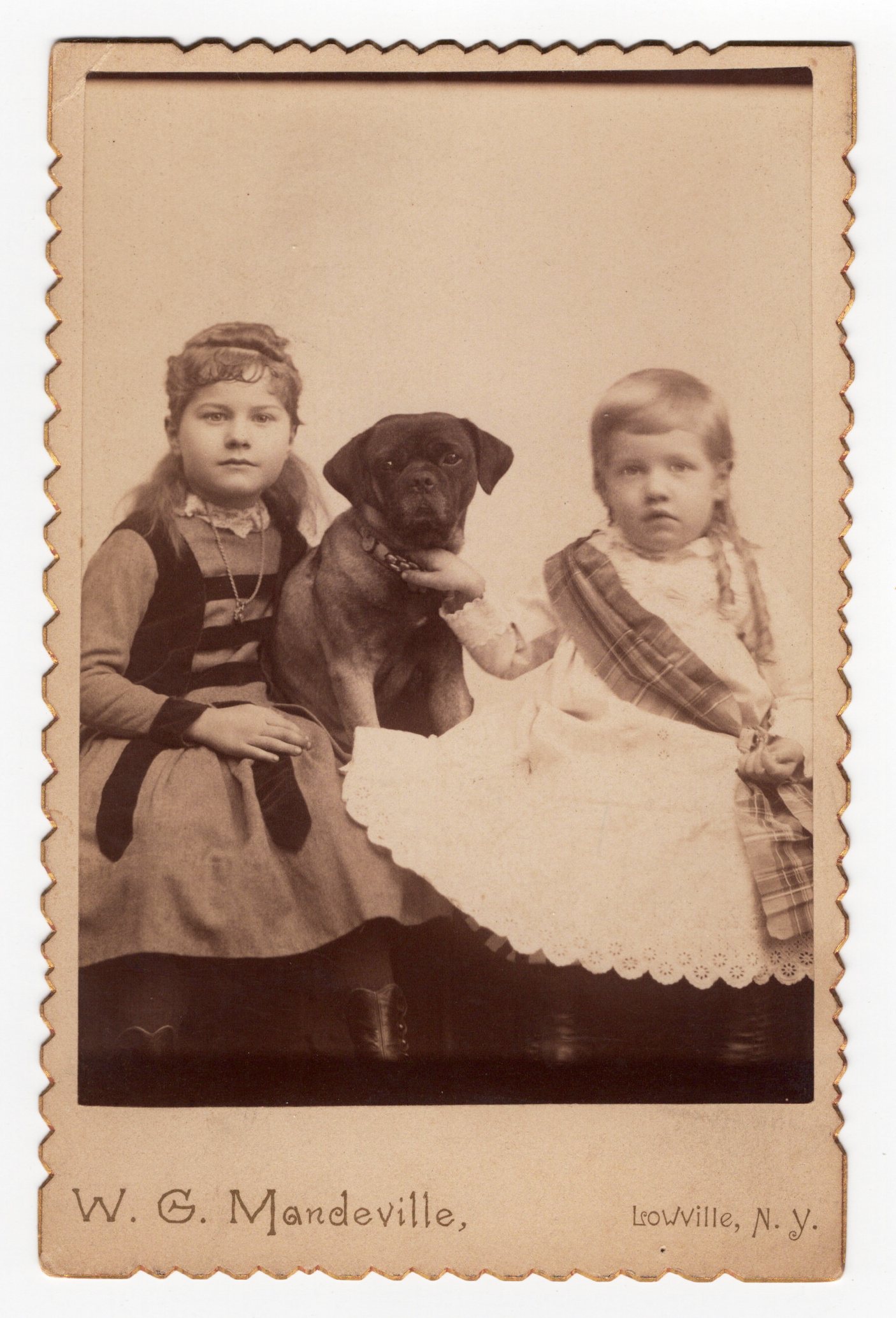
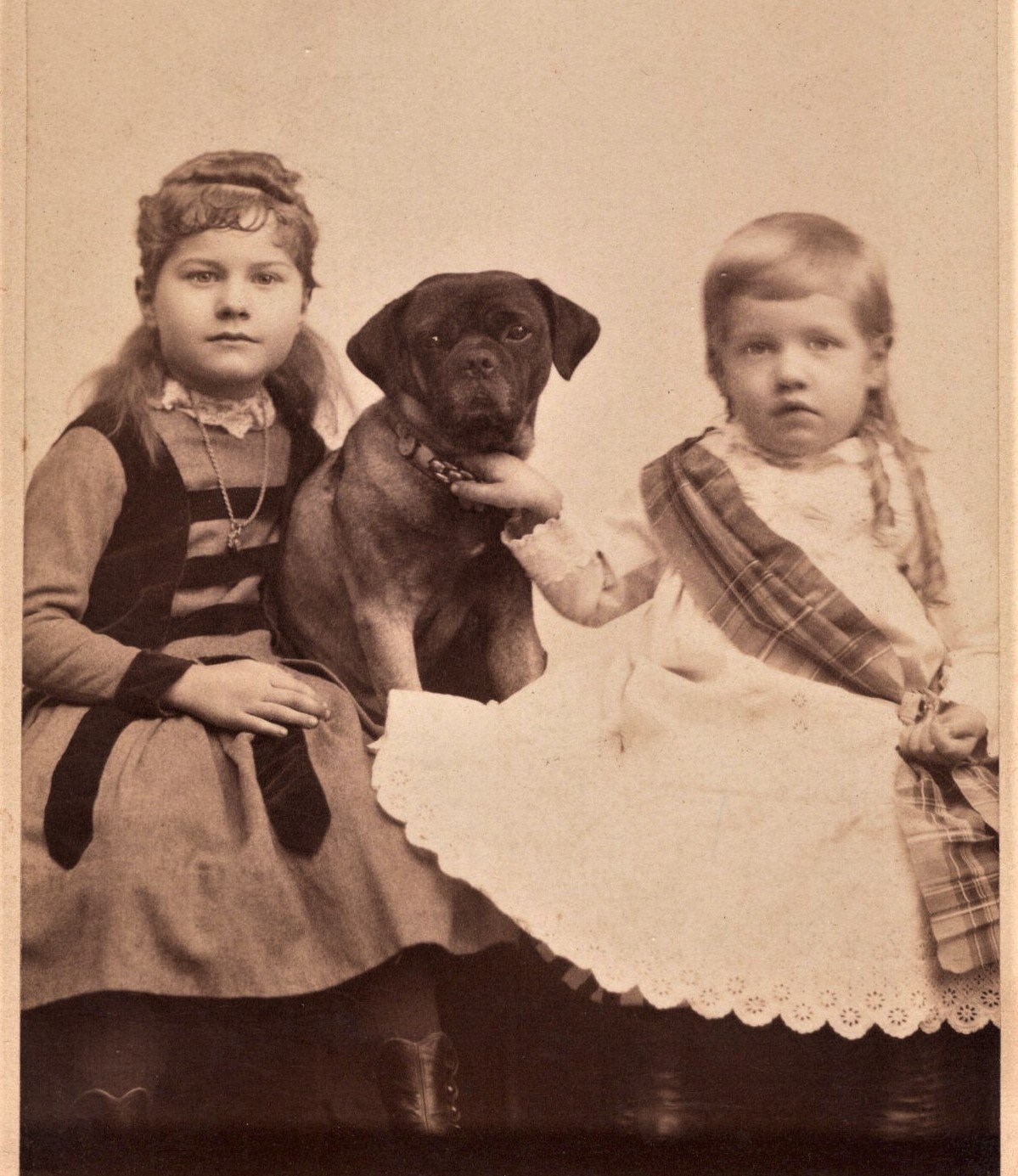
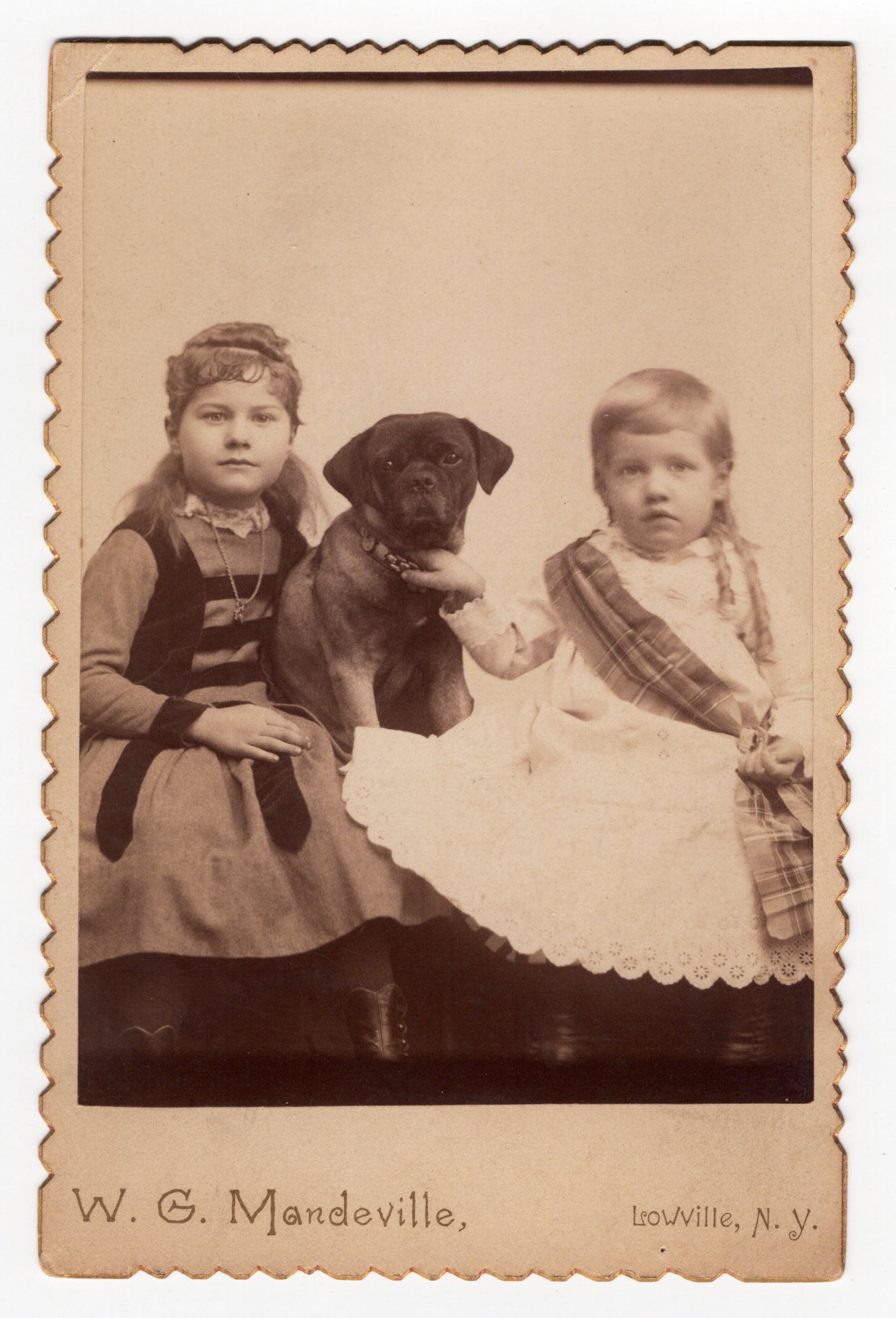
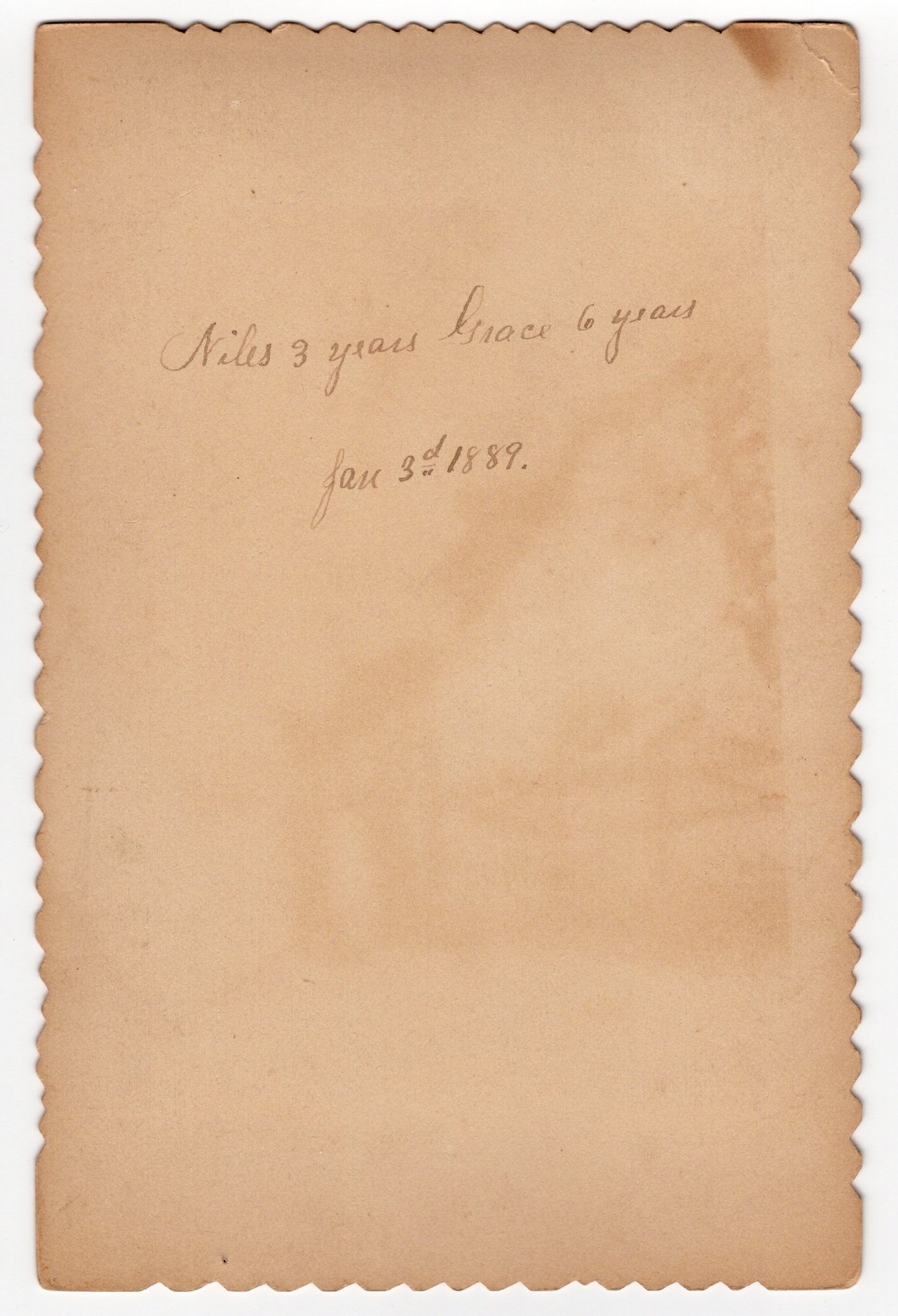
This cabinet card portrait of two children and their pet pug, illustrates the power of the internet in identifying subjects in antique photographs. The reverse of this photograph has some identity clues in an inscription that states “Niles 3 years Grace 6 years Jan 3rd 1889”. Since the photographer of this image (W. G. Mandeville) worked out of Lowville, New York, it was assumed that the children in the photograph lived in, or around, Lowville (located in the western foothills of the Adirondack Mountains). A search of the 1900 U.S. census (Lowville) was done for siblings named Niles and Grace. A listing for Niles and Grace Bateman was found and their ages were a match for the age information on the reverse of the cabinet card. Once establishing their identity, additional biographical data was obtained. At the time of the 1900 census, Grace was seventeen years old and Niles was thirteen. Their father was Carroll Bateman and he was a proprietor of a hotel. Their mother was named Jennie Ruggles Bateman. The 1910 U. S. census found Niles working as a clerk in his father’s hotel. The 1920 U.S. census reveals that Niles had become an “Automobile Agent” and was married to a woman named Vera. The 1930 census discloses some major changes in the life of Niles Bateman. He had two children (Walter and Barbara) and had become an “Automobile Dealer”. The photographer of this image, William Garrett Mandeville (1865-1944), is one of the subjects of Robert Ogden’s book, “Exposing the Wilderness: Early Twentieth Century Adirondack Postcards” (1999). Ogden considers Mandeville one of the best photographers of the genre of scenic postcards. Mandeville was born in New York, dropped out of school at sixteen years of age, and in 1883 went to work for photographer, Ogden Hotchkiss. Hotchkiss had a studio in Norwich, New York. In 1886 Mandeville joined George W. Carter in operating a photography studio but he left the partnership that same year to run his own gallery. He married his wife, Bertha in 1886 and had a daughter (Dorothy). In the 1930 U. S. census, Mandeville, at 65 years of age, was still listed as a photographer. In regard to condition, note the tiny pinhole under “Lowville” at bottom of card. Note bent top right corner of card. Overall Good Condition (See Scans).
Buy this Vintage Original Cabinet Card (includes shipping within the US) #5190
To purchase this item, click on the Pay with PayPal button below
$88.00
Buy this Vintage Original Cabinet Card (includes International shipping outside the US) 5190
To purchase this item, click on the Pay with PayPal button below
This cabinet card is a postmortem photograph of a young girl. The image is upsetting and sad, but served as a remembrance of a family member for their grief stricken family. Note the flowers and cross lying on the child’s bed and the religious statues and candles on the side table. The photographer of this cabinet card was R. Dechavannes, whose studio was located in Paris, France. To view other photographs by Dechavannes, click on the category “Photographer: Dechavannes”. Hopefully, visitors to the cabinet card gallery will not find this image offensive. A website called “Ostrobogulous Cackleberries”, has an interesting article about the practice of postmortem photography. The writer states that during the Victorian era, photographing the recently deceased was “extremely prevalent”. The author points out that the practice existed before the invention of the camera. Instead of photographing the dead, artists painted their portraits immediately following their death. In many cases, the postmortem photo was the only image a family possessed of the departed family member. Many of the Victorian memorial photographs were of infants and children. The mortality rate of children during that time was very high. The writer offers a description of how the dead were posed and there seems to be a great deal of approaches to the practice. Postmortem images could be full body or facial close-ups. Coffins were not frequently included in the picture. The dead were often posed as if they were sleeping and sometimes were presented as life-like. In some photos they were braced or tied into chairs or propped up against other family members to look as alive as possible. According to the article, the popularity of postmortem photography faded in the early twentieth century. Funerals moved from the home parlor to the funeral parlor. Society stopped “embracing mortality” and we became the death denying culture of today. SOLD
This cabinet card, by Eclipse Studios in Jamestown, New York, captures two very young girls at play. The girls are sitting in miniature chairs and a small cloth covered table, drinking tea from a miniature china tea set. The children have serious expressions as they sit down for tea. The photographer is G. H. Monroe who’s studio was located at the the corner of West Third and Washington Streets, in Jamestown. The Professional and Amateur Photographer (1900) reported that George H. Monroe was an officer with the Columbian Dry Plate Company. Research also revealed that he was the photographer of a number of postcards produced in the Jamestown area. (SOLD)
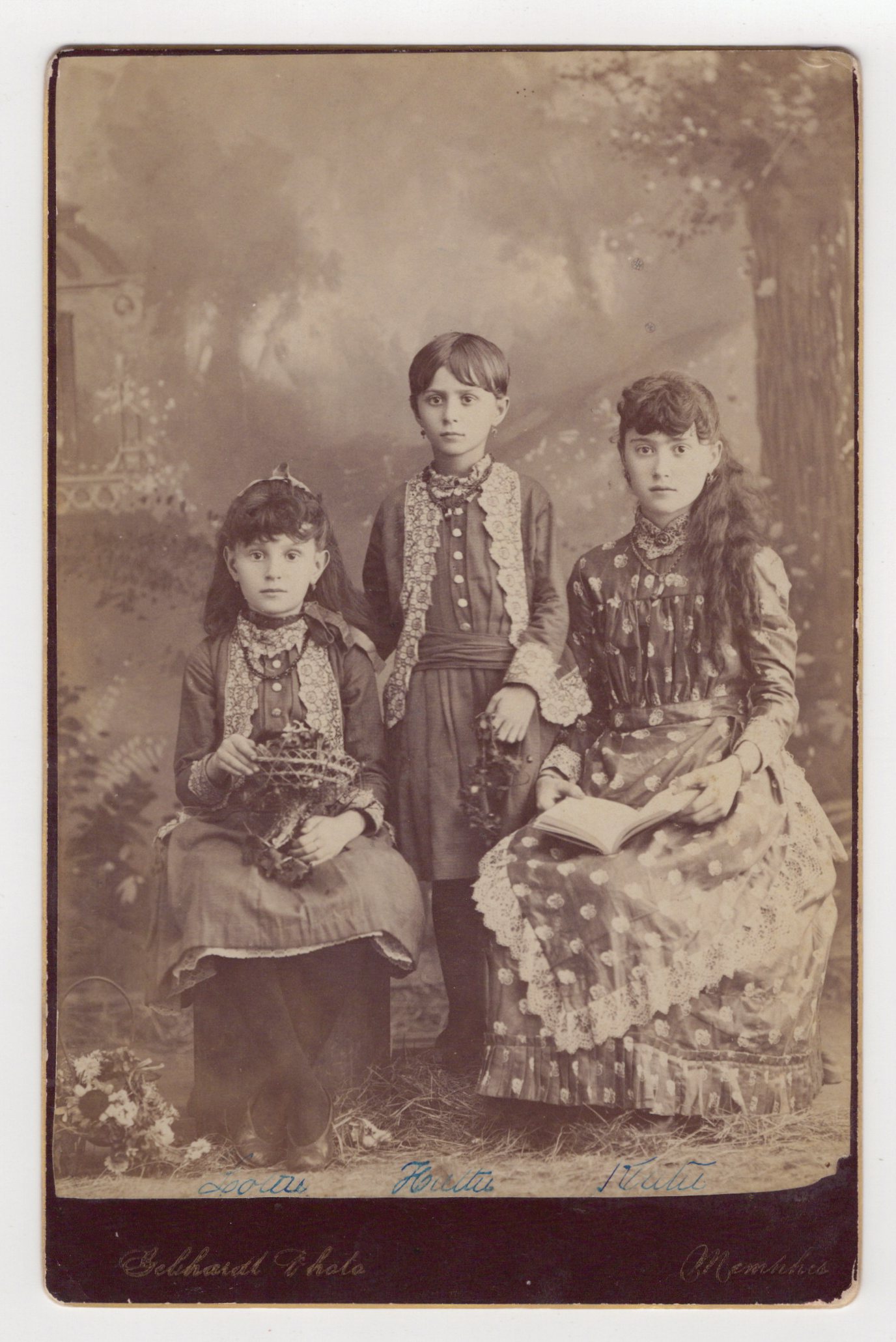
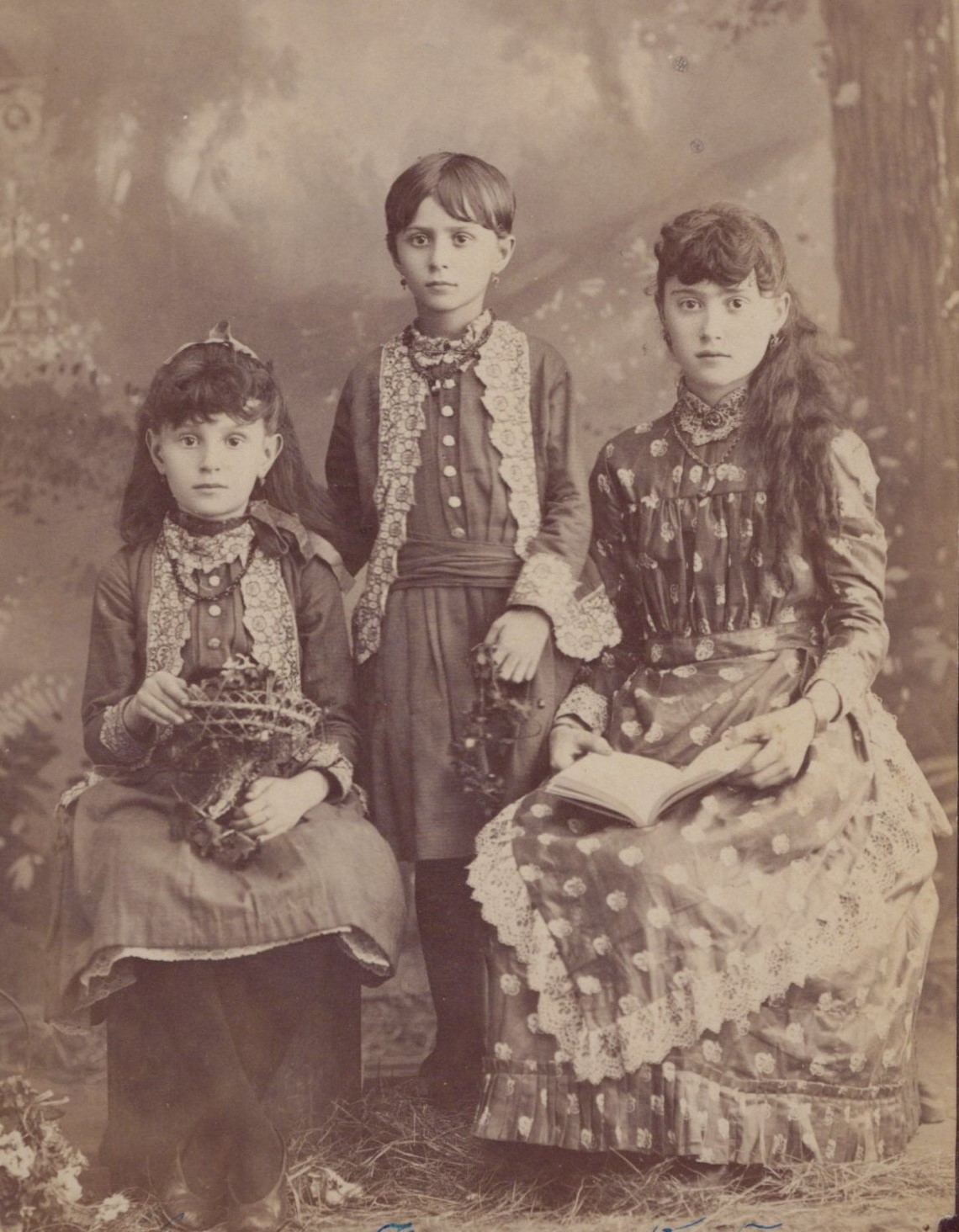
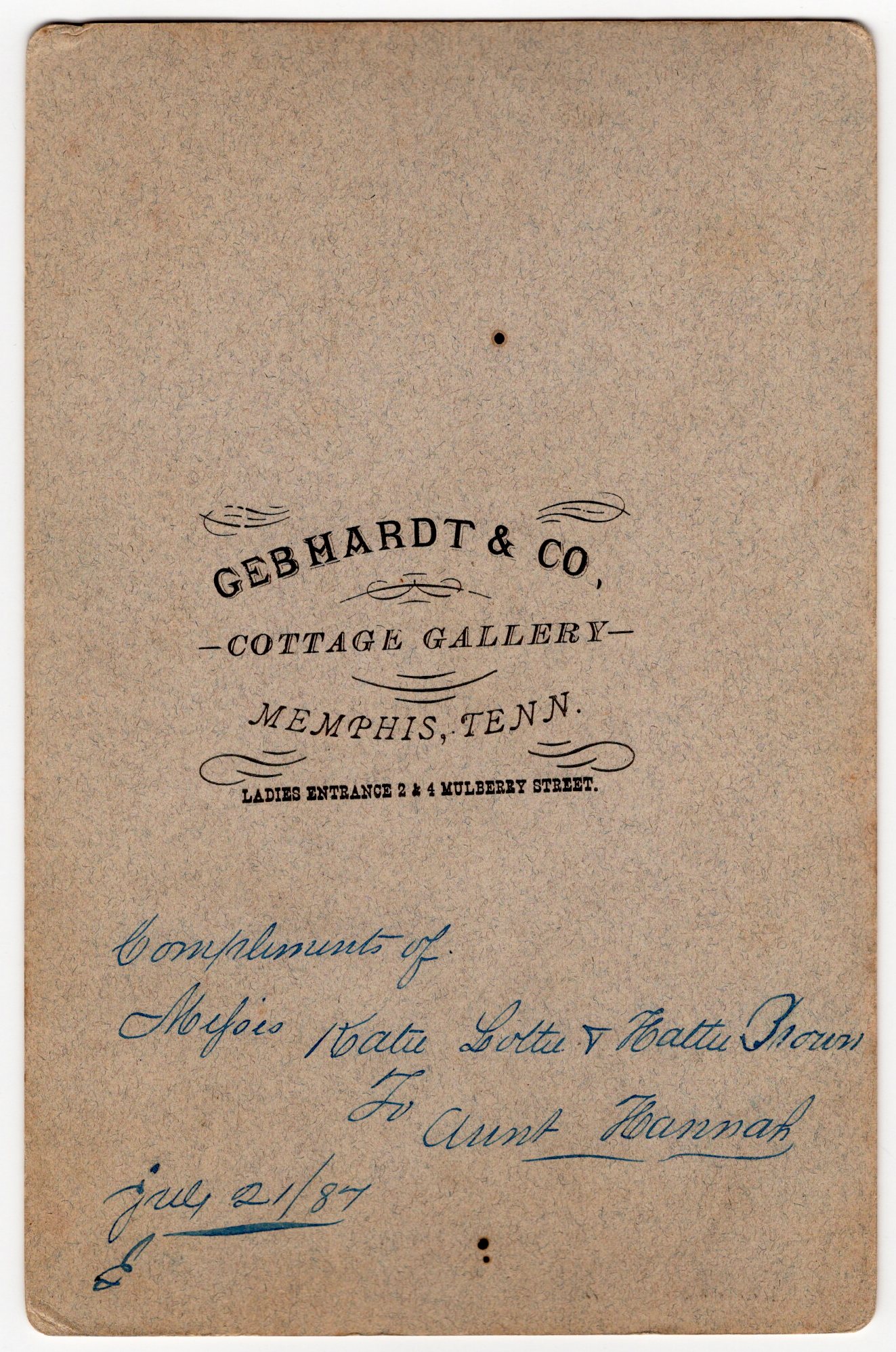
Katie, Lottie, and Mattie Brown pose for this portrait at the “Cottage Gallery” of Gebhardt and Company in Memphis, Tennesse. The reverse of the card has a message sending “compliments” to the children’s Aunt Hannah and is dated “July 21/ 1887”. Note the props that the children are holding; a book, a basket, and the middle child is holding something that I can not determine. What do you think is in the basket and what is in the centered girl’s hand? Leave a comment with your ideas. (SOLD)








 THE CABINET CARD GALLERY