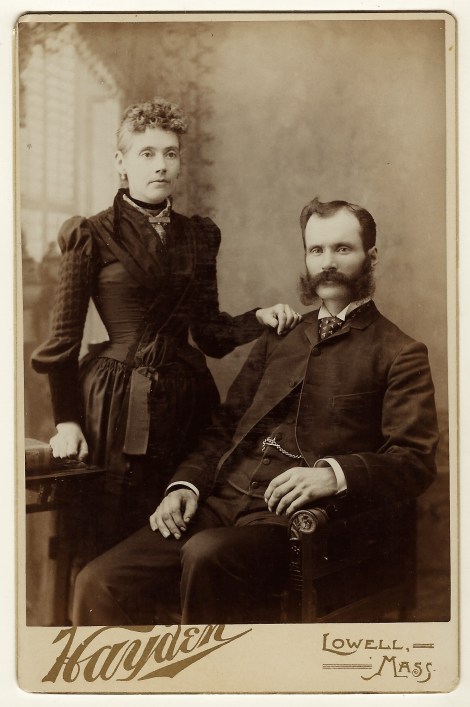
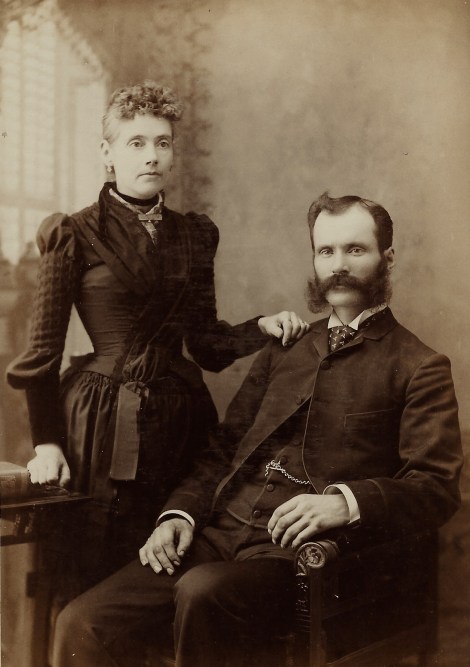
GENTLEMAN WITH MUTTON CHOPS POSING WITH HIS WIFE IN LOWELL, MASSACHUSETTS (CIVIL WAR VETERAN PHOTOGRAPHER)

This cabinet card features a well dressed couple posing for their portrait at the Hayden studio in Lowell, Massachusetts. The gentleman has wonderful mutton chops with a connecting mustache. The photographer of this photograph is Marshall M. Hayden (1847-1928). He operated a studio in Lowell between 1867 and 1900, according to one Massachusetts historical site. However, my preliminary research found that he actually is listed as a photographer in the 1880 through 1920 US census. Interestingly, he was also listed in the 1926 Lowell business directory as a photographer (he was 79 years old). Earlier in his career he worked as a bread deliveryman (1870 US Census). Hayden was a veteran of the Civil War. He served in Company H of the 6th Massachusetts Infantry. He served nine months in 1862 and 1863. He was a private and a musician.   (SOLD)

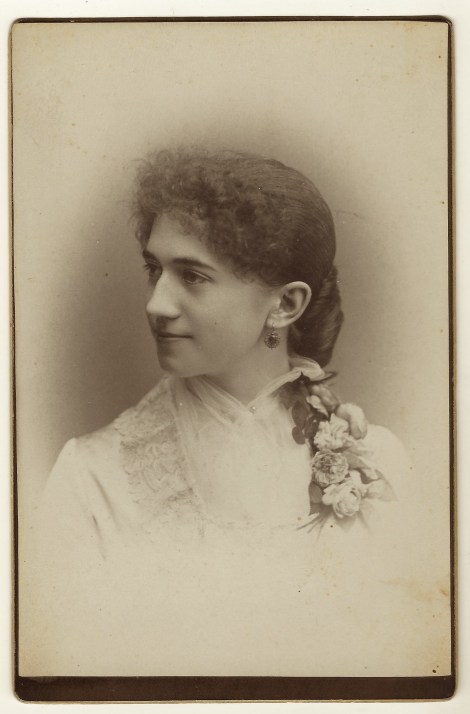
PORTRAIT OF “MISS DIX” IN ROCHESTER, NEW YORK (CIVIL WAR VETERAN PHOTOGRAPHER)

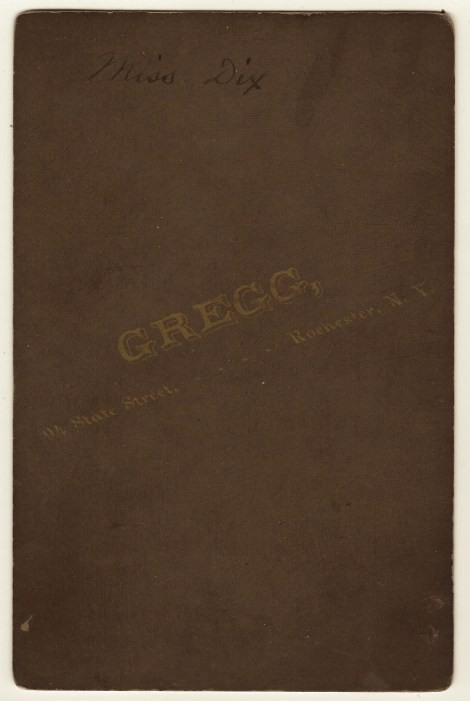
A young woman poses for her photograph at the Gregg Studio in Rochester, New York. She is wearing flowers pinned to her dress, as well as earrings and a nice smile. An inscription on the reverse of this cabinet card photograph reveals that the subject is named “Miss Dix”. The photographer of this image is Sherman Gregg (1838-1891). He is listed as a photographer in the 1865 New York State Census. The year before, (1864), he entered and left the Union Army. During the Civil War he served as a First Lieutenant in the 3rd Regiment, of the New York Cavalry. He is cited in the Photographic Times and American Photographer (1884). Gregg was listed in Rochester Directories as a photographer until 1890. He died in 1891 and is buried in Rochester’s Mt. Hope Cemetery.

SOLD

PORTRAIT OF A WELL DRESSED MAN TAKEN IN A RAILROAD PHOTO CAR BY A CIVIL WAR VETERAN KNOWN TO BE “ECCENTRIC IN HIS HABITS”

A well dressed man poses for this cabinet card portrait taken by photographer J. B. Shane in a railroad photo car. The gentleman is dressed in his fancy clothes. He is wearing a suit with a vest and a pocket watch. He is also wearing a wide brim hat and is holding an umbrella.The photographer of this image is Captain James Boucher Shane (1840-1913). He earned the rank of captain in the Civil War where he served with distinction in the 16th Kentucky Infantry (Company D). He entered the Union Army as a Sergeant and mustered out as a First Lieutenant. After the war, he was promoted to Captain. It is my hypotheses that he suffered from Post Traumatic Stress Disorder from his experiences in the war. My reasons for diagnosing him 104 years after his death will become apparent later in this story. After the war Capt. Shane moved his family to Abilene, Kansas. He tried his hand at a number of businesses including farming, In 1878, he moved to Lawrence, Kansas and operated a photo studio from a railroad car as well as studios in the town of Lawrence. In 1902 he was convicted of murder and was sent to the state penitentiary until his parole in 1912. Shane’s daughter, Juno Belle Shane, operated the studio after Shane went to prison. Her husband, Herbert Thompson eventually took over the business and renamed it to the Thompson studio.  The gallery continued to do business until 1953. A collection of Shane’s and Thompson’s papers and photographs are kept by the University of Kansas libraries. I was curious about the details of Shane’s crime and further research found details about his offense. The Journal of the Annual Encampment of the Grand Army of the Republic (1911) has a brief article about J. B. Shane. The journal explains that the Kansas Department of the GAR had proposed and passed a resolution to appeal to the Kansas Governor (W. R. Stubbs) to get Shane out of jail. The appeal was based on the fact that Shane was not allowed to testify on his own behalf during his trial. The appeal states that if he had been allowed to testify, charges would have been lowered to manslaughter, which had a shorter prison term than murder. He would have had to serve a maximum term of ten years for the lower charge. The appeal also explained the details of Shane’s crime. The article states that after the war, Shane had bad fortune in his photography business and became “eccentric in his habits”. It seems that the young boys in the town made sport of harassing Capt. Shane. They would annoy him by putting graffiti on his building and throwing sticks into his studio. The appeal declares that Shane was “a man of irritable temper” and reports that one day the boys threw sticks into his studio and Shane reacted by fatally shooting one of them. This occurred before the invention of the term “PTSD”, but rest assured that such a condition existed among the veterans of the civil war. It is likely that Capt. Shane was a victim of this disorder.  (SOLD)

A PROFILE PORTRAIT OF A PRETTY WOMAN IN KANSAS CITY, MISSOURI (PHOTOGRAPHED BY A CIVIL WAR PHOTOGRAPHER)

kc-pro

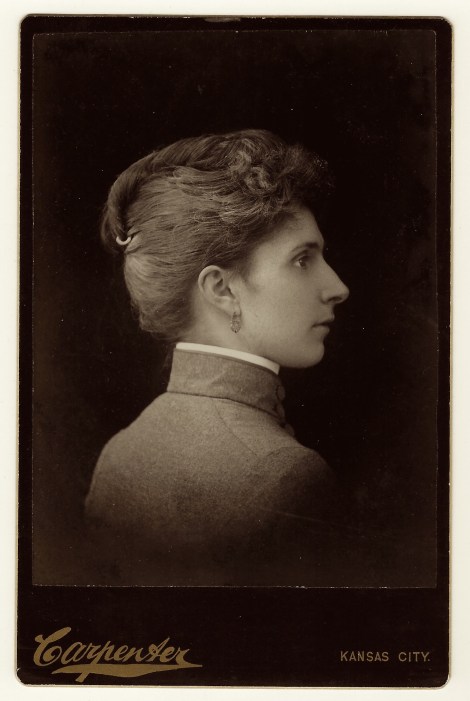
This cabinet card photograph features a profile view of a pretty young woman. She is wearing a high collar blouse and jacket. The young lady’s hair is worn up in a sweep and she is wearing earrings. The photograph was produced by the Carpenter Photographic Rooms in Kansas City, Missouri. Marion S. Carpenter was a daguerreotypist in Dayton, Ohio in 1850. He than conducted his photography business in Cincinnati at the Palace Art Studio between 1857 and 1865. During the Civil War he was a staff photographer for the United States Government. He photographed Abraham Lincoln on three occasions. After the war he went to Kansas City, Missouri where he continued to operate a photography business. The Bulletin of Photography (1913) notes his passing at age 84 while living in Kansas City. The notification indicates that he was still actively involved in business in 1913, the year of his death.

kc-pro-1

PORTRAIT OF A PRETTY TEENAGE GIRL IN MARLBORO, MASSACHUSETTS

marlboro

A pretty teenage girl poses for her cabinet card portrait at the Richardson studio in Marlboro, Massachusetts. She is wearing a thick chained necklace and has flowers pinned to her collar. She is wearing her hair down and has pretty curls as her bangs. The photographer, E. P. Richardson was a civil war veteran from a Massachusetts regiment. He is listed as a photographer in a Boston directory (1871) as well as in a Marlboro directory (1894).

marlboro 1

Published in: on March 8, 2016 at 5:52 pm  Leave a Comment  
Tags: , ,

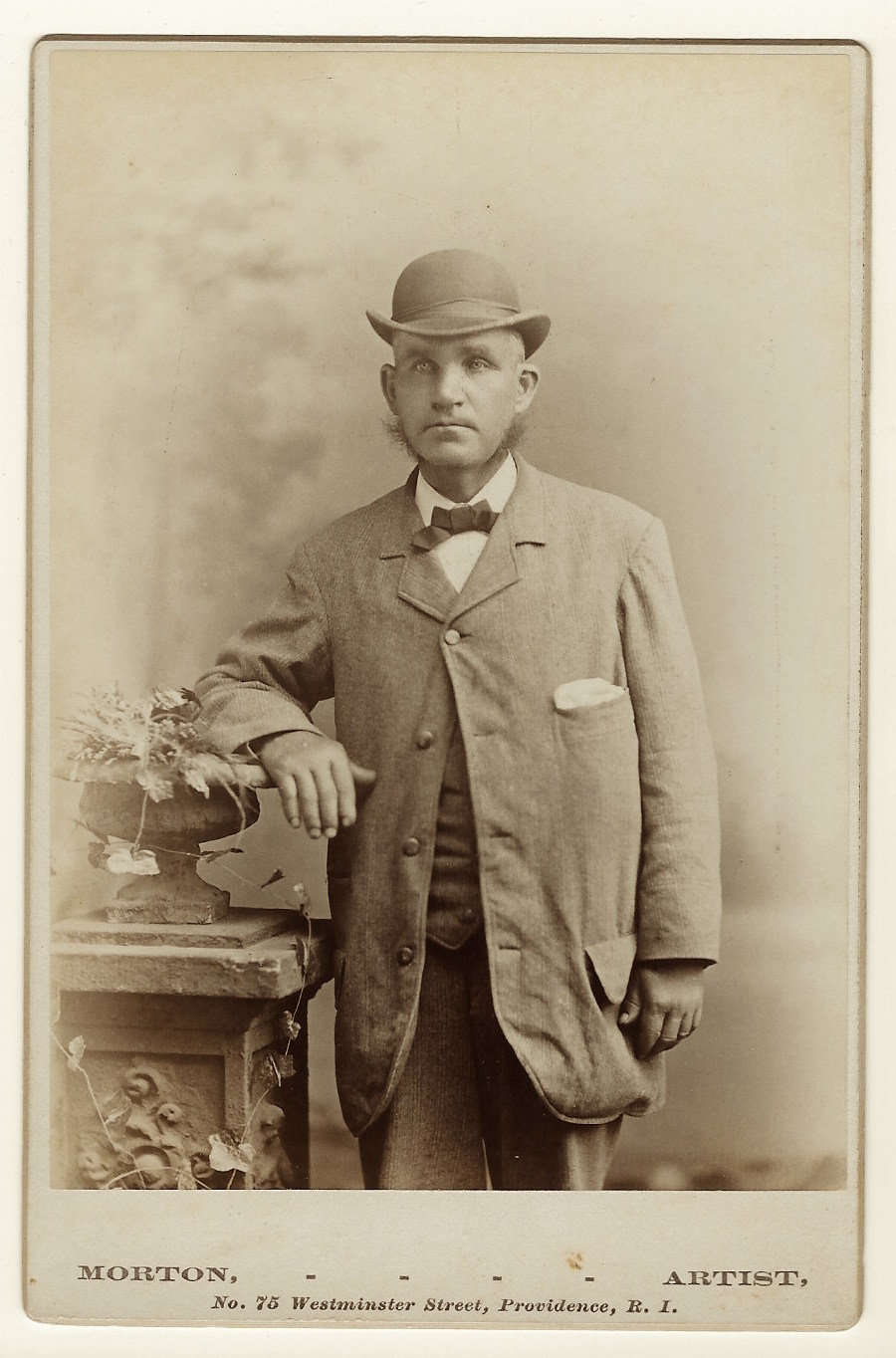
A GENTLEMAN WITH FREE RANGE WHISKERS AND A BOWLER HAT IN PROVIDENCE, RHODE ISLAND

morton

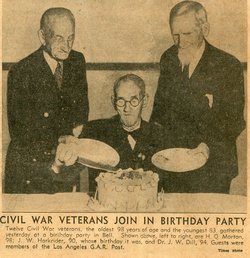
A nicely dressed gentleman wearing a bowler hat, poses for his portrait at the studio of Hosea Q Morton in Providence, Rhode Island. The man is adorned with an interesting facial hair style. His whiskers don’t seem to be attached to a beard, mustache or sideburns. He has “free range whiskers”. To view other photographs by this photographer, click on the category “Photographer: Morton”. The photograph below shows Hosea Morton (on the far left) at a birthday party. He was more than 90 years of age when this photo was taken. His obituary reports that he was born in Maine and lived from 1839 until 1938 The article states that he was a veteran of the civil war. He served in both the 1st (company E) and 6th (company D) Maine regiments. He rose in the ranks from Private to Sergeant. He served between 1861 and 1865 and was a wounded warrior (shot in the neck). In 1870 he was working in a Providence trunk shop. He then worked two years as a salesman and in 1873 he began his photography business. He was still working in Providence as a photographer in 1910 but by 1913 he was residing the National Military House in Malibu, California. He died there in 1938 and was buried in the Los Angeles National Cemetery. Morton outlived three wives.   SOLD

3737218_1444011356

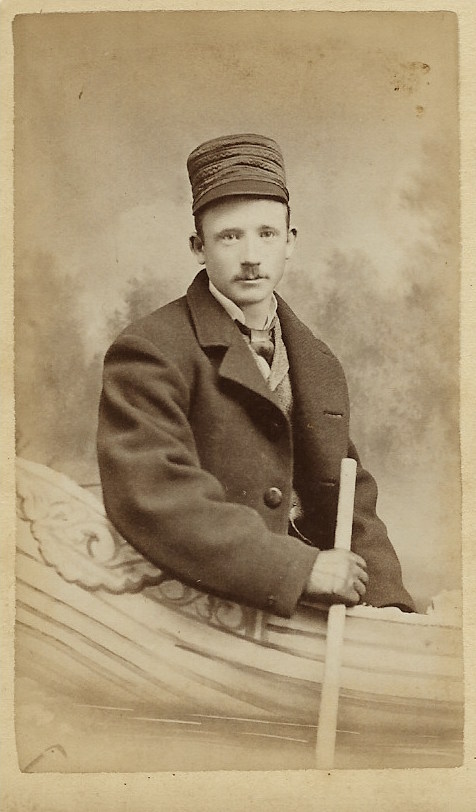
YOUNG MAN IN A STUDIO ROWBOAT IN CARTHAGE, MISSOURI (CARTE DE VISITE)

rowboat

A young man dressed in winter clothing gently rows his boat down a river. In actuality, the boat and the river were props inside the studio of E. E. Roessler in Carthage, Missouri. Carthage was the site of two battles during the American civil war and in a third incident,  most of the city was burned down. The photographer, Edward E. Roessler was born in 1850 and married Annie Befferin in 1896. He robbed the cradle as Annie, an accomplished pianist, was 21 years younger than her husband. The town of Carthage was the site of two battles during America’s civil war. During the war, in a seperate incident, it was nearly completely burned down. This carte de visite photograph was likely taken not too many years after the war. Roessler also worked as a photographer in Shelbyville, Illinois as well as San Bernadino, California. He died in 1935 in Alameda, California.

rowboat 1

Published in: on October 9, 2015 at 9:40 am  Leave a Comment  
Tags: , , ,

PORTRAIT OF A LOVELY COUPLE IN HOMESTEAD, PENNSYLVANIA

HOMESTEAD

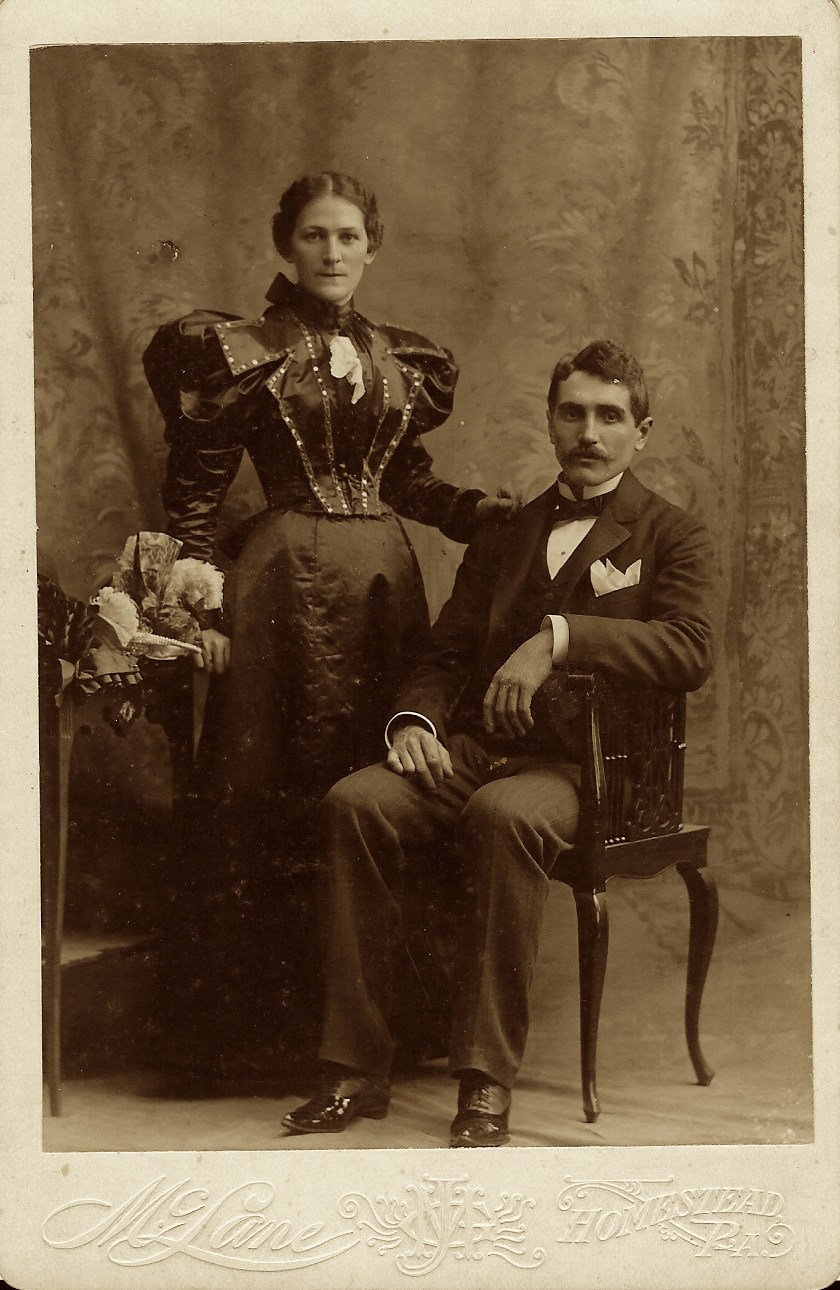
This cabinet card portrait features a lovely couple photographed by the McLane studio in Homestead, Pennsylvania. The couple are attractively dressed and well groomed. The woman has a lovely figure that is assisted by a corset. She is standing next to a bouquet of flowers. The gentleman has a nice mustache which curls at it’s ends. Note his shined shoes. Perhaps this is the couple’s wedding portrait. The photographer, John G. McLane (1849-?) apparently moved around a lot. He can be found in directories working as a photographer in Bradford (at least 1885-1887), Titusville (at least 1893-1895) and Pittsburg (at least 1900-1902). All of these cities are in Pennsylvania. One of McLane’s photographs can be found in the book, “Victorian Fashion in America (2013). McLane was a civil war veteran. He fought for three years as a member of the 142nd Pennsylvania Infantry. He entered the unit as a drummer. The last years of his life were spent at a home for disabled veterans. He is buried in Grove Hill Cemetery (Oil City, Pennsylvania).

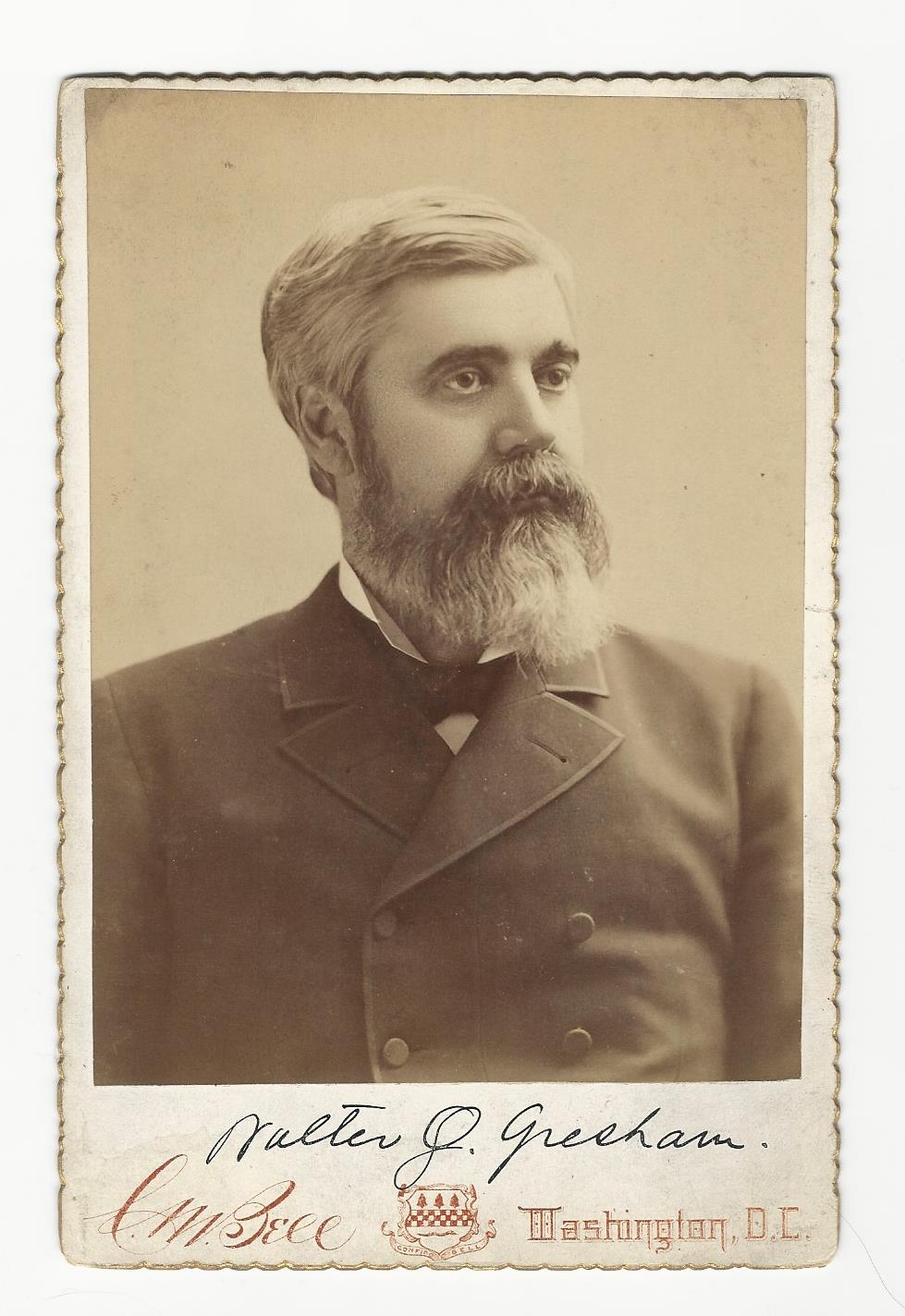
WALTER Q. GRESHAM: CIVIL WAR HERO AND HOLDER OF TWO US GOVERNMENT CABINET POSITIONS (PHOTOGRAPH BY CELEBRATED PHOTOGRAPHER C. M. BELL)

gresham

Walter Q. Gresham (1832-1895) was quite an accomplished man in both his military and his political careers. He was an American statesman and jurist. He held offices that included US Postmaster General, Judge on the US Court of Appeals, Secretary of State, and the Secretary of Treasury. He was a two time candidate for the Republican nomination for President (1884 and 1888). He also served as a Union officer in the American Civil War. He entered the army as a Lieutenant Colonel of the the 38th Indiana Volunteer Infantry. He was promoted to full Colonel and led the 53rd Indiana Infantry and took part in the fight for Vicksburg as well as other battles. In 1863 he was appointed Brigadier General and commanded Federal forces in Natchez, Mississippi. In 1864 he became a division commander under General Sherman during the Atlanta campaign. He was forced to leave the army after being shot in his knee; an injury that left him lame for the remainder of his life. He was married to Matilda McGrain in 1858. Gresham is buried in Arlington National Cemetery. The photographer of this historic cabinet card is C. M. Bell. Charles Milton Bell (1848-1893) was also an accomplished man. He was the youngest member of a family of photographers that operated a studio in Washington DC from around 1860 until 1874. He established his own studio on Pennsylvania Avenue in 1873. He quickly became one of the most successful photographers in the city. He was noted for his portraits of Native Americans as well as political figures and celebrities. His subjects included President Chester Arthur, Chief Yellow Bull, and Helen Keller. His photographs can be found in many prestigious institutions including The Library of Congress, Harvard University, Dartmouth University, and the Smithsonian. Bell is also known for his photographs of President Garfield’s assassin, Charles J. Guiteau. He was the only photographer authorized by Guiteau and the Government to take photographs of Guiteau and other people playing roles in his trial. Bell also took medical photographs relating to the assassination and assassin.

ADORABLE CARTES DE VISITE: CUTE LITTLE GIRL SHOWING LOVE TO HER PRETTY MOTHER (WHAT IS A CDV DOING IN THE CABINET CARD GALLERY?)

mom and kid

The Cabinet Card Gallery was born in 2008 and at that time I decided not to include any cartes de visites in the collection. I believed that it was important I keep the scope of the gallery narrow so cabinet card aficionados had  a site that specifically catered to their interest. Every once in awhile I would come across a cdv that I wanted to include in the gallery but I always managed to control the impulse. Today the impulse won. This Cartes de Visite photograph is an incredible portrait. The photographer did an excellent job of capturing a little girl’s love for her mother. The little girl, wearing a white gown, is adorable. She is standing on a chair and leaning into her mom. The viewer can see the child’s quest for love and security from the mother that she adores. The child’s mother is a pretty woman and very well dressed. She is holding her hat in one hand and has, what looks like a scarf, draped over her other arm. The photographer of this terrific cdv is the J. E. James studio in Galena, Illinois. James Edward James (1842-1878) was born in Liverpool, England. After immigrating to the United States he served in the 96th Illinois Infantry (Company A) during the civil war. He entered the service as a Private but was discharged as a Commissary Sergeant. He died while still a young man and left his wife Kitty to raise their four children and operate his photographic studio.