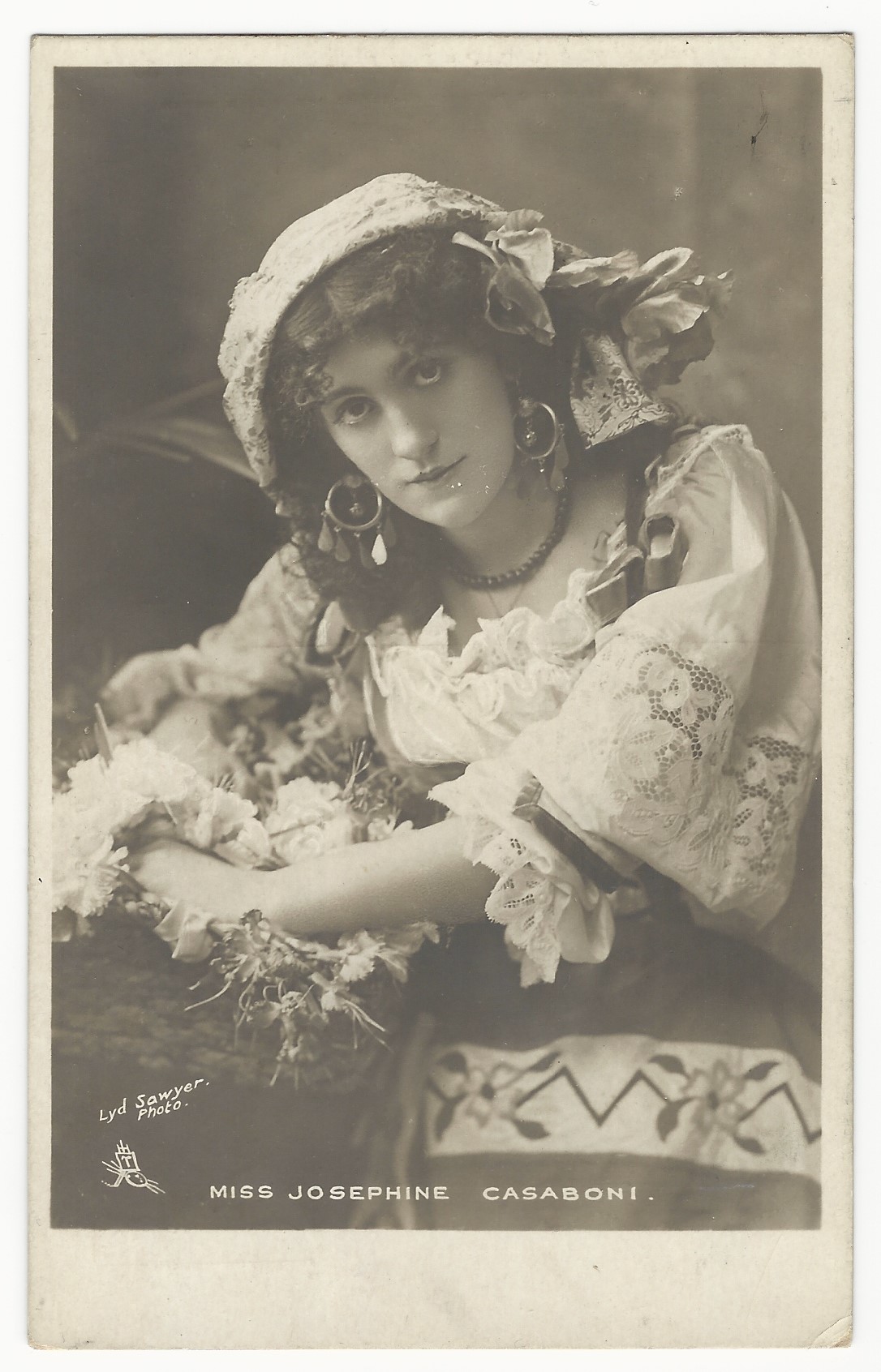
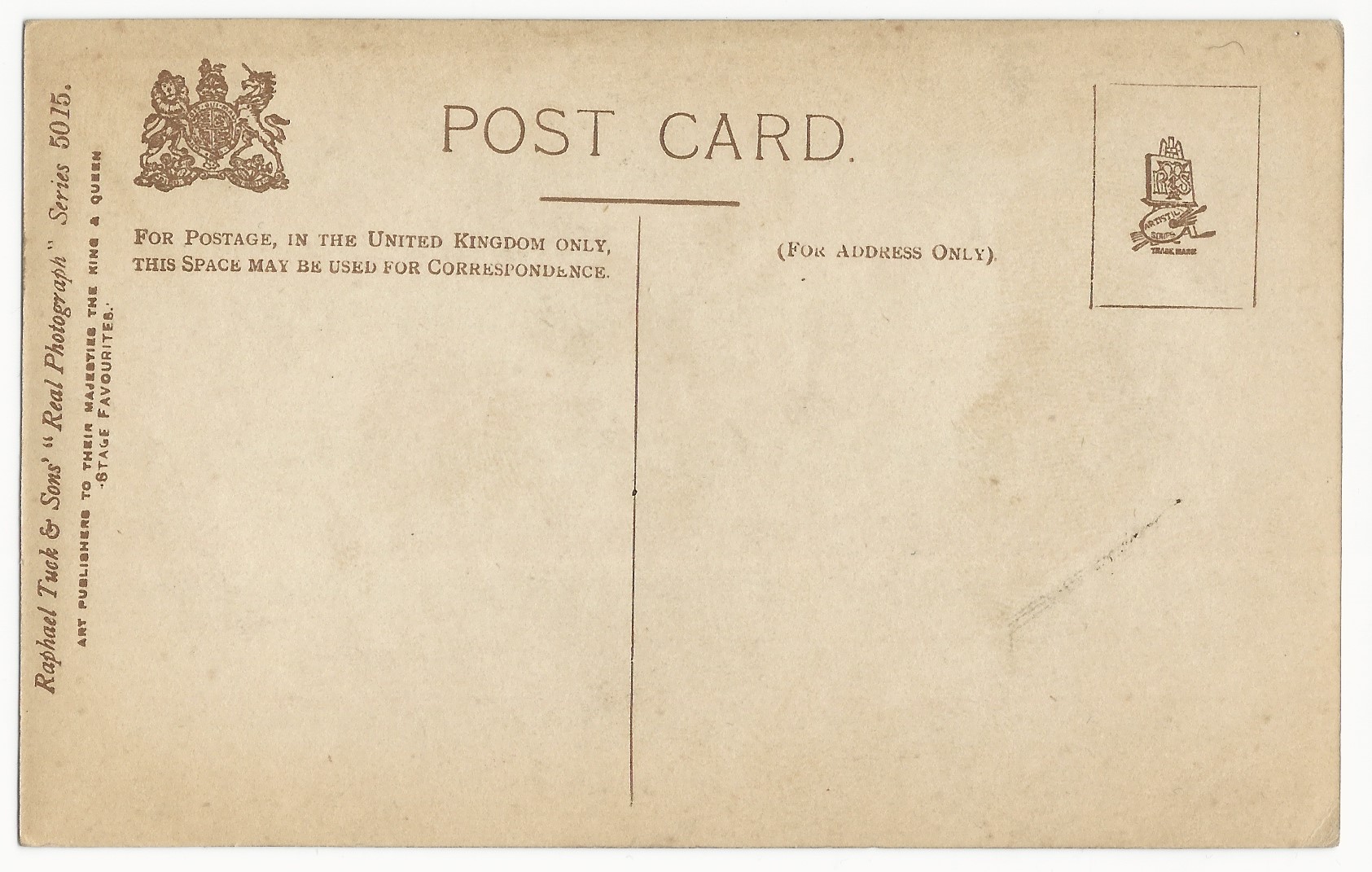
This vintage real photo postcard features Miss Josephine “Cassy” Casaboni, an esteemed principal ballet dancer. The photographer of this image is Lyd Sawyer. Edward Lyddel Sawyer (1856-1927) was a British photographer. At the age of sixteen, he was responsible for the work of a busy photography studio in Newcastle. His father was a portrait painter and photographer. In 1885, he opened a portrait studio with his two brothers. In 1895, he opened a portrait studio on Regent Street, in London. He was a founding member of “The Linked Ring”, a British photographic society that advocated viewing photography as a fine art, rather than exclusively as a science or commercial venture. Twelve of Sawyer’s photos can be found in Great Britain’s National Portrait Gallery. He is considered a talented photographer and an important figure in the history of photography. This postcard was published by Raphael Tuck & Sons. The card is part of the “Stage Favourites” series (no.5015). This photograph of Miss Casaboni captures the dancer in her role in “The Red Shoes”, which appeared at London’s Alhambra Theatre in 1899. This vintage postcard is in very good condition (see scans).
Buy this Vintage Real Photo Postcard (includes shipping within the US) #3485
To purchase this item, click on the Pay with PayPal button below
$28.27
Buy this Vintage Real Photo Postcard (includes International shipping outside the US) 3485
To purchase this item, click on the Pay with PayPal button below
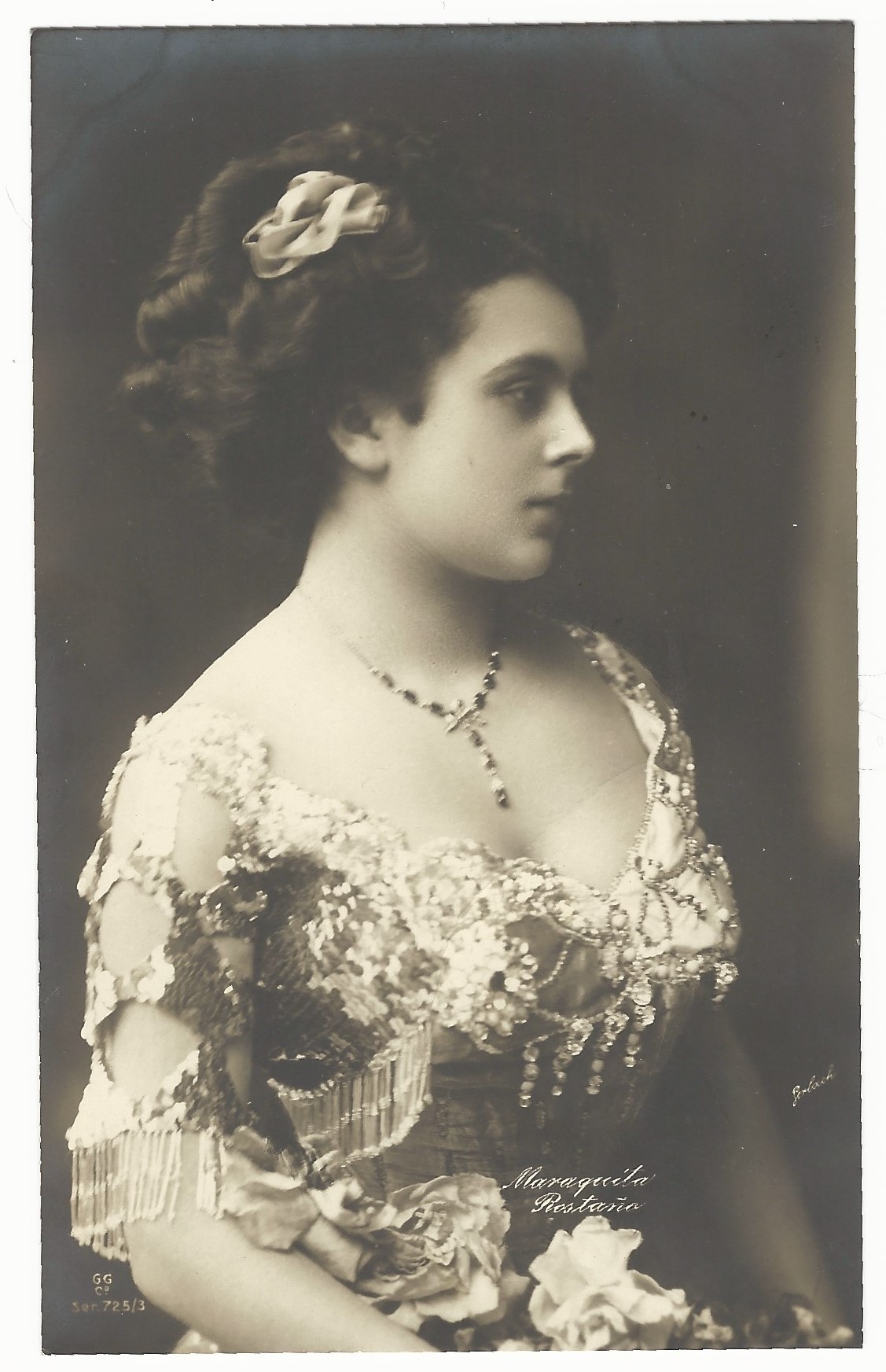
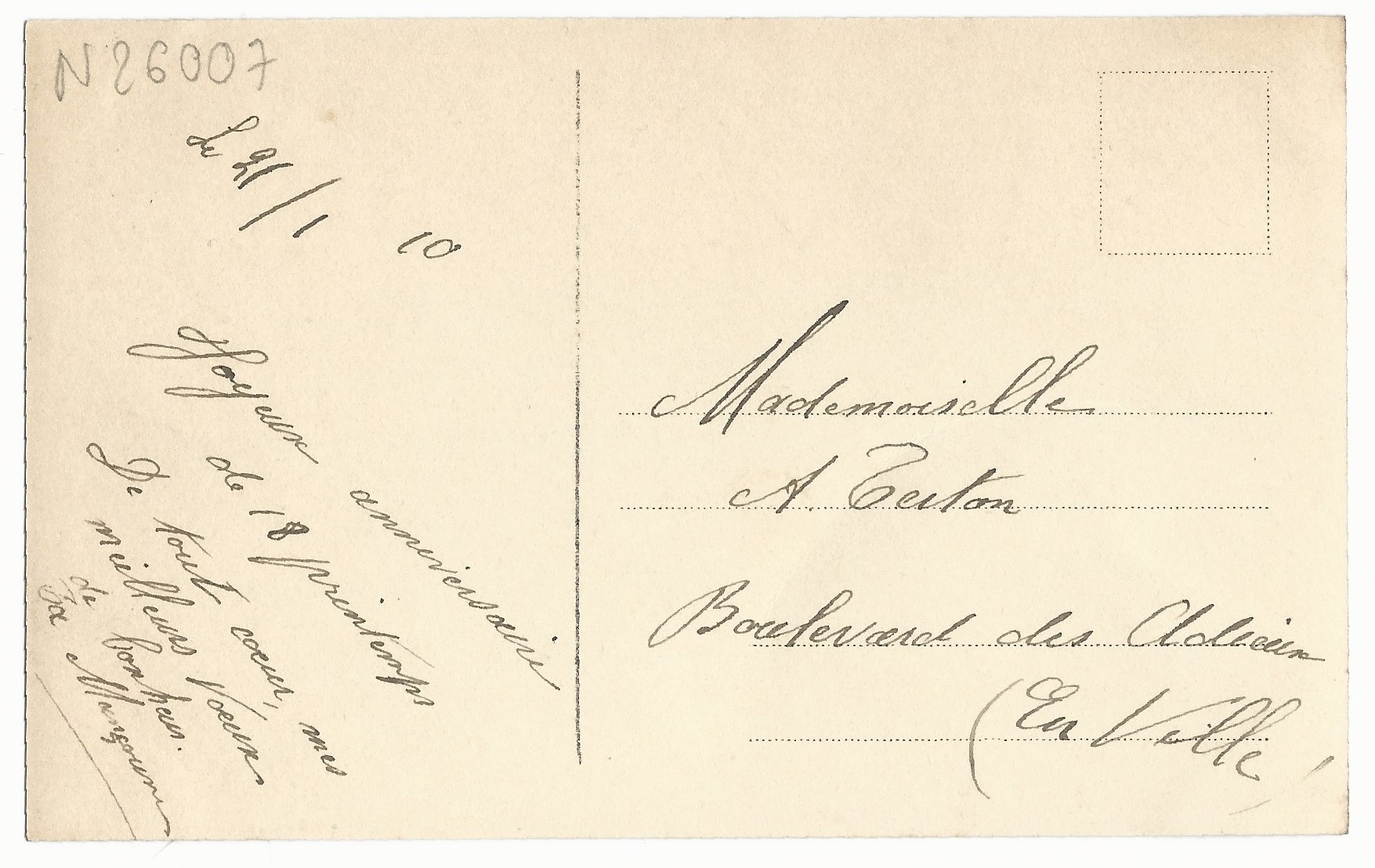
This vintage real photo postcard features dancer Maraquita Rostano. Although my research found other postcard images of Miss Rostano, I was unable to locate any biographical information. The postcard was published by Georg Gerlach & Co.. The firm was a real photo card publisher and printer based in Berlin, Germany. The postcard was part of a series (no725/3). The message on the card was written in 1910 and the card was addressed to En Ville (In Town). This postcard is in very good condition (see scans).
Buy this Vintage Real Photo Postcard (includes shipping within the US) #3442
To purchase this item, click on the Pay with PayPal button below
$17.89
Buy this Vintage Real Photo Postcard (includes International shipping outside the US) 3442
To purchase this item, click on the Pay with PayPal button below
This vintage real photo features dancer/actress Lydia de Rostow. She is dressed in a dance costume that accentuates her shapely figure. The photograph was taken by Felix studio, which was located in Paris, France. Luminous-Lint describes Felix as a “photographer of couture in the first decades of the 20th century in France”. He was an early fashion photographer who operated, according to Luminous-Lint, during two decades (1900-1920). The name “R Guilleminot” is printed on the reverse of the postcard. Guilleminot was a firm based in Paris that manufactured photographic plates and papers. Much of their photo paper was used for printing real photograph postcards. The company existed between 1858 and 1994. This vintage postcard portrait is in very good condition (see scans).
Buy this Vintage Real Photo Postcard (includes shipping within the US) #3409
To purchase this item, click on the Pay with PayPal button below
$28.00
Buy this Vintage Real Photo Postcard (includes International shipping outside the US) 3409
To purchase this item, click on the Pay with PayPal button below
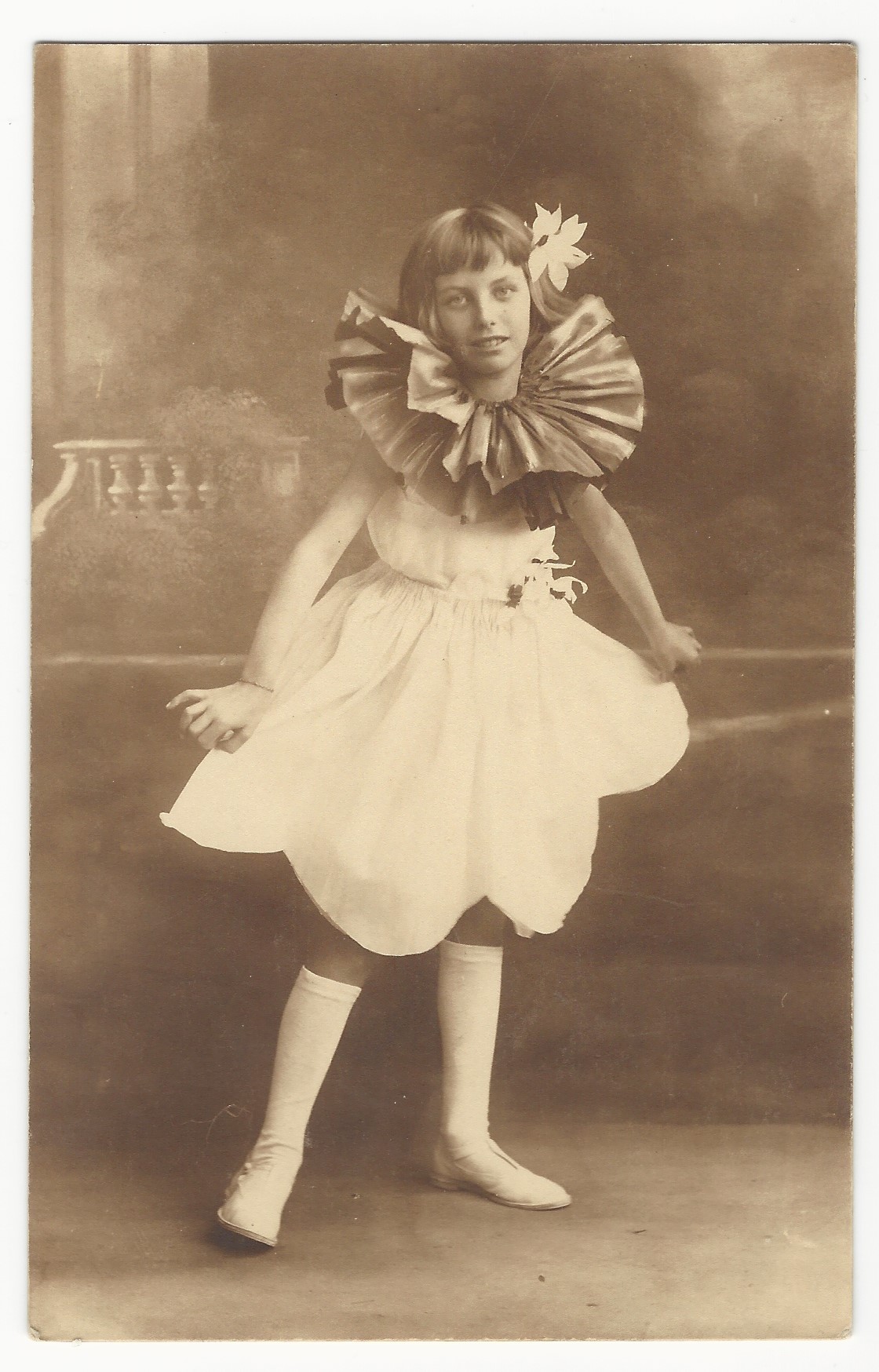
OK. It may not be the biggest collar in the world, but it’s pretty big. The smiling cute young girl seen in this vintage real photo postcard, by my estimation, is curtseying after giving a dance performance. Her shoes, stockings, short dress, and the flower in her hair are all reasons for my hypothesis. And what about the collar? It appears to be on steroids. I don’t think the collar is something she would wear in everyday life. I am wondering if she is wearing a costume designed to make her look like a flower? What do you think? I must admit, the “collar” reminds me of an “Elizabethan Collar” worn by dogs after surgery. This is a very unique image. The photo was taken by a private photographer and not mass produced to be sold by studios to the general public. This real photo postcard portrait is in very good condition (see scans).
Buy this original Vintage Real Photo Postcard (includes shipping within the US) #3387
To purchase this item, click on the Pay with PayPal button below
$35.50
Buy this Vintage Real Photo Postcard (includes International shipping outside the US) 3387
To purchase this item, click on the Pay with PayPal button below
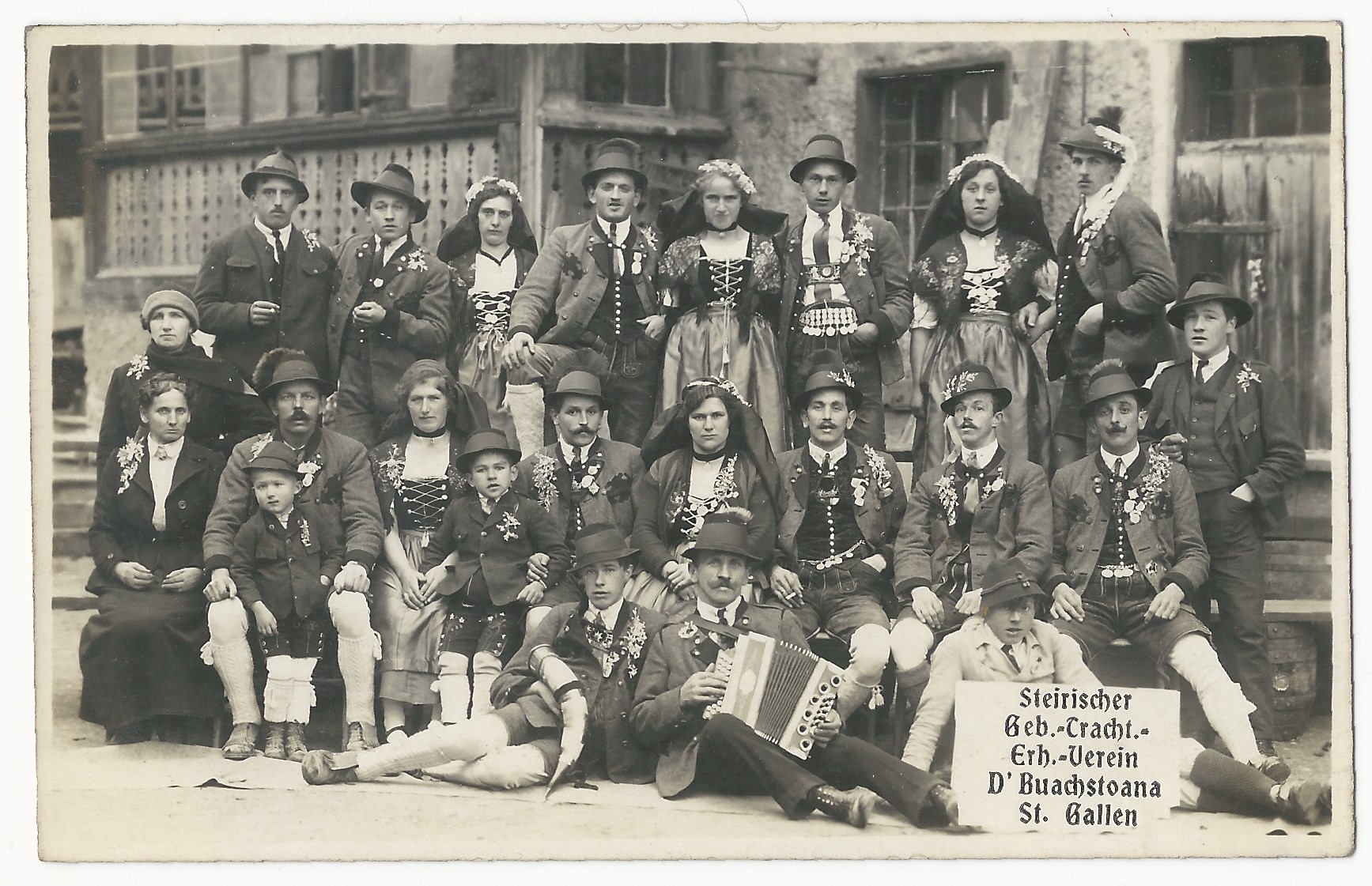
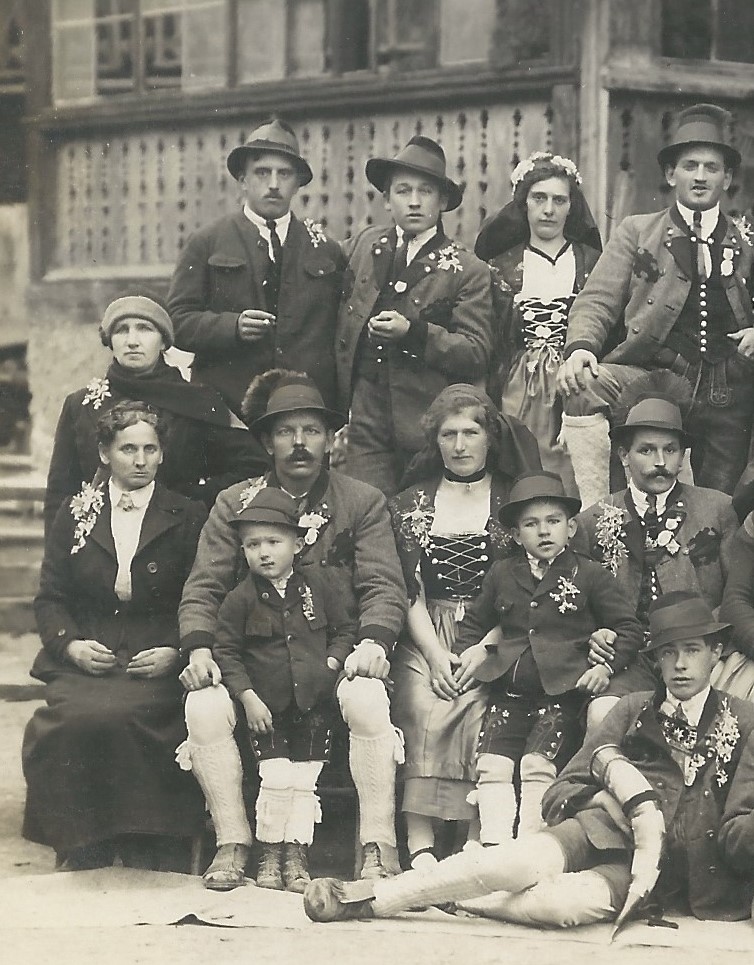
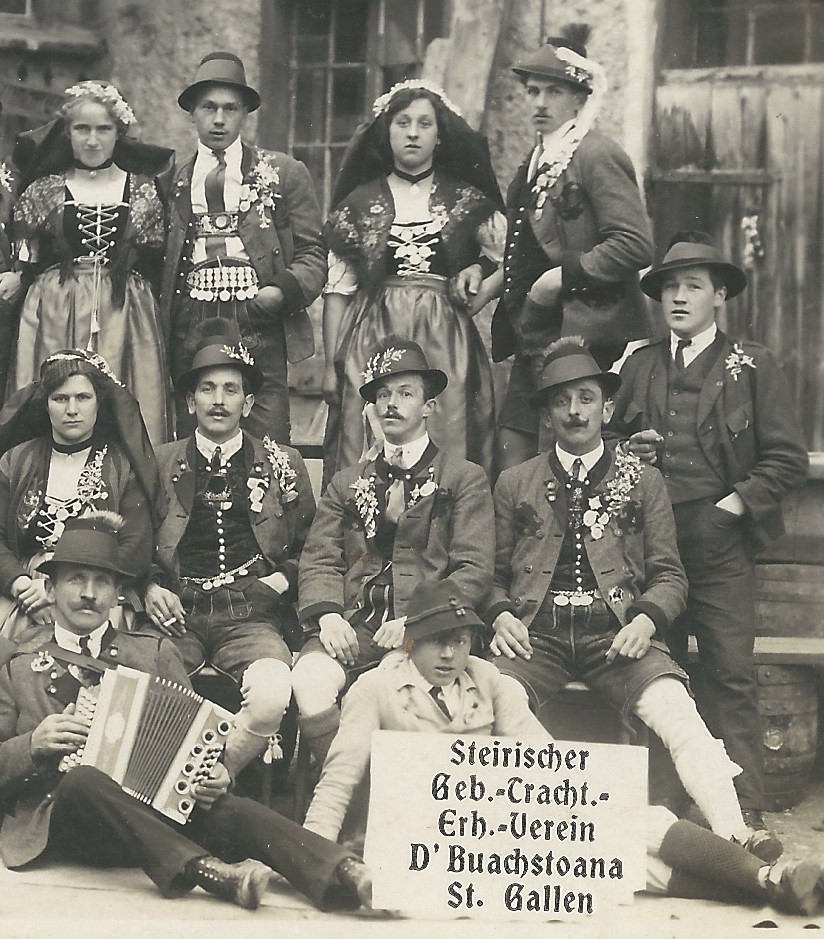
This vintage real photo postcard features a traditional Swiss folk music and dance group wearing traditional ethnic clothing. Note the accordion being held by the man in the center of the front row. The group was based in the town of St. Gallen. This real photo postcard is in good condition (see scans). There is a mar which can be seen on the man all the way on the right side of the top row. SOLD
Bessie Love (1898-1986) is the subject of this vintage real photo postcard. She was beautiful and her postcard and photo images are very collectible. Bessie was an American-British actress who initially became popular by playing sweet, pure, and innocent young girls. She went on to play virtuous leading ladies in silent and early sound films. Her career had amazing longevity; she acted for more than eight decades. She worked in many areas of entertainment. In addition to her film work, she acted on the stage, and on radio and television. Bessie was born in Midland, Texas. Her father was a cowboy and a bartender. Her mother was a restaurant manager. She attended Midland schools until the eighth grade. She and her family moved to Arizona, New Mexico, and then Hollywood, California. Once in the Golden State, her father became a chiropractor and her mother worked in a clothing factory (Jantzen). Bessie attended Los Angeles High School and in 1915 she went to a film set to meet with Tom Mix who had promised to help her to “get into pictures”. Mix was unable to meet with her but film director D. W. Griffith was able to meet with her and he promptly put her under contract. Love dropped out of high school in order to pursue her film career. Impressively, she did complete her diploma in 1919. Bessie began with a small role in a Griffith movie, “Intolerance” (1916). Her first major role was in “The Flying Torpedo” (1916). That same year, she appeared in movies opposite William S. Hart and Douglas Fairbanks. Her first starring role was in “A Sister of Six” (1916). Love quickly became a popular performer. Early in her career, Bessie worked for “Fine Arts”, “Pathe” and then Vitagraph. In the 1920’s Love sought roles outside of the “sweet and innocent girl” parts. In two movies she played Asian women. She had the role of a drug addicted mother in “Human Wreckage” (1923) and in other films played an underworld flapper as well as a woman accused of murder. In the 1925 movie, “The King on Main Street”, Love became the first person to dance the Charleston in a movie (see the video below).. The dance became the rage of the era. Also in the 1920’s, Bessie appeared in a film based on Arthur Conan Doyle’s novel “The Lost World”. In addition, she appeared in a romantic comedy directed by Frank Capra. She signed with MGM in 1928. In 1929, Love exhibited her talent in musical comedy. She toured with a musical revue for sixteen weeks. It is thought that her singing and dancing performances in vaudeville helped prepare her for sound films. That same year, she made her debut in her first feature length sound film, the musical “The Broadway Melody”. Her performance led to her receiving a nomination for the Academy Award for Best Actress. MGM rewarded her with a five year contract and a three thousand dollars a week (equivalent to $45,000 a week in 2019). She continued to act in musicals and her success was reflected in her becoming “the screen’s first musical comedy star”. Between 1931 and 1943, Love entered semi-retirement. She had married in 1929 and during this break in her career, she began focusing on her personal life. Her husband was an agent, William Hawks. She had celebrity bridesmaids, including Carmel Myers, Norma Shearer, and Mary Astor. Love had a daughter in 1932, and in 1935, she moved to England. She obtained a divorce in 1936. During World War II, Love worked as a film script supervisor and also worked for the American Red Cross. After the war, Love resumed acting. Much of her work was in theater, television, and radio. She also played minor roles in British film. In 1958, she wrote and performed in a semiautobiographical play. Some of her later films included “The Barefoot Contessa” (1954), “On Her Majesty’s Secret Service” (1969 a James Bond Thriller), and “Sunday Bloody Sunday” (1971). Bessie Love had a long and successful acting career. The IMdB reports that she had 156 acting credits between 1915 and 1981. This vintage postcard was published by Cinemagazine (Paris Edition) as part of a series (no.163). The postcard has excellent clarity and is in very good condition (see scans). SOLD
This vintage postcard is unusual (uncommon). It features two female dancers, I believe they are performing a type of ballet. The dancer that is holding up the other dancer has very muscular legs. Is she a he? An inscription on the reverse of the card appears to say “Jennoff”. I was hoping that the name “Jennoff” would lead me to more information about this postcard. It failed to do so. The story behind this Italian vintage postcard, intrigues me. (SOLD)
This vintage real photo postcard features Russian ballerina, choreographer, and silent film star, Vera Karalli (1889-1972). She was born in Moscow. Her father was an entrepreneur and her mother was an actress. Karalli was active between 1914 and 1921. Karalli was a graduate of the Moscow Theatre School in 1906. She performed in the Ballets Russes company in 1909, and then again, in 1919 and 1920. She was a soloist with the Bolshoi Theater and after two years became a ballerina in 1915. She often danced with ballet star, Mikhail Mordkin. Karalli becan acting in 1914 and she became one of Russia’s most celebrated film actresses. From 1914 to 1919, Karalli appeared in about sixteen Russian silent films. One of these films was an adaptation of Tolstoy’s “War and Peace”. Her last film was a German drama released in 1921. Karalli was a mistress of the Grand Duke Dmitri Pavlovich of Russia. He was the cousin of Nicholas II. It was reported that she was a co-conspirator in the 1916 murder of Grigori Rasputin. After the October Revolution, she fled to the West. Between In the 1920’s she taught dance in Lithuania. Between 1930 and 1935 she was ballet mistress of the Romanian opera in Bucharest. She lived in Paris between 1938 and 1941. She later settled in Baden, Austria. (SOLD)
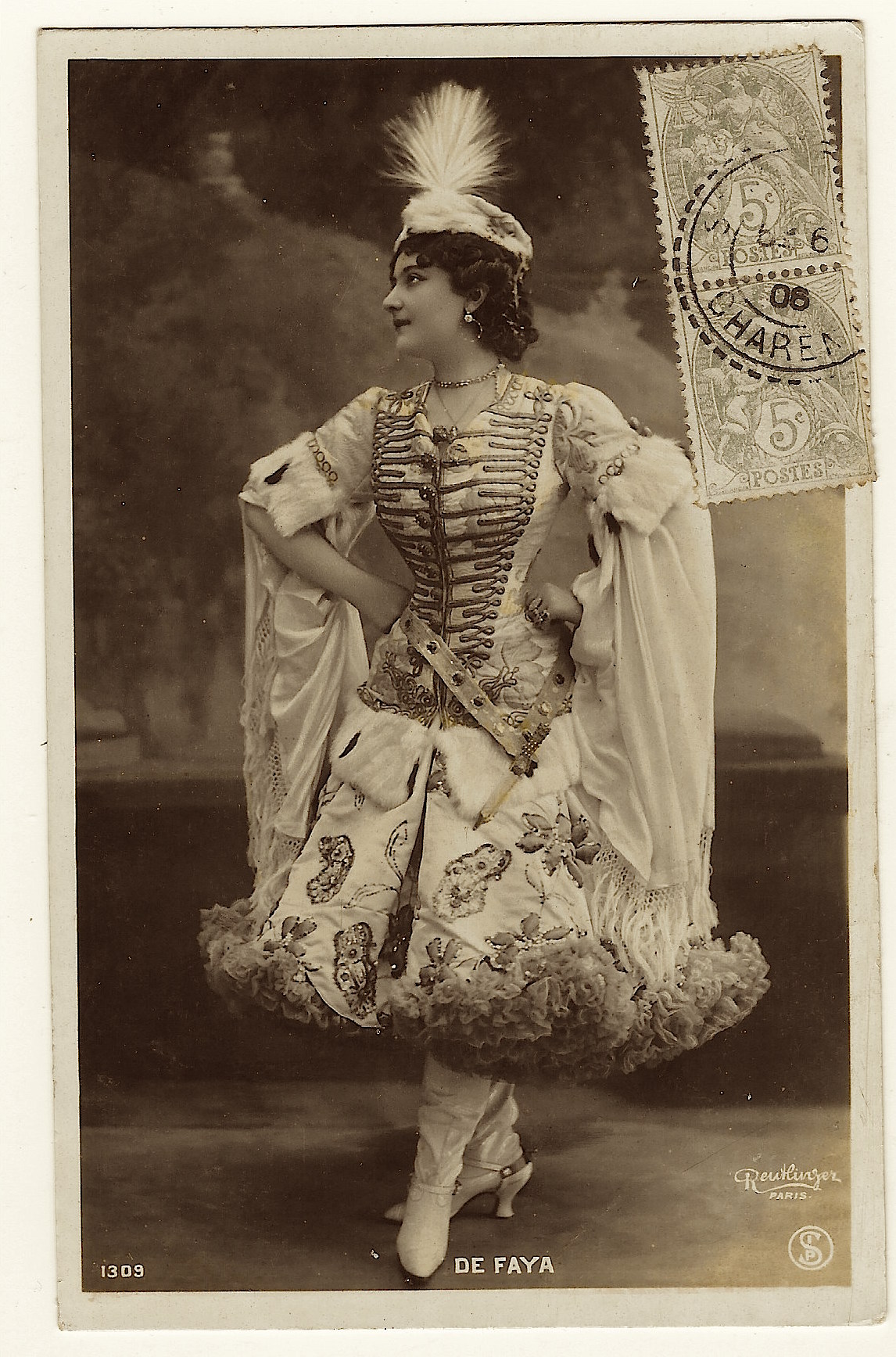
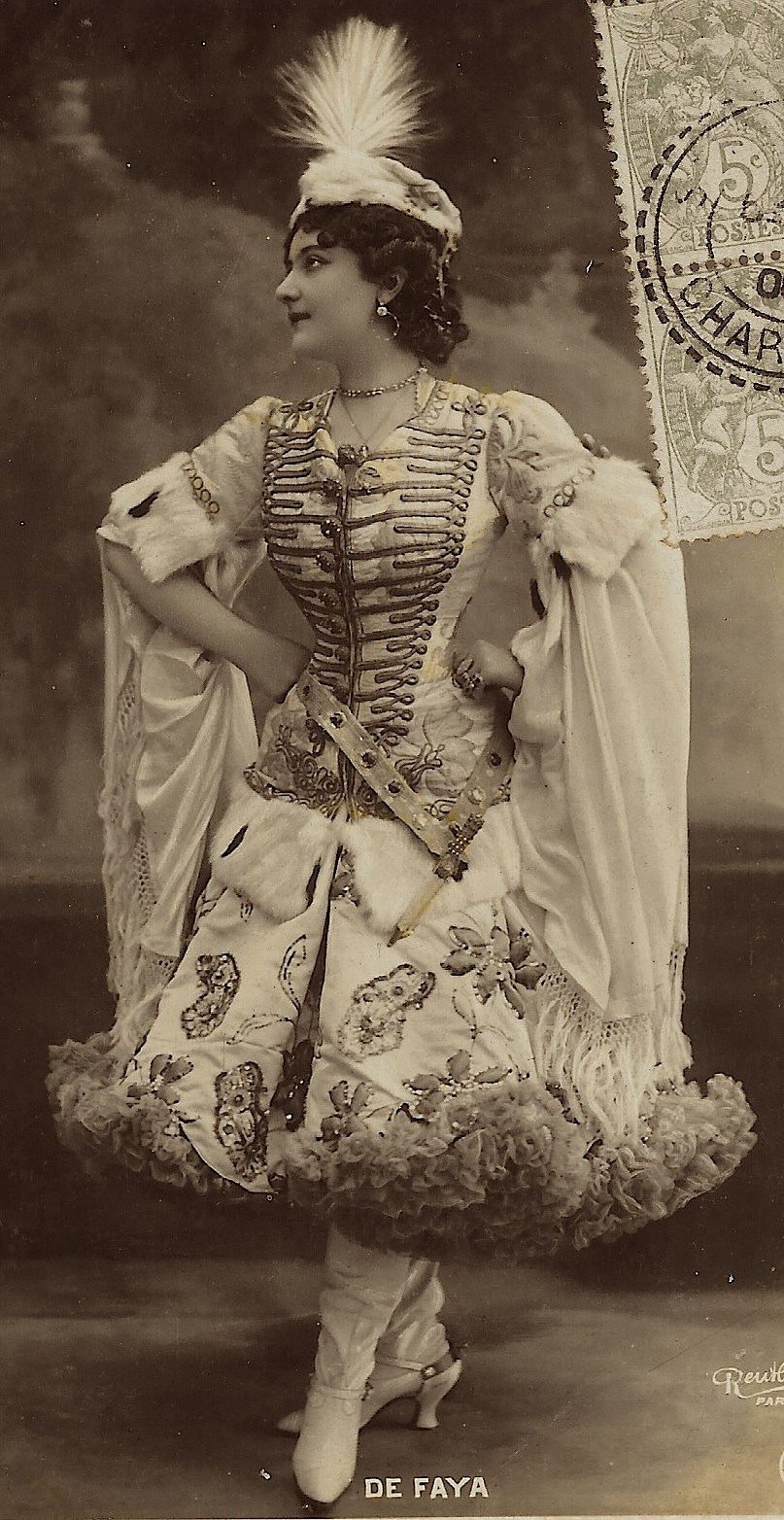
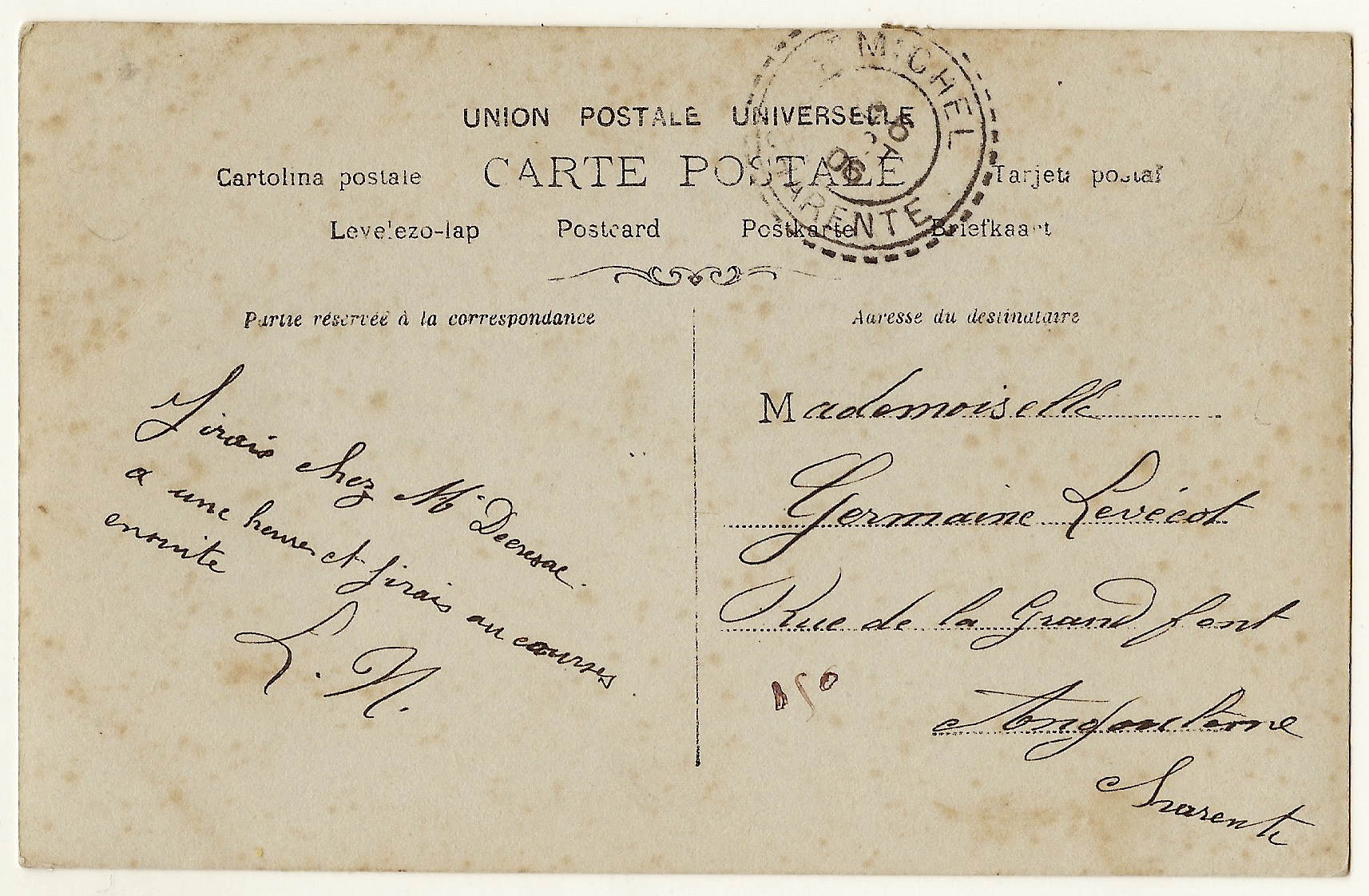
The pretty woman in this vintage real photo postcard is the Spanish dancer, Carmen De Foya. “The Sketch: A Journal of Art and Activity (1905) reported on the De Foyas “consderable grace and skill” when she performed at the Alhambra theater in London, England. Her photo accompanied the article. “The San Francisco Call” (1905) labelled her a “famous Spanish Dancer” and announced her London appearance. The newspaper also added that when De Foya performed in Berlin, she danced at a function attended by the Kaiser. The German leader not only complimented De Foya, but also gave her diamond earrings. It is reported that the pair had an interesting exchange about marriage. When De Foya stated she wanted to get married, the Kaiser suggested that she marry an Englishman because they make the best husbands. “The Illustrated Sporting and Dramatic News” (1905) described De Foya’s act as “poetry in motion”. “The Esoteric Curiosa” (2014) tells a racy story about Miss De Foya. It seems Spain’s King Alfonso XIII nearly went to “the limit of foolishness” over “little Carmen de Foya”. She “knew how to make eyes at a King without getting into trouble”. One night at the Madrid Opera, she kicked her satin toes right at him. The next day King Alfonso sent her flowers and a card. The card said “The loveliest flowers of Spain, to Spain’s loveliest” The King was a known womanizer and he often acted on impulse. In an effort to avoid scandal, Defoya left the next day for Paris. Another version of this story has the two romantically linked. The photograph of Miss De Foya seen on this postcard, was taken by Leopold Reutlinger, a very well respected talented photographer based in Paris. One of his specialties was theatrical photography. The postcard was published by Societe Industrielle de Photograpie (SIP) of Rueil, France. The card is part of a series (no. 1309). The postmark indicates it was stamped in Arente (Italy) in the year 1906. (SOLD)
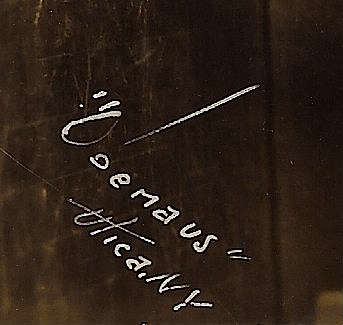
This vintage photograph features a young woman dressed in a dance costume. The previous owner of this image reported that the woman was a dance school student ,and that at the time of this photo, she was at a recital or a recital rehearsal. The student appears to have been in her teenage years. Her costume is unusual and interesting. Note her wide wristbands and striped cap. She may also be wearing a cape although her pose blocks an adequate view of that part of her costume. The subject of this photo is identified by an inscription on the reverse. Her name is Louise J. Howlan (1915-1970). Her father worked for a gas and electric company. At the age of 25, she worked as a stenographer. This photograph was taken by a Utica, New York studio. I am unable to decipher his name which can be found on the lower right hand corner of the image. The photo is from circa 1920’s. The photograph measures about 4 1/8″ x 6 1/4″. (SOLD)







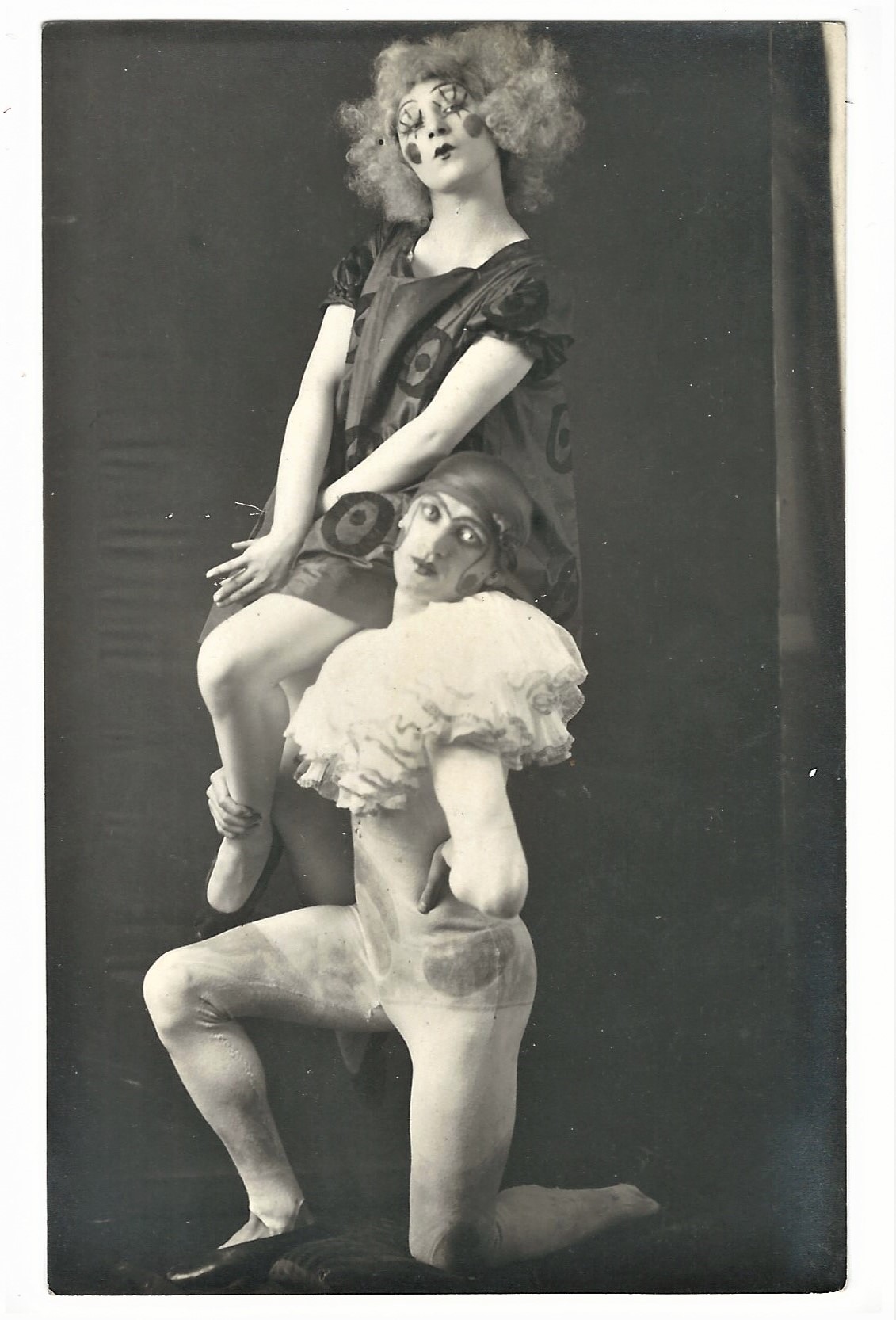
 This vintage postcard is unusual (uncommon). It features two female dancers, I believe they are performing a type of ballet. The dancer that is holding up the other dancer has very muscular legs. Is she a he? An inscription on the reverse of the card appears to say “Jennoff”. I was hoping that the name “Jennoff” would lead me to more information about this postcard. It failed to do so. The story behind this Italian vintage postcard, intrigues me. (SOLD)
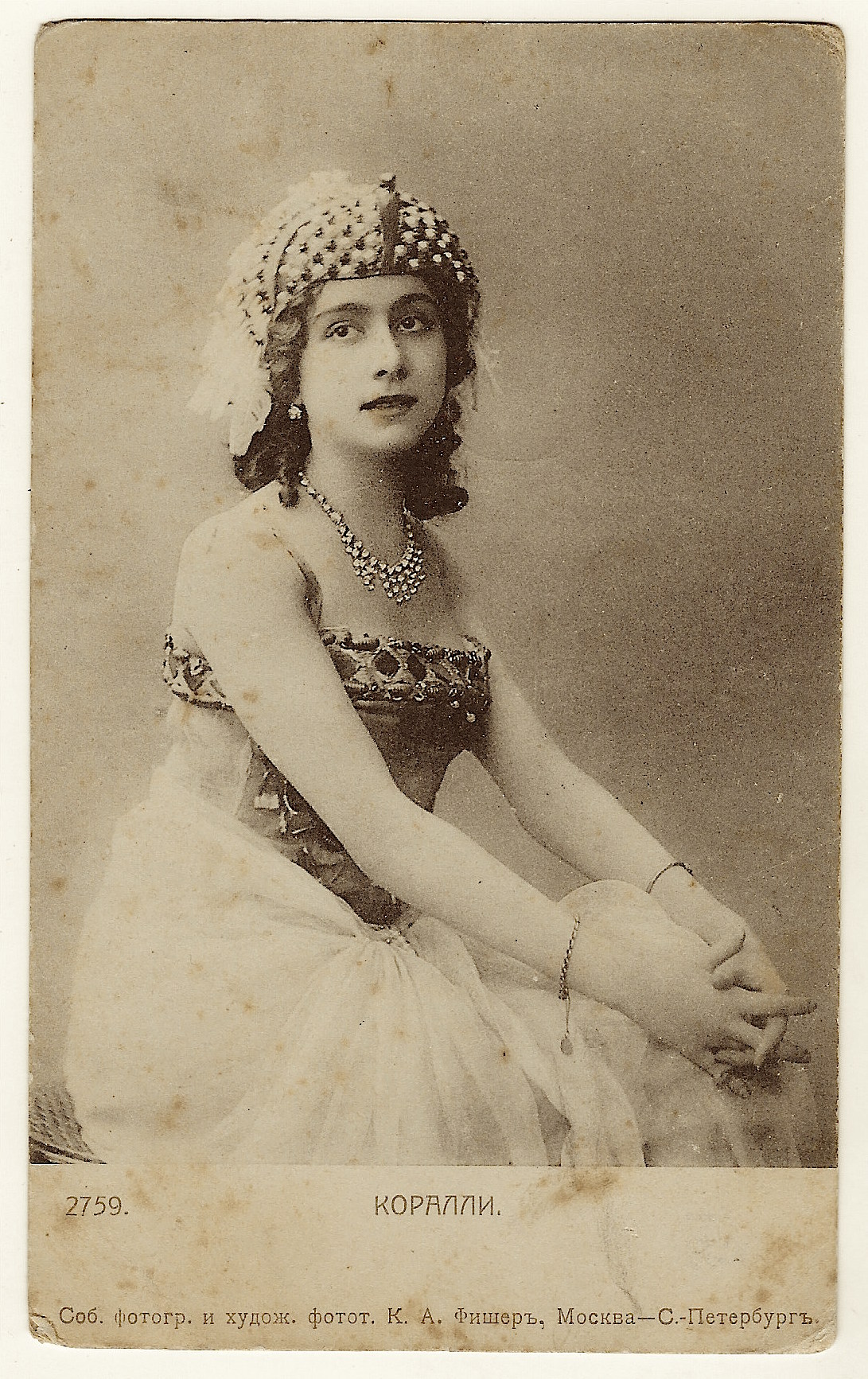
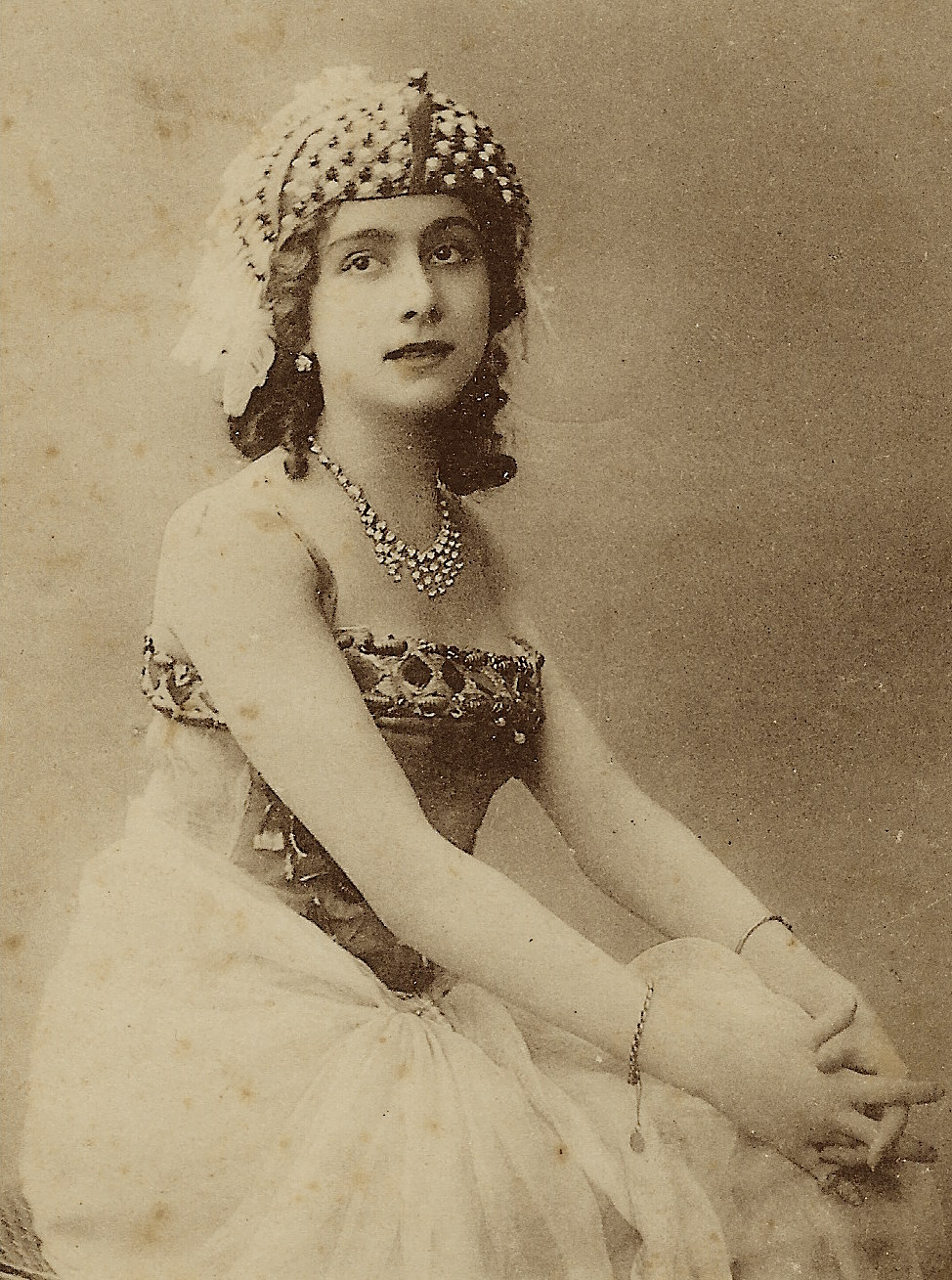 This vintage real photo postcard features Russian ballerina, choreographer, and silent film star, Vera Karalli (1889-1972). She was born in Moscow. Her father was an entrepreneur and her mother was an actress. Karalli was active between 1914 and 1921. Karalli was a graduate of the Moscow Theatre School in 1906. She performed in the Ballets Russes company in 1909, and then again, in 1919 and 1920. She was a soloist with the Bolshoi Theater and after two years became a ballerina in 1915. She often danced with ballet star, Mikhail Mordkin. Karalli becan acting in 1914 and she became one of Russia’s most celebrated film actresses. From 1914 to 1919, Karalli appeared in about sixteen Russian silent films. One of these films was an adaptation of Tolstoy’s “War and Peace”. Her last film was a German drama released in 1921. Karalli was a mistress of the Grand Duke Dmitri Pavlovich of Russia. He was the cousin of Nicholas II. It was reported that she was a co-conspirator in the 1916 murder of Grigori Rasputin. After the October Revolution, she fled to the West. Between In the 1920’s she taught dance in Lithuania. Between 1930 and 1935 she was ballet mistress of the Romanian opera in Bucharest. She lived in Paris between 1938 and 1941. She later settled in Baden, Austria. (SOLD)
 This vintage photograph features a young woman dressed in a dance costume. The previous owner of this image reported that the woman was a dance school student ,and that at the time of this photo, she was at a recital or a recital rehearsal. The student appears to have been in her teenage years. Her costume is unusual and interesting. Note her wide wristbands and striped cap. She may also be wearing a cape although her pose blocks an adequate view of that part of her costume. The subject of this photo is identified by an inscription on the reverse. Her name is Louise J. Howlan (1915-1970). Her father worked for a gas and electric company. At the age of 25, she worked as a stenographer. This photograph was taken by a Utica, New York studio. I am unable to decipher his name which can be found on the lower right hand corner of the image. The photo is from circa 1920’s. The photograph measures about 4 1/8″ x 6 1/4″. (SOLD)
 PHOTOGRAPHERS NAME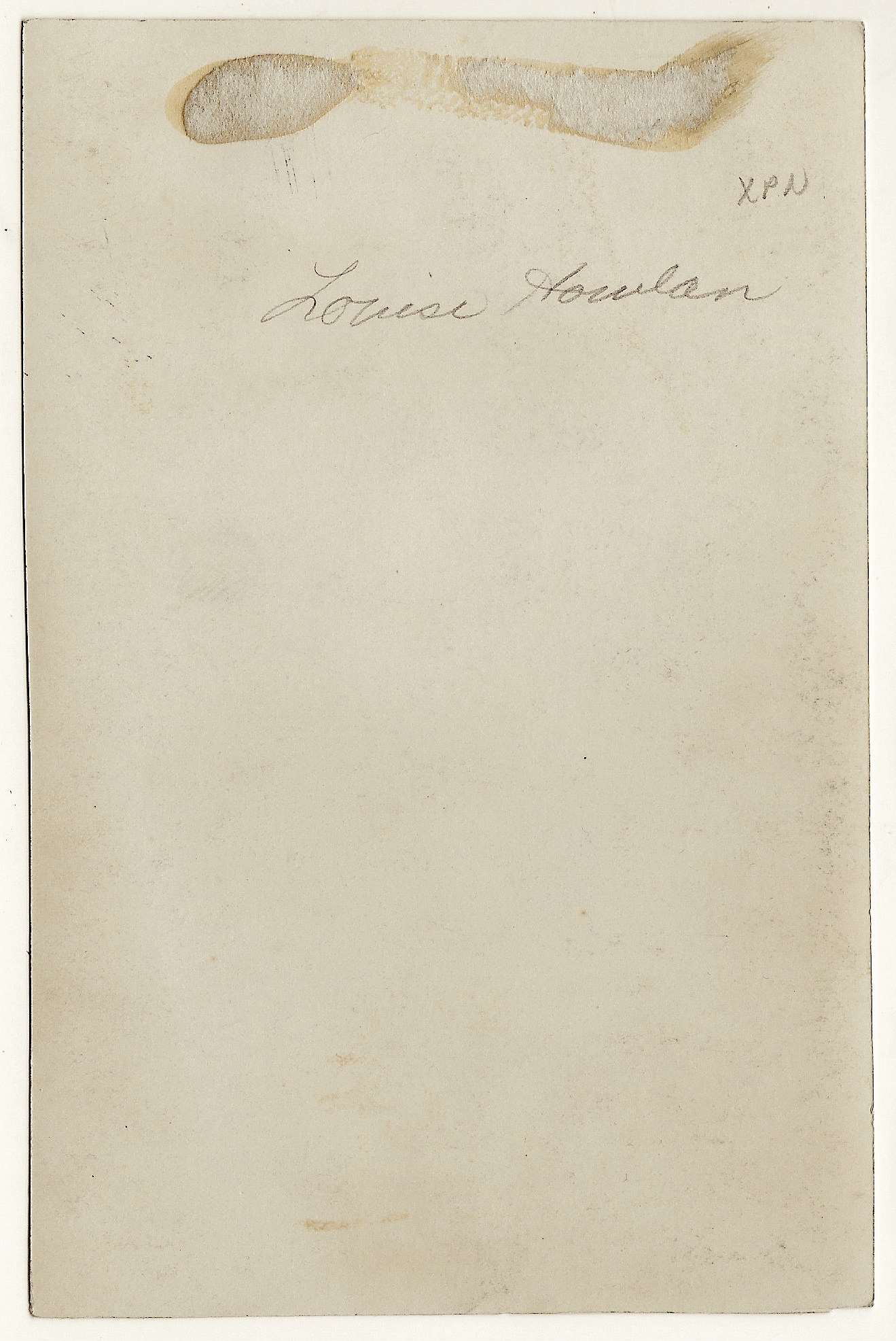


 THE CABINET CARD GALLERY