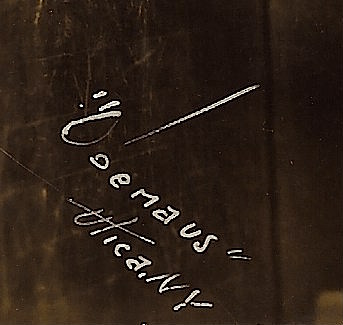
This vintage photograph features a young woman dressed in a dance costume. The previous owner of this image reported that the woman was a dance school student ,and that at the time of this photo, she was at a recital or a recital rehearsal. The student appears to have been in her teenage years. Her costume is unusual and interesting. Note her wide wristbands and striped cap. She may also be wearing a cape although her pose blocks an adequate view of that part of her costume. The subject of this photo is identified by an inscription on the reverse. Her name is Louise J. Howlan (1915-1970). Her father worked for a gas and electric company. At the age of 25, she worked as a stenographer. This photograph was taken by a Utica, New York studio. I am unable to decipher his name which can be found on the lower right hand corner of the image. The photo is from circa 1920’s. The photograph measures about 4 1/8″ x 6 1/4″. (SOLD)
This vintage real photo postcard captures a glimpse of latin social and dance history. This is a photograph of a Havana, Cuba, nightclub in which the patrons participate in a festival of music and dance. The featured dance is the rumba. I have seen two other postcards in this “Typical Rumba” series. This postcard is by far the nicest of the three. The photographer has signed the photo with the name “Ronay”. A sign on the wall states “La Comparsa”. A comparsa is a group of dancers, singers, and musicians that perform in carnival and other festivities in Latin America and Spain. The most well known comparsas are the ones that take part in the “Carnival of Santiago de Cuba”. Does the United States have Comparsas? The most similar carnival held in the United States, according to some writers, is Mardi Gras in New Orleans. Cuban comparsas originate in the eastern part of the island, specifically the city of Santiago de Cuba. The singers, musicians and dancers form the “conga”, the ensemble that performs the canrival music, Havana has it’s own version of carnival. Each city has specific comparsas that tend to perform there. The term “rumba” refers to a style of music and dance. The rumba was exported by Cuba to North America, much like it’s replacement, salsa. The history of the rumba, as well as Comparsas, is much too complex and detailed to be adequately presented in this description. This postcard is from circa 1950 and it is in excellent condition. (see scans). (SOLD)
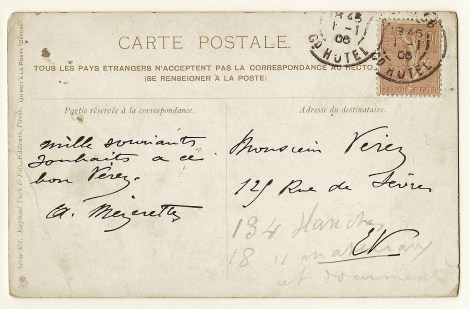
The subject of this vintage real photo postcard is Miss Aida Overton Walker. The caption above her name refers to her as “A Dusky Beauty”. Seems like a racist title to me. I don’t recall ever seeing its equivalent, “A Pasty Beauty”, on a portrait of a white female performer. Aida Overton Walker (1880-1914) was known as “The Queen of the Cakewalk”. She was African-American and an American vaudeville performer, singer, actress, and choreographer. She has been called the most famous African American female performer of the early twentieth century. She was married in 1899 to vaudeville performer, George Walker. Aida and her husband performed with the highly successful Bert Williams. They were the major black vaudeville and musical comedy act of the era. She was also a solo dancer and choreographer for a number of other vaudeville shows. Aida was well known for her 1912 performance of the ”’salome” dance. Aida was born in Richmond, Virginia and moved to New York City when she was young. She was educated there and received a great deal of musical training. When she was fifteen years old she joined the “Octoroons”, a black touring group. In 1900 she gained national notice with her performance of “Miss Hannah from Savannah” in the play, “Sons of Ham”. The song became a major hit. Overton Walker had significant theatrical success with her performances in Dahomey (1902), Abyssinia (1906), and Bandana Land (1908). Overall, Aida was praised by critics and fellow performers. She was financially successful. In 1908 she retired to care for her ill husband. In 1910 she returned to the stage as a solo act. In 1911, her husband died. By 1912, she was on tour again. That same year, she performed on Broadway as Salome. In 1914, Walker died suddenly from kidney failure. Two years before her death, she was performing in white variety theaters. She and Bert Williams were the only Black performers “permitted” to do so. At that time, African Americans were expected to confine themselves to “lower” entertainment such as comedy and ragtime. “High” art, like dramatic theater and classical dance were reserved for whites. Aida helped break that racist tradition. During her career, Aida addressed the issue of racial relations. She stated in an article in “The Colored American Magazine (1905), her view that that the performing arts could have a beneficial effect on race relations. Walker asserted “I venture to think and dare to state that our profession does more toward the alleviation of color prejudice than any other profession among colored people.” She also worked to improve working conditions, and to expand roles for black women on the stage. During the period Walker was performing, female actresses, especially black actresses, were seen as “immoral and oversexed”. Aida wrote “a woman does not lose her dignity…when she enters stage life”. Walker also worked to develop the talents of younger black performers within the framework of refinement and elegance. In 1908, she began organizing benefits to assist such causes as the Industrial Home for Colored Working Girls. This vintage postcard was published by Raphael Tuck, of Paris, France. The photographer of Miss Walker was Cavendish Morton (1874-1939). The National Portrait Gallery possesses 104 of Morton’s portraits. Morton had several careers including electrical engineering, architecture, acting, illustrating, and in the 1890’s he took up photography. He is known for his theatrical photo portraits. His son was a well known watercolor artist. This postcard was postmarked in 1908, The postcard is in good condition. See the youtube video below. It is a tribute to Aida Overton Walker. (SOLD)
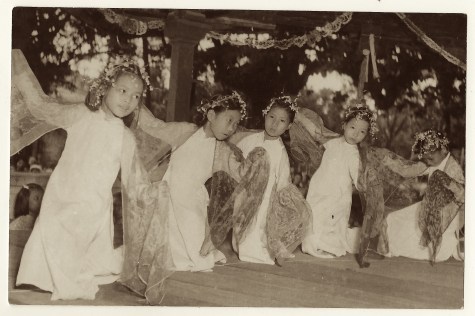
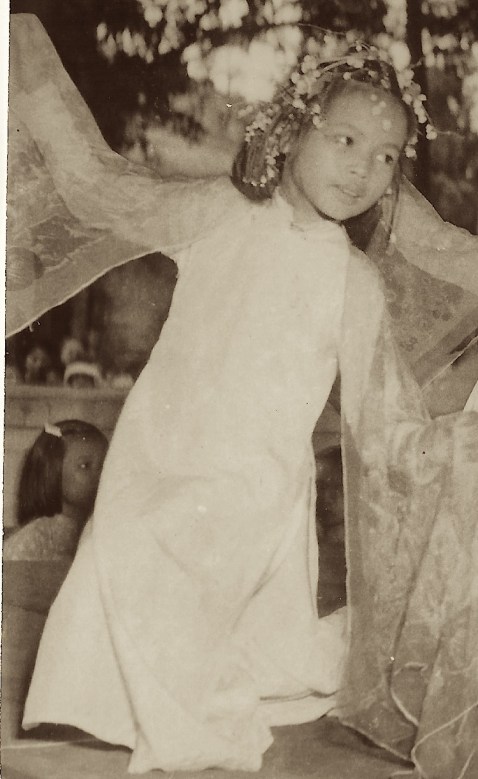
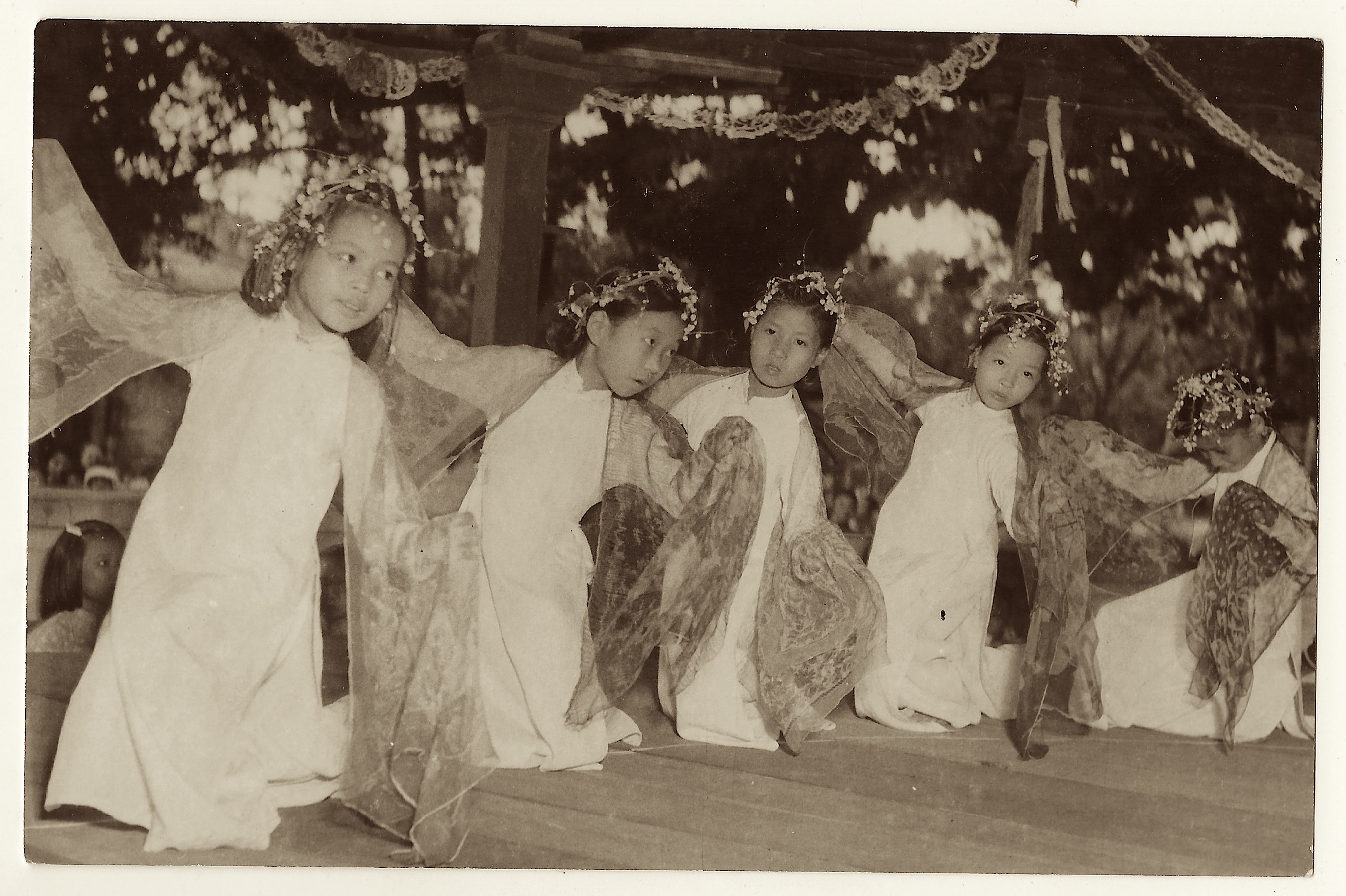
This vintage press photo features five darling young Vietnamese girls giving a dance performance. The girls are wearing long white dresses and translucent shawls. The photograph was taken for the Bureau of Press Information in 1957. I believe that this photograph was taken in North Vietnam as opposed to South Vietnam, based on the wording of the stamp on the reverse of the photograph. This photograph was taken at a turbulent time in Vietnam. In 1957 the South Vietnamese President, Ngo Dinh Diem visited the United States and was hailed as a hero for saving South Vietnam from Communism. The term Viet Cong began to replace the term Viet Minh. There was insurgency against Diem and the U.S. government doubted the stability of Diem’s regime. Diem did much to repress opposition to his rule, and as a result, alienated many South Vietnamese people facilitating the growth of communism in the nation. The seeds were being planted for a long and tragic war. I am sure that dance performances, such as this one, offered a welcome distraction during troubled times. This vintage photograph is in very good condition (see scans).
Buy this original Vintage Press Photo (includes shipping within the US) #2783
To purchase this item, click on the Pay with PayPal button below
$23.50
Buy this original Vintage Press Photo (includes International shipping outside the US) 2783
To purchase this item, click on the Pay with PayPal button below
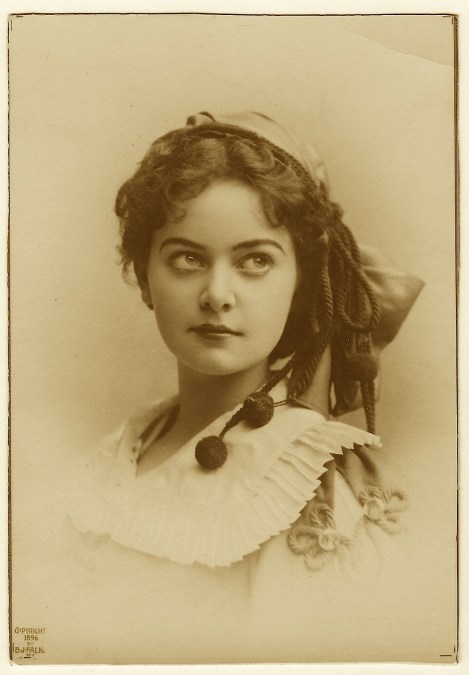
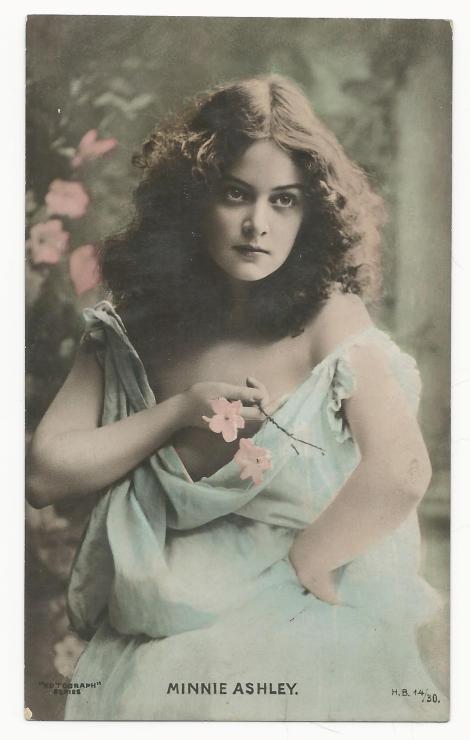
This vintage real photo postcard features theater actress Minnie Ashley (1878-1946). She was one of the great “stage beauties” of the end of the 19th century. She was a talented singer and dancer and she was featured in the madcap musical “1492” (1892). In Boston she performed with the Museum Company and in New York she was a member of the Augustin Daly Company. She had many successes including her performance in “A Country Girl”, “Wang”, and “San Troy”. Her acting resulted in a medical problem. The prolonged exposure to theatrical arc lights caused vision problems. In 1902 she left her acting career and married politician William Astor Chanler who was an affluent grandson of John Jacob Astor. Medical treatment did not help her vision problems and Miss Ashley than put her efforts into sculpting. Chanler and Ashley separated in 1909. She made an attempt at returning to the stage in 1911 but soon opted to pursue her sculpting. During her artistic career she worked under the name of Beatrice Ashley Chanler. In addition to the sculpting, she was active in philanthropy. The book “Famous Prima Donnas” (1900) by Lewis Clinton Strang, devotes a chapter to Minnie Ashley. He describes her as having “artless girlishness, remarkable personal charm, and skill as an imaginative dancer scarcely equalled on the American stage”. He adds that these talents explain her “sudden success” in musical comedy. He describes her dancing as “artistic in every sense” but asserts she was not exceptionally talented in the realm of acting and singing. However, Strang is very complimentary of Ashley’s appearance. He states “nature was indeed good to her when it endowed her with a most fascinating personality, a pretty piquant face, and a slim graceful figure. Vintage Photograph 1 features a young Minnie Ashley. She is a beautiful. Her facial expression is very engaging. The photographer, B. J. Falk was a very well known for his penchant for photographing theatrical stars. He was also recognized for his talent as a celebrity photographer. The image was copyrighted in 1896. this photo measures about 4″ x 5 3/4″. It appears upon very close examination that this image may have been trimmed. Note the imperfection in the top right hand corner. This vintage photograph is in overall good condition (see scans). (SOLD) Postcard 2was published by the Rotograph Company (New York) and was part of a series (no. B 174). (SOLD)Postcard 3 has the same portrait of Miss Ashley except the image is color tinted. It became common practice around 1902 to hand color photo postcards. Rising labor costs led to the decreasing use of this practice after the 1930’s. This postcard, like the one above it, was produced by the Rotograph Company (New York) and was part of a series (H.B. 14/30). The postcard was mailed and has a 1910 postmark from Warren, Ohio. (SOLD)
This vintage ethnological postcard features two Catalan dancers. They are wearing their traditional clothing and holding tambourines. The photograph was taken in Roussillon, a community in Southeastern France. Wikipedia reports that the Catalans are an Iberian/European ethnic group of Mediterranean and Pyrenean descent. The postcard is published by Labouche Freres which was located in Toulouse, France. This postcard is in very good condition (see scans).
Buy this original Real Photo Postcard (includes shipping within the US) #2734
To purchase this item, click on the Pay with PayPal button below
$18.50
Buy this original Real Photo Postcard (includes International shipping outside the US) #2734
To purchase this item, click on the Pay with PayPal button below
This vintage real photo postcard features English Can-Can dancer, Miss Haslam. The charming Miss Haslam performed in Paris’s music halls during the Belle Epoque. This photograph was taken by Lucien Walery who was a celebrated Paris photographer known for his portraits of artists and cabaret dancers from the city’s music halls. Among his more famous subjects were Mata Hari and Josephine Baker. He photographed the beautiful women of Paris between the early 1900’s and the 1920’s. In this photo, Walery captures Miss Haslam during the time she was performing at the Alcazar Club. The Alcazar d’Ete was a Cafe-concert hall which opened in 1860 and closed in 1914. It was located on the Champs-Elysees in Paris. The music performed at the music hall was generally lighthearted and sometimes risque. (SOLD)
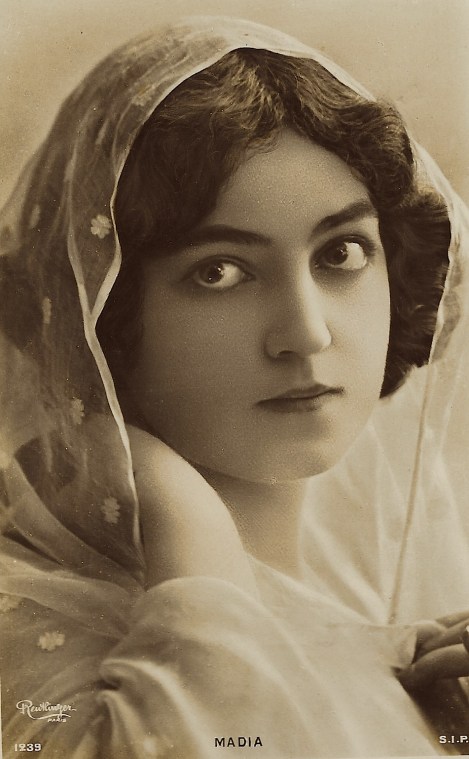
“Madia! I’ve just met a girl named Madia. And suddenly that name. Will never be the same.” With apologies to Leonard Bernstein, I just couldn’t resist. This vintage real photo postcard features dancer Madia Borelli. She was a Parisian dancer active in the early twentieth century. The photographer of this portrait of Miss Borelli was the famed photographer Leopold Reutlinger of Paris, France. The postcard was published by S.I.P., which is the Societe Industrielle de Photograpie of Rueil, France. The postcard is part of a series (no. 1239). (SOLD)
This real photo vintage postcard features actress Sandra Milovanoff (1892-1957). Although she was Russian born, she was known for her roles in French cinema, particularly during the silent era. Milovanoff was very passionate about classical dance and attended a number of dance schools in St. Petersburg. She then joined the dance company of Anna Pavlova. She toured varied European cities but left Russia in 1917 in order to flee the Bolshevik Revolution. She went with her family to Monte Carlo where she played a small role in a film. She was noticed by French director Louis Feuillade who began using her in films. She had much success in film until the arrival of sound movies which basically destroyed her career. The IMDb credits her with 28 film roles between 1917 and 1950. Her films include “Les Miserables” (1925), “My Crimes After Mein Kampf” (1940), and “The Private Life of an Actor” (1948). A sample of her work can be seen in the video seen below (“In The Night” (1929) starring Sandra Milovanoff and Charles Vanel). This postcard was published by Cinemagazine in Paris, France and is part of a series (No. 114).
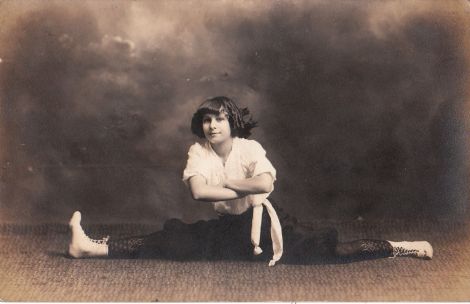
This vintage real photo postcard features a portrait of a teenage girl doing a split. She appears to be a gymnast or a dancer. A notation on the reverse of the postcard identifies the girl as “Clara”. The postcard was published on Artura paper that was produced between 1908 and 1924.
 This vintage photograph features a young woman dressed in a dance costume. The previous owner of this image reported that the woman was a dance school student ,and that at the time of this photo, she was at a recital or a recital rehearsal. The student appears to have been in her teenage years. Her costume is unusual and interesting. Note her wide wristbands and striped cap. She may also be wearing a cape although her pose blocks an adequate view of that part of her costume. The subject of this photo is identified by an inscription on the reverse. Her name is Louise J. Howlan (1915-1970). Her father worked for a gas and electric company. At the age of 25, she worked as a stenographer. This photograph was taken by a Utica, New York studio. I am unable to decipher his name which can be found on the lower right hand corner of the image. The photo is from circa 1920’s. The photograph measures about 4 1/8″ x 6 1/4″. (SOLD)
 PHOTOGRAPHERS NAME


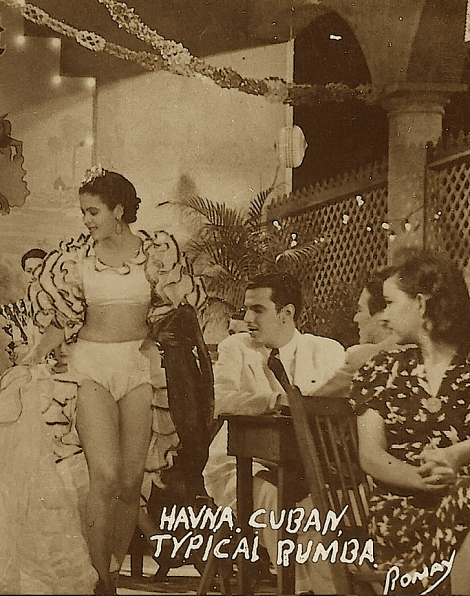 This vintage real photo postcard captures a glimpse of latin social and dance history. This is a photograph of a Havana, Cuba, nightclub in which the patrons participate in a festival of music and dance. The featured dance is the rumba. I have seen two other postcards in this “Typical Rumba” series. This postcard is by far the nicest of the three. The photographer has signed the photo with the name “Ronay”. A sign on the wall states “La Comparsa”. A comparsa is a group of dancers, singers, and musicians that perform in carnival and other festivities in Latin America and Spain. The most well known comparsas are the ones that take part in the “Carnival of Santiago de Cuba”. Does the United States have Comparsas? The most similar carnival held in the United States, according to some writers, is Mardi Gras in New Orleans. Cuban comparsas originate in the eastern part of the island, specifically the city of Santiago de Cuba. The singers, musicians and dancers form the “conga”, the ensemble that performs the canrival music, Havana has it’s own version of carnival. Each city has specific comparsas that tend to perform there. The term “rumba” refers to a style of music and dance. The rumba was exported by Cuba to North America, much like it’s replacement, salsa. The history of the rumba, as well as Comparsas, is much too complex and detailed to be adequately presented in this description. This postcard is from circa 1950 and it is in excellent condition. (see scans). (SOLD)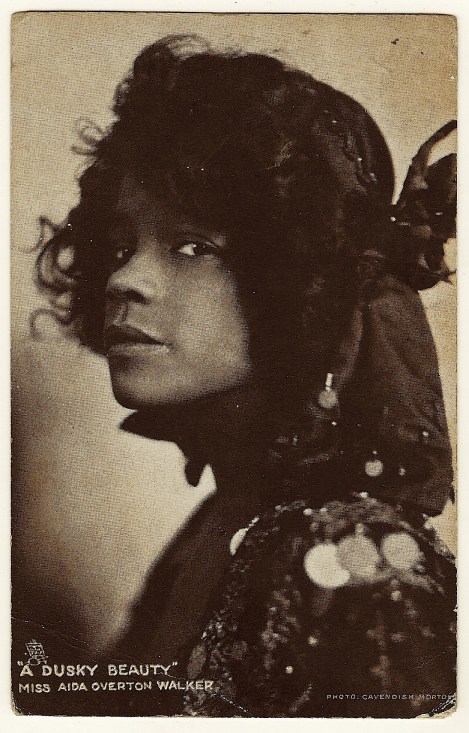


 VINTAGE PHOTOGRAPH 1
  VINTAGE PHOTOGRAPH 1 (CLOSE UP)
  POSTCARD 2
  POSTCARD 3
  POSTCARD 1
  POSTCARD 2
 This vintage ethnological postcard features two Catalan dancers. They are wearing their traditional clothing and holding tambourines. The photograph was taken in Roussillon, a community in Southeastern France. Wikipedia reports that the Catalans are an Iberian/European ethnic group of Mediterranean and Pyrenean descent. The postcard is published by Labouche Freres which was located in Toulouse, France. This postcard is in very good condition (see scans).






 THE CABINET CARD GALLERY