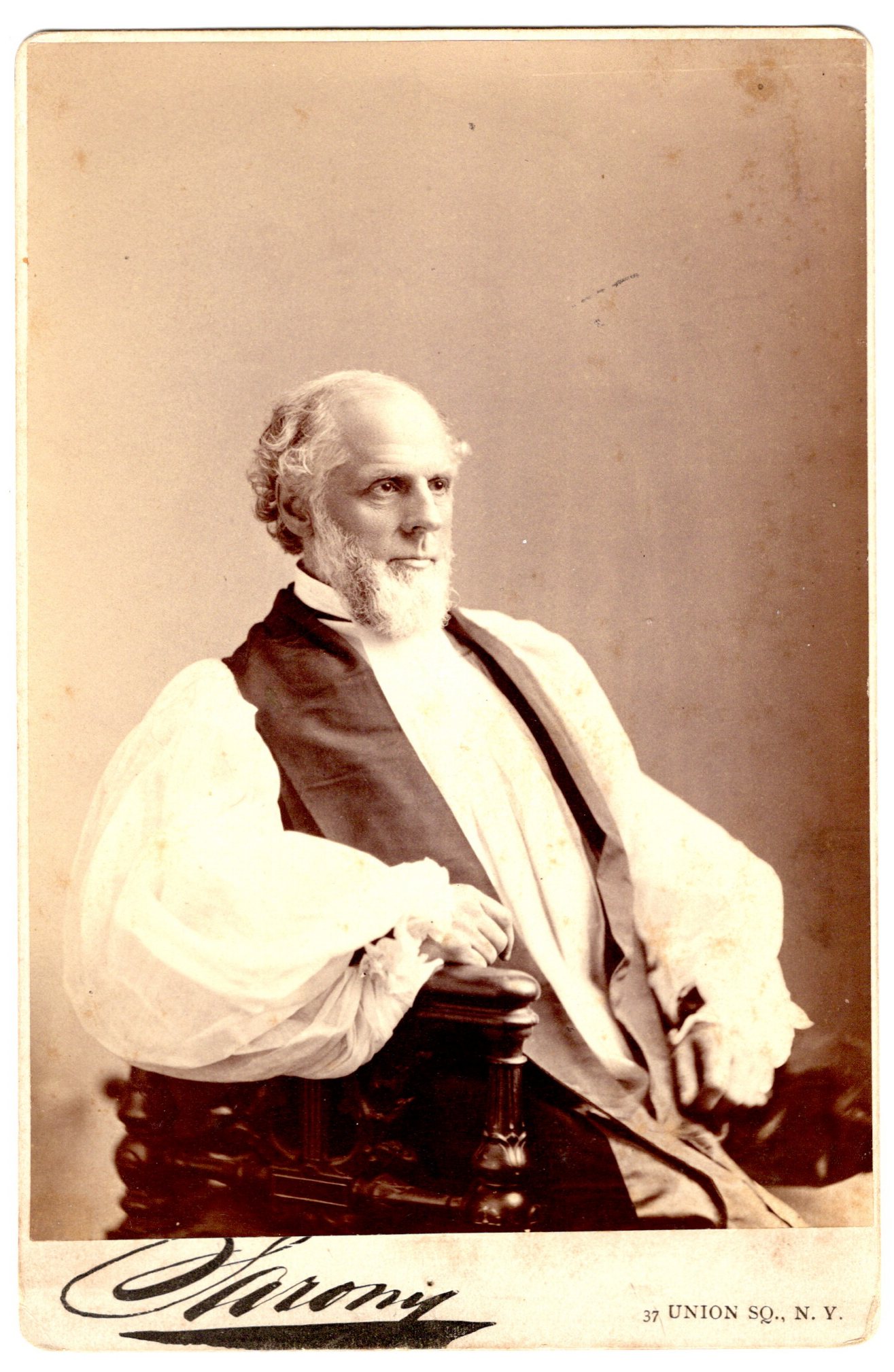
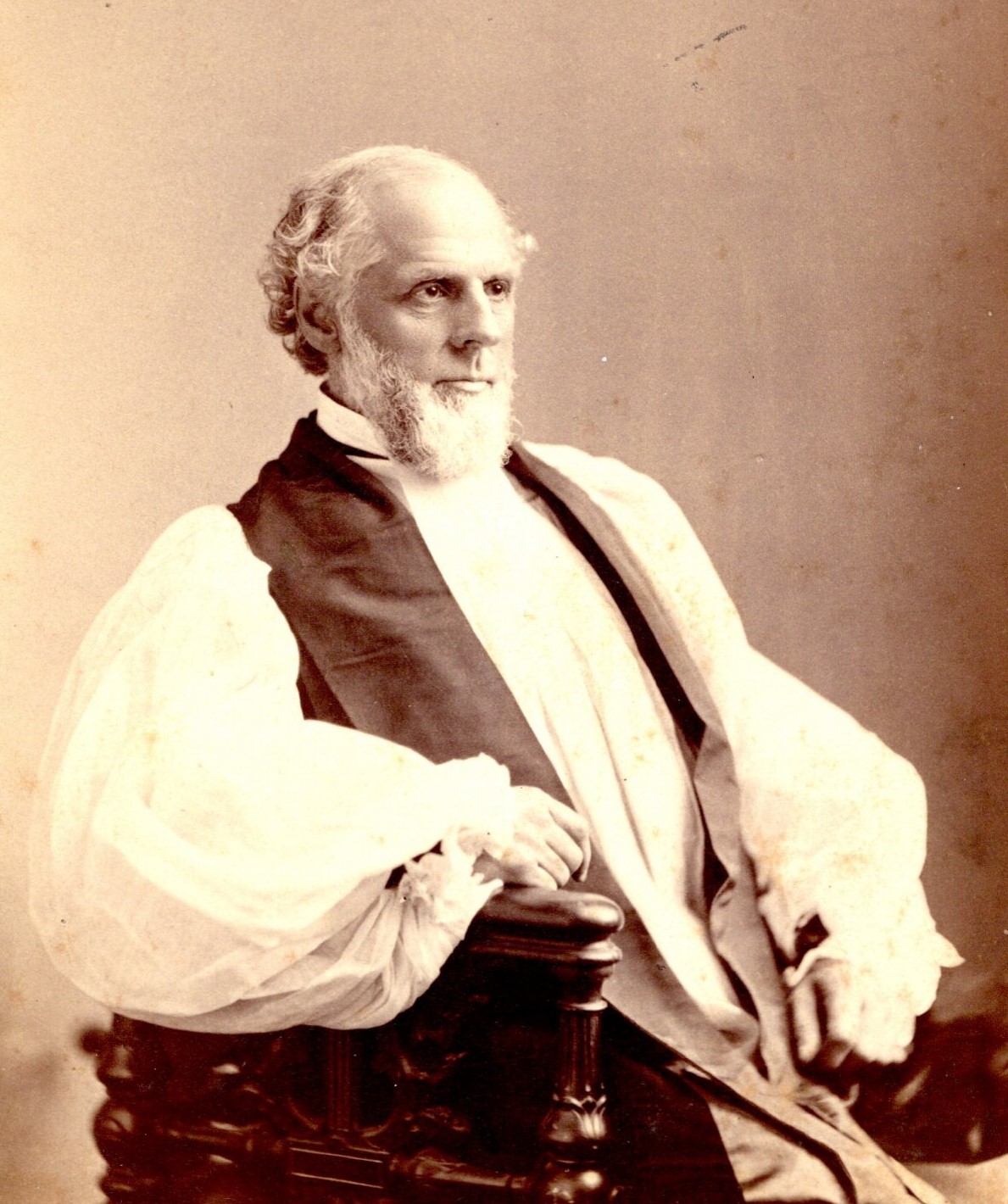
The distinguished gentleman is this photograph is Frederic Dan Huntington (1819-1904). He was an American clergyman and the first Protestant Episcopal bishop of the Episcopal Diocese of Central New York. He was born in Massachusetts and grew up on a farm. He was a graduate of Amherst College as well as Harvard Divinity School. He was the pastor of the South Congregational Church of Boston between 1842 and 1855. He then became a preacher to the University as well a a professor at Harvard. He next became the pastor of the newly established Emanuel Church in Boston. In 1869, he founded the St. John’s School in Manlius, New York. He served as president of the military school. Bishop Huntington was also known as the first president of the Church and for authoring several books. This photograph was taken by the renowned celebrity photographer, Napoleon Sarony. (SOLD)
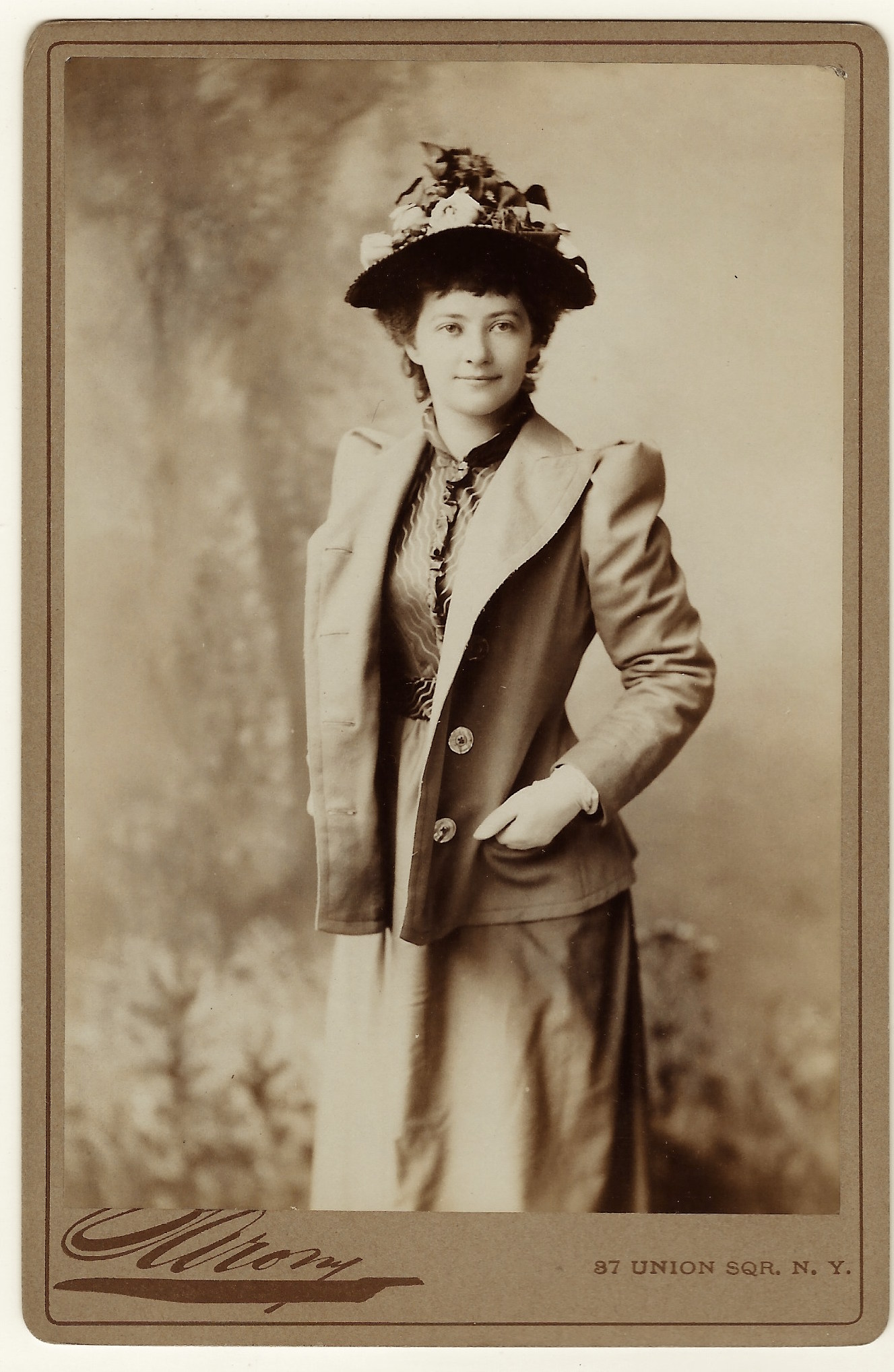
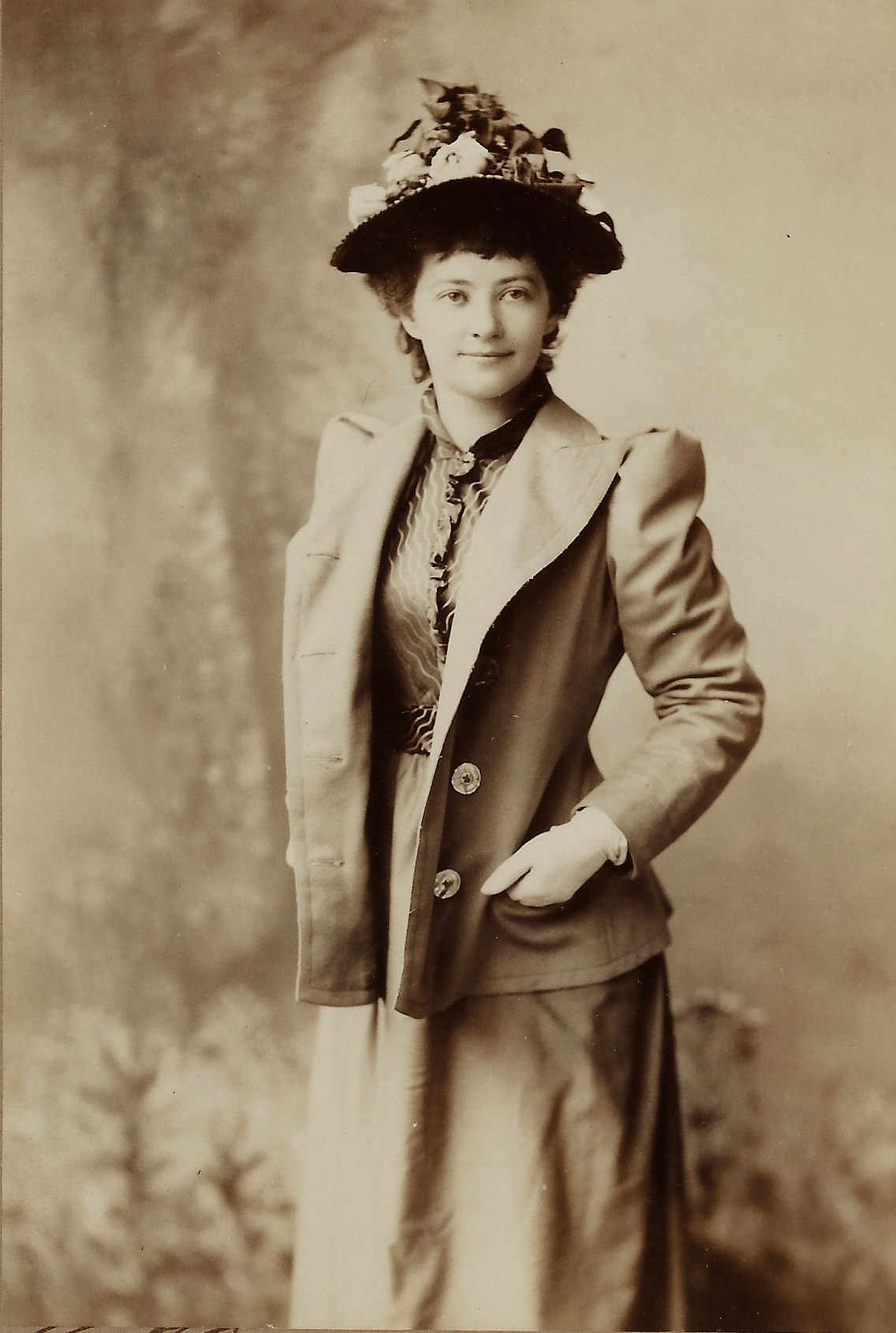
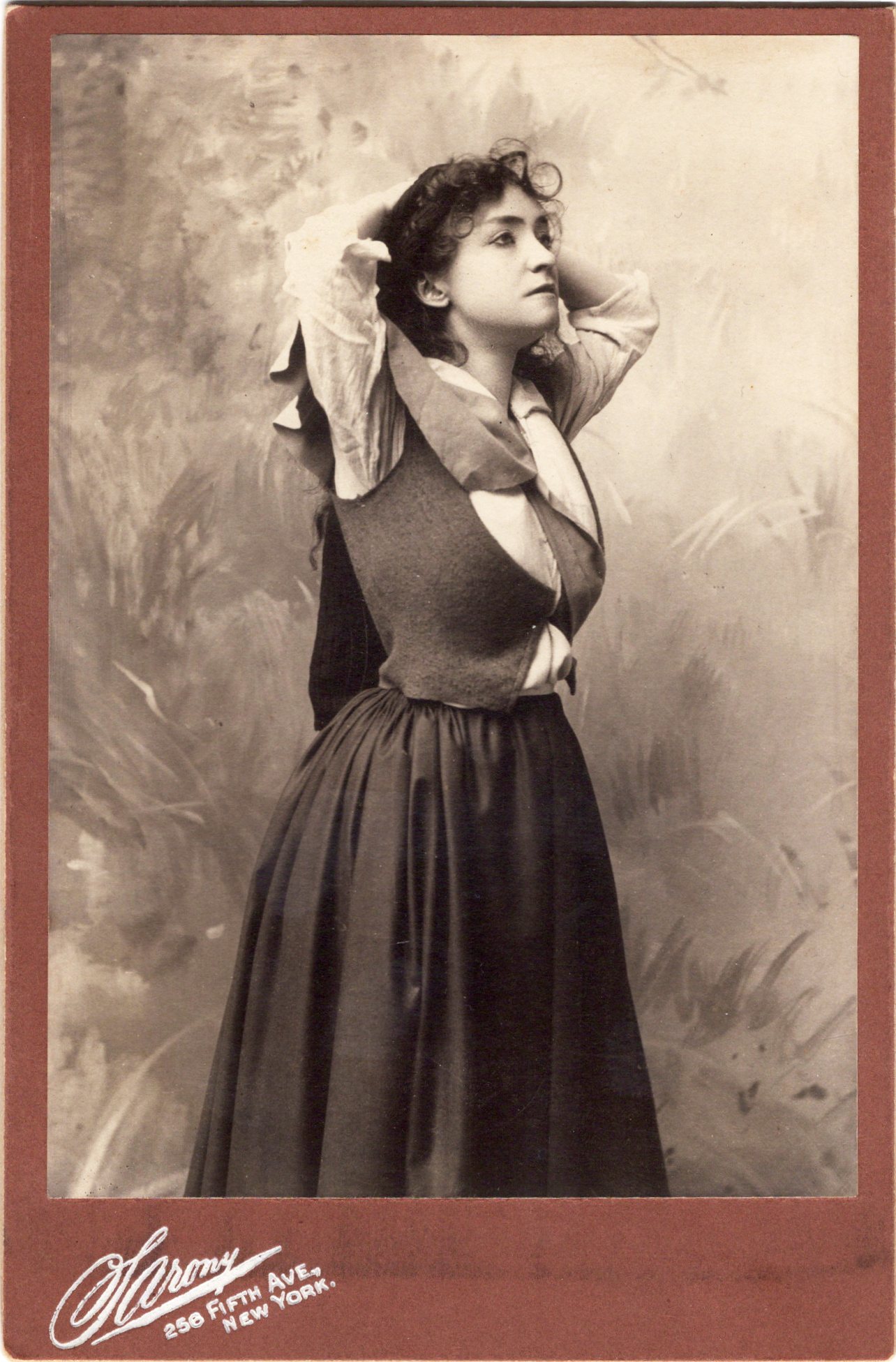
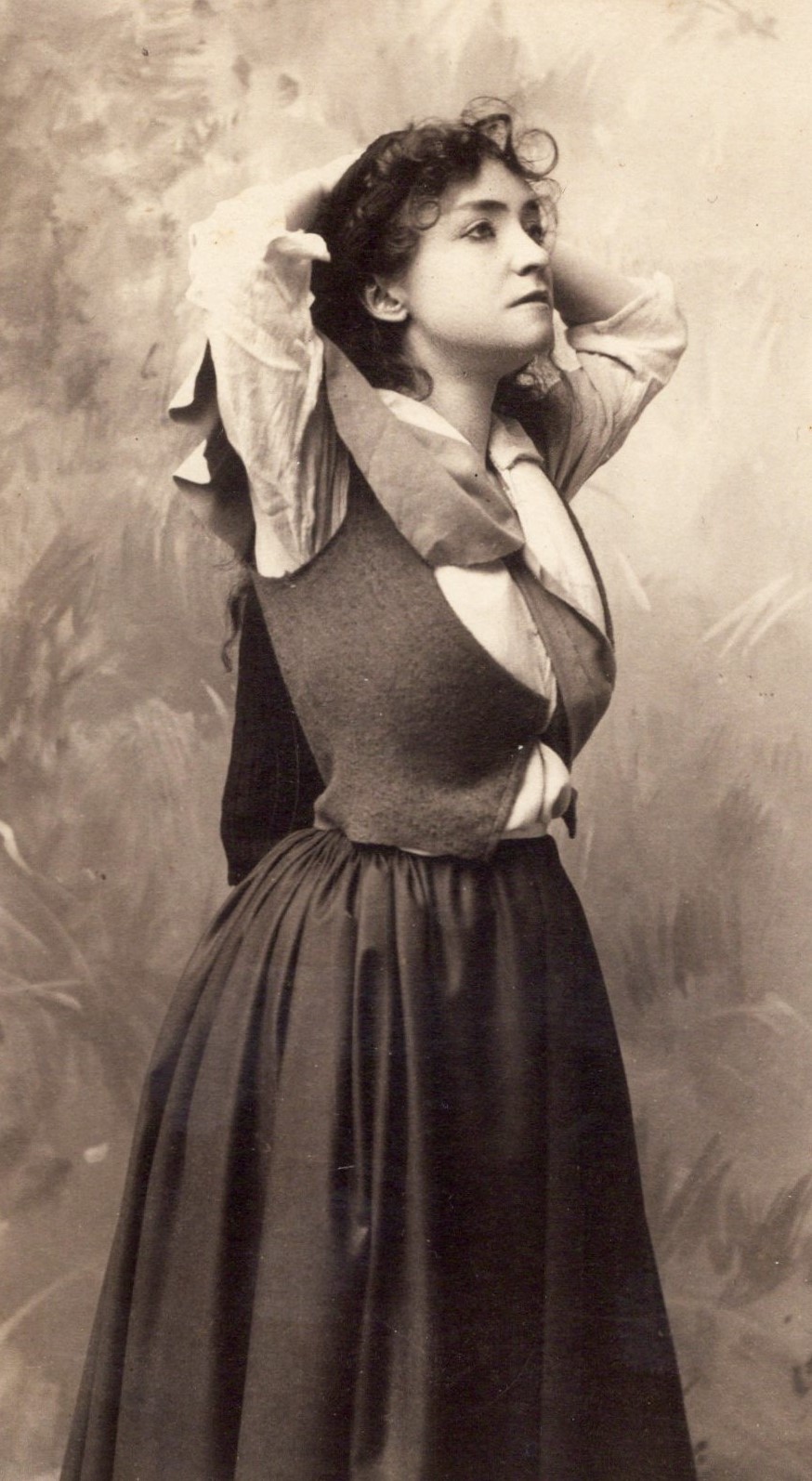
This is an unusual cabinet card portrait for two reasons. First, the pretty young woman who is the subject of this photograph is a New York city actress and certainly does not look the part. She is well dressed, but she is wearing conservative and “boring” attire. Overall, she looks more like the “woman next door” than a Broadway actress. She exudes a sweet and innocent disposition and she has a twinkle in her eyes. She doesn’t give the appearance of a professional actress of that time. Where’s the histrionic flamboyance? Where’s the drama? Secondly, what’s wrong with the photographer, Napoleon Sarony. The fantastic celebrity photographer was not showing his usual bombastic flair when he posed and shot this photograph. Unlike many of his theatrical portraits, there is no fancy clothing or abundance of props in this portrait. The young lady in this image is named Maude White. Her name is written on the reverse of the photograph. However, there is a caveat worth mentioning. I encountered a problem while I was researching Maude White. I discovered that there was also an actress named Maud White who was performing during the same era. This became an issue because, despite the inscription on the back of the cabinet card, I could not be sure if the woman photographed was Maude White or Maud White. I attempted to find other photographs of both actresses but met no success. Due to the fogginess of the identification issue, I decided to research both Maude and Maud. The Internet Broadway Data Base reveals that Maude White appeared in one Broadway production, “The Ruling Power” (1904). However, Maud White made three appearances on Broadway (“Lost-24 Hours”(1895), “A Stranger in a Strange Land” (1899), and “There and Back” (1903). First, I will present some information gleaned from researching Maude. The New York Times (NYT) (1888) published an article about a soon to open play entitled “A Parisian Romance”. The star of the show was Mr Richard Mansfield and the supporting cast included Miss Maude White. The NYT (1888) later reviewed the play and made special mention of Maude. The review described her as “the danceuse (female ballet dancer) of the Opera” and reported that she played her role in a charming, pert, and clever manner. The NYT (1898) announced the soon to open comedy, “A Stranger in a Strange Land”, and that it would include both Mansfield and Maude. An article in the NYT (1900) stated that Maude would appear in Stuart Robson’s company that year. The NYT (1903) heralded the opening of a farcical comedy called “There and Back” and added that Maude would be a principal in the cast. An interesting story about Maude appeared in the NYT in 1905. The issue at hand was plagiarism. Maude had written a playlet called “Locked Out At Three AM” and she complained to the United States circuit court that the author of another play used some of her material. Maude had asked for an injunction and sued for damages. The NYT (1906) stated that Maude would be starring in the play “Nobody’s Fault”. Now lets focus on Maud, rather than Maude. In 1890, Maud was involved in some controversy and it was reported in the NYT. The title of the article was “Fritz Emmet Sobering Up”. Emmet was an established comedian who had a relationship with “John Barleycorn” that had produced many newspaper articles focussing on his drunken behavior. The article stated that there was “a stormy sea” on the stage of the Hammerstein’s Harlem Opera House. Emmet had been drinking heavily for two weeks and creating much drama. His professional and personal life had become badly damaged. In his previous engagement in Philadelphia, Emmet had reached the point that he could no longer perform. The theater had to close the show, and fortunately for the theater, Emmet compensated them for their losses. Next stop was Harlem, but Emmet kept drinking excessively until the dramatic incident occurred on stage. At a Saturday night performance he “murdered his play”. While onstage he made many “Bacchanalian references” and exhibited other inappropriate words and actions.. Emmet’s adult son decided to put an end to his father’s out-of-control behavior. Just as the curtain went down on the last act of the play, Fritz’s son went on the stage where his father and Maud were standing. The son informed Maud that she would have to leave the theater company. Maud objected in a “vigorous manner” spurring the young Mr. Emmet to have her forcibly removed from the theater. Worse yet, he had her confined to a little storm house over the stage door. Basically, she was temporarily kidnapped. Maud cried and screamed “various better words” and even though Fritz tried to intervene, she was imprisoned until the police arrived. The police were called by the younger Mr Emmet and they promptly took Fritz to Manhattan Hospital where he was confined overnight. Maud was released and put in a carriage to go wherever she wanted to go. The story got worse for Fritz. Directly after this incident, his wife of 27 years, sued him for divorce on grounds of infidelity. They ultimately divorced and the settlement was costly for Fritz. Maud continued to perform and the NYT (1891) announced that Maud would be appearing in a play directed by Charles Frohman called “Mr. Wilkinson’s Widows”. That same year, she appeared in a Frohman production entitled “The Solicitor”. The NYT (1892) has an article reporting that Maud appeared in another Frohman production (“The Lost Paradise”). An 1895 NYT article states that maud was appearing with the Robert Hilliard Company in “Lost- 24 Hours” at the Hoyt Theater. The NYT (1897) has an article reporting her appearance in “The Wrong Mr Wright”. Maud received a complimentary review from the NYT (1903) concerning her performance in the role of the “seductive Marie Antoinette” in the play “There and Back”. (SOLD)
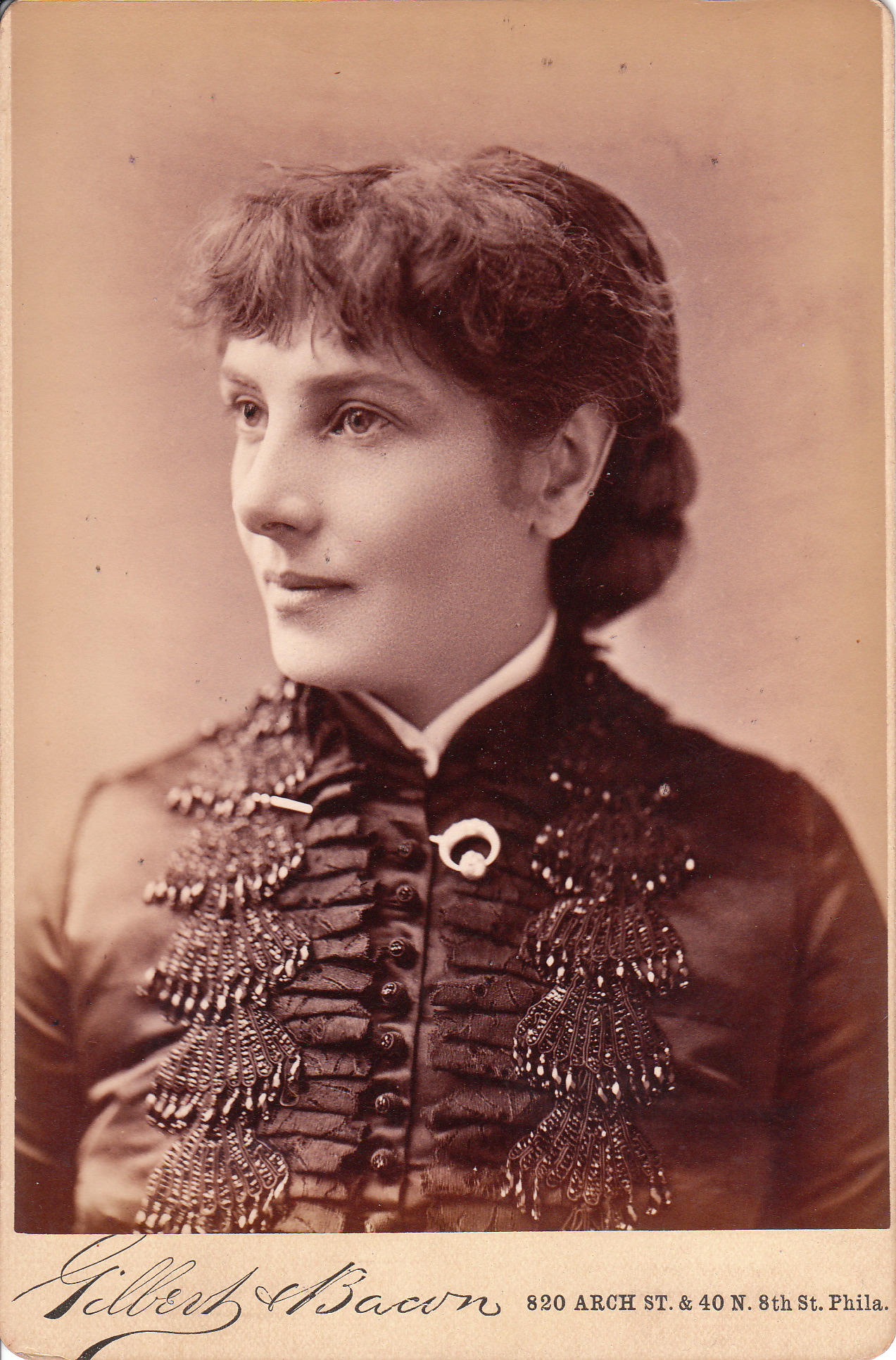
Cabinet Card 1 features early theatre actress, Jennie Winston. Unfortunately, biographical information concerning Ms. Winston appears to be sparse, and further research is necessary. An 1881 publication reveals that Jennie Winston was a native of Scotland and moved to Australia to join W. S. Lyster’s Italian Opera company. Her tenure with this company was seven years. She next went ot America under engagement to “Mr Maguire”, for whom she worked for one season’s duration. She then formed her own traveling opera company which journeyed to the western United States and British Columbia. The “Dramatic News” described Winston as “unsurpassed as a comic-opera artist by anyone in this country”. The photographer of this portrait was the studio belonging to Gilbert & Bacon. This studio was well known for their quality work as well as their work with local and visiting celebrities. To view other photographs by this studio, click on the category of “Photographer: Gilbert & Bacon”.
Cabinet Card 2 also by Gilbert & Bacon, captures a costumed Jennie Winston playing the mandolin. Note the backdrop used in this photograph. The backdrop was an excellent choice for the photograph as it is compatible with Ms. Winston’s costume. It was also a good choice technically; the actress does realistically appear to be standing on a winding stone road. (SOLD)
Cabinet Card 3 presents a portrait featuring a sultry looking Jennie Winston. The photograph is by celebrated photographer, Marc Gambier (1838-1900). (SOLD)
Cabinet Card 4 was also photographed by Gambier. Miss Winston is in costume for an unnamed theatrical performance. She is acting in the portrait. Note her provocative and coy appearance. Gambier was born and educated in Paris, France. At the age of 19, he came to America for a very short stint of time. He returned to France and became a student of the great painter, Le Creton. Subsequently, he became a student of another great painter, Camino. He then returned to America and for five years, studied and worked under esteemed photographer, Sarony (view Sarony’s photographs by clicking on the category “Photographer: Sarony”). He then launched his own photography business in New York City. He divided his time between his first love, painting, and his business of taking and selling photographs. Gambier was known as a great historical painter. He was a veteran of the French Army and while in the service, he sketched and painted several important battles. Research reveals that Gambier was listed in the 1880 US census. He was forty-one years old and living in New York City with his family. He is listed as living with his wife Emilie (age 28), daughters Louise (age 10) and Emilie (age 7), and son M. L. (age 2). Also in the residence was a young woman (age 25) who worked as a servant. Gambier was known for the many theatrical photographs he produced as well as for selling postage stamp sized portrait photographs, that people attached to their letters and postcards. (SOLD)
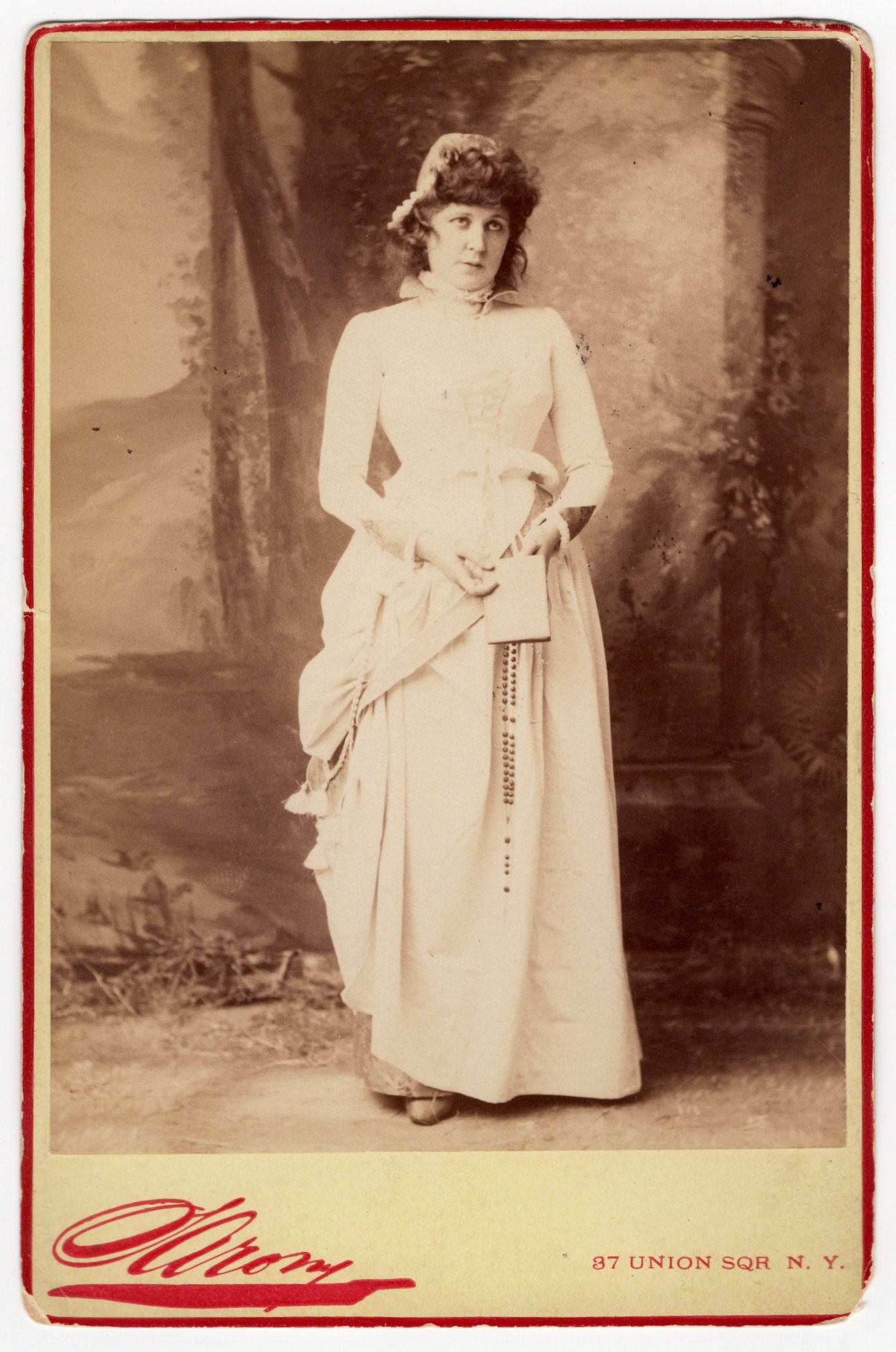
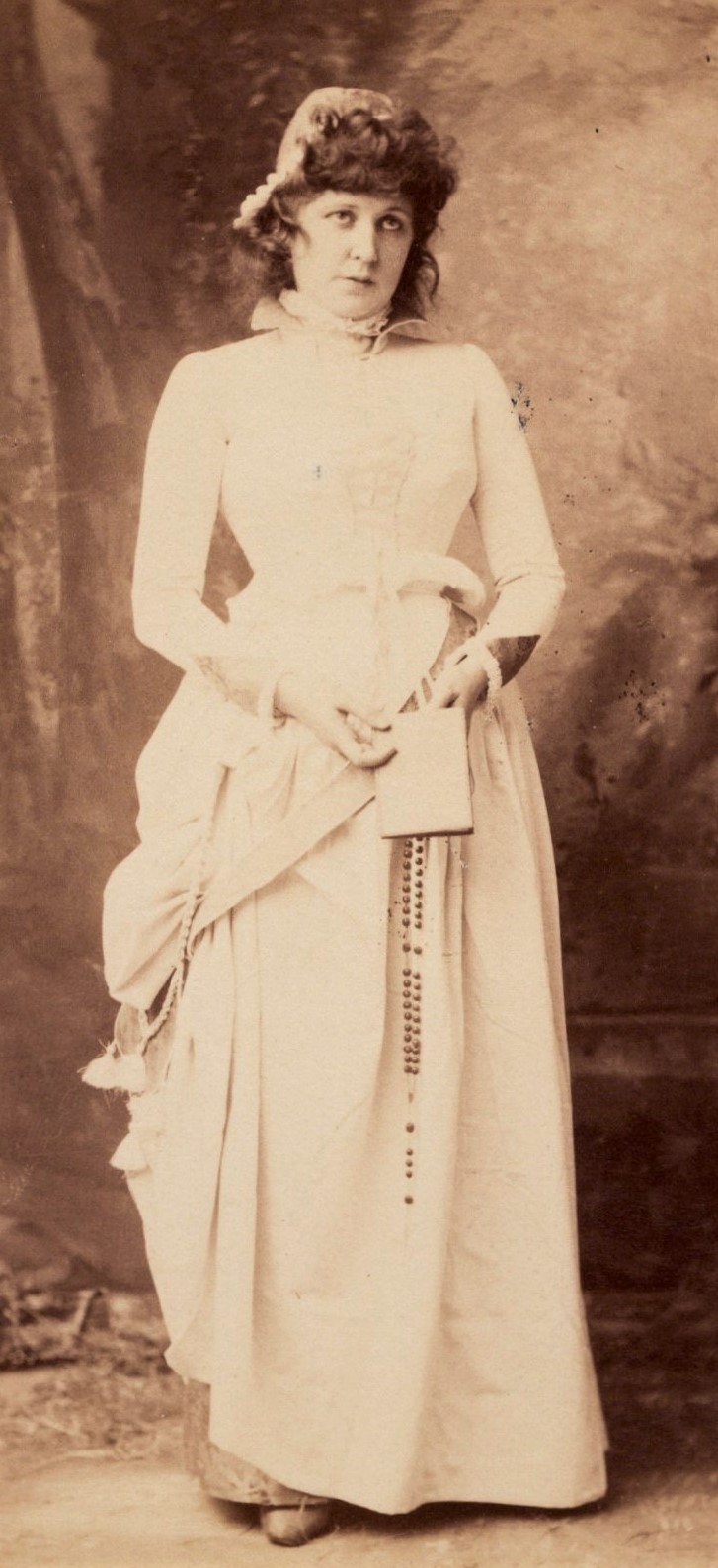
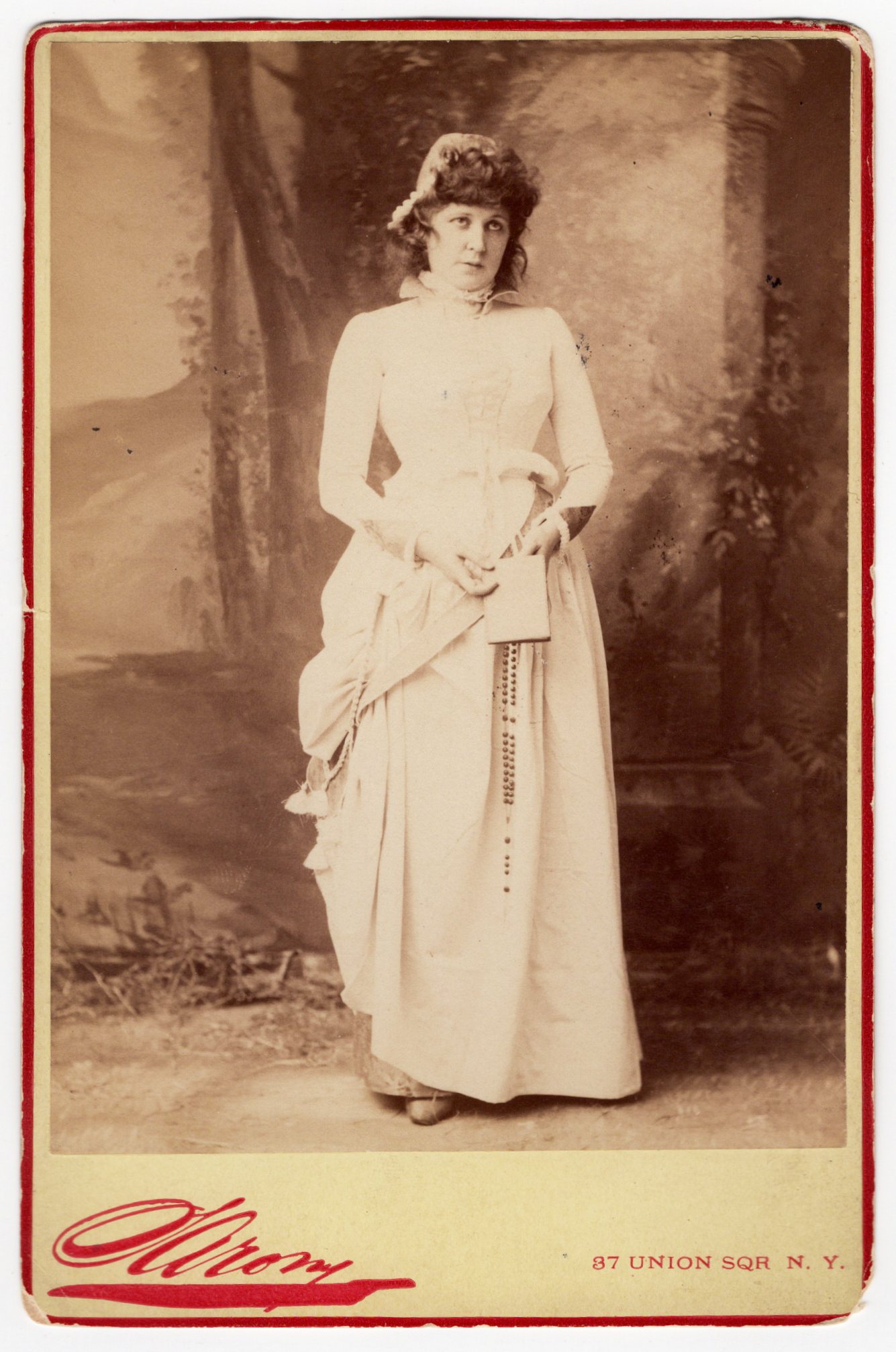
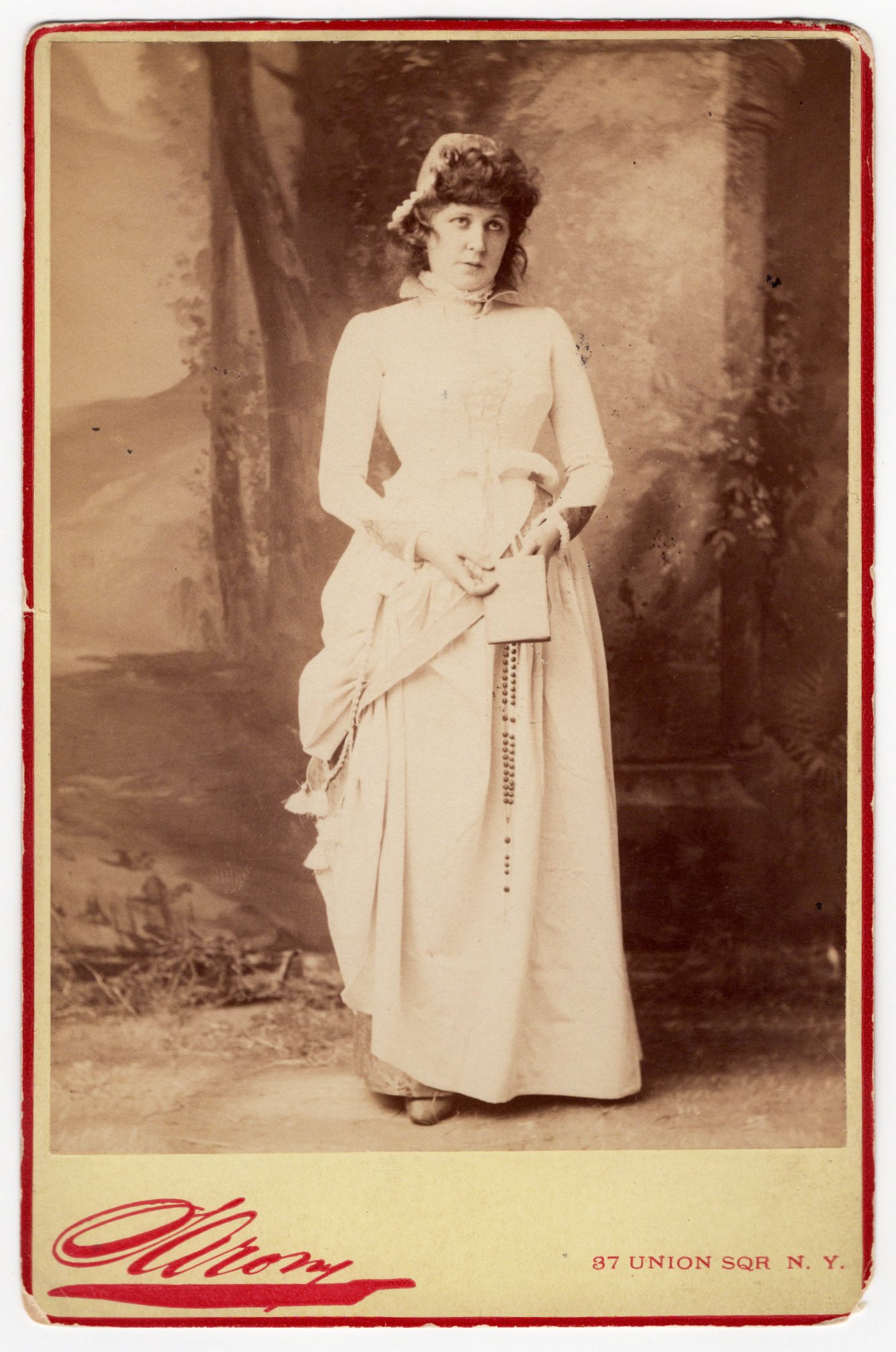
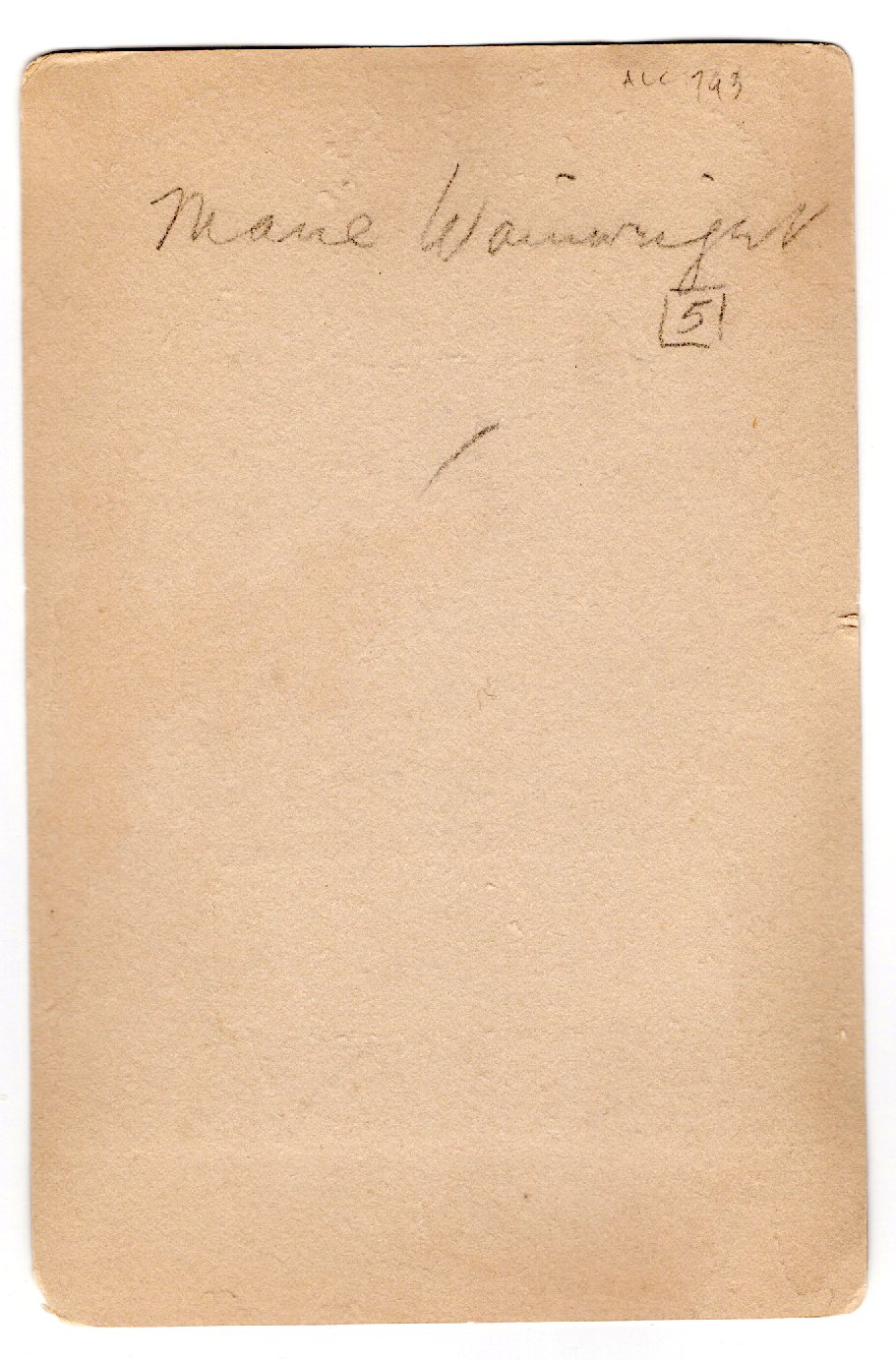
This cabinet card features Marie Wainwright (1853-1923), an American stage actress and singer. She also appeared in three silent films between 1918 and 1920. Most of her fame came from the Victorian stage. She was born in Philadelphia and as educated in Paris, France. She received her acting training in Paris.This photographic portrait is by Napoleon Sarony’s New York City studio. Sarony was a famous celebrity photographer. This image shows Wainwright wearing a white gown and bonnet. A copy of this photograph can be found in Wikipedia’s entry for Wainwright. She is holding a book and rosary beads. This cabinet card portrait has some cornerwear and a slight curl. The photo is on thinner than usual card stock. Overall, this photograph is in good condition (see scans).
Buy this Cabinet Card (includes shipping within the US) #3886
To purchase this item, click on the Pay with PayPal button below
$27.75
Buy this Cabinet Card Photograph (includes International shipping outside the US) 3886
To purchase this item, click on the Pay with PayPal button below
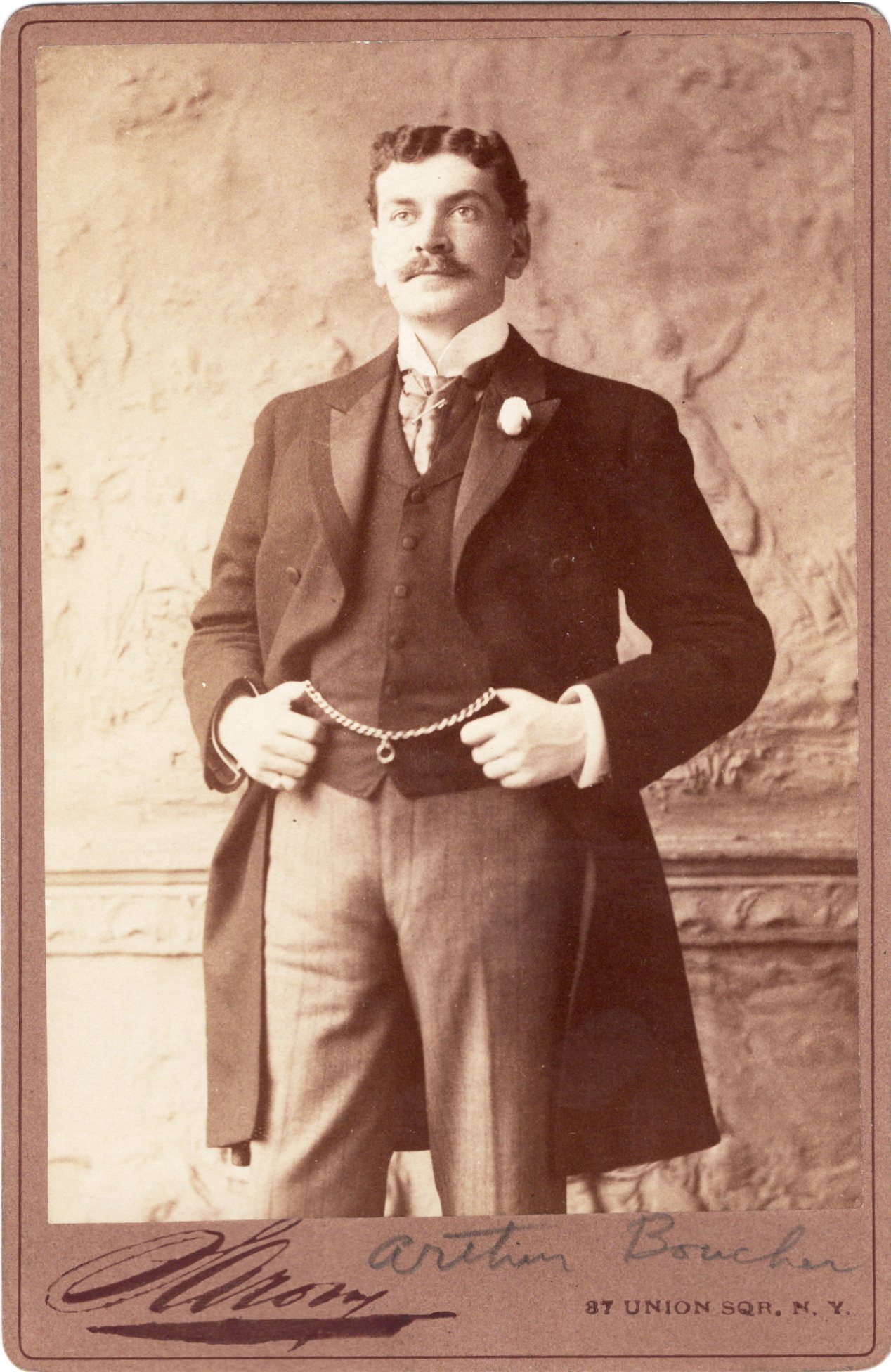
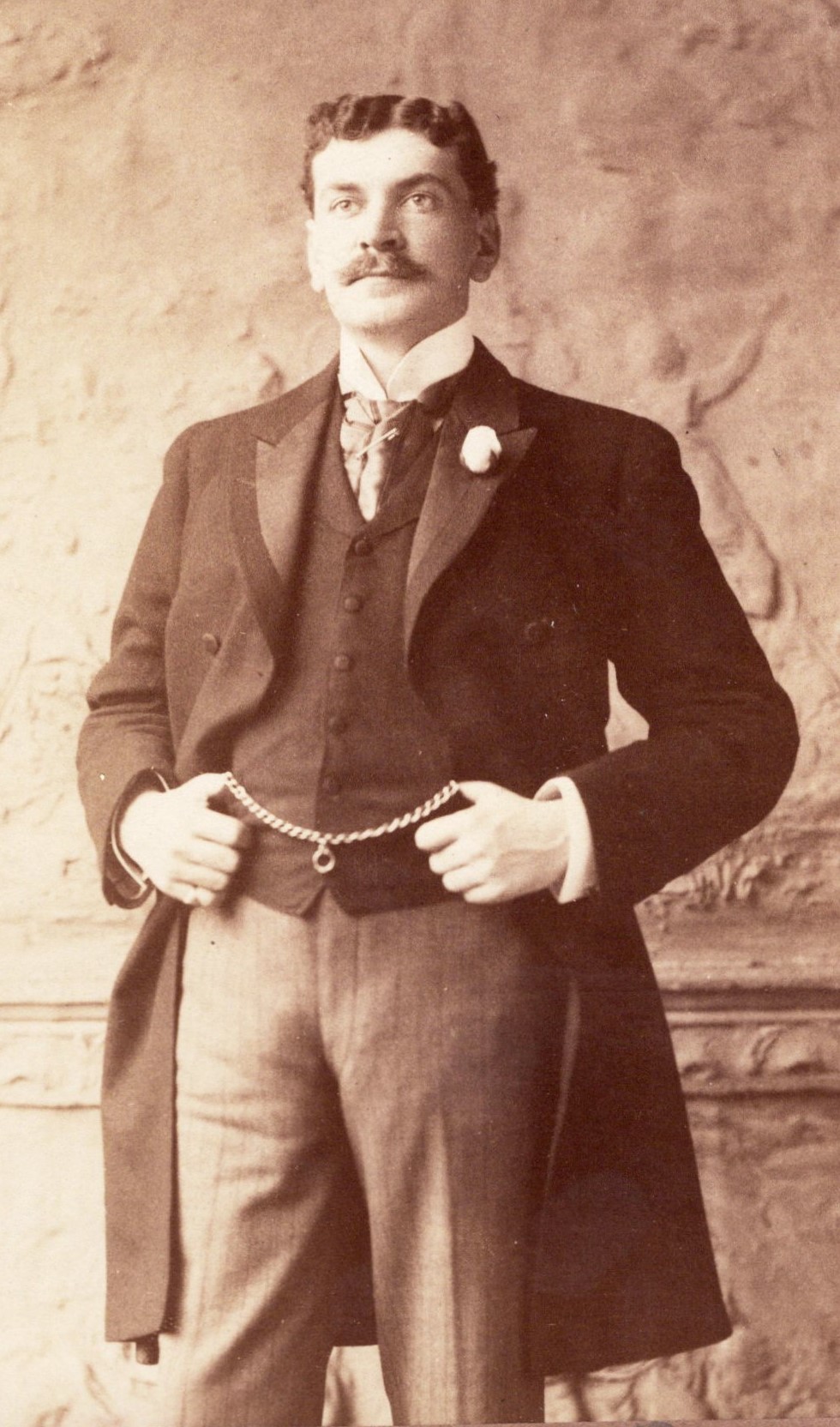
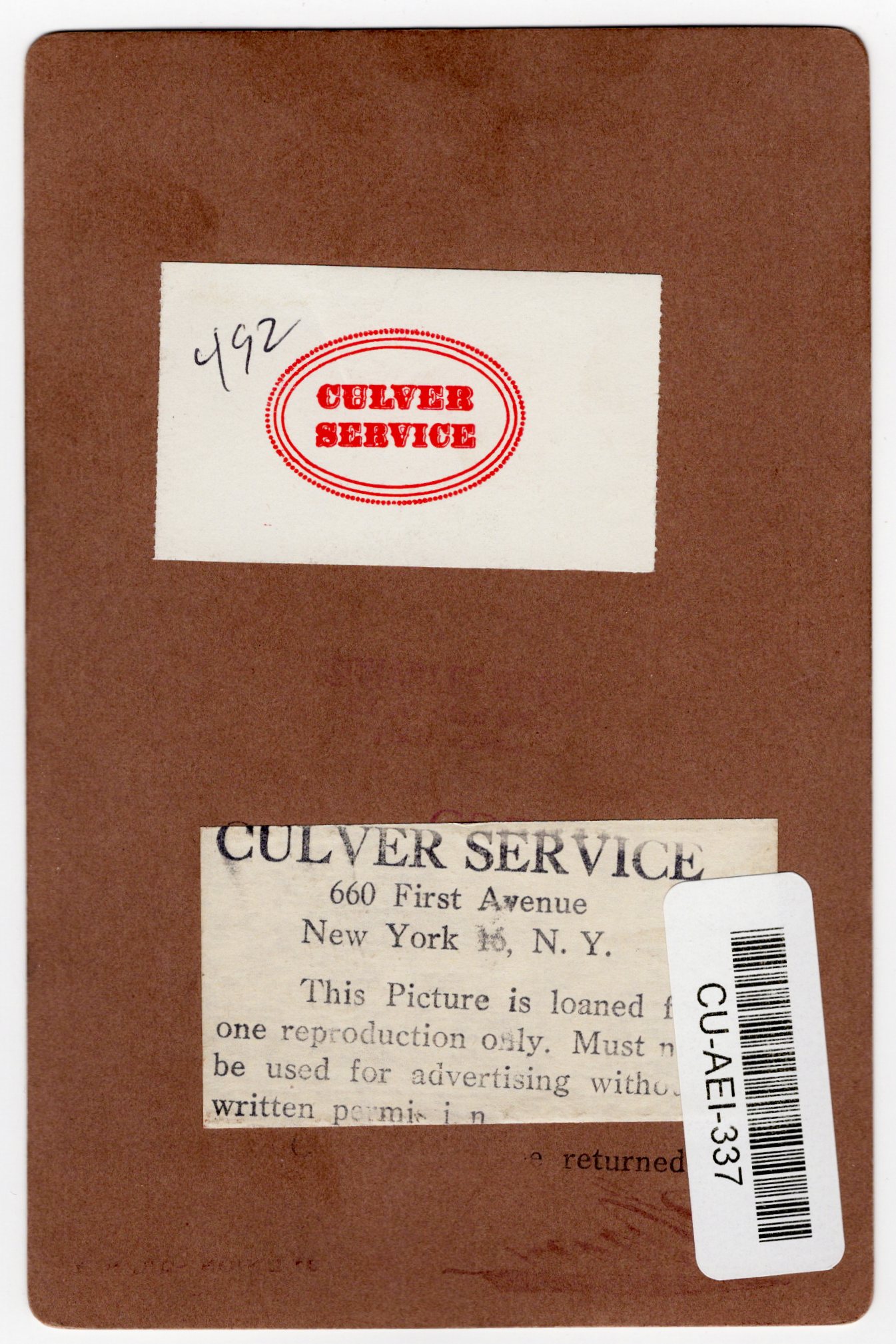
This cabinet card photograph features Rugby star, Arthur Boucher (11870-1948). He certainly looks fit in this portrait by the famous celebrity photographer, Napoleon Sarony. Boucher was a Welsh international rugby union forward and he began playing club rugby for Newport ((1889/90 season). During the next decade, he captained them for three seasons. He was a strong and quick player and he passed well on the run. He was well known for his kicking skills. He kicked several drop goals each season. Boucher was one of the last greal all-round Welsh players before position specialization became the norm. Boucher played for the international Barbarians and became club secretary for the team between 1894 and 1899. Stickers on the reverse of this photograph indicate that the image was once owned by Culver Service. Culver Pictures was a service that collected photographs that for a fee could be used by the media to accompany the stories appearing in their publications. Culver Service was established in 1926. (SOLD)
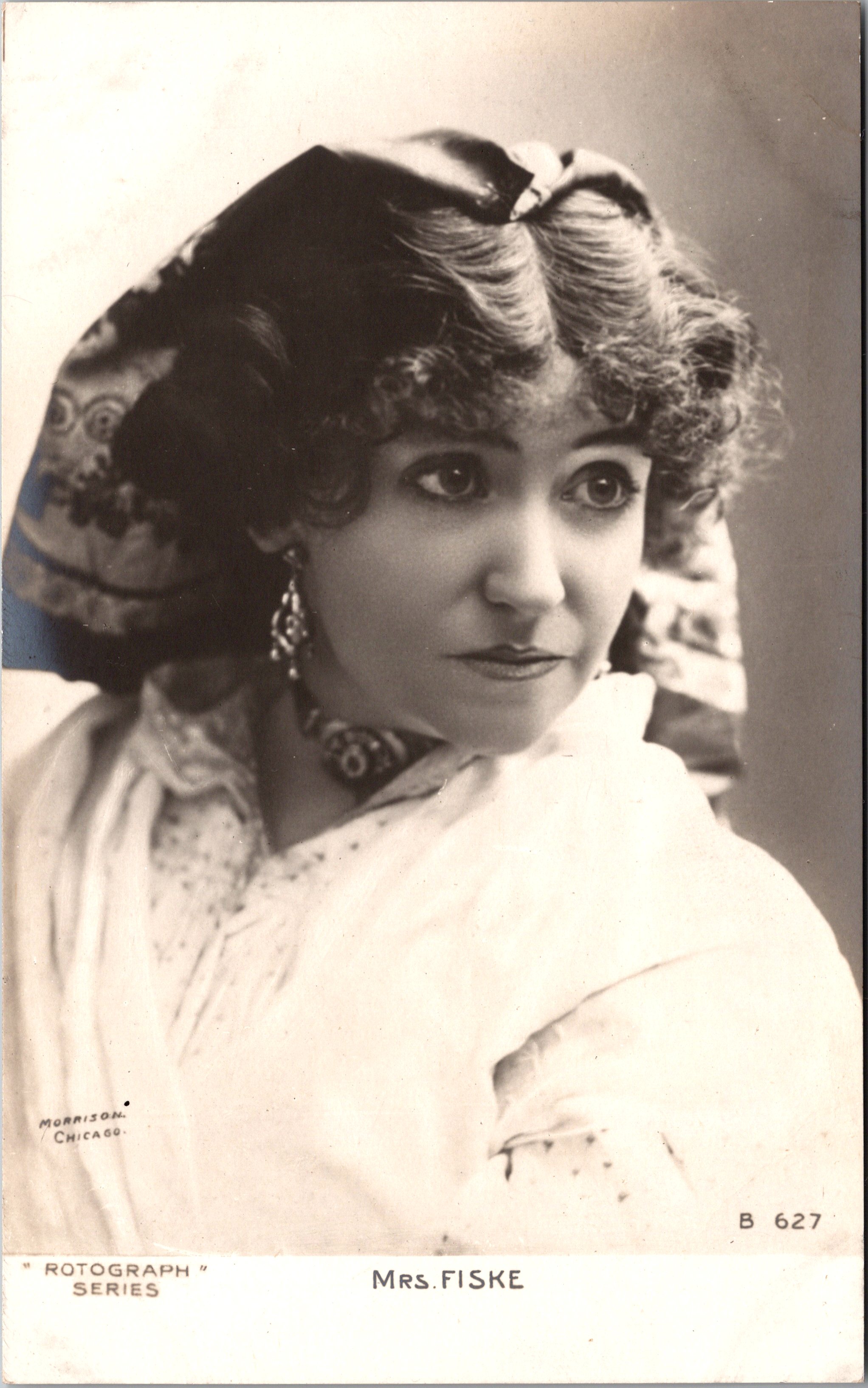
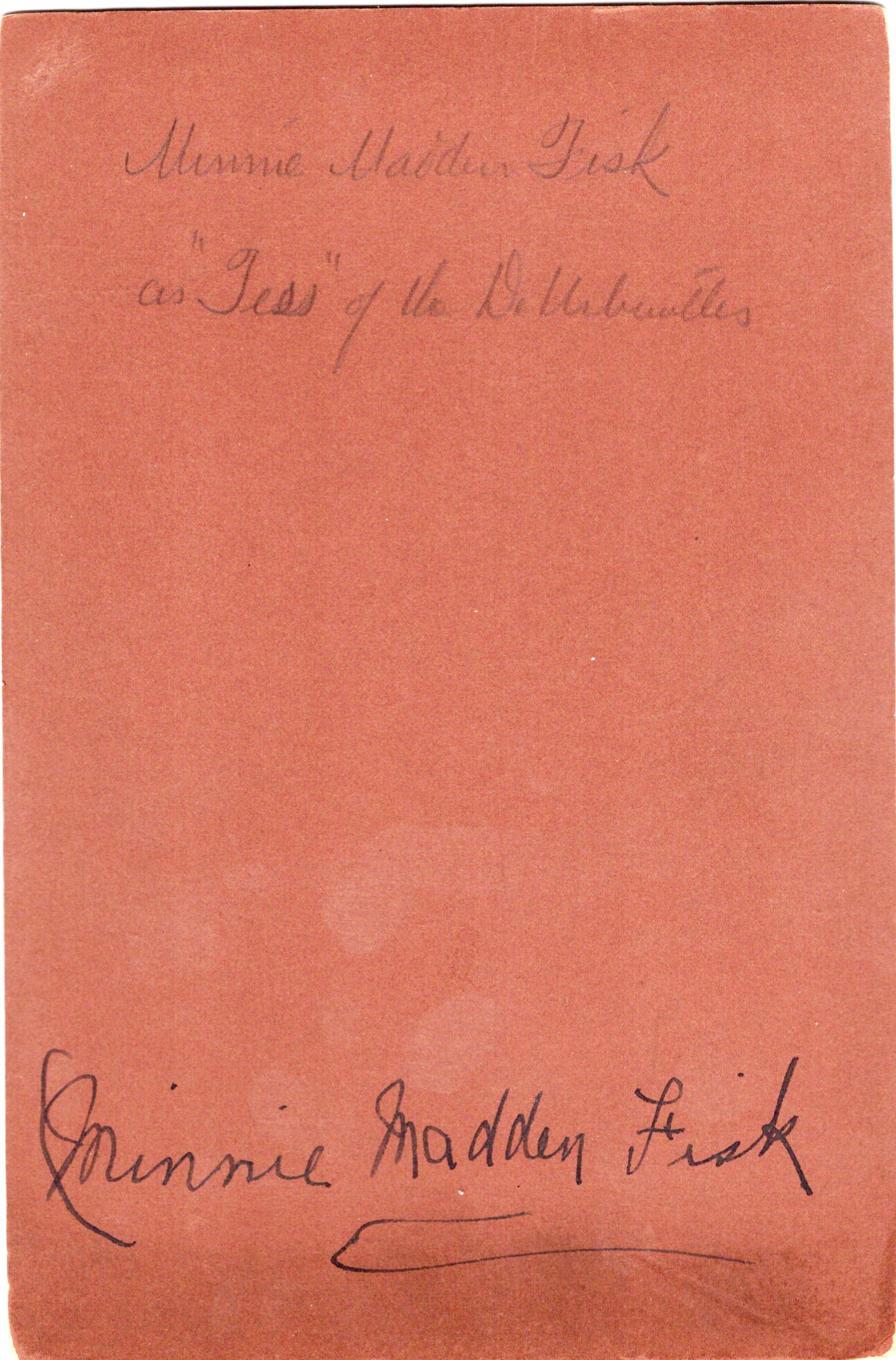
This vintage real photo postcard and this cabinet card features acclaimed theater actress, Minnie Maddern Fiske (1865-1932). When performing, she was often billed as “Mrs. Fiske”. She was one of America’s leading actresses during the late 19th and early 20th centuries. She performed in several Henrik Ibsen plays and is recognized as introducing American audiences to the Norwegian playwright. She was born in New Orleans, Lousiana, to parents that worked in the theater world. Her first professional acting gig was playing a role in a Shakespeare play. She was only three years old. By the age of four, she made her New York debut. Much of her childhood was spent touring with theater companies. At age sixteen, she played leading lady roles. She was recognized for her acting, but also for her beauty and singing voice. In 1890, she married Harrison Grey Fiske, successful playwright and Broadway producer. After takin three years off from acting, she returned to the theater in 1893 as an actor, playwright and director. The IBDb reports that she had 55 Broadway credits, combining her acting, writing, and directing. Among her successes on Broadway were “Tess of the d’Urbervilles (1897), “A Dolls House” (1902), “The Rose” (1905), and “The High Road” (1912). Her Broadway credits spanned from 1871 through 1930. In the mid 1910’s, Mrs Fiske starred in film adaptations of two of her stage successes. Although the films were well received, she believed she was more suited for theater than film. Despite her success in the theater, the talented actress died poverty stricken. Her financial downfall was realted to her battling against a group of producers that organized the Theatrical Trust (or Syndicate). The Syndicate controlled the nation’s best theaters and dictated what plays would appear and which actors would be in the cast. They relegated Mrs Fiske to appear in third rate theaters, churches, and skating rinks. Mrs. Fiske was not to be intimidated. She also was an advocate for animal welfare. She was involved in the activities of the ASPCA and other human leagues. She fought against the fashion craze of decorating hats with bird feathers. Many bird lives were sacrificed, and entire species were nearly wiped out as a result of this fad. She also educated the public about the cruelty involved in trapping animals. Because she was well known, respected and popular, she was able to influence animal reform. Mrs Fiske won a number of humanitarian awards. She was a strict vegetarian and was anti vivisection. During World War II, there was a liberty ship named the “SS Minnie M Fiske”. Minnie Maddern Fiske was a woman born before her time. She was a feisty activist.
Cabinet Card 1 features acclaimed theater actress, Minnie Maddern Fiske (1865-1932). The photograph captures her in her role in “Tess of the d’Urbervilles (1897). Mrs. Fiske’s photograph for this cabinet card was taken by eccentric celebrity photographer, Napoleon Sarony. (SOLD)
Mrs. Fiske’s photograph on Postcard 1 was taken by William Morrison of Chicago, Illinois. The card was published by Rotograph as part of a series (no.B 627). (SOLD)
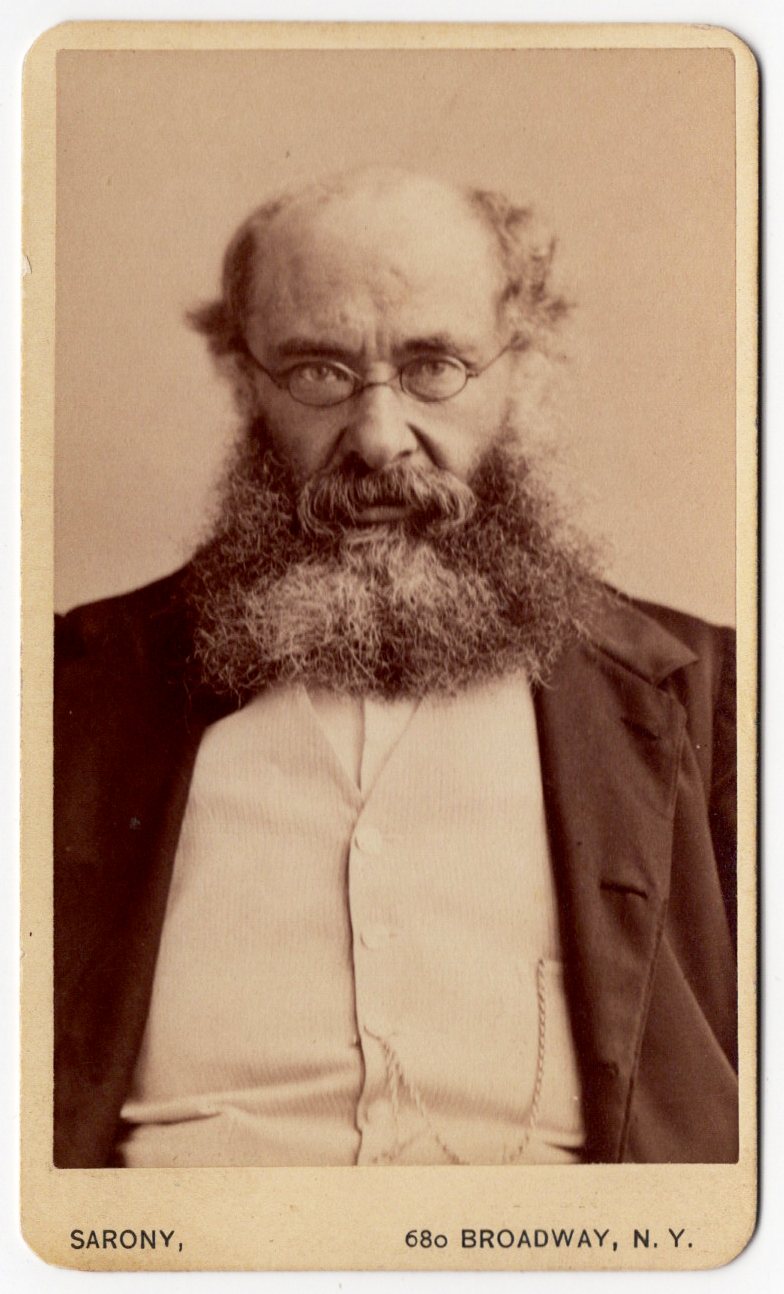
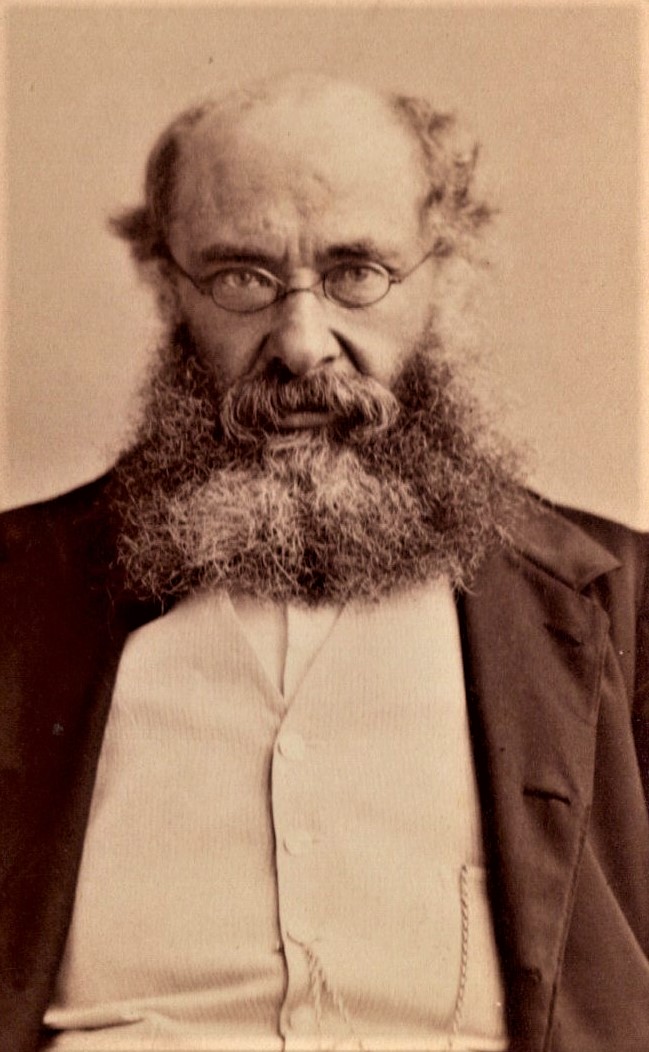
This carte de visite portrait features British author, Anthony Trollope (1815-1882). He has been described as “one of the most successful, prolific and respected novelists of the Victorian era. His best known work was a series of novels known as the “Chronicles of Barsetshire”. He also wrote novels revolving around political, social and gender issues. This cdv’s photograph of Trollope was taken by Napoleon Sarony. Sarony was a celebrated and talented celebrity photographer based in New York City. (SOLD)
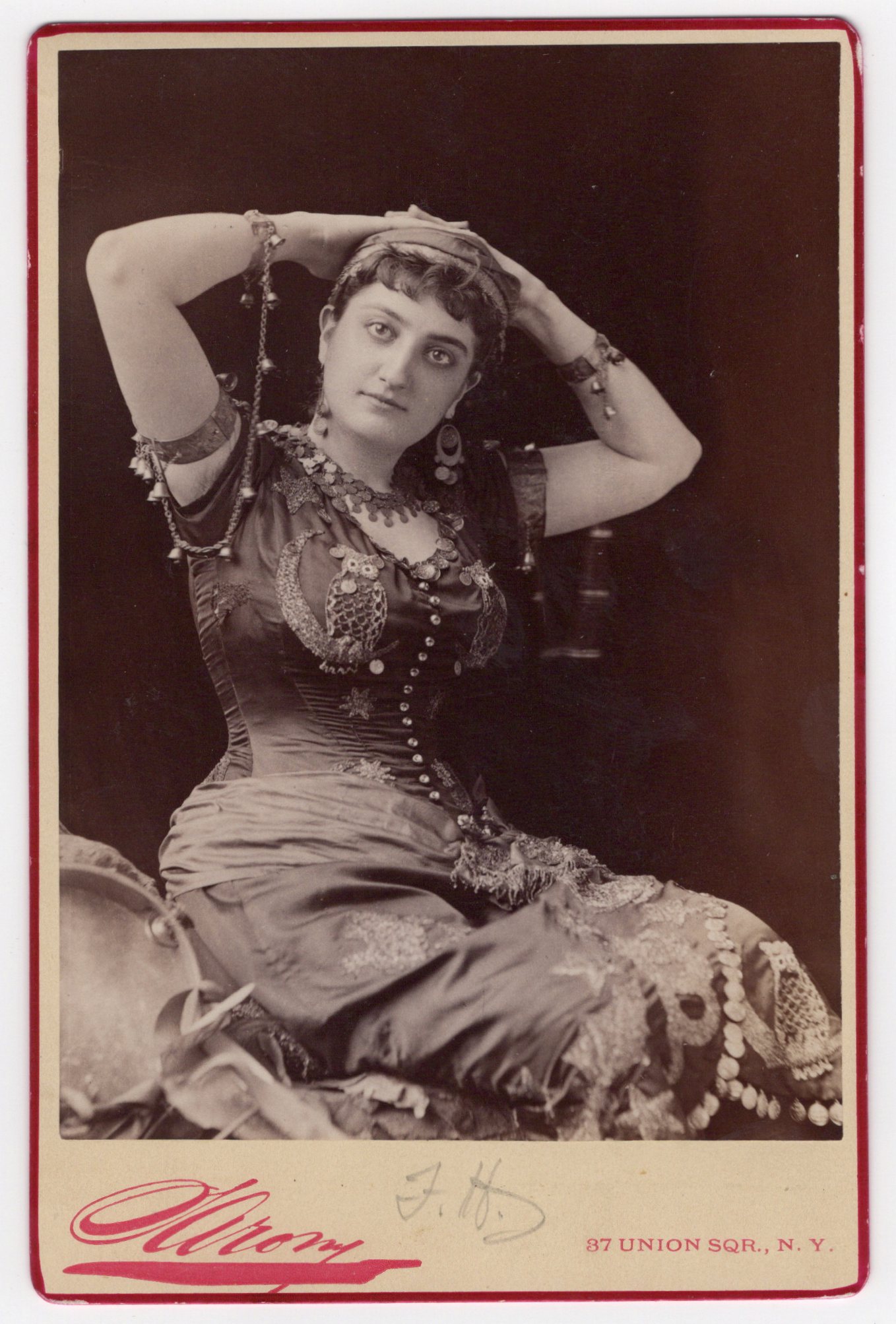
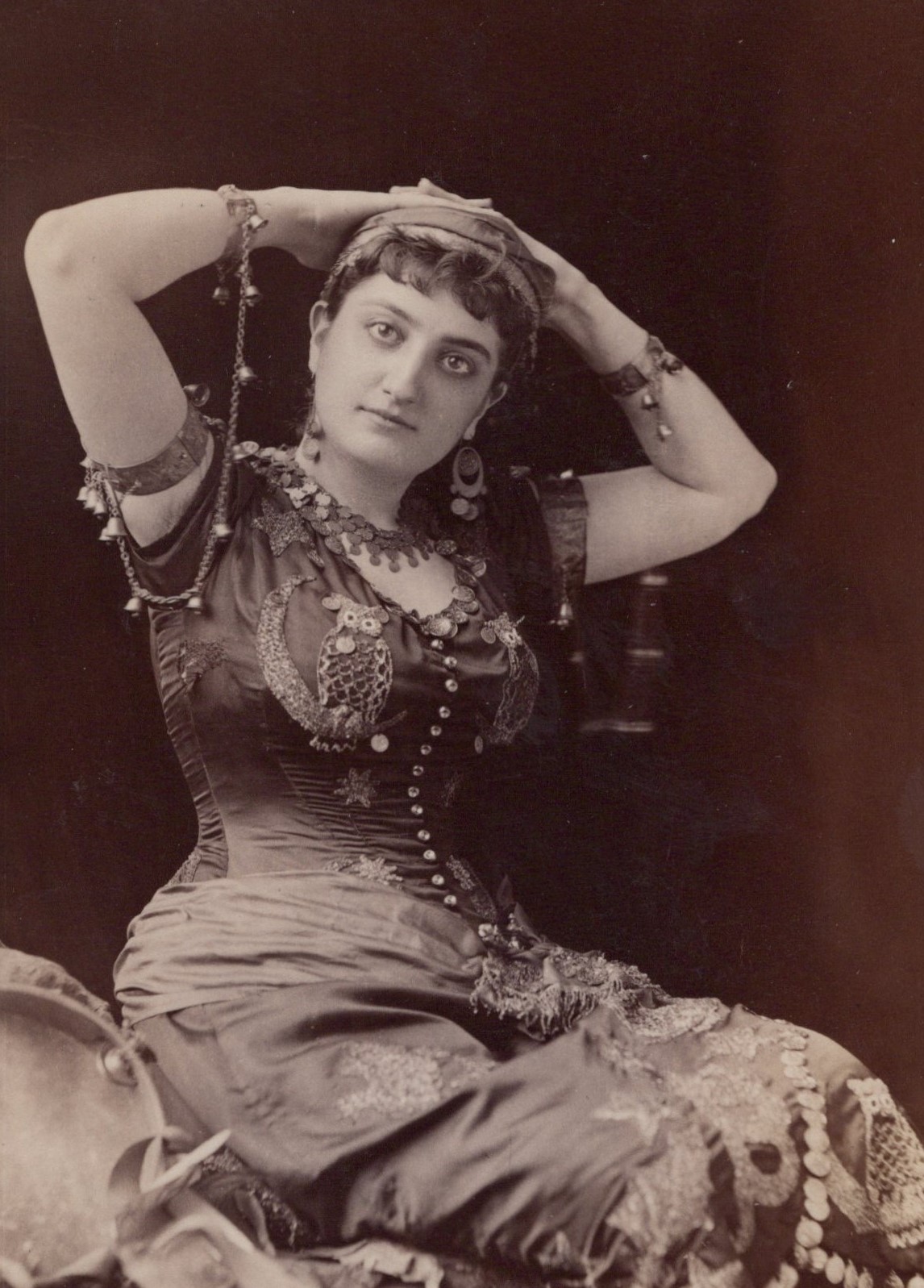
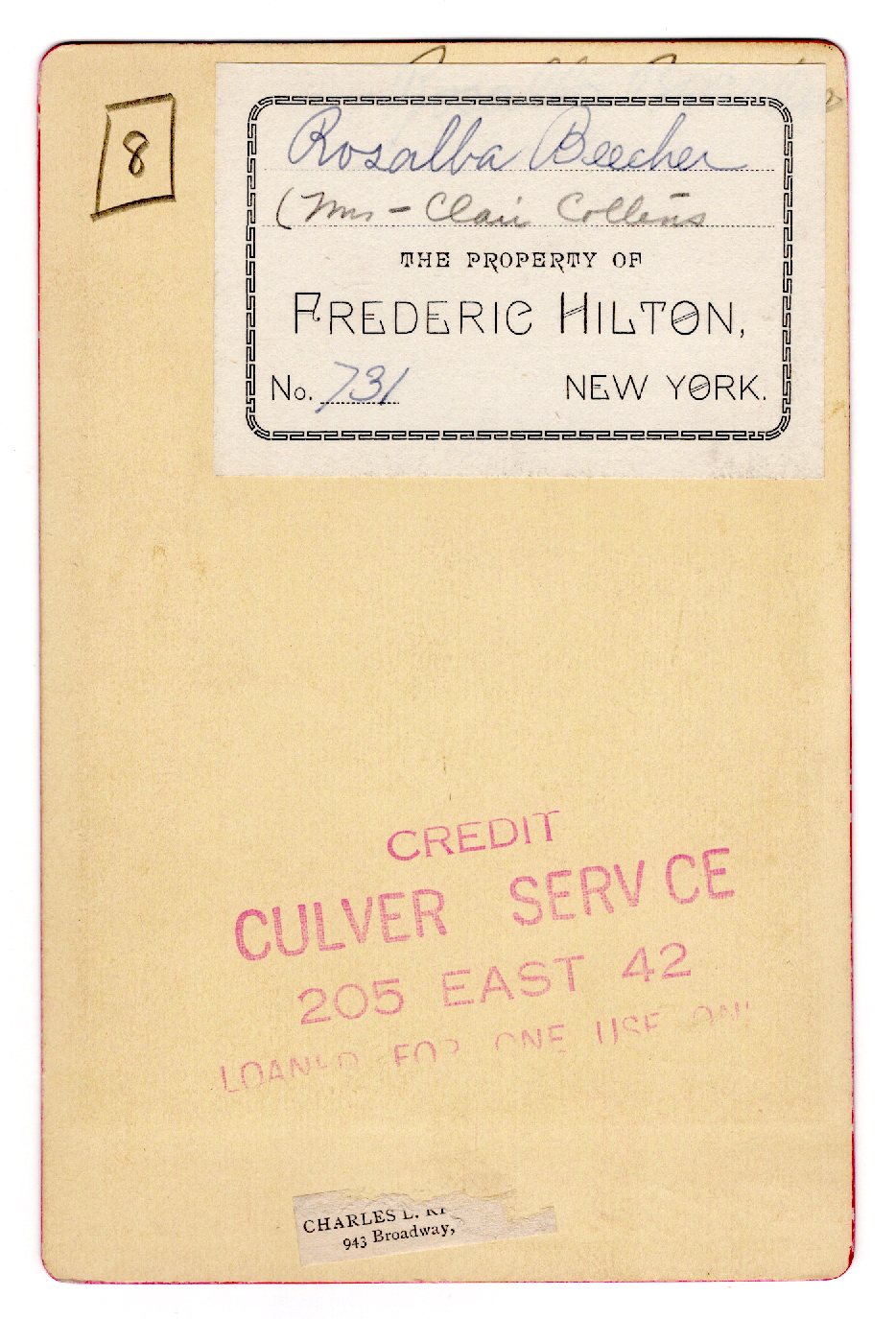
The celebrated Sarony studio of New York City, famed theatrical photographer, published this cabinet card portrait of Rosalba Beecher. Ms Beecher is wearing a very ornate and dramatic dress. Note the design of an owl sitting on a crescent moon. She is wearing a great deal of jewelry. Her clothing is likely a costume from an opera that she was appearing in. Beecher’s magnificent piercing eyes are evident in this portrait. During her stage career, Beecher appeared in one Broadway play, “Prince Methusalem” (1884). Miss Beecher is mentioned in a New York Times (1900) article concerning her divorce from Clarence Lyman Collins of the dry goods commission firm of Whitin Collins. Mr. Collins had filed for divorce because he alleged that his wife, whom he married in 1886 (She was 23 and he was 38 years-old), was causing him financial ruin with her excessive extravagant spending. It was alleged that her spending was creating a grave economic problem for Collins and she agreed to return to her pre marital profession of being an opera singer. She moved to Paris to get experience before executing her plan to return to singing on the American stage. She stayed in Europe for several years. While there, she continued her incessant spending and Collins found himself forty thousand dollars in debt. An interesting side note is that Collins’s first wife was a Vanderbilt. This particular cabinet card has been well travelled. The reverse of the cabinet card has “Property Of” stamps from Culver Service (New York), Frederic Hilton (New York), and Charles Ritzman (New York). Culver Pictures was a service that collected photographs that for a fee could be used by the media to accompany the stories appearing in their publications. Culver Service was established in 1926. Research yielded no information concerning the identity of Frederic Hilton. Charles L. Ritzmann was a well known purveyor of photographs of stage actors and actresses. To view other cards formerly owned by Culver or by Ritzmann, type Culver of Ritzmann in the search box. (SOLD)
This cabinet card portrait features stage performer, Alessandro Alexander Salvini (1861-1896). The photographer of this image is the famed celebrity photographer Napoleon Sarony. The eccentric and talented Mr Sarony, operated a studio in New York City. Sarony photographed a large number of actors and actresses appearing in New York theater. Alexander Salvini, as he was known in America, was born in Italy. His father, Tomasso Salvini was an esteemed tragedian actor. His grandfather also appeared on the stage. Alexander wanted to become an actor too, but his father steered him toward a different career. Alexander decided to become a sailor and after several voyages decided to switch careers. He enrolled in school to become a civil engineer. After receiving his degree in 1881, he came to America with an actor friend. Alexander’s intent was to find a job with a railroad, but instead, he spent a year traveling with his friend, assisting him, learning fencing and English. In 1882, he went to New York City to begin an acting career. He made his debut that same year, appearing in a play with actress Clara Morris. When Salvini’s father heard about his son’s success, he responded with an unsupportive cable stating “How dare you, sir, go on the stage without my permission”. Remember, the younger Salvini was 21 years old at the time of his debut. He replied to his father that he didn’t ask his father’s permission, because he knew his request would be denied. After his debut, Salvini hit the road with a traveling theater company and remained touring for two years. In 1885, Tomasso Salvini arrived in America for a tour. He hired Alexander as the stage manager and part-time actor. After traveling with his father’s company, Alexander started his own theater company. In 1886 he appeared in a series of plays at the Union Square Theater. His father returned to America in 1889 and Alexander joined his tour. When the tour ended, he went with is father to Italy. After a brief vacation, Alexander returned to America with a large amount of his father’s wardrobe which had been accumulated over many years. He also brought swords and armor from hid dad’s collection. Alexander and his company launched a new American tour and Salvini played a number of roles including Shakespearian parts. In the early 1890’s he married Maude Dixon, the leading lady in his company. Alexander had roles in two Broadway plays, “Partners” (1888) and “A Child of Naples” (1890). He is very well known for his role in “The Three Musketeers”. In 1896, he became ill with “organic trouble” and after four months of being bed bound, he died. A Sarony cabinet card portrait of Alexander Salvini can be found in the Museum of the City of New York. This cabinet card portrait comes from the collection of Brown Brothers. The firm was the first stock photo agency. It was established in 1904. It built an archive of over one million photographs and negatives. This cabinet card is in good condition (see scans)
Buy this original Cabinet Card Photograph (includes shipping within the US) #3239
To purchase this item, click on the Pay with PayPal button below
50.00 $
Buy this Cabinet Card Photograph (includes International shipping outside the US) 3239
To purchase this item, click on the Pay with PayPal button below
Unfortunately, I can’t figure it out. Is this a photograph of a father and daughter or are the pair performers of the New York stage? The man looks dapper in his suit, top hat, and cane. The young girl is adorable and well dressed. Be sure to note her shoes/boots. The gentleman is very photogenic and certainly has the appearance of an actor. The photographer of this “enigmatic” portrait is Napoleon Sarony, the well known and highly respected celebrity photographer. Sarony photographed a large number of the actors and actresses appearing in New York theater. He was an eccentric man but very talented. A faded inscription on the reverse of the photo indicates that the photograph was taken in 1879. (SOLD)



 CABINET CARD 1
 CABINET CARD 3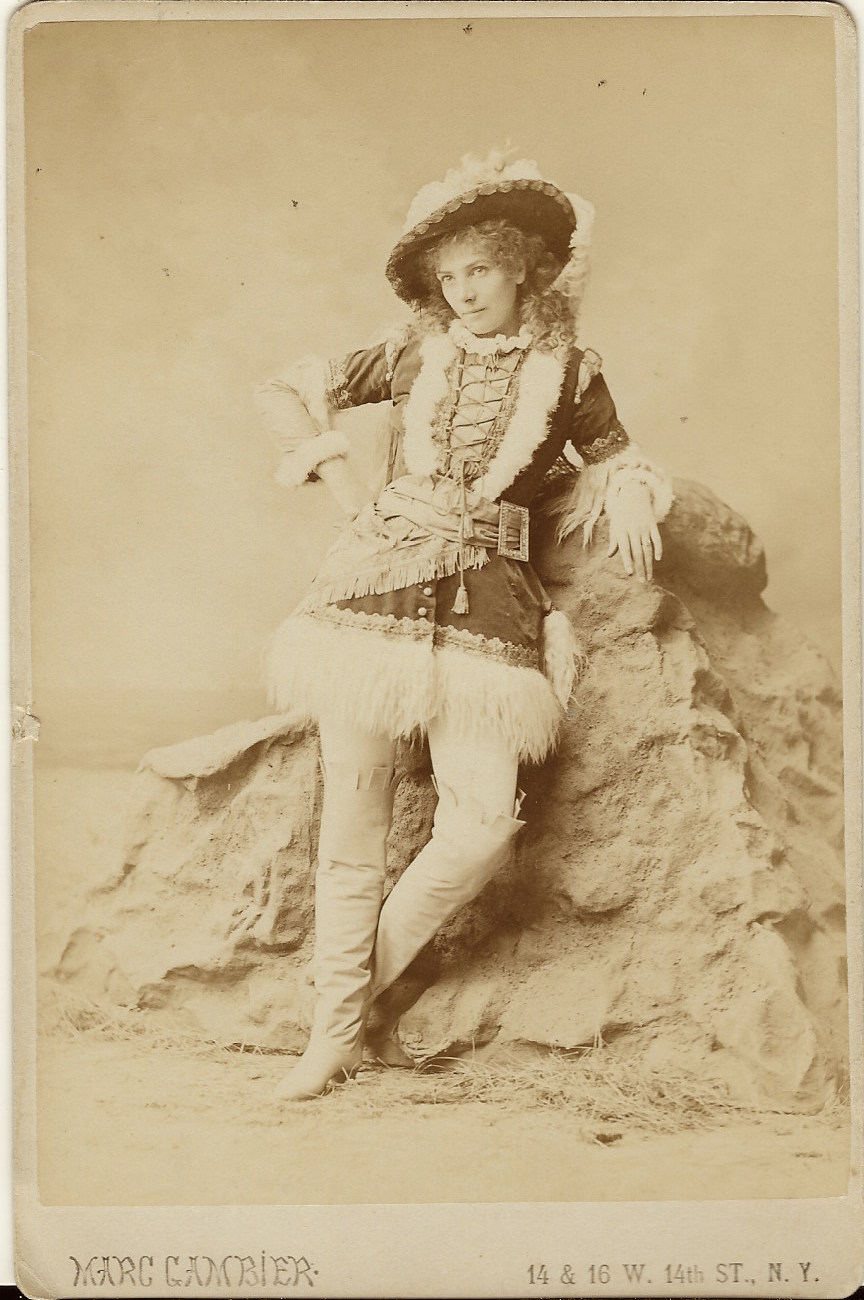





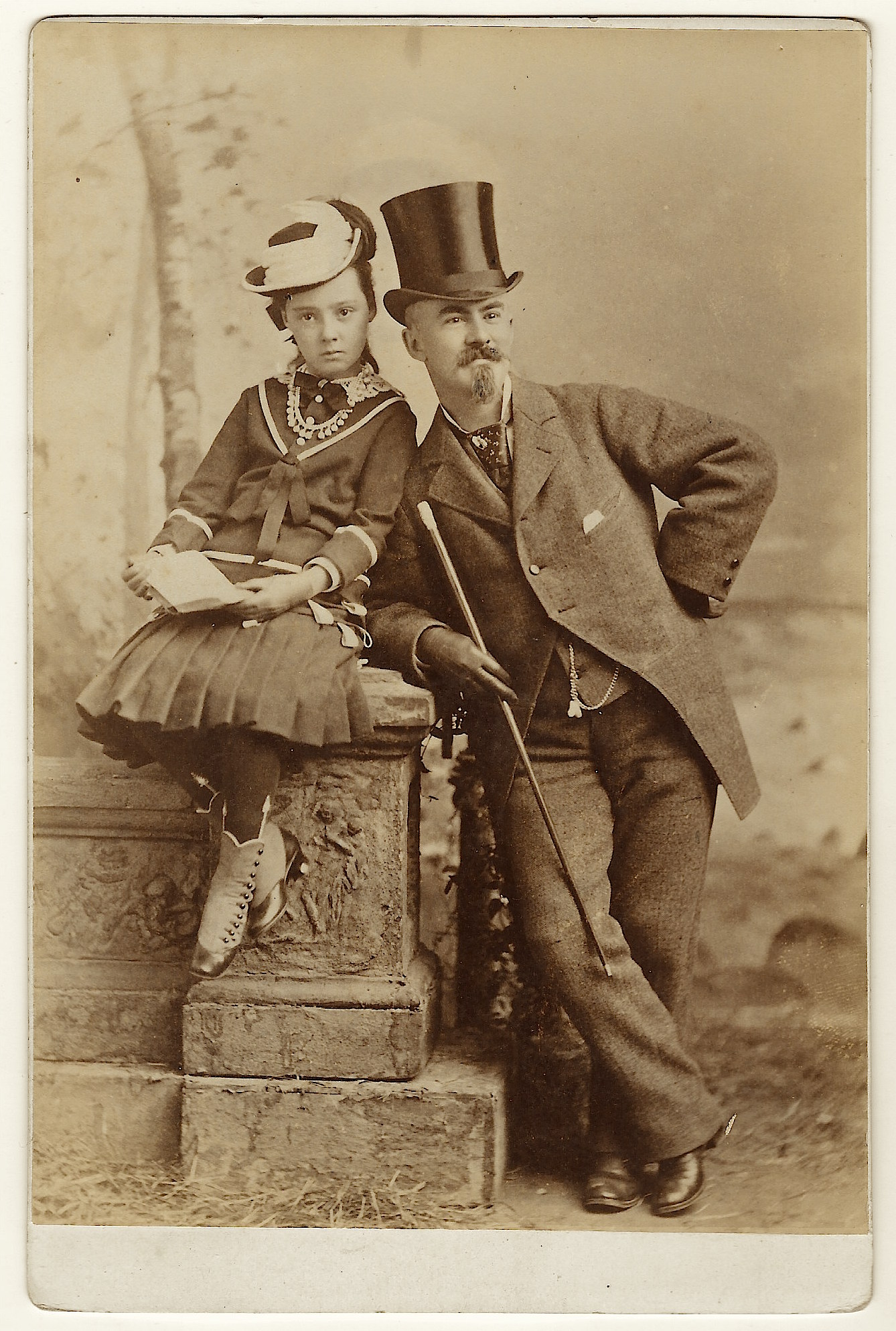
 Unfortunately, I can’t figure it out. Is this a photograph of a father and daughter or are the pair performers of the New York stage? The man looks dapper in his suit, top hat, and cane. The young girl is adorable and well dressed. Be sure to note her shoes/boots. The gentleman is very photogenic and certainly has the appearance of an actor. The photographer of this “enigmatic” portrait is Napoleon Sarony, the well known and highly respected celebrity photographer. Sarony photographed a large number of the actors and actresses appearing in New York theater. He was an eccentric man but very talented. A faded inscription on the reverse of the photo indicates that the photograph was taken in 1879. (SOLD)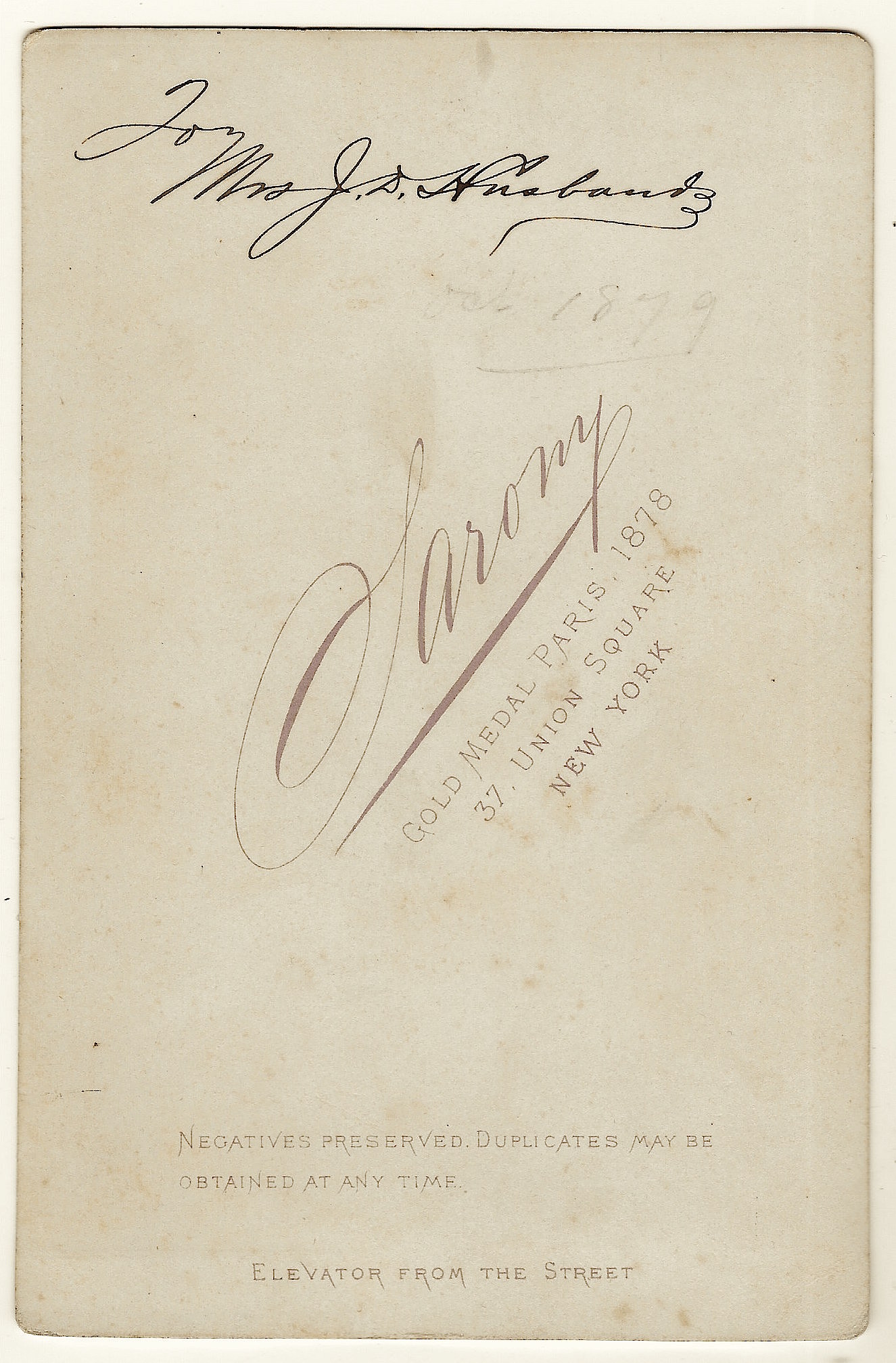


 THE CABINET CARD GALLERY