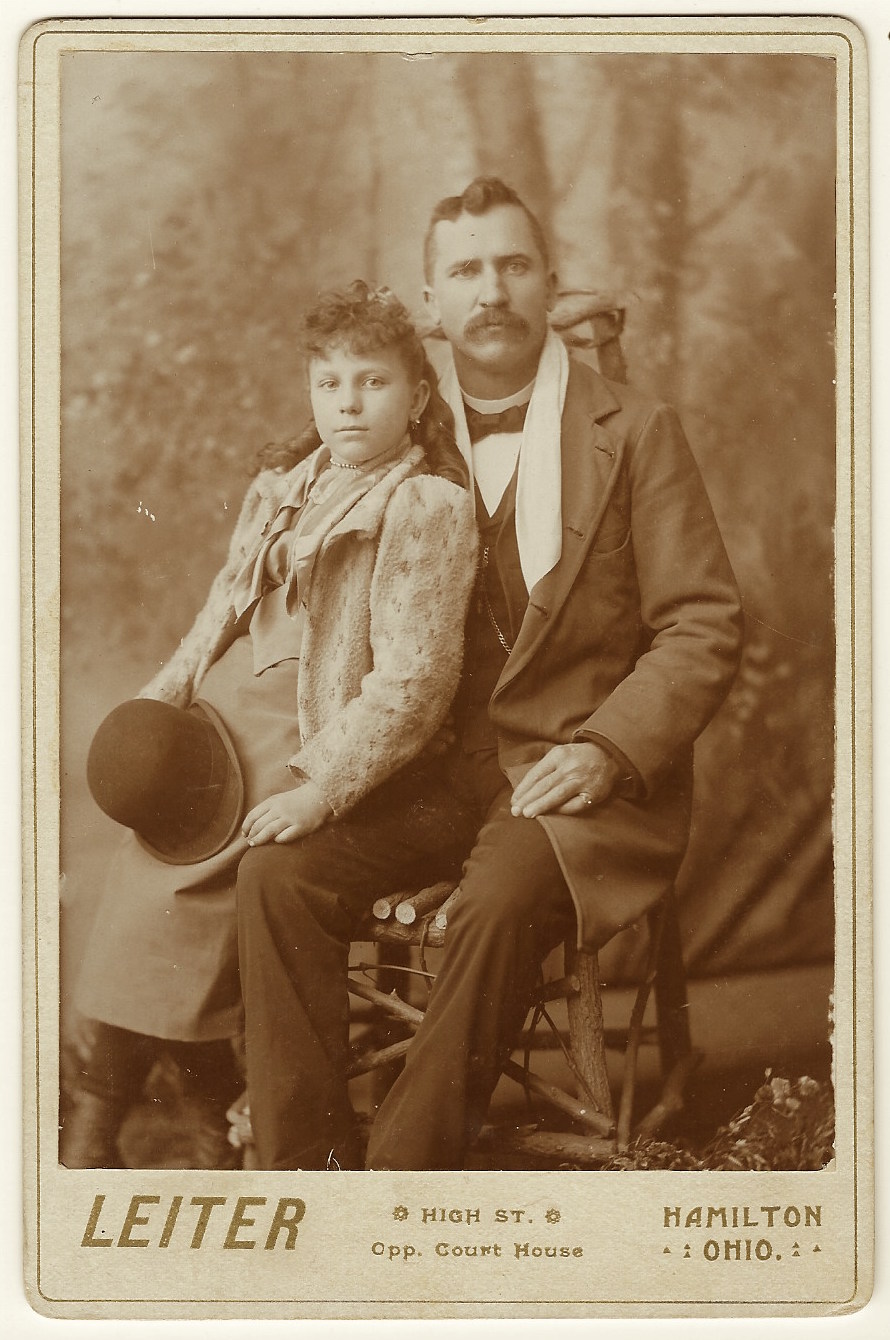
This cabinet card portrait captures the great facial expressions of a loving father and his spunky daughter. Dad looks quite intense and protective of his adorable daughter. The daughter offers a priceless expression. She has amazing poise for a girl her age. The photographer brilliantly has the daughter holding her fathers hat. Great looking subjects and a terrific pose characterize this image by the Leiter studio in Hamilton, Ohio. SOLD
TWO WOMEN WEARING MOURNING DRESSES : ANTIQUE HANDBAG : CORNING IOWA : CABINET CARD
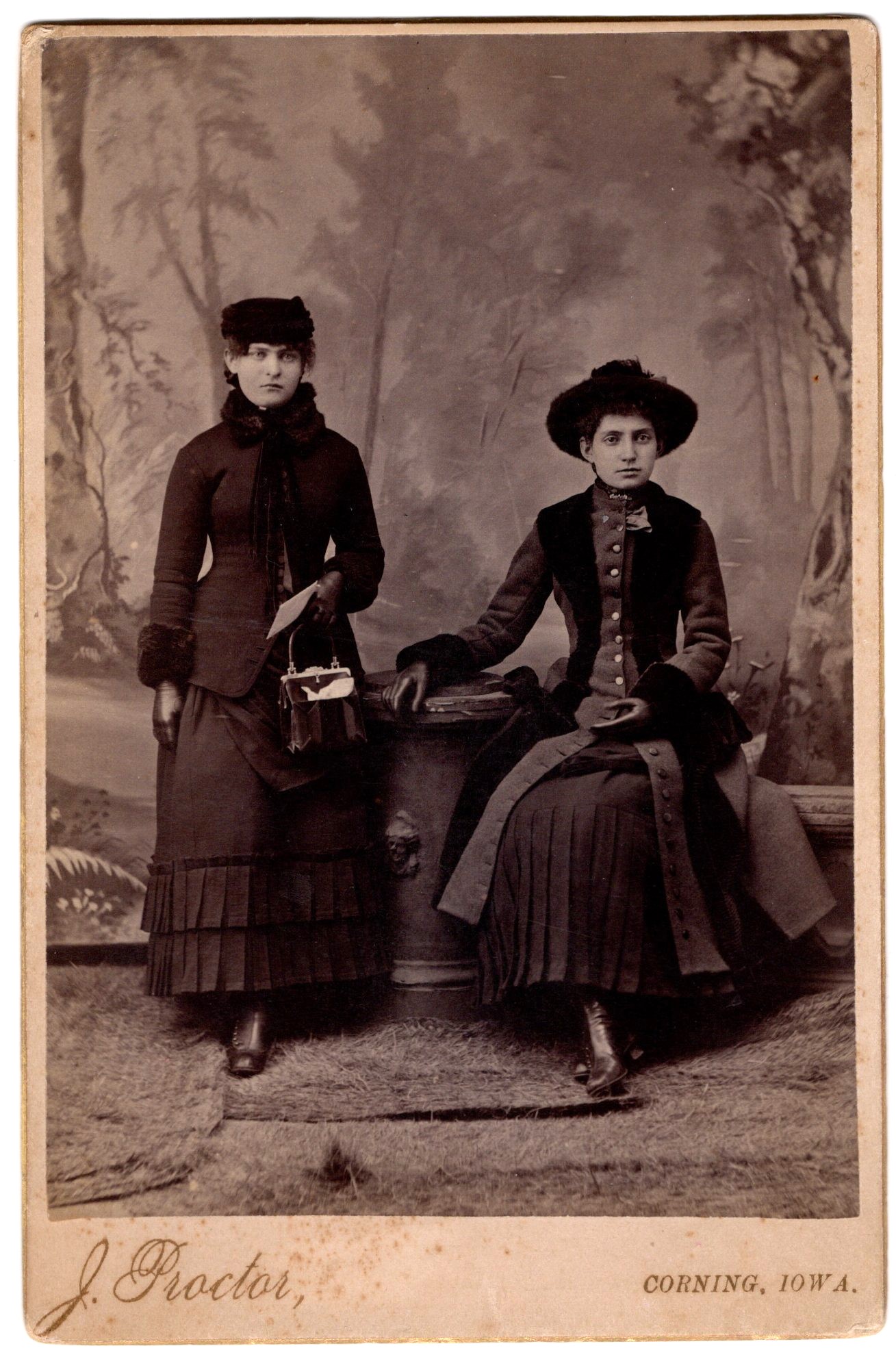
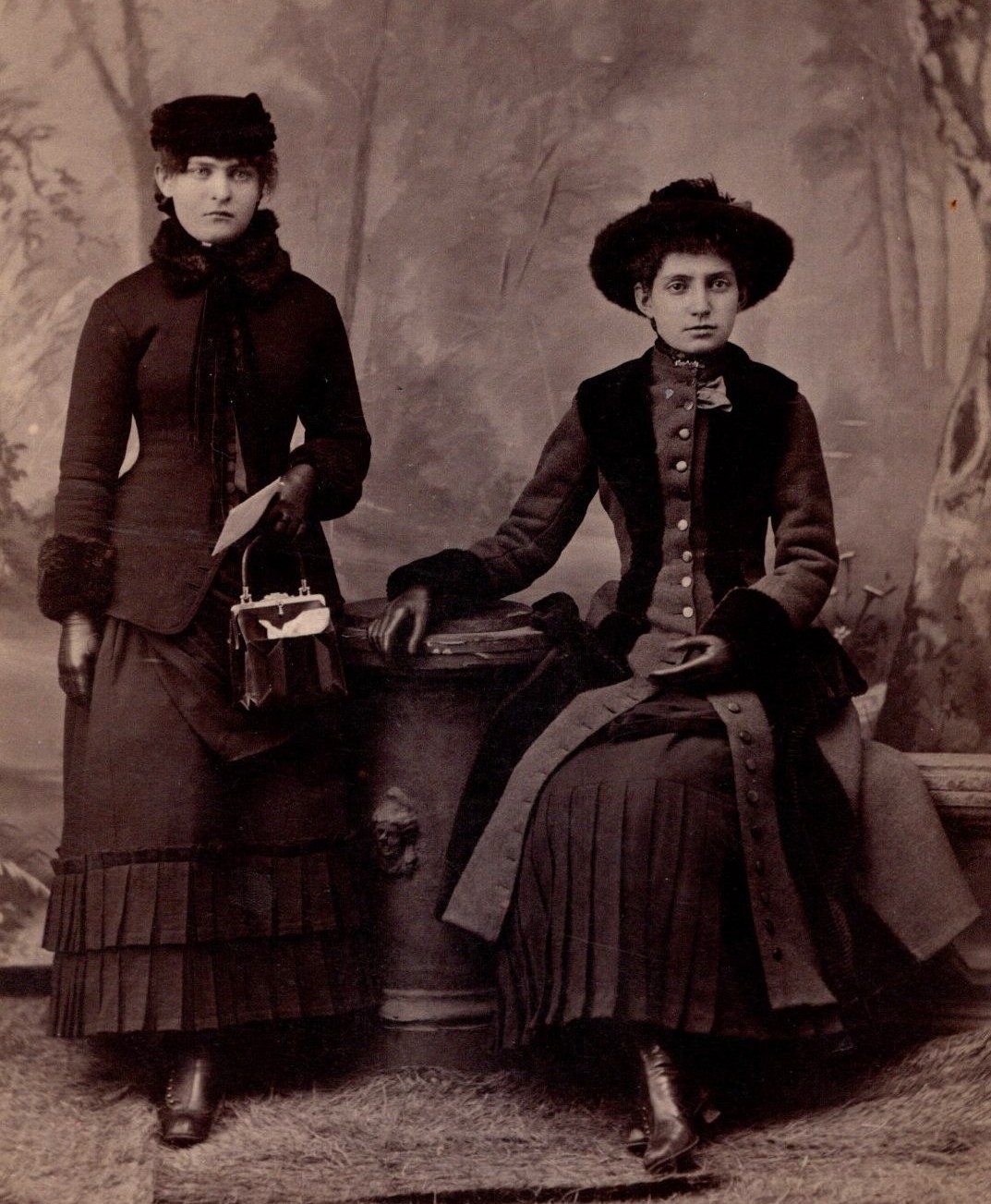
This is a striking antique cabinet card portrait depicting two young women dressed in dark formal attire, photographed by J. Proctor of Corning, Iowa. The image presents a beautifully composed studio portrait typical of the late nineteenth century, likely dating to the 1880s or early 1890s. The two women are posed within a traditional studio setting featuring a painted woodland backdrop and decorative studio props. One woman stands while the other is seated beside an ornamental pedestal. The seated woman rests one arm on the pedestal, while the standing figure holds what appears to be a small envelope and an elegant handbag, accessories commonly seen in Victorian portrait photography. Both women are dressed in dark, carefully tailored garments typical of the late Victorian period. Their outfits include fitted bodices, high collars, and long pleated skirts, with stylish hats and gloves completing their attire. The seated woman wears a broad-brimmed hat and a coat with decorative buttons, while the standing woman wears a smaller hat with fur or velvet trim and carries a fashionable small purse. The fact that both women are dressed entirely in black naturally raises the possibility that this may represent mourning attire, which was common during the Victorian era following the death of a family member. Mourning dress often involved black garments worn for extended periods, particularly among women. However, black clothing was also widely worn as formal or fashionable attire, especially for studio portraits where darker garments photographed well. The photograph was produced by J. Proctor, whose imprint appears along the bottom mount. Corning is a small community located in southwestern Iowa. This cabinet card portrait dates back to circa 1886 to 1890. This cabinet card remains in very good antique condition overall. The photograph itself retains good clarity, contrast, and detail, with both figures sharply rendered. The mount shows some light foxing along the lower margin. The corners show minor rounding and light edge wear consistent with age and handling. The reverse of the mount displays a plain pink backing and has beveled gold edges. (see scans)
This cabinet card is available for purchase at my store, The History Peddler, for $75.00 .
Interested collectors may view the listing here:
https://www.ebay.com/itm/336496805529

PORTRAIT OF A YOUNG WOMAN : PEARL NECKLACE : MAX ZESIG : PERLEBERG, GERMANY RPPC
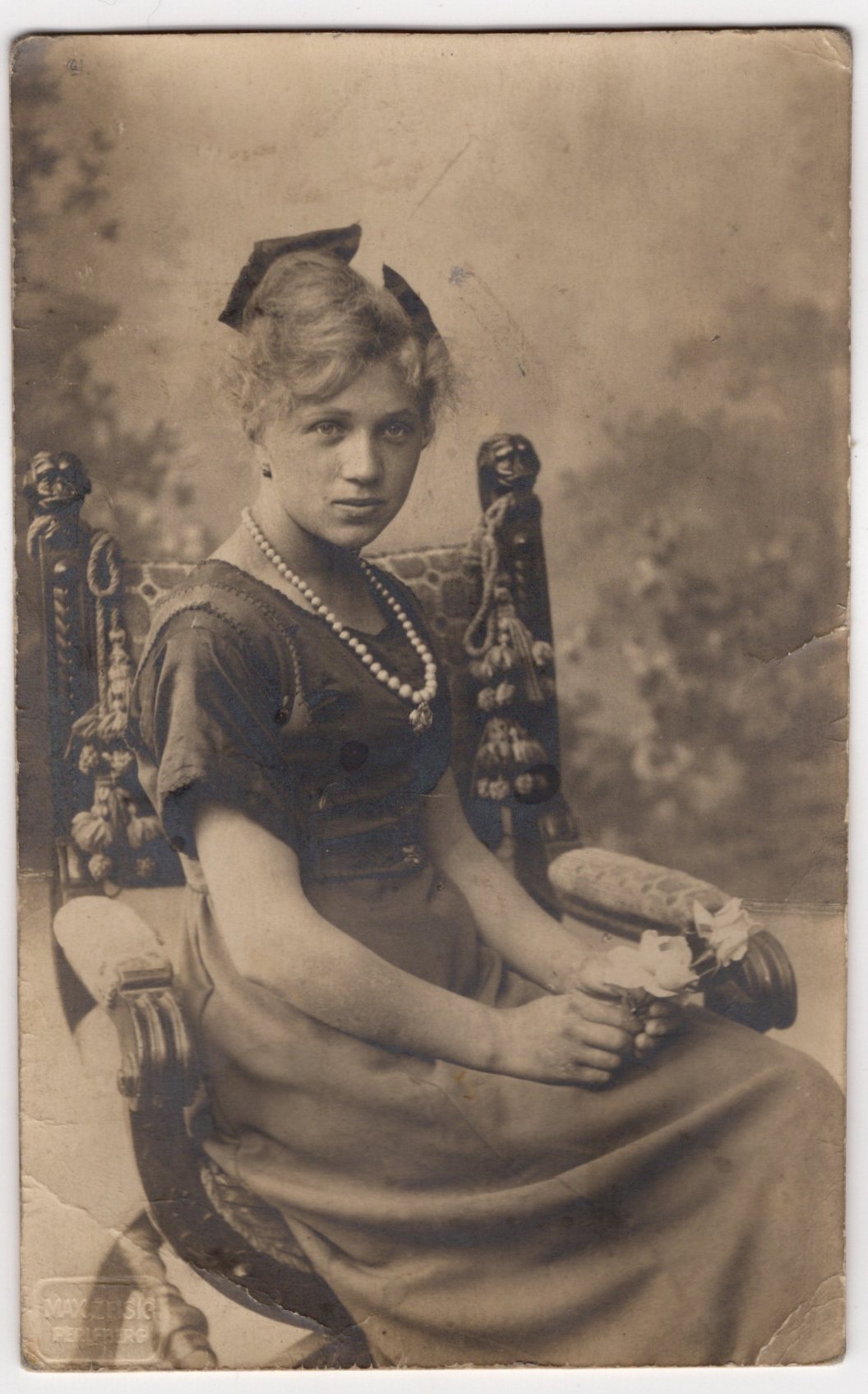
Offered here is a vintage real photo postcard (RPPC) portrait of a young woman seated in an ornate studio chair, likely dating to the early 20th century, circa 1910–1920. The photograph captures the sitter in a composed studio setting, seated against a softly blurred backdrop that was typical of portrait studios of the period. The young woman faces the camera directly with a thoughtful and somewhat intense expression, which gives the portrait much of its character and appeal. Her gaze is steady and engaging, lending the image a sense of personality that makes the photograph particularly interesting to study. She wears a dark dress with short sleeves and a single strand pearl necklace, a fashionable accessory for women of the era. Her hair is styled in a soft early twentieth-century coiffure and tied with a large ribbon bow, which adds to the charm of the portrait. Resting in her hands is a small bouquet of flowers, while she sits in an ornately carved studio chair with decorative tassels, that adds a touch of elegance to the image. In the lower left corner of the image is a small printed box that reads: “Max Zesig – Perleberg.” Perleberg is a historic town in Brandenburg, Germany, located northwest of Berlin and known for its preserved medieval architecture. Zesig is the photographer or the publisher of this postcard. In fact, he may have filled both roles. This postcard is in fair antique condition overall. The card shows several signs of age and handling, including: A crease along the right edge near the center of the card, a crease in the bottom left corner, and a crease at the card’s top right corner. The postcard also shows moderate warping or curvature, meaning it does not sit completely flat on a surface. There are also light surface marks and general age toning consistent with an early twentieth-century photographic postcard. Despite these issues, the image itself remains clear and appealing, and the expressive portrait of the sitter still displays well. This is an attractive and characterful early German real photo postcard portrait (see scans).
This vintage postcard is available for purchase at my store, The History Peddler, for $7.85 or best offer
Interested collectors may view the listing here:
https://www.ebay.com/itm/336479119804
DISTINGUISHED LOOKING GENTLEMAN : FULL BEARD : TORONTO, CANADA : CABINET CARD
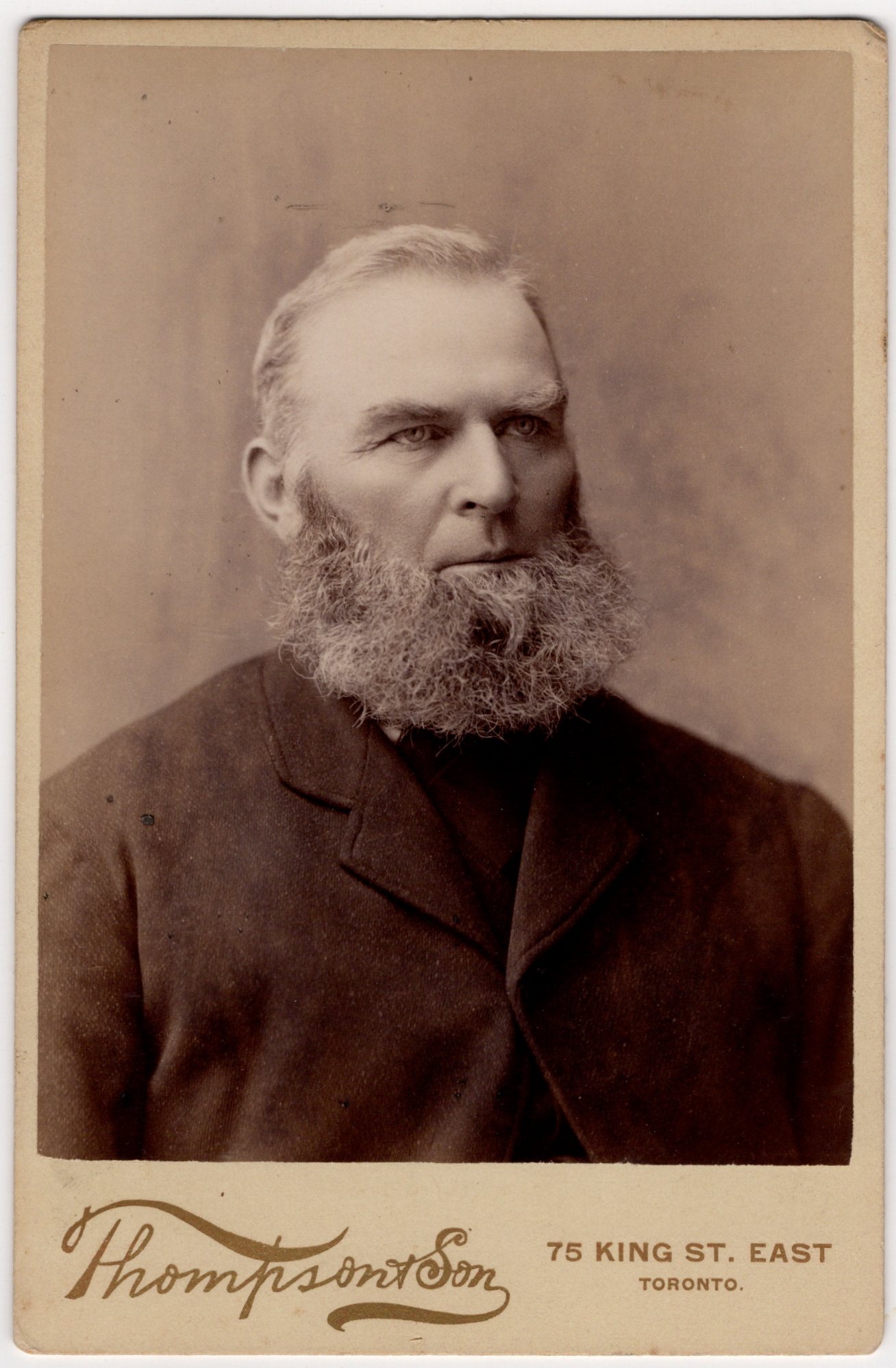
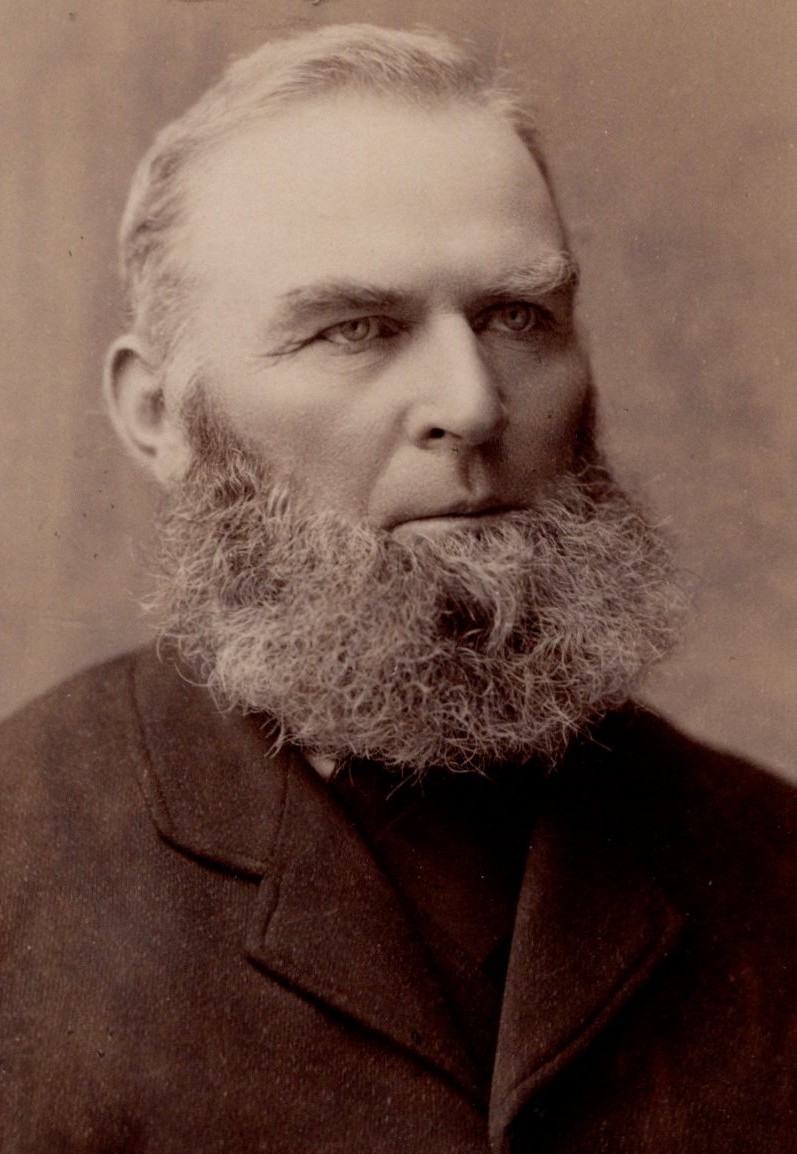
This cabinet card photograph features a handsome and distinguished looking older gentleman. He has a bushy beard but no mustache. This image comes from the studio of Thompson & Son in Toronto, Canada. Canada. Note the surface wear above the subject’s head and the corner wear on the reverse of the photo. Overall, this cabinet card portrait is in good condition (see scans).
This cabinet card is available for purchase at my store, The History Peddler, for $19.85
Interested collectors may view the listing here:
https://www.ebay.com/itm/336360722838

SPERANZA : ACTRESS : LUCIEN WALERY : PARIS : HAND COLORED : ART NOUVEAU POSTCARD
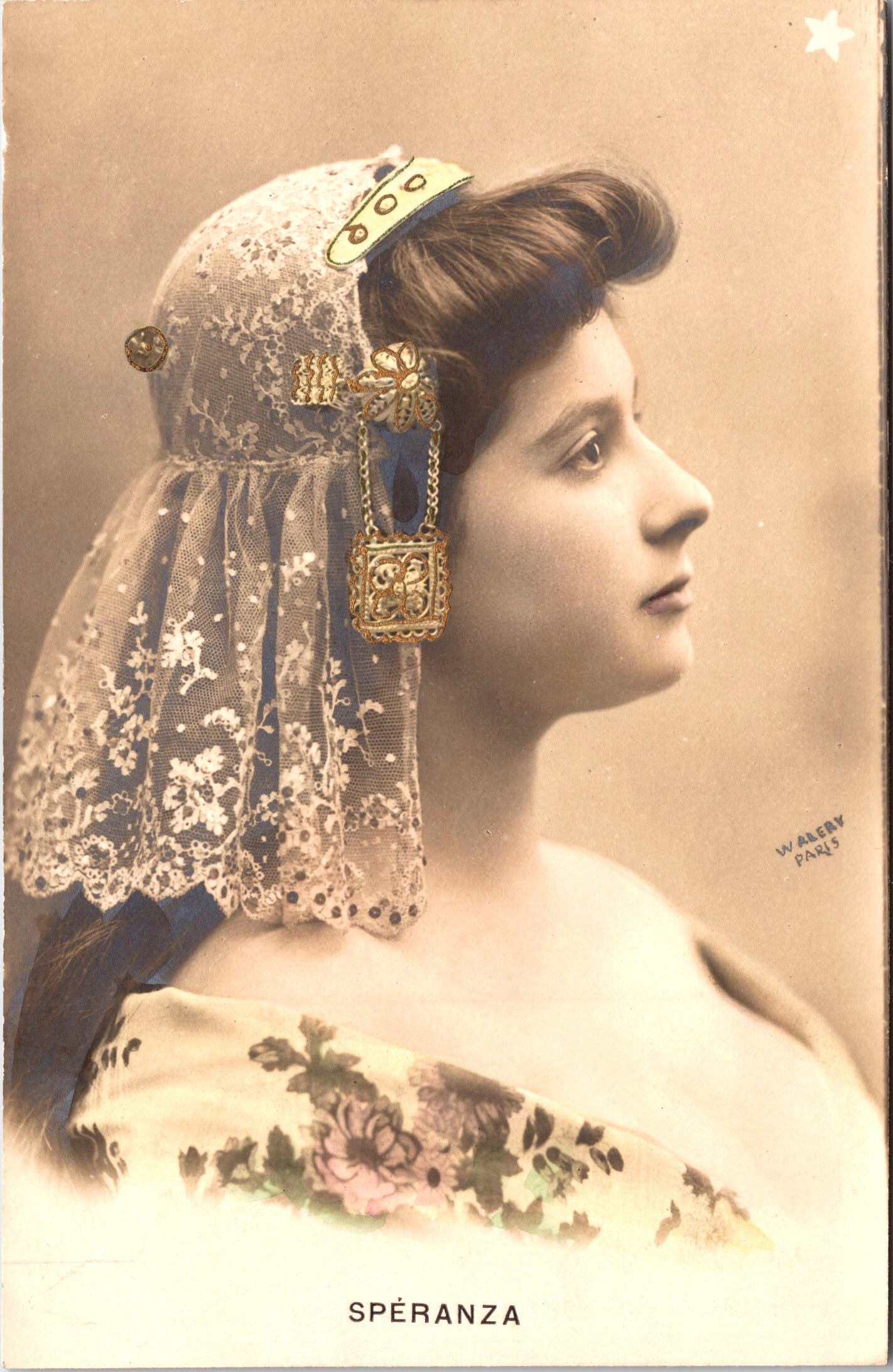
This is a beautiful hand-colored Art Nouveau postcard portrait of the performer Speranza, photographed by the Paris photographer Lucien Walery. The image presents the actress in elegant profile, her gaze directed thoughtfully into the distance, creating a refined and almost classical composition typical of theatrical portrait photography of the Belle Époque era. Speranza is shown wearing an elaborate lace headdress or veil adorned with decorative ornaments, including jeweled elements and a suspended pendant ornament that drapes alongside her hair. The delicate lace veil falls gracefully over the back of her head and shoulders. Her hair is styled in a softly arranged early 20th-century coiffure, swept upward and back in a fashion typical of the period. The portrait emphasizes her refined features—her straight nose, softly defined lips, and thoughtful expression—giving the image a strikingly sculptural quality. The photograph has been tastefully hand-colored, particularly visible in the floral decoration on her garment and the ornamental headpiece, adding warmth and visual richness to the otherwise monochrome studio photograph. This type of subtle color enhancement was common in theatrical postcards produced during the early 1900s. Walery (Paris) was active during the early decades of the twentieth century and produced numerous portrait postcards of actresses, performers, and fashionable women. He was one of the most celebrated society and theatrical photographers of the Belle Époque. SOLD
VICTORIAN VIOLINIST : A.D. VANDERBILT : SING SING, NEW YORK : CABINET CARD c1890
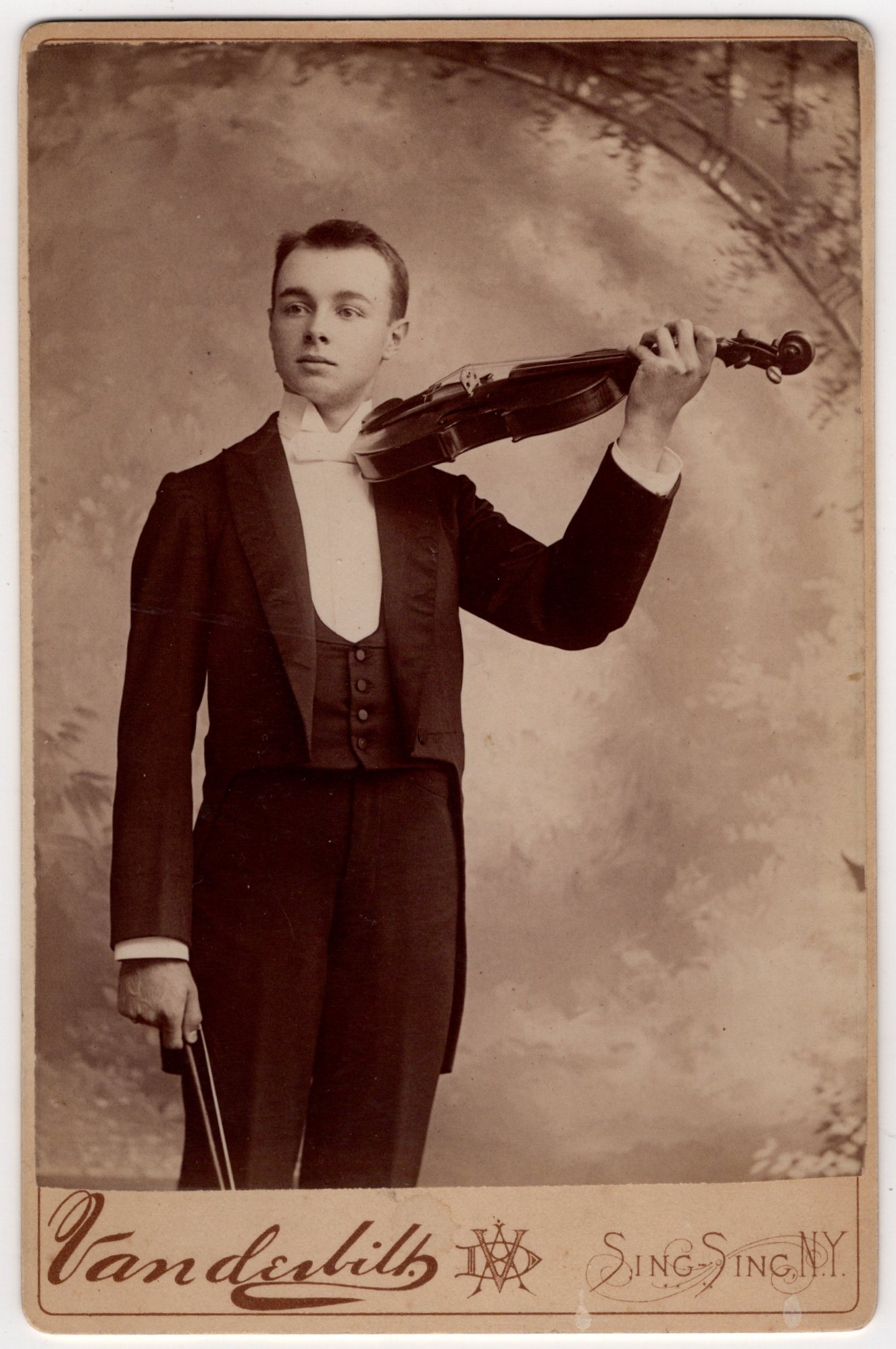
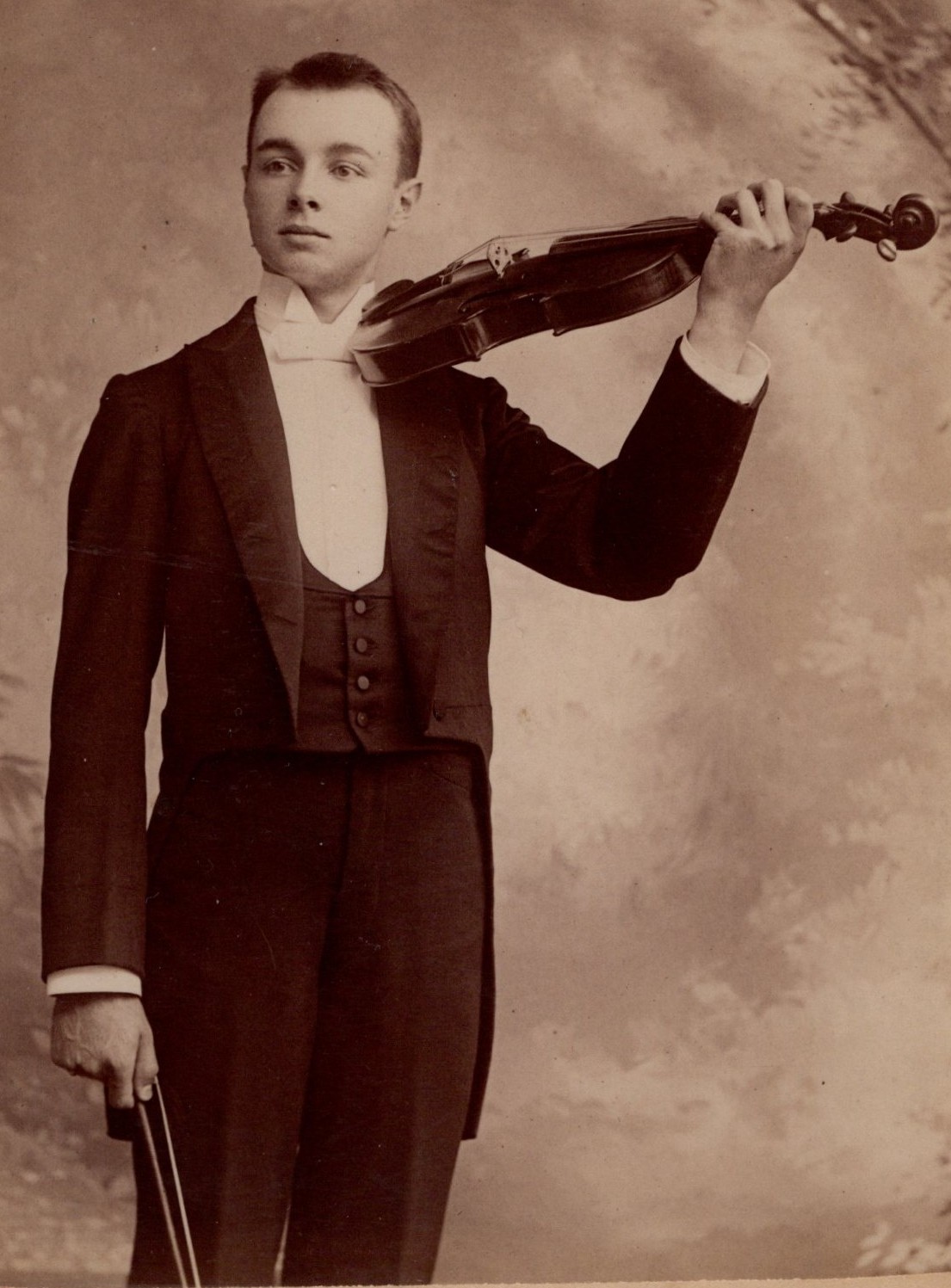
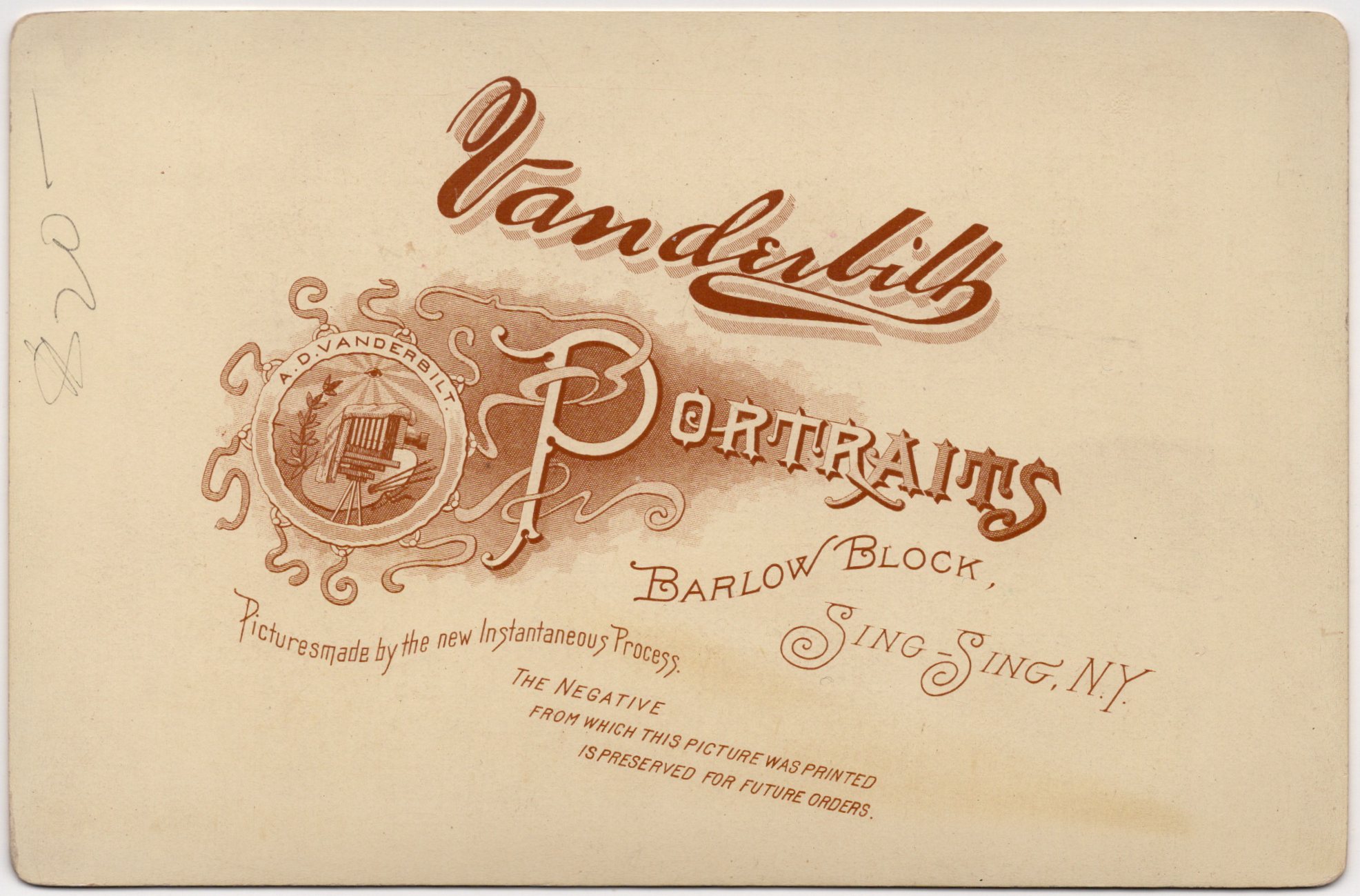
This elegant cabinet card photograph depicts a poised young gentleman holding a violin (sometimes called a fiddle in folk traditions), along with the bow in his right hand. The instrument’s distinctive shape, tuning pegs, and chin rest clearly identify it as a violin rather than a viola or other bowed instrument. The young man holds the violin resting against his shoulder in a theatrical pose, suggesting that he was likely either a trained musician or wished to present himself in the fashionable image of a cultured performer. The subject appears to be a young adult man dressed in formal evening attire typical of the 1890s. He wears a dark tuxedo-style coat with satin lapels, a waistcoat fastened with buttons, and a white shirt with a prominent bow tie. His carefully combed hair and composed expression give him a refined and somewhat introspective look, while his sideways gaze adds a touch of drama to the portrait. Such poses were often used in studio photography to emphasize talent, social status, or artistic identity. The violin, a long-established symbol of classical music and culture, reinforces the impression that the sitter was a musician. The photograph was produced by A. D. Vanderbilt, whose studio operated in the village historically known as Sing Sing, New York. The town, located along the Hudson River in Westchester County, later changed its name to Ossining to avoid the notoriety associated with the famous prison located there. The name “Sing Sing” originally derived from the Sintsink Native American tribe, from whom the land was purchased in the seventeenth century. During the late nineteenth century the village was a bustling Hudson River community. The reverse of this cabinet card has a logo which provides additional details about the studio. It was located on the Barlow Block of Sing Sing. The ornate design incorporates a decorative emblem containing a classical column and photographic camera—symbols often used by photographers of the period to convey artistic skill and technical mastery. The Barlow Block referenced on the card was a commercial building on Main Street rebuilt after a major fire in 1872 and became an important center of retail activity in the village.The studio imprint also advertises that the photographs were “made by the new instantaneous process,” a marketing phrase commonly used by photographers in the late nineteenth century to highlight improved photographic technology that allowed shorter exposure times and sharper portraits. This cabinet card was most likely produced circa 1887-1893. SOLD
MAUDE FEALY AS FAIR ROSAMUND IN BECKET : BEAUTIFUL ACTRESS : PHILCO : RPPC 1906
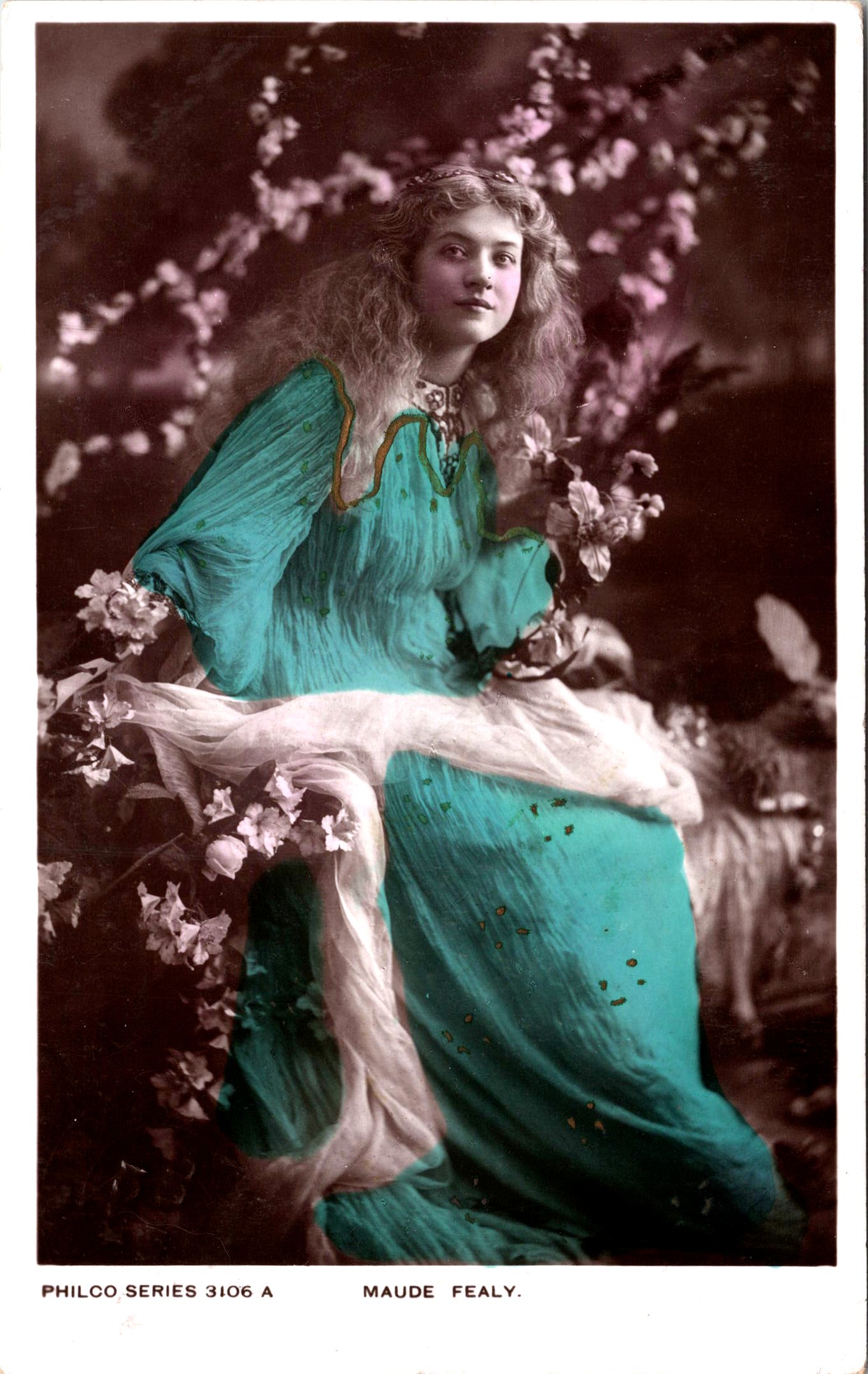
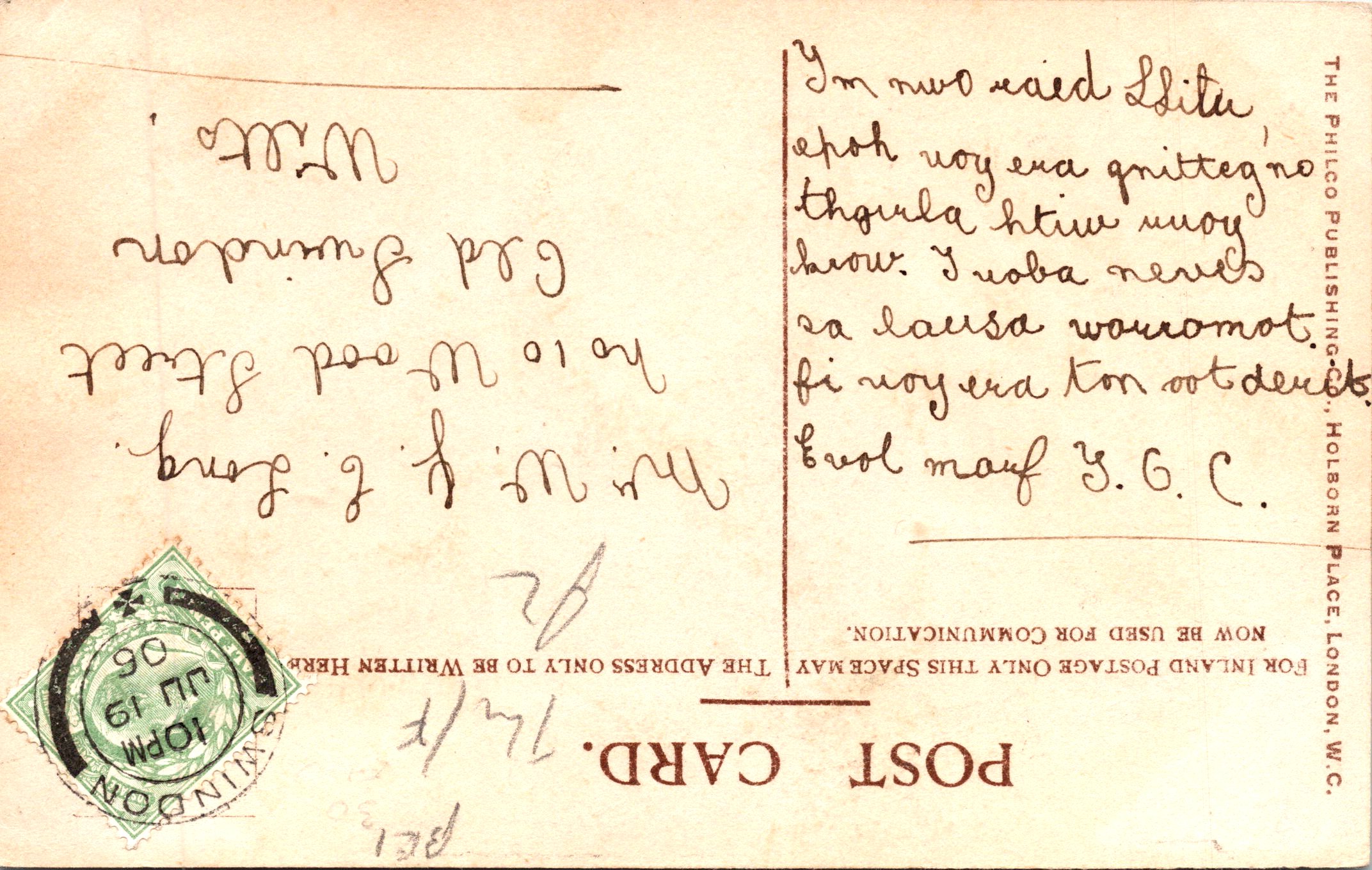
This beautiful hand-colored theatrical postcard features American stage actress Maude Fealy portrayed in a romantic and highly artistic studio portrait. The image captures Fealy seated among flowering branches in a softly staged garden-like setting, creating an ethereal atmosphere characteristic of early twentieth-century theatrical photography. In this portrait Fealy appears in the role of Fair Rosamund in the play Becket, the celebrated historical drama centered on the conflict between King Henry II and Archbishop Thomas Becket. Fair Rosamund—traditionally portrayed as the king’s beloved—is often depicted in literature and theater as a figure associated with beauty, innocence, and romantic tragedy. The floral setting and delicate costuming in this image reflect that idealized interpretation of the character. Fealy gazes slightly upward toward the camera with a calm and reflective expression, giving the portrait a dreamy, contemplative quality. Her long, softly curling hair frames her face and enhances the romantic tone of the composition. She wears a flowing, gauzy gown that has been carefully hand-tinted in a striking turquoise-green color, a technique commonly used on high-quality theatrical postcards of the Edwardian era. Subtle gold accents outline the garment, and the loose fabric drapes gracefully across her lap while blossoms appear to rest lightly in her hands, reinforcing the floral and poetic mood of the scene. The lower margin of the postcard identifies the publisher as the Philco Publishing Company (London).The card is number 3106A in a series. Maude Fealy (1883–1971) was a successful stage actress who later appeared in silent films and early talking pictures. Born in Memphis, Tennessee, she was the daughter of actress Margaret Fealy and began performing at a young age. Fealy developed a strong reputation on the American stage and toured widely before transitioning into motion pictures beginning in the 1910s. This postcard was mailed and postmarked June 19, 1906. The original green Edward VII one-half penny stamp remains affixed at the upper right. The postcard remains in good overall antique condition. The hand-colored image retains strong visual appeal with attractive color. There is minor corner wear consistent with age and handling. The reverse displays the original stamp, clear postmark, and handwritten message. Overall, this is a very appealing example of an early theatrical postcard depicting Maude Fealy in one of her noted stage roles (see scans).
This postcard is available for purchase at my store, The History Peddler, for $32.00
Interested collectors may view the listing here:
https://www.ebay.com/itm/336496805530
SOCCER ACTION : FOOTBALL INCIDENTS SERIES: A GOALIE SAVE : RAPHAEL TUCK : (1907)
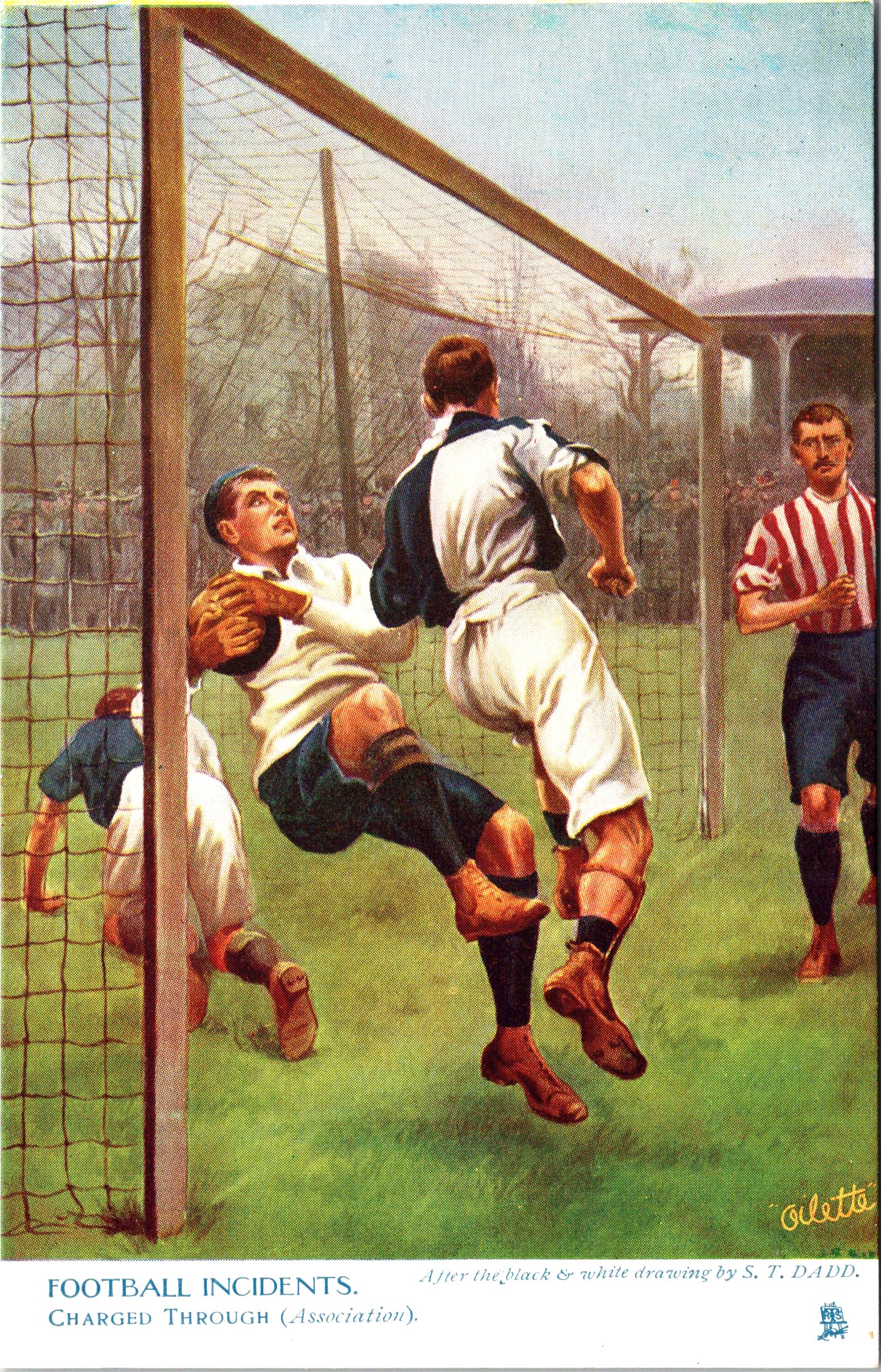
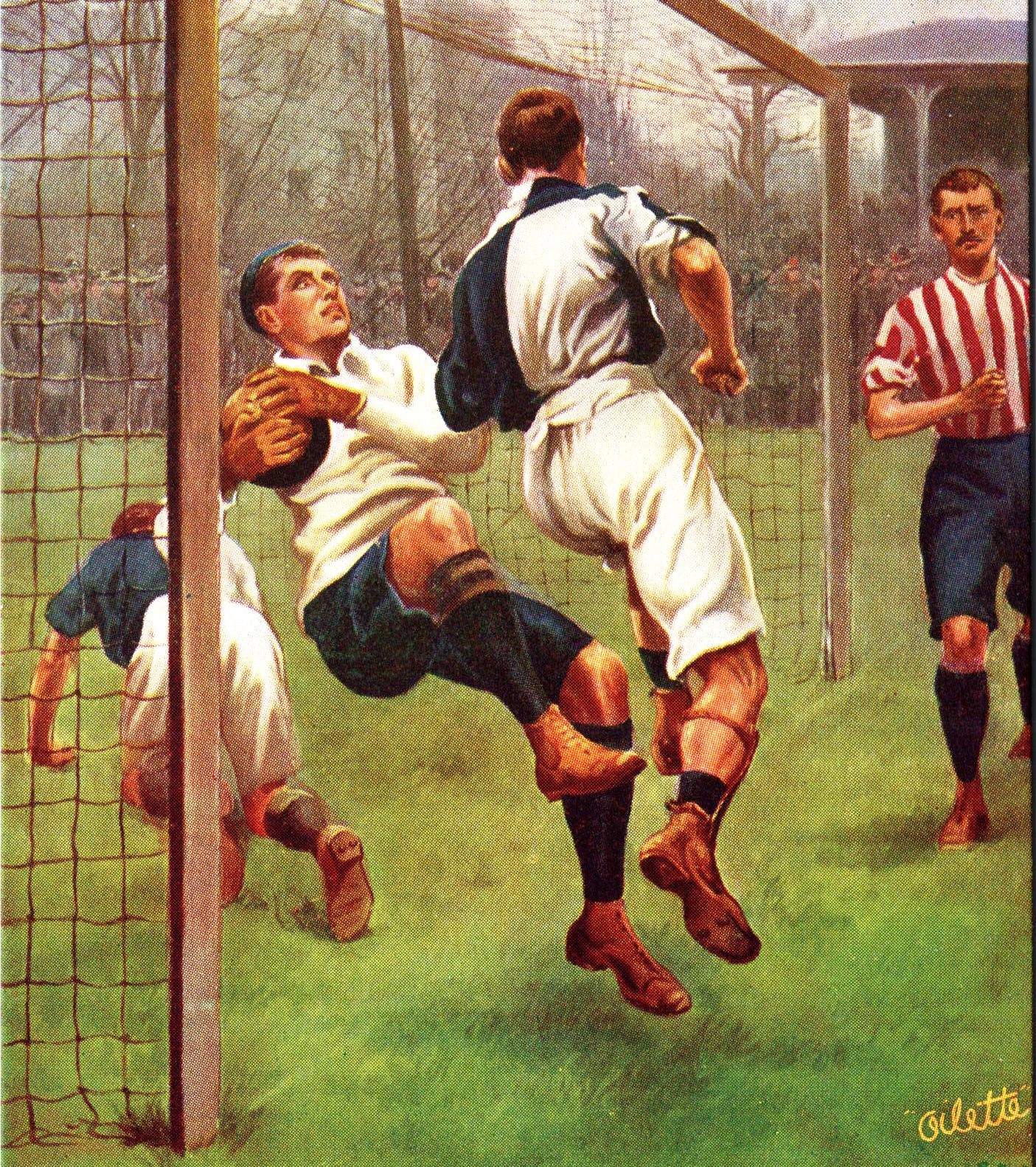
This action packed postcard features a soccer goalie making a “save” and preventing the opposing team from making a score. The caption reads “Charged Through”. This refers to the player that has run past the goalie and travelled into the net. The referee, wearing a striped red and white shirt, observes the action.
This postcard was published by Raphael Tuck & Sons and is part of the “Oilette ” series (no. 1746). Oilette cards are copies of the work of commissioned artists. This postcard is part of a sub series entitled “Football Incidents”, and the card itself is captioned “A Try”. This rugby image was modeled after a black & white drawing by S. T. Dadd. The postcard was postmarked in 1907, but was issued in 1904. Raphael Tuck and his wife started their photography business in 1866 in London. Their store sold pictures, greeting cards, and in time, postcards. Their success came from the sale of postcards during the late 1890’s and early 1900’s. In the early 1900’s the firm conducted postcard competitions for collectors of Tuck postcards. These competitions offered cash prizes and they were very popular. The winner of one of these competitions had a collection consisting of over twenty-five thousand cards. Three of Tuck’s four sons participated in the business. The company was devastated by German bombing during World War II. In 1959 the company merged with two other printing companies. SOLD
DANCE COUPLE : PERFORMING IN BRAZIL : CARNAVAL : RPPC 1908
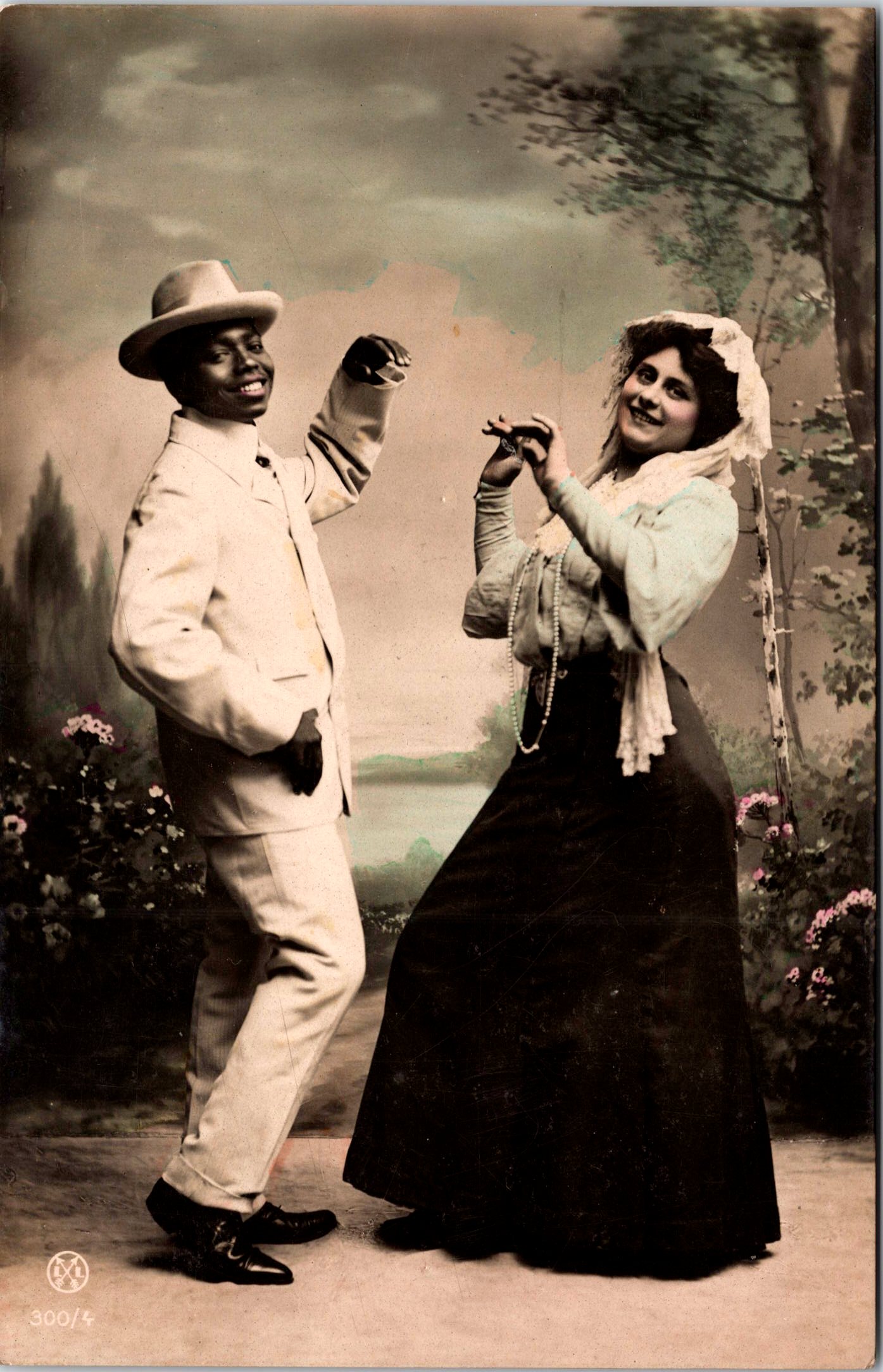
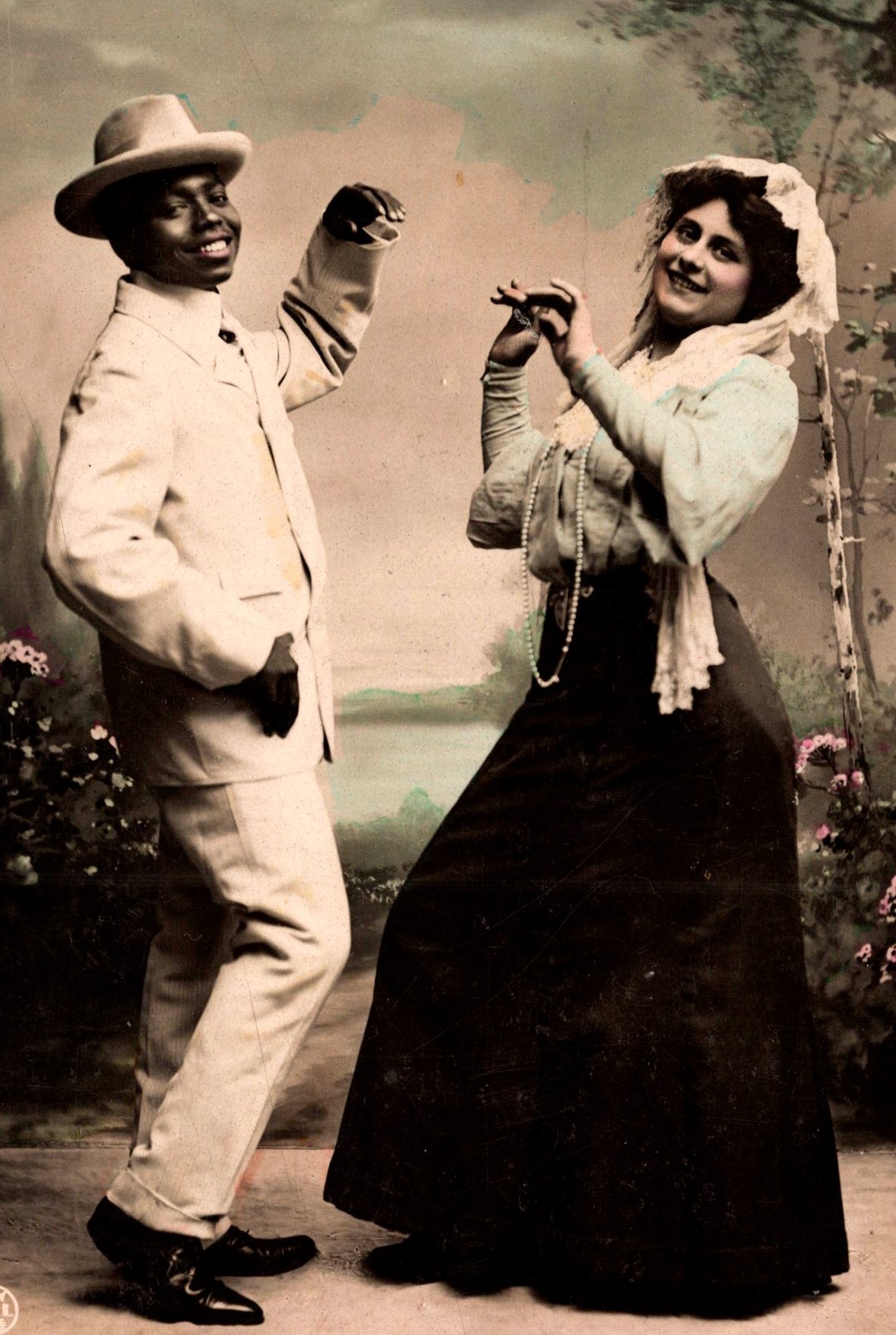
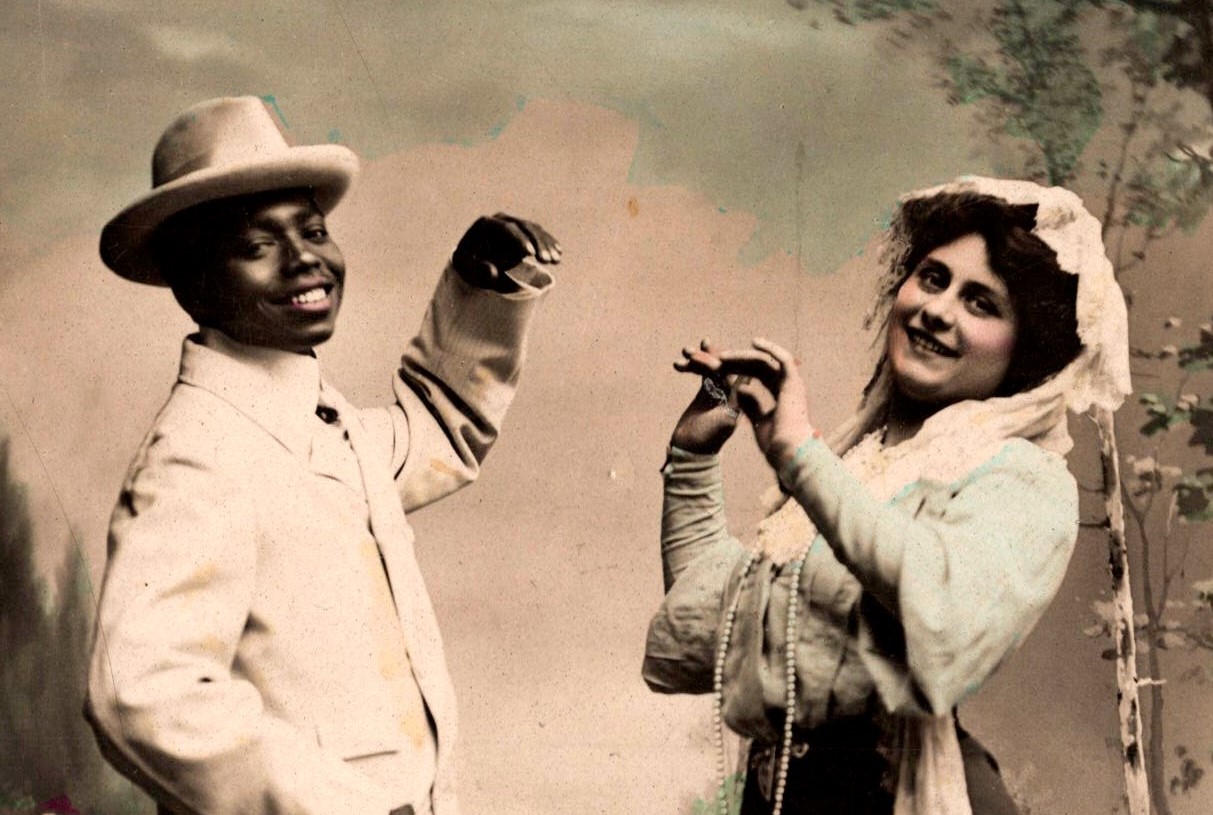
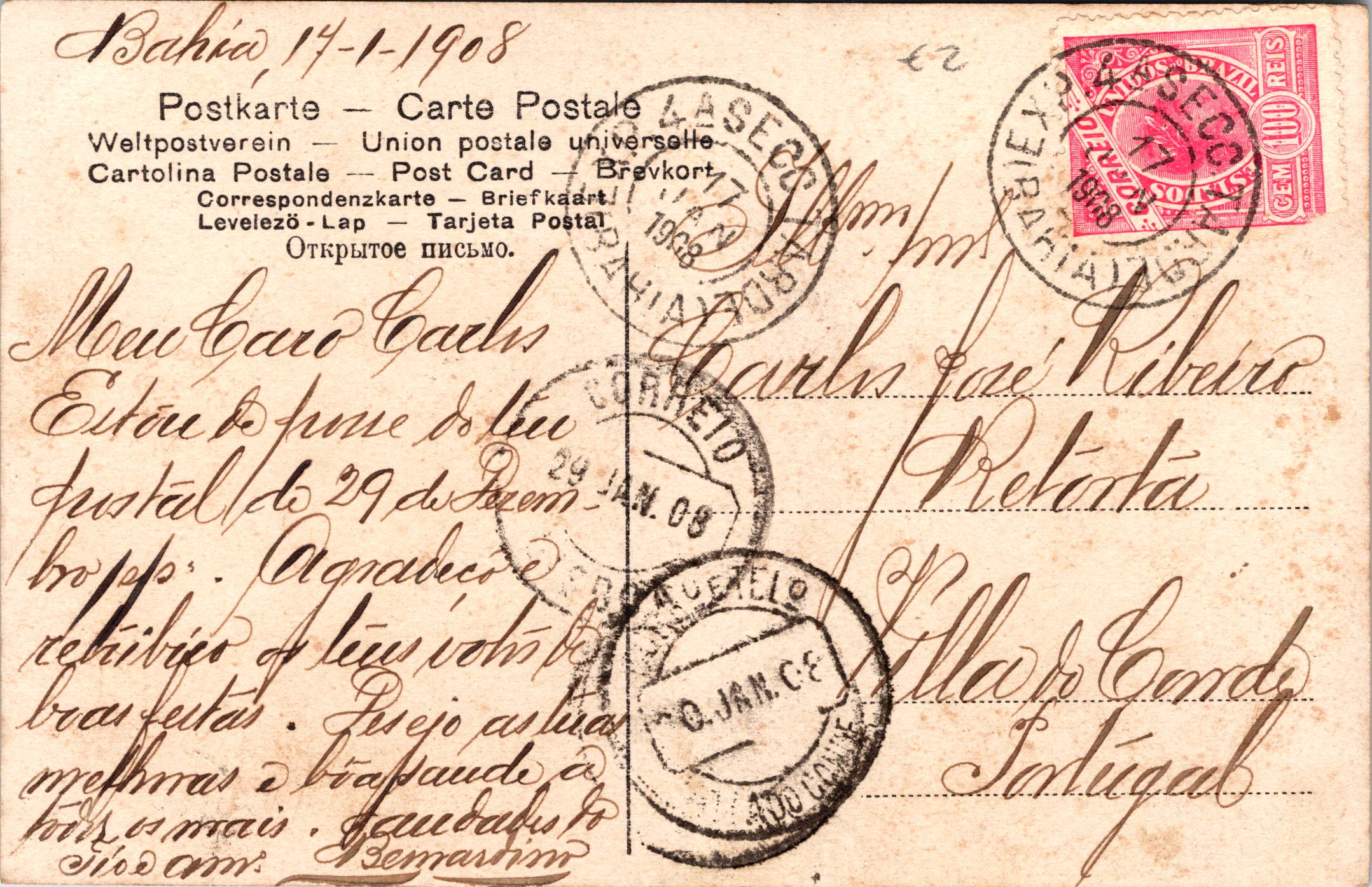
This vintage real photo postcard features an attractive dance couple. It appears that the dancers are from Brazil (judging by the postmark). The male dancer is wearing a very cool white suit while the woman is wearing traditional clothing. Both of the dancers are flashing beautiful smiles. This postcard was published by L. Langebartels. The firm was located in Berlin, Germany and also was a supplier of photographic paper and plates. The card was postmarked in 1908 in Bahia, Brazil. Bahia is in northeastern Brazil. Interestingly, the city’s annual carnaval celebration is known to bring together flamboyantly costumed dancers with samba and axe music for a massive “street party”. Could the couple seen in this postcard be carnaval dancing? SOLD
MISS ELEANOR SOURAY : ENGLISH COMIC ACTRESS : PHOTO BY RITA MARTIN : RPPC
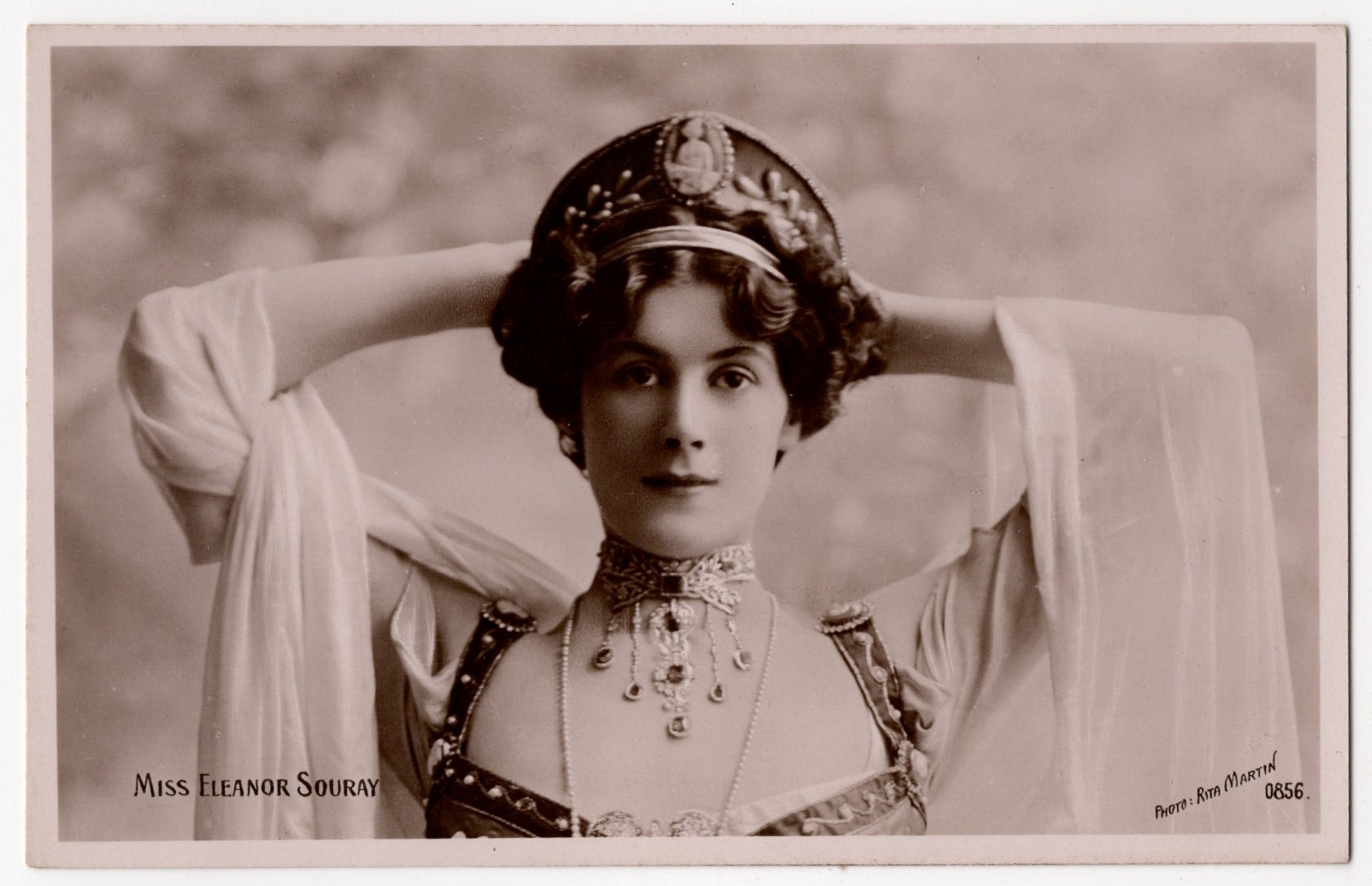
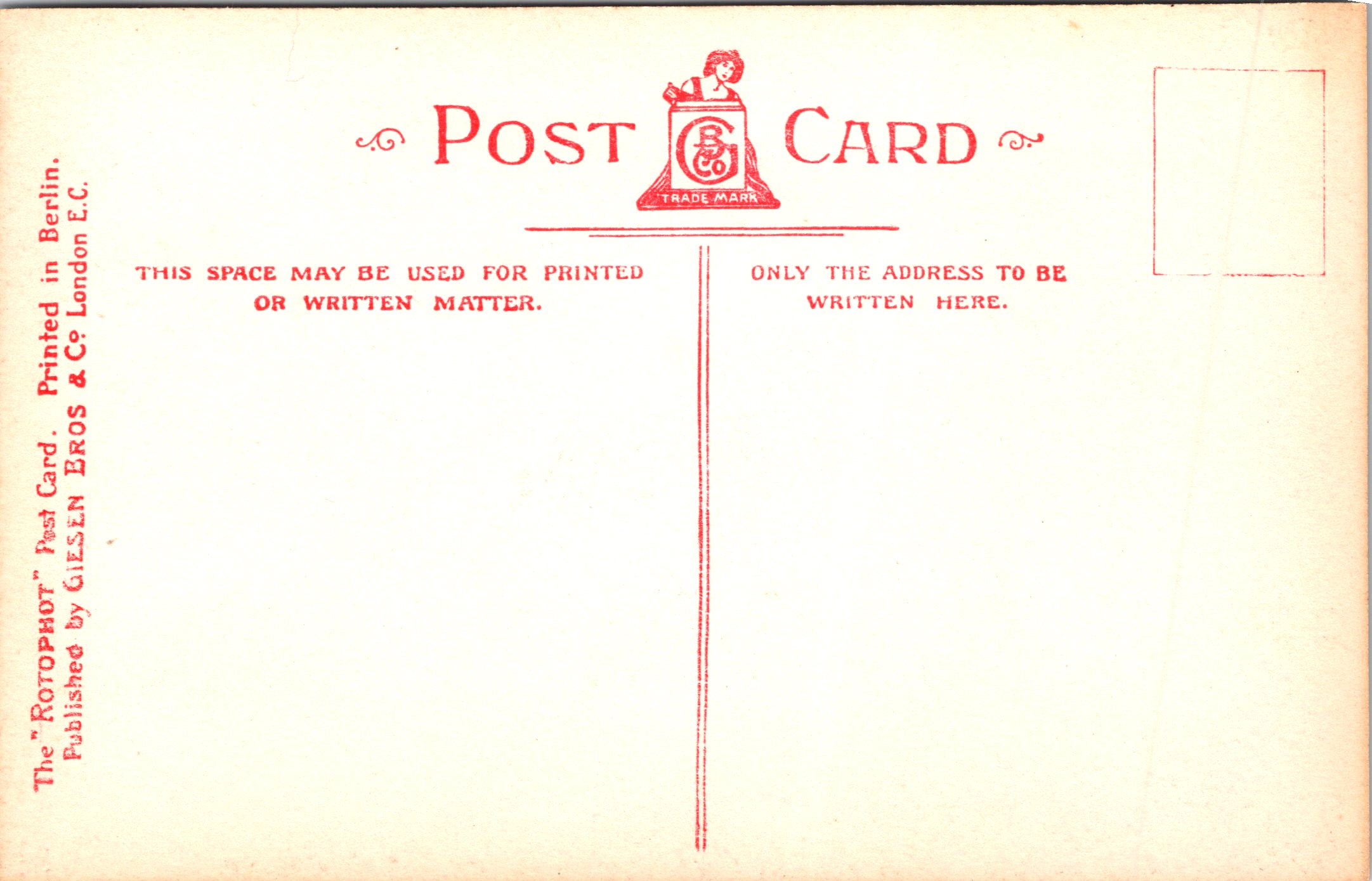
This uncommon vintage real photo postcard features English actress, Eleanor (Nellie) Souray (1880-1931). She was also known as Viscountess, or Lady Torrington. She was known for her roles in Edwardian musical comedies, pantomime, and light opera. Her sister, Maidie Souray was also an actress. Eleanor ran away from school to act in a touring company from Brighton. It was not long before she was starring in plays on the London stage. Among the plays she appeared in were “The Black Tulip” (1898), “The Blue Moon” (1905), and “The Merveilleuses” (1906). She was also a Gaiety Theatre girl. Eleanor was also an author, penning “Over the Garden Wall: A Story of Racing and Romance” (1924). In 1910, she wed George Master Byng, the 9th Viscount Torrington. They only knew each other three day before they were married. They shared a strong interest in horse racing. The pair divorced after World War l. She became more involved in horse racing and that interest led to her bankruptcy in 1930. In 1931 she committed suicide by gas. At the time of her death she was struggling with poverty and loneliness. This postcard’s photo was taken by Rita Martin, the celebrated female photographer known for her portraits of stage stars. The postcard was published by Rotophot (Giesen Bros.).This vintage postcard is in very good condition (see scans).
This cabinet card is available for purchase at my store, The History Peddler, for $18.00
Interested collectors may view the listing here:
https://www.ebay.com/itm/336473179442


 THE CABINET CARD GALLERY