This advertising postcard was published for Bebe. The sexy rare card shows a beautiful blonde woman wearing clothing from the fashion house Bebe. The fashion model is dressed in a beautiful blue sleeveless dress with a studded collar. Bebe Stores Inc. is a women’s retail brand that was founded in 1976. SOLD
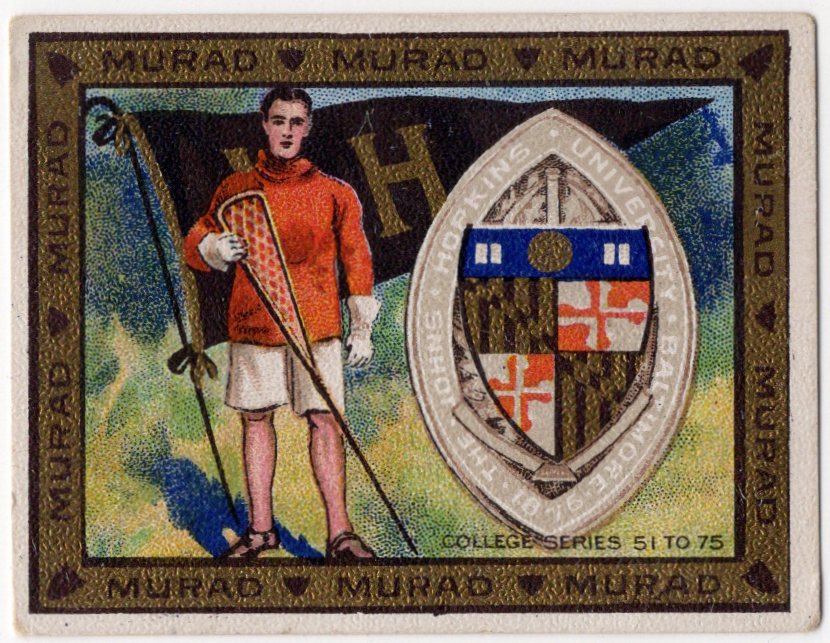
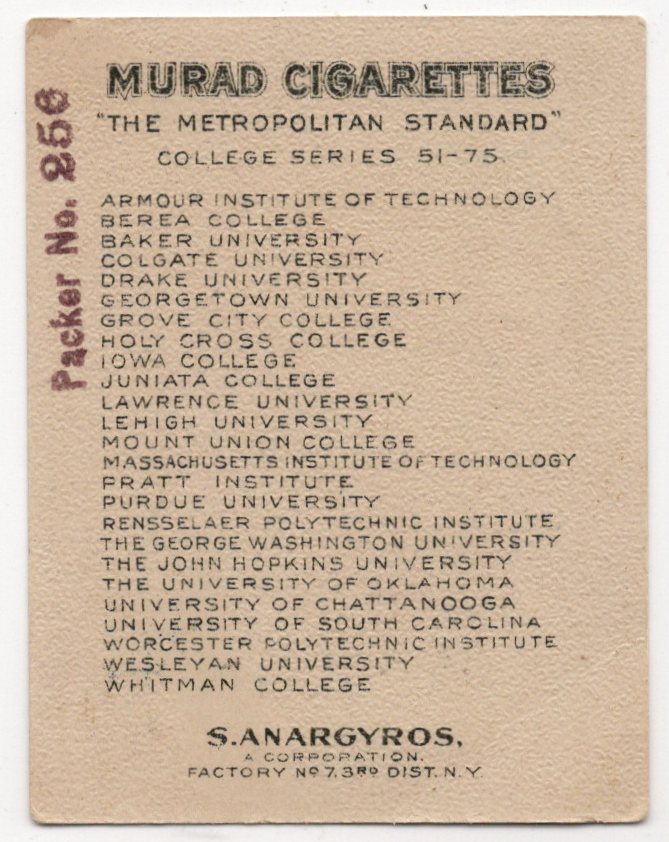
Up for auction is an over 115-year-old piece of sports and collegiate history: a 1909-1910 T51 Murad Cigarettes trading card featuring Johns Hopkins University Lacrosse. The card is part of the “College Series 51 to 75”. Depicted on the card is a vignette of an early lacrosse player in his period-accurate orange-and-white athletic uniform. He is holding a vintage wood and leather lacrosse stick. The background features the university’s historic athletic “JHU” pennant flag alongside the official Johns Hopkins University academic crest/seal. Printed on the card is a credit to the manufacturer, S. Anargyros (New York). During the early 1900s, the American tobacco landscape experienced an explosion of interest in exotic, premium “Oriental” and Turkish tobacco blends. S. Anargyros was a prestigious, New York-based Greek tobacconist renowned for manufacturing high-quality, pure Turkish leaf cigarettes. Their flagship brand, Murad, became a household name and one of the dominant forces in premium cigarettes. Murad advertisements relied heavily on luxurious, bold graphics to highlight their elite standing. To capture the business of high-society smokers, young professionals, and Ivy League academics, S. Anargyros marketed Murad under the tagline “The Metropolitan Standard”. This slogan positioned the brand as the absolute benchmark of urban luxury, sophistication, and taste. The iconic T51 “College Series” was born from this marketing initiative. These premium cards served a dual purpose: they structurally stiffened the soft cigarette paper packs while encouraging immense customer loyalty as smokers raced to collect and complete full sets of their favorite schools. This specific card holds legendary sports value because it catches the Johns Hopkins Blue Jays men’s lacrosse program right during its first golden era. Under legendary player-coach William C. Schmeisser, Hopkins was an absolute juggernaut around the time this card was issued. Johns Hopkins captured consecutive USILA National Championships in 1906, 1907, 1908, and 1909. The card features the vintage orange color that heavily dominated early Hopkins athletics before the program permanently shifted towards its modern blue branding. The card features beautiful, rich color lithography that remains remarkably vibrant for an antique paper item. The intricate border of “Murad” script and hearts frames the imagery beautifully. SOLD
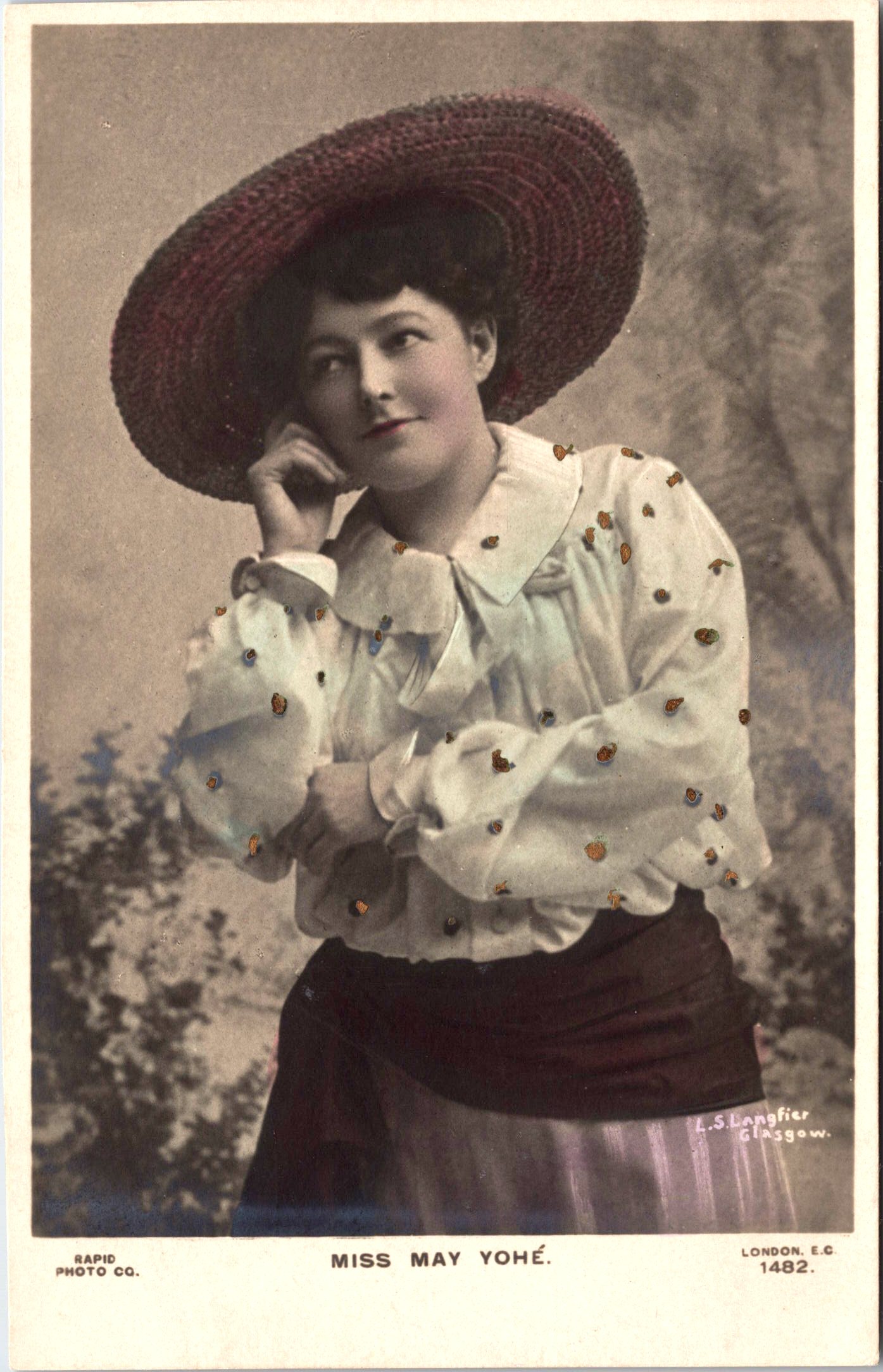
This vintage real photo postcard features American musical theatre actress, May Yohe (1866-1938). She began her career with the McCaull Comic Opera Company in New York and Chicago (1886). By 1893, she had great success on the London stage. The next year she played the starring role in the hit, “Little Christopher Columbus”. She married Lord Francis Hope, and by addition, she married the “Hope Diamond”. She continued her acting in the West End of London and the US. In 1902 she divorced Hope and married a succession of adventurous but financially unstable men. She had multiple dysfunctional relationships with men. She performed in music halls and vaudeville to earn money, but frequently found herself in financial distress. In 1924, she died in near poverty. This vintage postcard portrait was published by Rapid Photo as part of a series (No.1482). Miss Yohe’s photograph was taken by L. S. Langfier (Glasgow, Scotland). SOLD
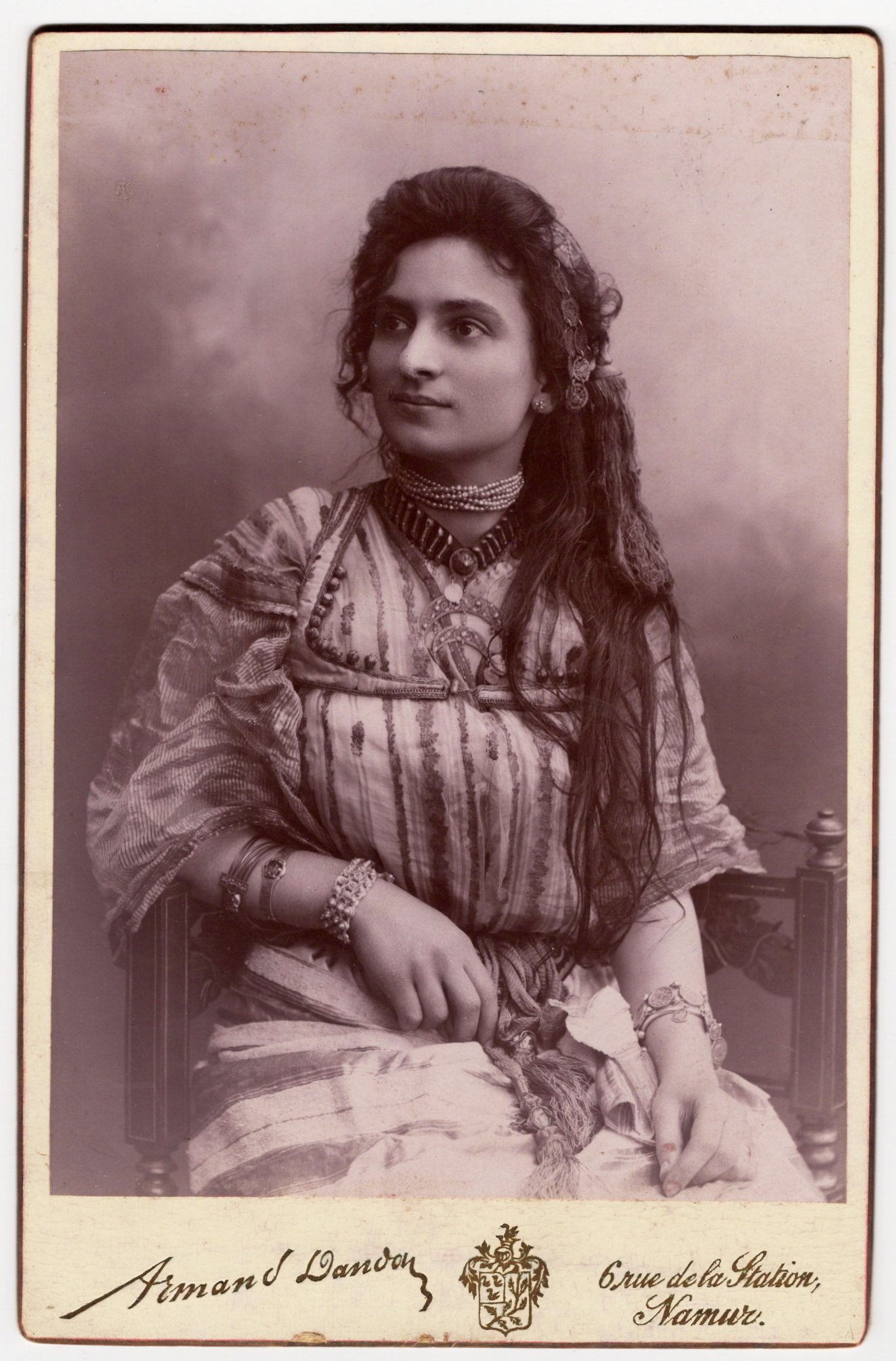
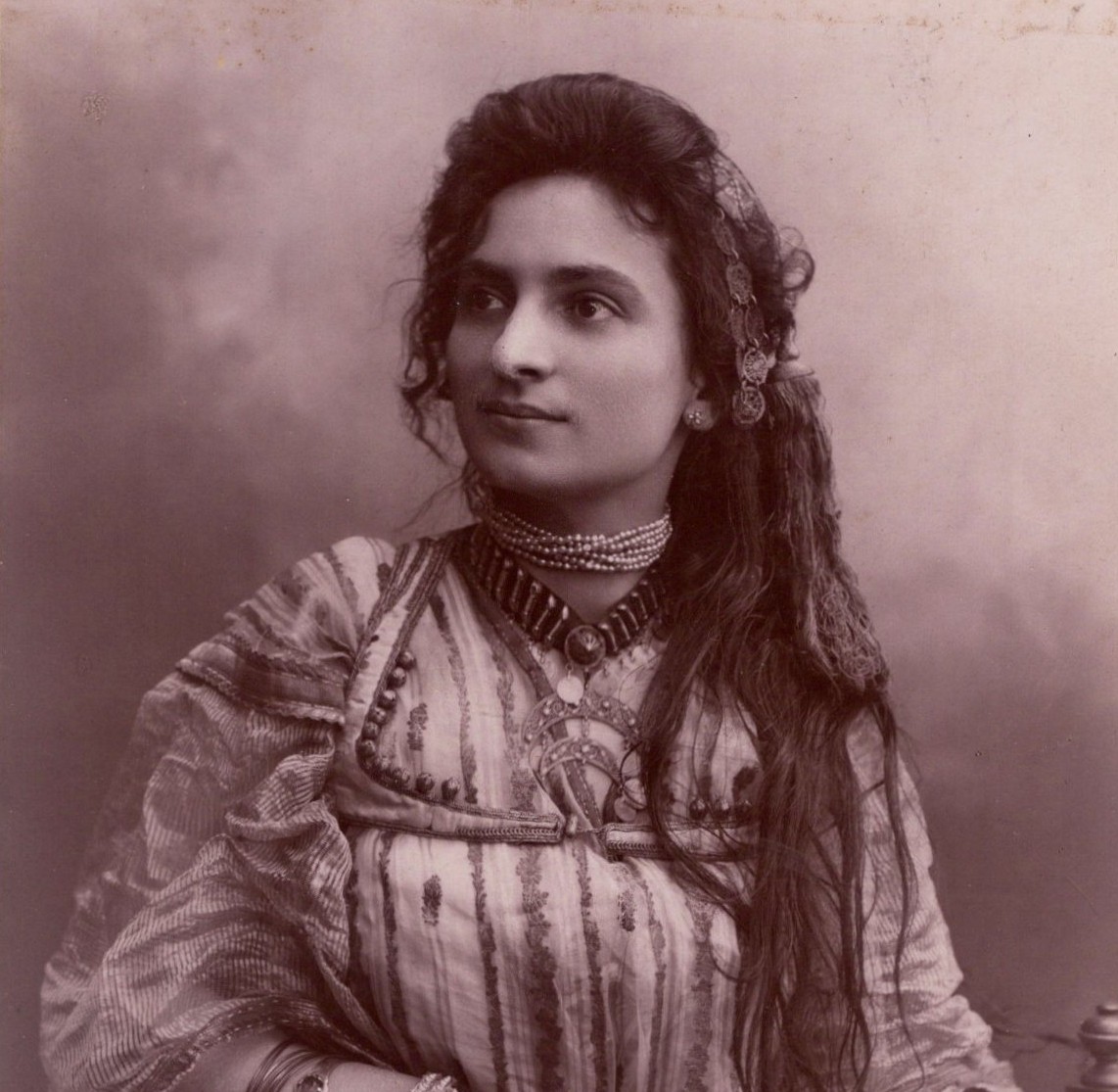
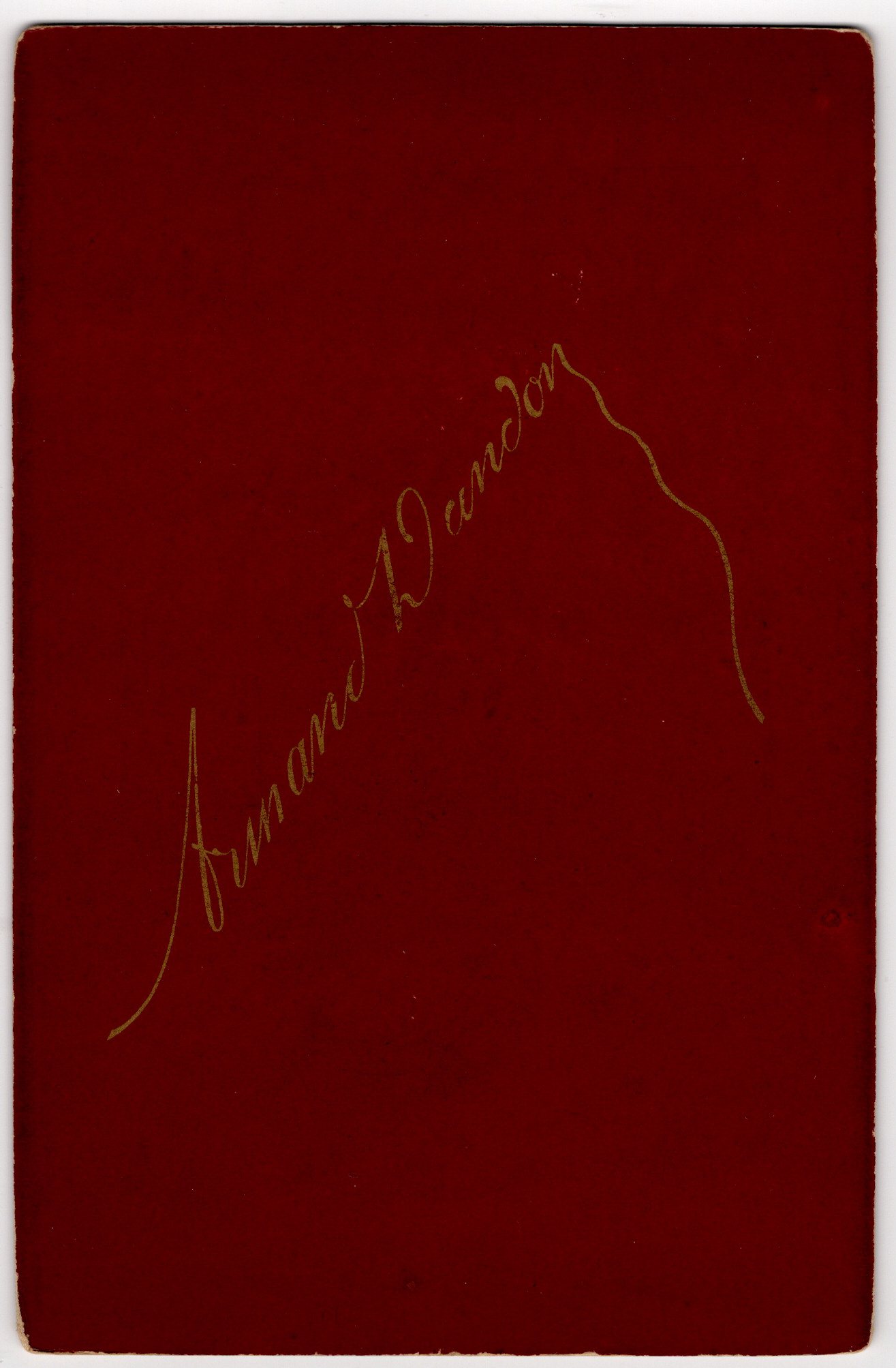
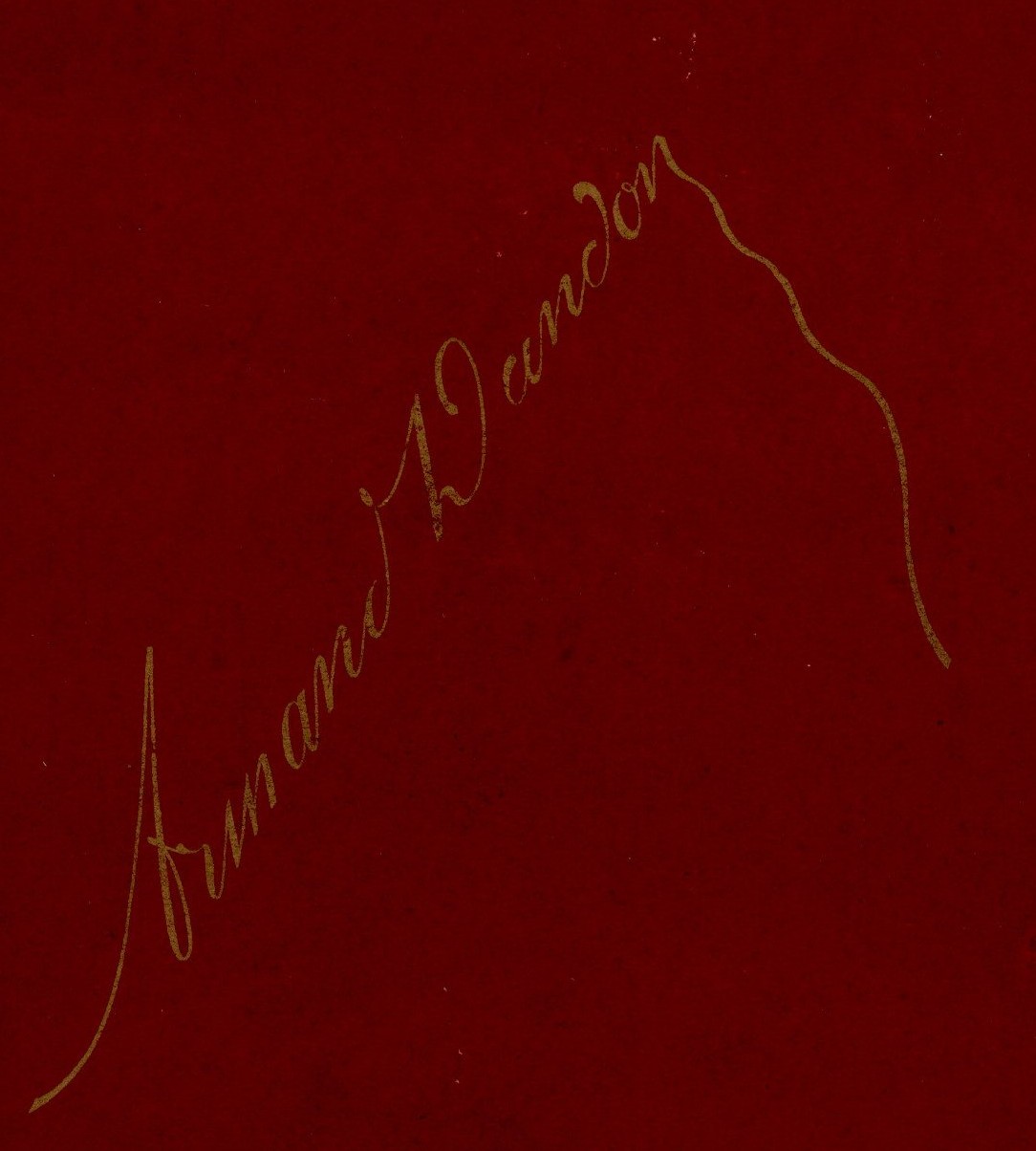
This is a superb cabinet card portrait by Armand Dandoy, a photographer with a studio in Namur, Belgium. The card features a striking young woman dressed in an ornate, exotic-style costume. Her long, flowing dark hair is decorated with lace and jewelry, while her layered dress has embroidered patterns and sashes, suggestive of Near Eastern or theatrical inspiration. Multiple necklaces—including pearls and a dark beaded collar—adorn her neck, and her wrists sparkle with bracelets. The woman is beautiful. Her pose is dignified and serene, with a hint of mystery in her gentle smile and a gaze turned slightly to the side. This portrait exemplifies the late 19th-century taste for “Orientalist” and costumed studio images, which were popular with both performers and fashionable sitters. Armand Dandoy was an excellent photographer but he was also noted as an artist. He operated operated in Namur during the late 19th century. His work is less commonly encountered than that of larger Parisian or Brussels studios, making this cabinet card all the more distinctive. Dandoy, born in Gougnies, Belgium in 1834 and died in Namur in 1898. He began his artistic career first as a painter—studying at the Namur Academy and exhibiting at the Brussels and Antwerp Salons in the 1860s. In 1856, he entered the field of photography in partnership with his brother Héliodore before running his own portrait studio in Namur. In 1869, the provincial government commissioned him to document the “Province de Namur, monumentale et pittoresque” – an ambitious series of 110 albumen prints of regional monuments and landscapes, produced through 1879. Nearly 400 negatives still survive in the Archaeological Society’s archives. He was among the first in Belgium to utilize the carbon process and exhibited photogravures and photolithographs by 1878. In 1895, he published postcards under the imprint “Photographic and collotype establishment of Armand Dandoy,” signaling a shift toward mass-produced imagery. Dandoy was a painter who regularly exhibited at local art salons—Namur, Brussels, Antwerp, Paris—between the 1860s and 1880s, blending fine arts and photography throughout his career. A founding member of the Belgian Photographic Association (ABP), Dandoy remained a significant figure in Namur’s cultural scene until his passing in 1898. The reverse of this card is finished in deep burgundy cardstock, elegantly imprinted with the photographer’s signature in gold. Burgundy and other colored card backs were especially fashionable in the 1880s and 1890s, when studios experimented with design, color, and ornate typography to make their mounts more visually appealing. By the early 1900s, cabinet card mounts shifted back toward plainer cream or black tones before the format itself fell out of popularity in favor of the postcard. Thus, the burgundy back places this cabinet card firmly in the 1880s–1890s period. (SOLD)
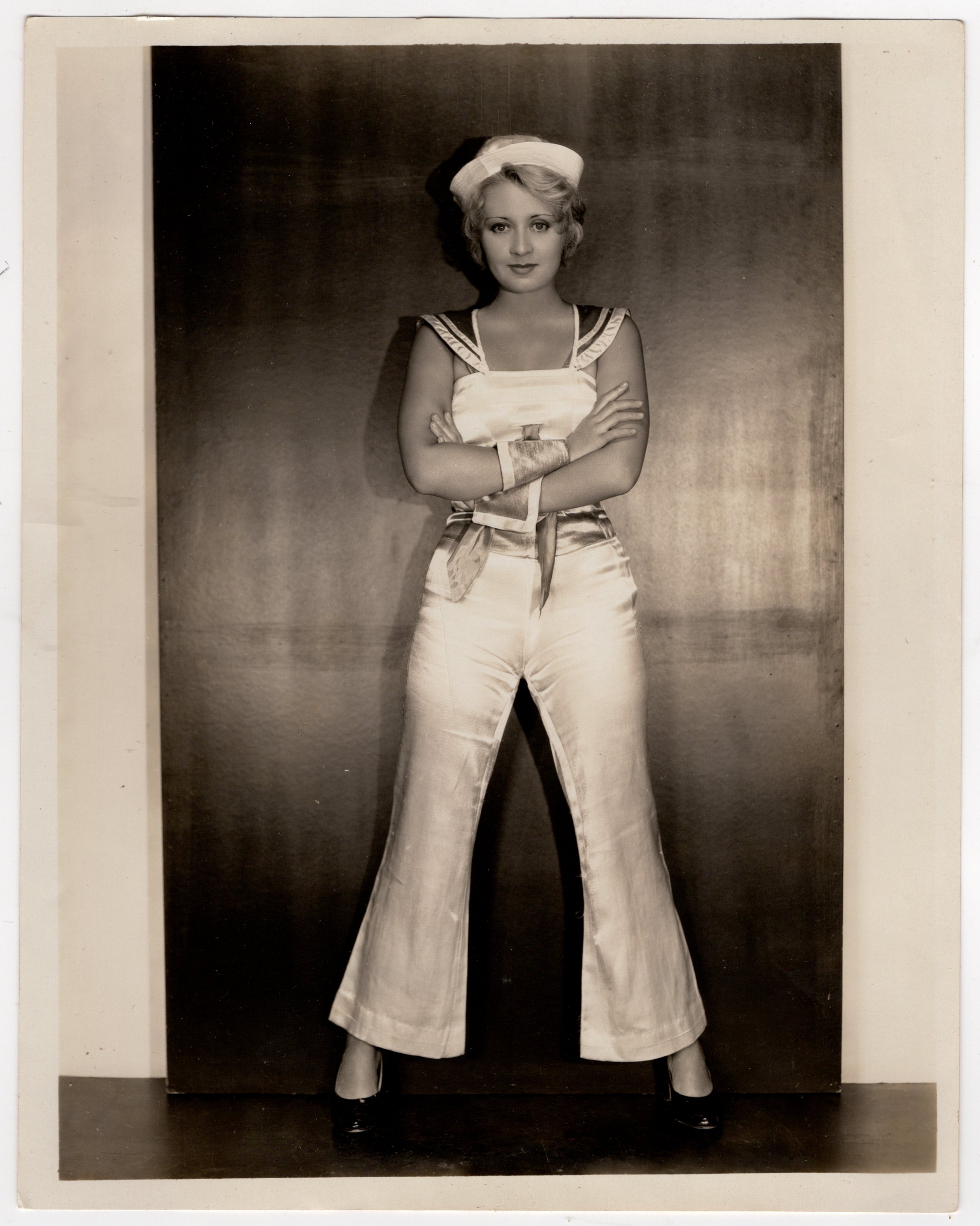
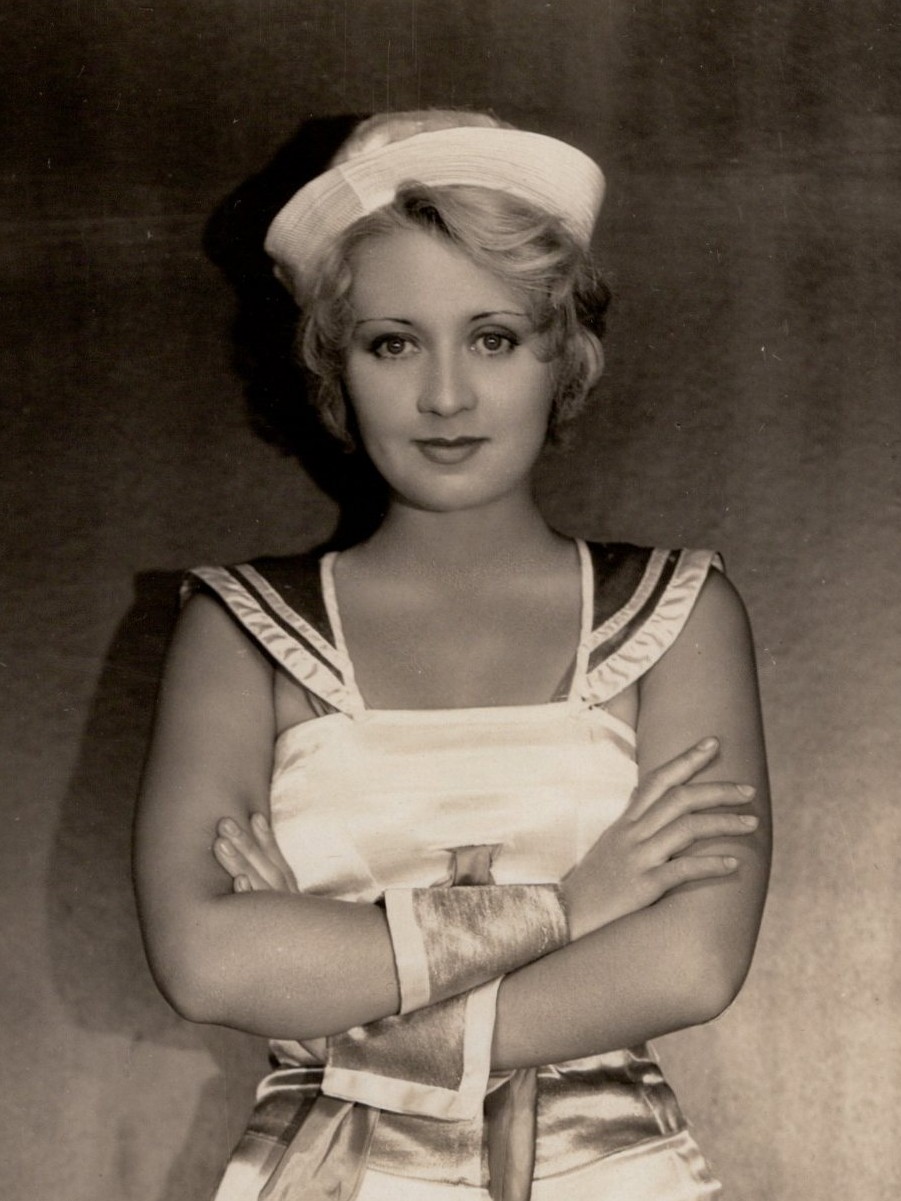
This is an original 1931 Hollywood press photograph of actress Joan Blondell, issued by the International Newsreel Company of Los Angeles. The photograph captures Blondell standing confidently in a striking sailor-inspired costume, arms folded and feet apart in a confident pose that reflects the lively spirit of early Hollywood publicity photography. Blondell wears a stylized sailor uniform consisting of a sailor cap, sleeveless top with nautical trim, and wide-legged trousers, a costume likely intended for promotional or publicity purposes rather than for a specific naval-themed film role. During the early 1930s studios frequently produced glamorous publicity photographs that emphasized fashionable or novelty costumes designed to capture public attention in newspapers and fan magazines. The photograph measures about 8 by 10 inches and is mounted on a typical press photo stock used by news agencies during the early sound era of Hollywood. On the reverse appears the blue stamp of the issuing agency: the International Newsreel Company. Affixed to the back is the original typed press caption, which reads: “The next war would be over without a shot being fired if all our sailors looked like Joan Blondell, screen player.” The caption indicates that the photograph was published in 1931, placing it early in Blondell’s Hollywood career during the height of the Pre-Code film era, when Warner Bros. studios promoted rising actresses with bold and playful publicity photographs such as this. Joan Blondell (1906–1979) was one of the most recognizable actresses of early Hollywood. She grew up in a family of vaudeville performers and began appearing on stage as a child. Her father, Eddie Blondell, was a touring comedian, and Joan spent much of her early life traveling with the family troupe. Blondell entered show business on her own in the late 1920s and soon found success on Broadway. Her breakthrough came in the stage production “Penny Arcade” (1930), which was seen by Warner Bros. talent scouts and adapted into the film “Sinners’ Holiday”, launching her Hollywood career. During the early 1930s she became one of the defining actresses of the Pre-Code Warner Bros. era, known for playing witty, fast-talking women with a sharp sense of humor. Blondell appeared in more than 100 films and television productions during a career that lasted nearly fifty years. Among her most notable films are: “The Public Enemy” (1931), “Footlight Parade” (1933) and “A Tree Grows in Brooklyn” (1945). Blondell was married three times. Her second and third marriages were to actor Dick Powell, and theatrical producer, Mike Todd. She had two children and remained active in film, television, and theater throughout the 1950s, 1960s, and 1970s. While this photograph dates from 1931, it does not appear to correspond directly to a specific film costume. Instead, it resembles a studio publicity image produced during the Pre-Code era, when actresses were often photographed in novelty costumes to attract attention in newspapers and fan magazines. SOLD
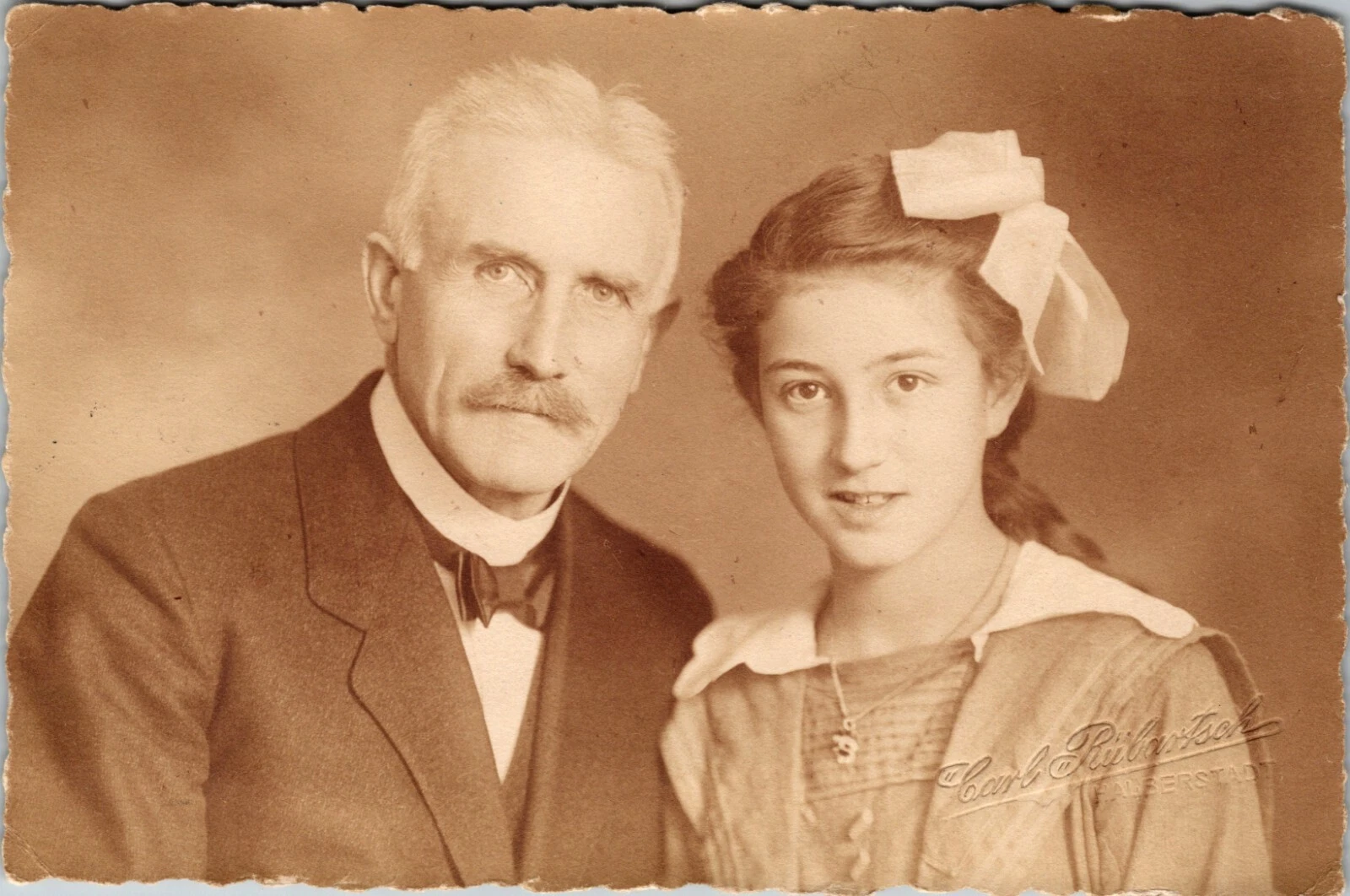
This vintage scallop edged real photo postcard features a grandfather posing with his grandaughter. He is elegant and handsome. She is cute and has a wonderful smile. The pair were photographed at a studio in Halberstadt, Germany. An inscription on the reverse of the card states that the photograph was taken in 1920. SOLD
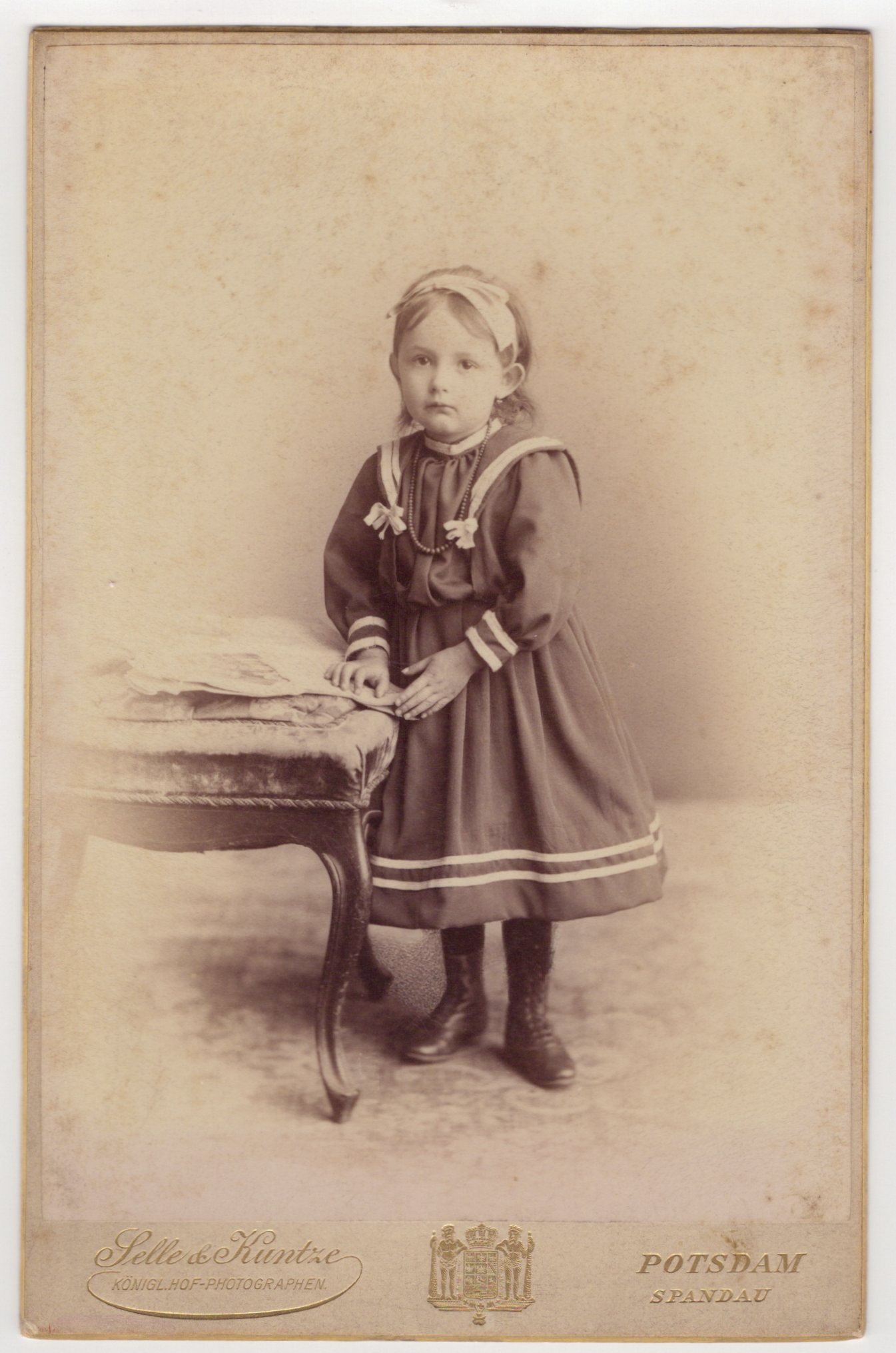
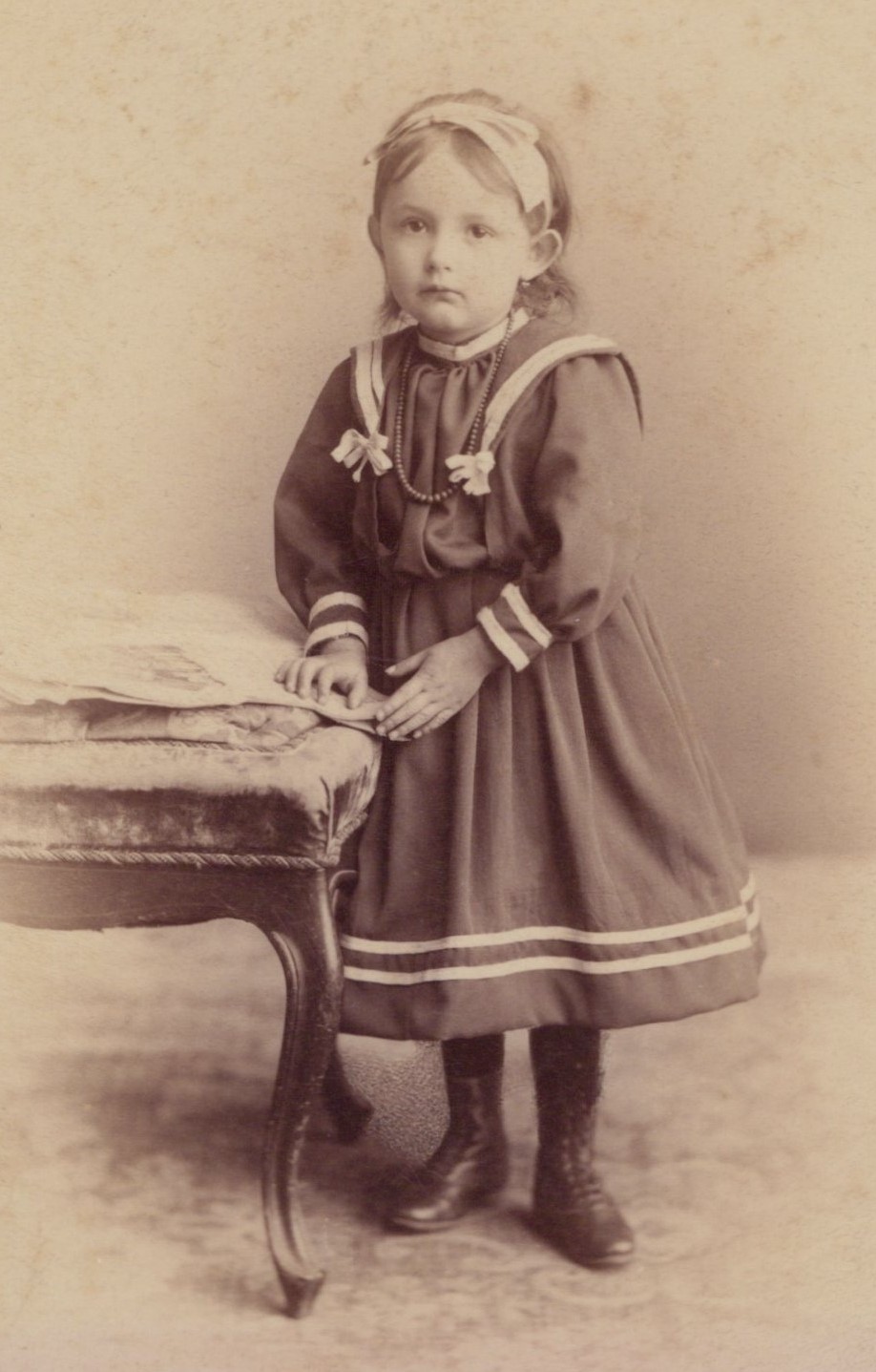
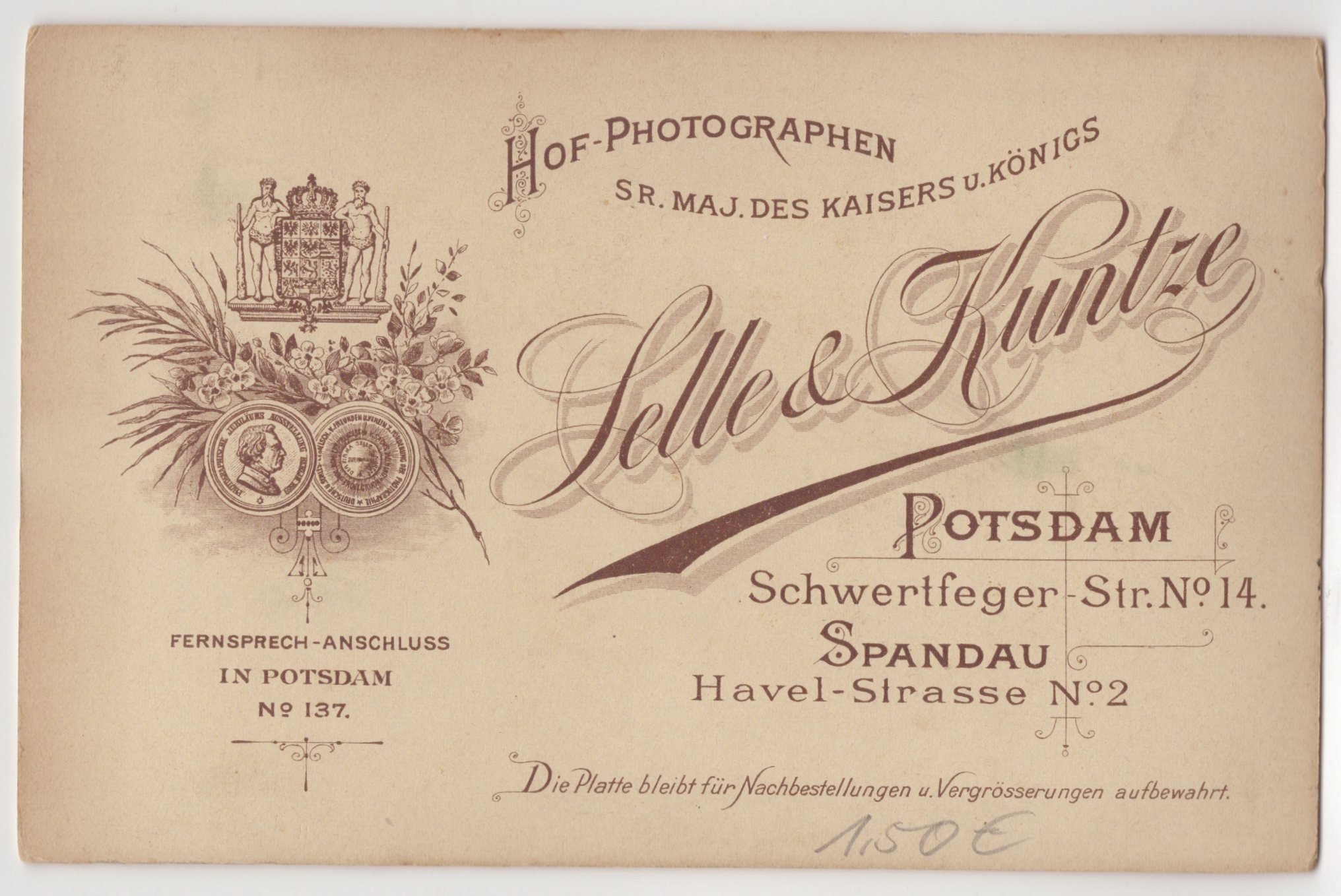
This cabinet card portrait features an adorable little girl. She is posing next to a chair with an open newspaper on top of it. The child is fashionably dressed. Her photograph was taken by the Selle & Kuntze studio located in Potsdam, Germany. The pair operated a second studio in Spandau. In 1870, Gustav Adolf Selle (1854-1902) and Julius Adolph Paul Kuntze (1848-1905) partnered in founding a photographic studio in Potsdam, Germany. After the death of Kuntze, his daughter, Elsbeth Marianna Kuntze (1879-1913) succeeded him in the business. She married photographer, Karl Friedrich Wilhelm Niederastroth (1874-1927) and together, they operated the portrait studio. SOLD
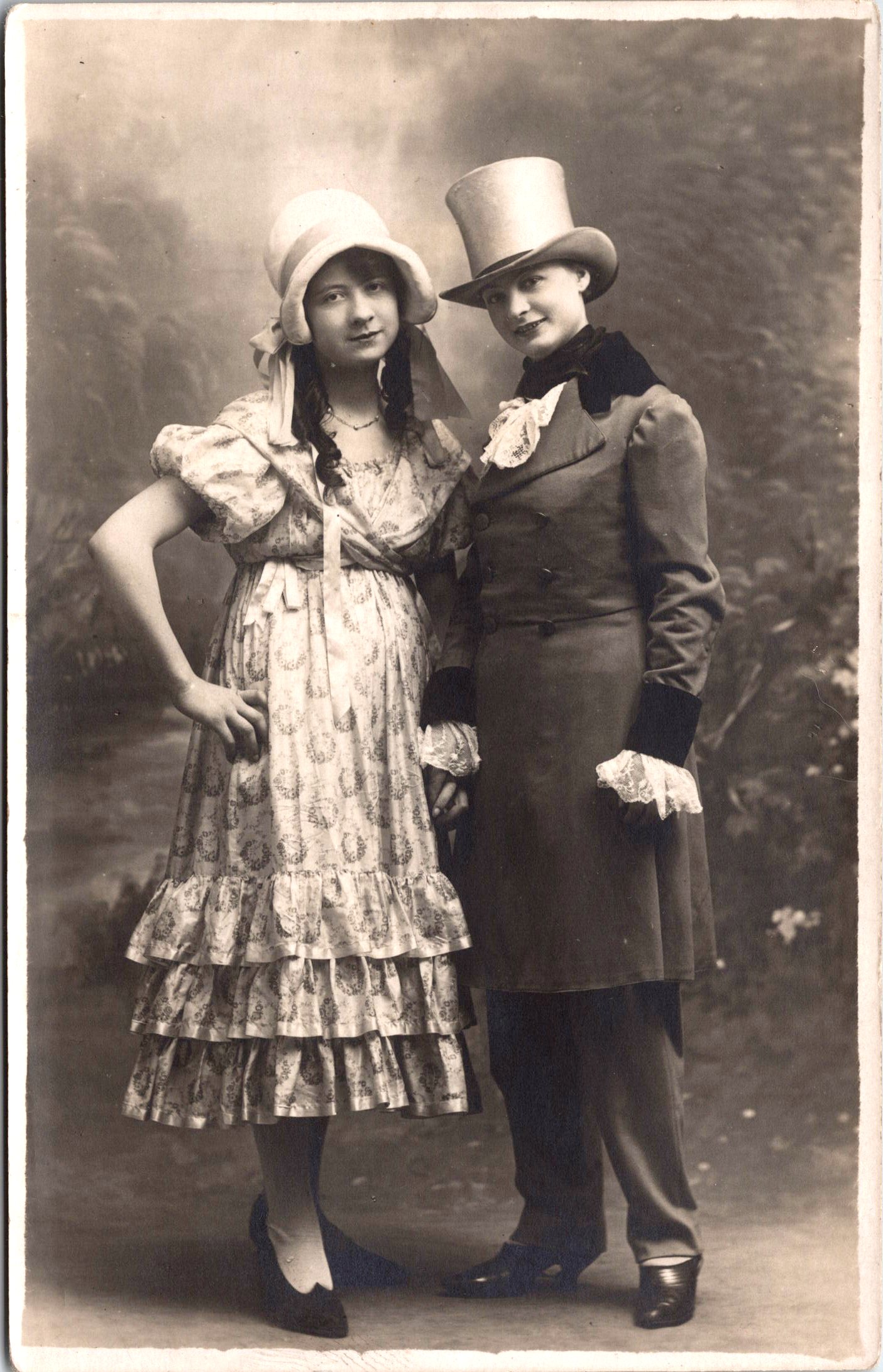
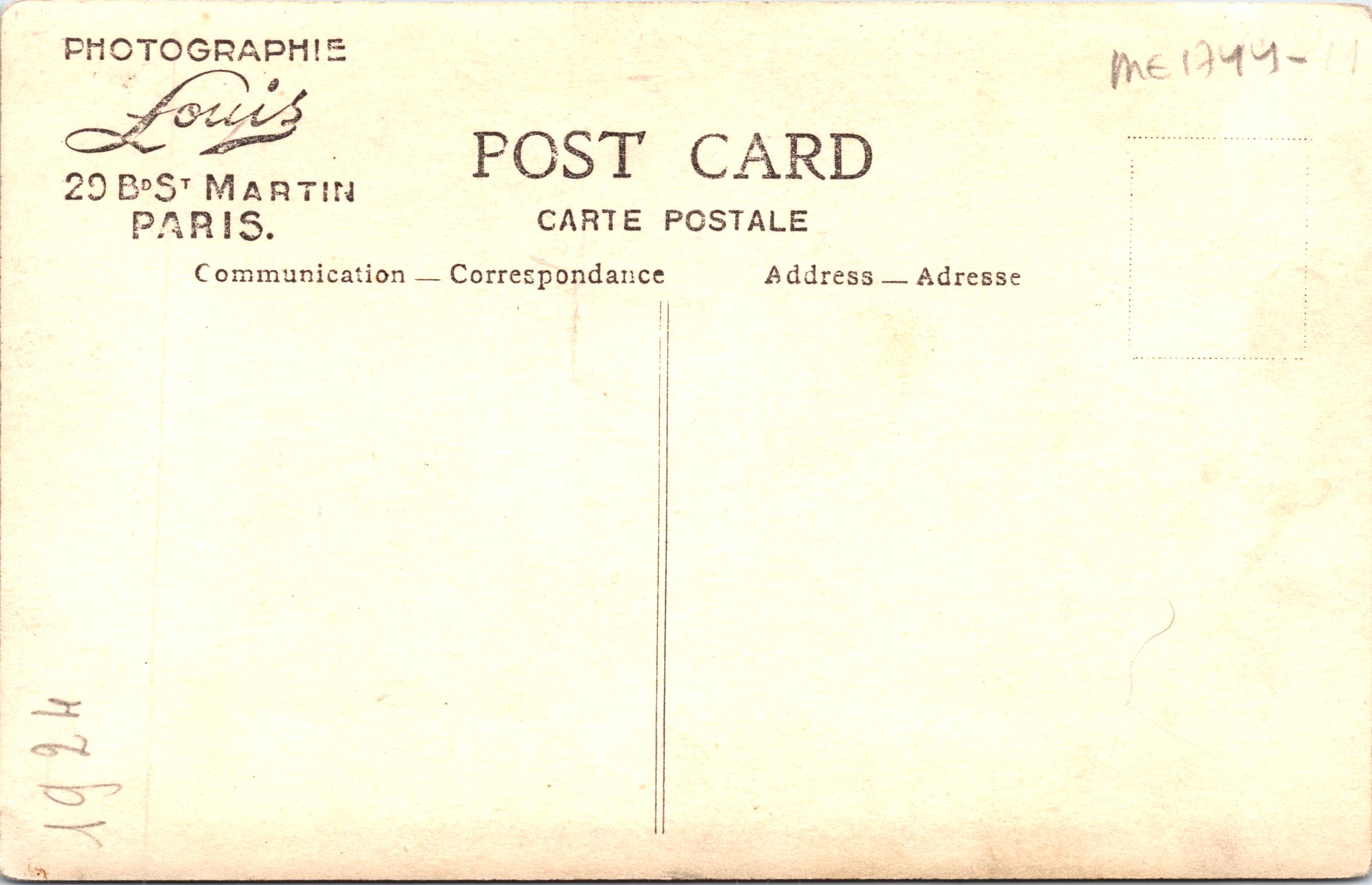
This vintage real photo postcard, taken in 1924 by the Parisian photographer Louis of 29 Boulevard Saint-Martin, Paris, France .Louis captures an intriguing and playful moment between two elegantly dressed women, possibly for a theatrical event, masquerade, or a carnival. The woman on the left wears a soft, floral-patterned dress with delicate puffed sleeves and cascading ruffles along the skirt. A wide-brimmed bonnet with a ribbon frames her gentle face, giving her an air of demure elegance. Her expression is serene and slightly enigmatic, with a hint of amusement in her gaze. She rests one hand on her hip, exuding quiet confidence. Her companion, in stark contrast, is dressed in full masculine attire reminiscent of an 18th-century gentleman. A tailored frock coat with prominent buttons and lace-trimmed cuffs adds a touch of aristocratic flair. A high cravat and dark velvet collar further enhance the historical styling. Perched atop her head is a tall, elegant top hat, completing the androgynous transformation. Her stance is assertive, one foot slightly forward, gloved hand at her side, while her confident smirk suggests a playful and daring personality. Given the fashion and the dramatic contrast in their outfits, it is possible this image was taken during a costume ball, stage performance, or a Parisian carnival event—occasions where cross-dressing and role reversals were celebrated. This would align with the lively and avant-garde spirit of 1920s Paris, a time of artistic and cultural experimentation. This postcard is attractive to collectors due to several factors, including rarity, condition, subject matter, and demand. Given its theatrical/cross-dressing theme, clear photographic quality, and the Parisian studio mark, it could fetch between $25–$60, with higher prices possible if marketed to niche collectors of LGBTQ+ history, early photography of gender expression, and French theatrical ephemera. (SOLD)
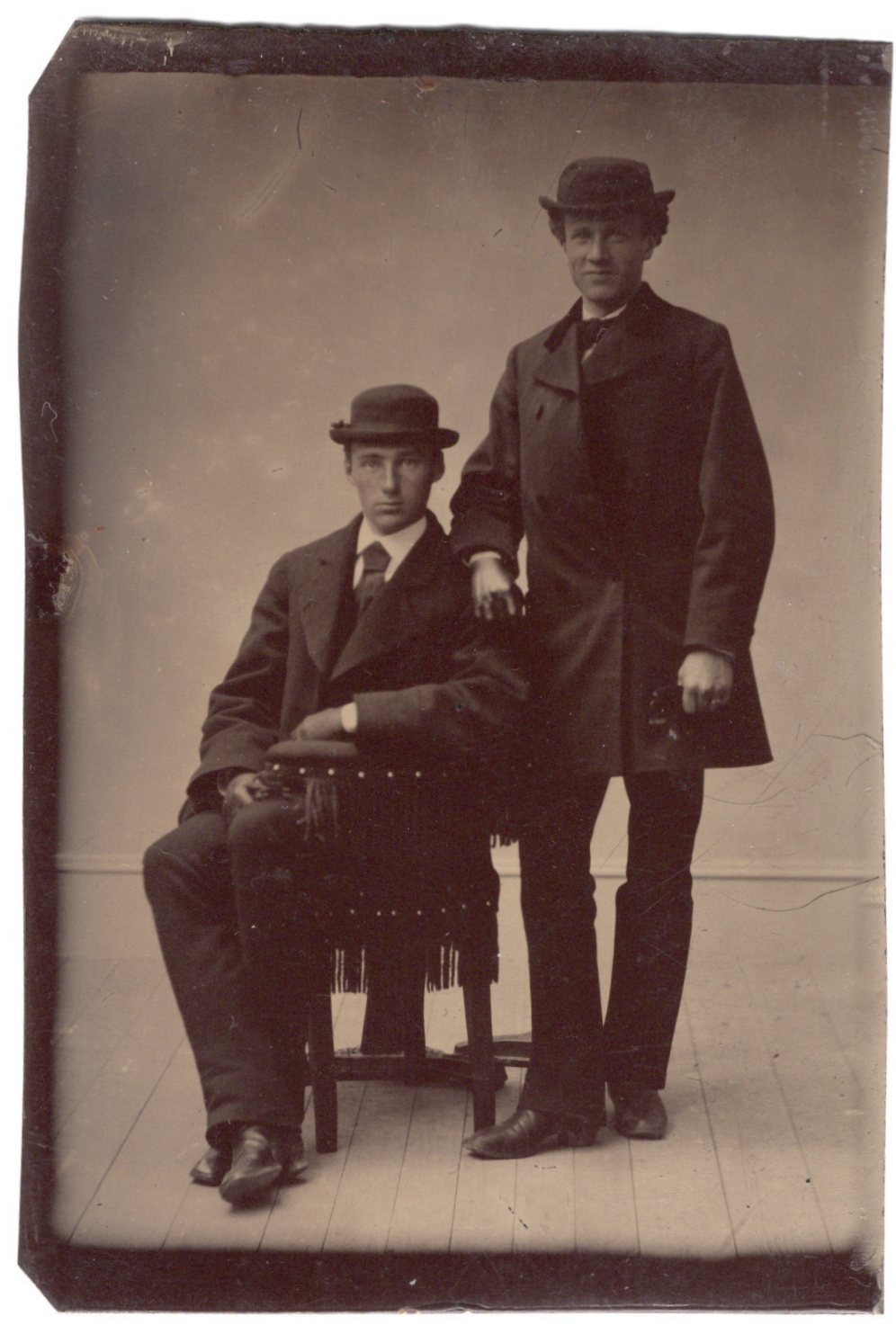
This tintype photograph features two handsome well dressed men. The standing gentleman is holding a pair of gloves. Tintypes were popular between 1856 and 1867. Tintypes did not totally disappear for the next few decades but they became a novelty. SOLD
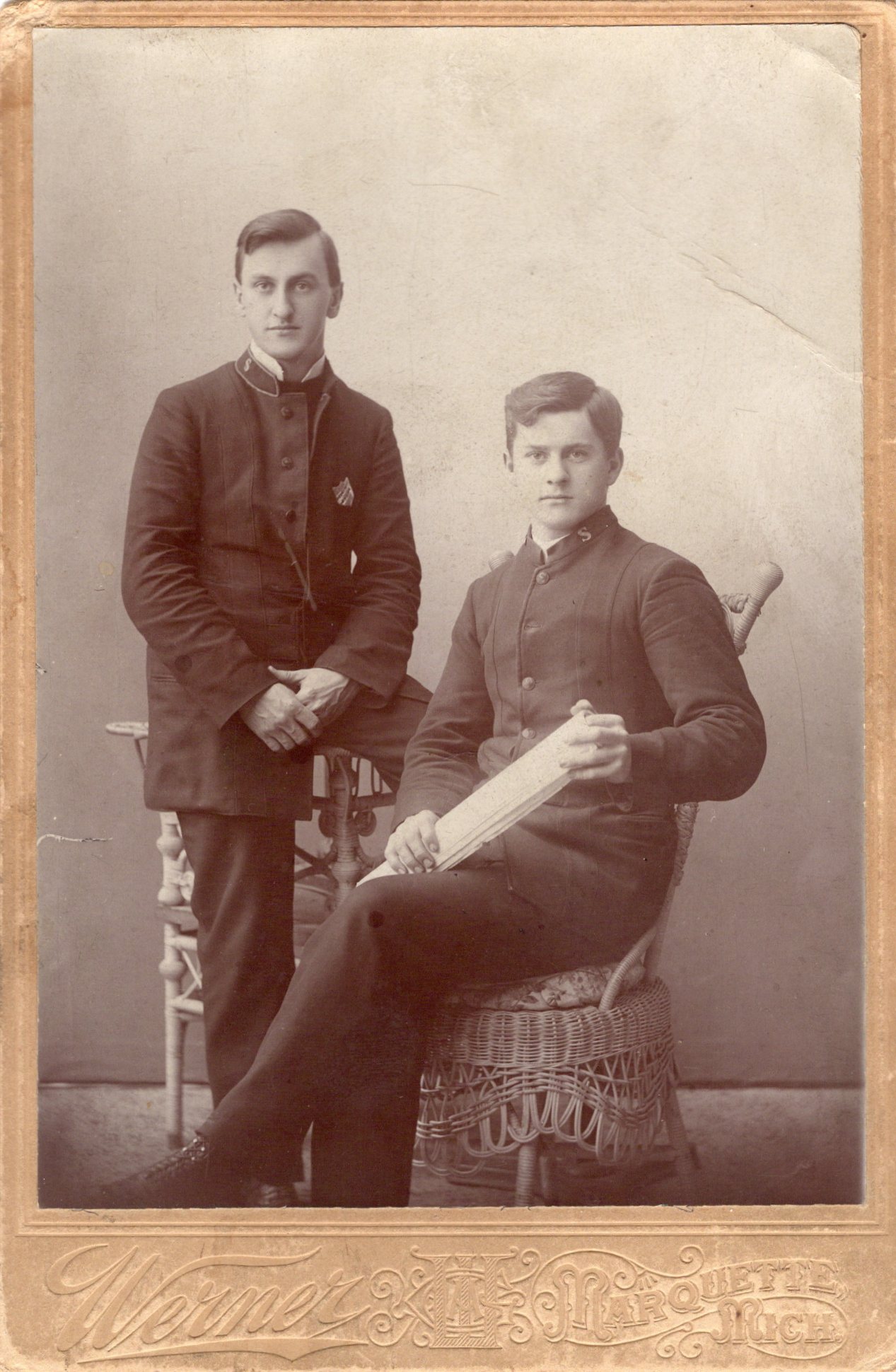
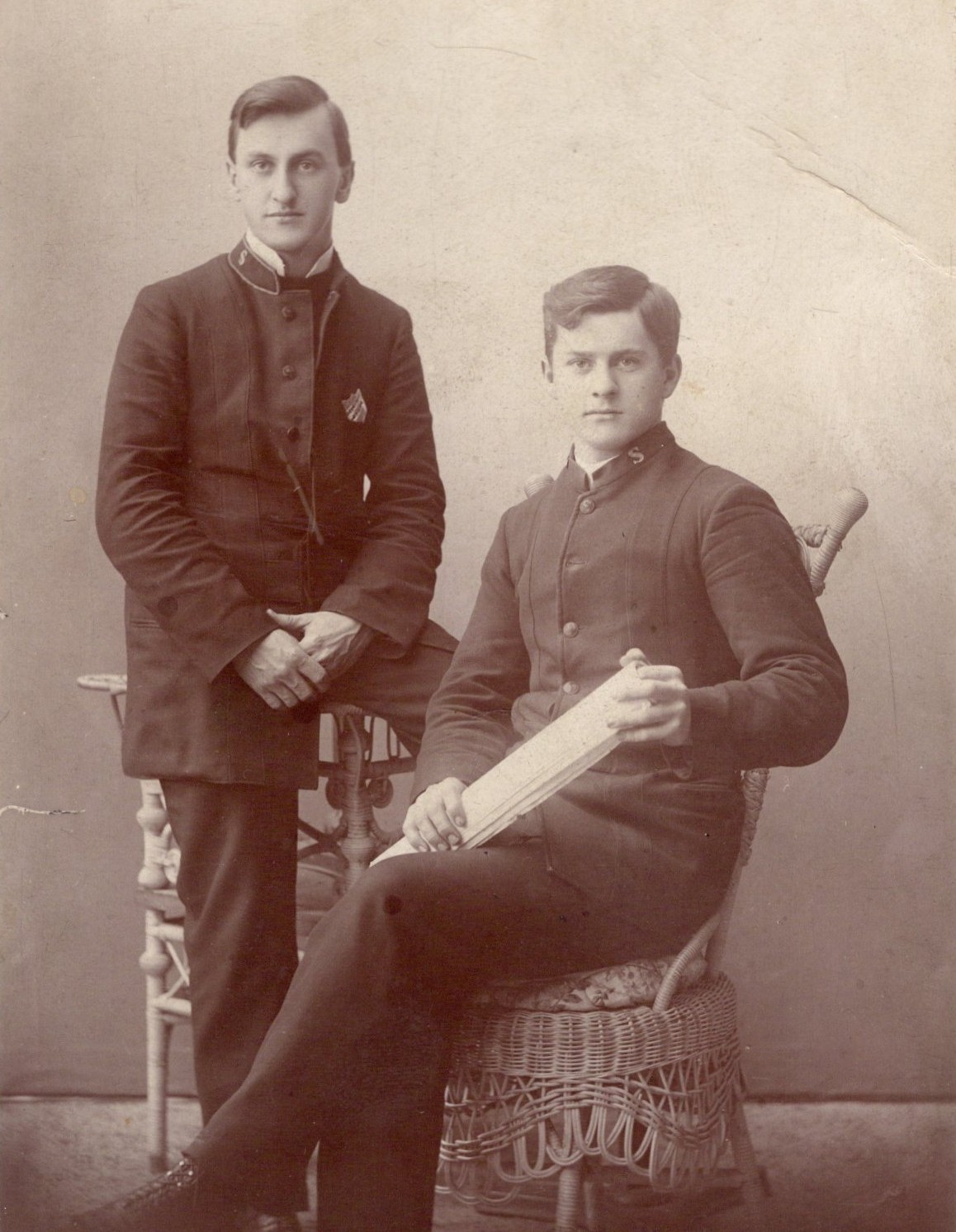
This late 19th-century cabinet card shows two young men posed in uniform at the Werner studio in Marquette, Michigan. Both men wear dark, high-collared tunics with a visible “S” on the collar, indicating that they are members of The Salvation Army. The two men are posed formally, one standing beside a small studio table and the other seated in a wicker chair. The seated man holds a long rolled or folded document. It could be a certificate, appointment paper, program, or musical/theatrical sheet, but there is not enough visible detail to identify it with certainty. Given the Salvation Army connection, it may possibly relate to an appointment, training, service, or membership document. Their serious expressions, matching collars, and dark uniforms give the photograph a strong religious, fraternal, and social-history character. The embossed photographer’s imprint reads “Werner, Marquette, Michigan.” This photo comes from the studio of Gustav A. Werner, a known Marquette photographer. Werner cabinet cards from Marquette appear in institutional and collector records, including theAmon Carter Museum. The Cabinet Card Gallery blog also has a Werner-related entry noting that Werner was a German-born or German-descended photographer who began operating a photographic studio around 1890, and later moved into the notable Werner Building in Marquette. Marquette, Michigan was an important Upper Peninsula city on Lake Superior, closely tied to the region’s iron-ore economy. This cabinet card likely dates from the 1890s, based on the Werner studio imprint, cabinet card format, clothing, and Salvation Army-style uniforms. (SOLD)