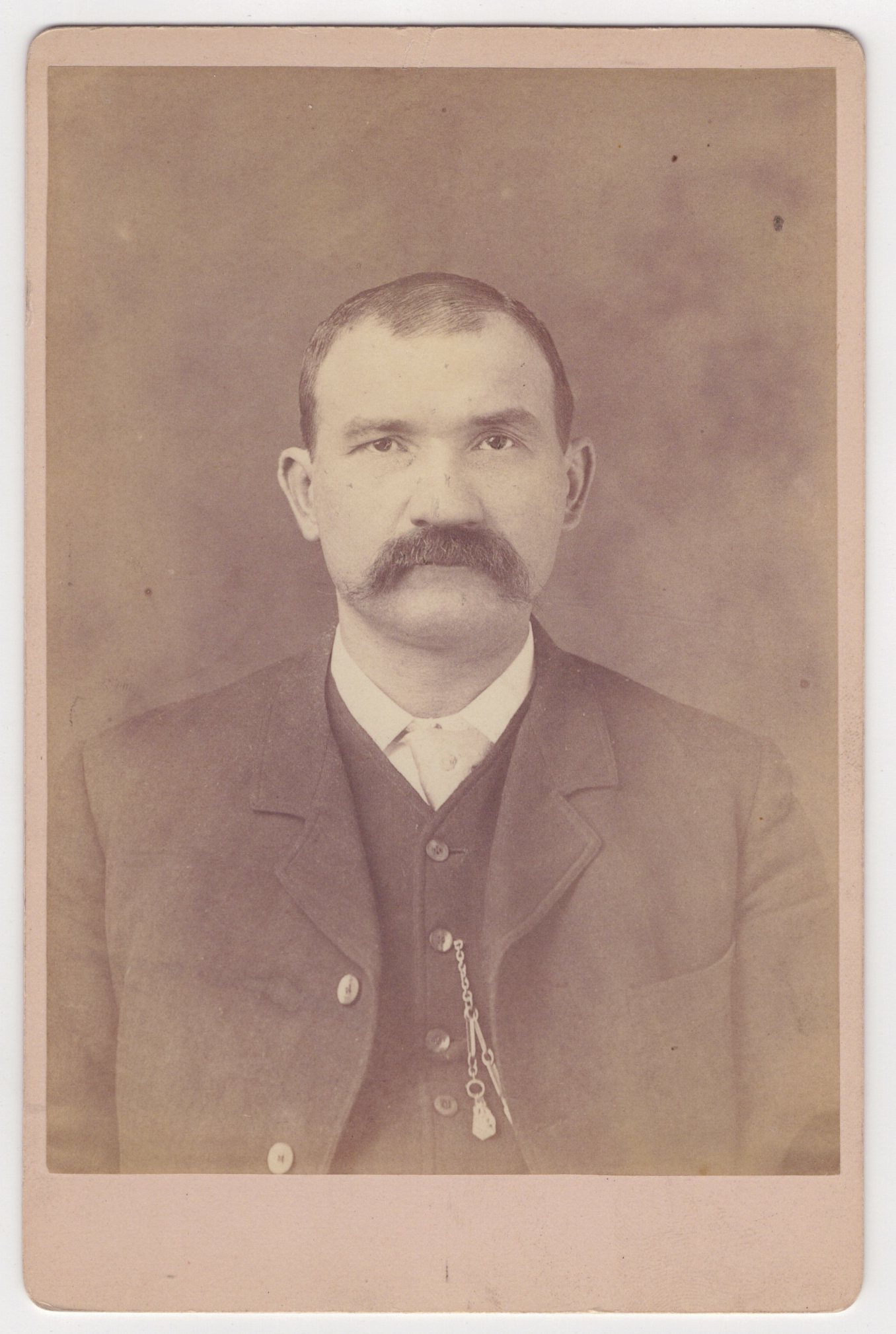
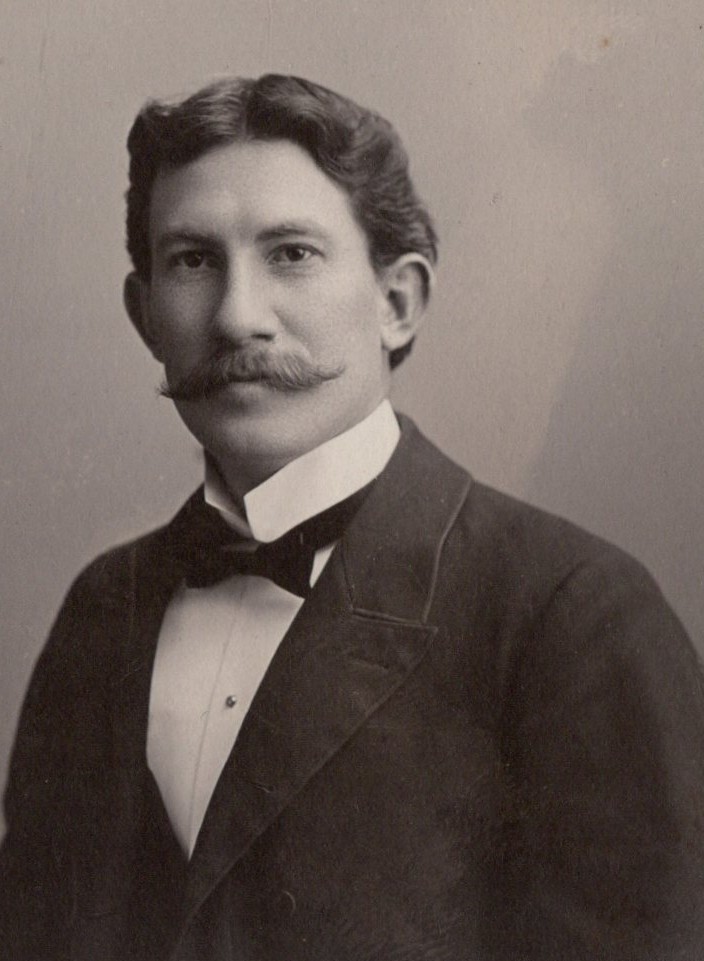
This cabinet card features a handsome mustachioed gentleman. He is well dressed in his three piece suit. Note the pocket watch chain hanging from his vest. SOLD
This cabinet card features a handsome mustachioed gentleman. He is well dressed in his three piece suit. Note the pocket watch chain hanging from his vest. SOLD

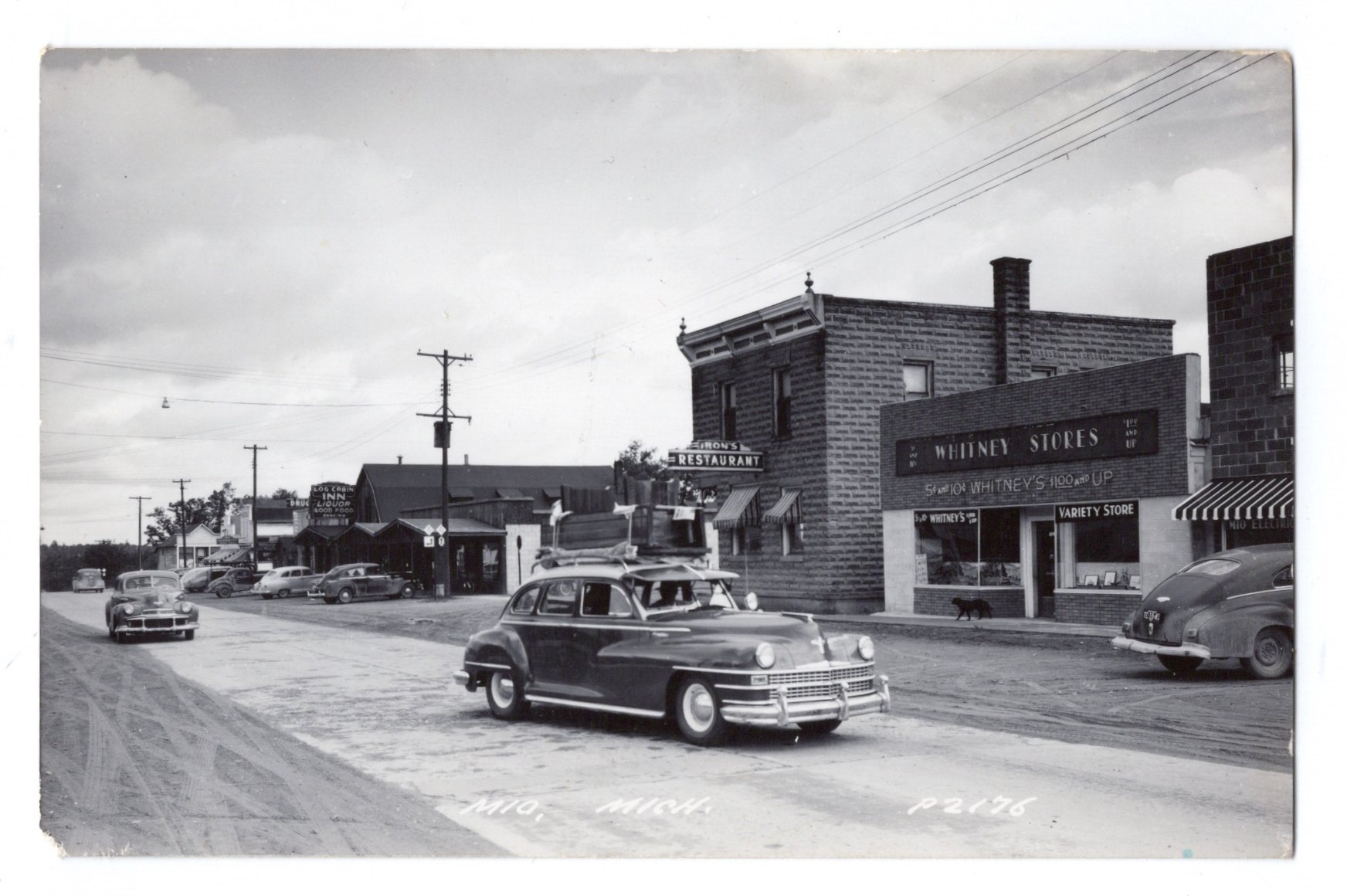
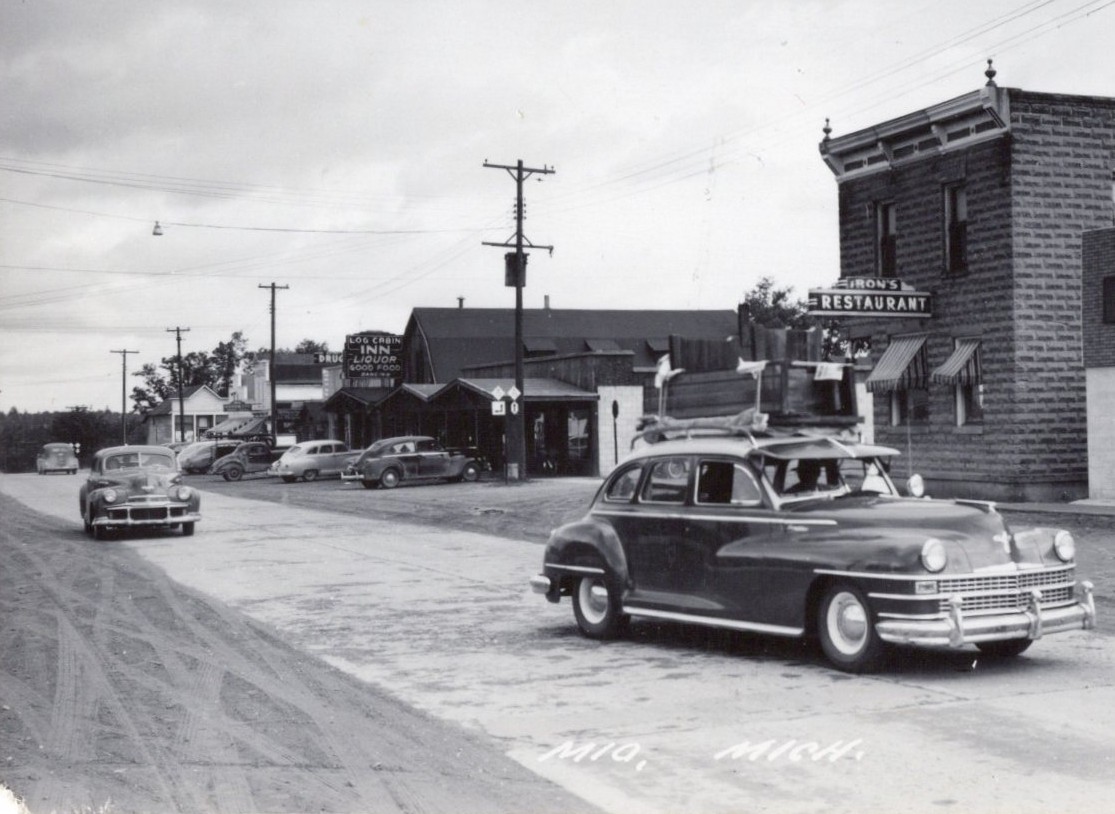
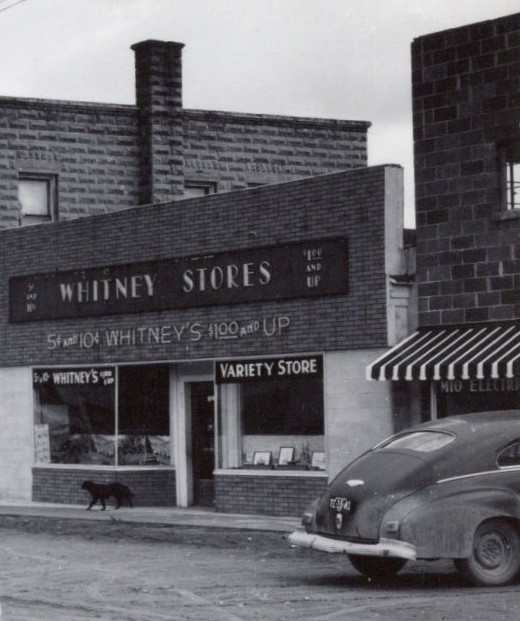
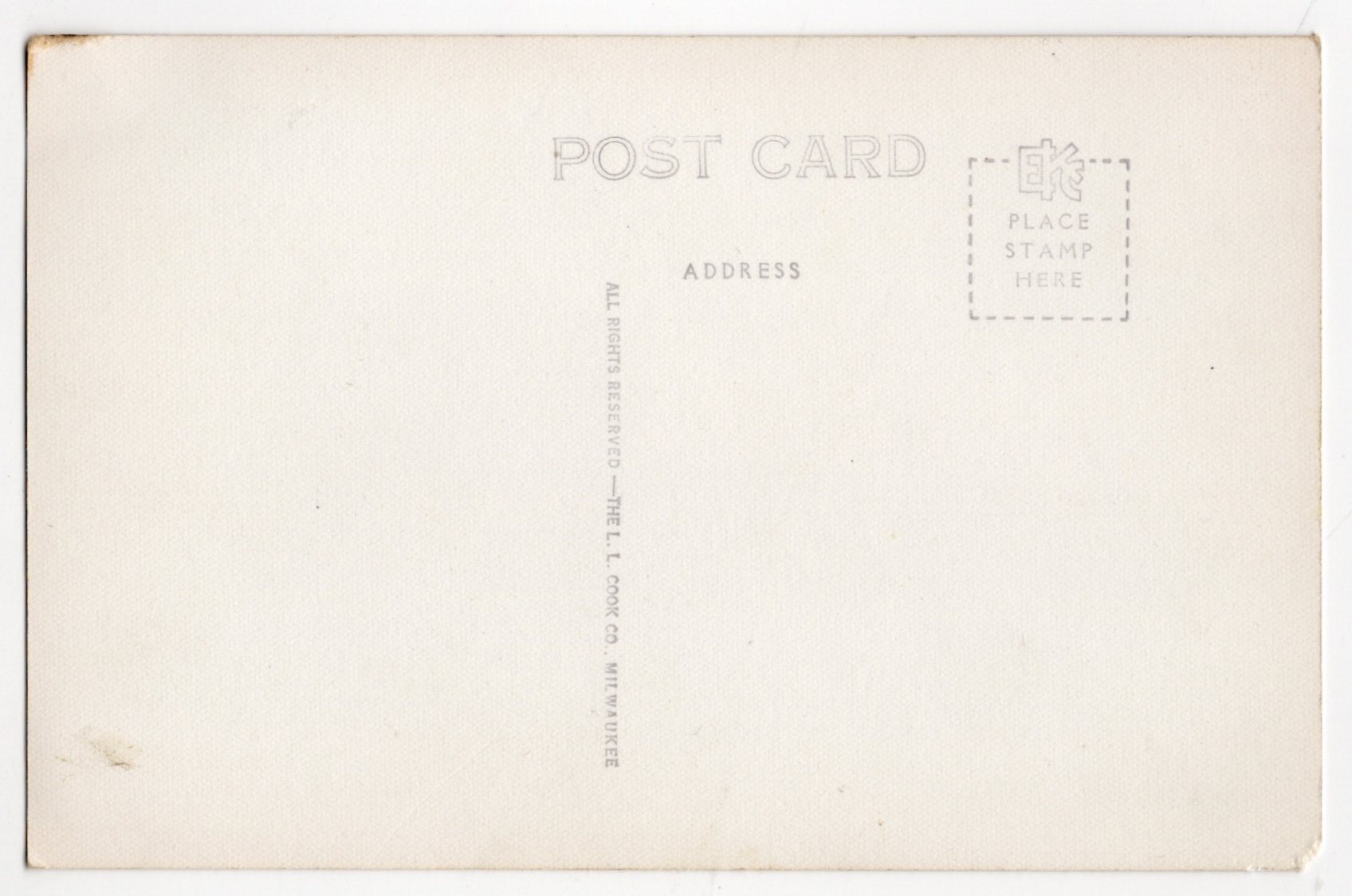
This is a wonderfully detailed real photo postcard showing a busy commercial street in Mio, Michigan, during the years immediately following World War II. Mio is an unincorporated community and the county seat of Oscoda County, situated in the north-central portion of Michigan’s Lower Peninsula. It lies in the Au Sable River Valley, surrounded by the forests and outdoor-recreation country for which this part of northern Michigan is known. Mio was established in 1881. Its early development was closely connected with northern Michigan’s lumbering, farming and river communities. The photograph provides an excellent record of small-town commercial life. Most prominent is Whitney Stores, whose signs advertise “5¢ and 10¢,” “$1.00 and up,” and “Variety Store.” This appears to have been a local five-and-dime establishment selling inexpensive household goods and general merchandise. Other visible businesses include Iron’s Restaurant, the Log Cabin Inn, which advertises “Liquor” and “Good Food,” and a partially visible Mio Electric sign beneath the striped awning at the far right. Another sign behind the Log Cabin Inn appears to advertise a drugstore. A black dog walking in front of Whitney Stores adds an appealing bit of everyday life to the scene. Several period automobiles line the road. The large automobile in the foreground appears to be a 1946–1948 Chrysler sedan, probably from the Windsor or New Yorker family, identifiable by its broad horizontal grille, substantial chrome bumper and postwar Chrysler body styling. It carries a large assortment of luggage or outdoor equipment on its roof, suggesting travelers passing through northern Michigan’s vacation and sporting country. The approaching car at left appears to be a late-1940s Chevrolet, while the other parked vehicles are also consistent with automobiles produced during the late 1930s and 1940s. The postcard was published by the L. L. Cook Company of Milwaukee, Wisconsin. Founded in 1921, L. L. Cook became one of Milwaukee’s two largest postcard publishers and produced an enormous photographic record of American towns, businesses, streets and tourist destinations. The front bears Cook photograph number P2176. The reverse has an EKC stamp box, identifying Eastman Kodak photographic paper used approximately from 1939 through 1950. Because the prominent Chrysler could not have been manufactured before the 1946 model year, the combination of the automobiles and EKC stamp box places this view most plausibly around 1946–1949, with approximately 1947 being a reasonable working date. This postcard is unused and has not been mailed. SOLD
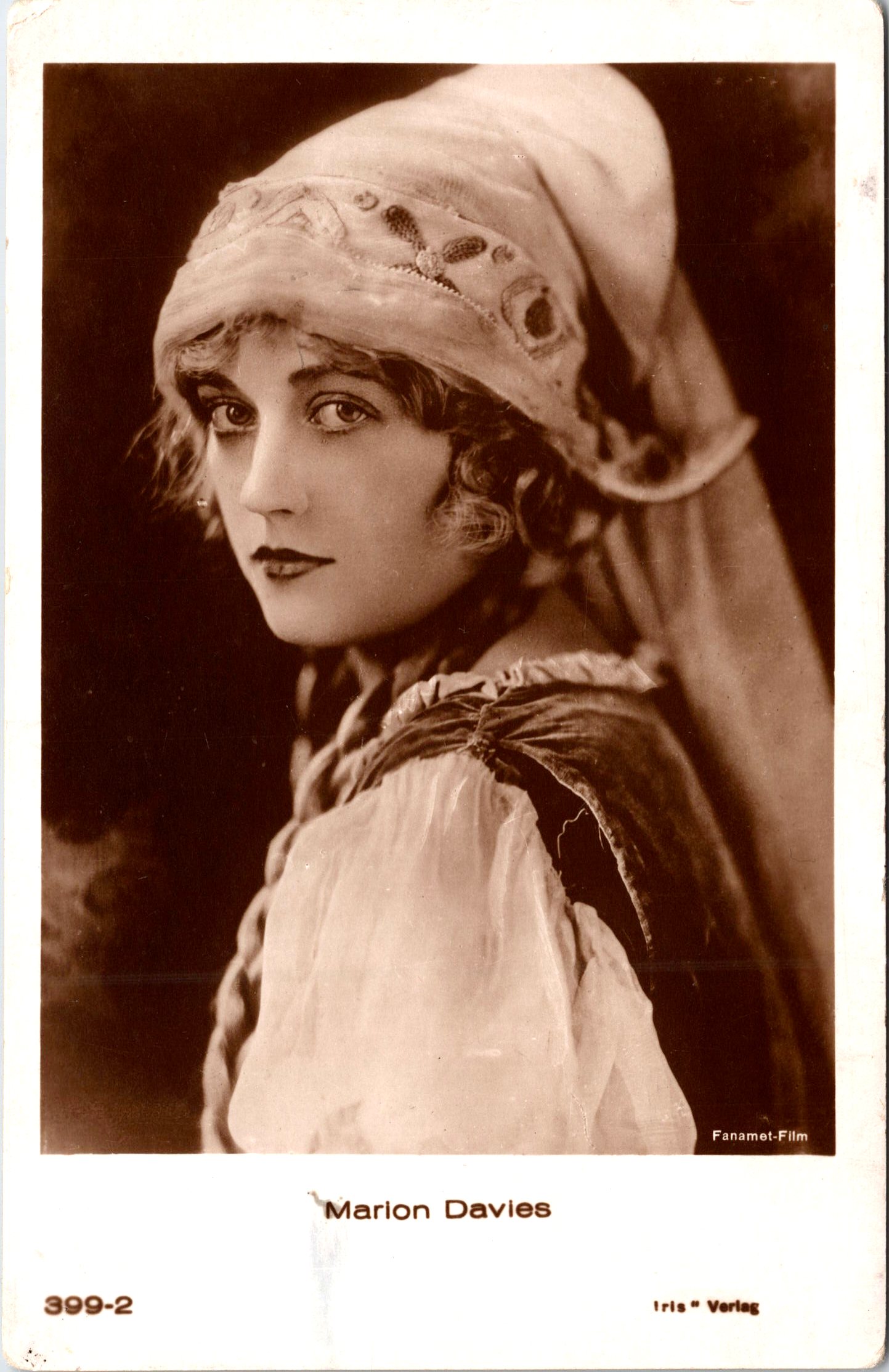
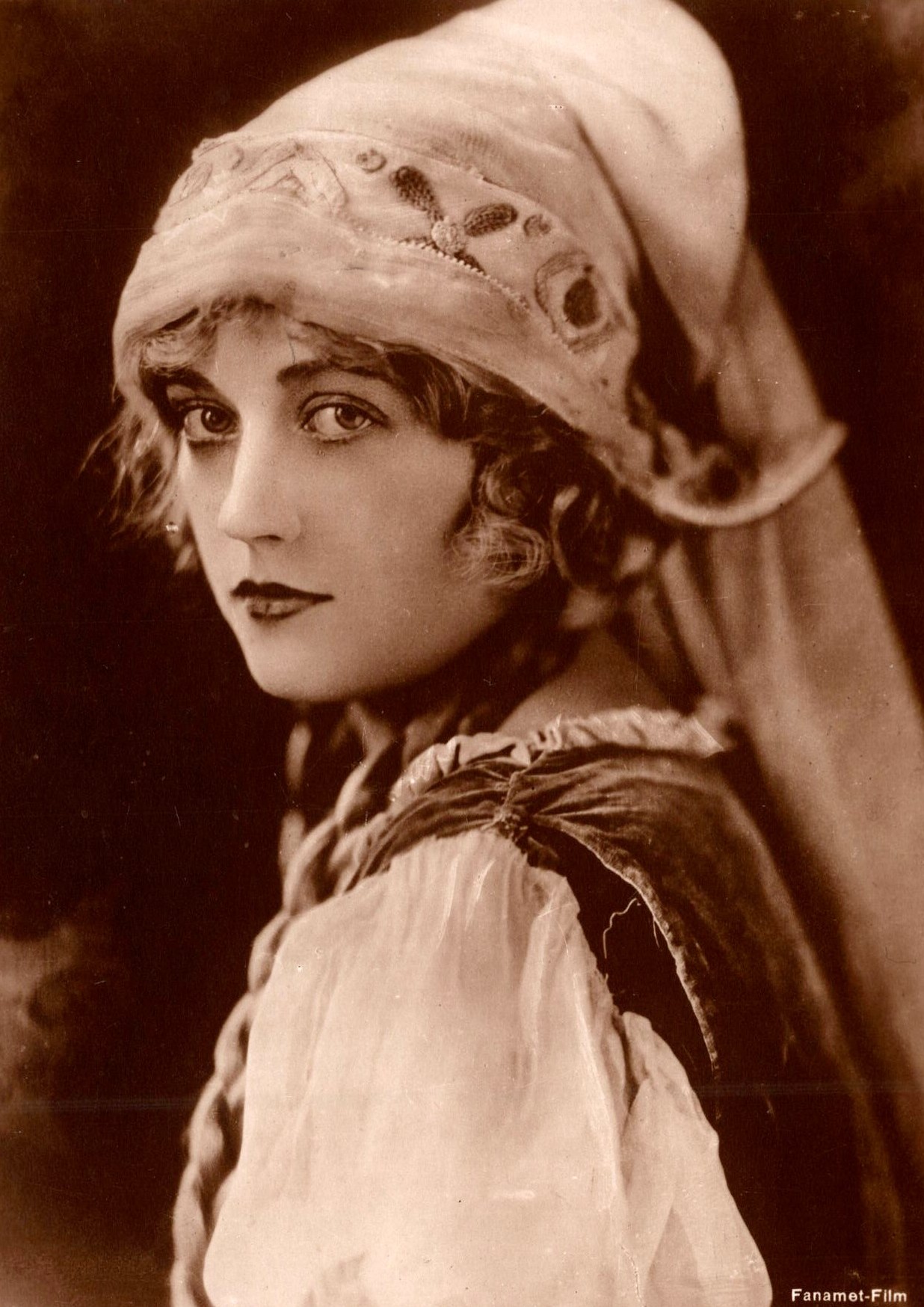
This striking real photo postcard (RPPC) features silent film actress Marion Davies in a dramatic costume portrait, likely from a historical or fantasy-themed film. She gazes intently at the camera with a confident, mysterious expression, her curly hair peeking from beneath a richly embroidered headscarf. She wears a flowing velvet and gauzy dress with braided details, evoking medieval or Renaissance fashion. Printed in sepia tones, the card showcases Davies’ distinctive beauty and screen presence, which made her a star of the 1920s. In the lower right corner of the image is the credit “Fanamet-Film.” Fanamet was the European distribution arm of Paramount Pictures, active primarily in the 1920s and early 1930s. Based in Vienna, Fanamet handled the European marketing of American films, including those of Marion Davies. The postcard was published by Iris Verlag, a well-known German and Austrian publisher of film star postcards. The serial number 399-2 appears in the lower left corner. These cards were widely collected across Europe during the silent film era and are known for their excellent photographic clarity and elegant layouts. The reverse of the postcard shows a clear postmark: reading Tallinn, Estonia, and it is dated 1927. A rough translation of the Estonian message is as follows: “Dear young man, I wish you much happiness in the new year. May the coming year bring you joy and success.” This appears to be a New Year’s greeting, warm and personal, typical of the time. (SOLD)

This is an original vintage 2004 bebe Fall Collection advertising postcard/invitation featuring model and actress Olga Kurylenko, photographed during the period when she was an internationally successful fashion model shortly before her film career took off. The striking fashion portrait shows Kurylenko wearing an oversized black wide-brimmed hat, plaid tailored jacket and dramatic fur-trimmed collar, with the white bebe Fall Collection logo prominently printed across the image. The reverse reveals that this was an invitation to an exclusive preview of the new bebe & bebe Sport Fall Collection, held in 2004 in Austin, Texas. Kurylenko had already established herself as an important fashion model by this time, appearing in major fashion magazines and campaigns and becoming a face of several brands including Clarins, Helena Rubinstein, Roberto Cavalli and Kenzo. She subsequently made the transition to acting and became internationally famous playing opposite Daniel Craig’s James Bond in Quantum of Solace (2008). SOLD
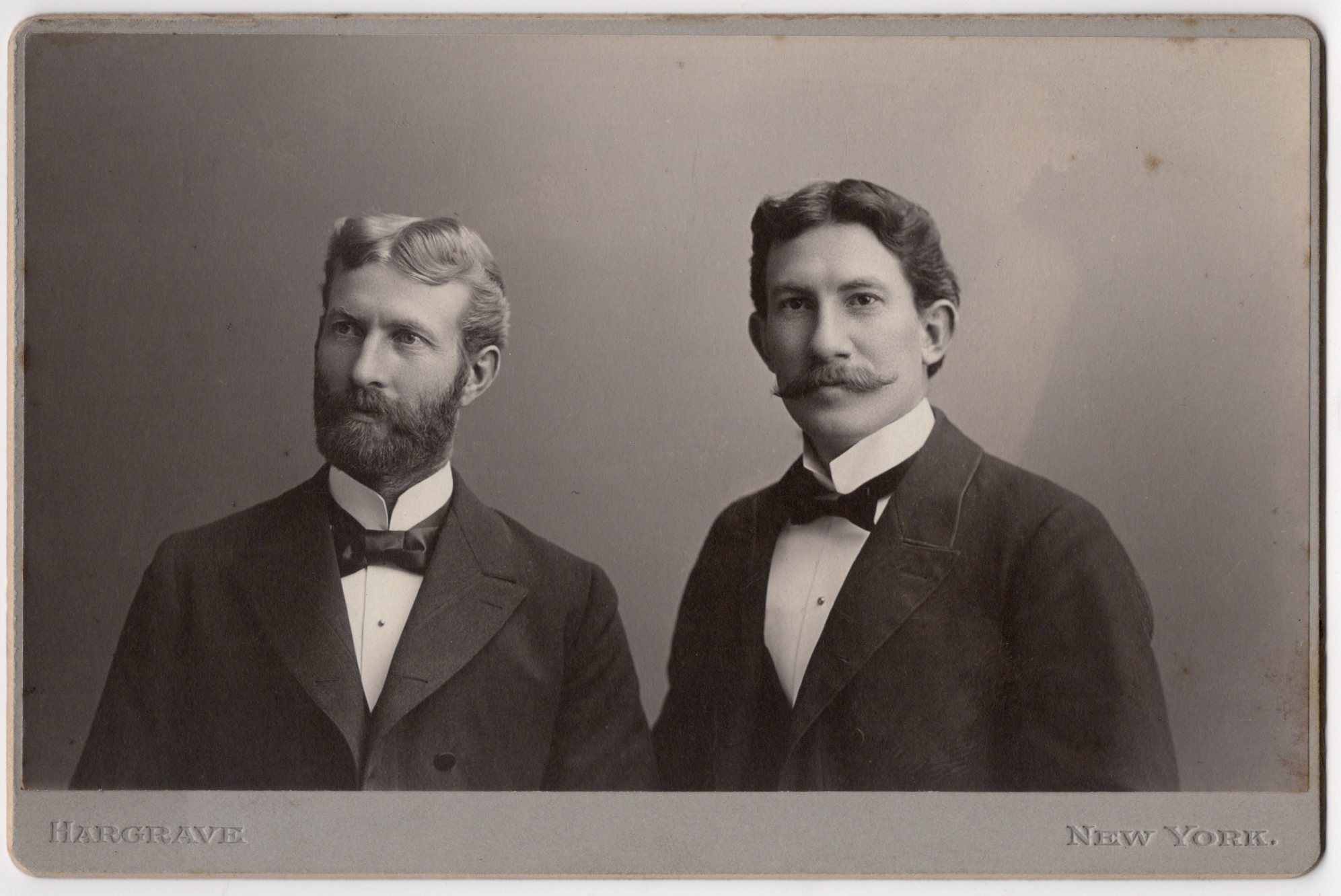
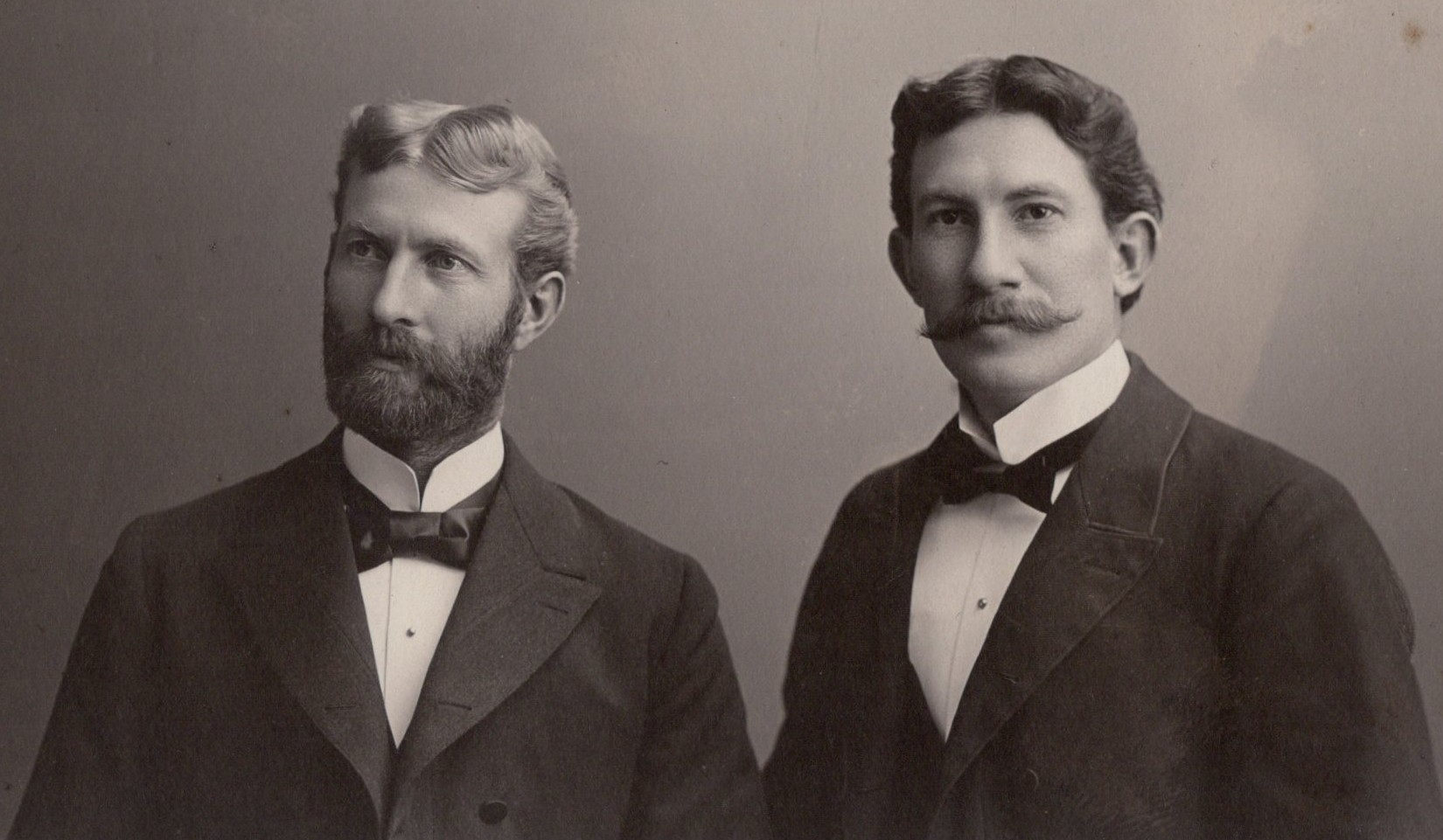
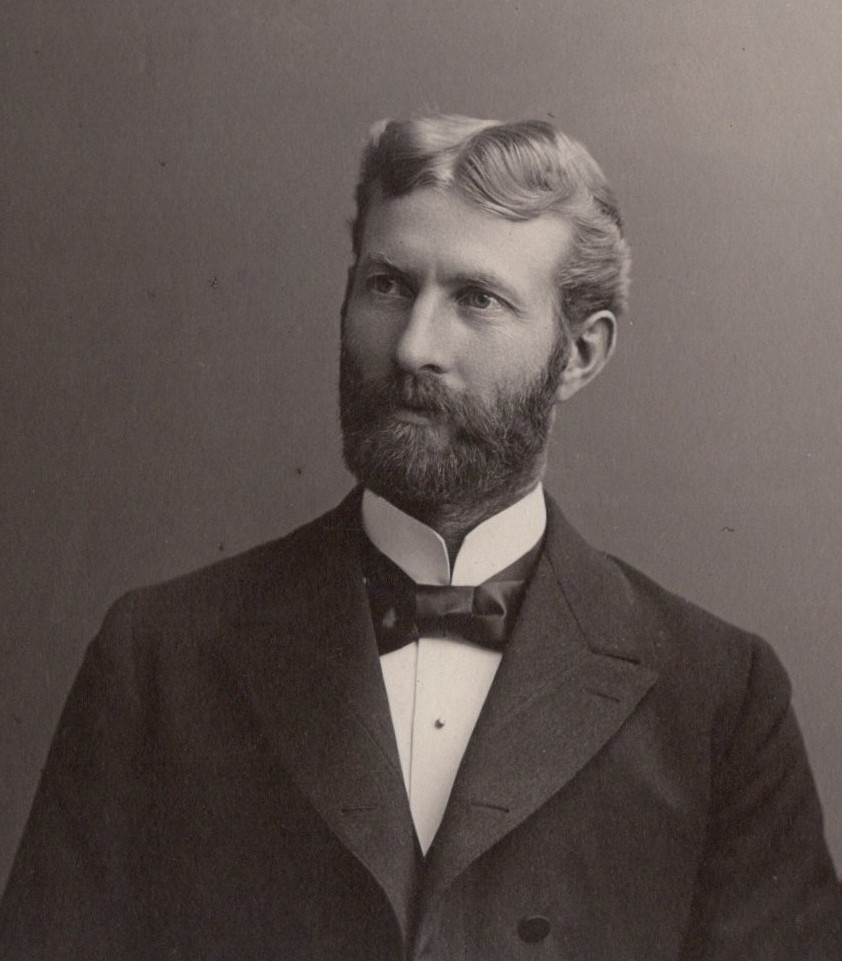
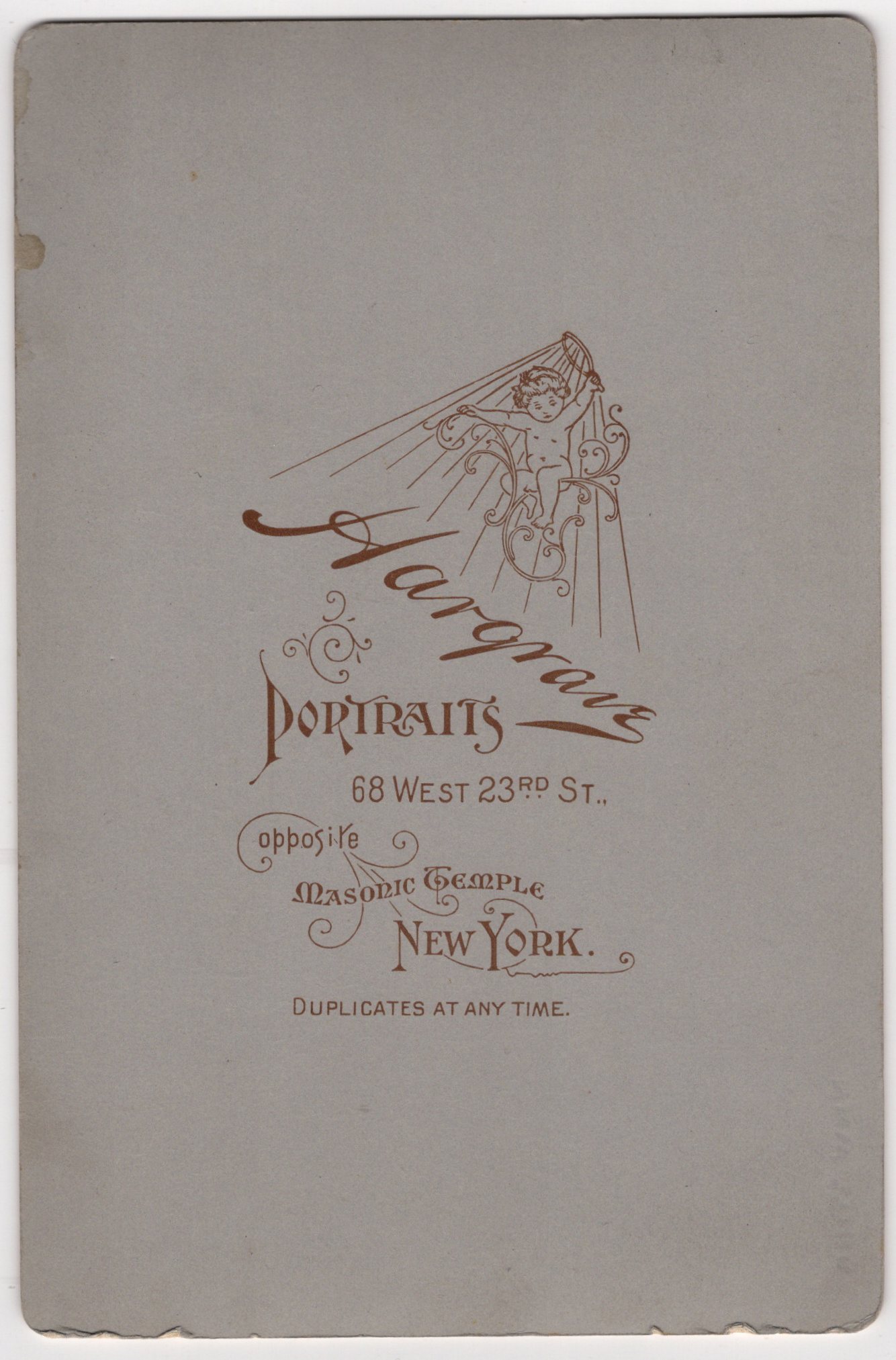
This striking late 19th-century cabinet card features a compelling double portrait of two well-dressed gentlemen, captured with clarity and quiet confidence by Hargrave of New York City. The image presents the men in formal attire—dark jackets, crisp white shirts, and bow ties—reflecting the refined fashion and dignified bearing of the era. One gentleman wears a full, neatly groomed beard, while the other sports a carefully styled mustache. Their expressions are composed and thoughtful, suggesting a studio portrait intended to convey both character and respectability. This photograph was taken during the vibrant photographic culture of Manhattan in the late 1800s. Note the elegant backmark, featuring a cherubic figure and decorative typography. Based on the style of dress, grooming, and mount design, this photograph likely dates to the late 1880s to early 1890s, a time when cabinet cards were at the height of their popularity. SOLD
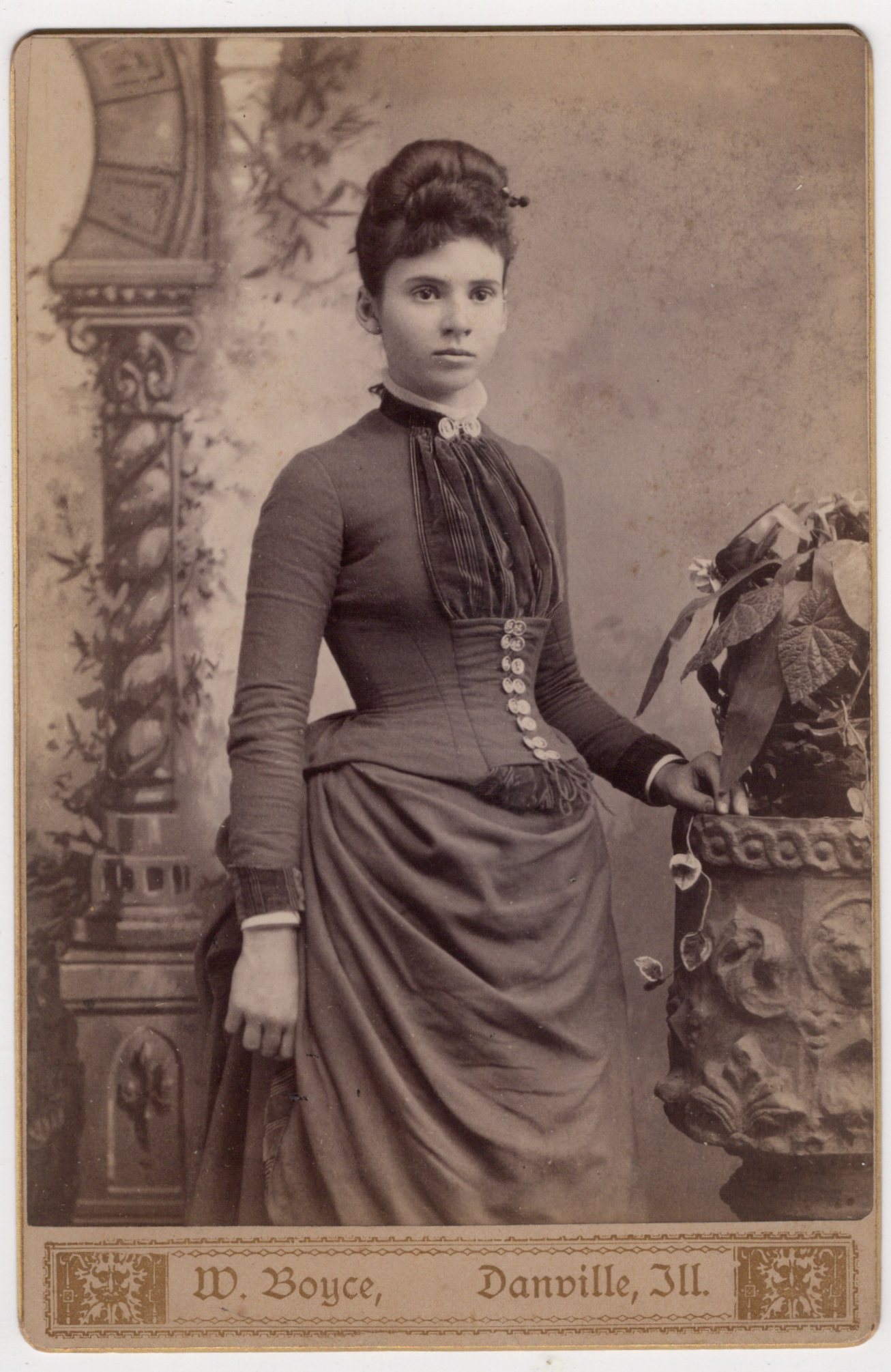
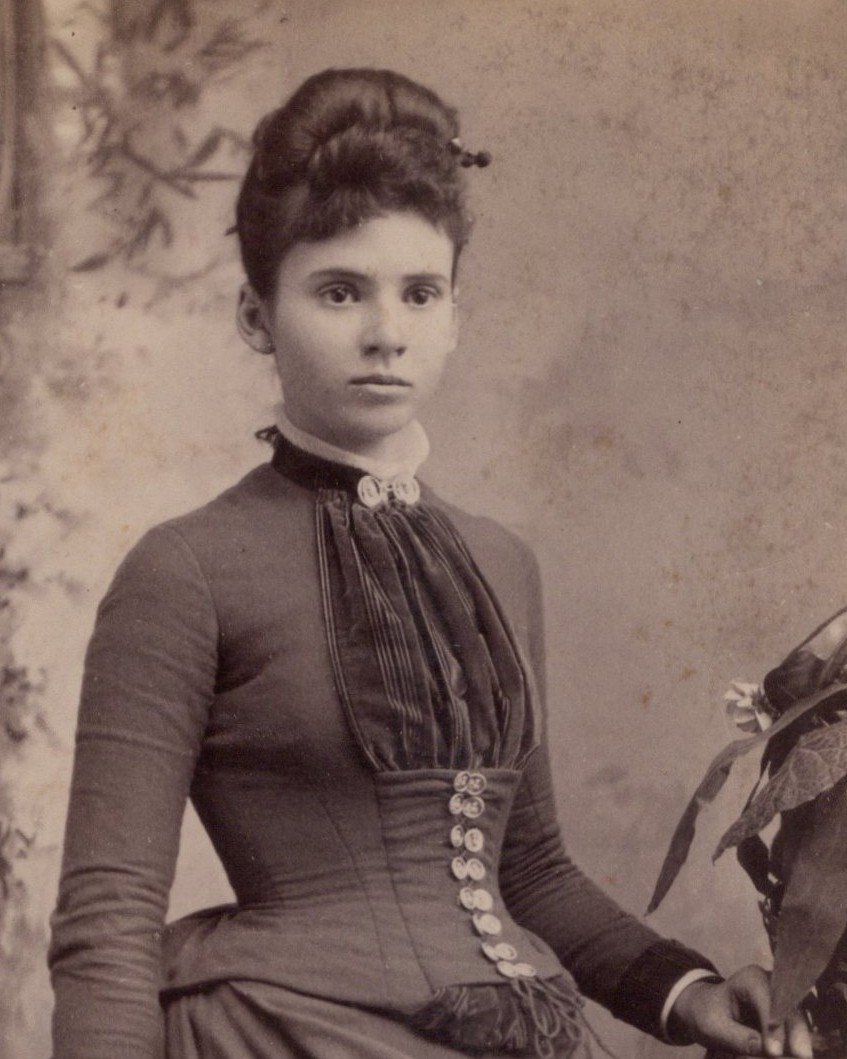
This antique cabinet card photograph features a pretty young woman identified in pencil on the reverse as Mabel Graham, photographed by Washington Boyce of Danville, Illinois. Mabel is shown standing in an elegant studio setting beside a large decorative planter filled with leaves and flowers. To her left is a painted or constructed architectural column prop, adding a formal Victorian parlor atmosphere to the portrait. She wears a fitted late-19th-century dress with a high collar, dark pleated front panel, closely tailored sleeves, and a striking vertical row of light-colored decorative buttons down the bodice. Her hair is arranged high on her head in a fashionable Victorian style, and she faces the camera with a serious, composed expression. The photographer, Washington Boyce, is an interesting figure in the history of regional photography, having been referenced in connection with an 1894 Illinois breach-of-contract case involving the sale of a photographic studio and a non-compete clause. He was also noted in an 1886 photographic journal for holding a patent connected to an innovative photographic paper box. This cabinet card is a nice example of his Danville studio work. SOLD
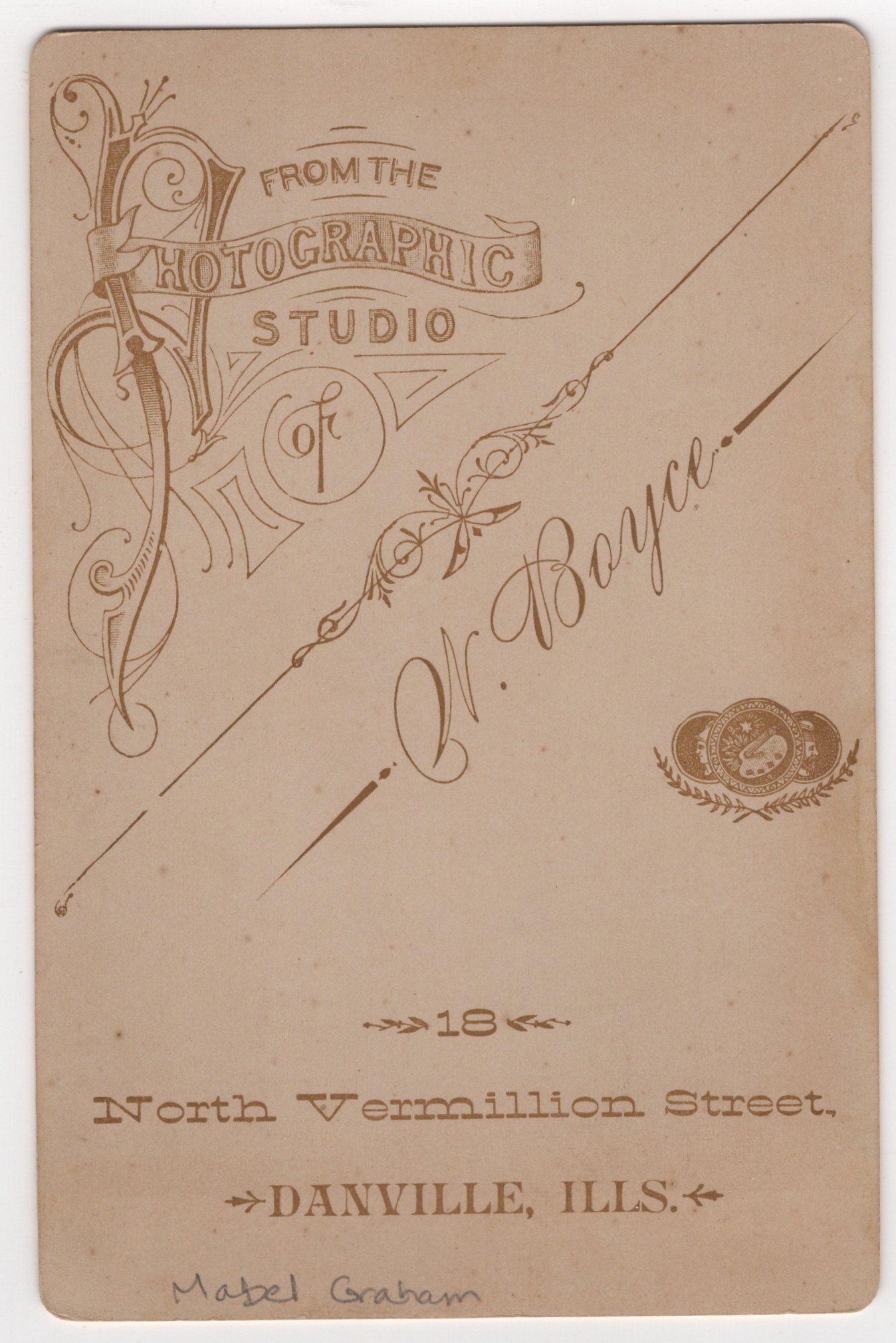
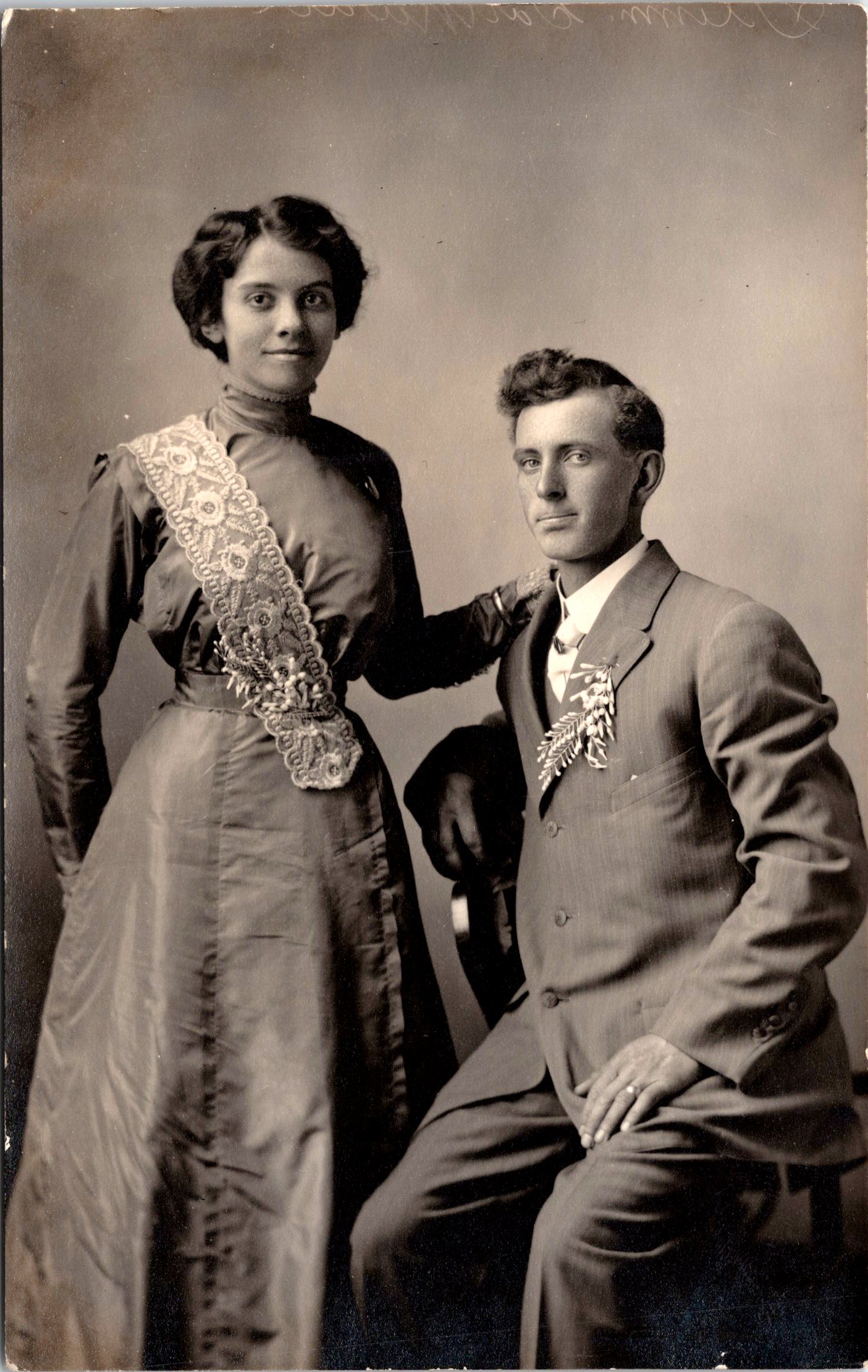
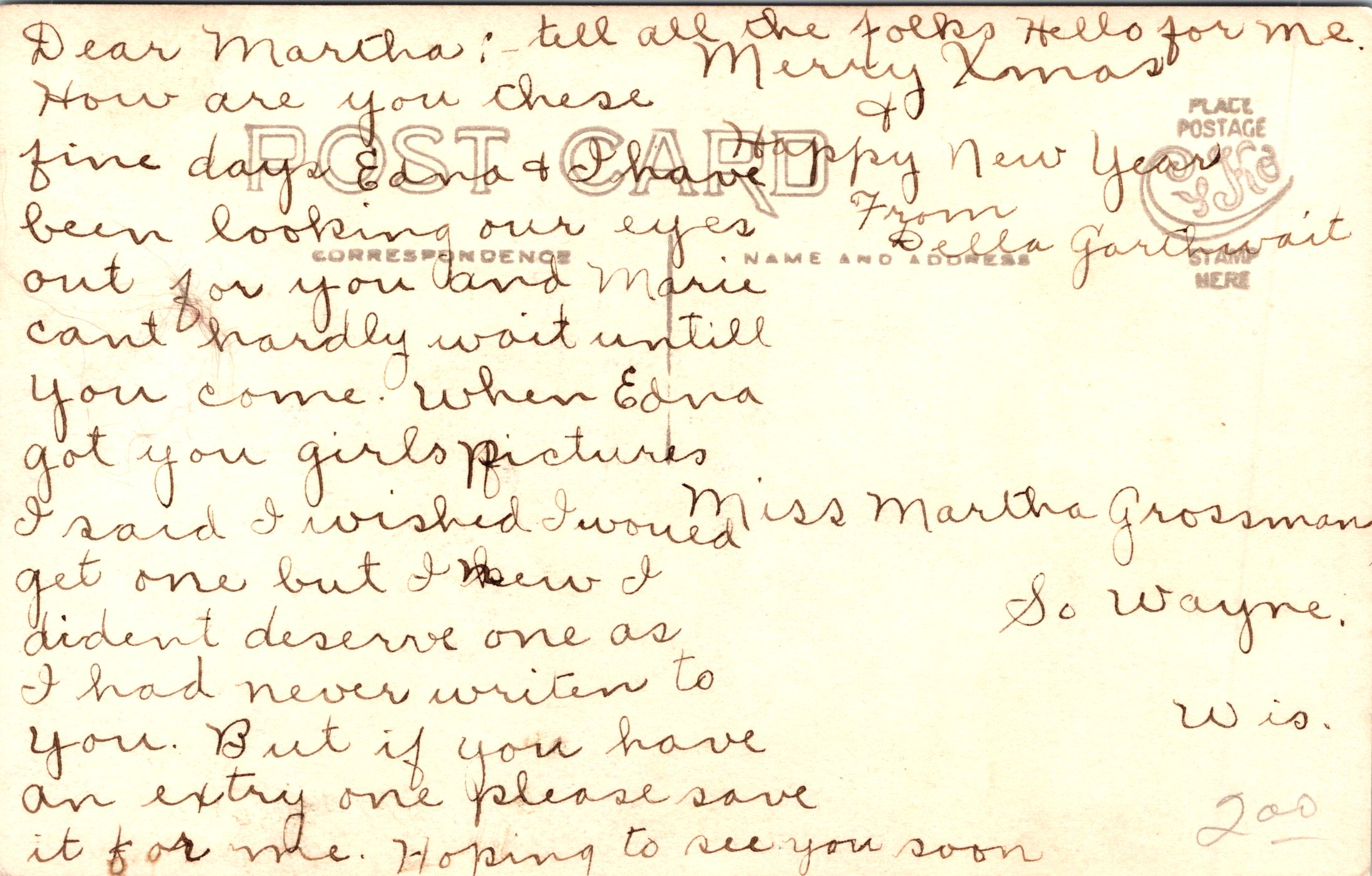
This real photo postcard, produced by Cyko, features a striking studio portrait of a young couple, likely from the early 20th century. The woman stands confidently beside the seated man, her poised expression conveying warmth and quiet elegance. Her dark hair is styled neatly, framing a face with striking eyes and a delicate smile that suggests kindness and charm. She wears a long-sleeved satin dress with a high collar, adorned with a beautifully intricate lace sash draped across her torso, giving the impression of a special occasion, possibly a wedding. The man, seated with a composed and self-assured posture, has neatly combed hair and a gentle yet firm expression. His well-fitted suit, complete with a boutonnière of delicate flowers pinned to his lapel, adds to the formal nature of this portrait. His steady gaze and slight smile suggest a dependable and kind personality. Given the couple’s formal attire, the woman’s decorative sash, and the man’s floral embellishment, this could very well be a wedding portrait. The woman’s beauty is undeniable, with her graceful presence and confident stance adding to the timeless appeal of this image. The reverse side of the postcard contains a warm and somewhat wistful handwritten message from “Della Garlwait” to “Miss Martha Grossman” of South Wayne, Wisconsin. The message expresses anticipation for a visit and regret for not writing sooner, while also requesting an extra copy of a previously sent photograph. The casual yet heartfelt tone suggests close friendship or family ties. SOLD

This is a WWII German “Sterbebild”, or death memorial card, honoring the life and sacrifice of Gefreiter (Corporal) Josef Thalhammer, who died on December 10, 1943, at the young age of 20, during combat in Russia. These cards were distributed to family, friends, and community members in memory of fallen soldiers. They are a poignant part of wartime German culture, often saved in family Bibles or photo albums. The front side features a portrait photograph of Thalhammer in his military uniform. His expression is youthful yet solemn, with a calm, determined look in his eyes. He wears the field cap and tunic of a Wehrmacht soldier, with visible insignia including the eagle-and-swastika emblem over the right breast pocket and collar tabs typical of an enlisted man in a Grenadier regiment. Below the photograph is a brief obituary: ” In Memory in Prayer of our dear son and brother Josef Thalhammer, son of a farmer from Westerskirchen, Gefreiter in a Grenadier Regiment, who on December 10, 1943, at the age of 20, met a hero’s death in Russia.” A poem follows, expressing grief and remembrance for a young hero buried in a distant field, ending with a reference to a brother who also died before him. The reverse side displays an illustration of a German soldier’s grave in the woods, marked with a cross and helmet. The inscription reads: “Gefreiter Josef Thalhammer killed on 10.12.1943 He was dear to us in life, we will not forget him even in death. The card is printed by Gebr. Geiselberger, Vilsbiburg (a Bavarian print house known for producing such cards), and bears the code HCoM 109. What are these cards? Known as “Sterbebilder” or “Totenbildchen”, these small memorial cards were traditionally printed in Germany, Austria, and Catholic regions of Europe. During WWII, they were commonly issued for fallen soldiers and distributed at memorial services or mailed to relatives. They typically feature a portrait of the deceased on one side and a prayer, obituary, or poem on the reverse. (SOLD)


This appealing real photo postcard captures a lively outdoor scene of two young women posed with their bicycles while standing on a small wooden footbridge in what appears to be a rural park or countryside setting. The photograph presents a relaxed moment of recreation from the early twentieth century and reflects the growing popularity of cycling as both sport and leisure during this period. The two women stand side by side on their bicycles facing the camera. Both wear light-colored cloche-style caps or bathing caps, a fashionable accessory of the 1920s that helped keep hair neatly in place during outdoor activities. The woman on the left smiles broadly, giving the image a cheerful and spontaneous feeling. She wears a cardigan-style jacket over a dress or skirt, her hands comfortably resting on the handlebars as she balances the bicycle on the bridge. Her companion on the right wears a loose striped dress with wide sleeves, a garment that reflects the relaxed silhouettes typical of the flapper era. Her expression is more reserved, though still friendly, as she looks directly toward the camera. Both women appear confident and self-assured, embodying the increasingly independent spirit of young women in the 1920s who embraced new freedoms in fashion, mobility, and recreation. The bicycles themselves are classic road bicycles of the era with upright handlebars and narrow tires, and the wooden bridge beneath them—constructed with simple railings and planked boards—adds a picturesque quality to the composition. Behind them a sloping grassy bank and dense trees frame the scene, suggesting a quiet country lane or park pathway. The reverse of the card shows the imprint “LEONAR 4365.” The Leonar name refers to photographic postcard paper manufactured by Leonar-Werke Arndt & Löwengard of Wandsbek near Hamburg, Germany, a company active from the early twentieth century until its later merger with Agfa. Leonar postcard papers were widely used throughout Europe and were particularly common from roughly the 1910s through the 1930s. The photographer of this photo could have been a local studio or even an amateur photographer. Based on the women’s clothing, their caps, and the casual outdoor sporting theme, this photograph was most likely taken in the 1920s, during the height of the cycling and outdoor recreation craze of the interwar period. SOLD

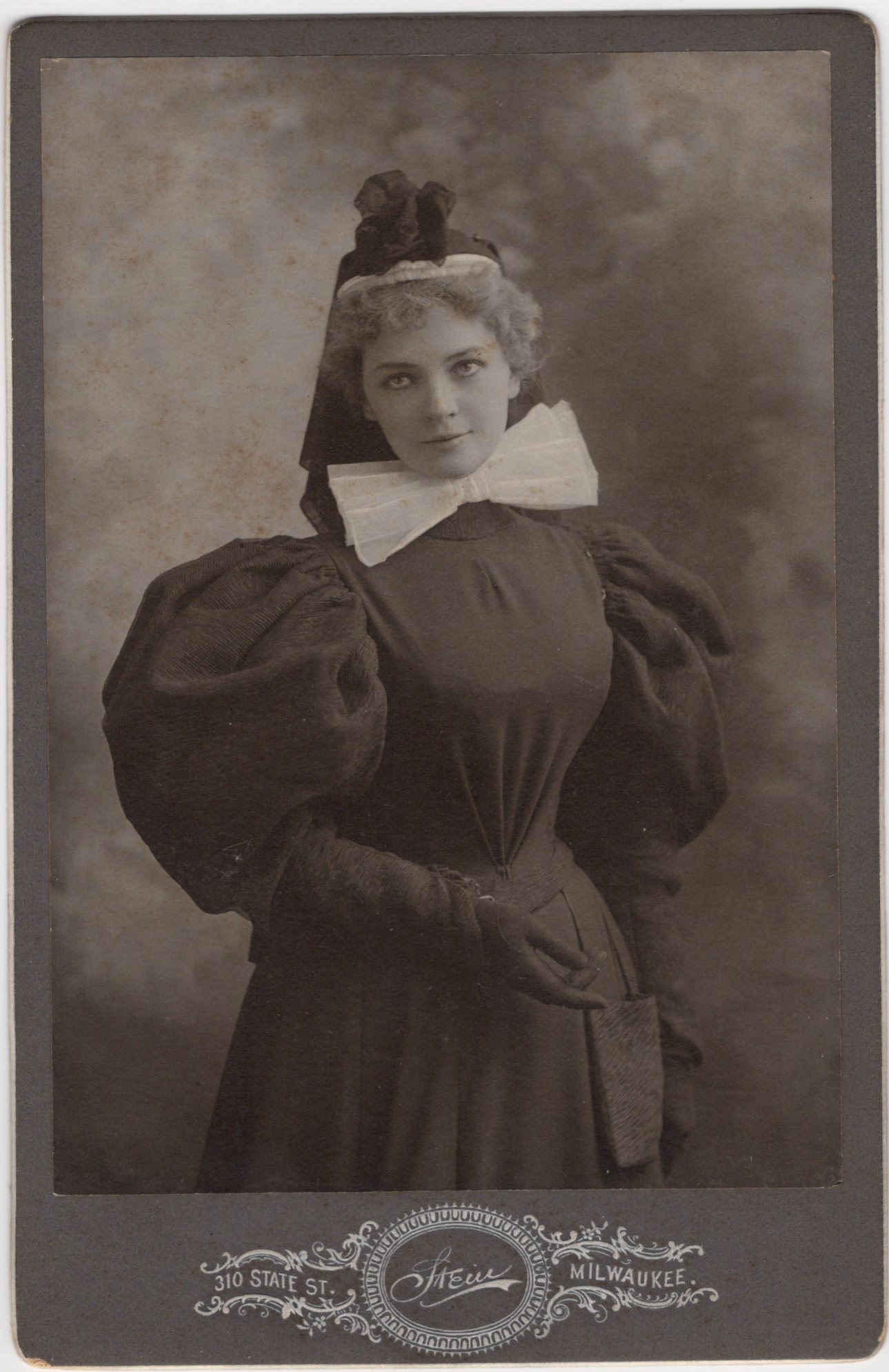
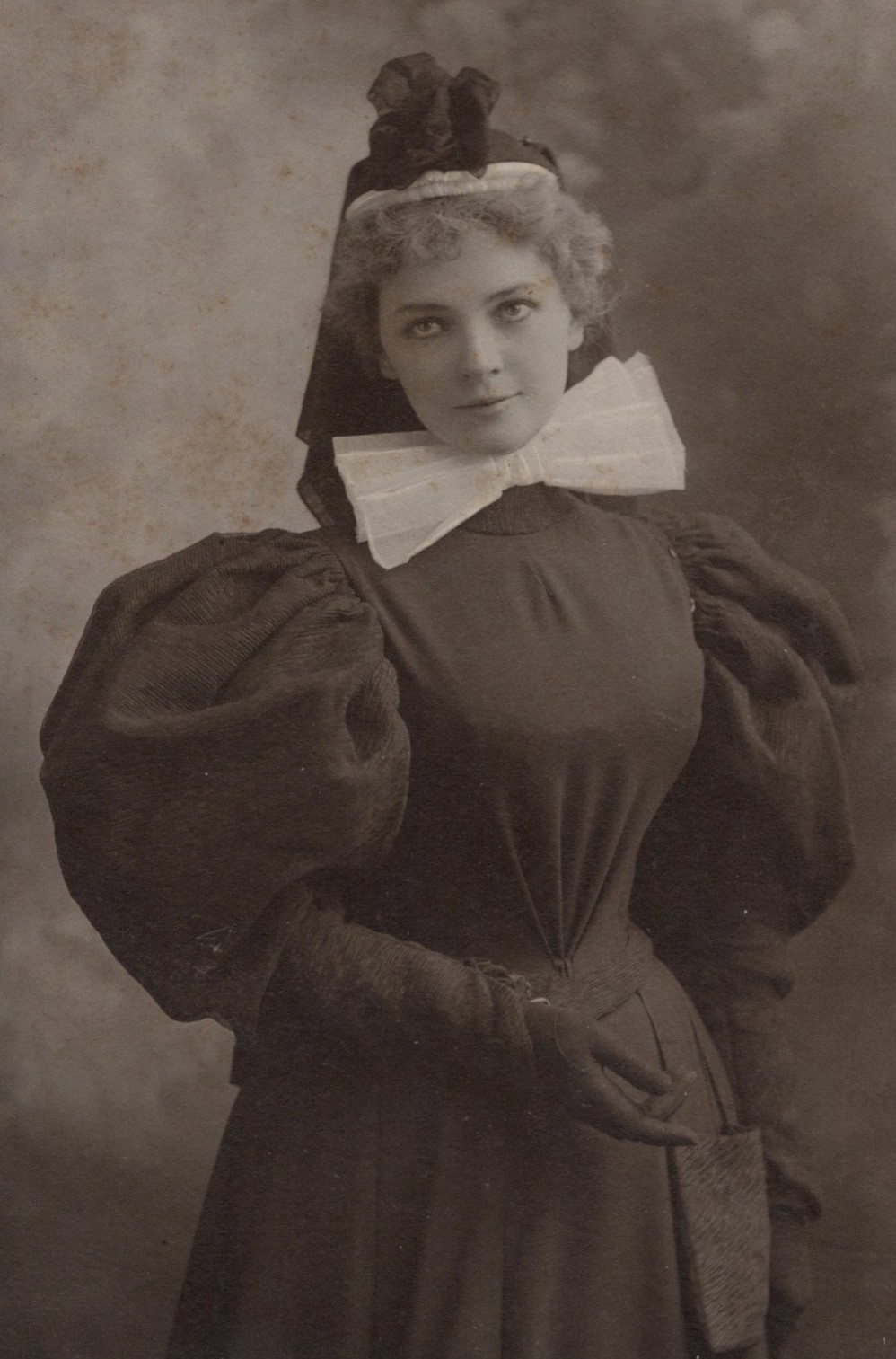
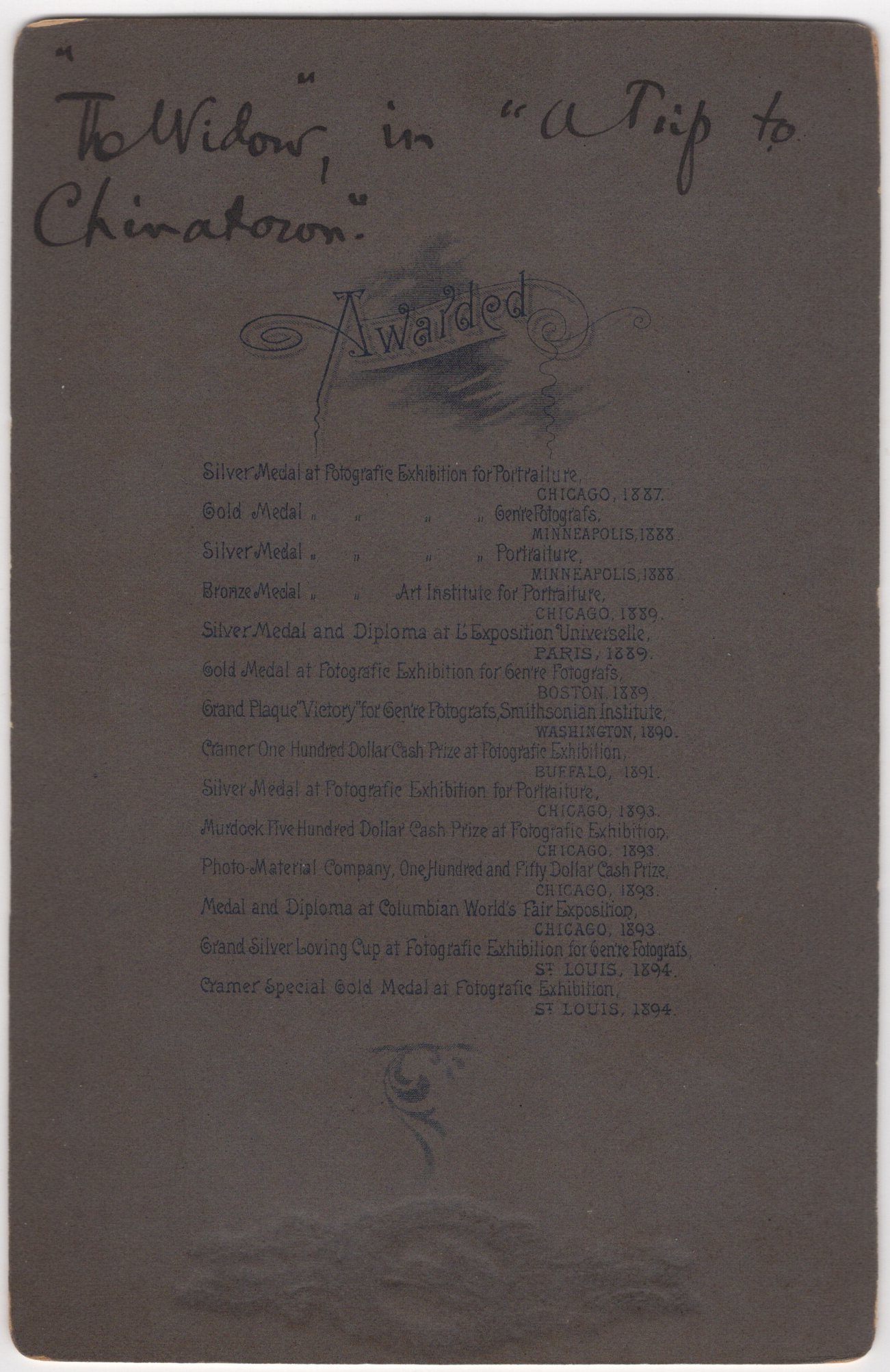
This is a wonderful 1890s theatrical cabinet card photograph by the Stein Studio of Milwaukee, Wisconsin. The photo shows a costumed actress identified on the reverse as “The Widow.” This refers to the role of Mrs. Guyer, the fashionable widow character from Charles H. Hoyt’s smash-hit musical farce A Trip to Chinatown, one of the great Broadway successes of the Gilded Age. A Trip to Chinatown opened in New York in 1891 and became the biggest theatrical hit of its era, running for a record-breaking 657 performances. Its success led to multiple touring companies traveling throughout the United States, including major Midwestern theater cities such as Milwaukee. The character identified here as “The Widow” was one of the central figures in the play. Her full character name was Mrs. Guyer, a wealthy, stylish, independent widow from Chicago whose presence helps drive the comic plot. The role was originally created by Anna Boyd, a noted Gilded Age stage actress and comedian. While this photograph is not conclusively identified as Boyd, the connection is very intriguing: Boyd was the actress most closely associated with the role, and she is known to have performed with touring companies of the play during its period of national popularity. In comparing the appearance of the actress in this photo to confirmed photographs of Anna Boyd, I am unable to confirm or deny that it is Miss Boyd in this image. The photographer, Simon Leonard Stein, further supports the theatrical connection. Stein Studio was a prominent Milwaukee photographic studio, and visiting actors, singers, and performers often sat for local studio portraits while appearing at major theaters such as the Davidson Theatre or Grand Opera House. Stein operated from the address on the mount from 1880 through 1895. This cabinet card likely dates from the period when A Trip to Chinatown was touring nationally, approximately circa 1892–1895. SOLD
 | bmarshphd on MEET THE HERSHEY FAMILY OF LAN… |
 | Brigitte on MEET THE HERSHEY FAMILY OF LAN… |
 | usermattw on TWO MEN ON BICYCLES : FEMALE P… |
| bmarshphd on Young Egyptian Woman : Veil :… |
 | summertime75 on Young Egyptian Woman : Veil :… |

