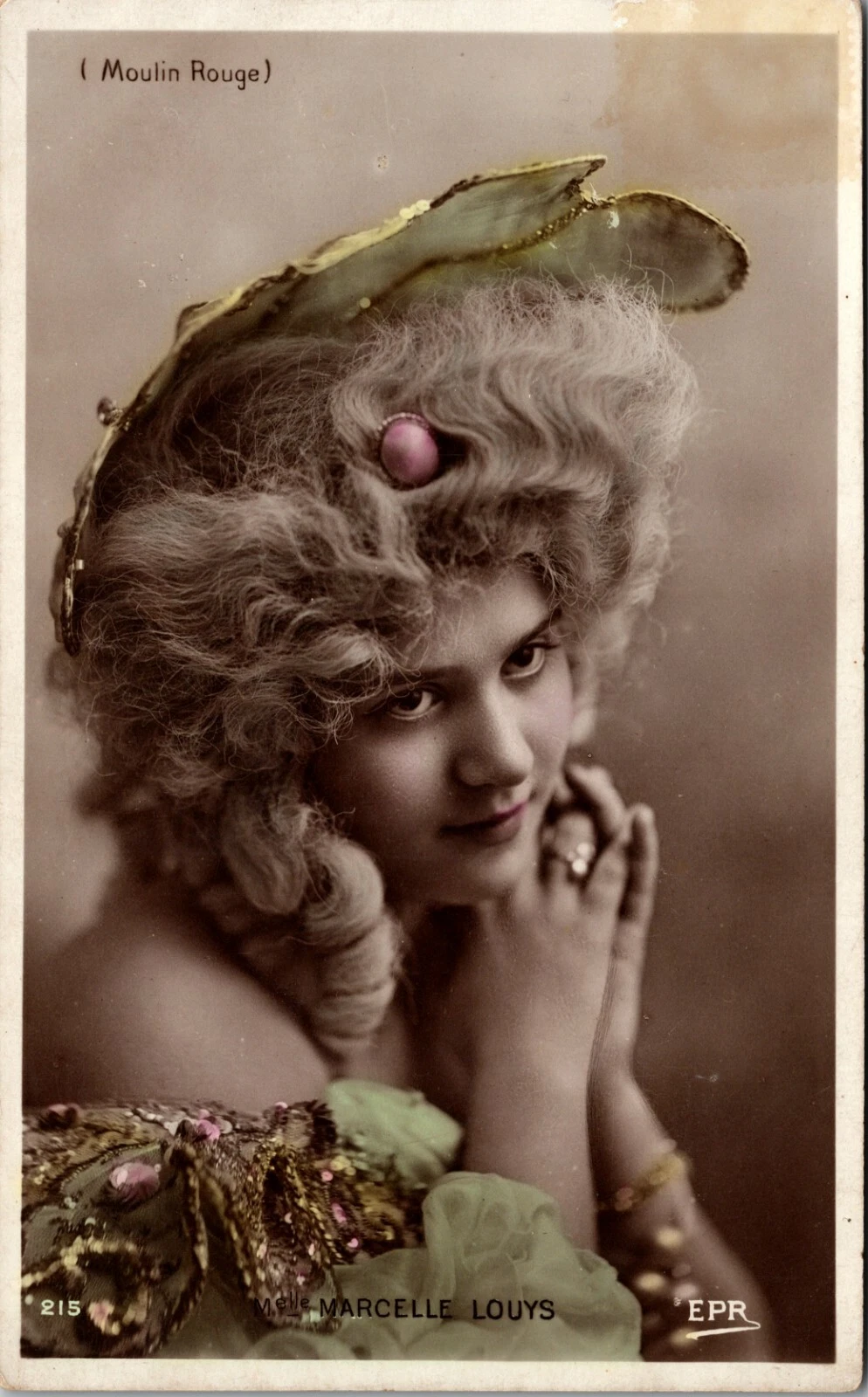
This vintage real photo postcard features Marcelle Louys, a pretty stage performer at the Moulin Rouge. The venue is located in Paris, France. The cabaret opened in 1889 and is best known as the birth place of the can-can dance. The Moulin Rouge remains in business and is a popular tourist destination. This postcard was published by EPR as part of a series (no.215). Note the top right hand corner of this image. It is evident that a postage stamp formerly resided there. A postmark on this card shows that it was mailed in France in 1910. SOLD
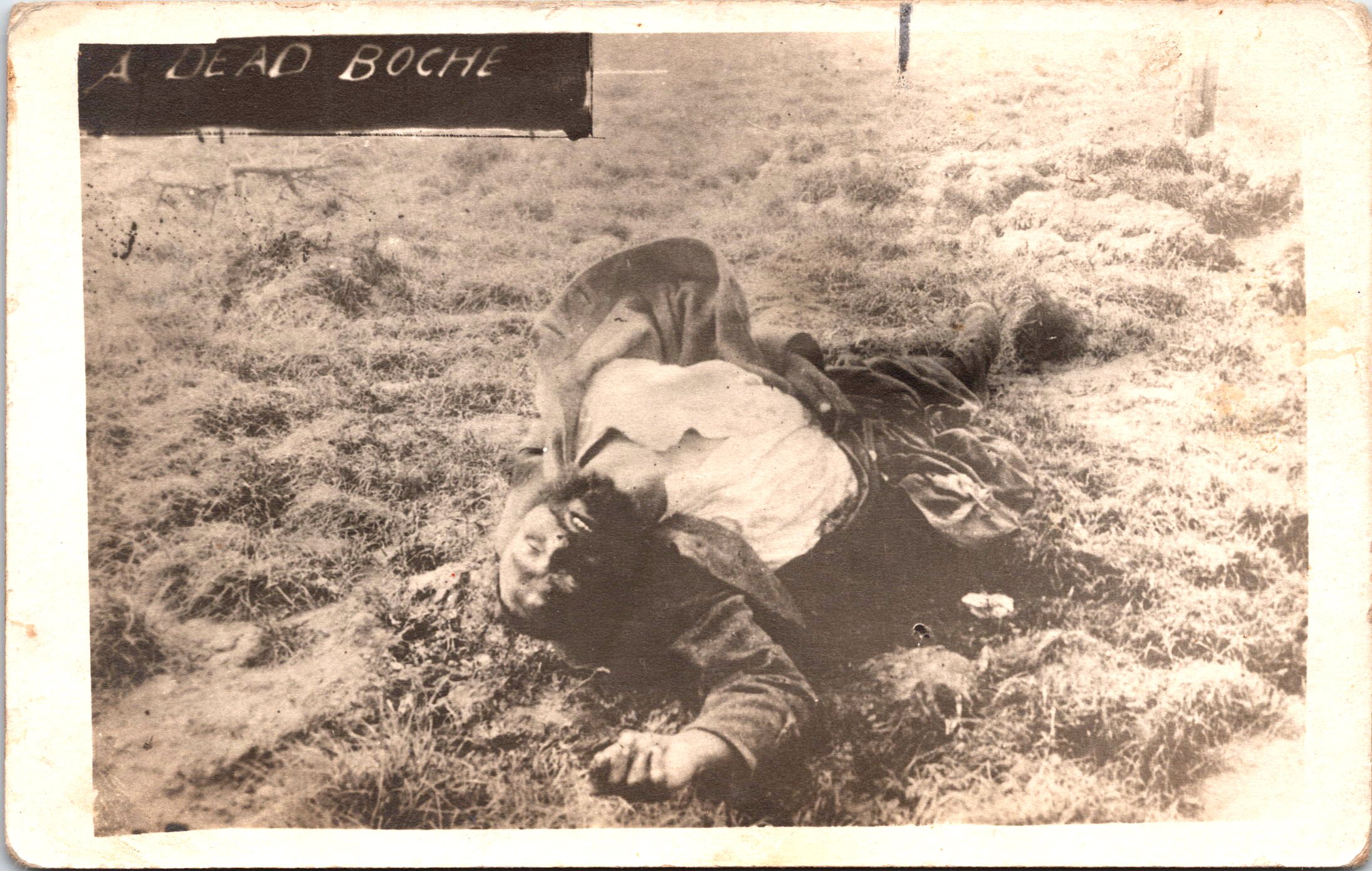
This original World War I real photo postcard (RPPC) captures a stark and graphic battlefield image titled “A Dead Boche.” The handwritten caption appears along the upper left of the card and uses the wartime slang “Boche,” a derogatory term widely used by French and Allied forces to refer to German soldiers during WWI. The photograph shows a fallen soldier lying in a grassy field, his body positioned on his back with his clothing disheveled from combat. The scene reflects the harsh realities of trench-era warfare and the type of propaganda imagery circulated among troops and civilians during the conflict. The postcard is printed in sepia tones typical of early 20th-century field photography. The image shows significant detail despite its age, including the soldier’s uniform, the surrounding rough terrain, and the rawness of the scene. This type of postcard was often produced privately or semi-officially by soldiers, correspondents, or small printers near the front lines. It is representative of the grim imagery that circulated during the Great War to convey the brutality of combat. The reverse side features a divided-back layout with no writing, stamp, or postal cancellation. The format suggests European production during the 1910s wartime period. SOLD
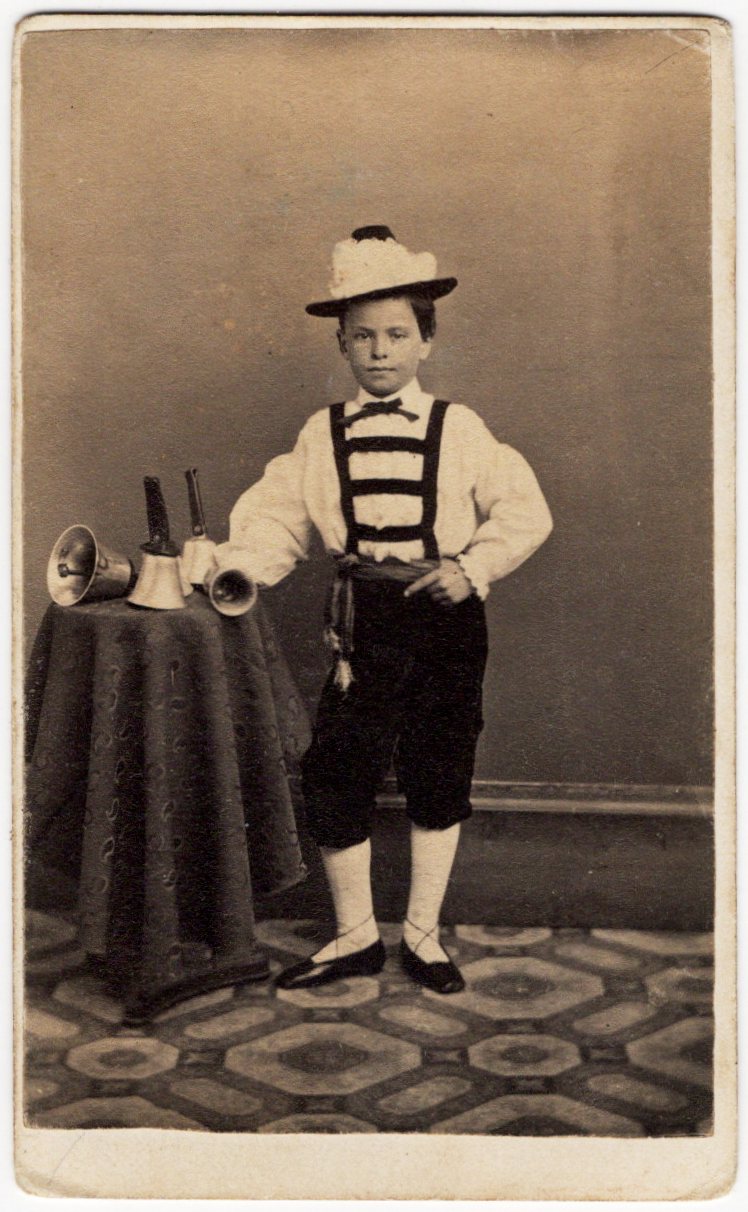
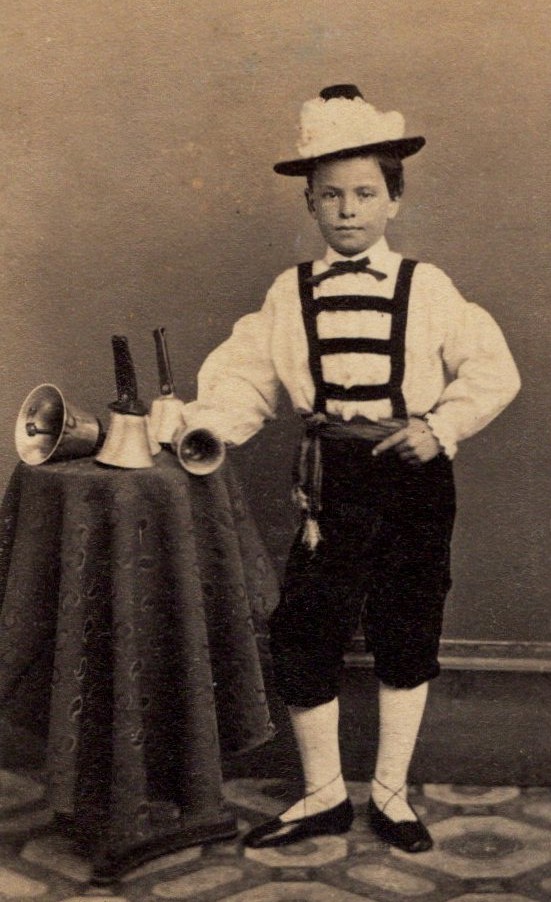
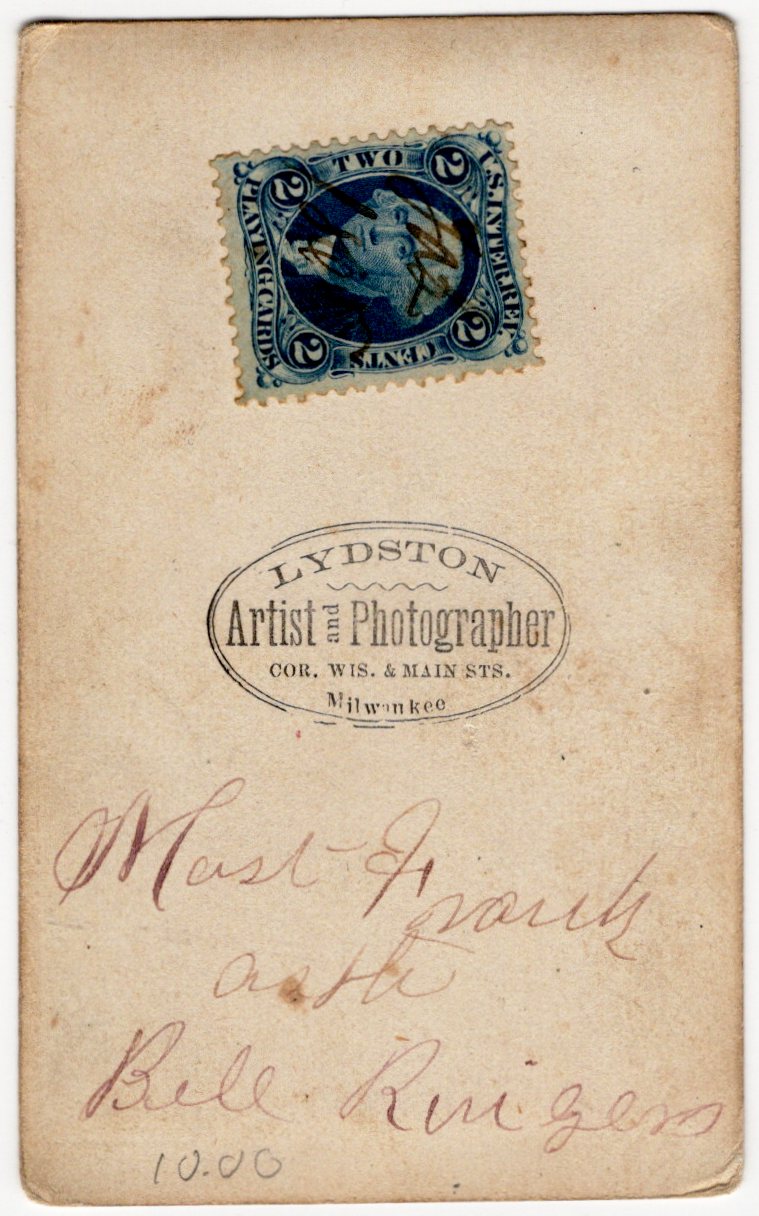
This striking carte de visite (CDV) from the Civil War era features a young boy dressed in what appears to be a theatrical or performance costume. He stands confidently beside a small round table covered with a patterned cloth. On the table rest three handbells—two upright and one resting on its side—suggesting that this boy may have been a musical performer, possibly part of a bell-ringing act or children’s concert troupe. The boy’s outfit is wonderfully detailed: he wears short dark trousers with knee-length stockings, a fitted white shirt trimmed with contrasting bands, a waist sash with tasseled fringe, and a broad-brimmed hat adorned with a ribbon and decorative element. His expression is serious—perhaps the proud composure of a child posing formally in costume for a professional portrait. The patterned studio flooring and plain backdrop are typical of 1860s studio photography, and the composition—carefully arranged with props—shows the artistry of a practiced photographer. On the back of the photo is the stamp and imprint of Lydston, Artist and Photographer, located at the corner of Wisconsin and Main Streets, Milwaukee, Wisconsin. This identifies the image as the work of E. H. Lydston, a known mid-19th century photographer active in Milwaukee during the 1860s. Lydston’s name appears in local directories between about 1863 and 1868, placing this CDV squarely in the Civil War tax-stamp period. An inscription written in period ink reads “Master Frank as the Bell Ringer.” The handwriting is somewhat ambiguous, but this likely identifies the sitter as Frank, photographed in costume for a performance or masquerade, perhaps portraying a “bell ringer.” Affixed to the back is a blue 2-cent U.S. Internal Revenue “Playing Cards” stamp, canceled by pen. The full printed title on the stamp reads “U.S. Inter. Rev. / Playing Cards / Two Cents.” From 1864 to 1866, the U.S. government required photographers to place revenue stamps on photographic materials (such as ambrotypes, tintypes, and cartes de visite) to help fund the Civil War. The amount of tax depended on the sale price of the photograph—two cents for photographs sold between 25 and 50 cents, which fits this example perfectly. The use of a Playing Cards stamp (rather than one specifically marked “Photograph”) was common when other types were in short supply. This type of stamp is collectible in its own right among philatelists and Civil War-era photo collectors.This cdv photograph dates back to circa 1865–1866, during the Civil War revenue tax period. (SOLD)
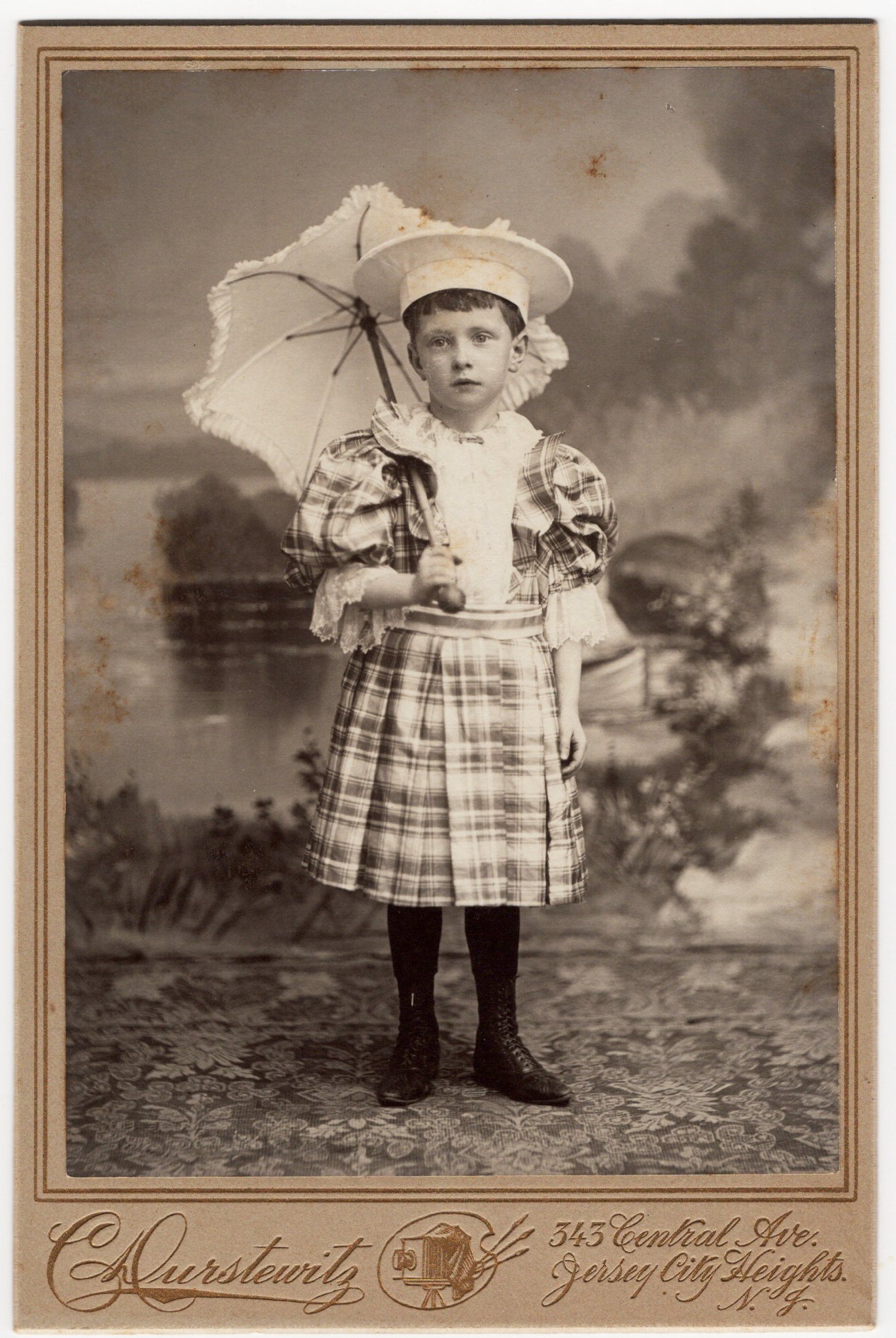
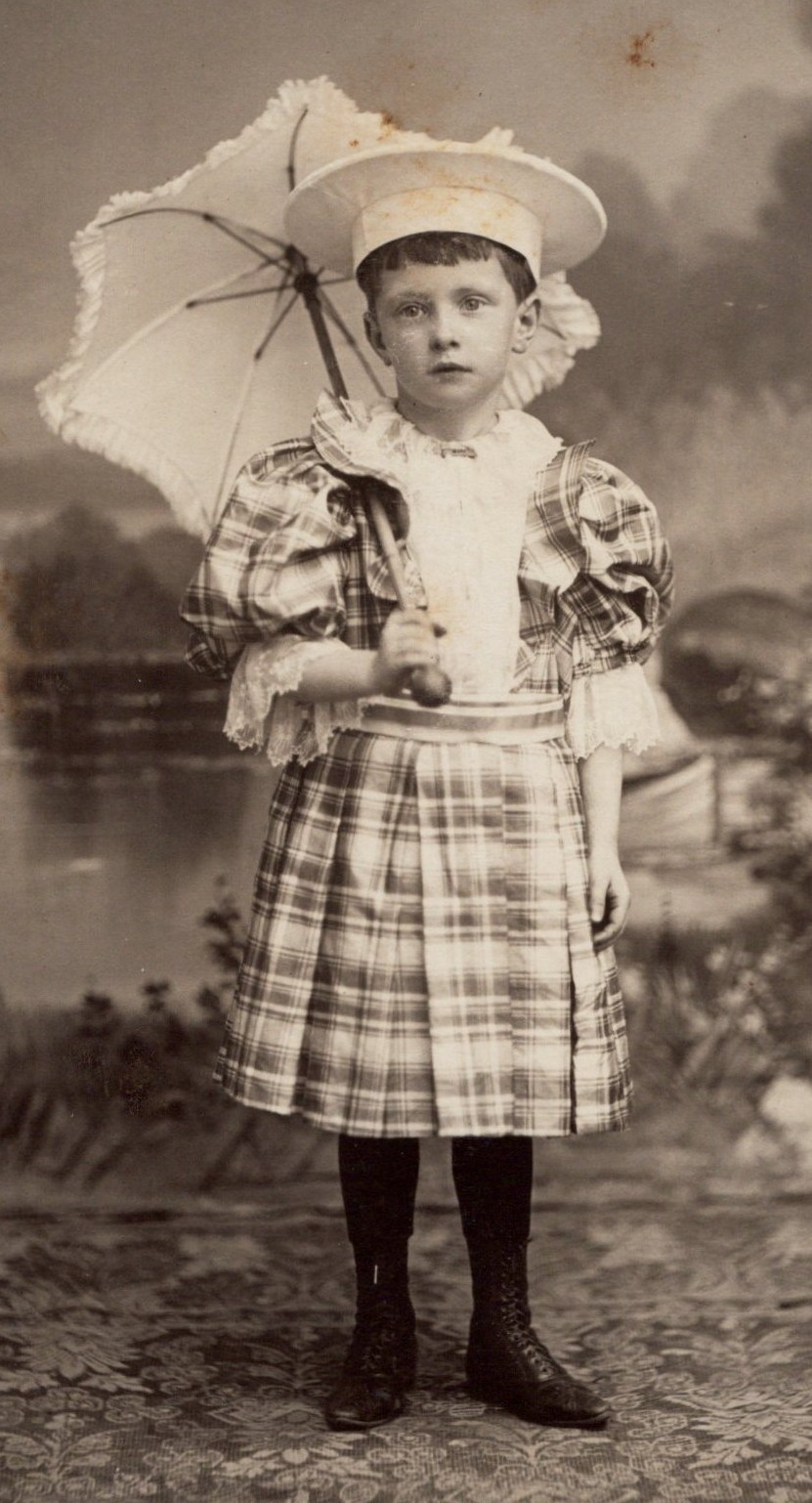
This original late 19th-century cabinet card photograph features a young child posed in an outdoor-themed studio backdrop. The child is dressed in an elaborate plaid dress with puffed sleeves, lace-trimmed cuffs, and a ruffled collar. Completing the outfit is a wide-brimmed white hat and high-button black boots. Most strikingly, the child holds an elegant parasol, a classic accessory in Victorian portraiture that adds both delicacy and charm to the composition. The child gazes directly into the camera with a solemn, slightly wistful expression—a hallmark of the era when long exposure times required subjects to remain still and unsmiling. The studio carpet and painted backdrop suggest an idealized park or lakeside setting, adding atmosphere to the portrait. The card mount bears the imprint of C. Durstewitz, 343 Central Ave., Jersey City Heights, N.J. The reverse is blank, which is consistent with cabinet cards produced in the late 1880s to early 1890s, when plainer card backs became fashionable. Although the child wears a dress and holds a parasol—signs we might instinctively associate with a girl—this is not certain. In the Victorian era, young boys were commonly dressed in skirts and dresses until “breeching” (usually around ages 4–7). The straight-across haircut and hat lean slightly toward boyhood styling, though it is difficult to be conclusive. The photographer, Christian Durstowitz, owned photo studios in both Hoboken (1886-1906) and Jersey City Heights (1894-1915). Both locations were in New Jersey.(SOLD)
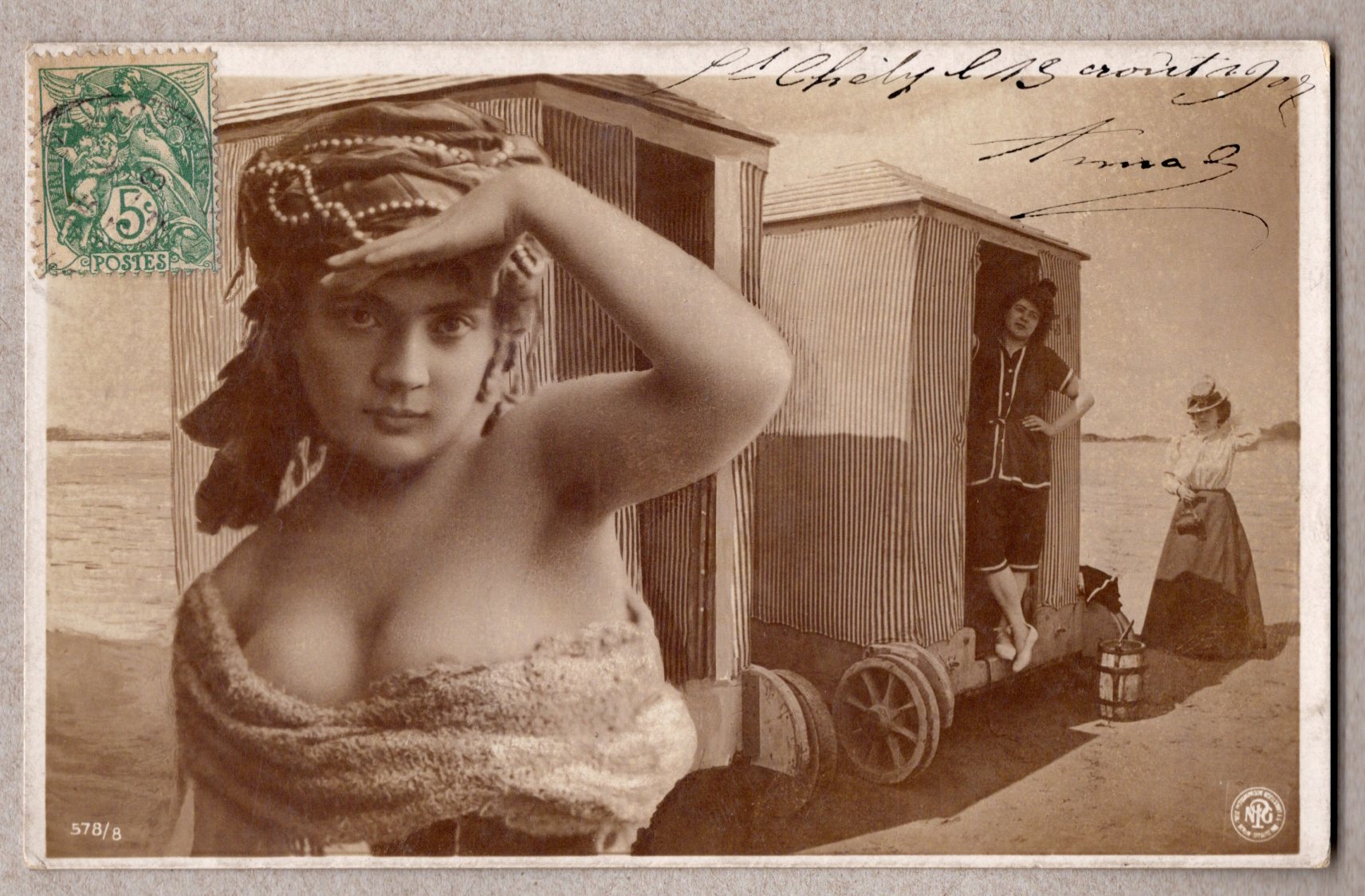
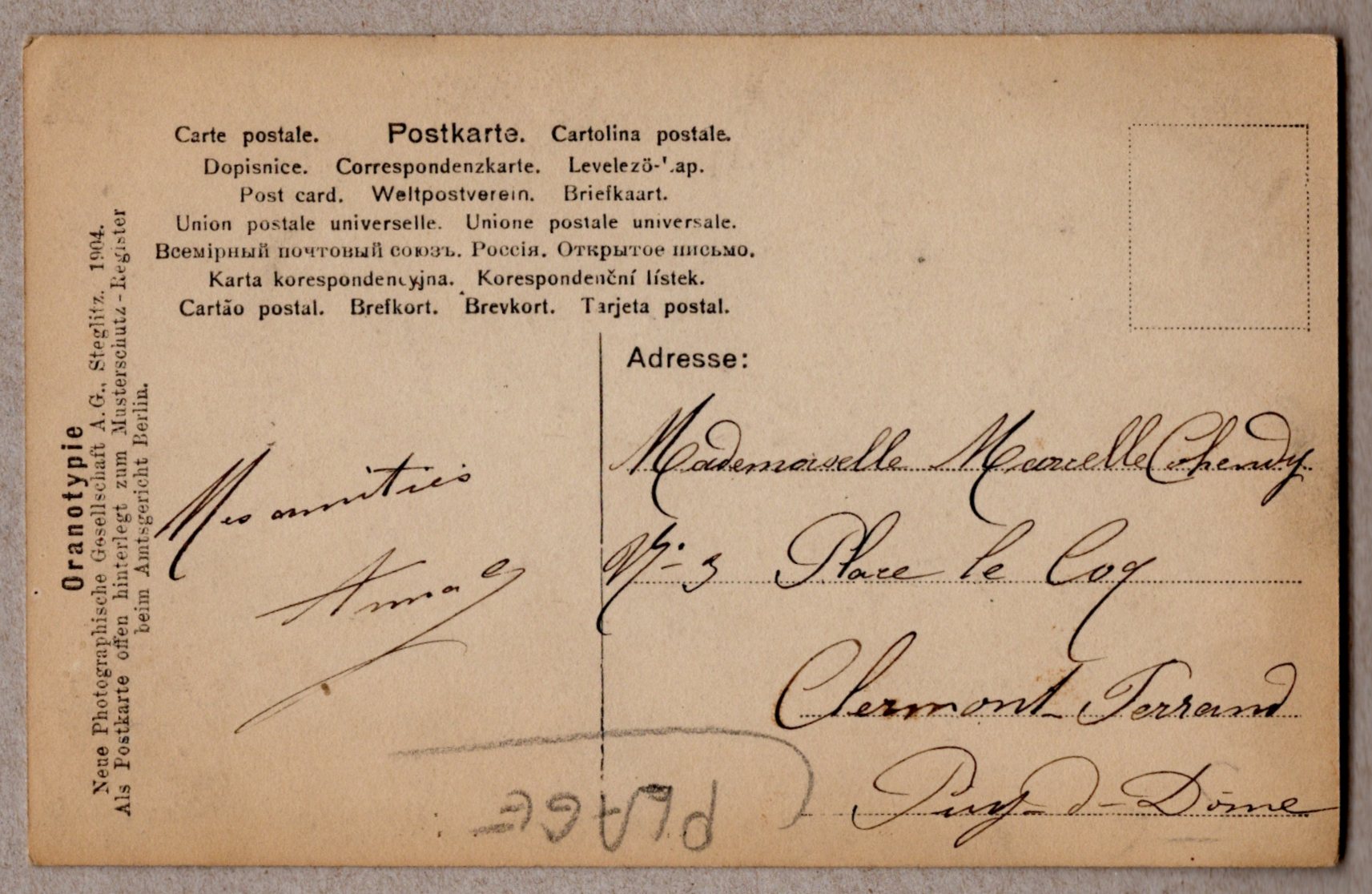
This striking early-20th-century photographic postcard shows a glamorous young woman at the seaside with two wheeled bathing machines or beach dressing cabins behind her, including another woman standing in a dark bathing costume. It was produced by the German firm Neue Photographische Gesellschaft A.G. (NPG) of Steglitz and is marked “Oranotypie” and dated 1904, with series number 578/8. Oranotypie was NPG’s photographic postcard process. The front retains an original green French 5-centime Type Blanc stamp, and the card was addressed to Clermont-Ferrand, Puy-de-Dôme, France. SOLD
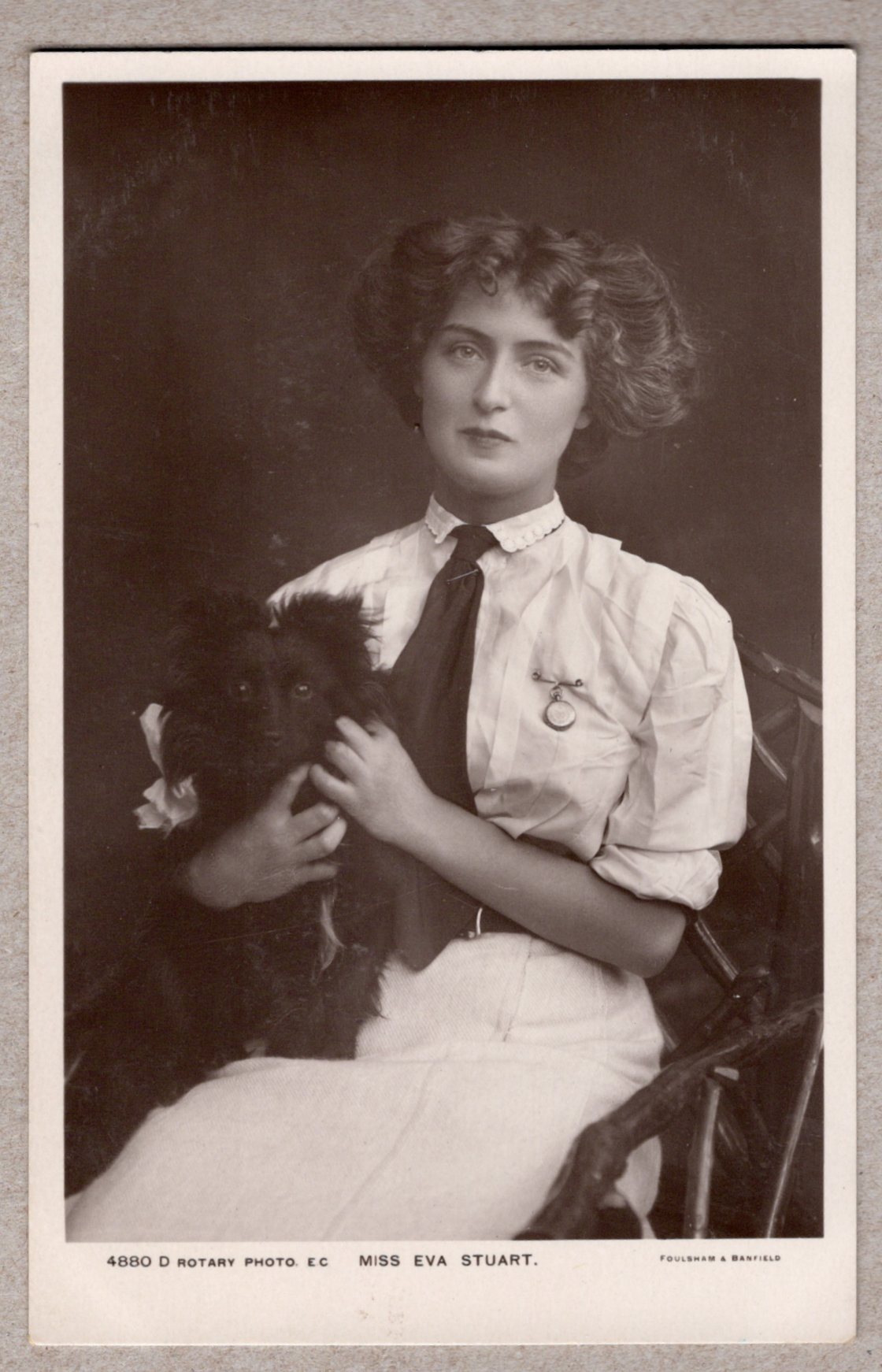
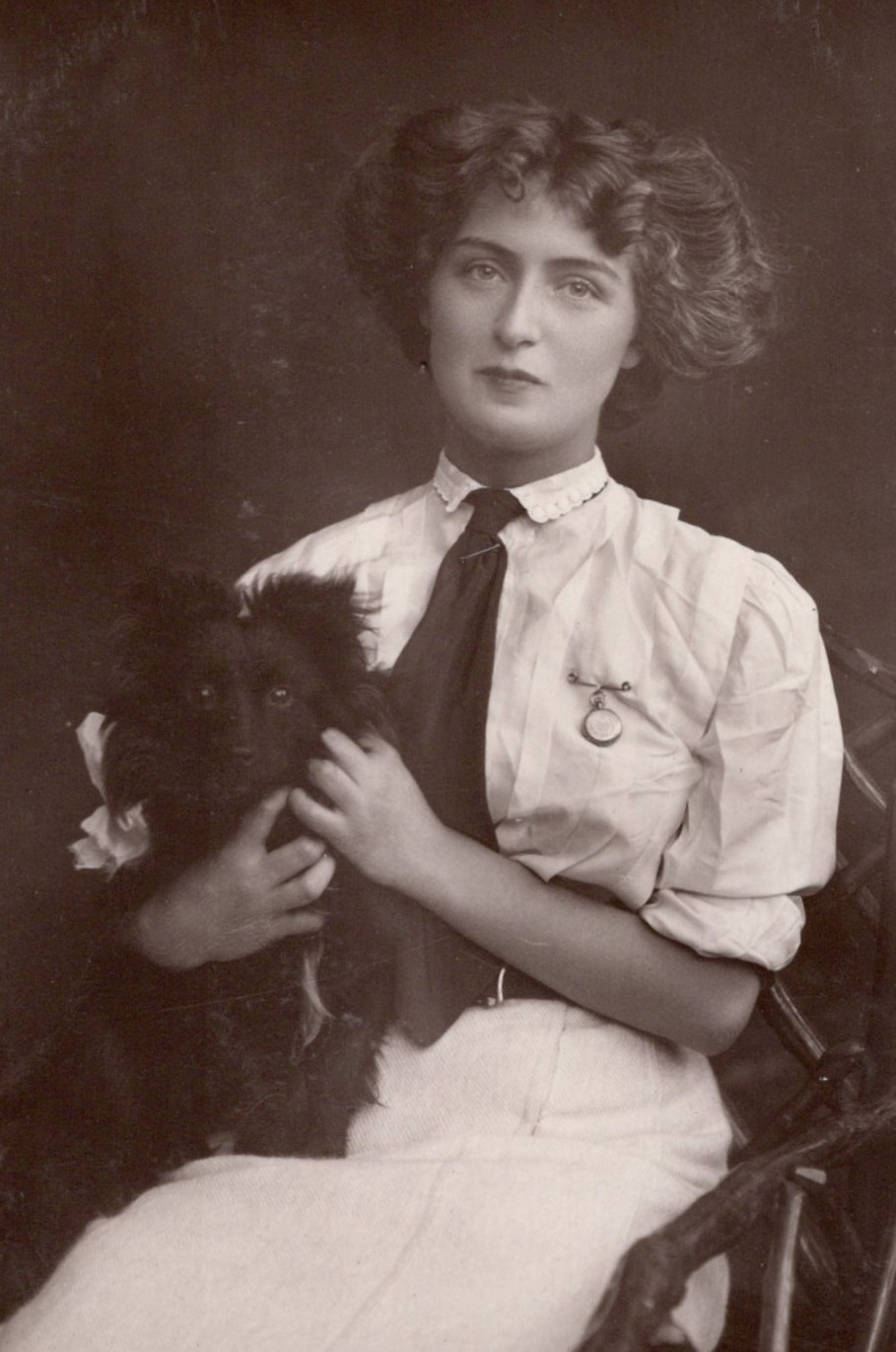
This charming Edwardian real-photo postcard features Miss Eva Stuart, an actress and stage performer, posed holding a small black Spitz-type dog, very likely a Pomeranian. Stuart is elegantly dressed in a crisp white blouse with a high decorative collar and dark necktie, while the little dog—with its pointed ears, dark coat and prominent ruff is quite cute. The photograph was made by the celebrated London studio Foulsham & Banfield. Frank Foulsham and Arthur Clive Banfield operated one of London’s important theatrical portrait studios during the early decades of the 20th century, specializing in photographs of actresses, actors and other West End personalities. Their portraits are represented today in the collection of Britain’s National Portrait Gallery. This card was published by Rotary Photo(no.4880 D) as part of the Rotary Photographic Series. Interestingly, surviving Rotary catalog material records several different portraits of Eva Stuart under the same 4880 series, confirming that she was one of the theatrical personalities specifically marketed by Rotary to postcard collectors. Contemporary theatrical records also place a Miss Eva Stuart at London’s New Theatre in 1910, which fits very well with the style and probable date of this photograph. In addition, an actress of the same name later appeared in three Broadway productions between 1914 and 1915, although I can not confirm with certainty that the Broadway performer and this sitter were the same woman. SOLD
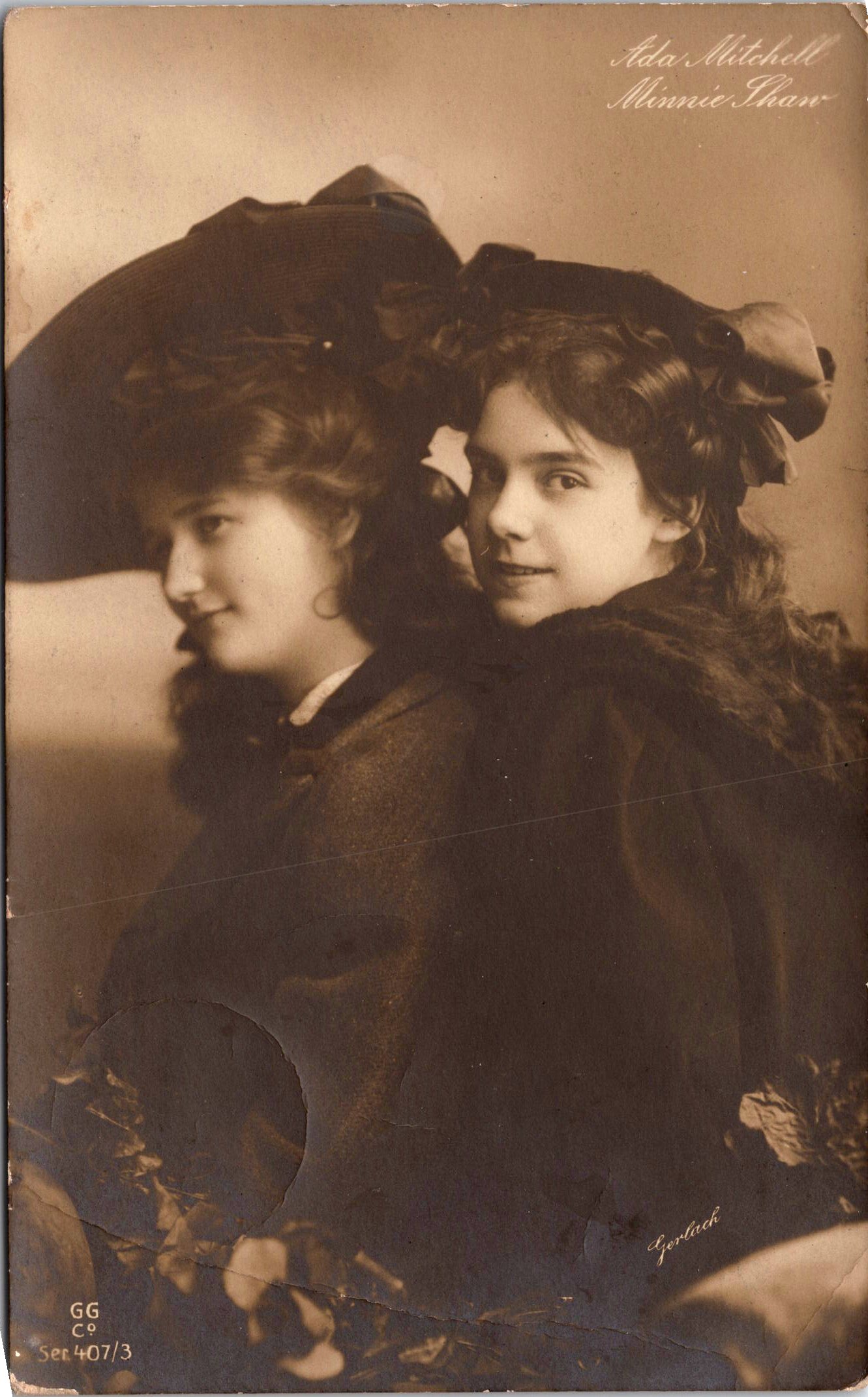
This lovely vintage real photo postcard features dancers Ada Mitchell and Minnie Shaw. Both women were members of the very popular Tiller Girl woman’s dance troupe. The group began in London in the 1890’s and kept growing until there were dozens of Tiller Girl troupes spread around the world. Variety Magazine described the Tiller Troupe of Girls as very American, even though they were English; and that they were “good to look upon, well dressed and a good show”. This postcard was published by Georg Gerlach & Co. as part of a series (407/3). The firm was a real photo card publisher and printer based in Berlin, Germany. SOLD
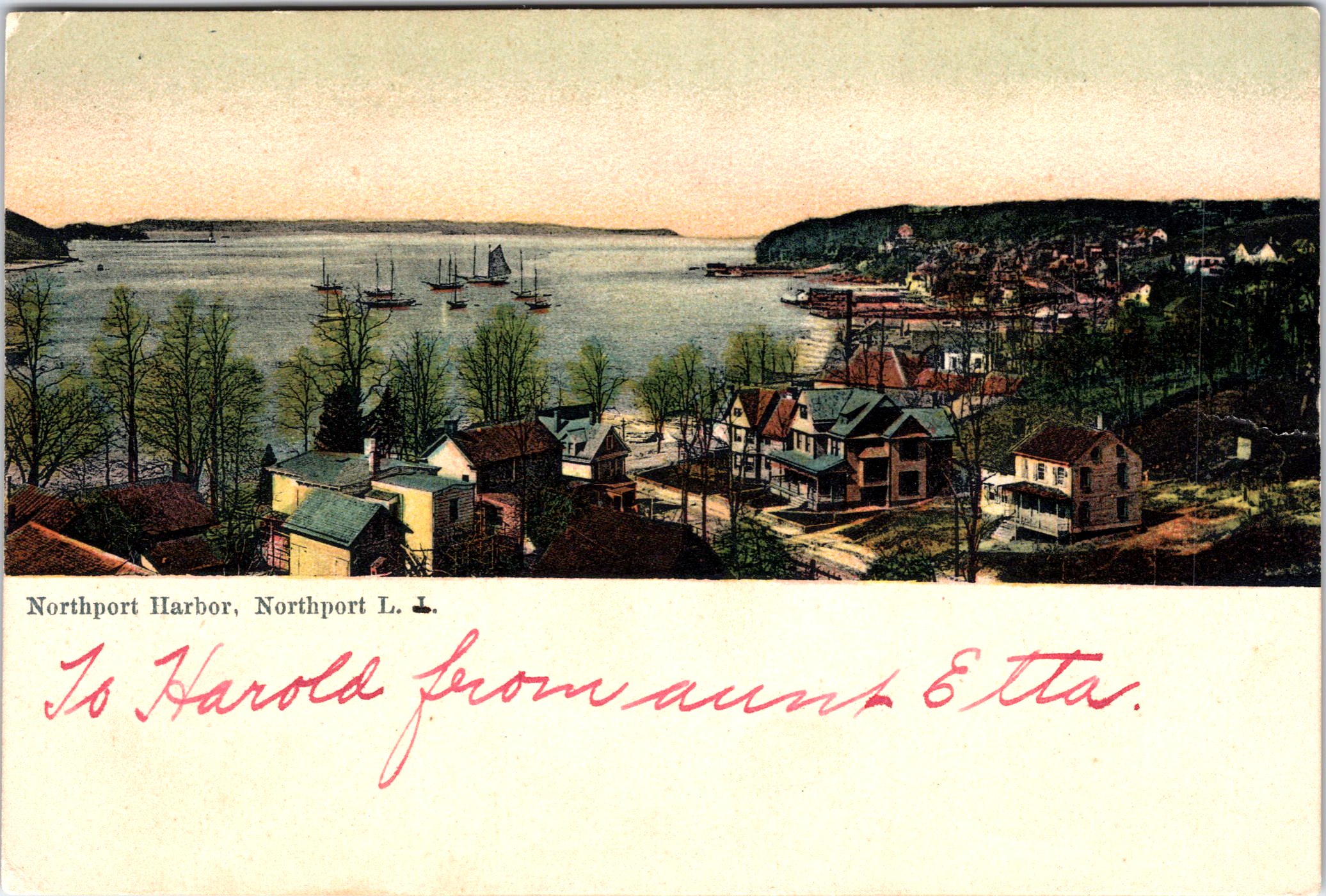
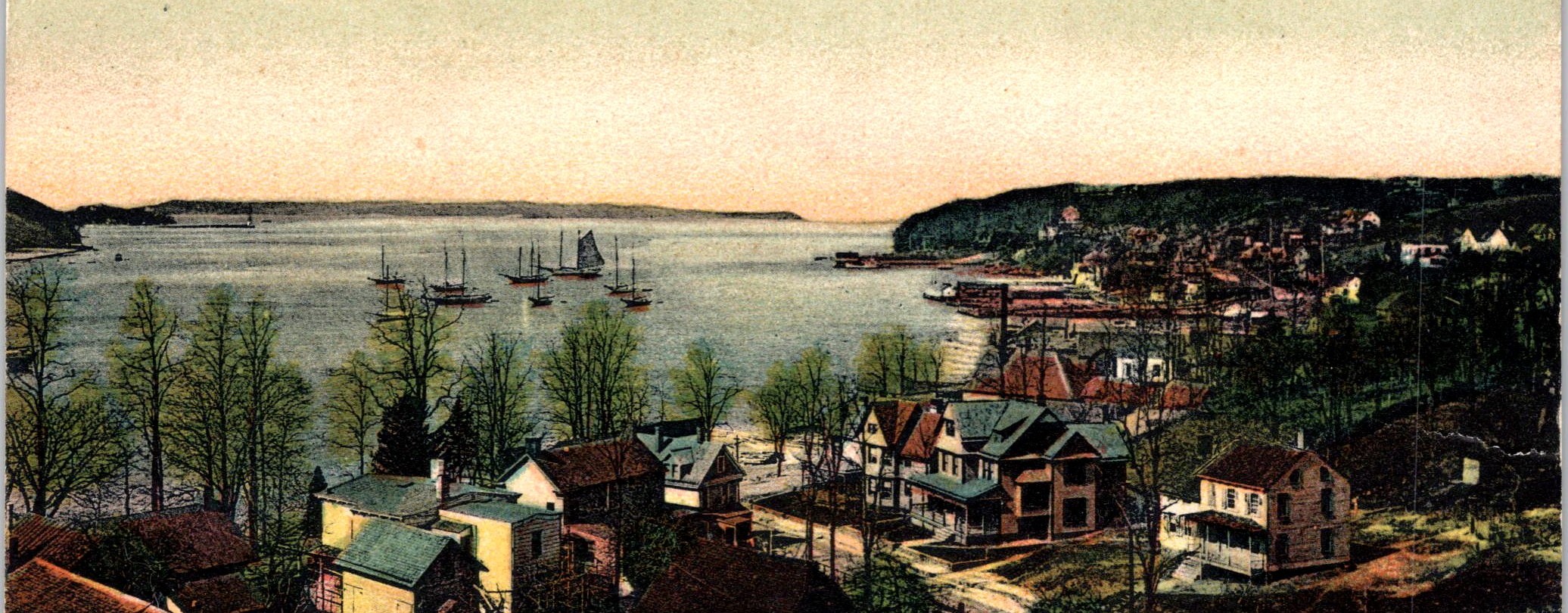
This attractive undivided back vintage postcard presents a sweeping bird’s-eye view of Northport Harbor, a historic waterfront village located on the North Shore of Long Island in Suffolk County, overlooking the Long Island Sound. The scene captures Northport at a time when it was still closely tied to its maritime roots—quiet, picturesque, and deeply shaped by the sea. Northport was originally a whaling and ship-building community, and many of the homes visible in this view reflect that 19th-century prosperity. Several of these houses were built by ship captains and merchants during the 1800s, and remarkably, many still stand today, lending the village its distinctive historic character. The postcard beautifully conveys this legacy: tree-lined streets descending toward the harbor, substantial frame houses, and a working waterfront dotted with sailing vessels and anchored boats. The harbor itself is shown alive with maritime activity, while the gently rolling shoreline and calm waters emphasize why Northport became such a desirable and enduring North Shore village. The soft coloration and elevated perspective give the image a painterly quality that enhances its nostalgic appeal. This postcard was published by C. E. Wheelock & Company of Peoria, Illinois, a prolific American postcard publisher active during the undivided-back era. This postcard was published sometime between circa 1901–1907, prior to the introduction of divided backs in the United States. SOLD
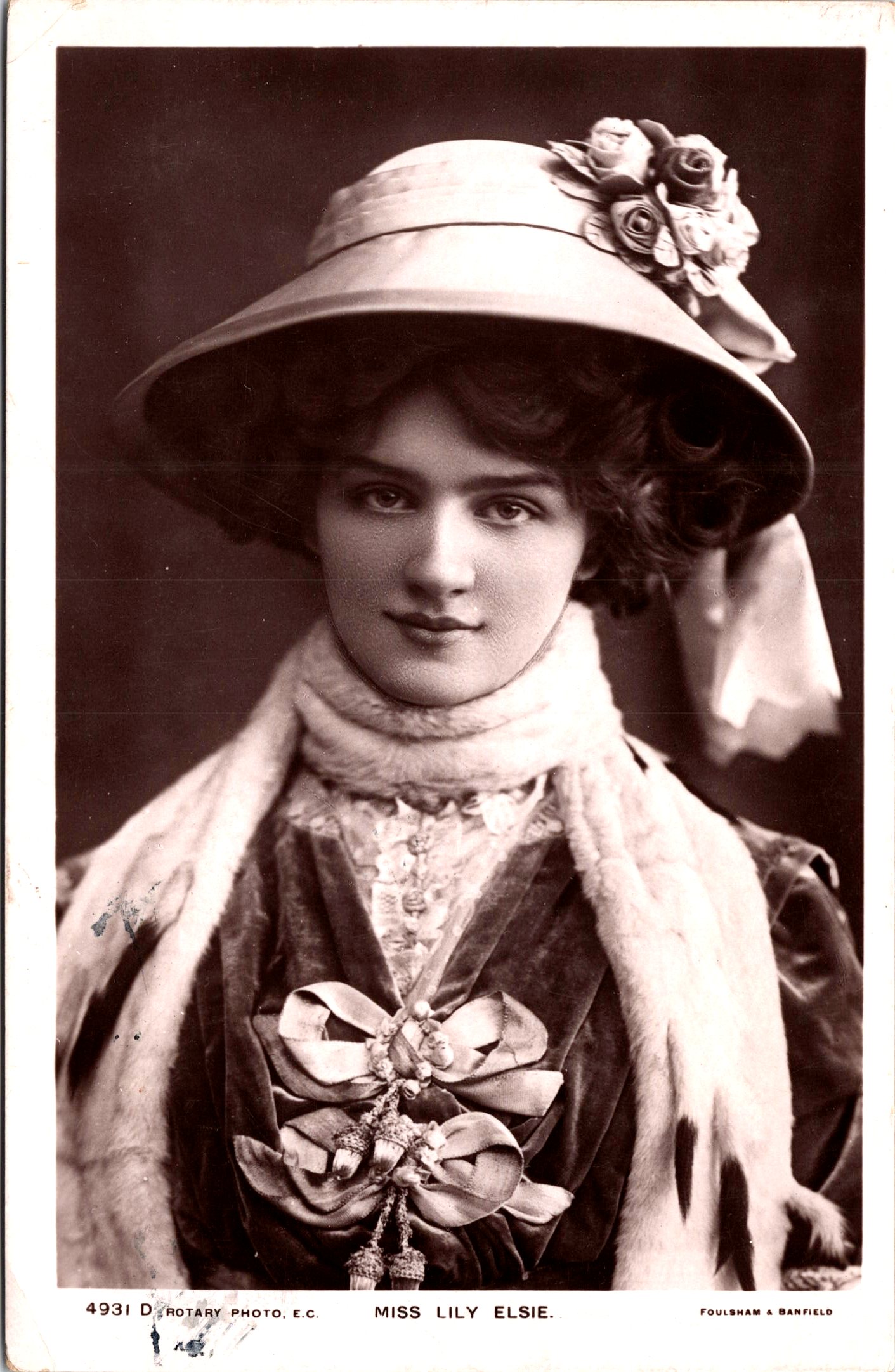
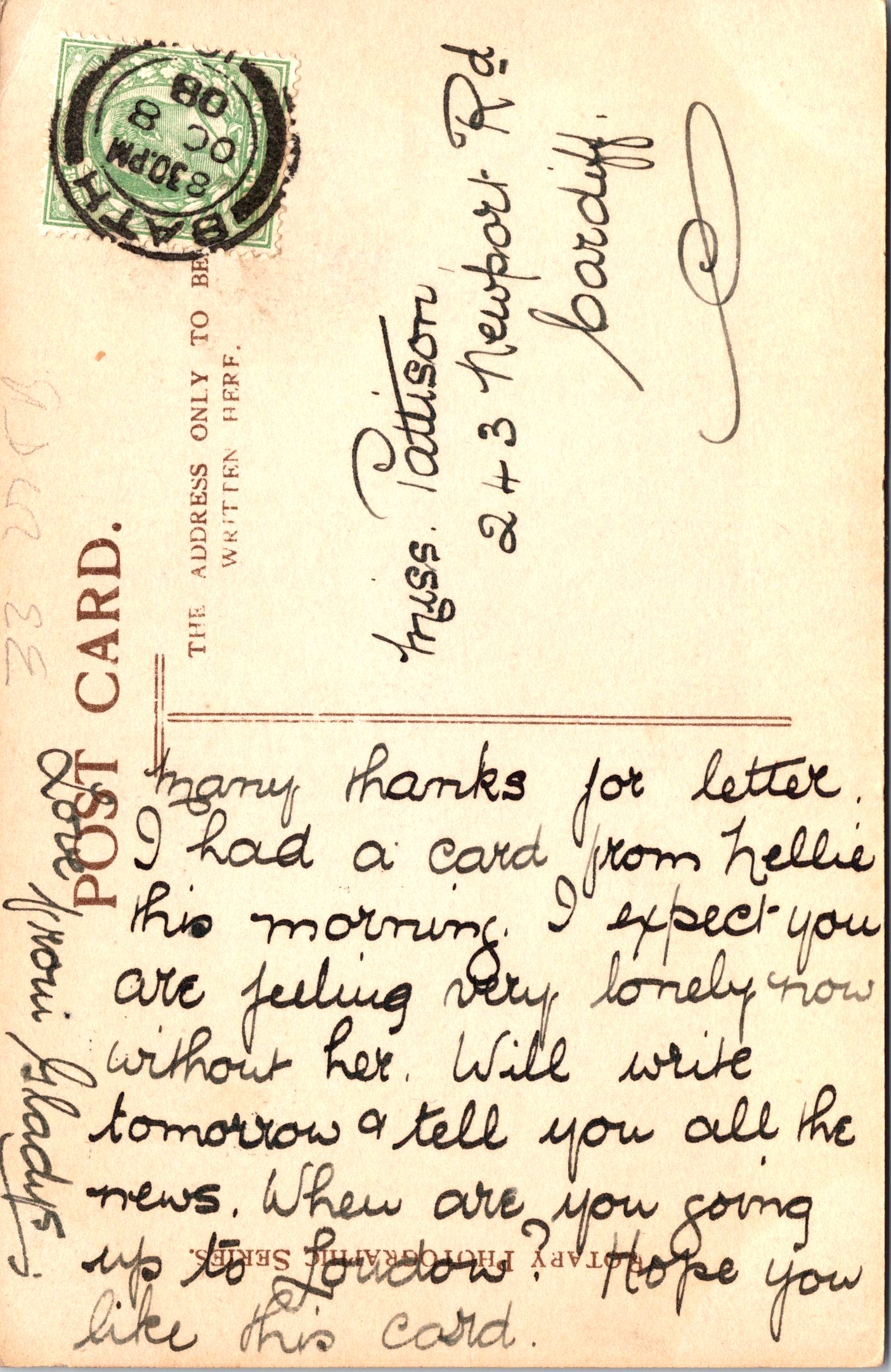
This uncommon vintage real photo postcard features celebrated English stage actress and singer, Miss Lily Elsie (1886-1962). The following is a review of Elsie’s performance in the “Merry Widow”. A critic for The Pelican (1907) wrote that “the youthfulness, the dainty charm and grace, the prettiness and the exquisite dancing with which Miss Elsie invests the part…. I share the opinion of most of the first-nighters, who considered it could not have been in better hands, and could not have been better handled…. The night was a genuine triumph for Miss Elsie, and she well deserved all the calls she received”. Elsie began her career as a child actress and before her big break had appeared in a number of Edwardian musical comedies. She was charming and beautiful and became one of the most photographed actresses of her time. Lily Elsie’s dad was a theater worker and her aunt was well known actress Ada Reeve. Shortly after the turn of the century she joined George Edwardes’ company at the Daly Theater. Some of her early appearances included “A Chinese Honeymoon”, “Lady Madcap”, “The Little Michus (1905)”. In the years between 1900 and 1906 she appeared in 14 shows. After the “Merry Widow” she appeared in 26 more shows including “The Dollar Princess” (1909) and “A Waltz Dream” (1911). She clearly was an actress who was in demand. Men paid her much attention but apparently she did not enjoy the attention. Lucile, her costume designer for “The Merry Widow” stated that Elsie was “absolutely indifferent to men and had once said that she disliked “the male character”. She added that men would only behave well if a woman “treated them coldly”. Now, some words about her marriage. In 1911 she he left the cast of a play in which she was performing to marry Major John Ian Bullough (1885–1936). Major Bullough was the son of a wealthy textile manufacturer. He was formerly married to actress Maude Darrell who only survived one year after their 1909 marriage. The marriage between Elsie and Bullough was reported to be very unhappy. Elsie’s health began to deteriorate and her husband pressured her to quit the stage and she was ready to do so. She returned to the stage during the war years (World War I) and was active in fund raising for the war effort. She next took a ten year break from the stage only to return once again. Her final performance took place in the Daly Theater in the play “The Truth Game” (1929). In addition to her theater career, Elsie made recordings, and appeared in two films, including D. W. Griffith’s “The Great Love” (1918). Also appearing in that film was Lillian Gish. In 1930 Elsie’s marriage ended in divorce. Her health began to deteriorate more and she developed hypochondriasis causing her to spend much time in nursing homes and sanitariums. Due to her psychological problems she had brain surgery. Her final years were spent at St. Andrews hospital in London. This postcard was published by Rotary Photo and is part of a series (no.4931D). The photographers of this image of this beautiful actress are the well known studio of Foulsham & Banfield. The card was postmarked in 1908.
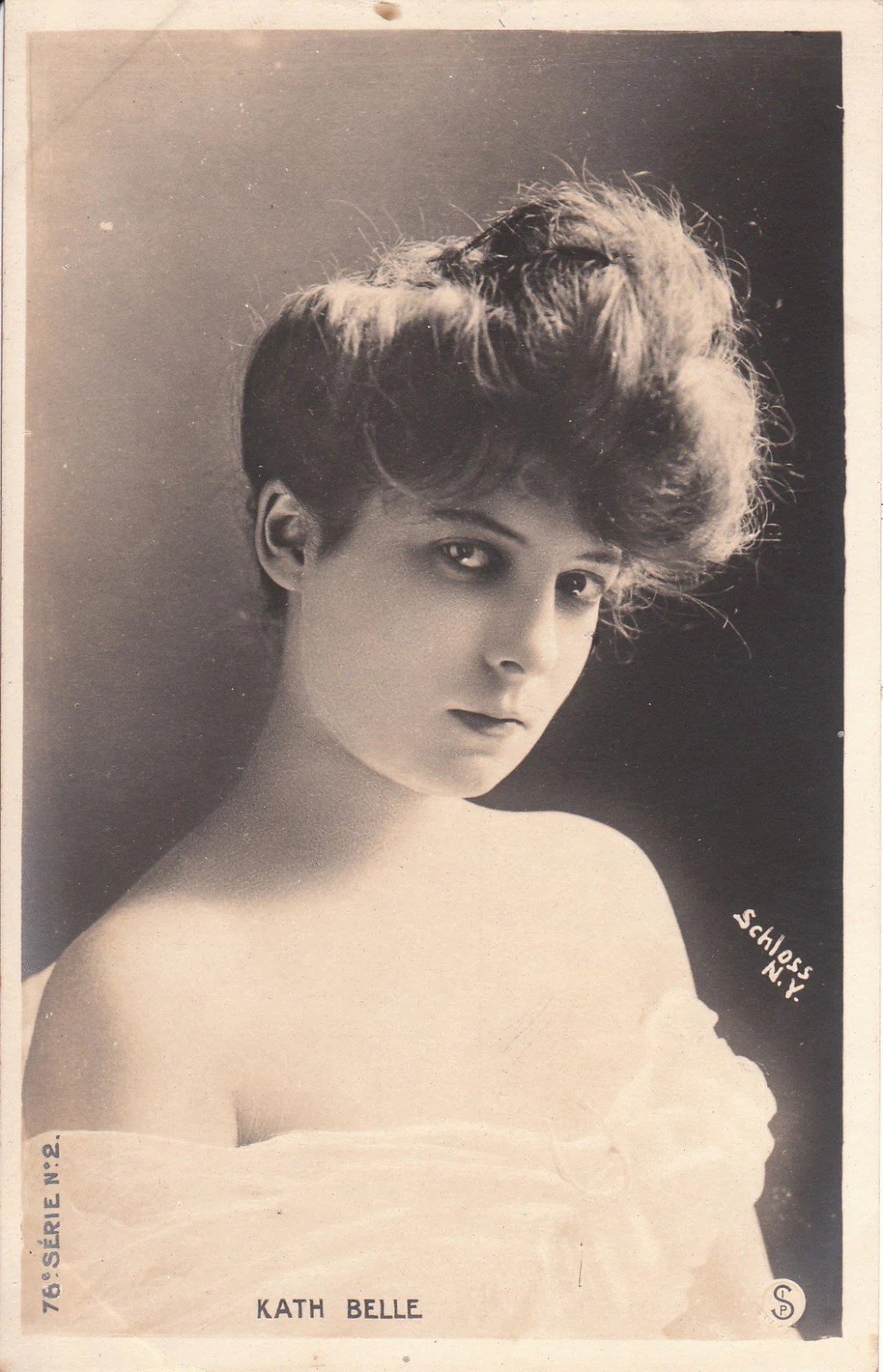
This real photo vintage postcard features a portrait of French performer Kath Belle. She looks quite beautiful in this portrait by celebrated New York photographer, Jacob Schloss (1875-1910). Early in his career Schloss worked for another esteemed photographer named Benjamin Falk. By the 1890’s, Schloss was well known as a photographer of beautiful woman with a specialty of photographing actresses and dancers. This postcard was published by SIP (Societe Industrielle de Photograpie). SOLD