 This vintage postcard features a shirtless Vietnamese man. The man is from the region of Cochinchina which is comprised of the southern third of current Vietnam. The region’s principal city is Saigon. The area was a French colony from 1862 through 1954. In 1954, South Vietnam was created by combining Cochinchina with southern Annam. Printed near the top of the postcard is the word “Thu Dau Mot” which is the capital city of Binh Duong Province in Vietnam. The city is just 20 km from downtown Saigon (Ho Chi Minh City). The photographer of this image was Pierre Dieulefils. He was the first established professional photographer in Hanoi. He worked in Indo-China from around 1900 to 1910. In addition, he was a postcard editor and explorer. He had an excellent reputation as a photographer throughout Europe and Indochina. He won many medals at Universal Exhibitions. It is estimated that he produced approximately five thousand photos and postcards and he is considered one of the greatest photographers of the region. His photographic expeditions included such locales as Vietnam, China, and Cambodia. His photographs are considered “the very best visual records of the life, people, customs, and native peoples” of North and South Vietnam. This postcard is part of a series (no.1471), The postcard was published between 1900 and 1910. SOLD


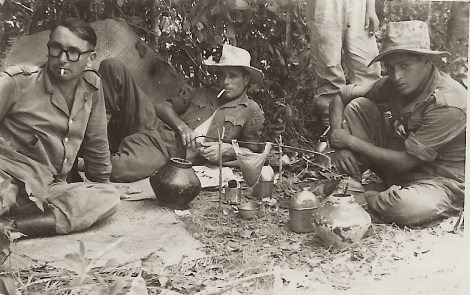 This vintage snapshot photograph features three soldiers in their camp in Tra Vinh, Vietnam. According to the inscription on the reverse of the photograph, this photo was taken in 1948. Tra Vinh is a province in the Mekong Delta. The photograph shows French troops who were engaged in battle with the Viet Minh. The men are engaged in some sort of activity. Are they cooking? Are they purifying water? I’m stumped. Two of the men are smoking cigarettes and all three look serious and exhausted. This snapshot photo measures about 3 1/2 ” x 2 3/8″ and is in very good condition. SOLD
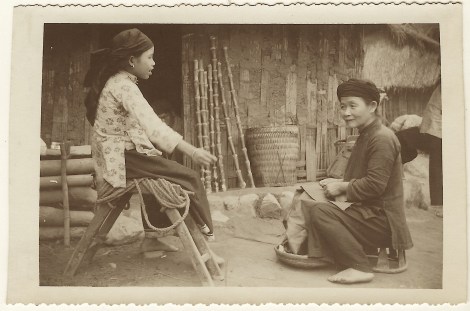
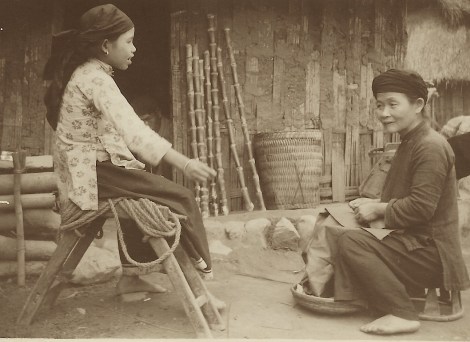 This vintage real photo scalloped postcard features two woman chatting as they are working in their village. The woman sitting on the “step ladder” may be as young as preteen. Note some of the objects in the photograph. Piled wood, a wicker basket, bamboo sticks, and a bowl are all visible. Both woman are barefoot. The former owner of this photo postcard reports that the photograph was taken in Pays Tai. This area is located in the northwest of Vietnam. The people in this region are comprised of many different ethnic groups. In 1950 Tai Country’s regime went from a feudal system to an autonomous government, known as the “Tai Federation”. When the Republic of Vietnam was created in 1954, the Tai Federation ended. This vintage postcard is in very good condition (see scans).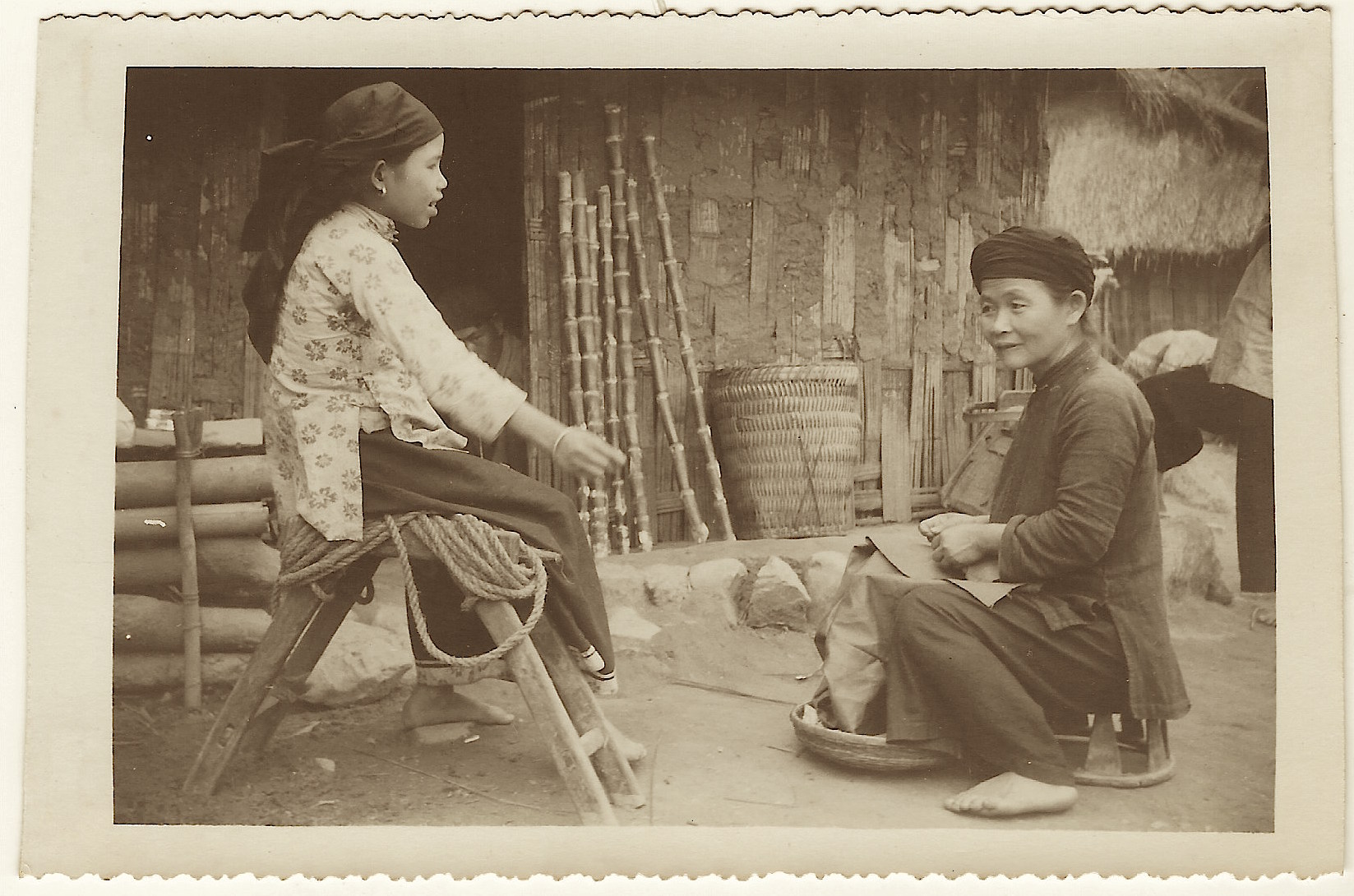


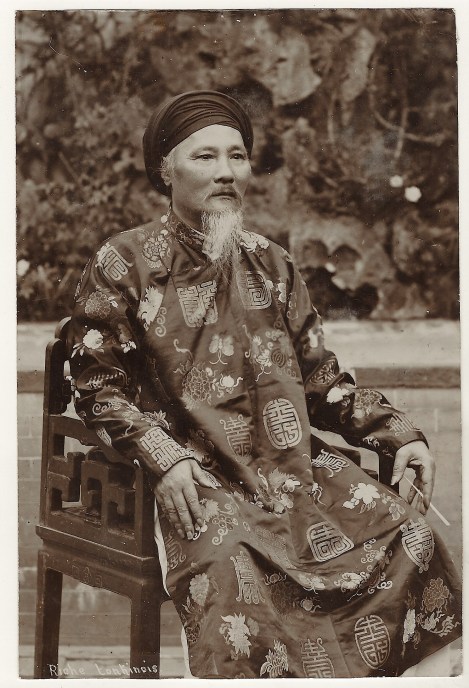 This vintage photograph features a handsome and rich Tonkinese gentleman. He comes from the historical region of southeast Asia located on the Gulf of Tonkin. The area presently is part of northern Vietnam but it was a component of French Indochina (1887-1946). This image is a former stock photo which may been used in publications such as newspapers or magazines. The photograph measures about 4 3/4″ x 7″. (SOLD)
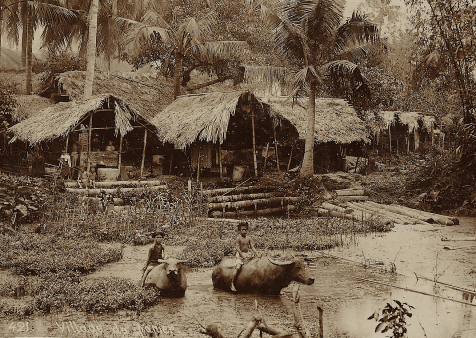
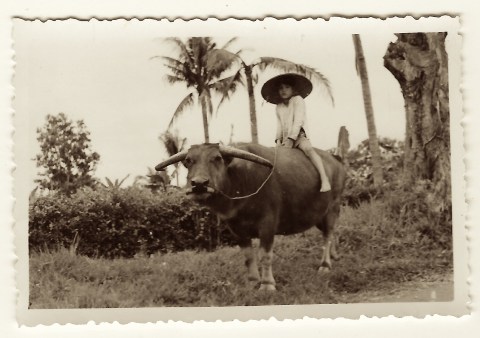
 This vintage photograph features a village in Vietnam. Note the thatched huts, the children sitting on logs in front of the huts, and the two boys riding water buffalo. This photograph is a stock photo. The stock photo industry became popular in the 1920’s. Stock photo agencies charge users to use stock photos in newspapers, magazines, websites, books, and other types of media. This photo of a Vietnamese village may have been used by journalistic or educational publications. The inclusion of water buffalos in this photograph, is a reminder of the importance of water buffalo in Vietnamese culture. The animal originated in Southeast Asia and is about seven feet tall and weighs about 2,500 pounds. They can run 30 miles per hour which is almost fast enough to escape their major predator, tigers. Water buffalo tend to be gentle and tame. They serve as a source of food, and power. They are used for transportation and for plowing fields. Unfortunately, water buffalo are an endangered species. There are only 4,000 of this species remaining in the wild. When I hear the words “water buffalo”, I think of the 1977 Houston Rockets. I was a rabid fan of the team and I remember that their front line was known as the “water buffalo”. Apparently, Moses Malone, Rudy Tomjanovich, and Kevin Kunnert, were considered so slow moving; that they were given the moniker of “the water buffalo”. This photograph measures about 7″ x 4 5/8″. SOLD





 THE CABINET CARD GALLERY