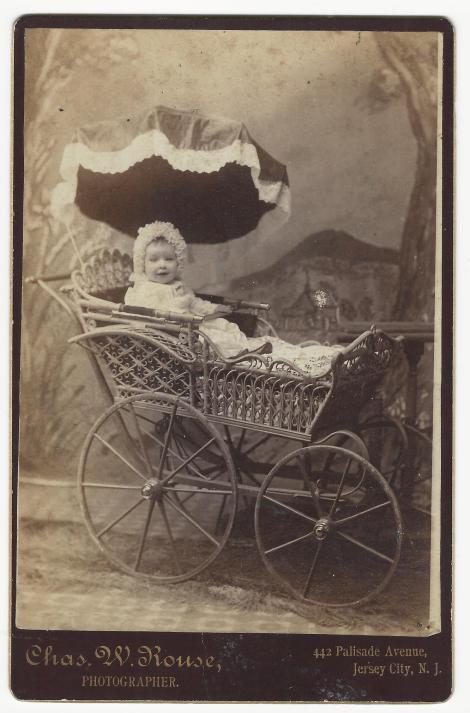
This cabinet card portrait features a baby sitting in a baby carriage. The carriage is a deluxe baby transporter. The vehicle looks well built and sits high off the ground. The carriage is accessorized with a large umbrella to protect the child from the sun or rain. The photographer of this image is Charles W. Rouse. He operated a photography studio in Jersey City, New Jersey. A list of early New Jersey photographers reveal that Charles Rouse operated out of at least six addresses in Jersey City during his career. In addition, at one point he ran a studio in Belmar, New Jersey. He conducted business at the address listed on this photograph (442 Palisade Avenue) between 1888 and 1894. (SOLD)
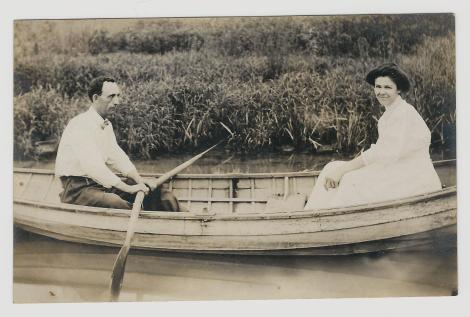
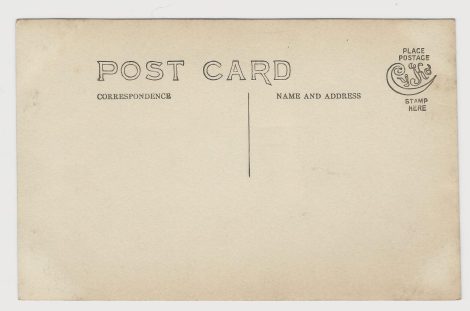
This vintage real photo postcard features a couple in a rowboat. This romantic rowboat cruise is likely taking place in the photographer’s studio. Interestingly, the young lady is looking at the photographer while the the rowboat captain is staring at his pretty first mate. The “Cyko” stamp box on this postcard indicates that it was published sometime between 1904 and 1920.
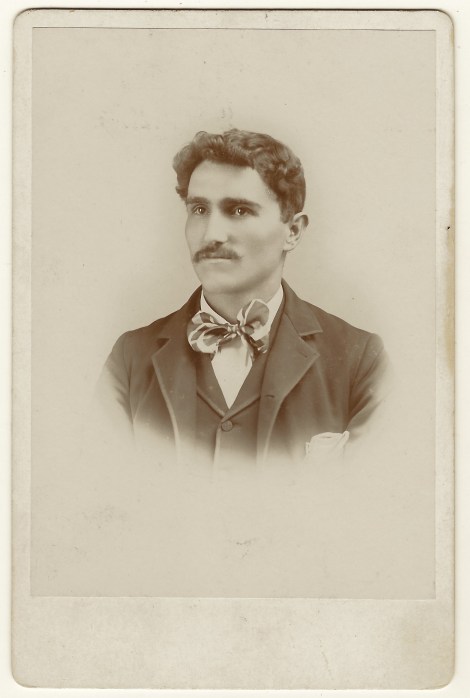
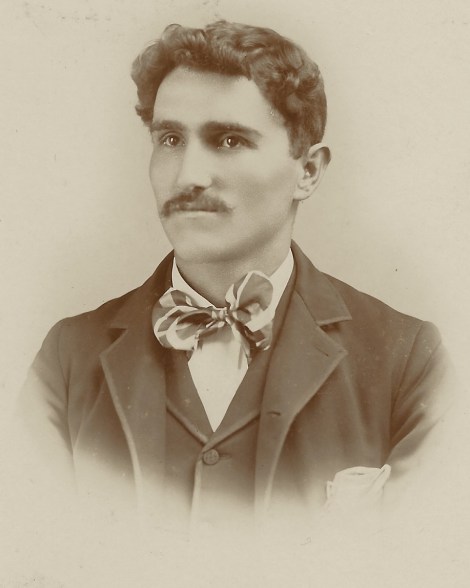
A well dressed and handsome young man wearing a flashy bow tie poses for his portrait at an unidentified photography studio. The gentleman has a neat mustache and thick dark curly hair. Note that his wild patterned bow tie looks like a colorful butterfly.
This vintage real photo postcard features a portrait of a most gorgeous woman posing with a vase atop her head. The woman is absolutely beautiful and her eyes are amazingly seductive. She is dressed in a tight gown and exposing a small amount of her ankle. The postcard was produced by the German company G. Gerlach. (SOLD)
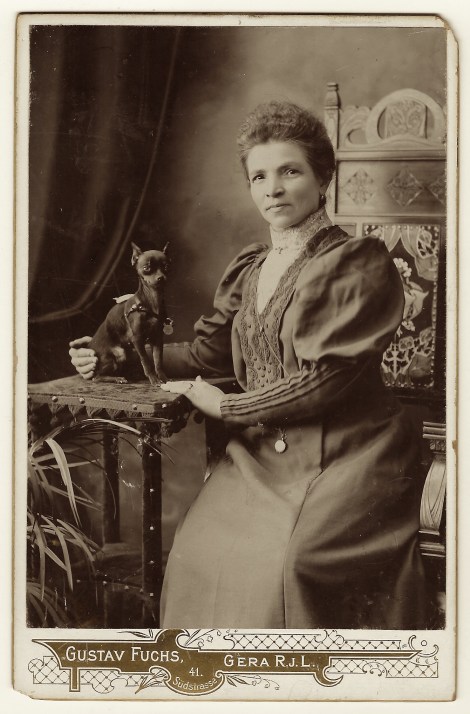
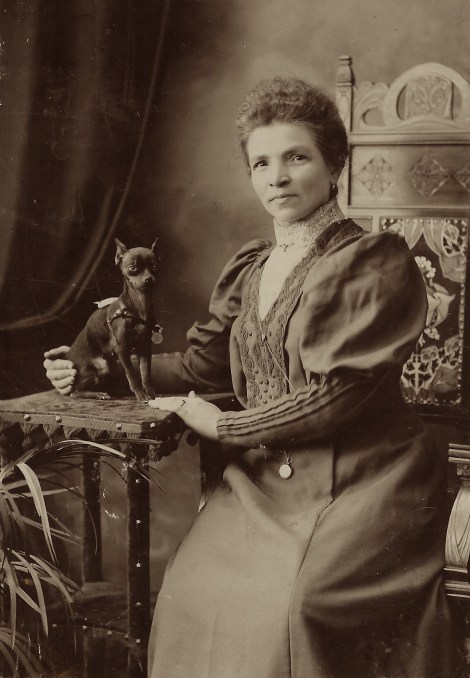
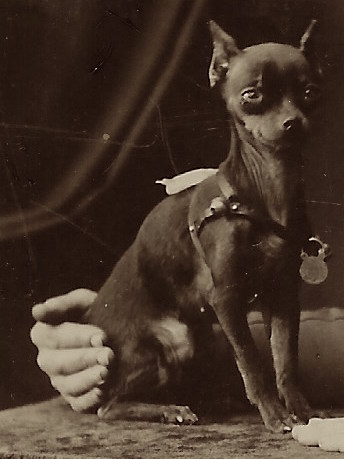
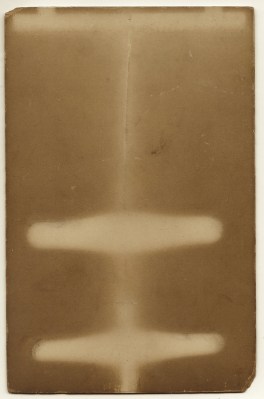
A middle aged woman poses for her portrait at the studio of Gustav Fuchs in Gera, Germany. On the table next to the woman sits her cute little chihuahua wearing a harness and what looks like a dog tag. This dog is not only a miniature, but it is a miniature miniature. The woman appears to be holding back a smile. Note her pocket watch, or locket, which is hanging on a chain and resting on her midriff. The discoloration on the reverse of the photograph likely derives from the photo sitting in a frame for many decades.
This vintage real photo postcard features Canadian born American singer and actress, Deanna Durbin (1921-2013). She is beautifully dressed. Her hat is a nice touch. Deanna Durbin looks quite pretty in this photo portrait. The postcard notes her affiliation with Universal Films. The postcard was published by Echte Foto, a Dutch company. Miss Durbin was an active performer between 1936 and 1948. She appeared in musical films and had the technical skill and vocal range of a legitimate soprano. She sang multiple styles of music including popular standards and operatic arias. Durbin’s first film appearance was with Judy Garland in MGM’s “Every Sunday” (1936). A YouTube clip of the two young actresses performing a duet from this film can be seen below. Shortly after her debut movie, she was given a contract by Universal Studios. She had great success with the studio playing “the ideal teenage daughter” is such films as “Three Smart Girls” (1936). She was only 14 years old when she appeared in “Three Smart Girls” and became an established star. Afterward, she had a string of successful musical films. In 1936, Deanna was offered an audition for the Metropolitan Opera but she rejected the offer because she believed she needed more operatic training. From 1936 through 1938, Durbin did a radio collaboration with Eddie Cantor. In 1938, Durbin was awarded an Academy Juvenile Award. Her co-winner was actor Micky Rooney.Durbin tired of her girl-next-door roles and by 1945, had appeared in a couple of films in more sophisticated roles. Unfortunately, she was not well received in these more mature roles. In 1946, Durbin was the second highest paid woman in the United States, second to Bette Davis. Durbin became the highest paid female in America in the year 1948. By 1949, she retired from acting and singing and never returned to public life. In fact, she never again agreed to be interviewed by the press, with just one exception. Durbin hated the adulation she received in her career and yearned for a “life of nobody”. She wanted to be anonymous. During her acting career, Durbin appeared in 23 films and even more sound recordings. Durbin had three marriages. Her husbands were assistant director Vaughn Paul (1941), writer-producer-actor Felix Jackson (1945) , and film producer-director Charles Henri David (1950). (SOLD)
Judy Garland & Deanna Durbin – Americana (Every Sunday, 1936)
This vintage real postcard is unique and adorable. A little boy is at the helm of a miniature sailing ship, not far from shore. Beach goers and large boats can be seen in the background. The toy ship commanded by this child is amazingly realistic down to the tiniest details. A logo below the photo states “Anana Kypopm” (the photographer?) and is dated 1964. The photographer’s logo displays a light house and a sailboat which indicates that the photo studio shooting this photograph was likely located in a beach resort town. The photo measures about 5 1/2″ x 3 1/2″.
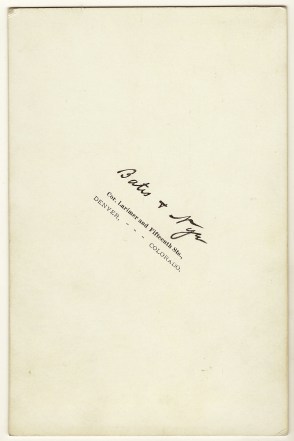
This cabinet card portrait is one of those special photographs that appears to be trying to tell the viewer a story. Here is the story as I see it. An adorable and well dressed young child stands on a chair next to the photo portrait of his/her mother. The child’s mother has died and this cabinet card photograph was taken to serve as a keepsake memorial photo. The child can refer to this photo to preserve the memory of his/her mother. This image was beautifully photographed. The pose and the props, as well as the clarity of the image, help make this an exceptional photograph. The talented photographer of this cabinet card is the Bates & Nye Studio in Denver, Colorado. Photographer W. L. Bates appears in the 1881 Denver city directory under the occupation of photographer. A Colorado genealogical site contends that Bates worked as a photographer in Denver between 1880 and 1890. Preliminary research yielded no information about the second partner in the gallery (Nye). (SOLD)
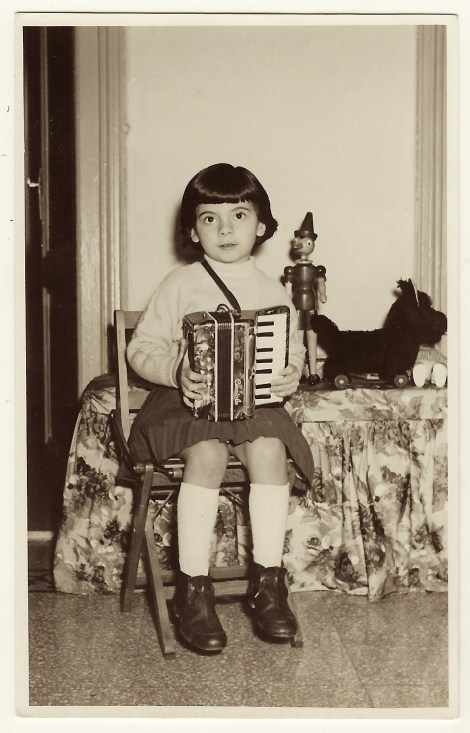
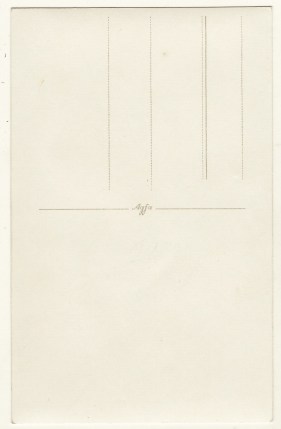
This vintage photo postcard captures a most adorable wide-eyed little girl sitting on a wooden chair and holding an accordion. The girl’s expression is precious. She seems happy to be posing for this photograph. She is sitting in front of a collection of her toys including a nutcracker man, a dog on wheels, and a doll. The accordion has the logo of the Cucciolo company. This company operated in Italy and this postcard is likely of Italian origin and produced in the 1930’s. Printing on the reverse of the postcard indicates that the postcard was published on Agfa postcard paper. Founded in 1867, “Actien-Gesellschaft fur Anilin-Farrikation” (AGFA) produced chemical liquids for photography. In 1913, the company becgan to produce postcard papers. The company’s primary factory was located in Berlin, Germany. (SOLD)
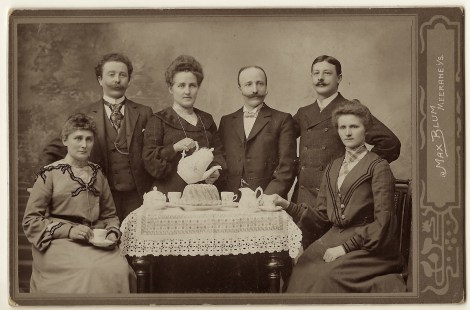
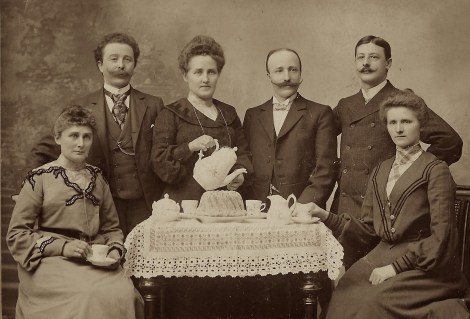
This cabinet card features an unusual and interesting setting. The photographer, Max Blum captured a close-up view of three well dressed couples sitting, or standing around a table, having coffee (tea?) and cake. The cake appears to be a Bundt Cake. Most of the cabinet cards that I have seen that are similar to this photograph, involve children having a tea party. The Blum Studio was located in Meerane, Germany. The town of Meerane is located in the Zwickau district of Saxony, Germany. The reverse of this photograph has a printed list of awards that Max Blum earned for his photographs. Two of these prizes were earned in 1900 which reveals that this photograph was taken during, or shortly after that year. SOLD








 THE CABINET CARD GALLERY