TINTYPE PORTRAIT OF A BEAUTIFUL YOUNG WOMAN

This tintype portrait features a beautiful young woman wearing a lovely dress. Her jewelry includes a bracelet and a ring. According to Wikipedia, tintypes were made by “creating a direct positive on a thin sheet of metal coated with a dark lacquer or enamel and used as the support for the photographic emulsion”. Tintypes were most popular during the 1860’s and 1870’s.

Published in: on July 28, 2017 at 10:49 am  Comments (2)  
Tags:

CARTE DE VISITE PORTRAIT OF A BEAUTIFUL YOUNG WOMAN IN PENZANCE, ENGLAND

This Carte de Visite features a very attractive and well dressed young woman. She appears to be in her teenage years or slightly beyond them. Her dress is very fancy and pretty. She is wearing a nicely decorated hat and is accessorized with a necklace and collar pin. Her hair is braided and it falls over her right shoulder. She is holding something in her hands and I am at a loss to identify what it is. Perhaps it is a handkerchief or a purse. The photographer of this cdv portrait is Robert H. Preston who operated a studio in Penzance. The town and port of Penzance are located in Cornwall, England. Robert Hawker Peniel Preston (1837-1931) was partners with Samuel Poole in the early part of his career. Later he operated his own studio until 1901. At some point, his son Richard Preston, worked with him in the photographic studio. Robert Preston married Harriet Snell Body and they had at least seven children. The advertising on the reverse of this carte de visite declares that Preston was one of the official photographers of the Prince and Princess of Wales.  SOLD

Published in: on July 25, 2017 at 3:29 pm  Comments (5)  
Tags: , ,

PORTRAIT OF A YOUNG CHILD AND HER CHINA HEAD DOLL IN GIRARD, ILLINOIS

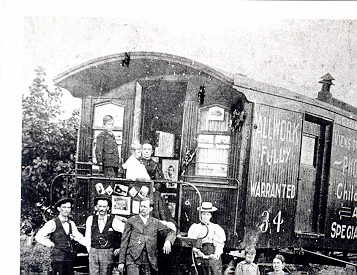
This cabinet card portrait features an adorable little girl with a terrific smile. She is holding her china head doll. The close-up view of the child makes this image quite special. The photographer of this photograph was Fred Jorns who operated a studio in Girard, Illinois. Frederick W. Jorns (1857-1943) was once partnered with William L Harrod in operating a studio in Girard. In addition they operated the Jorns and Harrod Palace Art Car. This was a mobile studio that travelled the rails stopping in towns in Illinois, Indiana, and Kentucky. The studio car was pulled by an engine from the Cincinnati-Chicago and St. Louis Railroad. An 1892 photo of the studio rail car can be seen below. Fred is the gentleman wearing the suit. Jorn’s father, Gustav Jorns, immigrated from Germany in 1848. He married in 1856 and learned the photography business from his brother-in-law. Gustav established a photo studio in Springfield, Illinois. Gustav’s son, Fred learned the photography business from his father and set up his own studio in Girard. Fred married Lena Hann in 1884 and a portrait of the couple can be seen below.The couple travelled together on the Palace Art Car leaving their three children with relatives. Jorns sold his photography business around 1901 and became a grocer. He later resided in the Oklahoma Territory and then Houston, Texas. Please note the cabinet card portrait below which captures Fred Jorns reclining on a chaise. Initial research was unsuccessful in determining whether Fred Jorns operated his studio alone before he partnered with William Harrod or visa versa.

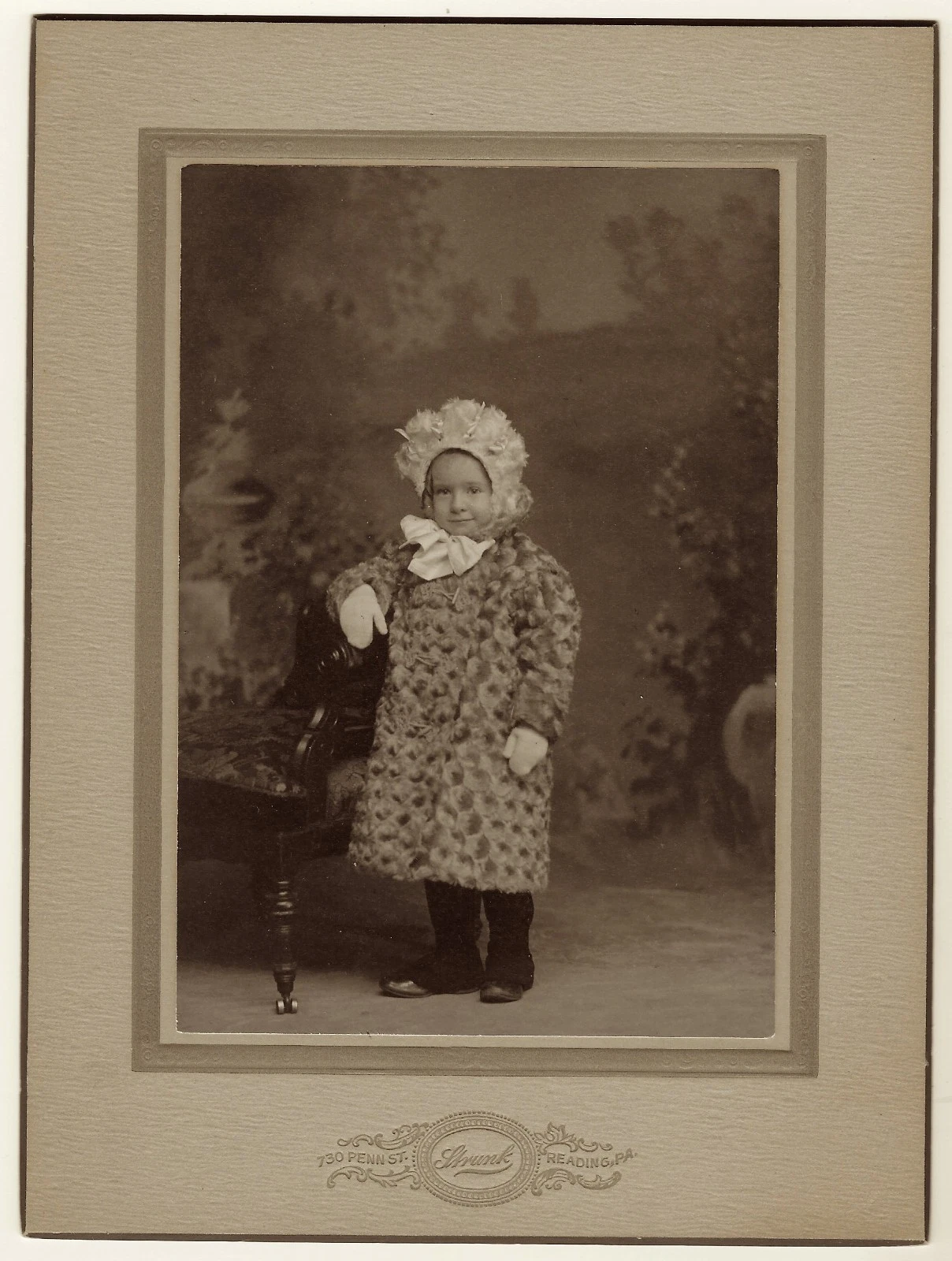
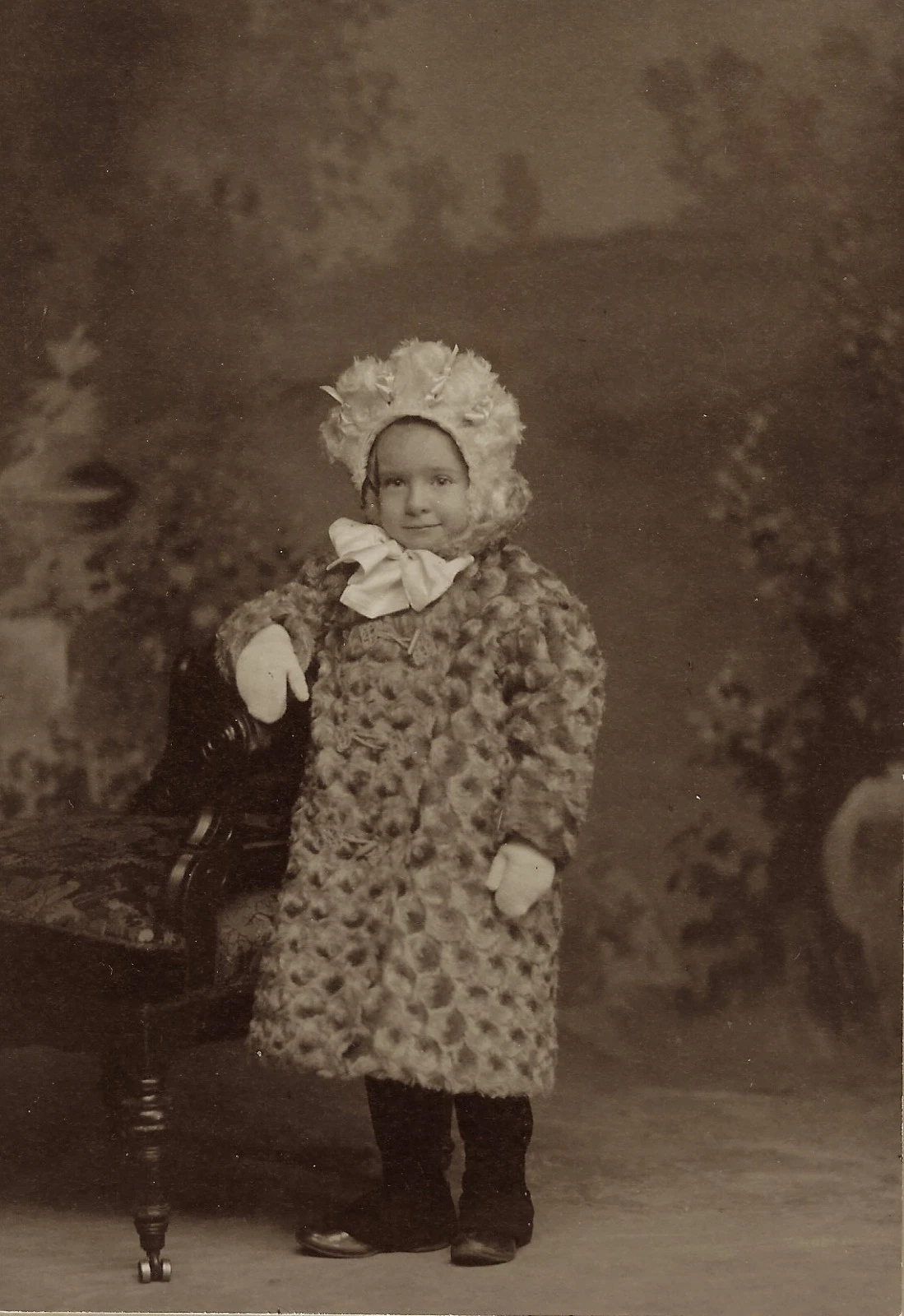
PORTRAIT OF A LITTLE GIRL ALL BUNDLED UP FOR WINTER

This vintage photograph features a cute little girl all bundled up in her winter outdoor clothing. Her coat and hat are unique by todays standards. She is wearing gloves and a nice grin. This photograph was taken by the studio belonging to John D. Strunk. He was a talented and prolific photographer who operated a studio in Reading, Pennyslvania. According to evidence gathered in preliminary research, he worked as a photographer between 1888 and 1910. This photograph measures about 5 3/4″ x 7 3/4″ and was taken during the last half of his career. An additional aspect of this photograph is that there is a ghost image on it’s reverse. SOLD

Published in: on July 22, 2017 at 12:00 pm  Comments (1)  
Tags: ,

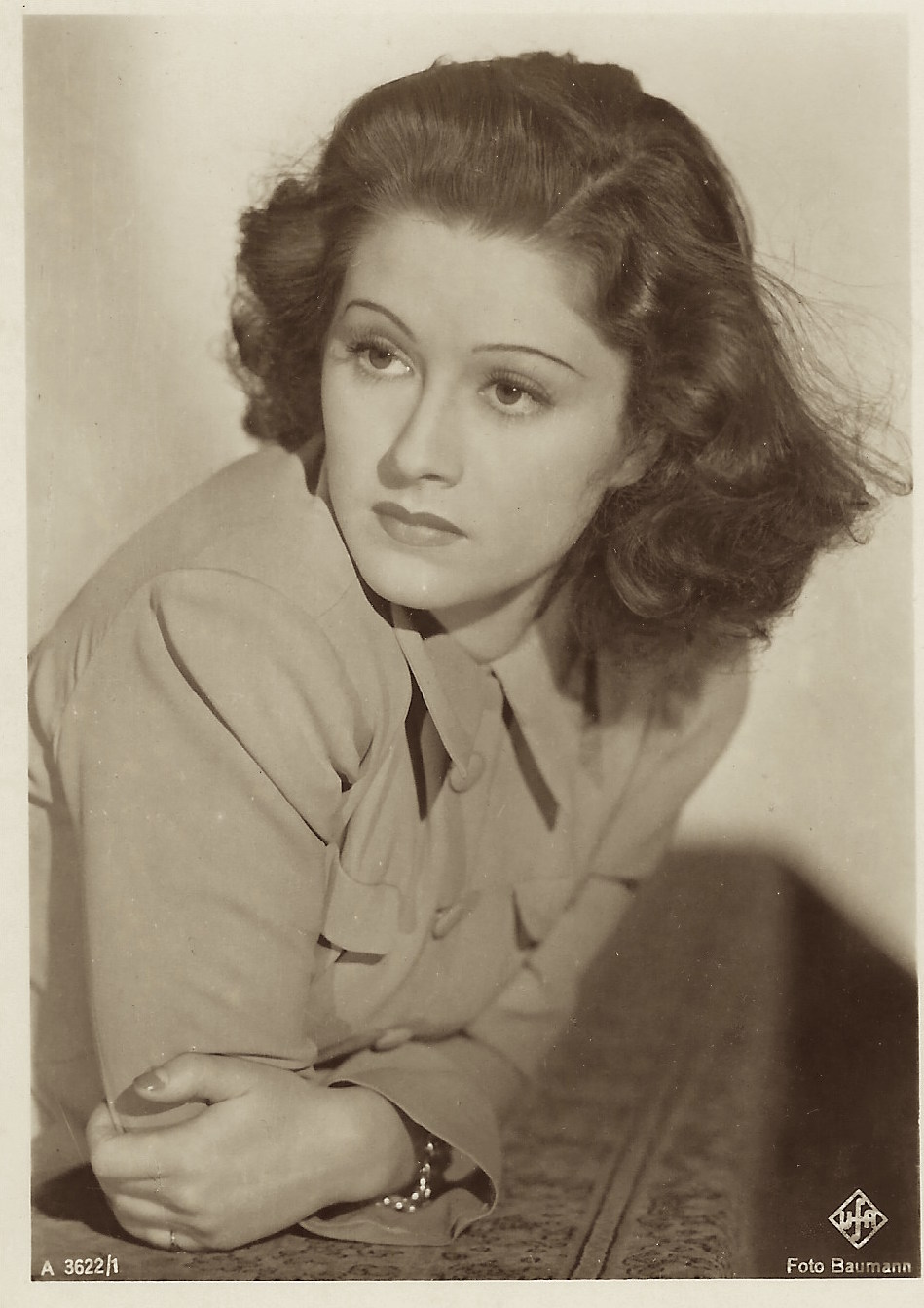
TWO PORTRAITS OF GERMAN FILM ACTRESS MARINA VON DITMAR

POSTCARD 1   (SOLD)

POSTCARD 2   (SOLD)

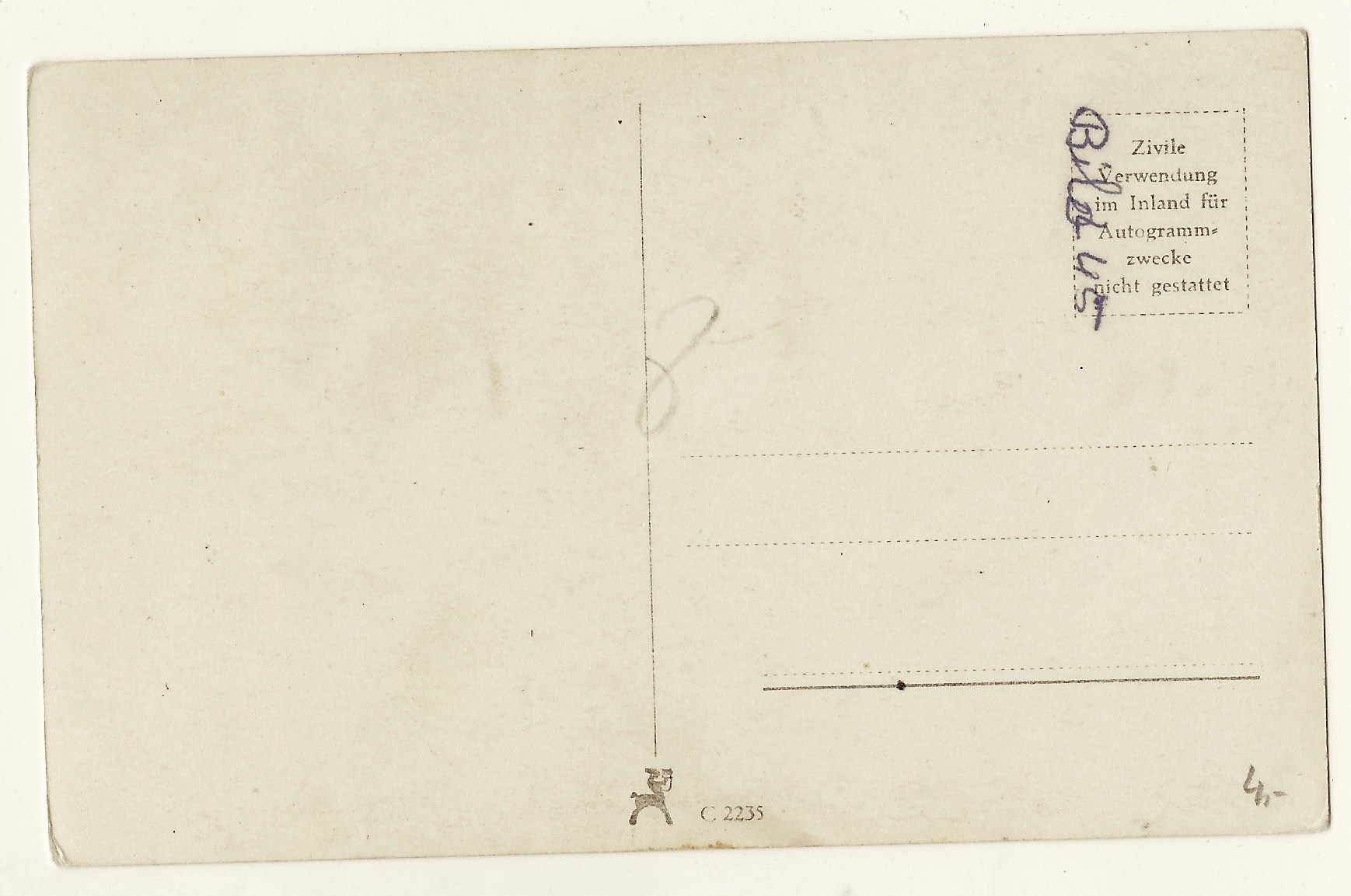
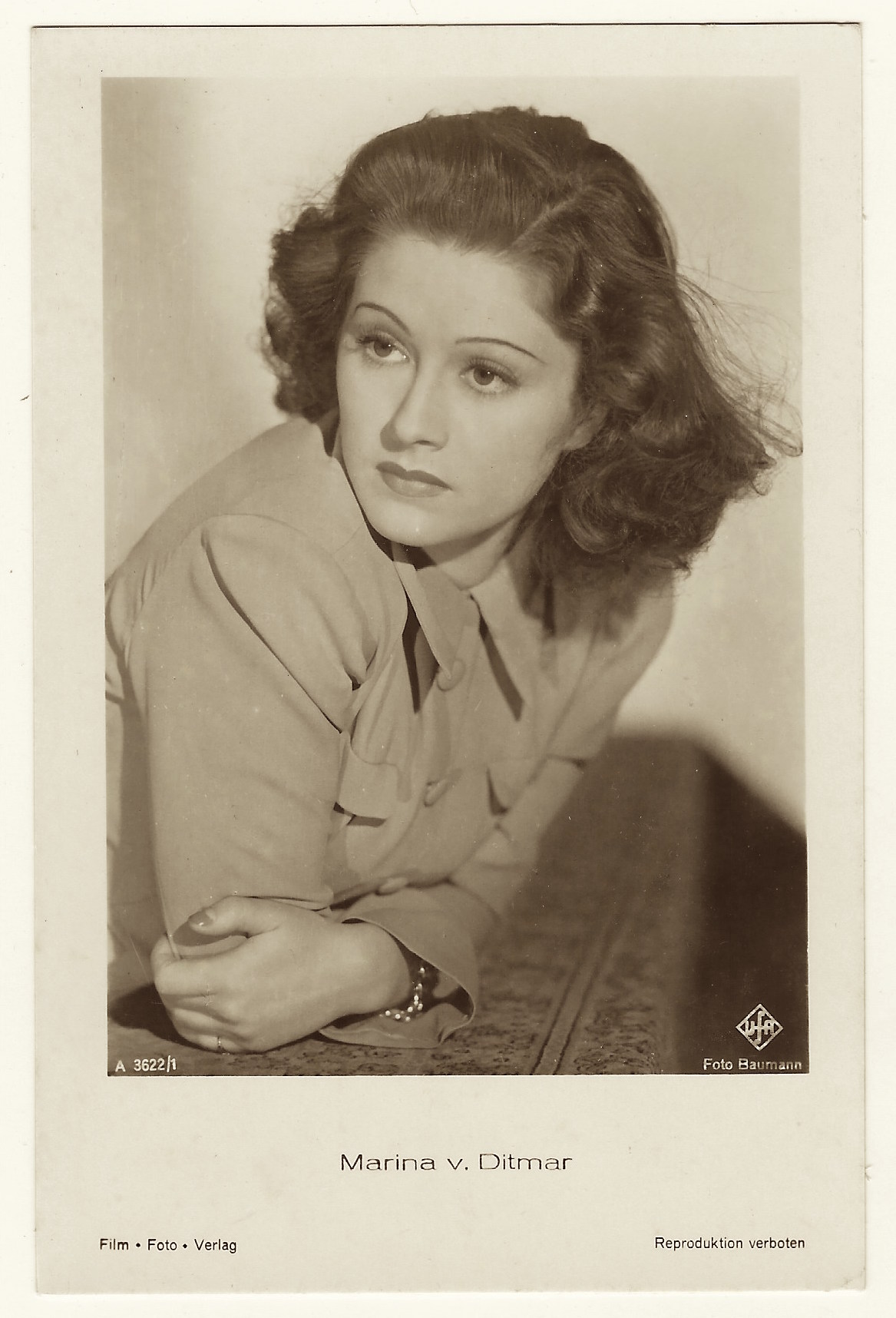
These two real photo postcards feature German film actress Marina von Ditmar (1914-2014), a leading lady of the 1930’s and 40’s. . She was born in the Russia Empire and was of Baltic German descent. When she moved to Germany she studied acting. Her first roles were appearances at Schauspielhaus, Bremen, and the Altes Theater (Leipzig). In 1937 she joined the ensemble at the Volksbuhne in Berlin and by 1940, she was a permanent actress at this venue. Her first major movie success was in “The Csardas Princess” (1934). In 1943, she starred in “Muchhausen”, a film that had great commercial success. Von Ditmar was also well known for her role in “The Big Shadow” (1942). She appeared in several Nazi propaganda film including Stukas (1941). She married D. Hans-Georg Dehnhardt (1913-2001), a leading physician and owner of a sanitarium,  Soon after her marriage, she retired from acting. The IMDB credits Miss von Ditmar with thirty film roles. The top postcard was published by Film-Forto-Verlag and was part of a series (A 2622/1). The photographer was Baumann and there is an advertising logo for the German film company UFA. The bottom postcard was also published by Film-Foto-Verlag and was part of a series (no. A 3926/1). The photographer was Binz and there is an advertising logo for Prag Films. The Prag company produced 14 films between 1943 and 1945. Many of the people employed to produce these films were Czechs who were forced by war time German authorities to produce these films. The photographer, Tita Binz (1903-1970), was German and she photographed many film stars of the Third Reich, She also made portraits of the soldiers who earned the Knight’s Cross (the highest military award in Nazi Germany). Binz began her career by apprenticing in Paris between 1928 and 1930. She was an apprentice for her uncle, the celebrated photographer, Leopold Reutlinger whose studio was opened in 1850 and became of the worlds most renowned studios. Binz settled in Berlin and worked for various photo studios until opening her own studio in 1938. She specialized in portrait photography and photographed actors, artists, politicians, and other celebrities. One of her clients was the publisher Film-Foto-Verlag (formerly Ross Verlag). The founder of the company, Heinrich Ross was forced out in 1937 by the National Socialists because he was Jewish and Jews were not allowed to own businesses. Ross Verlag retained it’s name until 1941. Film-Foto-Verlag became known for it’s postcard portraits of film stars of the German and Italian cinema. Today, many of Binz’s photo portraits can be found in the collection owned by the Deutsches Historisches Museum in Berlin.
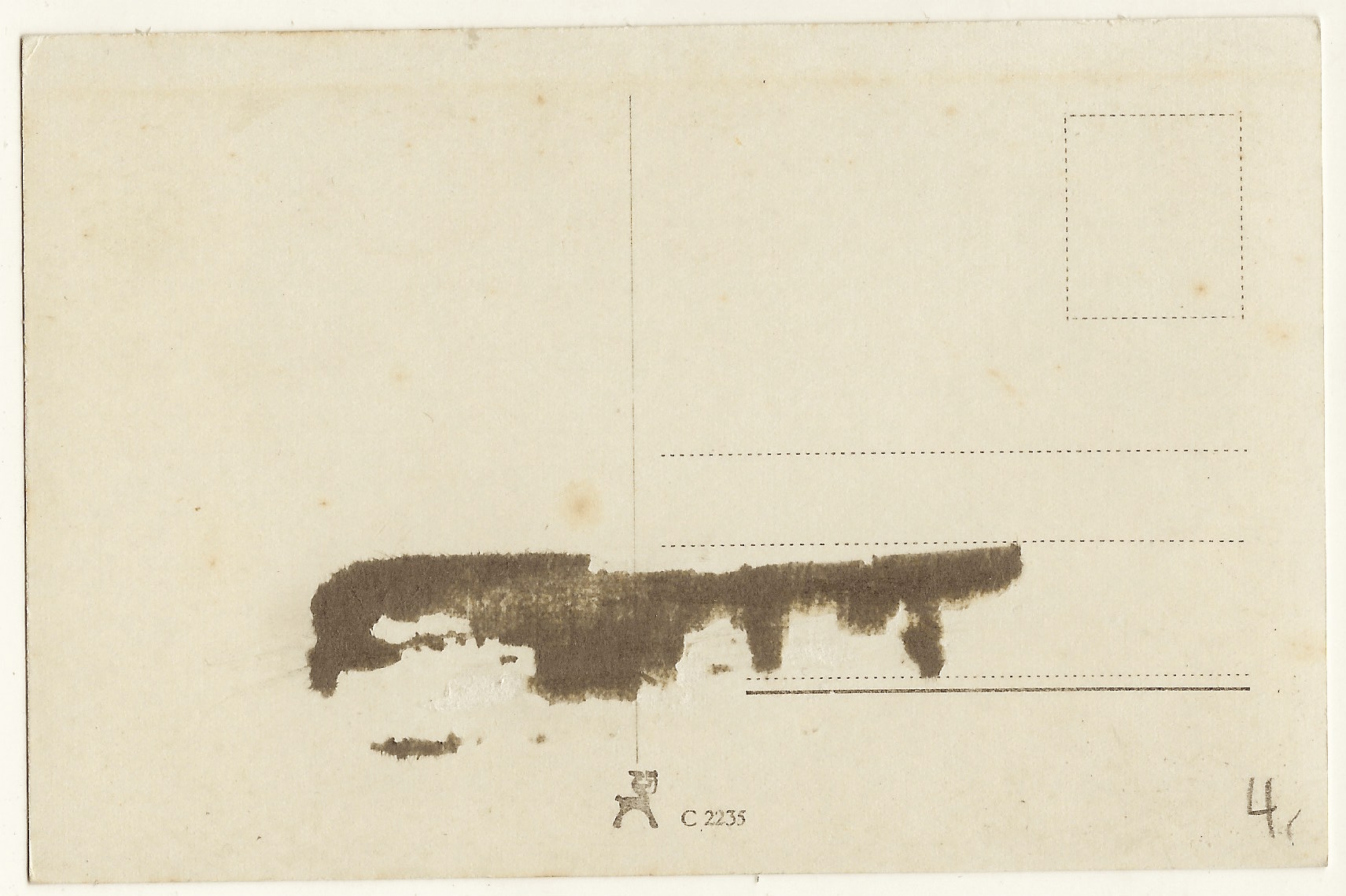
                                                           REVERSE TOP POSTCARD

            REVERSE BOTTOM POSTCARD
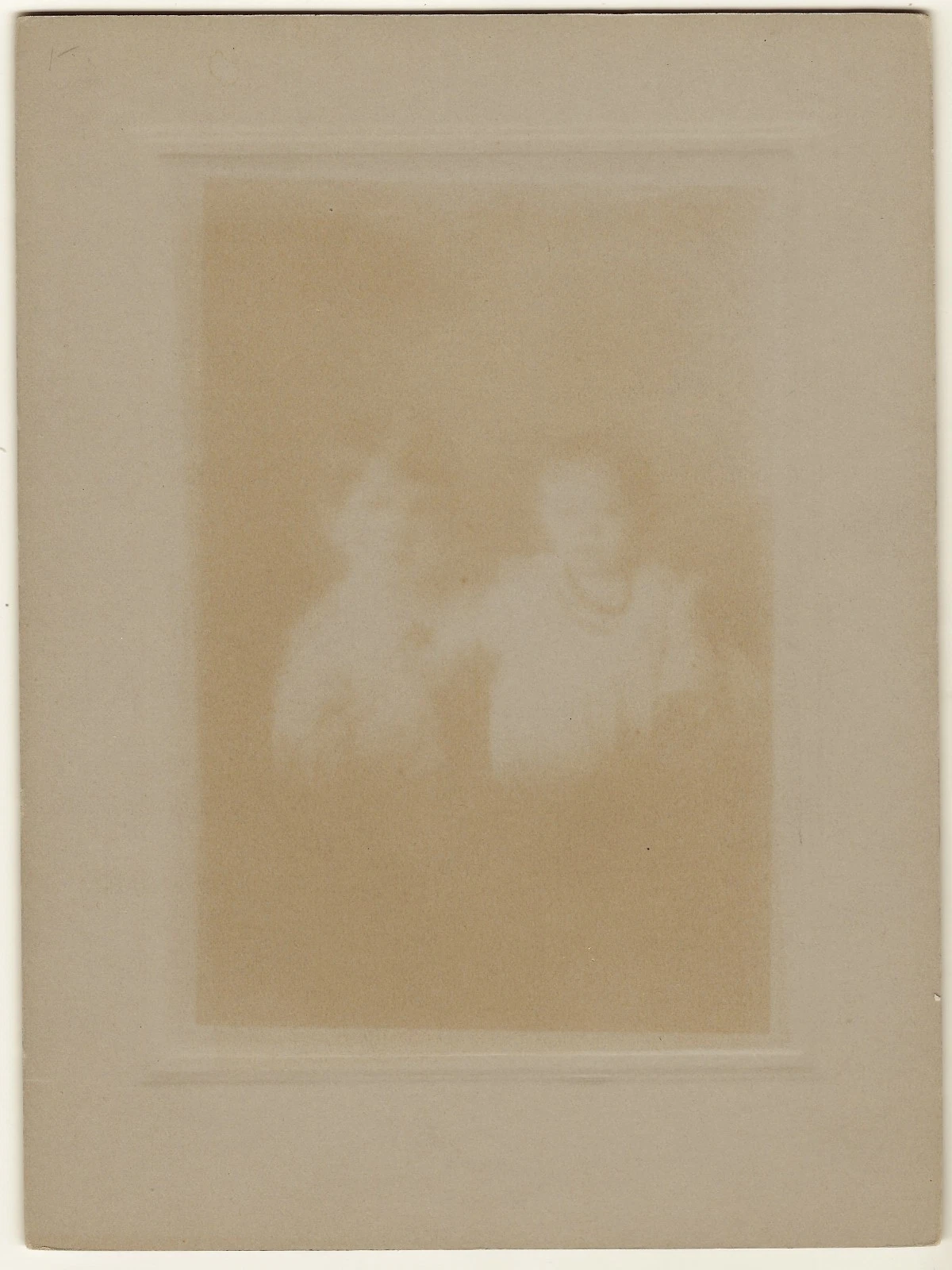
A FAMILY OF FIVE IN MOURNING GATHER AROUND A POST MORTEM PHOTO OF BABY CARRIE

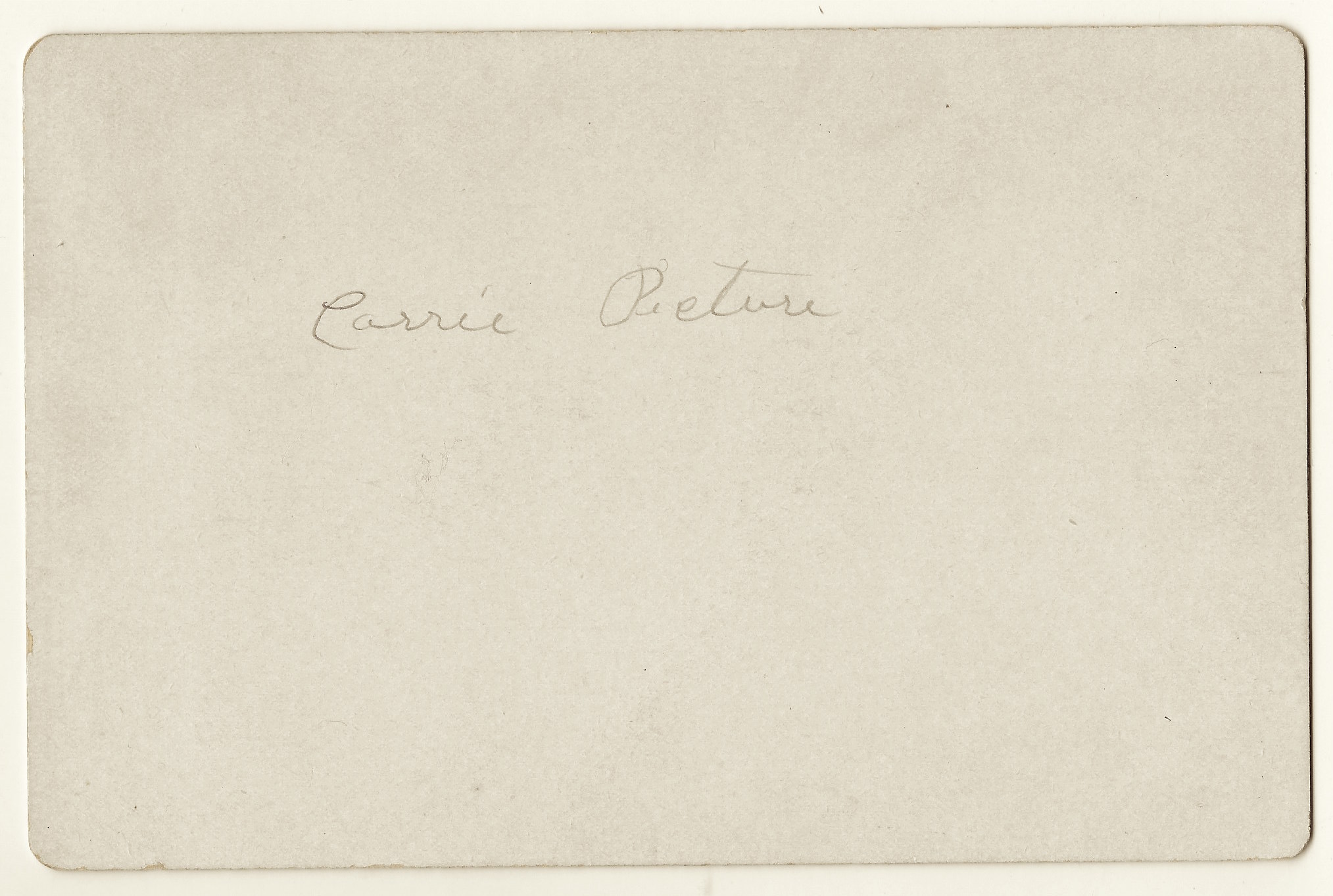
This cabinet card portrait is both interesting and sad. The photograph shows a family of five in mourning. They are dressed in dark clothing and on the table that they are sitting or standing by, is a cabinet card post-mortem photograph of a baby. On the reverse of this cabinet card is the inscription “Carrie Picture”. Clearly, someone has identified the baby as being named “Carrie”. This photograph was taken at the Bannister studio in St. Johns, Michigan. The Michigan Directory of Photographers reports that he operated his St Johns studio in 1895. The directory provides no first name for Mr. Bannister. It is my hypothesis that the photographer of the cabinet card portrait was Frank T. Bannister. He is listed as a photographer in the 1885 business directory for Saginaw, Michigan. He also appears in the 1910 US census as a photographer residing in New Richmond, Wisconsin.

Published in: on July 20, 2017 at 7:39 pm  Comments (2)  
Tags: , ,

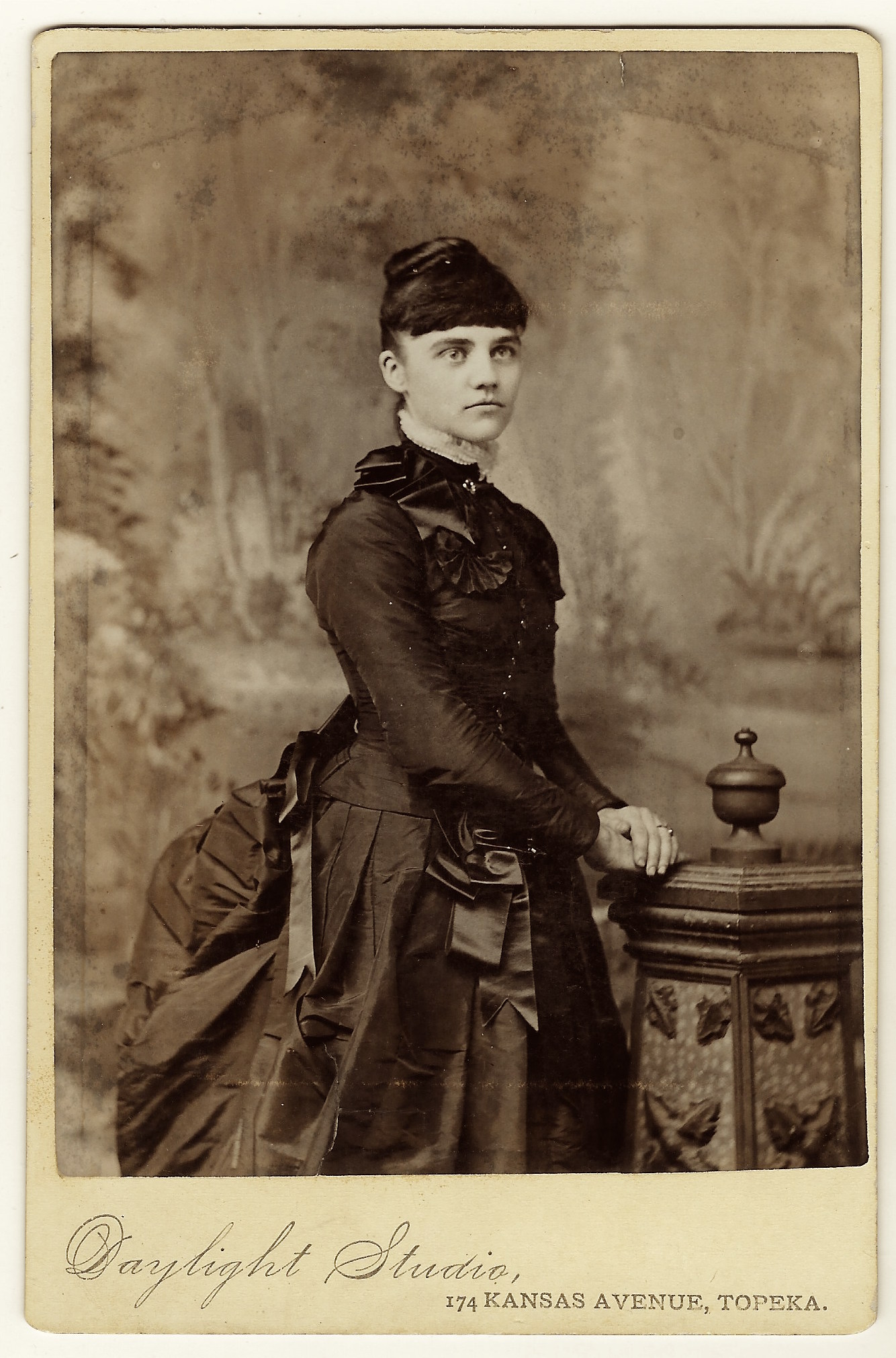
SOLEMN YOUNG WOMAN IN MOURNING IN TOPEKA, KANSAS

A young woman, perhaps a teenager, poses for her portrait at the Daylight Studio in Topeka, Kansas. She appears quite solemn and is wearing a black dress with black satin sashes and bows. Perhaps she is in mourning. The young lady is wearing a collar pin and a ring. She is beautifully dressed and is pretty despite her apparent discomfort at being photographed.   (SOLD)

Published in: on July 19, 2017 at 7:32 pm  Comments (3)  
Tags: , ,

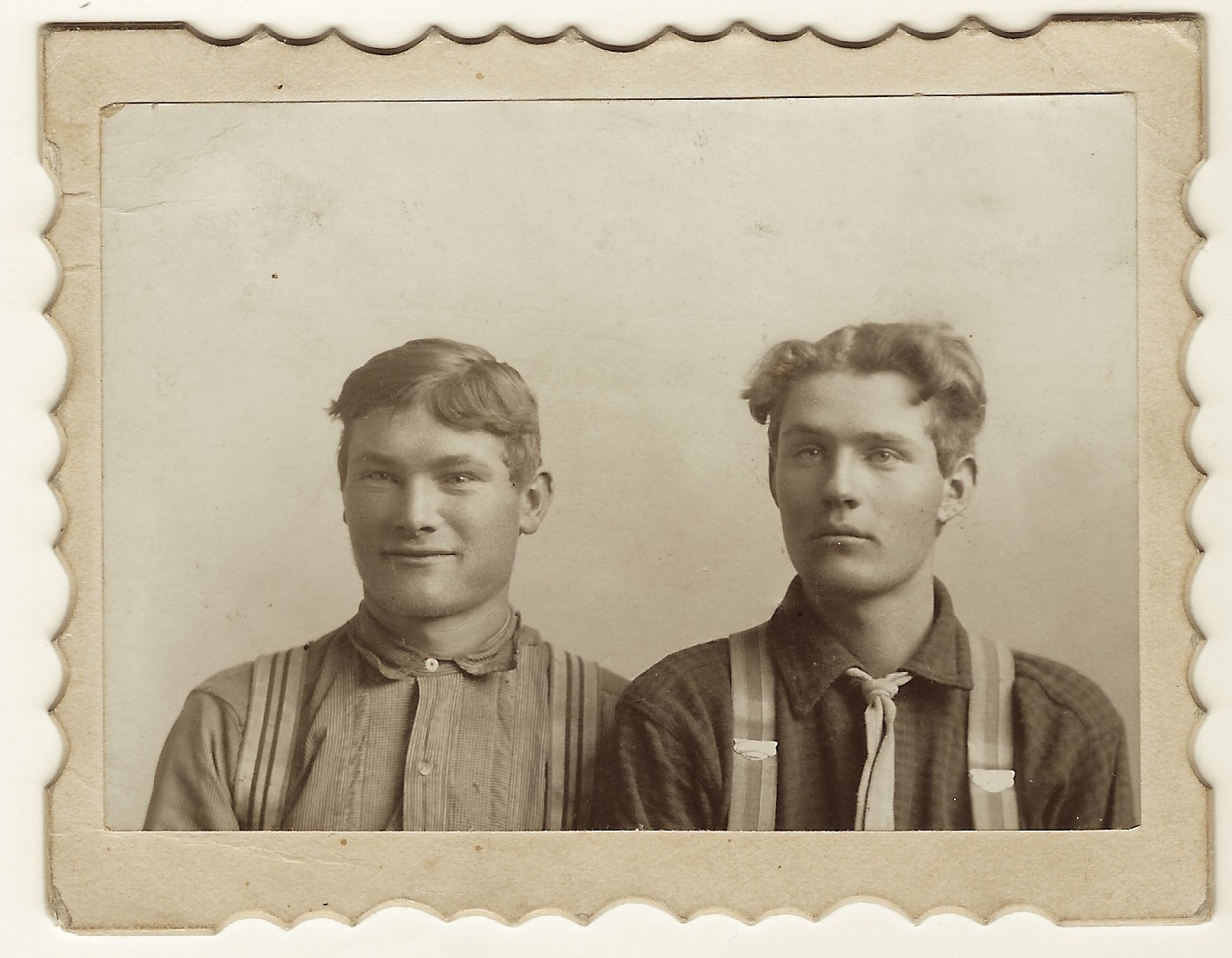
PORTRAIT OF TWO YOUNG MEN IN BRAINERD, MINNESOTA

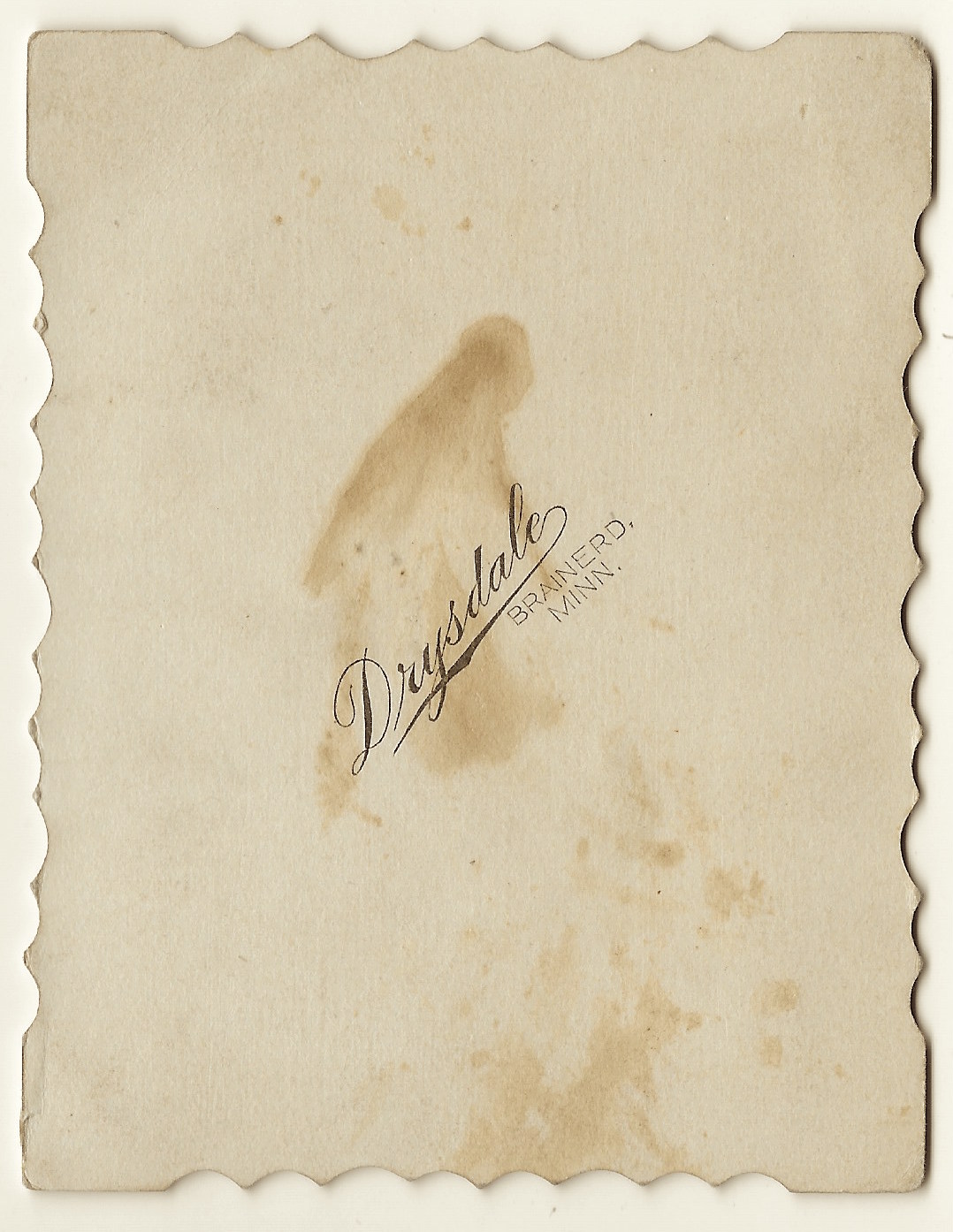
This scallop edged vintage photograph features two teenage boys. The boy in the dark shirt and tie is quite handsome. They are both wearing suspenders. The photograph was taken by the Drysdale studio in Brainerd, Minnesota. James S. Drysdale (1862-1914?) operated his own studio but at one time he was a partner in the Quam & Drysdale gallery. Drysdale had a studio in both Brainerd and St. Cloud between about 1894 and 1899. The Quam and Drysdale studio was located in Walker, Minnesota (1900). Drysdale returned to Brainerd in 1901 and operated a studio there until 1904. Drysdale appears in the 1900 US census. Data indicates that he was Canadian born, immigrated in 1880, and a naturalized US citizen. At the time of the census he was living on the Chippewa Reservation in Cass, Minnesota. The census reports that his race was “White”. Although he was listed as married (1899), he was living independently.  SOLD

Published in: on July 16, 2017 at 11:56 am  Comments (2)  
Tags: , , , , ,

PORTRAIT OF A YOUNG BOY IN MAINE BY A PHOTOGRAPHER WITH A BIZARRE STORY

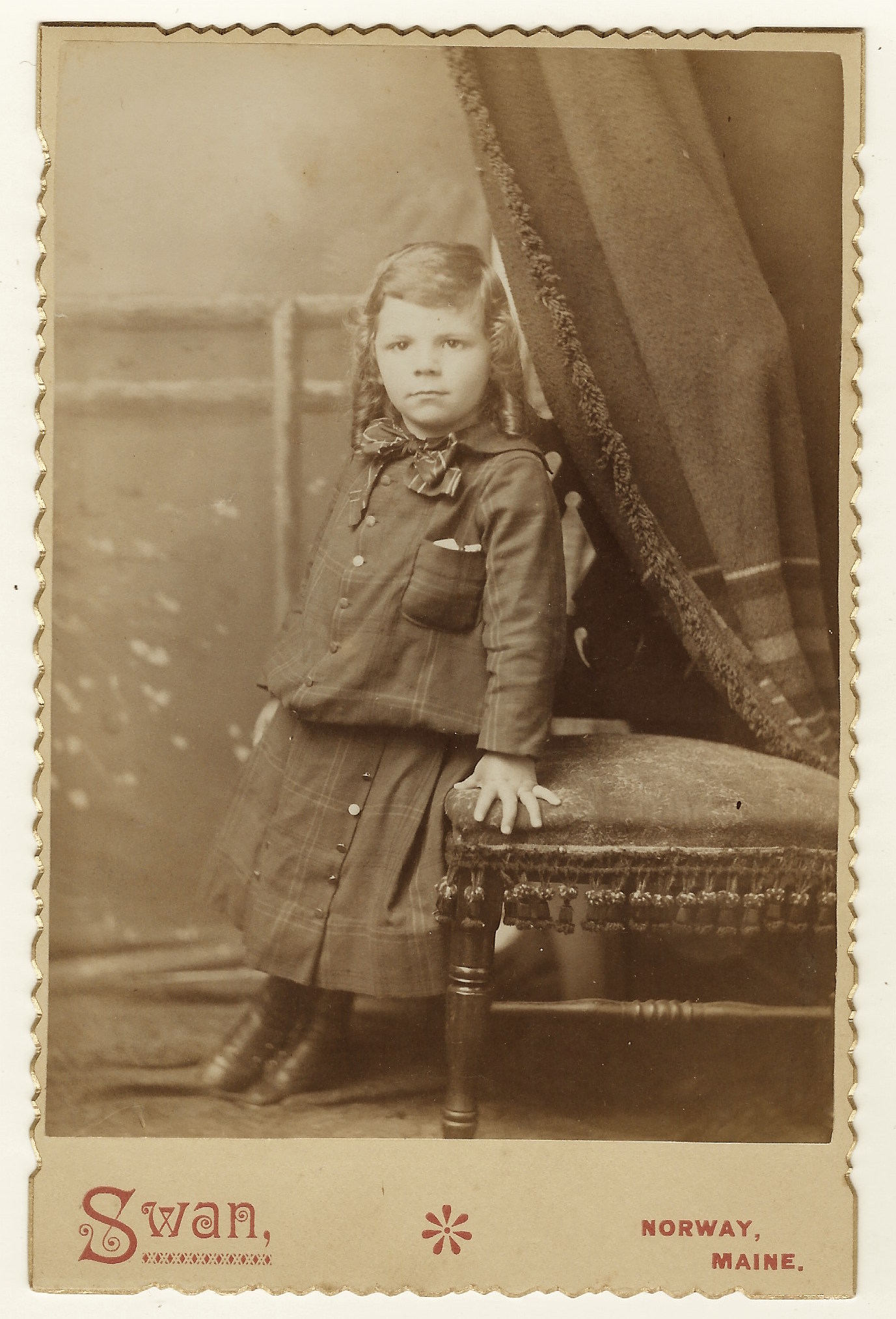
This scallop-edged cabinet card features a young boy posing for his photograph at the Swan studio in Norway, Maine. Some may argue that the child is actually a girl. However, it was common for young boys to wear skirt type clothing and have long hair. John Wesley Swan (1857-?) appears in the 1884 Portland, Maine city directory as a photographer. The 1900 US census reveals that Swan was Canadian born and lived in Norway with his wife (Annie) and their two daughters. Swan married his wife in 1883. According to Anthony’s Photographic Bulletin (1900), Swan’s studio was destroyed by fire and he lost a large number of valuable negatives of scenery in the area of Norway. The journal also states that the “loss was large and the insurance is said to be small”. Swan was the official photographer of the Grand Trunk Railway system. He won a gold medal at the Paris Exposition according to Photo-Era magazine (1900). At one point in his career in Norway, Swan had a partner in his business (Swan & Cobb). John Wesley Swan was involved in a bizarre incident that made the annals of the history of Norway. The book,  “A History of Norway, Maine: From the Earliest Settlement to the Close of the Year 1922”, tells a  mysterious story about Mr. Swan. While on a trip to Boston in 1893, Swan disappeared for a period of about six months. The writer states that Swan “claimed to have been sand-bagged and robbed in Boston and when he partially recovered consciousness found himself in New Orleans”. His memory had “left him” and he wandered around until his memory returned while he was in Texas. Swan returned to Norway and explained his disappearance to his friends and family, and community. According to the writer, many doubted the validity of his explanation.   (SOLD)

Published in: on July 15, 2017 at 12:00 pm  Comments (3)  
Tags: , ,

PORTRAIT OF A CHARMING LITTLE GIRL AND HER DOLL

This vintage hand-colored real photo postcard features a charming little girl holding her doll. The child has a wonderful smile. She is wearing a fancy white lace dress, a necklace, and a hair bow. The postcard was published in 1904 by Neue Photographische Gesellschaft (NPG) which was located in Berlin and Stuttgart, Germany.The company was in business between 1894 and 1948. It was founded by Arthur Black (1862-1943) and it became one of the most well known and largest companies involved in the production of postcards.The postcard is an Oranotypie. An oranotype is a trade name for a type of glossy real photo postcard published by NPG at the beginning of the 20th century.The postcard was mailed to someone in Paris, France and is postmarked in either 1906 or 1908 (it is difficult to decipher which date).  (SOLD)

Published in: on July 14, 2017 at 5:43 pm  Comments (1)  
Tags: , ,