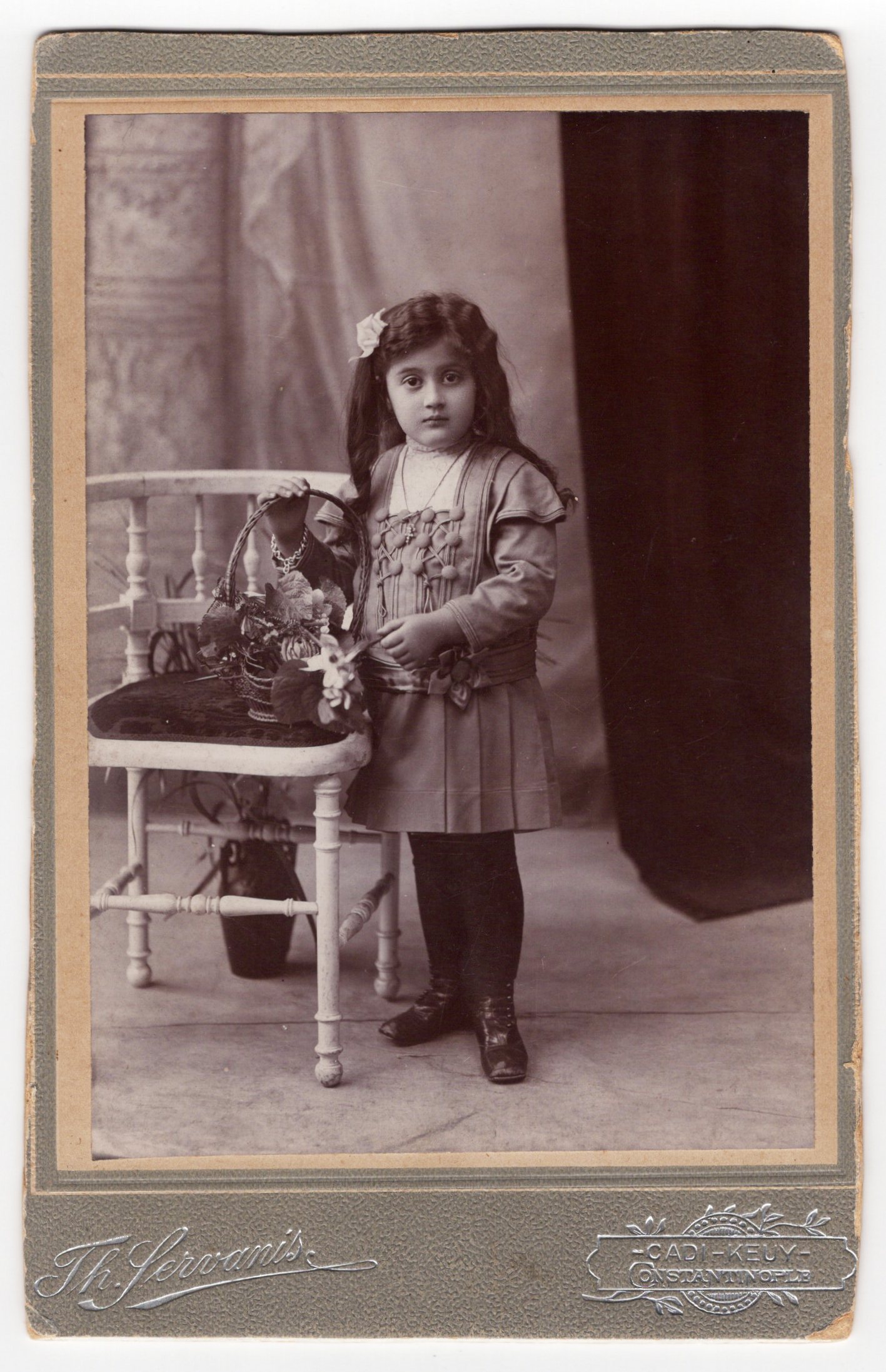
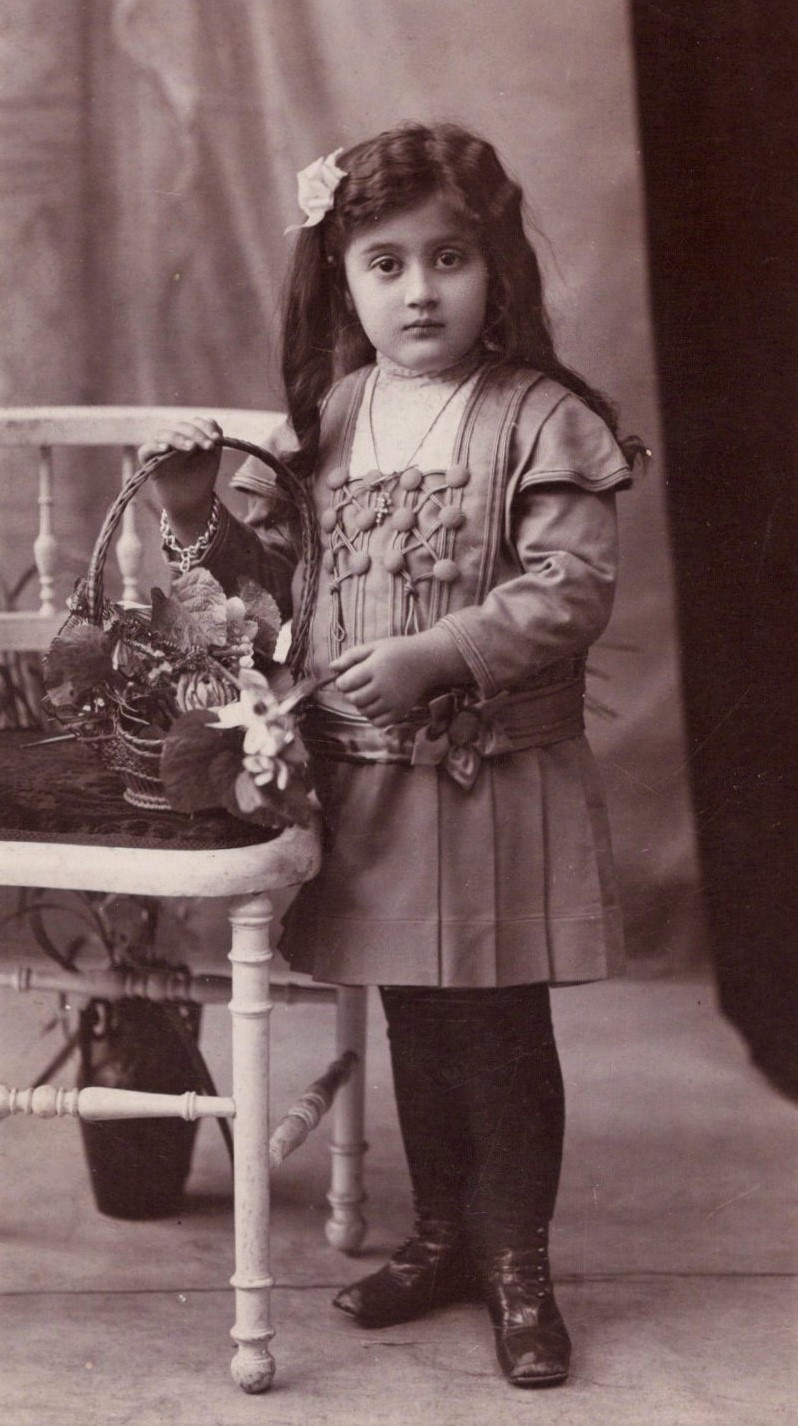
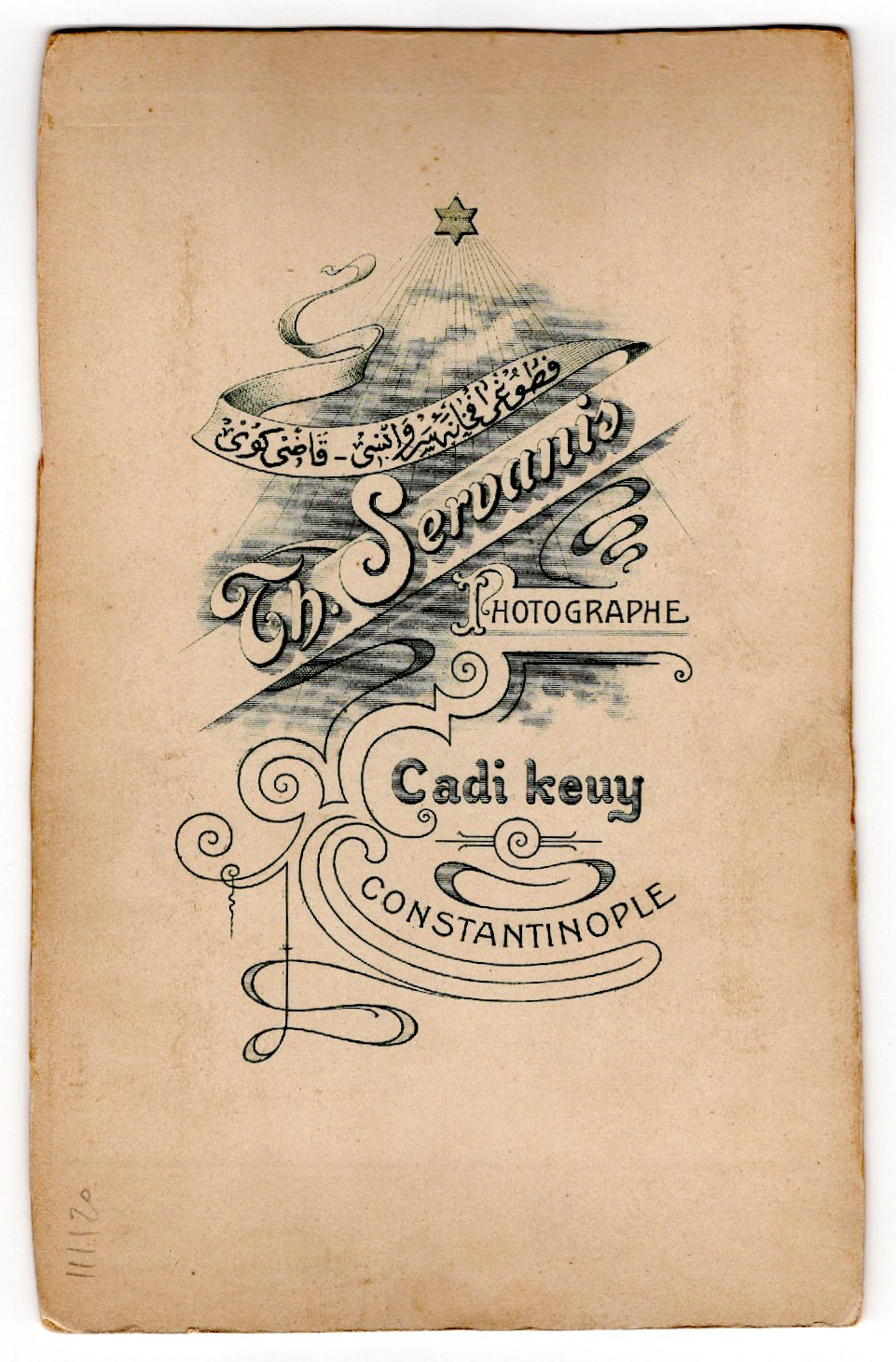
An extraordinarily adorable little girl holding a basket, poses next to a white chair. She is well dressed and wearing a ribbon (possibly a flower) in her hair. The child’s portrait was taken at the studio of Theodore Servanis. The studio was located in Constantinople, Turkey (Ottoman Empire). Servanis was a Greek photographer working in Constantinople from the 1900’s to the 1920’s. This photo is from the early stages of his career in the city. SOLD
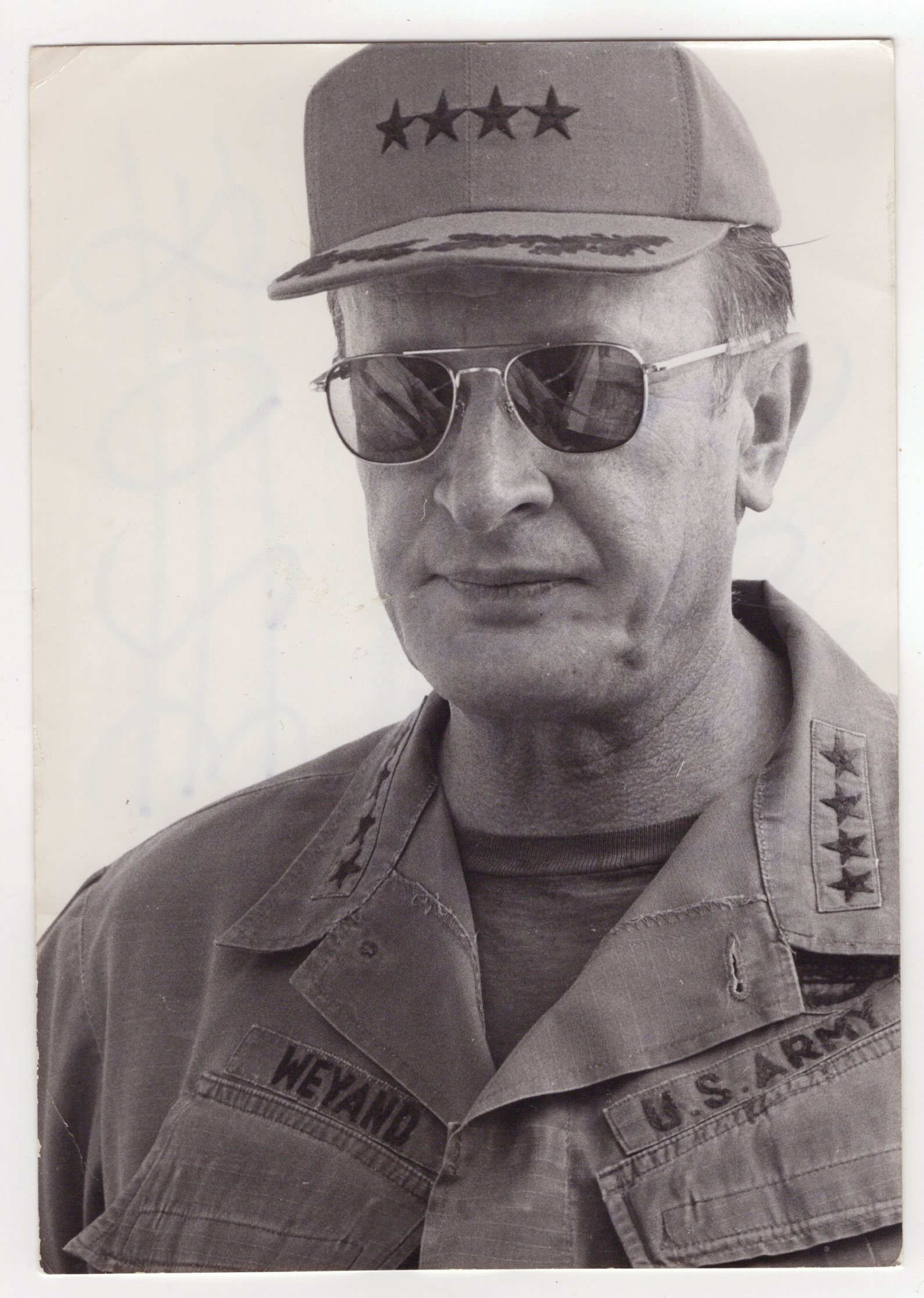
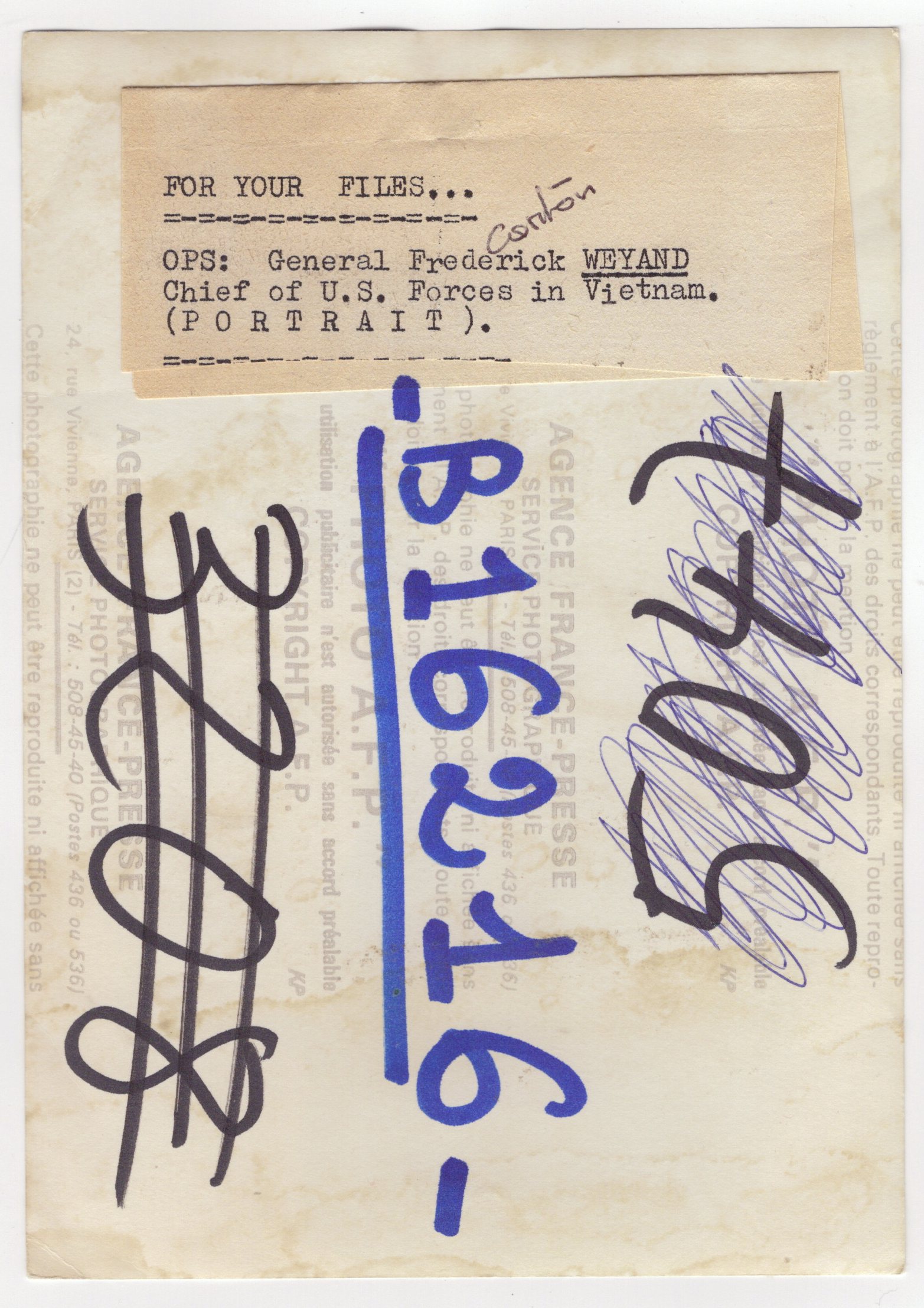
This vintage press photo features General Frederick Carlton Weyand (1916-2010), the last commander of US forces during the Vietnam War (1972-1973). He oversaw the withdrawal of American troops from South Vietnam. He served as Chief of Staff of the United States Army from 1974 to 1976. He was born in California and graduated as a second lieutenant from ROTC at the University of California (Berkeley). He served during both World War II and the KoreanWar. This photograph shows General Weyand as a four star general. He earned that rank in 1970. This press photo was taken for Agence France-Presse Service.(SOLD)
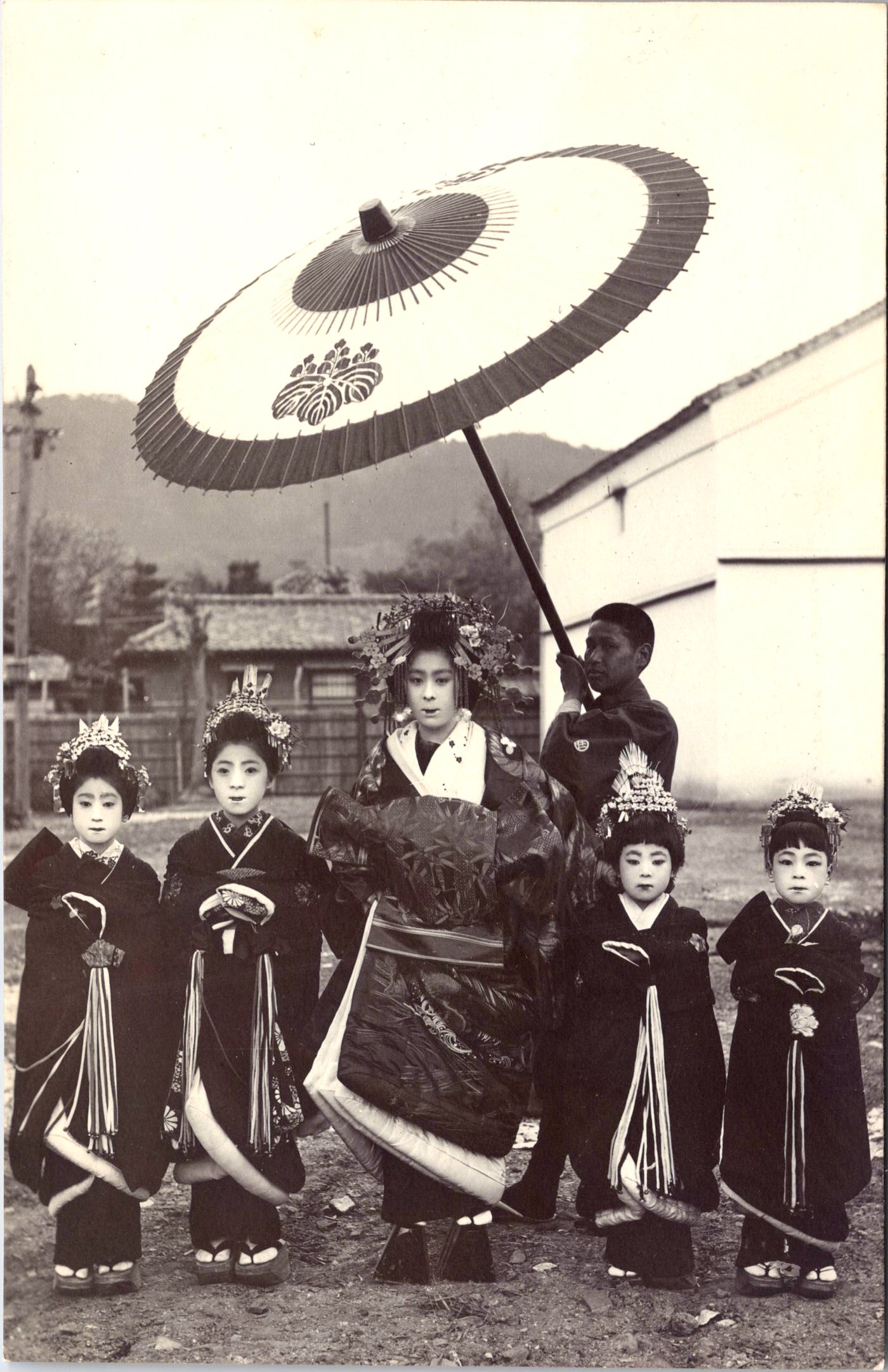
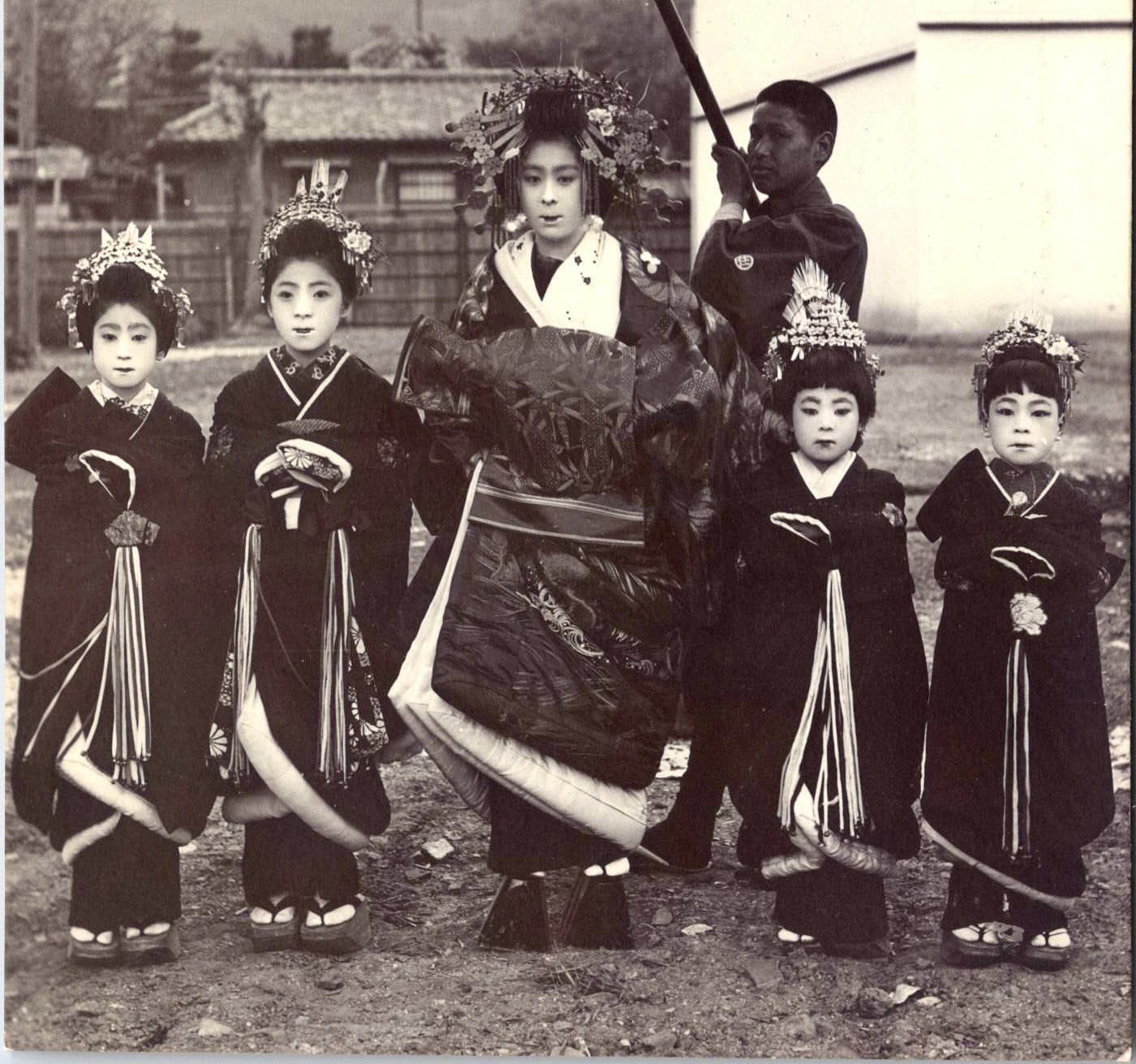
This vintage real photo postcard features a beautiful Oiran Courtesan accompanied by her young assistants (kamaro). What is an Oiran? An Oiran is a high class, beautiful and esteemed prostitute in Tokyo. Her assistants are often apprentices; in other words, future Oirans. How are Oirans different from Geishas you may ask. Geishas are highly trained entertainers. They entertained via song, dance, or playing a musical instrument. Geishas were not necessarily prostitutes, though some were. This postcard comes from a collection that belonged to a US Navy officer. He likely acquired the card while in a Japanese port during his tour of duty. This postcard likely was issued in around 1908. SOLD
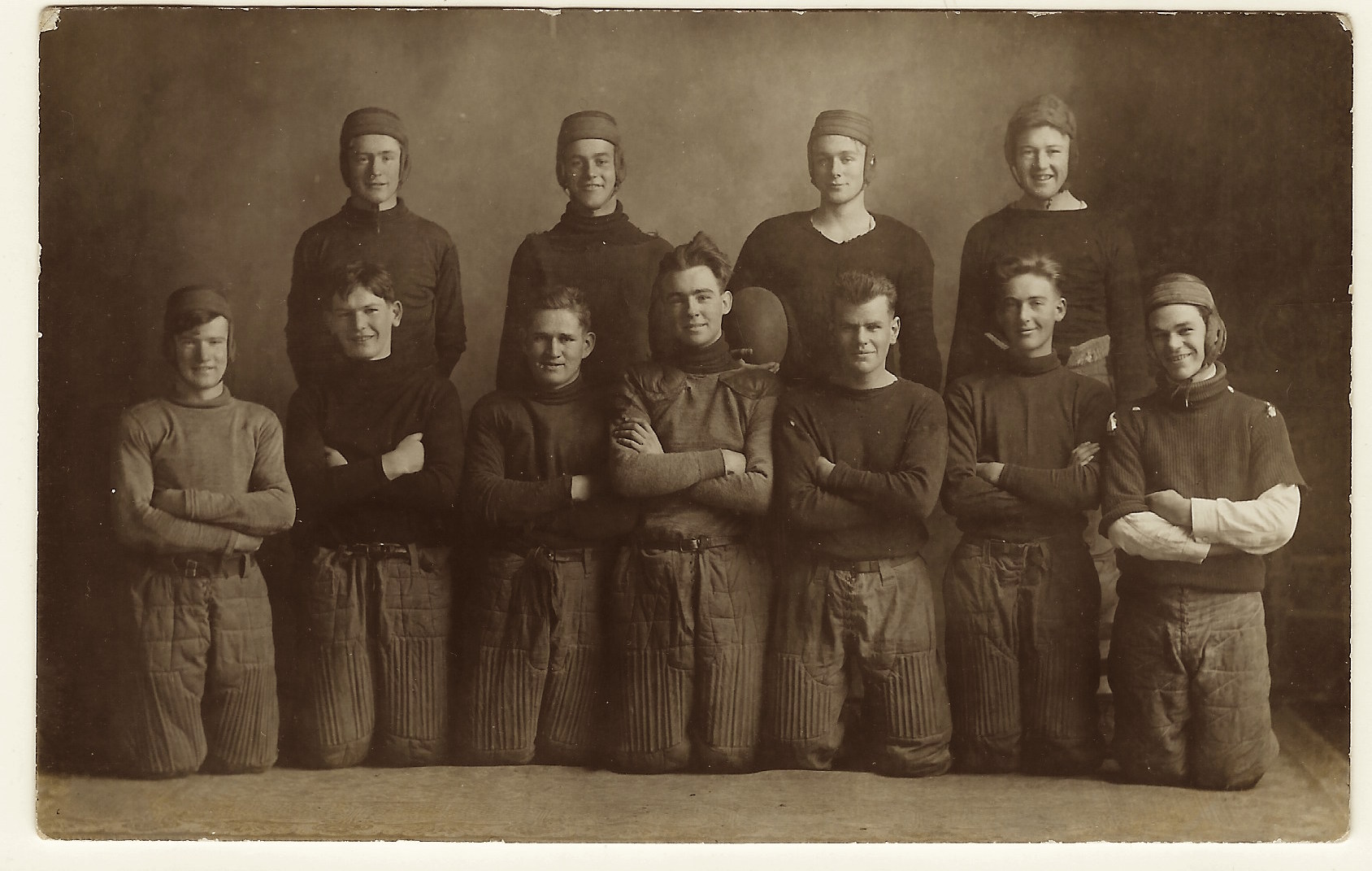
This vintage real photo postcard features a portrait of a football team. These eleven heroes of the gridiron are wearing their uniforms for this group photograph. Six of the young men are wearing their helmets. Unfortunately, these thin leather helmets didn’t offer much protection against concussions or Chronic Traumatic Encephalopathy (CTE). At first glance, I thought this team may actually be a rugby team. I based my impression on the odd shape and size of the football. The ball looked more like a rugby ball than a football. A little investigating revealed that today’s football has evolved over time. Basically, footballs have gone from round, to watermelon shaped, to today’s shaped football. The modern football became commonly used in 1935. In 1869 (first collegiate football game), the ball used was round, resembling a soccer ball. In 1874, a rugby-type ball was introduced. Shaped like a watermelon, it was as difficult to throw as the round ball. In 1912, an oversized version of today’s football was introduced. This football gave the quarterback more control of the ball when passing. The football in this photo postcard appears to be the rugby style ball, and that is compatible with the AZO stamp box which indicates that this portrait was taken between 1904 and 1918. The players and their team are unidentified. SOLD
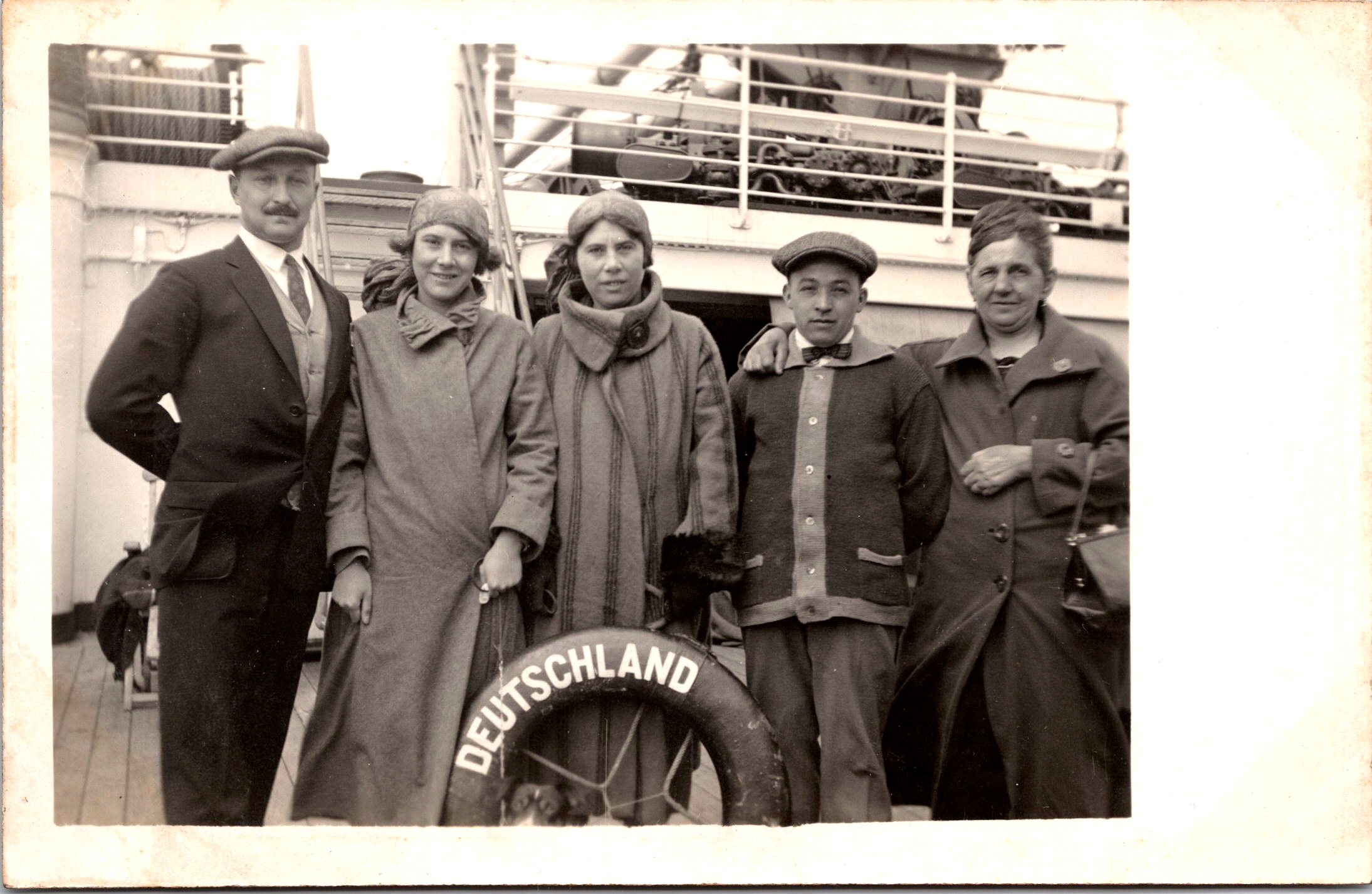
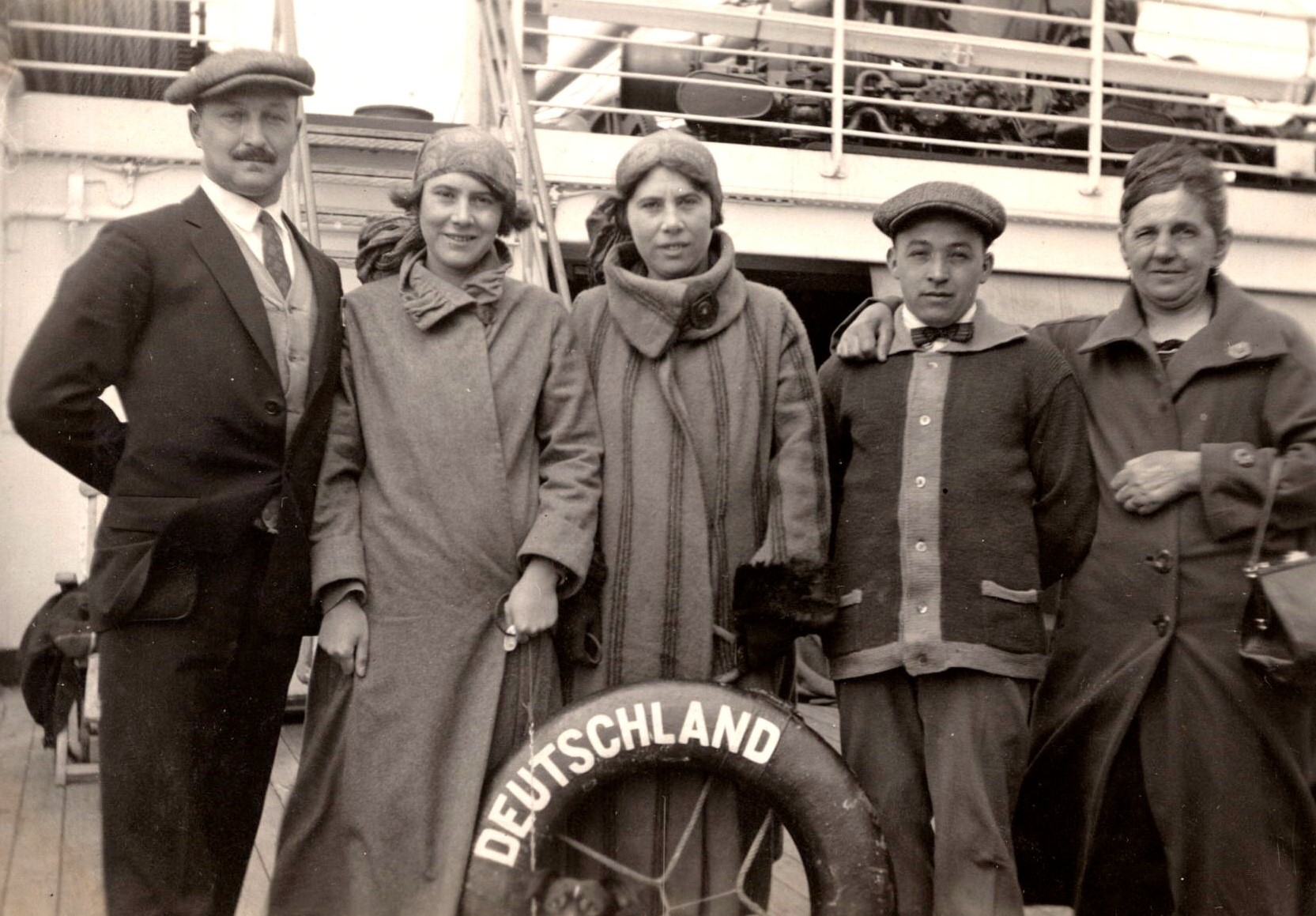
This striking vintage real photo postcard features a family of five posing on board the passenger liner, SS Deutschland. The life buoy in front of the family reveals the name of the ship. The family is likely on a vacation cruise. The father and the daughter standing next to him appear to be genuinely happy about their ocean adventure. The SS Deutschland was launched in 1900 by the Hamburg America Line of Germany. The ship was able to cross the Atlantic Ocean in a little more than five days. Unfortunately, the ship had chronic engine problems and was removed from transatlantic service in 1910. We can safely determine that the photograph on this postcard was taken between 1900 and 1910.The ship later saw service in World War I and then was used as a immigrant ship (Hansa). The ship was scrapped in 1925. Printed on the reverse of the postcard is the name, “Leonar”. Leonar was a firm that produced postcard stock (paper), cameras, and other photographic supplies. SOLD
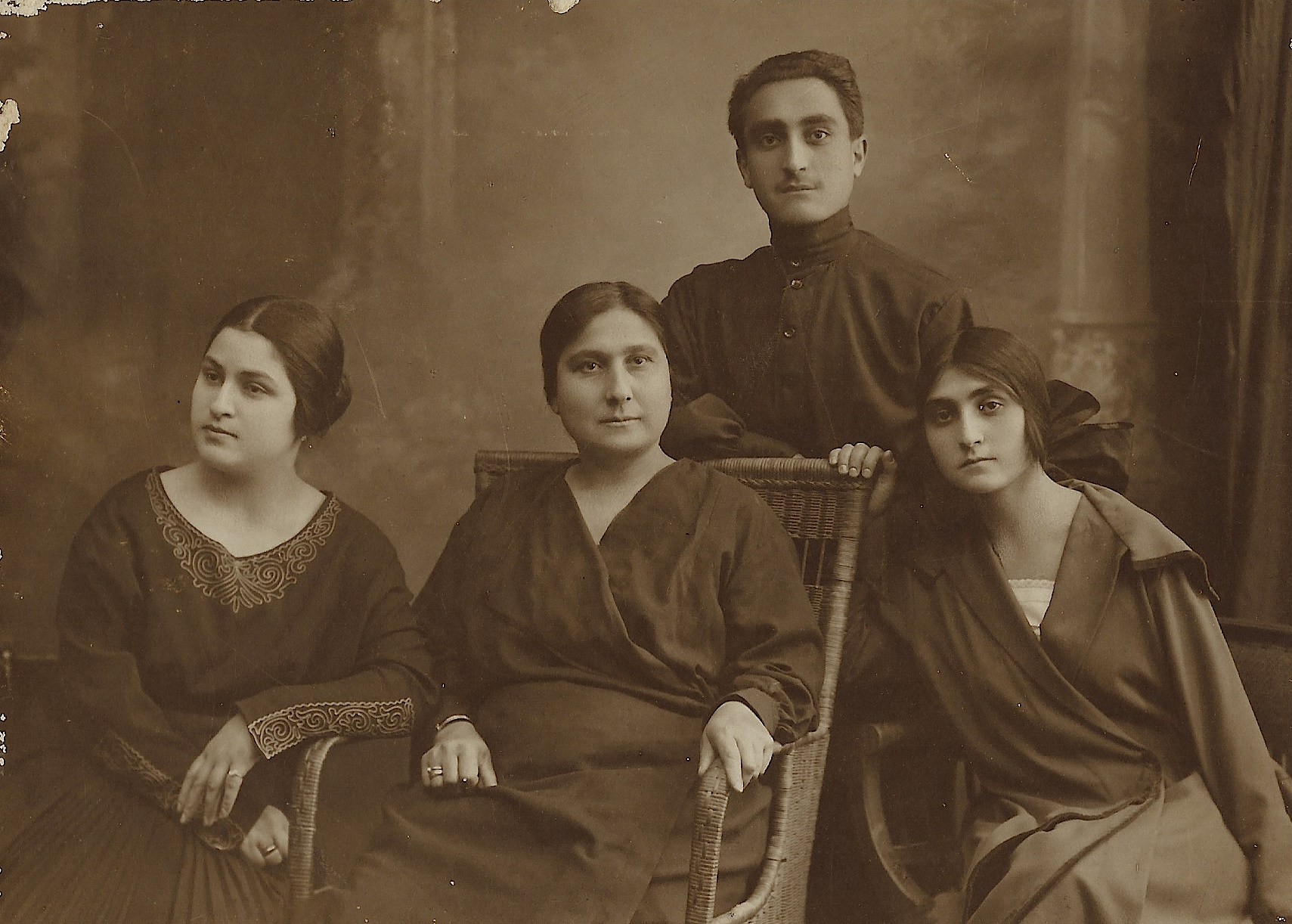
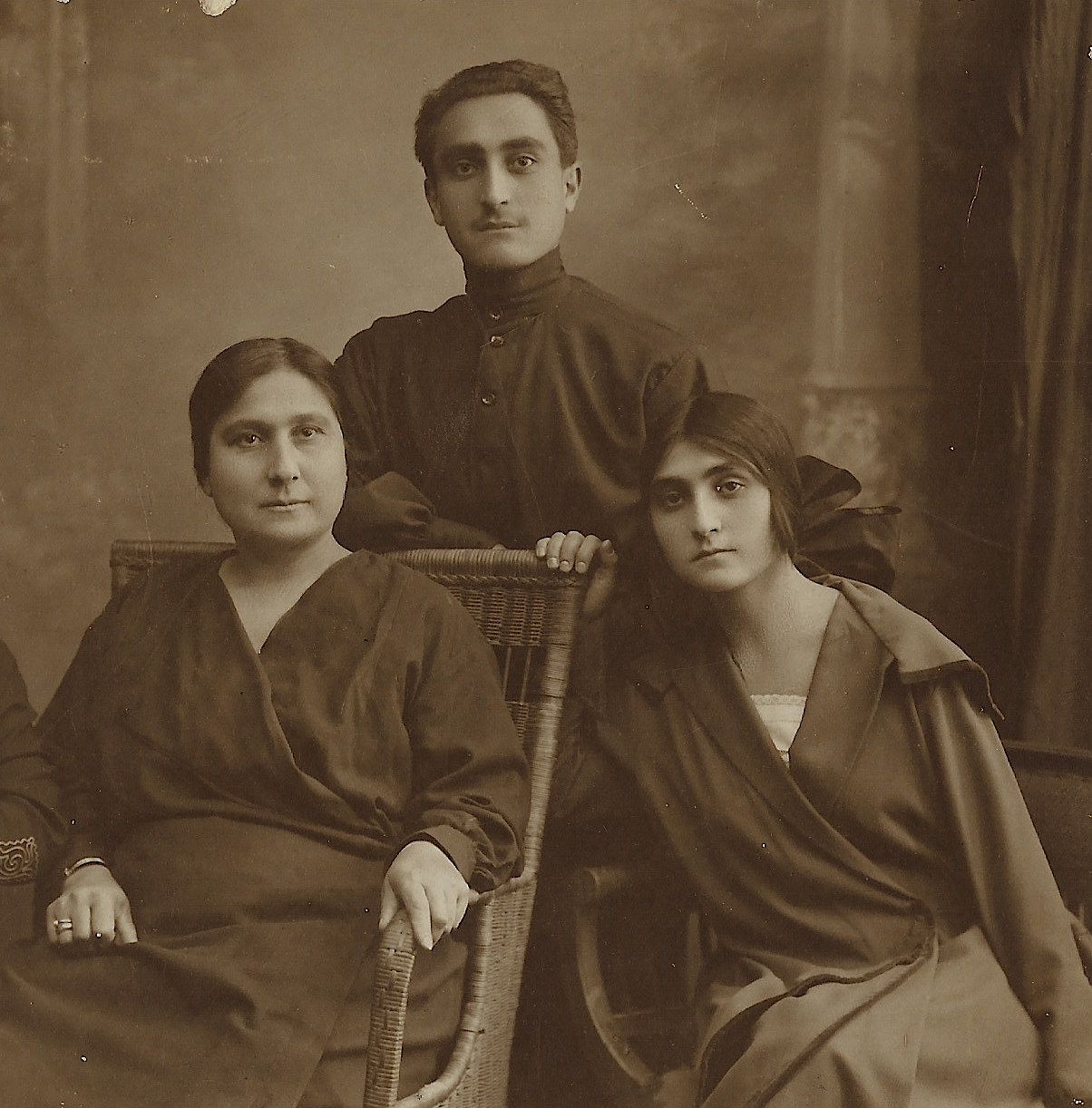
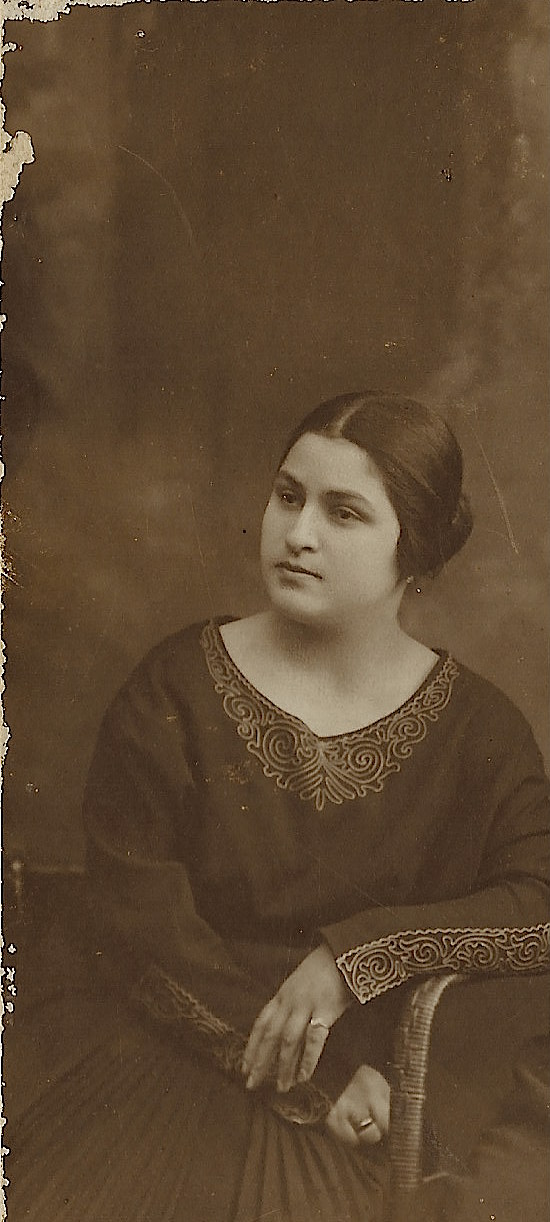
This photograph appears to be a family portrait judging by the family resemblance seen among the subjects. There is something very special about this image. Each of the four subjects have a very striking appearance. The young woman, furthest on the right side of the image, is especially beautiful. She has piercing eyes and seems to have troubling thoughts. This photograph has an abundance of personality. I am uncertain about where the photograph originates from. Reading the name of the photographer which is embossed on the bottom right hand corner of the mat, suggests that this is a Russian photograph. However, I have a major deficit in recognizing foreign languages, and this image could be from one of many other places in eastern Europe. SOLD
ADDENDUM: I have received feedback from a few readers of Russian about this photograph. There appears to be agreement that the embossed logo advertising the photographer’s studio reveals that the photograph was taken in the city of Tiflis, which became Tbilisi (the capital city of then nation of Georgia). There is also consensus that the photographers name is P. Kosloff or P. A. Kozlov.
ADDENDUM !!: I received the following message about this photograph on 5/4/23. The commenter saw the photo on another site. “the picture was taken very likely before 1917, because Koslov is written in old Russian orthography. There was no independent Georgia at that time, as Tiflis was Partner the Russian empire. And the family looks Armenian.”
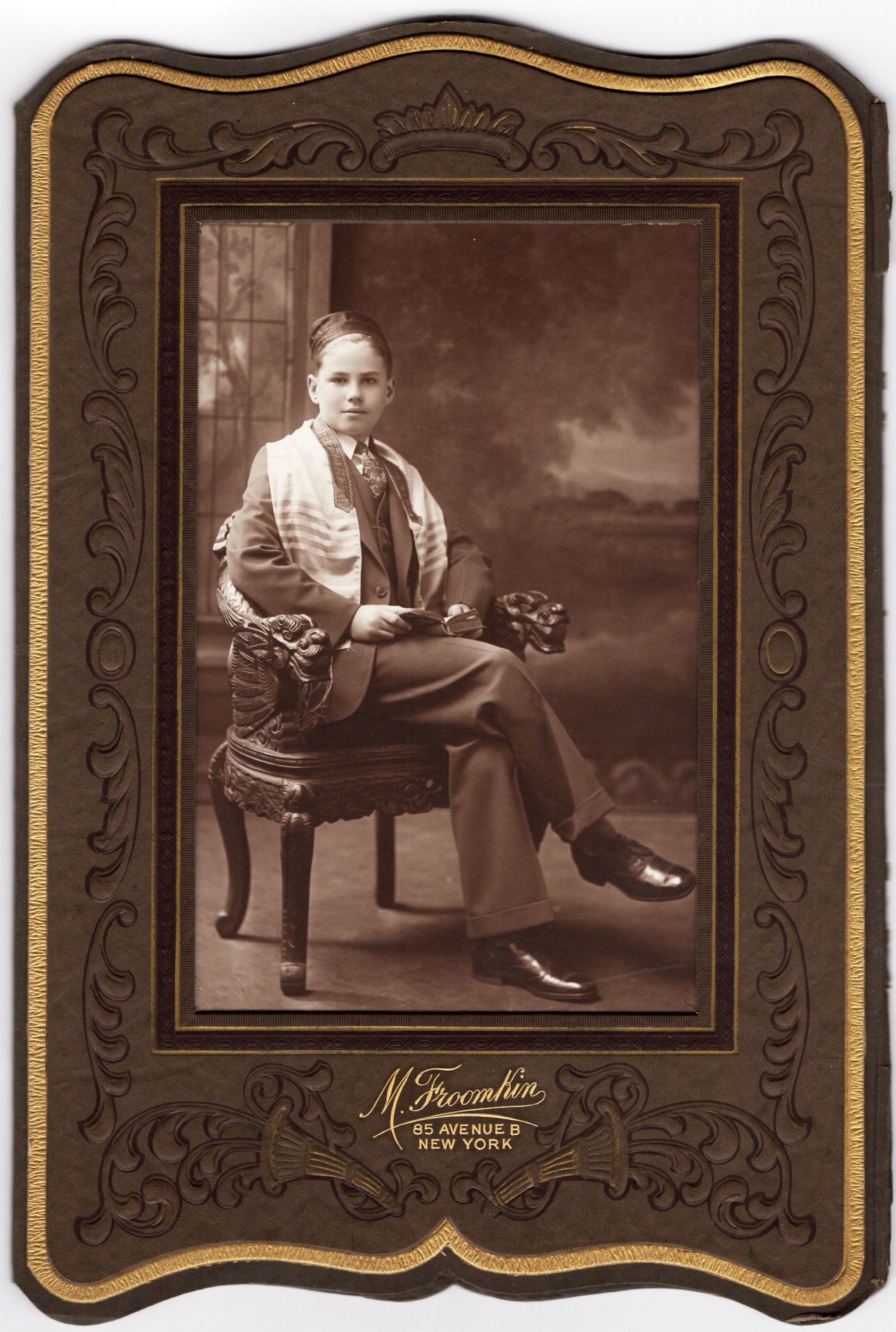
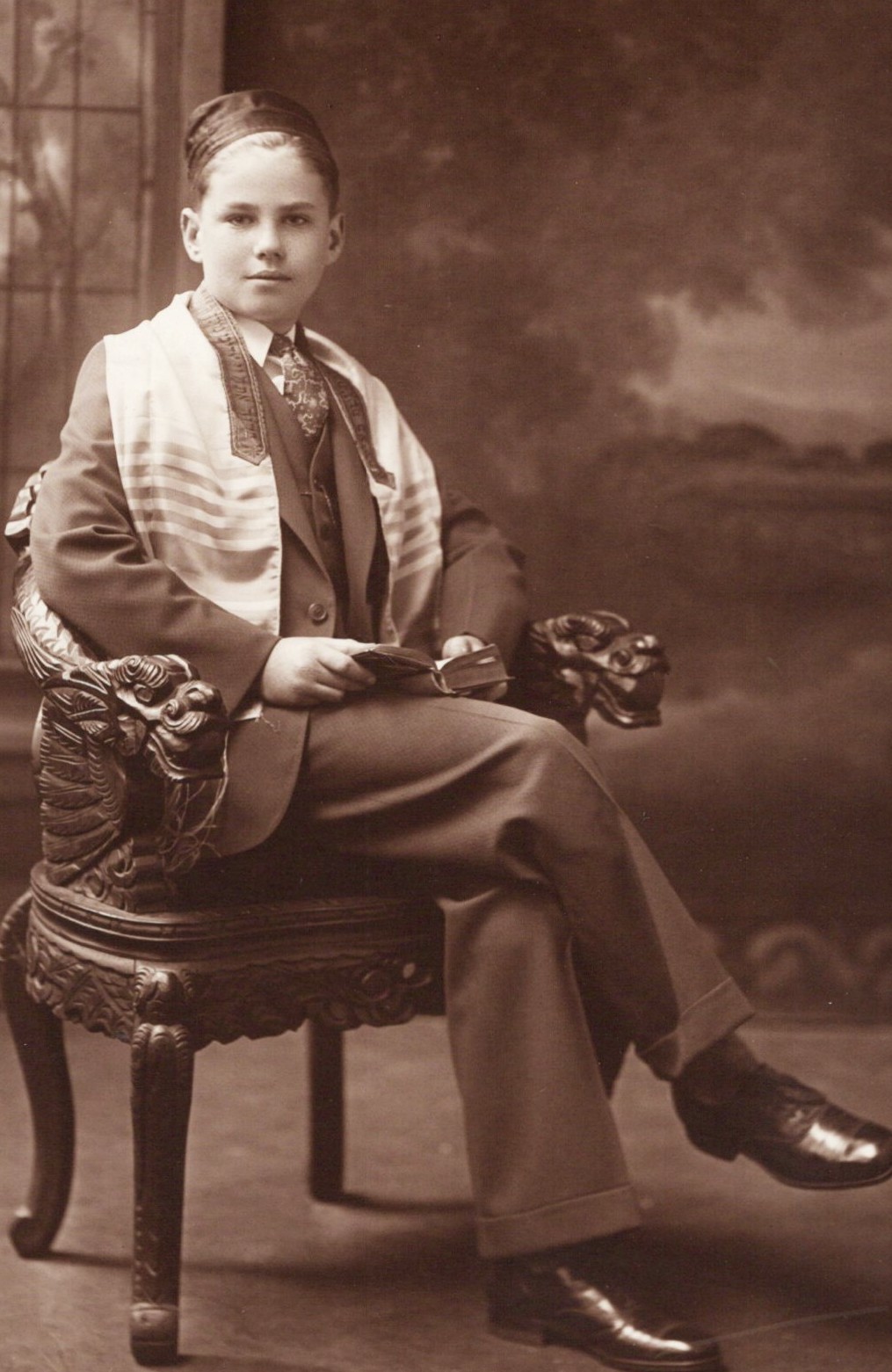
This vintage portrait photograph captures a poised young Jewish boy, likely taken around the 1920s, dressed formally for what appears to be his Bar Mitzvah. He sits confidently in a high-backed carved chair with lion-head arms, wearing a well-tailored three-piece suit. Draped over his shoulders is a traditional tallit (Jewish prayer shawl), a ceremonial item typically worn during religious rites of passage such as a Bar Mitzvah. In his hands he gently holds what appears to be a small prayer book or sacred text. His expression is one of calm maturity and seriousness, with just the faintest trace of a smile. His hair is neatly combed, and his polished shoes and well-fitted clothing reflect the importance of the occasion. The photograph was taken by Max Froomkin, a Russian-American professional photographer located at 85 Avenue B, New York—a neighborhood historically known for its vibrant Jewish immigrant community on the Lower East Side. The photograph is beautifully mounted in a decorative folder with an embossed Art Nouveau-style frame. This is a touching and visually striking example of early 20th-century Jewish portraiture in America, and it offers both historical and cultural value. (SOLD)
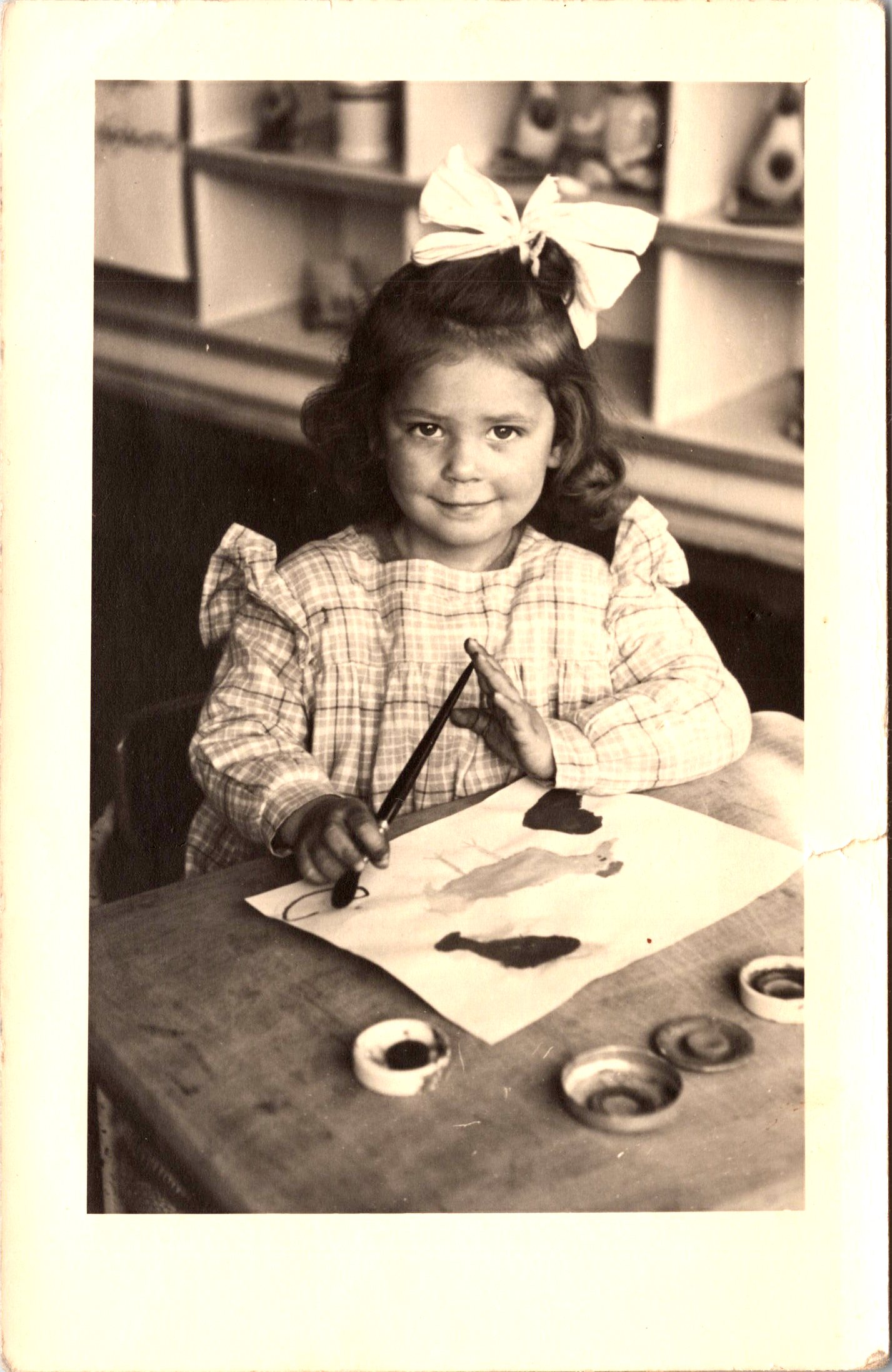
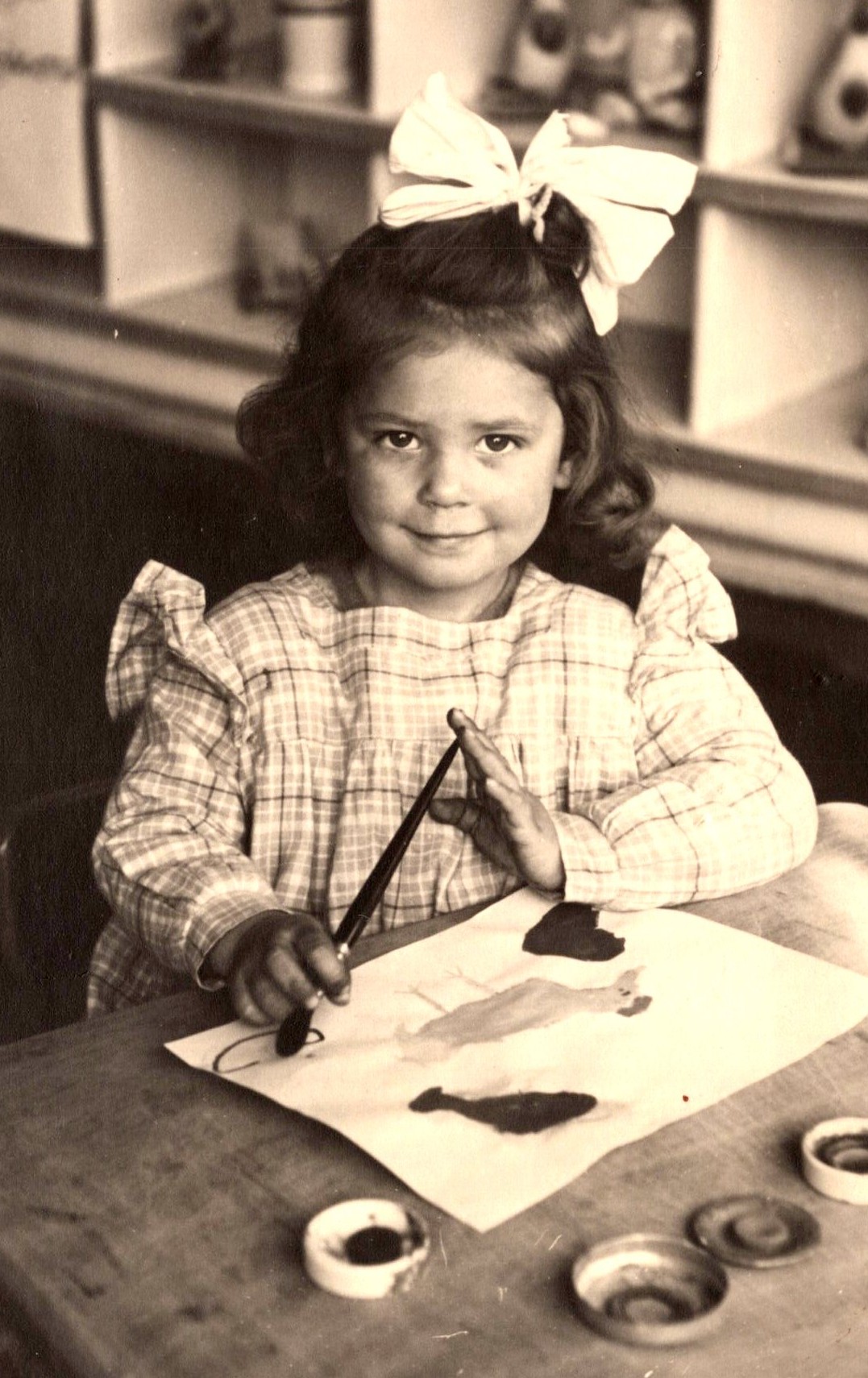
This charming vintage photograph/postcard captures a young girl engaged in a painting activity, likely from the 1920s or 1930s. The handwritten caption on the reverse reads “Petite Artiste Peintre”, which translates from French to “Little Artist Painter.” The girl, who appears to be around five or six years old, has a sweet and confident expression as she looks directly at the camera. Her dark, wavy hair is adorned with a large bow, giving her a classic, period-appropriate appearance. She wears a checkered smock dress with ruffled shoulders, which was likely intended to protect her clothing while she paints. Sitting at a wooden school desk, she holds a paintbrush in her small hand, mid-stroke, as she creates her artwork. The paper in front of her shows a simple yet enthusiastic painting, possibly of a person and a fish. Around her, several small paint pots are scattered on the desk, with some open, revealing the rich tones she is using. The background features a set of shelves lined with neatly arranged objects, possibly classroom materials or art supplies, reinforcing the setting as a school or children’s art class. The overall composition of the image captures both the innocence and creativity of childhood. (SOLD)
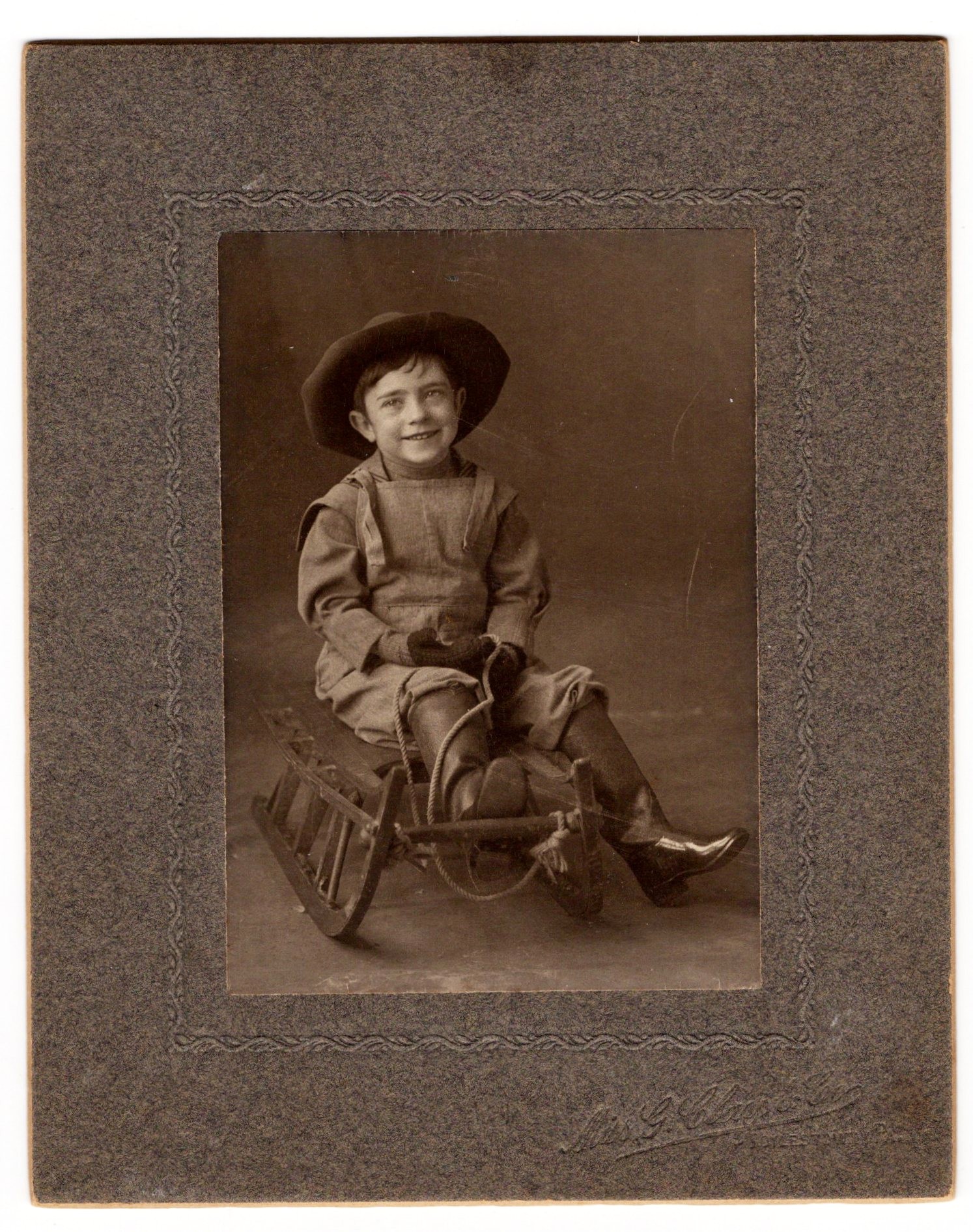
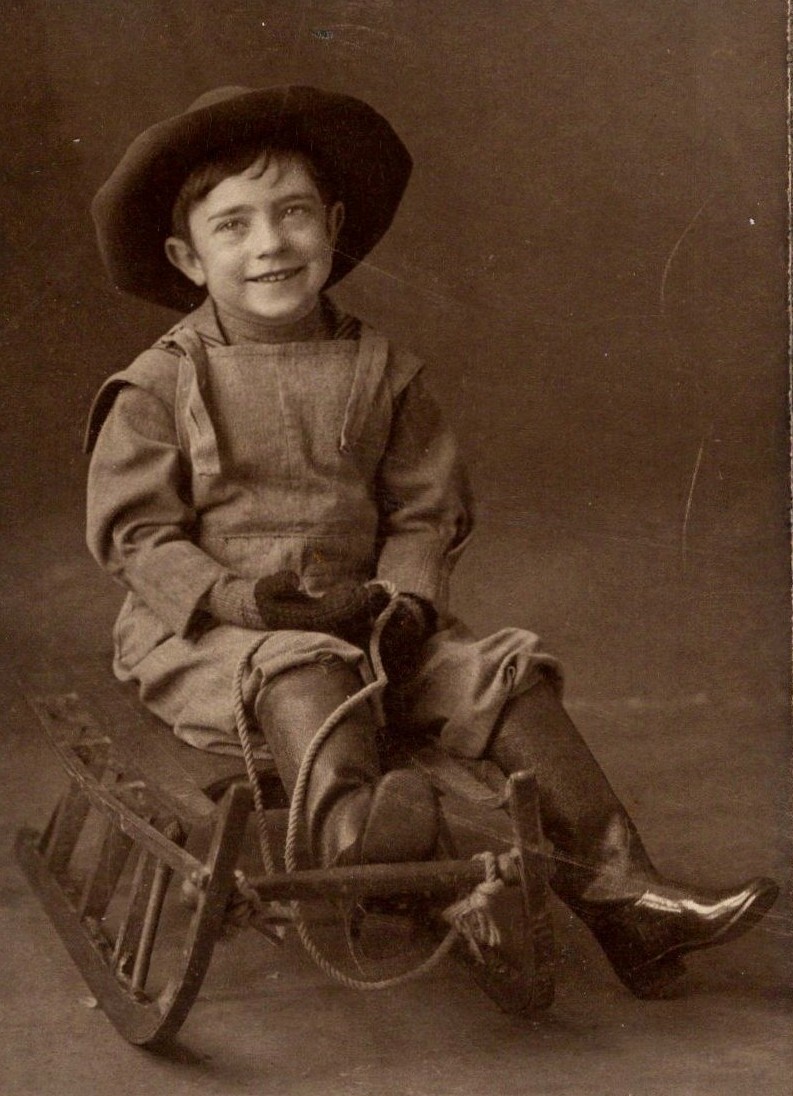
This charming vintage photograph captures a young boy seated on a wooden sled, dressed in winter attire. The image is mounted on gray cardstock with a debossed border, a style prevalent between 1900 and 1915. The boy is dressed in a thick woolen outfit, high leather boots, and a wide-brimmed hat, typical of early 20th-century winter wear. He sits on a wooden sled, which resembles designs manufactured between 1895 and 1915, commonly used in Northern states. The photographer’s signature, “Miss Clarke,” is embossed in script on the lower right corner. The photographer is Miss Clarke, possibly the celebrated Sara Maynard Clark. The photograph was taken at Miss Clarke’s Doylestown, Pennsylvania studio. Various aspects of the photograph indicate that the photo was taken sometime between 1905 and 1912. Sara Maynard Clark (1891–1973) was a prominent writer, editor, historian, and photographer based in Bucks County, Pennsylvania. After relocating to the area in 1933, she contributed extensively to local publications such as The New Hope, Bucks County Traveler, and New Bucks County Magazine, often incorporating her own photographs into her articles. She also collaborated with her husband, Harold (Hal) Clark, and their son, Maynard Clark, both photographers, to document the evolving character of Bucks County through photography. Her work is preserved in the Bucks County Artists Database and has been featured in exhibitions at the Michener Art Museum. If I have dated this photograph correctly, the photographer is likely a different woman than Sara Maynard Clark because she was likely living in Iowa, and not Pennsylvania, when this photo was taken. In addition, Clark is spelled Clarke on this photograph’s mount. Further research is required to confirm the identity of the female photographer who took this photo. (SOLD)
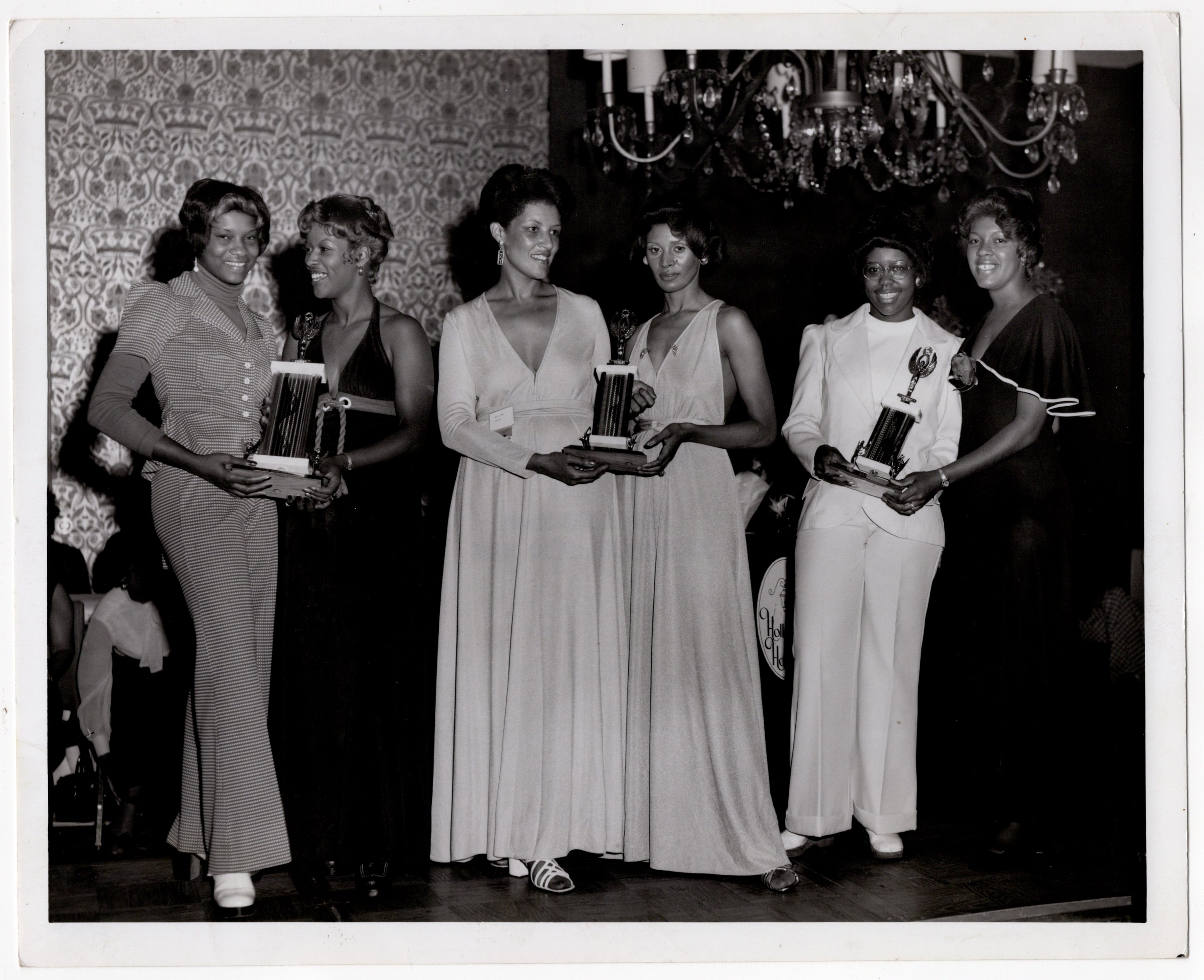
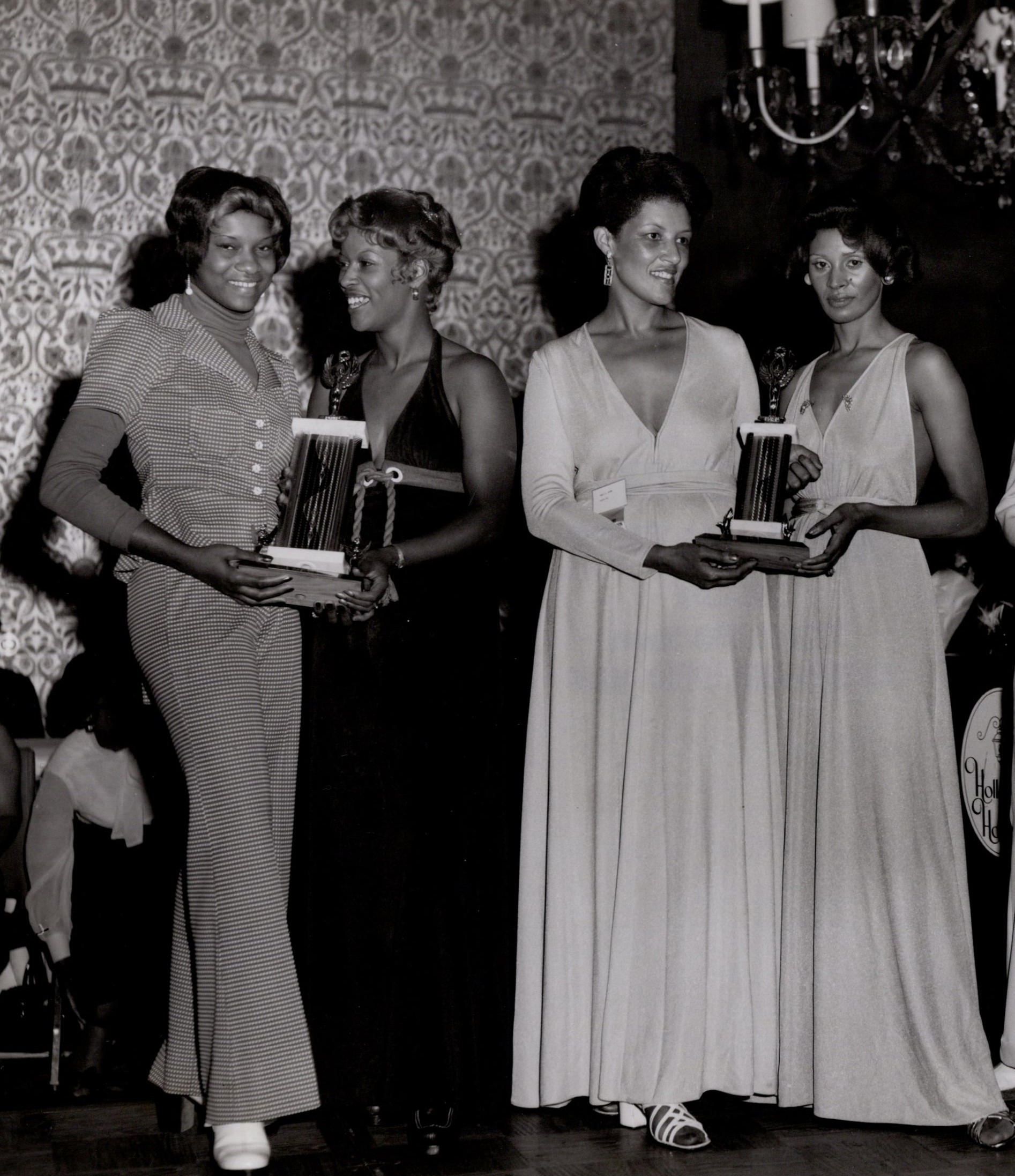
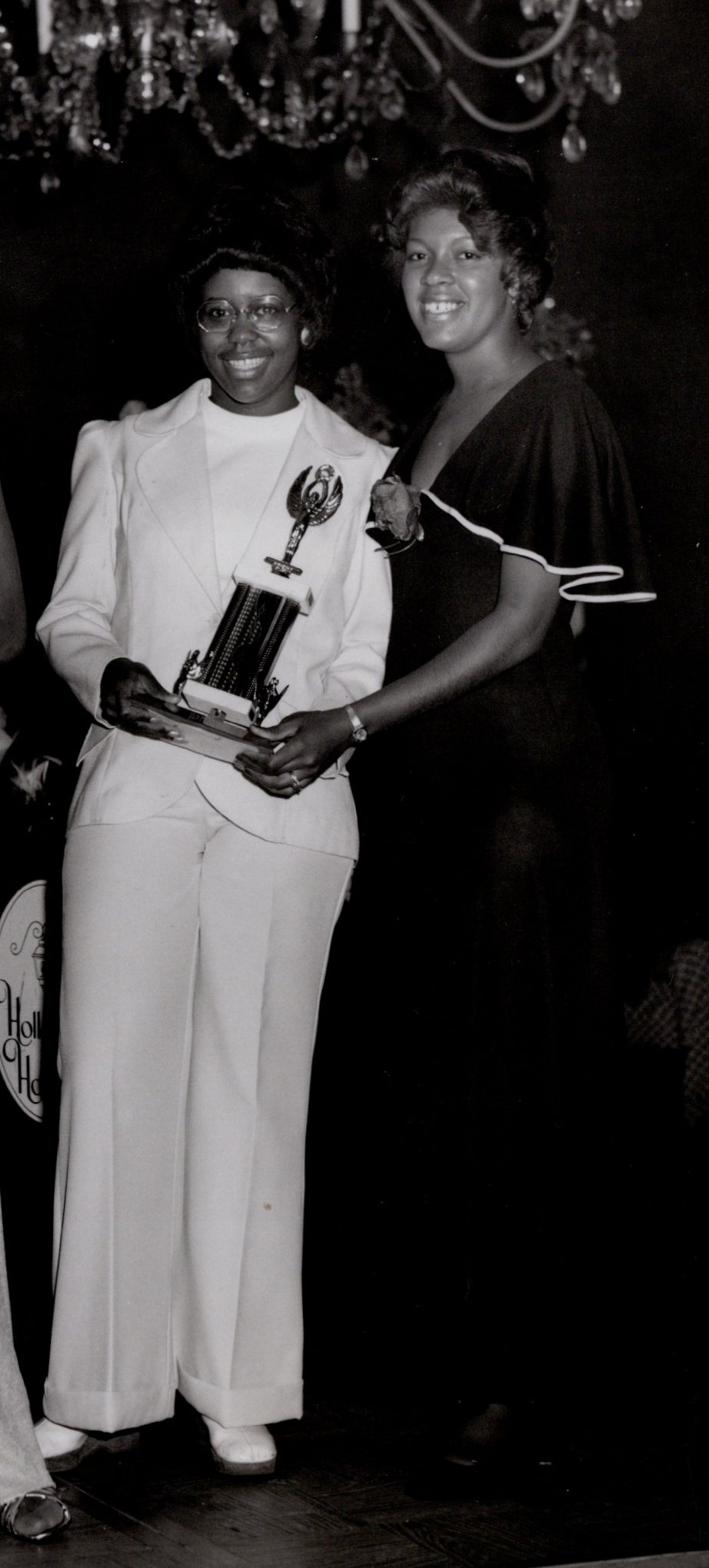
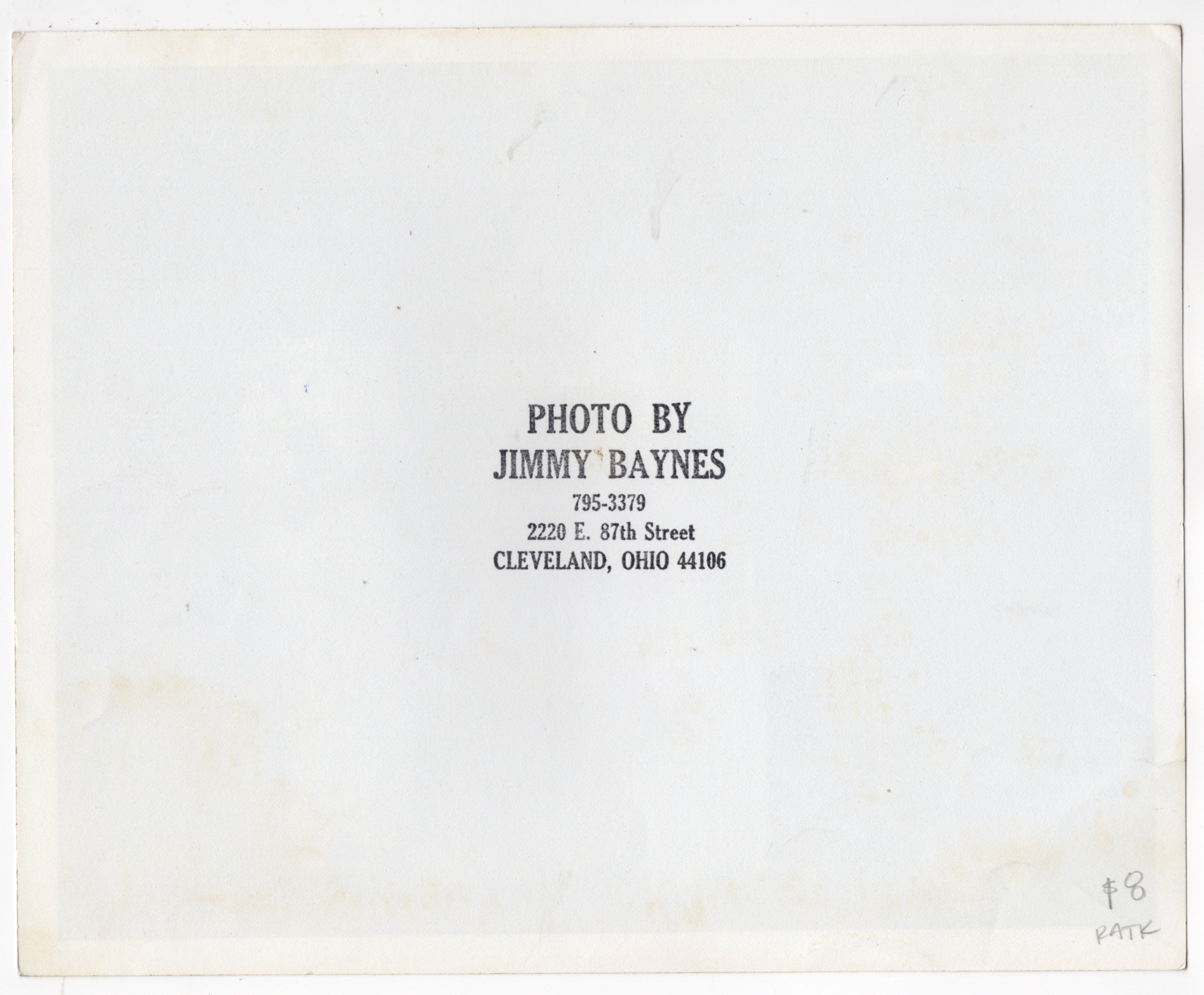
This dynamic vintage press photograph captures a joyous and stylish moment at what appears to be a mid-century African-American social event or pageant, photographed by Jimmy H. Baynes, a notable African-American photographer who was active in Cleveland, Ohio. The image dates likely to the late 1950s or early 1960s, an era when such gatherings were vital community affairs celebrating Black excellence, fashion, and music. The central focus is a beautifully posed group of six African-American women, all elegantly dressed in cocktail or evening wear. The women wear a range of fashionable 1950s attire, from a sharp houndstooth pantsuit and flowing evening gowns to a crisp white suit. Their hairstyles are elegant and era-appropriate, and their expressions range from joy to pride to graceful composure. The setting appears to be a formal banquet hall or community venue, likely in Cleveland. Each woman holds a trophy, suggesting the conclusion of a pageant, award ceremony, or fashion competition. The photograph is the work of Jimmy H. Baynes, a prominent African-American photographer who chronicled the Black social and cultural scene in Cleveland throughout the mid-20th century. His work often captured the heart of the community—beauty pageants, civic events, family milestones, and musical gatherings—preserving an important visual history that is increasingly recognized and appreciated by collectors and scholars. The photographer of this photograph, Jimmy Baynes was known for his ability to capture the essence of African American life, culture, and entertainment from the 1950s through the 1980s. Originally a postal worker, Baynes pursued photography as a passion, ultimately founding Baynes Foto Service. His work chronicled the vibrancy of mid-century African American social life, from intimate gatherings and beauty contests to the pulsating energy of live music performances and political events. Baynes photographed some of the most iconic figures in entertainment history, including Aretha Franklin, Louis Armstrong, Count Basie, Mahalia Jackson, Louis Jordan, Jerry Lee Lewis, the Platters, and the Drifters. His ability to capture both candid and staged moments gave his work a lasting impact, preserving the rich history of Cleveland’s African American community. His legacy is recognized today by institutions such as the Rock and Roll Hall of Fame and Museum Library and Archives in Cleveland, which houses a collection of his photographs, primarily focusing on music and entertainment. In 2010, shortly before his passing, his work was featured in the “Polaroid: Instant Joy” exhibition in Brooklyn, New York, reaffirming his role as a visual storyteller of African American life in the mid-20th century. This photograph was taken in the 1950’s. (SOLD)





 THE CABINET CARD GALLERY