HANDSOME BEARDED MAN IN SUSQUEHANNA, PENNSYLVANIA (CARTES DE VISITE)

cdv beard

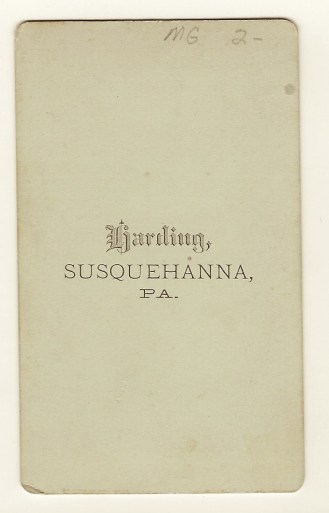
A well dressed handsome middle aged man poses for his cartes de visite (cdv) portrait at the Harding Studio in Susquehanna, Pennsylvania. The gentleman has an interesting beard. His handsome face is visible because he lacks a mustache. The photographer of this image is Addison Delavan Harding (1847-1908). At one point in time, his studio was located at 42 Main Street in Susquehanna. His obituary appears in the magazine “Snap Shots” (1908). The article reports that he worked over 40 years as a photographer. He was born in Binghamton, New York. He learned the business of photography while in the employ of a photographer in Towanda, Pennsylvania. Harding opened a studio there in 1865. He married Fannie V. Harding (Shipman) (1847-1945) in 1867. He moved his business to Susquehanna in 1873. After Hardings death, his son (D S Harding) took over the business and operated it until 1942. Fanny lived to the age of 98 years-old. Addison and Fannie Harding are buried in Evergreen Cemetery in Oakland, Pennsylvania.
cdv beard 1

ADORABLE LITTLE GIRL RIDING A BEAUTIFUL PONY IN CAMBRIDGE, MASSACHUSETTS (VINTAGE PHOTOGRAPH)

pony

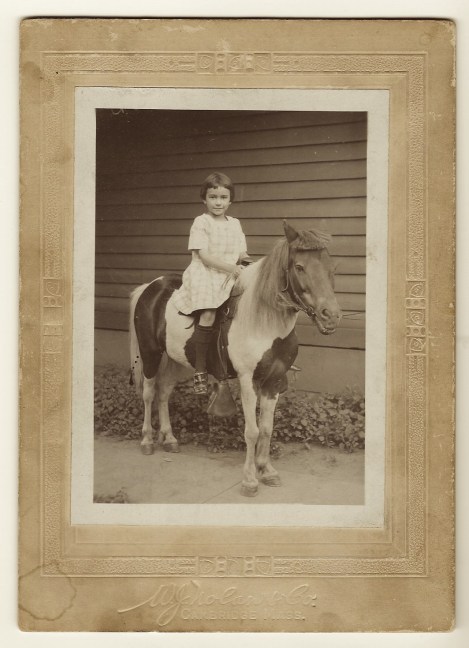
The little girl riding this beautiful pony is very adorable. She is plainly dressed and wearing high socks and sandal type shoes. She is likely not an equestrian, judging by her clothing.  The little girl and pony were photographed by W. J. Nolan & Company in Cambridge, Massachusetts. Preliminary research found other photographs by the Nolan firm that featured children on the same pinto as seen in this photograph. Apparently, Nolan liked to use the pony as a prop in his photographic work. (SOLD)

pony 2

Published in: on June 13, 2016 at 11:11 am  Comments (3)  
Tags: , ,

ADORABLE LITTLE BOY POSES WITH HIS COASTER EXPRESS WAGON AND HIS CUTE DOG

wagon

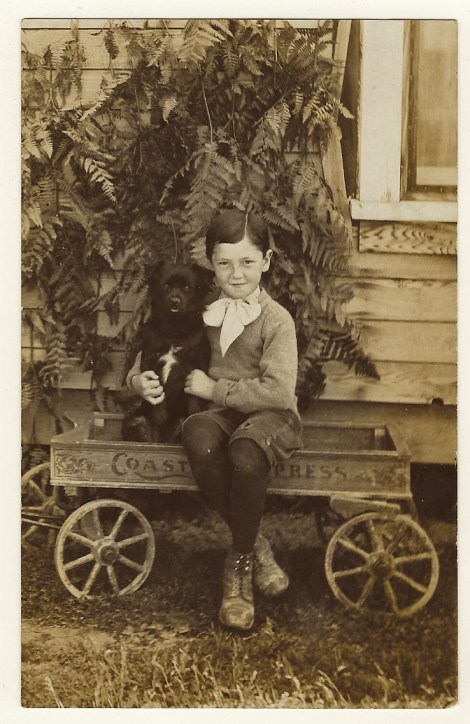
This vintage real photo postcard features an adorable little boy posing with his Coaster Express wagon and his cute dog. The freckle faced boy is displaying a sheepish grin, and why shouldn’t he? After all, he is spending time with his favorite toy and his very best friend. Boy, toy, and dog are posed outside and in front of a wooden house. The AZO stamp box indicates that the postcard dates to sometime between 1904 and 1918.

wagon 2

Published in: on June 7, 2016 at 12:00 pm  Comments (2)  
Tags: , ,

TWO YOUNG WOMEN WITH GREAT SMILES DRIVING A JALOPY (REAL PHOTO POSTCARD)

Scan

This vintage real photo postcard features two young woman posing for a studio photo portrait while sitting in a faux automobile. Their car is decorated with American flags. The women in this image are flashing wonderful smiles. The young lady in the passenger seat has movie star good-looks. Note the country road backdrop. Examination of the reverse of the image (see below) reveals that it is the front of a postcard. The glue residue on the back of the photograph tells us that the image formerly resided in someone’s photo album or scrap book.

Scan 1

Published in: on June 6, 2016 at 3:56 pm  Leave a Comment  

MOLLIE FULLER: STAGE ACTRESS AND VAUDEVILLE PERFORMER

molly fuller

This cabinet card is a portrait of Mollie (Molly) Fuller (1868-1933), a Boston born stage and vaudeville performer. She appeared in two Broadway plays but is better known for her vaudeville career. She was the second wife of Frederick Hallen (1859-1920) and the couple were a popular team on the vaudeville stage for nearly twenty-five years. They were known for their short comedic plays. Mollie’s resume includes performances in “Adonis” and in “Evangeline”, both plays by  Edward Rice. He biggest hit was her starring role in “The Twentieth Century Girl” (1895). When producer Edward Albee learned Mollie was near blind an impoverished in Chicago, he arranged to bring her to New York. He commissioned a theater piece to be written for her to perform in. She returned to the stage to perform in the resulting playlet “Twilight”. Mollie was the sister of Loie Fuller (1862-1928). Loie was a pioneer of modern dance and theatrical lighting techniques. Among Loie’s skills was her talent as a “skirt dancer”. She died in Hollywood, California, at the age of 68 in 1933. At the time of her death she was receiving assistance from “Troupers”, a national vaudeville players association. This cabinet card was issued by “Newsboy” which was a tobacco company that used cabinet cards as premiums to encourage sales of their tobacco products. This image is number forty-one of a series.  SOLD

PORTRAIT OF A LOVELY COUPLE BY CELEBRATED PHOTOGRAPHER OTTO SARONY

otto sarony

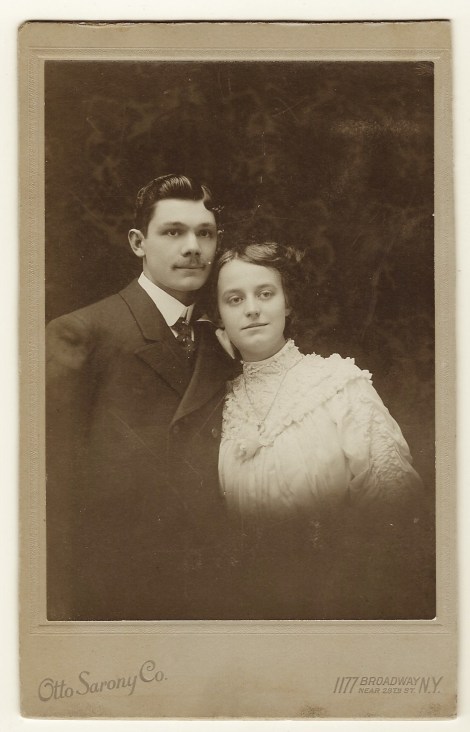
This portrait of a lovely young couple was produced by the Otto Sarony studio in New York City. Otto Sarony (1850-1903) was the son of celebrated celebrity photographer Napoleon Sarony. Otto was quite talented in his own right and he also was a photographer of the rich and famous. It is impossible to know the extent of Otto’s work because he began directing photographic sessions that appeared under his fathers signature beginning in the late 1880’s. It has been reported that he was involved with every studio portrait from 1893 until his father’s death in 1896. Otto was the sole owner of the studio from 1896 until near the end of 1898. In 1898 he sold his business and all of his equipment and supplies to Jonathan Burrow. Also included in the sale was the trade-mark “Sarony”. In 1902 Otto Sarony sold the rights to his name (Otto Sarony) to photographic businessman Theodore C Marceau and took on the role of Marceau’s manager from the end of 1902 until late 1903. At the time Sarony was looking to fund his yachting activities. After Sarony’s death in 1903 the Otto Sarony Company remained as a brand until World War I.  Since the Otto Sarony Company was producing photographs long after Sarony’s death, one must keep in mind that many photographs with the Sarony label were not taken by Sarony. This fact makes it difficult for those who collect Sarony images.  On a side note, Otto Sarony was an athlete and a founding member of the New York Athletic Club. To view other photographs by Otto Sarony, click on the category “Photographer: Sarony (Otto).


Published in: on June 2, 2016 at 11:12 am  Leave a Comment  
Tags: , ,

PORTRAIT OF LEE TONG: PASTOR OF THE BAPTIST CHINESE CHURCH IN PORTLAND OREGON

asian man

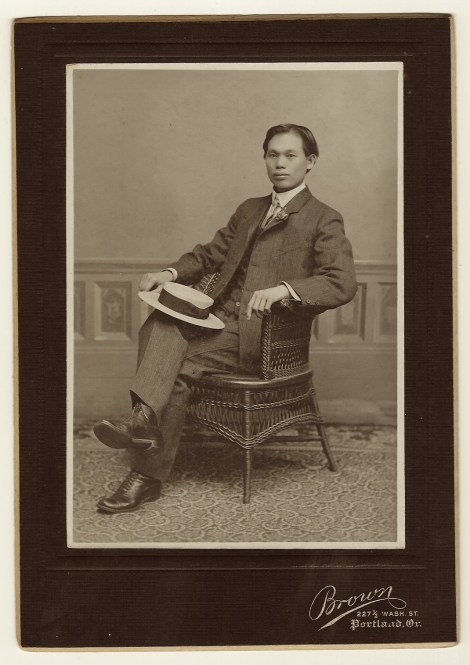
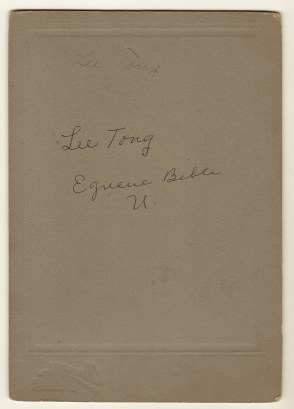
This photograph features a well dressed young Asian man sitting in a chair with his hat on his lap. He is is exhibiting an intense gaze at the photographer. On the reverse of this photograph is an inscription that informs us about the identity of this gentleman. His name is Lee Tong and he was a clergyman who attended the Eugene Bible University in Eugene, Oregon. The American Home Missionary (1913) journal lists him as a preacher. He also appears in the Portland directory as Reverend Lee Tong (1912-1914). A book entitled “Portland, Oregon: Its History and Builders” reports that he was the Pastor of the Baptist Chinese Church. Research reveals that the Eugene Bible College is now known as New Hope Christian College and it is located in Eugene. The school was founded by Fred Hornshuh in 1925. This photograph was taken at the Brown Studio in Portland, Oregon.

asian man 2

ADORABLE LITTLE BOY AND HIS TOY IN MANNHEIM, GERMANY (1926 REAL PHOTO POSTCARD)

little boy

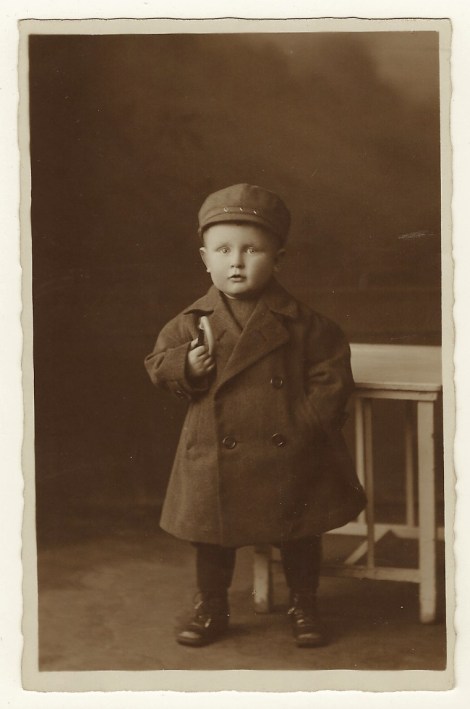
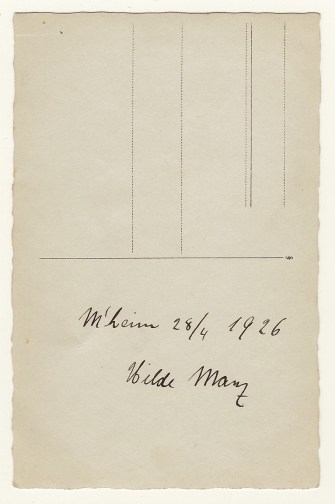
This vintage postcard features a little boy (possibly girl) dressed in cute winter clothing and holding a toy in his right hand. The toy may be a ring. The reverse of the postcard has an inscription indicating that the photograph was taken in 1926 in Mannheim, Germany. In addition, the name of the child may also be included in the inscription. The child’s name is not clearly legible to me, but appears to be “Hilde Marz”.The postcard was produced with scalloped edges. (SOLD)

little boy 1

Published in: on May 24, 2016 at 2:42 pm  Comments (1)  
Tags: ,

PORTRAIT OF PRETTY THEATER ACTRESS AND PLAYWRIGHT GRACE HEYER (PHOTOGRAPHER: JACOB SCHLOSS)

heyer

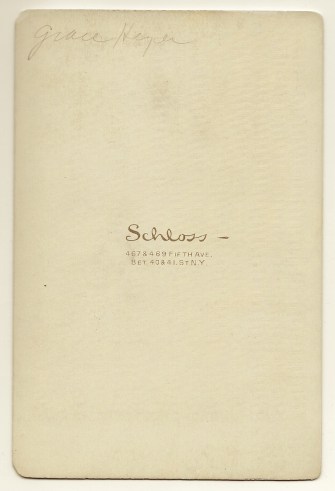
This cabinet card portrait features stage performer and playwright Grace Heyer. The Internet Broadway Data Base lists Miss Heyer as performing in eleven Broadway shows. Her “Great White Way” career began with “Cyrano de Bergerac” (1900) and ended with “Great Gatsby” (1926). Her photo appears in Munsey’s Magazine (1899) and she is credited with appearing in “The Wife”. Her portrait also appears in Theatre Magazine (1904) where she is described as a “young emotional actress” who has headed her own theater company. The Greenback Magazine (1914) describes Heyer as a “formerly well known actress” whose new play “The Philosopher” was to be introduced by the “Liebler Company”. Miss Heyer looks quite beautiful in this cabinet card image. The photograph is subtly provocative. The profile portrait reveals her partially bare back and her bare neck and in the image her expression can be described as being sultry. This photograph was taken by celebrity photographer Jacob Schloss (1856-1938) in his Manhattan studio. Schloss received his education at the Cooper Union in New York City. He graduated in 1872 as an etcher. He joined Benjamin J. Falk’s photography studio and worked there in the mid 1870’s. He left Falk’s employ to open his own studio (54 West 23rd Street) where like Falk, he specialized in theatrical photography. He tended to favor photographing actresses in costume in front of generic studio furnishings. He produced many cabinet card photographs but also was active in the production of magazine images. By the 1890’s he was particularly known for his photographs of beautiful women, much like photographer Jose Maria Mora. Schloss also was an activist for photographers rights. He was very involved in the movement to copyright images. He sued those who used his photographs without crediting or paying him. He was very involved in national photographer associations and was an active photographer until the 1910’s. To view other photographs by this photographer, click on the category “Photographer: Schloss”.

heyer 1

YOUNG FRENCH CYCLIST WEARING HIS BICYCLE CLUB UNIFORM POSES WITH HIS BIKE (VINTAGE REAL PHOTO POSTCARD)

bike

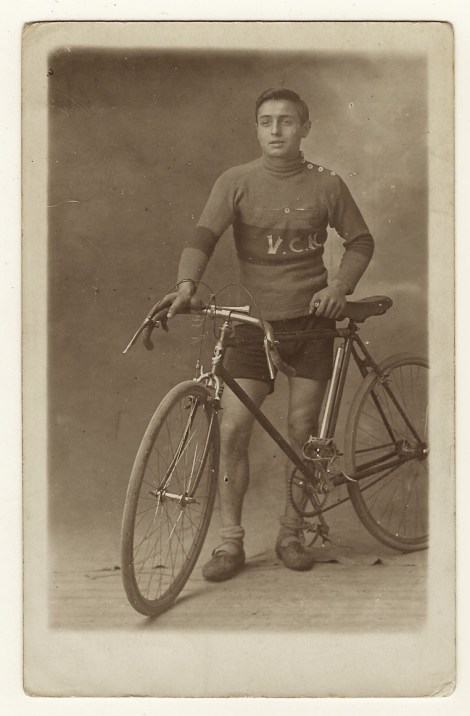
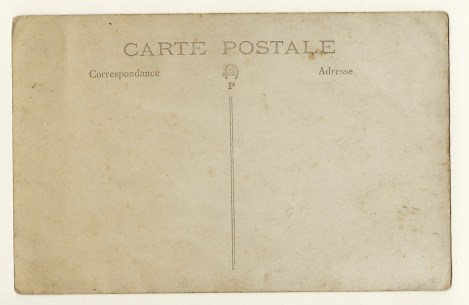
A young cyclist poses with his bicycle in this vintage real photo postcard. The studio photograph shows the young man wearing the uniform of his bike club (V.C.K.). His bike clothing looks comfortable and clearly facilitates easier riding. Compare his clothing to the cumbersome bicycle clothing seen in photographs of woman of this era. Women clearly had to sacrifice comfort for beauty and modesty.  I believe that this RPPC is of French origin. The logo of the publishing company of the postcard paper has a logo showing a horse and horseshoe (see image or reverse).

bike 2

Published in: on May 20, 2016 at 12:00 pm  Comments (1)  
Tags: , , ,